

Showing posts with label Character development. Show all posts
Showing posts with label Character development. Show all posts
Tuesday, June 30, 2026

Tuesday, January 13, 2026
My Backstory Story

I was once asked by a fellow writer: How much of your character's back story do you know before the story begins? Do you know everything or just the basics?
I love the question.
There are two opposing ways of thinking about this, as opposite as democrats and republicans are politically -- at least in my experience of meeting and talking with writers. The members of one group tend to make it all up as they go along, reinventing their characters almost willy-nilly with every twist and turn or plot and nuance of the story. On the other hand, the members of the other group keep their folders of notes and printouts and family tree diagrams handy near their computer desk or (for the tech-obsessed authors) in a spreadsheet on the cloud so they can't lose the information at home and can have it readily available even when they're not at home.
Many, however -- and I'm certainly one of them -- fall somewhere in the middle. I like to know the basic personality and major life experiences for my core characters, but I tend to fill in the details for other things (like what college he attended, who was her first boyfriend, is he allergic to gluten, where did her tattoo come from, for example) as I'm writing and as the story dictates. It's funny, though, how often some of those minutiae of details can become key plot points in a story or triggers for a new story for a future volume featuring the character in some cases.

I used to do questionnaires about my characters, and I think those kinds of details are good to know, and I still recommend them as character exercises for beginning writers. However, after writing for nearly 35 years now, the questions that lead to those kinds of details have become internalized, and I no longer have to make a conscious effort to fill out questionnaires or apply for jobs as my character. As the characters become real in my head, those specifics become automatic, and sometimes even just held in my subconscious until such a time as they are needed for the story.
A caveat -- the longer the work, the more information I've learned that I need to know upfront about the back story. Why? Because I've found that those are the kind of details that help carry a story beyond the simple plot point A leads to plot point B leads to plot point C, etc., kind of story. Those are the things that take a story (at least for me, your mileage may vary) from a mere skeleton to a flesh and blood living being.
Saturday, October 4, 2025
[Link] How to Show Your Character’s Repressed Emotions

Crafting characters that readers will connect to is every writer’s goal and dozens (hundreds?) of methods exist to achieve it: deep backstory planning, character profile sheets, questionnaires, etc.
Regardless of the roadmap a writer uses, writing an authentic character boils down to one important action: intentionally drawing from the real world, and specifically, the human experience.
The human experience is powerful, an emotional tidal wave that holds us in thrall. We understand it, relate to it, and live it. This is why, even when a character faces a challenge, barrier, or struggle that readers have not experienced in the real world, they can imagine it and place themselves within the folds of the character’s viewpoint.
Portraying an accurate mirror of humanity in fiction means we must master emotions. Getting raw feelings on the page isn’t done solely through a character’s shrug or smile; instead, a marriage of internal and external elements should show readers what is being felt and why. Body language, behavior, dialogue, vocal cues, thoughts, and internal sensations weave together to draw readers into the character’s emotional landscape.
Showing a character’s emotions isn’t always easy, especially when powerful emotions are at work. Characters may feel exposed or unsafe and instinctively try to repress or disguise what they feel. This creates a big challenge for writers: how do we show readers what the character is feeling when they are trying so hard to hide it?
Thankfully again, the human experience comes to the rescue. If a character is repressing an emotion, real-world behaviors can show it. Readers will catch on because they’ll recognize their own attempts to hide their feelings. Here’s a few ideas.
Over and Underreactions
When you’ve done the background work on a character, you know how they’ll react to ordinary stimuli and will be able to write reliable responses. Readers become familiar with the character’s emotional range and have an idea what to expect. So when the character responds to a situation in an unexpected way, it sends up an alert for readers that says, “Pay attention! This is important.”
Read the full article: https://writershelpingwriters.net/2025/09/show-repressed-emotions/
Saturday, September 6, 2025
[Link] How NOT to Create a Protagonist

You can have the greatest plot in the world, discuss a deep, universal theme, and write crisp, taut sentences, but if the reader can’t connect to your protagonist, the story will fall flat. Simply put, you always must create a protagonist the reader will root for.
Too often aspiring authors trip up on that challenge. Many seem content to simply provide meaningless details – like the protagonist’s height, hairstyle, school grades – believing that makes the character “real.” And real means likable, right? And likeable means a connection, correct?
Not quite.
Uninspiring details aren’t the only way writers can stumble with their protagonist. To avoid creating a poorly written main character – that is, one who isn’t real – watch for these seven pitfalls…
Never solves a problem
A main character who never attempts to solve the story’s central problem usually comes off as dull. Worse, if the character spends the whole book merely ruminating about how the problem is hopeless, he’ll come off as whiny.
Read the full article: https://inventingrealityediting.com/2017/08/19/how-not-to-create-a-protagonist/
Saturday, June 21, 2025
[Link] Establish characters’ intentions in every scene

Every time you start a story, you want to quickly establish a problem for the main character to solve and their intention of solving it. Maybe a hacked up dead body is found, and a detective intends to bring the murderer to justice. Possibly a divorced woman who’s been by her herself for the past five years sees a man she’s interested in and decides to meet him. Perhaps a starship captain finds a far-flung colony where his brother lived has been destroyed by some unknown force.
Regardless of the genre, as the story progresses, the main characters’ intentions must be established at the beginning of each scene and then played out. In fact, that’s true of every significant character in your tale.
Characters’ intentions drive your plot. When they are the focus of your writing, your story has action, tension and suspense because some characters will oppose and even temporarily thwart your story’s protagonist. The consequences of that action sets up the next scene. When those intentions aren’t the focus, the story drifts with irrelevant scenes, and character development suffers.
Read the full article: https://inventingrealityediting.com/2017/08/27/establish-characters-intentions-in-every-scene/
Thursday, May 15, 2025
Writing Folks Who "Just Ain't You"
.jpg)
As writers, we all know that little swell (or maybe massive swell) of butterflies when we try to capture the voice/characteristic/personality of characters who clearly aren't us. It may be writing across gender lines, racial lines, sexual identity lines, or just a pessimist trying to write an optimist, or a rural trying to write an urban.
For this roundtable, let's talk about how we do that in a way that satisfies a writer's need for authenticity.
Where do you fall on the scale between "I can write any kind of anybody" and "It's really hard to write people who aren't like me"? Why do you think that is?
Ron Thomas: Fortunately, there is more than one “me” in my head! I can draw on my serious side for a lead character and my wise ass side for the sidekick. Even the villains draw on a bit of “wish fulfillment” for me. I heard a long time ago that mystery writers are closet criminals...

Brian K Morris: I like to think I can write, pretty much, any type of character. To do it correctly, I need to research them, their way of life, their mode of thinking. In a way, it’s profiling the subject by studying others.
And this doesn’t just cover a demographic. When I’m asked to write an existing character, or I pitch a story to do so, the same kind of research needs to happen. I need to get them right. If they have a distinctive way of acting or speaking, I need to emulate that as best I can.
Sheela Chattopadhyay: I find that this is more of a matter of perspective, rather than just a straight line issue. You need to understand the cultural differences that can affect someone's perspective to make this happen in some cases. In other cases, you have to understand where the person is coming from and their motivations.
Saturday, May 3, 2025
[Link] Don’t fully commit protagonist in opening scene

Typically when a story starts, there is an out-of-whack event, an upsetting of the status quo that the main character must deal with. How the main character addresses this event forms the bulk of the story’s plot.
Sometimes, though, the main character is reluctant to act. That is, he is not fully committed to resolving the issue.
For example, what if our protagonist comes to believe that something bad has happened to a neighbor, as she mysteriously hasn’t been seen for days. He files a report with the police and decides he’s washed his hands of it, has fulfilled his civic responsibility.
To ensure we have a story, though, something must occur that convinces the main character to become fully committed.
Read the full article: https://inventingrealityediting.com/2016/11/25/dont-fully-commit-protagonist-in-opening-scene/
Thursday, April 24, 2025
Writing Non-Human Characters: How Other Should Other Be?

During Stellar Fest, I was fortunate enough to be on two panels on characterization, both of which addressed the idea specifically within the realm of science fiction, and with a focus on non-human characters. But, sci-fi doesn't have a monopoly on non-human characters, so I realized immediately that I wanted to take this discussion to the blog. (And here we are.)
When writing characters who are not human, what is your starting point? The race, the species, the human characteristic to use as an entry point, what?
E. Robert Dunn: Typically, it starts with a race/species that I'd like to develop ... which may or may not include 'human characteristics.'

Bobby Nash: I start with the character. Most non-human characters can still have a human-ish trait that I can start with like how family works, or something about their personality. Then, I build from there.
Sean Taylor: I have to start with the character, plain and simple. That's always true for me whether I'm writing a straight white dude, a poly black woman, a purple Glorp from Vendellia 45, a Loup Garou from the Bayou, or a gaseous floating cloud above the top of Kilimanjaro. For me, that means something human in terms of characters, some need, some drive, something that man, woman, Glorp, Lou Garou, or cloud wants and must overcome some hardship to achieve. If I don't have that skeleton to put a coat on, then I can't start moving on the story.
Tuesday, April 16, 2024
This Week's Theme Is, Well, Theme
.png)
I know this opening paragraph isn't going to win me any fans in a blog about writing action-driven genre fiction, but I'm just going to write it anyway. I can't tell you how often I've heard fellow writers say in convention panels that they don't really think about or care about theme because they just want to tell a fun, action-heavy story that entertains a reader and leaves everything the same when it's over. Well, I cringe every time I hear that. I really do.
Why? Because (1) it means those fellow creators don't really understand what theme actually is and (2) they're totally full of shit.
Yes, I said it.
Theme Is Historically and Contextually Important for Stories

Now, just so you know, I'm not only referencing the kind of stories we read in English Lit classes, I am an avid reader of detective, horror, sci-fi, and pulp hero stories. The best of these genres too, in addition to wanting to tell a ripping yarn, also have themes that elevate them beyond just being fun, action-heavy stories that entertain.
In fact, I'd go so far as to say the reason they can entertain in the first place is because they have something to say to the reader. Stephen King writes about childhood trauma carried into adulthood... a lot. Raymond Chandler writes about personal loss transmuted into public good. Walter Mosely writes about changing racial norms and trying to overcome them. Ray Bradbury writes about whimsy being the basis for both technology and horror. Stephen Donaldson writes about how our bad decisions play a great hand in determining what we think of as our fate. The Golden Amazon tells us about absolute power corrupting absolutely while The Spider tells us that sometimes fighting evil can taint us with some of that evil.
Don't get me wrong, the trouble with much "Literature" with a capital L is that it has a lot to say but fails to entertain. However, that doesn't make the opposite a better, more honest option. It's equally a failure to write a story that entertains but fails to have something to say. Those stories (and trust me, I've read more than a few in old Pulp mag reprints) disappear from my brain almost immediately.
It's the ones that do more that stick around, even if they're not the best written or the kind that gets anthologized in high school and college textbooks. Theme isn't about longevity. It isn't about your Literature class. It isn't about being discussed at author forums and writing conventions. It's about every story being itself. It's about every story, no, your story mattering to someone, anyone, a reader out there.
Again, writing with a theme doesn't mean said theme has to be an indicator of high art. Some may. Some may not. But ultimate, for me, it gets down to this statement from Abbie Emmons:
If we don't understand why what's happening matters to our characters, we don't know why it matters to us.
(from https://www.youtube.com/watch?v=ot3jkbmBKsc)
I want to break that down into two parts.
What Is Theme and Why Does It Work?
The first part of Emmons' statement is "why what's happening matters to our characters." That covers PLOT and STORY. Plot is exactly that, what's happening to our characters. Story is why it matters to them. Plot alone can't sustain a story, either novel or short story. It's why even bad horror movies usually involve a character trying to overcome some kind of trauma instead of a generic anybody (except when that's the central theme -- that it can happen to anyone) as a hero or most often final girl. The horror of the killer/ghost/monster is what enables them to process that trauma (loss of a kid, family member, sight, job, etc.) It's what is at stake beyond simply living and dying or beating the villain. It's that awesome marriage between plot and CHARACTER. Get those two together with a bottle of wine and some Wynton Marsalis, and trust me, soon you'll see a baby called story.

This is where, I'll admit, a lot of the issues genre writers (particularly pulp writers) can have with theme begins. Theme usually involves change, or at least the opportunity to change, or failure to change. But, the argument goes, pulp heroes aren't supposed to change. That's the whole point of reading their stories. They have a fan base because they're consistent characters.
I agree. There are certain things about certain characters that can't change, at least not permanently. Frank Fradella had a saying while I was Vice President of Cyber Age Adventures/iHero Entertainment that went like this: "Don't blow up Cleveland; we're going to need that later."
This works to the benefit of some characters, particularly those who can face their flaws, traumas, and issues and still refuse to change no matter the pressure they face. Batman often faces the need or desire to kill the Joker, and the theme of that story is not whether he actually will or not, but how he walks that tightrope. That can be compelling every time even though the reader knows there's no way Bruce is going to pull the trigger.
On the other hand, this works to the detriment of some characters, particularly those who are perfect and have no flaws or struggles, no matter the pressures or issues they face. It's the one reason I've never been a fan of Doc Savage. I don't mind that he is physically perfect and always wins, but he never struggles with anything. He never faces any failure in his past or present. He never struggles with emotional baggage. And rarely does his support cast. They can be as flat as cardboard cut-outs.
I know, if you didn't tune out at the first paragraph, that comment about Doc Savage just sent many of the rest of you running for the hills.
I present Superman as a counter to the good Doc though. Although Clark is the pinnacle of physical perfection and the sheer embodiment of American values of mom, baseball, and apple pie, he still struggles. He knows that his superheroic identity puts those he loves in danger, so he fights to keep it secret, which can screw up his everyday life (with work, with Lois, etc.). He also faces doubt when his choices for winning don't include an "American values" option. How does a man with a perfect record choose between two bad options and then live with the consequences? Those are great Superman stories. Of course, the best Superman stories figure out a way to choose neither but it doesn't come easily, hence "why what happens matters to the characters" is still a part of the story. The theme of trying to remain true to your own nature is also a theme. But without a conflict that forces that theme, a hero like Doc Savage never changes for different reasons than Superman.
Note: Maybe this happens in other Doc Savage novels, but in the several I've read before I gave up, Doc Perfect is never allowed to have a flaw or less-than-perfect choice to confront.
What Isn't Theme?
I hope you didn't miss this sentence just a few paragraphs above: "Story then determines your theme." Theme is always an organic outgrowth from your story. Now, remember, story isn't plot. Story is plot and character working together to make the plot matter.

If you can't find it yourself, and you're any writer worth your storytelling salt, don't worry. Astute readers will find it for you. Even if you're one of the writers I was talking about in the first paragraph. You still end up writing variations on a theme, and the sum total of your body of work will shine a spotlight on it. Just be warned, sometimes those themes may not say the kind of things you want to be said about your writing. (Such as women only exist for saving and men who don't punch their way out of trouble aren't real men, but that's an essay for another day.)
Nor is a theme a moral. We're not talking about fables or allegories when we talk about theme. Yes, the best of those still have themes. You can't turn a page in Lord of the Rings, A Swiftly Tilting Planet, or even "The Little Match Girl" or "The Ugly Duckling" without bumping into theme. But the moral isn't the theme. Themes can lead to lessons as we confront things about ourselves as readers, as writers, as critics, etc., but the lesson itself is never the theme.
So, all this to say: Don't be afraid of the concept of your story having a theme. Don't be afraid to talk about it or bring it up at convention panels. And for god's sake, don't think that decrying the concept of theme from your position behind a table or podium at a conference or convention makes you somehow more honest than other writers. That's about as honest as being an ironic hipster. If your work resonates with someone, you have a theme that reader has identified and identified with -- even if you didn't intentionally approach the work with a theme as you pantsed your way through writing.
Yes, I acknowledge that even Doc Savage has a theme that folks resonate with. I see my own hypocrisy just fine, thank you. (LOL).
To paraphrase Aerosmith: Theme on, theme on, theme on, theme until your writing dreams come true! #sorrynotsorry
Sunday, March 17, 2024

Saturday, October 14, 2023
[Link] 11 Secrets to Writing Effective Character Description
by Rebecca McClanahan
The characters in our stories, songs, poems, and essays embody our writing. They are our words made flesh. Sometimes they even speak for us, carrying much of the burden of plot, theme, mood, idea, and emotion. But they do not exist until we describe them on the page. Until we anchor them with words, they drift, bodiless and ethereal. They weigh nothing; they have no voice. Once we’ve written the first words—“Belinda Beatrice,” perhaps, or “the dark-eyed salesman in the back of the room,” or simply “the girl”—our characters begin to take form.

Soon they’ll be more than mere names. They’ll put on jeans or rubber hip boots, light thin cigarettes or thick cigars; they’ll stutter or shout, buy a townhouse on the Upper East Side or a studio in the Village; they’ll marry for life or survive a series of happy affairs; they’ll beat their children or embrace them. What they become, on the page, is up to us.
Here are 11 secrets to keep in mind as you breathe life into your characters through description.
Read the full article: https://www.writersdigest.com/write-better-fiction/11-secrets-to-writing-effective-character-description
Tuesday, May 30, 2023
The Gray Valley -- Good Villains and Bad Heroes (A Roundtable)

We all know that for the most part, our characters are supposed to be fully fleshed out and multidimensional. That means we need heroes with things we don't like and villains with traits we actually admire. But how do you do that?
What's the danger of a hero who is solely heroic or a villain who is purely villainous?
Ef Deal: I would hope that writers take the time to study human nature enough to know that -- outside of comic books and Marvel Universe -- people are people. Once they become characters in a story, they require agency as well as fully formed humanity, with aspirations, plans, goals, and foibles. Doesn't matter if they're the pro or anti, hero or villain (I dislike those terms), they've got to be people first.
John L. Taylor: The danger of a purely "Lawful Good" hero is that it doesn't leave room for internal conflict that leads to character development. It's part of why Batman seems more relatable than Superman. Also, when the character is that rigidly good, they take on an authoritarian air that doesn't sit well with the modern reader. As for the purely villainous "Chaotic Evil": compare Thanos (the MCU version) to Jason from Friday the 13th. Both exist as avatars of death in their respective stories, but Thanos is also more relatable as he has some degree of moral ambiguity in his intentions. Heath Ledger's Joker was another prime example of this. Vile intentions wrapped in a layer of social criticism and acute awareness of the corruption of those who believe they are the "good guys." That's solid story material there.
Bobby Nash: Perfect characters are just that. Perfect. There’s a place for those types of characters, but you go in knowing exactly what you’re going to get. There are no moral gray areas so few surprises based on character. That said, having a heroic character do the occasional morally questionable act adds a new dimension to them. It doesn’t always mean the character will go that route, but we know there’s a line for them. Here are two examples from TV that stick with me:In the Magnum, P.I. (OG version) episode, Have You Seen The Sunrise?, Magnum and friends are targeted by an old enemy from their time in Vietnam, a cold-as-ice killer named Ivan. The episode sees one of Magnum’s friends killed, another injured, another programmed to become a killer, and even Magnum gets shot and blown up along with his car. Ivan is a bad guy who does bad things, but he has diplomatic immunity so the two-part episode ends with him being asked to leave the United States and to never return. This does not sit well with Magnum or Rick so they divert the car and Magnum confronts Ivan. Ivan tortured all of them years ago as POWs and he tells Magnum that, despite all he’s done, he knows that Magnum is a good, honorable man who would never commit cold, calculated murder. Magnum shocks him, and the audience, when the episode ends with him pulling the trigger. Does this make him a murderer? Yes. He murdered the guy. Does it make him a bad guy going forward? No. Isolated incident, but one that added a new layer to the character.

Of course, in both these instances, the characters were soldiers and had been trained to compartmentalize and do whatever needed to be done. I think those are great story examples of facing those shades of gray.
Lucy Blue: I write very character-driven fiction, regardless of the genre I'm working in, and I never stop to think if someone is a villain or a hero. I'm all about motivations. I start with a protagonist, someone whose personality or goals or situation particularly interests me, and I immediately dive into their motivations. What does this character want? Why do they want it? What would have to happen for them to have it? How are they going to make those things happen? What are they willing to do to make those things happen--and what are they not willing to do? What roadblocks am I going to create and drop in front of them, and how are they going to pivot to get around them? Coming up with the answers to these questions for my protagonist inevitably creates the other characters, some of whom will help them, some of whom will seek to stop or harm them, and I ask the exact same questions about those characters, too. (Incidentally, that's one strategy for avoiding racial and gender stereotypes in your characterization--focus on the individual characters' own motivations rather than what they're doing for or against your protagonist.
John Morgan Neal: I don't see why we can't have both. It seems there is too much either or in our culture sometimes nowadays. Old grumps not liking the new-fangled stuff and kids dismissing all the old stuff as has been. My mantra has always been 'variety is the spice of life' If everything is the same, that can get very dull very fast.
Richard Knaak: In my Rogues Gallery, the hero is missing, so the villains are falling all over each other. Not great for 1930 Chicago -- well, an alternate one -- but not every villain has the same motivation. Some just want to steal nice things, for instance, not try to take over. It's the backgrounds of the various villains and the choices that they make based on both that background and their overall desires, that brings them into conflict with one another... and makes some even a bit heroic. I think that rounds them out better overall.
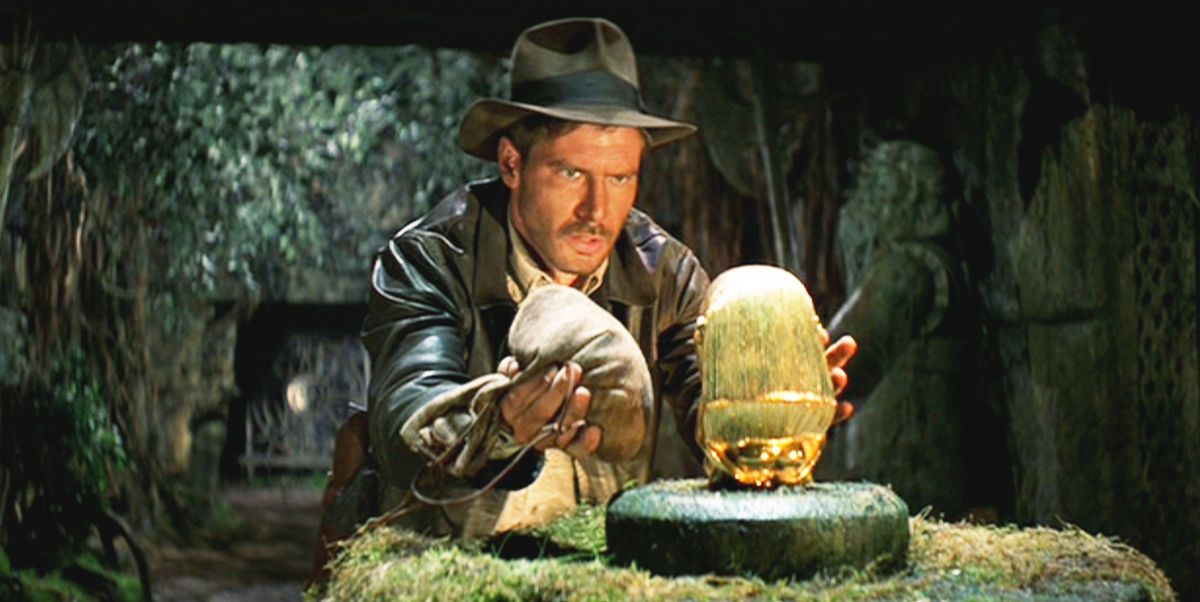
Brian K Morris: The problem with a solely heroic hero is the problem usually given to characters like Superman and most comic book protagonists, that they're "Boy Scouts" and thus, "dull." Heroes need a quirk to help make them interesting (Batman hates guns, Doc Savage is emotionally reserved, Frank Castle and Mack Bolan are motivated by revenge, Indiana Jones hates snakes, etc.). They can be interesting for a while but mostly become tedious after a time because there's nothing to get to like the character on a personal basis.
The same with villains, except you don't have to empathize with them as you would a protagonist. But you should understand why they do what they do, simply beyond the mere accumulation of power/wealth/influence.
Nancy Hansen: I prefer reading stories that have complex characters, no matter whether we're supposed to root for them as they bumble, blunder, and batter their way through the situation or wish someone would flatten their faces with a sledgehammer because they are so incredibly detestable.
Emily LaFlame Jahnke: Funny you mention that because I’m working on a character who did horrible things but is on a journey of redemption.
There are really good examples of good heroes and bad villains, (i.e. Doc Savage, Superman, the Joker, Lex Luthor, etc) but really good writers focus on what makes them heroes or villains.
Pól Rua: For mine, one of the dangers of an 'infallible' hero is absolute conviction. And what's worse than that is when that absolute conviction always pays off.
A character who is 'solely heroic' is not a problem. That characters like Superman, James T. Kirk, and Doc Savage, for instance, act in a way that is 'always good' is entirely plausible. Where it becomes problematic in terms of storytelling is when those characters act in a way that suggests they are supernaturally aware of the best course of action.
In a standard narrative involving this sort of character, the crucial dilemma for the hero should be discerning what that course of action IS.
In the case of James T. Kirk, he is often placed in a situation where he is not in possession of all the facts. Because he is confident in himself and in his trusted allies, he will quickly act based on what information he has, knowing that inaction could lead to disaster. This confidence also means that, in a case where his initial response was incorrect, he and his allies can gain new information and perspective and change their strategies accordingly. His greatest virtue is self-confidence.
Superman, on the other hand, is often forced into dilemmas based on the scale of the situation he is forced into. Despite his abilities, Superman doesn't consider himself better or more important than others. He sees a capacity for heroism and goodness in everyone, and while he appreciates that his powers give him the ability to act on a larger scale, he rejects the idea that his actions are more virtuous or important than that of any person who chooses to help someone out in a time of need or who puts another's wellbeing ahead of their own. His greatest virtue is humility.
But if you have a character who ALWAYS seems to always make the correct decision, even when not in full possession of all the information necessary, then it begins to feel less like competence and more like author fiat. At that point, you're not playing fair by your audience, and consciously or not, audiences can sense that.
What tips do you have for creating heroes and villains who defy simple one-note portrayals and are able to appeal to readers as much than just flat, cardboard cut-out caricatures?
Bobby Nash: For me, it always starts with character. I work hard to make my characters as three-dimensional as possible, as fully formed as possible. That means the good and bad. As the writer, I know those things, even if we don’t always show it. All characters have bad days. How do they handle it? Does the character shrug off problems or do they piss them off and spoil the rest of their day? Those are important character-defining traits I like to know upfront, but I’m also open to learning new traits and tidbits about my characters as we move through the story we’re telling. Once I get to know the characters, they will tell me what they’ll do and how they’ll react.
Emily LaFlame Jahnke: My biggest tip for creating good villains or bad heroes is to show their heroic sides and to make them compelling. Scarlet O’Hara for example is no Angel. But she’s still compelling and interesting.
Brian K Morris: Give them a non-standard quirk, both heroes and villains, that make them a little more interesting and might even be an impediment to accomplishing their goals every now and then. Or give them an almost redeeming quality, such as when Dr. Doom killed his flunky for attempting to destroy the Fantastic Four but risking Doom's stolen art treasures in the process.
Alycia Lynn Davidson: Make them human, even if they aren't. Even the most heinous of individuals will have wants, needs, desires, and goals, and the most pure of heroes (the interesting ones, anyway) will have flaws, quirks, moments of doubt and growth. They all have relationships and routines, things in their childhood/creation that shaped them. I take those small things and use them to ground my characters to reality. My favorite character in each project shares my birthday. One of my novella characters is a type 1 diabetic, like myself. The big bad of my space opera gets his own prequel novel to help flesh out his powerful, decades-long arc. Find the small traits that add depth and weave them throughout the narrative in the way they speak, act, and think.
John L. Taylor: A tip I have in creating rounded heroes and villains is this: give them both a conscience, but a tendency to self-interest. Each should believe they're working for the good of someone, but their motives for that don't have to be altruistic. Put heroes in situations where they have to cross the line they swore they never would to get the job done. Give the villain someone they truly care about (Not Joker and Harley Quinn style, really cares about selflessly). I can tie this off my picks for best-written heroes and villains. Best Hero: Indiana Jones. Morally ambiguous but would never side with the true evil of his time. A self-interested adventurer who's worldly wise but never lost the sense of wonder and leaves a trail of broken hearts in his path. The best villain will be controversial: Jenny from Forrest Gump. Though the story has a very patriarchial moral, Jenny is the villain of the piece. Everything she does has contempt for Forrest, and even in the end, he doesn't "get the girl" as Jenny only marries him when she knows she's dying and won't have to live with him for long. Yet anyone in the audience would probably have done everything Jenny did if put in the same situation. The Hero and Villain have intimately connected sources of conflict in each other's lives in Forrest Gump. to the point you don't even realize that's what their relationship is. That. in my opinion is the highest level of writing such characters.

However, in the Westerns there is a bit more nuance as I write Spaghetti Westerns and mean 70s paperback-style Westerns. There isn't always a lot of room between good, bad, or ugly as my favorite western I just paraphrased demonstrated.
Lucy Blue: Remember that nobody is an NPC in their own story, and every character has their own story. What makes them a background character isn't that they exist to serve the protagonist but that our story isn't focused on their journey--they're incident, not throughline.) I usually write in limited POV third person, meaning I follow my protagonist from inside their head. That usually results in the protagonist and those who help them coming across as heroic within the context of the story and those who hinder them coming across as villainous. But because even the villains have their own goals and reasoning and even the heroes are serving their own needs and desires (which may or may not serve a greater good), nobody is purely a hero or a villain.
Nancy Hansen: Because of that personal preference, I try and write them that way as well. One-dimensional heroes or villains tend to bore me. I want to know not just what they're doing, but why they're doing it, because that adds a layer of reality to a story that pulls you in. It doesn't have to take up a lot of room, I try to drop in just enough insight here and there to get a peek at those clay feet or the traumatic motivations that made them who and what they are today.
Monday, November 8, 2021

Monday, July 12, 2021

Tuesday, June 29, 2021
Flat and Round: The Character Conundrum

I learned some terms this week that I hadn't learned during my time as a lit major in college.
Flat Characters: Those who are typically not given any depth in character development, reduced to foils and/or stereotypes as a sort of shorthand for moving the plot along.
Round Characters: Those whose stories, lives, and character are developed in depth so as to make them feel more real in the eyes of readers, typically reserved for main antagonists and protagonists.
So, as any good student, I think we should talk about it. I gathered the gang together and posed the questions around the table.
 What benefits have you seen in your work for using flat characters?

Gordon Dymowski: One of the benefits of "flat characters" is that they can serve as placeholders, "red herrings" or other devices to move the story forward. Although I try to give as much background to any character (even peripheral ones), using "flat" characters provides immediate shortcuts and can help reflect the main characters' actions.
Chris Norton: Flat characters can be fun to write, sometimes you need some keystone cops action; also you just don't always have the time/space in a novel, and especially in a novella or short story, to fill out every character, unless it's a serial or has a limited number of characters.
I always feel pulled out of a story when an author takes the time to tell us all about a person whose only action is something like ringing up someone's groceries.
The benefits of rounded characters are obvious: empathy with the characters, pulling in the readers, etc.
Bobby Nash: I’ve never heard the term before your question, but I have in the past had henchmen who were basically there to e beat up or shot at while the hero worked his or her way up to the villain. These guys are just there to get their ass kicked so I didn’t really flesh them out.
Adrian G. Delgado: Flat characters are great as archetypes. Technically, even a god, especially one tied to a specific pantheon, can be flat as a pancake. "I'm a god of war and I make war. What else is there to know?" The Alchemist in Cohelo's "The Alchemist" is somewhat the same way, in so much that he is there to be used by the author to tell the shepherd's story. Come to think of it, characters can go flat and round out many times. Take Planet Hulk for example. The rest of the Marvel Heroes get reduced to Safety First goody-goods who send bad old hulk to a planet in the first few panels. Crack open any other comic though, suddenly Banner himself is a flat strongman.
Rus Wornom: I LOVE THESE TERMS. My flat characters help the main characters either develop as real people, or they move the action along...or they develop the character of the setting, which can be just as important as a character. For instance, I use flat characters in Ghostflowers to make a party in the woods seem real. They interact with the main characters as they progress to a certain point, not only in the woods but in the story.

Sean Taylor: Flats for me make perfect foils. I like to tease their backstories but then never deliver, so that they feel more important than they are actually. That way, particularly in a mystery story, they can serve as a kind of next-level red herring. They also make great hench-people for villains for pulp heroes, and hangers-on for the A-level cast in just about any genre.
 Bobby Nash: I like to give my characters some kind of identity. Even the henchmen and the like I write these days, I try to at least give them a name or something so they aren’t just a henchman.
 Gordon Dymowski: Part of what I do for "rounded" characters is giving them more of a background and provide some motivation as to the "why" of their actions. Many writers create extensive biographies for their main characters; I usually think more of informal "backstories" that stay in my head when I'm writing them. (It also provides authenticity for character actions - having someone who has a history of stealing look longingly at a diamond, for example, makes more sense than having someone who is just "background", so to speak).
What line divides the need to make a character flat or round in your stories?
Kellie Austin: I honestly don't think of characters in those projections. Flat or round-based characters start out for me as all being "Round". I'm very detailed oriented when I write and am constantly world-building. When I'm done with my book or story, I always go back and omit much information regarding some of the characters used, whether they are primary or supporting. Then I place the once rounded characters into the "flat" position until I can re-insert the back story in future stories. Some characters stay in the rounded section as they are the main hero(s). I find creating a character to move the plot along is worthwhile, and I can always use them again later when I need them. If I write a short story, then my characters are most usually always to be flat based as I have problems writing under restraint of words. So, I usually write more action, knowing that as my stories continue, I can begin transforming them into fully rounded characters to accompany the story I began with.
Adrian G. Delgado: If I have no reason to believe that either the reader or the MC or the character holding the point of view needs to see all the nuance of a character's life, they stay flat. If, however, this humanity needs to be discovered in the course of the story, I'll pump the air pump to it.

Austin S. Camacho: Mysteries often have large casts - drivers, servants, people you get one important bit of info from, etc. Flat characters are a short-hand for readers: "the cab driver is not important to the plot - not a suspect." the better developed a character is, the more the reader expects them to have an important role.
Bill Craig: I agree with Austin. As you know, I love writing ensemble casts, so I try to develop the flat characters as well, just to make them important to the main characters. In the way I build characters, even the less important ones, I want them to be someone that the readers can relate to.
Jonathan Sweet: Like some others have said, my flat characters are usually shortcuts. I figure that if a nameless henchman is going to be offed by the hero, why give him a back story? On the other hand, I do like to give backstories even to minor characters. For example, in Enter the Jackal, I have Ole Karlsson, a cemetery caretaker that finds the first victim of a killer. Adding details about his feelings about the job, the fact that he's hungover from the night before, that he has a dog -- they help round out the character and maybe make us care a little bit about him.
John L. Taylor: In that respect, ALL characters are somewhat flat, including the POV character, based on archetypes with one or two quirks who the reader can empathize with. That distance between the reader and characters helps elevate the horror because the element of the unknown extends to the characters. None is so developed that they couldn't be a secret part of the threat to the protagonist. We don't know them that well to rule them out. We can't guarantee they won't survive. It's the archetype that needs to be compelling, and the plot that subverts that expectation.

Mark Barnard: I always feel that even giving a character with a brief appearance some quirk to set them off adds depth to a story. It may be like describing a brick wall in the background as red and ivied, but for me it's part of the whole.
 Stuart Hopen: Here's a passage from one of my books, Twilight Patrol #5, where one of my characters wrestles with the problem of whether to be flat or round, which in some sense all of do, in life:

Gordon Dymowski: Some "rounded" characters I've written include Joe Magarac in Pro Se's TALL PULP - taking a mythic/folklore character and giving him dimension was not easy. Much of it involved both researching Magarac's "mythos" and integrating my own family background (my great-grandparents came to this country from Eastern Europe in the early 20th century) into the character. What could have easily been a one-dimensional strongman turned into a more nuanced character. (I also took a similar approach to writing the main character in "A Town Called Malice" for THE MASKED RIDER VOL 3. The original Masked Rider pulps hinted that his "civilian identity" of Wayne Morgan was also a ruse; I simply had the character make slightly ambiguous and off-handed remarks that suggested a possible origin...but just left it there for the reader to conclude).
Rus Wornom: There is no line between flat characters and round characters. Writers don't write while distinguishing characters in that fashion. We develop spear carriers as much as is needed for the story...and sometimes those minor spear carriers become more important than we initially believe.
Sean Taylor: Quite often, a flat will make the jump to a round in my work, as I need to develop a background character because suddenly the story feels like it needs that character. It's more a "vibe and feel" thing though, rather than any kind of rule, at least for me.
Show us an example of your characters, both flat and round, that you consider successful and effective -- and why you wrote them that way.
Bobby Nash: Abraham Snow is a rounded character. The unnamed guard Domino Lady knocks out when breaking into a bad guy’s stronghold is flat.
Chris Norton: Flat characters I've written, who first comes to mind are Uther Pendragon's knights in the 2nd season of Young Merlin. Comedy relief, so they could be dispatcjed without hurting the audience, and to make the heroes look better,
Rounded characters, I'd like to think that most of them are, but probably the American Pride Superheroes, 3rd Generation of Militant Mechanical Men, The Demon detectives, and the heroes of Young Merlin all slowly get fleshed out, while the title characters of Hell's Angel and Sword (The Armorer Duke) in Hell Horror are the most fleshed out, but they also started out very two dimensional when I was writing their bios for personal use (HA about 12pp, Sword about 8pp) but even then, just following their adventures (or the ones I'd plotted out before writing them) gave them depth and personality.

Wootin had been brought here by yet another summons from Cassiopeia, the Queen of Cassiopeia. He was getting used to this business. It was getting to be a routine, almost mundane, though her perennial protestations of urgency and impending doom never proved to be unfounded. And yet there was something different in the way she spoke to him this time. For once, she phrased her requirements as a request, rather than a command, and she prefaced her entreaty with concern that he might have competing priorities. There was a subdued undercurrent of feminine hysteria in her voice, a hint of weakness he’d never heard before, and an uncharacteristic acknowledgement that obedience on his part was not taken for granted. Maybe she really believed she was dying, as Congrieve had reported, dying, along with the rest of her old world order. Perhaps her new affectation was part of the way she was coming to terms with these developments.
“Consider the nature of our foes,” she said. “Consider what has happened before. This is so much the worse than the horrors we’ve already seen.”
Wootin wondered what could shake the unshakable Queen. His curiosity had been piqued. He marveled at her masterful self-negating offer of a choice, and yet it gave him pause. He had the nagging sense that he’d been somehow tricked, and pressed into the service of some folkloric pattern. He questioned what enchantment or post hypnotic suggestion had so unmanned his free-will and condemned him to the role of a mere character, ruled by the laws of fairytales. He felt that way more often than he cared to admit, as if he were an unreal person in an unreal setting. There were other occasions, albeit far more rare, when he felt the opposite way, wholly alive and authentic. These rare occasions might happen during moments of intense concentration—in the midst of composing poetry or mortal aerial combat—and he would lose his individuality altogether, merging himself into a vast design of being that manifested itself through himself, somehow miraculously producing results that were far superior to that which he’d otherwise be capable. Wootin wondered whether these phenomena, though seemingly distinct and contrary in nature, might be inseparable aspects of one another. There was little doubt in his mind that his friend Hollister Congrieve played a role in these patterns and conventions. He knew Congrieve had already been conscripted into this new mission." I try to take a holistic approach to my writing, that character development, plot, theme, and philosophy, or world view are not separate elements, but all flow from one another, and all have to be integrated and balanced.

Sean Taylor: One of my favorite flats is Broomstick from the Rick Ruby stories. He started out as little more than the guy behind the bar who had a shotgun at the ready if he was needed. But over the course of several stories, he can getting more and more real, until the point when I wanted to write a story honoring the late Derrick Ferguson, I needed Broomstick to be more round and real for his own funeral. His death made him more round, as people honored his life.
One example of a "flat character" would be the antagonist of "In the Frame" in Pro Se's HOLLYWOOD PULP. Without spoiling, it takes a well-worn cliche and gives a greater context for *why* that person would do what they did. (I must admit that I take pride in making both Harold Lloyd and Buster Keaton pulp heroes in their own right in this story).
Adrian G. Delgado: For me, I have made flat victims, mooks, villains, you name it. I let my characters discover the roundness of their fellow man naturally: a pancake flat crime victim naturally gets pretty round as the detective learns more about her.
Tuesday, May 4, 2021
Fashion Sense (Writers on character clothing and fashion)

For this week's roundtable, let's talk fashion. No, not your own, but that of your characters.
How much do you use your narrative to draw attention to your characters' clothing choices?
Tom Hutchison: In comics, design is a huge key. In novels far less so. So it depends on what you’re talking about. Design for my comics is super important and we dwell on details and reasons for things to be part of the clothing/equipment/scene etc. there are reasons for everything and it comes through on the page and through the storytelling.
 John L. Taylor: I write Dieselpunk fiction and horror in retro settings. Describing the clothing right does a lot when I don't have illustrations to convey a character. In the Dieselpunk example, My protagonist was a working-class hero, a pilot who did mercenary work to care for her orphaned siblings. Things like oil stains, torn patches, and worn flight caps help sell the idea of a hard-fighting rogue with money problems. Conversely, in horror, a character's clothing can both generate a sympathetic mental image or drop subtle hints about motivations. My personal favorite work of my own is a story called "What gasoline won't burn." It's a story set in 1950 in rural Missouri and narrated by a very naïve 8-year-old girl. I described her as looking like something off of a Little Debbie's or raisin box. I had to both sell the reader on the era it was set it (put this way, the plot wouldn't work in a world with cell phones), and the almost cartoonish innocence of the Narrator. People criticized me some over how naïve she was, but that was the source of the horror: her being too sheltered to see what was coming until was too late for her grandparents, while the reader has to follow in dreaded anticipation of the world going to hell around such a poor, sweet, undeserving soul. The other characters' clothing has subtle tells of what role they will play, but the whole effect had to create a sense of looming dread of the inevitable. Without these descriptions, this wouldn't be so effective.
Ernest Russell: Generally, I do this as needed as part of an overall description. If there is need for .ore detail, or it is intrinsic to the character, I add more detail.
Bobby Nash: I make sure the audience knows what the characters are wearing, even if just in generalities ala jeans and a t-shirt or they’re wearing a gray suit. Some characters get more, depending on who they are and if it fits their character’s needs.
John Linwood Grant: What people do with their clothes is sometimes more interesting than the exact nature of the garment/accessory, e.g. someone who goes to great lengths not to spoil their get-up, someone who plays with gloves or a hat as a sign of emotion, or wears clothes that their peers would not have expected.
 Hilaire C Smith: I don't like to beat them over the head with a page of detailed description, mind, but clothes are very often a reflection of us as people OR the image we want to project to others. So, I used that with my characters. Sometimes I take that first impression and slowly mold it into something different and sometimes it is exactly who the character is.
Two male characters in my series: (1) long hair, a bit scruffy, but appropriately shaved and buzz cut when reporting for duty.... utilitarian clothes, often dark in color and often carrying weapons.
(2) Pretty male, clean-shaven, hair past shoulders, but immaculate...like GQ model, complete with silk shirts and soft leather pants.
These are very, very different styles, which is also reflected in their temperaments, their choices, etc.
Dale Glaser: For anything set in the vaguely-now, I only use clothing descriptions to reveal character, e.g. a grown man wearing a t-shirt with a cartoon character on it is my show-don't-tell version of getting across he is unserious and immature.
Bill Craig: In my south Florida mysteries, Guayabera shirts and cargo pants or shorts are standard dress, because you see a lot of them down there. I've recently introduced Rick Marlow's cousin Greg who takes up the title mantle after Rick is nearly killed in an assassination attempt. His style is a bit different due to his background in Special forces and Covert ops in the military, but he also understands the need to blend in with his surroundings. Hardluck Hannigan however wears a bomber jacket, work pants and boots and cotton shirts.
Sean Taylor: It really varies from story to story, but in any case, I do like to at least establish a cursory look at what my characters are wearing. It can say a lot about their character in a sort of shorthand that cuts through so much of the telling that gets in the way of the story.
Marian Allen: If a character's clothing choices make a difference to the story (one scene casual, one scene formal), I'll put that in. If a character wears a t-shirt, sometimes I'll say what's on it to add to the character. I gave a moderately detailed description of one character's outfit in a mystery because everything hinged on someone who didn't know her well being fooled when she changed outfits with somebody else.
 How important are those details for you in establishing character for them?

Dale Glaser: I do lean into it more with stuff set in the recent past, again aiming for show-don't-tell, describing parachute pants and Le Tigre shirts rather than saying "One day in April 1987..." because I lived through it and that's fun for me.
Bobby Nash: Having written a story or twenty set in the 1920s and up, I try to make sure I have some inkling of the fashion and style of the era when I write.
Hilaire C Smith: It's a useful tool to paint a picture for the reader. Certain styles can evoke mental images and impressions/assumptions that we want the reader to make, true or not 😏. It's an excellent way to show and not tell.
Ernest Russell: It depends on the story and the characters. I have one who, as part of his persona, wears loud colorful clothing. Descriptions of his suits happen at least once a chapter. Another character, a whaler, you never really see any clothing change.
Sean Taylor: Again, it varies. My sort of "everyperson" stories don't require a lot other than to establish a sense of "muggleness" (khakis, jeans, t-shirt, polo, etc.) But for oddballs and for stories set in a certain period, I usually go into much more detail because the further you are from the current mainstream (at least to me) the more a characters fashion choices help define them. For example a grown man in a Hong Kong Phooey t-shirt gives off a different character vibe than a man the same age in a pair or cargo shorts and bowling shirt.
John Linwood Grant: I'm a serious minimalist. I might only mention a single aspect of a character’s clothing if any at all. An incongruous jacket, a specific type of hat or boots when relevant. As little as possible. I’m generally put off by character descriptions that read like a shopping and fabrics catalog, or a list of brand names. Mr. Edwin Dry has a bowler hat, and a starched collar; Mamma Lucy has a faded print dress. Captain Redvers Blake is either in uniform, or he isn’t. Usually, that’s it. I once said that my character Justin Margrave was wearing a red silk shirt and a cravat, which was pretty wild for me, and even that was relevant to a viewpoint.
 How important is it for you particularly if you're working in period costume (whether 30s gumshoes or Elizabethan vampires)?

Hilaire C Smith: Period stories rely on a cleverly set stage designed to immerse a reader in a different time. Costume is part of that. Now, most readers won't be able to nit-pick small details, but if your 1930's private eye is wearing a t-shirt and jeans, unless he's out doing physical labor or something, it isn't going to feel right. It tosses the reader out of the story. An Elizabethan vampire isn't going to be wearing Vans...unless the story is modern and he's a complete mess of style choices...which would also tell the reader a lot about the character compared to a vampire that has seamlessly blended or another that continues to wear fashions decades or centuries out of date.
I never do lengthy descriptions of clothing, but I often include a description, especially as one character (or the reader) meets another character for the first time.
Marian Allen: Now, when I wrote a Georgian short story, I nearly pulled my hair out learning what different items were called and what one would wear for receiving guests and what for traveling. As with most writing questions, the short answer is: It depends.
John Linwood Grant: People in period costume in their period don't think they're in period costume. 😉 So I try to avoid some of that excess description which only springs from the writer/reader NOT being in the period.
Dale Glaser: Oddly if it goes much further back I'll use other cultural signifiers like dialogue or people's jobs or whatnot to get across the idea that it's 1921 or 1849, and I'm fine with people assuming they know how people dressed back then and moving on.
Sean Taylor: For me, it's muy importante. I put hours of research on the magic Google device looking up fashions for the time period I'm writing. I want to know it all. What kind of watches did folks where? Were hats preferred or not? That sort of thing. I want to make sure I write the period as authentically as possible. Emily Leverett: Oh fashion is SO important in my Eisteddfod Chronicles. Clothes are definitely political and make very specific statements, so the protagonist is careful about how she dresses and chooses attire (like a spiky tiara with a political history) to make a point. After she takes 10 lashes and doesn't get the best medical treatment, she wears a backless dress at a political event to show that she isn't ashamed of what happened. My editor actually commented once that he hadn't thought about fashion being that big of a thing. But clothing and badges are super important to court life.
Bobby Nash: It’s important for some characters. If fashion is important to the character, then that helps establish the character. If not, then it gets mentioned less. The other side of that is having a character that is not fashion-conscious, but then you do a scene where they are in a suit and tie. The other characters are going to remark on it ala “he cleans up nice” or “Damn! You’re wearing a suit!” That’s the sort of thing I hear when I show up wearing nice clothes.
Ernest Russell: Very important. I want my stories to be plausible. How did children dress in the late 19th century? Small details can add an element of reality. Not going to get in the weeds describing the weave and weft of the cloth, but knowing a 1940s French dairy farmer commonly wore a corded vest and pants is a small detail that adds just the right touch of authenticity.
Tuesday, February 16, 2021
Characters Who Kick Ass... Emotionally

Main characters who are intense and aggressive and filled with vim and vigor, who punch first and may not ask questions at all, who get in in the villain's face and shake an angry fist while escaping the 13th death trap today, who climb mountains and ride dragons and drive swords through demonspawn... well, those heroes... we know all about what makes them tick and how to put all that energy and action on to the page. (If not, check out the bulk of the tutorials and roundtables on the blog.)
But what about those times when that energy and action needs to be less, well... actiony... and a lot more subtle. What about those heroes who are heroes of the heart and warriors of words? How do you do that exactly as a writer?

Jen Mulvihill: Super important, yes. My characters must grow and become who they are meant to and the best way to show that is through emotions.
Nikki Nelson-Hicks: It's very important to show the deeply held intention of the character so if they go against the grain and break their own code, it is a clue that Uh oh! something is up and cranks up the tension.
Bobby Nash: I think it all depends on the story and/or the characters. Not every character is the same. Some are more intense than others so, for those characters, it is more important. For me, it all starts with character. Once I get to know my characters, once they become real, live, living, breathing, talking, feeling characters, I do whatever I can to make sure they are well represented as such. When I put Tom Myers or Abraham Snow through hell, which I do often, I want to make sure the reader cares.
Gordon Dymowski: Showing emotion in a lead character is critical; after all, part of the joy of fiction is relatability. Even in a straightforward action piece, readers need (and want) to connect with characters. It's easy to get lost in high drama, but crafting an effective story means creating a character who answers the reader's question, "Why should I bother?"
Mark Bousquet: It is the most important. All the punching and kicking is just that unless the characters have an emotional investment in the outcome of the fight.
Selah Janel: For me, it's very important. I want my characters to have something going on beneath the surface, whether that's intelligence or an emotional life people relate to. I write a lot of nonhuman characters, so having that thinking, feeling element up front is always on mind. Action is fine, action is great, but I want there to be connection between my characters and readers, so sometimes I have to dig deep and think outside the box to get there.
Bill Craig: Most read for escapism, go have an emotionally tense character captures the reader. But you have to layer the character in order to show what they are like underneath the face they show the world.
In action writing, it's easy to show physical intensity through fights, daring escapes, even failed escapes -- but how do you translate that intensity to the realm of the heart and the mind within your characters?

Bobby Nash: How does the character deal with fights, escapes, success, and failure? It all starts with character. Once I know the character, I will know how they feel about losing or winning. I trust that they will show me their emotions so I can share them with the readers. In prose, a lot of this happens through the point of view character’s thoughts. POV can also show how one character perceives the emotions of other characters as well, which gives insight into the POV character. The way Rick Ruby perceives his secretary, Edie, dealing with a problem tells you a lot about him as well as her, especially if he misinterprets things, which he is wont to do. Action tells a lot about the character. Does he or she crack jokes in the ace of danger or are they serious? Spider-man and Batman do not react to their villains in the same way, for example. That comes from character.
Bill Craig: You have to write a vivid description of what they a thinking or feeling eg. Every muscle burned with strain as he fought his way back up the cliff face. Hannigan knew that the odds of him making it were slim, but he had to try. To give up meant to give into weakness. Giving into weakness meant he would die!
Mark Bousquet: I get into trouble with this one because I think I tend to both overcomplicate and oversell. Doing both tends to slow down the narrative and make my prose run over the melodramatic edge. A little goes a long way here, I think. I try to make sure readers know the stakes for the characters, and make sure the characters are showing the pressure of the emotions on their decision-making process.
Gordon Dymowski: Demonstrating intensity and drive in a lead character can be done through behavior: do they stop, listen, and then suddenly look around? If they're putting on a coat, are they deliberate or do they jab their arms into the sleeves? When they stop, are they full in the moment and aware of how their heart is pumping, how they're breathing, and other behaviors? Although I have no problem with "thought balloons" in the text (and many editors do), the best way to demonstrate intensity in a character is through describing their large and small behaviors.
Nikki Nelson-Hicks: Since Jake is done in a First Person POV, you get to hear his thoughts and know how he's feeling. That's a bit of a cheat, I guess. I think if you show the character losing or giving away something they desire for the Greater Good (i.e. Casablanca), that resonates to the reader.
Jen Mulvihill: In the Steel Roots series the story is written in first person present tense so the reader knows exactly how the character feels during the action. With the Elsie Lind series I use point of view and conversation to reflect how the characters feel and felt at the time of the actions.
How do you avoid the mistakes of either going overboard (and making your over-emotional character almost a parody) or not going far enough (and leaving your character a stereotype or one-note)?
 Bill Craig: You have to make their feelings real so they will resonate with the reader, allowing the reader to be emotionally invested in both the character and the story.
Jen Mulvihill: There is a fine line when writing characters and I use the old adage "walk a mile in their shoes," but with my characters as real people. I take a real person and study them and then I use this to write them doing my best to put myself in their position and from their perspective. I think it helps for a writer to take acting lessons and learn how to be a different person then you can add that to your imagination to bring out the characters. I hope that makes sense.
Nikki Nelson-Hicks: I try to keep a balance and the best way to do that is through my editors and beta readers. No one works in a vacuum and a great editor will pull you out of a quagmire.
Gordon Dymowski: Much of this is through editing, revision, and proofreading. (Beta readers can also help if you give them the proper guidance). Thinking of behavior in terms of a "use of force continuum" helps - if I can match a lead character's reaction to the appropriate situation, that makes for an easier read. (Having a private eye start firing away when served soup in a restaurant is an overreaction; having a gangster take aim at that same private eye is an appropriate reaction). It also helps to think of characters as people rather than archetypes, and that crafting grounded (if fantastic) characters is more rewarding to the reader - and the writer - than cutting and pasting names into all-too-easy narrative tropes.
Selah Janel: Editing. I also pay close attention to what's actually needed in the scene. I took a lot of acting classes in college, so I also fall back on sense memory and try to link up character response with things I've been through to keep a sense of honesty, even if it's run through a genre filter. There has to be that sense of 'of course this character would act like this' or 'wow, this really gets me,' even if the situation and character aren't necessarily relatable.
Bobby Nash: I trust the characters to get me where I need to go. If I have fleshed the characters out correctly and paid attention to what they say and do correctly, then I feel confident that they won’t delve into parody, unless that’s the goal. Avoiding stereotypes is tricky. They exist for a reason and some characters in fiction, as in real life, fall into those stereotypical roles. If I have a character who does, then I own it. It gets pointed out that he’s behaving this way or someone calls the character out for being predictable. You’ve acknowledged it, which takes away it’s negative power, then you move on.
Mark Bousquet: For me, this is where the second, third, fourth, etc. drafts really come in. Because I'll oversell emotions all the time in the first draft, it's really up to the subsequent drafts to reign that in. What I like to do, after the first draft is completed, is (to borrow a cooking term) boil off the excess and reduce the characters down to the proper flavor they need for that story.
Subscribe to:
Posts (Atom)