Showing posts with label Marian Allen. Show all posts

Thursday, December 12, 2024

What makes holiday fiction work? (Or does it not?)


Well, the season is upon us. So, I guess we should tackle a more seasonal theme for this new roundtable. We're going to talk about holiday-themed fiction, and why it works (or doesn't).

There's a long tradition of holiday-themed (particularly Christmas) stories and novels. Is that a theme you've covered in your work and to what degree? Whole novels? More of a setting?

Mari Hersh-Tudor: I was instrumental in developing the basis of a holiday urban fantasy anthology involving “maximum explicit spice” that we self-pubbed a few years back. The combination of subjects was… bracing.

Selah Janel: I’ve written a magic realism/faerie-based novella called Holly and Ivy, as well as a Christmas horror/zombie short called Candles. They’re very different stories centered around different aspects of the season.

Marian Allen: I wrote stories for Christmas anthologies. One was a fantasy set at the turning of the season (not Christmas, per se). One was a comic Sci-Fi set on another planet during the Anti-Hot Solemnities, but that was sort of Christmas, since it featured a librarian of a Living Library of people native to the planet who are so obsessed with Earth literature they memorize texts (like in F451), and a Compendium of Christmas stories always goes to her family's Solemnities with her. One was a mystery that just happened to be set during the holidays, and my current WIP, Pickle in a Pear Tree, is set during Christmas and revolves, in part, around a family tradition. 

Bobby Nash: Not really. I mean, I’ve set stories during holidays, but I’ve not intentionally written a “Christmas” story. Every year I think I should, but that usually happens in December so I tell myself I’ll do it next year. Then next year arrives and I repeat the process.

Brian K Morris: My first paperback novel release was Santastein: The Post-Holiday Prometheus. It was originally a ten-minute stage play script that never was picked up, due to its irreverence, and expanded into novel form. I've never visited the holiday motif since.

Kay Iscah: Not yet, though the next book I have coming out should establish major festivals in the fantasy setting. There's a quick reference to the Harvest Festival in Seventh Night, but it's not really explored beyond setting up a timeline. For the next story, getting to go to the Winter Feast does become a plot point and takes up two chapters and sets up some class contrast, Kaleb's desire to be loved and recognized, and plot points for the murder mystery towards the end.

Sean Taylor: Funnily enough, the only times I used the holidays as a theme for my stories was during my time as a staff writer for Cyber Age Adventures/iHero Entertainment, and then because we would do themed stories for various holidays and for December and October. Some of those remain my favorite stories. I tended to use them as a setting more than a plot point, although sometimes I loved to mingle the two. 

Ian Brazee-Cannon: I have written one holiday story and it uses Christmas folklore from around the world, avoiding any of the modern Christmas traditions, not mentioning Christmas, Christ, or Santa at all.

Does holiday-themed writing work equally well in all genres or are there genres you feel are better suited to the familial/celebratory themes? Or are the negative feelings drudged up by the holiday loneliness/greed/selfishness equally powerful themes that can make for great holiday fiction?

Darin Kennedy: My book, Carol, is Scrooge meets Mean Girls, a modern date, an adult adaptation of the Dickens classic.

For this particular book, the fantasy/ghost story genre is pretty much established for me.

Since this is such a famous story of redemption, I tried to lean fully into that.

Brian K Morris: Since I feel there are very few genres or tropes that can't fit into the holiday spirit, with the exception of hate. Not hate for the holiday itself, which I can understand (and I fell prey to it due to my mother dying around that time), but hate for other beings. I mean Scrooge hated Christmas and had a valid (to him) reason, but he changed his mind.

Kay Iscah: I think it's less an issue of genre and more an issue of do you actually have anything worth saying about the holiday or does it serve a purpose in the story. I doubt anyone would think of The Fugitive as a St. Patrick's Day story, but the parade serves a story function in the film. A Christmas Carol is an exploration of the holiday but also universal themes like greed vs. generosity and human connection vs. isolation.

The problem with most Christmas films is that they're vapid. Many will try to tack on a feel good message, but if it feels tacked on, it's a failing of the narrative. I loathe A Christmas Story; however, I think many people relate to it because it does reflect the sort of messy contrast between what we would like Christmas to be and how it actually is for many people.

Bobby Nash: All of the above, I suppose. Most holiday fare tends to have a happy ending, but there’s nothing that says a downer couldn’t be just as valid of a holiday story. It all depends on the story and how it’s told.

Sean Taylor: I think it can work well in any genre. We seen it in fables like "Little Match Girl" and literary tales like "The Gift of the Magi." I think though that it has almost been taken over by two genres almost to the exclusion of others. One is the very obvious romance genre, as seen in the seasonal Harlequin and Harlequin-adjacent displays set up in bookstore this time of year. The other is the flip side of the coin, that of ironic horror, usually featuring a zombie Santa or another Krampus story. Not that those aren't fantastic uses; I'd just love to see more holiday-themed crime stories and thrillers. 

Mari Hersh-Tudor: I don’t do sappy. I can’t. It’s not real, which may be the entire point for some, and that’s okay. It’s just not my cup of mead. I like to turn things upside down to provide a different perspective. And I’m always funny, even if grimly.

Selah Janel: Holiday fiction *can* be done in all genres, but isn’t necessarily easy to pull off in all genres. It’s really easy for Christmas horror to come off as schlocky, and I think sometimes inspirational or romance stories can be a little too easy in terms of the holiday season being the resolution for characters’ problems. Some people are happy with that, though, so I think everything probably has an audience of some sort.

I think people forget that Christmas is a very nuanced season. Not everyone is happy, or there’s stress in the forced happiness. Likewise, being with loved ones can be the bright spot in otherwise terrible situations.

In Holly and Ivy, I lightly use some romance tropes to get the plot going, but it becomes a story about finding oneself, making tough decisions, and loss during a celebratory time. There are happy and sad events for Holly, just like there are for so many people. Her success and happiness at the end isn’t free. I took some influence from Hans Christian Andersen’s story "The Fir Tree," and usually describe it as my book for people with complicated feelings about Christmas.

Candles, while extremely dark with a bleak ending, focuses on family and found family struggling to do what they can to celebrate the holiday during the zombie apocalypse. They lean into comforting traditions, such as they are. While not really riffing off "Gift of the Magi" exactly, it leans into the theme of a mother doing what she can to give the gift she feels would benefit her loved ones during a horrific time. I would hope people can find some connection with both stories.

How do you walk the line between sappy and serious when you write with a holiday theme? How do you avoid the sugar-sweet nostalgia or do you just go whole hog and embrace it?

George Tackes: When the story is more than just a story during Christmas. Could it be set at any other time without alterations?

Marian Allen: One avoids sappiness by remembering that no true human feeling is pure: There is always a dot of yin in our yang and vice versa.

Selah Janel: I typically need to determine the genre, what my plot is, and how my characters relate to the holidays. Once I determine those, I know how much to lean in. Since there are so many aspects to the season, trying to embrace it all is to difficult and loses the point of the story for me. The nostalgia and saccharine have to support the other elements, either by enhancing or subverting. I try to go off things I know I or others connect with so I can really use them well, and not try to overload a story with a ton of set dressing. Otherwis,e you have a little bit of cake with a ton of icing.

Kay Iscah: Hallmark has ruined Christmas for me, so I have to comment on this one as an outsider. I do appreciate the appeal of a channel with minimal violence and no foul language or sex. The problem is my mom leaves it on almost constantly since the pandemic, and when you can't eat or go to the bathroom without a Hallmark Christmas movie playing in the background, it does start wearing on your soul.

There are a few gems in the mix. But in general, Hallmark Christmas is a soulless worship of materialism. It tries very, very hard to romanticize how important the decorations are, and that you're some kind of monster if you don't get a live tree or bake fresh cookies. But it is not interested in exploring any deeper themes than how it's bad to ruin other people's fun, which is expressed by how much they over-decorate their house. It's particularly grating when they pretend to give their heroines financial problems while having them in million-dollar houses with thousands of dollars in decorations and never having to miss activities for want of funds. I remember one Hallmark film that actually tackled poverty at Christmas in a somewhat believable way, but it was one in a sea of what is rapidly becoming hundreds.

And it's extra sad, because when I was a kid. "Hallmark Presents" were special movies and usually pretty good. When they became a channel, quantity over quality became the focus.

I can definitely see the lure of wanting to capture that Christmas magic, but I think if you stay on a very surface level, the lack of real heart shows. The good, classic Christmas stories touch on some deeper universal theme and what makes them so magical is partly that contrast between despair and hope with hope coming out the victor. If your heroine is a spoiled brat who everyone loves and always gets her way and never faces a problem that can't be fixed with a few phone calls, it's hard to feel much victory in her achievement. And it's a little hard to back this one with examples because these films all start running together after a while.

I certainly think there is a place for gentler and smaller-scale stories. But while stakes can be small, they need to also feel real and should matter to the story, and in some of the best Christmas stories the characters win by letting go of the material expectations. So stories that double down on everything being about the presents and the decorations and the festivals often come off as anti-moral and having missed the whole point. They try to remind us of better stories, but fail to be good stories themselves.

There's nothing wrong with a story highlighting a functional family or something simple and heartwarming. There is something wrong with celebrating materialism and rewarding bad behavior in a narrative, particularly when it's a pattern.

Bobby Nash: It depends on who you’re writing it for, I’d say. Is the publisher looking for sappy? Serious? Nostalgic? Or something else? What are your readers looking for? What are you, as the writer, trying to get across?

Brian K Morris: I guess I lack the ability to wrap really, really sappy stuff. My inherent cynicism and irreverence toward convention won't allow me to write anything grim without poking fun at it, or ridiculing it. I'd rather embrace the spirit of the holiday of peace and showing love and compassion for others.

Mari Hersh-Tudor: Emotions are universal. Exploring them through the lens of a holiday gives an extra dimension and a chance to get some universal truths.

Sean Taylor: While I can write sappy without too many problems, it almost always ends up cut from the file or balled up and thrown into a trash can. It's almost like I have to get the sappy out of my system first to find the better, more effective use of nostalgia for my admittedly more bittersweet types of stories. 

Thursday, July 28, 2022

Show, Don't Tell -- Sure. But How? A Description Writing Roundtable


For our next writers' roundtable, we're continuing this week's theme and talking about writing description. 

How much description do you tend to put into your work? When is (for you) it not enough? When is it (for you) too much?

Marian Allen: All detail should be "telling" detail -- that is, it should contribute to the scene or to the story as a whole. It's definitely too much if I'm reading it out loud and get bored. 

Brian K. Lowe: I try to put in enough description to paint the necessary picture, but leave the rest to the reader's imagination. No matter how you describe a character, everyone will see that character differently (like when you fantasy-cast your favorite book as a movie). 

Herika Raymer: I try to follow the adage of 'show don't tell,' but I also try not to pull a Thomas Covenant, where it takes two pages to finish one description. It's a tricky balance, but I do try to be concise while being descriptive. Can be difficult when writing, because sometimes the words used are not 'common'. I have to be sure that whatever words I use are relatively well known.

Bobby Nash: I know it sounds like a cop-out answer, but it depends. I like to make sure I’ve set the scene, let the reader know what they need to know. Conversely, there are things I leave less fleshed out so the reader can fill in the blanks. A murder scene, for example, I don’t go into every detail of the body’s condition, the blood, etc. The reader’s own imagination will do the work for me and make the scene even more graphic than anything I could write.

I play it by ear so too much or not enough is based on a gut feeling, I suppose. I want to make sure my readers have the information they need. In a mystery, especially, I want the clues to be in the story for the reader to find. That is important and I make sure it’s there.

Jessica Nettles: I work hard to describe scenes in a way that gives readers a sense of place. At the same time, I’m a lot like Bobby in that it depends on what’s going on or what’s needed. I have had to learn to balance what to describe and what not to describe. I wrote scripts for a while, and had to relearn how to weave in good description when I returned to prose writing.

Ef Deal: When I depict a setting, I try to capture more than the visual accuracy of the scene. I use colors, scents, light and shadow, and furnishings to convey or evoke as much of the emotional freight as I can. 

Ernest Russell: I like to write enough description so the reader has something for their imagination to work on, they'll fill in blank far better if I did it right. If particular details are needed, I'll be certain they are in the description.

Let's slice that question a different way. Do you picture the scene in your head as you write it, and if so, how do you figure out which details 100 percent have to be there for the reader to also picture, and which ones are open to the reader's interpretation?

Herika Raymer: Since I usually write with scenes in my head, I can safely say that is exactly what I try to transcribe. To be sure the details are sufficient, I try to read the passage aloud. Either to a test audience or to myself to see if I can recreate the image. Often though, much of it has to be left to interpretation.

Ernest Russell: Sometimes, I fall into this amazing place where I am merely writing down what I see and hear. It is the most euphoric feeling. My partner/Editor says that can really tell when it happens as they are editing. Most of the time I am struggling to describe the events and trying to figure out the details.

Bobby Nash: I see locations in my head and I describe them as necessary. There are some places where it’s less important to give every detail. If I say, for instance, that Bobby and Sean walk into Bobby’s office, I don’t have to say that there is a desk, two chairs, one bookshelf, overflowing with books and papers, two large area rugs, a mini fridge, a filing cabinet, and a potted plant that hadn’t been water since Bush was in office. Instead, I would mention an office, most readers know what an office looks like and assume certain things are there like a desk and chairs and focus on the important details. In the case above, the overflowing bookshelf and dead plant tell you a lot about Bobby. I can work in the two chairs part when Bobby offers Sean a seat or the mini fridge if he offers his guest a drink. I don’t need to info dump it all at once.

Krystal Rollins: As my husband once said, when he sees me writing, my facial expressions change, as if I'm not there anymore, like an out-of-body expression. I put myself in the scene, like outside looking in. I try to write in the sentence what I see, smell, and feel. 

Ef Deal: There's a huge difference between "It was sunset" and "The last of the sun sliced blood-red across the horizon beneath a sky the color of battered flesh" or "A bright red ribbon marked the end of the summer day, and the dark of night settled softly over them along with the heady perfume of the surrounding lindens."

At the same time, I don't want the forward motion or pace to suffer from overwriting, so sometimes I have to wait until a scene is finished to find out what is necessary and useful.

Jessica Nettles: I do see most scenes in my mind. The way I avoid over-describing is by considering what the central character in the scene sees and is experiencing in that moment. So if my character is at an airport waiting for her plane to be refueled, she’s going to probably see the workers taking care of her plane and the hangar area where she parked her plane. She may also notice that guy in the gray suit who is out of place and pointing a pistol at her. She won’t notice the other planes or the coffee pot inside the hangar.

How do you determine the type of description needed for a scene (visceral, setting details, physical characteristic details, internal details)?

Brian K. Lowe: Different scenes demand different levels of description, depending on the scene; an action scene depends more on its rhythms than description, for example.

Jessica Nettles: I determine what sort of description by focusing on what I need for a scene. So do I need to amp the tension? Is the plant life part of what will happen in the scene? Is a character frying green tomatoes? All of those things make a difference as to how I will use description.

Ernest Russell: The genre, type, mood of the story determine what kind of details. Action stories for me, usually have shorter, tighter descriptions. Horror will be more visceral, more metaphors as examples.

Ef Deal: In a first draft, I usually just push through the scene doing the blocking and dialogue, and I come back to flesh out the textures.

Herika Raymer: Details to be described depending on the effect I am looking for. If it is atmosphere, focus more on the surrounding. If it is how a character is viewed or how their actions are perceived, then focus on the character, how they look, and what reactions are around them. The description essentially puts something in the spotlight, and the author decides what is in the spotlight. What becomes tricky is when something may be going on in the background that is pertinent but the author does not want the hint to give away anything major.

Bobby Nash: Part of that depends on the POV the story is being told from. In the scene I mentioned in the last question, if Bobby’s POV, there’s less about the office’s layout since he knows it well, but I might have him upset that the fridge wasn’t stocked or have him mention how hard it is to find his keys in all this clutter. If from Sean’s POV, he would note that Bobby is a slob, might comment on the stacks of papers everywhere or the dead plant. The type and amount of description changes depending on who’s describing it.

What tools (if any) do you use to help you create description for your work?

Bobby Nash: Picturing the room helps. If it’s a place I will revisit again and again, maybe diagraming it or using photo reference to build the set in my head, so I am consistent in my descriptions. On Sean’s second visit to Bobby’s office, he might comment that the dead plant is missing and has been replaced with a fish tank and now Sean is worried if the fish will have better odds than the plant.

Marian Allen: Sometimes I draw a floor plan or landscape plan of the place I'm thinking of and let that dictate business/thought, as in, "She went up the stairs one at a time. She could do two at a time, or even three -- she was sure she could do three! -- but she was too much of a lady." Whatever. Weirdly, although I VERY seldom do detailed descriptions, I've had more than one person describe, in detail, the setting after they'd read a scene.

Ernest Russell: If I'm getting stuck, I'll go look it up. If it is a halfback I'll pull the manual. An aircraft? Video of it in flight. A Viking settlement? Archeology texts.

Sometimes writing prompts or sites that offer descriptive prompts. Reading, since the more you read of types of genre, fiction and nonfiction, adds to the breadth of turns of phrase.

Carry a notebook and jot cool things you hear down.

Above all, language is fun; mix it up and enjoy.

Jessica Nettles: I use photos (especially for historical places and clothing), personal experience, and maps (real maps and also maps of the scene). I also use art and even music.

Herika Raymer: Since I am a visual person, I usually try visual aids like pictures and videos. If I think other senses should be used, like sound or taste or smell, I try to find descriptions similar to what I am looking for to help me transcribe what my mental image depicts.

Krystal Rollins: My concern us too much or a run-on sentence. Not enough information would make the reader bored. Too much or too little? Add in what my character is thinking.

Monday, June 20, 2022

Getting Cozy


Let's talk about cozy mysteries for the next writer roundtable. This time I'm looking for you mystery writers, particularly writers of cozy mysteries.

What sets a mystery apart (in your mind) as a cozy?

Marian Allen: A cozy has the murder take place off-stage. The sleuth is an amateur detective or, at a stretch, a private eye. Cozies are lighter than not, and the danger shouldn't be TOO acute, or at least not treated as acute. You should always know the sleuth is going to get out of any danger. An animal involved and NOT KILLED is a plus. 

Lucy Blue: I can't think of a better definition than Marian Allen's. All I would add is that usually the murder victim pretty much deserved what they got -- very rarely do good-hearted people get murdered in a cozy. 

Ernest Russell: So far, I have tried my hand at one murder mystery. It is a locked-room mystery. The detective never leaves their home. All information about the case is brought to the detective.

The mystery has some marks as a cozy, but it isn't. The detective is sociopathic because of PTSD brought on by one of the other characters. And he is employed by NYPD.

If this were truly a cozy, my detective would be brought to the case in some different ways.

A consultant of a police department, a mutual friend of the victim, or my erstwhile amateur detective is a friend/boyfriend-girlfriend/business partner or perhaps a business relationship. Maybe a case of a letter delivered to the wrong address. I've had lots of ideas on how to get my sleuth involved. The thing is there is usually a light-hearted element in a cozy, maybe humorous, maybe not, but light. A librarian who reads the police report and relates the crime to details of different books perhaps, thus solving the mystery by realizing the various plot points lead to one perpetrator. The main thing is to light-hearted and fun.

What's the most fun part about writing cozy mysteries for you?

Marian Allen: The most fun part of writing a cozy for me is the security of knowing good will triumph and my sleuth will survive. Also: Cozies are allowed to be a bit unrealistic. 

Danielle Palli: For me, it’s discovering more about my characters as I go along (and they always manage to surprise me!). If I Didn’t Care is my first cozy mystery, and I wanted to give throwbacks to old-time movies and detective stories (a la the Thin Man and Columbo). So I purposefully added the witty, fast-talking banter between the characters and enjoyed making many of them larger than life, putting them in situations that would never fly in real life. This hopefully provided a fun escape for the reader willing to suspend their beliefs with me for a few hours. The book takes place in 1997 during the tech boom in Manhattan, so for me, it was a stroll down memory lane. Come to think of it, I don’t know that there was any part of it that wasn’t fun!

Ernest Russell: I had a hard time with writing the one mystery. Not eager to try again soon. I worked the story backward. from the victim to the murder method to who had the motive etc. It was one of the hardest things I've written. I need to read a lot more cozy mysteries and get a better feel for the genre and how the clues are sprinkled through the story before I try again. I am far more comfortable with a Race Williams-style story than a cozy.

I was too ambitious and made the one mystery more difficult to write by including an embezzler, who could have been the murderer as one red herring, a second red herring, and then the murderer. Both criminals are caught.

Lucy Blue: I set up a framework of clues to solution before I start writing (working backward from whodunnit and why), but the most fun part is when I discover new clues or better ways to reveal clues as I'm writing, watching the story blossom outward from that framework as it grows. 

How much do the cozy mysteries you write have to pass the "Encyclopedia Brown Test" (all the clues are there and the reader can solve it along with the detective) or pass muster for their adherence to investigative procedure (like a police procedural by Ed McBain, for instance)?

Marian Allen: All the clues must be available to the reader, period, paragraph. 

Lucy Blue: You definitely have to play fair with the reader--no convenient characters we haven't seen before dropping out of the ceiling in the last scene to be the killer. You can have red herrings; you NEED red herrings; the puzzle has to be challenging. But all the pieces need to be there. But as far as "adherence to investigative procedure"? Um, my "detective" is a 21-year-old silent movie actress who dropped out of college her freshman year and whose primary preoccupation other than her work and her fiance is the Charleston. She just happens to be extremely observant with a deep empathy for other people--the same qualities that make her a great actress make her a great detective. And that's one of the things that's great about cozies; you don't have to depend on "realistic" investigative procedure. Unless your detective is in fact a professional detective or law enforcement professional, in which case, yeah, you gotta get it right. 

Danielle Palli: 100/75. I will always play fair by providing the appropriate clues, but I can’t promise I won’t throw in a few red herrings along the way. I want readers to get excited about solving the crime, but the satisfaction comes from having to work at it a little. As far as how honest it needs to be with regards to investigative procedure? For me, it has to be authentic enough not to raise a lot of red flags, with enough wiggle room to be able to put characters into otherwise impossible situations.  

Ernest Russell: "Encyclopedia Brown Solves Them All" is where I learned to love mysteries. It was a gift sent to me by my father, who I never met, and I devoured it over and over. If I am reading a cozy this is the style I prefer to read. I am simply confident at this time of my ability to write a good mystery, much less one in that vein.

Other than Agatha Christie, who are the "starter pack" writers for readers wanting to dive into cozy mysteries? Who are the best contemporary cozy writers?

HC Playa: I recently started reading a series called Love, Lies and Hocus Pocus. It feels like a cozy mystery mashed with urban fantasy. She's just a librarian wizard who prefers her books and her tea and her cat's company and her miscreant witch friend just insists on dragging her into his antics and then things get weird and she simply must figure out who/what the threat is... then it's all about how to stop them (which is where you leave the cozy mystery part).

I would not have thought that mashup would work, but so far it has.

The main character is female, has no intentions or desire to be a sleuth, but regularly finds herself in situations where she must investigate or research things. Cozy mystery, yes?

Ernest Russell: A current writer I do like is Victoria Thompson and her Gaslight Mystery series. They have a historical setting. 19th Century New York and they are a darker kind of cozy. She doesn't whitewash the period and while her sleuths are 'good' people. they are products of the time. So much for light cozies. LOL!!

The titles in Rex Stout's Nero Wolfe series are good, classic cozies. The descriptions of the meals add a little of that lightness and will make your mouth water too. My partner and I both enjoy them greatly.

Marian Allen: Michael Z. Lewin's mysteries are more cozy than otherwise. One series features a missing persons detective, one features a private eye (not terribly good), and one features a family of detectives in England. One stand-alone is about a homeless man looking for his missing lady friend. Another is about a man who isn't the sharpest crayon in the box trying to figure out what the heck happened and why he's in trouble. Lewin is a brilliant writer!

Lucy Blue: One book I would highly recommend to anybody studying the form is Mark Haddon's The Curious Incident of the Dog in the Nighttime. It uses all the key ingredients of a deductive-reasoning detective plot to tell a much more layered story. The hero detective is an autistic teenager who sets out to find out who murdered his neighbor's dog (yes, it does break that rule, but it does happen off stage before the action of the book starts). And he follows all the same rules as Miss Marple or Sherlock Holmes. Plus it's just a really great novel.

Tuesday, June 14, 2022

Balancing Backlog: When the Well Overflows


Let's talk about balancing ideas and projects. I can't think of a single writer I know who doesn't have ideas that float around in their head to wake them up or keep them up at night -- and typically ideas not related to the current WIP. Oh, what's a poor writer to do?

Are you the type of writer who has a massive backlog of ideas to explore in your stories or the type who deals with one idea at a time and then turns on the idea machine afterward? How do store that backlog, whether digital or on paper?

Marian Allen: I have so many projects already in the pipeline, I don't have the brain capacity to do anything with new ones. EXCEPT! I do Story A Day May every year, and those flashes of ideas are great to prompt daily stories. I also have a big folder with story ideas in it, and, in the rare times when I need something to write, I dig into that. I've used it for many stories.

Jay Requard: Massive backlog. It is currently all in notebooks but I'm transcribing one part to digital after the baby got a hold of it.

Elizabeth Donald: Ideas are fleeting little butterflies that need to be captured in jars before they get away. I keep a folder on my computer titled “Marinade” where I put the stray ideas. They have to sit there and think about what they’ve done, and when I need help I go for a walk through the folder. My first novel is in there, in all its drafts going back to the utterly dreadful high school novella, and there are reasons why it’s never seen the light of day. The next oldest file in there is from 2002 and may not actually be translatable now, but why would I let it get away? If I’m not near my computer when an idea strikes, I will use voice-to-text to stick it in my phone until I can translate it to my Marinade file. If I tried to keep it on paper, I would inevitably lose it, and there goes my Pulitzer.

Bobby Nash: Depends on your idea of massive. There are many ideas tucked away for future use. Some I will never get to, I suspect as new ideas keep working their way into my brain. One of the best things about having these ideas sitting in writer limbo is that sometimes, I realize that two of them are part of the same story and blend them together.

Nikki Nelson-Hicks: I have a backlog of ideas. All of them swarming around in my brain. I keep them in journals or post-it notes that I have stuck all around my desk top. What percentage actually gets done? I don't know, man. if I start keeping score, I'll just get constipated and never do another damn thing. I just keep trucking. If the idea is good enough, it'll last until it's time to get inked.

B. Clay Moore: I have a huge backlog of ideas, and now and then one pops back into my head to either inform a new idea or as the impetus to rework it in a new direction.

John French: I have a legal pad on my desk, with separate pages for each "project". On these pages, I write notes, story and character ideas, etc. Right now I'm about 10-15K away from finishing one with five more warming up in the bullpen waiting to get the call.

Good ol' fashioned notepad.
Ef Deal: When I started writing, I had a character arc that consumed me, and I'm not through with her yet after 35 years. In those pre-computer days, I filled blank books and spiral notebooks and steno pads. I just kept writing. I couldn't stop. She's a rich mine of stories. I've written a lot of flash pieces and other short stories in the meantime, but I keep coming back to her and that universe. I really hope she sees print one day because she's a fantastic badass. When I started this new series The Twins of Bellesfées, I found myself picturing the twins in so many steampunk / paranormal crossover situations I couldn't stop writing. The more I researched the more ideas for novels I got. 

Michael Dean Jackson: Oh, hells, yeah! I have a Word document listing a dream schedule of almost 20 projects, only half a dozen of which have been completed. I have worked on a few of them off and on, I have sketched thumbnails of potential book covers. They're all there in my mind floating around. Every once in a while I grab one and wrestle it to completion (but not as often as I'd like! The Dream Schedule is seeming more and more like a dream the longer it takes to actually get them to completion.)

My unwritten ideas sometimes seem more attractive than the one I'm working on, but they usually behave.

HC Playa: I feel like maybe I'm weird 😂. I hyperfocus on a WIP...maybe. I literally avoid going into that musing headspace of new ideas until I have a rough draft down for whatever I am working on. I don't mind at all doing edits on one while creating another.

Ernest Russell: In my story ideas folder there are 35-40 ideas, from a couple of sentences to a pitch to an outline because I really want to recall where I was going with it. The journal I carry with me has story ideas, notes on current projects, notes from panels and lectures, turn of phrase I heard/saw that I liked. No sketches though, my stick people look sick and trees look more like cotton swabs.

Jonathan Sweet: Definitely a massive backlog. I've done a better job lately of storing them -- I keep a running file on my phone so I can get them down when I think of them. (I tend to find they come up when I'm off doing something else, so my previous goal of "I'll remember them when I get back to my desk" never seemed to work.)

How big a distraction do your unwritten ideas become when you are on another project? How do you balance their demands with those of the primary stories?

Teel James Glenn: I'm pretty good at controlling the 'I've gotta do this' with "I owe this to a publisher'-- the hardest is that I need to have short story 'space' between novels' so they can circulate while the months of working on the next novel...

Ernest Russell: Jot it down. If I can't seem to let go, I'll write a synopsis or an outline to revisit. Then back into the current projects. When I finish a project, if there is nothing pressing, I'll look through the ideas and dust one off.
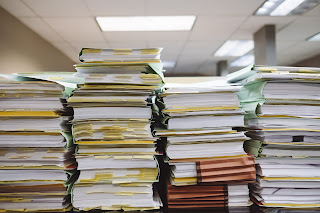
Starting to get out of hand, huh?
Spencer Moore: I have no “process.” But I have like, a zillion different narrative bits that I’m always fooling with in my head, like an 800-pound Rubic's Cube with about a million different sides… Seriously, I’m locked and loaded for whenever the money guys come a’knockin’.

B. Clay Moore: My last Aftershock book, Miles To Go, combined two different ideas I'd had around forever, and *also* included a scene I'd written 15 years ago for a graphic novel I never finished, based on a real experience.

Jay Requard: I outline my ideas if they have any real pull with me, so once that outline is filed away I go about what I'm working on which is usually 1-2 manuscripts and an editorial project but I'm actually reading again for. Part of the hard answer to your question that might rankle people is psychological: why would an idea bother me when it's the next thing I can do? If you have this idea in your head that there is no real rest in this *life* as an author, then you finish one project and immediately go on to the next. Having that backlog keeps the work going and the chance of making it continue.

Timothy Joe Kirk: Middling, sometimes I've got to make a note right now but can write it and go back.

Jonathan Sweet: They can be a distraction when the writing isn’t going well on my current project. They’re that bright shiny object over there … I try to balance the demands by jotting down notes as those story points come to me and then jumping back over to the current project

Bobby Nash: When something new hits, I jot down some notes to return to later. If it's an idea related to one of the projects in some form of production, I go ahead and start writing it down. Yesterday, oddly enough, I wrote a chapter for the 3rd Sheriff Myers book, which I technically haven't started writing yet. The chapter was so vivid in my mind I went ahead and wrote it. Unusual for me as I don't generally write my first draft out of order, but I knew if I didn't, I would forget it. Or, at least part of it.

Elizabeth Donald: My ideas are never a distraction. Unfortunately, sometimes they grow into fully-fledged stories with plots and twists and characters and all those lovely nuances just waiting for me to hamhandedly put them on the screen. When they reach maturity but I don’t have time to write them, it gets annoying. I was just telling a colleague last week that I have Novel A at the nine-tenths mark with a publisher waiting, Novel B plotted but not written, Collection A half-written and Collection B at the one-quarter mark, and all of these are potentially paying projects, plus a burgeoning master’s thesis. So what’s occupying my mind when I’m two minutes from falling sleep? Novel C, which no one wants and isn’t on anyone’s schedule. Stop it, Novel C! Wait your turn!

Let's be honest, what percentage of your ideas, at least those interesting enough to record for "one day," ever really make it to the forefront of your brain and get worked on as potential stories? How do you prioritize what becomes a valid new project versus what must remain in the "not yet" pile in your inventory of ideas?

Michael Dean Jackson: Honestly, I don't know how many of the dream projects will ever see the light of day. On a good day, I'd say maybe half, but realistically I'd have to say four...maybe five... and only because I have actually taken a stab at writing those

Ef Deal: My head is full of stories all the time, but they don't interfere with my writing. If I get stuck on a piece, I turn to another idea for a bit. Then I see an anthology opening, and five new ideas pop into my head, and I write them.
What do I work on next?
Roger Stegman: From 1997 to 2006, I had more ideas than I could write, so I posted them on bulletin boards. I posted at least an idea a day, and most years I posted from 50 to 400 extra ideas a year. Going through some at one time or another, one or two a month were really good. Most were drivel, but I never knew that until long after it was posted.

Jonathan Sweet: A pretty small percentage. The ideas keep coming because that’s the easy part for me. The unused story idea is the wonderful, perfect, unspoiled nugget. Sitting down and cranking out the stories are always more of a challenge. I’ve accepted that a lot of these ideas will never make it to full story form.

HC Playa: I don't really have extensive notes. I might scribble an outline, some brainstorming plot, and conflict ideas, but I tend to keep it all in my head until I build a world that is too complex. Sometimes I'll get a story started, run into a plot issue and set it aside, but that's the extent of my "idea" log.

Ernest Russell: To date, I've had three accepted and are awaiting publishing. There are perhaps half a dozen with progress made on them. Currently, I have nothing on a deadline. I've been working in collaboration on a novel, I have a sequel to a novella started, and an ongoing story a friend and I share just for the fun of it. Once the first draft of the novel is completed I have a collection I've worked on here and there, I want to concentrate on it. It's the furthest along of my different WIPs. It has the benefit that I already know there is interest in it. Beyond that, Whichever one strikes my interest. When it does, magic happens. Sometimes, nothing happens.

Bobby Nash: I don't know numbers, but there are germs of ideas that will probably never go beyond that unless another idea comes along that adds to that idea. Ideas are always flying at me, but there's more to a good story than just an idea. Sometimes, you have to wait for the right idea and character to meet.

Elizabeth Donald: I’d say maybe 30 percent of my ideas eventually come to fruition, but they may linger in the Marinade file for years. One concept went through five iterations before it morphed into the project that I sold. And really, that last part is what’s key to which ideas become a valid new project and which ideas go to the back of the line. Harlan Ellison once asked me how many stories I had sold, and I flubbed the question because Harlan made me nervous. But it occurred to me later that he didn’t ask how many ideas I’d had, or even how many stories I’d finished to my satisfaction. He asked me how many I had sold. Because when you do this for a living, that’s how you pay the rent. I’ve been told that perhaps I focus too much on the salability of a project, perhaps to the detriment of the art. That’s possibly true, but there’s also a lot of privilege to the idea that we should do art first and market second. When you have the rent paid by other means, maybe you can do art first. But when you feed your family by the written word, you need to prioritize what you can sell and keep your work out where the eyeballs can find it. So call me a craven commercialist, but buy enough of my books so I can go write Novel C, would you? That book won’t shut up.

B. Clay Moore: Just had a new book approved with a publisher, and should be outlining it while waiting on the contract, but another old idea that I'd partially developed with an artist a decade ago jumped up and bit me, and I'm now polishing that to pitch. 

If an idea is good but doesn't fly, I always keep it in the back of my busy brain.

My organization is more like "dis-"

Jay Requard: I would refer to the answer in my second question, but basically if it sticks with me for a bit I finally get to writing it down in an outline. I do have outlines I will never touch in that notebook, but I also sold three stories last year from something I wrote two years ago in it. I'm also proud to say I've completed a number of them as well.

Timothy Joe Kirk: Quite a few, sometimes I find a better way to approach the idea later.

Matt Hiebert: Three novel-length ideas in the background. If I start something I have to finish… at least a first draft. I plan to finish at least two of the novels.

Thursday, April 14, 2022

Not So Famous Last (and First) Words


All writers tend to have their favorite opening sentences (or paragraphs) and closing lines from stories they've read. They tend to be so well know they end up on mugs and shirts and all kinds of what-nots and doodads. 

You probably know the lines so well, I won't even have to list the sources. Go ahead. Try it.

  • It was the best of times, it was the worst of times, it was the age of wisdom, it was the age of foolishness, it was the epoch of belief, it was the epoch of incredulity, it was the season of light, it was the season of darkness, it was the spring of hope, it was the winter of despair.
  • So we beat on, boats against the current, borne back ceaselessly into the past.
  • It would be pretty to think so. 
  • Call me Ishmael.
  • It is not often that someone comes along who is a true friend and a good writer. Charlotte was both.
  • As Gregor Samsa awoke one morning from uneasy dreams he found himself transformed in his bed into a gigantic insect.
  • The story so far: in the beginning, the universe was created. This has made a lot of people very angry and been widely regarded as a bad move.
  • After all, tomorrow is another day.
  • Ships at a distance have every man’s wish on board.
  • But I don't think us feel old at all. And us so happy. Matter of fact, I think this the youngest us ever felt.
  • It was a bright cold day in April, and the clocks were striking thirteen.
  • He turned out the light and went into Jem's room. He would be there all night, and he would be there when Jem waked up in the morning.
  • The creatures outside looked from pig to man, and from man to pig, and from pig to man again; but already it was impossible to say which was which.
  • I am haunted by humans.
  • There was the hum of bees, and the musky odor of pinks filled the air.

But what about your favorite opening and closing lines from your work? Lay 'em on us. We want to know. 

Elizabeth Donald: ​

Sara Harvey thought she was doing pretty well until the corpse started in with the puns. -- Blackfire

It really was a dark and stormy night. -- A More Perfect Union

Ernest Russell: 

1st line; Orland squinted as he tilted the bottle.-- From an unpublished short story

Last line; As he hit the river, his hand closed on liquid nothing. -- From an unpublished short story

Larry Young:

 It's been so long I forgot how much I hate sportin' the aluminum underwear. -- One Shot, One Beer

Anna Grace Carpenter: 

Opening -- On a hot July day Mama went cracked, locked my sisters and me in the tool shed, and lit us up like a Christmas tree. - Of Lips and Tongue

Opening -- Opening: During my last days on Malachee, I told Diamondback Jack it didn't matter how many souls I sent to an early grave, I could only die once for my sins. -- A Fistful of Dust

Van Allen Plexico: 

Down rained the night, cloaked all in fire and brimstone. -- First line of Lucian

Hawk awoke naked and screaming in the heart of a shattered galaxy. -- First line of Hawk

My father burned. -- First line of Barnak

The ghost of a god stood on a dead world and screamed his frustration at the shattered stars. First line of Kings of Oblivion

John Linwood Grant: 

Private Carter failed to die tonight. -- opening line of Songs of the Burning Men

David Wright: 

Everything you know about Genghis Khan is wrong. -- unreferenced

Allan Kemp: 

Nell cradled the semi-automatic assault rifle like a baby, keeping it close to her body and giving it plenty of support with both arms. -- unreferenced

Lucy Blue: 

To make the black cat bone, you have to boil the cat alive. -- The opening line from a horror/romance story in Eat the Peach, "Black Cat Bone"

Guess what, he told her, whispering in his mind, knowing she would hear him. I can do magic, too. -- My favorite closing, from The Devil Makes Three

Marian Allen: 

My wife and Lonnie's wife leant against the back door with their arms crossed over their chests and that blank look they always get when they're trying to decide whether to laugh or rip us new ones. --First line of "Lonnie, Me, and the Hound of Hell"

“You make me sick,” said Tartarus. -- Last line of Silver and Iron

Bobby Nash: 

Abraham Snow knew he was about to die -- and the thought of it pissed him off to no end. -- Snow Falls

Ef Deal: 

When a guy like Czesko says he wants to get baptized, you know it's gonna be weird night. --  "Czesko," F&SF March 2006

Mari Hersh-Tudor: 

She was alien, and she was going to die before he could find out where she came from. -- The War Dogs

The backflow regulator exploded in a shower of hot metal and sparks and this time it definitely, absolutely, was not Arin Riobi’s fault. Starfly lurched and threw Arin across the cramped compartment as it dropped out of hyperspace. Unintentionally. -- How Not To Hire A Mechanic

Danielle Palli:

So you see, my darling. You're not the only one with secrets. -- Between the Layers, Book #3 in The Data Collectors trilogy 

Sean Taylor:  

The woman across the table from me wasn’t really a woman at all. -- -- From "It's Christmas, Baby, Please Come Home," Show Me A Hero

The man who killed me wore a tattoo of Santa Claus across his chest. -- From "Sin and Error Pining," Show Me A Hero

The woman’s accent was just German enough to get his attention, all dripping with sexy gutturals and thick vowels, just exotic enough to trick a man’s ears into thinking he was having a drink with Marlene Dietrich instead of some two-bit nightclub singer in a no-account New York dive like Belle’s, but the comparison stopped cold at the woman’s voice. -- Opening from "Die Giftige Lilie,” The Ruby Files Volume 1

 “Oh boy. I should’ve tried harder to get killed.” “Like I’d let you get off that easy.” -- Closing from "Die Giftige Lilie,” The Ruby Files Volume 1

Tuesday, March 29, 2022

Oh, Oh, Oh, It's Magic! Building Magic Systems in Fiction.


It's a staple in the worlds of fantasy fiction. Not just that, but you also encounter it in some sci-fi tales and quite a few of the various "-punks" that scatter the literary landscape. But outside of just copying the classics, how do writers actually put together a system of magic that makes sense in their settings?

How much thought do you put into your magic systems in fantasy (or even sci-fi in some situations)? Is it similar to the world building or even like another character or setting in its own right?

HC Playa: How deeply I delve into the system rather depends on the story. Generally there are some things that I have to consider:

  1. Does everyone use magic?
  2. Is it attached to divinity/religion?
  3. Is it innate or conferred through special objects or rituals?
  4. Do all beings in the world use or view the magic similarly?

Ernest Russell: Great Topic! I have found codifying the basics is important. I liken it to Asimov's laws of robotics.. here are the guidelines now, normally more than three, then ask can this work according to these guides in attempt not to break the system. Of course, someone often ends up breaking or trying to break the system. Intentional- they're usually a villain. Unintentional - often the McGuffin for the story.

Marian Allen: In my fantasy trilogy, Sage, the "magic" and "religion" are pretty much the same thing. I did quite a bit of research and thinking and note-taking to separate this into two different attitudes/approaches, one of harmony and one of domination. I wouldn't say the two are characters, but they certainly reflect and define the "good guys" and the "bad guys."

Frank Fradella: When I write in a magical setting, it's important for me that magic is vital to the story. If I can take magic out of the story and still tell the story, then I'm doing it wrong. For me, it can't be something you tack on for flavor. Magic IS the setting.

Tamara Lowery: My magic system is pretty soft, and I tend to make things up as I go. I have been pleasantly surprised when my subconscious applied known science on some aspects. For instance, I have gold coated vines which are carnivorous. Most real carnivorous plants develop in environments which don't afford much sunlight for photosynthesis. I didn't do that on purpose, but it works.

Sean Taylor: For me, magic is not a typical part of my fiction, but in the case when it is important, I like to take the time to figure out why and how it works. I like to get beyond the sort of "djinn" approach, where anything goes. I like the idea of tying magic to things like the five senses, the four humors, or the base elements, that sort of thing. 

What are your rules/guidelines for designing a magic system in your novels and stories?

Marian Allen: The rules/guidelines are the same as anything else: a magic/religious system has to have its own internal logic and has to have a solid reason for being part of the story or novel, not just be window dressing.

Frank Fradella: I try to think of magic as "science we don't yet understand." I don't bend science to fit my stories, and I give magic the same respect. I have clearly defined rules for how magic works, what it can do, and what it can't do. I work within the broad limits of those rules.

Mari Hersh-Tudor: I have two magic systems in my fantasy world: one for humans and one for nonhumans. Humans require study and spells and accoutrements. Nonhumans have an innate ability and require only discipline and willpower.

Kaleb Kramer: I tend to do a lot of thought, and no real rules, because it is very different for each project, and so much of the thematic and symbolic elements are tied into magic, that addressing magic is, for me, fundamentally addressing the theme, tone, and feel of the entire project

Sean Taylor: The best idea for magic I ever heard, and the one rule I've stuck to throughout my career came from you, Frank. It's this: If magic is energy, then it must follow the laws of energy. If something happens, an equal and opposite happens elsewhere. Nothing new can be created without pulling from something else. The law of energy conservation must be maintains. We even wrote a pair of stories that did this for a holiday themed posting on iHero. So much fun. And such a good rule for energy-based magic. 

Ef Deal: I put a lot of thought into it. Recently I researched both zombies and vampires before literature or film defined them. Once I realized the variety of types in myth and legend, I had to establish my own world’s version of these, and my workshop members who were not genre readers insisted it was a huge mess of disinformation. EVERYONE knows vampires sparkle and burst into flames in sunlight. EVERYONE knows zombies are the result of science gone awry—radiation or patient zero. But I spent hours and hours of research that didn’t involve watching movies. I had to take info time refuting the misapprehensions. In the end, I had my MC mock the sources of those tropes.

Ernest Russell: Another aspect to figure out what type of magic and is there more than one type? Will it be physical magic? Energy based? Spirit based? Is the mana high, low, none.

I have a series of short stories all set in a low mana version of our world. The magic is based on will and is channeled through the pineal gland. A few people can use a focus to do magic. Others have to make intense preparation, have large number of people, ritual and so to create magic. And the vast majority don't have a clue. The currently published is in All That Weird Jazz. Another, following different character will arrive in a Gothic horror anthology.

HC Playa: Much like with my plots, in my early writing magic tended to be as I go, making up the rules as I went. The more I have written, especially after taking a world building workshop, I tend to treat it as part of the world building and decide the things listed above before diving into the story. One of my most common choices is to apply different "rules" OR different views of it to different groups, which automatically builds conflict into the system and plot.

Tuesday, March 1, 2022

The Soul Sneaking into the Creation


This week, we're talking about how much of your soul (see yesterday's Motivational Monday) goes into your work. Are you intentional, do you avoid it, or does it sneak in regardless? How much of your "soul" do you put into your work? 

How much does your writing reflect your personality?

Ef Deal: I don't think any one character reflects my personality; each of my main characters does carry a piece of me. One is always focused on work to the exclusion of all else. Another is mistrustful of the world, but fiercely loyal once her trust is gained. Another is Earth Mother to younger people, and Mama Bear if you hurt one of them (or in her case, Mama Wolf). Music is a huge part of my stories.

Bobby Nash: There's a lot of me in my work. There's a small piece of me in every character, some more than others.

Barry Reese: I don't usually sit down and deliberately try to put my personality and beliefs into my work but I'm sure it creeps in, especially over time.

HC Playa: As a beginner writer: oh I don't put THAT much of me into my work.

Me re-reading after awhile and lots of personal growth... 👀 Well then that character hits a lot closer to home than I thought.

As I have written more I feel like all my characters are an amalgam of traits, some from me and some from people I have known. I'm smart and sarcastic and it took me like 5 novels to realize all my characters are either highly educated (traditionally or by some alternative means) and very smart.... probably smarter than the average bear. I put in a few comical morons, but realized that my worlds are potentially unrealistically populated with smart people 🙄. Why? That's what I know. While not particularly educated, my mother is quite smart and fostered in myself and my siblings a love of learning and questioning. Growing up with equally gifted siblings, gifted friends, attending university and majoring in chemistry, working research and getting a PhD and in turn having equally gifted children... My world definitely skews scary smart with the occasional average individual. It's one of those things I didn't intend on putting in, but it's a reflection of my lived experience.

Susan H. Roddey: My writing definitely reflects my personality. My weird sense of humor and love of snark tend to come out a good bit in dialogue.

Marian Allen: Quite a lot. My writing almost always involves exploring the question, "What does it mean to be my brother's keeper?" I also almost always explore it on a tangent, bouncing off into humor and oddity. 

John L. Taylor: My writing reflects my artistic and visual aesthetic more than my personality. I tend to put some of my anxiety or childhood phobias into my horror writings but rarely does a character really reflect me as a person. The only story I ever really my own personality into was called "Flying Cars," and was about raising a child with Autism. It's also the only story I ever won a cash prize for, so maybe I should more often. 

Sean Taylor: I'm not the kind of writer who can keep my "soul" out of my work. If something is a part of me, it's going to work its way into the nooks and crannies of my writing. Feelings, things I'm studying or researching, themes, POVs -- I just can't keep them out. They don't always come out in my actual characters though, more often through my metaphors and themes and consistently appearing subject matter. And the more I change and grow, the more my writing will reflect those changes. 

An example, the more I get fed up with the battle my LGBTQIA+ friends and folks have to fight to change the system (and just be acknowledged as important to the world), the more I will see them and that battle reflected in my writing. But not in a preachy or "let's make a point" way. It will be reflected more in the types of stories I tell and how their stories become important within those tales. 

Another example, I grew up in the South and I bleed red Georgia clay if you cut me. So that's the world I know best. That's the world that seeps out, either in the setting or in the backgrounds of many of characters. 

How much does your writing reflect your personal beliefs? 

John L. Taylor: My political and religious beliefs usually only manifest in my poetry. Though in my horror writing, I lean on what people would consider traditional "Satanic" imagery (Satanic in the "what rural Christians think devil worship looks like," not Satanic in the "Anton LaVey/modern Satanism" sense). That is both a product of my upbringing and an attempt to resonate with a rural American audience, but doesn't represent my opinions or beliefs.

HC Playa: As for beliefs, I use stories to hopefully make readers think or at least weave a bit of tolerance into their mind. Most of my protagonist share my beliefs in some way or go through a personal growth arc that opens their eyes. I wasn't particularly good initially at writing bad guys that didn't come off as comically over the top. The more I write the better I have gotten, but it still is a challenge to write characters that are extremely different morally. 

Barry Reese: I mean, I'm a liberal pacifist that has made a career of writing gun-toting vigilantes. In terms of my personal and political beliefs, I'm not really like most of my recurring characters... BUT they all share some of my spirit, regardless. 

Sean Taylor: Like I said earlier, every part of who I am ends up getting into my stories. Even in little ways. As a Christian believer (in spite of how my conservative friends and family think I'm become a sort of liberal heretic --ha!) I have a strong weakness for redemptive stories (I even wrote a tutorial about it here on the blog -- check out he keywords on the side of the page for links). My characters tend to understand religion and reflect a worldview that at least started with some kind of religious instruction, even if they no longer believe or follow it. 

I also tend to revisit the idea that people only learn through pain and loss, and we are too stupid to really learn and embrace change during times of great joy, and so that's also a common theme in my work, which tends to reach the point of bittersweet-ness at best, seldom true joy. 

Susan H. Roddey: My personal beliefs are always expressed in my books, whether intentional or not. I've always considered my stuff to be purely escapist, but the more I look in on it, the more I realize that more conservative readers might be put off by some of what I write.

Bobby Nash: Some. I can't have every character thinking the same way I do, believing the same things I do, etc. That leads to boring drama if there's no tension. I try to let the characters be as well-rounded as possible. I get better interactions that way, I think.

Ef Deal: My religious beliefs are all over my works. In my fantasy series, my MC was betrayed by her lover, a temple priest, so she rejects all religion although she is a dedicated believer in the Sacred Spirits. In my steampunk, my MC has a thorough knowledge of Greek and Hebrew, and studied Scripture (such as it was known in 1843) on her own to arrive at her beliefs, which are thrown into turmoil as she encounters lycanthropy, magic, ghosts, vampires, and the aether. She has a lot to say about it, too.

Do you find it easy or difficult to write characters whose beliefs and personalities are vastly different than your own, and do you tend to relegate them to side characters or use them as main characters? Got any examples? 

Ef Deal: I've learned a lot about religions of the world, and I've seen religion used as a weapon as much as a healing balm. I've experienced divine visions, and I've suffered immense prejudice for my questions and doubts and rejected tenets of dogma. I feel pretty confident writing the good and the bad of any religion.


Other aspects of "personal beliefs," such as ethics, politics, relationships, gender perceptions, etc., I admit I'm not so adept at. I'm a big believer in mercy and redemption as much as I embrace justice. I like to believe the best of people, but I feel comfortable writing the worst too.

Marian Allen: Difficult. For instance, Darryl, in Sideshow in the Center Ring, is a rat bastard, the shadow character of the narrator, Connie. They come from the same background, and superficially have the same goal and seem to have the same attitude, but the fundamental difference between them is profound. I had the hardest time writing him! The most grinding, forced work I did (although it doesn't seem so when it's read) was writing Darryl, possibly because he was so close and yet so far from my main character.

Barry Reese: The notion that justice and the law are not always the same is something that I agree with... as is the feeling that you stand up for the underdog... and the idea that guys and gals in thigh-high boots are sexy is something that I and my characters all agree upon! I have occasionally written characters that were diametrically opposed to me... but, honestly, they usually end up as the antagonists in my stories.

HC Playa: For example in my first novel, the villain is an alien bent on domination based on past glory. While there have been plenty of historical figures that fit that trope, it's a simple villain.

In a novel I have written that's in the publishing process I have an immortal being that at first glance seems just as over the top and evil for evil sake as the Goloth ruler in Daughter of Destiny, but then we start to see glimpses of his motivations and the picture starts to shift. Who is good and who is bad becomes a bit murkier.

Personally, I feel this is more like daily real life. People are not all bad or all good. Good people can do bad things and bad people may truly think they are doing the right thing or be guilty of atrocities and still do good things. Real people are murky and so well written characters reflect that.

John L. Taylor: I don't find it difficult to write perspectives other than mine in general. Truthfully, writing gives me an outlet to understand other people and voices than my own. I have faced the criticism children in my stories seem incredibly dumb/gullible. This stems from the fact that growing up as an autistic kid, I was reminded constantly that I wasn't normal. Hence I initially wrote children to be like what adults in the 1990's seemed to expect kids to be. Apparently, I overkilled on that.

Bobby Nash: It's not difficult. I've been doing this long enough that I can divorce the characters beliefs from me. I have written characters doing and saying horrible things I would never even comprehend. I remember that they are unique characters. They are not me. I'm here to tell an entertaining story (I hope) and not to preach or push an agenda.

Sean Taylor: I write all kinds, and they all suffer under the weight of my ink. (Ha!) I really love the idea I learned from C.S. Lewis that the greatest good can become the greatest evil if we begin to make it the thing we truly "worship" with our thoughts and deeds and emotions. It's a lesson from his awesome book The Great Divorce. That kind of spiritual hubris tends to affect both my heroes and villains alike, so it makes it easy for me to write them all, regardless of their individual beliefs, POVs, genders, sexual identities, etc. 

Susan H. Roddey: Writing characters with different personalities isn't "difficult" per se -- not in that they're hard to write. They're hard for me to UNDERSTAND. But people are different and they have different motivations. Conflict always starts with a difference of opinion, so they're necessary. As a rule, I try to avoid blatantly obvious political/religious/social clashes (I'm writing books to get out of the real world. I don't want to bring it into my fiction) because I don't want to alienate people. The one example I could give is the one thing I've written that may never see the light of day simply because I'm not the type of writer to let that kind of personal catharsis out into the world.

Tuesday, October 26, 2021

Gothic Traditions and the Contemporary Genre Writer


Hey, writers! Let's talk about the Gothic traditions. Big, old houses. Creepy relatives. Family secrets that still affect the present... If the success of shows like The Haunting of Bly House and Midnight Mass show us anything, they show us that these tropes are still with us and aren't just limited to old-timey stories. 

What's your history with Gothic stories? Are you a fan, or did you come to them by seeing the stories they influenced in novels and on TV? 

Marian Allen: A friend introduced me to Gothic romances in college: The kind with a heroine in a long dress or a nightgown running in the light of a full moon from a mansion, looking over her shoulder in apprehension. The cover didn't always match the book's contents; they were (the ones my friend passed to me) much more interesting than that. Then there was Jane Eyre, Wuthering Heights, parts of Frankenstein, parts of Vanity Fair, and other classics influenced by the Gothic tradition. Oh --Rebecca

John L. Taylor: I grew up both reading books like The House of Seven Gables and watching old horror films from Universal and Hammer. These are heavily Gothic in their visuals. Also, German expressionist films like The Cabinet of Dr. Caligari gave me a solid visual influence rooted in Gothic, if distorted imagery. 

Cynthia Ward: I enjoy Gothic fiction in its various iterations, and I've written a gothic horror story (whether or not it's supernatural is left to the reader).

Shannon Murphy: I love old Gothic horror stories! The chilling atmosphere, the spooky plot twists.

Ef Deal: I live in a Gothic house. We were haunted for a few years, and we have had a few things visit us. I grew up with ghosts in my bedroom. Naturally, I gravitated toward Gothic stories. 

Sean Taylor: My first exposure in novels was Dickensian rather than pure Gothic, but from Charles' dusty old mansions it was an easy leap to the worlds of dark romances like Wuthering Heights and The House of the Seven Gables and creepy settings of early horror like Dracula and Frankenstein. My movie and TV habits at the time only reinforced the visuals of a Gothic style and the storytelling motifs of family secrets and isolation from the surrounding villages and towns, thanks to Dark Shadows, Hammer's horror movies, and, of course, Elvira introducing me to lots of Gothic revival B-movies I had been too young to see when they originally hit theaters.  

In what ways have the tropes of Gothic fiction influenced your work? 

Lucy Blue: My latest book, The Devil Makes Three, is a Southern Gothic horror novel -- NOT a romance, though as with most gothic stories, there is a relationship at the center of it. It takes place at Briarwood Plantation, which was deserted in 1837 when the English fiancee of the owner's daughter axe-murdered the entire family. When my book begins in the present day, Briarwood has just been purchased by a bestselling horror novelist, Jacob McGinnas. He's been suffering from writer's block, like you do, and he intends to open it back up to write his masterpiece about the murders and the hauntings they have allegedly inspired. A widowed local librarian, Serena Decatur, is helping him with his research, and together they find out the grisly murders are just the tip of a very nasty iceburg. Briarwood, both the house and grounds (a wilderness that hasn't been touched in almost 200 years), and Saxonville, the small town nearby, are pretty well soaked through with evil that's both human and supernatural. So we've got a grand but ruined haunted house and a whole bunch of creepy family secrets--Serena, a Black woman, discovers she has connections to Briarwood far beyond academic interest. And every horror in the present is rooted somehow in the past. Pretty much everything I've ever written has had some kind of gothic element. I mean, my medieval romances have stuff like vampires and haunted oubliettes, and my westerns have zombies. But The Devil Makes Three is me going full-on Gothic horror.

Ef Deal: Then I read Rebecca and thought WOW, THIS is what real Gothic is. I want to do this! Scary, romantic, a buried secret, a grisly murder, a mystery... And I have tried include them all.

John L. Taylor: It influences my work mainly in the form of descriptions and imagery, but also in the form of having female leads who are often confronted by the supernatural. Also, motifs like family secrets in far-flung locations, old mansions, etc. are a theme I'm toying with in an upcoming short story, though mixed with more cosmic horror tropes. 

Marian Allen: My period (1968) suspense, A Dead Guy at the Summerhouse is basically the opposite of those romances I read in college: The protagonist is a young man, and he tries his damnedest to NOT find out anything about the creepy relatives and their haunting past. Nope, just wants a paycheck, thanks.

Cynthia Ward: If anyone's interested, my story, "The Midwife," is available to read for free at https://www.nightmare-magazine.com/fiction/the-midwife/

Sean Taylor: As a pulp, horror, and mystery writer, the idea of family secrets and the past influencing the present negatively are strong elements in my work, even though I rarely set any of my stories in a Gothic mansion. For my superhero fiction back during the days of Cyber Age Adventures, not so much influence at all though. 

How do you see them changing in light of a far more digital world, and do you believe these historically important parts of stories will continue to stick around for new and upcoming writers?

John L. Taylor: I can see these tropes being continued in the digital publishing era, The Gothic story just resonates so well with audiences it is unlikely to fade away yet. Things like gender roles or locations may change, but that visual style will always be reinvented in some form. For a few years now, the Gothic aesthetic has been reduced to a caricature, a cartoon trope. But I believe it's set for a resurgence like the one it had in the early 1990s under Burton and Sonnenfeld's influence.

Sean Taylor: I think the setting that originally defined Gothic traditions will become less and less used,  particularly in contemporary mainstream fiction, but never truly go away. Building on what John said, movies tend to re-visit that at least once during each new generation of filmmakers. I do think that the concepts and themes of Gothic works will continue to inspire stories for years and years to come. We see bits of it in nearly all the works of Neil Gaiman, Stephen King, and even in non-horror works such as Jane Smiley's A Thousand Acres and even several works by Joyce Carol Oates Horror will always have a place for it, and dark romance as well. But I also feel sure that literary writers too will continue to look for ways to either subvert the tropes or play off them for new effect or to use them as a sort of storytelling shorthand when needed. 

Shannon Murphy: I wrote a Gothic story about a werewolf. I let my Beta reader read it, and he said I should scrap it, that such stories are "out of date." It made me sad, but I think he might be right

Marian Allen: I see no reason for the old tropes to vanish, no matter how the stories are told. There are still foreboding houses of whatever age or size, still family secrets, still creepy relatives. Anything that works will always be with us.

Cynthia Ward: What they might be like in the future, I don't know. Tamsyn Muir's Gideon the Ninth is a recent (and excellent) SF novel that very imaginatively shifts the tropes you mention into space and mixes in necromancers, lesbian swordswomen, and a locked-room mystery.