Showing posts with label Watson Report. Show all posts

Sunday, December 24, 2023

The Watson Report: THE PULP AVENGER’S CHRISTMAS

by I.A. Watson


’Twas the night before Christmas and down in the gutters

The vermin were stirring with curses and mutters.

Mister Big puffed on his big fat cigar

And stared at his henchman beside the wrecked car.


“What do you mean that the loot isn’t there?

How can it be missing?” he said with a glare.

“And where are the guys that we sent out as guard?

And who wrecked the auto? And who left that card?”


For all that was left of the briefcase of loot

Was a silhouette logo, some man in a suit

With a mask and a gun, on a card on the dash.

No sign of the gunsels, no sign of the cash.


“I want all the boys out patrolling the street.

Beat up all the stoolies and turn on the heat.

I want that case found and my money returned!”

Mr Big wasn’t about to get burned.


But as all the goons made to shake down the bars

A smoke grenade rolled out right under the cars

And a horrible laugh pierced the still Christmas night

And the thugs and enforcers looked round them with fright.


“Oh felons! Oh killers! Oh infamous crushers!

Oh murderous cutthroats and drug-dealing pushers!

Oh sinners! Oh cowards! O criminal scum -

Your dark days are numbered, your reign here is done!”


Then out from the alley through shadow and fume

Came a fast-moving figure of terror and doom

With two pistols blazing and fire-filled eyes

As he cut through the villains and made for the prize.


“Protect me, you idiots!” the overboss cried.

His thugs screamed and scattered as more of them died.

And the gentleman champion advanced on his prey;

Their crime-spree was over and now they must pay.


Mr Big fumbled a gun from his coat.

Before he could fire, strong hands clutched his throat.

“You thought you could kill me,” the gentleman said.

“But nothing can stop me at all now I’m dead!”


Police sirens roared through the slush-slickened street

To the site where the gangsters had met their defeat

And some men lay dying and some lay there dead

And Mr Big gibbered, his sanity fled.


And they heard a voice call, as the snow blurred their sight:

“There is justice for all… and to all a good night!”


Best wishes

 IW

Thursday, February 17, 2022

The Watson Report with I.A. Watson

This blog has been very fortunate to have some amazing writers to contribute articles and interviews. One of my favorites was a column about historical and mythic concepts written by I.A. Watson. I wanted to look back and celebrate his contributions today by sharing the full list of his work at the blog. 

The Watson Report: Only the Brave Deserve the Fair – the Arthurian Gulf
https://seanhtaylor.blogspot.com/2017/12/the-watson-report-only-brave-deserve.html

The Watson Report: On Barbers
https://seanhtaylor.blogspot.com/2017/06/the-watson-report-on-barbers.html

The Watson Report: Arthurian Grammar -- A Primer by I.A. Watson
http://seanhtaylor.blogspot.com/2016/05/arthurian-grammar-primer.html

The Watson Report: Boy Meets Girl by I.A. Watson
http://seanhtaylor.blogspot.com/2016/04/boy-meets-girl.html

The Watson Report: Magic Swords and Their Makers by I.A. Watson
http://seanhtaylor.blogspot.com/2013/07/the-watson-report-magic-swords-and.html

The Watson Report: Behind Every Good Man -- Thoughts on Pulp Heroines by I.A. Watson
http://seanhtaylor.blogspot.com/2013/06/behind-every-good-man-thoughts-on-pulp.html

The Watson Report: Change and Growth for Characters in Pulp and Comics by I.A. Watson
http://seanhtaylor.blogspot.com/2012/11/change-and-growth-for-characters-in.html

The Watson Report: The First Whodunnit? (Part Two) by I.A. Watson
http://seanhtaylor.blogspot.com/2012/09/the-first-whodunnit-part-two.html

The Watson Report: The First Whodunnit? (Part One) by I.A. Watson
http://seanhtaylor.blogspot.com/2012/09/the-first-whodunnit.html

The Watson Report: Getting to know Aria, a Princess of Mars
(no relation to that Thoris woman) by I.A. Watson
http://seanhtaylor.blogspot.com/2012/07/getting-to-know-aria-princess-of-mars.html

The Watson Report: The Baffling Story of Spring-Heeled Jack by I.A. Watson
http://seanhtaylor.blogspot.com/2012/07/baffling-story-of-spring-heeled-jack.html

The Watson Report: Starting a Story by I.A. Watson
http://seanhtaylor.blogspot.com/2012/07/ia-watson-on-starting-story.html

The Watson Report: How Bad Guys Die by I.A. Watson
http://seanhtaylor.blogspot.com/2012/01/how-bad-guys-die-by-ia-watson.html

The Watson Report: On Heroines by I.A. Watson
http://seanhtaylor.blogspot.com/2012/02/on-heroines.html

Thursday, December 13, 2018

The Watson Report: The Medieval Final Girl

I.A. Watson
by I.A. Watson 

The slasher horror tradition of a monster preying on young women until the last one somehow manages to destroy him is a lot older than schlock cinema.

I refer you to Child’s Ballads, collected in the 19th century but containing folklore going well back into the Middle Ages. It is from Child’s work that we have the oldest known Robin Hood stories, and ballad #4 is a prime example of the sort of predator vs. girl victim story that was a very popular strand of balladeering.

The song is most often called The Outlandish Knight (literally a knight from the outlands, the debatable and turbulent border between England and Scotland where reavers preyed), but it appears in many other forms across Europe, including the English ballads May Colvin or False Sir John, Lady Isabel and the Elf Knight, The Gowans Sae Gae, Pretty Polly, and The Water o’ Wearie's Well. Possibly the oldest version is the Dutch folk tale of Heer Halewijn, dated back at least to the 13th century.

Here is the Child version, with interjected comments from me:

    An Outlandish knight came from the North lands,
    And he came a wooing to me;
    He told me he'd take me unto the North lands,
    And there he would marry me. 

There’s a load of medieval romance stories where a mysterious stranger turns up to sweep a young girl off her feet (and into bed). Quite a lot of them don’t end well (c.f. Little Red Riding Hood)

    'Come, fetch me some of your father's gold,
    And some of your mother's fee;
    And two of the best nags out of the stable,
    Where they stand thirty and three.'
    She fetched him some of her father's gold,
    And some of the mother's fee;
    And two of the best nags out of the stable,
    Where they stood thirty and three.
    She mounted her on her milk-white steed,
    He on the dapple grey;
    They rode till they came unto the sea side,
    Three hours before it was day.

Medieval stories of this kind often had cautionary tales woven in, like “wolves may lurk in many guise”. “Beware strangers who encourage you to elope with them and your parents’ money and goods” is right there in the bullseye.

    'Light off, light off thy milk-white steed,
    And deliver it unto me;
    Six pretty maids have I drowned here,
    And thou the seventh shall be.

Yes, he’s a mass-murderer.

This ballad also strays into Bluebeard-type tropes of a husband or lover who disposes of his partner. There is an undercurrent of sexual violence and sexual marital violence in many old folk stories. Perhaps that’s not surprising since European law allowed a man to have sex with his wife at any time he chose, regardless of her consent (a law which was repealed in the UK in the 1970s!); it was legally impossible for a husband to rape his wife, and it was hard for him to be convicted of assault if he claimed he was simply enforcing his conjugal rights.

    'Pull off, pull off thy silken gown,
    And deliver it unto me,
    Methinks it looks too rich and too gay
    To rot in the salt sea.
    'Pull off, pull of thy silken stays,
    And deliver them unto me;
    Methinks they are too fine and gay
    To rot in the salt sea.
    'Pull off, pull off thy Holland smock,
    And deliver it unto me;
    Methinks it looks too rich and gay,
    To rot in the salt sea.'

The victim having to strip is another common element of ballads. We see it again in the traditional versions of Red Riding Hood, where the wolf commands her to take off her garments one by one and throw them in the fire, since she “won’t need them anymore.”

    'If I must pull off my Holland smock,
    Pray turn thy back unto me,
    For it is not fitting that such a ruffian
    A naked woman should see.'

Perhaps she should relieve him of his "sword."
Now we come to the turning point, the equivalent of those movie scenes where a female protagonist uses her gender against her captor. In some variants of this folktale it is the man who removes his garments so as not to ruin them with bloodstains, and turns his back to do so.

    He turned his back towards her,
    And viewed the leaves so green;
    She catched him round the middle so small,
    And tumbled him into the stream.

It’s interesting that in a culture where the heroes were usually male and the heroines were mostly there to be rescued by them there is a whole subculture of women menaced by men who then rescue themselves.

    He dropped high, and he dropped low,
    Until he came to the side, -
    'Catch hold of my hand, my pretty maiden,
    And I will make you my bride.'

In many of the corpus of medieval tales of unfaithful male spouses, or indifferent lovers who have impregnated a girl and then fled, or greedy conmen who have moved on to richer prey, at the point where the abused heroine finally gets the better of her tormentor he undergoes a change of heart, begs her forgiveness, and amends his ways. Most modern readers would probably prefer the heroine to kick him in the balls.

    'Lie there, lie there, you false-hearted man,
    Lie there instead of me;
    Six pretty maids have you drowned here,
    And the seventh has drowned thee.'

Here’s the payoff on this most popular version, though. She wins, he dies. Take that Freddy and Jason!

    She mounted on her milk-white steed,
    And led the dapple grey,
    She rode till she came to her own father's hall,
    Three hours before it was day.

That’s the main action, but now we come to a strange codicil. Sometimes in these stories the heroine heads home and nobody ever realises that she has had an adventure. It is an entirely private matter that she attempted elopement, faced betrayal, survived a murder attempt, and killed her tormentor. There’s something cultural in there, but I can’t quite fathom what.

    The parrot being in the window so high,
    Hearing the lady, did say,
'    I'm afraid that some ruffian has led you astray,
    That you have tarried so long away.'
    'Don't prittle nor prattle, my pretty parrot,
    Nor tell no tales of me;
    Thy cage shall be made of the glittering gold,
    Although it is made of a tree.'

 And then we have the bargaining with some creature to keep the whole ordeal secret.

    The king being in the chamber so high,
    And hearing the parrot, did say,
    'What ails you, what ails you, my pretty parrot,
    That you prattle so long before day?'
    'It's no laughing matter,' the parrot did say,
    'But so loudly I call unto thee;
    For the cats have got into the window so high,
    And I'm afraid they will have me.'
    'Well turned, well turned, my pretty parrot,
    Well turned, well turned for me;
    Thy cage shall be made of the glittering gold,
    And the door of the best ivory.'

There is a whole class of medieval tales about young women overcoming murderous suitors, and another about young women seduced by villains and brought to a bad end. The association we often see in horror films where having sex seems to always lead to dying in some horrible manner leads back to this puritanical idea that the non-virgin is more likely to die and deserve it than the chaste girl. Seduction as a precursor to death manifests in many of the oldest fairy tales (again, Red Riding Hood) and we still see the idea today in vampire movies.

The ‘final girl’ facing down the serial killer is a lot older story than we might think.

Tuesday, December 12, 2017

The Watson Report: Only the Brave Deserve the Fair – the Arthurian Gulf

by I.W. Watson 

One of the firmest tenets of adventure fiction right back to our most ancient myths is that when the hero does his deeds and rescues the damsel, he wins the girl. It is an almost-universal trope, from Perseus with Andromeda to James Bond and his heroine-de-jour. Sometimes the hero lives happily ever after and sometimes happily until breakfast, but until the modern age it has been an unchallenged expectation that the hero should have access to his rescued heroine by right of conquest, whether he avails himself of the privilege or rides off into the sunset leaving her yearning. If he saves her, she has to give him her heart - and possibly other parts.

Our modern perspective has evolved. Against that narrative, historical, and even modern social pressure is an understanding of a woman’s right to choose whom she sleeps with. It isn’t decided by her father, or by treaty, or by trial by combat. It isn’t a necessity to secure a strong provider for her and her children. The bravest and strongest are not necessarily the best life partners – or even the best bed partners.

And yet somewhere in our unquestioned cultural expectations, as expressed in much of our literature, there is still the idea that, to put it bluntly, if the hero saves the heroine from being raped by the villain, she ‘owes’ him that which he stopped the bad guy from taking.

This is never less disguised than in Arthurian literature and the fairy tales it has informed. I’m hard-pressed to think of any major heroine from the Matter of Britain who has not been “won” by a hero through deeds of arms, often with a rescue. Gareth saved his Lynette’s kingdom from the terrible Red Knight who sought her treasure and virtue. Tristan rescued Isolde’s father from shame, and then later Isolde from her husband. Even Guinevere’s affair with Lancelot was pushed finally into adultery after his rescue of her from her would-be ravager Meliagrant. Rescue equals bed and may equal marriage.

This offers a problem for contemporary stories featuring Arthurian material. The heroic rescue is so ingrained in the fabric of it that it is impossible to extract without losing a main flavour of the genre. So any use of the trope has to be sensitive to both the original narrative and to modern sensibilities.

The case in point I’ve been wrestling with today is The Knight of the Lion, a Welsh Arthurian tale of Sir Yvaine le Blanche-Mains (the Fair-Handed), and its European counterpart version by Chrétien de Troyes, Yvain. The first part of the plot centres upon a mysterious magic fountain guarded by a black knight. Anyone who uses the fountain causes a supernatural storm and must then fight the champion. Yvaine’s cousin Colgrevance does this and loses badly, so Yvain determines to try the adventure and avenge him.

Yvaine fights and defeats the black knight, giving him a mortal wound, of which the
champion dies within a day. So far so good. But in defeating the black knight, Yvaine must now become the new guardian of the magic fountain, inheriting the black knight’s lands, castle, and, um, widow. Countess Laudine, whom Yvaine first spies as she leads her late husband’s funeral procession, is now encouraged and expected to become his mistress or wife in payment for him taking on her husband’s duties.

The medieval source material has no problem with this. Yvaine is drooling over the widowed Countess as soon as he sees her mourning at the funeral, declaring her the love of his life. European version Laudine requires about two scenes of convincing by her maid that she should go to bed with her husband’s killer. Welsh version Laudine is all for it from the start. In both instances she’s married to Yvaine within the week and they are very happy together. After all, Yvaine is clearly a stronger knight that her previous match, so obviously she would love him more. As Laudine’s maid says in Yvain, “I can irrefutably prove to you that he who defeated your lord is better than he was himself. He beat him…” It’s the Arthurian way.

Women have often been considered as property to be given, purchased, stolen, or won. This has sometimes been codified in law, for example in the Indian concept of a "Rakshasa wedding" or the Norman "Danish marriage" where a woman taken as a prisoner of war became a subordinate sexual chattel of a conqueror's household.

Occasionally a wicked stepmother gets in the way of the process and tries to prevent the lady from succeeding her parents. This never ends well for the stepmother.

I once wrote an essay on the medieval concept of raptio, which was a significantly different crime from how we would define modern rape. Though often transcribed as "rape," raptio is having sexual intercourse with a woman without permission of the male who would grant that permission - usually a father, brother, or husband. The legal principle does not distinguish between whether the female consented or not; the point of law is whether her guardian did. By extension of that principle, a husband cannot rape his wife because he has the right to grant himself permission to have sex with her at any time; a right that was only finally overturned in British law in 1991 and became a crime across the whole US in 1993 (except for South Carolina, where there must be “excessive force/violence… of a high and aggravated nature” for it to be illegal).

There were stiff medieval penalties for raptio, but the emphasis of the redress was about compensating the father, brother, or husband of the woman for the value she had lost. The law also encouraged that where possible the rapist should be expected to marry his victim, which placed her and her fortune permanently under his control. This is the actual historical basis for marriages by force majeure, by which kidnapped heiresses were raped into legal subordinate relationships with their assailant – and of fiction where the heroine must be saved from such a fate.

This kind of thinking permeates the story of The Knight of the Fountain and its variants. The authors do not approve of such behaviour, but they expect that it is so customary as to explain motivations of many of the cast.

In addition to Sir Yvaine’s interactions with Countess Laudine there are several other women who are sexually threatened by villains seeking their bodies and fortunes. Wicked Count Alier is turned down by the Lady of Norison, so attacks and conquers her estates one by one until she is helpless to deny him; except that Yvaine shows up. She offers the hero herself and her estates but is politely declined.

An unnamed Baron denies his unnamed daughter to the monstrous giant bandit Harpin of the Mountains, but Harpin captures the Baron’s six sons, slaughters two of them, and will kill the others if the daughter is not surrendered to him – not now for his own lusts, but to “give her over to be the sport of the vilest and lewdest fellows in his house, for he would scorn to take her now for himself… She shall be constantly beset by a thousand lousy and ragged knaves, vacant wretches, and scullery boys, who all shall lay hands on her.” Yvaine arrives to overcome the giant but demurs from the Baron’s offer of his daughter as his reward.


Then Yvaine encounters the town of Pesme Avanture, where two brothers, “the sons of imps” were forcing the local king to surrender to them thirty maidens annually, whom they held in slavery. Three hundred such women were captive, “…such was their poverty, that many of them wore no girdle, and looked slovenly, because so poor; and their garments were torn about their breasts and at the elbows, and their shifts were soiled about their necks. Their necks were thin, and their faces pale with hunger and privation… and they weep, and are unable for some time to do anything or to raise their eyes from the ground, so bowed down they are with woe.”

The Lord of the town seeks Yvaine’s help, offering his own daughter to the knight as reward. “She was not yet sixteen years old, and was so fair and full of grace that the god of Love would have devoted himself entirely to her service, if he had seen her, and would never have made her fall in love with anybody except himself.” says Chrétien de Troyes of her. In the pattern of many fairy tale quests her father tells Yvaine, “He who can defeat the two, who are about to attack you, must by right receive my castle, and all my land, and my daughter as his wife.” Yvaine slays the imps and sends the captive ladies home with all the riches of their captors.

The problem, from a modern writing perspective, is that all these women are effectively objects, not protagonists. They are the winning tokens in a game of capture the flag with some potential rape attached. One feels that the story included them only to show how bad the villain is and how noble the hero. Otherwise sacks of gold would have served much the same narrative purpose.

Not only is it assumed that noble fathers would naturally bestow their (usually virgin) daughters on a great hero, but that the daughters would naturally obey and go to the bed they are sent to. A rare exception is the one out of fifty of the Thespiads who did not want to sleep with Hercules and who remained as the virgin priestess of his temple thereafter. She is unusual enough to be remarked.

Greek myth also gives us the Danaids, the fifty daughters of exiled Egyptian king Daneus, who were forced by treaty after war into marriage with the fifty sons of his brother Aegyplus. By their father’s command they went to their husband’s beds, but as the men slept after satisfying themselves, each wife drew a bodkin and murdered her husband – also at their father’s command. The exception was Hypermnestra, who pleaded with her bridegroom Lyncaus that she remain a maiden and whose wishes Lyncaus respected. Hypermnestra therefore disobeyed her father and spared Lyncaus, and would have been cruelly punished by Daneus except that Aphrodite intervened. The other daughters took new husbands decided by footraces – really – but were punished in Tartarus by having to fill a leaking bath with sieves of water for all eternity. Lyncaus and Hypermnestra had a long, happy life together, ruled Argos, and founded the line of Argive kings, the Danaid dynasty.

The Classical and medieval assumption of patriarchal of husbandly rights to assign women as bedmates probably most manifests in three tropes: the right of conquest/rescue, the “bestowal” as a favour or to form an alliance, and the payment of a debt or ransom-tribute.

Historically, many powerful men cemented their relationships with allies, rivals, or key subordinates through marrying their womenfolk off. Many such alliances were “sight unseen” until the bride arrived veiled on her wedding day (Henry VIII wanted to send back his fourth wife, Anne of Cleves, saying, “She is nothing so fair as she hath been reported”; their marriage was never consummated and was eventually annulled – Anne outlived Henry and all his other spouses). So there are many actual cases of women being major components of political and financial treaties. Wars and marriages were both extensions of diplomacy.

Likewise, there is precedent for the ‘theft’ of women as casus beli far beyond the legendary Helen of Troy. Some ladies of high value, such as tragic and exploited Mary, Queen of Scots, had lives resembling or worse than Penelope Pitstop (given that Penny was never actually raped into marriage by the Hooded Claw).

And then there is the infamous droit de signeur, the “lord’s right” to bed any woman of his dominion, and the right of prima nocte, “the first night”, where a bride must first yield her virginity to her liege lord before sleeping with her husband. Both these practices are now questioned by modern historians as possible fictions from over-imaginative 18th century writers, but there are legendary examples such as King Conchobar in the Irish Ulster Cycle. Cu Chulainn’s refusal to yield up his new wife Emer to Conchobar brought Ireland to the brink of war that required druidic interference to avert.

Two thousand years of European literature are written on a historical backdrop where women might be trade goods. The best female characters are noted because they are remarkable in demanding agency, in being proactive in a society that discourages such initiative in women. The stand-out Arthurian heroines (in the sense of female heroes) are people like Lynette, who does as much to overcome the evil Red Knight as does Sir
Gareth, the hero she recruits; and for her sharp tongue and quick wits she is dubbed the Damosel Sauvage.


But for every Lynette there are a score of Laudines, whose role is to be sufficiently attractive, helpless, and biddable to encourage a brave strong male to protect her. And thank goodness, nowadays that feels… lacking.

This kind of thinking doesn’t translate well to today’s readership. There’s narrative whiplash, a kind of “Wait, she’s doing what?” response that can break suspension of disbelief worse than an attack of dragons. Yvaine, who is generally treated in the Matter of Britain as one of the fairer-minded and kindly of Arthur’s knights (despite being Morgan le Fay’s only child) does not come out of his sudden acquiring of Laudine well when viewed through modern lenses.

But honestly, it isn’t possible to treat this story today without addressing that whole heroine-winning concept, without offering some plausible emotional progression to explain what is otherwise a very cynical or exploitative transaction. Something must be done. Acknowledging the problem is the first step.

I.A. Watson is a novelist and columnist from Yorkshire, England. Amongst his published works are Labours of Hercules (which covers the Thespiads), Women of Myth, and the essay volume Where Stories Dwell (which has much more to say about this). A full list of his fifty or so works is available at http://www.chillwater.org.uk/writing/iawatsonhome.htm


Tuesday, June 6, 2017

The Watson Report: On Barbers

Let us consider the legendary and mythic roots of barbers.

First, recall that in some early cultures hair was sacred. Some holy men and holy warriors made vows never to cut their hair (c.f. Samson). Many traditions held that hair could be used for malefic magic against the person from whose head it was taken; hence, for example, the hair and nails of the Pontifex Maximus of classical Rome could only be clipped by a free man and must be buried under an arbour felix (divine tree, preferably an oak). So some of the earliest barbers were men with holy duties.

The earliest shaving razors in the archaeological record come from Egypt c3500BC, with tweezers and tongs in a specially-made case, found amongst a cache of religious items. The first recorded barbers were priests and medics. Given that and the barber’s necessary skills with a razor it is unsurprising that barbers were also known as surgeons and dentists; it is only in the last two centuries that the professions have parted company.

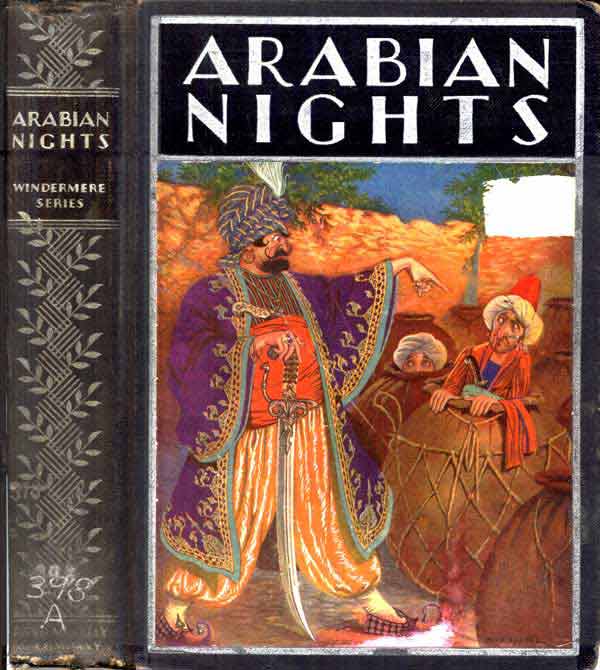
By the time of the ancient Greeks, trimmed hair was a mark of civilisation, of sophistication and status. Only savages and country bumpkins – and slaves - wore their hair long and tangled. Discerning men of status went to the agora to see and be seen, to visit the cureus who would very publicly shave and hairdress them while those around shared debate and gossip. Indeed, the forum barber was the best source of gossip and a fount of information. This old function has led on to the “wise barber” trope of such stories as the Arabian Nights.

The Romans stole barbers from the Greeks, of course. By 200BC, tonsor shops were common in major cities across the Empire, part of the daily hygiene routine that included gymnasium and public baths. They were meeting places and sometimes plotting dens. A young man’s first shave was considered a major event in his life, sometimes preceding his first intercourse. Barba is Latin for beard, the origin of our name for one who shaves and cuts hair.

By the middle ages, barbers had stopped being priests or monks. The Pope had issued orders forbidding clergy from spilling blood (Council of Tours, 1163), which precluded dentistry and surgery. Hospitaller clerics therefore had lay assistants who would handle such necessaries of healing, along with applying leeches, enemas, lancings, and fire-cuppings. Those priests were clean-shaven too; another Papal decree in 1092 ordained that no clergyman should have facial hair.

By the 14th century, London was home to the Guild of Barbers; in 1308, the Court of Aldermen elected Richard de Barbour to keep order amongst his colleagues. In 1462 a royal charter upgraded the Guild to the Worshipful Company of Barbers, an organisation that continues to the present day.

A 1540 Act of Parliament merged in the Fellowship of Surgeons to form the Worshipful Company of Barbers and Surgeons, specifying that surgeons may not cut hair or shave people and that barbers could not operate on them; both groups could extract teeth. Barbers received higher fees than surgeons at that time.

It was probably this merger that led to the recognised shop sign of a barber, a long striped pole with red and white stripes (red for surgery, white for dentistry). In some modern versions blue stripes are also included, perhaps because red white and blue are patriotic colours in both the UK and US. Originally the pole also included brass bowls at top and bottom, the upper one for the leeches and the lower one for catching blood. There are a number of current US lawsuits underway regarding barbers’ objections to cosmetologists using the pole to advertise their services.

The Worshipful Company also had an educational role in the late medieval period, being a legal source of public autopsy anatomy lessons, conducted four times a year in an auditorium designed by Inigo Jones (the hall was destroyed in the Blitz). The Company’s crest features an opinicus (English gryphon) supported by chained lynxes. This is presumed to demonstrate the keenness of vision required for barber-work. The motto is De Praescientia Dei – “through God’s foreknowledge”. Root back to the ancient origins of the trade as far as you like.

Hairdressing as a term first appeared in the 17th century, along with the first women who are described as hairdressers. The first were French, of course; the most famous was Madame Martin who popularised “the tower” as a style and influenced every depiction of rich Aristos in every movie ever made. Champagne was the first famous male hairdresser of women; his Paris salon survived until his death in 1658.

By the 19th century, barbers were associated with gossip, with minor surgery and medication (including contraception, often in the form of pigskin condoms – “something for the weekend, sir?”), with fashion, with local knowledge, and with community meeting places. During that century in America, Black barbershops became a significant factor in the development of Black culture and society. In the UK barber salons served as a lower-class version of the coffee house as a meeting place to form opinion and foment political change.

In addition to shops, though, there were still the itinerant street barbers who would shave and clip a customer right then and there, maybe also shining shoes and offering manicures. There were door-to-door barbers and seafront barbers and in-club barbers. There were the first common womens’ hairdressing salons, as a more liberated distaff population with disposable income but not enough of it for personal maids with hairdressing skill began to demand services.

There was enough scandal about for Sweeney Todd, the Demon Barber of Fleet Street who murdered his customers and turned their corpses into pie-meat to become a bestselling Penny Dreadful. There are still members of the general public who believe him to be non-fictional. The story goes to show the darker aspects of barbers that were in cultural currency at the time. Demon Barbers come from the same place as Killer Clowns.

So, barbers: wise gossips, social hosts, purveyors of advice and contraception to young men coming of age, hedge-surgeons, community mainstays, sacred servants, sudden butchers – rich characters rooted in old story, well deserving of being maintained in our fictional universes today.

Cut.

IW

Tuesday, July 9, 2013

The Watson Report: Magic Swords and Their Makers

by I.A. Watson

Magic weapons are a staple of many fantasy stories because they’re a staple from many myths and legends. They’re engrained into our storytelling DNA – with good reason.

Go back three and a half thousand years or more. In England and Northern Europe, wandering hunter/gatherer tribes are transitioning to herder/farmers. Population has grown so there’s competition for territory. Conflict is inevitable. There is a place for strong warriors. There is a place for powerful weapons.

The best weapon available is the bronze sword; this is the Bronze Age, after all. Bronze is the best technology. A dagger of bronze is more effective and keeps its edge better than a dagger of flint. New techniques are becoming available to increase the reach of those bronze blades, combining the reach of a spear with the versatility of a knife. The first two-foot long bronze swords appeared around 1600 BC. A man with such a weapon had a significant combat advantage. A man with such a weapon could be king.

Then came the discovery: fallen stars contain iron. Not the polluted, difficult to work stuff that could be grubbed from the ground, but pure, elemental stuff given by the gods. Meteor iron could be smelted just like bronze, and it made blades that were slightly stronger and lighter. And then the secret, passed down in guilds from smith father to smith son, making their line so important that their descendants cover the Earth today, making Smith the most common Western name: add a pinch of carbon to the molten iron and it becomes steel!

A thousand years BC where the bronze blade was formerly the pinnacle of technology, iron was the magic metal. A steel sword could slice through even those amazing bronze weapons. A steel sword could pierce boiled leather armour like it wasn’t there.

We know quite a bit about these swords. We’ve still got a lot of them, for a very odd reason.

In Northern Europe you can’t throw an axe-head without hitting archaeology. So we’ve got plenty of evidence of the social and economic phases in the long millennia between the last ice age and the “start of history”. One of the more distinctive emphases was ritual behaviour with rivers.

The oldest names in Britain are the names of the rivers, presumed to be the names of the gods and goddesses to whom each watercourse was sacred. In England, the Don and the Sheaf, the Mersey and the Ouse, the Cam and the Thames all give us a glimpse back to a time when rivers were not only the safest highways but the vital resource for a struggling population: food, transport, security, industry and status all began with a good river location.

It is perhaps not surprising then that there was ritual activity at these rivers. Again and again archaeologists discover deposits of valuable items tossed into the waters, buried in the mud. In some places hundreds of finds have been discovered, with post-holes where wooden walkway platforms were raised over the flood to reach the appropriate sacrifice spot.

Archaeologists love wetlands. For good scientific reasons we won’t go into here, wooden and metal artefacts buried in the right kind of river mud don’t oxidise or rot. We know what the weather was like in England in 3500 BC because we’ve got the tree-ring growth patterns from wood preserved from that era in wetland deposits. And we’ve got hundreds of broken swords from those same deposits.

Hold on, though. Broken magic swords? How magic could they be if they broke in battle? But they didn’t. Nearly all the river sacrifice items are broken; many show signs of deliberate destruction. The swords have been snapped in half. Its tempting to speculate that “killing” these treasures was meant to send them to the afterlife, for the use of gods or ancestors; but our forebears left no instruction on their motives.

Hold on again! Iron weapons were valuable. The Iron Age is named after them but in Northern Europe they were rare right up to the coming of the Roman conquerors. Surely a warrior who broke a coveted near-impossible-to-find magic sword was the most pious of men to offer such a sacrifice?

Well, yes and no. Yes, it showed a massive devotion to the gods. Yes, it showed his generosity and power off to the world. But there’s probably a more pragmatic reason as well: One man can only hold one sword. If you fight an enemy and kill him and take his magic sword as well, then you have two. If you give it to an ally, even a son, then two of you have miracle blades; you have a potential challenger. But if you break the weapon and send it to the gods, you have credit, fame, and a less itchy pair of shoulder-blades.


At least that’s the way the archaeologists and historians like to spin it.

Dipping into myth for a moment, remember that King Arthur received Excalibur after the sword he’d drawn from the stone snapped in battle. Merlin brought him to a river and the Lady of the Lake caused a hand to rise from the water bearing the enchanted weapon. At the end of Arthur’s life, he had his oldest friend Bedevere hurl Excalibur back into a river, whereupon it was caught by that same hand, waved thrice, then taken under the waves again until it was required in a different age.

But what of the men who forged the magic swords? Where did they come from? How did they learn their craft? What became of them after?

The most famous smith in Northern legend is Weyland, (proto-Germanic for “battle-brave”), also called Volundr in the Norse, under which name he stars in the Völundarkviða, one of the poems of the Prose Edda. He also features in Þiðrekssaga, the saga of Theoderic the Great, and in the Old English sagas of Deor, Waldere and Beowulf. His legend is depicted on the Franks Casket and on Ardre image stone VIII. All of these sources are twelfth century AD or later, of course, but they seem to distil the surviving lore of smiths and smithies from an earlier time.

There are a couple of variants about how Weyland got started. In the most prevalent story, he and his two brothers spy upon three bathing swan-maidens. It’s well known that if you catch such a damsel and steal her clothes then she has to stay with you as your wife, and that’s what the three brothers did. Their valkyrie lovers taught them strange lore – including possibly what to do with the big iron missiles that Odin cast down from the heavens on occasion.

After nine years, the women returned to their own lands. Weyland’s brothers went with their wives, but Weyland remained behind with his son. His departing lover, Hervör Alvitr (strange, all-wise creature) leaves him a ring to remember her by. Weyland forged himself a magic sword and became a renowned warrior and smith.

Weyland is credited with casting many magic blades. These include Gram, Sigmund’s sword which Odin broke and was later reforged for Sigurd Sigmundson to slay the dragon Fafnir (Völsunga saga); Ogier the Dane’s Curtana and Roland’s Durandil (Karlamagnus Saga); Mimung, which Weyland forged to fight rival smith Amilias (Thidrekssaga); Hatheloke, the sword of Torrent of Portyngale, (Torrent of Portyngale); and a good number of others. He also created the magic ring of Thorstein Vikingson in the saga of that name. His claim to forging Excalibur/Caliburn is of relatively recent origin.

Enter the villain: King Niðhad in Nerike struck by night, capturing Weyland in his sleep. He had Weyland hamstrung so he could not escape, then imprisoned him on the island of Sævarstöð where he would forge weapons that would make Niðhad unstoppable. Niðhad took Weyland’s sword and wore it as his own. Hervör’s ring was given to the king’s daughter Bodvild.
As all storywriters will know, it is a capital mistake for the bad guy to lock the main character up in a workshop, especially then that main character is the greatest smith of legend, and a man with a grudge.

King Niðhad had two sons. Weyland worked on their enthusiasm and ambition, eventually winning their loyalty against their father. Then he murdered them in his workshop. He converted their skulls into goblets for their unsuspecting father and transformed their eyes into jewels and their teeth into a brooch for their unsuspecting mother. He burned the other remains in his forge as he crafted wings to escape to freedom.

Weyland had also made friends with Princess Bodvild, who visited him often to see the wonders of his workshop. Before he fled he drugged her, raped her, and retrieved his wife’s ring, leaving her pregnant with the child who would later become the hero Viðga.

For the Scandinavians this was a pretty good ending to a revenge saga, and showed Niðhad that he’d messed with the wrong smith.

Of note in our present discussion, however, are the traits that Weyland was attributed in the legend. First off, he was lame. There’s physical evidence – in the form of skeletons – that occasionally Iron Age folks had half their foot deliberately chopped off, including a few folks who, judging by what their bones can tell us about their diet and health, were otherwise of high status. This might simply be a way of non-lethally removing a competing family member from a leadership contest, but there are sufficient traditions about lame smiths (c.f. Hephaestus) for us to at least suspect it was a traditional means of ensuring that a valuable and dangerous resource could be controlled and contained.

Second, we have the idea that smithlore was secret. Niðhad’s sons were fascinated with it, lured in by hopes of learning the mystery through hidden initiation. It seems likely that there were craft secrets passed down by family or guild. After all, the ability to make magic weapons is a sure ticket to as good portion of the hunt-meat.

Third, the smith’s work was art as well as craft. Weyland made rings and jewellery as well as weapons of war. He made tools as well as killing devices. A man who can make a magic sword of star-metal can forge a cunning finger-band of fairy gold.

And fourth, we learn that smiths were dark and dangerous men to cross.

The lore of swords and their makers have come down to us today via many generations of storytelling. Every magical tool, every SF miracle-weapon for that matter, comes from Weyland’s workshop and from those ancient kings breaking their enemies power over their knee before casting it to the gods. Every cunning scientist or technologist who solves the problem and overcomes the brutal adversary by using brains over brawn is a smith at heart.

Now go throw something in a river.

Monday, June 3, 2013

The Watson Report: Behind Every Good Man -- Thoughts on Pulp Heroines

by I.A. Watson

There's a lot still to be written about that class of feisty pulp heroine who devotes her life to an impossible obsessed hero. Her loyalty and involvement lead to danger, kidnap, torture, and constant threat of death. She has to cope with a lover whose brooding character and endless mission preclude her ever being foremost in his concerns. Sometimes she even has to briefly assume his mystery-man mantle or adopt a complimentary masked persona to save him from destruction. There's just a wealth of character stuff to delve into there.


Nita van Sloan, Margo Lane, Carol Baldwin, Benita Juarez and the rest occupy a strange position in modern fiction. Feminists might criticise them for subordinating their outstanding talents to the needs of a dominant male. On the other hand, each of these women has aspects of competence, confidence, assertiveness and sexuality that are far ahead of the perceived norm for the eras in which they were first written. Yes, sometimes they are the helpless hostages; but other times they are dazzling partners in the war against crime. Often they are the only cast member capable of questioning the hero and making him reconsider his actions.

Birthed in a time when "Behind every good man is a good woman" and "Only the brave deserve the fair", these characters still have a story to be told about them; and bringing their relevance to a modern audience is surely one of the neglected duties of the new pulp era.

Even in these supposedly-liberated days there's a different vibe to writing principal female characters than male ones.
 

Perhaps its because the tough kick-ass female is still "against type".

The starting premise of Buffy the Vampire Slayer was that a blonde cheerleading valley girl was not usually the sort of beat up predatory undead. I can't imagine how that show could have been even a little bit like it turned out with a male lead.

As for girlfriend-heroines (the Lois Lane archetype) there's a long tradition of them being as extraordinary in their way as the hero with whom they associate. There's an old maxim that "A hero is only as good as his rogues gallery". I think a codicil might be "A hero is only as good as his heroine". Tarzan without independent inspiring Jane Porter would be a diminished character. Likewise Flash Gordon without Dale Arden, Robin Hood without Maid Marion etc.


There are distinct sub-classes of Pulp Heroine companions. A few of the most prevalent are:

  1. The Rescued Damsel -- a great many old-school pulp romance interests start out as the victim, often in the hero's origin story. Thrown together with the hero under extraordinary circumstances that show her to be a remarkable women, this female alone has the insight into what makes the hero tick. Thereafter she helps keep his secret, assists with his mission, and probably joins his gang.
  2. The Commissioner's Daughter -- often pulp heroines have some status conferred by their father. He's not always a police commissioner. He might be a millionaire philanthropist, a brilliant scientist, a general, an eccentric explorer, even the monarch of another planet. In any case, the daughter is significant in plot terms because either (a) her father is an ongoing influence on the series - ally, adversary, nemesis, technical support, the hero's boss, or (b) murdered, providing the hero, the heroine, or both with a motivation for their subsequent exploits.
  3. The Tamed Bad Girl -- dangerous and deadly in her own right, probably a criminal, this subclass of heroine either turns from crime because of her relationship with the hero or else teams up with him against nastier enemies because of her affection. She may try to seduce the hero to join her on the dark side. She may try to destroy him only to relent at the last moment. She may turn her back on her villainous allies, even her arch-criminal father (see sublass #2) to save her man. She might end up vying with the virtuous Rescued Damsel described above, leaving the hero to make a choice - or avoid a choice - between naughty and nice.
  4. The Girl With the Cause -- this heroine has an agenda. She may be trying to save rare animals, or complete her father's archeological research, or run her free legal centre despite gangland threats. In any case, her passion for her mission will inevitably lead her into danger. requiring the hero's assistance. It might also end up as a source of conflict between the lovers. Spunky girl reporters, dedicated medics, charity workers, and even revolutionary princesses all fit in this class.
  5. The Thrill Seeker -- an adrenaline junkie hooked on action, she's with the hero because it's dangerous and so is he. She might not be the healthiest of personalities but she's dynamite on two long legs. She's often more trouble than all but the baddest Bad Girl because she actually enjoys taking the risks. Probably the most kidnap-able class of heroine except possibly for the Commissioner's Daughter. Also the class most likely to get spanked by the hero in stories written before 1955.
  6. The Angel -- she's the perfect Good Girl, more ideal than woman, and she's the hero's inspiration and motivation. The knight quests for her. The down-at-heel detective pounds the mean streets knowing he'll never be fit to touch her with his blood-stained hands. She might be supernatural - a literal angel, ghost, alien, or computer intelligence. She's less likely to go in with .38s blazing and more likely to cradle the hero's head as he lies in an alley bleeding to death. Sometimes she dies tragically to provoke the final showdown.

Perhaps the main diffference between the pre-WW2 pulps and today's world is the idea that women who were capable of matching or exceeding men were the exception rather than commonplace. Just as not every man in a 30s pulp novella was capable of beating up half a dozen longshoremen thugs - only our two-fisted hero, so not every woman had the moxie to hold a gun on the villainous ganglord and demand her man's release from his ropes. However, here in 2013 I think we've mostly got the idea that both men and women can equally excel - or be equally pathetic! 

A few odd cultural differences remain as well, of course. James Bond strapped naked to a table while the villain torments his genitals with electrodes is gritty drama. If the naked tortured captive is Natasha Romanoff it's heading towards porn. A male hero graphically beaten to a pulp and spitting teeth is hard-boiled. A female hero similarly beaten up is... uncomfortable reading. At least to my mind.

I'm happy that we're getting more female leads to our pulp stories these days. I still think we need to make sure that when we're polishing the older legends, the characters of yesteryear, that we make sure the excellent female cast members there get opportunities to shine.

Sunday, November 4, 2012

The Watson Report: Whose Afraid of Mary Sue?

by I.A. "Ian Sue" Watson

In 1973, Paula Smith published “A Trekkie’s Tale”, a parody of fan-written stories. In it, Mary-Sue, “the youngest lieutenant in Starfleet – only fifteen and a half”, joins the crew of the USS Enterprise, and proves to be essential to the survival of the ship, demonstrating a remarkable competence and claiming a place in the hearts of Kirk, McCoy, and even Spock. The wish-fulfilment character represents the fantasy of a series enthusiast entering and interacting with the series they love.

Since that time, “Mary-Sue” has become a byword for non-satirical author-inserted characters who seem to be fulfilling the writer’s own fantasies, often but not always in an ongoing series that did not originate with them. This character often speaks with the author’s voice, correcting what the author feels are problems with the ongoing story, addressing long term situations and earning the gratitude of regular characters, and even displacing romantic leads to win the heart of a favourite cast member.

We see the phenomena in books and comics. For example, Brian Bendis has faced “Mary-Sue” accusations for his use of Jessica Jones, retconned into Avengers history as a “dear old friend” who has now become an essential staple of the series and romances an established “cool” character.

Other authors write their own primary character as a “Mary-Sue”. This criticism is sometimes aimed at Ian Fleming, for example. James Bond, whom “men want to be and women want”, might be an idealised version of his own younger self. There are many omni-competent and always-right characters in adventure and pulp fiction of whom a similar charge might be made.

But are “Mary-Sues” always a bad thing? Dorothy L. Sayers tended to write versions of herself into her stories. Early Lord Peter Wimsey stories occasionally feature Marjorie Phelps, a young independent woman living a Bohemian life in Chelsea, who occasionally assists Lord Peter with his investigations. Sayers herself had lived a similar life. The strong-willed Oxford graduate Miss Meteyard from “Murder Must Advertise” works at an advertising agency just as Sayers herself did for a decade. Meteyard penetrates Wimsey’s cover and solves the murder before him, but says nothing because “it’s none of her business”. In “The Nine Tailors” fifteen year-old Hilary Thorpe wants to study at Oxford and become a writer. She is “striking looking rather than beautiful”, whip-smart in helping solve the case, and by the end of the novel Lord Peter is her trustee.

Of course, all these pale into insignificance against Miss Harriet Vane, a detective novelist graduated from Oxford, who lived with a poet who claimed he did not believe in marriage then left him when he offered her marriage anyway “like a good-conduct badge”. Sayers herself graduated from Oxford, lived with a poet, and broke from him for the same reasons. Of course, Sayers’ ex-lover was not found murdered in the same way as the victim of her latest book, but Mary-Sues must be allowed some wish fulfilment. Miss Vane’s former inamoratas did perish in such a way, leaving her facing death by hanging unless rescued by Lord Peter Wimsey – who falls desperately in love with her.

Miss Vane appears in four of the Wimsey books. Her debut in “Strong Poison” leaves a powerful impression, but her “screen-time” is limited because she is behind bars. Her second appearance begins with her actually discovering the body in the case. “Have His Carcase” is mostly told from her point of view. “Gaudy Night”, her third appearance, might properly be described as a Harriet Vane mystery with Lord Peter Wimsey appearances. The narrative follows her throughout, with the detective overseas on government work for two-thirds of the book. “Busman’s Honeymoon” describes the discovery of a corpse on the morning after Wimsey marries Harriet, and was described by Sayers herself as “a romance story with detective interruptions”.

From these summaries, a reader not familiar with the Wimsey corpus might conclude that the appearance of Miss Vane wrecked the series, robbing the central hero of the spotlight in favour of an idealised ego-trip character. But this is simply not true; hence my citing it in such detail as an example of Why Mary-Sues Don’t Necessarily Have To Be Bad.

In fact the Vane/Wimsey novels take on a fresh life. It’s clear that Sayers was far more engaged with them than some others she wrote merely to fulfil a publisher’s contract. Even Wimsey’s absence helps the story. We get impressions of him from other cast and his eventual appearance comes with added impact. Harriet is fleshed out in all her tormented complicatedness, and if based on Sayers must have been painful to write. “What does pain matter if it makes a good story?” Wimsey asks Vane at one point. If there’s wish-fulfilment in Harriet’s eventual happy ending with Sayers’ greatest literary creation then it’s paid for in the author’s naked analysis of herself to tell a powerful narrative.

Writers are often advised to “write what you know”. What does a writer know better than themselves? Are not many of our characters drawn from some exaggerated aspect of ourselves, or of whom we would like to be? Who would not like to believe that the best of our personal traits should win us success, love, or acclaim? Which of us does not have personal tragedies that we could mine for story material if only it did not hurt too much?

So, while “Mary-Sue” characters are typically seen as juvenile, amateur, or series-spoiling, I wonder if there is a role for such personally-invested creations in their proper context. Can and should an author project themselves so fully into a character – and what happens then?

Monday, September 10, 2012

The Watson Report: The First Whodunnit? (Part Two)

by I.A. Watson


There are two earlier stories are from the extended Septuagent version of The Book of Daniel, which adds new chapters 13 and 14; the text appears in only one ancient source and these parts are omitted from most bibles (they were in the 1611 King James Version though).

In chapter 13, two lustful elders spy on the bathing Susanna. They threaten to accuse her of adultery unless she has sex with them. She refuses them. They bring their allegations, and given the testimony of two prominent holy men the young wife is to be executed. Daniel intervenes to separately question the witnesses, and from their contradictory answers proves Susanna innocent. The accusers are executed instead.

Here we have all the trappings of the detective story, and one of the first reported interrogation scenes. I'd only discount it from my definition of "the first whodunnit story" because it forms one short incident in a much longer narrative, not the focus of the story as a whole. No doubt it is a proper detective mystery though.

By the way, one reason the ancient provenance of this story is questioned is that Daniel, in interrogating the witnesses (in Greek, the language of the Septuagent), uses outragoeous puns that would not have existed in the original Hebrew. The key discrepancy of the testimonies is the kind of tree under which Susanna was supposed to have had sex with her young lover. One witness claims it was a short mastic tree, whose Greek name is similar to the Greek verb for to cut (σχίνον vs σχίσει), and Daniel asks if an angel was ready to cut the mastic down. The other witness describes an oak, whose Greek name is similar to the verb to saw (πρίνον vs πρίσαι), and Daniel asks if the angel was ready to saw that tree down. Many scholars have gone into massive linguistic gymnastics to try and demonstrate how there might have been similar puns in an original Hebrew text. So this tale is also something of a literary whodunnit too.

In chapter 14, a dispute with the king about the giant statue of the god Bel, the priests of Bel argue that their god consumes the massive amounts of offerings laid out for him in his temple each night. A test is made, wherein the temple is sealed overnight and the food still vanishes.

However, detective Daniel has scattered flour on the temple floor, and from this demonstrates to the king the multitude of footprints that betray the priests' secret door, through which they and their families enter each night to consume the food. Bel is discredited, his statue shattered. So ends history's first locked room mystery. Technically it's more a howdunnit than a whodunnit, but its definitely a contender.

But if we're dipping into biblical sources, why not dig back to Solomon's detection of who was the mother of the disputed baby?

Sunday, September 9, 2012

The Watson Report: The First Whodunnit? (Part One)

By I.A. Watson

Some of you know that I've recently completed a whodunnit set in the biblical Tower of Babel. That set me thinking about the long history of detective stories. What was the first whodunnit?

Let's set some definitions first. In my view, for the story to count as a detective whodunnit the mystery has to be the central feature of the story, not some incidental side-plot. There has to be an unexplained event, probably a crime, and a process of deduction. The mystery has to be explained by the end of the tale. Fair definition?

Assuming so, then which was the first whodunnit?

I know people mostly point to Wilkie Collins "The Moonstone", 1868. I want to put forward "The Three Apples", from "The Arabian Nights", which was written down at least as far back as the sixteenth century and probably much earlier.

Here's the plot. Judge for yourself.

A fisherman on the Tigris discovers a heavy sealed chest and gives it in tribute to the Caliph Haroun al Rashid. The trunk is forced open and a dead woman's cut up body is found inside. The Caliph tasks his Vizier Jafar ibn Yahya to solve the case in three days or be executed in the murderer's stead.

The Vizier fails, but just as he is about to be executed, two men appear and each confesses to the murder. It turns out the the older man is father to the murdered woman, the younger her husband. The husband proves he did it by describing the corpse's severed condition. His father-in-law's attempts to save him from punishment are thwarted.

That sets up the next mystery. Why did the murderer confess? Cue an Arabian Nights narrative flashback to back when the murdered woman was alive, wife and mother of three...

When the woman fell ill she could only be saved by certain rare apples from the Caliph's orchard in Basra. Her loving husband travelled and acquired these items at great cost but when he returned she claimed to be too ill to eat them. However, later that day he sees a slave carrying the same rare apple. When the slave is accused of theft he explains that he had the apple from his girlfriend, who was given three special apples by her husband. The husband confronts his wife, finds an apple missing, and murders her. He cuts her body up, hides it in the trunk, and abandons it in the river.

But when the murderer returns home his son confesses to stealing the missing apple, and having it stolen in turn by a slave to whom he had told the story of his father's quest to Basra. The husband has killed his innocent wife - hence his confession to the Caliph so that he can be executed.

Haroun al Rashid instead commands the husband to locate the slave whose lies caused tragedy, giving three days stay of execution for the task (this Caliph appears to have had experience of getting people to meet deadlines).

Again, the search fails and the husband bids his family goodbye before his execution. As he hugs his daughter he feels something in her pocket - the very stolen apple that the slave escaped with! She admits to buying the apple from the slave, whom she can name. And so the case is solved.

This being Arabian Nights, the pardoned murderer then repays his Caliph's kindness by narrating another story.

I'd argue that this is an early detective story, albeit not a "play fair" type tale where the audience gets to race the investigator to a conclusion. Can anyone think of an earlier example?

For that matter, what was the first genuine "play fair" whodunnit?

Tuesday, July 31, 2012

The Watson Report: Getting to know Aria, a Princess of Mars (no relation to that Thoris woman)

To quote the great Pythons, "And now for something completely different" -- an interview with the princess of Mars herself, Aria.
(thanks to I.A. Watson for facilitating the interview)

Sean: Well, we’ve interviewed quite a few authors on this website by now, but I think this might be the first time we’ve ever interviewed a character here.

Aria, Princess of Mars: Just because some of the Earthmen of your time happen to have visions of the actual future wherein all life on your planet has ended in devastating war and Mars has been terraformed as humanity’s new home there is no need to confuse me with some fictional heroine. Proceed with your interview, barbarian.

Sean: Um, okay, right. So you’re the, er, the Princess of Mars who appears in the BLACKTHORN: THUNDER ON MARS anthology edited by Van Allen Plexico, and most recently in the novels DYNASTY OF MARS and SPIRES OF MARS by I.A. Watson…

Aria: That much is evident. As a contributor to the chronicling of my adventures in your account “City of Relics” you are presumably familiar with the rudiments of my situation. Be astute in your questioning. The Ancients’ technology that allows this temporal conversation is unstable and may fail at any moment. Also there are several hundred genetically altered rat/human hybrids trying to break through into the Chamber of Chronal Insight.

[Sound of muffled squealing and the shriek of an enraged Mock-man in the background]

Sean: Let’s get to it then. Could you tell us a little bit about future-Mars, your highness?

Aria: In my time the red planet has long been transformed into a habitable, diverse terrain. But the god-like technologies that accomplished this have been lost to civil war, long decline, and finally the Great Burn. Mars is now a divided feudal world where recovered technologies and magic dwell side-by-side and monsters roam.

Sean: Magic? Where did the magic and monsters come from?

Aria: Monsters are the side effects of long dirty wars with genetic, radiation, and arcane weaponry. Magic… the same great machines that preserve life on Mars, that alter its gravity and atmosphere, project an energy cocoon across the planet, an arcanosphere. Those with sensitivity to that field can store and project the power as magic-like effects. Those are the mages, witches, tekes, sorcerers and so forth.

Sean: And sorceresses like yourself.

Aria: There are no sorceresses like myself, Sean Taylor. I am unique and puissant, tuned from birth to the arcane fields of Mars by descent from the very Ancients who set it there, enhanced by the careful addition of thaumaturgic wetware grafted to my nervous system, honed through many hours of diligent study.

Sean: Of course. Sorry. You got your, your wetware from your father, right? He’s one of the rulers of Mars.

Aria: The Black Sorcerer is one of the four First Men who rediscovered some of the Ancient secrets and rose to power as puissant users of magic and science. Each is a very different kind of tyrant. Lord Ruin believes that endless war will winnow the weak. The Sorcerer of Night is obsessed with undeath. The Lord of Fatal Laughter works his insane cruel humours on a planetary scale. The Black Sorcerer tends towards weird science and Byzantine plots.

Sean: You know, we’re pretty fond of bad-girl villain’s daughters on this site.

Aria: Control yourself, barbarian. It is true that I was raised by one of the absolute despots of our troubled world, and that I opposed him by commissioning the champion John Blackthorn to stand against him. That does not make me any kind of ‘bad-girl’. My plots and manipulations are entirely benevolent and… excuse me…

[Sound of arcane bolts roasting something that squeals as it dies]

Aria: Blackthorn, do you think you could possibly take your friends outside to fight them? I’m trying to commune with the past here. Oglok, kindly block that doorway. It’s about time we found some use for you other than as a museum of odours. Now… what were you saying, barbarian?

Sean: I was just asking about being a villain’s daughter, and I guess why you ended up fighting on the side of good.

Aria: Mars is oppressed and dying. Someone has to stand for it. If not the Princess of Mars then whom? When prophecy singularly failed to provide the promised champion I took it upon myself to acquire one by other means.

Sean: You’re referring to two-star U.S. General John Blackthorn, who died in a military conflict sometime in the early twenty-first century only to have his consciousness rehoused in new flesh on future-Mars.

Aria: Indeed. Another barbarian, although useful when things need to be blown up or smitten. And… to be honest, he does seem to have a way of getting people to follow him. Perhaps it is those antique notions from your time, of life and liberty and the pursuit of happiness, of justice by law, of universal franchisement and so on. Or perhaps he’s just very good at plans that upset my father and the other First Men.

Sean: He’s not the only twenty-first century human to get zapped to the future though, is he?

Aria: When my father attempted to recruit him as his warlord there were three barbarians shifted to new flesh. Blackthorn’s comrade General Yuen elected to have no part in the Martian conflict – although that did not work out as he had hoped. Colonel David Morningstar, Blackthorn’s second, was the one who betrayed him to his original death. Obviously, David and John have a few differences to settle.

Sean: And all this is covered in the BLACKTHORN volumes?

Aria: I imagine so. You’d have to ask the various Earthmen who produce them. There are several apart from yourself, I’m given to understand. Each of them has also produced other literary works, so one can only hope that they have some level of competence at chronicling our struggle.

Sean: That’s Blackthorn’s exploration of Mars to recover old tech that could be used in his fight against the First Men, and the building of an alliance intended to eventually mobilise the planet in war against the ruling Sorcerers?

Aria: Crudely speaking, yes. We have a duty to the people of Mars to save them.

Sean: That’s you, Blackthorn, and the genetically-engineered Mock-man Oglok?

Aria: It is all men and women of conscience in every age, who are called to stand against those who oppress the weak and use force to supplant freedoms. Hmph. Now I sound like John Blackthorn. The man is pervasive.

Sean: And rumours about you and him having something of a spark…?

Aria: Are none of your business. I am certain that your chroniclers would not have such poor taste as to refer to such matters, nor their readership any interest in any romance should it occur. Which it does not. And shall not. At all. Next question.

Sean: Why are the books called THUNDER, DYNASTY, and SPIRES OF MARS?

Aria: You’d have to ask your fellow barbarians. I presume the Thunder refers to the wild lightnings my father used to draw energies to bring Blackthorn to Mars, or else allegorically in. regards to the growing revolution. The Harmony Spires are the crystal towers which maintain our world, and they prove central to the narrative of the online serial novel currently being released twice weekly in your time period. The Dynasty refers either to my father’s ill-considered attempts to wed me to some unsuitable minion with whom I might breed more magic-viable offspring or else to my Ancient lineage on my mother’s side. I imagine you’d have a better idea if you perused the chronicles in question and so would your audience.

[Sound of heavy machinery nearby, of a wall collapsing, and of something exploding]

Aria: It appears that I will have to curtail our conversation, Earthman, and go assist John and Oglok in bringing down one of Lord Ruin’s mobile chain cities. I’m setting this device on overload now so it does not fall into the hands of a First Man. You may want to cover your ears and eyes.

Sean: Well, thanks for taking time out of your busy, um, revolution to talk to us, Princess Aria. I’m sure we all…

[Explosion]

Sean: Aaaaghh! Aaagh! My ears!!! My eyes!!!

[Static…]

BLACKTHORN: DYNASTY OF MARS is now available in paperback through Amazon at http://www.amazon.com/Blackthorn-Dynasty-I-A-Watson/dp/0615676545/ and at good bookshops, and in Kindle at http://www.amazon.com/Blackthorn-Dynasty-Mars-ebook/dp/B008NYCVLQ

BLACKTHORN: SPIRES OF MARS is posted free online at the Blackthorn website every Monday and Thursday at www.whiterocketbooks.com/blackthorn

I.A. Watson takes responsibility for facilitating this interview with Princess Aria.