Showing posts with label William Prystauk. Show all posts

Friday, October 12, 2012

What makes a horror book scary?

This week's roundtable is for READERS. (Or writers who double as readers in their spare time. What do mean, what's that?) As we move deeper into October and are rounding second base toward Halloween, let's talk scary.

What makes a book scary or creepy to you?

Blake Wilkie: It's all in the pacing and imagery in the descriptions. Like when a vampire bites someone. To say they just sink the fangs in doesn't work. Be descriptive. It it a slow indulging bite savoring the moment or a feral attack out of fierce hunger? Why is it one or the other? How does the bite feel to both involved, etc?

Danielle Piper: The scariest stories I've ever read were the ones that involved situations that could actually happen. I've seen far too much fantasy to be scared by it anymore. I despise authors who rehash something cool they saw in a movie or on TV, trying to steal a cool element they hope you're not familiar with already.

Janet Walden-West: As far as scary -- COULD it happen? Having been in close proximity to the Body Farm, zombies are the scariest thing ever.

Jim Comer: Dread. George Martin's Sandkings.

William D. Prystauk: I have never read a creepy or scary book. Yes, I've read horror, but it never resonates like a movie. Craven, King, Rice, and Nevill, have always fallen short.

Selah Janel: I like books that make me worry about whether the plot could happen to me or not. Even if it's outrageous, I want to suspend my belief long enough to be scared out of my mind by the possibilities. Ray Bradbury's story 'The Next in Line' is terrifying because it deals with the very real fears of death, claustrophobia, not being able to get out of a situation, plus the added element of a callous spouse. I cannot read this story without shuddering and seeing myself suffering from that sort of desperation and loneliness.

With stories that have elements of something supernatural or "other," I want to believe that there may be the faintest possibility that it could happen. It's why movies and books about possession are so terrifying - it's a concept that's so rooted in people's beliefs and faiths and deals with our most primal fears... plus, no matter how logical you try to be... what if it's real? What if it could happen to you and there's nothing you could do to stop it?

Herika Raymer: When a book explores things that could happen, that is what scares me. I prefer psychological thrillers, where the antagonist or monster is not completely shown, but there are plenty of stories where the monster is in plain sight that are just as chilling. I read alot of True Crime stories because of that, Ann Rule / Patricia Springer / Steve Jackson. Stories about pandemics that wipe out whole populations, as presented by Dean Koonz and Stephen King and a few others, those are creepy as well.

James Ritchey III: Scaryness. OH! And Creepyness. But seriously? By exploring stuff we're all creeped out by, and being smart about it. Psychological horror is ten times more effective than bending to genre stereotypes. Feral children and the amputation of hands freak me out, for instance. Three words for ya... Suspense, Suspense, Suspense -- THEN you rip the hapless victim's lungs out.

Joe Bonadonna: When it's in the realm of possibility.

What do writers try to do to make a book scary or creepy, but it just doesn't work for you?

William D. Prystauk: Atmosphere is what they seem to create most as well as characters you want to root for. However, I never feel a jolt. It's clear I need some compelling audio/video to move me along.

Jim Comer: Stephen King lost it somewhere.

Selah Janel: I think sometimes writers try to get a little too clever. It's a fine line -- I like detail, but if too many elements are thrown in together, sometimes it becomes a jumble or downright cartoonish. For example, I love a lot of Stephen King's titles. He's insanely good at what he does, a master. Misery is freaky because it's so possible, plus there's the isolation factor, and his short story N is one of the most terrifying things I've read in my life. However, they both share the fact that they're fairly linear stories that deal with one main problem or element. Annie Wilkes is the opposing force in Misery, and although N takes a little while to develop, there's no denying the tension as minds begin to unravel as the thing in the field is discovered.

Because those are so laser-focus and take their time, I tend to get frustrated with titles like IT and Rose Red. With IT, isn't it enough to have a killer clown? There is so much detail heaped in, that I can't even comprehend everything that's going on, and by the time IT's true nature is revealed I just...I don't know. It's not as scary to me as if it were just a weird clown chasing kids around trying to get them.  With Rose Red, there was so much buildup, so much amazing back story, that the ending almost fizzled. Parts of it gave me nightmares, but the ending pretty much ruined it for me because it was fairly tame in comparison. He's not the only one that's guilty of this -- a lot of horror writers try to cram in a lot, and then their endings have no hope of living up to expectations. Horror is walking a fine line as it is -- if you make things too over the top it can inadvertently trigger a humorous response, so writers have to be careful as to what their intentions with a story really are.

Herika Raymer: Splattergore. I do realize that making a story gory and visceral sells, but to me it is just gross. I have to have a story, not just blood and guts. In some cases, I prefer a story over blood and guts.

James Ritchey III: When they try to make it scary and creepy, but make it nonscary and noncreepy, instead -- by SUCKING as a writer -- by not thinking about what they're putting on the page.

Joe Bonadonna: Go for the jugular. When they want to be cerebral and miss hitting the emotions.

How much gore is too much, and does gore help you feel creeped out during a scary book?

Janet Walden-West: No such thing as too much as long as it moves the story.

William D. Prystauk: If gore is necessary to the story, so be it. However, gore itself does not lead to scary. However, if we love or hate the character, then the element of gore may take on a whole new meaning.

Jim Comer: No. Clive Barker.

Selah Janel: It depends. I generally am not a huge fan of gore, however, in some cases it's a necessity or definitely lends itself to a scene. Tom Hollands vampire transformation scenes in Lord of the Dead are grisly masterpieces that gave me a visceral reaction -- but he also took his time and built up to them so they conveyed a very real sense of danger.

The Sonja Blue series is a great example of how to do splatterpunk right. Nancy A. Collins immediately plunges the reader into a graphic nightmare and keeps them there, but is able to create empathetic characters to balance it out. Plus, her characters and world have reasons for being violent and graphic - Sonja isn't just part vampire or a slayer; she's ruled by the voices in her head and is obsessed with getting revenge on her accidental sire. These creatures play for keeps, so it makes sense to show every little detail.

I'm a huge fan of Clive Barker, because his gore works with his stories - but he also knows when to pull back. Stories like Rawhead Rex and The Midnight Meat Train do have their gross points, not gonna lie. But, those elements don't rule the whole story, so when you stumble upon them you almost have to re-read them to make sure you got that detail right. It's a punch in the stomach, a knock in the teeth. You realize "Oh my God, THAT'S what could happen!?" He plays those scenes absolutely right, otherwise the premises in each story could be too over-the-top or borderline cartoonish. He makes sure to play on people's visceral emotions and not just write another monster story.

Not every horror story needs gore, because not everything that scares us is about shedding blood. The Haunting of Hill House is a great example of subtle horror with a big pay-off. The first time I read this, I was totally confused as to whether the hauntings are real or in Eleanor's head... and either way, the thought of each is freaky as hell because of the way things are portrayed.

Herika Raymer: I guess it depends. On the one hand I read where Hannibal was eating his hunter's brains while the man was still alive and it creeped me out, usually I would just say 'ew' and move on. However, there was no explicit statement of blood and gore everywhere - I guess was got me was that it was clean. On the other hand I have read stories where a room decorated in splatter did creep me out, but those were mostly crime driven stories where the scenes were few and far between. I guess when gore is essentially on every other page, then I get desensitized to it. I do not want to 'be used to the gore', I want it to creep me out.

James Ritchey III: Between 15 and 25 percent gore are my only acceptable parameters--and that includes maiming, body horror and blood. Or more. I dunno--gore doesn't scare me. Read Vampire Junction for how to do it right.

Joe Bonadonna: Gore doesn't bother me, but it can get boring. Don't really need to know every little detail. Leave something to our imaginations.

Thursday, May 17, 2012

Science Fiction, Space Fantasy, and the World of Speculative Storytelling

Once upon a time there was a young woman named Mary Shelley. She wrote a little story you may have heard of called Frankenstein, and the genre known as science fiction was born (whether it was self-aware or not yet). Then came the space fantasies and the Burroughs and the Bradburys and the Asimovs, and eventually, science came calling and tried to take back the ground it had lost to the fantasists.

Thus we have a huge range of varying work that passes for science fiction nowadays.

So to get to the heart of the matter and talk space turkey about the mixed up genre, we went straight to the writers to make the magic happen (metaphorically, of course, since magic isn't technically science, no matter how indistinguishable it is from it -- thank you, Arthur C. Clarke).

What is your working definition of sci-fi as a literary genre?

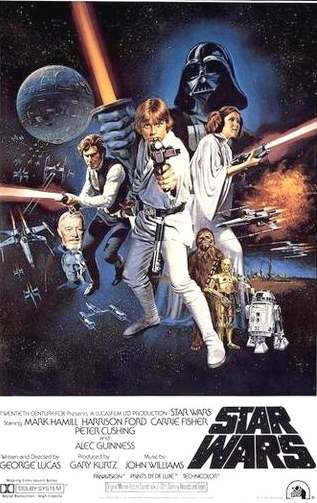
William D. Prystauk: Science Fiction must have a story with real science at it's core. For instance, ANDROMEDA STRAIN and TIMECRIMES, while movies like STAR WARS are science fantasy. Just because the latter tale takes place in space does not mean it's science fiction since that element is not the foundation for the story.

R.J. Sullivan: A story that examines either how a scientific advancement or theoretical postulation can affect the people caught up in it.

H. David Blalock: Science fiction is story-telling based on an exaggeration of science fact that never requires the reader to question the feasibility of the science used. Once that line is crossed, you've stepped into science fantasy. Hard science fiction is difficult to write mainly because it requires real research and often a working knowledge of the science used. Science fantasy (or "soft sci-fi") is much easier and more common. It can break laws of physics and disregard the restrictions of hard science.

Herika R Raymer: Science-fiction is that which takes technology into a desired effect or even takes humanity to a extra-terrestrial, or otherwordly, location. Science-fiction can be exploring the limits of nanotechnology, digital technology, or even medical technology. I especially like the science-fiction that deals with possible extra-terrestrial creatures. Exploring other worlds, meeting other creatures, and generally exploring what might happen if humans finally became space explorers. What would they find? How would they react?

Lee Houston Jr.: For me, true science fiction has to have at least one element that is not possible in our current world, whether it be a spaceship, aliens, taking place upon another planet, or more preferably, all of the above and then some.

Elizabeth Donald: Science fiction foretells a plausible future or alternate present with technology that does not currently exist, but could within our understand of the world. Any science sufficiently advanced from ours may appear like magic, but science fiction best tells us about ourselves by showing us a conceivable outcome of our present day. It is distinguished from fantasy by its explainable phenomena, and from horror in that while it may be thrilling, its primary focus is not to evoke fear.

What is it about sci-fi that drew you to writing it?

William D. Prystauk: The fun of being able to explore something new. And I really did since I had to read up on science based items to have a better grounded and more realistic story.

R.J. Sullivan: Star Trek.

H. David Blalock: The challenge of actually staying inside the confines of science fiction without breaking the rules. Doing that and keeping the readers' interest is an art form.

Herika R Raymer:
The fascination that what was once science-fiction is now science-fact. For instance, in the old science fiction books and movies there were communication devices and transportation devices, as well as medical procedures, that were simply too far-fetched to believe. Yet look at today: personal computers, cell phones, tracking devices, laser surgeries, and more. There is still a dark side to it, and pointing that out can be just as dangerous in real life as it is on the page. It is interesting to see what might be science fiction today become science fact tomorrow.

Lee Houston Jr.: Like fantasy, science fiction gives the writer a place to let their imagination truly run wild and free. Granted, it might be a very long time before anything written now ever has a remote chance of coming true, if ever. But it is the mere thought of the possibilities, of striving to accomplish the "impossible", that keeps me coming back as both a writer and a reader.

Elizabeth Donald: The best science fiction tells us about ourselves. It is allegory and metaphor, it is a cautionary tale or a utopia to which we may strive. I have never been so fond of science fiction that depends on machinery and an absolute attention to technology and physics as I have the stories of people of the future, what they think and what they can show us.

Where's your prefered working space on the continuum between hard sci-fi and soft sci-fi?

William D. Prystauk:
  I don't like soft stuff. I'm an adult and I want stories that feel real in all regards. This does not mean that I expect grand explosions and piss-and-vinegar characters, I just want a sense of real familiarity with the characters and stories within the realm of physics that don't go "over the top."

R.J. Sullivan: Soft sci-fi, because of its focus on character and their response to the science rather than a study of the science itself.

H. David Blalock: I prefer to work closer to the soft sci-fi simply because, on the whole, I am a lazy writer. I can stretch science to my liking in science fantasy without regard to whether my audience will allow it or not. The audience of hard science fiction (which is increasingly small and may not last out this generation) is much stricter on the author, expecting more and demanding more.

Herika R Raymer: I imagining you mean hard-scifi as being militaristic in the details, and unfortunately I cannot write that. Unlike some writers I know, I do not have the science background to do hard science fiction though I am not sure I would want to. I like leaving some details to the imagination – which is why I can write soft science-fiction. A fellow writer once told me that, no matter how hard you try, there will always be someone who will pick apart your devices and tell you how it is not only not feasible but would not work. So they said the safest route is to use elementary science for kids, that way you get the base, you get it right, and leave the rest to imagination. It has worked for me.

Lee Houston Jr.:
Hard gives you all the details and explanations. Soft just presents the concepts and expects the reader to accept everything at face value. In either, the science (fiction) has to at least be plausible. But I try to stay in the middle of the two extremes. I present the ideas and devices, give the readers some details, and let them fill in the rest how they see fit. For example, I've stated that Hugh Monn, Private Detective's Hover 3001, which is more akin to Luke Skywalker's land speeder than George Jetson's flying vehicle in my mind's eye, gets 500 to a fuel cell. But I never said 500 what, let alone what he is using for fuel, or how many fuel cells the vehicle has.

Elizabeth Donald: I dislike the terms "hard" and "soft" SF because they feel judgmental. Hard SF is usually described as fiction that focuses more on technology and world-building than character and story, which I feel to be a weakness. Soft SF is usually denigrated as somehow being less intelligent, thoughtful or complex, as though the author must have wanted to write about the physics of space travel but couldn't be bothered to do the research. Both, then, are negative connotations. I think a novel can focus on people and story without skimping on technical accuracy, and that the most fascinating world still has to have people walking through it. I think we should get past "hard" vs. "soft" SF and instead focus on "good" vs. "boring" SF.

How has sci-fi changed as a genre over the past 50 years, and how has that affected the way you write it?

William D. Prystauk: I think science fiction was always escapist literature. But once gripping tales from Gaines and Dick came along, the latter questioning social themes, the foundation for telling dramatic tales grew stronger. Going beyond the fifty year point, however, Verne not only showed us what could be fantastical, but he made certain his work had a strong basis in reality. Movie wise, when one looks at ALIEN and BLADE RUNNER, it's easy to recognize that the science fiction element is derived from a strong sense of story and character that grips our imagination as well as our spirit. In that regard, Serling and Matheson should be heralded for taking what many considered "sci-fi garbage", something laughable and childish, and bringing us poignant social tales with great thematic strength. (Much like what MAUS and WATCHMEN, for instance, did for comics -- they proved, through story, character and theme, that great, human experience tales can come out of something often seen as sub-intelligent.)

When I write science-fiction, I want it to say something. I want the story to have as much merit as classic literature. My goal, as with any story in any genre, is to have the reader leave the piece to contemplate. Sure, I want to entertain, but I want people to think about what they just read. I don't want it to be disposable.

R.J. Sullivan: The biggest change to the genre came in the late 80s early 90s when we began to lose the authors who had advanced the genre out of the pulp age and into the age of relevance. (Asimov, Heinlein, Clarke much later, etc.) I think what has gobsmacked the genre is the development of inner space and miniaturization. For decades writers postulated an advancement in rocketry, robotics, exploration. A few "cyberpunk" stories in the 90s seemed cutting edge and of limited interest to the general SF reader, but the final frontier has now proven to be cyber space, not outer space, and writers are beginning to realize that cyberspace opens up worlds of the imagination that the old school writers could never have dreamed possible. I am exploring cyberspace in my upcoming novel Virtual Blue.

H. David Blalock:
Science fantasy has overtaken hard science fiction. The accelerated pace of scientific advancement has given rise to the general public believing that science can do anything, equating it to what used to be called magic. To paraphrase someone, I believe it was Clarke, any technology sufficiently advanced would appear magical to the uninitiated. As a whole, the public does not understand the very science with which they interact on a daily basis. From electricity to computers, the average joe couldn't tell you anything about how they work, just that he is glad they do. Science fiction is science fact to the layman. The line between the two is so blurred in the public eye, they cannot tell the difference.

Herika R Raymer: As mentioned before, much science fiction has become science fact. The exploration of “because we can, should we” is still there with cloning and other topics, but it gets a bit more touchy. I have to admit to being relieved at the resurgence of steampunk, because it is a science-fiction I can research and write, as well as place it in a period that is flexible – at least on paper. I think that is most likely what has changed in the past 50 years – writing more in alternate realities. The idea is fascinating, and with writers hard pressed to think of the next impossible gadget, their next option is to look at a timeline where certain gadgets have not even been introduced and try and figure out how they survived. It is a challenge, but it is fun.

Lee Houston Jr.: Like fantasy, there must always be at least some suspension of belief/reality to truly enjoy science-fiction. We may know more about Mars and Venus now than when the stories were originally written, but that shouldn't lessen our enjoyment of Edgar Rice Burroughs John Carter of Mars or Carson of Venus novels. The original Star Trek series is accredited with presenting the concepts we know today as cell phones and the personal computer. All I have to say as both a writer and a reader of science fiction is "What next?" and "Let's see what's out there!"

Elizabeth Donald: The blessing of science fiction has also been its curse. The past few decades have seen enormous strides in movie-making technology, enabling us to bring classic and contemporary science fiction epics to the screen that previously could not have been filmed without a laugh track. But that very dependence on special effects required a constant upgrade in big explosions and awesome visuals, while the viewing public grew disinterested in cultural metaphor and allegory in the me-me-me 1980s and 90s. Now you see action movies whose titles were inspired by Phillip K. Dick and Richard Matheson, and Star Trek is remade into an exciting thrill ride that doesn't even give a tip of the hat to actual science. They make money, so the book world then turns to the SF writers and asks for more explosions. It is my hope that eventually we can turn things back around somewhere between the overly cerebral and frankly boring novels of the mid-20th century from the brain-dead and exhausting fiction of the current era, that there is room for plot and adrenaline, intelligence and explosions. It doesn't hurt to let women in on the fun, either.

Wednesday, April 11, 2012

To the Point -- A Quick Chat with William D. Prystauk

William Prystauk is a man who gets to the point quickly, as you'll see below. So let's just honor that and jump right in.

Tell us a bit about your latest work.

Horror fantasy with a female lead.

What are the themes and subjects you tend to revisit in your work?

Bisexuality and BDSM - and dramatic horror. 

What would be your dream project?

One that I'm paid for in advance with free creative reign. 

If you have any former project to do over to make it better, which one would it be, and what would you do?

Make any of my short stories stronger. I've only written one that "worked" and it will be published soon. The others are missing something I can't seem to find.

What inspires you to write?

All of my ideas. I'm blessed to have so many, but having enough time to complete them is always the driving factor.

What writers have influenced your style and technique?

Henry Miller, Muriel Spark, Hemingway, Fitzgerald, Marquez and Burroughs.

Where would you rank writing on the "Is it an art or it is a science continuum?" Why?
Mostly art. Science comes into play with syntax.

Any other upcoming projects you would like to plug?

Working on a couple of feature length script ideas besides the novel. Again, there just never seems to be enough time in the day.

For more info about William, check out the following interview: http://selfscribes.blogspot.com/2011/07/adaptation-interview-william-d-prystauk.html