

Showing posts with label Ursula Le Guin. Show all posts
Showing posts with label Ursula Le Guin. Show all posts
Monday, February 16, 2026

Monday, January 19, 2026

Monday, October 13, 2025

Monday, March 25, 2024

Monday, July 16, 2018

Friday, October 7, 2016
The Power of Cautionary Questions: Neil Gaiman on Ray Bradbury’s ‘Fahrenheit 451,’ Why We Read, and How Speculative Storytelling Enlarges Our Humanity

“The important thing,” Ursula K. Le Guin wrote in contemplating the cultural role of speculative fiction and the task of its writer, “is not to offer any specific hope of betterment but, by offering an imagined but persuasive alternative reality, to dislodge my mind, and so the reader’s mind, from the lazy, timorous habit of thinking that the way we live now is the only way people can live.” In doing so, she argued, imaginative storytelling can intercept the inertia of oppressive institutions, perilous social mores, and other stagnations of progress that contract our scope of the possible.
Hardly any work of imaginative storytelling has stood as more enduring and full-bodied a testament to this ideal than Ray Bradbury’s 1953 masterwork Fahrenheit 451 — a love letter to books and to the people who care about them and, perhaps above all, to the very capacity for caring. This capacity was the animating force of Bradbury’s uncommon genius, and it finds a contemporary counterpart and kindred spirit in Neil Gaiman — a writer of firm conviction and porous curiosity, an idealist amid our morass of cynicism, writing to remind us over and over again who we are and who we can be if we commit to wresting goodness out of our imperfect humanity.
Read the full article: https://www.brainpickings.org/2016/05/31/neil-gaiman-the-view-from-the-cheap-seats-bradbury/
Monday, April 22, 2013
Writers Workshop of Science Fiction & Fantasy Available!

Seventh Star Press is proud to announce that Writers Workshop of Science Fiction & Fantasy is now available in eBook format, with print availability in trade paperback on Wednesday. Featuring contributions from a sensational list of writers such as Neil Gaiman, Orson Scott Card, Kevin J. Anderson, Ursula K. Le Guin, Harry Turtledove, Joe Haldeman, and many other top names in genre fiction, Writers Workshop of Science Fiction & Fantasy is a highly valuable contribution to the speculative fiction community developed by Bram Stoker Award-winning editor Michael Knost.
 Writers Workshop of Science Fiction & Fantasy
is a collection of essays and interviews by and with many of the
movers-and-shakers in the industry. Each contributor covers the specific
element of craft he or she excels in. Expect to find varying
perspectives and viewpoints, which is why the reader will find many find
differing opinions on any particular subject. It is a book with
something to offer all levels of writers, from those seeking to get
published for the first time to others who have numerous releases to
their credit.
Writers Workshop of Science Fiction & Fantasy
is a collection of essays and interviews by and with many of the
movers-and-shakers in the industry. Each contributor covers the specific
element of craft he or she excels in. Expect to find varying
perspectives and viewpoints, which is why the reader will find many find
differing opinions on any particular subject. It is a book with
something to offer all levels of writers, from those seeking to get
published for the first time to others who have numerous releases to
their credit.Writers Workshop of Science Fiction & Fantasy features essays and interviews with:
Neil Gaiman
Orson Scott Card
Ursula K. Le Guin
Alan Dean Foster
James Gunn
Tim Powers
Harry Turtledove
Larry Niven
Joe Haldeman
Kevin J. Anderson
Elizabeth Bear
Jay Lake
Nancy Kress
George Zebrowski
Pamela Sargent
Mike Resnick
Ellen Datlow
James Patrick Kelly
Jo Fletcher
Stanley Schmidt
Gordon Van Gelder
Lou Anders
Peter Crowther
Ann VanderMeer
John Joseph Adams
Nick Mamatas
Lucy A. Snyder
Alethea Kontis
Nisi Shawl
Jude-Marie Green
Nayad A. Monroe
G. Cameron Fuller
Jackie Gamber
Amanda DeBord
Max Miller
Jason Sizemore
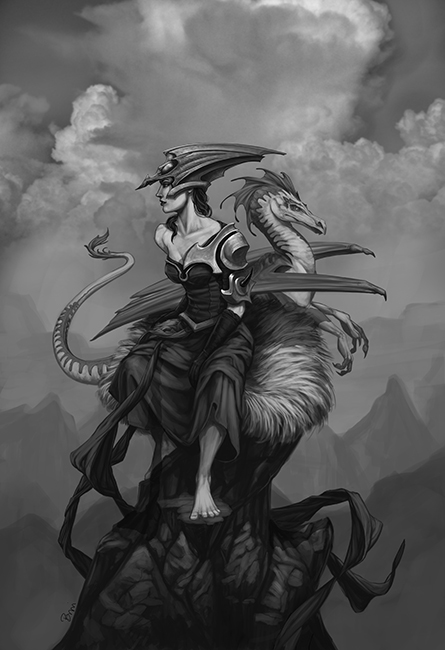
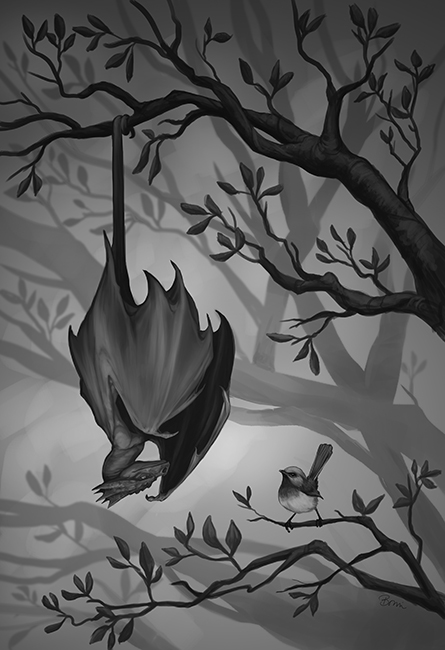
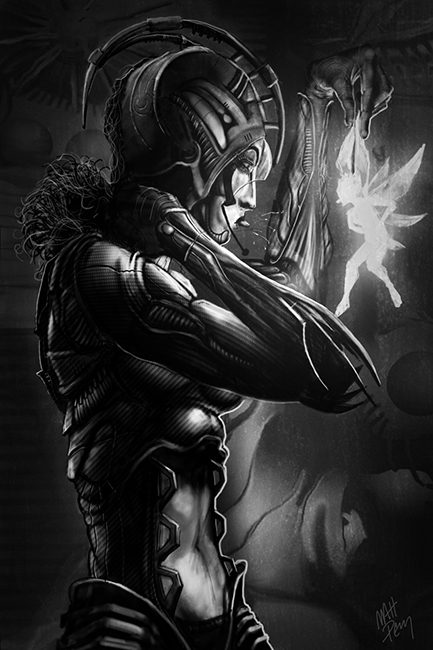 This
edition also features several original illustrations from award-winning
artists Matthew Perry and Bonnie Wasson. In addition to their own
illustrations, a special collaborative piece created by the two artists
is featured in the book.
This
edition also features several original illustrations from award-winning
artists Matthew Perry and Bonnie Wasson. In addition to their own
illustrations, a special collaborative piece created by the two artists
is featured in the book.Available by mid-week in trade paperback format, Writers Workshop of Science Fiction & Fantasy is now available in eBook format for the Kindle and Nook at the following links for just $4.99
For further updates and information about Writers Workshop of Science Fiction & Fantasy, please visit the Seventh Star Press site at: www.seventhstarpress.com
Contact: C.C. James
Public Relations, Seventh Star Press
ccjames (at) seventhstarpress.com
Seventh Star Press is a small press publisher of speculative fiction located in Lexington Kentucky
Monday, May 21, 2012
The Writer Will Take Your Questions Now (#172) -- Hard of Soft Sci-Fi?
Do you prefer hard sci-fi (science-based) or soft sci-fi (space fantasy)?
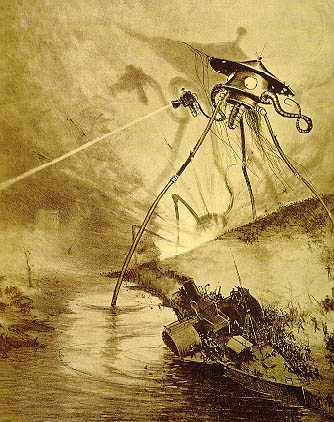 |
| War of the Worlds is more than just a rollicking good romp. It says something about us. |
I thinks that's why I like Ray Bradbury's work so much. He didn't get bogged down in the science of how a time machine worked. Instead he used the "fact" of the time machine in the story to present a tale about human greed and how it has a farther reaching impact than merely the person who is being greedy.
It's why I enjoy the work of Asimov when he address religious blindness that seeks to serve itself and it's traditions rather than the people it passes over everyday.
It's why I love the work of Gary Kilworth, who shows via the same kind of time-travel trappings how we need look any further than ourselves to see whose sin is screwing up the world.
It's why I love the science fiction of Kurt Vonnegut Jr. when he satirized the culture of automation and how it destroys little by little the value of the human individual like a certain self-playing musical instrument.
It's why I love the involvement of Le Guin's researchers who try to learn about other cultures without impacting them negatively or becoming too ingrained in their politics. (Kudos and a free copy of my SHOW ME A HERO e-book to anyone who can name the first four works referenced and any of the Le Guin novels contained in that reference.)
I'm not a huge fan of fantasy stories in a space setting, such as the Pern series or the like. Other than the original Star Wars (A New Hope), that kind of story usually leaves me flat. But neither am I a fan of stories that are merely scientific extrapolations with a sugar-coated dressing of fictionalized story. I want sci-fi that speculates not just technology, but what it means to (and for) and says about the humans who use that technology. That's what get my sci-fi geek going.
Subscribe to:
Posts (Atom)