

Showing posts with label proofreading. Show all posts
Showing posts with label proofreading. Show all posts
Monday, April 9, 2018

Wednesday, June 21, 2017
Nugget #100 -- Ears > Eyes
My ears are better proofreaders than my eyes. It’s a concept
I’ve proven over and over again in my own work. When
I read a story aloud, I catch far more mistakes than
simply reading the words silently in my head.

Thursday, February 19, 2015
Finding and Working with Beta Readers

What do you look for in a beta reader? How do you find readers who fit your needs?
Lee Houston Jr.: Someone friendly who understands the material, yet realizes that they are only reading the first draft, or that even the later draft(s) may not be completely ready to go when they read them, compared to the final version of the story that is eventually published.
At the very least, it would have to be somebody I know and trust to go over my writing, because I would not want to take the risk of either having details of my forthcoming works blabbed all over the place before they're published or get ripped off by someone I thought I could trust.
Both instances have happened to me before, so it was literally years between my current reader and my last one.
As far as how do I find readers, I seriously lucked out with my current one, for my friend and writing buddy go over each other's material as time permits in our respective schedules.
Ray Dean: First, be VERY clear about what you want in a beta. Some people say they want one, but their idea of what it is may be very different from what the other person thinks. You must say what you want to know about your writing and the other person needs to agree to it. Not setting the parameters ahead of time can be VERY frustrating. It doesn't help the writer and wastes the time of the Beta. I have always found my betas from my friends that are writers. We tend to value the same things in writing and are willing to take the time to help each other.
Stephanie Osborn: I need someone who knows science and has good grammar, AND will not gossip or even remark publicly on what s/he has read. There’s no point in putting out the book if someone has already told the plot to the whole world.
Generally finding beta readers is not hard. I have beta readers among my friends – some established, who get every book, and others that I call on just for specific books, when I’m looking for a certain kind of feedback. About the only time anyone turns me down is when s/he just doesn’t have time at the moment.
 Have you ever had to let a beta reader go? What was it he or she did or didn't do that caused you to have to take that step?
Lee Houston Jr.: Believe it or not, writing is hard work, and every author does their best to create something unique in every story.
To have details of your story revealed before it is published, or to have your work plagiarized by another are unforgivable sins to a writer.
Ray Dean: Actually someone stopped using me. They asked me to 'beta' read and I went through and picked out the grammar errors, the jumped heads, the problems in logistics... thankfully I was doing the edit in Google Docs... after I'd made it through half of the document they sent me an 'Instant Message' and said... "Wait... wait! I didn't want you to look at THAT stuff... just tell me if you like it." So we agreed that I wasn't the 'beta' for her.
Stephanie Osborn: Not so far. I’d have to let one go if s/he violated my trust and publicly posted details from the book, I think.

Lee Houston Jr.: A fresh pair of eyes to go over your material, looking for possible mistakes that you might have missed, as well as giving you an honest opinion of how the story is, and what might be done to make it better.
Ray Dean: They catch the little things that your own mind 'glosses' over... one extra letter here, a missed word there... the stuff that your own mind 'adds' in as you read it, because 'it' knows what you meant. Those invisible add ins are easily caught by someone that hasn't read the thing over and over and over.
Stephanie Osborn: Oh! That’s easy. I get another set of eyes on the book before it goes to the publisher. It gives me a chance to polish it, to find out if there is a plot hole, or if I have gotten enamored of a particular word and overused it, or if I have some grammatical errors, or (in the case of my science beta readers) if the science needs tweaking to be realistic. I can get a LOT of VERY useful information from only one or two well-chosen beta readers.
My current principal beta reader is an old friend – we go back to grad school together. He’s a PhD particle physicist with a lot of experience in several different science fields, and he does a bit of essay writing himself, and is knowledgeable/skillful in grammar. He’s VERY trustworthy, and I get a lot of good info from him.

Lee Houston Jr.: The obvious one is disagreement. What happens when you get different opinions on the same material? Do you go with the majority opinion? Or do you listen to the "lone voice in the wilderness" who disagrees with the others instead? That is why I only have the one.
I often refer to Nancy Hansen as my "friendly neighborhood beta/proofreader". As friends and writing buddies, we go over each other's material to help each other out whenever possible.
Ray Dean: The most I've ever had was two at one time. One caught more of the 'big picture' stuff, the other the smaller points. I had no complaints.
Stephanie Osborn: The more beta readers you have, the more apt your project is to be publicly discussed. Also not all of them may understand what you’re trying to do, or the direction you want to take. It can be quite annoying when this happens to a strongly opinionated beta reader, who then won’t let go telling you how you need to “fix” your story. And then, of course, there’s the simple, “Beta A said 0 degrees, but Beta B said 180 degrees.” So you can get very contradictory feedback, which can be hard to reconcile.
I often refer to Nancy Hansen as my "friendly neighborhood beta/proofreader". As friends and writing buddies, we go over each other's material to help each other out whenever possible.
Ray Dean: The most I've ever had was two at one time. One caught more of the 'big picture' stuff, the other the smaller points. I had no complaints.
Stephanie Osborn: The more beta readers you have, the more apt your project is to be publicly discussed. Also not all of them may understand what you’re trying to do, or the direction you want to take. It can be quite annoying when this happens to a strongly opinionated beta reader, who then won’t let go telling you how you need to “fix” your story. And then, of course, there’s the simple, “Beta A said 0 degrees, but Beta B said 180 degrees.” So you can get very contradictory feedback, which can be hard to reconcile.
Tuesday, June 18, 2013
Proofreading vs. Editing

- Proofreading is a final step, while editing is done during and immediately after writing.
- Editing tackles all writing and readability issues, while proofreading focuses on tying up loose ends.
- Proofreading checks format consistency while editing usually does not.
- When working with professionals, editing will include suggestions for content, while proofreading sticks to the basics.
Your thoughts? Agree? Disagree?
Wednesday, March 14, 2012
The Writer Will Take Your Questions Now (#109) -- Self-Editing
What advice do you have for helping people learn to edit their own stories?
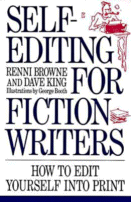
Now, while you're waiting for that to arrive in the mail, here are a few practical hints I suggest to help you become a better self-editor.
1. Give it a break. Let a few days pass between when you finish writing and when you begin editing. If time it tight, at least give it a good night's rest. You need to clear your head from writing mode so you can better enter editing mode.
2. Don't edit when you're tired. You need fresh eyes to edit.
3. Mix it up. Find spelling errors by reading your sentences backward. Read your story pages out of order. You won't be able to improve your structure that way, but you will be more likely to find true grammar and spelling errors for proofreading.
4. Read your story aloud. Or better yet, have someone else read it aloud to you and have a second copy in front of you to make notes on as you listen. KEEP YOUR MOUTH SHUT DURING THE READING. JUST LISTEN. (A friend suggested using your computer to read the story to you as well, and that sounds like a good idea too. I just haven't tried it myself.)

6. Use a highlighter, part two. When you notice helping verbs and weak verbs and anything with a present participle construction (was helping, were dating), mark them. Do the same for any verbs that have adverbs beside them to help strengthen them. Then go back and see what needs to be changed. Most of them will typically need to be replaced with stronger verbs (which won't need the help of an adverb), but not all.
7. Play the "What's next?" game with your story. No matter what actually happens in your typed draft, ask yourself, "What needs to happen now?" If your answer improves the story or makes the characters more consistent, then consider revising it. A caveat here: Resist the urge to totally rewrite everything. This step is simply to play "What if?" with scenes or sequences -- not a writing law to mandate a complete reworking of the total project.
8. Realize that when it's done, it's done. The story is over. You've edited it, and you have to let it go. Don't get trapped in the time paradox loop of death. There comes a point when "the end" means "move on to what's next."
Tuesday, March 13, 2012
The Writer Will Take Your Questions Now (#108) -- Editing vs. Proofreading
What's the difference between editing and proofreading?
And is copyediting something different from those?
Editing is looking at the sum total of a story or article, and improving content -- flow, word choice, plot, pacing, revising and cutting and reflowing as needed to make the work better. By its nature, editing involves things that aren't black and white, right or wrong, but it involves value judgments on the current state of the copy that's written, judgments from the perspective of someone whose opinion you trust.
Copyediting is technically the same thing as editing, but sometimes some people reserve copyediting for nonfiction and editing for fiction. It's not the norm, but I've seen that described that way.
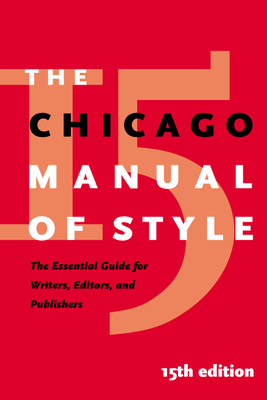
If you want more information about proofreading and editing, the best references I've seen include:
The Chicago Manual of Style (for anything)
The AP Stylebook (for articles and nonfiction)
The Microsoft Manual of Style (for anything with a tech slant)
Strunk & White (for a basic overview of grammar and usage)
Subscribe to:
Posts (Atom)