Showing posts with label Chuck Dixon. Show all posts

Thursday, March 24, 2022

Copycat, Copycat: Writers on Copying Our Inspirations


It's a common story. Writers get into writing because they're inspired by certain authors who have influenced them. And, almost always, at first they emulate them in at least style, if not substance and theme.

But let's move it from the general to specific and talk about YOU, writer.

Which author or authors were your beginning models to copy when you started? When did that copying start to shift into something that would grow into your own voice and style?

Ef Deal: My earliest influences were Bradbury and the Alfred Hitchcock anthologies. Then Tolkien. The handwavium aspect of Bradbury is the basis of all steampunk, if you think about it, so yes that fantastic element is still in my works. But mostly I was influenced by my studies in French literature, where words were chosen for their greatest effect. Poe said all elements of a story should work together to create a unified effect, and that has been my guiding mantra.

Rob Cerio: Douglas Adams, Issac Azimov, and Clive Cussler. I think my style grew into its own after I stopped worrying about making jokes that sounded like "Bad Douglas Adams" Jokes, and just let them be funny on their own.

John L. Taylor: At the beginning, I was an imitator of Ray Bradbury and John Updike to a vast extent. All my work from that period was soundly rejected as it was a pale imitation of a superior author. I had tried to write a novel manuscript, but the early draft was a meandering pile of exposition. Note I hadn't tried writing horror or New Pulp yet despite being a major fan of the genres. I began developing a voice of my own, oddly, while writing erotica under a pen name for a now defunct website (Ironically, those unpaid stories are still my most widely read at 6k or more reads). I somehow connected with an audience by writing the type of story I wanted to read. My voice in writing finally emerged while writing The Rocket Molly Syndicate for the Dieselpunk E-Pulp Showcase Vol.2 in 2013-14. My Mom was fighting ovarian cancer as I was working on it, half was written in hospital waiting rooms. I needed a release and wrote pure escapist fiction. It connected, and the anthology it appeared in moved about 775 copies across all platforms and was adapted as an audio drama for the Coffee Contrails Podcast, adding another 200 or so downloads. It is still my most successful work to date. I dug further into New Pulp, but with a strong influence from Lovecraft and Robert E. Howard. My next works were The Legend of the Wild Man, a 100 line narrative poem that ran in the Mythic Circle, and The Thing in the Wexler House, an audio narration that Otis Jiry performed for me on his YouTube channel. Both got solid receptions. As I branched into poetry, more growth happened, and My current style was cemented. Eerie, dreamlike narratives with a pulp twist. Also, writing online narrations helped a lot, as I was introduced to horror voices different from what I'd read before. Variety helps a lot.
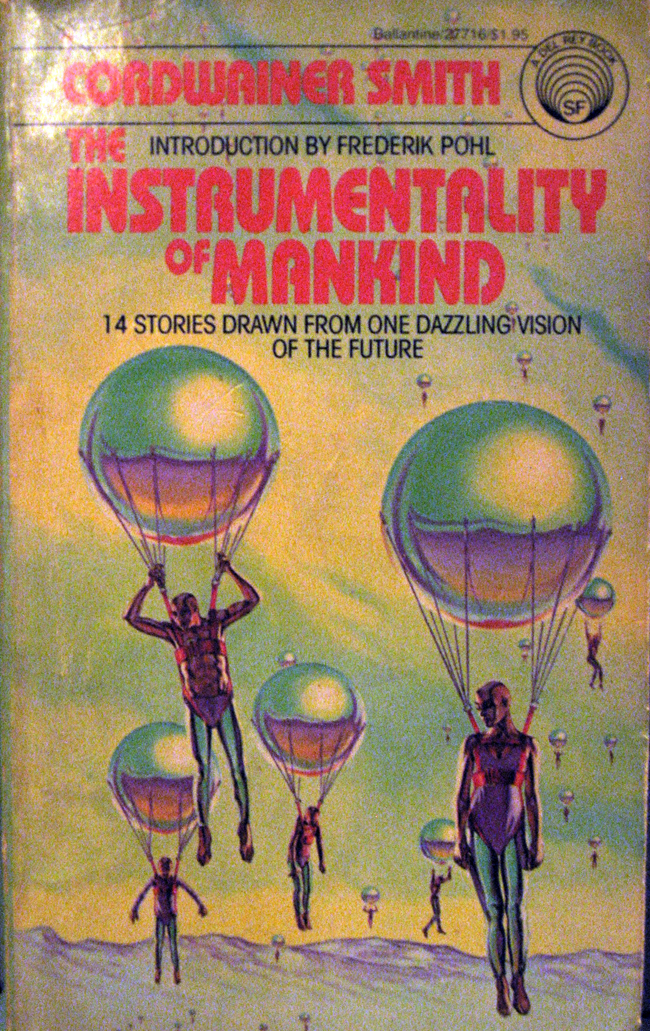
Anna Grace Carpenter: The first I remember trying to imitate was Cordwainer Smith. He had a flair for not letting story get in the way of the occasional stylistic flourish and I loved it. Later Tad Williams and Raymond E. Feist made an impact on how I used characters to best tell the "exciting" parts in ways that actually had an emotional impact, plus a particular style of world-building that has stuck with me. (I would be hard-pressed to explain this, but I know that it's there because of reading their work.)

Things started to be less copycat once I really started writing a lot. The more I was using words in storytelling regularly, the more my own style began to emerge from the way I pictured certain scenes and the dialog I heard from my characters. At which point those authors moved from a category of imitation to one of influence.

HC Playa: So there are 4 authors that spurred me into writing: Sherrilyn McQueen, J.R. Ward, Karen Marie Moning, and Patricia Potter.

All four build intricate worlds, whether it's dropping you into the romantic lives of people in 1100 AD Scotland, a hidden Vampire society, a murder investigation turned apocalyptic collision of Fae realms and human, or weaving mythology into romance and adventure.

I didn't copy any of them directly, but they all made characters breathe on the page. They weren't afraid to weave love into blood and gore and battles. One of my favorite things that I did copy was the reoccurring cast that doesn't necessarily feature the same POV from book to book.

Ernest Russell: My earliest influences were Poe, Verne, Wells, and an anthology called Tales of Time and Space. Later Lovecraft and the circle of writers from Weird Tales.

Of these early influences, there is one that influences every story. That is Jules Verne. One of the things I LOVE about Verne's stories is he did research and did his best to not only incorporate the science and technology of the story's time period but to project it forward into what might become. As such I try, even in my fantasy writing to research what I am writing and make it plausible within both the world rules for the story and what I find historically or current science and technology and translate it into the story.

Frank Fradella: F. Scott Fitzgerald, Robert B. Parker, and Chris Claremont. Remove any one of them and I'm not sure I'd be a writer at all. My college professor in English told me to look at Parker for dialogue, and he was right. Fitzgerald showed me how to make prose feel like poetry, but it was Claremont who taught me how to tell a story. I had been reading comics books off the spinner rack for years, but the first comic book I *remember* is Uncanny X-Men #131.

Tom Powers: A weird mix of Walter Gibson, Paul Ernst, and H.P. Lovecraft. Still echoes of them all, plus a bit of Norvell Page. Much of what I write is in the traditions of those writers' genres.

Pj Lozito: I wanted to write like Lester Dent, Edgar Rice Burroughs, Raymond Chandler and Sax Rohmer.

Teel James Glenn: Robert E Howard, Lester Dent, Peter O'Donnell, Dash Hammett.

Krystal Rollins: My inspiration: Mary Higgins Clark from my past, and my present is you,, Sean. Her work continues to inspire me in how I create my characters. Her words are printed in black ink and white paper but in my mind, it's blooming with color. I keep writing Sean because of you. (Editor's Note: Awww... Shucks. Thanks, Krystal.)

Charles Gramlich: Ray Bradbury for one

Murky Master: So Dragonlance and the anime Escaflowne, above all else, got me into writing seriously when I was about 13 years old. It took another ten years before I returned to that old dream, but I wrote part of a fantasy novel in those days that I am still surprised at its quality compared to what I wrote today.

John Morgan Neal: Stan Lee, John Broome, Gardner Fox, Bill Finger, Bob Haney, Denny O'Neil, Archie Goodwin, Len Wein, Steve Englehart, Jim Starlin, Roy Thomas, Doug Moench, Michael Michael A. Baron, John Ostrander, Mike Barr, William Messner-Loebs, Bill Mantlo, Marv Wolfman, and last but opposite of least, Chuck Dixon.

Michael Dean Jackson: When I started writing (as Jack Mackenzie) I was inspired by a lot of military science fiction; Heinlein, Jack Campbell, David Weber, Lois McMaster Bujold, etc. It was with those inspirations that I wrote THE PARADIGM TRAP and THE MASK OF ETERNITY.

Do those elements of your inspirations still show up in your current work? Howso? Are they things you do consciously or have they just been internalized by the years of doing them?

Frank Fradella: Completely internalized. I took Parker's style for a spin on its own, and it felt like wearing one of those 1970 Halloween costumes that comes with the hard plastic Batman mask attached by a string. It was a conscious choice to find me in that amalgam, and that's the writer I became.

Anna Grace Carpenter: I do still love a stylish bit of storytelling. Voice, unexpected use of language and grammar (or lack thereof) to catch the reader's attention at a critical moment are some of my favorite things. And that all grew from early attempts to mimic Cordwainer Smith. And the storytelling inspiration I got from Feist and Williams is still there too. Using all the characters to tell the story whether we see their PoV or not. Allowing heroes to not always be heroic and villains to not always be villainous without diving into a grimdark grey. And allowing tragedy to occur, sometimes in very small ways that adds a bittersweetness to big triumphs.

I don't think it's deliberate, it's just how those inspirations encouraged my own voice and writing the kind of stories I like to read. Because that was what first made me want to imitate them - they wrote stories I loved. And now I write stories I love so the influence is still there, but organically after years of practicing my own storytelling.

HC Playa: At some point, I found my own writing voice, but for all my novels, these elements remain, including having two central protagonists (usually a male-female romantic pairing, but like JR Ward, I branched out the more I wrote).

Depending on the story it can almost seem like a hero and side-kick type of casting, especially as I pit them against larger-than-life dangers. (As I type this I suddenly see why my publisher says my writing is pulp 😂.) I don't lean into the romance aspect as much as those authors tended to. More like Moning's Fae Fever series, the romantic aspects take a back seat to the apocalyptic events and characters dealing with their issues.

I have read plenty of classics of multiple genres, but it would be disingenuous to say I am influenced in style by those stories.

I don't aim to write the next classic that future college students dissect to figure out what I meant when I said the sofa was an ugly flea market reject.

I write to entertain. I use elements from the stories I love reading. I love weaving in magic and the amazing, because life always needs magic.

John Morgan Neal: Yes. I'm a big ol' ape in more ways than one. But never outright. The stuff I love is in my DNA. So it has to shine through.

John L. Taylor: Many facets of my inspirations are like a reflex now. A subconscious thread. I still lean on Lovecraftian themes and first-person narrations in horror but avoid the adjective salad pulp writers often used when stories paid by the word (Lovecraft was great at taking a whole paragraph of them to say "it was an amalgam of parts that defied description, an offense to biology itself.") I guess that's the real difference between me and my inspirations: I prize concise writing. I suppose that's the last vestige of Updike left in me. But it's a great influence to retain/

Rob Cerio: I still feel like I use Cussler's "opening Gambit" formula and basic formatting of action scenes. Azimov's use of "working-class schlubs" is something that still crops up all the time in my work.

TammyJo Eckhart: I can't answer question one so question two also doesn't apply. While there are authors that I loved and still love, the idea of copying them in any way never entered my mind. I was writing stories from kindergarten onward.

Murky Master: Things I took from Dragonlance were:

  • mixing cultures is both hugely interesting and creates lots of conflict, from Tanis Halfelven's internal identity drama. I'm biracial myself so it was interesting seeing someone "like me"
  • Bad guys are F-ing Awesome. Raistlin made a permanent mark on my picture of wizards and magic and the lure of power magic brings. You need no further proof than to behold my profile pic, after all. Nothing makes me hahaha quite as much as my hourglass-eyed boi. Lord Soth was pure mother finding METAL as well and remains my fave Ravenloft Darklord.
  • Escaflowne was a romance and an epic fantasy all at once. Later on, I would actually sit down and read a romance novel and find it totally awesome, and I like to have strong, real relationships in my books because of that anime.
  • also, the anime was grand in scope, full of pathos and beautiful at times, unspeakably cruel at others (looking at you Dilandau). It helped me understand PTSD and the weight of honor as well as the power of dreams to destroy and create. Dilandau also made me like insane villains.
  • the Adventures of Batman and Robin cartoon with Bruce Tim as the art director also made me love art deco and Pulp sentiments. The episode featuring "The Grey Ghost" and Brendan Frasers The Mummy sealed my fate. Now I can't help but have all cap titled like DESTROYERS FROM WALMARTS BEYOND and COURT OF THE GLISTENING LUNCH LADIES and such.

Chuck Dixon: I read so much before I started writing for a living that I have no idea who's work I've intuited over the years.

Michael Dean Jackson: However, around the time I was writing my books I discovered the television series SHARPE on the History Channel. I loved every episode and I loved Sean Bean as Richard Sharpe. So I figured I would try the novels by Bernard Cornwell and I loved them even more. The books were, I found, immensely better than the show.

And it was those novels and the character of Sharpe who fired up my imagination and helped me come up with my own, military SF version, a character called Jefferson Odett.

I have only written two Jefferson Odett books, DEBT'S PLEDGE and DEBT'S STAND, but I do have a third one that I may eventually get to. Nevertheless, Jefferson Odett is more than a little inspired by Richard Sharpe, in the same way that Horatio Hornblower, C.S. Forrester's seafaring adventure hero, inspired Bernard Cornwell's character.

I am under no illusion that my novels have anywhere near the quality of Cornwell's or Forrester's, but the inspiration is there.

Sunday, February 4, 2018

Chuck Dixon Goes To War -- Levon's War!

His word is his bond.

A promise made in the past takes Levon Cade from the hills of Alabama to the caliphate of ISIS.
The US Marine turned backwoods vigilante returns to the Iraqi desert on a mission of mercy that will take him to the heart of terror.

It will take all his skills, all his courage and all his will to survive the hell that Mosul has become.

It’s time for Levon’s War. Available at Amazon.

“Chuck Dixon’s prose is a perfect weld of muscular writing with razor edge wit and storytelling.” -- Beau Smith, creator of Wynona Earp

“Chuck Dixon is a writer who brings his A Game to the table all the time.” -- David Finn, author of the Asanti series

“Chuck Dixon writes in a visceral, matter-of-fact voice that erases the barrier between reader and page, grabbing you by the throat and dragging you through the story, until you look up and it's four a.m. and you finished the book.”  -- Mike Baron, creator of Nexus, the Badger and author of Whack Job


For more information:
https://www.facebook.com/chuck.dixon.779
http://dixonverse.blogspot.com/
https://www.amazon.com/s/ref=nb_sb_noss_1?url=search-alias%3Ddigital-text&field-keywords=chuck+dixon

Tuesday, March 29, 2016

Chuck Dixon Doesn't Need Your Permission To Write


Sure, most of you may know Chuck Dixon as one of the greatest Batman and Punisher writers alive today, but what you may not know is that he is also a best-selling novelist and author of both the Levon Cade action/adventure series and the Bad Times series.

So, in an effort to help share the word about his latest prose work, I was lucky enough find that he had some time to devote to an interview for the ol' blog here.

 
Tell us a bit about your latest work.

Chuck Dixon: It's called Levon's Run. It's the third book in my series about Levon Cade. He's a military vet who inadvertently becomes a vigilante crime fighter. In this book he's on the run from an alphabet soup of federal law agencies and he has his eleven year old daughter along. The series kind of scratches my Punisher/Death Wish itch.

What are the themes and subjects you tend to revisit in your work?

Chuck Dixon: I never write to themes. Themes are for others to find in my work. I'm drawn to action stories set in almost any genre. My novels have included military action, apocalyptic survival, time travel, zombies, and I'm working on a western.

What would be your dream project?

Chuck Dixon: I'm living the dream right now. E-books offer me freedom from the gatekeepers. No pitches. No meetings. I don't need permission to write. I have a ready audience and I wake up every morning eager to entertain them.

If you have any former project to do over to make it better, which one would it be, and what would you do?

Chuck Dixon: If I were writing the Punisher again I'd provide him with a law enforcement antagonist, a Javert who's always hunting for him. It';s the one element I think was missing from my Frank Castle stories.

What inspires you to write?

Chuck Dixon: I can't help it. It's a compulsion. And comics taught me to write even when I don;t feel like it. I'm closing in the last chapters of a novel now and can't wait to work on them. I hope I instill that enthusiasm in the reader.

What writers have influenced your style and technique?

Chuck Dixon: Donald Westlake and Edgar Rice Burroughs are tops. Westlake for pacing and humor. ERB for action and sense of wonder. There's also Ben Haas who wrote westerns under the name John Benteen. That guy could write compelling action with a clarity that allowed you to see it happening. There are others. Lots of others. I've always been a compulsive reader.

Where would you rank writing on the "Is it an art or it is a science continuum?" Why?

Chuck Dixon: I'm not sure what writing is that continuum. It's certainly a craft. I never think of it as an art. I have a quote from Stave Martin hanging on my wall. It's my sic transit gloria. He said, "Entertainment can be art. But if you set out to make art you're an idiot."

Any other upcoming projects you would like to plug?

Chuck Dixon: My fifth Bad Times novel, Sons of Heaven, will be out in May.

For more information, visit: http://www.amazon.com/Levons-Run-Levon-Cade-Book-ebook/dp/B01AWXK6H6/ref=sr_1_14?s=books&ie=UTF8&qid=1458844053&sr=1-14&keywords=chuck+dixon

Thursday, February 25, 2016

Thank You, Captain Planet -- Writers Respond to Politically Correct Character Casting

When I first heard the politically correct combining of various races and genders in a preset, paint-by-numbers exercise as "Captain Planet" casting, I nearly snorted Diet Coke onto the shoulders of the con-goer sitting in front of me.

I always hated Captain Planet as a kid, perhaps for that very reason. It seemed so... forced.

But rather than assuming I speak for every writer, I took the hard questions to a group of authors who know all about these things.


What responsibility (if any) does an author have for portraying a variety of cultures/races/genders in a given work?

Michael Baron: The first responsibility is to entertain. A good writer uses his imagination to put himself into the heads of many people. I use whatever characters are appropriate to the story. Anyone who reads my fiction knows I incorporate many diverse types. But not for the sake of diversity. For the sake verisimilitude.

Chuck Dixon: A writer has no responsibility to anyone about anything.

Adam L. Garcia: I believe the author responsibility is to tell a good story and should focus on that first, but should do so in a way that treats the characters equally, regardless of race/gender/culture.

Beau Smith: Writing a compelling story with characters that have something to say, Likability is a key that so many times goes neglected. Without an emotional investment, readers won't care about the situation, or the conflict.

Gordon Dymowski: Let's be absolutely clear – we live in a multicultural world. An author has an absolute responsibility to portray a variety of cultures, races, and genders within a story. Cliched complaints like being "politically correct" or "being inclusive" are merely forms of intellectual laziness, substituting catchphrases for honest, open dialogue. And for those who think that a writer should reflect their reader's politics, sorry people - writers don't serve any political agenda but their own.

Crafting a diverse range of characters even in a traditional pulp milieu can be done...and it actually has been done within New Pulp. Barry Reese's Lazarus Gray stories are an excellent example:  one of the characters is a gay person of color, and Barry's writing imbues the character with dignity and honesty while acknowledging that the time in which those stories takes place was not welcoming of diversity. (And let's not forget Black Pulp and Asian Pulp from Pro Se Productions) So yes, a writer should work hard to be as multicultural as possible within the context of their story and setting.

John Morgan 'Bat' Neal:
Well it doesn’t hurt to be mindful of it but it also isn’t something you want to force.  Like many things it should organic to what you are writing.  Many things have a reason to have the people populating the story that is being told.   But it can work to toss in something that contrasts with the commonality of the people and places that are the main part of the story.  Take Dracula for example.  Stoker told a timeless tale of an invading alien coming into a set society. Dracula was as different from the main English characters as he could be.  But he at least shared that uniquely European notion of nobility.  Stoker could have stopped there but he also added Quincey Morris.  A tall Texan.  A character that provided further contrast and relief and helped make the novel one of the best of all time.   So it pays to throw in a bit of spice.  That spice can come from different races, cultures, sexes, and sexual orientations.    In summation, I think the main responsibility of a writer is to write something good and entertaining.  Once that is achieved they can see about being socially responsible. 
 

Anna Grace Carpenter: I have a responsibility to write a convincing story that feels real, even when it's not. Different stories will involve different elements to feel "real", but lack of diversity has more and more taken on an aspect of unreality for me. (It was less so when I was younger and in a more limited social setting. As an adult I interact with all types of folks on a regular basis and recognize that is more the reality of most of the world.)

B. Clay Moore: Unless directly commissioned to address specific cultural, gender-related, or racially relevant themes, a writer's responsibility is to be true to himself (or herself), period. He has no "responsibility" to please anyone, or not to offend anyone. Once the work exists, it's open to whatever interpretation people want to lend it, and the author is open to whatever criticism may come. But there is no "responsibility" to anything beyond the story.

Logan Masterson: The writer bears whatever responsibility he or she accepts. We can write silly stories and sad stories and meaningful stories.

I choose to write what I hope is meaningful fiction. It's not all inclusive. Ravencroft Springs is about a white guy. But Canticle of Ordrass: Wheel of the Year is about a girl fleeing religious persecution only to confront racism and ignorance. All the MCs are women. It's a challenge for me to write, which is one of the better things about it, and I think it makes me better.

As makers of art, we are the front line in the culture war. Stories like ours become films. They become TV shows and graphic novels. They enter the zeitgeist.Our stories can change peoples' minds, and the world itself, if only in tiny ways. But we're all tiny, and pebbles make ripples.

Ultimately, are you obligated to be inclusive and exploratory in your work? No, but I am.

Lance Stahlberg: Responsibility? None. The author's job is to tell a story. It's not our job to appeal to the sensibilities of every possible reader. That way lies madness. You can't win with the politically correct. Don't even try.

Now, if you're trying to be realistic, then you are going to want to portray the variety of races that a reader would expect to find in your setting. If you're in a modern day major city, it might be weird if you don't run across any blacks or hispanics with a speaking role. Unless your plot takes place entirely within the Irish mob. Or a small Midwestern town. Then a random non-white character might feel like a token.

If you try to force something in, it will feel forced and your reader will be jarred out of the story. So the bottom line when it comes to ethnicity, IMHO, is be representative of your setting, but don't feel obligated.

Gender is a little different. Women are no longer relegated to damsels in distress or love interests. If you have a big cast of characters, but don't have any females outside of those two roles, readers will notice.

The Bechdel Test isn't half bad as a guide. But again, don't feel obligated. If your plot plot does not allow for the occasion for two female characters to meet, don't make them. Don't force anything into your work just to appease a reviewer at jezebel.com. Same as above, trying to make the politically correct happy is not your job. Telling a story that feels real and engages your target audience is.

Percival Constantine: It depends on the setting. I'm planning a series set in modern Japan which is very homogenous. So there won't be a lot of multiculturalism in that book. But if I'm writing something in Chicago, only having white guys would be unrealistic.

Ron Earl Phillips: As has been said, you shouldn't ever write to appease some cultural ideal. It is your world you are building, and so the situations are yours to create. But if your story is set in a specific reality, then it has to adhere to those rules set in that reality.

Robert Krog: I was never a fan of Captain Planet either for precisely the reason that it was so forced.  I don’t believe that a writer has any set obligation to meet quotas of that sort or even to write stories addressing such issues.  That being said, great works of literature that persist and are retold over many generations do address socially relevant issues such as equality, tolerance, and love of humanity.  I do believe that stories should tell the truth in as much as the writer knows the truth. I don’t mean the facts, necessarily, but the truth.  The truth is that people come in two sexes and from many cultures and ethnic backgrounds.  It’s bound to come up some time.  So have at it, but don’t force it. 

Also, be careful about being preachy.  It’s one thing to have a preachy character.  Those people exist.  It’s another to break readers out of the story by being a preachy author.  Sermons and stories are hard to weave together convincingly.  That is to say, it’s fairly easy to work a story into a sermon or a sermon into a story, but it’s also easy to confuse the two completely and lose either or both.  Most readers, these days, I think, do not want a story to turn into a sermon.  Some do, I suppose.  Most, I think, do not.  I’d avoid it.

What advice do you have for building an ensemble cast without resorting to a paint by numbers, politically correct cliche? 

Gordon Dymowski: The greatest lesson I learned in writing the “other” came from graduate school, when I was learning to be a counselor. One key  idea was that some counselors tend to stereotype certain groups by symptoms and/or beliefs (like “Asian-Americans are less likely to be alcoholic” or “Hispanic men rely on machismo), rather than seeing how specific cultures affect them. (It's also key to realize that there's no such thing as “Asian” or “Hispanic” culture – there's Chinese, Japanese, Thai, Mexican, Puerto Rican….in short, it's about learning the intricacies of each culture and reflecting those differences). Same with gender/sexuality - learning about the nuances and other's experiences allows me to be more empathetic towards them, and portray them as human beings first and traits later.

When I write a person of color (or gender/sexuality/other characteristic that is not me), I really try to understand that person emotionally, and how their culture affected them. When I was writing “When Angels Fall” for DREAMERS SYNDROME: NEW WORLD NAVIGATION, Jessica (the female lead) was originally a faded Southern beauty queen, chock full of the usual cliches and stereotypes. (In other words, the story sucked because of that poor writing). Remembering past work with local quinceanera shops in my neighborhood, I decided that might be a great way to make the character interesting, and that a cultural influence might strengthen Jessica's character. Integrating that aspect made Jessicar a more interesting character to write, granting her added dimensions which I hadn't considered when thinking about her.

(It also helps me as an author to step outside my comfort zone, and experience other cultures while learning about different groups of people. Actually realize that when you're writing a person of a different gender/sexuality/race, you're writing a person/character first who happens to be influenced by their experiences/culture. Writing stereotypes or falling on the typical cliched tropes hurts both the writers and the writing. As that same grad school professor once advised, eating at Taco Bell does not count as “engaging in Mexican culture.” 

Percival Constantine: Start with character. Always with character. I think about actors and actresses who would fit my characters so that can help.

Ron Earl Phillips:
I write stories set in rural America. Very homogeneous, and often times starkly black and/or white. And depending on how I want to serve the story, the use of outsiders would be distracting unless it were a stranger in a strange land type story. Serve the story first, then yourself, and then the reader.

Lance Stahlberg: Sean cited Captain Planet as an example of a paint by numbers cast. That is a great illustration of how putting the message first kills your story. That painfully lame cartoon never even attempted to be entertaining. It was only trying to push an agenda.

The example I always think of is Power Rangers. I mean, the white girl was pink, the Asian girl was yellow (!!!), and the black guy was in the black costume. Really??

In your writing, especially pulp writing, the story is king. So if you have, say, a Muslim character thrown in whose only apparent purpose is to be Muslim, your story sucks. If the fact that they are Muslim works within the framework of your story and is part of what makes them interesting, that's one thing. But if you do it just so you can puff out your chest and announce how diverse your cast is, you are not doing your story, your readers, or the Muslim community any favors.

Really, my advice is to just not overthink it. If your story calls for an culturally diverse cast, go for it. If you find that your lineup needs more variety to the point where you are afraid your readers will get them confused because they all look and sound alike, then yeah, it makes sense. But the minute you say "this story needs a _________", walk away from the keyboard and take a deep breath. It's your story, not the PC police's.

John Morgan 'Bat' Neal:
Just be mindful of it.  If you can’t see that you are being cliché or PC then perhaps you shouldn’t be trying to make an ensemble cast and go with what you know until you can see it.  But I think most if not all can if they try harder.  The best advice I can give is make the character.  And then see who they are, and usually that will lead to different races, cultures and orientations if that is what and who they are.  When I created the PostModern Pioneers I did not set out to make them all what they ended up being.  That came as they were being former.  “Bird” Portamayne for instance could have easily been White or Hispanic or whatever.  But as I was writing him it was clear to me he was a middle aged black man. 

And sometimes avoiding clichés is just as bad as pushing them.  Because sometimes clichés are based in a reality.  The character of “Granny” Roh is an Asian computer whiz. That is as cliché is cliché can get these days.  But it just never occurred to me to avoid that as that is what she was.  And it is what it is. 

Robert Krog: If your story includes people of diverse backgrounds, write those diverse characters based on people you actually know, not on stereotypes.  Most folks are not stereotypes.  They may spend a fair amount of time spouting ideology, grievances and talking points, but they do have lives outside of those things, for the most part. The sad truth is that some people are exactly like the stereotypes.  The glad truth is that most aren’t.  Recognizing that all members of the human race have certain common concerns regardless will go a long way toward making characters believable and real. 

It’s a bad idea, generally speaking, to start out writing a story to make a political point.  It’s much better to start out with (a) true-to-life character(s) and then put that/those character(s) into a situation involving socio-political issues relevant to racial/cultural/gender interaction. 

Incidentally, it usually helps not have characters self-consciously preface what they say or do with, “As a fat, white, middle-aged male, I think…” Or, “As a short, skinny, Polynesian woman brought up in Brooklyn, I always…”  There are some folks who shove their identity into the conversation every time they have the chance, of course.  Most people do what they do and say what they say without that.

Adam L. Garcia:
Just simply make them complicated, human characters first, their culture, race, sexuality comes second.. Just like you would do with any other character. Focus on the content of the character and then reflect how their background would influence them

Chuck Dixon: Figure out what your characters want. Build a three dimensional character. If your character is only about their "diversity" then they're boring stereotypes and far more insulting to the minority you're trying to represent than not including them would be.

Beau Smith: Again, likable characters. Everything else is secondary, gender, sex, race, whatever.

Anna Grace Carpenter: In order to try and get a broader group of characters, I ask myself what might prevent folks from multiple cultures living together. Then I figure out what sorts of things might cause them to live together. I don't look for token representation (one of every category) but attempt to create a group that indicates there is diversity, even beyond the characters I'm writing about.

B. Clay Moore: Build a cast naturally, and ask yourself if you're truly representing the environment in which you've set your story. Personally, I feel it's important to represent diversity even if the story doesn't demand it. I just think a diverse cast adds depth to the world I'm creating, and I understand that there's an audience out there actively seeking cultural and racial representations they can relate to. There's absolutely no harm in gender-switching or race-switching a character whose identity isn't wrapped up in being a white dude. But in doing so, consider how their relationship to their environment changes with the switch, if at all.

Logan Masterson: There has to be a convergence though, of meaning, market and entertainment. The market wants diversity. Diversity is definitely meaningful, and has plenty of room for fun.

And in a time where even what we consider diverse is still changing, it's an important area to explore. It wasn't that long ago that Irish and Italian people weren't "white." People of color weren't always thought of as people at all.

How can multi-cultural casting help your stories become better? How can it hurt them?

Chuck Dixon: Introducing multi-cultural-ism into a story for its own sake is idiotic pandering.

Adam L. Garcia: It represents modern society, and opens the story to readers of all kinds. It only hurts if you portray other cultures in a cliche negative fashion.

Lance Stahlberg: A monochrome cast has the potential to be really boring. And as I mentioned before, having too many characters who look and talk basically the same can get really confusing. I like to create as many different ways to refer to my characters possible, so that I don't have to fall back on the same words over and over again in my dialogue tags or when describing an action scene. One easy way to address both pitfalls is to vary up racial backgrounds.

But depending on the setting and the situation, throwing in characters of color might come across as a lame attempt at political correctness. In the real world, people of the same cultural and ethnic background tend to congregate. Not always, but a lot. It doesn't make them racist. It's just a fact of life that we never used to question. Same goes with a group of guys not necessarily having a female in their midst at all times and vice versa.

So if your story is about a crew in the Italian Mafia, or a bunch of rich kids in a suburban high school, or a farming community in rural Illinois -- or for that matter if it's set in east or west Baltimore, or the south side of Chicago, or Chinatown -- then you are not necessarily looking for ethnic diversity among the main characters. There are other ways to make characters unique without relying on race.

It's worth repeating: Don't overthink it. The story comes first.

Percival Constantine: As Adam said, it reflects modern society. But know why you're doing it. And know the cultures you're depicting. Living in Japan, I've seen lots of stories about Japanese characters that get it incredibly, insultingly wrong. Many western writers seem to assume Japanese history consists of three periods—the samurai era, WW2, and modern Japan. So you get things like samurai walking around with katana in stories set centuries before those things were even invented.

Robert Krog: The real world often involves people of different ethnicities brought up in different cultures meeting and doing things together.  We meet, trade, cooperate, fight, enslave, intermarry, etc.  Given this circumstance, stories involving such people interacting in such ways will tell truths about humanity.  But then, insular or isolated societies and peoples have also existed and still do exist. Stories of such isolated people can also tell truths about humanity.  I suggest, of course, that one should not write about what one doesn’t know.  If you haven’t a clue about a certain culture, and research isn’t helping, stop your story until you do if the culture in question is pivotal to story.  Not knowing your subject matter can kill your story. 

If your story doesn’t really need a particular character of a particular cultural or ethnic background and you force it in anyway for whatever purpose, it will probably show to the detriment of the story.  Readers will notice and probably not like it.  If the character’s particular ethnicity or culture is nice background color, that’s good and adds flavor to the work as a whole.  If it becomes an unnecessary or forced plot point, readers may notice and resent it.  Of course, the cultural meeting/clash may be vitally important to the plot and socially relevant at the moment and maybe even a timeless theme. That’s great. Go for it.  Know your stuff though.  Get it right.  You don’t want your protagonist who is an African American gangsta type to bravely face his fate with his shirt tucked in.  I believe sagging pants are the M.O. there.  He’ll rush out the door, facing down The Man with one hand holding his Glock sideways and the other holding his pants up.  That’s the stereotype, of course, but if you don’t know that, you can’t address it one way or another, and it sure will show if you don’t. 

Anna Grace Carpenter: Multi-cultural casting provides the opportunity both for more story conflict and deeper empathy and, for me, gives me a chance to explore real life issues without necessarily writing about "real life" circumstances. Lack of research into those issues and how they play out across different cultures can come across as patronizing or simply ignorant and weaken the story by falling into stereotypes.

B. Clay Moore: As I said above, it adds depth to the world you've created, and opens the door for a variety of perspectives. It only hurts a story if you're obviously pandering to an audience, or if you're a shitty writer who leans on stereotypes and broad tropes. In that case, though, your book is probably going to suck with or without a diverse cast. After all, part of being a good writer is being able to convincingly sell the reader on the believability of a variety of character types, regardless of gender, sexual orientation or race.

As a straight white male writer, I fully understand that I won't get "credit" for the diversity of my cast, but it's still important to me not to present the universe only in shades of pasty pale.

Beau Smith: If it is a part of the real story and not forced upon you by a non-writer, editor, marketing, then it's fine, but what comes out of my imagination is what I've made up to be entertaining to hopefully more folks than myself.

Gordon Dymowski: Multicultural casting only hurts if I either do it to fulfill someone else's political agenda or if I choose to rely on outmoded tropes (the streetwise African-American male, the Asian tech expert, etc). Writing about certain time periods provides a great opportunity to write about other cultures with sensitivity and insight within a very oppressive, less enlightened historical context.

Think that writing for diverse, different perspectives is a challenge....well, let me provide a great example of such writing being done right: the television show Leverage provides a showcase where every role is played and written with a mind towards diversity/inclusion, but not at the expense of the overall narrative. If you think it's merely too much work….maybe you should consider not being a writer. (Also, for those who complain that such writing is "politically correct"....the 1990s just called; they want their overused catchphrases back).

John Morgan 'Bat' Neal: It can hurt if it’s just used as a device without any real story telling reason or purpose other than to be PC or inclusive.   Two of my projects have female leads.  Both lead a team of very varied individuals of various colors, sexes, sizes, and personalities.  But none of them were created with some agenda in mind of some meaningful message.  The only thing done on purpose was them all being different.  That is the hook that gets me.  And it comes from being a fan of Doc Savage’s Famous Five, and the Fantastic Four, and The Legion of Superheroes, and all the other things I love that had rich varied casts of all sorts of different folks.  That to me provides some of the richest story telling possible.

Saturday, January 23, 2016

Chuck Dixon announces Levon's Run!

HEAVEN HELP ANY MAN WHO STANDS IN THE WAY OF LEVON’S RUN.

The FBI, ATF, Homeland Security and police from seven states are on the trail of Levon Cade and his daughter Merry. More vigilante action with man-killer Levon Cade in his third thriller as he leads his pursuers into the heartland where he means to lose them forever. But his plans turn to a desperate fight for survival and he enters the shadowy world of human traffickers.

For more information: http://www.amazon.com/dp/B01AWXK6H6

Sunday, July 12, 2015

[Link] STUPID GUN MISTAKES MOST WRITERS MAKE


by Chuck Dixon

I made a partial list below (I’m sure Duane Thomas, Larry Correia and others can add to it) of dumb things I see in novels and comics and movies in the area of firearms. A few of these (for dramatic license) I make myself. But they’re still dumb.

THE SILENCED REVOLVER

If you’re dumb enough to put a silencer on a revolver then you’ll discover that all the noise you hoped to suppress will escape from around the cylinder. See, an automatic is a sealed system allowing gas to vent only from the end of the barrel. So all your sound is coming from the barrel as well. A revolver is not sealed. There’s a gap twixt the cylinder and the barrel where they meet. This gap allows the cylinder to turn. It also allows gas and noise to escape.

THE “EMPTY” AUTOMATIC

We’ve all seen the scene where on adversary has the drop on another at the end of a gunfight. One guy holds out an automatic to the other guy’s head, says a take away line (“This is where the rubber meets the road, scumbag.”) and then…click. The gun’s empty! Well, when an automatic has fired its last cartridge the slide atop the action locks back. They would both know the gun was empty. At the same time the firing mechanism locks back as well so no “click”. If you need to have a scene like this make sure your character’s armed with a revolver.

Read the full article: http://dixonverse.blogspot.com/2015/05/stupid-gun-mistakes-most-writers-make.html?m=1

Friday, May 15, 2015

Chuck Dixon returns to Bad Times!

They left a man behind. 100,000 years behind.

Another chapter in the popular time travel thriller series Bad Times by bestselling author Chuck Dixon. Lee, Jimbo and the rest of the hard-fighting Rangers go back to prehistoric Nevada to find the man they left behind on their first mission. This epic quest brings them into dangerous encounters with giant predators long extinct. But the most dangerous of all these animals is man. Back in the present, one of their team is abducted by a mysterious billionaire seeking to grow his fortunes with the use of the scientific miracle known as the Tauber Tube. Also, their benefactor from the future shares a startling secret.

The millennium-spanning saga by the author of Levon's Trade and Winterworld: The Mechanic's Song continues here!

“Chuck is a damn good writer who is really good at hooking you, giving you fun characters, and telling you one hell of an adventure story.”
Larry Correia, Monster Hunters International, the Grimoir Chronicles

“An intelligent and well thought-out high action time travel story.”
Noah Mullette-Gillman, Luminous and Ominous
“Dixon excels at putting down action, of introducing larger-than-life heroes, kicking them through the door into a big mess, and having them sort out a situation in a flurry of martial arts moves and big guns.”
Mel Odom, The Rover series.

In Kindle and paperback at:
http://www.amazon.com/Helldorado-Bad-Times-Book-Four-ebook/dp/B00WA9FBNU/ref=pd_rhf_pe_p_img_1


Friday, September 19, 2014

Will you join the crusade?

Be a part of Comic & Cinematic History...


... as legendary comic creator Chuck Dixon, 300 and TMNT film producer Scott Mednick, and Framelight Productions come together to create Sword of Wood... an exciting new franchise!

Already being set up as a motion picture, we are looking for partners to finance the publication of a graphic novel based on an original story being written by Chuck Dixon with illustrations provided by Esteve Polls.

Visit for more info: https://www.kickstarter.com/projects/1852578469/sword-of-wood-by-chuck-dixon

Thursday, November 21, 2013

Chuck Dixon's BAD TIMES now in paperback!

Now you can own Bad Times Book One: Cannibal Gold in a brand new paperback edition!
 
Follow the link to the frist in a sensational new series readers are calling "lean, mean, bloody fun!"


Thursday, July 11, 2013

Mine or Yours: The Comic Book Edition

Well, we did this last week with prose writers, so this week let's run the same roundtable -- but instead from the comic book side of the fence.

I chose these writers specifically because not only do they have the goods of writing corporately owned characters (Erik Burnham on TMNT, Ghostbusters, and now Scarlet Spider, Chuck Dixon on Robin, G.I. Joe, Punisher, and nearly everything under the sun, Dan Jolley on Voltron, Vampirella, Angel, and more, and John Jackson Miller of Star Wars and Iron Man) but they also seem to have a lot of fun playing off each other during interviews. You'll see what I mean. Just keep reading.

Do you prefer to write new adventures of existing characters, or would you prefer to create new characters outright?

Chuck Dixon: Both are cool. But that depends on the existing character. I rather take a job at Arby's than write an issue of Firestorm.

Erik Burnham: Shucks, Chuck said exactly what I would. Except having seen my local Arby's, I'd probably opt to write Firestorm.

Chuck Dixon: But with Firestorm there's no free fixin's!

Dan Jolley: Given my love of jamocha shakes, and having spent a year writing Firestorm, yeah, I think I'd work at Arby's.

Erik Burnham: Seriously, I agree with Chuck on this. I really have no preference for one over the other. That sounds like a weak answer, I know, but I'll find a joke for whatever set of circumstances the character I'm writing has to face.

John Jackson Miller: Yeah, they're just different kinds of jobs. In one case, you're free to figure everything out and there's work involved with that; in the other, there's a little research involved. (Which doesn't mean you can't make changes to a character or his or her characterization, but it helps to know what the audience expected before you start moving things around.)

What are the advantages and disadvantages of each that you've found?

John Jackson Miller: I agree that doing your own thing has its benefits -- but also, doing someone else's character can be fun if there's a good relationship with the editor and/or licensor and there's something in the character and world that appeals to you.

Chuck Dixon: Again, depends on the character. But most times you can fall back on their history. Plus, being established, they already have an audience prepared to be entertained.

But creating your own characters and universe is like free falling.

Erik Burnham: I suppose the advantages comes down to time. Less people to say yea or nay to any given idea. That can be a big advantage, however.

Dan Jolley: Writing original characters is a much greater risk, definitely, but you get to make up your own rules and you don't have to worry about accidentally duplicating or contradicting a storyline from the 70's. Original characters take it for me by a wide margin.

Saturday, October 13, 2012

Joe Frankenstein Is Alive!

JOE FRANKENSTEIN LAUNCHING ON INDIEGOGO! 
JUST IN TIME FOR HALLOWEEN!!
 
The creators of Bane, Graham Nolan and Chuck Dixon, present the first in a new series of graphic novels.
 
Graham Nolan and Chuck Dixon join forces again to bring you an epic story of fear and revenge that spans centuries. There’s adventure, terror and the brand of gallows humor these creators are famous for. With two sure hands at the controls, you know you’re in for a ride.
 
This project will be the first in a series of 120 page, full color graphic novels to be published by IDW Publishing in 2013.
 
Joe Pratt is seventeen and in his last year of living in a foster home before moving on to the rest of his life. He’s delivering pizzas now but has no clue as to what he wants to do about his future.
 
All of that changes when he’s attacked by a houseful of vampires and rescued by none other than Frankenstein’s Monster. The Monster reveals to Joe that he is the descendent of Baron Victor von Frankenstein . The most famous undead creation the world has ever known has been watching over Joe since birth; staying to the shadows to protect him from… The Bride.
 
FOLLOW THIS LINK TO HELP FUND THE PROJECT:
 
 
AND VISIT THE CREATORS AT http://www.joefrankenstein.com/ for more art, features and updates!
 
Visit Chuck's website at http://www.dixonverse.net/! Or  visit him at http://www.comicspace.com/chuckdixon/

Wednesday, September 26, 2012

The Writer Will Take Your Questions Now (#232) -- Comic Book Panels

Tell us a little about your approach to writing a comic book panel. 

Art by Martheus Wade
Okay. There are several different approaches writers use when describing a panel in a full-script format. (And that's not even including the plot-style format.) Let's go over those first, at least the ones I can remember.

The Movie Director:
This writer covers everything from the "camera angle" to the lighting and gives the artist almost no free rein to interpret the panel. Expect to see words like "panoramic" and "bird's eye view" and "worm's eye view" a lot in the script.

The Comic Book Editor:
This writer decides exactly how the borders of the panel will look and whether it will be a full-width panel taking up the middle third of the page, etc. He or she may also provide drawings of the suggested page layout.

Art by Jim Ritchey III
The Literary Maestro:
This writer uses prose in the manner of the great authors and reveals a character's motivations and past events leading up to this panel and how it matters in the grand scheme of the character's live from this point on. Read any of Devin Grayson's scripts to see this approach. They're amazing pieces of literature in and of themselves sometimes.

The Minimalist: This writer is pretty much bare bones with the panel description. He or she simply tells what happens and leaves the camera angles, mood, tone, page layout, etc. to the artist to decide. Chuck Dixon is a shining example of this approach.

Art by Richard Kohlrus
Now to answer the question on a more personal level. I am a blend of all of these charming folks, though my default tends to be the minimalist. Whether I'm a movie director or a minimalist can depend on whether I'm working with an artist I've worked with before or writing for an artist who may not know my quirks and may need more information. When I have a scene that's particularly important in a book that's not a straight-up action book, I'll sometimes slip into being the literary maestro for a panel or two. And when I've got a certain look in mind for a creator-owned book, don't be surprised to find me become the comic book editor for some of the important pages.

The trick in each of these cases (or for each of these writers, one might say) is to trust the artist to interpret and provide the script as a guideline, regardless of the type of approach, and not as a set-in-stone monument to your ability to create a story. The artists with whom I work often will improve on my scripts and ask me about rearranging page elements or changing the size or panels or using other, far better camera angles. It's my job to trust them and make sure the book is a partnership.

Wednesday, September 19, 2012

The Writer Will Take Your Questions Now (#227) -- Making Characters Interesting

How do you make characters interesting/appealing to readers?

Who will you create today? (Art by Andrew Dickman)

Perhaps the best advice I ever got about this question came from Chuck Dixon. He said to always give a reader something to like about a villain and something to dislike about a hero. In other words, keep them real. There are no purely good or purely bad people. Deep down, even Mother Teresa would fess up to occasion struggles with at least some of the seven deadly sins. And even Hitler loved Eva Braun.

Another trick that helps me keep my characters interesting is to give them personality or even physical quirks that make them seem more like people you could round a corner and bump into. For example, I have a friend who bites down on her bottom lip just before she laughs. I thought that was cute, and that trait has worked its way into my characters a few times throughout the years.

But the most important and essential way to make characters interesting and appealing to a reader is to give them a strong and compelling story arc that takes them through a worthwhile struggle and change, even if they ultimately fail. Readers resonate with struggle and the fight to accomplish something, whether it's trying to destroy an evil ring, win a heavyweight boxing match, or connect with an estranged daughter. Put your characters in a gripping story with plenty of opportunities to succeed or fail, and you'll find them becoming more interesting even to you -- not just your readers.

Thursday, June 28, 2012

Writing Humor -- Chuck Dixon and Erik Burnham Sound Off

Writing humor.  Personally, I don't get it. I can't do it. But, as the writers behind comic books like The Simpsons and Ghostbusters, Chuck Dixon and Erik Burnham (respectively) have penned some of the funniest comics around. So when I wanted to learn more about writing humor, they were the first people I thought to ask.

What is the "silver bullet" that helps you be funny when you write?

CD: Rewriting.

EB: I don’t have one. I just sit down and write what occurs to me.

This will be the most boring Q&A ever unless I start lying. I recommend getting a prescription for something crazy. Then load up and trying to write some profound. I can’t say this is how Mark Twain did it, but I bet that’s how Dostoyevsky rolled. You should see the original draft of the Brothers Karamazov. It could’ve been the basis for the American Pie films if he hadn’t sobered up and revised.

Like I said, whatever occurs to me. And yes, sometimes rewriting, which can bring you perspective and more funny bits, but it can also make you second-guess yourself and weaken the joke. (I shoulda gone with Chekhov!)

What's the most important element for writing humor into your work? Timing? Relevence? Jokes? What?

CD: If it makes me laugh. I'm not much for The Rules Of Comedy. That's the road to the kind of "insert joke here" kind of humor on display in bad sit-coms and Dreamworks movies.

EB: Timing is everything . Getting it right can make an okay joke better, getting it wrong can deflate a sure thing.

I've heard that when a writer "tries" to be funny, he is on a quick trip to failure. Can you try, or does it have to be something that "just comes naturally"?

CD: I think that's when an ACTOR tries to be funny. If you're writing comedy you better damned sure TRY HARD to be funny.

EB: Like Chuck said, when you’re writing it, you’re trying, but not overplaying is helpful in making humor work. LOOK AT ME BE FUNNY NOW can blow up in your face.

Like the Karamazov thing.

What advice would you give the writer who is wanting to inject more humor into her work?

CD: Think of those "we'll laugh about this later" moments in their own lives. Remember that comedy is other people's pain. But we should never see them bleed.

EB: Just write what you think is funny. The jokes will go over some folks’ heads. Some will find it the exact opposite of funny. Some will get it and chuckle. And then, there’s that magical fourth group who won’t get it right away, but it will dawn on them at some later point, at which time you’ll seem like a genius.

For more info about these two talented creators, visit them online at www.dixonverse.net and www.burnhamania.com.

Friday, April 20, 2012

The Writer Will Take Your Questions Now (#146) -- Pulpiest Comic Writers

Which contemporary comic book writers (the past 20 years) best exemplify the spirit of pulps?

Don't mess with Beau. He'll shoot you.
It's short list.

Chuck Dixon
Beau Smith
James Robinson
Ron Fortier
Garth Ennis
Christopher Mills

Friday, March 30, 2012

Chuck Dixon: The Best Damn Comic Book Writer Ever

I first met Chuck Dixon not in Chicago at my first Wizard World Chicago Convention, but in the pages of all of my favorite comic books. You see, I may be slow on the uptake, but eventually I started to notice something they all tended to have one thing in common. It was this name in the "written by" part of the credits. Chuck Dixon.

Then my friend Scott McCullar, who was doing Chuck's website (www.dixonverse.net) at the time, offered to introduce me to him if I wanted to make the trek from Atlanta to Chicago one summer. Thankfully, I had the cash on hand for a flight.

What can I say about Chuck that hasn't been said already? Precious little, I'm sure, but I will say this. His work is the textbook definition of how to write an enjoyable, action-oriented comic book that never lets a reader down. Call his style a formula or a knack, it doesn't matter -- because it rarely (and by rarely I really mean never) makes you feel as though you've wasted your money on one of his books.

But enough of my gushing. It's time for Chuck to speak on his own behalf.


Tell us a bit about your latest work.

I’m kind of all over the place at the moment. I just wrapped up a script for an issue of the Simpsons. I’m working on my third novel about the Navy SEALs and I started the first issue of a Lone Ranger limited series. I’m also helping out on some dialogue for a computer game. That’s coming in piecemeal so I work on it when it arrives.

What are the themes and subjects you tend to revisit in your work?

I don’t really tie myself to any one theme or genre. I take what comes be it action adventure to SpongeBob. It’s the comic book medium that’s always fascinated me. Within that realm I feel free to create anything. 

What would be your dream project?

 An unlikely one; a long run (a year or more) on the Fantastic Four.

If you have any former project to do over to make it better, which one would it be, and what would you do?

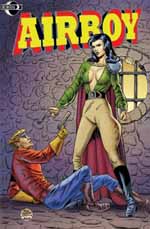
There was a long arc at the end of my run on Airboy that I felt at the time could have been presented better. The conclusion (with art by Adam and Andy Kubert) worked out great, but the lead-up to it didn’t come out the way I’d envisioned it.

What inspires you to write?

Everything. I’m a compulsive writer. I read recently where David Mamet said, “All prolific writers are lazy.” I think the fear of having to do actual manual labor drives me to write.

What writers have influenced your style and technique?

Archie Goodwin would be number one. Then Larry Hama, Harvey Kurtzman. Carl Barks, John Stanley and Frank Robbins.

Where would you rank writing on the "Is it an art or it is a science continuum?" Why?

It’s a craft. It can be art but not if you set out to make art. You learn what works and what doesn’t and spend your life (if you’re serious about it) trying to warp the rules to come up with something new. Even if you fail, the endeavor is what it’s all about.

Any other upcoming projects you would like to plug?

Well, I’m still on GI Joe and Snake Eyes over at IDW. I do a half dozen stories a year for Simpsons and Spongebob. In addition to that I’m adapting Robert Jordan’s Wheel of Time cycle to comics. And I’d like everyone to go see Dark Knight Rises a dozen times.

========================================

For more information about Chuck Dixon, step inside a comic book shop and ask for the best damn story ever. If you need more info than that, go to his website.

Thursday, February 23, 2012

An Issue Too Long? How Long Should a "Typical" Comic Book Arc Be?

This week's roundtable discussion comes from a reader who wrote in with the following:

If I can suggest a question for your question of the day -- How long should a 'typical' comic book story arc be? I ask for various reasons but the main one is that it used to take an issue or two to tell an origin story and I've read several new titles that are on issue 6 and not sure if they've finished any origin story arcs yet.

I loved the question and thought it would be a great one, particularly for those of us who have experience in comic book writing. However, acknowledging the variation of questions included in that one, I broke it down into its pieces.

What determines the completeness of a comic book story arc of any length?

Erik Burnham: A "typical" arc, I think, should run anywhere between 60-120 pages. So long as someone doesn't try to make a 60 page story into a 120 page story, I think we're golden. But 6 issues/120 pp is the outside of where I'd like to see for a typical arc. Longer stories can be done, but then those would be atypical.

Chuck Dixon: The easy, and obvious, answer is a story with a beginning, middle and end. And the end must come to a satisfactory conclusion either through a change in status quo, an emotional catharsis, a resolved conflict or a major reveal. In the best case scenario an arc should either create a new character or show a character growing or changing in some way. In comics, it’s okay to leave a few dangling plot threads to be picked up in the next arc. But NEVER leave the reader feeling as if the purpose of the arc was only to build to the next one. It’s okay to leave the reader wanting more but wrong to leave them feeling as though you gave them less than they expected.

Bobby Nash: Usually, it's the editor or publisher who sets the length. When creating my own stories I generally try to stick close to industry norms. Graphic novels can be 40, 66, 80, or 100 pages depending ont he needs of the story. Standard comic stories tend to be 22 or 28 pages.

Lee Houston Jr.: For a story to be complete, it must have a beginning, a middle, and an end. Granted, not all of a series ongoing subplots have to be addressed in any one specific arc, for many serve as springboards for future stories. But at the very least, the ones pertaining to the specific story in progress must be addressed and resolved, even if they result in new subplots for future arcs themselves. 

How do you work in the beginning, middle and end of individual issues against that of the central story's begging, middle and end?

Martheus Wade: I'm not average in this as I don't write issues. Writing trades allow me to block my stores according to story beats inside of a 70-80 page story. I started by knowing my ending of the story and work backward.

Chuck Dixon: Action. The simplest thing is to provide a solid action set piece in each part of your story. A reveal about a character or situation is also a good tentpole for an individual issue. “My girlfriend is from the Moon!” kind of reveal. But each issue should have something that makes it stand out as a unique reading experience. As, Andy Schmidt, my former GI Joe editor put it, each issue should have a “oh, that’s the one where Captain Skidmark found out his parents are dead” element to it. Or, I’m parphrasing him, anyway. Captain Skidmark is all mine, baby!

Lee Houston Jr.: But although I've heard the "writing to the trades" claim, the creative teams on any comic book should remember to treat each issue as just one chapter of an ongoing saga. "The never ending battle," etc. Sure, some of those chapters later get collected into a trade paperback or a hardcover, depending upon the popularity of the title and/or the creative team involved. Yet those on the other side of the page producing the comic books have to remember that a lot of people (like me) still acquire their issues monthly, especially now with the big push to promote comics in the digital realm.

Bobby Nash: I plan for that in the plot. If I'm writing a story that I know will cover multiple issues then I try to end each issue on a cliffhanger. I like cliffhangers. I wish we had more of them in comics these days. I work in the beginning, middle and end of individual issues the same way I do the overall story. I plan out my plot.

How is plotting different when you're already given a length for an arc and you must either (a) fill it or (b) cut to fit it?

Chuck Dixon: Plotting should be organic. In comics you have to think visual action first. Always trim your plot before you cut action. If you don’t have room for the action in your assigned arc then you have too much plot. Simplify your through-story and make your characters motivations more pure. None of this computer program format or Joseph Campell structure crap.

Bobby Nash: When you know you have a set number of pages to fill then you plot accordingly. Sometimes that means cuts have to be made or additional material has to be added. The later is easier, of course. It's part of the job. You just dive in and do what needs to be done to meet your publisher's expectations by your deadline.

John Morgan Neal: There's nothing worst than a story that is drug out to fill time or space.

Ken Janssens: It always depends if you are working for someone else or yourself. If you are working for yourself, you let the story itself determine how long it should be. If you are working for someone else (as a fill-in arc and not your own book), then they will likely give you an issue count for the arc. Sometimes your idea comes out of that constraint. If you already had your story in mind, then you will have to either lengthen or shorten your story. The best way to do that (I've found) is to figure the main points and themes then space them throughout the numbers of issues for which you have to write. Then you take the secondary plot points and scenes, placing them in between the main ones.  For the individual issues of arcs, they should all have beginning, middle, and ends, but since it won't be for the whole plot, those should be of theme, character, character path, or end just with sheer cliffhangers.

=======================================================================

To follow the works of these fine creators who took part in this roundtable, simply look at the list of Heavy Hitters links on the right side of this page.