.png)

Showing posts with label Writing Tools. Show all posts
Showing posts with label Writing Tools. Show all posts
Sunday, December 15, 2024

Wednesday, December 4, 2024
Holiday Writing Prompts
If you find yourself needing a little push or a little help getting started, try some of these prompts for Season-Themed tales:


Monday, November 6, 2023

Tuesday, June 6, 2023
I Made ChaptGPT Write This Article (Part 1)
AI (or straight-up theft, as some call it and perhaps rightly so in many cases) is a huge topic for creators of all types currently, from artists to writers to ideation generators. So, rather than just making assumptions, I figured I'd actually look at (what the programmers call) the tool and see what it can do and what it can't. This is that experiment.

The Article
Prompt: Writer a tutorial for authors on how to use AI for creating elements to add to their fictional stories.
Title: Harnessing the Power of AI:
A Guide for Authors to Enhance Fictional Stories
Introduction:
In recent years, artificial intelligence (AI) has become a powerful tool for various creative endeavors. Authors can leverage AI to enhance their fictional stories by generating elements such as characters, settings, plot ideas, and even dialogue. This tutorial aims to provide authors with a step-by-step guide on how to effectively use AI in their storytelling process.
Step 1: Define Your Story's Parameters
Before diving into the AI-assisted creation process, clearly define the parameters of your story. Determine the genre, setting, time period, and the general themes you want to explore. This will help guide the AI models and ensure that the generated elements align with your creative vision.
Step 2: Gather AI Tools and Platforms
Research and identify AI tools and platforms that cater to creative writing. There are various options available, such as OpenAI's GPT-3, which can generate text based on prompts, or other AI-driven platforms like ChatGPT, AI Dungeon, or even specialized writing software like Novelize. Explore different options to find the one that suits your needs best.
Step 3: Generating Characters and Settings
To create unique and compelling characters, provide the AI model with basic information about their background, appearance, personality traits, and goals. Experiment with different prompts, variations, and details until you find a character that resonates with your story. AI can also assist in generating imaginative settings by providing vivid descriptions or even suggesting unusual combinations.
Step 4: Developing Plot Ideas
AI can be a valuable resource for brainstorming plot ideas. Utilize the AI model by providing it with a summary of your story concept or specific plot points you want to explore. The AI can then generate alternative plotlines, twists, or even help you overcome writer's block by suggesting new directions.
Step 5: Enhancing Dialogue
Dialogue is a crucial element of any story. Use AI to generate realistic and engaging conversations between characters. Prompt the AI with the character names and their respective roles in the scene. Experiment with different dialogue options and refine them to fit the character's unique voice and personality.
Step 6: Editing and Integration
Once you have generated AI-generated elements, it's important to edit and refine them to align with your vision. AI-generated content might not always be perfect, so review and polish the generated text as needed. Ensure that the generated elements seamlessly integrate with your overall story and writing style.
Step 7: Maintaining Originality
While AI can provide valuable inspiration and assistance, it's crucial to maintain your originality as an author. Use AI as a tool to enhance your creativity, but remember that your unique voice and storytelling abilities are what make your work special. Use AI-generated content as a springboard for your imagination rather than relying solely on it.
Conclusion:
Integrating AI into the creative writing process can be a powerful tool for authors seeking inspiration, new ideas, and unique story elements. By following this guide, authors can effectively utilize AI to generate characters, settings, plot ideas, and dialogue that align with their creative vision. Remember to experiment, refine, and maintain your unique voice throughout the process. Embrace the possibilities that AI offers while staying true to your own storytelling abilities. Happy writing!
-----------------------------
The Story
Using these guidelines given by ChatGPT, I provided the following prompt:
Write a short story based on two characters confronting each other about one poisoning the other one's husband. The character who lost her husband to poison is a woman who used to be a spy for the CIA. The other character is her former boss, a power-hungry man with ties to foreign governments. He poisoned her husband to make her single again so she would be free to get back into the spy business. But she doesn't want to be a spy because he had a religious experience and is now a pacifist. The former spy speaks with an eloquent, well-studied vocabulary of a former literature major. The poisoner speaks with a Southern accent.
Here's the story it wrote.
The sun began its descent, casting long shadows across the secluded cabin where the confrontation was about to unfold. In a room dimly lit by a flickering oil lamp, two figures faced each other. Eleanor Sinclair, once a brilliant spy for the CIA, stood tall and resolute. Her piercing blue eyes glimmered with a mix of pain and determination. Across from her, stood her former boss, Richard McClusky, a man with a cunning smile and a southern drawl that dripped with insincerity.
"Richard," Eleanor began, her voice measured and commanding. "You've gone too far this time. Poisoning my husband, all to manipulate me back into the spy business. Is that the extent of your ambition?"
Richard chuckled, his eyes glinting with a mixture of amusement and arrogance. "Now, Ellie, darlin', don't go actin' all high and mighty on me. You know we were the best team the CIA ever had. We can't let a little thing like love get in the way of duty."
Eleanor's eyes narrowed. "Love? Is that what you think this is about? You have no understanding of what love truly means. You've always been driven by power and control."
Richard leaned against the cabin's rustic wooden table, a smirk playing on his lips. "Well, maybe I just know you better than you know yourself, Ellie. I thought you might miss the thrill of the chase, the adrenaline coursing through your veins. Besides, you were always a damn good spy."
Eleanor's voice remained firm, her gaze unyielding. "I was a good spy because I believed in something greater than power and control. I believed in protecting innocent lives and fighting for justice. But things have changed, Richard. I've changed."
Richard's smirk faded, replaced by a scowl. "Changed? You? Don't tell me you've gone all soft and religious on me now, Ellie."
A glimmer of defiance danced in Eleanor's eyes. "I may have found faith, Richard, but it's not about being soft. It's about finding a higher purpose, a way to make the world a better place without resorting to violence and manipulation. I've seen enough bloodshed."
Richard scoffed, his southern accent becoming more pronounced. "Faith? Higher purpose? That's all hogwash, Ellie. You think you can just walk away from who you were? You're throwing away your skills, your talents, and for what? Some airy-fairy notion of peace?"
Eleanor straightened her back, a fire burning in her words. "You were never one for understanding the depths of the human soul, Richard. My skills can be used for good without sacrificing my newfound convictions. I will find a way to make a difference without resorting to the darkness you embrace."
Richard's face contorted with anger, his voice venomous. "You can try, Ellie, but you'll never escape the shadows. You'll always be a spy at heart."
Eleanor's voice softened, carrying a steely resolve. "Perhaps, Richard, but I choose to define my own path now. And it won't be one stained with the poison of betrayal and manipulation."
With those words, Eleanor turned and walked away, leaving Richard seething in the dimly lit cabin. As the cabin door closed behind her, Eleanor felt a newfound strength within her. The path ahead was uncertain, but she was determined to forge a new destiny—one that embraced her faith, her convictions, and the power of love. And as she stepped into the fading sunlight, she knew that the shadows of her past would never define her again.
-----------------------------
Not happy with it, I regenerated to get the following response.
Amelia Harrington, a woman who once moved in the shadows of espionage as a cunning CIA spy, now found herself face-to-face with her former boss, Harold McAllister. A man driven by power and manipulation, he had crossed a line that would forever alter their relationship.
Amelia, clad in a black suit that concealed her emotions, stood tall with an air of refined grace. Her piercing blue eyes, once filled with intrigue and adventure, now held a deep sadness. Harold, in his tailored gray suit, wore a smug expression as he leaned against the mahogany desk in his lavish office.
"Harold," Amelia began, her voice composed and measured, "you've always been a man of ambition, but this? This act of treachery, poisoning my husband to further your own twisted agenda, it's beyond comprehension."
Harold's gravelly voice laced with a southern drawl responded, "Amelia, darlin', I did what had to be done. You were meant for greatness, back in the field, where you excelled. Your skills were wasted on domestic life. I only sought to set you free."
Amelia's voice quivered with restrained anger, her cultured vocabulary clashing with Harold's Southern dialect. "Free? You dare speak of freedom when you ripped away the man I loved? I had left that life behind, Harold. A religious awakening had shown me the path of peace, and you thought you could manipulate me into becoming your pawn again."
Harold chuckled, a sound filled with smug arrogance. "Pacifism? That's all well and good, sugar, but you were made for this world. The thrill of the chase, the adrenaline of espionage—nothing can replace it. I did you a favor, breaking those chains of domesticity."
Amelia took a deep breath, regaining her composure. "You know nothing of my journey, Harold. My past, my present, and my future are mine to shape. I refuse to be dictated by your warped ideals. I have chosen a different path—one of compassion, understanding, and peace."
The room fell into a tense silence as their opposing ideologies clashed. Amelia's eyes glistened with unshed tears, and Harold's face contorted with a mix of frustration and disbelief.
"You were my prized agent, Amelia. The best I ever had," Harold whispered, his voice betraying a hint of regret.
Amelia's voice softened, carrying a hint of melancholy. "And you were my mentor, Harold. I respected you, even admired you. But you've lost your way, consumed by a hunger for power that blinds you to the lives you destroy."
Harold's gaze dropped to the floor as a heavy silence enveloped them once more. After a moment, he looked up, his eyes filled with a flicker of remorse. "I never meant to cause you such pain, Amelia. I thought I was doing what was best."
Amelia's expression softened, a flicker of forgiveness shining through her sorrow. "Sometimes, the road to redemption begins with acknowledging our mistakes, Harold. I hope you find that path one day."
With those final words, Amelia turned on her heel and walked away, leaving Harold to grapple with the consequences of his actions. As she stepped out into the world, her heart heavy with loss, she carried within her the strength of a woman who had found her true purpose—a purpose defined not by shadows and deceit, but by love, compassion, and the unwavering commitment to peace.
-----------------------------
Still not happy, I tweaked the prompt:
Write a short story based on two characters confronting each other about one poisoning the other one's husband. The character who lost her husband to poison is a woman who used to be a spy for the CIA. The other character is her former boss, a power-hungry man with ties to foreign governments. He poisoned her husband to make her single again so she would be free to get back into the spy business. But she doesn't want to be a spy because he had a religious experience and is now a pacifist. The former spy speaks with an eloquent, well-studied vocabulary of a former literature major. The poisoner speaks with a Southern accent. Here's the big reveal. The woman doesn't have proof that her former boss is the one who poisoned her husband, but she is using this confrontation to discover proof.
The dimly lit room crackled with tension as Catherine Sinclair, a woman with a past shrouded in secrecy, confronted her former boss, Robert "Bobby" Thompson. A man known for his insatiable hunger for power, he exuded an air of confidence that belied the darkness that lay beneath.
Catherine, her emerald eyes filled with a mix of grief and determination, stood before Bobby, her voice steady and composed. Her words were imbued with the eloquence of a literature major, each syllable carefully chosen.
"Bobby, I stand here today, not just as a grieving widow, but as a woman seeking the truth. My husband's death, the poison that claimed his life—it haunts me. And I can't help but wonder if your shadow looms behind it all," Catherine uttered, her voice laced with restrained accusation.
Bobby, leaning against a weathered wooden desk, responded with a southern drawl that resonated through the room. "Now, Catherine, darlin', you can't prove nothin'. It's all just wild accusations with nothin' to back it up. You're graspin' at straws."
Catherine's gaze locked with Bobby's, a fierce determination replacing her initial grief. "You underestimate me, Bobby. I may not have concrete evidence just yet, but I am here to unravel the truth. To peel back the layers of deceit until I expose the darkness that festers within."
Bobby chuckled, his voice tinged with a hint of menace. "You always did have a flair for the dramatic, Catherine. But what good is the truth without proof? You can't touch me without evidence."
Catherine smiled, a glimmer of cunning dancing in her eyes. "Ah, Bobby, you've always been a step ahead—or so you thought. But you see, this confrontation serves a dual purpose. Not only am I here to uncover the truth, but I also aim to obtain the evidence that will condemn you."
Bobby's face contorted with surprise, his eyes narrowing in suspicion. "And how do you plan to achieve that, Catherine? You may be resourceful, but I assure you, you won't find a shred of evidence that connects me to your husband's demise."
Catherine's smile grew wider as she produced a small recording device from her pocket, revealing her hidden ace. "You see, Bobby, I have become well-versed in the art of patience. And during my mourning, I stumbled upon conversations, whispers of secrets shared within the shadows."
She pressed play, and the room filled with the voice of Bobby, unmistakably confessing his role in the poisoning. Shock painted his face, his earlier confidence crumbling.
"You underestimated me, Bobby. But I learned from the best, didn't I? Your own arrogance proved to be your downfall," Catherine spoke, her voice a velvet-laced triumph.
Bobby, no longer able to maintain his facade, slumped into a chair, defeated. "I never wanted it to end like this, Catherine. I only wanted to free you, so you could embrace the life you were meant for—the life of a spy."
Catherine's voice softened, a mix of sadness and resolve filling the air. "I have changed, Bobby. I no longer yearn for the shadows or the machinations of power. I have found solace in a different path—a path of peace, compassion, and a desire to heal the world."
With those words, Catherine turned to leave, leaving Bobby to wrestle with his own demons. She had not only confronted her former boss but had obtained the proof she needed to bring justice to her husband's memory. In that room, the strength of her resolve and the weight of her loss forged an unyielding spirit—one that would not be silenced until truth prevailed.
-----------------------------
Getting a wicked thought, I added one more tweak:
Write a short story based on two characters confronting each other over tea about one poisoning the other one's husband. The character who lost her husband to poison is a woman who used to be a spy for the CIA. The other character is her former boss, a power-hungry man with ties to foreign governments. He poisoned her husband to make her single again so she would be free to get back into the spy business. But she doesn't want to be a spy because he had a religious experience and is now a pacifist. The former spy speaks with an eloquent, well-studied vocabulary of a former literature major. The poisoner speaks with a Southern accent. Here's the big reveal. The woman doesn't have proof that her former boss is the one who poisoned her husband, but she is using this confrontation to discover proof. As she leaves her former boss, she asks him how he enjoyed the tea he has been drinking, implying that it too may be poisoned and he may just be paying for his crime sooner than expected. Then she leaves to visit her husband's grave to grieve.
The quaint tea room exuded an air of elegance as Helen Montgomery, a woman burdened by grief, sat across from her former boss, Reginald "Reggie" Jenkins. Reggie, a man driven by ambition and hidden agendas, appeared relaxed as he sipped his tea, his Southern drawl filling the air.
Helen, her voice adorned with the refined grace of a literature major, spoke with a mix of sorrow and determination. "Reggie, we find ourselves here today, not as friends, but as adversaries. The death of my beloved husband, the poison that stole his life—I can't help but wonder if your hands bear the stain of guilt."
Reggie smirked, leaning back in his chair. "Now, Helen, darlin', you can't go 'round accusin' me without a lick of evidence. It's all just wild speculation. You're clutchin' at straws."
Helen's eyes bore into Reggie's, a flicker of intrigue illuminating her gaze. "Ah, Reggie, the art of subtlety was never your strong suit. You see, this confrontation serves a purpose beyond mere accusations. I seek not only the truth but also the opportunity to uncover the proof that will condemn you."
Reggie's confidence wavered as Helen's words lingered in the air, his eyes narrowing with suspicion. "What are you playin' at, Helen? You won't find anythin' that ties me to your husband's demise. It's a fool's errand."
Helen smiled, a hint of mystery dancing upon her lips. "You underestimate me, Reggie. I've learned to adapt and survive in a world of secrets. As we sit here, enjoying our tea, I wonder, how do you find the flavor? Refreshing? Perhaps with a hint of something more."
Reggie's facade crumbled as panic coursed through his veins. "What have you done?" he stammered, his voice betraying his fear.
Helen's eyes gleamed with a mix of vengeance and satisfaction. "Oh, Reggie, did you not realize the tables had turned? While I lack the concrete evidence to expose you fully, I found solace in planting a seed of doubt. You may be paying for your crimes sooner than expected."
As Helen rose from her seat, Reggie's trembling hands clutched the teacup before him, his once-confident demeanor now shattered. He watched in silence as she left the tea room, leaving him to grapple with his own guilt and the uncertainty of his fate.
Outside, Helen made her way to her husband's grave, her heart heavy with grief and the weight of unfinished justice. She whispered her final goodbyes, finding solace in the quiet serenity of the cemetery.
The wind carried her words as if to comfort her, as she turned away, leaving behind the ghosts of her past. Reggie's destiny remained uncertain, a consequence he would forever face in the realm of doubt and suspicion. For Helen, her path was clear—to carry her husband's memory and find her own peace in a world slowly healing from the wounds of betrayal.
In Part 2, we'll actually analyze how well this met the criteria and use Google-Fu to see what information out there in Internet-Land got ripped off.
Friday, March 10, 2017
[Link] #AmWriting: How to Get the Writing Done
 by Jeri Walker
Need help writing that book blurb, bio, or newsletter? Give your book the attention it deserves. Book your copy edit, manuscript critique, or proofread today. Promotional discounts change monthly.
“Writing is the way to get the writing done.” Thus ends Donald Murray’s aptly titled article “How to Get the Writing Done.” The author offers nineteen suggestions that put a different spin on how to tackle the daunting task of putting words on the page. The tone of the piece is admittedly tongue in cheek, but each time I reread it, I feel inspired. I’m gearing up to submit short pieces for publication on a regular basis in 2017, so no more excuses for not getting the writing done!
- Write Now
- Rewrite
- Delay
- Rehearse
- Consult
- Plan
- Attitude
- Habit
- Deadlines
- Purposeful Interruption
- Change Your Working Style
- Count Words, Pages, or Hours
- Work Within the Draft
- Answer the Reader’s Questions
- Make What Works Better
- Make Use of Failure
- Write in Chunks
- Write with Force; Unleash the Draft
- Write.

The text of Murray’s article isn’t available online, but it does appear in the book The Craft of Revision. It’s advice that I’ve played over and over in the back of my mind through the years as well as using the article in the creative writing class for secondary students that I taught for three years.
Read the full article: http://jeriwb.com/the-indie-writers-guide-how-to-get-the-writing-done-2465/
Friday, February 24, 2017
[Link] The 34 Best Tools for Improving Your Writing Skills
Words are hard.
Whether you’re a published author or just getting started with blogging, it’s not always easy to string words together in a way that makes sense, sounds good, and makes the reader feel something.
But every marketer should be able to write — and, more importantly, every marketer can write. It’s just a matter of finding the writing environment that works best for you, expanding your vocabulary, asking for feedback (and listening to it), and practicing.
Luckily, there are a slew of great tools you can use to help improve your writing. Check out the list below, and feel free to add the most helpful ones you use in the comment section.

The 34 Best Tools for Improving Your Writing
1) Daily Page
“Writer’s block is a comforting lie we tell ourselves so we can stop writing and go do other, more pleasurable things,” said Beth Dunn, HubSpot’s UX writer and editor. “If your fingers still work, you can write. Sit down at the same time every day and start typing.”
Want to get into the habit of writing every day, but don’t know what to write about? Daily Page emails you a writing prompt every morning, and you have the rest of the day to write your response. Once you’ve written your response to the prompt, you can either share it or keep it private.
2) 750 Words
Another way to practice your writing is to do a “brain dump” exercise using a tool like 750 Words. “Brain dumping” means getting all that stuff in your head down on paper — without having to worry about incomplete ideas, tangents, and private stuff.
It’s not blogging or status updating — it’s just you, writing whatever you want on a totally private account, without ever having to title your content or tag topics or share with your friends.
What it does do is track your word count so you’re sure to write 750 words (about three pages of writing). Plus, it’s gamified, which makes it kind of fun: You get a point for writing anything at all, two points for writing 750 words or more, and more points if you write consistently. And every time you write, it’ll give you some cool statistics on how much time you spent writing, the feelings and themes of your words, and so on.
Read the full article: http://hightrafficwealthprogram.com/reviews/the-34-best-tools-for-improving-your-writing-skills/
Tuesday, February 23, 2016
How to Stay Sane While Balancing Writing and Freelancing

In discussing the art of writing, the late Warren Murphy once remarked that he didn’t believe in writer’s block, and that most plumbers don’t complain about “plumbers block.”
For many of us, that attitude is jarring – Murphy managed to become a full-time writer through hard work and dedication. Balancing a day job and writing can be difficult – for freelancers like me, it’s easier with a flexible schedule. For those with full-time jobs, it can be challenging. (It’s safe to assume that Mr. Murphy experience a similar process) Maintaining balance and sanity when working and writing is challenging, but it’s possible. I know, because I’m learning to manage that balance, and these are the strategies that work for me:
Calendars, planners, and to-do lists are your friends: I’m a firm believer in using a paper planner and electronic calendar (like Google Calendar) to highlight deadlines, carve out time to write, and keep on task. Not every tool works for everyone, but each writer has to find their own way to work. (For a great outline of how to be productive, read the first half of Getting Things Done by David Allen). There are several web sites that provide free planning/scheduling templates, including DIY Planner (http://www.diyplanner.com), that can help the working writer. This naturally flows into my second strategy…
Schedule Time to Write: As a freelancer, I can be very flexible in my schedule, and so can easily plan one to two hours writing time per day. (For writers with full-time jobs, working towards a small but substantial word count might be easier to handle). It’s one of the few lessons I learned when participating in Nanowrimo twelve years ago. (The other lesson: “Simply meeting word count without any thought to story is not worth the effort”).
Take Advantages of Lulls and Free Time: When writing Presumed Innocent, Scott Turow took advantage of his hour plus commute from the suburbs of Chicago to the city by writing the novel out longhand. Although this doesn’t always apply for many of us, having a way to document stray thoughts or crafting a first draft during available time is always advantageous. (Like many writers, I carry around a small notebook to catch the stray ideas). It’s not always easy.
 Use Current Life Challenges As Story Fodder: Usually, there are one or two people who give us an especially hard time. When that happens, they usually end up becoming protagonists in my stories, to the point where I’ll mention them by name while writing. It gives the story a slight edge, and allows me to make them as unsympathetic as possible. (One story I’m working on involves writing about an old high school classmate, a really annoying colleague, and a past supervisor). Of course, be sure to change names when editing, because – let’s face it – nobody wants to be accused of libel. And finally…
Set Priorities: Many of us not only work and write, but we also have personal lives. Personal priorities – families, friends, and loved ones – should always take precedence. Maintaining a balance between personal and professional matters should always be paramount. (This is critical in terms of writing projects – my own tendency is to overextend myself and take on too many projects at once. I’m working towards a pattern of having one project being edited and polished/one story worked on/two or three story ideas in development. It’s not easy, but it can be done).
As writers, we’re always seeking ways to make our process more manageable and to “unclog” the mental plumbing that may lead to writer’s block. It is not a simple process, but adopting a few simple strategies can strengthen a healthy balance between work and writing, as well as allow us to maintain a sense of serenity and comfort.
(Gordon Dymowski has written for a variety of companies, including Pro Se Productions, Airship 27, and Space Buggy Press. For a more detailed listing of his work, please visit his Amazon Author page.)
Thursday, October 8, 2015
Online Writing Resources
 What are your favorite online resources for writers, and why do you find them effective, inspiring, etc.?
Frank Edler: I always like to run my work through Hemingwayapp.com very helpful at picking out complicated sentences, over use of adverbs and extra wording in general.
James Bojaciuk: The two resources I use the most are on the extreme opposite ends of the sliding scale between "professionally austere" and "likely designed by a teenage girl."
For the professional in all of us, you owe it to yourself to check out Celtx. It's not the most useful thing for the novelist, but if you find yourself hard at work on anything from a script to a comic book to a audio drama, Celtx is invaluable. Thankfully, it's also free.
 For the corner of your soul that's in love with Disney sitcoms, there's Written? Kitten! It's like Write or Die, except rewarding you with fluffy balls of purrs instead of deleting your work. The keen thing about this site, though, is that you can immediately edit it to reward you with whatever you'd like. Dinosaurs, explosions, Arnold Schwarzenegger, you name it.
Gordon Dymowski: For writing drafts, I use LibreOffice Writer. (LibreOffice is a free, open source alternative to Word). I like the fact that Writer is a little old-school, no frills, and allows me to concentrate on drafts before performing a final polish. (I do have Microsoft Office, but I tend to use that for freelance work documents, and LibreOffice helps liberate me creatively.
For motivational reading, the blog Write to Done. It's a little bit more professionally-oriented (meaning that it can sound a bit spammy), but contains some great pieces of advice on moving through difficult pieces, focusing on efforts, etc.
 Great podcasts on writing include both Perry Constantine's EXPLODING TYPEWRITER and WRITING EXCUSES. The latter can be a bit too dry, and feels much more lecture-oriented, but it's short enough (20 minutes) that it's more of a diversion. Exploding Typewriter' goes into greater depth and contains more "practical" advice on writing.
Rebekah McAuliffe: It really it depends on what kind of writing you're doing. For nonfiction, I definitely recommend Purdue OWL -- Online Writing Lab. It has everything you need from structure to citation. But for fiction, personally I just go with the flow. The resources I use are mainly research based. For example, when researching ALPHA, I used everything from my university's library to YouTube.
Friday, January 9, 2015
[Link] Gestation of Ideas: On Vertical Writing and Living

I am not a writer first. I have a family, and without them I would have little reason to want to write -- or to do anything else. My desire to create is held in silence during the day, so that my literary moments can be focused and absolute.
I also remain an admirer and student of Dubus’s fiction, from the haunting “A Father’s Story” (pdf) to the terse “Leslie in California,” but have recently been drawn to his essays. One piece in particular, “The Habit of Writing,” appeared in On Writing Short Stories, an anthology edited by my undergraduate mentor, Tom Bailey. The essay is otherwise difficult to find, but is the most refined presentation of Dubus’s fictional process.
“I gestate: for months, often for years,” he begins. Like Gerard Manley Hopkins in “To R.B.,” Dubus likens ideas to a form of pregnancy, a self within the self. Stories “grow” inside him. Like children, stories are acts of love. Both are to be cared for, but sooner or later, must be released into the world to live of their own accord.
Dubus writes an idea in a notebook, and then leaves it alone: “I try never to think about where a story will go.” Planning is an act of control, and “I will kill the story by controlling it; I work to surrender.” Ever the Roman Catholic, Dubus first sees “characters’ souls.” Faces appear next, and that “is all I need, for most of my ideas are situations, and many of them are questions.” Only when Dubus sees the first two scenes is a story “ready for me to receive it.” Then he writes.
coverIt was not always that way. Dubus used to plan the plots of stories, but those stories were “dead long before I put the final period on the page.” He needed to complete multiple drafts for stories to “tell me what they were.” A novella, Adultery, “took seven drafts, four hundred typed pages…to get the final sixty pages,” a method that “seems foolish now.” Hours spent on discarded pages were replaced with gestation of idea.
Dubus changed his method while writing a story, “Anna.” The narrative was to be told from her point of view, but Dubus struggled to “become her.” He attempted a different approach:
“At my desk next morning I held my pen and hunched my shoulders and leaned my head down, physically trying to look more deeply into the page of the notebook. I did this for only a moment before writing, as a batter takes practice swings while he waits in the on-deck circle. In that moment I began what I call vertical writing, rather than horizontal. I had never before thought in these terms. But for years I had been writing horizontally, trying to move forward (those five pages); now I would try to move down, as deeply as I could.”
Read the full article: http://www.themillions.com/2014/11/gestation-of-ideas-on-vertical-writing-and-living.html
Thursday, December 4, 2014
Basic Webpage Design for Writers

In this day and age, when even simple, fill-in-the-blank tools like Wix, Blogger, Wordpress, and Webs can create an attractive, easy-to-navigate site, there's simply no excuse for any author to have a less-than-professional looking home on the Internet.
And just a cursory glance at a few author sites this morning for both folks I know and support and folks I don't know at all tells me that we need a basic web design for authors seminar.
The top five glaring "sins" I see as I look at writers' pages?
- Unhelpful or confusing navigation, or no navigation at all.
- Overly long blocks of text with little to no white space and/or graphics.
- Annoying rainbow colors and/or blinking text to highlight key items.
- No "brand" ID or site logo.
- All content thrown together on one single page rather than broken up into more useful chunks.
NOTE: I am a designer and have designed numerous web sites both professionally and personally, but, what I'm demonstrating here is not advanced technique. These are the basic design elements that will enable your author page to be attractive, follow the eyes' natural reading disposition, and meet the needs of web readers. What I'm demonstrating here are merely the basic building blocks that you can dress up and personalize in as many ways as there are website owners to adapt them.
Essentially readable, attractive web design gets down to three basic components for the non-web designer author:
- Title/Logo
- Navigation Menu
- Content
So let's look at each of the parts and get to know them and what makes them work on an effective website.
Title/Logo
For example, the title image of this blog is designed to reflect the pulpy, genre-writing tone of the content. My friend Bobby Nash uses a logo that reinforces the notion of a writer as a computer typists and eschews images altogether.

Navigation Menu
A navigation menu can be done in many ways, across the top or down the side or as part of the title logo as an image map (if you want to fancy it up a bit). Regardless, a good navigation menu will divide the content of the site into pages that break up the monotony of a "one long page of everything' text dump. Like goes with like.
For example, the categories across in my menu here on the blog divide my content into separate pages for the blog's content, from reading the key articles and checking for in-person author appearances, but it also includes my promotional pages for reading reviews of my books and purchasing my books. Thanks to the navigation menu, readers who only want the blog content can use that, but readers who actually want to support me as an author can do so as well, without being forced to do both in one long page of digging through the stuff they don't want to get to the stuff they actually want.
And that is the purpose of an effective navigation menu, in a nutshell, to get readers and viewers to the content they are looking for in the quickest, most efficient way possible.
Content
Content is the key to a good website. Period.
Content can include text or text and images. The best content is some mix of the too, using images that related to the text on the page. Fundamentally , it should be easy to read, with no fancy text effects just as blinks or highlighted backgrounds or funky, eye-killing fonts. Images should be neither tiny nor huge, and fit easily within a single screen scroll. And, speaking of scrolling, typically a well-designed page of content (i.e., a page that is categorized in your menu navigation plan) shouldn't go on for more than 3 screen scrolls typically unless the page is a feature article or online short story.
Don't forget white space in your content. A visual break is one of your best friends on the web. That means keep your paragraphs short and your margins wide.
Getting Graphic
I know what you're thinking. Telling me is one thing, but I really want you to show me what you're talking about. Okay, since showing instead of telling is the hallmark of being a successful writer, I'll do it here too.

This image illustrates four of the most common ways these three elements are put together for basic, attractive website design. And yes, these are very generic looking, but this is the basic, 101 class, not the fancy one for web-gurus. You can always dress them up later as your skills grow.
In the top left model you get the basic blog-style stacked design with a logo on top, followed by a navigation menu, and finally the actual content.
In the top right, you get the side-navigation model, with the logo on top and the menu to the left of the content.
In the bottom left, is one of my favorite designs, which incorporates the menu into the logo image.
In the final, bottom right model, you basically have an inverse of the one above it, with the menu on the right instead of the left. Be careful with this one, because if you aren't careful you can have the menu slide off the side of the page in some browsers.
Putting Myself on the Chopping Block -- A Case Study
Let's look at a real-life example. Click this link now (a new window will open for you to flip back and forth to examine while you read): www.taylorverse.com.
That's my official writer's website (this is my official blog, in case you're confused -- okay, it's semantics).
Let's examine the title/logo. It's a little busy (and the dialog balloon even pokes fun at that), but it's clear from the logo where you are and what you're in for on the site.

Next let's look at the menu bar. At first glance it's a blog stack model, but if you look closer you'll see that the menu is actually part of the image, tabbed across the bottom, so it's a blend of the top left and bottom left design times from the image above. Getting all that on one page would be a nightmare, so these tabbed categories help readers get to what they want.
Finally, let's look at the content. All it says on the main page basically just a hello and welcome. It has a few book cover images, a drop cap (like in a book since I'm a writer), and an illustration of me to dress up the text a bit. To personalize it a little, there are a few quotes down the side.
Notice this. The page scrolls only once.
Why?
Because the page is just to let people know where they are. The menu gets them to where they want to go next. My main page is an invitation to go deeper. That's the sole point of it.
If my main page were an invitation to buy my books, then it would be a differently looking page altogether.
Here are a few examples of attractive, efficient, but not expensive and fancy, high-fallutin' author sites:
- http://christafaust.net/
- http://www.petrucha.com/
- http://www.stephenzimmer.com/
- http://www.vitodelsante.com/
- http://daadams.com/
And in Conclusion...

- Use a logo that tells readers who you are and what your site is for.
- Set up an efficient navigation menu.
- Don't dump everything on one page and make readers scroll and scroll and dig and dig.
- Keep your content engaging and arranged by categories (like goes with like).
- Think graphically and make it look good.
Of course, you can get more advanced than this with your design, but even these basics will give you an easy on the eyes, simple to navigate, efficiently laid-out site that won't scream "I don't know what I'm doing."
Friday, February 8, 2013
[Link] Getting Started With Microsoft Word Styles for Book Layout

Okay, so you’re sitting at your keyboard pounding away, working on your latest work in progress. You get to the end of a section, hit [Enter] a couple of times and then type the subhead for the next section of text.
You’re an experienced word processor—hey, you’re a writer, right?—so you grab your mouse, select the text of the subhead and start formatting it. Maybe you want your subheads to be Helvetica Bold, 12 point, all caps. (I’m not recommending that, by the way, just using it as an example.)
You quickly select Helvetica from your font menu, change the size, change the alignment from fully justified—which you’re using for the text—to flush left (left-aligned), which is what you’re using for your subheads. Maybe, if you’re nitpicky, you also add a little space above and below the subhead, either by using the [Enter] key or going into the Paragraph formatting palette and setting values in the “Spacing Before/After” boxes.
The Problem with Formatting
That was a lot of work to format a subhead, don’t you think? We walked through about 6 steps to get the formatting right. And you’ll have to repeat these steps every time you come to a subhead in your manuscript.
Some people realize this is a lot of repetitive work and invent shortcuts like copying the last subhead, which copies all the formatting with it, then pasting it where you want the new subhead, and then deleting the old text and replacing it with the new text. That saves time, doesn’t it?
But the fact is that all these methods are bad choices.
Over the course of a long book, can you really be sure you’ve input exactly the same formatting values every time? Did you remember to add that “Space/After” every time? Maybe you should check, since there’s no other way to be certain.
Wait, didn’t you try a couple of subheads in the Verdana font? Did you remember to go back and change those? What about if someone mentions that your 12-point Helvetica bold subheads would look a lot better in 11 point? What are you going to do then?
Continue reading: http://www.thebookdesigner.com/2013/02/getting-started-with-microsoft-word-styles-for-book-layout/
Thursday, November 1, 2012
The Writer Will Take Your Questions Now (#256) -- Recommended Reading for Writers
What books do you recommend for writers and artists?
-- republished from Cyber Age Adventures (iHero Entertainment)
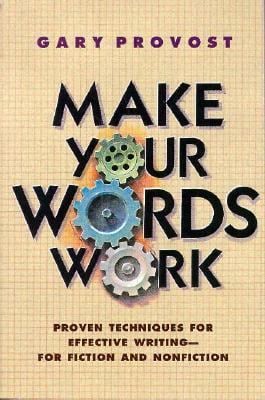
Writers read. There's no way around it. And good writers read a lot. They're the kind of readers who can't eat cereal without reading the back of the box, even when it's full of boring health facts and that pyramid food chart. They're the kind of readers who skim even medical journals or GOOD HOUSEKEEPING (though we prefer HIGHLIGHTS if it's available!) while they're waiting in the doctor's office.
But if you want to bone up on your fiction-writing skills, that Captain Crunch or GOOD HOUSEKEEPING may not be the best use of your reading time. Why not check out a few books on the craft or writing?
The A-List

MAKE YOUR WORDS WORK, by Gary Provost, Writer's Digest Books
THE KEY: HOW TO WRITE DAMN GOOD FICTION USING THE POWER OF MYTH, by James N. Frey, St. Martin's Press
THE TRIGGERING TOWN, by Richard Hugo, W. W. Norton & Company (ignore that it's a book about poetry; just read it and see how you learn to listen to your word choices)
BULLIES, BASTARDS & BITCHES - HOW TO WRITE THE BAD GUYS OF FICTION, Jessica Page Morrell, Writers Digest Books
Hands down, these are the four most helpful books about writing that I've ever read. Period. And I'm not making a cent off that endorsement.
More Great Writers Guides
Some other great resources I've checked out and recommend include:
 WHAT IF? WRITING EXERCISES FOR FICTION WRITERS, by Anne Bernays and Pamela Painter, HarperPerennial
THE SCRIBBLER'S GUIDE TO THE LAND OF MYTH: MYTHIC MOTIFS FOR STORYTELLERS, by Sarah Beach
WRITING FICTION: A GUIDE TO NARRATIVE CRAFT, by Janet Burroway, Harper Collins
BUILDING FICTION: HOW TO DEVELOP PLOT AND STRUCTURE, by Jesse Lee Kercheval, Story Press
SELF-EDITING FOR FICTION WRITERS, by Renni Browne, and Dave King, HarperPerennial
DIALOGUE, by Lewis Turco, Writer's Digest Books
THE ART AND FORM OF THE SHORT STORY, by Rick DeMarinis, Story Press
WORD PAINTING, by Rebecca McClanahan, Writer's Digest Books
WRITING DIALOGUE, by Tom Chiarella, Story Press
CREATING CHARACTER EMOTIONS, by Ann Hood, Story Press
THE AGONY AND THE EGO, edited Clare Boylan, Penquin Books
ON WRITING, by Stephen King, Scribner
Writing in Tights
Some other helpful books for understand the fundamentals of writing comics and/or superheroes (not that the two are the same thing, mind you):
 UNDERSTANDING COMICS, by Scott McCloud, HarperPerennial
REINVENTING COMICS, by Scott McCloud, HarperPerennial
COMICS AND SEQUENTIAL ART, by Will Eisner, Poorhouse Press
GRAPHIC STORYTELLING, by Will Eisner, Poorhouse Press
HOW TO DRAW COMICS THE MARVEL WAY, Stan Lee and John Buscema, Touchstone
WRITING COMICS AND GRAPHIC NOVELS WITH PETER DAVID, Peter David, Impact
So, next time you have to hit up the local medical practitioner for an expensive prescription request, don't waste your time on those picked-over copies of PEOPLE from 1986. Take a good book on the craft of writing. After all, with that family of five in line before you, you'll make it through at least three chapters easily.
Monday, April 30, 2012
The Writer Will Take Your Questions Now (#156) -- Open Source vs. Commercial
Which software do you prefer to use for your writing and layout
when you are writing or editing or putting a book together?

Paint.net
Open Office
Inkscape
Gimp
Audacity
That said, I have yet to find a suitable open source replacement for layout that can go toe-to-toe with InDesign. The day someone makes it available, that'll be the day I stop using InDesign.
Sunday, February 19, 2012
[Link] Why You Should Throw Away Your To-Do List
by Walter Chen
 I’ve never been good at to-do lists. For me, a to-do list is more a theoretical approach than an actual tool. No matter how many times I’ve tried to put a daily to-do list into practice, it never becomes routine.
They’re too easy to ignore. They nag me only just enough to be annoying, not enough to help me to get stuff done. They put me in a grumpy mood.
Simply put, they don’t give me no satisfaction. I can see that there are just more items to get to, but I know that they’re never really going to stop. Life becomes a big monstrous hydra of tasks, where you cut off one head, cross off one item, and two more pop out.
Keep a “Done List”
Instead of a to-do list, I keep a done list. Every day, when I’m winding down my day, I do a quick mental scan of my day and write down what I got done. It may seem counterintuitive, but it helps me plan out my day, and gets me amped to kick butt and get stuff done.
How can things that are done be a productivity tool and why is this more powerful than a to-do list? It comes down to concreteness. All that stuff on your Done List? They’re done!
It’s a record of real results, not intangible goals or wishful thinking. And those results bring all sorts of positive feelings and energy because you’ve achieved something and you want to keep achieving something. You’ll find yourself riding that motivational wave of positivity to get stuff done the next day and the next and the next.
And if you fall off your board? That’s okay, just catch that next wave.
Continue reading: http://workawesome.com/productivity/to-do-list/
=============================================================
What do you think? Would a "Done" list make you more productive, or is it an affront to hard-working, organized writers everywhere?
 I’ve never been good at to-do lists. For me, a to-do list is more a theoretical approach than an actual tool. No matter how many times I’ve tried to put a daily to-do list into practice, it never becomes routine.
They’re too easy to ignore. They nag me only just enough to be annoying, not enough to help me to get stuff done. They put me in a grumpy mood.
Simply put, they don’t give me no satisfaction. I can see that there are just more items to get to, but I know that they’re never really going to stop. Life becomes a big monstrous hydra of tasks, where you cut off one head, cross off one item, and two more pop out.
Keep a “Done List”
Instead of a to-do list, I keep a done list. Every day, when I’m winding down my day, I do a quick mental scan of my day and write down what I got done. It may seem counterintuitive, but it helps me plan out my day, and gets me amped to kick butt and get stuff done.
How can things that are done be a productivity tool and why is this more powerful than a to-do list? It comes down to concreteness. All that stuff on your Done List? They’re done!
It’s a record of real results, not intangible goals or wishful thinking. And those results bring all sorts of positive feelings and energy because you’ve achieved something and you want to keep achieving something. You’ll find yourself riding that motivational wave of positivity to get stuff done the next day and the next and the next.
And if you fall off your board? That’s okay, just catch that next wave.
Continue reading: http://workawesome.com/productivity/to-do-list/
=============================================================
What do you think? Would a "Done" list make you more productive, or is it an affront to hard-working, organized writers everywhere?
Saturday, February 11, 2012
[Link] Best Blogs for Writers to Read in 2012
Best Blogs for Writers to Read in 2012
by Robert Lee Brewer

As I said in last year's best blogs list, there are so many blogs out there by and for writers. The list below identifies blogs that I personally think are the best blogs for writers to read. If you don't agree with any of the selections (or think I missed a spot), then share your faves in the comments below. That way, I can check them out for next year's list.
Continue reading: http://robertleebrewer.blogspot.com/2012/02/best-blogs-for-writers-to-read-in-2012.html
by Robert Lee Brewer

As I said in last year's best blogs list, there are so many blogs out there by and for writers. The list below identifies blogs that I personally think are the best blogs for writers to read. If you don't agree with any of the selections (or think I missed a spot), then share your faves in the comments below. That way, I can check them out for next year's list.
Continue reading: http://robertleebrewer.blogspot.com/2012/02/best-blogs-for-writers-to-read-in-2012.html
Wednesday, December 14, 2011
The Writer Will Take Your Questions Now (#18) -- Writing Tools

I use Microsoft Word or Open Office for writing, and a standard legal pad for plotting and jotting down ideas and making strange drawings that make sense only to me in order to put a story in order. For lettering, I’m a huge fan of Illustrator and fonts from Blambot.
Subscribe to:
Posts (Atom)