Showing posts with label heroes. Show all posts

Tuesday, May 23, 2023

The Centre Is Not Central -- Normal Heroes Among Dragons

"This is also why the new novels die so quickly, and why the old fairy tales
endure forever. The old fairy tale makes the hero a normal human boy; it is
his adventures that are startling; they startle him because he is normal.
But in the modern psychological novel the hero is abnormal; the centre is
not central. ... You can make a story out of a hero among dragons;
but not out of a dragon among dragons."
-- G.K. Chesterton, Orthodoxy

There are several great questions from literature and writing. Among them, why is a raven like a writing desk? To that, add this one: 

Q: When is a hero not a hero?

A: When he or she or they are too heroic and extraordinary. 

Maybe this is the reason Hollywood chooses to rewrite Superman so often. As a purveyor of stories, the movie machine gets that no matter how much Supes is the perfect specimen of purity and goodness and power, that makes his stories far less interesting. Yes, I know lots and lots of people who would argue with me about that and say that "feet of clay" is the last thing Superman needs to make a story compelling, but I disagree. I really think Chesterton is one to something here. 

In this case, Superman is neither a hero among dragons nor even a dragon among dragons -- he's a dragon among normies. 

I think it's also the reason Pulp fans haven't seen a Doc Savage movie. He's just too... much... for modern audiences or even older audiences. We know we need those larger-than-life, good guys in the white hats, the strongest and the purest hero types to hold as ideals, but we also know that telling stories about them never really facing any real challenges gets old after a while. 

A Hero We Can Be

One of the first rules we learn for a classic adventure story is that of identification. In other words, give your readers a hero they can identify with and see themselves in. Give you readers they could strive to become. 

Now, I hear you rebutting. I do. Any writer worth his, her, or their salt in the craft can make any hero identifiable and someone readers can empathize with. And you're correct. The hero who may be all-powerful but doesn't know how to "people" effectively can be as ordinary as any of us who feel that same weakness. A hero who may be almost all-powerful, but can't do anything in a single situation can be as useless as any of us can feel in certain moments. 

The trouble comes when writers choose to refuse to give their heroes any kind of weakness. She's a dragon, damn it, and she's going to be a dragon all the way. I don't want readers to identify with her. She is supposed to be above us all. 

One of my early stories for Cyber Age Adventures struggled with this line. The character (Starlight) was no longer human and was virtually indestructible. But she was a mom. So, as a writer, that's where I could hurt her and make her normal and ordinary. That's where I could take a bit of the dragon out of her to make her relatable. So I gave her a kid with leukemia, a disease that even with all her powers she couldn't cure or do anything to extend his life. She grieved. And that's something we all do. Bam. Instant identification. So much so that it's the story I still (20+ years later) have people talk about with me online and at conventions and shows. 

If your hero (not necessarily in the capes and tights sense, but think Indiana Jones, Jay Gatsby, Janie Crawford, Hazel Motes, or yes, even Superman and Scarlet Witch) is "too much," then you run the risk of losing the empathy and interest of your reader. 

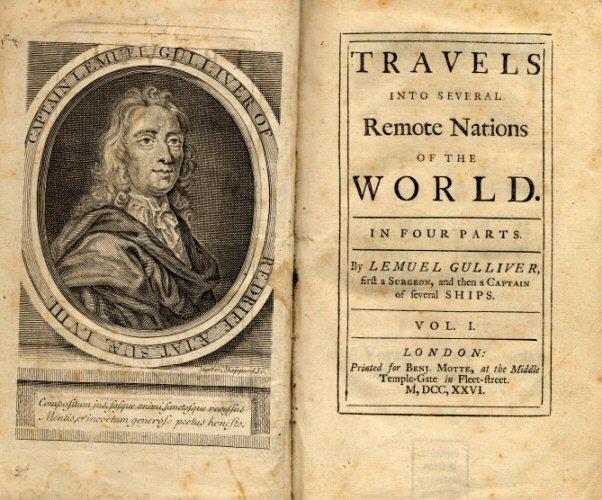
Even the gargantuan Lemuel Gulliver who couldn't be defeated in battle by the Lilliputians could fail at being able to stop a war if he couldn't get them to meet and come to terms. Sure, he could drag the boats from the sea, but he couldn't change hearts and minds. That potential inability knocked the proverbial wind out of his giant, nigh-indestructible sails. 

Can it be done? Yes, there are exceptions to every rule. That's the way rules work. But typically, it's important to remember that according to the law of averages, you're not that exception. Not only that. It's best to learn how to play within the rules in order to see how best and when best to break them. 

A Hero Who Isn't Yet a Hero

This is probably the most often used workaround for a hero who is way too powerful or unrelatable. It's also called "The Chosen One," "The Prophesied One," or "The One Who Was Called." It's when young Harry Potter or inexperienced Luke Skywalker (who are destined to be the unattainable best) are called by Fate (with a capital F) or some other oogy-boogey mystical reason to go from zero to hero within a story arc of how-ever-many (usually an epic series) books. 

This works because until the hero loses his, her, or their zero-ness, they are instantly identifiable. Not only are they weak or even totally helpless, they also typically begin at the lowest point of life they could be experienced. 

For example:

  • Orphaned or might as well be (Cinderella, Harry Potter, Luke Skywalker)
  • Living in poverty (King Arthur, Rey)
  • Sickly (Thomas Covenant)
  • No family name to speak of (In the Hall of the Dragon King)
  • Loss of title, money, or security (Robin Hood)
  • And the list goes on

These have become so overdone they have all become cliches. Of course, the reason any cliche attains such a "revered honor" is that it works. 

The reader in this case plays along and goes on the journey with Harry, to the ball with Cinderella, into alternate lands with Thomas Covenant, or against the powers that be with Robin Hood. We root for them to achieve their eventual ultimate badassdom that will in turn separate them as "the" hero from the very ordinary us. 

A Dragon Among Dragons

This is the one place I disagree with Chesterton's quote. A dragon among dragons is just another normie, especially if there's a bigger, more badass, more powerful dragon he must face and overcome. Then we're back to our ideal story of a normie among dragons. 

For example, to return to our Superman analogy, there are several fantastic stories in which the Kryptonian becomes more or less human and loses his powers -- either by visiting the bottled city of Kandor or via some shade of Kryptonite. In these stories, Kal-El, who isn't much of a fighter without depending on his strength -- I.E., when you can punch a hole in a building, what's the point of learning technique? -- goes from being a greater-than to a less-than. Now, he's at the mercy of regular Joes and Jor-Els who know some skills and have bigger muscles or are smarter than him. 

Humanize the dragon and you create a much more identifiable hero. Because we don't relate because of wings and fangs and claws, nor do they get in the way. We relate because of emotional and psychological characteristics that create human-feeling characters, not human-looking characters. 

I do however understand what Chesterton is saying. 

Let's say all those dragons are indestructible and all equally powerful and equally smart and emotionally well-balanced, blah, blah, blah. Suddenly our story takes a sudden nosedive. Who cares? ("Not I," said the Little Red Hen.)

Heroes need maybe not impossible tasks but at least one that's well beyond their ability to achieve without real effort and possible loss. The point of being a hero is to fight for something, whether to win Daisy from Tom and rewrite the past, to escape the war with the one you love, to battle all your ex's old boyfriends/girlfriends and win the heart of the girl/guy, or to literally fight off an ancient mummy to undo a curse you accidentally activated through plundering.  

The point is that there is something at stake, something the hero is capable of losing. Period. And when all things are equal, those stakes tend to disappear. 

A Normie Among Dragons

Here's where, in my admittedly less than humble opinion, the best stories live. A weakling among the giants. David among the Goliaths. The trick is to avoid the cliche of David and Goliath, and that's no small feat. 

This hero is truly the every-person. There's no destiny to become a savior, a chosen one, a prophesied king, nothing of the sort. This is just a person vs. the whatever (the classic conflicts being vs. person, vs. self, vs. nature/fate, and vs. society) with no option for godhood or boss-level boost for winning. 

In the dragon example, life and limb are on the line. But in a lot of fiction, that may not be the case. In most genre fiction, however, it may be. The normie may have to suddenly face the mob, Nazis, green-lipped aliens from planet Groomba, or even the sexy two-headed Amazon of the Himalayas. 

Most fictional dragons aren't going to actually be dragons, mind you. The before-mentioned Hazel Motes' dragons were his own faith he needed to overcome and recreate. Laura Ingell's dragon was the very land her family tried to eke out survival on. The family in As I Lay Dying must face not giant lizards but each other and rivers and other obstacles to bury their kin. Hemingway's fisherman just wants to bring his fish in. 

Just a personal aside, I think when a writer can combine an actual physical enemy like a villain or a dragon with a more psychological or emotional or spiritual enemy like personal faith or lack of confidence, well, then they're really off to the proverbial races with a truly formidable, multi-faceted antagonist.  

This brings us to the single most crucial element of the conflict. For a hero to be a hero, he, she, or they must have the very real possibility of failing. It must be an earned possibility, not some random bullet from an off-camera (or off-page) sniper we weren't previously told was there. This must be rooted in who the hero is and what the hero does or doesn't do. 

Without the possibility of failure, there are no stakes, no reason for readers to care. And that failure can't come via a trick from the writer. It must come from the character of the hero. I will repeat that. The possibility of failure can't be a gimmick from the author, but it must instead be part of the very nature of the character facing the challenge. 

The more a hero has to overcome, the greater the suspense for the reader. The greater the obstacles a hero has to survive, the more invested readers will be in the story and the more like they will tag along for the journey. 

The Adventures Are Startling

Let's revisit to the question we started with, but with a twist.

Q: When is a hero most like a hero?

A: When he, she, or they are at their least powerful, their least idealistic, maybe even their least heroic. 

And sometimes as writers that's a tough little idea for us to deal with.

Sunday, July 29, 2018

More Shorts for Summer: Pirates and Victorian Super Heroes

A Tall Ship, A Star, And Plunder
Edited by Robert Krog


Piracy has been around as long as there have been ships plying the seas with anything that might be valuable enough to take by force. Piracy will still be around when merchant vessels are traveling the galaxy with cargoes of potential plunder. Explore the past, present, and future of our favorite scallywags in these 24 amazing tales of bravado, daring, and dastardly deeds committed by the legendary pirates.

Good luck, and may the wind be in your favor, blowing you toward good pickings, and a safe harbor.

https://www.darkoakpress.com/pirates.html

The Tales:
Yo Ho by Melinda LaFevers
Rumble the Dragon by Cindy Vallar
The Princess and the Sea by Sydney Blackburn
Ghost of a Chance by Paula Gail Benson
The Making of a Privateer by Melinda LaFevers
Not I by Jerri Hardesty
Fireflies on the Water by Michael Krog
The Celeste Affair by D. Alan Lewis
The Tale of Tizur the Red by Tom Sheehan
Bottom of the Mug by S. P. Dorning
The Captain's Woman, the Dagger, and the Serpent by Robert Krog
The Gods Must Clearly Smile by A. Christopher Drown
Corey of Steel by Jerri Hardesty
The Jamaican Dragon by D. G. Driver
Rosa and the Pirate by Laura Nelson
The Ghost of Queen Anne's Revenge by M. R. Williamson
Of Wing and Song by Kirk Hardesty
One Way by Herika R. Raymer
Puffystuff the Pirate by Jerri Hardesty
Theft of the Royal Jewels by Kathryn Sullivan
Eighty-Six Pitrell Becomes Dread Admiral by Paul Calhoun
Rasputin's Whimsey by T.A. Riddell
Pirates of Happenstance by HC Playa
Blood is Thicker than Pirate's Gold by Kent Swarts

 ===========================

Capes and Clockwork
Superheroes in the Age of Steam
Edited by D. Alan Lewis


During a forgotten time when the world was powered by steam and clockwork, heroes arose to do battle against the forces of evil. Some were outfitted with the latest technology. Others were changed by the mysteries of science and magic, while a few came from the skies. Capes and Clockwork fuses the fantasy and beauty of steampunk with the action and adventure of the superhero genre. Tease your imagination with sixteen stories of good versus evil, monster versus hero, and steam versus muscle!

https://www.darkoakpress.com/capes.html

The Tales:
Roger Dawkins and the Steam Daemons by Adam Millard
Keely by D. Alan Lewis
Catching Steam by Andrea Judy
Clockwork Demons by Logan L. Masterson
At the Quiet Limit of the World by David J. Fielding
Indestructible by Alexander S. Brown
Ectoplasmic Eradicators Wanted: Professional Inquiries only - A Timothy Flood Adventure by Nikki Nelson-Hicks
Captain Amy and the Steam-Driven Kittens of Doom by Azrael Wolf
Thursday Morrow by Robert J. Krog
Lost Child's Little Protector by Herika R. Raymer
The Gears Of Justice by Brent Nichols
Aeolus, Chiron, and Medusa by John A. McColley
Blastbucket by Christopher J. Valin
Beneath Familiar Suns by Konstantine Paradias
Deep Diving Death Defying Dwarves of the Deep: A Tale from the Cycle of Ages Saga by Jeremy Hicks
White Lightning by John G. Hartness

https://www.darkoakpress.com/

Sunday, May 20, 2018

[Link] I do believe in -isms

by Dale Glaser

I signed a contract today to have a short story published as a standalone electronic unit. This is my first foray into that particular distribution model, so I’m really intrigued to see how it all goes. Many more details and reflections about the story will come as it gets closer to release, but for now the only hint I will offer is this: it’s an original superhero story, another first for me in terms of semi-pro publishing, which is nothing short of remarkable considering the sheer percentage of my life for which I’ve been obsessed with superheroes and comic books. Somewhere north of 90%, at least.

Since I’m not going to talk much more about the story itself here, I thought I’d take the opportunity to dissect a couple of questions of terminology. What exactly is a superhero? What, for that matter, is a hero?

Let’s start with the second part first. It’s a little easier to get a handle on the concept of heroism because it’s a real thing in the real world; superheroes are idealized fictional constructs, but there are living, breathing heroes all around us. And yet attempting to define heroism can be surprisingly controversial! Still, semantic arguments that reveal more about the arguer’s worldview than the objective truth aside, the basic nature of heroism is fairly simple and straightforward. A hero risks or sacrifices some aspect of himself or herself for the benefit of someone else.

Note there’s nothing in there about nobility or respectability, and whether or not we should all aspire to living that way. Of course people, myself included, tend in casual conversation to use hero and idol interchangeably sometimes. If you look up to someone, and want to be like them, you call them a personal hero. And that could very well include someone who is perfectly described by my definition above. But it could also include someone who has accomplished something you want to accomplish. A kid playing guitar could point to Jimi Hendrix as a hero, or I could say Stephen King is mine, but that’s a bit outside of what we’re talking about here.

It may be a fair question to ask how much a person has to risk and how much they have to help someone before they can rightfully be called a hero. When we say that soldiers or police officers or firefighters are the real heroes, we’re acknowledging that getting shot at or running into a burning building unquestionably puts their physical safety, and quite possibly their very life, on the line. Nobody can give more than that. And by and large those same people are doing what they do in order to save someone else from an untimely demise. Very little gets as much instant, unchallenged respect as saving lives.

Read the full article: https://dalewglaser.wordpress.com/2016/08/16/i-do-believe-in-isms/

Tuesday, March 6, 2018

The Golden Amazon hits the books!

The fiercest pulp hero: The Golden Amazon, in her own book of new tales by Howard Hopkins and Sean Taylor. Available now!

 Hardcover from Moonstone: https://t.co/5ie4cQzobn


Softcover from Moonstone: https://t.co/ZiiaxV0ccH

Sunday, May 13, 2012

The Writer Will Take Your Questions Now (#164) -- Anti-Heroes

In the battle of hero vs. anti-hero, what's your preference to write? Why?

Neither. (How's that for a non-committal response?)

But it's the truth. I'm not a big fan of the anti-hero that followed the history-making Watchmen and Dark Knight Returns by Frank Miller. (After all, what may be a natural progression for Batman doesn't mean it's the best route for any -- read: EVERY -- other hero.) I don't think that every hero needs to be dark and gritty, nor every hero's city grimy and sleazy. But neither do I prefer writing the typical silver age clear-cut good guy vs. clear-cut bad guy (white hats vs. black hats) either.

I prefer my heroes heroic (measured by their willingness to sacrifice their own happiness or comfort or safety for the greater good or someone else's good) but with feet of clay. They need to have faults. They need to have failures, both in life and in their morality. They need to struggle with pain and loss and bad decisions and impossible choices. But they still need to be heroes when the proverbial push comes to the proverbial shove.

Wednesday, April 25, 2012

The Writer Will Take Your Questions Now (#151) -- How Bad/How Good

How bad can a good guy be and still be a good guy? 

The Battle Royale kids... Heroes or Villains? You decide.
As bad as he needs to be to do the right thing.

I'm not saying that we need to rewrite morality so that two wrongs make a right, or accept that the ends justify the means. What I am saying is that, as that hero defines himself, he must be willing to do what needs to be done to undergo his quest to accomplish the greater good.

Getting his or her hands dirty won't make the character the most moral good guy, but if the driving force is to do good and to sacrifice his or her own good for the good of others, then no matter how close the character may be to the line between good and bad, he or she is still on the "safe" side.

Those are my moral judgments on this matter anyway. Your gavel might bang differently.

Sunday, April 22, 2012

The Writer Will Take Your Questions Now (#148) -- Re-Imagining Old Characters

When re-imagining an existing character, what role does the writer 
have in trying to find balance for both new and old audiences?

The role of the writer, whether creating new characters or writing those who already exist, doesn't change. His or her job is to make a reader care enough about the characters to keep reading until the end, and in the case of series books, be so enthralled the he or she will want to pick up the next volume. That's the contract with the reader. Period. Fail at this and it doesn't matter how much the character is like he or she used to be.

Now, that said, when dealing with the task of re-imagining a character, my belief is this: You have a responsibility not to tarnish the legacy of the original while taking it to new readers in a way that rings true to the basic, core understanding of that character.

What does that mean?

To me, that means that if your hero is a genuinely heroic character and your re-imagining is a darker character struggling with being heroic but wanting to ultimately, you're treating the property with respect. If, however, you write the character as a phony who only pretends to be heroic for some ulterior nasty reason, then you're altering the core and only keeping the name of the character.

Thursday, April 19, 2012

The Writer Will Take Your Questions Now (#145) -- Believable Villains

Do you find writing believable villains more simple or 
more difficult than writing believable heroes? Why?

Neither actually.

I find writing any character hard... at least until I "get" him or her. After that, it's pretty smooth sailing.

As far as making them believable, as long as they have drives and foibles and issues and quirks, people are people, villain or hero.

Saturday, February 25, 2012

The Watson Report: On Heroines

by I.A Watson

Pulp is a very traditional storytelling form. It has deep roots, right back to the “penny dreadful” broadsheets, the popular middle ages ballads, and the bardic tales. It paints with broad strokes, intending to make the reader feel as well as think about its stories. Pulp can be a style, a genre, or a theme; but it’s always an experience.

There are some experiences which go deep to our human cores. Death, violence, and sex are about as fundamental as it gets in human experience, so naturally those things are prevalent in much fiction and almost always in pulp fiction. These are the things that get our hearts thumping – and keep readers turning the pages!

It’s been argued that there are really only three stories, and that they sum up every plot for every piece of fiction: A Man Goes on a Journey; A Man Learns a Lesson (or fails to); and Boy Meets Girl (or loses girl etc.). Fiction certainly devotes a substantial amount of time to telling stories of men and women relating romantically, not least because that’s something that attracts an audience and makes the reader care about and pull for the protagonists.

So many pulp stories include a female character who is a potential romance or sex interest. She might be a virginal good girl menaced by her wicked uncle, or a sinful bad girl seeking to manipulate our hero for her own devious ends, but she’s prevalent in all kinds of variations; not just a female character, a female character with a relationship or potential relationship with the protagonist.

That’s the sense in which I’m using the term heroine in this article. Sometimes heroine can simply mean the proper feminine of hero, the protagonist to whom the story happens; here I’m using the other definition, that of the female story lead with whom the hero must associate and who is often part of the hero’s heroic mission.

Prior to our modern liberated era there was a general assumption that most female characters would be less capable of dealing with threat than male characters. If there’s a plucky heroine, that’s considered remarkable. She’s exceptional, not the norm.

Reflecting societal attitudes, and perhaps a practical acknowledgement that when violence is involved women are at a physical disadvantage, the assumption has been that the female lead has eventually required some kind of help from the male lead. Let’s not shy away from the truth that many pulp stories, especially older ones, hold this to be true.

Pulp can be a very honest storytelling style though, because that hero-saves-heroine trope goes way back in our society. It’s probably engraved in our DNA. There is a very primal instinct in males to protect females from other males. It’s probably about ensuring that our seed fertilises the woman rather than any other, but it’s a very old urge. Protect the women and the children.

We’ve been telling stories about heroes who turn up to save the girl, often from death or a fate worse than death (impregnation by anyone other than the hero), for a very long time. How many fairy-tale princess and forest maidens are saved in the end by a handsome prince or burly woodsman or likely lad? How many of our ancient myths include a damsel in distress being rescued (hi, Andromeda, Deineira, Sita)? From the Princess of Sana’a (Arabian Nights) to Canace (Chaucer’s “A Knight’s Tale”), from St George and the Dragon to Van Helsing’s vampire hunters, the damsel in distress is hammered into our worldview as soon as we open a book.

Another very old assumption goes with that. When the hero rescues the heroine, she will fall in love with him. They’ll marry and live happily ever after; or at least they’ll have sex. Many older sources don’t even question that her hero is entitled to the virginity he’s just saved. To the hero the spoils. Only the brave deserve the fair.

We know, in our post-modern cynical diagnostic world, that the ability to kill ogres with a sword doesn’t necessarily make one a perfect boyfriend – although a very useful one for an ogre-prone princess, I suppose. We know that men, however heroic and blood-stained, do not automatically qualify for a thank-you bedroom session. But when we allow ourselves to be drawn into the realm of fiction our expectations subtly change; our perceptions and values are dragged again into a world where the hero and heroine do find themselves compatible and attracted, and where a happy ending or a tragic loss are the two most likely outcomes.

That’s not to say that there aren’t plenty of stories that subvert these expectations. The most common is the one where the heroine turns out to be the villain after all. But these subversions only work because the expectation of how things should go is so ingrained into our reading experience.

Given that most pulp fiction was originally published to earn a living, its not surprising that it caters to the things that will most part a reader from his purchase money. Look at the covers of many old pulp magazines. A good percentage of them feature scantily-clad or naked women; that always sells. Of these, about half also feature the woman in bondage or immediate peril, requiring rescue or facing imminent destruction or ravishment. In about half of these the hero is also present, striving to save her.

Now go to the artistic depiction of heroines throughout history, back through the portraits of the Renaissance, the woodcuts of the Middle Ages, to the friezes and pottery of the Hellenistic period. See if the percentage of nudity, bondage, imminent peril and heroic rescuers is much different.

So what does this tell us? And what does it mean for modern writers and modern readers of pulp fiction?

Well, first off, it tells us that fundamental differences between men and women sometimes leak past our modern conceptions of equality meaning uniformity. Fortunately I think society is past the days when gender equality meant that women should be just like men, so its not too hard for us to recognise that the sexes are physically different and that they have historically played different social roles. But when we settle into the world of fiction and fantasy, the masks come off and we allow ourselves a more guilt-free experience of the contrasts.

Second, it means that we have to buy in to the romanticised, sexualised way that men and women relate in fiction. In the same way as we allow that a protagonist may be more heroic, a better fighter, a smarter thinker as part of our suspension of disbelief, we have to allow his heroine to be more beautiful, more charming, and more available than we would give credence in “real life.” That we consistently do make these allowances suggests how much we enjoy visiting worlds where heroes get the girl.

But because modern audiences tend to be more sophisticated and come to their reading with modern understandings of gender and morality, contemporary pulp writers have to be cleverer and subtler in how they apply the ancient tropes. Readers are still interested in boy-meets-girl, but they want another reason for why our protagonists hop into bed together at the end than “Oh thank you for saving me, my big strong hero!”

There are certain older assumptions and attitudes which writers can no longer get away with – thankfully. Depicting a member of a minority race as naturally less intelligent or moral than another might have been acceptable in 1920; now even stories set in that time that accurately depict discrimination of that era had better not try and suggest the view was justified. Likewise, the era when a hero could push a girl down on the bed, tear her clothes off, and ravish her until her protests end and she becomes an acquiescent passionate lover are past; now we call that rape.

But just because there are pitfalls, that’s no reason for pulp writers or readers to shy away from one of the fundamental pillars of the genre. Boys still meet girls every day. People who are in trouble should be helped. Adversity forms strong bonds of fellowship, and sometimes of romance. All of these make for potent, visceral stories.

Heroes, of whatever gender, have to be heroic. Heroes rescue people. Heroines (also of whatever gender) tend to get into trouble; the best of them get into trouble because they’re doing the right thing (c.f. snoopy reporter, princess defending her people, whore with a heart of gold). If the heroine has our sympathy, respect, or admiration then we’re even more engaged rooting for our hero to get to her.

Pulp has traditions. Heroines are part of it. Go save one today.


=======================================================================

I.A Watson’s homepage.


Rescue Me” a short piece of humorous fiction by I.A. Watson on this topic.