Showing posts with label R.J. Sullivan. Show all posts

Friday, June 19, 2015

Oh, the Horrors (of the Publishing World)

For this week's roundtable, let's talk horror stories. No, not how to write horror stories. Instead I want to hear your horror stories from the world of getting and staying published. Please don't name names, as this is a small world (after all), but it would be good (I think) for new writers to be prepared for the inevitable stuff than can go wrong.

Alan Lewis: My first two books, published by different companies, were messed up initially. Each company uploaded the wrong (unedited) file to the printers. As a result, I was hit with bad reviews until they were able to upload the correct (edited) versions. This pretty much killed early sales since reviews help drive ebook sales, and negative reviews kill them completely. Having it happen once, I can understand. But two time in a row and by different companies? I almost quit writing completely as a result. They say lightning doesn't strike twice, but in my case, it does.

Mark Bousquet: I have a story in with Publisher X now for a book that was supposed to come out in January. It's now June and on track for a July release. Publisher X has valid reasons for not hitting the January deadline (some his fault, some not), but when you're excited to get a story out and it's not out when it was originally supposed to be out, it sucks, and I get mad at Publisher X.

Also, Publisher X is me.

And yes, there are valid reasons - my own long-term unemployment and never-ending search for a full-time job, formatting issues between different submissions, one nightmare file that doesn't play well with Pages, difficulty with a cover artist, someone getting sick, someone else disappearing, a file getting misplaced, and so on.

Valid reasons - It still sucks, though, and I feel terrible for that anthology's writers. But the contracts are signed, the final edits are being done, and the anthology will be out in July.

Instead of sharing any particular horror story beyond that, I would say that new writers need to be aware that horror stories will happen. A copy editor will miss an easy grammatical mistake. Or twenty. A publisher will tell you your book will be out in June and then it won't come out until October. Your name will be spelled wrong (this happened to me on my first publication credit, which came from Yale University Press! (I was an Illustrations Researcher on the Encyclopedia of New England book which came out a decade ago.) An artist will disappear, another will deliver the wrong content. You'll have a release your excited about come out on the same day as a horrible tragedy, which means you're caught between wanting to get the word out and not looking insensitive (this is happening to me right now). What I've learned is that whomever your publisher is, your artist is, your copy editor is, your graphic designer is ... ultimately, the final responsibility lies with you, so the more you can take control of your own career (not doing everything but being intelligent about everything that's being done), the greater your happiness.

R.J. Sullivan: Haunting Blue was rejected by a major publisher for being "too exciting."

Lucy Blue: I probably should leave this topic be -- I come across as the hag on the hill screeching doom every time I get started on it. My biggest horror story is the collapsing dominoes that were my writing career a few years back. After working with an A-list agent for a decade and publishing six mid-list paperbacks with a Big 6 publisher, in the space of three months I found out that 1)my publisher didn't want my next book and in fact wanted me to basically "go erotica or go home;" and 2)my agent was retiring, closing up shop, and the nice girl who'd been taking care of my stuff while he, my actual agent, was ill had decided (AFTER I had chosen to NOT go with the new people taking over the agency but stick with her out of loyalty) to not be an agent after all because the market was just too horrible. When I was a new writer, I thought that once I had an agent who knew everybody's name in NYC and signed a contract with a publisher, it would be smooth sailing, and I could just concentrate on being the Shakespeare's sister of historical fantasy/romance. Yeah.. . not so much. BUT--BUT BUT BUT BUT BUT -- and please, any new writers reading, this is the most important part -- it hasn't stopped me writing, or publishing, or finding readers, or making money as a writer. I just have to work harder and take more responsibility for my own stuff. I don't expect somebody else to take care of me and my career and my ego any more - which is good because nobody will. And in a lot of ways, that's been really liberating. But it sure didn't feel liberating while it was first happening.

Tamara Lowery: Before I found a publisher, I found a "publisher" that seemed very interested in my manuscript. I sent it in; they looked it over and sent it back with the advice to have it professionally edited then resubmit. The snag was that they preferred I use only an editor THEY recognized. For me, that was a red flag. Sure enough, when I did a more thorough bit of research of this "publisher" I found that several articles warning about them had been posted on SFWA's "Writer Beware" blog. Bullet dodged.

For quite a while, I kept an eye out to make sure my story did not turn up under a different author name/title.

Desmond Reddick: I'm still a neophyte to being published, As such, I don't necessarily have any horror stories about staying published. That horror story is still very much in progress. I do, however, have a story about my first anthology acceptance that gnaws at me to this day for reasons beyond my control.

I had written many stories in the first quarter century of my life, mostly yawn-inducing screeds sure to bore even the most diligent and forgiving of readers. Then the submission notice came out. It called for zombie stories and the anthology was specifically geared toward authors who had yet to be published. Perfect! It just so happened that a brilliant idea popped into my head. Of course, looking back, it's far from brilliant, but it was unique and fun in a sick way. I wrote it feverishly and submitted it. Lo and behold, it was accepted. I was ecstatic! It wasn't a major publishing house or anything, but it offered a token payment and an author copy. That was more than enough to stir my excitement.

Then, thanks to a particularly nasty internet battle between said publisher and an author he once worked with, it was revealed that the publisher spent more than a dozen years in prison for four counts of first degree sexual abuse of his former step-children. He admitted it, referring to his past mistakes, and said there would be no hard feelings if someone wanted to withdraw their story from the anthology. In a stunning turn of events, I appeared to be the only one to do so. I am an educator, so being in any way associated with a convicted sexual predator is not necessarily something I need in my career. Further than that, as a human being, it would certainly bother me. Yet, here I was: the only person who didn't see that "he'd paid his debt to society" or whatever. Honor had certainly kept me away from other situations that would have been boons earlier in my life, but this was my first foray into becoming a published author, my dream.

I eventually would be published, shortly after, with a different story. Though, that anthology made zero attempt to copy edit and completely neglected to put in a Table of Contents, but that's far lower down on the publishing horror story ladder. Today, with my first professional short story sale and my forthcoming first novel, I feel a little better about the publishing world, though that zombie story is still sitting in my completed drafts folder. I still sneer a little bit when I see it sitting there. Maybe one day I'll get over myself, polish it up and send it off.

Thursday, May 21, 2015

Unconventional Structures -- Revisited

Okay, here's a follow up question for the unconventional narrative roundtable. For question three about when to use an unconventional narrative, everyone basically said the same thing -- when the story calls for it. Since it's no fair to answer a question like that, let's dig deeper, shall we?

How do you know when the story calls for something different in terms of narrative? What are the clues in a story that say it's time to branch out from the norm?

Mark Bousquet: It's two fold: Part one is the mood I'm in. I usually have to actively want to write something different and then look for a story to fit it more than the other way around. In regards to part two, as for what to look for in a story that lends itself to something unconventional, I often focus on scope. The larger the story, the more I want to try something a little more ambitious than a linear narrative. (Those books that slog through generation after generation of a family's history bore me.) I've also long been fascinated by stories that take place around the stories we normally get. So, for instance, my Disintegration of Dragons serial from Pro Se focuses not on the big important war, but what happens a year after that war when the daily grind of eking out an existence has taken over. I'm working on another story about life on a big spaceship that's involved in a big important space war. Instead of focusing on the fights and the battles and the pilots and the officers, the book will focus on the mechanics, the nurses, the janitors that keep the ship moving to allow for the big space battles to take place. Although, we're writers so some days thstrocyue wind blows in a certain direction and you end up doing something new.

Marian Allen: When the story JUST DOESN'T WORK with a standard narrative structure. Or when a story would be more interesting told in a different way. Read Faulkner's "A Rose for Emily". A pretty straightforward sad, sordid tale. But Faulkner chose to tell it a piece at a time, out of chronological order, so that each bit is like one petal of a rose that only reveals the flower when they're all in place.

R.J. Sullivan: Sure. In Haunting Blue, I wanted the story to be first person, a high school age punk girl. But it's also a mystery, involving the solving of a crime that happened before she was born. I tried to stay conventional and not break the first person narrative. I had the character read old newspaper articles and do research to try to find out what happened. The problem was that it was complicated and BORING. I had to step away and realize I had to cut out the research stuff and do the flashback third person interludes. What happened was too important not to include it, and it was the most dramatic way to present the information.

Percival Constantine: When I say the story calls for it.

Thursday, April 30, 2015

Building stories on unconventional structures -- breaking the rules for fun and profit!

This week we're going to talk about story structure. When do you stick to the rules of conventional structure, and when do you break them?

Editor's Note: For more information about unconventional story structures, click here.

When you create a story, how do you approach story structure? How often do you alter that structure with minor changes like a framing sequence, flashbacks, etc. and how do you know when one is appropriate for a story?

Mark Bousquet: I find that when I get unconventional, it tends to be mood driven rather than story driven. That is, I decide I need a break from straight-ahead, linear style and jump into writing something that pushes me to get out of the linear comfort zone, and look for a story I can tell in that style. I wrote a Victorian horror novel in the form of a journal (The Haunting of Kraken Moor). I've written a superhero novel called USED TO BE (not out yet) which jumps narrative tense with nearly every chapter. When my main character, Kid Rapscallion (Jason Kitmore), is in the present, I write in first person, present tense, but when I flashback to the story of his life, I use third person, present tense. The book is divided into sections, with each section taking a different year of Jason's life (at the start of the novel, it's a decade since he stopped being Kid), and there's all kinds of news clips and video transcripts cut in to round out the story. It's meant to be unconventional because I wanted to write something that jumped around and shifted perspective because that's how we tend to remember our lives, I think - in bits and scattered pieces, where something we do at 28 might be because of something that happened when we were 18, even though there were lots and lots of things in between. It was a blast to write.

Robert Krog: I approach structure instinctively most of the time, which means I usually tell stories with a pretty conventional or natural feeling structure; that is, what feels natural to me. I rarely make a conscious decision about it. I’ve written several stories that match up with items on the list at litreactor, and, of these, two were consciously planned as being unusual types and one was just a moment of inspiration. The first one of this type is “Guirsu’s Story” from the unfinished, collaborative effort that is forever stuck with the working title The Eden Charm. In it, the title character is magically entrapped in a state of sensory deprivation and subject to subtle, psychic attack for years. His story is told in random bursts, out of sequence, and with an unreliable narrator. So I get a twofer for unconventional on that one. The demands of the story seemed to require both, and my collaborator and I, a pox on him for not finishing his part, decided on that before I wrote a word of it. I wrote a story in second person for a specific story call. “The Guy that the Other Guy Fell on, or Vice Versa” was published in You Don’t Say: Stories in the Second Person. I approached it that way because the guidelines said to do so and the editor asked me so nicely to contribute. The last one that is clearly unconventional is a story titled “Other Songs.” It told from the point of view of a piece of rock, because I was inspired that way. You may find it here.

Percival Constantine:I start with a collection of ideas jotted down in a notebook, then I form these into a coherent story by writing up a synopsis. But I don't think of things like framing sequences and flashbacks as something to alter a structure, rather they're part of the structure.

R.J. Sullivan: It's all about what best serves the story. I can think of two instances where I ignored convention and in both cases it worked better for the story and as far as I can tell, it hasn't confused anyone yet. The majority of my first novel Haunting Blue is a first person tale from the POV of the teenage protagonist. There is a flashback incident that takes place before she was born, but vital to the tale. I inserted three lengthy third person "interludes" between chapters that go back and tell that story. So there's three chapters in the present, an interlude 15 years earlier, three more chapters in the present, a second interlude (picking up from the previous interlude) then repeat one more time. By the end of the third interlude the reader knows where the money is hidden and how it got there, just as the protag is planning to go out and find it.

Another time I broke tradition was in the short story "Robot Vampire," which starts out telling the story in deep third from the point of view of the inventor, At a key point, the robot gained sentience, and I broke the narrative and began again first person from the robot's perspective, taking the reader through the 'awakening" and going forward to the end of the story.

Lance Stahlberg: Would in media res be considered "unconventional"? I also tend to weave in a lot of flashbacks, which seems a lot more common in TV scripts.

With the success of unconventional structures as in movies like Pulp Fiction, Mulholland Drive, and Memento, and books like They Shoot Horses, Don't They?, Gone Girl, and S., do you find your work more or less open to embracing an out of the box approach to the narrative structure?


Mark Bousquet: Even going back to my fanfic days, I really enjoyed writing narratives that jumped around. I think there's something powerful about the meaning we can derive from a non-linear look at a person's life. It's always taken me aback, a little, how a genre like New Pulp can be open to a social enlightening (going back to an earlier time and focusing on issues that were not popular in the pulps of the day) but that it often seems so completely closed to doing this aesthetically. There's a resistance in some quarters to telling non-linear stories.

Robert Krog: Eh, I hadn’t thought about it. I’m actually not inspired to write by most movies I see and haven’t read the books that are cited. It seems that Slaughter House Five had what qualifies as an unconventional structure. I read that long time ago. It may have unconsciously influenced me on some occasion, I suppose. It begins with the main character being unstuck in time or some such phrase. The situation of the character in my, alas, unfinished, collaborative work is similar. Generally, I tend not to follow trends, so seeing a movie or reading a book that is unusual in its structure isn’t likely to alter my habits, at least not immediately. Things do sink into the subconscious mind.

Percival Constantine: I taught a class recently on story structure, specifically focusing on the three-act structure and how common it is, and one of the students asked me about things like flashbacks or telling a story in a jumbled chronological order. And what I said is that structure doesn't have to follow a linear timeline. If you look at something like Memento or Mulholland Drive, even though the story isn't presented in a linear fashion, the elements of structure are still there, and they still hit the basic points in the format. But as for me, I don't really see the need for a lot of unconventional storytelling in the type of stories I write.

When and why would you use an unconventional narrative in your work?

Mark Bousquet: When the work will be better for it and when I feel like stretching my typewriter.

Robert Krog: I use unconventional narrative structure when the narrative calls for it, and, until now, I never called it unconventional narrative structure. I did think that writing a story from the perspective of a rock was pretty unique, it’s true. If the guidelines of a story call for it, of course, then that’s how it has to be if one submits. Otherwise, it’s a moment of inspiration thing or a what is called for thing. As I mentioned above, a character in an unhinged situation or mental state might well call for an unhinged structure to his narrative. I may, at some point set out on purpose to write something according to the suggestions at litreactor just for the challenge. That’s as good a reason as any.

Percival Constantine: When the story calls for it. Always when the story calls for it.

R.J. Sullivan: While I typically try to stick to the rules, I found that playing around in instances like this have paid off.

Which do you prefer to read, a regular narrative or something more outside the box? Why?


Mark Bousquet: I like the variety of jumping back and forth, the same way I like reading Faulkner next to Hemingway, or Twain next to Eco, or a horror novel next to an espionage thriller. I think reading, say, Adventures of Huckleberry Finn next to The Island of the Day Before helps me to see beyond the surface of the texts in a more vibrant way. It helps bring out the depth of Huck and Jim and helps to focus the memories of Roberto della Griva into something more understandable.

Robert Krog: I have a preference for good stories. The narrative style either works or it doesn’t. I don’t recall having ever thought upon closing the last page of book, “Wow, that story had really good narrative structure!” My response is usually more on the lines of, “Wow, what a good story!” I’m not unaware of structure, mind you, nor am I disdainful of it. It is merely that it is not usually at the forefront of my thoughts. My thoughts on structure come up when a story is bad and the badness stands out because of structural defects or much later upon reflection. It is not what I think about when choosing a book to read nor is it my first thought on finishing a book. When I do reflect on a book, after finishing it, I will sometimes include its structure in my reflections, if that structure was unconventional or just particularly well constructed.

Percival Constantine: I don't really have a preference one way or the other. Mulholland Drive is one of my favorite movies. But then again, so is The Avengers.

R.J. Sullivan: As for what I prefer, again, it comes back to the story. If the reason the writer did it is clear, and it helps me follow along, I'll go with them anywhere (Christopher Nolan's Momento comes to mind -- which worked surprisingly well) If it's just the writer goofing off, I get frustrated and quit.

Thursday, April 2, 2015

Clean, Cleaner, Squeaky Clean, or Get Your Hands Off My Words?

This week, we're talking about the new Clean Reader app that has been dividing both readers and writers since it was announced. 

Many writers from world famous to local authors have spoken out about the readers on their blogs or in major news outlets, but I figured it would be fun to hear what the small press had to say about the matter too. 

If you need to catch up first, go check out the articles below, then come back here. 

============================================

Joanne Harris attacks Clean Reader app for replacing words in novels

The introduction of a new app that allows readers to swap explicit language with "cleaner" words has incurred the wrath of authors who believe it encourages censorship.

Clean Reader was designed to remove words deemed offensive from any book in electronic format, regardless of whether the writer has given their permission, and swap them with versions that are more appropriate for children.

Read the full article: http://www.independent.co.uk/arts-entertainment/books/news/joanne-harris-attacks-clean-reader-app-for-replacing-words-in-novels-10130869.html?icn=puff-4


============================================


And Chuck Wendig also posted about the Clean Reader app:


Fuck You, Clean Reader: Authorial Consent Matters

There exists a new app called Clean Reader.

The function of Clean Reader is to scrub the profanity from e-books.

Their tagline: “Read books. Not profanity.“

You can dial in how much of the profanity you want gone from the books.

Read the full post: http://terribleminds.com/ramble/2015/03/25/fuck-you-clean-reader-authorial-consent-matters/


============================================ 
Now... on with the article already in progress.

It is censorship or just readers exercising their rights (or preferences -- and are the two equal)?
 Percival Constantine: It's censorship, period. It's altering the content of the book without the author's permission. This is a small group of easily-offended readers wanting to have their cake and eat it, too. Joanne Harris made a good point about a potential conservative Christian bias in the app, and looking at some of the replacements, it's easy to see why (as well as an anti-female bias). As a liberal atheist, I find it offensive that they'd attempt to sanitize my work without my consent.

John Hartness: My words are chosen with care, with purpose, and with intent. When I choose to swear, it means something. It means something about the character, the setting, and the world they are inhabiting at that moment. Changing my words is changing my intellectual property, just like changing the underscoring of a movie alters the film.

Here's a case in point - when I sold The Black Knight Chronicles to a publisher, we went through extensive rewrites on the original self-published manuscripts. One thing my editor/publisher was looking for me to do was make the books more "gritty," and one way that was suggested was to make the characters swear more. I chose not to do so because the main charaters are a product of a time twenty years ago when casual profanity was less prevalent. In the first three books of the series, the word "fuck" appears once, in a pivotal moment for the character. I chose that word very specifically, to prove a very specific point about that moment. Changing that instance of the word "fuck" to "screw" would work against a pattern of language and dialogue I had spent well over 100,000 words building to that point.


RJ. Sullivan: What makes it legal is that the filter has settings, including an off that lets you see the original content. the wording I saw was they're not changing the file, merely altering how it is presented, and the user can see the unedited wording if they choose. I have to take their word for it but I still think the way this came in and was in place before anyone could object was a bit shady and that makes me suspicious. 

Ric Martens: I kind of feel that if someone wants to avoid the swearing in my writing, that's up to them. If they have a program that does it for them that's cool. It would probably be a different thing if the publishers were doing this without talking to the writer, but that's a whole different issue.

H. David Blalock: I see this as the same as someone buying a book then striking through all the "objectionable" words manually. Once the book is bought, it belongs to the buyer. Personal property can be disposed of, damaged, or altered as the owner sees fit. If someone bought one of my books then went through it and changed the words, how would I know? As long as the altered book is not resold or presented as original to the author, I see no problem with this. If the revised work is reissued under the author's name, then there would be grounds for concern. That, indeed, would constitute not just censorship but fraud.

Lucy Blue: We've already created so many genre categories a reader can go through an entire life of avid reading and never read anything that presents any point of view that doesn't line up precisely with their own. Do we have to now make it possible to rig the rest of the books to make them fall in line, too?

Should e-readers have the option of "cleaning up" any work as written? Should it be limited to only those authors who opt in?
 

Amanda Niehaus-Hard: I would not have a problem with this service at all if the AUTHOR could opt in to have their book "scrubbed." But just grabbing books from basically the wholesalers is what offends me. 

Percival Constantine: This is my biggest problem with the app—it didn't get author consent. That shows a blatant disregard and disrespect for all authors. Fortunately, Page Foundry has done the right thing and pulled their catalogue from Clean Reader (even if they did the wrong thing first by putting their entire catalogue in the app without securing permission or even so much as a simple notification email).

RJ. Sullivan: My biggest problems are this 1) authors and publishers had no options to opt out. In most cases, this is a secondary service to a major ebook distributor so the contracts a publisher set up with one did not make them aware they would also be shunted over to this. I think that stinks. I found out about it when I discovered that all the books under my publisher were part of the catalog. 2) This is a simple find / replace filter, which means the author has to download the filter and buy the file to even see how the edited version reads. That means these are essentially unauthorized edits. For all I know, my work sounds incredibly stupid, but I won't buy the file to find out. That's pretty bogus. 


Ellie Raine: When I have a child,I do intend to introduce them to more challenging books if they're unsatisfied with the children's section in any way, so in that respect, I can see the good side of this. But that doesn't mean the app shouldn't have permission from the author before becoming available... that being said, I think this article is being a bit overzealous in general. Sure, it's bordering censorship and should be addressed, but it's not going to start Armageddon.

John Hartness: If you want to read a book with no naughty words in it, buy one with no naughty words in it. If you want to buy a book that I wrote, don't fuck with the words. They matter. I write. I've spent a long time working on my craft, and I work hard choosing the words I put down on paper. Don't like words that may offend or challenge you? Don't read my shit. Gotta go now. Have a lovely day.


Lucy Blue: And as a writer, I know I have an obligation, if I intend to actually sell or otherwise publicly distribute what I write, to consider the preferences of my audience when choosing vocabulary. (I haven't called a woman's naughty place in a book by the word I call it in the bedroom for years because so many women--my target audience--find it objectionable to the point of feeling assaulted.) And if what we're all about is selling more books, then an app that makes our books saleable products to more people can only be good, right? But I'm not just about selling more books. I'm about communicating a world view, telling some truth, creating, dare I say it, some art. And in that context, this app is deeply offensive and, to my mind, a violation of copyright law and every other rule that protects the rights and work of any artist.

Who really benefits from something like this?

RJ. Sullivan: My feeling on this is complicated. I have received complaints by sensitive readers that my content has turned them off. My response has always been that most authors don't write for everyone and really by definition CAN'T write for everyone. On the other hand, apparently, the filter does not cut into my royalty (which was a major concern) and it might get sensitive readers an opportunity to give my work a chance when they would not have done so otherwise. So, you know, I'm getting paid, and that's a good thing.


Ric Martens: I think overall its a gain for everyone involved. I mean you have more people reading more books so that's a good thing right?

Percival Constantine: Authors who have been forced into Clean Reader without their permission certainly aren't benefitting. It's hard to see how readers are benefitting either, since Clean Reader replaces words without any knowledge of the context, leading to a very clunky reading experience. The only people who are really benefitting from this are the makers of Clean Reader. But with PF pulling its catalogue and a lot of authors making noise about this, soon the Clean Reader library may only consist of books that didn't need the CR app in the first place.

John Hartness: I am always grateful when people read my work, but if they buy my book, I want them to get my words, not some electronic filter's version of my words. My name is still on the cover, my reputation is still attached to the craft of the writing, and my time and effort went into the selection of every word in there. Anyone who wants to write a different book can feel free to sit down at their keyboard and do so.

Thursday, December 11, 2014

So... Sherlock Holmes?

With the news that the big Detective with a capital "D", the granddaddy of all detectives in fiction has finally and it's-about-time become public domain, I figured it was time to honor the fabled clue-finder with his very own roundtable. 

So, it with great gusto that I present the Sherlock Holmes roundtable. 

What makes Sherlock stick around in the imagination of readers while so many of his contemporaries have been all but forgotten?

Stephanie Osborn: I think that Holmes was the first time a writer had ever put together ALL of the different components that comprise a classic detective character. He has intelligence, skill, knowledge, courage, a cool head...yet he also has a great heart, which he tries hard to hide. He also has the flaws without which this übermensch would be insufferable, the very flaws which make him human.

Another character, created much later, and eventually added to Holmes’ family tree, has similar properties, and I like to say, “Sherlock Holmes had the Spock Syndrome before Mr. Spock did.” Simply put, he is the first and ultimate detective character.

John Morgan Neal: He's that damn good. He was a template the likes of which characters such as Batman and Mr. Spock were begat among many others. There is something about it that appeals.

Nikki Nelson-Hicks: In no particular order:

  • He is a total badass. He is willing to put himself in harm’s, go undercover and deal with the slime of the underbelly of society and face all sorts of obstacles using his wits and, if needs require it, his fists to solve a mystery and help a client. He is the Big Brother we always wanted to run home to when the neighborhood bully pushed us down and stole our bikes. He is the rogue that works outside the Law and sees that justice is done. He’s not beyond a little B&E to solve a case. He also acts as a shortcut judge and jury, pardoning the criminal if he believes that the perp did the crime for all the right reasons (Devil’s Claw and the murder of Charles Augustus Magnusson come to mind.)  
  • He is simply very good at what he does. He has a superpower, of sorts, but it’s not supernatural or unattainable. When he explains how he figured it all out, it seems so very simple and….well, elementary. He gives the reader hope that they could also sharpen their senses to achieve such powers. This makes him an attractive, attainable superhero.
  • But he is also The Great Other. There is something very otherworldly, something special about him that makes him cut off from humanity. This is where Watson comes in as his link between Him and us. 
  • There is also a strange purity about the character. He is a walking encyclopedia of crime but doesn’t know that the earth goes around the sun. He sees commonplace knowledge as clutter and can’t understand why we would bother learning them. We wonder how someone so smart can be so ignorant! Coupled with his complete disinterest in sex, this just adds to his appeal as someone who is just a touch above and beyond the ordinary mortal.
  • All heroes need flaws and, no, I’m not talking about cocaine; Doyle went on record to say that Holmes was not an addict and only took cocaine to help him deal with the doldrums of depression. Sherlock Holmes’ flaw is one that allows him to be identifiable to people of the 20th and 21st century: existential angst. A very modern problem that people of the 19th century were only beginning to grasp with the arrival of the Industrial age. His mind raged against inactivity and the boring stillness that the bureaucracy and social mores of his time demanded. He is always looking for something to engage his mind, to challenge him….even threaten his life. A bit of an adrenaline junkie. This is a thread that connects him to the readers of the numbing technocratic 21st century.
  • Which leads to another facet that connects Holmes to our own age: his secularism. He shunned superstition and favored science as a Higher Power. To Holmes, anything worth knowing could be verified and quantified and everything else was clutter. By devoting himself to logic and the scientific method, he was able to rise above the hoi polloi and see things as they were not as they merely seemed. His ability to cut through bullshit with a smirk and quick wit is just icing on the cake. 
  • Did I mention he’s a badass?


I.A. Watson: The format of Holmes stories is perfect for detective fiction. We have a brilliant and insightful lead but we only see his thought processes through his companion. This allows us to discover the mystery slowly as the detective reveals it and additionally allows for a narrator commentary and interpretation on the detective himself.

Holmes himself is an eccentric character, not always likeable but always compelling to follow. He has become an archetype by being so distinctive. Watson, acting as everyman and as a reader surrogate, both humanises what would be an otherwise intolerable principal character and drives the plot points along with his questions.

Finally, for modern readers, the Holmes stories are set in the dead centre of an era and place that has become one of the most established venues for fiction, at the heart of Victorian England. Even better than modern tales set in that time, they are steeped with authentic trappings and sensibilities from the period. They have the same allure as would a great Western story written by a genuine pioneer.


Joe Gatch: I believe that it is his reclusive nature and his superior intelligence that makes readers wish to be so memorable.

R.J. Sullivan: I think his success is attributed at least in part to the fact that when the first stories were written, deductive reasoning was not a normal part of police procedure and the stories actually helped make that happen,

Erwin K. Roberts: I first took an interest in Sherlock Holmes before I could read. I listened to some radio adaptations when I was five. "The Speckled Band" really grabbed me, for openers. Unfortunately, the second I heard was "The Final Problem." I remember my mother, or maybe my older sister, assuring me that Holmes somehow climbed out of the Falls.

Over sixty years later I can still recall a few passages from those episodes. Part of why Holmes sticks around is that he is a complete package of well constructed mysteries, with interesting characters. And, as Ian Watson said, Holmes' era has been engraved into the minds of a very large chunk of the planet's population.

His contemporaries, even those with merit, never rose to the level of attention he did. In the same way my contemporaries, who were not comic book fans, may remember Superman and Batman, and to a lesser extent Spider-Man or the Fantastic Four. But, few, if any, knew of the existence of of Agents of S.H.I.E.L.D., (Green) Arrow, or Constantine, and especially Blade, before recent films and TV shows. Holmes survived because he was original, well written, and able to be adapted into other media.

On the other hand, how many people remember Race Williams, the first hard-boiled detective? Not many. That's because guys like Chandler and Hammett came along and did it so much better. Holmes started at the top and has generally remained there.

As a writer, what lessons can you credit to Holmes that you've learned about writing technique and character creation?

Joe Gatch: Doyle shows that backstory isn't always important to enjoying the character...everyone is so hung up on origin stories these days that they forget that lack of origin is part of the mystery surrounding the character.

I.A. Watson: Doyle was a master at using reported narrative. At times we have Doyle telling us what Watson wrote about what Holmes said about an account given by a client at Baker Street, tier upon tier of reportage allowing for all kind of subtle writing tricks and a good deal of reader-fooling obfuscation. There is a lot to pick up on there.

Doyle also demonstrates that sometimes less is more. He does not define every detail of Holmes’ career and background. Indeed, he delights in teasing the gaps, the cases not reported, the detail of character quirks never explained. He imbues his cast with only those characteristics necessary to tell the tale but manages to engage readers with those few sketched lines. It is impressive in a genre where hiding clues in plain sight is a necessary authorial skill that Doyle can manage this with so little extraneous verbage.

Erwin K. Roberts: Watson's narration is one of the reasons I do a lot of my writing in the first person. My occasional forays into private detective stories, plus my New Pulp hero the Voice are first person. Though the narrator may, or may not, be the main character.

John Morgan Neal: Engaging your readers. Bringing them into the method of your heroes and allowing them to sort of be part of the team. Keeping them interested in the mystery.

Nikki Nelson-Hicks: The first thing that comes to mind is, of course, the relationship between Watson and Holmes. They complete each other. The Apollonian and the Dionysian. Mind and Heart. Holmes gives Watson the adventure that the old soldier craves and Watson gives Holmes a solid anchor to the baser points of humanity.

But what I always found really interesting is how the stories (except His Last Bow and Lion’s Mane) are told in the POV of Watson. Frankly, Holmes is really in the background, literally in the case of The Hound of the Baskervilles. That is fascinating to me. To have such a prominent protagonist, basically the star of the show, NOT tell the story. It just makes Holmes more intriguing and gives Watson, the foil, more depth.

R.J. Sullivan: Arthur Conan Doyle compared to his contemporaries, is more approachable than many "classic" authors because of his use of plain, to the point, but descriptive language. His prose has survived better than, for instance, Poe or HP Lovecraft, whose use of language tended to get a bit thick at times.

Stephanie Osborn: How utilising the appropriate vernacular can transport the reader into a different place and time; how important proper research and planning is to the construction of a good mystery; how description can set a mood. Digging into the background of a character, and determining how his personal foibles operate, can also make for a more realistic character. For example, many of Holmes’ quirks are likely caused by the side effects of his cocaine usage; Doyle, as an ophthalmologist, was undoubtedly familiar with the drug and its side effects, as one of its first specific uses in medicine was as an anaesthesia for eye surgeries.

Does Holmes still work for contemporary audiences as is, or does he have to be brought lower some way to be less of a "super hero" so modern readers and views can relate to him or perhaps tolerate him?

I.A. Watson: Holmes’ sharpness and lack of tolerance for fools have always endeared him to his audience. He is a grump – but our grump, using his antisocial tendencies for the public good against far nastier adversaries. The harder his clash and the more difficult his work against such foes the better we love the story.

Holmes’ omnipotence is skilfully offset by Watson. As narrator he helps obscure Holmes’ thought processes so we are not bored by the great detective’s instant analyses. As Holmes’ friend, Watson is able to criticise and comment, bringing the genius down to size when required, but also washing our view of Holmes with a warm affection.

One modern feature of Holmes fiction that perhaps even developed before Doyle finished writing his Canon tales is an expectation that Holmes will have an almost-supernatural ability to discern the truth. A modern Holmes author’s challenge is often to keep Holmes’ deductions grounded in the possible rather than indulging in the audience’s expectation of his immediate infallibility.

Erwin K. Roberts: Holmes can work for modern auriences. But not always. I have been more or less indifferent to the current big budget films. Recently I saw a complete DVD set of the Granada / Jeremy Brett TV productions for sale. Now that is the Holmes I want.

I do find it interesting that both contemporary versions of Holmes and Watson, Elementary and Sherlock, have found favor with the general public. I enjoy them both, but for somewhat different reasons. Both respect the original while bringing the concept into the modern world. Both, unlike some past versions, have a strong and intelligent Watson. (Having written Watson without Holmes, that is very important to me.)

John Morgan Neal: Oh heck yeah. Two successful TV shows and two successful movies and all with a bit of a diff take on the character. Sherlock was a 'super hero' in that he had a super human ability to think. But he was always a character with foibles. He was always relatable to a degree. And besides we have Watson for that. I think people are hungry for heroic and amazing characters.

R.J. Sullivan: Contemporary interpretations have given Holmes a sort of high functioning autistic/ sociopathic personality I honestly don't believe the text supports. He had mild quirks, but he was always aware of social noims and aware when he was breaking them. I find the modern interpretation a bit insulting, as if a normal person couldn't possibly simply train themselves to be the most observant man in the room, they have to come up with some sort of way to "relate to" him, (I hate that term, too, as if 21st century readers lack the imagination to put themselves in the place of anyone not in the 21st century).

Stephanie Osborn: Does Holmes still work for contemporary audiences as is, or does he have to be brought lower some way to be less of a "super hero" so modern readers and views can relate to him or perhaps tolerate him?

Judging by the fact that there are currently 3 media franchises (BBC Sherlock, CBS Elementary, Guy Ritchie/RDJ Sherlock Holmes movies), and untold pastiche novels set anywhere from the original Victorian era to the future, as well as uncounted numbers of versions of the collected Doyle stories, I’d say Holmes needs no help.

Nikki Nelson-Hicks: Sherlock Holmes is a rogue super brain that uses science and technology to bring down the bad guys? How does that NOT work for today’s audience?

Granted, they dirtied him up for the Robert Downey Jr. movies (the character of Holmes is described as fastidious when it comes to his grooming, like a cat. He might let his flat go to shit but he is always perfectly groomed.), sexed him up for Jonny Lee Miller’s, Elementary (seriously, two whores at once? And all those tattoos?), and gave him a place of the autism spectrum with Cumberbatch’s portrayal in BBC’s Sherlock, still it is not a lowering as more as a molding to fit a modern perspective.

As for tolerating a character who, frankly, has to bring himself down to our level to give us the time of day, yes. He’s a bit acerbic in the stories and they do tweak this up a bit for today’s storytelling but that’s to be expected. Modern audiences LOVE an asshole. We expect it, hell, we even TRUST the asshole more than we do the Sir Galahad, paragon of virtue. We’re always waiting for the cracks in the veneer.

Joe Gatch: Readers should be challenged, not talked down to. Downey's portrayal of Holmes was, however, refreshing and more realistic when you think about it.

What's your favorite Holmes story and why?

Joe Gatch: Always The Hound of the Baskervilles...it was the first story I read, the first SH movie I watched and it will always be the case I most relate Holmes with

Nikki Nelson-Hicks: In no particular order (and definitely not the ultimate list):

A Study in Scarlet:  Because it’s the beginning and you need to see where Holmes and Watson started to appreciate where they end up.

The Adventure of the Red Headed League, The Adventure of the Blue Carbuncle, The Adventure of the Dying Detective: Because of the humor and well-paced story telling.

A Scandal in Bohemia and The Adventure of the Yellow Face: Because in the first one he is bested for all the right reasons and in the second he is simply WRONG, WRONG, WRONG and in the end learns a bit of humility

But a few of the best written stories, IMHO, are: The Man with the Twisted Lips, The Adventure of the Speckled Band, The Adventure of the Musgrave Ritual, The Adventure of the Crooked Man, The Adventure of the Naval Treaty, The Adventure of the Greek Interpreter, The Adventure of Black Peter, The Adventure  of the Six Napoleons, The Adventure of Charles Augustus Milverton, and the Adventure of the Devil’s Foot.

John Morgan Neal: The Hound of Baskervilles. Holmes only 'horror' story. I like the plot. The setting. Watson getting some stuff to do alone. It works for me in a big way. And I like several of the movies based on it. Including the Peter Cooke and Dudley Moore one.

I.A. Watson: Among the canon stories I am fond of:

 “A Scandal in Bohemia” from the Adventures of Sherlock Holmes for its early definition of Holmes’ character and for the inestimable “Woman” Irene Adler; the story is not flawless but is all the more satisfying for that.

The Hound of the Baskervilles, for its brooding atmosphere and the extended role of a heroic and competent Dr Watson.

 “The Adventure of the Greek Interpreter” from The Memoirs of Sherlock Holmes, for being one of the most Sherlock Holmes-y of all Holmes stories, not least because it also features his brother Mycroft and includes much of the standard “furniture” of Holmes stories.

Of my own Holmes stories in Sherlock Holmes, Consulting Detective volumes 1-6, I am most fond of volume 5’s “The Abominable Merridew”, perhaps because I had license to use so many elements of the Canon material. It is the Holmes story I have most enjoyed writing. By the way, I just finished my story for volume 8 today.

Of non-Canon-compliant Holmes, I recommend Neil Gaiman’s “A Study in Emerald.”

R.J. Sullivan: Hound of the Baskervilles, because it's a longer work and Watson is very involved in it.

Stephanie Osborn: I would be hard-pressed to pick which one of Doyle’s stories is my favorite. I think it would depend on what mood I’m in at the time. But in general, if one put together the two short stories, ‘The Final Problem’ and ‘The Empty House,’ the combined story of Holmes’ presumed death and return probably form my favorite of Doyle’s stories.

Thursday, July 5, 2012

Getting the First and Last Word -- Story Openings and Endings

Whether you're a genre writer or a literary writer or some kind of hybrid (with excellent gas mileage), it difficult to deny that you have to grab a reader's attention right from the get-go. Not only are you in competition with other books, but also with video games, movies, and whatever else can capture your readers' attention. So we turned to a collection of attention-grabbing authors and picked their brains on the subject of story openings and story endings.

How important to you are your openings and endings for your stories?

Lee Houston Junior: VERY. Potential readers don't have time to scan through a whole book, so those moments are essential to grab their attention.

Ron Fortier: Ever since I can remember, it seems most genre writers, particularly those in mystery and sci-fi swear by the so called "narrative hook."  An opening line that is suppose to figuratively "hook" the reader immediately.

And although I can understand the merits of such an opening, its never been my personal approach to writing.  To me all aspects of any story are vital and I rarely assign any added importance to either a beginning or ending.  Each has to work as a part of the whole, thus when writing, I simply sit down and start at the beginning, as my muse has imagined it in my mind.

Of course most stories will have some kind of drama, but again, I just want to tell a good story, involve my reader... and move on.

It shouldn't ever be formulaic, but organic.

H. David Blalock: The opening and the ending should reflect a real logical progression. In other words, if you start out in Podunk, Arkansas you should end up in a likely place, not the 4th Dynasty of Egypt (unless the rest of your story points at it). Readers usually like a short story to deal with one concept at a time. Save the subplots and story arcs for novels and serials.

Van Allen Plexico: I firmly believe in trying to grab the reader by getting things going urgently and immediately, with a quick and powerful sentence or two that is evocative and colorful.  Here are some examples of my openings:

Hawk awoke naked and screaming in the heart of a shattered galaxy.
(HAWK.  Trying to be vivid and evocative.)

Down rained the night, cloaked all in fire and brimstone.
(LUCIAN.  My attempt to be sort of lyrical and also hint that this guy is more devilish than angelic!)

A wormhole is a hell of a place to die.
(ALPHA/OMEGA.  In italics, from the protagonist's POV. Tough and terse and military-SF-ish.) (Incomplete novel.)

The fact that I typed each of these from memory proves that, at least for me, they definitely were "grabbing" and memorable!  :-)

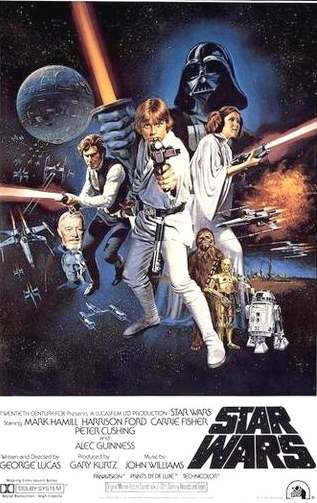
R.J. Sullivan: An opening should be powerful, a hook to make the reader want to read more. One rule of thumb I have heard is "no backstory exposition for the first three chapters." (I broke that in Haunting Blue, oh well). It should establish your POV character or at least the conflict that will affect the POV character. If you think in cinematic terms, think of Star Wars--the opening drew you directly into the story and the conflict. Even though we don't meet Luke for another 20 minutes we know exactly what's at stake, who the players are, and we've seen the destriuction the villains are capable of in a very dramatic way. The opening is vital to get right, because if you blow that, the reader won't continue.

Marian Allen: Openings and endings are very important to me. The opening is where the story swallows the reader, and the ending .... Wait a minute. I start again. The opening hooks and pulls the readers into the story and the ending moves the readers on with a sense of closure, but with that hook still in, so they remember the story and want more.

What makes an effective opening? What is its purpose?

Lee Houston Junior: I have heard all kinds of theories and "rules" on this subject. But I definitely want everyone to feel that my story is worth reading. I want even the casual book browser searching Amazon or wherever to yearn to find out how the story progresses from what little they view.

H. David Blalock: The opening for a short story is critical. The brevity of the piece already restricts your ability to properly tell the story, but there is so much competition for the story versus other stories, novels, TV, etc. that if you can't catch the reader's attention immediately, you are very likely to lose them before the third paragraph.

Marian Allen: An effective opening gives readers the flavor of the piece and the sound of the narrative voice. It's like speed-dating for stories. The purpose is to establish a sense of "who" the story is.

M.D. Jackson: Hit the ground running and don't stop.

What makes an effective ending? What is it's purpose?

Lee Houston Junior: For me, the story has to reach a satisfying climax that "wows" the readers, especially if they didn't foresee the ending I wrote happening. I have heard plenty of positive comments from friends that PROJECT ALPHA did not end the way they expected it to. If you are not only happy that you read my book, but are surprised at how it turned out, then I did my job as a writer.

H. David Blalock: The ending needs to leave the reader satisfied that the story made sense from beginning to end, because if they don't, they won't be reading too much of your work in future. If you plan on ending your story with a bit of a twist, remember to set it up in the body of the work somehow. The twist can be unexpected, but it still needs to make sense in the context of the rest of the work. Of course, you should NEVER end a story with the narrator suddenly waking up. "It was all just a dream" is a really bad way to end any story. The reader will undoubtedly feel cheated and annoyed = one lost reader.

Marian Allen: An effective ending, IMO, is a payoff. Best last line ever: "A boy loves his dog." -- Harlan Ellison, "A Boy And His Dog"

I like endings that circle around or echo something in the opening. I like endings that resonate with the rest of the story.

R.J. Sullivan: Endings are a different beast. Generally, if you "have" the reader and they get to your ending, if the voyage has been worth it, a reader will forgive a weak ending and may still read your next book (Stehen King's endings tend to disappoint -- there, I said it). I feel, even in a series, that each part of a book should have it's own distinct climax and ending, concluding SOMETHING even in a long-running series. That's just my preference as a reader.

What are some of the cliches that writers should avoid or that you have struggled with in creating powerful and effective openings and endings?

Marian Allen: There are no cliches a good writer should avoid. Everything has been done before, but a good writer can take even the most overdone bit and make it fresh and powerful. And anything, no matter how original, can be dull in the hands of a lazy writer.

Lee Houston Junior: "It was a dark and stormy night." ;-) Seriously, finding the right words to set the mood or resolve the story, let alone tell the tale to begin with, is not always easy. There have been times when I have written and rewritten passages because they sounded similar to something else or just weren't good enough. But finding the right words, not only for the opening and closing, but for everything inbetween is what makes the story come alive. But while each subsequent book in my series (Alpha and Hugh Monn, Private Detective) will build upon the past volumes, no book I write will ever end with those three dreaded words "To Be Continued."

H. David Blalock: 
There are some cliches you can use that can be forgiven. Opening with action, no matter how familiar, will usually work. Starting out with "They call me mad, but I swear it's true" or like words is a dead giveaway the writer needs to develop his or her style.

Thursday, May 17, 2012

Science Fiction, Space Fantasy, and the World of Speculative Storytelling

Once upon a time there was a young woman named Mary Shelley. She wrote a little story you may have heard of called Frankenstein, and the genre known as science fiction was born (whether it was self-aware or not yet). Then came the space fantasies and the Burroughs and the Bradburys and the Asimovs, and eventually, science came calling and tried to take back the ground it had lost to the fantasists.

Thus we have a huge range of varying work that passes for science fiction nowadays.

So to get to the heart of the matter and talk space turkey about the mixed up genre, we went straight to the writers to make the magic happen (metaphorically, of course, since magic isn't technically science, no matter how indistinguishable it is from it -- thank you, Arthur C. Clarke).

What is your working definition of sci-fi as a literary genre?

William D. Prystauk: Science Fiction must have a story with real science at it's core. For instance, ANDROMEDA STRAIN and TIMECRIMES, while movies like STAR WARS are science fantasy. Just because the latter tale takes place in space does not mean it's science fiction since that element is not the foundation for the story.

R.J. Sullivan: A story that examines either how a scientific advancement or theoretical postulation can affect the people caught up in it.

H. David Blalock: Science fiction is story-telling based on an exaggeration of science fact that never requires the reader to question the feasibility of the science used. Once that line is crossed, you've stepped into science fantasy. Hard science fiction is difficult to write mainly because it requires real research and often a working knowledge of the science used. Science fantasy (or "soft sci-fi") is much easier and more common. It can break laws of physics and disregard the restrictions of hard science.

Herika R Raymer: Science-fiction is that which takes technology into a desired effect or even takes humanity to a extra-terrestrial, or otherwordly, location. Science-fiction can be exploring the limits of nanotechnology, digital technology, or even medical technology. I especially like the science-fiction that deals with possible extra-terrestrial creatures. Exploring other worlds, meeting other creatures, and generally exploring what might happen if humans finally became space explorers. What would they find? How would they react?

Lee Houston Jr.: For me, true science fiction has to have at least one element that is not possible in our current world, whether it be a spaceship, aliens, taking place upon another planet, or more preferably, all of the above and then some.

Elizabeth Donald: Science fiction foretells a plausible future or alternate present with technology that does not currently exist, but could within our understand of the world. Any science sufficiently advanced from ours may appear like magic, but science fiction best tells us about ourselves by showing us a conceivable outcome of our present day. It is distinguished from fantasy by its explainable phenomena, and from horror in that while it may be thrilling, its primary focus is not to evoke fear.

What is it about sci-fi that drew you to writing it?

William D. Prystauk: The fun of being able to explore something new. And I really did since I had to read up on science based items to have a better grounded and more realistic story.

R.J. Sullivan: Star Trek.

H. David Blalock: The challenge of actually staying inside the confines of science fiction without breaking the rules. Doing that and keeping the readers' interest is an art form.

Herika R Raymer:
The fascination that what was once science-fiction is now science-fact. For instance, in the old science fiction books and movies there were communication devices and transportation devices, as well as medical procedures, that were simply too far-fetched to believe. Yet look at today: personal computers, cell phones, tracking devices, laser surgeries, and more. There is still a dark side to it, and pointing that out can be just as dangerous in real life as it is on the page. It is interesting to see what might be science fiction today become science fact tomorrow.

Lee Houston Jr.: Like fantasy, science fiction gives the writer a place to let their imagination truly run wild and free. Granted, it might be a very long time before anything written now ever has a remote chance of coming true, if ever. But it is the mere thought of the possibilities, of striving to accomplish the "impossible", that keeps me coming back as both a writer and a reader.

Elizabeth Donald: The best science fiction tells us about ourselves. It is allegory and metaphor, it is a cautionary tale or a utopia to which we may strive. I have never been so fond of science fiction that depends on machinery and an absolute attention to technology and physics as I have the stories of people of the future, what they think and what they can show us.

Where's your prefered working space on the continuum between hard sci-fi and soft sci-fi?

William D. Prystauk:
  I don't like soft stuff. I'm an adult and I want stories that feel real in all regards. This does not mean that I expect grand explosions and piss-and-vinegar characters, I just want a sense of real familiarity with the characters and stories within the realm of physics that don't go "over the top."

R.J. Sullivan: Soft sci-fi, because of its focus on character and their response to the science rather than a study of the science itself.

H. David Blalock: I prefer to work closer to the soft sci-fi simply because, on the whole, I am a lazy writer. I can stretch science to my liking in science fantasy without regard to whether my audience will allow it or not. The audience of hard science fiction (which is increasingly small and may not last out this generation) is much stricter on the author, expecting more and demanding more.

Herika R Raymer: I imagining you mean hard-scifi as being militaristic in the details, and unfortunately I cannot write that. Unlike some writers I know, I do not have the science background to do hard science fiction though I am not sure I would want to. I like leaving some details to the imagination – which is why I can write soft science-fiction. A fellow writer once told me that, no matter how hard you try, there will always be someone who will pick apart your devices and tell you how it is not only not feasible but would not work. So they said the safest route is to use elementary science for kids, that way you get the base, you get it right, and leave the rest to imagination. It has worked for me.

Lee Houston Jr.:
Hard gives you all the details and explanations. Soft just presents the concepts and expects the reader to accept everything at face value. In either, the science (fiction) has to at least be plausible. But I try to stay in the middle of the two extremes. I present the ideas and devices, give the readers some details, and let them fill in the rest how they see fit. For example, I've stated that Hugh Monn, Private Detective's Hover 3001, which is more akin to Luke Skywalker's land speeder than George Jetson's flying vehicle in my mind's eye, gets 500 to a fuel cell. But I never said 500 what, let alone what he is using for fuel, or how many fuel cells the vehicle has.

Elizabeth Donald: I dislike the terms "hard" and "soft" SF because they feel judgmental. Hard SF is usually described as fiction that focuses more on technology and world-building than character and story, which I feel to be a weakness. Soft SF is usually denigrated as somehow being less intelligent, thoughtful or complex, as though the author must have wanted to write about the physics of space travel but couldn't be bothered to do the research. Both, then, are negative connotations. I think a novel can focus on people and story without skimping on technical accuracy, and that the most fascinating world still has to have people walking through it. I think we should get past "hard" vs. "soft" SF and instead focus on "good" vs. "boring" SF.

How has sci-fi changed as a genre over the past 50 years, and how has that affected the way you write it?

William D. Prystauk: I think science fiction was always escapist literature. But once gripping tales from Gaines and Dick came along, the latter questioning social themes, the foundation for telling dramatic tales grew stronger. Going beyond the fifty year point, however, Verne not only showed us what could be fantastical, but he made certain his work had a strong basis in reality. Movie wise, when one looks at ALIEN and BLADE RUNNER, it's easy to recognize that the science fiction element is derived from a strong sense of story and character that grips our imagination as well as our spirit. In that regard, Serling and Matheson should be heralded for taking what many considered "sci-fi garbage", something laughable and childish, and bringing us poignant social tales with great thematic strength. (Much like what MAUS and WATCHMEN, for instance, did for comics -- they proved, through story, character and theme, that great, human experience tales can come out of something often seen as sub-intelligent.)

When I write science-fiction, I want it to say something. I want the story to have as much merit as classic literature. My goal, as with any story in any genre, is to have the reader leave the piece to contemplate. Sure, I want to entertain, but I want people to think about what they just read. I don't want it to be disposable.

R.J. Sullivan: The biggest change to the genre came in the late 80s early 90s when we began to lose the authors who had advanced the genre out of the pulp age and into the age of relevance. (Asimov, Heinlein, Clarke much later, etc.) I think what has gobsmacked the genre is the development of inner space and miniaturization. For decades writers postulated an advancement in rocketry, robotics, exploration. A few "cyberpunk" stories in the 90s seemed cutting edge and of limited interest to the general SF reader, but the final frontier has now proven to be cyber space, not outer space, and writers are beginning to realize that cyberspace opens up worlds of the imagination that the old school writers could never have dreamed possible. I am exploring cyberspace in my upcoming novel Virtual Blue.

H. David Blalock:
Science fantasy has overtaken hard science fiction. The accelerated pace of scientific advancement has given rise to the general public believing that science can do anything, equating it to what used to be called magic. To paraphrase someone, I believe it was Clarke, any technology sufficiently advanced would appear magical to the uninitiated. As a whole, the public does not understand the very science with which they interact on a daily basis. From electricity to computers, the average joe couldn't tell you anything about how they work, just that he is glad they do. Science fiction is science fact to the layman. The line between the two is so blurred in the public eye, they cannot tell the difference.

Herika R Raymer: As mentioned before, much science fiction has become science fact. The exploration of “because we can, should we” is still there with cloning and other topics, but it gets a bit more touchy. I have to admit to being relieved at the resurgence of steampunk, because it is a science-fiction I can research and write, as well as place it in a period that is flexible – at least on paper. I think that is most likely what has changed in the past 50 years – writing more in alternate realities. The idea is fascinating, and with writers hard pressed to think of the next impossible gadget, their next option is to look at a timeline where certain gadgets have not even been introduced and try and figure out how they survived. It is a challenge, but it is fun.

Lee Houston Jr.: Like fantasy, there must always be at least some suspension of belief/reality to truly enjoy science-fiction. We may know more about Mars and Venus now than when the stories were originally written, but that shouldn't lessen our enjoyment of Edgar Rice Burroughs John Carter of Mars or Carson of Venus novels. The original Star Trek series is accredited with presenting the concepts we know today as cell phones and the personal computer. All I have to say as both a writer and a reader of science fiction is "What next?" and "Let's see what's out there!"

Elizabeth Donald: The blessing of science fiction has also been its curse. The past few decades have seen enormous strides in movie-making technology, enabling us to bring classic and contemporary science fiction epics to the screen that previously could not have been filmed without a laugh track. But that very dependence on special effects required a constant upgrade in big explosions and awesome visuals, while the viewing public grew disinterested in cultural metaphor and allegory in the me-me-me 1980s and 90s. Now you see action movies whose titles were inspired by Phillip K. Dick and Richard Matheson, and Star Trek is remade into an exciting thrill ride that doesn't even give a tip of the hat to actual science. They make money, so the book world then turns to the SF writers and asks for more explosions. It is my hope that eventually we can turn things back around somewhere between the overly cerebral and frankly boring novels of the mid-20th century from the brain-dead and exhausting fiction of the current era, that there is room for plot and adrenaline, intelligence and explosions. It doesn't hurt to let women in on the fun, either.