

Showing posts with label Why I Write. Show all posts
Showing posts with label Why I Write. Show all posts
Monday, September 14, 2026

Sunday, June 30, 2024

Monday, November 22, 2021

Tuesday, March 16, 2021
Why Do You Write... Horror?

Just one question this week, folks. And it's for the horror writers.
Why Do You Write... Horror?
 Nikki Nelson-Hicks:

I have a theory that writers write because they subconsciously want to save...or kill...someone over and over again. As for me, horror gives me a way to not only be an agent of Nemesis and give justice to people who are wronged but it also gives me the opportunity to see the crime from the other side when I dive into the antagonist's POV. While this makes me more empathetic, it doesn't do much for my anxiety.
Also, it's just a lot of fun. I love monsters and ghost stories.
 Nicole Givens Kurtz:

I write horror to engage in stories and emotions that are often viewed as negative when displayed in real life. Horror gives me permission to be angry, to be vengeful and to be afraid. When I write horror, I am free to run the gambit of emotions without fear of reproach. Writing horror for me is freedom to be truly creative.
Selah Janel:

I think it’s natural to seek a catharsis that we might not get in real life, especially during times of stress and chaos. It doesn’t even have to have a happy ending - being able to immerse myself in a story where I control the outcome and can explore terrifying possibilities is a powerful position to be in. I’ve always been intrigued by the fear and intrigue that warred inside me any time I read or watched something in the horror genre. As a kid, it freaked me out, but as an adult there’s a certain freedom in being able to toy with plot elements that delve into the darker parts of the psyche. With so many sub genres, there’s a lot of fun to be had and a lot of topics to explore. Horror naturally puts a reader in a point of view situation, so there’s also the chance to explore empathy for people who aren’t in my situation. There’s a lot of freedom in the horror genre and sub genres, and a lot of power over terrible things in a controlled environment.

For me, turning to the horror genre was a natural extension from writing mysteries. There are many ways to explore the supernatural and the various forms of race/species available in those things that go bump in the night.
Sean Taylor:

Horror has always been, at least for me, a way of pushing my characters. I believe that the best way to create a compelling story is to make your characters face the worst thing that can happen to them -- whether romantically, philosophically, emotionally, or physically. That's why for me the best horror has always had more at stake than mere death or dismemberment or gore. It operates on a deeper level at a higher kind of loss. Losing to the spirit, zombie, creature, etc. must always mean losing something of the character's self -- a chance to make things right with someone, the opportunity to finally become someone important, that one last break to talk to your parents before you die. If the only thing they have to lose is their lives, then ultimately (at least for horror stories) there's not enough at stake.
Ralph Wheat:
 I enjoy writing horror for the simple fact I like to scare myself and others. Creating characters is fun and intriguing. Breathing life into beings that came from my demented mind, a story from stray thoughts, interesting stories I happen to click to on tv, cable, or an article in the paper ( and yes, I still read those) and a germ of a idea germinated into a spark for a short story. As a matter of fact, an idea I was ruminating about lately, brightened to a fiery glow of creative fire as I riding in a car by a cemetery. Suddenly, I had the framework for a terrifying horror story. I wanted to do for my character, Malcolm Hellbourne, Occult Detective. I've written a few short stories with him. First time I introduced him to a select few, is when in my technology school for computer programming had a school paper. They wanted the students to submit a story and I did. The students and faculty loved it. That's when I knew I could write. Then when I worked at the World Trade Center, before its tragic end, I put a couple of his shorts together and sold them on the Commodities Exchange's Floor for $2. I made $50 bucks! Also, I found myself elated, full of pride and respected. Here were grown men and women reading my stories, some of them acting out some of Malcolm's hand gestures to perform spells doing them in real-life. Brought a smile to my face. And many, saying they enjoyed very much, wanted more stories. Later, I found out since I sold my work, I was a published author. I finally, brought all the stories of Malcolm in one series and hopefully soon to get it published. So horror stories are good for the heart rate and keep you up late at night.

Robert Freese:
 Why do I write horror? I write more than just horror, but with horror I feel a real connection. Horror movies were huge when I was a kid and I just gravitated toward them. Fangoria magazine opened a world of horror movies as well as horror novels. At the time, Stephen King was insanely popular, but I read guys like John Russo, Richard Laymon, Gary Brandner, Guy Smith, James Herbert. Horror is like the coolest club to belong to. I am currently writing a new horror novel and I'm having a ball. I get to revisit a wonderful world where anything can happen. I don't want to explore man's heart of darkness or any of that jazz. I enjoy writing what I call "drive-in horror," horror stories that works like a Roger Corman drive-in horror movie. You can use a horror story to tell a bigger story, give the characters real depth. I also see it as a challenge to use words like magic tricks. Robert Bloch did that with his twist endings. How can you seem to show something to your reader and then flip it and give them a little jolt? I love that. When I write other stuff I tend to always write one character who is a fan of horror movies and novels, just so I can still play in that world a bit. I think at this point it's in my blood.

 Bobby Nash:I like to do the spooky from time to time. It's fun writing scares.


In my case, it's to follow the advice of my idol of G.K. Chesterton, who said the purpose of fairy tales was not to tell people that dragons exist, but that they could be killed.
Daniel Emery Taylor:
 I tend to write a lot about outcasts - which I don't suppose is particularly unique - and the choices they make in light of their hardships. So, someone is bullied as a child - does that make them more likely to become a hero, because they know what it's like to be victimized and they want to save others from the same fate, or do they become a villain, because they want the world to suffer as they did? Really, it could go either way, depending on a variety of other factors. We each have choices to make in life and it is fascinating just how quickly our entire situation can change based solely on our reaction to it. Plus, there is the splendid duplicity of man - the fact that most humans are basically good but also carry within them the potential for the gravest forms of evil. I'm not saying we're just a bad day away from becoming homicidal maniacs ... but I think we would be shocked to discover what we would be able to do given the right set of unfortunate circumstances.
James Quinn:

To clear the air, I want to be fully honest and say I am not what most would consider a professional writer. I’ve just last year begun writing my first novel, I’ve only had 6 poems published on literary websites and literary journals, and I am currently running a geek-centered blog site of my own construction. I am by no means a “professional” on the status of most well-known and established authors. However, I do still write, and I am on the road to becoming what I would to imagine a…. black Harlan Ellison. A genre-fiction writer of the ages!
With that bit of honest professionalism out of the way for context, I do write continuously and the projects I’ve written so far that have been published and just written have been horror related. My first love is always going to be science-fiction, a genre that imagines humanities future in whatever good or bad form that takes, and my second is superhero comics. Is it possible to even have a third love? Horror, although I don’t speak on it all the time has always creeped up in my work so far. The first short story that I ever tried to professionally publish was a horror story about a woman being haunted by the spirit of her dead daughter in hell. The first poem I had ever gotten published is called “Smoke-Town Zombies” and is about a shy black kid that slowly decays mentally and physically into a zombie. Even the first script I had written was based on that previously mentioned horror poem. In November of 2020, I had started working on my first novel which is going to be a horror story. Despite considering horror a third favorite genre, I’ve certainly found myself coming back to the genre time after time.
Why do I write horror? Why do I write science fiction sometimes? Science fiction is a genre I look to envision a future for myself and the world around me. The future might be taken over by robots, or we might be enslaved by an alien race in the future, but there’s still a future, nonetheless. Superhero comics are power fantasies that inspire me to envision better and more helpful versions of myself. But what about horror? Horror, as I consume it, investigates our darker halves and evil intentions so that we’re aware of the awful things we’re capable. The best horror fiction is always an exploration of our fears and how those fears shape into monsters or shape us into monsters. Fear is a driving force in all our lives, and it leads me into the driving force behind my fear: my identity.
As a queer African American, I live in a country/world that is always working against me; that’s not to say that I specifically am facing any hardships currently, but as a race in this country it’s hard to not conclude that black bodies are always targets for hate. I live in Louisville, Kentucky and when I had started writing my horror novel last year (currently we’re in the editing and re-structuring phase) we had several major protests during the summer concerning the murder of Breonna Taylor by the Louisville Metro Police Department. Despite the angry chants, the protests, the looting downtown, the threats to destroy the city, despite the cries for justice against a woman that didn’t deserve to have her life taken away, Kentucky law opted to not arrest the cops that killed Breonna Taylor. To add insult to injury, Kentucky senate passed a bill that would make illegal for anyone to insult cops which was also met by protest. The state and the overall United States have made themselves clear about how they feel about black lives: they don’t care. By not arresting the cops that killed Breonna Taylor, Kentucky sent out the message that the police can come into any black person’s house, kill them, and not face any punishment for it. Not to mention the other countless black lives that have been lost the to the American Police force. America has always had black bodies in a state of fear, and even though I’m one of the few black people to be privileged enough so far to avoid these obstacles, but that’s not the reality for a lot of people that look like me or identify as I do.
The world is a horror story for black people, from our history down to the current events on the news through the African diaspora. Black bodies are always in a state of danger. When I write horror, I tend to write from this perspective. As a writer I believe fiction is the ultimate way for those to gain empathy and sympathy from people who are different from you; to gain a perspective one might not have previously had. It’s why I love writing and consuming fiction; it holds a mirror to us to reveal human truths. If I can make others understand the fear of black people through my horror stories, maybe others will understand why so many of us hate this country and want to dismantle it for a better one. Or at least I hope so.
Monday, March 15, 2021
Motivational Mondays -- Neil Gaiman: Why our future depends on libraries, reading and daydreaming
By Neil Gaiman
It’s important for people to tell you what side they are on and why, and whether they might be biased. A declaration of members’ interests, of a sort. So, I am going to be talking to you about reading. I’m going to tell you that libraries are important. I’m going to suggest that reading fiction, that reading for pleasure, is one of the most important things one can do. I’m going to make an impassioned plea for people to understand what libraries and librarians are, and to preserve both of these things.
 And I am biased, obviously and enormously: I’m an author, often an author of fiction. I write for children and for adults. For about 30 years I have been earning my living through my words, mostly by making things up and writing them down. It is obviously in my interest for people to read, for them to read fiction, for libraries and librarians to exist and help foster a love of reading and places in which reading can occur.
So I’m biased as a writer. But I am much, much more biased as a reader. And I am even more biased as a British citizen.
And I’m here giving this talk tonight, under the auspices of the Reading Agency: a charity whose mission is to give everyone an equal chance in life by helping people become confident and enthusiastic readers. Which supports literacy programs, and libraries and individuals and nakedly and wantonly encourages the act of reading. Because, they tell us, everything changes when we read.
And it’s that change, and that act of reading that I’m here to talk about tonight. I want to talk about what reading does. What it’s good for.
Read the full article: https://www.theguardian.com/books/2013/oct/15/neil-gaiman-future-libraries-reading-daydreaming
Tuesday, June 5, 2018
Not Fitting in at the Bookstore -- And What It Taught Me About Who I Am as a Writer
 I love used bookstores. Most of my ever-growing library comes either from online discounters or used bookstores. Even so, with all that love (I can spend hours wandering in a single, skinny store in a low-rent shopping center), I still always have the hardest time at used bookstores. The stuff I'm looking for to fill in gaps in my collections... Well, I never know where to look for it.
Is Vonnegut going to be with the sci-fi books or with classics? Sure, I can find Heinlein with sci-fi, but not so much Bradbury. He might be in with literary collections or classics, but seldom sci-fi, even though that was his bread and butter.
And let's talk about more contemporary writers like Gaiman. The man writes the heck out of fantasy, but good luck finding his books anywhere other than general fiction or literary.
And when I'm trying to fill in Hammett and Chandler, do I look under mysteries with Sue Grafton, et al, or do I hope for the best in classics, or just go straight to the desk and ask for the rare book room even though I'm not looking for the pricey versions, just beat-up paperback reprints?
Does anybody else have this problem?
I posted these words the other day on my social media feeds mainly just venting after going to visit a new used bookstore (Did I mention how much I love used bookstores yet? Because I really do. I can spend hours there in spite of my issue mentioned above.)
Only the idea wormed its way into my brain and grabbed hold of my thoughts and wouldn't let go. And it got me thinking about how that same issue related to who I am as a writer. Sure, I write genres, from action and adventure to sci-fi and horror (but no epic fantasy, sorry, not my bag), but I've never felt defined by those genres any more than I have by my content. And trust me, my content has varied from super heroes to monsters to hard-boiled gumshoes to planetary adventurers.
What Publishers Want
 Publishers and readers look for categories, and not just any categories, but easy to define divisions. Those are easy to sell. A reader wants a mystery for the beach this summer, and bang, a clerk can walk said reader to the mystery section where he or she can be inundated by racks and racks of books by pretty much the same 100 authors. A reader wants a new urban fantasy, and poof, there’s a section for that, not to be confused with either sci-fi or mystery, or even epic fantasy. It’s quick, it’s easy, and it’s basic marketing.
 It gets even quicker, easier, and more marketable with series. Publishers love series. Readers love series. Both love them because it means they don’t have to think about what to read next. They don’t have to experiment with authors outside their “I know and love him or her” list unless it’s a strong recommendation by a friend. Series make money for that very reason. Series make careers for that very reason. And smart writers (unlike me) know how to take advantage of that market for series books.
You see, I have learned that the publishing world is a lot like that used bookstore I love to visit. It continues to work because it is built on categories that make people’s choices for them. If you like ___________ then you’ll also like ___________. Don’t feel bad if there’s not a new book by ___________ yet, just read this similar book by ___________ and you’ll be fine.
The Spanner in the Works
I can’t write like that. Hell, I can’t even read like that. I love the authors I love because their works are so vastly different from each another. There are worlds between Bradbury's Dandelion Wine and R is for Rocket. Vonnegut only wrote one Player Piano, only one Sirens of Titan, and both of those are on the other side of Crazytown from God Bless You, Mr. Rosewater and Slaughterhouse Five. Even Heinlein, while staying firmly inside the structure and settings of sci-fi, ranged from one end to the other with his diverse styles than covered the gamut from Starship Troopers to Job to For Us the Living to Stranger in a Stange Land and I Will Fear No Evil. I’ll have to acquiesce to the standard with Hammett and Chandler, but even those two diverged from their “series” from time to time.
 I grew up on this kind of writing. Of the novels I’ve read, very few are parts of series. And even fewer fit easily into one genre. Most overlap between genres like the choreography of a Three Musketeers sword fight overlaps settings. One foot here in the foyer, then here in the dining room, then a hop to the stairwell and a step into the ballroom for another strike.
 The stuff I’ve always enjoyed most doesn’t fit into easy categories or series. At best, Kilgore Trout shows up in a few of Vonnegut’s novels, but not as the main character except in one. Even The Martian Chronicles isn’t a complete novel, but a series of related short stories with differing protagonists. Gaiman’s Sandman comics are the only true series work he’s done. The rest interrelate only in the trappings and table dressings, much like those of Stephen King’s fictional city of Derry.
Nor do I want to write like that. I want to paint with all the colors of the wind (thank you, Pocahontas!). I want to master all of the Lantern rings, from green to black. I want to write like the writers who influenced me, not because I want to be a clone of them, but because they created the same kinds of stories I want to be able to tell... a little bit of whatever the hell they wanted to tell at the time. They didn't get locked into markets, and even if that's the way the industry works today, I won't do it. I can't do it. It'd be like putting a part of me in a box and shoving it under the bed or in the top of the closet to ignore.
Maybe the business doesn't work the same way it did for them anymore, but it doesn't change who I am, who they helped make me as a creator of stories.
Outside the Genre Lines
I pity the reader looking for my stuff in a bookstore setup. It’s not as easy as going to the fantasy section and seeing a huge row of similar works all by George R.R. Martin (and not just because I’m not that popular). Nor can you waltz to the sci-fi section and find all my books together like Heinlein’s or Frank Herbert’s.
No. You have to go to the action section, the horror section, and sci-fi section, etc. and find maybe one each in these genre classifications. Because I love to write everything. I cherish that freedom. I think if I had to get stuck in a single genre because I was writing a successful series and having to revisit all the same characters over and over again, I’d be miserable as a writer. Sure, I might be a lot more successful and maybe even have more money if I pulled a Sue Grafton or a Craig Johnson. But, at best, I might be able to do a Walter Mosley and have to finish a series to start another when I felt it had run its course (I miss you, Easy.) But most likely, even that is beyond me, and I’ll continue to jump around in obscurity from monsters to private dicks with all the wild abandon of a child coloring outside the lines in his first “I Went to the Zoo” coloring book.
If I had to single it out, I think the one thing that defines me as a writer would be voice. It’s the “who I am” as a writer that links my books and stories together. There’s a way I tell stories that comes across (at least I hope) to let you know you’re reading works by the same author.
A caveat: At no point to I intend to slight the work of series or genre-specific writers as a lesser quality or more low-brow kind of writing. If anything, it’s a lot smarter than what I’m doing. It’s just not what I’m created to write. I’ve got a wandering spirit that resists today’s “rules” of marketing. There’s still enough Hemingway and Carver and Fitzgerald in me to screw up the “what I’m supposed to do” of genre writing and convince me that I can do it all.
 “Two roads diverged in a wood, and I—I took the one less traveled by, and that has made all the difference,” wrote Robert Frost, and I think I finally understand how his way-over-quoted poem relates to my writing life. It means that when faced with the options of doing things the easier, more profitable, more marketable, industry-standard way, I dug in my heels, became obstinate, stuck to my guns, and walked clearly and steadfastly in the other direction.
 And I’m cool with that.
Well, I never said I was smart.
Tuesday, February 13, 2018
My Open Letter to the Market

I know it isn't as popular now, nor is it as marketable, but I have to shout it out: "I am a short story writer, and I love it!"
I simply adore the art of the short story. I have recently been re-reading Shirley Jackson, Kurt Vonnegut, Ernest Hemingway, Robert Chambers, Ambrose Bierce, Algernon Blackwood and Ray Bradbury, and their short works have reminded me all over again who I am. I'm a throwback, apparently.
Will I continue to write longer works? Yes, just as Jackson, et al did, but I admit that my heart is in the 2k to 5k word count. That's where I thrive. That's where my drive to create burns the most passionately.
That's probably also why I have trouble with the 10-15k wordcount of pulp novelletes and the 30k+ digest novels/novellas, not to mentions the 40k+ novels, trouble not so much with the technical aspect of writing them, but with the emotional aspect of staying interested in them.
I love the stories that don't have to have three acts or beginnings, middles, and endings -- stories that can thrive in the moment, beginning way after beginnings and ending long before their endings.
Thanks for listening.
I still love you in all your glorious formats.
Sincerely,

Monday, February 12, 2018

Monday, May 8, 2017

Wednesday, May 3, 2017
Nugget #96 -- Tell It Again, Sam... er, Sean

I'll tell him about the rigors of bettering the craft
and self-editing. I'll tell her about the constant
need for building a better and more connected
network of writers, artists, and publishers. I'll tell
him about the traps that accompany neglecting
submission guidelines. I'll tell her about the joy
of seeing your first byline in, well, anything
from a local newspaper to a book of short
stories. And I'll tell every asker that I wish
I could go back and recapture that
moment of asking for myself.
Thursday, June 4, 2015
Origin Stories (On Becoming a Writer)
 If you take the recent offering of superhero movies to heart, the world loves a good origin story. With that in mind, this week's roundtable for writers is one question (or two in one, if you want to be anal about it):
When and how did you know you wanted to be a writer?
Bill Craig: I knew that I wanted to be a writer by age 6. I practiced and practiced until finally at age 40 I published my first book, Valley of death featuring Jack Riley. So it only took me 34 years to become an overnight success. After writing the first four Riley books I wrote Emerald Death, the first book in the Hardluck Hannigan series. Then I wrote Scorpion Cay, the first of the Decker P.I. books. Now fifteen years later I have published over 52 titles and had 8 amazon.com best-sellers.
Frank Fradella: In New York in the 70s, ABC aired something called "The 4:30 Movie," and it was known for spending a week on one actor or theme. I would watch those every day after school, but one Monday, I sat down to watch "Ape Week" on the 4:30 Movie and I saw "Planet of the Apes" for the first time. When I saw the Statue of Liberty coming up out of the sand... that was it, man. Game over.
Armand Rosamilia: I knew at age 12 when I began reading my mother's Dean Koontz books. That was it for me. Never wanted to be anything else but got sidetracked until four years ago to write full-time and live the dream
Tamara Lowery: Around ninth grade, I started to realize I wanted to be/was a writer. Granted, my initial bent was toward newspaper journalism. I fantasized about being a newspaper magnate in my later years. Still, I also had a strong desire to go into comics as both a writer AND an artist. For now, I am happy being a published author of fiction. It is more honest than what passes for journalism these days.
Selah Janel: I've always been surrounded by storytellers and stories to some extent. At some point it was a natural progression from playing pretend with my dolls to writing those adventures out (badly) on my toy typewriter. I always loved writing assignments in school, and in grade school, at least, always at least figured I'd be a writer at some point. It was a very natural assumption, the most easy thing in the world. I needed stories like I needed food and water. Later, when I had assignments and contest entries picked apart and I realized it was way harder than I'd thought, theatre filled that void. Still, part of the reason I love theatre is because of the stories and the characters, so when I started writing again as a hobby, then for real, it was never a conscious decision. It was something I needed, that natural extension of myself I was finally using again.
Orlando B. Howard: After reading Michael Moorcock. Truly inspiring
Marian Allen: I was read to every night, as far back as I can remember. When I was preschool age, Mom took me to a re-release of Bambi. In one scene, Thumper recites a poem with a funny last line that he said he made up himself. I said, "You can't make stuff up yourself!" (Although I imagined myself in those stories they read me ALL THE TIME.) When Mom told me somebody made up that whole movie, that people had jobs making stuff up -- MAN! That was all I ever wanted to do.
 Ellie Raine: I actually never thought I'd write anything in book form at first. When I was twelve, I was strictly an aspiring game designer. Then a comic artist. Then a game designer again... you get it. I knew I wanted to create stories, but the medium by which TO create them would constantly change all throughout middle and high school. It wasn't until college that I took my first creative writing class, transposed my game idea into book format, that I realized writing in prose gave me the exact thrill I was looking for when it came to creating stories. Ever since, I've still delved into comics and games, but books have become my center of focus and devotion.
Nikki Nelson-Hicks: I started for the same reason as a lot of people start writing: to seduce someone. It didn't help I was fourteen and he was my English teacher. I would write stories and leave them on his desk, or slip them under his door, or (and I swear this is true) slip them under his truck's wipers and wait to see if he got them. I loved that man with all the fury a fourteen year old virgin could muster. He responded by getting me involved in the Gifted and Talented program where I fell into acting and met the boy who would become my husband. True story.
Franklin Antonio Fritts: I'm not very good at writing. So I do my comics backwards, it goes from what I want to accomplish in my issues, to being drawn, then I play all the characters and write what each says. As far as writing scripting it's a challenge but I'm slowly making the transfer one note pad at a time.
Rebekah McAuliffe: When I was in first grade, our class was required to participate in our school's Young Authors competition. With the help of my 8th grade tutor, I wrote "My Alabama Vacation," about a little girl (me) who was going to a zoo in Alabama. It really had no plot; it was more exploratory, talking about what the narrator did on the way there. I was really proud of my work, and I won second place in the schoolwide competition! However, I was (and still am) EXTREMELY competitive, so the fact that I only won second place still tore me up. The first prize went to another kid in my class named Nicholas Gilmore, who wrote a story called "The Last Dinosaur." I was extremely jealous of him, not only because he beat me, but because he got to receive a shiny medal (a dream of mine at that age). I swore from that day forward that I would hone my skills as a writer so I could one day kick Nicholas' little ass. However, Nicholas transferred out the next year, and there were no more Young Authors competitions. Nevertheless, I kept writing and writing. Fast forward to seventh grade. When I heard that Young Authors was still a thing, I was ecstatic. I wrote a short story called "Chapparelle's World," a tale which can be described as Edgar Allen Poe meets Alice in Wonderland about a young woman who confronts her demons while she is in a coma after a failed suicide attempt. Despite its darkness (or perhaps because of it), I won my schoolwide competition for my grade, and advanced to the county semi-finals. While I didn't advance past that point (looking back, there were a lot of problems with the story), I realized something: sure, the awards were nice (I even won a medal), but I actually really liked writing, and if I was going by the opinions of my peers and teachers, I was good at it. I've been writing ever since.
H. David Blalock: At the age of 7 or 8 I began reading science fiction, specifically Heinlein's Red Planet. I was hooked on reading scifi and eventually knew I had to try my hand. Over the years, I learned that writing is kind of like an addiction. You might be able to walk away from it for a while, but you can never leave it completely.
 Stephanie Osborn: I'm not sure, really. I always enjoyed writing. I wrote a play in 4th grade that, while horribly derivative, was evidently good enough that the teacher let me cast it and produce it for the class. I started writing some poems in 3rd grade, I think it was. Not in class, just that's how old I was at the time. And I've written ever since.
Around, oh, 15 years back, I tried my hand at franchising one of my favorite movies, with my husband's encouragement. That was the first I realized there were entire books inside me. I never cracked the franchise because of the way the rights were tied up, but wound up eventually getting my own stuff out there.
I never really said, "Hey, I wanna be a writer," until after the Columbia disaster. After that, staying in the space program stuff was just too painful, and I already had this writing stuff going. So I decided to take some time off and see if I could make a go of it.
And here I am. I dunno that I've made a go of it, but I'm sure having fun with it.
Jim D. Gillentine: I first felt like I wanted to be a writer was back in the 8th grade. In English class we had to write a folktale about something, and the teacher said she would have us read the best one that was turned in. I wrote a story about how the Mississippi River was formed form the tears on a Native American woman who's lover was killed in combat. My story was the one chosen to be read in class. That gave me a good feeling to hear others read what I had created. But I did nothing about it for years until a certain story about an immortal monster by the name of Andrew Bane from my novel 'The Beast Within' showed up in my head. I had to get his story out there! He would not leave me alone until his story was told. So...I did.
Percival Constantine: I was ten when I wrote my first story and really enjoyed doing that. Then I just kept going and never really stopped. Wrote terrible original stories in elementary school and junior high, then later began writing fanfic and started to learn how to write scripts in high school, and started to really find my voice in college and beyond.
Wednesday, March 25, 2015
Nugget #44 -- Profound Pride
I write because I am vain enough to believe that not
only do my words and my stories have meaning and
importance and value now, but also will have meaning
and importance and value to future generations.
Writing is not just an act of creative indulgence
but an act of profound pride.

Monday, November 24, 2014
The Writer Will Take Your Questions Now #304 -- Why I Write (Revised and Made Honest)
What's the real reason you write?

I write because I am vain enough to believe that not only do my words and my stories have meaning and importance and value now, but also will have meaning and importance and value to future generations. Writing is not just an act of creative indulgence but an act of profound pride. I own up to that.
Enough of that esoteric "I write because I have to, because these stories need an outlet and won't tell themselves" crap. I write because I plan to leave something of myself in a real, physical sense when I am gone from this world. I write because I believe that I mattered, and that I will continue to matter after I'm dead.
I write to prove to the world I was, am, and will continue to be here.
Wednesday, April 23, 2014
Nuggets #5 -- I Write Because...
I write to have published a body of work that stays behind me
and that I can look back on and feel proud of and know
that in some small way to some readers, I mattered.

Tuesday, October 23, 2012
The Writer Will Take Your Questions Now (#250) -- Why Do I Write?
What drives you to write? Why do you do it?

Of course, we all (as writers) understand that either of these responses mean absolutely nothing to a non-writer. Those are not reasons for writing, for putting effort into something that may or may not pay off in any sensible way. Those are reasons instead for breathing, you know, because you have to, and some writers may even make that connection: "Writing is like breathing to me, just something that I have to do."

We write for various sundry reasons that range from utter selfishness to a genuine desire to change the world with our words, but let's be honest -- most of us probably fall somewhere between those two extremes. And trust me on this, rarely will you hear one of us be completely honest with you about why we actually do the work of writing (and make no mistake, it IS work, unlike breathing).
But enough stalling... Why do I write?
To some degree I write because I enjoy the writing itself. I love the play of words against and with other words. I love the sounds clicking or "smoothing" together to give my sentences a certain feeling or mood.
I also write to some degree because I enjoy the act of getting the stories out of my head and onto the paper, loving the time spent with my characters, and giving them a sort of live where there was nothing there previously.
 But if I'm honest, I write to have written. If you're a fellow writer, that will make perfect sense. If you're not, you may think I just screwed up my grammar. I write because I'm proud of having a body of finished work that I can look back on. It's not about bragging (although sometimes I do brag about it). It's not about the money (Lord knows it's not about the money.) Nor is it about proving I'm a "real" writer.
For me, I write to have published a body of work that stays behind me and that I can look back on and feel proud of and know that in some small way to some readers, I mattered. My time here wasn't just wrapped up in a microcosm of one small life. It affected someone else. I may never know who and I may never know how, but the work was there, and the work was read, and someone had a reaction to it -- good or bad.
Thursday, April 19, 2012
Why Do You Write... Pulp?
 Just one question this week, folks. And it's for the pulpsters.
Why do you write pulp?
Bill Craig: I write Pulp because it is FUN! I enjoy writing the kind of rip-roaring adventures that I loved reading as a kid. Many of those books and series aren't around any more and I feel the younger generation is missing out, so I write to give them a chance to experience that same since of wonder I did as a young reader!
Greg Glick: Because the pulp world is more exciting, wondrous and just plain cooler than the one we've got.
Nancy Hansen: I write pulp because I've always been kind of a maverick, and I like the gritty sound of the word—pulp. I tell people what I write with pride, because the way we do things here in the New Pulp world, without all the big budgets and fancy high rise offices, tends to amaze most of them. There's something sort of clandestinely idealistic and awe inspiring in that—it's like being part of an elite sleeper cell of underground commando wordsmiths. I find I really prefer the quicker pacing and high action and heroics of pulp stories, and yet I still get to tell the kinds of tales I've always loved to read. I've always tried to write stories that I feel good about, and I figured I'm not the only one that enjoys those sorts of yarns. In the New Pulp world, I can get my work into the hands of readers much faster than trying to jump through all the mainstream hoops. It just works well for me.
Lee Houston Jr.: In all honesty, the action, the adventure, the mystery, the intrigue. Good versus evil. Right triumphant over wrong. Pulp has it all, regardless of what genres or labels you care to use in any attempt to define it further. What more can one ask from great literature?
 Van Allen Plexico: I write pulp because I already had my own style of writing science fiction, fantasy, and superhero prose adventure, which didn't seem to match up with the style favored by contemporary mainstream editors and publishers. But I liked it and so did my readers, and I wasn't going to change. One day I discovered that my style already existed and was called pulp. So I didn't choose pulp -- pulp chose me!
 Bobby Nash: I didn't set out to write pulp specifically. I write the type of stories that I like to read. Turns out that those types of stories with action, adventure, and snappy dialogue were called pulp. Pulp isn't a genre, it's an attitude. And I guess I have it.
Ron Fortier: There was never a purposeful intention. I write what I like to read, action and adventure. Guess those are synonymous with pulp.
Robert Kennedy: I have a lifelong love of action filled adventure stories. Sure I like some genre more that others, but a good story is a good story. I write what some call pulp, or New Pulp, because that's where the action and excitement are. For the writer. And hopefully the reader.
 Jim Beard: It was my dad that really instilled in me my love for pulp -- he was a big fan of The Shadow, Green Hornet, Lone Ranger, the Phantom...though he seemed to not know about Doc Savage. I glommed onto Doc by way of Will Murray and the character swiftly rose to the top of my Pulp hierarchy of favorites. I thank goodness my dad sat me down to watch and to listen so much of what I love today. Without him I wouldn't be the pulp/comic book/television/films nutjob I am today.
Ed Erdelac: I was having pulp daydreams when I was six years old, flipping through comic books and imagining what the word balloons said. I would watch ads for movies on TV and make up the entire story at home with GI Joe figures, stoking the fire with George Pal sci fi movies, The Lone Ranger, The Cisco Kid, and Errol Flynn swashbucklers every Sunday. I came to pulp through movies and comics, specifically Conan The Barbarian and the 80's revival of The Shadow that Howard Chaykin did for DC. You write what you know, I guess. I LOVE that writing can become a learning experience as well. I read all about dhows and early Muslim world politics for my Sinbad story, and I can't even list the things I've learned researching my other work. Maybe I should amend that comment to say 'write what you know you love.'
Monday, March 26, 2012
The Writer Will Take Your Questions Now (#121) -- Ultimate Writing Goal
Why do you want to be published? What is your ultimate goal for your writing?
 |
| Wow! There's a metaphor and a theme in this story if you look hard enough! |
But that has changed.
My goal for my writing now that I'm a far more weathered creator (that's a big writer word for "old") is simply to be remembered for telling a good story and making people care about people don't really exist but feel like they should. That's it.
No more aspirations of being the next Hemingway (Carver already did that, right?) or being some paragon of literary technique whose works are studied and scrutinized under a microscope in literature classes for me (although I still love to scrutinize stories and discuss technique like nobody's business and will for the rest of my life, I'm sure). I'm content to merely create tales that make people care enough to remember them.
All in all, I don't think that's such a bad goal. (After all, one could do worse than be a swinger of birches; thank you, Mr. Frost.)
Saturday, December 31, 2011
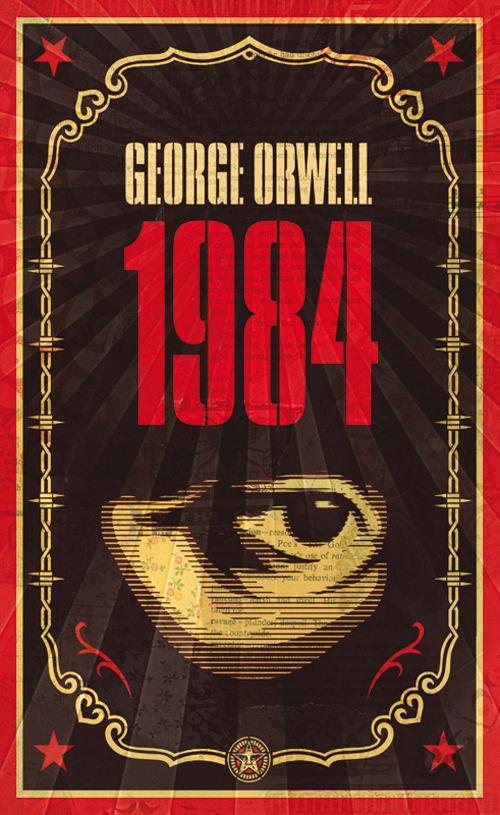
[Link] George Orwell: Why I Write
 From a very early age, perhaps the age of five or six, I knew that when I grew up I should be a writer. Between the ages of about seventeen and twenty-four I tried to abandon this idea, but I did so with the consciousness that I was outraging my true nature and that sooner or later I should have to settle down and write books.
I was the middle child of three, but there was a gap of five years on either side, and I barely saw my father before I was eight. For this and other reasons I was somewhat lonely, and I soon developed disagreeable mannerisms which made me unpopular throughout my schooldays. I had the lonely child's habit of making up stories and holding conversations with imaginary persons, and I think from the very start my literary ambitions were mixed up with the feeling of being isolated and undervalued. I knew that I had a facility with words and a power of facing unpleasant facts, and I felt that this created a sort of private world in which
 I could get my own back for my failure in everyday life. Nevertheless the volume of serious — i.e. seriously intended — writing which I produced all through my childhood and boyhood would not amount to half a dozen pages. I wrote my first poem at the age of four or five, my mother taking it down to dictation. I cannot remember anything about it except that it was about a tiger and the tiger had ‘chair-like teeth’ — a good enough phrase, but I fancy the poem was a plagiarism of Blake's ‘Tiger, Tiger’. At eleven, when the war or 1914-18 broke out, I wrote a patriotic poem which was printed in the local newspaper, as was another, two years later, on the death of Kitchener. From time to time, when I was a bit older, I wrote bad and usually unfinished ‘nature poems’ in the Georgian style. I also attempted a short story which was a ghastly failure. That was the total of the would-be serious work that I actually set down on paper during all those years.
For the full essay: http://orwell.ru/library/essays/wiw/english/e_wiw
Subscribe to:
Posts (Atom)