Showing posts with label New Pulp. Show all posts

Saturday, February 17, 2024

Pulp Convention to Create New Characters and Anthology!

 FOR IMMEDIATE RELEASE

ATTENDEES AT WINDY CITY PULP TO WITNESS THE CREATION OF NEW CHARACTERS ON NEW PULP SUNDAY WITH ANTHOLOGY TO FOLLOW

Lombard, Illinois – February 8, 2024

Every year, the Windy City Pulp and Paper convention features writers of New Pulp as part of their Sunday panel programming. On Sunday, April 7th, several New Pulp authors will gather as part of a unique interactive panel.

This panel’s moderator will encourage collaboration between the audience and panelists to establish genre (and appropriate subgenres), setting, and four individual characters. Audience members will provide elements to be incorporated into that genre. Panelists will come up with a broad character concept and aspects.

During the session, panelists will take input from the audience and their peers in fleshing out these characters and concepts. Once this has been done, both the setting and characters will be featured in an anthology of short stories to be written by the panelists and published in time for the following year’s Windy City convention.

This panel will be held on Sunday, April 7th, exact time TBD.

For more information about the panel, please contact Andy Fix at andyfixwriter@gmail.com

For more information about Windy City Pulp & Paper (including attendance information) please visit https://windycitypulpandpaper.com/

Saturday, September 23, 2023

[Link] The Five Pillars Of Pulp Revival

by Misha Burnett

Opening Note One: There is some difference in meaning between the terms “Pulp Revolution” and “Pulp Revival”. The Revolution, I feel, is concerned with the publishing and distribution of literary works, ways to enhance discoverability and inform readers of the literary movement. Revival, on the other hand, is more concerned with the aspects of the movement itself. The first term is strategic, the second artistic. Being a literary theorist, my work generally concerns the latter term. Also, from a purely emotional standpoint, I prefer the image of people gathering under a tent to sing songs and praise the Lord to the more utilitarian image of crowds rolling a guillotine through the streets.

Opening Note Two: This article should not be taken as either authoritative or definitive. Pulp Revival is, itself, a work in progress, and any analysis of its characteristics is, of essence, incomplete and fluid. Perhaps a few decades hence someone will be able to stand back and get the entire picture so as to be able to codify the movement. At the moment, however, I am in the midst of it and jotting down my observations from, as it were, the trenches.

Opening Note Three: I have deliberately avoided any references to genre in what follows. This is because I don’t think it is significant to the Pulp Aesthetic. The guidelines can apply to Detective Fiction and Westerns just as readily as to Science Fiction or Fantasy. The Pulp era made no such hard distinctions, while some magazines specialized in a particular form of genre fiction, most were open to anything thrilling and exciting. Pirates rubbed elbows with cowboys and spacemen and barbarians from the bygone past in the pages of adventure magazines.

These having been said, this is what I see as the signature characteristics of Pulp Revival.

Read the full article: https://mishaburnett.wordpress.com/2016/10/05/the-five-pillars-of-pulp-revival/

Saturday, May 6, 2023

A Veritable Cornucopia of Submissions Opportunities from Pro Se Productions!

Note: For more information on these announcements, email editorinchief@prose-press.com.

SUBMISSIONS CALL FOR ANTHOLOGY FEATURING LESTER DENT’S FIRST SERIES CHARACTER!  “THE NEW ADVENTURES OF CURT FLAGG” OPEN FOR PROPOSALS!

With a licensing agreement with the heirs of the Estate of Norma Dent, Pro Se Productions proudly announces that submissions are being accepted for an anthology featuring the first series character created by Lester Dent, THE NEW ADVENTURES OF CURT FLAGG!

Debuting in Dell’s SCOTLAND YARD INTERNATIONAL DETECTIVE STORIES in March 1931, Curt Flagg was a violent, two fisted Private Detective very much cast in the hard boiled mold. Over four stories, Dent, never once actually being bylined with his actual name, developed Flagg from a fight first detect later gumshoe into someone who bore more than a passing resemblance to later characters created by Dent, including Doc Savage. Rising through the ranks to eventually be a partner in an agency, Curt Flagg is undoubtedly the character Dent cut his series teeth on.

Writers interested in proposing for one of the six open slots available in THE NEW ADVENTURES OF CURT FLAGG should contact submissions@prose-press.com to request the bible for the anthology, which consists of the character’s four published stories. Proposals must be 1-3 paragraphs long and must include the entire plot of the story, these are not elevator pitches or back cover blurbs. The stories should be approximately 10,000 words and payment will be on a royalty basis. This is a work for hire arrangement. The anthology will not be considered filled until six stories have been accepted.  

The image accompanying this press release is from the May 1931 cover of SCOTLAND YARD, the second issue Curt Flagg appeared in.

SUBMISSIONS CALL FOR ANTHOLOGY FEATURING POTENTIAL INSPIRATION FOR PERRY MASON!  “THE NEW CASES OF GILLIAN HAZELTINE” OPEN FOR PROPOSALS!

With a licensing agreement with Steeger Properties LLC for anthologies and novels featuring some of Steeger’s characters, Pro Se Productions proudly announces that submissions are being accepted for THE NEW CASES OF GILLIAN HAZELTINE, an anthology featuring a series character from ARGOSY Magazine.

Thought by many to be Erle Stanley Gardner’s model for his hugely successful Perry Mason series, Gillian Hazeltine, created by George F. Worts, debuted in 1926, seven years before Mason, and would appear in almost thirty stories, the majority of them in Argosy. Known as ‘The Silver Fox’, Hazeltine utilized his encyclopedic knowledge of the law as well as well played court theatrics, to defend his clients to the best of his ability, proving he was willing to use legal smoke and mirrors to prove his clients innocent. Hazeltine’s cases, though never simple, read like true pulp stories with well timed, almost breakneck pacing and wild mysteries with twists and turns throughout.

Writers interested in proposing for one of the six slots available in THE NEW CASES OF GILLIAN HAZELTINE should contact submissions@prose-press.com to request the bible for the anthology, which consists of two of the published stories. Proposals must be 1-3 paragraphs long and must include the entire plot of the story, these are not elevator pitches or back cover blurbs. The stories should be approximately 10,000 words and payment will be on a royalty basis. This is a work for hire arrangement. The anthology will not be considered filled until six stories have been accepted.  

The image with this release is the cover of the October 1927 issue of ARGOSY featuring Hazeltine on the cover. 

Following the anthology being filled with accepted proposals, there will be a call for a full length GILLIAN HAZELTINE novel as well.

Other calls for Steeger Properties LLC characters will be forthcoming from Pro Se Productions.

SUBMISSIONS CALL FOR ANTHOLOGY FEATURING SCIENCE/OCCULT SUPER VILLAIN!  “THE NEW DANGERS OF DOCTOR DEATH’ OPEN FOR PROPOSALS!

With a licensing agreement with Steeger Properties LLC for anthologies and novels featuring some of Steeger’s characters, Pro Se Productions proudly announces that submissions are being accepted for THE NEW DANGERS OF DOCTOR DEATH, an anthology featuring author Harold Ward’s odd and unique super villain.

First appearing in his own self-titled magazine from Dell Publications in February 1935.  Doctor Death, created by Harold Ward under the pen name ‘Zorro’, was Dr. Rance Mandarin.  Convinced that the Earth needed to be cleansed of humanity, Mandarin used his extensive knowledge of both science and the occult to create potentially humanity ending devices and creatures. Facing off with his arch nemesis, Jimmy Holm, who was supported by the powerful group known as The Twelve, Doctor Death featured in all three issues of his own magazine and appeared in two more stories, both of the latter remaining unpublished until the 1980s.

Writers interested in proposing for one of the six slots available in THE NEW DANGERS OF DOCTOR DEATH should contact submissions@prose-press.com to request the bible for the anthology, which consists of three of the five Doctor Death stories. 

Proposals must be 1-3 paragraphs long and must include the entire plot of the story, these are not elevator pitches or back cover blurbs. The stories should be approximately 10,000 words and payment will be on a royalty basis. This is a work for hire arrangement. The anthology will not be considered filled until six stories have been accepted.  

The image with this release is the cover of the February 1935 issue of Doctor Death, the character’s debut.  

A full length DOCTOR DEATH novel has been previously commissioned by Pro Se Productions and is currently in development.

Other calls for Steeger Properties LLC characters will be forthcoming from Pro Se Productions.

SUBMISSIONS CALL FOR ANTHOLOGY FEATURING LESTER DENT’S NEARLY SUPERHUMAN MOUNTIE!  “THE NEW ADVENTURES OF THE SILVER CORPORAL” OPEN FOR PROPOSALS!

With a licensing agreement with the heirs of the Estate of Norma Dent, Pro Se Productions proudly announces that submissions are being accepted for an anthology featuring a Lester Dent character from a popular genre in Pulp-THE NEW ADVENTURES OF THE SILVER CORPORAL!

The Silver Corporal debuted in WESTERN TRAILS Magazine in 1933. Created by Dent, this diminutive silver haired Mountie appeared in a second story written by Dent that appeared, not in a Pulp, but in a collection of Mountie stories published in 1998.  While clearly a member of the Canadian Royal Mounted Police, the Corporal was actually a transplant from Wyoming who had superhuman strength, struck terror into the hearts of Canada’s worst villains, and even blended into the snowy landscape through disguise, armed with unique weapons. 

The image with this release is the cover of the May 1933 issue of WESTERN TRAILS, the first and only Pulp appearance of The Silver Corporal.

Writers interested in proposing for one of the four open slots available in THE NEW ADVENTURES OF THE SILVER CORPORAL should contact submissions@prose-press.com to request the bible for the anthology, which consists of the character’s only two stories. Proposals must be 1-3 paragraphs long and must include the entire plot of the story, these are not elevator pitches or back cover blurbs. The stories should be approximately 10,000 words and payment will be on a royalty basis. This is a work for hire arrangement. The anthology will not be considered filled until six stories have been accepted.  

Other calls for anthologies featuring Lester Dent characters will be forthcoming from Pro Se Productions.

SUBMISSIONS CALL FOR ANTHOLOGY FEATURING BLACK MASK’S PENNY PINCHING PRIVATE EYE!  “THE NEW ADVENTURES OF REX SACKLER’ OPEN FOR PROPOSALS!

With a licensing agreement with Steeger Properties LLC for anthologies and novels featuring some of Steeger’s characters, Pro Se Productions proudly announces that submissions are being accepted for THE NEW ADVENTURES OF REX SACKLER, an anthology featuring a series character from Black Mask Magazine.

Appearing in Black Mask Magazine from in various stories from 1940 through 1950, Rex Sackler, created and written by D. L. Champion, was a rather unique character in the Private Eye field.  Notoriously known as ‘the parsimonious prince of penny pinchers,’ Sackler was such a cheapskate that he was not beyond holding off solving cases until he was sure the client’s check cleared. In a series of tales narrated by a beleaguered assistant who Sackler constantly tried to cheat out of his wages, this definitely odd take on the Private Eye proves popular with Pulp fans today and makes for interesting, even humorous stories.

Writers interested in proposing for one of the six slots available in THE NEW ADVENTURES OF REX SACKLER should contact submissions@prose-press.com to request the bible for the anthology, which consists of the character's first four stories. 

Proposals must be 1-3 paragraphs long and must include the entire plot of the story, these are not elevator pitches or back cover blurbs. The stories should be approximately 10,000 words and payment will be on a royalty basis. This is a work for hire arrangement. The anthology will not be considered filled until six stories have been accepted.  

The image with this release is the cover of the October 1940 issue of Black Mask, the second Black Mask appearance of Rex Sackler.

Following the anthology being filled with accepted proposals, there will be a call for a full length REX SACKLER novel as well.

Other calls for Steeger Properties LLC characters will be forthcoming from Pro Se Productions.

SUBMISSIONS CALL FOR ANTHOLOGY FEATURING DIME DETECTIVE’S ORIGINAL OCCULT SLEUTH!  “THE NEW ADVENTURES OF HORATIO HUMBERTON” OPEN FOR PROPOSALS!

With a licensing agreement with Steeger Properties LLC for anthologies and novels featuring some of Steeger’s characters, Pro Se Productions proudly announces that submissions are being accepted for THE NEW ADVENTURES OF HORATIO HUMBERTON, an anthology featuring a series character from Popular Publications’ Dime Detective Magazine.

Appearing in Dime Detective from 1932 through 1937, Horatio Humberton, created and written by J. Paul Suter, actually worked two jobs.  While a mortician during regular hours, Humberton pursued crimes, many of them with a supernatural bent, in his off time. One of the most original characters featured in Pulps, Humberton set the standard for occult investigators to follow, the stories a solid mix of paranormal danger, pulp excitement, and even quirky humor thrown in.

Writers interested in proposing for one of the six slots available in THE NEW ADVENTURES OF HORATIO HUMBERTON should contact submissions@prose-press.com to request the bible for the anthology, which consists of three of the character’s stories. Proposals must be 1-3 paragraphs long and must include the entire plot of the story, these are not elevator pitches or back cover blurbs. The stories should be approximately 10,000 words and payment will be on a royalty basis. This is a work for hire arrangement. The anthology will not be considered filled until six stories have been accepted.  

The image with this release is the cover of the July 1932 issue of Dime Detective Magazine, the first appearance of Horatio Humberton.

Following the anthology being filled with accepted proposals, there will be a call for a full length HORATIO HUMBERTON novel as well.

Other calls for Steeger Properties LLC characters will be forthcoming from Pro Se Productions.

SUBMISSIONS CALL FOR ANTHOLOGY FEATURING BLACK MASK MEMPHIS BASED DETECTIVE!  “THE NEW ADVENTURES OF LUTHER MCGAVOCK” OPEN FOR PROPOSALS!

With a licensing agreement with Steeger Properties LLC for anthologies and novels featuring some of Steeger’s characters, Pro Se Productions proudly announces that submissions are being accepted for THE NEW ADVENTURES OF LUTHER MCGAVOCK, an anthology featuring a series character from Black Mask Magazine.

Appearing in Black Mask Magazine from 1942 to 1948, Luther McGavock, created and written by Merle Constiner, worked for a Private Investigator Agency out of Memphis, Tennessee, after working for almost every other agency in the South. Not a white hat type hero, McGavock walked the line of hardboiled Private Eye and Noirish protagonist, sometimes easier not to like than the criminals he came up against. The McGavock stories were not what many considered typical mystery fare. Constiner presented detailed descriptions of the South, both the small towns and growing cities as well as the rather unique characters that peopled his version of the area. McGavock’s cases leaned into blood and violence, dark humor, betrayal, and double-crossing, sometimes even by McGavock himself, and often depended on little known facts of all sorts for resolution.

Writers interested in proposing for one of the six slots available in THE NEW ADVENTURES OF LUTHER MCGAVOCK should contact submissions@prose-press.com to request the bible for the anthology, which consists of the character's first four stories. 

Proposals must be 1-3 paragraphs long and must include the entire plot of the story, these are not elevator pitches or back cover blurbs. The stories should be approximately 10,000 words and payment will be on a royalty basis. This is a work for hire arrangement. The anthology will not be considered filled until six stories have been accepted.  

The image with this release is the cover of the January 1943 issue of Black Mask, the third appearance of Luther McGavock.

Following the anthology being filled with accepted proposals, there will be a call for a full length LUTHER MCGAVOCK novel as well.

Other calls for Steeger Properties LLC characters will be forthcoming from Pro Se Productions.

SUBMISSIONS CALL FOR ANTHOLOGY FEATURING LESTER DENT’S FIRST AND LARGELY UNPUBLISHED WESTERN HERO!  “THE NEW ADVENTURES OF THE COWL” OPEN FOR PROPOSALS!

With a licensing agreement with the heirs of the Estate of Norma Dent, Pro Se Productions proudly announces that submissions are being accepted for an anthology featuring a character created by Lester Dent that remained unpublished in the classic era of the pulps-THE NEW ADVENTURES OF THE COWL!

One of Lester Dent’s more unusual creations, The Cowl is also a character that was rejected by two Pulp magazines in 1930-31. The single story, a rather uniquely styled tale titled “The Cowled Nemesis”, would not see print until much later in the Spring 2007 issue of Ed Hulse’s BLOOD ‘N’ THUNDER magazine. The Cowl was in reality “Magic” Mason, a man of multiple skills on the hunt for his father’s killers. Mason was nearly as much masked hero with a bit of ‘super’ thrown in as he was saddle born cowboy. Clearly a western, the tale is set in a West similar to that depicted in many early Westerns: the Wild West still rarin’ and ridin’ in possibly isolated parts of the country while cars and other signs of progress moved forward.

The photo with this release is of The Cowl's creator, Lester Dent.

Writers interested in proposing for one of the four open slots available in THE NEW ADVENTURES OF THE COWL should contact submissions@prose-press.com to request the bible for the anthology, which consists of the story/article previously mentioned. Proposals must be 1-3 paragraphs long and must include the entire plot of the story, these are not elevator pitches or back cover blurbs. The stories should be approximately 10,000 words and payment will be on a royalty basis. This is a work for hire arrangement. The anthology will not be considered filled until six stories have been accepted.  

Other calls for anthologies featuring Lester Dent characters will be forthcoming from Pro Se Productions.

SUBMISSIONS CALL FOR ANTHOLOGY FEATURING PULP’S ‘KING OF DETECTIVES’!  “THE NEW ADVENTURES OF CAPTAIN SATAN” OPEN FOR PROPOSALS

With a licensing agreement with Steeger Properties LLC for anthologies and novels featuring some of Steeger’s characters, Pro Se Productions proudly announces that submissions are being accepted for THE NEW ADVENTURES OF CAPTAIN SATAN, an anthology featuring a series character from Popular Publications.

In a move that was rare, if not unique in Pulps, Captain Satan became the lead of his own self-titled magazine in March 1938 when Popular changed the name of its recently debuted STRANGE DETECTIVE MYSTERIES magazine. Satan, in reality mysterious and wealthy playboy Cary Adair, would only lead the magazine for five issues and not appear again. As Captain Satan, Adair led a large force of variously skilled men who in many ways literally waged a war on specific crimes by using criminal tactics. Whether or not he took a third to pay his crew or performed as a Robin Hood of some sort, it was clear Captain Satan was on the side of the angels.

Writers interested in proposing for one of the six slots available in THE NEW ADVENTURES OF CAPTAIN SATAN should contact submissions@prose-press.com to request the bible for the anthology, which consists of all five originally published stories. Proposals must be 1-3 paragraphs long and must include the entire plot of the story, these are not elevator pitches or back cover blurbs. The stories should be approximately 10,000 words and payment will be on a royalty basis. This is a work for hire arrangement. The anthology will not be considered filled until six stories have been accepted.  

The image with this release is the cover of the July 1938 issue of CAPTAIN SATAN. 

Following the anthology being filled with accepted proposals, there will be a call for a full length CAPTAIN SATAN novel as well.

Other calls for Steeger Properties LLC characters will be forthcoming from Pro Se Productions.

------------------------------------------

For more information on these announcements, email editorinchief@prose-press.com.

To learn more about Pro Se Productions, go to www.prose-press.com. Like Pro Se on Facebook at www.facebook.com/ProSeProductions

Thursday, July 14, 2022

Tease! Tease! (Moonstone Double Shot)

I'm so excited about this new book from Moonstone Books. I love to write the adventures of Golden Amazon, and she really shines when she gets to play off other pulp heroes with differing modus operandis. And boy, do Secret Agent X and Phantom Detective have different ways of seeing the job of a hero than Golden Amazon. So much fun to write!


Want more than just this tease?

Saturday, July 9, 2022

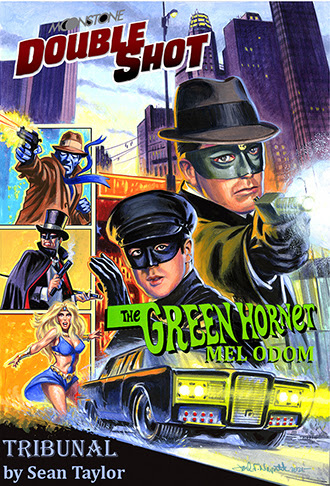
Moonstone Double Shot -- featuring Green Hornet and The Tribunal now available!

Britt Reid carries a bitter legacy. When Britt was a boy, his father was framed and died in prison. That was the tragedy that birthed the Green Hornet. For years, he kept his two lives separate: upstanding successful businessman and a most wanted criminal known as the Hornet. The toll that dual identity takes on the man who is both is huge, and the enforced separation between the two selves grows thinner.

And: The TRIBUNAL -- The Golden Amazon, The Phantom Detective, Secret Agent X… Judge, Jury… and whatever else they need to be… (by Sean Taylor)

Who is the mysterious Bogill and why has he declared war on our heroes?

Item Name: Moonstone Double Shot May '22B

Item #: DS0522B

Price/ea: $5.49

Buy it now! 

Sunday, March 6, 2022

The Pulp Factory Awards 2022


Voting is now open for this year’s Pulp Factory Awards and is open to the public, so get on over there and vote for your favorites. Categories include Best Pulp Novel, Best Pulp Short Story, Best Anthology/Collection, Best Pulp Cover, and Best Pulp Interior illustrations. Voting closes March 28, 2022 so get your votes in soon. Winners will be announced at this year’s Windy City Pulp & Paper Con in Chicago in May. 

BEST PULP NOVEL

  • Captain Hawklin and the Invisible Enemy - Charles F. Millhouse - Stormgate
  • Fangs of the Sea - Fred Adams Jr. - Airship 27
  • The Great Chicago Fire Conspiracy - George Tackes - Airship 27

BEST PULP SHORT STORY

  • Saturn’s Child – Mark Allen Vann – Saturn’s Child And Other Tales – Xepico Press
  • Snow Shorts: Snow Ambition - Brian K. Morris - BEN Books
  • Strigoi - Jonathan W. Sweet - Ghosts of the Jackal - Brick Pickle Pulp

BEST PULP ANTHOLOGY

  • Blood on the Blade - Flinch Books
  • Mystery Men (& Women) Vol. 7 - Airship 27
  • Occupied Pulp - Flinch Books
  • Pulp Reality #2 - Stormgate Press
  • Pulp Reality #3 - Stormgate Press

BEST PULP INTERIOR ILLUSTRATIONS

  • Chris Nye - RUNEMASTER – Shield Maiden’s Blade – Airship 27
  • Ed Catto - THE MUSKETEERS – New Adventures – Airship 27
  • Gary Kato - PULP MYTHOLOGY Vol 2 – Airship 27
  • Guy Davis - THE SILVER PENTACLE – Airship 27
  • Rob Davis - C.O.JONES – Hometown U.S.A. – Airship 27
  • Stephen Burks - PULP REALITY #3 - Stormgate Press

BEST PULP COVER (larger images below)

  • Clayton Murwin - PULP REALITY # 2 – Stormgate Press
  • Adam Shaw - FANGS OF THE SEA – Airship 27
  • Adam Shaw - JEZEBEL JOHNSTON 7 – Mastiff - Airship 27
  • Douglas Klauba - SATURN’S CHILD And Other Tales – Xepico Press
  • Rob Davis - JEZEBEL JOHNSTON Vol 8 REVELATION – Airship 27

Vote here.

Friday, November 19, 2021

KRIS KRINGLE: MONSTER HUNTER

New Short Story Ebook

I turned my latest short story, Kris Kringle: Monster Hunter, into a standalone ebook. This was a lot of fun to write, and I'm going to be doing more in this series. Stay tuned. Here's the blurb:

Santa Claus. St. Nicholas. Father Christmas. He goes by many names, and one night a year spreads joy throughout the world. But in the offseason, he has another job: helping the US government dispatch evil beasties that bump in the night. He is Kris Kringle: Monster Hunter.

An Ancient Evil. A Timeless Magic.

In this exciting debut short story, Kris is roused from a deep sleep in the dead of night. Creatures are stirring, and he must travel the world dispatching all manner of foul horrors, before a final confrontation at the North Pole, where an ancient pile of ruins holds a dark secret.

Is the world doomed? Can eight tiny reindeer and a Desert Eagle named Snowflake save Christmas? Find out in...

KRIS KRINGLE: MONSTER HUNTER -- A Short Story

Check out the ebook here: https://www.amazon.com/Kris-Kringle-Monster-Hunter-Short-ebook/dp/B09HWLY4Q5/

Tuesday, March 23, 2021

New and Classic: The Pulp Conundrum


New Pulp is a term accepted/embraced  by lots of writers today, from Chuck Wendig to Adam Christopher, and among the new publishers that identify with that marketing/genre terminology. But what does it mean? This week on the blog, we go straight to the sources to find out how the classic and the new compare.

Other than the one being old and the other being new (in terms of the historical timeline), what are the chief differences between classic pulp and New Pulp?

Gordon Dymowski: I think the main difference between "classic" Pulp and new Pulp is perspective. Many classic Pulp tales were written specifically for immediate publication and reflected the values of their times. New Pulp, however, manages to reflect current values while staying true to the original spirit of classic Pulp. It also helps that New Pulp tends to be better written and edited, and can incorporate influences that were not available back in the classic Pulp era. We have a more complex understanding of certain issues and tropes when writing (gender representation, racial stereotypes, and others).

Gary Phillips: To be brief, New Pulp certainly has switched up the POV. People of Color in the background are now in the foreground. Too, more women are in the Pat Savage mold. Also more inclusive of actual events from then. 

Ron Fortier: The truth of the matter is 90 percent of Old Pulp was badly written. Not that we still don't love it, but the fact remains the majority of people before the 1040s only had a grade school education at best. Their knowledge of literature and grammar was limited and when pulps first burst onto the scene by the mid-20s, the editor's primary job was to fill pages and to that end they accepted whatever was sent to them. Period. Thus the dreg and why a pencil salesman named Edgar Rice Burroughs could read an issue of "Argosy" and say it was junk and "I can write better than this." Today we live an overly educated society, whether that is a good or bad thing is not for me to say. But what I do realize is that writing today, across the board is a hell of a lot better and even the weakest amateur at it can outshine what was done in the past. So New Pulp is elevated prose by all standards and it shows in the remarkable talents who write it today. 

Nancy Hansen: To me what New Pulp means is stories told in the fast paced and adventuresome manner as the classic era pulps, but with an eye toward the current reading market's larger diversity and some sensitivity toward being more inclusive.  

Sean Taylor: The coolest part of New Pulp for me is that I can have the freedom to be a little more "literary" than the original pulp writers had license to be. I get to actually use the full writers toolbox with real characterization and more than the two-dimensional good guys in white hats (or black fedoras) that were so popular at the time. Also, I can flex my symbolism muscles a little from time to time and play around with things like POV. I don't think that's a limitation of those earlier writers' abilities for the most part (though maybe for a rare few just like for a few New Pulpers too -- that's just the nature of the beast) but instead I think it's a facet of the changing audience for pulp action stories. Readers are used to and expect a deeper story than "Black Bat shoots gang leader." Again, not that those stories aren't fun -- they just aren't what most modern readers are looking for anymore.

Not only that, but as Gary and Gordon mentioned, New Pulp isn't trapped by the same cultural mores and values, and that means New Pulp stories can look into the darker shadows of pulp storytelling  and  previously ignored cultures within pulp pages to say something a little deeper and a lot more enlightened. 

What are the commonalities between them?

Gary Phillips: I'd venture the commonality is still derring-do and larger than life characters.

Nancy Hansen: The big commonalities are in the pacing of the stories with the emphasis on action/adventure and the genres that make that work. The major difference besides the more inclusive atmosphere of characters from diverse backgrounds are that the characters are often more fleshed out. At least that's my take on it. 

Ron Fortier: Those are the set pieces required in any story to be called pulp and that means tons of action/adventure, colorful heroes, dastardly villains, exotic locales. That is evidence in the fact that pulp writers like Max Allan Collins, Stephen King and the late Clive Cussler can make the NYT bestseller lists time after time. Why, because today New Pulp is great story telling and finally accepted by the literary community, not only the masses back in the day.

Sean Taylor:
What's that saying? The more things change... That's certainly true for pulp style storytelling. Both classic and new are more direct narratively, more focused on action, and start with caricatures and stereotypes for their broad stroke story beats. And there's still that some of "slam-bang" delivery that doesn't spend pages on what the mountains look like. (I'm looking at you Tolkien.) And the characters are still going to be initially based on stereotypes -- at least before the New Pulp writer either starts to adapt that stereotype with characterization.

Gordon Dymowski: Both have a strong sense of narrative drive with short, punchy sentences. They also share an emotional immediacy and *drive* (it's hard *not* to get caught up in a story) with vivid characters and higher stakes. Although both types of Pulp can sometimes strive towards more literary efforts, both use down-to-earth language to tell their stories.

Saturday, February 27, 2021

[Link] 100 New Pulp Books To Get You Started

I get asked a lot of questions due to my affiliation with New Pulp and I’d have to say that the #2 question I get asked about it is: “Where do I get started? What should I read first just to see what it’s all about? What writers should I be reading?”

I can understand the confusion. More than you know. There is a whole lot of New Pulp out there. Some of it is excellent. Some of it is downright astonishing. Some of it is good, some of it okay and a seriously depressing amount of it just plain flat out awful. And those of us who write/read and/or review New Pulp feel the crush of recommending books and writers to those of you unfamiliar with the genre but are desperately eager to know more.

That’s why back in June of 2014 I put together a list of “25 New Pulp Books To Get You Started.” The purpose and intention of the list was simply to give New Pulp virgins a place to start getting their brains wet and see if they liked these waters.

Since then, more New Pulp books have been written (a lot more!) and I saw the need to add more books to the list and so I did, continuing to add to the list each succeeding year. My goal was to keep adding to the list until I get up to 100 and then call it quits. And as of this year, that goal has been reached. The way I see it, if you can’t find something you like in a group of 100 books then there’s a good chance that genre isn’t for you.

Read the full article: https://fergusonink.com/100-new-pulp-books-to-get-you-started/

Saturday, August 8, 2020

WHO’S WHO in NEW PULP

WHO’S WHO in NEW PULP is now available at Amazon. Here are 222 bios of the finest New Pulp writers, artists, reviewers, editors and publishers. All proceeds from sale of the book to go to the St. Jude Children’s Research Hospital.  Note – all participants can purchase copies directly from Rob Davis – Art Director Airship 27 Production.

Thanks to all who helped make this book possible.

AMAZON LINK

Wednesday, August 15, 2018

Nugget #145 -- New Pulp, Revisited

I think New Pulp is in a pretty enviable spot right now. 
Now that it’s outgrown its source material and can 
play with style instead of just characters or settings, 
New Pulp is literally being made and remade every day.


Thursday, July 19, 2018

Writing for the New Pulp Fiction Market

by Fred Adams, Jr.

Ever hear of The Purple Scar? Lady Domino? The Black Bat? How about the Shadow? Doc Savage? Conan the Barbarian? Ah, I see recognition lighting up a few faces.

The aforementioned heroes and heroine are members of the pantheon of pulp fiction characters popular in the magazines of the 1930s and 40s. Literary types are fond of tagging Pulp Fiction as "escapist literature named after the cheap pulp paper on which the magazines were printed." I prefer to think that Pulp Fiction is named after the state in which the villains are left after the hero is finished beating the living snot out of them.

Hundreds of pulp magazines graced the newsstands and magazine racks of America, some monthly and some weekly in the 1930s and 40s. And they kept authors like H.P. Lovecraft, Fritz Leiber, Ray Bradbury, Robert E. Howard, Robert Bloch, Kenneth Robeson, Dashiell Hammett, Raymond Chandler and a host of others from starving to death in the hard times of the Great Depression. As a matter of fact, during the Depression, the prolific Robert E. Howard had a greater income than the President of the bank in his hometown of Cross Plains, Texas.

The magazines had titles like Spicy Detective Stories, Weird Tales, Astounding Science Fiction, THRILLING ADVENTURE, THRILLING DETECTIVE, THRILLING MYSTERY, THRILLING RANCH, THRILLING SPORTS, THRILLING WESTERN, and THRILLING WONDER STORIES.

It's no coincidence that so many of these magazines had the word Thrilling as the lead adjective in their titles. That's what their audience wanted - thrills; escape, adventure, romance, to take their minds away from the grinding sadness of the Depression or the horrors of war.

Much of the writing was poor at best, in many cases because it was cranked out so quickly for magazines that came out on a weekly schedule. But the Pulps included gems of very high quality: Dashiell Hammett's The Maltese Falcon first appeared in Black Mask. H.P. Lovecraft, Fritz Leiber, and Robert E. Howard saw much of their best work appear in Weird Tales for a half-cent a word (one reason why their stories are often so long and detailed). Even the young Tennessee Williams had a story. "The Vengeance of Nitocris" published in Weird Tales.

In principle, the circumstance is illustrated by an anecdote involving Science Fiction grand master Theodore Sturgeon. The story has it that an interviewer once said to Sturgeon, "Mister Sturgeon, you know that 90 percent of science fiction is crap." Sturgeon replied, "Young man, 90 percent of everything is crap." This was true of Pulp Fiction in the '30s and '40s and is still true of the Pulp Fiction written today. It's that other ten percent that pulp fans look for in new fiction.

In the fifties, the pulps faded away and disappeared from the newsstands, but the best stories and their characters came back in the 1960s in the form of Ace Paperback doubles featuring Conan stories by Howard, and Ballantine paperback reprints of the hundred thirty-odd Doc Savage novels by Lester Dent, aka Kenneth Robeson, Western authors Zane Grey and Louis L'Amour.

What possessed editors and imprints to bring these stories back? It was the nature of the iction.

Pulp writers had one rule that good and bad writers alike followed: adherence to the art of storytelling. Every story had a beginning and an end, sharply etched economical , almost archetypal characterization, loads of action, high emotions, and plenty going on. The mission was to keep the reader hooked while you transported him or her into a more exciting and interesting world of fantasy and make-believe, to spirit the reader away from the drab, everyday world. Its mission was to entertain with a capital E.

My generation, largely born after the pulps disappeared from the newsstand, bought and read these adventurous stories in anthologies with lurid paperback covers and found they were, simply put, fun to read. Pulp fiction has experienced the first stirrings of a new wave of interest in recent years as another generation discovers that reading pulp fiction can be at least as entertaining as video games, television, and social media.

Over the past eight to ten years, vendors began showing up at Sci-Fi cons and then at cons devoted to pulp fiction, cons like the Pulp Fest in Columbus (this year the last weekend of July in Cranberry, PA) and The Windy City Pulp and Paper Con in Chicago with crumbling pulp magazines in plastic sleeves and reprints of entire pulp magazines. The old vintage magazines, because of their cheap paper are hard to find in good condition, so people who wanted to read the adventures of The Shadow or Secret Agent X bought these facsimile editions (complete with the ads for X-ray glasses, sneeze powder and joy buzzers from Johnson-Smith Company) in big numbers.

A common sentiment was the lament that having read the entire canon of a specific author, the fun was over; many wished that the adventures would continue. And they have. Built on the popularity of Conan the Barbarian, Lin Carter and L. Sprague de Camp, among others, began writing new Conan adventures with the blessing of the Howard Estate's literary executor the late Glenn Lord. Today, I've lost track of the number of authors writing new Conan novels and stories. But they sell. How do we know? Because the publishers keep cranking them out. They will stop when people stop buying them.

As more fans discovered lesser known heroes like some of the ones I mentioned earlier, a demand arose for new stories involving these characters as well. When publishers went looking for literary rights, they learned that a large number of these characters had never been copyrighted, or that their copyrights had never been renewed under law, and they were public domain - free for the taking.

A whole new subgenre of fiction has arisen around the revival of these characters in new stories.

As I said earlier, new wine in old wineskins.

In addition to Conan, new stories featuring Doc Savage, Alan Quatermain, and other characters began to appear, even new Sherlock Holmes stories written by different authors. Alongside the traditional pulp heroes, new characters also emerged and the pulp fans embraced them.

While many of you may not particularly like the kind of rock ’em sock ‘em fiction that the pulp milieu presents, ask yourself this question: what am I? The answer is: a writer. What do writers do? They write for publication. Writing New Pulp is a road to your name on the cover of a book from a legitimate publisher.

Go to the websites of the publishers that I’ll discuss later and download their submission requirements. Those who publish new stories based on established characters provide a character “bible” ranging from a paragraph to a page of information; back story, regular associates, and other details peculiar to the character. Some of these publishers post anthology projects and request submissions. Others send out regular e-mails to writers who work with them or who request the information.

Check them out. If a publisher wants novellas for a Purple Scar anthology, give it a shot. Because these folks are not Knopf or Simon & Shuster, they are a little more down-to-earth and will work with you within reason. Bottom line, they’ll give your work a fair read, and if you write a good piece, they’ll likely use it. The checks may not be huge, but they cash.

And don’t think that this is all you pitch to the New Pulpers. You can submit characters of your own. I’ll use myself as an example.

My entry into Airship 27 was my novel Hitwolf  (what would the Mob do with a werewolf?). It was accepted immediately, as was Six Gun Terrors, vol.1 (cowboys and Cthulhu) that I wrote and submitted four months later.

These two paved the way for my supernatural detective C.O. Jones, Mobsters and Monsters and my first novel and Dead Man's Melody (rejected by one agent who shall remain nameless – he told me the only thing that sells these days is troubled female investigator fiction). Dead Man's Melody coincidentally was nominated by the2017 Pulp Factory Awards as Pulp Novel of the Year.

Other characters of my own accepted and published by Airship 27 include conjoined Chinese twins, the Smith brothers (The Eye of Quang-Chi, nominated as pulp novel of the year this year), and Thirties private eye Ike Mars (Bloody Key).

In addition, I’ve written original character novellas for anthologies for Airship 27: All-American Sports Stories and Aviation Aces, Vol. 1. I’ve also written established character stories for Pulp Mythology vol. 1 (a Beowulf story) Secret Agent X vol. 5 and vol. 6, a Conrad von Hoenig story for Flinch Books' Quest for the Space Gods, and a pair of original Sherlock Holmes stories for Sherlock Holmes Consulting Detective vol. 9, as well as stories for volumes 12 and 13.

All were accepted and all are paid publications. Six have already been made into audio books with the others to follow as Airship converts its entire catalog.

I would also point out that the publishers are now looking for female heroes, super powers or not because of the success of last year’s Wonder Woman movie. Robert E. Howard’s Red Sonja is coming back with re-issues of novels by David C. Smith and Dick Tierney. Domino Lady is back under the Airship 27 imprint. Female pulp heroes are going to be a big seller in the near future.

You may not get rich writing new pulp this year, or maybe next year, but your name will be out there, and when an agent or editor asks “what have you published lately?” you have a legitimate answer. Also, when you do a book signing or an author sale like tomorrow's, you have hard copy books to offer. This week I have fifteen titles to put out for sale, all from the past four years.

Things are looking better all the time for the new Pulp Market. Currently, an Airship character named Brother Bones was recently optioned for a movie, and if that succeeds, the producers will be looking for more titles.

So, the market is out there. Now how do you write a New Pulp Fiction story?

Pulp fiction, to my thinking is a logical extension of Gothic fiction from the 18th century. Lurid, sensational novels were popular reading then, and those two adjectives certainly apply to pulp, but the similarities run deeper.

In my doctoral dissertation, Edith Wharton's American Gothic: Gods, Ghosts, and Vampires I defined Gothic fiction as "Literature that portrays society's inability to protect the individual in extreme circumstances."

A favorite example of this extension in the modern world is the classic B movie alien invasion flick of the fifties. A spacecraft lands. The first thing police and/or the army do is surround the craft and point weapons at it, in military parlance, all by the book. The aliens soon prove to be beyond human control. Standard protocols are ineffective, and the outsider, in many cases a curmudgeonly scientist dismissed by the establishment as a crank, comes up with a solution that saves humanity.

Pulp fiction carries this a step further. In extreme circumstances, beyond the reach of law enforcement, government, military force, religious authority, or science, where can a person turn? I.E., who ya gonna call? The private detective who operates outside the proscribing rules of a police officer, the hired gunslinger whose fast draw settles things marshals and posses can't, the anti-hero who breaks every rule to set things right.

Pulp Fiction has absolutely no literary pretensions. It is written to entertain. As Ron Fortier, Airship 27’s editor in chief says, “if you want to develop character, do it between the gunshots."

The advice editor Marcel Duhammel gave to author Chester Himes, who went on to write the successful Grave Digger Jones series (ever see the movie Cotton Comes to Harlem?) is as valid today as it was sixty years ago: Make pictures. We don't give a damn who's thinking what, only what they're doing.

I’ve always enjoyed Pulp because when I read it, I don’t have to psychoanalyze the characters, or go to the library and find a book on organic chemistry or marine biology (are you listening, Randy Wayne White?) to make sense of the plot. I don’t need to reference some deep literary allegory or have to know minutiae about some historical period.

Pulp fiction is action, action, action. Fist fights, gun fights, sword fights; conflict and mortal peril underlie everything in the story, narrative tension should run high throughout. August Lenniger, in a 1929 Writer's Digest article about the infamous Black Mask magazine wrote of its stories, "There is never a moment in [its stories] where there is not something happening. There is constant action; a continual series of surprises, and it holds its suspense through the threatening [of] death..."

As I am fond of saying, the fundamental question at the heart of fiction is "what if?" The fundamental question at the heart of pulp fiction is "what next?"

As in Gothic fiction, pulp fiction achieves this by either placing an extraordinary individual into ordinary circumstances, or an ordinary individual into extraordinary circumstances. The result is what literary snobs call escapist fiction, but that is pulp fiction's greatest appeal: its ability to push an uncomfortable reality to the back of your mind for the duration of the story. Herein lies the source of nostalgia for something today's readers may have never experienced before. A gateway "to those thrilling days of yesteryear."

But where does pulp fiction originate? I am fond of saying that most pulp fiction stems from two of the great classics of western literature: The Iliad and The Odyssey.

I have recently added a third root to the tree: the Knight and his Squire, Don Quixote and the faithful Sancho Panza as a leading example. Buddy fiction, if you will, the hero and a second banana sidekick like Tonto to Fran Stryker's Lone Ranger.

The Iliad: a team of characters, each with a specialty; strength, wisdom, cleverness, etc. who join forces to fight an enemy. You’ve seen it since in Doc Savage’s team, the Blackhawk comics from the 40s and 50s, Mission Impossible, the A-Team, the first Star Wars film, and the Justice League and Marvel Avengers. Each member of the team contributes to the victory in his or her unique way.

The Odyssey: Homer was very shrewd to choose Odysseus, "the man of many schemes" as his stand alone hero. He is the prototypical loner against all comers, natural and supernatural. He is human, not even a demigod, and though he gets help from a few deities, he faces opposition from others in his quest to return home from the Trojan War. He is the archetypal trickster found in every mythology: Hermes, Loki, Coyote, Anansi, Popocatapetl, and he uses his many schemes to thwart his powerful enemies and to succeed in his efforts.

The fact that Odysseus is human and not supernatural opens the door for strong reader identification with the hero, an element crucial to successful pulp fiction. H. Bedford-Jones writes: "Never forget that the reader, in general, identifies himself with the chief character of a story. He desires to see things through the eyes of that character." Herein lies the escapist appeal of Pulp Fiction, the Walter Mitty-ism of the reader seeing himself as a two-fisted Alpha hero.

A main staple of traditional Pulp has always been the private detective, a figure George Will recently wrote was an extension of the American Cowboy (another staple of Pulp Fiction), the gun-toting loner who has substituted a car for a horse, and an automatic for a six-shooter, but who embodies the same tough-guy ethic and sense of right and wrong that motivates him to protect the vulnerable (as did another action figure, the Knight Errant of an earlier era). I.e. people the system cannot protect.

Ron Fortier of Airship 27 writes on Airship’s website, “People love mysteries, and they love private eyes.” If mystery is your forte, write one and submit it to Airship 27. I purposely write detective novels set in the 30s (Ike Mars), the 40s (C.O. Jones), and the 1890s (The Smith Brothers) so that I can write about detecting skills and physical confrontation, not the Internet, cell phones, digital surveillance cameras, The NCIS database, and a host of other modern conveniences that allow investigators to solve crimes and catch criminals in fifteen minutes while sipping a latte in their swivel chairs.

My detectives get their info the old way, by paying snitches, trading on old friendships with cops still on the force, peering through keyholes and over transoms, and beating it out of recalcitrant people. Action, action, action. As Raymond Chandler once wrote, “When in doubt, have two guys come through the door with guns.”

Sam Dunne, my protagonist in Dead Man’s melody is my sole protagonist who operates in the present. Sam manages to navigate modern technology well enough, but when all else fails, he has the reassuring knowledge that when all else fails, he can always climb over the table and punch the s. o. b. in the teeth.

Your loner hero can be a detective (private or otherwise), a cowboy, a closet crime fighter, a pirate, someone with supernatural ability, or the character I’m developing now, an 18th century insurance investigator for Lloyd’s of London who offers me the potential to pit him against crooked customs officers, pirates, sea monsters, the antagonistic French and Spanish governments, spies, and dockside ruffians. Good ripping fun with a sword, a belaying pin, and a musket; no iPads allowed.

Lester Dent, pen name Kenneth Robeson -- remember him? He created Doc Savage and wrote hundreds of novels, sometimes one a week. He published "the Lester Dent Pulp Paper Master Fiction Plot" in 1936. It still works. You can Google it at: http://www.paper-dragon.com/1939/dent.html. And for those of you who like to use Scrivener software, an enterprising author has created a Scrivener template for Pulp Fiction found at: http://byzantineroads.info/pulptemplate

Dent pretty much nails it. I’ll read an excerpt from his four-phase formula.

First 1,500 words: 1 -- First line, or as near thereto as possible, introduce the hero and swat him with a fistful of trouble. Hint at a mystery, a menace, or a problem to be solved--something the hero has to cope with.

Yep. That's how pulp works, and that's why the readers love it. Joseph T. Shaw says, "... it is not necessary to stage a gun battle from start to finish, with a murder or a killing in every paragraph. You can keep it alive and moving, when sympathy is once aroused, by tension and suspense, through dialogue or other form of plot development, when action is absent. Action in one form or another, is, however, pretty much in demand."

So you’ve got an idea about plotting and characters. Run with it. Be as outlandish as you like, because Pulp Fiction (new or old) demands internal logic, but not external logic. Within the bounds of the story, you can be as outlandish as you like.

My first Six-Gun Terrors novel, subtitled "Six Guns and Old Ones" featured not only cowboys and Indians and the Cavalry; it included a wagon train with forty Dayak headhunters from Borneo, a boatload of Chinese Pirates, the Vatican, a one-eyed tribal chief who reads Aristotle, and of course, H. P. Lovecraft’s Old Ones. I just said what the hell and threw everything I could think of into the plot.

It sold. So can your work.

I mentioned earlier the prospect of writing pulp stories and novels with previously established public domain characters. Dozens exist. The magic era seems to be the mid-1930s. Anything copyrighted before then, if not appropriately renewed, has become public domain. This frees the presses to publish new fiction featuring these characters and it frees you to write it. My recommendation is that you not only look over the character bible on any of these you might want to try but that you read some of the older fiction involving these characters to acquaint yourself with the character(s) and the style of the original works.

Certain characters are still protected by copyright: Tarzan is still owned by the Burroughs estate. Doc Savage, and Robert E. Howard's characters Conan, Bran Mak Morn, Solomon Kane, et al. If you want to try a character that's not on the list I gave you, I'd vet it with the publisher before going to the trouble of writing a novel you can't legally sell.

Of course, you could write a Conan novel, and simply change the name of the hero and the name of the land or the milieu as did Gardner Fox, (Kothar the Barbarian) or Lin Carter (Ka-Zar), or a host of other sword and sorcery scriveners. The risk you run with that strategy is the likelihood that an editor will read the first three pages and dismiss it as faux Conan.

The temptation exists to put a personal spin on an established character. Be careful about that. Readers cherish their favorites, and don't always take kindly to a new face on an old favorite. I'd liken it to Hollywood directors remaking classic movies with the attitude, "It was great, but it will be perfect if I just make this one change to the plot." The road to bad reviews, gang, and the waste of a hefty Hollywood budget.

There's a reason these characters are still popular seventy or eighty years after they first saw print: they were engaging. Readers liked them and knew what to expect issue to issue of a given magazine. A long series can be repetitive, but with the good ones, readers don't mind so much. As Walter Gibson tells us, it's like chatting with an old friend.

One way to handle individualizing your take on a character is what I did with Secret Agent X. My Agent X story "The Devil in the Deep Blue Sea" is set immediately after World War I, earlier in X's career than the original canon. That gave me leeway to work X to my satisfaction without distressing fans of the original. My second foray into Agent X's adventures, "Island in the Sky" is set in 1939 on the verge of World War II and allowed me the same freedom.

Some publishers frown on changes. Airship 27 has published eleven anthologies of new Sherlock Holmes fiction with two more awaiting publication. Despite the popularity of the mega-star anthology Shadows Over Baker Street, Airship 27 refuses to take Holmes stories that involve the supernatural or science fiction elements. I wrote a pair of Holmes novellas without knowing this fact, and at the Windy City Pulp Con two years ago, Ron Fortier told he couldn't use them for the aforementioned reason.

I was lucky that day. Tommy Hancock from Pro Se Press was standing beside me and as soon as Ron said he couldn't use the stories, Tommy said, "I'll take 'em." And they are now in print in Sherlock Holmes and the Adventure of the Chronic Argonaut.

Writing Sherlock Holmes stories is one of the most demanding and daunting tasks a writer can tackle. The readers are unforgiving of errors and/or misrepresentations and largely intolerant of plot twists like revealing that Holmes is a woman in disguise, is Watson's secret lover, or is from outer space or another dimension. Amazon reviews, fan blogs, and social media can be devastating to sales, and remember, barring nuclear war or collision with an asteroid, few things have a longer life than postings on the Internet. They'll haunt you for years to come.

The pulp characters on Airship 27's "fair game" list are a little bit easier to manage. You don't need to throw a reference to the character bible every other paragraph just to let the reader know you've done your homework. The result of that can often be the appearance of simply trying too hard to be another author. Those of you who have read any of the newer Spenser novels by Ace Atkins, who took over the series after Robert Parker's death will understand completely.

It is worthwhile to read newer fiction featuring an established character to get a feel of what a new pulp publisher wants to see, but that is no substitute for reading the original author's work to understand how he or she saw the character. A mistake some authors make is referring to or spinning off from an incident portrayed in a story that never occurred in the original canon. This is an immediate red flag that you are not familiar with the original author's treatment.

If you write a series of character revival stories, you can get away with referring to incidents, characters, etc. unique to your work, but keep everyone else's newer tales in a separate compartment. A few more caveats: most editors shy away from origin stories. There is a compelling reason.

Walter Gibson, who wrote over a hundred novels featuring The Shadow, wrote in his essay "A Million Words a Year for Ten Straight Years" (that's double NANOWRIMO all year 'round) the following wisdom about the Pulp hero:

You must treat the character as a discovery, rather than your own creation. Treat him, not just seriously, but profoundly. Picture him as real, and beyond you, in mind as well as prowess. Feel that however much you have learned about him, you can never uncover all. This mental attitude gives you deeper knowledge of the character than the story does.

Gibson is correct. When you think about fictional characters you have enjoyed, ask yourself, would I enjoy that character more or less if I were told every detail of the character's origin? That sense of mystery that Gibson's approach provides helps that character remain larger than life in the reader's mind, and enables what Samuel Taylor Coleridge called the "teleological suspension of disbelief" in the character that permits the most outlandish (and often the most entertaining) events to be presented.

Another red flag is a story that presents the death of the hero. Publishers want return engagements. If you kill off a popular hero, or one of your own creation, you've killed a golden goose.

If you create a new pulp character, keep in mind the words of Erle Stanley Gardner, creator of Perry Mason, but also the author of hundreds of pulp magazine stories:

An editor, usually with a strong individuality, cultivates writers who have strong individualities. They create characters that stand out. As writers, editors, and readers become more familiar with these characters, they develop, round out, and become flesh and blood beings to the readers.

Another aspect: in the current publishing game, many of the New Pulp Houses utilize Amazon's Create Space in tandem with Kindle for their releases. This has made a significant change in the market; instead of a publishing house printing a thousand copies or fifty thousand copies of a book and distributing them to sellers, then remaindering those copies that don't sell, effectively taking the book off the shelf, a title's life is open-ended, being available so long as Amazon is in business. Your books are never out of print. People will eventually read your stuff, like it, and go looking for more. They'll find it all on Amazon. A slow ride, perhaps, but you will arrive.

The strategy I pursue is to continue writing and publishing, building a catalog, and having it ready if and when my work enjoys its fifteen minutes of fame. In the meantime, I'm having fun.

A simple Google search of New Pulp Fiction will uncover a number of possible markets. Download their submission requirements, and study their publications. To learn what others are doing in the field, you might also join the Pulp Factory discussion group found at: https://groups.yahoo.com/neo/groups/thepulpfactory/conversations/messages

My advice to every author is: be your own demographic. Write what you'd like to read. If you don't like what you're writing, how can you expect a reader to like it any better? If you are excited what  you write, the excitement will be contagious. Writing will be less like work, and more like the adventure it ought to be.


====================================

NOTE: The following is a transcript of a presentation Fred Adams, Jr., made at the In Your Write Mind Conference at Seton Hill University on 22 June 2018. The audience comprised largely graduates of the University's MFA program for novelists.

Friday, June 22, 2018

The Ruby Files is one of 60 New Pulp Books to Get Your Started!

Derrick Ferguson, himself no stranger to appearing on lists such as this, has updated his list of 25 New Pulp Books To Get You Started for 2018 and it has now grown to a whopping 60 New Pulp Books To Get You Started. You can read it here: https://fergusonink.com/60-new-pulp-books-to-get-you-started/


There are a lot of great reads on here. If you're looking for a pulpy good read, this list is a good place to start.

I'm honored to have The Ruby Files appear on the list (co-created with Bobby Nash). Thanks, Derrick.

Speaking of, here are some links:

The Ruby Files Vol. 1

The Ruby Files Vol. 2

Tuesday, May 22, 2018

Derrick Ferguson Kicked the Willy Bobo With Me...

Here's another off the bucket list. I kicked Derrick Ferguson right in the Bobo. Wait... That didn't come out right...

Derrick Ferguson: Who is Sean Taylor?

Sean Taylor: He’s just a man whose circumstances got beyond his control, beyond his control. I’m Kilroy. Okay, maybe not. ...

DF: What do you do to keep the creditors away?

ST: I’ve been everything from a corporate media strategist to a local newspaper editor, and I’ve written comics and short stories and even a novel thus far, but for the day job at the moment, I edit for several places as a freelancers/contractor to keep the bills paid. It’s a dirty job, as they say, but someone’s got to love it.

DF: How long have you been writing and what have you learned about yourself through your writing?

ST: My first magazine article was in 1991, a marketing article about doing a summer reading display for a bookstores to highlight summer book sales. It was a hit, and I kept doing it. My first short story was publishing in 1995 in O’ Georgia: A Collection of Georgia’s Newest and Most Promising Writers, and I caught the bug and haven’t stopped yet.

What have I learned? Well, I’ve learned how to survive close to the poverty line, that’s for sure. Writing and editing is one of those comes and goes industries, and in an economy as volatile as the U.S. one has been during the years I’ve been a writer and editor, it’s bounced up and down several time. But what I learned from all that is that writing is something I make time to do whether or not it’s paying the bills. It’s more a calling than a career choice.

Read the full interview: https://fergusonink.com/2018/05/08/kickin-the-willy-bobo-with-sean-taylor/