Showing posts with label Don Thomas. Show all posts

Thursday, March 13, 2014

The Wayback Machine -- WWY(ou)D

Okay, this next roundtable is for the pulp writers and comic book writers again. Let's go into the wayback machine and talk about changing the industry from the beginning. WWYD (What would YOU do?)


If you could go back in time and change the publishing industry for pulp or comics (because they really do have so much in common, genre-wise), what would you change? What really drives you crazy and irks you about those old books you know and love?

Lee Houston Jr.: I would make sure there were more "contemporary" tales amongst the pulp characters of yesterday. That way,maybe not as many pulp stars from back then would be considered "period pieces" now, and perhaps we'd have more heroes from the past still active today. I would make sure that the original creators followed the practice of other trades and took on apprentices. That way, maybe today we would be still enjoying new adventures of such classics like Ellery Queen, Perry Mason, etc; despite the fact that their original creators have long since left us.

Josh Dahl: Simple change. I would take the current policy of putting the names of the creative team on the cover of the books and put it in place from day 1. More reader awareness that there people making the comics would give those people more importance and respect.

Van Allen Plexico: Creator rights from the beginning.

H. David Blalock: How could you change pulp to improve it? It got its name from the paper on which it was printed, its success from the audience it entertained. I'm not sure I would change anything except to encourage writers to produce more of it. There just isn't enough of it around.

Percival Constantine: The depiction of women, and unfortunately, it's not only a problem of a bygone era. Even today, it's difficult to find strong female characters. There have been recent efforts to change this: Barry Reese has created a very strong female pulp heroine in Gravedigger, and I've attempted it myself with my own New Pulp heroine, Elisa Hill. But far too often, women are depicted as overly-sexualized male fantasies.

Don Thomas:  Tone down the intentional and unintentional racism and misogyny several notches, amp up the sex and violence enough to make the Church Lady from Saturday Night Live's bygone days spontaneously explode.

I.A. Watson: In comics I'd head back to 1962, back when the Marvel Universe was just starting out, and make sure that there was at least one female founder superhero of the magnitude of Spidey, Thor, and Iron Man. That is, a female hero who wasn't someone's girlfriend, lone girl team-mate, sidekick, female version of a male hero, or established villainess reformed by a good man (so not the Invisible Girl, Marvel Girl, the Wasp, She-Hulk, Ms Marvel, or Black Widow). I'd make sure she had her own regular series so she'd be one of the charter Avengers.

Powers? I'd steal the telekenesis that Jean Grey had in the X-Men. That's a "headliner" power if its written right. Let Marvel Girl have some other mutant ability, phasing or teleporting or anything that meant she wasn't a weaker version of Charles Xavier.

Secret ID? Anything that doesn't involve a "girly" career like fashion designer, model, or nurse. I might be okay with her being Top Medical Doctor in the Marvel Universe since Don Blake was the weakest of the original secret IDs and telekenesis has some really useful surgical applications. Let Thor be Sigurd Jarlson and be Top Archeologist, which gives him more reason to find a buried hammer anyway. Or let the headliner female hero be Top Journalist, since Marvel doesn't really have one except Ben Urich.

While I'm at it I'd establish Morgana le Fey as an early and major villain, so that at least one of the top rank of Marvel baddies is female. She needs to be up there with Doom, Magneto, the Red Skull, Kang, the Mandarin etc. There's really no big-league mystic/magic baddie threat for the early Avengers except for their initial clash with Loki (Enchantress was mostly a minion). Morgana's got a different kind of magic and a different modus operandi to Baron Mordo, so she could offer a different brand of threat.

Even now, fifty-odd years on from the founding of the Marvel Universe, Marvel Comics still lacks any female hero with the same stature and prominence as their headliners like Iron Man and Cap. Their closest chances, Scarlet Witch and Captain Marvel/Photon, have both been sabotaged at various times. Dazzler isn't going to do it. And She-Hulk will always be the second-strongest one there is, or less.

Things aren't much better over at DC, but at least they have Wonder Woman.

Lee Houston Jr.: While I agree with Ian Watson about Marvel needing a strong female lead hero, I would set my sights on DC and attempt several things, like making sure Jerry Siegel and Joe Shuster aren't robbed of Superman, Bill Finger and company get the recognition they deserve on Batman instead of everything being accredited to Bob Kane, and righting whatever other wrongs need to be fixed along the way, like DC not suing Fawcett over the "similarities" between Superman and Captain Marvel that eventually drove the latter company out of business.

When I reach the Silver Age, the first thing I would do is establish the Justice Society of America and the Justice League of America operating on the same Earth from the very start! Hopefully, this would eliminate, or at least lessen, the circumstances and death count of the Crisis on Infinite Earths. Once the Justice Society was re-established in the Silver Age, I would revive All Star Comics to give all the Golden Age characters at least some semblance of a home base; rotating JSA adventures with anthology style issues featuring individual characters.

Further more, I would have made Adventure Comics stayed a true anthology no matter what, even if that meant giving Superboy and the Legion of Super-Heroes, along with Supergirl, their own titles much sooner than they ever actually got them.

And Jack Kirby certainly would have been treated better if I ran the company when he was at DC. Then maybe he would have stayed at least long enough to finish his "Fourth World Saga" however he intended it to originally play out.


I would also like to see more genres still available in the comics, like science fiction and westerns.

Wednesday, January 23, 2013

THE MASKED MANHUNTER OF THE SKIES RETURNS!

AVAILABLE NOW IN PRINT! 

 Pro Se Productions, a leader in Genre Fiction and New Pulp adventures, proudly announces the long awaited newest volume of its Pulp Obscura line!  THE NEW ADVENTURES OF THE GRIFFON!
 
Pulp Obscura, an imprint of Pro Se Productions in conjunction with Altus Press, brings yet another rare and classic Pulp Character back to life from Pulp's Golden Era! Kerry Keen is a young millionaire playboy by day to hide his nocturnal adventures as a costumed airborne crime fighter! From a secret underground hangar on his Long Island estate in the Graylands, The Griffon takes to the skies in the Black Bullet, his supercharged and heavily armed seaplane on missions of justice and vengeance!  

The Griffon was created by Arch Whitehouse and appeared in Flying Aces MAgazine, his adventures beginning in the June 1935 issue.  

These new tales take Kerry and his companions, Barney O'Dare and Barbara "Pebbles" Colony back into the skies for six terrific flights of danger and intrigue!

This stunning collection features an incredible cover by Mike Fyles as well as fantastic format and design by Sean Ali! Six Tales of Action, Excitement, Mystery and Amazing Arial Adventure take flight in this collection from writers Van Allen Plexico, Chuck Miller, Phil Bledsoe, S. E. Dogaru, Don Thomas and R. P. Steeves! 
 
Beware THE VENGEANCE OF THE VIPER!  Fight alongside The Griffon against THE DEVIL AND THE BLOODY BARONESS!  Fly into the HELL ABOVE US!  Encounter TERROR OVER THE PACIFIC!  Solve THE CASE OF THE DANGEROUS DIRIGIBLE! Uncover THE CLOCKWORK PLAN OF HERR DROSSELMEYER!  All in THE NEW ADVENTURES OF THE GRIFFON! Climb into the cockpit of the Black Bullet with Kerry Keen and fly off into THE NEW ADVENTURES OF THE GRIFFON from PULP OBSCURA!

Get your print copy today from Amazon at http://tinyurl.com/asmx9ew or from Pro Se's own Createspace store at http://tinyurl.com/aqzjqd3 for $15.00!  Coming soon for your Kindle, Nook, and Ebook Readers!

For more from Pro Se-www.prosepulp.com!  

For The Complete Adventures of the Griffon Volume 1 Reprints from Altus, go HERE!  And Volume 2 HERE!

Thursday, December 6, 2012

Bibbity, Bloggity, Boo -- Writers Who Blog

Let's talk turkey about being a writer with a blog, shall we?

What is the purpose of your blog -- to promote your name and work, to post personal anecdotes, to build a community of your supporters, etc.?

Marian Allen: All of the above. I use my blog (http://marianallen.com/) to showcase my work, but I also share information and recommendations with fellow writers, fellow readers, and fellow foodies.

Mark Bousquet: I guess I'm a bit different in that my blog and my writing are separate - that is, the main point of the blog (https://atomicanxiety.wordpress.com/) is to review movies and TV shows while the main point of my fiction writing is, well, fiction writing. I certainly promote my fiction on the blog and will, every so often, talk about it, but people come for the reviews. I might get one or two clicks leaving the blog to go look at a book at Amazon or something for every 500 people who visit the site.

Jack Mackenzie: All three. I blog as Jack Mackenzie (jackmackenziewriter.wordpress.com/) and the main purpose of the blog is promotion, but people won't keep visiting a blog that is only used for advertising. You have to offer something to keep people's interest, on a regular basis, to keep them coming ba ck. Odd as it may seem, nothing keeps people interested more than personal stories. People love to hear about other people's every day existence. You don't have to be the most interesting person in the world. It seems that in a blog format what people are looking for is something that connects you to them and vice versa. If you give that to readers you also have to give them the opportunity to connect and have their say and thus your blog become part of a social network.

Don Thomas: Originally I would have to say the main focus of my blog (http://donthomas6.wordpress.com/) was to share personal anecdotes written primarily in a stream of consciousness, somewhat informal manner.  Mainly about whatever subject I felt inspired enough to whip up and complete an individual blog article for.  Essentially the writing equivalent of a professional poker player occasionally playing a couple of games of solitaire when they're bored.  Then later on I started using it more and more for promotion of not only my work, but the people I was currently working creatively with or at the very least would one day would like an opportunity to work with.  I guess you could say by that time I was working towards building up a community of supporters, although it had far less to do with the people who took the time to read my blog and much more about the individuals that I took the time and effort to feature in one of my blog posts. 

To me blogging was something for a long time that was outside the sphere of directly helping my career as a writer.  Yes I could see the potential was there for it to play a more major role, and I even did some research into the series of how-to steps involved in transitioning my informal blog into a force to be reckoned with on its own.  But I refrained from putting forth the full effort with my blogging, as honestly I had never set out for it to be anything writing wise that I wasn't doing occasionally on the side whenever the mood significantly struck me.

Yet still cared enough to map out a strategy in case I ever wanted to put any real effort into it.  I guess in the end the proof is in the pudding, because the one person I ever took the time to share the information and strategy on blogging I had come up with was originally just looking to build up interest on a comic book project they had come up with.  Now seven months later with 40,000 + blog views under their belt they've come to the decision their primary focus should be their blog.

That's the way it goes sometimes, and they certainly weren't the first person I've taken the time to freely give out some informative advice.  Done the same with Sean in regards to a completely different matter, and both times I genuinely wanted both to take what they could from the information I freely provided and run with it as far as they could, snatching up just as much success as they could.

But with that said, whatever I've already mapped out a strategy for, I'm just as capable of putting to good use for myself.  So let's just leave it at in December my blog is going to go through a bit of a transition.  Going to be something that's probably going to take a lot of people by complete surprise.  Then they just might sit back and ponder the possibilities of what I could accomplish with a blog, if I ever decided to put any real effort into it.

The irony for me is that, as Jack Mackenzie is a pseudonym, I have to make the blog personal while maintaining what is essentially a facade. That is a challenge.

Derrick Ferguson: All three, I suppose. To be brutally honest about it, I started the three blogs I have as a way of keeping stuff separate: there's my movie reviews (https://derricklferguson.wordpress.com/), my Dillon stories (http://dillon-dlferguson.blogspot.com/) and everything else (http://dlferguson-bloodandink.blogspot.com/). Previously I was using my Live Journal for that but I soon found out that nobody really was interested. Unless it was the movie reviews. Those always got responses and started lively discussions.

And then I was constantly being told by other writers that I should have a blog/website/whatever as readers like to feel that they're connected to writers.

How do you balance your time between writing for your blog and writing your stories and articles?

Marian Allen: Writing daily for my blog has made me more productive in writing fiction. Even if I don't get any fiction writing done, I've kept the juices flowing by writing a little blog post. When I DO sit down to work on a story or novel, the words flow more easily than before I took up blogging.

Mark Bousquet: I try to use the blog and the fiction to balance each other out. While I was working on the Marvel Comics on Film reviews (https://atomicanxiety.wordpress.com/2012/11/16/atomic-reactions-marvel-comics-on-film-now-available-on-kindle/), I did little creative writing, but now that that's finished, I'm doing very little reviewing. I find that it helps keep me always writing.

Jack Mackenzie: As with everything - if it's important enough (and I believe that it is) then you will find the time. Of course, that doesn't mean the occasional missed deadline, even if it is self-imposed.

Don Thomas: Blog article writing is primarily something I have always done on the side.  I guess if I hadn't given up watching television altogether a little over half a decade ago, finding the time might every once in a while might be something of an issue.

Derrick Ferguson: I only post stuff on my blogs when I have something to say. I really don't see the reason to post stuff just to be posting stuff or to constantly promise readers that "There's some really BIG STUFF in the works!" I know that for me, as a reader, the fourth or fifth time you tell me that there's BIG STUFF in the works I yawn and go away. Wait until you can tell me what the BIG STUFF is and then post it.

Most writers I know how a set day that they post every week but I'm just not that organized. Maybe if I were I'd have more books written.

How important is your blog to your success as a writer?

Marian Allen: My blog is very important to my success, if only for the answer I gave in #2. Besides that, though, posting on my blog and being involved in social networking in order to promote my blog has put me into contact with some super people, both writerly and readerly. I've begun to be invited to submit to anthologies due to contacts I've made through blogging and social media.

Mark Bousquet: Financially? Very little. But I believe more writers should do criticism and more critics should do writing, so I try to practice what I preach. I think investigating other stories makes my own work much better.

Jack Mackenzie: I'm not sure how important it is to my success, but it does keep my name out there. It's not going to make a splash right away but if it is out there consistently then when someone sees my book for sale elsewhere, I'm hoping they remember my blog and maybe something funny or silly th at I wrote their and they may say; "Hey, I've heard of that guy! Let's give his book a try!"

Don Thomas: I certainly never considered blogging to be a make or break thing as far as how successful of a writer I could become.  I knew it could enhance the possibilities, but truth is I put about as much stock in focusing on becoming a true professional blogger as I've put into becoming a professional karaoke singer.

Derrick Ferguson: See, that's a hard question to answer because I have zero knowledge of how my blog is influencing readers. Most of the feedback I get is from other writers, which I appreciate...don't get me wrong. But it's extremely rare for a reader to email me or leave a comment.

What advice would you give a writer who is contemplating begin of regular blog of his or her own?

Marian Allen: The best advice I can give is: Don't burn yourself out. Not everybody needs to post every day, or would enjoy it. You have to enjoy it. I have certain days for certain types of posts: Monday is writing advice, reviews, blog guests. Wednesday is food. Friday is recommendations (websites, authors, books, movies). Saturday is Caturday. Sunday is Sample Sunday. That leaves Tuesday and Thursday for general nonsense. I also blog at Fatal Foodies every Tuesday, Echelon Explorations once a month, and The Write Type once a month. But my main advice is: look over blogs you like, see how what you like fits with what you would enjoy doing, and jump in.

Mark Bousquet: Don't let the blog overwhelm you, but don't treat it like a placeholder, either. Give people a reason to come visit.

Jack Mackenzie: Do it. Don't be a slave to it but do update regularly. Don't be afraid to promote but don't overdo it. Offer readers something of yourself. You don't have to strive to be exciting or controversial, just be yourself. Above all, be honest.

Don Thomas: In this case I'll keep my blogging advice to two primary points.  One, I'd say the best thing to do is to work up a couple of blog articles at first and before you publish them on some newly created blogging account, go out and request feedback from those you know who have a decent amount of blogging experience under their belt.  Two, if you're planning on using Google's Blogger.com, then right off the back you are settling ... unless that is you are already some sort of blogging savant and just didn't know it.

Of course there's more to having a successful blog than just those two bits of information, and I certainly don't know it all.  But I figure that should be sufficient helpful advice for someone who is looking to get started.

Derrick Ferguson: Be sure you have something of importance to say. Don't waste the reader's time. Be sure you convey information of what you are going to do and when you're going to do it and not just of what you plan to do five miles down the road. Be concise. Be entertaining. Relax and have fun. If you look upon it as a chore, that's exactly what it's going to be.

Sunday, July 29, 2012

Pro Se Productions Unveils Pro Se Presents #12 -- Featuring Brother Bones!

Pro Se Productions, a leading New Pulp Publisher, proudly announces the latest issue of its award winning magazine, PRO SE PRESENTS #12!
Keeping its promise of 'Puttin' The Monthly Back Into Pulp', Pro Se Presents finishes out its first year with two fisted action, strange mystery, science fiction terror, and the return of a classic New Pulp Character! 
Ron Fortier's Brother Bones leads off this month's issue in a brand new story entitled 'The Butcher From Bavaria!' 
Kevin Rodgers introduces readers to the mystery and horror of 'Energy Siphon' and Don Thomas rounds out the issue with the introduction of Nathaniel Dante, a stranger who visited 'The Town That Demanded Recompense'! 
Featuring Art, Design, and Formatting By Sean Ali, PRO SE PRESENTS TWELVE is the crowning achievement on the magazine's first year! Pro Se Presents- Puttin' The Monthly Back Into Pulp!

PRO SE PRESENTS #12 is now available at http://tinyurl.com/d3r2wd7 for only $6.00 and coming soon as an ebook in all available platforms!

Pro Se Productions- www.prosepulp.com

Thursday, May 10, 2012

Making the Fantasy Fantastic

Last week we looked at one slice of the fantasy genre, urban fantasy. This week we take a step back and examine the fantasy that paved the way for the slices, mainstream or "high" fantasy.

What is your working definition of fantasy as a literary genre?

Shane Moore: Pure fantasy is a quasi medieval period setting. However, fantasy can be in anything such as modern (Twilight) and Science Fiction (Star Wars). However, for it to be in either there must be some form of explanation/boundaries or the reader will be come disenfranchised with it. 

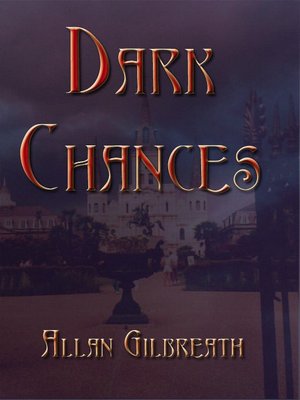
Allan Gilbreath: Storytelling based on known or recognized mythological creatures from folk tales.

Nancy Hansen: Fantasy is the fiction genre where some sort of magical/mystical backdrop partially or fully replaces science, industry, and technology. It differs from classic horror in that the focus is less on the terrifying aspects but more on character growth in overcoming some overarching obstacle. There are subgenres within fantasy, and lots of crossover possibilities, so high fantasy is just one possibility amongst many.

Don Thomas: Traditional Fantasy typically tends to be set in a pre-Industrial revolution type of society that is heavily immersed in mythology and magic.  A world where superstition, legend, and the sword are the standard as compared to settings where there is the excessive use of gunpowder, explosive compounds, and liberal use of the scientific method for that matter.

And in some case these worlds can be just as advanced as our own modern day society with magic replacing various logically based scientific discoveries.

Fantasy itself is a word that can be used to described any setting that one would call fantastical.  In other words a setting that is dramatically and very obviously different from the present day world that the reader currently occupies.  Which is why stories like the Wizard of Oz or even Science Fiction epics like Star Wars or Blade Runner could also be labeled as Fantasy.  But the key difference would be the Fantasy genre as a whole and what many call Traditional Fantasy.

Lee Houston Jr.: I look for the basics: swords, sorcery, elves, mythical creatures, enchanted realms, quests, etc. But while I love the adventure and unique turns of phrases amongst the various authors, I do prefer a steady pace to the story and not get too bogged down in details and exposition.

Herika R. Raymer: As a literary genre, I would have to say fantasy are stories which explore the mythical and lore-filled world. This mostly deals with the well known faeries, elves, and dwarves – not to mention pantheons of gods – but it can also deal with the nastier side of legend, like redcaps and dopplegangers and such. Then again, if you look further back in lore, faeries and elves and dwarves were not always considered friends to humans. Sometimes, they were enemies. It just all depended.

What drew you to the genre and made you want to write fantasy tales?

Shane Moore: I was stabbed in the line of duty in 2004. I was suggested writing as a way of coping with PTSD. Since writing police stories would only exacerbate the condition--I chose something as fa removed from law enforcement as possible--dragons and dwarves. Being the perfectionist I am, I began to learn the industry for potential publication--earned my first contract--and two years later had enough sales I quit/retired from law enforcement and went pro.

Allan Gilbreath: Faerie tales and fables were the first stories that I remember back in childhood days of having a story read to you. They were written to give a regular person hope that one day they may be in extraordinary situations and rise to the occasion. I just never lost the love of story telling. 

Nancy Hansen: Escapism. I think of all the genre fiction out there, fantasy least resembles the everyday world we live in, past or present. As a reader and movie goer, I always seemed to gravitate towards those kind of stories that were peppered with magic and mythical creatures or beings, mainly because I could so easily leave my own world behind, with all its everyday baggage. When I started writing seriously, back when my kids were young, we were a gaming household, and the RPGs (role playing games) were always the favorite. Back then most of them were solidly fantasy or some sort of hybrid setting. Those were stressful years for us, with lots of chaos to them, because my oldest son has a disability and he was struggling in school. I was reading a lot of fantasy at night to unwind. That quickly led to writing it as well, because there was something about creating a world where I made the rules that was really appealing. A lot of what I am having published now came from notes and snippets from over 20 years ago, as I did an extensive amount of world building back then.

Don Thomas: I have always been interested in things like history and mythology.  And traditional fantasy grants me an opportunity to craft a fantastical world with a solid and very intricate history that contains many mythological based elements.

Lee Houston Jr.: As a reader, like my love for science-fiction, fantasy takes you to realms and explores things not possible in the "real" world. Some might consider this escapism, but I prefer to look at it exploring alternate possibilities of what might have been. After all, what if the Renaissance or the Industrial Revolution never happened?

Herika R. Raymer: There is something appealing about writing characters which do not necessarily think like humans. The current ideas of dwarves are beer drinking blacksmiths that you simply do not mess with, and I have seen some wonderful renditions of this – in writing and in RP/LARP. The current ideas of elves are nature-abiding magic weavers who are very artistic in nature, again well presented in some cases. Faeries are fun in that they can be presented as tricksters or just as guides, depending on your point of view. For me, writing fantasy is interesting because you get to explore those mind sets as you select them and see how your humans react to the set of rules put before them. Your character can either see them as ‘noble’ or ‘archaic’, depending on their personality.

Suppose for a moment that Tolkien had never existed. What do you think fantasy tales would look like today? What might be different about the genre?

Shane Moore: The "mainstream" monsters would be different--such as elves/dwarves/halflings/orcs--but the general concept would be the same. Fantasy has been around as long as men dared fear the dark, the forest, and the deep blue sea.

Allan Gilbreath: I don't think that Tolkien actually shifted the fantasy genre all that much. I think he is just the best example of what was possible at the time. Since the genre is based on older works being "re-imagined" and expanded upon, I think the form and function of the genre would be pretty much the same.

Nancy Hansen: I've read far more than Tolkien, though I still cite his work as a major influence. While he might be one of the seminal and often copied fathers of modern epic fantasy, there have been a lot of other worthy contributions over the years. I doubt we would have all that much difference within the genre. Lloyd Alexander's Prydain Chronicles were similar in having a fairly concise epic backdrop, and you could also make that case for The Chronicles of Narnia and The Wind In The Willows. I'm also a big Conan fan, and that's about as far from quest fantasy as you can get.  What keeps fantasy books filling shelves is the genre's sheer diversity and willingness to crossbreed with other genres to bring in new fans. There's a color and flavor for everyone. I guess we're kind of the backyard alley cat of fiction.

Don Thomas: It would be slightly different.  But remember a lot of Tolkien's stories were derived and re-imagined from his knowledge of older European myths.  There would be some differences, just like if Bram Stoker had never written Dracula there would still be modern day stories about Vampires.  There would be have been some other writer that would have written something along similar if not exact lines.

Look at it this way even if J.R.R. Tolkien had never had anything published, there would still be an enormous amount of Arthurian Tales written throughout time for modern day Fantasy writers to draw upon.  All you would need would be to add things like a race of dwarves and a man-sized humanoid race similar to elves and you're more than halfway there.

And point of fact.  The idea of a separate race of dwarves is not something that Tolkien invented, as it is a solid component of Norse mythology among other things.  And King Arthur's sometimes portrayed as villainous older step-sister was commonly referred to as Morgan Le Fey.   And in case you did not know the 'Fey' at the end implies that she had at least some ancestral connection to the magical fairies of the world.  So it could be argued that even if Tolkien's elves had never been known to the world, somewhere along the lines some writer could have read about how those particular racial origins had been the initial source of her unique mystical abilities.  And from there it would take very little imagining to come up with a unique race of pointy eared (An established physical characteristic of some fairies) humanoids that tended to be more steeped in magic than the average human.

Lee Houston Jr.: Hard to say. While he didn't originate the genre, Tolkien is definitely a pioneer in that field. There probably would not be as many "inspired by" or outright copycat authors. Depending upon how much influence Tolkien had on her, the next big fantasy author would then probably be Anne McCaffrey.

Herika R. Raymer: It would be more mythos- and lore-related, as it was before him. From what I read, almost all mythical creatures came about to either explain something that could not be explained readily, or to impart caution on children on unmarried youths. Heck, even for adults there were stories of caution lest they fall to temptation and be forever lost. Those were quite interesting. I believe fantasy tales would still exist, they would just be much more region based instead of having a ‘common’ ground.

How "pure" do you like to write your fantasy? With all the genres blending together (like urban fantasy, horror fantasy, etc.), how do you keep "high" fantasy from becoming diluted, or is that not an issue to you?

Shane Moore: I like to write within mainstream fantasy. Re-inventing the wheel is a pet peeve of mine as a reader. Instead, I like to focus on characterization. That was one of the reasons of my success. Fans liked my villains as much as they did the heroes.

Allan Gilbreath: "High Fantasy" is the very definition of genre blending. No great story today can be written without being influenced and borrowing from the other genres.

Nancy Hansen: Contrary to what you might believe by the books I have out there, I am far from a purist. I've dabbled in plenty of crossover stuff, and some totally new genres, though I will say the epic/heroic high fantasy will always be my favorite medium of literary expression. As far as dilution, that really depends on the story line. If you take for instance Anne McCaffrey's wildly successful Pern series, you would likely think of it as high fantasy. It started with a solid science fiction backdrop with the colonization of a far off planet and small lizard creatures being bio-engineered to fight a cyclical environmental thread. It was brilliant too in that the society created by these colonists sort of 'devolved' over the centuries into the mote typical quasi-medieval setup you find in high fantasy tomes. In the end, they find their off-world roots again in uncovering lost technology. I don't think I've ever read a bad Pern tale, and I've read most of the series. Never occurred to me that it might be diluted by the initial reliance on technology. What she wrote worked, and the blending was fairly seamless.

When I write, I give the story what it needs. No matter if that is some kind of horror scene, a technology boost—or as in the Silver Pentacle series, a bit of everything in a colossal mashup of other genres against a confused post-apocalyptic backdrop—as long as it works, then I've done my job. The main thing is to make sure whatever goes on in there isn't unnecessarily jarring so as to break the spell over the reader. I want folks eagerly turning the page to see what's coming next and not tossing the book at the wall because I shoved in something that makes no sense in the context of the outlined world. So if it needs diluting, it gets diluted.

Actually, its the little leprechaun voices that tell me what to write and when to do so who get to decide what goes on every page; but then, that's a story for another day...

Don Thomas: I don't have to keep it pure.  I think it is important to solidly craft your particular Fantasy setting, but with that said when I write any individual story I generally let the story lead me where it will.  And excellent example of this would be the short story I wrote titled "The Town the Demanded Recompense" which although it could be said that it is a traditional fantasy there are also elements of a stereotypical American Western and a Kurosawa Samurai film.

Lee Houston Jr.: Fantasy is open to a lot of possibilities, so it depends upon what's being blended. I personally loved the Shannara series until Terry Brooks decided to give the realm a post-apocalyptic origin. Still love the Magic Kingdom of Landover, but sadly Brooks doesn't produce as many books in that series. I absolute devoured everything Robert Aspirin, but his estate hasn't released another Myth Adventures book since 2008.

Herika R. Raymer: It depends. For children’s stories, try to keep it as pure as possible. Unfortunately, or fortunately, when writing for young adults and adults the field does get mixed in order to keep attention. After all, there is plenty of horror within fantasy if you select the proper myth. I will admit to trying to keep out vampires, zombies, and technology if at all possible – but sometimes they do mix.

===================================================================

For more information, visit the author's links under the Heavy Hitters column on the right side of this blog.

Sunday, April 1, 2012

Savior -- Now Available from Pro Se Productions

Pro Se Productions, a leading publisher of New Pulp, announces its latest volume today, a debut novel from a long time contributor to Pro Se's award winning magazine line.

"Science Fiction," Tommy Hancock, Partner in and Editor in Chief of Pro Se Productions stated, "is definitely a cornerstone of Pulp Fiction, both Classic and New.  It's an area, though, that Pro Se really hasn't gotten into until recently with some entries in our magazines.  'Savior' by Don Thomas is our first novel jumping nose first into that genre and we're really proud of that.  And it's a vein of science fiction that's somewhat popular lately, apocalyptic virus takes on the world and a small portion of the population rises to combat it.  But it's also different, too, in that Don exposes what happens when that small section of humanity becomes heroes of almost cosmic proportions in the eyes of the world and at what costs this takes place."

From the back cover copy for SAVIOR by Don Thomas:

In the Near Future, a Red Death will cover the world. As civilization struggles to survive, one government emerges with a sliver of hope- The Strategic Agency against Viral Infections by Organized Resistance. SAVIOR.

SAVIOR delivered on the promise of a miracle cure, elevating themselves into legends...but behind every legend lies truths and secrets...truths and secrets former SAVIOR agent Steve Ryker has sworn to bring into the light...even if it kills him.

SAVIOR is the debut novel of author Don Thomas, a mainstay writer of Pro Se Presents, a two year award winning New Pulp magazine. Complete with fully realized characters, lightning fast pacing, and more meteoric action, SAVIOR proves to be a solid, taut science fiction thriller!

SAVIOR -- Edited by Nancy Hansen, Cover Art by Marc Guerrero and Design by Sean E. Ali! Ebook Formatting by Russ Anderson!  Available now on Amazon and at www.prosepulp.com and in ebook form at Smashwords, Amazon, and Barnes and Noble! 

SAVIOR!  From Pro Se Productions- Puttin' The Monthly Back In Pulp!

Thursday, December 22, 2011

Pro Se Presents #1 Now Available on Kindle and at Smashwords!

AVAILABLE TODAY ON KINDLE AND AT SMASHWORDS.COM!

Pro Se Presents #1, the debut issue of Pro Se's latest pulp magazine!

Featuring stories by Sean Taylor, Don Thomas, and Ken Janssens, Pro Se Presents is the magazine that puts the monthly back into pulp! Available NOW in multiple formats at
http://www.smashwords.com/books/search?query=Pro+Se+Presents+1
and by the end of today AT www.amazon.com for the Kindle....

And the best part? ONLY $1.99!!!!

Genre-Bending: How Pure Should Pulp Fiction Be?


When you think of pulp fiction, what springs to mind? The hard-boiled P.I.? The lost Earthman winning and wooing on Mars? The jungle lord? The aviator adventurer? The masked vigilante precursor to the comic book super hero? Weird horror tales with skeletons and damsels in distress? (For the sake of argument, let's all assume you didn't immediately go to the movie with John Travolta and Samuel Jackson, even as good as it is.)

Pulp has covered many genres, and was originally so named because of the cheap paper on which it was published. Pretty much everybody who loves the style knows that.

But, over time, some genres tended to become more synonymous with the definition of pulp than others.

And some would argue that pulp itself is a genre. (For the sake of this article, we're going to treat pulp as a style of telling a story and not a genre unto itself, since so many genres were represented within its ranks.)

To explore this idea further, we went straight to several of new pulp's top creators.

Which genres do you think work best in pulp stories? Detective, masked vigilantes, sci-fi, fantasy, horror, etc.?

Ron Fortier: Series hero pulps, regardless of setting.  Doesn't matter if the hero is a masked crimefighter ala the Shadow or Scientist space man like Captain Future.  The settings were unimportant to the hero element that one could follow month after month.

Bill Craig: In my opinion, mystery, detective adventure and masked vigilante can all work well in the pulp genre.  Doc Savage often combined mystery with high adventure, just as the Shadow novels while mystery often had elements of mystery even as the Shadow himself was a "masked" vigilante.

Don Thomas: Personally I have always thought that the basic detective story is the quintessential best choice for type of story that can resonate with the reader.  As it slowly pulls them in word by word and page by page to the point where they can't wait to find out what happens next.  The further you delve into a detective story, the more complete the overall picture or story becomes gradually over time.  And perhaps one of the best ways to weave a self-contained story in each and every genre that you listed Sean.

Not just the classic example of the Sam Spade film noir detective story, but is not Alan Moore's Watchmen story a perfect example of an immense detective story featuring masked vigilantes?  And for that matter I can cite two great science fiction stories that could also be said to be detective stories.  One being Issac Asimov's Second Foundation novel where questions about The Mule and the Second Foundation lead the characters down the road of trying to figure out whodunit.  And in my opinion the greatest Legion of Super Heroes story that has ever been written, the Great Darkness Saga. 

And the same can be said with the fantasy and horror genres.  My own Murder in the Ghetto of Trentonium being a fair example of such in a purely fantasy setting, and the Mickey Rourke and Robert Deniro playing the enigmatic Louis Cyphre in the movie Angel Heart being a great example of a detective story that is set very firmly in the horror genre.

Lee Houston Jr.: I think any genre is doable in pulp. Look at all that has been and is currently represented within the field. The only limitation in literature is the writer's imagination. Without it, the Shadow would not know what evil lurks in the hearts of men nor would John Carter have ever set foot on Mars.

Bobby Nash: I think any genre can work. Why not?

Erwin K. Roberts: Any genre can be written in the pulp manner. Take Carl Barks, and now Don Rosa's Disney Duck stories. I'd love a chance to write a slam-bang prose version of a Scrooge McDuck Fiscal Safari™.

Ian Watson: Some genres naturally led themselves to a pulp approach better than others. Generally those which involve concealment and revelation or action work best. Romance, depending often on the detailed dissection of circumstance and emotion, is not always served by pulp's speed and brevity of introspection. Mystery and horror, using deception and shock discovery, are ideal. Physical conflict is difficult to write well but pulp offers a useful technique to accomplish action-packed adventure sequences.

Do you prefer to keep a genre pure when you write? Why or why not?

Ron Fortier: Dangerous question I'll skip this one, as some of us still see pulp itself as a genre.

Bill Craig: No genre is really pure because they all have elements of each other.  Lester Dent wrote about radar and many devices in the 30's and 40's that the public was seeing turn into reality in the 60's and 70's, so Doc Savage stories combined mystery, adventure, and science fiction all at once, which backs up my conclusion on that one.

Don Thomas: Generally when I am writing a story in a particular type of genre, I try to keep the focus on writing that particular type of story.  Not to say that their can't be elements of other genres within the entirety of that story, but they are just elements.  The whole of the story is that main genre, and the goal is to weave a good tale in that particular genre.  

Lee Houston Jr.: Personally, I feel that anything is possible. But I would not do it just because I could. It would be a question of what the story/series calls for.

Bobby Nash: Define pure. I do enjoying mixing my genres.

Erwin K. Roberts: Define pure genre, please. I can't. For instance, does western have to be post-Civil War? Then what about the Leatherstocking tales? Or Zorro? Or tales of the Mountain Men?

Ian Watson: I struggle to answer this one because I don't really sit down and think "I'll write some pulp today". It just so happens that my natural writing style meets some of the definitions currently out there for pulp fiction. The only exceptions are why I'm trying to emulate or echo some other writer's style.

What about blending genres in pulp stories? Is it a fun way to spice up a tale or is it committing sacrilege in the pulp religion?

Ron Fortier: Sacrilegious? You're kidding right? The most popular pulps were the ones that blended: Ranch Romance, Pirate Mystery Tales, Weird Western Adventures. The whole concept of blending came from the pulps—it was their hallmark and remains true to this day.

Bill Craig: I love mixing it up.  In my latest Hardluck Hannigan story, Peril in the North which will be out after the first of the year, Hannigan gets another hand from The Reaper(masked Vigilante) who also appeared in River of the Sun.  He is headed for a hidden arctic base which was originally built by aliens and houses flying saucers that the Nazis are starting to use(science fiction) and it is all a big adventure.  It combines multiple elements of several genres to make a fun and exciting tale for my readers.

Don Thomas: Brothers Jade is a good example of this, as although as a whole it is definitely an example of Fantasy writing, there are prime and very tangible parts and scenes of that tale that can be just as frightening to the reader as any good ghost story.  For example the inner conflict of Deth Ethereld that eventually compels him to become a murderer, has similarities to the fall into psychotic madness that Jack Nicholson's character Jack Torrance in the Shining experiences.

To me the genre of a story is the destination to keep in mind during the long journey of weaving a particular type of story.  But the routes, execution, and elements that a storyteller can take and utilize along the way for that story can and should have infinite possibilities.

Lee Houston Jr.: If you have the right combination and it works to the readers' satisfaction, where's the "sacrilege"? My own Hugh Monn is a private detective with all the classic trappings of the detective/mystery genre, yet he works in the far future on another planet in a different part of the universe, thus blending in some science fiction elements. While I try not let one side of the equation overshadow the other, the two genres together make for a much more interesting story/series overall.

Bobby Nash: There's a pure pulp religion? Personally, I like mixing genres, but only as the story requires. Story and character come first. If the story warrants mixing horror and a mystery, for example, then I'm all for it.

Erwin K. Roberts: The "last" pulp magazine was a genre bender: Ranch Romances. Anything goes. So long as you have an exciting and reasonably logical story.

About thirty years ago I submitted a story idea for Charlton Comics' "Bullseye" program. The idea was approved, but I couldn't find a reliable artist to draw the strip. Recently I excavated a copy of the treatment from near the bottom of the Culture Vault. I'm changing the circa 1980 adventure to star my second generation pulp-hero, The Voice, and an elderly Ravenwood. The original would have featured the Steve Ditko version of the Question & Dr. M.T. Graves. (The story will directly follow this tale: http://www.planetarystories.com/voice.htm )

Ian Watson: As a reader I don't mind how "pure" any style is. I simply expect to be entertained and perhaps enlightened. To do that the writing has to be engaging, the plot clear and well told, and the whole reasonably free from errors and bad grammar that might damage my suspension of disbelief. Other than that, I don't mind if the authorial voice is Spillane or Lovecraft, LeFanu or Banks, Pratchett or Gaiman, Clive Barker or M.R. James. I'm interested in how the music affects me, not the technique or genre used to play it. In fact I generally prefer a good original to a bad derivative.
Bill Craig is the author of The Jack Riley Adventures: Valley of Death, Mayan Gold, Dead Run, Pirate's Blood, The Child Stealers, and The Mummy's Tomb; as well as numerous other stories.

Erwin K. Roberts is the author of PLUTONIUM NIGHTMARE and a contributor to JIM ANTHONY - SUPER DETECTIVE.

Ron Fortier has been a professional writer for over thirty-five years and has worked on comic book projects such as The Hulk, Popeye, Rambo and Peter Pan. His two most popular comic series being The Green Hornet and The Terminator (with Alex Ross). He is one-half of the massive creative force behind Airship 27 Productions.

From his secret lair in the wilds of Bethlehem, Georgia, Bobby Nash writes novels, comic books, short prose, novellas, graphic novels, screenplays, and even a little pulp fiction just for good measure. And sometimes he thinks he can draw.

Lee Houston Jr. is a freelance writer and editor. He is the author of the Hugh Monn and is writing for the forthcoming THE NEW ADVENTURES OF THE EAGLE VOLUME ONE from Pulp Obscura.

Don Thomas writes in many different formats and genres that include; prose story writing (short stories, novellas, and novels.), movie and television scripting (screenplay writing, television writing, script editing.), comic book writing, and of course blogging.

Thursday, December 8, 2011

Type. Type. (Stereo)Type: Taming the Familiar Beast


 The shoot-first-ask-questions-later ex cop. The dangerous dame. The cocky action hero. The heavy. The bumbling sidekick. The trusty driver. If you’re a fan of the pulps, whether original or new pulp, you’ve met these character types over and over again.

Pulp is built on stereotypes. The bodies of dozens of them lay mixed in the cement that has become the foundation for this certain type of tale. It's why the stories don't need so much build up and have the freedom to jump straight into the action like they do. It’s why they don’t bog down in the “slow syrup” of all that quagmire of slow pacing that so often comes when a writer takes the time for in-depth character development.

But even in a genre so filled with and reliant upon stereotypes, isn’t using them… well, dangerous for a writer? Aren't we taught that it’s just sloppy writing? Isn’t relying on stereotypes the opposite of writing believable characters? Or are they somehow stock and trade for pulp stories anyway?

 Can a writer find what’s useful in the stereotypes and discard that stuff that hurts a story?

 To find out, I went straight to the horses’ mouths (you know, metaphorically speaking, since real horses can’t type very well with their hooves) and asked some of the hardest working writers in the new pulp movement today what they thought.

How do you make the stereotypes work for the story and for you as a writer?

Don Thomas: I like to think that stereotypes are like the Reader's Digest versions of people.  It's generally just that top layer of most human beings.  And if that's all your doing, if it's just writing about a person that the protagonist has hardly do with besides just scratching the surface, than it's perfectly fine.  Much like a movie some people play lead, some people play supporting, and some people don't even get to utter even a simple word.  In my opinion stereotypes are the most useful for the characters in your book that probably would be played by extras or illiterate models.

Ian Watson: Stereotypes work as shorthand. For background cast the bumbling police officer, the snooty butler, the interfering aunt are easy ways of furnishing a scene without stopping to flesh out a huge backstory. For foreground cast stereotypes aren't as good, but archetypes work very well. the classic archvillain's daughter bad girl or the down-at-heel investigator have such wide applicability that they can be used again and again without seeming like reruns.

Stereotypes work to confirm or confound plot expectations. Of course the school bully's going to turn out cowardly when the aliens attack the gym class; only our nerdy hero will keep his wits and stand up to them; or else the school bully will prove unexpectedly brave and sacrifice his life so our hero can escape and save the day. Again its a quick way of moving forward and getting to the next story beat.

As a writer one tries to control the flow of the narrative, here fast, here slow, here dialogue, here action and so on, like a composer puts together different parts of a symphony. All out action all the time gets pretty one-note. "Down-time" and reflective bits, tension-ramping quiet pauses, "character" moments all serve their place to set up climaxes. Stereotypes can aid with pacing. They can be used to easily assemble a scenario. They're the pre-cut fuzzy felt of writing.

A quick word here about stereotype situations as well. Many stereotype characters come with "stock" situations which can also be helpful in certain circumstances. The harassed overworked cop probably has a drinking problem and marital difficulties. The beautiful; torch singer inevitably has some man what's done her wrong and a sad shady past. In some ways its the reader's expectations of these stereotype characters' backstories that do the work for us. Using them is another way of engaging the audience's imagination to paint in the details. not only do text stories have the best visual effects, they have the richest histories, both sourced from the reader's own brain.

Andrea Judy: I like using stereotypes to create the basis of the story, something that can be easily explained and understood. 'Cowboy battles to save his hometown and rescue his childhood sweetheart.' That's something I can easily explain in a very short period of time to a reader, editor or publisher. I don't have to explain who or what a cowboy character is, just the simple thought of a cowboy tells the basics of the story: the West, gun fights, horse riding, tough guy, beautiful damsel in distress etc. My job as a writer is to take these expectations and craft a story. That doesn't mean I have to use all of them, but I have to be aware of them. I can't describe a cowboy story and instead write a story about a boat captain. My job is to craft a story that is aware of these expectation but that rises above them to create something unique, something that will keep the reader turning the page because they don't know what's going to happen. 

Lee Houston Jr.: That there are certain, established (stereo)types is without question. And there are MANY subtypes once you get past the basic divisions of hero, villain, man, or woman.

It's the more specific nuances of combining details and traits that make the characters. Being the writer, you can develop them however you like. The only limitation is your imagination. For example, you have a detective. But where does the detective operate? That automatically affects at least the kind of cases they handle, if not any immediate impact upon the character. What kind of person is this detective? Gender, nationality, species, etc. all play their part in shaping who you're writing about into the person they are. Does he/she respect the law? Does being who they are present more problems in trying to solve a mystery than it creates? Are they a "morning" person? How do they react to weather changes?

Nancy Hansen: Because I write mostly fantasy pulp, and I do a lot of series work set in my own worlds, I deal with stereotyping all the time. There is kind of a tightrope walk involved to keep each tale within the expectations of mainstream fantasy fans as well as making sure the pulp factor is intrinsic. Fantasy readers expect a complex world setting with well-drawn heroes and villains that are more than simple archetypes. Pulp fans want a straightforward plot that moves rapidly, has plenty of action, and not a lot of character introspection or intrusive narration bogging things down. Sometimes it can be hard to please both camps, and the longer the story, the tougher it gets. But I don't want to alienate either group, so I have to be uber-creative and give them each a big bellyful of what makes their reading world rock.

I also tend to carry over the tradition from mainstream fantasy of the little guy who seemed unfit and powerless becoming a hero in his own right. Many traditional pulp characters were larger than life from the get-go, and so to me, were basically untouchable and hard to identify with. The best stories revolved around a high action plot that was exciting enough to make you forget that you weren't terribly involved with the heroic lead. I tend to like a lot more complex characterization, and I don't see any reason why both can't be blended, because that's what I set out to do every day. You just have to do it fast as possible and in small bites with info passed on while the bullets are flying or the swords are clanging. With lots of practice it comes naturally, because you develop a special sense for it. You don't sit there analyzing the story—you write it and as it goes along, it tells you what it needs.

Erwin K. Roberts: These days readers, and a some writers, don't want the "perfect" heroes of times past. Maybe blame Lucas, Spielberg, & Harrison Ford. Indiana Jones does get the job done, but is far from always right. That's how he runs up all that "milage."

I'd have trouble writing Doc Savage like Lester Dent did. Writing Jim Anthony is much easier. Even though patterned after Doc, Jim always had emotions, flashes of anger, and a love life. So I can insert a bit of uncertainty into the Big Boy Scout. In an upcoming story I have Jim leaping from table to table in a banquet room to prevent a murder. As he throws himself into the last spectacular move he thinks, "If I'm wrong about this, I'll never live it down." My version of Jim Anthony has the mind, the skills, and the muscles. But he also understands the possibility of failure.

How do you tweak (or how much do you tweak) the stereotypes to make the characters unique from others based on the same archetype?

Don Thomas: And as you go up those characters that are more than just window dressing, the ones that the protagonist interact with, there should be more depth there.  More than the window dressing characters, but not so much as the primary protagonist or even the primary antagonist.  This would be the point where although in appearance said character follows a particular stereotype, in their case because their importance to the story they should fleshed out more.  No necessarily a walking taking opposition to the initial surface stereotype that they were shown be, just more like real people and less like stereotypes. And as far the main protagonist?  They've got to be larger that life.  They've got to have all the qualities of regular human being including variety, and most importantly depth of character.  And a stereotype is an assumption and the exact opposite of depth of character in my opinion.

Ian Watson: I'll take two examples from stereotype characters I've written.

Gideon Cain (from Gideon Cain: Demon Hunter at Cornerstone) started out as a Solomon Kane pastiche; we wanted to write new Kane stories but we weren't sure about whether he was public domain. Then comics creator Kurt Busiek suggested it would be better to make an homage character rather than a renamed rip-off. So we took what we thought was the core essence that made Kane cool - his puritan sensibilities in a world where dark magics lurked on the edges of a historical period -- and ditched the rest.

Cain takes place a century before Kane, proceeding from the tragedy and trauma of the Salem witch trials. That single change shifted a lot of the emphasis. We worked out that Cain had participated in the persecutions, in the faith he was serving God. Too late he discovered that the persecutors themselves were being manipulated by the Apocryphal demon Azazel. Vengeful and haunted, Cain sets out to track the demon across the world, thwarting supernatural evil seeded by his enemy.

That one change spawned a distinctive flavor. Unlike the stand-alone Kane episodes, Cain's quest takes on an epic continuity. Azazel has a developing backstory (that we never got to fully express in volume 1). Cain has a proper story arc. We worked out a full itinerary for his five years of travel. We fleshed in the family he'd left behind and why he'd left them. We worked out what weapons he would use and how they were effective. And so on. So a stereotype reverts to an archetype and offers something fresh.

When I came to write three Robin Hood novels I had a different problem. Hood's legend has been told and retold with many different emphases and variation. The question here was which Robin Hood was I featuring? The guerrilla freedom fighter? The swashbuckling bandit? The tormented ex-crusader? The supernatural forest champion? The "ultra-realistic" mediaeval predator?

I solved that problem by deciding that I wanted to explain why Robin Hood became what he's traditionally portrayed to be. Most tellings of the tale offer some justification for him hiding in Sherwood Forest, robbing the rich and giving to the poor, but that's dealt with in some backstory origin or early chapter: a tragedy in the family, a return from crusade, etc. I wanted to watch as a young man assembled himself to be the people's champion. I wanted to see him discover himself and assemble the legend around him. I wanted to show him learning, and growing, and the cast about him accreting and joining in.

And I wanted it to be fun. Robin Hood is pretty much the archetypal outlaw hero, and he's as much trickster and fighter. I wanted a laughing bandit in Sherwood Forest.

So, wanting a young Robin Hood changing and growing to be a hero (and laughing) I needed a motivation. The reason most young men ever do anything is because of a girl. So my Robin Hood story was going to be a romance, and therefore needed a sparkling heroine who could hold her own in scenes with the swashbuckling scofflaw. And romance needs a problem to overcome; in Robin Hood's case that has to be a scheming Sheriff and a wicked Prince.

In that way I selected which elements from the general "everybody knows" Robin Hood archetype I wanted to emphasize. I went back to the early written ballads and stories of Hood (16th and 17th century) to draw some verisimilitude and justify some of my choices -- for example making Robin a commoner rather than an earl. Whereas with Cain the question was "How is this different from the source?", with Robin it was "Which bits of the source do I want to work with most?"

Andrea Judy: Stereotypes in fiction, especially pulp, are tricky. Stay too close to them and your characters risks becoming stale, cliche and boring, but if you stray from them too wildly you can alienate your audience and leave them feeling confused and betrayed. I think it's okay to look towards these archetypes for a basis for the character but there needs to be something distinctive for each of your characters. Maybe the tough-talking, sharp-shooting cowboy is terrified of getting caught in a stampede because his father died that way, so when a stampede tears through town all he can do is cower in fear. That sets up the story for his redemption, it gives him something to overcome.

I think the real power of a character come from their weaknesses and how they overcome or compensate for them. A flaw takes a character from being a stereotype (unless it's a stereotypical weakness aka the helpless damsel in distress in which case maybe it's her strength) and turns that character into a fully-developed person ready to jump off the page and linger in the reader's imagination.

Lee Houston Jr.: It's not a question of "stereotypes" more than it is how do you make your characters stand out from the rest of the crowd? It is the personality traits you give them that does this and helps the writer develop the character(s) into someone the reader can at least relate to, if not like, and thus avoid the standard cliches.

Nancy Hansen: The trick with stereotypical characters is not to play too deeply into that timeworn trope. Each antagonist or protagonist is unique and needs something to make her or him stand out amongst all the other hero(ines) or villains being written. You want to give them the recognizable flavor, but not overpower the stew with what makes this gal or guy fit the mold because that gets dull quickly. In the end, it's best to have a recurring character remembered for those little quirks that made him or her stand out, and not just blend them into the background.

It's been said we're all telling the same old stories in a new way. I generally break a plot down into what makes it tick. Is it man against nature? Man against man? Man against himself? (rare in pulp). Once I know what is going to get accomplished, I can build a plot that is both based on the story type, and yet has plenty of good pulpy action. You want that story to fit within the common mold—for instance a heroic quest of some sort—but not completely conform to what else has been done. That makes the difference between what is a new and original tale, and something that comes off as more of a pastiche or fan piece. Add in some flavor that is unique to your own style, and you can't go wrong.

Or you can just do the unexpected. A lot of my heroic characters are women, and they were dominant in my stories long before I set up to make them fit into a more pulpy plot line. While I do write plenty of male heroics too, I concentrate on female leads because it's an area of pulp that has been under-served in the past. I keep in mind that all sorts of folks will be buying these tales, so that while I might be writing about a woman, she still has to capture the minds and hearts of a diverse group of readers.

Contributors (see links under Heavy Hitters column on the right)

Don Thomas writes in many different formats and genres that include; prose story writing (short stories, novellas, and novels.), movie and television scripting (screenplay writing, television writing, script editing.), comic book writing, and of course blogging.

Ian Watson is the author of numerous novels of SF, fantasy, and horror, and nine9 story collections. His stories have been finalists for the Hugo and Nebula Awards, and widely anthologized.

Andrea Judy is far too cute, too sweet and too girly to possibly write anything as dark and twisted as she does, or so she is told. She is new to pulp, but is looking to make a splash this year in several anthologies that are in the works from publishers ranging from New Babel Books to Pro Se Productions’ Pulp Obscura imprint.

Lee Houston Jr. is a freelance writer and editor. He is the author of the Hugh Monn and is writing for the forthcoming THE NEW ADVENTURES OF THE EAGLE VOLUME ONE from Pulp Obscura.

Nancy Hansen is a staff writer and an editor at Pro Se Productions and the author of FORTUNE’S PAWN from Pro Se Productions. 

Erwin K. Roberts is the author of PLUTONIUM NIGHTMARE and a contributor to JIM ANTHONY - SUPER DETECTIVE.