

Showing posts with label villains. Show all posts
Showing posts with label villains. Show all posts
Tuesday, May 28, 2024

Thursday, May 3, 2012
The Writer Will Take Your Questions Now (#159) -- Minions
Have you ever thought about a series about minions from a group like hydra or aim not the big super powered guys but the cronies of those guys? (Thanks to Stephen Card for the question.)
 As much fun as that sounds, I don't have a big interest in writing groups larger than just a few characters. Now, if I were to follow one or two minions around, then we'd be onto something that I'd find interesting to write.
 I think the best I've seen done along those lines is the work done with Number 21 and Number 24 on The Venture Bros. I'm afraid I couldn't do it any better than that, no matter how hard I tried.
Tuesday, May 1, 2012
The Writer Will Take Your Questions Now (#157) -- Villainpalooza
If you could write a miniseries about any comic book super villain from that perspective which one would you chose and why? (Thanks to Stephen Card for today's question.)


Doctor Doom would be near the top of my list. That's a given. He's not really a villain so much a a political authority, and that makes him terribly interesting to me as a writer.
Wonder Woman's nemesis, Circe, would be a lot of fun to write as well. She's got such a fascinating back story in the original mythology that I could play with. Plus, her hatred of men gives her a personality glitch that could make for some compelling stories given the proper setting.
Also, the Superboy clone, Match, would be fun, because in a lot of ways he's more "innocent" still than his "older brother" Bizarro.
I'd also love to do something with the Psycho Pirate. He's just nuts and has memories no one else in the universe should have. How much fun would that be to play with if he suddenly tried to make things "right" by any means necessary?
And last, I'd give my left arm to do a book highlighting the team of Poison Ivy and Solomon Grundy (born on a Monday). I think that would be a match made in heaven.
Wednesday, April 25, 2012
The Writer Will Take Your Questions Now (#151) -- How Bad/How Good
How bad can a good guy be and still be a good guy?
 |
| The Battle Royale kids... Heroes or Villains? You decide. |
I'm not saying that we need to rewrite morality so that two wrongs make a right, or accept that the ends justify the means. What I am saying is that, as that hero defines himself, he must be willing to do what needs to be done to undergo his quest to accomplish the greater good.
Getting his or her hands dirty won't make the character the most moral good guy, but if the driving force is to do good and to sacrifice his or her own good for the good of others, then no matter how close the character may be to the line between good and bad, he or she is still on the "safe" side.
Those are my moral judgments on this matter anyway. Your gavel might bang differently.
Sunday, April 15, 2012
The Writer Will Take Your Questions Now (#141) -- Writing Villains
As a writer, how do you approach your villains differently than when writing your heroes?
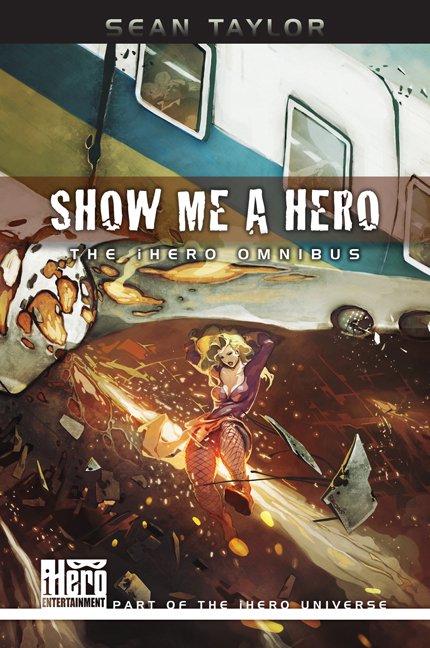
The main difference is that I get to walk on the dark side when I write the villains, so their actions can be vile or sick or antisocial.
Perhaps one of my favorite villains that I've written is the husband of the heroine Ambient Sky (in the story "The Other, As Just As Fair" in Show Me a Hero). He isn't really evil, but his drive to protect his children becomes the very thing that puts them at risk (and ruins her life) when he outs his own wife as a superhero in order to win custody in their divorce settlement.
Saturday, April 14, 2012
The Writer Will Take Your Questions Now (#140) -- Memorable Villains
Think about your favorite villains from the written word. What makes them memorable?

Why else? Because he wanted to bring some ancient evil to earth via Aztec rituals.
Primarily though it was the way he was written. He wasn't just pyscho. He was a psycho who really believed in what he was doing. Not for any altruistic motives, like Magneto, but out of a blind devotion to a religious order, albeit a devout one. He was one of the best kinds of villains, the one who is doing the right thing -- in his own mind anyway.
Friday, January 27, 2012
The Watson Report: How Bad Guys Die
How Bad Guys Die
by I.A. Watson
by I.A. Watson

I’ve been giving some thought to how master villains tend to meet their ends. Some common ways much beloved of adventure fiction are:
Desperate Last Struggle: The hero and villain slug it out one last time, for all the marbles. This often takes place in a significant location, such as the lip of a volcano or on a high girder over the city, or while a countdown clock ticks away to destruction. The hero seems outmatched – the villain cheats – but there’s one final heroic push…
A Duel With His Opposite: “We’re not so different, you and I.” Hero and villain finally duel to discover who is superior with the weapon/technique/skill of their choice in an honourable clash to the death. Turns out our hero was just that tiny bit better after all.
One Slim Chance: The villain is getting away or is about to launch his doomsday device or something else. “Nothing can stop me now!” Our hero has one long shot and he takes it. Mid-gloat, the villain’s brains are splattered across the control console.
Delayed Retribution: The villain begs for his life. The hero spares him. Then, as soon as the hero turns away, the villain pulls his hidden dagger. But the hero is ready for him, swings round, and shoots him dead. Hey, the villain had a last chance and he wasted it!
No Escape From Justice: Our hero is free. He lurks in the shadows, implacable, unstoppable. The villain loses his nerve, flees… but the henchmen he left behind to cover his trail are quickly taken down and terrible vengeance looms out of the darkness to bring the villain screaming to his final end.
Desperate Last Struggle: The hero and villain slug it out one last time, for all the marbles. This often takes place in a significant location, such as the lip of a volcano or on a high girder over the city, or while a countdown clock ticks away to destruction. The hero seems outmatched – the villain cheats – but there’s one final heroic push…
A Duel With His Opposite: “We’re not so different, you and I.” Hero and villain finally duel to discover who is superior with the weapon/technique/skill of their choice in an honourable clash to the death. Turns out our hero was just that tiny bit better after all.
One Slim Chance: The villain is getting away or is about to launch his doomsday device or something else. “Nothing can stop me now!” Our hero has one long shot and he takes it. Mid-gloat, the villain’s brains are splattered across the control console.
Delayed Retribution: The villain begs for his life. The hero spares him. Then, as soon as the hero turns away, the villain pulls his hidden dagger. But the hero is ready for him, swings round, and shoots him dead. Hey, the villain had a last chance and he wasted it!
No Escape From Justice: Our hero is free. He lurks in the shadows, implacable, unstoppable. The villain loses his nerve, flees… but the henchmen he left behind to cover his trail are quickly taken down and terrible vengeance looms out of the darkness to bring the villain screaming to his final end.
Defeat at a Terrible Cost: To destroy the villain, the hero or someone close to him must also sacrifice his or her life! Common symptoms are lunging for the aircraft controls to force a power-dive, shooting into the reactor core, and grabbing the baddie then leaping into the volcano.
Victim’s Revenge: That girl he done wrong, that kid who’s father he murdered, that dog whose puppies he slaughtered get their final, unexpected moment of triumph. The villain faces karmic reprisal. Natural justice is restored.
Villain’s Own Hubris: He was warned not to open that casket, or to try and use that artefact, or to try and usurp the power of the gods. He didn’t listen. Now nature/terrible monster/the gods have turned on him to accomplish his doom.
The Minion Snaps: Faced with one abuse too many, the villain’s henchman finally turns on his master. The girl was the only one who was ever kind to him! And there the minion stands, right next to the lever that released the mind-squids!
Killed By Irony: The villain’s greatest weapon is turned against him. With the all-powerful death-cannon strapped to his arms he can’t reach the cancel destruct button in time. That useless peasant he killed in chapter three was the only one who knows where the antidote is hidden. It’s a bad idea to discharge your taser disruptor into an enemy when you’re both standing in the sewage. Common variants of this include The Briar Patch Trick - Goaded into some action which seems clever or evil, the villain in fact accomplishes his own doom, and The Past Catches Up – Some early part of the villain’s history, usually linked to his origin, comes back to haunt him and bring about downfall.
The Price of Failure: The villain allowed the hero to get away. His plans are ruined. Now his dark master/demon he sold his soul to/angry subordinates turn on the villain and punish him for his defeat.
Villain’s Own Hubris: He was warned not to open that casket, or to try and use that artefact, or to try and usurp the power of the gods. He didn’t listen. Now nature/terrible monster/the gods have turned on him to accomplish his doom.
The Minion Snaps: Faced with one abuse too many, the villain’s henchman finally turns on his master. The girl was the only one who was ever kind to him! And there the minion stands, right next to the lever that released the mind-squids!
Killed By Irony: The villain’s greatest weapon is turned against him. With the all-powerful death-cannon strapped to his arms he can’t reach the cancel destruct button in time. That useless peasant he killed in chapter three was the only one who knows where the antidote is hidden. It’s a bad idea to discharge your taser disruptor into an enemy when you’re both standing in the sewage. Common variants of this include The Briar Patch Trick - Goaded into some action which seems clever or evil, the villain in fact accomplishes his own doom, and The Past Catches Up – Some early part of the villain’s history, usually linked to his origin, comes back to haunt him and bring about downfall.
The Price of Failure: The villain allowed the hero to get away. His plans are ruined. Now his dark master/demon he sold his soul to/angry subordinates turn on the villain and punish him for his defeat.
An Unexpected Moment of Heroism: Hero and villain must team up to defeat an even greater menace. The villain makes a final noble act of atonement for his wickedness.
The Villain’s Death Is Part of the Plan: Now nobody can input the lost launch codes and stop the end of the world. The villain dies to accomplish his goals and has one final laugh at his heroic enemy. A variant of this is Mutual Assured Destruction – the villain triggers the explosion that destroys him and his adversary together.
Definitely Dead Till Next Time: And a special mention goes to all those “assumed” deaths where the body vanishes. Falls over cliffs or huge base-destroying explosions are best for this, but there are plenty of elaborate scenarios where the villain seems to be gone for good but isn’t. They come in two flavours: 1. The villain planned it all along, and 2. The villain wouldn’t have survived except for a lucky coincidence; in the second version he may also return horribly scarred.
Points are awarded for anyone who can suggest another category and for anyone who can cite a movie or book where each of these endings applies.
Definitely Dead Till Next Time: And a special mention goes to all those “assumed” deaths where the body vanishes. Falls over cliffs or huge base-destroying explosions are best for this, but there are plenty of elaborate scenarios where the villain seems to be gone for good but isn’t. They come in two flavours: 1. The villain planned it all along, and 2. The villain wouldn’t have survived except for a lucky coincidence; in the second version he may also return horribly scarred.
Points are awarded for anyone who can suggest another category and for anyone who can cite a movie or book where each of these endings applies.
Thursday, January 19, 2012
Running on Feet of Clay -- How Bad Can a Hero Be and Still Be a Good Guy?
What makes a hero heroic? Where is the dividing line not just between the heroic and the ordinary, but between the hero and the villain? And how gray is the area between them where lurk the anti-heroes that fill modern action fiction?
There are the ideals of the (capital H) Hero, as seen in these quotes:
But I daresay that the more perfectly noble a hero is, the more true this next quote is:
Since the beginning of pulps and comics, heroes have skirted the line between good an evil actions. The Spider can be as psychotic as those he destroys. Early Batman had no qualms of shooting a villain. And so it goes.
Modern, contemporary fiction is filled with heroes that come in varying shades of gray, from almost black to bordering on silver-white. But with only a few exceptions, they aren't the cookie cutter good guys your grandmother might have taught you to look for in a hero.
To dish the dirt on fleshing the world of heroes and anti-heroes, we once again turned to some of today's working writers in the pulp, genre, and comics fields.
How important is it that your hero have "feet of clay"?
Ed Erdelac: Very, to me. A hero is only as interesting as his faults. If a guy can save the world and not get dinged up along the way, where's the fun in that and who can relate to it? The kind of heroism I appreciate and can relate to comes from overcoming not just exterior, physical difficulties, which most anybody can do with proper motivation and training, but the inner obstacles we throw in front of ourselves, the moral, mental and ethical dilemmas, the self-doubt and excuses. I think I write heroes that don't quite know what the hell they're doing all the time, that aren't always sure of their plans or in complete control. If you take the time to foster this kind of thing, you also get the added bonus of making your antagonists a little more threatening if they can learn and exploit those inherent weaknesses in the hero's character.
Devin Grayson: Any good character—whether heroic or otherwise—needs some kind of balance. Otherwise you have a character people can’t relate to (which in turn can become a kind of de facto flaw, but only if the writer is conscious of it). Drama is fueled by conflict; the more jagged edges your character has, the more friction you can generate. One of the challenges of a character like Superman is that his physical flaw is so specific—proximity to this one kind of rock that comes from this one obliterated planet and is therefore supposedly in short supply here—that writers end up going through absurd, distracting machinations to bring him face to face with it. Fortunately he is more complex emotionally, so there are other kinds of stories that can be told. What kind of stories can you tell about a hero without any kind of Achilles’ heel? There’s nothing for a reader to invest in if there’s no possibility of the hero facing harm or defeat.
Adam Garcia: I don't like writing the "perfect" hero who is good just to be good. That's lazy writing and poor characterization. Flaws make a character three-dimensional, human and therefore relatable.
Troy Hickman: I'm a silver-agey guy, so that tends to color (no pun intended) my views. I want my characters to be as human as possible, and in stuff like Common Grounds and Twilight Guardian, the heroes have a TON of faults. However, that doesn't mean they have to stop acting like heroes. I'm sure Lenny Skutnik had all sorts of personality quirks and flaws, but it didn't stop him from pulling folks out of the freezing Potomac. And it didn't make Adam Strange any more "human" to suggest he'd cheat on his pregnant wife; it just made him a jerk.
Lee Houston, Jr.: The main characters/heroes cannot be 100 percent perfect, otherwise, where's the adventure? Yet if they are too imperfect, how do they ever accomplish anything, let alone why bother to read about them? The best characters are the ones who do have a flaw (or two) yet are still able to do whatever is right/expected of them either because or despite the drawback(s) in their lives.
Sean Dulaney: While some faults lend a human touch to a character, "feet of clay" might be going too far and can start your character -- hero or anti-hero -- down the road to being a tragic figure rather than a protagonist. You want them to have something to overcome, but if you give them a fault/affliction/addiction that is too much, that runs the risk of being more the story than your intended plot, or can ring false if the protagonist overcomes it too easily.
Shane Berryhill: When writing fiction of any form, I think it's best to approach the persons in your stories as 'characters' first rather than functions (heroes, antiheroes, et cetera). In doing so, you'll automatically ground them in truth, giving them both strengths and hang-ups that make them real and therefore interesting. That said, there are many exceptions that work: Star Wars. Lord of the Rings. Sherlock Holmes. I could go on. But note how even these well known tales bring the reader into the story and into the lives of their 'heroes' through the 'window' of more flawed--and therefore more human--characters. With Star Wars, it's with CP30 and R2D2 that we encounter Luke and Yoda. In Lord of the Rings, it's through Frodo and Sam that we relate to Gandalf and Aragorn. And the unapproachable Sherlock Holmes is viewed through the eyes of his more down-to-Earth companion, Dr. Watson. These 'gods of myth' are best understood when filtered through the veil of humanity.
Shane Moore: When I write my heroes (and villains) it is important to me to create a real person. If I look at heroes in today's world, they have weaknesses and some wrestle with moral dilemmas that they may often lose to. In the Abyss Walker world, what makes a hero extraordinary is not their immunity to the moral and ethical downfalls--but the successes despite them.
Jim Ritchey III: Not very...I mean, how could he or she walk? Can this hypothetical character fly? Still -- GROSS! But seriously, if you’re trying to write superhero comics, and are not a spiritual descendant of Will Eisner, Stan Lee, Denny O’Neil, Steve Gerber and/or Alan Moore and their like -- at least attempting to make superheroes behave like human beings -- you’re betraying the best of what superheroes can be. The best, most identifiable hero has to fight all obstacles -- including his/her/its own fear and doubt. People without problems don’t have souls. I’m not talking about emoting all over the place, or ‘cookie-cutter,’ obligatory pining unrequitedness, like was the bane of Marvel for 2 decades after Stan quit writing comics. Just -- put some of YOU into the protagonist, and have it make sense in driving the plot -- which should be a serious challenge to the protagonist, either internally or externally.
Sarah Beach: I like writing characters of all sorts, so all variables are possibly “in play” when I’m creating them. And then too, I know where the phrase “feet of clay” comes from: Nebuchadnezzer’s dream statue of head of gold, chest & arms of silver, belly & thighs of brass, legs of iron, and feet of iron & clay. The last is important because when the feet were smashed with a rock, the whole statue came crashing down. So … no, I don’t think it is necessarily important that my hero have such flaws that he or she is utterly broken because of them.
I do think such a character can be very interesting, but I am most likely to write a character with “feet of clay” only if I want a tragic character or story. Otherwise, I will probably dial down the intensity of any flaws I give my hero.
Chuck Miller: All of my heroes are deeply flawed, though not necessarily fatally so. I'd say it's very important to me, because I just can't write paragons. I can't really identify with someone who is perfectly good all the time. But I can identify with someone who is good in spite of himself, or who isn't above using questionable means to achieve a good end. The Black Centipede is cast in this mold. He is never unsure of himself, and is cheerfully ruthless and violent in the pursuit of his strange vocation. I've given him a compelling reason to do what he does; he is pursuing knowledge of the "Dark Power" he believes is constantly at work under the surface of the everyday world. He became aware of it through his connections with H. P. Lovecraft and Lizzie Borden, both of whom play roles in his origin story. He doesn't see himself as either good or evil, and has chosen to fight crime as a way of challenging and testing the Dark Power. He has none of the standard heroic motivations. All of this is true at the beginning of his career, anyhow, though he will evolve morally as the series progresses. He's barely in his 20s when he starts out, and he was always a peculiar child. In many ways, he never "grew up" in a conventional sense. He is still teachable, but just barely. In the second book, he forms a sort of partnership with Amelia Earhart, who acts as something of a moral compass, though it isn't an easy task. The relationship changes both of them. Generally speaking, I don't like people who are absolutely morally certain that they are doing the right thing. Most of my characters have no such certainty. Which doesn't stop them from doing it anyhow.
John Morgan Neal: It depends on the character and story/series. I certainly do not believe every hero should have feet of clay or the same level of it. Certain flaws or tics or character aspects that may make then identifiable or relateable sure. And in some cases a truly deeply flawed feet of clay type. And in some cases a Lone Ranger type who is as sterling as his silver bullets.
In the battle of hero vs. anti-hero, what's your preference to write? Why?
Ed Erdelac: Though it may seem contradictory to my previous answer, I prefer an honest to God hero to an anti-hero. I think that's because I grew up during the antihero popularity boom in the 80's. The Punisher, Rambo, Wolverine, the 80's Kyle Baker incarnation of The Shadow, the guy who would do anything to smash the bad guys as hard as the innocents were getting smashed. I ate those up as a kid, but I think I've outgrown that mentality a little. Nowadays I admire a hero with restraint, the guy who won't necessarily cross that line because even though it might not make practical sense to the outside observer, he knows in his heart what the difference is. There's so much utter badness in the world, so much mud splashed on the knight's armor, it's kind of interesting for me to see a guy who strives to keep clean. This'll sound really corny and maybe cliched, but I think it also has to do with my dad. My dad really was the one (or at least one) good cop in the bad town. There were cops that used to come to my house for coffee when I was a kid that one day I didn't see anymore because of stuff it turned out they were into. My dad never really made headway in the department, but he never crossed that line either. I didn't learn or understand about that till maybe eight or ten years ago, but I guess it informed my opinions. My writing strays a lot into antihero territory for reality's sake, but I relish writing a `pure' hero.
Devin Grayson: I prefer anti-heroes, because they make more sense to me. Though our world is full of altruistic acts, the people who perform them do so for personal, sometimes selfish or even dark, reasons. To be motivated to do something great because you’ve gone through something awful is a much more interesting premise to me than to be good because you just…are. The former is a story. The latter is a characteristic.
Adam Garcia: Anti-hero; they're far more believable.
Troy Hickman: I prefer heroes. "The anti-hero is postmodern man's way of saying 'I give up.'"
Lee Houston, Jr.: Assuming by "anti-hero" you mean someone who never sets out to do good yet still accomplishes it at times anyway, while I have yet to actually write about any anti-heroes, I really don't have a preference.
Sean Dulaney: I lean more towards wanting to do more with a "hero" character, possibly because we've seen so many attempts to do the whole "bad-ass anti-hero" thing going back to the late 60s. I like the challenge of having the guy (or gal) who is out there trying to do the right thing actually be interesting rather than being the "bland do-gooder."
Shane Berryhill: Again, I've alluded to this above, and will touch on it some more below, but the best characters are grounded in reality. And in real life, people don't fit into perfect, neat little categories such as 'hero' and 'anti-hero.' Take the main character of my novel, CHANCE FORTUNE AND THE OUTLAWS. Chance falls somewhere in the middle of the spectrum -- the 'conflicted hero' area. While he's no gritty Wolverine, neither is he an 'always confident,' 'always right' Superman. In fact, in my second book, CHANCE FORTUNE IN THE SHADOWZONE, his actions, while taken with the best intentions, indirectly cause the death of his best friend. It's this gray area that mirrors real life--where right meets wrong and hero meets 'anti' -- that the most interesting characterization and storytelling take place.
Shane Moore: I prefer the anti-hero. As someone who recognizes my own downfalls and villainous inner feelings, I like to feel as if I can still be redeemed despite them.
Jim Ritchey III: Heroes, although I’m about to try to write a sympathetic, revenge-bent psychopath. Why? Because Alfred Bester already created Gully Foyle. I dunno, I try to make my antagonists as identifiable as possible, so most of the time they’re almost antiheroes. It’s good to have any character have reasons for behaving the way they do, or they’re cardboard cutouts.
Sarah Beach: Oh, definitely I prefer writing heroes. I want to write about characters I’d like to spend time with, and I find virtue more appealing than villainy. Some people complain that writing “good” characters is boring, but I actually enjoy the challenge. My take on it is that when a character chooses a more … well, virtuous route, his options for action become more limited. His emotions may be urging certain actions, but his choice to be “good” is likely to be in conflict with those impulses. I like getting into that.
That said, I have chosen to write anti-heroes on occasion. I once decided I wanted to write a long narrative poem about Don Juan, based on the way the story is told in Mozart’s opera Don Giovanni. And I had to decide just how far I wanted to go with the character. Since, in the story, Don Juan is “so far gone” that he doesn’t even recognize the necessity of repentance, I wanted to write a completely amoral character. Which I did. And on another front, in a fantasy novel I’m writing, I have a character who has been utterly seduced and corrupted, except he hasn’t quite realized that yet.
So, I don’t mind writing anti-heroes if I have a point to it. But they’re not my first preference and I don’t write them very frequently.
Chuck Miller: As I say, I don't know what I'd do with a character who was pure hero. I much prefer anti-heroes and villains. They're more interesting psychologically and dramatically. I use a lot of historical figures in my stories, and I have yet to find one of them who holds up as a complete paragon of virtue. Some are worse than others. I try to identify the good and the bad and exploit both. William Randolph Hearst is my favorite so far.
John Morgan Neal: I honestly have no preference. I have as much fun writing the noble heroic Silver Age type hero to the more troubled and downtrodden Marvel type hero to the Spaghetti Western style "hero" who you can barely tell from the baddies. Just like I have great fun writing my villains. In Aym Geronimo I have my noble hero and her varied personalities on her team, a main antagonist who is a true villain's villain and a roguish 'anti-hero.' I know how to maximize my fun.
How bad can a good guy be and still be a good guy?
Ed Erdelac: The answer is that it directly correlates to how bad the bad guys are. If the villain of the piece is particularly heinous and cruel, you can get away with the good guy getting his hands a little dirty. The darker the adversary, the more relish the audience gets from his downfall and even suffering a bit. I'd personally draw the line at outright sadism and torture. Dirty Harry can step on a guy's bloody leg out of a need for expediency, but I don't think he wouldn't have gotten his sequels if he'd been smiling while he did it. Then again, you've got Mike Hammer treating his lover to a slow death when it turns out she's the one he's been looking for, or Marv in Sin City, who downright relishes torturing a serial killer to death. But on the other other hand that guy was mounting women's heads on a wall. See what I mean?
 Devin Grayson: Motivation and intent counts for a lot, but I think this is an issue we struggle with outside of fiction as much as within it. Does an artist’s or politician’s good work excuse bad behavior? Can you admire someone’s professional legacy even if the dregs of their personal life make you cringe? Do the ends always justify the means? What precisely does intention count for? I don’t know the answers, but I think superhero stories are a terrific place to explore the questions.
Adam Garcia: Very, it's all a matter of perspective.
Troy Hickman: It depends how you define "bad." Some people would define "bad" as, say, killing a villain. Some would define it as breaking the law. Personally, I try to depict my heroes as people who stick to their principles, and TRY to do the right thing. They're the people I'd like to be, and I know that even though I have myriad faults, I can still be a "good guy" despite them.
Lee Houston, Jr.: There are more shades of gray in our moral composition today than there used to be. Lying to a suspect has grown acceptable. Authorities are shown doing it all the time on television and presumably do so in real life too as the situation warrants. What is wrong to one person may be acceptable to another. Yet there are some things we can still all agree on. The ultimate line is still murder. If the villain dies during a shootout, or is killed just as they are about to take someone else's life, that's one thing. However, if the hero intentionally kills the villain outright in cold blood without provocation, that's another. But between the two points?
Sean Dulaney: A lot depends on genre and situations. Harry Callahan has a massive body count, but how many actual deaths in the Dirty Harry films were cases of him shooting first just for the hell of it. John McClain wound up killing a few terrorists, but they had his wife as a hostage and were trying to kill him. Luke Skywalker killed every member of the Empire on board the Death Star. Callahan is a cop, McClain is as well, but feels he has to act despite being out of his jurisdiction. Skywalker is part of a rebellion against a fascist empire that blew up a planet. The post-Crisis Superman killed (or his actions resulted in the deaths of) Phantom Zone criminals from a pocket universe when he was left with no other option. The fact that, even if it's part of the job, there can be remorse or an acceptance of punishment (Callahan's suspensions) for the "bad" actions, is key to the good guy staying a good guy.
Shane Berryhill: Good and bad can be very relative. Classically speaking, a good guy, even a bad good guy, truly becomes a bad one when he begins buying into a 'might makes right/ends justify the means' philosophy, and starts enforcing his will on those who disagree with him, fooling himself that he's doing it for the greater good when in fact he's become the very face of evil (Darth Vader, anyone?). Bad guys always believe they ARE in fact the good guys.
Shane Moore: That is entirely up to the demographic you are writing for.
Jim Ritchey III: Pretty bad. The desire for or apathy towards redemption is an excellent plot device, and REAL LIFE is confusing. We can accidentally do bad things for the right reasons -- have perfect, shiny moral compasses and have horrible things happen because of our action or inaction. Violence is almost never appropriate in human behavior, but it’s our ‘bread and butter,’ and a nonviolent adventure story is usually mighty boring. So it helps to throw a little of the ‘Rube Goldberg’ nature of cause and effect into the mix, and imagine how you might have turned out morally bankrupt if you were a child soldier or raised abusively in some other way. If you can’t identify, at least have the character consistent. Plenty of ugly in the world to draw from. This is all just me talking to me -- MY self-imposed rules, so whatever floats yer proverbial boat, and gets you paid.
Sarah Beach: That’s an interesting question, though I don’t usually approach it that way. As I said since I like writing Good Guys, I don’t usually start with the deeply flawed dubious hero (like Sam Spade). Instead, I look to see how far gone any of the Bad Guys might be. Is there one, who for whatever reason, might choose to redeem himself. Some unexpected, last minute decision. The story possibilities, the drama of such a moment could be very exciting.
But to answer the question you actually asked, I don’t know. I think a lot of it has to depend on what the character’s heart is really set upon. We all know of real people who have committed very terrible acts because they really believed in some “higher cause.” I think the last, most absolute threshold of “good” versus “evil” is the line between the ability to care for someone, anyone, other than the self and the state of caring only for oneself. The Good Guy will be in the first category, and anyone who chooses the second ceases to have the possibility of being a Good Guy.
Chuck Miller: It depends, I think, on what he's after, and where he draws the line-- if he does. A corollary to that question would be "How good can a bad guy be and still be a bad guy?" Sometimes my villains do very admirable things with good motivations, though they remain criminals, thieves and murderers.
John Morgan Neal: Well he can't be worse than the villain is the main thing. And as long as the reader/viewer can believe in/live vicarously through/want the hero to win. Deep down most folks are moral and ethical people and know what the important rules of life are. So do we as people and writers. If we have our heroes cross that line too far or too often then...well they aren't heroes any longer.
==================================================================
Look for these creators on the links to the right to check out more of their work:
 |
| Go ahead. Make his day. |
The legacy of heroes is the memory of a great name and the inheritance of a great example.
-- Benjamin Disraeli
Heroism is an obedience to a secret impulse of an individual's character.
-- Ralph Waldo Emerson
A hero is someone who understands the responsibility that comes with his freedom.
-- Bob Dylan
But I daresay that the more perfectly noble a hero is, the more true this next quote is:
Being a hero is about the shortest-lived profession on earth.
-- Will Rogers
Since the beginning of pulps and comics, heroes have skirted the line between good an evil actions. The Spider can be as psychotic as those he destroys. Early Batman had no qualms of shooting a villain. And so it goes.
Modern, contemporary fiction is filled with heroes that come in varying shades of gray, from almost black to bordering on silver-white. But with only a few exceptions, they aren't the cookie cutter good guys your grandmother might have taught you to look for in a hero.
To dish the dirt on fleshing the world of heroes and anti-heroes, we once again turned to some of today's working writers in the pulp, genre, and comics fields.
How important is it that your hero have "feet of clay"?
 |
| What evil lurks in the silk-sacks of men? Only the Spider knows! |
Ed Erdelac: Very, to me. A hero is only as interesting as his faults. If a guy can save the world and not get dinged up along the way, where's the fun in that and who can relate to it? The kind of heroism I appreciate and can relate to comes from overcoming not just exterior, physical difficulties, which most anybody can do with proper motivation and training, but the inner obstacles we throw in front of ourselves, the moral, mental and ethical dilemmas, the self-doubt and excuses. I think I write heroes that don't quite know what the hell they're doing all the time, that aren't always sure of their plans or in complete control. If you take the time to foster this kind of thing, you also get the added bonus of making your antagonists a little more threatening if they can learn and exploit those inherent weaknesses in the hero's character.
Devin Grayson: Any good character—whether heroic or otherwise—needs some kind of balance. Otherwise you have a character people can’t relate to (which in turn can become a kind of de facto flaw, but only if the writer is conscious of it). Drama is fueled by conflict; the more jagged edges your character has, the more friction you can generate. One of the challenges of a character like Superman is that his physical flaw is so specific—proximity to this one kind of rock that comes from this one obliterated planet and is therefore supposedly in short supply here—that writers end up going through absurd, distracting machinations to bring him face to face with it. Fortunately he is more complex emotionally, so there are other kinds of stories that can be told. What kind of stories can you tell about a hero without any kind of Achilles’ heel? There’s nothing for a reader to invest in if there’s no possibility of the hero facing harm or defeat.
Adam Garcia: I don't like writing the "perfect" hero who is good just to be good. That's lazy writing and poor characterization. Flaws make a character three-dimensional, human and therefore relatable.
Troy Hickman: I'm a silver-agey guy, so that tends to color (no pun intended) my views. I want my characters to be as human as possible, and in stuff like Common Grounds and Twilight Guardian, the heroes have a TON of faults. However, that doesn't mean they have to stop acting like heroes. I'm sure Lenny Skutnik had all sorts of personality quirks and flaws, but it didn't stop him from pulling folks out of the freezing Potomac. And it didn't make Adam Strange any more "human" to suggest he'd cheat on his pregnant wife; it just made him a jerk.
 |
| Yes. Even in the '90s. |
Sean Dulaney: While some faults lend a human touch to a character, "feet of clay" might be going too far and can start your character -- hero or anti-hero -- down the road to being a tragic figure rather than a protagonist. You want them to have something to overcome, but if you give them a fault/affliction/addiction that is too much, that runs the risk of being more the story than your intended plot, or can ring false if the protagonist overcomes it too easily.
Shane Berryhill: When writing fiction of any form, I think it's best to approach the persons in your stories as 'characters' first rather than functions (heroes, antiheroes, et cetera). In doing so, you'll automatically ground them in truth, giving them both strengths and hang-ups that make them real and therefore interesting. That said, there are many exceptions that work: Star Wars. Lord of the Rings. Sherlock Holmes. I could go on. But note how even these well known tales bring the reader into the story and into the lives of their 'heroes' through the 'window' of more flawed--and therefore more human--characters. With Star Wars, it's with CP30 and R2D2 that we encounter Luke and Yoda. In Lord of the Rings, it's through Frodo and Sam that we relate to Gandalf and Aragorn. And the unapproachable Sherlock Holmes is viewed through the eyes of his more down-to-Earth companion, Dr. Watson. These 'gods of myth' are best understood when filtered through the veil of humanity.
Shane Moore: When I write my heroes (and villains) it is important to me to create a real person. If I look at heroes in today's world, they have weaknesses and some wrestle with moral dilemmas that they may often lose to. In the Abyss Walker world, what makes a hero extraordinary is not their immunity to the moral and ethical downfalls--but the successes despite them.
Jim Ritchey III: Not very...I mean, how could he or she walk? Can this hypothetical character fly? Still -- GROSS! But seriously, if you’re trying to write superhero comics, and are not a spiritual descendant of Will Eisner, Stan Lee, Denny O’Neil, Steve Gerber and/or Alan Moore and their like -- at least attempting to make superheroes behave like human beings -- you’re betraying the best of what superheroes can be. The best, most identifiable hero has to fight all obstacles -- including his/her/its own fear and doubt. People without problems don’t have souls. I’m not talking about emoting all over the place, or ‘cookie-cutter,’ obligatory pining unrequitedness, like was the bane of Marvel for 2 decades after Stan quit writing comics. Just -- put some of YOU into the protagonist, and have it make sense in driving the plot -- which should be a serious challenge to the protagonist, either internally or externally.
Sarah Beach: I like writing characters of all sorts, so all variables are possibly “in play” when I’m creating them. And then too, I know where the phrase “feet of clay” comes from: Nebuchadnezzer’s dream statue of head of gold, chest & arms of silver, belly & thighs of brass, legs of iron, and feet of iron & clay. The last is important because when the feet were smashed with a rock, the whole statue came crashing down. So … no, I don’t think it is necessarily important that my hero have such flaws that he or she is utterly broken because of them.
I do think such a character can be very interesting, but I am most likely to write a character with “feet of clay” only if I want a tragic character or story. Otherwise, I will probably dial down the intensity of any flaws I give my hero.
Chuck Miller: All of my heroes are deeply flawed, though not necessarily fatally so. I'd say it's very important to me, because I just can't write paragons. I can't really identify with someone who is perfectly good all the time. But I can identify with someone who is good in spite of himself, or who isn't above using questionable means to achieve a good end. The Black Centipede is cast in this mold. He is never unsure of himself, and is cheerfully ruthless and violent in the pursuit of his strange vocation. I've given him a compelling reason to do what he does; he is pursuing knowledge of the "Dark Power" he believes is constantly at work under the surface of the everyday world. He became aware of it through his connections with H. P. Lovecraft and Lizzie Borden, both of whom play roles in his origin story. He doesn't see himself as either good or evil, and has chosen to fight crime as a way of challenging and testing the Dark Power. He has none of the standard heroic motivations. All of this is true at the beginning of his career, anyhow, though he will evolve morally as the series progresses. He's barely in his 20s when he starts out, and he was always a peculiar child. In many ways, he never "grew up" in a conventional sense. He is still teachable, but just barely. In the second book, he forms a sort of partnership with Amelia Earhart, who acts as something of a moral compass, though it isn't an easy task. The relationship changes both of them. Generally speaking, I don't like people who are absolutely morally certain that they are doing the right thing. Most of my characters have no such certainty. Which doesn't stop them from doing it anyhow.
John Morgan Neal: It depends on the character and story/series. I certainly do not believe every hero should have feet of clay or the same level of it. Certain flaws or tics or character aspects that may make then identifiable or relateable sure. And in some cases a truly deeply flawed feet of clay type. And in some cases a Lone Ranger type who is as sterling as his silver bullets.
In the battle of hero vs. anti-hero, what's your preference to write? Why?
Ed Erdelac: Though it may seem contradictory to my previous answer, I prefer an honest to God hero to an anti-hero. I think that's because I grew up during the antihero popularity boom in the 80's. The Punisher, Rambo, Wolverine, the 80's Kyle Baker incarnation of The Shadow, the guy who would do anything to smash the bad guys as hard as the innocents were getting smashed. I ate those up as a kid, but I think I've outgrown that mentality a little. Nowadays I admire a hero with restraint, the guy who won't necessarily cross that line because even though it might not make practical sense to the outside observer, he knows in his heart what the difference is. There's so much utter badness in the world, so much mud splashed on the knight's armor, it's kind of interesting for me to see a guy who strives to keep clean. This'll sound really corny and maybe cliched, but I think it also has to do with my dad. My dad really was the one (or at least one) good cop in the bad town. There were cops that used to come to my house for coffee when I was a kid that one day I didn't see anymore because of stuff it turned out they were into. My dad never really made headway in the department, but he never crossed that line either. I didn't learn or understand about that till maybe eight or ten years ago, but I guess it informed my opinions. My writing strays a lot into antihero territory for reality's sake, but I relish writing a `pure' hero.
 |
| Is that the face of a guy who shot first or what? |
Adam Garcia: Anti-hero; they're far more believable.
Troy Hickman: I prefer heroes. "The anti-hero is postmodern man's way of saying 'I give up.'"
Lee Houston, Jr.: Assuming by "anti-hero" you mean someone who never sets out to do good yet still accomplishes it at times anyway, while I have yet to actually write about any anti-heroes, I really don't have a preference.
Sean Dulaney: I lean more towards wanting to do more with a "hero" character, possibly because we've seen so many attempts to do the whole "bad-ass anti-hero" thing going back to the late 60s. I like the challenge of having the guy (or gal) who is out there trying to do the right thing actually be interesting rather than being the "bland do-gooder."
Shane Berryhill: Again, I've alluded to this above, and will touch on it some more below, but the best characters are grounded in reality. And in real life, people don't fit into perfect, neat little categories such as 'hero' and 'anti-hero.' Take the main character of my novel, CHANCE FORTUNE AND THE OUTLAWS. Chance falls somewhere in the middle of the spectrum -- the 'conflicted hero' area. While he's no gritty Wolverine, neither is he an 'always confident,' 'always right' Superman. In fact, in my second book, CHANCE FORTUNE IN THE SHADOWZONE, his actions, while taken with the best intentions, indirectly cause the death of his best friend. It's this gray area that mirrors real life--where right meets wrong and hero meets 'anti' -- that the most interesting characterization and storytelling take place.
Shane Moore: I prefer the anti-hero. As someone who recognizes my own downfalls and villainous inner feelings, I like to feel as if I can still be redeemed despite them.
Jim Ritchey III: Heroes, although I’m about to try to write a sympathetic, revenge-bent psychopath. Why? Because Alfred Bester already created Gully Foyle. I dunno, I try to make my antagonists as identifiable as possible, so most of the time they’re almost antiheroes. It’s good to have any character have reasons for behaving the way they do, or they’re cardboard cutouts.
Sarah Beach: Oh, definitely I prefer writing heroes. I want to write about characters I’d like to spend time with, and I find virtue more appealing than villainy. Some people complain that writing “good” characters is boring, but I actually enjoy the challenge. My take on it is that when a character chooses a more … well, virtuous route, his options for action become more limited. His emotions may be urging certain actions, but his choice to be “good” is likely to be in conflict with those impulses. I like getting into that.
 |
| The original "heel." |
So, I don’t mind writing anti-heroes if I have a point to it. But they’re not my first preference and I don’t write them very frequently.
Chuck Miller: As I say, I don't know what I'd do with a character who was pure hero. I much prefer anti-heroes and villains. They're more interesting psychologically and dramatically. I use a lot of historical figures in my stories, and I have yet to find one of them who holds up as a complete paragon of virtue. Some are worse than others. I try to identify the good and the bad and exploit both. William Randolph Hearst is my favorite so far.
John Morgan Neal: I honestly have no preference. I have as much fun writing the noble heroic Silver Age type hero to the more troubled and downtrodden Marvel type hero to the Spaghetti Western style "hero" who you can barely tell from the baddies. Just like I have great fun writing my villains. In Aym Geronimo I have my noble hero and her varied personalities on her team, a main antagonist who is a true villain's villain and a roguish 'anti-hero.' I know how to maximize my fun.
How bad can a good guy be and still be a good guy?
Ed Erdelac: The answer is that it directly correlates to how bad the bad guys are. If the villain of the piece is particularly heinous and cruel, you can get away with the good guy getting his hands a little dirty. The darker the adversary, the more relish the audience gets from his downfall and even suffering a bit. I'd personally draw the line at outright sadism and torture. Dirty Harry can step on a guy's bloody leg out of a need for expediency, but I don't think he wouldn't have gotten his sequels if he'd been smiling while he did it. Then again, you've got Mike Hammer treating his lover to a slow death when it turns out she's the one he's been looking for, or Marv in Sin City, who downright relishes torturing a serial killer to death. But on the other other hand that guy was mounting women's heads on a wall. See what I mean?

Adam Garcia: Very, it's all a matter of perspective.
Troy Hickman: It depends how you define "bad." Some people would define "bad" as, say, killing a villain. Some would define it as breaking the law. Personally, I try to depict my heroes as people who stick to their principles, and TRY to do the right thing. They're the people I'd like to be, and I know that even though I have myriad faults, I can still be a "good guy" despite them.
Lee Houston, Jr.: There are more shades of gray in our moral composition today than there used to be. Lying to a suspect has grown acceptable. Authorities are shown doing it all the time on television and presumably do so in real life too as the situation warrants. What is wrong to one person may be acceptable to another. Yet there are some things we can still all agree on. The ultimate line is still murder. If the villain dies during a shootout, or is killed just as they are about to take someone else's life, that's one thing. However, if the hero intentionally kills the villain outright in cold blood without provocation, that's another. But between the two points?
Sean Dulaney: A lot depends on genre and situations. Harry Callahan has a massive body count, but how many actual deaths in the Dirty Harry films were cases of him shooting first just for the hell of it. John McClain wound up killing a few terrorists, but they had his wife as a hostage and were trying to kill him. Luke Skywalker killed every member of the Empire on board the Death Star. Callahan is a cop, McClain is as well, but feels he has to act despite being out of his jurisdiction. Skywalker is part of a rebellion against a fascist empire that blew up a planet. The post-Crisis Superman killed (or his actions resulted in the deaths of) Phantom Zone criminals from a pocket universe when he was left with no other option. The fact that, even if it's part of the job, there can be remorse or an acceptance of punishment (Callahan's suspensions) for the "bad" actions, is key to the good guy staying a good guy.
Shane Berryhill: Good and bad can be very relative. Classically speaking, a good guy, even a bad good guy, truly becomes a bad one when he begins buying into a 'might makes right/ends justify the means' philosophy, and starts enforcing his will on those who disagree with him, fooling himself that he's doing it for the greater good when in fact he's become the very face of evil (Darth Vader, anyone?). Bad guys always believe they ARE in fact the good guys.
Shane Moore: That is entirely up to the demographic you are writing for.
 |
| So sensitive he kept a journal. |
Sarah Beach: That’s an interesting question, though I don’t usually approach it that way. As I said since I like writing Good Guys, I don’t usually start with the deeply flawed dubious hero (like Sam Spade). Instead, I look to see how far gone any of the Bad Guys might be. Is there one, who for whatever reason, might choose to redeem himself. Some unexpected, last minute decision. The story possibilities, the drama of such a moment could be very exciting.
But to answer the question you actually asked, I don’t know. I think a lot of it has to depend on what the character’s heart is really set upon. We all know of real people who have committed very terrible acts because they really believed in some “higher cause.” I think the last, most absolute threshold of “good” versus “evil” is the line between the ability to care for someone, anyone, other than the self and the state of caring only for oneself. The Good Guy will be in the first category, and anyone who chooses the second ceases to have the possibility of being a Good Guy.
Chuck Miller: It depends, I think, on what he's after, and where he draws the line-- if he does. A corollary to that question would be "How good can a bad guy be and still be a bad guy?" Sometimes my villains do very admirable things with good motivations, though they remain criminals, thieves and murderers.
John Morgan Neal: Well he can't be worse than the villain is the main thing. And as long as the reader/viewer can believe in/live vicarously through/want the hero to win. Deep down most folks are moral and ethical people and know what the important rules of life are. So do we as people and writers. If we have our heroes cross that line too far or too often then...well they aren't heroes any longer.
==================================================================
Look for these creators on the links to the right to check out more of their work:
Edward M. Erdelac is a member of the HWA. He writes the acclaimed weird western series Merkabah Rider for Damnation Books and has contributed to Lucasfilm's Star Wars.com among other endeavors.
Devin Grayson has written for DC Comics Catwoman, The Titans, Nightwing/Huntress for DC and Black Widow for Marvel Comics and has had her work profiled in USA Today, Working Woman, and Entertainment Weekly and also in alternative press such as The Village Voice, The Advocate, and Curve.
Adam Garcia is a pulp and comic book writer, and the mastermind behind the Green Lama Unbound novel.
Troy Hickman's work includes his Eisner-nominated series Common Grounds, and his Pilot Season-winning title, Twilight Guardian , both from Top Cow. He's also done City of Heroes, Witchblade, Turok, ACTOR Comics Presents, and a ton of other stuff.
Lee Houston Jr. is a freelance writer and editor. He is the author of Hugh Monn and is writing for the forthcoming The New Adventures of the Eagle Volume One from Pulp Obscura.
Sean Dulaney's work in comics includes various serials in the DIGITAL WEBBING PRESENTS anthology, 2007 Comic Book Challenge qualifier "The Misguided Travels of Earl O. Possum," 51 DELTA from Arcana and MISS VICKY & HER CUTIE COMMANDOS.
Shane Berryhill is the author of THE ADVENTURES OF CHANCE FORTUNE series from Tor Books.
Shane Moore is a former police detective turned novelist and the creator of the Abyss Walker fantasy series.
Jim Ritchey III is a comic book writer and artist and the creator of the Green Lama: Man of Strength comic book published by AC Comics, among others.
Sarah Beach writes screenplays, novels, short stories, comics, and nonfiction, and is the author of THE SCRIBBLER'S GUIDE TO THE LAND OF MYTH.
Chuck Miller is the author of "Creeping Dawn: The Rise of the Black Centipede."
J. Morgan Neal is co-creator (along with Todd Fox) of AYM GERONIMO AND THE POSTMODERN PIONEERS, and he was a founder, partner, editor and writer at Shooting Star Comics. He was the co-creator and co-writer of GONE TO TEXAS and REX SOLOMON along with Gregg Noon and the soon to debut THEM! along with artist and co-creator Rob Bavington.
.
Sunday, January 15, 2012
[Link] Anti-Heroes, Shadows and Villains
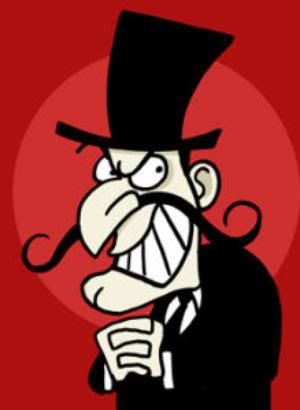
When it comes to creating villains for stories, we can flippantly go for the quick stereotype: the leering, mustache-twirling baddie, who spews out his evil laugh.
But if we really want our stories to have depth, we need to go deeper than a two-dimensional cartoon character.
Our first option for villains is an anti-hero. The pattern for an anti-hero is one that runs in the opposite direction of a hero. You can have a character like Colonel Nicholson in The Bridge On the River Kwai: he doesn’t see himself as a villain. ...
To continue the article: http://scribblersguidetomyth.com/blog/2012/01/03/anti-heroes-shadows-and-villains/
Sarah Beach is the author of The Scribbler’s Guide to the Land of Myth.
Thursday, January 5, 2012
A Walk on the Dark Side: Writing Believable Villains
 For Christmas this year I got a book called BULLIES, BASTARDS & BITCHES -- HOW TO WRITE THE BAD GUYS OF FICTION by Jessica Page Morrell. It's the first writing book I've read in years, and it was well worth the wait to find a good one. While reading it, it got me thinking (obviously, duh) about the villains and what makes them tick. What sets a good and memorable villain apart from a clearly lackluster one? What is that magic mojo that writers "do" when they write villains that makes them seem so real to the reader?
 So, once again, I turned to the writing community and asked. Only this time, I opened it up to other genre writers and not just those in pulp.
Here's what they had to say.
Think about your favorite villains from the written word. What makes them memorable?
 Nancy Hansen: Villains come in assorted types, from the simple minded bully or thug to the elite criminal mastermind. A really fascinating villain is complex, ruthless, privately merciless while publicly benevolent, always unpredictable, and highly intelligent, with a certain amount of charisma and great leadership skills. It helps to have a bottomless pit of flunkies and boot-lickers that do the dirtiest deeds without questioning why.
 Pete Hernandez III: Their personal drive and the rationale they employ to justify their actions.
Shane Moore: Anakin Skywalker from Revenge of the Sith by Matthew Woodring Stover. He is one of the most memorable characters for his fall -- and justifiable reasons for doing so. He is the epitome of chaotic justice that all of us, at one tome or another, have wished for the empowerment to perform.
Ally Bishop: I love gray hat villains. Ones you can hate because they have good reason for what they do, even if what they are doing is still wrong.
Jim Beard: My faves have all been eccentric. Villains without quirks just aren't interesting.
Van Allen Plexico: In terms of pulp, I would say they have to be colorful, say and do things that spark sharp reactions from the reader and from the other characters, and have a plan or scheme that is either big and bold and audacious or sneaky and dirty and insidious!
Ryan Stegman: My favorite villains have always been the henchmen. They have always had the real depth for an interesting character. Darth Vader in the first three Star Wars books as an example. While not in writing, in the movie, FLASH GORDON, put out in the 80s or 90s, Kladus was absolutely perfect. He was trying to do his job to perfection, without regard to what damage his actual job was doing.The pure evil character, Emperor Ming, The emperor in Star wars, were cardboard with no personality at all. Few ultra evil seldom ever make good characters. there is no reason for them to do anything other than to be evil.
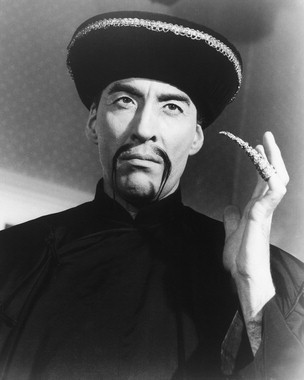
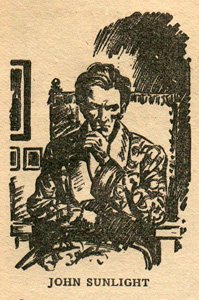
Bill Craig: The most memorable villians are truly EVIL, yes, in capital letters. Fu Manchu, Doctor No, and John Sunlight are all good examples of penultimate villians.
Bill Cunningham: Hate to stir the pot here, but I couldn't disagree more. The BEST villains, the most memorable and terrifyingly ruthless are those persons who don't think of themselves as villains, but as heroes. Fu Manchu thinks he's taking his rightful place, fulfilling his destiny. Dr. No likewise. John Sunlight's goal is to end humanity's problems. To do that he has to bring it under his control.
C. William Russette: Generally it is what have made of themselves often despite their circumstances. What have they done to get to the point that they are at when we meet them? Realism is certainly important. I don't need a big history but it has to bring something new to the table. Villains should be shaped by their past but not become cliche. No two people are alike and no two people are going to react to negative stimuli the same way either.
Lee Houston Jr.: The best villain (if that isn't an oxymoron), is the one who can go toe-to-toe with the hero, whether it be physical and/or mental prowess, and make the hero work for their victory. Otherwise, why bother reading the hero's adventures at all? Yet while this led to the development of what we know today as the rogues gallery, you do not want to overuse any one particular villain either. For example, despite the references within previous tales, how many times did Sherlock Holmes actually confront Professor Moriarty before that fateful incident at the Reichenbach Falls in "The Final Problem"? Only once, in "The Valley of Fear," which was published after, but which occurred before "The Final Problem."
 Bobby Nash: A good villain, much like a good hero, must start out by being a good character. I prefer my villains to be well-rounded, to have multiple layers to them just as the hero would. The most memorable villains are those with those added layers. Dr. Doom, for example, is a tyrant, a dictator of a small country with ambitions of taking over the world. However, to the people of his country he is a benevolent leader who takes care of them. He then becomes a surrogate father to young orphaned Kristoff, whose mother is killed by Doom's enemies. In more recent stories, Doom is like an uncle to Valeria Richards, the daughter of his greatest enemy. Those additional layers add depth to the character instead of him just being the guy who screams, "Richhharrrds!!!!" when he can't beat the FF.
There's an old saying that a hero is only as good as the villain he or she faces. I believe that. Recall the Star Trek movies. Why does Wrath of Khan stand out above the others in the series? I'd say it's because that movie has the best villain. That's probably why Goldfinger stands out for the Bond villains. He was a well-written villain so he stands out.
Pete Miller: I love when the villain is the hero of their world. That is to say that their world view is so out of line that they don't see the world as the hero does at all. They don't have to be batshit crazy, but they are often delusional and don't know it.
Derrick Ferguson: Fu Manchu. I just love him because of he was convinced he was so RIGHT. And to me that leads into my answer for your second question...
As a writer, how do you approach your villains differently than when writing your heroes?
Derrick Ferguson: I always write my villains the way I think Sax Rohmer wrote Fu Manchu. Great villains don't think they ARE the villains. In their minds, they are the heroes of their story. And I think that's the key to the most memorable villains.
 Bill Craig: I have to go to a very dark place inside to write my villains. Heroes are much easier to write.
Pete Hernandez III: I have to figure out where my villains went wrong in their early years. That point where they went left instead of right and traveled so far in that direction it's too late to turn back, in their minds anyway.
Shane Moore: I approach them exactly the same. ...have you read my work? :)
Van Allen Plexico: Villains are most concerned about what is best for them, personally. Heroes are most concerned about what is best for everyone, even if that means sacrificing themselves. So when thinking "villain," I just think "selfish and self-centered to the max!"
Pete Miller: I tend to not have a single villain. My villains seem to be a group that is in conflict with the hero. Like Reich secret police, or a corrupt group. And sometimes the villain is forced to see the world differently and changes into an ally. My heroes are like Indiana Jones or the Rocketeer -- forced into fighting where they shouldn't, don't want to, but must. Because they believe in the inherent goodness of men. They'll kill, ? but only when they have to.
Krystal Rollins: Villains seem to have more characteristics to them and we focus on the bad things about him/her.
 Ally Bishop: I approach my villains by figuring out how they make it work in their head: what did they have for breakfast before killing their victim or stealing the massive trove?
Jim Beard: Push them to be the most interesting character on the page. Your heroes will benefit from that, too.
Ryan Stegman: I tend to like my villains more than my heroes. I want my villains to be believable, and even if you don't agree with what they are doing, you understand why they are doing it. I do that BECAUSE they are usually made so cardboard.
C. William Russette: I don't know that I do approach writing my villains any different than my heroes. I need to know them to write them believably but the baddies just take a different path down the road of life. The biggest difference I think is that the villains needs to have a slightly bigger personality. They want more, they feel perhaps too much or too little, they are cranked up more than your average joe. That sets them apart.
Nancy Hansen: I really don't treat them much differently. Any character with staying power—heroic or villainous—has to be well fleshed out and have some clear motivations for what she or he is doing. A minor character is likely going to be less complicated so they don't get laid out as carefully.
Lee Houston Jr.: A villain can't just do bad things. That is so cliched. There has to be a viable reason, at least from that character's point of view, to at least explain why the villain does what they do. Note that I said explain, not justify. The reason may not make any sense to anyone else within the story or the rest of the universe, but there has to be more to any villain than just "I'm bad. Deal with it."
Bobby Nash: Certainly, there are times, especially in pulps and comics, where the villains are often portrayed as pure evil, mustache twirling, sociopaths, and there's nothing wrong with that type of character, but I prefer to add an additional layer to them. The best villains are those that rarely think of themselves as 'evil' or even 'the villain.' As with all the characters I write, the villain has to be a believable character first.
Bill Cunningham: ones where the writer creates the mindset within the character that justifies all of the excesses he commits. Villains that revel in their evil -- they're cheap and forgettable. Villains who rise to greatness, to the height of achievement, overcoming the odds placed in their path... They are the stuff of legend.
Do you find writing believable villains more simple or more difficult than writing believable heroes? Why?
 Van Allen Plexico: Each has its challenges in different ways. The key to "believability," quite obviously, is "Would anyone on earth actually say/do THAT?" Or "COULD they do that??" With pulp, where everything is amped up and heightened for maximum effect, the trick is to push those things right up to the very limits of credibility -- and sometimes beyond! -- while never allowing the reader to lose interest or to decide it's "too" unbelievable.
If writing plain literature is performing, say, the "saw a woman in half" trick, then writing the actions of pulp heroes and villains is "sawing the woman in half, riddling her with bullets, dousing the two halves with gasoline, and setting the whole building on fire." And never during that process allowing the audience to stop and say, "Wait--that's ridiculous!" :-)
Pete Miller: Both. I think villains are easier, but maybe because in my stories they are not as featured as the heroes. They are more like a force of nature that the hero fights against. But? It is really hard to write a really good, believable major character that is the villain.
Bobby Nash: I can't say if writing a villain is more or less difficult. I approach them the same way. Start with character. Once you know your character, you drop him or her into a situation and see where he or she takes you.
Bill Craig: Villians are tougher because they are polar opposites to me personally. I have to dig deep and go to the dark side. A good example is Chi Pei, a villain that originated in my Jack Riley adventures and has transitioned to the Hardluck Hannigan books. He is a villain of the highest caliber, an ancient Chinese scientist who pioneered work in genetics to create monsterous freaks and would often even experiment on members of his own family...The Butterfly Killer from The Butterfly Tattoo is another example. He preyed on women from all walks of life to satisfy his dark and perverted needs. He was probably the creepiest villian I ever wrote in that his day job was as a gynocologist.
Pete Hernandez III: Villains are easier and often times more fun to write because they can be closer to real life people than heroes. Most people are not heroic or selfless and have to fight to do the right thing whereas the villains appeal to the part of us that just wants to say "screw it" and be the bad boy playing by no ones rules etc etc.
 Shane Moore: Writing believable villains is equally as challenging as writing heroes. The problem is, the general reader has been predisposed to have less emotional investment in the villains. In my work, not only will you have an emotional investment in my villains, you may even find yourself having a difficult time distinguishing who the heroes and villains are.
Ally Bishop: I think villains are damned difficult to write. Most of us don't like to think that way, as there is some fear that we might actually be like them. How often have read a really gory death scene and felt like, holy crap. Who even thinks of this stuff?! Well, we do. We're writers. But I think that is easier said than done sometimes. But it's also fun once you get into it. :)
Jim Beard: I like villains that are equal parts bad AND wonky. They should be a bit pathetic, even. It may be easier to write a villain because they can do ANYTHING. Your heroes can't."
Ryan Stegman: I tend to write based on a scene and situation and my character is plugged in to carry the action along. Because of this they tend not to have that much depth. As mentioned above, I tend to work harder on the bad guy to make him a bit more believable to counter what everybody else does.
C. William Russette: Probably a little more difficult because you don't want to fall into cliche. For pulp fiction you can go too far over the top in my mind. That can land you in the realm of the super-hero and that is a whole different beast. There needs to be a line that the reader can relate to even if it's bent way out of wack.
Nancy Hansen: Neither really. I wind up asking myself the same types of questions as the character evolves. What is difficult is figuring out how to keep them somewhat evenly matched as you go along without it looking that way, because the hero must suffer before she or he prevails and it has to look like the bad guys are going to win to ramp up the tension. For good action scenes, that means a lot of back and forth with the strengths and weaknesses until our hero finally has some sort of breakthrough moment.
Derrick Ferguson: I usually have no problem writing believable villains if I write them from the standpoint that for them THEY are the heroes of their personal stories.
Lee Houston Jr.: In all honesty, I find writing the villains more difficult because basically I am not that kind of a person. A writer should know all the ins and outs of at least their main cast in any given story, but there are a lot of things villains do that I would never contemplate even in my worst nightmares.
Subscribe to:
Posts (Atom)