Saturday, July 7, 2012

The Writer Will Take Your Questions Now (#189) -- Connecting with Readers

How do you make connections with your readers?

For the purpose of today's question, I'm going to assume that we mean outside the work itself. For me, it includes both online presence and in person appearances.

Online, I think there are a few places that are "must-haves" for any writer or artist who actively wants to connect with his or her fans.

1. Facebook -- Yes, Facebook. It's easy and in spite of all its privacy drawbacks, it's still the best way to connect with fans.

2. A professional website -- Not a personal page in the sense of pics of your kids and that kind of thing, but more a site to highlight your work as a professional creator. It is okay to put some personal info there as well though since that's the stuff that helps your readers feel like they know you.

3. A blog -- And one that allows people to join or follow and allows them to get updates via email.

4. Twitter -- (Thanks to Erik Burnham for reminding me.)

In person, I think book signings and conventions are the two outlets I enjoy the most. While I'm doing them, I love to ask the folks who drop by the table a few questions that help me and show an interest in them.

1. What's your favorite story or book of mine you've read?

2. What other authors do you like to read?

3. How far did you travel to the con?

That sort of thing...

The point is to be genuine. If you are sincerely interested in getting to know your readers, I think that can translate well whether online or in person and people will respond to it. If you fake it, people will see right through you.

Friday, July 6, 2012

The Writer Will Take Your Questions Now (#188) -- Writers and Relationships

How important to you are your relationships with other writers?

Writing is a solitary life. You become best friends with your computer (or typewriter for you old-school purists) more than with any person you know, or so it seems to me. And far too often, it's those human relationships that intrude rather than add to your writing life, pulling your focus and attention away from the work you're trying to finish.

However, that said, my relationships with other writers are very important to me. They've become some of my strongest friendships and working relationships. But, if you'll allow me a caveat, what I look for and get out of a relationship with a fellow writer is a little different and more special than what I look for and get out of my "regular" relationships.

How so? Well, what I get out of a good relationship with a writer is:

1. Friendship (nothing new here, but it needs to be stated that we're friends first and all the rest of this stuff is only a secondary layer).

2. Networking (by knowing someone well, you also know his or her friends).

3. Editorial sharing (friends don't let friends write crap).

4. A kick in the pants (my friends won't let me wallow in being unproductive for long).

Bear in mind, of course, that this relationship is a two-way street, based on give and take, freely offered and not expected as some sort of "friendship contract." In the best relationships, all this occurs organically and in time and is never forced.

The Pulp Cosmic blog is live!


The Pulp Cosmic blog is live!
Your news source for all things pulp and cosmic. 

Thursday, July 5, 2012

The Writer Will Take Your Questions Now (#187) -- Fave Sci-Fi Writers

Who are your favorite sci-fi writers?

You're going to think me an old fuddy-duddy when I tell you my list of sci-fi faves, because there's not a contemporary author on it. That's not to say I don't like modern sci-fi writers, just that a lot of it has become either "epic" sci-fi or "fantasy" sci-fi or some other kind of hybrid that smacks to me of generic-ness.

That said, Ray Bradbury remains my favorite sci-fi writer. He may not have been big on the science in his tales, but he will remain forever, in my opinion, the heart of science fiction.

Then comes Kurt Vonnegut, Jr., and yes, I can hear the accusations already: "He's not a real sci-fi author. He's a literary writer in sci-fi clothes." Well, hush, because this my list, and the books of his that I really love (Sirens of Titan and Player Piano) are pure sci-fi fun.

Next we have Robert Heinlein. Honestly, it doesn't get much better than I Will Fear No Evil, Job, or Stranger in a Strange Land.

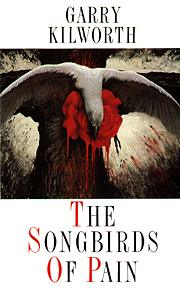
Then there's a lesser known writer named Gary Kilworth. His "Let's Go To Golgotha" (and other short stories) are so evocative of Ray Bradbury that I couldn't help but love his work.

And finally, the master himself, H. G. Wells. Nuff said.

I've shown you mine. Now show me yours. (Get your mind out of the gutter. You know what I mean.) Use the comments to list your faves.

Getting the First and Last Word -- Story Openings and Endings

Whether you're a genre writer or a literary writer or some kind of hybrid (with excellent gas mileage), it difficult to deny that you have to grab a reader's attention right from the get-go. Not only are you in competition with other books, but also with video games, movies, and whatever else can capture your readers' attention. So we turned to a collection of attention-grabbing authors and picked their brains on the subject of story openings and story endings.

How important to you are your openings and endings for your stories?

Lee Houston Junior: VERY. Potential readers don't have time to scan through a whole book, so those moments are essential to grab their attention.

Ron Fortier: Ever since I can remember, it seems most genre writers, particularly those in mystery and sci-fi swear by the so called "narrative hook."  An opening line that is suppose to figuratively "hook" the reader immediately.

And although I can understand the merits of such an opening, its never been my personal approach to writing.  To me all aspects of any story are vital and I rarely assign any added importance to either a beginning or ending.  Each has to work as a part of the whole, thus when writing, I simply sit down and start at the beginning, as my muse has imagined it in my mind.

Of course most stories will have some kind of drama, but again, I just want to tell a good story, involve my reader... and move on.

It shouldn't ever be formulaic, but organic.

H. David Blalock: The opening and the ending should reflect a real logical progression. In other words, if you start out in Podunk, Arkansas you should end up in a likely place, not the 4th Dynasty of Egypt (unless the rest of your story points at it). Readers usually like a short story to deal with one concept at a time. Save the subplots and story arcs for novels and serials.

Van Allen Plexico: I firmly believe in trying to grab the reader by getting things going urgently and immediately, with a quick and powerful sentence or two that is evocative and colorful.  Here are some examples of my openings:

Hawk awoke naked and screaming in the heart of a shattered galaxy.
(HAWK.  Trying to be vivid and evocative.)

Down rained the night, cloaked all in fire and brimstone.
(LUCIAN.  My attempt to be sort of lyrical and also hint that this guy is more devilish than angelic!)

A wormhole is a hell of a place to die.
(ALPHA/OMEGA.  In italics, from the protagonist's POV. Tough and terse and military-SF-ish.) (Incomplete novel.)

The fact that I typed each of these from memory proves that, at least for me, they definitely were "grabbing" and memorable!  :-)

R.J. Sullivan: An opening should be powerful, a hook to make the reader want to read more. One rule of thumb I have heard is "no backstory exposition for the first three chapters." (I broke that in Haunting Blue, oh well). It should establish your POV character or at least the conflict that will affect the POV character. If you think in cinematic terms, think of Star Wars--the opening drew you directly into the story and the conflict. Even though we don't meet Luke for another 20 minutes we know exactly what's at stake, who the players are, and we've seen the destriuction the villains are capable of in a very dramatic way. The opening is vital to get right, because if you blow that, the reader won't continue.

Marian Allen: Openings and endings are very important to me. The opening is where the story swallows the reader, and the ending .... Wait a minute. I start again. The opening hooks and pulls the readers into the story and the ending moves the readers on with a sense of closure, but with that hook still in, so they remember the story and want more.

What makes an effective opening? What is its purpose?

Lee Houston Junior: I have heard all kinds of theories and "rules" on this subject. But I definitely want everyone to feel that my story is worth reading. I want even the casual book browser searching Amazon or wherever to yearn to find out how the story progresses from what little they view.

H. David Blalock: The opening for a short story is critical. The brevity of the piece already restricts your ability to properly tell the story, but there is so much competition for the story versus other stories, novels, TV, etc. that if you can't catch the reader's attention immediately, you are very likely to lose them before the third paragraph.

Marian Allen: An effective opening gives readers the flavor of the piece and the sound of the narrative voice. It's like speed-dating for stories. The purpose is to establish a sense of "who" the story is.

M.D. Jackson: Hit the ground running and don't stop.

What makes an effective ending? What is it's purpose?

Lee Houston Junior: For me, the story has to reach a satisfying climax that "wows" the readers, especially if they didn't foresee the ending I wrote happening. I have heard plenty of positive comments from friends that PROJECT ALPHA did not end the way they expected it to. If you are not only happy that you read my book, but are surprised at how it turned out, then I did my job as a writer.

H. David Blalock: The ending needs to leave the reader satisfied that the story made sense from beginning to end, because if they don't, they won't be reading too much of your work in future. If you plan on ending your story with a bit of a twist, remember to set it up in the body of the work somehow. The twist can be unexpected, but it still needs to make sense in the context of the rest of the work. Of course, you should NEVER end a story with the narrator suddenly waking up. "It was all just a dream" is a really bad way to end any story. The reader will undoubtedly feel cheated and annoyed = one lost reader.

Marian Allen: An effective ending, IMO, is a payoff. Best last line ever: "A boy loves his dog." -- Harlan Ellison, "A Boy And His Dog"

I like endings that circle around or echo something in the opening. I like endings that resonate with the rest of the story.

R.J. Sullivan: Endings are a different beast. Generally, if you "have" the reader and they get to your ending, if the voyage has been worth it, a reader will forgive a weak ending and may still read your next book (Stehen King's endings tend to disappoint -- there, I said it). I feel, even in a series, that each part of a book should have it's own distinct climax and ending, concluding SOMETHING even in a long-running series. That's just my preference as a reader.

What are some of the cliches that writers should avoid or that you have struggled with in creating powerful and effective openings and endings?

Marian Allen: There are no cliches a good writer should avoid. Everything has been done before, but a good writer can take even the most overdone bit and make it fresh and powerful. And anything, no matter how original, can be dull in the hands of a lazy writer.

Lee Houston Junior: "It was a dark and stormy night." ;-) Seriously, finding the right words to set the mood or resolve the story, let alone tell the tale to begin with, is not always easy. There have been times when I have written and rewritten passages because they sounded similar to something else or just weren't good enough. But finding the right words, not only for the opening and closing, but for everything inbetween is what makes the story come alive. But while each subsequent book in my series (Alpha and Hugh Monn, Private Detective) will build upon the past volumes, no book I write will ever end with those three dreaded words "To Be Continued."

H. David Blalock: 
There are some cliches you can use that can be forgiven. Opening with action, no matter how familiar, will usually work. Starting out with "They call me mad, but I swear it's true" or like words is a dead giveaway the writer needs to develop his or her style.

Wednesday, July 4, 2012

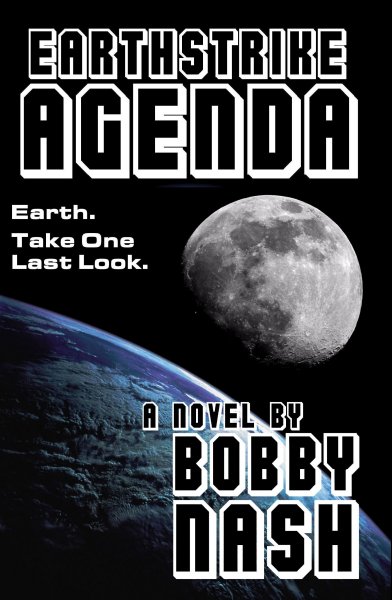
Ben Books announces EARTHSTRIKE AGENDA!

PRESS RELEASE:
EARTHSTRIKE AGENDA, the new novel by celebrated author Bobby Nash is now available in paperback and ebook formats at Amazon as well as Barnes & Noble, Smashwords, and more.

You can purchase the Earthstrike Agenda in paperback and ebook format at the following:

BEN Books Direct paperback
Amazon paperback
Amazon Kindle ebook
Smashwords ebook (Multiple formats)
Barnes and Noble Nook ebook
DriveThru Fiction ebook
Barnes and Noble paperback
COMING SOON!
About Earthstrike Agenda:
HUMANITY HAS GONE TO THE STARS.
Earth, once barren and decimated by war and the depletion of natural resources has been reborn.

Today, Scavengers prey on small mining towns and colonies. The United Planetary Alliance Marshal's Service seems unable to stop these raids. They are outmanned and outgunned, but is the only law on many colonies.
Newly promoted Captain, Virgina Harmon takes command of her first starship, the Pegasus, the latest ship built to solve the Scavenger problem. Plagued by nervousness over her first command Captain Harmon is rocked by the news of her mentor’s murder. Just days before he was to report to her aboard the Pegasus as chief of engineering.

In Earth orbit, a science station becomes a target. An enemy has a plan to use the Space Lab facility as a means to claiming Earth.

In deep space, the United Planetary Alliance city-ship Ulysis welcomes aboard a high-ranking officer with a special mission for the crew. Those plotting against the Alliance are preparing to make their move and their first target is the Ulysis.

Meanwhile, in the deepest regions of space an enemy has returned. An enemy seeking vengeance.
EARTHSTRIKE AGENDA
Whoever controls Earth ...Wins.
Visit Earthstrike Agenda author, Bobby Nash at www.bobbynash.com
Visit Bobby Nash’s Amazon Author Page at www.amazon.com/-/e/B002QJ8QQS

The Watson Report: Starting a Story

To my way of thinking, story openings have to do three things in the first few paragraphs.

1. They have to give readers a sense of the kind of story they're reading: mood, narrative style, setting etc. Never start a book "It was a dark and stormy night" but that at least paints the required picture; you are in a dark and turbulent place or a horror satire.

2. They have to "catch" the reader to carry on past the first lines and apply the habit of reading to this work. The first sentence is best when it's a grabber.  Special credit goes to Ian Banks' The Crow Road for "It was the day my grand-mother exploded."

3. They have to be both familiar and unique, so the reader can latch on to things even before the author had had a chance for the first exposition paragraphs while avoiding having the reader instantly pigeonholing the tale. "Oh, the girl's dating a sensitive vampire. Where's my shotgun?" is probably a bad reader reaction. "Oh, this is a bit like a Sherlock Holmes Victorian mystery - except the investigator is a monkey!" is probably okay.

So the best openings are stylish, enthralling, and they set how the reader initially engages with the book. Some of the tricks are:

James Earl Jones-style authorative narrative voice: "It was the best of times. It was the worst of times." That one's been used, though.

In media res dialogue: "They're breaking through! The damn mutos are already loose downstairs!" Tells you all you need to know about why the next paragraph describes our hero hefting a flame-thrower.

Paint a word picture of something's appearance or history: "Detective Brown's battered Colt '45 had a notch in the grip for every capo of the Werner gang it had ended."

Plunge in with something visceral that we're culturally conditioned not to ignore: a fight or sex are the classics, but having someone sitting there with a razorblade to the wrist, or having a woman in labour, or the flames creeping towards the baby will get the job done too. Few people aren't going to read on at least a few paragraphs to check what happens. "Lindsay Chase switched on the waste disposal grinder and slowly fed her finger between its whirling blades."

Summarize the main theme of the book, what you're about to spend a whole story addressing: "The shabby kitchen wall at 115 Leinster St hadn't been disturbed since 1933. That didn't stop the workmen from discovering the two-day-old corpse of schoolgirl Alison Drew behind the old lath-and-plaster."

Start with a first person storyteller's plea to the reader: "Read this! You don't know what it is that lurks behind your bedroom mirror. You don't know why your reflection sneers at you when you turn away. You have to listen to me, to hear what I've seen, before the night falls and they take me - then come for you!"

Start with a word of advice. "Never trust a man selling a tonic with a hand-stencilled label." This one has a far less cerebral, far more folksy personal contact with the reader than most modern styles, but it can work if you want to set a certain tone.

Set up a paragraph that will pay off in the very last paragraph of your book to give it closure. Start with "Nobody cared that thirty people died in the 210th street tenement fire." and end with "Nobody cared that thirty people died in the 210th street tenement fire - except Rock Joe Johnson. That was why Eileen married him."

I think there's probably an art to the paragraphs right after the opening ones too, the ones that have to start serving up character and information without dumping great chunks of backstory on the poor reader; but that's probably another question. 

==================================================

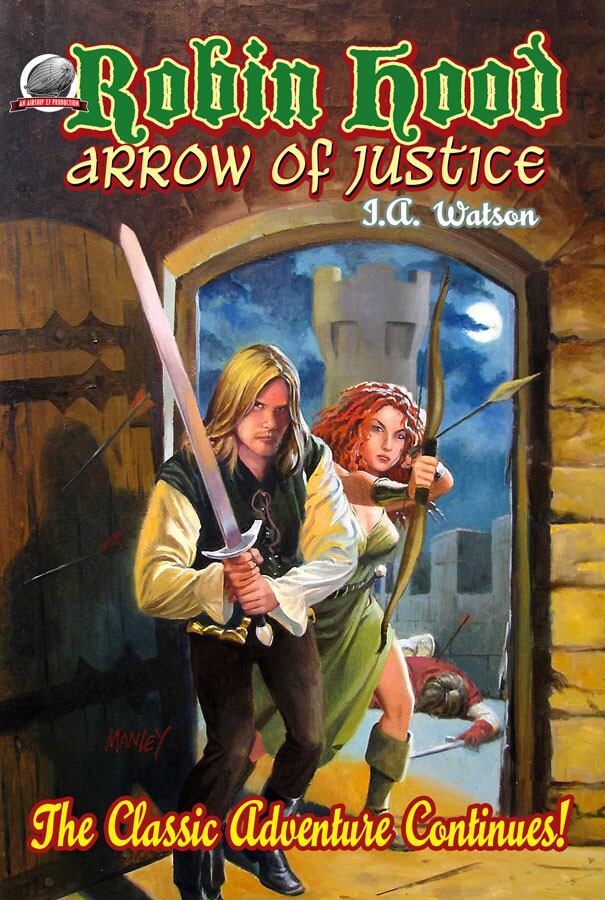
I.A. Watson is an adventure, fantasy, and SF author from Yorkshire, England. For more information visit him online: http://www.chillwater.org.uk/writing/iawatsonhome.htm

The Writer Will Take Your Questions Now (#186) -- Good Editors

What does a writer want from a good editor? What does he or she need?

When a writer looks for an editor, he or she should find someone who not only knows the basic skill set (grammar, spelling, story composition, character development, meeting a deadline, etc.), but also someone who has the fortitude and professionalism to be completely honest about the work. When you get an editor, you aren't looking for a friend or a cheerleader. You're looking for someone to do the hard work of making your work stronger.

An editor has two key functions:

1. Find what's wrong and suggest ways to fix it.

2. Find what's right and make it shine.

You don't want an editor who tells you how wonderful your work is and how perfect it is. But neither do you want an editor who has nothing but horrible things to say about your writing. A good editor will find balance between those two functions and will do the job in a way that may hurt your feelings a little (if you're overly sensitive about your work) but will also make you feel better and more positive about the finished product.

Tuesday, July 3, 2012

ATTENTION NEW PULP AFICIANADOS:THERE'S A NEW PUBLISHER ON THE BLOCK

FOR IMMEDIATE RELEASE

ATTENTION NEW PULP AFICIANADOS:
THERE'S A NEW PUBLISHER ON THE BLOCK

ATLANTA, GA—There's a new publisher who has taken up the mantel of New Pulp.

Writer and editor James Palmer has formed a new publishing imprint designed to take advantage of the surge in popularity of New Pulp fiction, as well as the huge explosion of Print on Demand publishing and ebooks.

"This is an amazing time to be a writer or editor," says Palmer.  "I really wanted to hit the ground running with something that can use these new technologies in new and unique ways."

Giant Robot Books will not only publish New Pulp, but weird western, steampunk, and sci-fi, and has several anthologies planned.

"I will be rolling out some theme anthologies as well as individual novels and short stories," says Palmer.  "Stick around. It's going to be a wild ride."
  
Why Giant Robot?

Palmer chose the name for this new imprint very carefully, after a lot of thought.  "At first, I thought all the really cool names had been taken," he says.
Palmer wanted something that really captured the imagery of classic science fiction, something retro and fun.  "We already have White Rocket Books," says James, "and you just can't get a more iconic image for science fiction than the rocket ship."

Palmer finally found what he was looking for in a childhood guilty pleasure.  "I finally just started thinking about what else I liked about the genre," he says.  "And I've always been a fan of giant robots like Gigantor, Voltron, Tranzor Z, and the Transformers."

Giant Robot Books will be a way for Palmer to bring his love for classic sci-fi and pulp into the twenty-first century world of indie publishing.

"POD and ebooks are game changers," says Palmer.  "They allow talented writers who cannot interest the big publishers or only cater to a small niche to still get their work out there and find an audience."

Giant Robot Books plans on rolling out ebooks featuring new pulp characters, but they also have plans for several anthologies.  Palmer is also busy working on the imprint's website at http://www.giantrobotbooks.com/, which will feature a free subscription newsletter.

"I've got a lot of stuff planned, and I hope everyone will join me on this journey," Palmer says.

Giant Robot Books is a new publishing imprint specializing in science fiction, New Pulp, steampunk, and more. To learn more or sign up for the free monthly newsletter, visit http://www.giantrobotbooks.com/. You can also follow GRB on Facebook at www.facebook.com/GiantRobotBooks and Twitter @giantrobotbooks.

[Link] Making Heroes Heroic -– Why Flaws are Important

by Kristen Lamb

What makes a hero or heroine? That is a question that has been wrestled for centuries, and the battle lives on. My POV? In good fiction there are two parallel arcs, the plot arc and the character arc. The protagonist, in the beginning, should possess some weakness or flaw that would make it impossible for him/her to solve the story problem and be triumphant if the Big Boss Battle happened right then. Often this weakness or flaw is one of character (protagonist is hot-headed) not logistics (I.e. protagonist is outnumbered by the enemy).

The protagonist might be a fraidy cat  who is spooked by her own shadow (Joan Wilder in Romancing the Stone) or an impetuous spitfire looking for a fight who needs to learn control, self-discipline, and tangible fighting skills (Danny Larusso in Karate Kid).

Continue reading: http://warriorwriters.wordpress.com/2012/06/25/making-heroes-heroic-why-flaws-are-important/#comment-34080

The Writer Will Take Your Questions Now (#185) -- Story Openings

This one's from one of the panel attendees during FandomFest at Louisville, Kentucky, this past weekend.

What advice do you have for story openings?

That's not a knife. It's a machete, but you get the point.
1. Start in the middle of the highpoint of physical or emotional intensity. Don't walk up to the door, open it, and notice the mirror in the foyer and the reflection of your date's fancy dress. Instead, start with the man with the knife poking at your prom date's neck.

2. Use strong verbs and nouns. "Was" and other weak verbs are common for story openings but are typically so much weaker than more powerful words. (This doesn't mean "fancy" words, just "powerful" words -- there is a difference.)

3. Use (as much as is possible) simple subject-verb construction. "The knife stabbed Bill's knee and sliced clean through the bone where his old football injury still hurt" is a lot more effective that "Where the knife had stabbed Bill's old wound became a new area of pain for the former all-star quarterback." Someone (or something) does something. Not an abstract concept that then linking verbs to some adjective- and adverb-laden concept. (Unless you're Henry James or James Joyce, of course.)

4. Listen to the sounds in your sentence. Hard sounds stop readers like a punch. Soft sounds flow like a dance. Choose which you need based on the action of your opening.

Monday, July 2, 2012

Writers Wanted at New Pulp

New Pulp Fiction.com is seeking writers interested in doing quality reviews and columns covering New Pulp works and a variety of New Pulp related topics. If interested, please contact the site.

Attention Writers! Seventh Star Press Proudly Announces Its Next Anthology Project, Perfect Flaw: Dystopian Stories, with Editor Robin Blankenship


For Immediate Release
June 18th, 2012

Attention Writers!  Seventh Star Press Proudly Announces Its Next Anthology Project, Perfect Flaw: Dystopian Stories, with Editor Robin Blankenship

Seventh Star Press is proud to announce its second anthology project, Perfect Flaw: Dystopian Stories, with editor Robin Blankenship

As with the first SSP anthology project, The End Was Not the End: Post-Apocalyptic Fantasy Tales (editor Joshua Leet) this anthology project will allow for short stories of up to 10,000 words.

The stories must be set within a society in a repressive and controlled state, which can be under the guise of a utopian society.  The genre of the stories can be anything from Horror to Science Fiction, Fantasy, Steampunk and other forms of speculative ficiton

This anthology is intended to be a book that is a exploration of society gone wrong. "Utopian" societies that mask the true, underlying controlled state. Stories of people fighting back against the repression in hopes of a better place for the average person. Groups forming to fight the fatal flaw that the people in charge strive to cover up to keep the masses in line.

Submissions must be in by Midnight of January 8, 2013. Please provide a cover letter and use standard manuscript format.  They can be emailed to: Robin at seventhstarpress.com

The anthology is being targeted for release in the late spring of 2013, in both print and eBook formats.

A freelance editor and book reviewer, Robin Blankenship has a background in teaching and is currently embarking on her Masters in Folk Studies.

For further information on Seventh Star Press and its titles and authors, please visit www.seventhstarpress.com

Contact: C.C. James
Public Relations, Seventh Star Press
ccjames@seventhstarpress.com

Seventh Star Press is a small press publisher of speculative fiction located in Lexington Kentucky.

[Link] 10 Quick Tips to Get Your Manuscript Ready for Publication

by Joel Friedlande

One of the first decisions you have to make when you decide to publish your own book is: Who’s going to turn your manuscript into the book you want it to become?

Lots of people decide they can do it themselves, and I’m sure some of them are happy they did. For others, the whole process of learning about book design, pagination, fonts and the rest of it just isn’t the way they want to spend their time.

As an author you can decide to hire a book designer, either on their own or through a company that provides access to contractors.

But that’s not the end of the story. You still have to prepare your manuscript for publishing. Let me tell you, as someone who has worked on hundreds of authors’ manuscripts, it makes a big difference to your book designer how clean the file is when it hits her hard drive.

A messy manuscript takes longer to tidy up so it doesn’t cause problems when you get it into your layout software.

How can you help? Here are ten tips on how to get your manuscript ready for production. Keep in mind you only want to start doing this once you’re sure—no, I mean really sure—that your manuscript is final, ready for print.

Okay, now that you’re ready, let’s dive in.

Continue reading: http://www.thebookdesigner.com/2012/06/10-quick-tips-to-get-your-manuscript-ready-for-publication/

Sunday, July 1, 2012

CAN THE WRAITH SURVIVE THE CRY OF THE WEREWOLF?

Cover Art: Jeff Austin, Rusty Gilligan, Splash!
New Pulp Author Frank Dirscherl, creator of The Wraith has announced the release of his latest novel, THE WRAITH: CRY OF THE WEREWOLF

Cry of The Werewolf is now available to buy across the spectrum. Available as a paperback (RRP $US13.99) and an eBook (RRP $US3.99), this stunning adventure, the fourth in THE WRAITH ADVENTURES series, will leave you breathless.

About The Wraith: Cry of The Werewolf:

Having gone through ordeal after ordeal, Paul Sanderson (aka The Wraith Dread Avenger of the Underworld ®) and his love Leena Patterson, decide to take a long overdue vacation. Choosing the mountain village of Bidbury as their destination, the two happily leave the crime and filth of Metro City far behind them, at least for a time. Once they reach the picturesque surrounds of the Little England area, their idyll is shattered by an attack by a creature nobody thought could possibly exist—a werewolf. Soon, Paul discovers a village wracked by fear and deceit, and an evil so pronounced, so monstrous, that only The Wraith could possibly defeat it.

Cry of the Werewolf is the fourth in this enthralling series of pulp novels featuring the Dread Avenger of the Underworld, and has all the thrills and emotion that one has come to expect from Dirscherl, surely the pre-eminent superhero pulp author of our time.

The Wraith: Cry of The Werewolf is available from Trinity Comics bookstore, Amazon, and Barnes & Noble in both paperback and eBook. Learn more about and where to purchase The Wraith: Cry of The Werewolf at www.the-wraith.com/crynovel.html

To learn more about Frank Dirscherl and The Wraith, visit http://www.trinitycomics.com and http://www.frankdirscherl.com

* The fourth Wraith novel, CRY OF THE WEREWOLF, is NOW AVAILABLE! Featuring cover art by cover by Jeff Austin, Rusty Gilligan, and colors by Splash!*

* The next Wraith novel, CROSSFIRE (by Stephen J. Semones) will be out in
July! *

* Join the NEW Trinity Comics message forum at http://trinitycomics.proboards.com *

Saturday, June 30, 2012

AIRSHIP 27 DEBUTS JUNGLE TALES- VOLUME ONE!

CLASSIC JUNGLE ADVENTURES

Airship 27 Productions, a leader in the New Pulp Fiction movement, is thrilled to announce the released of their latest title, JUNGLE TALES Vol.One.

One of the most popular sub-genres of the classic pulp magazines were those with jungle settings. With the success and popularity of Edgar Rice Burrough’s Tarzan stories, editors began clamoring for similar tales featuring jungle heroes. Soon dozens of cheap loin-cloth wearing imitators were popping up everywhere, including a few jungle queens to add spice to the mix.  By far the most successful of these Tarzan clones was the blond-haired Ki-Gor, the Jungle Lord whose adventures appeared regularly in the pages of Jungle Stories magazine.

Now Airship 27 Productions offers up this new collection with three brand new adventures of Ki-Gor and his lovely, red-headed mate, Helene, as they travel into the mysterious, uncharted jungles of Africa.  Penned by Aaron Smith, Duane Spurlock and Peter Miller, here are a trio of fast paced tales that have the Jungle Lord discovering a hidden village of Vikings, crossing paths with dinosaurs in a lost valley and battling cannibals to save the life of a benevolent jungle princess.  This is the pulse-pounding action and thrill-a-minute adventure fans have come to expect from the classic jungle pulps. 

“It’s hoped,” said Managing Editor, Ron Fortier, “that each new volume of this title will shine the spotlight on a different classic pulp jungle hero.  Maybe even a jungle queen or two.”  This premier features a stunning cover by painter Bryan Fowler with magnificent interior illustrations by Kelly Everaert.  JUNGLE TALES Vol.One kicks off another new series pulp fans are sure to appreciate and enjoy. 

AIRSHIP 27 PRODUCTIONS – Pulp Fiction For A New Generation!

$3 PDF digital copy available at –

From Amazon at –

And coming soon from –
(http://indyplanet.com/store/)

FandomFest Con Update

Wow. This one's like a family reunion. Seriously. With a party attached to it for the grown-ups. (No, not THAT kind of party.)

Andrea Judy, Charis Taylor, and I arrived Thursday night a little after 10 pm, and got lost both in road construction that had blocked off our exit and in a dungeon of a parking lot at the Galt House in Louisville, KY, but thankfully, it all went up from there.

When I say it's like a family reunion, I meant if you have crazy folks in your family like John Hartness, Allan Gilbreath, Kimberly Richardson, H. David Blalock, Jen Mulvihill, Stephen Zimmer, Michelle Weston, Alex Adams, James Tuck, Georgia Jones, Alan Lewis, Sean Patrick Fannon, Carinn Seabolt, and Stephanie Osborne. So take that all with a grain of salt at the Galt, folks.

Regardless, the opening day of the con was a lot of fun, books found homes, and money changed hands (in a good way, ie, into MY hands as new readers bought my books), so that's always a good start for a con. On top of that, the hotel is incredibly nice, the air conditioning in the building works efficiently (in and of itself a huge plus over last year's con), and the staff has been very, very helpful and friendly. Kudos to all involved for a wonderful time thus far.


Friday, June 29, 2012

Art Imitates Death

And here's a teaser from my very first published zombie tale, a story called "Art Imitated Death" from Pro Se Presents #1.

Available vis Smashwords: http://www.smashwords.com/books/view/116765

Available via Amazon: http://www.amazon.com/Pro-Se-Presents-Productions/dp/1463787448/ref=ntt_at_ep_dpt_8

================================

“NO REALLY. I’M FINE,” Mark said, putting the cell phone in the empty passenger seat. “You don’t have to come up. I’ll be perfectly fine.”

    “I worry about you.” Melinda’s warmth was evident even over the lousy connection. “You’re all alone up there. It was one thing to be on the mountain when you and my sister…” Her voice fell away, then grew warm and strong again. “Well, when there were two of you… But now that you’re all by yourself, it’s got to be a little creepy.”

    The road twisted ahead of him with only the lights from his BMW to help him follow the serpentine mess of roughly paved gravel paths. Like something from his past, growing up in southern Georgia, only with gravel instead of red clay. Drive for miles and see nothing but woods and fields, and then—boom—suddenly a bed and breakfast or a fishing lodge jumps out at you from around the next tight curve. Any minute now, his home away from home, his two-story art studio would do the same, where she would be waiting for him.

    “I’m a sculptor, Melinda.” He grinned at the phone even though he knew she couldn’t see it. “I’m supposed to like solitude. Remember? Besides, I’ve got a new project to keep me occupied for several weeks.”

    There was a long silence.

    “Okay, but you call me at least once a week, and if you get lonely, just know that I can be up there in about an hour and a half. We could grab some dinner at that mom and pop seafood buffet.”

    “Bill and Vera’s Seafood Shack.”

    “That’s the one.”

    “Yeah. That was one of your sister’s favorites.”

    Melinda coughed and cleared her throat. “Well, we don’t have to eat there.”

    “No,” he said, picking up the phone from the seat. “It’s fine, really. But not for a few weeks. I really want to finish this new project and then I’ll call you up for a weekend and show her off to you. I think you’re going to love it. It’s my most personal work so far. I’m really putting a lot of love into it.”

    “Okay, if you’re sure.”

    “I’m sure. Don’t worry about me.”

    A deer ran in front of him and he hit the brakes, dropping the phone and sending it careening into the floor. “Hold on,” he shouted.

    Melinda’s voice suddenly sounded like a fairy stuffed under a pillow. The phone had probably been jostled under the seat. He could hear her but couldn’t make sense of the muffled squeals and squawks.

    “Just a minute,” he yelled, and spun the car to a stop.

    He leaned over and dug under the seat until he found the phone and held it up to his ear. “Got it. Sorry about that.”

    “What happened?”

    “A deer.”

    “You okay?”

    He laughed. “After what we’ve been through the past year, you’re worried about a deer crossing in front of my car? Talk about a loss of perspective.”

    He heard his sister-in-law laugh too. “But you are okay, right?”

    “Yeah. Wasn’t even close.”

    Something rustled loudly in the bushes a few feet away, and Mark jerked his head sideways to get a look. But it was too dark and the headlights were facing the wrong direction. “Damn,” he said and leaned over to open the dashboard pocket. Groping blindly, his fingers searched for the flashlight he kept there. When they didn’t find it, he remembered leaving it in the trunk after using it down at the cemetery when he had visited the gravesite a few days earlier.

    “Mark?”

    “Hang on. There’s something in the bushes.”

    “One of them?”

Meet Armless O'Neil! (Special teaser post)

Here's a teaser for my Armless O'Neil story, "There's Always a Woman Involved," featuring in Blood-Price of the Missionary's Gold: The New Adventures of Armless O'Neil.

Get your copy today!

Available at Smashwords: http://www.smashwords.com/books/view/172960

Available in print at Amazon: http://www.amazon.com/Blood-Price-Missionarys-Gold-Adventures-Armless/dp/1477651306/ref=sr_1_1?ie=UTF8&qid=1339971091&sr=8-1&keywords=blood-the+price+of+missionary%27s+gold

Available for Kindle: http://www.amazon.com/Blood-Price-Missionarys-Gold-Adventures-ebook/dp/B008C8NMYI/ref=sr_1_2?ie=UTF8&qid=1339971091&sr=8-2&keywords=blood-the+price+of+missionary%27s+gold


=======================

“To hell with you, Tommy!” Armless O’Neil shouted across the table, slamming down his fist in matching rhythm with that of the hook that made up the visible portion of his left arm. “If God in his infinite wisdom had seen fit to have you born the lame runt of a Bedouin’s mangiest goat, you’d have been at least twice as smart and four times as useful as you are now.”

“That’s unfair, and you know it, O’Neil.” Tommy stood tall and as handsome a specimen as O’Neil was ugly and squat—well, not exactly ugly, but at the very least undesirable in any modern romantic fashion. “And it’s certainly no way to speak of the man who is offering a quick way to make two thousand German Reichsmarks for little more than babysitting wooden boxes.”

“What’s her name?” O’Neil locked his eyes on those of the younger man and took a swig of cognac from a bottle with an Italian label. He tried his best to ignore that fact and pretend the lackluster liquor was the good stuff. “Well?”

“What makes you think there’s a girl involved?”

“Because if I was as young and as stupid as you, there’d be a girl involved.” O’Neil set the bottle down on the table with a loud clank. “And every time I bump into you, there’s a girl involved. If I were to venture a guess, I’d say you’ve left a girl aboard every ship I’ve paid for you to return home on.”

“Now that’s just not fair.”

“Lucia?”

Tommy huffed and coughed. “That’s different.”

“Kathy Van Heest?”

Tommy’s pale, youthful whiteness turned pink. “Her family had—”

“Cleopatra?”

Tommy stood up, slamming his open palm on the table top so hard that O’Neil had to steady the bottle of cognac. “I never messed around with anyone named Cleopatra.”

“And only because she’s a few thousand years too old for you, but God help Caesar and Mark Antony if you had taken a shine to her.”

Tommy started to say something, but O’Neil shushed him, and he sat down again.

“You’re a louse of a friend. You know that?”

“And you’re a bad investment, m’boy.” O’Neil offered the bottle to Tommy, but the younger man refused. “Don’t look so hurt. And don’t try to deny the times I’ve more than covered your return trip to the United States.”

Tommy looked at the floor.

O’Neil drained the bottle of the last third of liquor. When he finished, he put the bottle on the floor beside him and called out for another.

“You’re drunk,” Tommy said. “That’s why I’m not mad at you about all this mean-spirited nonsense you’re saying.”

O’Neil grinned. “I’m not drunk. You are a louse. And you do fall in love too easily.”

A dark-skinned man in a white coat and trousers brought a fresh bottle to the table.

“But enough of your shortcomings, my friend. “Tell me about the twenty-five hundred Reichsmarks.”

GET YOUR EXECUTIVE ORDER ON WITH 'PRESIDENTIAL PULP' FROM PULP EMPIRE!


Jim Beard's superb cover (for his story "The Thing Under the House")
Have you ever wondered what Presidents do in their spare time? As it turns out, a good chunk of them went on amazing adventures!
Pulp Empire proudly presents Presidential Pulp! Thrill at the adventures of Dick Nixon and the Swingers of the Unknown! Experience the supernatural adventures of James K. Polk and Ulysses S. Grant! Experience the secret missions of Theodore and Franklin Roosevelt!
With five great new stories fo adventure by Jim Beard, Travis Hiltz, Robin Reed, Caine Dorr and Robbie Lizhini, Presidential Pulp may be the most fun you will read in a New Pulp book this year!
Print copies are now available through Createspace (with Amazon editions out shortly). To sweeten the pot we are giving everyone that buys the book this weekend a $2.00 discount (only $10 a book). Just enter discount code DNPCAWQA to get the reduced rate!
Ebook fans can also get Kindle and Smashwords editions of the book for the low, low price of $2.99!
Grab your copies today!