Thursday, February 17, 2022

The Watson Report with I.A. Watson

This blog has been very fortunate to have some amazing writers to contribute articles and interviews. One of my favorites was a column about historical and mythic concepts written by I.A. Watson. I wanted to look back and celebrate his contributions today by sharing the full list of his work at the blog. 

The Watson Report: Only the Brave Deserve the Fair – the Arthurian Gulf
https://seanhtaylor.blogspot.com/2017/12/the-watson-report-only-brave-deserve.html

The Watson Report: On Barbers
https://seanhtaylor.blogspot.com/2017/06/the-watson-report-on-barbers.html

The Watson Report: Arthurian Grammar -- A Primer by I.A. Watson
http://seanhtaylor.blogspot.com/2016/05/arthurian-grammar-primer.html

The Watson Report: Boy Meets Girl by I.A. Watson
http://seanhtaylor.blogspot.com/2016/04/boy-meets-girl.html

The Watson Report: Magic Swords and Their Makers by I.A. Watson
http://seanhtaylor.blogspot.com/2013/07/the-watson-report-magic-swords-and.html

The Watson Report: Behind Every Good Man -- Thoughts on Pulp Heroines by I.A. Watson
http://seanhtaylor.blogspot.com/2013/06/behind-every-good-man-thoughts-on-pulp.html

The Watson Report: Change and Growth for Characters in Pulp and Comics by I.A. Watson
http://seanhtaylor.blogspot.com/2012/11/change-and-growth-for-characters-in.html

The Watson Report: The First Whodunnit? (Part Two) by I.A. Watson
http://seanhtaylor.blogspot.com/2012/09/the-first-whodunnit-part-two.html

The Watson Report: The First Whodunnit? (Part One) by I.A. Watson
http://seanhtaylor.blogspot.com/2012/09/the-first-whodunnit.html

The Watson Report: Getting to know Aria, a Princess of Mars
(no relation to that Thoris woman) by I.A. Watson
http://seanhtaylor.blogspot.com/2012/07/getting-to-know-aria-princess-of-mars.html

The Watson Report: The Baffling Story of Spring-Heeled Jack by I.A. Watson
http://seanhtaylor.blogspot.com/2012/07/baffling-story-of-spring-heeled-jack.html

The Watson Report: Starting a Story by I.A. Watson
http://seanhtaylor.blogspot.com/2012/07/ia-watson-on-starting-story.html

The Watson Report: How Bad Guys Die by I.A. Watson
http://seanhtaylor.blogspot.com/2012/01/how-bad-guys-die-by-ia-watson.html

The Watson Report: On Heroines by I.A. Watson
http://seanhtaylor.blogspot.com/2012/02/on-heroines.html

Wednesday, February 16, 2022

Movie Reviews for Writers: Writers Retreat


Of all the horror or thriller movies based on a writer main character, perhaps the two most common settings are (1) the writer on a personal retreat to the middle of nowhere to overcome writers block and (2) the writers group. Together, these form the bulk of the writer-based movies in this genre. And why? Because both are fantastic places to tell stories of horror and terror.

The writer alone in an unknown place. 

The writer surrounded by people he/she/they don't know who may or may not be just another writer. 

Gripping stuff, this. In either setting, you have a writer off their beaten path, their normal process. And that always makes us vulnerable. Without our favorite chair, our comfortable distance to the coffee pot, our familiar surroundings and patterns, we feel off-kilter, sometimes unsure of our psychic footing (so to speak). That creates the perfect recipe into which to drop a dollop of fear and danger to a compelling movie. 

But it also can create a real-world sort of writer-based terror in some. The idea of sharing our work may fill us with trepidation and self-doubt. The idea of listening to others more than the voices in our heads may irritate us or activate feelings of social anxiety. The mere rearranging of our routines and patterns for work may either disparage us or shut us down entirely. We may feel lost. 

In this film, young author Zandra leads a writers' group charged with a weekend retreat to face the emotional truths of their writing. To amp up the tension, the retreat is being held on an island that is shut off from the mainland most of the day because of the tides that shut down the roads. 

While the movie's focus is on the tension and eventually the borderline Giallo style murders, it's pretty accurate in regards to writer retreats and those who attend them. It also highlights quite a few of the issues that pop up at such retreats. 

As far as the members, we meet them in a fairly common exercise for small groups, with members pairing up and then getting to know their partners and introducing them. It's a by the numbers activity lifted from the "How to Lead a Writers' Group" handbook, as are many of the exercises and group activities and writing assignments shown in the film. 

They include: the older woman writing children's books, the older man writing his memoir of his time in the war, the avant-garde Artiste, the newby who thinks she may have what it takes, the horror writer obsessed with violence. They're all there. 

And with them come their hang ups and the issues that add to the tension. They all tend to dismiss the woman telling tales of turtles (named after her kids) for children. The purveyor of "fine literature considers everything anyone else writes to be utter trash created purely for profits and not art. No one remotely tries to understand or appreciate the chosen genres or styles of the other writers. And the writer of the war story keeps waiting to be recognized for his stellar talent and story just waiting to be told. Throughout it all, the newby offers meaningless "critiques" that are primarily gushes over the ability to be there at all with the others. 

At the heart of it all -- the relationships, the writing exercise, the killings, all of it -- is the idea of getting to the heart of and living (or writing) the truth of your feelings. Your feelings as a writer. The feelings of your characters. Getting all that onto your pages. 

That's the goal, isn't it? Without getting to the truth of who you are as a writer and who your characters are and what they want, nothing in your work rings true, does it? 

So, in spite of being a fairly by the numbers thriller, Writers Retreat actually has a lot to say about writers and the craft -- at least until the night of the slaughter. 

Tuesday, February 15, 2022

O' Captain, My Captain: Taming the Writers' Group Monsters


It never fails. Iron sharpens iron. It's so dependable an axiom that it's also a cliché. 

If you want to get better as a writer, surround yourself with other writers who will challenge and inspire you. One of the best ways to do that is through being part of a writers' group. The trick is usually in finding one that is focused on what you need from it and one that is filled with writers you "click" with. 

The problem is that far too often, groups fizzle out because they're not really accomplishing anything truly helpful for the group's members. For every 5 groups created, it feels like at least 7 die on the vine. 

Okay, I know that's statistically impossible, but it sure as hell can feel that way when you're looking for a group that can help you become a better, more efficient and effective word-slinger. 

Focus, Focus, Focus

What do I mean by "focused on what you need"?

Well, at its most basic, a writers’ group is merely a group of writers (usually a small group) who read and share their work with each other. But some groups have a more organized plan for how to help each beyond just an audience to be read to. 

Sometimes, when you're lucky (or if you help direct a group so) a group can know each other so well they know what parts of the writing process and what techniques to target for the most effective and efficient use of a group's time. 

Is dialog a key issue? Perhaps it's plotting? Or maybe establishing more character depth? 

The best groups can zero in on such things and help each writer involved develop in areas such as these. 

Most typically though, all that is available through your local college or library is a group of writers of various levels who write and read. And that's okay. Particularly for beginning writers and those who need more experience in sharing their work with others. 

Because writing is such a solitary exercise, it's not uncommon for writers to be inexperienced with sharing their work, whether aloud or simply by passing around a printed copy. And that's where many writer's groups excel -- helping a shut-in of a wordsmith put his/her/their work in front of others for review and critique. 

But, if you have any say-so in a group, remember that pushing each other is the only way to grow in the craft. A group, if it wants to actually be useful to a serious writer, needs to push its members and to keep them writing. If it fails in these two tasks, well, it becomes more of a social group and less of an effective tool for members. 

Perhaps the most amazing writers’ group I was ever a part of grew out of a college creative writing class. During the class, it was a melee of opinions -- informed, uninformed, and everything between -- not particularly helpful. But after class each day (after the class itself had ended too) four of us continued to meet once a week for coffee before school and really pushed each other to work within our chosen styles to become better at putting our ideas into stories. It worked because we were able to cut through all the nonsense of the large class and get together those who really wanted to improve. 

However, the biggest obstacle to building such a group is most often the group's members themselves. 

The People in Your Neighborhood

That brings us to the people you meet in a typical writer's group. 

As much as this list is also a work of satire, it's also sadly built on actually people you and I both have encountered in real-life writers’ groups.

The "I Was Born for This" Writer: 
This writer feels pre-ordained to the act of wordsmithing. Not just that, but somehow equally pre-ordained to being a sort of chosen one in the craft, whether in popular fiction or something more avant-garde. This person is often "blessed" with pre-conceived ideas that simply can't be corrected until they get over themselves and realize they are not the Harry Potter of prose. 

The "I Love These Floor Tiles" Writer:
A.K.A., the shy one. This writer may be hiding the next true master of the form (or not) but you'll never know because they never speak up, hell, they rarely look up from the floor to make eye contact. And getting them to read... Well, you can forget that. 

The "Serious Literary" Writer: 
These writers believe themselves above the whole deal. After all, "no one else in this group is there for creating art, are they? They just want to change the almighty dollar." This person tends to quote James Joyce and reference scholastic literary terms lesser writers haven't yet encountered in their journeys. They "bleed emotions onto paper" and call it art, and if you're too dumb to understand their genius, that's all on you. 

The "Total Newb" Writer:
Energetic and "just so excited to be here," this writer is the person who really stands to get the most out of a group like this -- if only they would stop gushing all over the experience so they could get to the actual work of writing. They're far most likely to tell you their dreams than their plans, their long-term goals over their short-term ones, and still haven't learned the hard lessons that most early drafts actually do suck hard.

The "Button Pusher" Writer:
This person studies the rest of the group and knows just what buttons to push to irritate the others. This one knows that Margaret doesn't like stories with vulgar language, so he/she/they write in lots of it. This one knows that violence upsets Jim, so over the top violence is the theme of the next writing exercise. 

The "How Gross Is Too Gross" Writer:
Closely akin to the "Button Pusher," this writer revels in their genre of choice -- horror, and the more graphic the better. Women aren't molested -- they're raped. Victims are just killed -- they're disemboweled. Ghouls aren't just creepy -- they're dripping pus and blood on granny's good rug. You'll usually find them wherever there's a group filled with their foil writer -- the "Sweet Little Ol' Lady."

The "Copy Cat" Writer: 
These writers are either still trying to find their own voices or they're just not interested in do anything more than being a copy of their favorite style or author. Most of us may begin this way, but we quickly outgrow it. I myself started by copying C.S. Lewis and then moved on to Ernest Hemingway before discovering how to apply my inspirations to find my own voice. 

The "Hobbyist" Writer: 
These writers are looking for fun for the most part. And that's perfectly fine. Sometimes they catch the bug and sometimes they don't. But again, that's okay. The trick of it all is to make sure that the bulk of a group isn't filled with this type, or you may find it unhelpful. 

The "Memoir of the War" Writer: 
You’ve seen this one in every movie about a writers’ group. They're the one who believes their personal memoir of war, small town life, big city adventures, etc. will be the fodder for the next "Great American Novel." Closely akin to the "I Was Born for This" type, they have a lot of mystical myths about the way the life and process of both writing and publishing work to dispel before they can get out of their own heads and out of their own way. 

The "Just Here for the Snacks and Free Coffee" Member: 
I'm not even calling this one a writer. They never have anything the share and have little to say in critique or review other than some vague "I liked it" or "It's not bad" kind of muttering. It makes you really wonder just why they are even showing up. 

Okay, okay. I jest. And yes, I am making a little fun of the stereotypes. But let's be honest... If you've been in a writers’ group, you've met them before, at least in part. Don't lie. 

Practical Magic

Still, how does a group with these folks become a group that can actually help a writer focus on getting better and getting helpful critique?

Luckily (I knew there was a reason I wrote this article), there are some ideas I've found helpful from the various groups I've been a part of. 

1. Get to know the types and learn to balance them. Find the stereotypes behind your members and look for ways to help them or lessen their negative impact. For example, find a way to limit the Serious Literary writer from harshly overcommenting on the work of others. Ask better guided questions instead of vague ones to help direct the reviews to matters of technique, tone, etc. rather than "It was fun" or "I didn't like it."

2. Get to know the "You are here" X for each member. Learn where the writers in your group are on their path, not where they think they are. Some may be farther along than they believe, and others may not be as far along as they believe. If you don't have a new member questionnaire, perhaps one might be needed.

3. Notice that genre isn't a concern. Unless you are founded as a mystery writers or horror writers group, don't make a big deal about the genres in which the members choose to write. Be far more concerned with helping each grow in their own style, genre, etc. 

4. Get to know the strengths for each member. But be careful, they may not be what the writer in question believes. And they don't have to be spoken necessarily as long as they are taken into account when directing the discussions and critiques. 

5. Get to know the weaknesses for each member. Bear in mind, no one likes to hear about what they're not good at. Again, these don't have to be spoken as long as they are taken into account in directing the discussions and critiques.

6. Target your critiques based on the type, level, strengths, and weaknesses of each member. If discussions don't address the actual needs of a group, then the group runs to the risk of becoming a mutual admiration society or one writer's personal crusade against other types of styles. 

7. Start all over again. Sorry, my friends. Like Ouroboros, this snake keeps eating its tales and needs to be done over and over again throughout the life of a group.

8. Encourage and help members who don't fit to find a group more appropriate for their goals, types, level, strengths, and weaknesses. This can be the most difficult part. Sometimes the best help a group can gift to writers is to help them find a group that will be more useful to them. Sometimes the best help a group can gift to the members of the group is to request that a writer who doesn't mesh with the team (looks only for praise, considers vacation thrillers to be not real literature, ridicules new writers for not knowing the basics or literary terms by their Strunk & White names, etc.) politely find another group.

It's not easy. And it takes effort. But it's worth it if you want to really build a group where you sharpen each other's iron and surround yourself with other like-minded writers looking to improve and learn from each other. 

In Short...

Do you remember the famous scene in Dead Poet's Society when the students react to Robin Williams' dismissal with a spontaneous outburst of "O' Captain, my Captain" from Walt Whitman's poem? Sure. What writer among us doesn't? But what does that have to do with any of this? 

Well, it takes leadership to make a writers' group work. It takes direction. It takes balance and structure. It takes a lot more than just a group of people writing and reading. If you're in a group that you'd like to see become more effective in helping you improve as a writer, hopefully something in the half-thought ideas and satirical caricatures that can help your either find or create such a group. Or perhaps lead one.

Saturday, February 12, 2022

Visit me at MidSouthCon 2022!


I'll be a guest for MidSouth Con 2022 this year in Memphis again! Come visit me on Pro Row or at any of the following panels (maybe one or two more to be added). I'll also be doing game beta demos for some of the games I have in development from time to time in the game room.

Friday, March 26, 6 PM
Pulp Fiction for Today's Market

Join the New Pulp Movement as discuss how to formulate and write a Pulp story for today's market.

Friday, March 25, 8 PM
Boardgames: A Gaming Movement 

Board games are exploding in popularity in America. There are a dozen different types, all of which appeal to various players for a gambit of reasons. Panelist discuss trends, from gateway games to the newest and hottest, and why this type of game is growing is popularity.

Friday, March 25, 9 PM
Pro Row

Meet your favorite MidSouthCon professional, maybe get their autograph or buy their works. Pro Row is located in the hallway outside of the Tennessee Ballrooms.

Saturday, March 26, 10 AM
Self-Marketing for Authors

You have published your works, either independently or through traditional publisher - now what? Our panelists discuss how to market yourself.

Saturday, March 26, 4PM
Pro Row

Meet your favorite MidSouthCon professional, maybe get their autograph or buy their works. Pro Row is located in the hallway outside of the Tennessee Ballrooms.

Saturday, March 26, 9 PM
Short Stories: How to Fit It All In

Writing a short story can be harder than it seems. One of the biggest challenges is to figure out how much detail is needed without having to be minimalists.

Friday, February 11, 2022

AIRSHIP 27 Production Presents JOE COMPUTER – PRIVATE DETECTIVE!

Imagine the inner workings of a computer as an actual world called the Community. Its inhabitants are the programs that dwell there. Among these is a investigative fix-it type program designed to find and correct corruptions with the Community. Its name is Joe Computer, Private Eye.

In this collection of unique stories, Joe tackles a mysterious program known only as the Sicilian and must stop him from unleashing the Black Virus that could wipe out the Community. Then he to stop a revolution, Joe goes digitally undercover to find the source of the malcontents. In his third outing he deals with the ghosts of human programmers and finally has to save Alice, his kidnapped secretary.

Using iconic Private Eye set pieces, writer Lou Mougin sets the mystery world on its ear with this truly original take on tough-guy mysteries. Argentine artist Fer Calvi provides his unique art styling with both the interior illustrations and cover image. Award winning Art Director Rob Davis puts it all together for this one of a kind adventure. Joe Computer is truly one of a kind and that’s no lie.

AIRSHIP 27 PRODUCTION – PULP FICTION FOR A NEW GENERATION!

Available now from Amazon in paperback and soon on Kindle.

Thursday, February 10, 2022

Boring -- The Unforgivable Sin

by Gail Simone

I have some pretty stern ideas about what makes a good superhero comic, but the one felony, the one unforgivable sin, regardless of style or talent level,  is being boring.

If you can make two superheroes getting coffee fascinating swell, go do that. But a lot fewer people can do that than the number who THINK they can. 

However, the same thing applies to your giant fight scene. It’s not automatically fascinating just because two dudes with laser punches or atomic jockstraps are smacking each other around. The onus is still on the creative team to put some jam in that sandwich. And again, thinking and doing are different matters entirely.

The greats out there, the lasting pros that I admire most, they make it look easy, so we extrapolate that it IS easy, and then we realize that X-Factor, that thing they bring, is not exactly automatic.

Shoot for the three point, shoot from mid-court. You may not swish it, but it’s a hell of a lot more fun to watch. 

That’s my advice as a writer, but even more importantly, it’s what I want as a READER.

If you’re writing comics, bring some hot sauce, for Pete’s sake. No one ever looked back on their superhero comics and said, “I wish I’d made them more boring.”

Used by permission of the author. 

Wednesday, February 9, 2022

Movie Reviews for Writers: Agatha and the Truth of Murder

If you haven't watched any of the Agatha and... movies, you're missing out. They tell the fictionalized stories of what might have happened during the 11 days in which she was missing that began on Friday, December 3, 1926. If you haven't looked at this historically true "tabloid" time, it's well worth a little private study and started a large manhunt to find the missing author.

That said, this series of movies is just a movie maker's dreams of what could have happened during these 11 days. 

And that said, that doesn't diminish what these fun adventure romps have to say about the author and her writing. 

As one of the pre-eminent mystery writers of not just her lifetime but in the history of English-language writers, anything Dame Agatha had to learn is also of great importance to us lesser writers, particularly those who create mysteries. 

As the movie begins with a distraught Christie stymied with writer's block. She has learned that her readers have outsmarted her. They have figured out her pattern for her mysteries stories and have discovered a sort of "cheat" to predict the killer, although unearned. In other words, they learn to automatically pick out the least likely suspect... period. 

Along with her arguments with her (barely still) husband about their pending divorce, this realization hits her hard. How can she relearn how to write her stock and trade genre and outsmart her readers? How can she put the mystery back into her mysteries? If not, what's the point of telling mysteries, she wonders. 

Know this -- if you fall into repetitious patterns in your works, your readers will always, always, always find you out and discover the cheats you might not even realize yourself about your work, at least not consciously anyway. They will often figure out your cheats before you do. And they will keep you on your toes. It's not just a small press or indie publisher issue. It happens to the best-sellers and big 5 publishers too. How many times have I heard at conventions about a certain famous horror writer rushing his endings or a certain sci-fi writer telegraphing his endings from chapter 1 or a certain mystery writer who gives their most likely suspect the most character development. 

So, be careful and look for your own cheats and patterns before your readers learn them at your expense. 

So she turns to Arthur Conan Doyle for advice. He tells her his failsafe method for defeated writer's block -- "design a golf course." Taking at his word, rather than his metaphor, Christie arranges an appointment with Sir Hugh Persimmion, which doesn't go as she hoped:

Agatha Christie: I want to design a golf course.

Sir Hugh Persimmion: I see. Really?

Agatha Christie: Yes.

Sir Hugh Persimmion: Well, in that case, I'm afraid my answer's quite short. You can't.

Agatha Christie: Excuse me?

Sir Hugh Persimmion: [patronisingly] There isn't a golf club I know that would commission a design from a woman. I understand there has been a trend of late for ladies to golf. But really, the sheer complexity of a designer's task is beyond the capabilities of a woman. No matter how capable that woman is.

Agatha Christie: [smiling ingratiatingly] I see. I hadn't realised. But thinking about it, how could I have been so stupid? Imagine a woman being able to design the preamble to putting something small in a hole. A woman might just present the hole and have done. And where would be the fun in that? There'd be nothing to groom, for a start.

[she stands up]

Agatha Christie: [still smiling sweetly] Thank you for your time. It's been pointless.

Thus, when she is approached by Mabel Rogers, who seeks help in solving the cold case murder of her lover, Florence Nightingale Shore (based on a real-life murder), Agatha is able to find her own version of "design a golf course." So she goes undercover and sets up a sting to gather all the suspects together. Of course, nothing goes as planned (or else the movie wouldn't last ten minutes). 

I won't spoil any of the twists and turns, but suffice it to say that in treating the true murder like one of her literary murders, she makes quite a few false starts and wrong turns, eventually leading to a conversation between Christie and the actual detective investigating the case, where he tells her:

Detective Inspector Dicks: It's a shame the truth of murder doesn't lend itself to detective stories. I mean, it wouldn't be much good if the person most likely to have done it actually did it.

Agatha Christie: No. That would never work.

[stands up]

Agatha Christie: Time to go.

Detective Inspector Dicks: I just got comfy. Was it something I said?

Agatha Christie: No, Inspector. it's something I thought.

This exchange, of course, leads her to her final clue regarding the identity of the killer, and also to the key to figure out where to go with her new work in progress that had been stalling her and stifling her imagination. 

The lesson here is that as fiction writers we don't tell the actual truth -- we tell the illusion of truth. Yes, often fiction can tell more important, real truth than a mere history book, but it's always handled and taught and demonstrated through sleight of hand, not factual accuracy. Much like dialog skips the umms and uhs and pauses to collect our thoughts, fiction skips the unimportant to present the illusion of truth so that it can present real truth. (Oooh, sounds artsy and pretentious, right? Well, tough. It's still true. Every word.)

As writers, we take what we need from history, from reality, from fact, but we are never bound by it or locked into its every lockstep -- which, ironically isn't just a lesson the detective inadvertently teaches Christie, it's also a plot mechanism modeled by this film in imagining the events of the author's missing days. 

Tuesday, February 8, 2022

When is a dove not a dove? Symbolism in fiction.


We've heard it all before. 

"It's never just rain. It's baptism."

"Sometimes rain is just rain."

"Two brothers fighting is always a reference to Cain and Abel."

"No. They just happen to be on opposite sides of a civil war." 

Symbolism. It colors so much of our writing. And yet we are so divided by it. Some embrace it. Some claim it ruined reading for them. Some say it's everywhere. Some say most of it is hogwash. 

This week we're looking at how we writers balance our straightforward plot writing with our metaphorical and symbolic writing -- if at all.

Where would you rate your work on a scale from "the plot IS the story" to "the true meaning is hidden in the symbolism"? Why?

Maya Preisler: I’m very close to the end of the spectrum where the true meaning of my writing is hidden in the symbolism because that’s how my brain functions. I analyze and over analyze the world around me so my writing does the same in reverse. I want to invite my readers on a journey that can go as deep as they are comfortable taking it. I like the idea of rewarding the very clever ones with extra information other people never figured out, like the ultimate Easter egg.

Bobby Nash: I sometimes pepper my stories with symbolism, but for the most part, the story is the story. My stories tend to be more character focused/driven. Sadly, I’m not that deep.

Ef Deal: The plot is the story, yes, but the plot is played out by characters whose motivations touch a deeper level. Book 1, for example, has the vicious Count Draganov, who has no compunction about stealing the souls of the dead, just as his son had no compunction about raping my MC and leaving her for dead. Book 2 has a vampire pursuing my MC, and the MC has to reckon with her position as someone who is vulnerable. And so forth... I think a novel should operate on three levels: action, character, and audience. Symbolism helps connect to the audience.

Nancy Hansen: I'm on the lower end of the scale as a writer because I really don't make much effort to consciously work symbolism into my writing. If it appears it's simply part of the characterization or the plot. I'm not a big planner when it comes to writing, most of my stuff just evolves from some seminal idea as I bang on the keyboard.

John French: Some people who have read my stories have found meaning in them I did not consciously put in. On hearing that, I decided to let my subconscious do the heavy lifting while I just write the stories.

Nikki Nelson-Hicks: I tend to allow symbols to grow organically. If I try too hard, it just becomes too twee.

John L. Taylor: I tend to overkill on symbolism. I find it to be an effective method of commentary without being blatant about it. Some of my imagery is more obscure and cryptic than others, but the use of symbolism serves me well and makes my work more satisfying to myself. Perhaps that's the greatest downfall there, writing becoming self gratifying to the extreme. But I say don't fear to use symbolism, especially in horror fiction.

Elizabeth Donald: Before approaching my MFA program and exploring literary fiction, I'd definitely put myself higher on plot than symbolism. To a certain extent, I hold the same beliefs now: I feel that if you're trying for symbolism, if you have to force the True Meaning of This Story, you're probably writing a boring story.

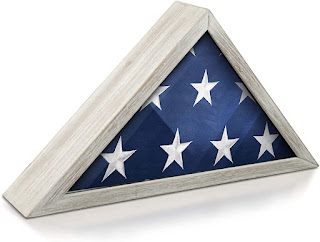
Do you typically use symbols to highlight the themes and tones of your work? What are the common ones (flags for dead military family members, boxed away wedding band for divorced/dear spouses, etc.) you find yourself using?

Gary Phillips: These are some deep questions to ponder. But definitely used some symbism in the new novel coming out. Set in '63, a Korean war vet turned crime photographer inherits a Speed Graphic in the war after the correspondent profiling his squad is killed in combat.

Ef Deal: Yes, I use the description of the settings to serve as symbols; the decaying elephant in the Place de la Bastille, the weather-tattered crepe-paper, the colors of the sky at dawn or dusk. I have a character my MC doesn't trust, and his eyes "gleamed in the gaslights of the Rue St. Jacques." The choice of words in a description conveys the entire tone of a scene: Is the sunrise golden or a glaring yellow? Is the sunset a gentle lilac or the lurid purple of a bruise? Do the masts of the moored ships reach into the sky, or do they claw the sky? Do they resemble a long-dead forest? There's so much that can be conveyed in these kinds of 

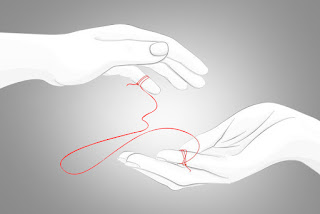
Maya Preisler: Yes, I absolutely use symbols to highlight the themes and tones in my work. I tend to use ravens and crows for connections to the underworld/afterlife and red threads for fate or destiny.

Elizabeth Donald: Sometimes the curtains are blue because that's what the writer saw when they looked out the window, and not because they were attempting some kind of existential philosophy about depression or deep water or bluebells which really mean Texas... That said, the best fiction is the fiction that makes you think and feel, and even changes your mind. You can't read a novel by Toni Morrison without considering what she is really saying about racism and classism in America, and exploring the meaning behind "blue eyes" in THE BLUEST EYE is a necessary part of understanding the novel. 

Nancy Hansen: Now and then I will give a character a name that in whatever language it's from means something representing the character's attitude or looks. Especially if the character is based on someone I don't like in real life. <EVIL GRIN> Most of the time, that's more for my sake than the readers. If they get it—great! Whatever goes into a story I write is there to add to the flavor and move the plot forward, so I'm not giving it a ton of thought.

Bobby Nash: I focus on things that are important to the characters so it’s different for each, but I do use common themes and tones per character.

If you tend to avoid symbolism in your work, why do you prefer not to use it? 

Elizabeth Donald: I still don't actively try for symbolism, to use an image or object to stand in for something else... but if I'm doing my job, if I'm using the language well and drawing on the reader's intelligence as well as emotion, then the symbolism will organically appear in the prose.

Nancy Hansen: I'm not avoiding using symbolism, it's just something I don't think too heavily about. Writing is kind of organic for me, I sit down and get ideas on a page, and then develop and refine them as I go along until the entire plot makes sense.

John French: Back in high school literature class, we had a long discussion about whether the writers and poets we were reading actually meant what we were reading into them. It ended with the teacher saying something like "We'll probably never know but, for the test, if I say it's bird imagery then it's bird imagery." 

Bobby Nash: I’m more of a straightforward kind of storyteller so I don’t spend a lot of time thinking about symbolism. It’s just not something I think about.

Maya Preisler: Doesn’t apply to me, but to answer your question in reverse, I prefer to use symbolism because that’s how my English teachers taught me to dissect the classics so it makes sense to build my written worlds with those same blocks.

Do you have other writers you consider the great masters of symbolic writing or tight plot-based writing? What makes their work so fantastic?

Nancy Hansen: This is tough for me because I am such an eclectic reader and so I delve into a variety of books and stories. I read for enjoyment and don't care too much to overanalyze what I'm reading. One of the things that ruined upper grade English classes for me was having to dissect books and look for deeper meanings. Sometimes a story is just supposed to be entertaining and maybe somewhat enlightening. I'm good with that.

Maya Preisler: Several classic writers come to mind (thank you high school English teachers): Shelly, Hurston, Fitzgerald, and Dickens being the first. By contrast, the realm of speculative fiction seems to be more plot driven, though some like Mercedes Lackey use both plot and symbolism to drive their stories. I find those to be most satisfying because I enjoy picking apart the threads of the tales and finding the hidden gems within them.

Ef Deal: Early French novels through the 20th century at least are all about the symbols, and I majored in French so I am spoiled by them. Gregory Frost and A.C. Wise use powerful similes and metaphors to enrich their works. Gregory Maguire, at his best, does the same, but I find his work hit-or-miss. Jane Yolen and CJ Cherryh weave symbols so eloquently into their plots, I come away breathless sometimes.

Sunday, February 6, 2022

The Greatest Library in Heaven?!

You've just died and gone to Reader Heaven. As your eternal reward, you are given a library of every book written by any 25 authors (including those they only wrote in their imaginations) to read, re-read, and master forever and ever amen -- but no other books. Whom do you choose?

Me?

1. Kurt Vonnegut

2. Ray Bradbury

3. Zora Neale Hurston

4. Walter Mosely

5. Flannery O'Connor

6. H. Rider Haggard

7. Edgar Rice Burroughs

8. Ernest Hemingway

9. Bobby Nash

10. Derrick Ferguson

11. Barry Reese

12. Eudora Welty

13. Raymond Chandler

14. Dashiell Hammett

15. Robert Heinlein

16. William Shakespeare

17. C.S. Lewis

18. Shusaku Endo

19. Ed McBain

20. Ursula K. Le Guin

21. Langston Hughes

22. Annie Dillard

23. Donald Westlake

24. Lawrence Block

25. Christa Faust

Saturday, February 5, 2022

[Link] THE SAD SMUGNESS OF THE BOOKSHELF TROLL

The “literary” internet’s favorite motto borrows the wit of the incomparable John Waters, who said: “If you go home with somebody, and they don’t have books, don’t fuck ’em!” 

By repeating this commonplace, you make at least two separate claims: That you, despite loving books, are sexually active and desirable — nice, good job — and, more crucially, that the appearance of being a reader is almost equivalent to solid proof of reading.

From this loophole derives our stereotype of the guy who wants to be seen holding Infinite Jest on the subway, as well as provocative critical texts including University of Paris professor Pierre Bayard’s How to Talk About Books You Haven’t Read. Books themselves, and an implicit or affirmed relationship with them, are stepping stones to status, though Waters later stipulated that it’s fine to sleep with a bookless person if they’re “cute enough.”

That status is the subject of Twitter’s “Bookcase Credibility” watchdog, whose anonymous author scans the shelves of pundits, politicians and celebrities giving interviews from home, judging the composition. “What you say is not as important as the bookcase behind you,” says the bio. ...

Bookcase Credibility is mainly concerned with the aesthetic of the shelves — cluttered or bare, disorganized or tightly coordinated, the furniture as it sits in the room and the frame of the screen, etc. — because these images rarely offer a close-up look at the titles. Therefore, we are left to judge the pixelated gestalt. But in certain cases, we are treated to identifiable books, which cannot help but complement an individual’s brand. 

Read the full article: https://melmagazine.com/en-us/story/the-sad-smugness-of-the-bookshelf-troll

Friday, February 4, 2022

SOVEREIGN CITY’S HERO GOES TO WAR IN ALL KINDS OF WAYS!

FOR IMMEDIATE RELEASE

SOVEREIGN CITY’S HERO GOES TO WAR IN ALL KINDS OF WAYS! ‘THE ADVENTURES OF LAZARUS GRAY VOLUME TEN’ DEBUTS!

"The only clue to his identity was a small medallion with the words 'Lazarus Gray' stamped upon it." 

Since his debut, Barry Reese’s Lazarus Gray has been one of the most popular New Pulp characters created. Pro Se Productions and Reese Unlimited, the company’s initial author imprint, proudly announce the debut of THE ADVENTURES OF LAZARUS GRAY VOLUME TEN, now available in print and digital formats.

War comes to Lazarus Gray and Assistance Unlimited, as the protectors of Sovereign City face conflicts from within and without, and a new band of adventurers come together to face a foe who is the embodiment of evil incarnate...

THE ADVENTURES OF LAZARUS GRAY continue as Lazarus Gray and his colleagues step into uncertain times as they navigate a world at war. Lazarus Gray faces a new threat rising from an unspeakable tragedy, while an evil undying returns to entangle an unsuspecting world in a sinister gambit...

...and Heroes will rise to the challenge!

The Devil walks once more in THE ADVENTURES OF LAZARUS GRAY VOLUME TEN by Barry Reese. From Reese Unlimited and Pro Se Productions! 

Featuring an impressive cover by Jeffrey Hayes and logo design and print formatting by Sean E. Ali, the latest volume in this series is available for 11.99 via Amazon at https://tinyurl.com/yfzj9p7r. 

Volume Ten is also available on Kindle formatted by Antonino lo Iacono and Marzia Marina for $0.99 for a limited time at https://tinyurl.com/yckj8nzu. Kindle Unlimited Members can read this thrilling adventure for free!

For more information on this title, interviews with the author, or digital copies for review, email editorinchief@prose-press.com.

To learn more about Pro Se Productions, go to www.prose-press.com. Like Pro Se on Facebook at www.facebook.com/ProSeProductions.

Thursday, February 3, 2022

Jason Waltman: A Man with a Plan

Jason Waltman was a visionary man. Sadly, he didn't live long enough to see those visions become realities. He was a fan of pulp, though, first and foremost. And he was perhaps the greatest cheerleader of my work I will perhaps ever know. 

He passed away on November 19 last year, not long after yet another glowing post on Facebook telling me, Bobby Nash, and Barry Reese how much he loved our work and supported us. And then he was gone. 

He had sent me these interview responses and I kept pushing them off because I had two series of interviews running back to back, and then Christmas came and knocked me off my schedule. 

But here it is, Jason. Late, but here. 

Jason Waltman was my friend, and I think you need to meet him. 

Tell us a bit about your latest work.

My latest work has been a labor of love for the last 15 years. The book is called The World of Crastic.  A role-playing game for the world oldest role-playing game Dungeons and Dragons 3.5 ruleset . The game is set on the world of Crastic. It's Victorian steampunk with mecha and magic. Players go against a warring nation trying to take over the world with an Emperor who acts like the Antichrist.

What happened in your life that prompted you to become a writer?

I want to be like the people I admire: Gary Gygax, Dave Arneson, Steve Jackson, Mark Tein Hagen. They sparked my imagination and creativity or role-playing game writing 

What inspires you to write?

My love for fantasy and science fiction. My recent pulp-related work on Facebook is to just sharpen my skills at writing.

What are the themes and subjects you tend to revisit in your work?

This book focuses on the grand war and its effect on the world around the players. And it has love stories among the non-players character the story centers around. My other future book will deal with more contemporary themes like Christian horror.

What would be your dream project?

A book featuring The Shadow and The Domino Lady -- a Shadow over the City of Angels.

Where would you rank writing on the "Is it an art or it is a science continuum?" Why?

I wouldn’t compare myself to the great masters of the role-playing game before me.

What is the most difficult part of your artistic process?

Sometimes I get stuck with an idea that limits my world vision and I might need help to visualize the sight and sound of the role-playing world I have in mind.

How do your writer friends help you become a better writer? Or do they not?

My favorite writers have challenged and encouraged me to keep on writing. I would personally thank people like Bobby Nash, Barry Reese, and you, Sean. They have been my secret cheerleaders and supporters. They very much supported me asking them questions about writing. 

What does literary success look like to you?

Success is from looking at people sitting around a table and enjoying the adventures I create. And being able to hire freelance writers and artists. 

Any other upcoming projects you would like to plug?

My next role-playing game world book will be called Guardian the Watch. It will deal with the end time of the Bible and people who are called to fight back the demon-possessed humans.

Wednesday, February 2, 2022

Movie Reviews for Writers: Christmas in Connecticut


I'm a sucker for Barbara Stanwyck. Not only is she a compelling dramatic actress in such films as Double Indemnity and The Secret Loves of Martha Ivers and Meet John Doe, but she is also a gifted comedic genius, whether the sharp wit of Lady of Burlesque and Ball of Fire or the almost Lucille Ball-like sense of manic panic as it this one.  

Holiday movies, I'm not usually so much a fan. They tend to either smack of forced melodrama or cutesy romantic intrigue that's about as believable as the romance between Anakin and Padme. 

But I do love this charming little flick about a magazine writer who gets herself in trouble by "faking it" without "making it."

Stanwyck is Elizabeth Lane, a sort of Martha Stewart before there was a Martha Stewart. She writes home décor and cooking articles for a major magazine, and she's a rock star in the world of doilies and fancy dining. The only trouble is she's a total fake. When she is called out on it and has to put on a holiday dinner for a returning war hero, she finds that as a Fifth Avenue dame, she's way out of her element, no where close to the ranch, newborns, and homey world she pretends to inhabit. To save her job, she had to pull off the con of her life.

So, to use our writer slang, she fakes it. 

But making it, well, that's a little more difficult. 

It's a classic sort of screwball comedy, so the laughs are built around her flailing attempts to pretend to be a mother and a homemaker and a cook of the first order, all while balancing a pretend husband and the soldier she finds herself falling for. But underneath all those laughs (and trust me, there are a lot -- Stanwyck gets accolades for her dramatic thrillers but not nearly enough for her comedy chops, if you ask me) is a cautionary tale about writing what you know. 

Have you ever taken on a writing assignment that was clearly out of your depth, the sort of job where you figure you can learn everything you need to know to make it happen by the deadline? The kind you sort of bluff your way through the initial meeting, knowing it will "all be fine"? 

  • Accepting a blog writing gig for B2B articles for a corporate client
  • Ghostwriting a romance book when you do mainly thrillers
  • Editing a textbook in a subject you know little about

Sure, research is always a writer's best friend, and the only way to grow into new areas of "writing what you know" is to learn new things. But there's a difference between pushing yourself and cheating your client or publisher. Let's say you've worked for a company in a similar industry. Well, then, that blog article might not be too much of a stretch with a rudimentary bit of research. Let's say you've only blogged about sports and the client is in international cosmetics. Then, that rudimentary research turns into a doctorate level dive that might mean you turn in work that might (a) misrepresent your client or (b) reveal your lack of knowledge. 

Now, that's a rather extreme example, and that's a far cry from thriller writers trying their hands at romance -- as long as both the publisher knows up front it's that writer's first excursion into romance. And proofreading that textbook might not be an issue, whereas content editing it might. 

The simple truth of it all is this: Unlike Stanwyck's Elizabeth Lane, you and I don't usually have the kind of people on hand to pull ourselves out of the fire if we misrepresent ourselves, and even if we did, it doesn't override the moral obligation to be honest in our business dealings with our writing. The trick is to know where that fine line between "I can research this" and "I will have to fake this" lies. One side is fair play. The other is dirty pool.

Tuesday, February 1, 2022

It’s the End of the Literary World As We Know It (But Don’t Be Afraid—It’s a Good Thing)

At the risk of sounding pretentious (I know, like that's ever been an actual concern of mine), I'm about to wax literary about something I believe to be very important for writers in a changing world.

There, you've been warned. If you want to leave, do it now. Still here? Wow. You're such a glutton for punishment, and it's time to feast. 

The Bricks

Symbols.

Subtext. 

Allusions.

Together, they're the subtle backbone of the writer's (and reader's) world. There are the often invisible at first parts of a story that grant a sort of universal understanding to both the enjoyers and the creators of the work itself. They are the foundations that allow metaphorical shorthand to help us as writers convey our themes and tones and meanings even when we don't realize that's what we're doing. 

Don't believe me?

Our classical canon of novels, poetry, and stories (and even non-fiction) all pull from just a few sources upon which they are understood. You've no doubt heard that there are no original stories, and just as truly, there are no more original symbols (at least in our classical, Western point of view). 

The Foundations

All literature, whether high-brow or low-brow, can be analyzed and understood through a handful of older references. They are: 

  • Fairy tales
  • Greco-Roman (and occasionally Norse) mythology
  • The Bible
  • Shakespeare

Now, to be fair, I'm currently reading through the amazing little volume How to Read Literature Like a Professor by Thomas Foster, and that is triggering a lot of these thoughts. But I'm also (as any casual reader of this blog, or my Facebook, Twitter, etc. will know) something my family and friends might refer to as a "woke liberal" (I prefer the admittedly longer term "progressive prioritizer of people over profits"). As the Literature major, I cherish most of the classic works of the Western canon, even those that haven't held up so well in the wake of our increasing progressive world of ideas. As a "woke" (yes, I'm beginning to accept the derogatorily coined term as a badge of pride) I fully admit that the world is changing and that a new canon of far more multicultural literature is being added to and in some case taking the place of what we have long thought of as the classics.

But what do I mean by “understood through a handful of older references”? 

Let's look, shall we?

Can one truly understand the point of Bradbury's Something Wicked This Way Comes without picking up the reference to Shakespeare’s MacBeth? Is there any older story than that of two warring brothers, lifted from Cain and Abel? And what of the Christ figure that appears in all (for both good and ill) of Spielberg’s films? Can we understand stories of lost children without seeing their parallels to so many classic fairy tales like "Little Red Riding Hood" or "Hansel and Gretel"? Could we enjoy O' Brother, Where Art Thou as deeply if we didn't see it's basis in Homer's Odyssey?

It's not just keen readers and writers who pick up on these kinds of references. Even surface readers often do. And, as I mentioned earlier, writers often weave these allusions into their works without being aware of them at first. They are just that much a part of the general data stored in the hard drive of their brains. They can't help but think of them. 

Shifting Sands (The Foundations Rumble)

But... as the world changes, even the symbols change. 

That doesn't just mean we are (finally) getting new voices in the classroom and on the bookstore shelves. That's a definite "good thing" as works by writers from all over the world and different cultures, genders, ethnicities, and identities join the works of the white male elite. It's a joy to find Toni Morrison and Zora Neale Hurston on school syllabi with contemporary giants like Marjane Satrapi and Khaled Hosseini. It's a long-delayed step into the light for what has often been seen as merely a bunch of books by a stodgy group of grumpy old white guys.

But it's not just the works being bought and taught that are changing. It's the symbols and subtexts and allusions themselves.

Here’s a prediction—in the next 100 years our classrooms (both K12 and college) will analyze and understand the books and stories and poems they read in light of several new foundations. 

I expect the mythologies of many non-Western cultures to be part of our literary vocabulary—Japanese, Indian, Indigenous Americans, and so forth. With the influx of anime that draws on Japanese, Chinese, and Korean legends and the increased Western viewing of world cinema (particularly horror based in these myths—oni and strigoi and manananggal, oh my!), it’s all but unavoidable. I hope to see the trickster gods (already a staple in the works of Neal Gaiman) and the Snow Ghost (a different take on the “mother scorned”) become as popular symbols as Red Riding Hood and the Knights of the Roundtable.

I expect great works, currently forgotten or ignored, from other countries, particularly non-Western, will become so much more well-read that they too take their place alongside the works of Shakespeare or great adventure stories of the Greeks and Romans. Just as Romeo and Juliet inspired West Side Story and Jane Smiley’s A Thousand Acres is just King Lear in a rural farm community, stories like The Rubaiyat and the epic poetry of Su Tung P’o will have their symbols and characters mined for new literary alloys. 

I expect the fundaments of world religions outside that of Christianity to be more studied and in turn have their stories and parables become the foundation for new works of literature just as much as the Christian Bible has for the past thousand years. Allusions like the peace child of Papua, New Guinea, and feeding dead relatives during Ghost Month, and the puberty rituals of Nigeria will (and should) become as common as those of the sounding trumpet, baptism, communion, Christ figures, and the Flood. 

Whatever Will We Do?

What are our options as writers whose world is beginning to radically shift beneath our feet? For some of us there may be very little may change because we have already been reading books and stories based in other cultures not or own for years. 

For some who have trapped themselves in the world of “white old men” books, it may be a bit more difficult. 

For those, I fear the “fight or flight” moment will come when they either begin to fight their past and wade a few steps into the waters of new stories and symbols or they will dig in their heels, stiffen their backs and say, “This far and no further” or (in the words of another old white guy) “Thou shall not pass.” And they will then flee to their comfortable world of the same old symbols and stories and becoming increasingly irrelevant in in the world as it changes. 

For new writers and readers, though, the change should be almost a seamless one. They most likely won’t even see it as it happens around them. They’ve already grown up on books by writers and reviews and critics of a variety of ethnicities, genders, identities, and world cultures. They’ve already been immersed in movies and television (whatever form that make take in the future) originating from cultures and peoples others than their own. They will most likely not even realize they are changing the world as they embrace new symbols and new story allusions and new subtexts that give meaning to the stories they write and read. For them it will just be their one day at a time life, their business as usual. 

And it is they, ultimately, who will be the real architects of this new literary world. You and I, no matter how readily we embrace or welcome the new world, can merely be harbingers who are experimenting with the new tools. They will become the true masters of them. 

Sunday, January 30, 2022

Pushing the cobwebs around -- (i.e., a housekeeping post)

Hello all you cool cats and hot dogs!

Jus wanted to apologize for the almost two-month lag in posting to the blog. It feels like a year to me. I really missed it. 

Still, there were family health issues that couldn't be avoided, not to mention a super busy holiday season -- and the best news -- my new long-term substitute teacher job in English Literature! I know. Right?!

Anyway, I think I've gotten things back on track and beginning this week, we should hopefully be back on our regular schedule again. I've got a new article about how the influences behind your writing changes as the wheel of history rolls ever onward and an interview with a good friend gone to soon. Oh, and a movie review of one of my favorite holiday films -- that also has something to teach us about this writing life. 

Strap in.

We're gonna get rolling again, kiddos!

Much love,

Sean