Thursday, December 22, 2011

The Writer Will Take Your Questions Now (#26) -- Writing Anthology Shorts

What advice do you have about writing anthology pieces (short comic book stories)
to help writers break into the business? -- republished from Inside the Lines magazine

Bigger Ain't Always Better
(Eight Guidelines for Getting Down to Business in Anthology Shorts)
     
As I write this, I'm listening to Jimi Hendrix scream, "Let me stand next to your fire," and it's really driving home the one point we writers need to wrap our minds around -- you'd better light a fire on page one or scrap what you've written and start over with a better piece of kindling.

Particularly when writing a "break-in" story for an anthology.

The anthology short story remains one of the best ways for a new writer to break into the comics business. Not really much of a shock, is it? Sure, there may be fewer of them than just 10 years ago, but the market is still paved with small press anthologies that can be a new creator's best hope of entering the world of comic book publishing, whether in internationally distributed books such as Shooting Star Comics Anthology and Digitial Webbing Presents or in any number of one-hit, oversized books and locally distributed comics.

But how do you actually condense a story so that it will work in only six to eight pages instead of the 22 or 32 pages you're used to hammering out to make your series pitches to DC, Marvel, or CrossGen? Well, here's the sad news. You don't. You can't.

As editor of Shooting Star Comics, I see lots of anthology submissions. Sadly, many of them suffer from the same malady -- writers who don't grasp the concept of telling a full story in just a few pages. New writers often try to condense a larger story into a smaller page count. And as an editor who has to wade through those submissions, let me tell you, it just ain't happening, my friends. 

The art and craft of writing a short story differs radically from that of writing a 22-page comic book script. It's closely akin to the difference between writing a short story for a literary journal and writing a novel for Doubleday. Perhaps it's a bit unfair to the novelist to put this way -- but I believe it's apt and accurate -- in a novel or longer piece you have more room to lose your focus a little, and the reader may be willing to forgive you, but in a short piece, it's one strike and you're out.

So, how do you avoid that strike? Try following these guidelines for developing stories more effectively suited to the short format: 

1. Think small. If you don't have room for an epic dinosaur tale featuring a cast of seven, then forget the epic and pare down the cast. Focus in on one single incident and one or two primary players trying to avoid becoming breakfast for a hungry family of raptors.

2. Start after the beginning. Perhaps the best writing advice I ever received came from Chuck Dixon, and I'll steal it for this column since it applies so perfectly. Begin at a highpoint of action, danger, or violence. In a short, your character doesn't have the luxury of getting out of the car and walking up to the front door. It's much more efficient and effective to have him start out standing at the open door, staring up at the killer who is threatening to massacre his date inside the foyer.

3. End before the denouement. Repeat after me: "I will ignore the stupid, little voice inside my head that makes me want to write a page or panel to explain the ending. This is not an Agatha Christie mystery, and my readers are smart people, so I don't have to spoon feed them." A good writer knows that readers expect for something to have happened both before and after your story. But that doesn't mean you actually have to write that part, especially when you don't have room for it.

4. Don't wander backward after your opening action. Do your job right on page one, and you shouldn't have to take a breather for a page of back story or use the common "Here's how I got into this situation" approach. This can be a useful tool in a longer story, but you don't usually have the time to spare in a short. 

5. Don't overwrite. This applies both to your dialogue and internal monologue or narration. Sometimes in a long piece you can get away with unwieldy sections of expositional dialogue or flowing narration, but a short story should be like a restroom in a public venue -- everyone wants to get in and out quickly and easily. They don't want to be bogged down by long lines or lots of people talking to them. 

6. Let the artist do his job. Nothing bugs me (both as a reader and an editor) more than to see a panel in which someone enters a dimly lit room and then read a narrative caption that says something like, "I crept into the dark room." Well, duh. We can see that, right? It's bad writing anyway to describe the action your artist has already conveyed, but it's downright unforgivable in a short piece. Words are a limited resource in a short, and you should use them for the important business of moving the plot forward and developing your characters, not describing the action in the panels. 

7. Break the rules for all the right reasons. For every rule, there is an equal and opposite reason to break it. But only after you understand the reason for the rule in the first place. (Much like ignoring the rule about not using sentence fragments, like the one I just wrote.) I'll admit that I've written stories that backtrack or don't start at the latest point possible, but I can only get away with that when I know why I'm choosing to ignore tried and true writing procedure. Sometimes it's for effect or for parody, but it's always for a reason, never out of ignorance or lack of diligent editing.  

8. And finally, copyedit your story. And don't just rely on your spell checker. Learn to recognize common errors like confusing "too" for "to" or "of" and "or." Your editor will not only thank you for it, but he or she will be a lot more likely to run your story. In a long script, a typo or two may not seem as big a deal, but in a short one, it can be the kiss of death that labels you an amateur in all the wrong ways.

Well, that's it for now. Happy writing! (Wait, was that a denouement?)

Wednesday, December 21, 2011

[Link] How to Revise Your Work (& Awesome Editing Symbols You Should Know)

by Brian A. Klems

Maybe I’m a nerd, but I love the editing process. I love recasting sentences to make them stronger, choosing specific words to make dialogue sing, correcting grammar until it’s fit to print and drawing little squibblies all over the page (mainly because I like the way squibblies look). Honestly, I use editing marks so much that sometimes I get bored with the usual suspects and make up my own.


For the full article: http://www.writersdigest.com/online-editor/how-to-revise-your-work-awesome-editing-symbols-you-should-know

The Writer Will Take Your Questions Now (#25) -- Watch & Read

You've said that you most enjoy writing pulp adventures.
Do you also enjoy it the most for reading and/or watching it?

That's a great question, John. And the answer is... sometimes. How's that for vague?

Actually, I do love reading noir pulps, but I'm not as big a fan of a lot of the "super hero" pulp stuff from years past. It may disqualify me from writing pulps, but I've actually never read a single novel or story featuring Doc Savage or The Black Bat. What I really enjoy reading, however, is the stuff that is pulpish in nature, the stuff that is first cousin to the pulps themselves. What do I mean by that? The adventure stories of H. Rider Haggard and Edgar Rice Burroughs, for example. And I'm an addict for about 90 percent of the Hard Case Crime line of books.

But I'm also a huge fan of classic American literature, and I'll trip over a stack of otherwise good books to read Hemingway, Fitzgerald, O'Connor, Hurston, and Carver.

As for my viewing habits, it's no secret that I probably watch more horror films than just about anyone on the planet. Yet, I don't write nearly that much horror. (Although I do write it from time to time.) I do enjoy the noir films too, but I'm just a sucker for a good (or a bad) horror movie.

Tuesday, December 20, 2011

[Link] CIVIL WAR Kicks off New Marvel Prose Novel Line

New York, NY— December 20th, 2011—The world’s most popular super heroes can be found in the pages of Marvel Comics every week, but now their greatest stories are set to conquer the world of prose fiction! Launching in June 2012 with the adaptation of CIVIL WAR, Marvel will release its most popular stories of all time as prose novels.

It all begins in CIVIL WAR, adapted by author Stuart Moore (Wolverine), with the story that irrevocably altered the Marvel Universe and redefined comic books for an entire generation. In the wake of a tragedy, Capitol Hill proposes the Superhuman Registration Act, requiring all costumed heroes to unmask themselves before the government. Divided, the nation’s greatest champions must each decide how to react — but will you side with Iron Man or Captain America? And just which heroes will pay the ultimate price?

For the full article: http://www.newsarama.com/comics/civil-war-prose-novel-111220.html

[Link] The 90 Top Secrets of Bestselling Authors

Writing advice: It can be all at once inspiring and contradictory, uplifting and off-putting, insightful and superficial. There are successful writers who impart wisdom freely and willingly, and then there are literary icons who claim to have none to dispense at all. As for the rest of us, we just can’t seem to help but look to our fellow writers who’ve achieved so much and wonder: What’s their secret?

Here, some of the most successful writers in recent (and not-so-recent) memory share their take on everything from how they get ideas (or go find them), to the best way to start a manuscript (or why the only important thing is that you start at all), to their most methodical writing habits (and quirkiest rituals), to writing with the readers in mind (or ignoring them entirely). The quotes were pulled from 90 years’ worth of Writer’s Digest magazines (as fascinating as it is to observe what’s changed since 1920, it’s equally refreshing to realize how much good, sound writing wisdom remains the same).

For the full article (and the list), click this link: http://www.writersdigest.com/whats-new/the-90-secrets-of-bestselling-authors

The Writer Will Take Your Questions Now (#24) -- Best Quality

What do you think is your best quality as a writer? --- John Morgan Neal

Wow. Appeal to my vanity, why don't ya? *grins*

That's actually a tough question. I'd like to say it's something professional like my ability to hit deadlines early (I tend to push them to the last minute, and love to write by the stress of the pending deadline -- I think it prompts my creativity) or my ability to sell thousands of copies with my amazing grass-roots promotion (I know I still have a lot to learn on this, but I'm learning). 

I really wish I could answer this in the practical. But I can't.

So, to answer this honestly, I'm going to have answer in the esoteric. 

I think my best quality as a writer is my ability to write dialog. I really do. I remember when I was taking a fiction writing class in college, I was told by my professor that I really, REALLY needed to work on my dialog. So I did. I read books about writing dialog. I took notes of things that I heard people say. I watched for unique facial ticks that people make while they speak. I wrote and rewrote dialog exchanges between characters, and then I rewrote them again until I felt it resonated with "fake truth."

In other words, until it started to sound like real speech without actually sounding EXACTLY like real speech. 

The most important lesson about writing dialog came from reading Hemmingway and Raymond Carver. It is this: People tend to not talk about the thing that is actually on their minds. The tend to talk around it.

And I owe it all to the professor who told me my dialog writing was crap. (Well, he didn't actually say "crap." He was nicer than that, but he was just serious about it being bad.)

Monday, December 19, 2011

[Link] Writer Doug Wagner On the Deadly Heroines of February's 'Witchblade/Red Sonja'

Talking to Witchblade/Red Sonja writer Doug Wagner, it's clear he knows he's working against a template, here. The Top Cow/Dynamite crossover is bucking against decades of "they fight, then they team up" cross-company stories, and he's looking to do something a little different with his leads, pitting them against a common threat across their respective eras without falling into storytelling traps that it would be so easy to write his way into.
Here's the synopsis:
Red Sonja, the She-Devil with a Sword, pursues a cannibalistic monstrosity into the heart of a dead, black mountain. Meanwhile, Sara Pezzini, modern day bearer of the Witchblade and NYPD Detective, investigates the ghastly death of a Catholic Priest. Join Dynamite Entertainment and Top Cow Productions as they bring two of comics most celebrated heroines together in one terrifying tale of loss and redemption.
We got a few questions over to Wagner by e-mail recently about the project, working with these two characters, and teaming with artist Cezar Razek to get it told.

For the full article: http://geek-news.mtv.com/2011/12/16/writer-doug-wagner-on-the-deadly-heroines-of-februarys-witchbladered-sonja/

PRO SE GOES DIGITAL!

Pro Se Productions announces today that while still putting the monthly into pulp as it has since publishing its first work in August 2010, it now makes its extensive library available in E-book format! Leading off with veteran pulp Author Barry Reese's THE ADVENTURES OF LAZARUS GRAY, Pro Se plans to not only make its current catalog available in coming weeks and months via the Kindle, Nook, and in other digital formats, but it also intends to make its upcoming 2012 calendar available via ebook as well.

"Yes," Tommy Hancock, Partner in and Editor in Chief of Pro Se Press reports, "This process has taken a while and there's a few reasons for that. We originally offered PDFs of our titles and those actually were quite successful, but the requests for Kindle, Nook, and more versions digitally have poured in since day one. Our biggest hold up was having the staff to produce quality e-books. We now have that in the person of Russ Anderson, a pulp author and a vital part of Pulpwork Press as well. Russ is already at work converting our current books into digital formats, hoping to complete at least one a week for the foreseeable future."


THE ADVENTURES OF LAZARUS GRAY, the first book entry into Pro Se's Sovereign City Project features a hero who awakens on the city's shores with no idea who he is. Taking the name Lazarus Gray, he forms a team of adventurers to battle the crime, corruption, and evil rampant in Sovereign City. And its now available for the Kindle at Amazon and in a variety of formats here at Smashwords! Hancock states that it will be available from Barnes and Noble for the Nook within the week!

Stay tuned for further announcements as Pro Se enters the digital age with E-Books-Pulp Style!

The Writer Will Take Your Questions Now (#23) -- Muse-ical

To what extent do you use ambient noise (or the lack thereof) to prompt the muse?
Do certain stories call for silence, or the buzz of people in the background, or a
specific type of music to help the process? -- Erik Burnham

You're the third person to ask me a variation of this question this week. The first was Kevin Williams, and the second was John Morgan Neal.

To respond to all of you, here goes...

I love to work to brown noise more than almost any other noise. It's like silence turned up to 11 (thank you, Nigel) for me. True silence is too distracting for me. I use the Simply Noise website for this. You can listen online or download the noise (white, brown, or pink) of your choice, and they offer some sound effect-enhanced selections as well, but those birds squawking on the beach are annoying to me when I'm trying to write.

Sometimes I will use ambient music, and I've found several really nice ambient, chill and Reiki music stations on iTunes that I enjoy and that are easy to write to.

Ocassionally, and this is rare, I will create a "soundtrack" for a given book or character. For example, for 1930s pulp, I listen to the speakeasy tunes of that time period, or for Turra: Gun Angel for Maw Productions, I created a soundtrack that was equal parts cheesy 80s love songs and industrial metal (because that's who Turra is, soft emotional idealist and hard-edged butt-kicker all at the same time).

But...

When I create these soundtracks, they're not so much (at least for me) something to listen to when I'm actually WRITING, but something to listen while I'm out and about, driving through town, running errands and THINKING about the story. It helps me develop mindset and come up with ideas and plots and events and nuance. It would be too distracting for me to actually try to focus on writing if I was listening to it. My ADD and OCD prevents me from having that luxury.

Sunday, December 18, 2011

[Link] Table Talk -- the three amigos talk about word counts


Table Talk - Counting Words and Runaway Tales

The wonderful thing about creating stories is the often limitless nature of creating things. There are no boundaries, nothing a creator cannot do in the name of making up a great tale. However, this can often lead to pitfalls and unforeseen circumstances. This week, we check in on Barry Reese, Bobby Nash and Mike Bullock as they discuss applying some structure and what to do when the story bleeds over the lines.

Radio Archives for the Holidays!

From Radio Archives To You - Lightning Fast Delivery!

Running out of time to order that last great gift for someone on your list? No problem at Radio Archives! With our Lightning Fast Service, you can place your order by 7:30 PM Eastern and we will ship your order the same day.

Flat Rate ground shipping to the West Coast takes 3 to 5 days and only 7 to 8 days if you live on the East Coast. Priority Mail takes only 2 to 3 days for delivery! Order Saturday morning and receive your order on Monday. With Radio Archive’s Lightning Fast Service, you can order through December 21st using Priority Mail for Christmas Delivery!

Radio Archives also offers Digital Downloads and Gift Certificates that are delivered instantly! Lightning Fast Service for you from Radio Archives!

Just For Christmas - All DVDs 70% Off In The Treasure Chest! 

With Christmas approaching faster than eight reindeer pulling a sled, The Treasure Chest is the best place to find last minute gift ideas at fantastic prices. For this most special of Holidays, every DVD in the Treasure Chest is now discounted 70%! Classic Movies, Timeless Television, and More! Something for everyone on your list can be found in The Treasure Chest and at a remarkable 70% off!
Up, Up, and Away with classic serial super heroics! The complete 1948 and 1950 Superman Theatrical Serials on 4 DVDS! Classic Crooning From Hollywood's Golden Age with Bing Crosby: The Screen Legends Collection!

Ride the Range with the likes of The Cisco Kid and Zorro, each one featured in his own 3 DVD set! Laugh at the antics of Harold Lloyd and Burns And Allen, all taking center stage in their own DVDs! Thrill to the original classic King Kong! Fly off into adventure with Sky Captain and The World of Tomorrow! Sing under the Western Sky with Roy Rogers in three of his classic films! Guffaw at the Country Comedy of Lum and Abner in three movies! Enjoy the hilarity of one of History's Greatest comics as Jack Benny is featured in two different sets!

Inventory of these DVDs are getting low. This is the last week they will be available as we are removing the remaining DVDs from the website after Christmas.

Great DVDs! Unbelievable Prices! And all at Christmastime! The Treasure Chest is full of Holiday Gift Ideas for You!


Like your Action Fast Paced? Happy about Horror and Suspense? Needing that extra tickle that only Comedy can Provide? Enjoy Music and Variety from a bygone Era? And want that and more this Christmas? Then Radio Archives is just the place for you! Restored to the highest audio quality possible, the best in Old Time Radio is available here, like these awesome collections.

Ride the High Seas with History's Greatest Privateer! Fight Pirates, hunt for treasure, and write history alongside one of the most legendary seafarers ever! Get on Board with Afloat with Henry Morgan, Volume 1. Seven hours on audio CDs $20.98 or as a Digital Download for $13.98!

Great Mysteries, Witty Humor, and a Fantastic Singing Voice to beat! This and more you'll find in Richard Diamond, Private Detective, Volume 1. Starring Dick Powell, this classic radio detective program set the standards for many of the shows to follow, both on radio and television, and features the earliest work from the fantastic Blake Edwards! And this clever criminal catching can be yours, 10 hours of a Singing Sleuth for $29.98 on audio CDs and $19.98 as a digital download!


Thrill to one of the greatest and most controversial performers ever, putting his vision out for the audience to hear with The Mercury Theatre on the Air! This 10-hour collection is Orson Welles at his creative pinnacle, doing adaptations of classic works his way and providing us with some of the best audio drama ever! And it can be yours for $29.98 on audio CDs and $19.98 for the Digital Download!

Six Guns! Guitars! Knee slapping Cowboy Comedy! All this and more can be found on All Star Western Theatre! A perfect mix of everything audiences loved about Saturday Matinees comes together in this classic Cowboy variety program! Saddle up for 10 hours of All Star Western Theatre for $29.98 on audio CDs and $19.98 as a Digital Download!

Suspense! Adventure! Pulse Pounding Action! And Twists You don't see coming! And all of that in fifteen minute doses! That's what you get on The Unexpected, Volume 1. Featuring some of the greatest stars of classic radio, The Unexpected, Volume 1 puts the listener right into the thick of the action and just when you think you know where it's headed, it takes a turn to The Unexpected! Thrill to this one of a kind suspense program, 5 hours on audio CDs for $14.98 and Digital Download for $9.98!

Want to get a taste of what Classic Radio was like all in one Collection? If so, then The Classic Collection is for you! In addition to thirty full-length original broadcasts, you'll also hear a series of insightful interviews with many of the people who created and starred in some of the best-loved shows of all time. Twenty full hours of delightful entertainment on audio CD for $39.98!

"Get this and get it straight: crime is a sucker's road, and those who travel it end up in the gutter, the prison, or the grave..." The immortal opening of one of the most popular and best produced detective dramas of Radio's Golden Age! Join Raymond Chandler's modern day Knight on the mean streets of Los Angeles in The Adventures of Philip Marlowe, Volume 1! 10 hours of Crime Solving at its best for $29.98 on audio CDs and $19.98 for Digital Download!

The Writer Will Take Your Questions Now (#22) -- Punching the Clock

How many hours a day do you write on average? -- John Morgan Neal

Not enough. I'd love to be able to say that I sit down at nine and work until four or five and get in my eight hours of solid work, but that would be a huge lie -- huge as in large enough to trample Toyko and battle Mothra.

The simple truth is that I write as much as I can, whatever that happens to be. When you write full-time, there are always a thousand distractions to tear you away from the keyboard. I still have to deal with the bill collectors and phone calls from family just like everyone else. And when you supplement that writing income with other revenue streams (like Web design and freelance editing jobs), you really begin to appreciate those juggling lessons that you got in clown school at Ringling Bros. University.

I have found that if I leave the house to write, for example going to the "office away from home," i.e., Starbucks, I tend to get more writing done because I'm away from the distractions. (But that can also get expensive, so it's a tradeoff.)

Then, on top of all that, you also have the non-writing stuff that is part of your job as a writer, the stuff that helps to keep your name out there in front of people (for those of us without our own team of publisher-paid public relations folks and marketers). There are all kinds of things like that to deal with: press releases, posting to promotional outlets, doing interviews, drumming up new business from editors, etc.

So... all that to say, if I can get a solid three-four hours of pure, unadulterated fiction-writing time in each day, I consider that day a resounding success.

Saturday, December 17, 2011

Part Two of My Interview with Amber Unmasked Is LIVE!


Part 2: The Femme Fatale Continues


16-DEC-2011 My interview with pulp writer SEAN H. TAYLOR continues as we dive into the hypnotic lure of the femme fatale in literature, television, and cinema. Don’t forget to go back and read Part 1.


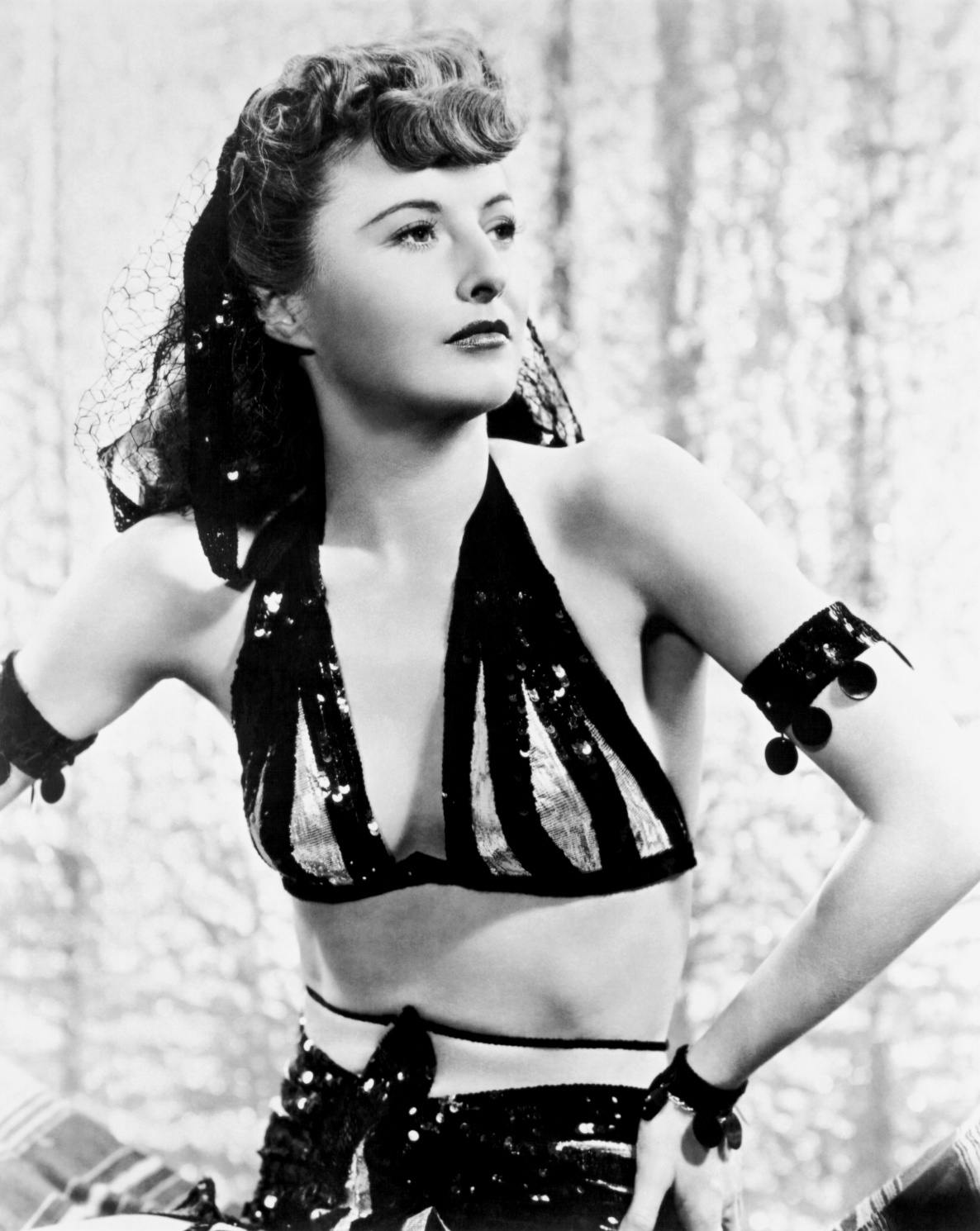
Today’s media faces an uprising of women (and for that matter men who look at women) that feel the body sizes we’re shown are unattainable; they are fantasy fodder being a detriment to anyone who looks at bony size 0 skeletons when the average woman has meat on her. The femme fatale is usually described as “curvy.”  She’s seductive, sexy and has a wiggle when she walks. I asked Taylor if this discrepancy makes the literary femme fatale more accessible or relatable. He replied, “I really don’t [see] this as an issue here (unlike in drawn works like comic books), if only because so many of them became standard fair in noir films and thrillers. Is Lauren Bacall attainable? Well, Lauren Bacall sure seemed to attain her. The same goes for Ann Savage, Marlene Dietrich, Rita Hayworth, Veronica Lake, Lizabeth Scott, Barbara Stanwyck, Gene Tierney, and numerous others. Some much of the idealized femme fatale is based on actual women that I think it cuts that argument off at the knees (and then locks it in trunk and drives it to the quarry to bury it in cement).” ...

[Link] What Corrina Lawson Learned Watching the Big Valley


Insp Channel have been running The Big Valley, a television western from 1965-69 that holds up extremely well despite it’s age. I wrote a longer story about why you should love the show for Sequential Tart but I’ve been learning new things every day from the show and wanted to list them.

1. Do Not Make the Matriarch Angry.
Victoria Barkley, the matriarch of the clan, is played by Barbara Stanwyck and she’s awesome. But in the episodes I’ve seen, Victoria has been a mean shot with a rifle (her body count must be in the double digits at least), driven a rig cross-country to deliver medical supplies to the Indian reservation, protected a group of women being pursued by bad guys, took down two murderers chasing her and her daughter while unarmed, got involved in a sex scandal with a politician, fought her way out of an underground cave.

For good measure, she’s a mean cook too. I think she and Cordelia Naismith would get along very well.

2. Fighting is the Best Way to Make Friends
I learned this from Nick, the hot-tempered middle brother. There are conditions. One, you have to fight with someone the first time you meet them, thus allowing time to make friends later. Nick does this at least four times in the episodes I’ve watched so far, including the first time he meets his new brother, Heath, and with Pernell Roberts, doing a very bad Irish accent.

For the full post: http://corrina-lawson.com/2011/12/16/what-ive-learned-watching-the-big-valley/

The Writer Will Take Your Questions Now (#21) -- Comedic Femme Fatales

Would you consider a comedian to be able to fill the role of femme fatale? 

Usually when a femme fatale appears in comedy, it seems to me that she’s there to serve as a joke against the archetype rather than as a true femme fatale. 

An actress, however, can surely play that role with comedic timing and witty one-liners. 

Just look at Barbara Stanwyck. Her femmes brought as much humor  as sultry to the role. And River Song’s propensity for clever one-liners doesn’t detract from her femme-ness at all. I will say, though, that most often, the humor is added value to a dramatic plot, rather than a comedy-based work to begin with. 

I'd go so far to say that the best of the femme fatales used humor to hold their own against the male leads they faced and flabbergasted.

Friday, December 16, 2011

More Free Holiday Pulp Tales -- Get 'Em While They're Hot... er... Cold!

In honor of the holiday season, Joshua Reynolds is offering a FREE Christmas story, "Merry John Mock." Featuring sinister mummers, murderous locals, mad archaeologists and a singularly menacing Outer Abomination, it's a grim little stocking stuffer by way of William Hope Hodgson and Anthony Shaffer. Joel Jenkins is in on the act as well, if your reading tastes run to the action-adventure variety, with "The Christmas Eve Killers."

Details here (and a excerpt to tease you mercilessly): http://joshuamreynolds.blogspot.com/2011/12/wassailing-we-will-go.html

Happy holidays!

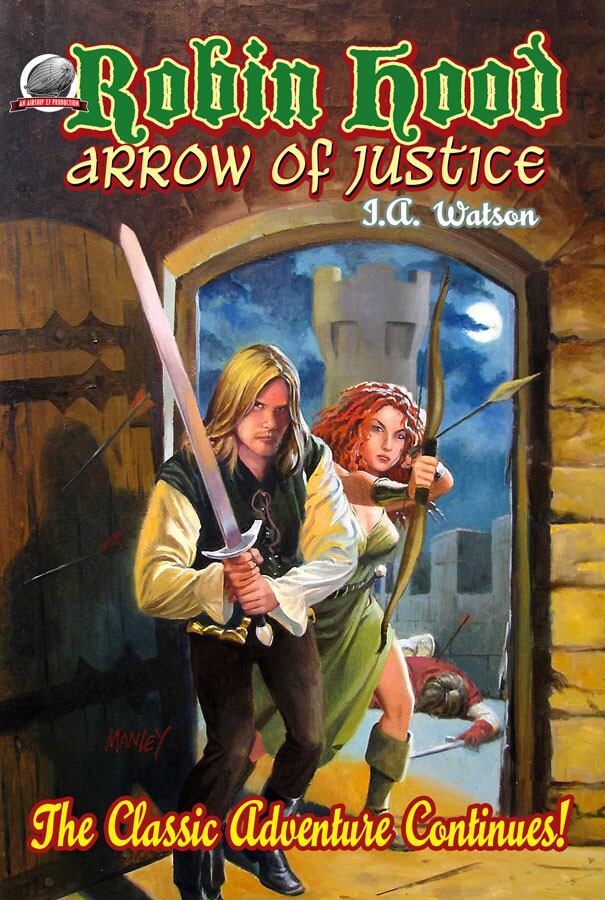
Getting to know the man behind the man in (no) tights -- Ian Watson

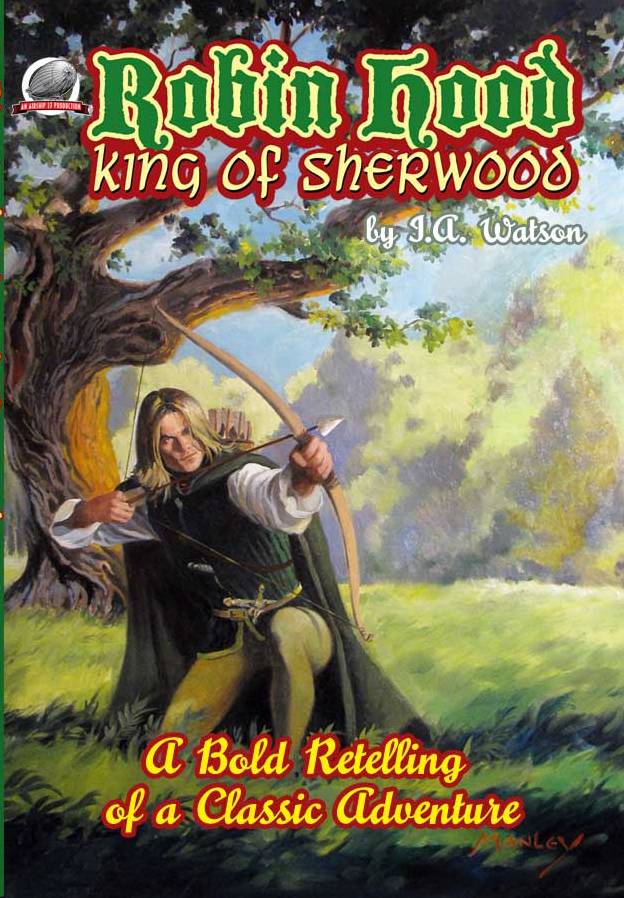
(In which the blogger/writer/webmaster/exhausted one takes some time off from actual writing to chat with Ian Watson about his work, particularly his newest Robin Hood volume.)

Tell us a little about yourself and where readers can find out more about you and your work?

The three strangest things I’ve done this week are try to buy a college, conduct an archaeological survey on a 1790s Methodist chapel, and do an interview for an online pulp site.

The college bit comes from my day job, wherein I’m a freelance consultant project developer. I’m acquiring a great old estate for a client who wants to set up a multimedia centre of excellence and make movies! The site survey was with my daughter, who’s studying archaeology and classics; I was required to hold the other end of the ranging rods. My son stayed well clear. And the interview… well, here we are.

When I was nine I read my first issue of The Avengers comic, #4, “The Coming of Captain America”. It blew my mind, got me into comic collecting, and eventually led to my regular participation in an online Avengers message board. Some lengthy essays there got me invited onto a private Avengers mailing list. When a bunch of these “Jarvis-Heads” decided to publish a book of articles on the Avengers I contributed quite a bit to it. Assembled!, and its sequel Assembled 2!, and its eventual other sequel called… well guess, have raised quite a bit of money for charity and got me into print.

About that time I was at a garden party, talking about some material I was researching for an article on King Arthur. As the conversation progressed it became clear that what I really wanted wasn’t to do a thesis but to tell stories. The person I was talking to pointed it out quite strongly. So I came home and started writing fiction, and I’m still writing. This isn’t a very interesting answer - except the helpful garden party was at Buckingham Palace.

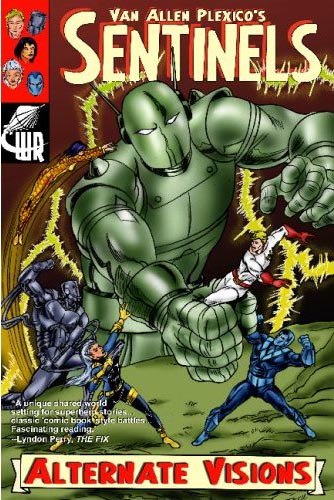
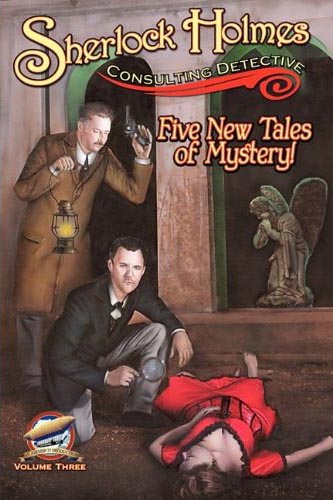
When Van Plexico of White Rocket Books decided to do a “guest writer” volume of his successful Sentinels superhero series I was invited to contribute a short story to Alternate Visions; so I did. That got me recommended to Ron Fortier of Airship 27 as an author for Cornerstone’s Sherlock Holmes: Consulting Detective series, primarily because I could write fast for an approaching print deadline I suspect. That series proved pretty popular, spawning two more volumes so far and a fourth next year. One of my stories in volume 2 got nominated for the Pulp Ark “Best Short Story 2010” award and actually won the Pulp Factory “Best Short Story” award.

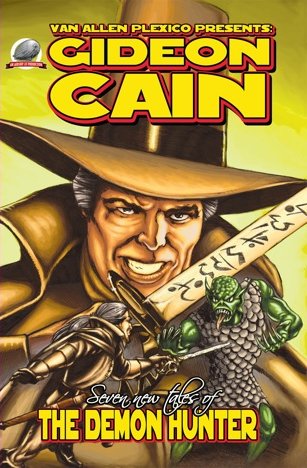
That Avengers mailing list I mentioned also spawned an idea for a Solomon Cain-type story. It got kibitzed with some pretty high-powered creative types to make it into something original with its own voice – that’s why Kurt Busiek wrote the introduction to the book we eventually produced, Gideon Cain: Demon Hunter. My story in that got nominated for a couple of awards too.


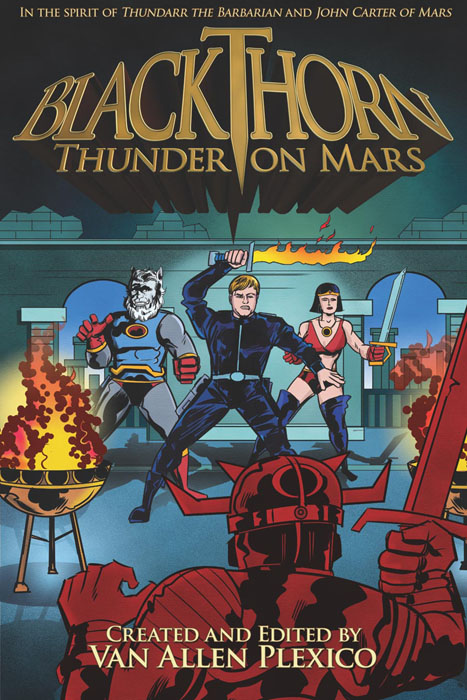
Most recently I’ve also been a part of the Blackthorn: Thunder on Mars SF anthology, having fun with the idea of a 21st century soldier who wakes up on far-future Mars and leads the resistance to the tyrants who control it. The book’s style was pitched as Edgar Rice Burroughs meets Jack Kirby. Who could resist that?

So if it wasn’t for the Avengers I wouldn’t be here answering these questions. If it wasn’t for a personage eating cucumber sandwiches I wouldn’t be writing stories for publication. If Van Plexico, Ron Fortier, and a bunch of other people who are far too creative for their own good weren’t so damned persuasive I’d have a little free time.

How did you become involved with the Robin Hood, Arrow of Justice book?

Along the way I was encouraged to produce a novel. Airship 27 kindly provided me with a list of properties they’d be happy to publish books about. King Arthur was actually on it, and I’d got plenty of Arthurian material by then, but I decided it would be better to write something specially designed for the page-count and marketplace. And right there under Arthur Pendragon’s name on that list was Robin Hood. So Robin Hood: King of Sherwood picked up two Best Novel nominations in 2010. The second volume in the trilogy, Robin Hood: Arrow of Justice has just hit the shops this month. The third volume, Robin Hood: Freedom’s Champion, is already “in the can” due for next year’s publication schedule.

Robin Hood has had many widely varied characterizations in novels, comics, and films. How do you see him? Who is the real Robin Hood to you?

He’s the archetypal good-guy outlaw. When the law no longer serves justice, justice must come from an outside the law. Everybody from Zorro and the Saint to Knight Rider and the A-Team owe him a debt of thanks.

What’s more, Robin Hood’s so pervasive in our Western culture, especially British and American culture, that people already “know” what he’s really about. The marketers would say he’s got brand recognition. He’s a laughing swashbuckler, the people’s champion, the sneaky trickster, the defiant rebel, the forest legend. He’s Errol Flynn and Natty Bumpo and Bugs Bunny and Che Guevara and Robin Goodfellow all wrapped up in Lincoln green and leading a fellowship of like-minded felons.

What helps is that people have been telling Robin Hood stories for a very long time. He gets a mention in Piers Plowman, the very first written fiction in the English language. There’s a wealth of old ballads and folk tales that give us all the elements of who he is and of what his cast are like. Pretty much all the things everyone knows about Robin, including his enmity with the Sheriff of Nottingham, his friendship with Little John, his romance with Marion, his most audacious stunts, all come from those centuries-old sources.

I wanted to ground Robin in the world as it was around 1191, the time King Richard the Lionheart went on his crusade and left a divided, bankrupt England to the schemings of his brother John. It was a grim time, only 125 years since the forcible conquest of England by the Normans. Serfs were little more than slaves. The church was powerful but not always charitable. The barons squabbled and did what they liked.

So Robin had to be the antidote to that. He had to be fun! The worst thing you can do to a tyrant is make people laugh at him, so I wanted Robin to be audacious and daring versus the Sheriff’s meticulous scheming. He had to be the shining fizzing sparkling wise-cracking big-headed big-hearted full-on adventure hero who gave those starving peasants hope – and something to chuckle about when he put one over on the Sheriff again. After all, the very first thing we know about Robin’s followers is that they were Merry Men.

Robin Hood’s story is very much about “us versus them who keep us down” and the ordinary fellow putting one over on the rich and the powerful. It speaks as much to us today in a world of powerful corporations, corrupt bankers, slick politicians and economic downturns as it did to those common folk centuries ago gathering after dark to grumble about the bosses. Robin Hood’s a blue-collar hero.

What do you think makes Robin Hood a pulp character?

Well, he’s an action hero. His stories and ballads were circulated in mass-produced cheap-print editions for the common masses. His tales are generally fast-paced, adventure-oriented, with strong goodies and baddies to cheer and boo. Robin’s not just a hero; he’s got at least a claim to being the first pulp hero!

And if he doesn’t get the ward, he’ll probably steal it anyway.

Of course there are other ways to write him too. He’s been the subject of plays by Shakespeare’s contemporaries (the Bard mentions him too), of a poem by Keats and a stage production by Tennyson. He appears in Sir Walter Scott’s Ivanhoe and T.H. White’s The Once and Future King. He gets around and there are plenty of ways to write him. I deliberately set out to tell a Robin Hood story as it might have appeared in the Strand Magazine or Weird Tales. The techniques, characters, and situations blended remarkably easily with pulp styles.

With that in mind I tried to do the story in episodes. There are chapters that might each appear weekly in some periodical. Each book tells a complete narrative – readers could pick up the new Arrow of Justice without needing to invest in King of Sherwood first and they’ll still get a “proper” story – that is intended to keep the pages turning, keep the emotions coming, keep the audience pulling for the underdog. The intention was that by the time we get to the climax we’re more interested in seeing Robin and Marion win than we are in walking the dog, in getting supper for the kids, in going to bed in time to get up tomorrow. That’s what good pulp fiction’s supposed to do to you.

Why does Robin Hood appeal to you as a writer and a reader?

I wasn’t really that interested in Robin Hood until I had to work out how to tell a story about him. It was when I spent some time reading the original source material to get a feel for what he was about that I realised he was a very contemporary character. Which of us hasn’t wanted to rebel against stifling corrupt authority and change the world? Who doesn’t wish that something could be done for the powerless victims of oppressors who own the system? Robin was loved because he was a wish-fulfilment hero who fought the law when the law was wrong - and won.

I wanted to do something that brought the sensibilities and worldview of that original material to a modern audience using modern techniques, and I had to work out how to do that without plagiarising or copying other modern versions.

It occurred to me that most contemporary iterations of Robin Hood tend to skirt over his origins. We might get a returns-from-crusades-and-is-shocked-by-injustice scene, or a revenge drama because the Sheriff had dispossessed him or something, but mostly as soon as Robin spots injustice he leaps into a tree in Sherwood Forest and starts robbing the rich to give to the poor. But why would he be like that? What would motivate a woodland bandit to become a champion of freedom?

I decided that my Robin was going to be a young rogue and we’d see him “become” the Hood of legend bit by bit. Robin Hood would be a work-in-progress. So I needed a catalyst, and really there’s one catalyst that works better on young rogues than any other, then and now: Robin meets a girl.

I needed Maid Marion to be a very strong character. She has to be Robin’s match, the only one who can keep up with him, the only one who can sometimes surprise the trickster. Outlaw Robin meets noble Marion and they each shake the other’s worlds and both force their opposite to re-examine their convictions and their lives.

I enjoyed typing the Robin and Marion scenes. Those were the bits where the characters really wrote themselves.

Adventure heroes need competent villains. I wanted a range of different kinds of threats for Robin to face from adversaries that each behaved differently and used different kinds of villainy. In the stories I wrote, the Sheriff of Nottingham is the cold calculating games-player, the absolute opposite of intuitive tricky Robin. Sir Guy of Gisbourne, Prince John’s envoy, is a sadistic berserker, cruel for cruelty’s sake, delighting in his power over the helpless, willing to commit any atrocity to bring Robin down. Prince John himself is late to appear in the series, but he’s a vindictive political opportunist who’ll do anything for advancement and who never forgets a sleight. Each of these and the various other adversaries Robin must survive is designed to challenge him in different ways and require different responses from the outlaw.

That kept writing the tale interesting. Hopefully that will come across in reading it too.

Tell us a little bit about your work in the Arrow of Justice book. What kind of dangers will Robin face?

The first book covered the first frantic week where Robin and Marion meet and their legend begins. By the end of that volume pretty much everything people “know” about Robin’s set-up is in place. Robin has joined up with Little John, Friar Tuck, Will Scarlet and the rest. He and his band are in Sherwood redistributing taxes without the Sheriff’s consent. Prince John is lusting after Maid Marion and plotting her father’s downfall. People are starting to hear about the outlaw “king of the forest”.

Arrow of Justice covers the three months that come next. The Sheriff of Nottingham lays his plans – for Marion’s family’s downfall, for his own wedding to a rich and unwilling young heiress, for the capture and destruction of Robin Hood. The good guys have made their move. Now the bad guys get to respond in the way that all totalitarian states do to civil unrest. Meanwhile, Marion tried to return to the old life she had before meeting the merry men and finds it doesn’t really fit her any more – the outlaw inside her keeps bubbling to the surface.

Book one was about Robin and Marion coming together, changing each other, then changing the world. Book two deliberately keeps them apart until near the end, but those changes they’ve wrought in each other still run true. But there’s still plenty for the romantics as well as the adventure-seekers. This is the volume that covers a couple of Robin’s most famous capers including the Sheriff’s archery contest where a disguised Robin seeks a golden arrow and the hand of the Lady Marion.

If folks would like a preview they’re welcome to take a look at http://www.chillwater.org.uk/writing/robinhome.htm.  As well as sample chapters from both Robin Hood books there are links to purchase print or e-book editions, some additional material including maps and character profiles, and some information about the other publications I mentioned back at question 1.

Any other upcoming projects you would like to plug?

In the next few months there’ll be some more anthologies with my work in them:

The New Adventures of Richard Knight volume 1 includes “The Hostage Academy,, wherein the aviator detective uncovers a devious plot to control the decision-makers of America through their kidnapped loved ones. There will be details at www.prosepulp.com shortly but nothing yet.

Sherlock Holmes: Consulting Detective volume 4 will feature “The Case of the Clockwork Courtesan”, wherein a life-sized mechanical doll may have committed a murder.

Price of the Missionary’s Gold – the New Adventures of Armless O’Neil includes the title story wherein a missing boatload of bullion lost during civil war in the Congo prompts a ruthless band of mercenaries to attempt mass murder unless the one-handed adventurer can stop them.

There’ll be a new Robin Hood short story, “The Slavers of Whitby” in the online magazine Pulp Spirit #14, available free from 1st February 2012 at http://www.planetarystories.com/

And there’ll also be a Robin Hood comic story, “Lionheart’s Gold” in All Star Pulp Comics #2 from Airship 27.

Beyond that I’ve turned in work for two other anthologies that’s its too early to talk about and I’m committed to write for three more. Then Robin Hood: Freedom’s Champion will finish the Robin Hood trilogy.

The Sherlock Holmes volumes are available from http://www.gopulp.info/.

Gideon Cain, Blackthorn, Alternate Visions and the Assembled! volumes are available from White Rocket Books at Whiterocketbooks.com.

And of course these things are available from the usual retailers.

Anyhow, enough plugs. Everybody should go and fight injustice now.

Thanks for your time, Ian!

The Writer Will Take Your Questions Now (#20) -- Female Heroes

Looking at today’s television programming, the women are often the heroes (CASTLE’s Beckett, BODY OF PROOF’s Dr. Hunt, BONES’ Dr. Brennen) - is this female hero a new icon that deserves its own identifier instead of femme fatale? -- Elizabeth Amber

I think so. I think the female hero is actually a modern outgrowth of the doors opened by the femme fatales of the past. If it hadn’t been for tough dames who could hold their own against the men, often as equals, and sometimes as betters, who chose death or loss rather than being a traditional arm decoration, then the modern female hero wouldn’t have had such a strong foundation on which to stand today. But I also really don’t see these modern female heroes as femme fatales at all. In some cases, they may share traits with them, but they’re an entirely different animal. 

When I got the gig writing Gene Simmons' Dominatrix, I wanted to blend the classic idea of the femme fatale with the modern female hero. Dominique is clearly not a proverbial "good girl" -- no matter how she's drawn. Instead her root elements are gathered from the stock of the bad girls, the temptresses, i.e., the femme fatale. But she's the star of the show, and she plays second fiddle to no one, man or woman.  That alone disqualifies her from being a classic femme fatale. So what is she? Hopefully, if I wrote her like I intended, she's something different, something colored from both the fatale palette and the heroine palette, something that can step in both worlds, and confuse every opponent and "partner" she encounters.

Thursday, December 15, 2011

[Link] Salon's Rebuttal Article to Russo -- Farhad Manjoo

Don’t Support Your Local Bookseller
Buying books on Amazon is better for authors, better for the economy, and better for you.


I get that some people like bookstores, and they’re willing to pay extra to shop there. They find browsing through physical books to be a meditative experience, and they enjoy some of the ancillary benefits of physicality (authors’ readings, unlimited magazine browsing, in-store coffee shops, the warm couches that you can curl into on a cold day). And that’s fine: In the same way that I sometimes wander into Whole Foods for the luxurious experience of buying fancy food, I don’t begrudge bookstore devotees spending extra to get an experience they fancy.

What rankles me, though, is the hectoring attitude of bookstore cultists like Russo, especially when they argue that readers who spurn indies are abandoning some kind of “local” literary culture. There is little that’s “local” about most local bookstores. Unlike a farmers’ market, which connects you with the people who are seasonally and sustainably tending crops within driving distance of your house, an independent bookstore’s shelves don’t have much to do with your community. Sure, every local bookstore promotes local authors, but its bread and butter is the same stuff that Amazon sells—mass-manufactured goods whose intellectual property was produced by one of the major publishing houses in Manhattan. It doesn’t make a difference whether you buy Walter Isaacson’s Steve Jobs at City Lights, Powell’s, Politics & Prose, or Amazon—it’s the same book everywhere.

Read the full article here.

====================

Your thoughts?

[Link] Amazon’s Jungle Logic -- Richard Russo


I FIRST heard of Amazon’s new “promotion” from my bookseller daughter, Emily, in an e-mail with the subject line “Can You Hear Me Screaming in Brooklyn?” According to a link Emily supplied, Amazon was encouraging customers to go into brick-and-mortar bookstores on Saturday, and use its price-check app (which allows shoppers in physical stores to see, by scanning a bar code, if they can get a better price online) to earn a 5 percent credit on Amazon purchases (up to $5 per item, and up to three items). ...

Stephen [King] wrote “I love my Kindle” and noted that Amazon had done well by him in terms of book sales. But he too saw the new strategy as both “invasive and unfair.” He thought that many would see the new promotion as nothing more than comparison shopping on steroids but that, in fact, it was “a bridge too far.”

Read the full article here: http://www.nytimes.com/2011/12/13/opinion/amazons-jungle-logic.html?_r=2&pagewanted=1 

====================

Your thoughts?