Thursday, August 16, 2012

[Link] The Writing Process Part 8 – Using Advance Readers

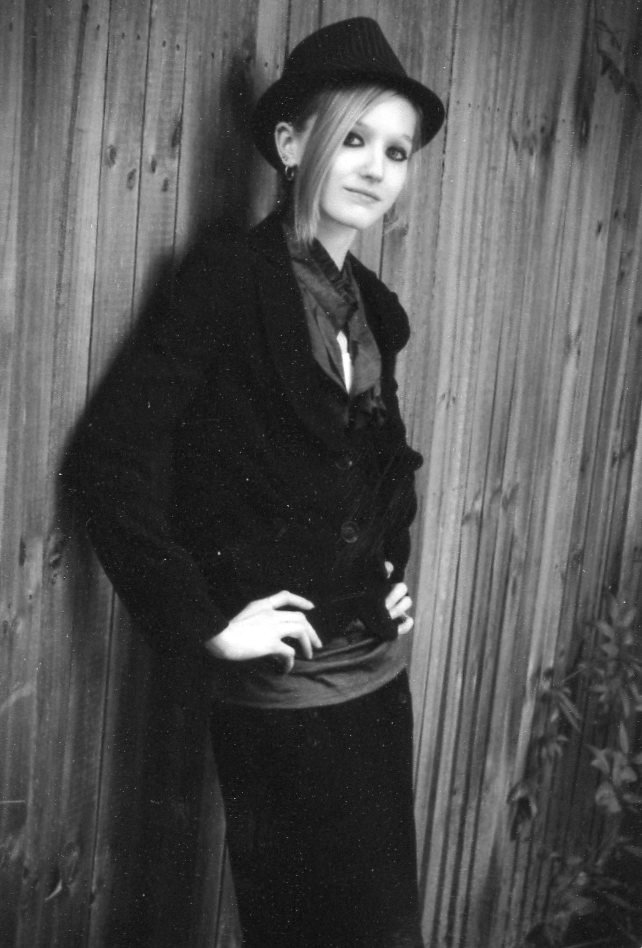
M.B. Weston, or, as I prefer to think of her,
the writer who has never taken a bad photo..
 by M.B. Weston


Your most valuable writing asset isn’t your computer, grammar knowledge, or storytelling ability. It’s your arsenal of advance readers.

Have you ever applied an update to a software program or a smartphone app only to have it crash immediately (or worse, lock up your device)? How frustrated did you feel? I usually end up yelling into my computer or phone, hoping the software developers can somehow hear me. “If only,” we think, “they had tested this on a few people to make sure it worked before they released it to the world!”

This is why many companies have beta users: people who volunteer to test the software to see how it works before it reaches the public.

You don’t want your cell phone company to send you an update without first testing it. In the same way, you shouldn’t consider your manuscript complete without letting a few people read it first. This post will discuss how to use your advance readers (or your beta readers, depending on what you call them).

Continue: http://mbweston.com/2012/08/15/the-writing-process-part-8-using-advance-readers/

The Writer Will Take Your Questions Now (#209) -- Then Beggers Could Ride

How would you answer: "If I could write _______________, 
I'd probably be a lot richer and more popular by now?"

Easy. If I could write action-driven, commercial romance novels, I'd undoubtedly be a lot richer and more popular by now. Seriously, writers who have mastered that genre make me very, very jealous.

Wednesday, August 15, 2012

The Writer Will Take Your Questions Now (#208) -- Chekhov's Gun

What are your thoughts about Chekhov's rule of "the gun"?
(Today's question courtesy of the talented and lovely Amber Love)

Nope. Wrong guy.
For those not familiar with this classic writing "rule," here's the official word from Anton Chekhov himself so many years ago:
 
"If in the first act you have hung a pistol on the wall, then in the following one it should be fired. Otherwise don't put it there." From Gurlyand's Reminiscences of A. P. Chekhov, in Teatr i iskusstvo 1904, No. 28, 11 July, p. 521.’

In other words, don't surprise the reader with something important you haven't already set the stage for by revealing it previously. Equally, don't throw an important "prop" around your work without planning to use it at some point later.

I'm a big fan of the rule of Chekhov's gun, but with certain caveats.

Yep, the "ashtray" guy.
First, I prefer the the gun (or whatever "prop" it is) be brought up subtly, almost a literary afterthought rather than a blatant "Oh, look, there's a gun over on the mantle!" Second, I don't think it's necessary in all situations, such as Batman's utility belt, for example. Once you've established that Bats has all kind of things prepared in his belt, then you don't need to list them in order for him to use them later. However, that being said, (and my third caveat) if Bats is going to take out Killer Croc with a harpoon that happens to be in the corner, then by all means, make sure the harpoon gets mentioned in one of the earlier acts. Don't save it until just that moment with a sort of "Oh, good thing I suddenly notice a harpoon in the corner -- Lucky me!" kind of flourish. That's just lazy writing.

Tuesday, August 14, 2012

How to support an indie author


The Writer Will Take Your Questions Now (#207) -- Pulp's Grandchildren

What's the difference between new pulp, regular pulp, and noir?

Pulp
To answer that we have to go back to the medium and not the genre. Pulp stories originally got their "genre" from the fact that they were published in cheap formats on cheap paper, or pulp. It had nothing to do with the stories and everything to do with the printing. (In that sense, ebooks are probably the closest to the spirit of that format definition of pulp.)

Gradually, however, as people began to really get into the stories printed on that cheap paper, the stories became known as pulp stories. Eventually readers and marketing folks grew to see them as a genre.

Fast forward a few years.

Hard-Boiled/Noir
The pulp of the 30s grew up and got gritty. Thrilling adventures of black and white, good and evil turned into seedy dramas clouded in shades of gray. Pulp's darker, more sinister younger brother was born -- hard-boiled or noir. As a result, even the pulp of the magazines became grittier and more dangerous and often even lurid, such as in the men's magazines of the day. (A caveat: Some folks divide hard-boiled as prose and noir as purely film, but the aesthetic of noir spilled over into literature, just the same, as far as I'm concerned, even if the literary movement never officially bore the name.)

Then years later, along came a new group of readers and writers who for many reasons hearken back to the days of pulp yore, whether due to their fathers' collections or a lucky find in a yard sale or a stray copy of Amazing Stories found in a used book store. They longed to find or create more of the stories like the ones they loved from the days of the adventures printed on the pulp stock. And so new pulp was born.

With many gifted writers, both those who called themselves new pulp like Bobby Nash, Barry Reese, Van Allen Plexico, Derrick Ferguson, and many others I could name and those who may not even claim to represent the "genre" like Christa Faust and Will Murray, new pulpsters are publishing not only new adventures of classic characters like the Shadow, the Spider, Armless O'Neil, the Green Lama, and the Golden Amazon, but they're also creating new characters in the tradition of the classic pulps such as the Rook, Rick Ruby, Lance Star, Angel O'Dare, and Dillon.

New Pulp
So, to summarize...

Pulp = adventure, romance, horror, etc. stories published on cheap paper and written for the common reader

Hard-Boiled/Noir = gritty, shades of gray, often violent or lurid adventure stories in the pulp tradition

New Pulp = new stories featuring classic pulp characters and new characters and stories in the tradition of the pulps

Got it? Because we may have a quiz later.

Monday, August 13, 2012

Femme Fatales (Repeated)

Because anything worth saying is worth repeating, here's a post from early in the blog's history, reposted for your reading pleasure. 

Like the hard-boiled hero, the femme fatale dates to classic myth. An example is Circe, who turned Odysseus' men into swine in Book X of The Odyssey and the Sirens, whose beauty and alluring song attracted his sailors in Book XII. … In the Middle Ages, Christianity refashioned this archetype as a devil, called the succubus. -- Characteristics of Hard-Boiled Fiction: The Femme Fatale (http://www.detnovel.com/FemmeFatale.html)

If you read my writing at all, you know I’m obsessed with writing femme fatales into my stories. In defense, giving the hero an equal and opposite makes for strong storytelling, but surely I could just give him a straight up villain for that role, right? Yes and no.

While a villain needs to be a fully realized character just as much as the hero, the femme fatales (at least to me) are something different, something special, the proverbial monkey wrench (though drenched in curves and slinky sex appeal) thrown into the machine. It’s her role to play Jiminy Cricket in a way, but more for the dark side, but not completely dark, but dark enough to fight dirty and to throw society’s conventions to the wind. She’s the little voice trying to seduce the hero to true independence from being pure good. She’s the test, at least in my mind, that reminds the hero that he (or she) has feet of clay and to never take that for granted.


A Few of My Favorite Femmes

Femme fatales abound in classic films, of course, and many of my favorite actresses played them at one point or another in their careers, such as Marlene Dietrich, Rita Hayworth, Veronica Lake, Lizabeth Scott, Lauren Bacall, Gene Tierney, and Ann Savage, and some, such as Barbara Stanwyck all but made playing them their bread and butter roles.

But many of my favorites exist outside of classic noir films. In comics, particularly, Catwoman has to be the ultimate femme fatale, the temptation for Batman to dirty his cowl and cape by letting her go and subsequently trying to tame her time and time again. In many ways, Poison Ivy serves that role to, but with a darker shade of fatale than Selina. Many of today’s comic book heroes got their start that way, from Scarlet Witch to Black Widow.

In Christa Faust’s Money Shot, Angel Dare is in effect both the hero and the femme fatale as the same time.  Even classic fantasy has its share, including the women who oppose and test and support Thomas Covenant in his adventures written by Stephen Donaldson.

While she was most certainly on the side of right and good, even Emma Peel was clearly built (pun intended) on the model of the classic femme fatale, as if dressing up the heroine from the bad girl’s closet would engender the show to a greater demographic—which it did. Even Doctor Who got into the act with the addition of River Song, who is clearly the Doctor’s equal, and clearly less concerned about society’s moral impositions than the stodgy Doc. If anything, she’s a modern creation, the femme fatale with the heart of gold (somewhere underneath all the shooting and jail-breaking.

And modern films and TV are full of them too, including the Indiana Jones series, Decker’s obsession with Rachael in Blade Runner, Angel’s Drusilla, Darla, and later Illyria, and one of my favorites, Captain Mal’s “wife” of multiple names played by gorgeous Christina Hendrix.


What’s Fates Got To Do With It?

No. That’s not a typo. It’s not fate, like destiny, but fates, like the three Greek mythic women. Just look at Hammetts’s The Maltese Falcon:
“There Sam Spade is attracted to three women, a motif that echoes the ancient Greek Fates, who tell men the future. He is involved in an adulterous affair with his partner's wife, Iva Archer. His secretary, Effie Perrine, is a tom-boyish, competent girl-next-door who would make the perfect spouse. Brigid O'Shaughnessy, the femme fatale, seems to promise sensuality and wealth, but Spade sees through her – and uses her when she thinks she is using him. The novel's end leaves Spade alienated from Effie, who is, ironically, mad that he rejected the "romance" of Brigid, while Iva knocks at the door. It is a grim morality play about making your bed and lying in it.” (http://www.detnovel.com/FemmeFatale.html)
I had forgotten about this at the time, but realize now it’s the same thing Bobby Nash and I did when we put together the story bible for The Ruby Files for publisher Airship 27. Our own 1930’s private gumshoe has his own trio of beauties to contend with—his good girl secretary who wants to save his soul, his bad girl interracial lover, and the socialite who wants to tie him down to marriage—not to mention the femmes he meets from story to story. I’m sure one smarter than I am could make an id, ego, and superego reference to those three female archetypes as well.

“Of the three types of noir women, the femme fatale represents the most direct attack on traditional womanhood and the nuclear family. She refuses to play the role of devoted wife and loving mother that mainstream society prescribes for women. She finds marriage to be confining, loveless, sexless, and dull, and she uses all of her cunning and sexual attractiveness to gain her independence. … She remains fiercely independent even when faced with her own destruction. And in spite of her inevitable death, she leaves behind the image of a strong, exciting, and unrepentant woman who defies the control of men and rejects the institution of the family.” (www.lib.berkeley.edu/MRC/noir/np05ff.html)

“Critics tend to classify the women of film noir into two categories identified by Janey Place: the "rejuvenating redeemer" or "good" woman and the "spider woman" or femme fatale. But noir films also feature a third type of female character, the "marrying type" — a woman who poses a threat to the hero by pressuring him to marry her and "settle down" into his traditional role as breadwinner, husband, and father.” (www.lib.berkeley.edu/MRC/noir/np05ff.html­)

I really like that term “spider woman” and not because it makes me think of a certain friendly neighborhood wall-crawler. To me it really defines the type of woman I’m addressing here—she spins a web and you will get caught in it if you get to close. And chances are, she will eat you up, whether literally or symbolically, before the tale has come to an end. 

Or as Marlene Dietrich sang in The Blue Angel in the song "Fallling in Love Again":
"Men cluster to me like moths around a flame
And if their wings burn, I know I'm not to blame"
She does her thing because it’s her thing to do. No one can tell her differently and no man can tame her.

In the majority of noir films, however, the femme fatale remains committed to her independence, seldom allowing herself to be converted by the hero or captured by the police. She refuses to be defined by the male hero or submit her sexuality to the male-dominated institution of the family; instead, she defines herself and resists all efforts by the hero to "put her in her place." (www.lib.berkeley.edu/MRC/noir/np05ff.html)

And just now, as I’m typing this post, it hits me that I’ve subconsciously done the same thing in my story “City of Relics” for the Blackthorn: Thunder on Mars sci-fi anthology for White Rocket Books. The bad girl, the one who falls in love and could settle down (if the difference in species would allow for it), and the companion good girl, all together again in a pulp space adventure. The fates reunited on Mars for another book tour, so to speak.

So you see how these archetypes just work their way into you as a writer and become sort of second nature. Good stories are good stories, and so many of them have their basis way back in the myths and legends of the ancient world, even for something as future-seeking as Martian sci-fi or as tied to the early 20th Century American life as gritty pulp noir.

All well and good, of course, but the one who interests me is the bad girl with the heart of gold. She may ultimately fight on the side of right and good, but doesn’t mind getting her hands dirty or playing a game of “seduce the hero” while fighting the good fight.


Thank You, Barbara Stanwyck!

But really, you may say, all this is just a way to cover up the fact that you want to write sexy, violent women without people thinking you’re some kind of delinquent pervert.

Well, one thing I’ve learned is that people will think what they damn well please, and I try my best not to care what they think.

When I was writing the Gene Simmons Dominatrix comic book for IDW Publishing (of which I was thrilled to find Broken Frontiers called in a review “the pulpiest pulp on the stands”) I wrote a few pages of dialog between Dominique and her handler/client Doug that I think sums up my fascination with the femme fatale role and why I write them so frequently into everything from sci-fi to super-heroes to fantasy to action stories.

While Dom is threatening to throw Doug out of her house painfully, he blurts out the simple words, “Barbara Stanwyck.”

Dom replies: “What?”

Doug: “Barbara Stanwyck. She got me into this.”

Dom: "The woman from The Big Valley got you interested in conspiracies?"

Doug: "Doesn’t anyone under forty watch classic films anymore? Lady of Burlesque? Martha Ivers? Double Indemnity? Ringing any bells here? I watched her movies when I was a kid. I guess I sort of fell in love with strong women because of that."

Dom: "Fine, but don’t try to turn this into some kind of bad movie moment."


I was trying to explain Doug’s nature to readers at the time, but the more I go back and read the Dominatrix trade paperback, I find that I was inadvertently writing myself into the story at that point. It was Barbara Stanwyck who defined the role of the femme fatale for me, and I’ve been writing her into so much of what I create without even realizing it.

Even in her more dramatic (Meet John Doe) and comedic (The Lady Eve) roles, her characters were tough as nails and played by their own rules.


My Own Twist

I’ll admit it. I hated the movie Pretty Woman. I just can’t buy into the hooker with a heart of gold theme. Maybe it’s my fascination with noir. Everything should be dirty, tainted of original (and some new and unique) sin.

In spite of that, I do however love to write the femme fatale with the heart of gold—or at least with a heart of something slightly less valuable than gold. For me, the pinnacle of my fatale creations is Monique San Diablo (also called the “Saint Devil”), whom I created for my story “A Dance with the Devil” in Lance Star: Sky Ranger Volume 3. She plays both sides of the fence, freely admits to being a thief when it suits her, and a British agent when her special skills are needed On top of that, she’s more than willing to sully poor Lance’s reputation with his good girl Betty—if she can convince him to take her for a ride. She’ll do what it takes, but she’ll also do what she wants, all the while saving the day—when she feels like it.  

And there you have it.

Hi. My name is Sean, and I’m obsessed with writing femme fatales. But I didn’t spill my guts so I could quit like some 12-step program because… What’s that saying? … Oh yeah, 12-step programs are for quitters, and well, me and my femme fatales, we’re in it for the long haul.

So pipe down and back off, before they fill you full of lead, you big galoot.
_________________________________________________________________________________

And in case this post has gotten you interested, here’s a list of “The Greatest Femme Fatales in Noir Film”: http://www.filmsite.org/femmesfatales.html

The Writer Will Take Your Questions Now (#206) -- More Than vs. Over

Any other common grammar mistakes that drive you crazy?

The cow didn't jump more than
the moon. Well, it probably did.
I hear and see this one all the time, particularly in advertising, and it drives me nuts: "over" used when "more than" is correct.

An example...

We have over thirty years experience in lighting expertise.

It should read...

We have more than thirty years experience in lighting expertise. 

Why?

Because "over" is specific to spacial proximity, such as "The dog stood over the cat." And "more than" is specific to quantity. The two are not interchangeable, even if we grammar hardcases are losing that battle in public usage. Sorry. 

Note: Even AP is letting this one go based on what "sounds good" now, but even AP drops the ball sometimes.

Sunday, August 12, 2012

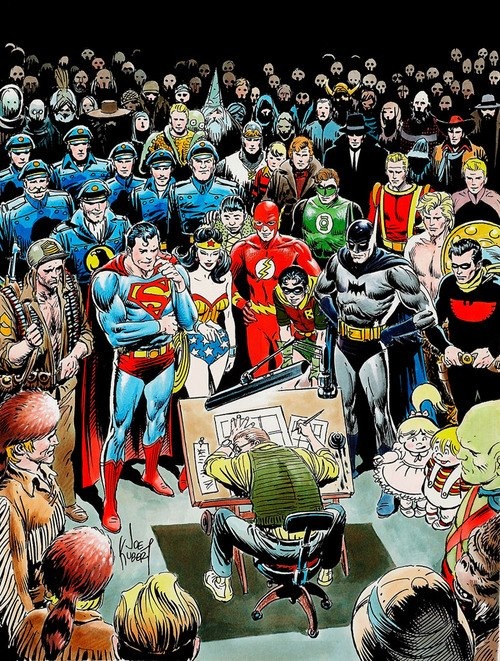
RIP Joe Kubert

By Todd Allen

Not a lot of details on this yet, but Twitter and Facebook are spreading the news that Joe Kubert has passed away.

Kubert, simply put, is one of the titans of field.  He’s probably best known for his work on Hawkman (including the original version in the 1940s) and his work on DC’s war comics, like Sgt. Rock.  Personally, I’ve always had a soft spot for his Tarzan.  Kubert was an editor at DC.  The founder of The Kubert School, training new artists.He is survived by his sons, Adam and Andy, both outstanding artists in their own right.

Continue reading: http://www.comicsbeat.com/2012/08/12/joe-kubert-passes-away-aged-85/

SENTINELS: THE GRAND DESIGN -- OMNIBUS PAPERBACK

Press Release – For Immediate Release 

The First Trilogy of Van Allen Plexico’s Superhero Novel Series—At Last in a One-Volume Edition! 

White Rocket Books proudly announces the release in trade paperback format of Van Allen Plexico’s SENTINELS: THE GRAND DESIGN, a one-volume collection of the first three novels in the famed cosmic superhero saga!

Weighing in at a whopping 624 pages and with a stunning painted cover by celebrated artist Mitch Foust, the “Grand Design” Omnibus also features no fewer than fifteen full-page interior illustrations by series artist Chris Kohler.

The book contains all three volumes of the first Sentinels trilogy (When Strikes the Warlord, A Distant Star, and Apocalypse Rising) in their entirety, introducing the heroes and villains (and those in between) that make up this fascinating and compelling superhero universe.  

What begins as an attempted abduction of a young student from her college campus quickly spirals out to engulf a diverse collection of individuals, including billionaire inventor and hero-wannabe Esro Brachis, beloved national savior (and amnesiac) Ultraa, wisecracking daredevil Damon “Cavalier” Sinclair, and mysterious alien powerhouse Vanadium.  Can this motley crew come together as a team in time to save the Earth from conquest or destruction?
Through the eyes of central character Lyn Li, a Chinese-American teen that possesses amazing electromagnetic powers, we encounter aliens and androids, geniuses and demigods, megalomaniacal arch-villains, space-borne monsters, and everything else one would expect from a classic Bronze-Age comic series—in New Pulp novel form!

“For most of my life I’ve loved the concept of a superhero team made up of very distinct individuals who barely get along with one another,” says author Van Allen Plexico.  “The fun comes in watching them encounter mind-blowing menaces and have to find a way—some way!—to work together long enough to miraculously save the day.  Throw in the ability that a novel series provides, to allow characters to really change and grow (and even die!) along the way, and you get what I strongly believe is a saga every superhero comics fan will love.  And with Chris Kohler illustrating the whole thing, you can’t go wrong!”

Plexico’s Sentinels series has been praised by Kirkus Reviews for offering “a fresh take on the superhero theme,” and by Pulp Fiction Reviews as “spectacular, action-packed, imaginative and wonderful.”  Noted superhero novelist Ian Thomas Healy called them “Kirbyesque,” describing Volume One as “the first book that successfully translates the feel of a comic book into prose.” 

White Rocket Books is a leader in the New Pulp movement, publishing exciting action and adventure novels and anthologies since 2005, in both traditional and electronic formats.   White Rocket books have hit the Amazon.com Top 15-by-Genre and have garnered praise from everyone from Marvel Comics Vice-President Tom Brevoort to Kirkus Reviews.

On sale as of August 8, 2012, SENTINELS: THE GRAND DESIGN (Omnibus) is a $21.95, 6x9 format trade paperback from White Rocket Books.  (The individual novels are already available as $2.99 e-books for Kindle and other e-readers.)

624 pages

ISBN-13: 978-0-98413-925-5 (6x9” Trade Paperback; 15 full-page illustrations)

On Amazon.com:  http://www.amazon.com/Sentinels-The-Grand-Design-Omnibus/dp/0984139257


Saturday, August 11, 2012

Submissions Needed: The Lost: A Kingdom of Nothing Anthology

Are you a writer who can write compelling stories with interesting characters? Can you create memorable characters who shine from the page? Do you want to participate in an anthology where the profits will go towards charity? Then you may be interested in submitting to The Lost, an anthology with fiction based on the game, Kingdom of Nothing.  Below are the submission guidelines for The Lost, including payment, the setting, and what Galileo looks for in submissions. We look forward to hearing from you! 

Submission Guidelines for The Lost:
Galileo Games is an award-winning publisher of games and fiction. We are currently accepting submissions to The Lost, an anthology based on the game Kingdom of Nothing.  We are looking for fiction from writers in the fantasy and literary genre who are interested in writing moving stories about characters that have lost everything.

Submissions:  Submissions to The Lost must have strong, character-focused stories. Fantasy, surrealism, a literary approaches are all welcome. The Lost are stories that take place in the slums and back alleys all over the world. These stories will tell of a malignant force born out of apathy and fed by despair that swallows everyone who slips though the cracks. Writers familiar with the setting of Kingdom of Nothing are preferred.

Format: Submitted work should be formatted with the title of the piece and the authors name in the title of the document. Fiction should be sent as attachments of a Word or txt file.  Send your finished story of two to eight thousand words to J.R. Blackwell, Creative Director, Galileo Games at jrblackwell@galileogames.com. One submission per author.

Proceeds from sales of The Lost will go to Food Bank for New York City, http://www.foodbanknyc.org/

Due Date: Submissions to The Lost are due by September 1st, 2012.

Length: Two to Eight Thousand Words

Kingdom of Nothing: Authors interested in Kingdom of Nothing can purchase the PDF for 7.50: http://galileogames.com/kingdom-of-nothing/

Setting: The Lost is an anthology about the forgotten people of the world. Based on the setting of Kingdom of Nothing, these stories are about people who have lost everything and their struggle to crawl back out of the cracks through which they’ve slipped. Something happened to them that was so horribly traumatic it brought their lives crashing down and forced them onto the street and into homelessness. A mysterious force called the Nothing has eaten their memories and manifested their fears as twisted monsters that threaten to destroy them.

As a result of the world collective ignoring those who are truly desperate, a force called the Nothing came into being.  The Nothing seeks out those who have lost everything they loved and drags them deeper into obscurity. Victims of the Nothing are known as the Lost. The Nothing manifests the fears and hopes of The Lost into creatures only they can see. The fears are called Cobwebs and the hopes are called Echos. The ever-lingering question of whether or not this is a delusion is always present for the Lost. Some embrace the fantasy while others choose to fight their way out into the real world.

Payment: Payment will be made to authors whose stories are accepted for publication. Payment will be $100 to be paid on acceptance of final draft.

Style Guide: Please refer to the Chicago Manual of Style for editorial guidelines. Only use one space after every period. Please include the title of your story, and your full name as how you would like it to appear in the book at the top of the page.

Gender guidelines: Galileo believes in gender equality, and stories should avoid sexist tropes. Women should not always be placed in reactive or passive roles, and female characters should be treated with the same interest and respect given male characters.

Friday, August 10, 2012

Blackhorn invades The Kirby Museum!

Kirby-Vision (The Kirby Museum) salutes Blackthorn: Thunder on Mars cover artist, James Burns - http://kirbymuseum.org/blogs/kirby-vision/2012/08/08/blackthorn/
 

The Writer Will Take Your Questions Now (#205) -- Sci-Fi: Hard of Soft?

What do you prefer to read and write, hard sci-fi or soft sci-fi?

I will always choose the character-driven stories over the science-driven stories, but I don't think it has to necessarily be either-or. I've seen some science-based stories that have characters who really grabbed my attention (2001 for example). But I do tend to prefer the softer side of sci-fi that doesn't have to follow the rules of hardcore science all the time, such as that of Vonnegut and Bradbury and about half of Heinlein's work. Sharing too much science (just like sharing too much research in any genre) can bog down a story very quickly, I think.

Thursday, August 9, 2012

The Hero's Journey -- To Campbell Or Not To Campbell

Heroes walk around in circles a lot.
This week, let's look at the hero's journey and how it applies the work of creating stories.

When you create an adventure for your hero, do you think in terms of quest and journey, and to what degree? If not, why do they not appeal to you?

Lee Houston Jr.: To me, "quest" implies an actual search for something, while "journey" is more about the voyage itself, and life is the ultimate trip for everyone, so it would depend upon the character. Right now Alpha (my superhero) will be embarking upon a quest to discover himself and his place in the universe starting with his second book. Meanwhile, Hugh Monn, Private Detective has been more upon a journey. He's wanting to live his life the best he can and leave the dark past I've been hinting at in the character behind him. But in his third book...

Bill Craig:
Every story involves a quest of some sort, whether it is the answer to a question ie a mystery, finding a lost treasure, self-discovery, or the meaning of life.  No story can begin without there being an underlying quest.  Example: In my Decker P.I. Title A Cold and Lonely Death, after Sam Decker meets a girl on the beach, she is murdered so he sets out on a quest to find out why.  In my Jericho Walls, Texas Ranger title Trail to Trouble, the Texas Ranger comes across a dying man and sets out on a quest to bring his killers to justice.  In Atlas Shrugged, the reader joins a quest to answer the question Who is John Gault?  Every story is driven by a quest of some sort.

Van Allen Plexico:
My focus is almost always on the central characters and how they change (or are changed) by the events of the story.  I realize that in pulp this isn't "quite" as true as in other forms of fiction, since the serial nature of the stories (the main character bouncing from victory to victory across years or decades of publications) requires (or even demands) less change than in other fiction.  Nonetheless, when I write any kind of fiction I try to centralize most everything around "What is the protagonist like at the beginning, what happens to them along the way, and how have they changed as a result?"

H. David Blalock:
All writers use the concept of the hero's journey whether they know it or not. It's not difficult to do. It is, after all, instinctive even in writers.

Jim Park: Mostly with Me, the entire story-line form's by itself, easily and fully... then I just Name, sex, and fit all the Characters, clothes, even background fill-in's to the storyboard.

Nancy Hansen: I don't think of it in the classic Joseph Campbell sense, I'm just trying to get a tale told and make it interesting along the way. It often turns out sounding like a heroic quest or epic journey because that's what makes a good story more appealing. I'm generally not an outliner; I start with a visual idea for a pivotal scene, or now and then I might want to write something including an issue that speaks to me, and then the story builds itself around that. In the anthology I wrote that just got released (THE HUNTRESS OF GREENWOOD), there are two stories that contrast those criteria. For 'Winter Of The White Beasts' I had a mental image of a grieving farm wife standing in her snowy yard with the partly mutilated corpses of her father and husband before her, and I gave that story to Roshanna. In 'The Archer Monk' I'd been reading about how the VA was struggling for funding to treat our American military people who were wounded in the wars in Iraq and Afghanistan, so I got thinking about how that would be handled in Roshanna's world—which lead to a former archer turned monk entering an archery contest with a cash prize that he wants to use to help treat neglected veterans. Sometimes I'm not sure what's the purpose of the adventure is until the story is pretty much told. Like it real life, my characters often have those introspective moments well after the crisis ends.

Raydeen Graffam: I tend to think of it as 'change' -- like the inciting incident. From that point, the character changes. Everything that happens changes not only the character but the path. And hopefully the reader changes in some way as well.

Shelby Vick: I like starting with action, whilst painting a colorful picture for the reader. Often my only 'outline' is: Hero is in trouble, is faced with a dilemma, is faced with horrific creatures that seem unbeatable, sometimes slips - but always pulls himself up, perseveres and, despite great opposition, wins.

For those who do use the framework of the journey to some degree, is it something you've internalized or is it something you consciously apply to your plotting and planning?


And some journey over and over again.
Robert C. Roman Jr.:  While I'm writing, I keep things a bit more organic. I'm telling a story, and evolution of character is driven by and in turn drives events. It's not a question of appeal so much as habit. I turn to the journey / quest model when I'm stuck or reviewing, to see if there is something I've forgotten that will unstick me or enhance the tale. I'd say it's completely valid as an abstract, living model, but too many try to use it as a concrete, rigid structure. When used that way, it fails.

Nancy Hansen: It's definitely internalized with me. I have a series of novels right now starting with FORTUNE'S PAWN that have a journey aspect to them, though the main characters are basically just being swept along by both prophecy and events. I'm an organic writer, I let the story tell me what it needs. As long as I know where I want it to arrive, I just point and shoot from the keyboard.


Bill Craig: The quest is always going to be there.  The question usually comes in how am I going to use the quest to define both the characters and the story?  Because the events the characters undergo, the challenges they face, help define them as people and as characters.  What challenges will they face, how much adversity will it take to push them beyond what they thought they were limited to?  Will the experience make them stronger?  Or will it break them?  I usually work from a one-two paragraph outline, which usually defines the quest in the broadest possible terms, however it is always in the back of my mind as I work and comes out in the telling of the story by providing those defining moments for hero, villian, and peripherial characters.

H. David Blalock: The "hero's journey" concept is, IMHO, applicable to all literature, not just fantasy and highbrow. Joseph Campbell summarized the steps, but the basic idea is the hero gets a call, overcomes obstacles with and without help, faces the final
enemy alone then during the anticlimax may run into a minor problem to further imprint and accentuate his growth.

Lee Houston Jr.: Even if your writing episodic adventures of a character, where what happened in today's tale may never be referenced again; there is no way you can totally ignore past events within that character's life, because that's what adds the details and help shapes that person into who they are. The same goes for real life as well. While I do not make such a perspective the forefront of my work, it is a point of view that I always keep in mind when I write. For the Pulp Obscura projects I've worked on, I read all the previous adventures of each character, and then wrote my contribution as if it was the very next installment of that particular series.

Is it still even valid for today's stories, or should the hero's journey remain relegated to fantasy and highbrow fiction?

You mean there was a plan to this trip after all?
Charles Berton: My son brings up the hero's journey a lot. I always say fine, but let it not be deliberate. I'm always skeptical of formulas. I'm also skeptical about gearing your story towards a certain genre or demographic too. But I know that with many, business is business. I put art before business, but then after the art is created, THEN I put on my business hat.

H. David Blalock: Novels and short stories depend on that structure. It's what people expect because it satisfies some basic instinct in each person: that the individual can overcome any challenge. After all, if we can't, what's the purpose of life?

Lee Houston Jr.: While it may not be at the forefront of every story, or even an obvious search like for the deus ex machina of the tale, the journey is just as important (at least to me) as the adventures themselves, for the reasons I stated in the previous two questions about how they affect people, both real and imagined.

Bill Craig:
The Hero's Journey is part of every story that is told, be it about a homeless kid with nothing who goes on to be a successful business man or crook, to that of a frightend youn unwed mother striking out to make a life for her unborn child, it is all part of the same story laid out in the simple framework of the Hero's Journey.  It is valid today as it was when the idea was first put forth, be it fantasy, western, space opera, adventure story, romance, thriller, mystery or "mainstream" literature whatever that may be.

Nancy Hansen: What—fantasy isn't highbrow fiction? Nobody ever told me! I don't get too caught up in trying to moralize, because it slows a story down. My early writer training was in writing for children and teenagers. One thing that was stressed was not to preach or moralize to the readers, but to let the characters figure things out on their own, and show what they've learned in the course of the tale. I've never forgotten that, and it's served me well. I think you can do a hero's journey in any story—and that includes pulp— as long as you have light touch with it and don't let the weight of the lessons learned yank down the entertaining moments of action and adventure. So if you're going to have an introspective moment, either do it in the trenches while the bullets are flying and bombs are exploding all around, or later in the tavern while the swords are clean and sheathed, the ogre's head is on a pike outside the town gate, and a second round ale is on the house. Little snips here and there, inserted into a story, are enough to let the reader know our heroine has grown up a bit.

The Writer Will Take Your Questions Now (#204) -- Bring Your Daughter to Blog Day (part 1)

You're in for a treat today for the Question of the Day. I'm bowing out and turning over the mic to my lovely and talented daughter, Charis Taylor, to field today's question for me. You can find more info about Charis and her work at her website located at cataylor104.blogspot.com.

Okay, enough prologue. On with the post. 

============================================================

What type of story would you most like to write and why?

Hello, I'm Charis! First off, I would like to say how much I love paid work (not that I've had any yet, but I recently turned seventeen so give me a break, yeah?). But if all of the work I could get didn't pay, I would love to write another pulp story. My first ever story was of my character Doll Face. I wanted to try my hand at writing pulp, so I sat down with my dad and plotted out a story (which took about an hour since I'm at a bit of a loss on the plot side of life.). After really feeling the character and plot, writing it was easy and fun. I thoroughly enjoy writing anything pulpy and I would love to do it again, but, you know, get paid for it too (I have to help the family somehow, right?).

Wednesday, August 8, 2012

GREEN HORNET: STILL AT LARGE NOW AVAILABLE!

Cover: Ruben Procopio


New Pulp writer/editor Win Scott Eckert has announced that Moonstone Books release of Green Hornet: Still At Large is now available.

The Green Hornet: Still at Large anthology features a story by ESO co-host Bobby Nash called “The Gauntlet.”

The Green Hornet: Still at Large is back from the printer and is now shipping direct from Moonstone Books! (I’m sure it will show up as “available” on Amazon soon.)

NOTE: Green Hornet editor, Win Scott Eckert will have copies available at PulpFest later this week. You can find Win at the Meteor House table. Win will also be doing a “New Fictioneers” session where he will read from his Green Hornet tale, “Progress.”

Edited by Joe Gentile, Win Scott Eckert, and Matthew Baugh, this third anthology featuring the 1960s Green Hornet, based on the television program starring Van Williams and Bruce Lee, follows The Green Hornet Chronicles and The Green Hornet Casefiles, and ships in two editions.

The softcover trade paperback features a cover by Douglas Klauba, while the limited edition hardcover boasts a cover by Ruben Procopio. It is anticipated that as with the prior books, the third volume will also see an eBook edition, although the specific date has not been announced.

Contents:
“Hero” by S.J. Rozan
“The Black Torpedo” by Will Murray
“The World Will End in Fire” by Richard Dean Starr
“The Man Inside” by Matthew Baugh
“Death from Beyond” by Ron Fortier
“Play the Game” by Thom Brannan
“The Gauntlet” by Bobby Nash
“Chaos and the Year of the Dog” by Bobbie Metevier
“Axford’s Sting” by Dan Wickline
“Revenge of the Yellowjacket” by Howard Hopkins
“The Man in the Picture” by Patricia Weakley
“Masks” by C.J. Henderson
“Bad Man’s Blunder” by John Allen Small
“Losers, Weepers” by Rich Harvey
“Stormfront” by Greg Gick
“The Night I Met The Hornet” by Mel Odom
“Progress” by Win Scott Eckert

The limited edition hardcover also features:

“The Green Hornet Timeline,” a chronology of the Moonstone stories from the three anthologies, fit into the timeline of the original television episodes, by Win Scott Eckert

A bonus story featuring the 1930s-40s Green Hornet from the radio show and serials, “The Green Hornet Meets The Avenger” by Michael Uslan

The Writer Will Take Your Questions Now (#203) -- Grammar Nits

Do you have a grammar nitpick that is particularly annoying to you?

Oh yeah. Boy, do I!

That and which are NOT interchangeable. I don't care how malleable and postmodern you are with the rules of the English language. They mean different things. Period.


For the official word on the difference, listen to Writers Digest.

If the sentence doesn’t need the clause that the word in question is connecting, use which. If it does, use that. (Pretty easy to remember, isn’t it?) Let me explain with a couple of examples.

    Our office, which has two lunchrooms, is located in Cincinnati.
    Our office that has two lunchrooms is located in Cincinnati.

These sentences are not the same. The first sentence tells us that you have just one office, and it’s located in Cincinnati. The clause which has two lunchrooms gives us additional information, but it doesn’t change the meaning of the sentence. Remove the clause and the location of our one office would still be clear: Our office is located in Cincinnati.

The second sentence suggests that we have multiple offices, but the office with two lunchrooms is located in Cincinnati. The phrase that has two lunchrooms is known as a restrictive clause because another part of the sentence (our office) depends on it. You can’t remove that clause without changing the meaning of the sentence.

Tuesday, August 7, 2012

Hunting Fate: Getting to Know Rachel Hunter

A self-professed lover of words, Rachel Hunter is one of the youngest working writers I know. Born in 1993, I have aches and pains older than her, but is she talented beyond her years? Absolutely.

Already a promising young writer based on her previous awards -- Minnesota 2007 Promising Young Writers Program and 2010 Oklahoma Young Writers Competition -- she's got an equally promising future ahead of her.

And that's why you should meet her. 

Tell us a bit about your latest work.

Greetings, Sean! Thanks for having me on your blog today.

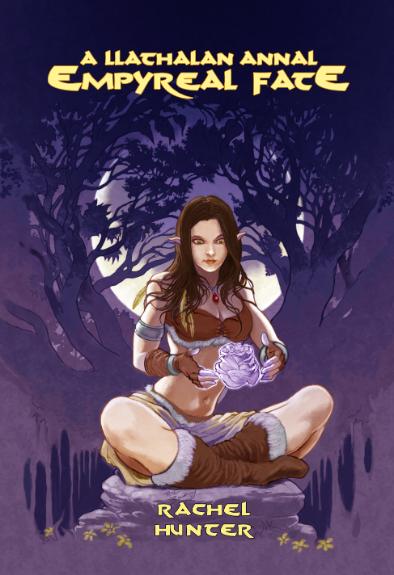
My latest publication is a fantasy novel, titled, Empyreal Fate. It is Part One of my Llathalan Annal series, published through Hydra Publications. I’ve had a couple reviews from people who’ve stated it’s a cross between The Lord of the Rings and Romeo and Juliet, for it is written with older-English prose – as well as tinged with a side of romance. But, overall, it is of the epic fantasy genre, delving into an ancient feud between men and elves. The realms of each race lie close, and a decree of old forbids either side from crossing into the other’s land. Inevitably, two figures do – one from each kingdom - and… well -- I shan’t spoil it now. I daresay! That would ruin the story. Though I will provide the blurb below:
Filled to the brim with forbidden love, an ancient evil, and a nation in disrepair, Empyreal Fate is a tale of riveting bravery and mortal corruption.

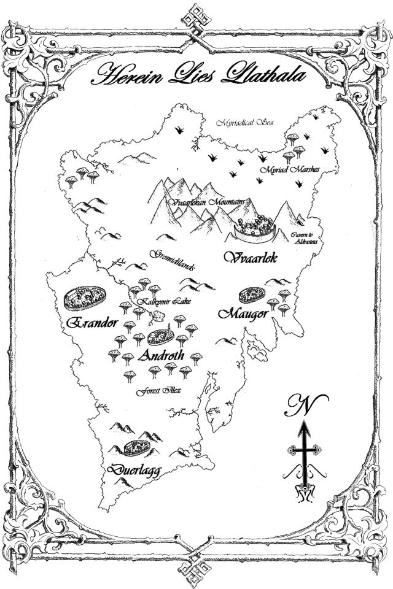
The land of Llathala lingers on the brink of war between men and elves, a dark history surrounding each race. Stirred by tensions of the land, a shadow of the past reemerges, taking precedence in reality and consuming the very soul of mans' mortal weakness. Darrion, the son of a poor laborer, is ensnared in a hostile world, forced to choose between loyalty to his king or the counsel of the elves. Yet Fate has other plans in store, tying his course to Amarya, an elven royalblood of mysterious quality and unsurpassable beauty. But this forbidden connection incites betrayal from members of their own kin, marking them as traitors to the crown. In a land torn asunder, only Fate's decree can allow such love to coexist with an ancient enmity.

Behold: A Llathalan Annal: Empyreal Fate - Part One.

What are the themes and subjects you tend to revisit in your work?

I tend to delve into the psychological aspects of my characters, bringing into question the concepts of free will and Fate. I like to dabble in issues of trust and the inner psyche, exploring what truly drives people and what turns them away. My themes focus on inner contemplation and questioning. I use the symbol of a rose (or the Laymeur flower, as in my Llathalan Annal series) to represent Fate and truth. Isn’t it interesting how something so beautiful can also be so deadly? Much like the rose and its thorns, no?

What would be your dream project?

My dream project? Well, as far as writing and such, it would be to complete several series and in several different genres. Currently, I am working on a steampunk novel, but wouldn’t it be something to manipulate time and see what it’s like at the end (such as when a series is complete)? It would also be neat to co-write something with an author I admire. Goodness! You have me thinking now….

If you have any former project to do over to make it better, which one would it be, and what would you do?

Thinking back, there are a few things I would change and/or alter in Empyreal Fate. Although I am pleased with it, the perfectionist side of me always feels there is room for improvement. Tis the curse of humanity! But Fate seems to have agreed with what my fingers produced. No -- now that I think on it… I probably wouldn’t change a thing.

What inspires you to write?

Ah -- the Muse empowers me in so many ways! I am inspired by the work of fellow authors – as well as by role-playing games with intricate tales, films that go beyond mere aesthetics, and artwork of all forms: from music to paintings. The world in itself inspires me. There are so many ventures to be had; why not create a few in one’s own head? It’s magical, really. In fact, simply communing with Nature gives me a sort of strength and yearn to pour my heart out – particularly through words or song. I’ve an infatuation for words, you know. If I didn’t release them, I’d surely explode.

What writers have influenced your style and technique?

Every piece I have read has influenced me in some way – whether for good or for ill. Oft times, the author provides the inspiration I mentioned above; other times, I am unsatisfied and left with a feeling that I don’t want to express in writing of my own. Most particularly, I have been influenced by the masterful Tolkien – especially the way in which he portrays his elven race: regal, graceful, majestic… They are the very epitome of elegance, and I cannot but admire their empyreal stature. My own novel contains elven figures, and I imagine them with Tolkienesque characteristics. 

Where would you rank writing on the "Is it an art or it is a science continuum?" Why?

Why, it is both an art and a science -- not solely one or the other! I cannot say it lies directly in the middle of the continuum, for it is not a blend. No. It simply is both, you see? It is an art, for an author weaves his or her words, painting a portrait of them inside the reader’s head. Can you not see the tapestry each time you read? Yet it is also a science, for an author must study the psychology of those whom he or she wishes to portray. Not literally study a real-life figure, as the figures most often lie in our head without a direct relation, but generally-speaking. Creating personalities is a science in itself -- as is the process of world-building and setting the scene. It is both art and science in that regard. Truly.

Any other upcoming projects you would like to plug?

Well, as I mentioned above, my current work-in-progress is a steampunk novel. I’ve currently written a rough draft, and now I must let it sit awhile so that my remaining ideas may soak, and when I return to the manuscript, it will be with fresh eyes and a rejuvenated brain. Ah, yes! The artform -- the science -- of writing.

For more information about Rachel and her work:

Blog: http://www.rachel-m-hunter.blogspot.com
Website: http://www.rachel-m-hunter.yolasite.com
Facebook: http://www.facebook.com/pages/Rachel-Hunter/170131499766376
Twitter: http://www.twitter.com/young_author
Amazon: http://www.amazon.com/Empyreal-Fate-Llathalan-Annal-ebook/dp/B007WWB24W
Goodreads: http://www.goodreads.com/author/show/5762735.Rachel_Hunter

The Writer Will Take Your Questions Now (#202) -- Day and Night Writing

What environment works best for you when writing?

When I write during the day, I like a mixture of people and quiet. I really do write best in a room with other folks around, just not talking to me. For some reason I need the background noise of other conversations and music. Because of that, I think my ideal writing location is a place like Starbucks or Barnes & Noble.

Having mentioned that, there are times when I need to be alone to write, and that's usually if I'm writing late at night. When I'm during that, I like to keep the rest of the house dark except directly over where I'm writing, and put on brown noise or really mellow, ambient music at a low volume.

Monday, August 6, 2012

The Writer Will Take Your Questions Now (#201) -- Why Super Heroes?

What is it about writing super hero stories that appeals to you?

I love super heroes. I have ever since I first saw the trash can Iron Man beat up on the bad guys. I have since I first read about Superman stopping asteroids from hitting the earth (as opposed to meteorites).

But even as I grew up and realized their adventures were a little hokey and campy from time to time (or more often than that), I couldn't help but still love them. They exemplified the image of the sacrificial martyr putting himself or herself on the line for the greater good, the person willing to die in order to save others. I couldn't help but love that.

For the next part of this post, I quote from my foreword to the Cyber Age Adventures short story collection A Private Little Corner of the Universe.

"But I grew up. I got jaded. I got cynical.

"The happy world of the Avengers and the Legion of Super-Heroes faded into the bleak landscapes of Kurt Vonnegut Jr., Raymond Carver, Ernest Hemmingway, and Flannery O’Conner. Their characters smacked of realness to me. I knew people like them. I didn’t like them, but I did know them. They lived in my neighborhood and frankly got on my last nerve as regularly as taking a breath.

"But somewhere inside me was that child who got tired of all the bleakness and pain and reality and wanted to see the bright colors
streak across the sky again. At times, I’d have given anything for the freedom to be a kid again and empty my action figures onto the bed.

"Thanks to the modern wonder of the Internet and discussion lists, I eventually met Frank Fradella and discovered Cyber Age Adventures. I saw in Cyber Age an opportunity to do something a little different, something that excited both the boy who longed for heroes and the man who knew they were fallible.

"So I turned in a story about a woman who left her husband and kids when she developed super powers because she couldn’t face what those powers had made her. More stories followed, stories about heroes who had the one “flaw” we all have—they were human. For all their powers and drive and heroic tendencies, they were merely mortals in the guise of gods. And they often learned that the hard way."

So why do I love to write and read super hero stories? Because I think they're still one of the best settings we have to tell stories about people making complex decisions that can tell us about ourselves. (All while beating up bad guys and stopping asteroids, of course.)

Pro Se Announced The Huntress of Greenwood

Pro Se Productions, one of the leading publishers in the New Pulp Movement, announces today the release of its latest volume, the newest release from the author centered imprint Hansen's Way. From the fantastic mind of one of Pro Se's best selling authors, Nancy A. Hansen, comes a collection filled with Magick and Heroism, Monsters and Adventure- THE HUNTRESS OF GREENWOOD!

When the northern frontier of a world in upheaval most needed a champion, a champion arrived-- a short statured, buxom woman with piercing green eyes, a sizable streak of stubbornness, and a determined spirt that refused to accept defeat. Roshanna the Huntress is the warder of enchanted Greenwood, both a wanted outlaw and staunch defender of all good beings. With bloodlines of Elf, Dwarf, and Human coursing in her veins, she tirelessly treks the forest and countryside, bow over her shoulder and knife at her hip, struggling to maintain an uneasy peace while fighting to keep the creations of a Dark God at bay.

Acclaimed Author Nancy A. Hansen and her own Pro Se imprint, Hansen's Way, presents THE HUNTRESS OF GREENWOOD, a collection of thrilling tales of fantasy and adventure where a world of magick exists a mere heartbeat away! From Pro Se Productions-- Puttin' The Monthly Back into Pulp!

Now Available from Amazon at http://tinyurl.com/d6jw8el and at www.prosepulp.com! Coming soon in Digital Format! Featuring stunning cover artwork from David Russell and format and design from Sean E. Ali!

Looking for Action and Magick? Ready for Creatures and Chaos and a bow slinging Heroine to save the day? Then Nancy A. Hansen's HUNTRESS FROM GREENWOOD is what you're looking for. From Hansen's Way, an imprint of Pro Se Productions- Puttin' The Monthly Back into Pulp!