Showing posts with label Anna Grace Carpenter. Show all posts

Thursday, April 14, 2022

Not So Famous Last (and First) Words


All writers tend to have their favorite opening sentences (or paragraphs) and closing lines from stories they've read. They tend to be so well know they end up on mugs and shirts and all kinds of what-nots and doodads. 

You probably know the lines so well, I won't even have to list the sources. Go ahead. Try it.

  • It was the best of times, it was the worst of times, it was the age of wisdom, it was the age of foolishness, it was the epoch of belief, it was the epoch of incredulity, it was the season of light, it was the season of darkness, it was the spring of hope, it was the winter of despair.
  • So we beat on, boats against the current, borne back ceaselessly into the past.
  • It would be pretty to think so. 
  • Call me Ishmael.
  • It is not often that someone comes along who is a true friend and a good writer. Charlotte was both.
  • As Gregor Samsa awoke one morning from uneasy dreams he found himself transformed in his bed into a gigantic insect.
  • The story so far: in the beginning, the universe was created. This has made a lot of people very angry and been widely regarded as a bad move.
  • After all, tomorrow is another day.
  • Ships at a distance have every man’s wish on board.
  • But I don't think us feel old at all. And us so happy. Matter of fact, I think this the youngest us ever felt.
  • It was a bright cold day in April, and the clocks were striking thirteen.
  • He turned out the light and went into Jem's room. He would be there all night, and he would be there when Jem waked up in the morning.
  • The creatures outside looked from pig to man, and from man to pig, and from pig to man again; but already it was impossible to say which was which.
  • I am haunted by humans.
  • There was the hum of bees, and the musky odor of pinks filled the air.

But what about your favorite opening and closing lines from your work? Lay 'em on us. We want to know. 

Elizabeth Donald: ​

Sara Harvey thought she was doing pretty well until the corpse started in with the puns. -- Blackfire

It really was a dark and stormy night. -- A More Perfect Union

Ernest Russell: 

1st line; Orland squinted as he tilted the bottle.-- From an unpublished short story

Last line; As he hit the river, his hand closed on liquid nothing. -- From an unpublished short story

Larry Young:

 It's been so long I forgot how much I hate sportin' the aluminum underwear. -- One Shot, One Beer

Anna Grace Carpenter: 

Opening -- On a hot July day Mama went cracked, locked my sisters and me in the tool shed, and lit us up like a Christmas tree. - Of Lips and Tongue

Opening -- Opening: During my last days on Malachee, I told Diamondback Jack it didn't matter how many souls I sent to an early grave, I could only die once for my sins. -- A Fistful of Dust

Van Allen Plexico: 

Down rained the night, cloaked all in fire and brimstone. -- First line of Lucian

Hawk awoke naked and screaming in the heart of a shattered galaxy. -- First line of Hawk

My father burned. -- First line of Barnak

The ghost of a god stood on a dead world and screamed his frustration at the shattered stars. First line of Kings of Oblivion

John Linwood Grant: 

Private Carter failed to die tonight. -- opening line of Songs of the Burning Men

David Wright: 

Everything you know about Genghis Khan is wrong. -- unreferenced

Allan Kemp: 

Nell cradled the semi-automatic assault rifle like a baby, keeping it close to her body and giving it plenty of support with both arms. -- unreferenced

Lucy Blue: 

To make the black cat bone, you have to boil the cat alive. -- The opening line from a horror/romance story in Eat the Peach, "Black Cat Bone"

Guess what, he told her, whispering in his mind, knowing she would hear him. I can do magic, too. -- My favorite closing, from The Devil Makes Three

Marian Allen: 

My wife and Lonnie's wife leant against the back door with their arms crossed over their chests and that blank look they always get when they're trying to decide whether to laugh or rip us new ones. --First line of "Lonnie, Me, and the Hound of Hell"

“You make me sick,” said Tartarus. -- Last line of Silver and Iron

Bobby Nash: 

Abraham Snow knew he was about to die -- and the thought of it pissed him off to no end. -- Snow Falls

Ef Deal: 

When a guy like Czesko says he wants to get baptized, you know it's gonna be weird night. --  "Czesko," F&SF March 2006

Mari Hersh-Tudor: 

She was alien, and she was going to die before he could find out where she came from. -- The War Dogs

The backflow regulator exploded in a shower of hot metal and sparks and this time it definitely, absolutely, was not Arin Riobi’s fault. Starfly lurched and threw Arin across the cramped compartment as it dropped out of hyperspace. Unintentionally. -- How Not To Hire A Mechanic

Danielle Palli:

So you see, my darling. You're not the only one with secrets. -- Between the Layers, Book #3 in The Data Collectors trilogy 

Sean Taylor:  

The woman across the table from me wasn’t really a woman at all. -- -- From "It's Christmas, Baby, Please Come Home," Show Me A Hero

The man who killed me wore a tattoo of Santa Claus across his chest. -- From "Sin and Error Pining," Show Me A Hero

The woman’s accent was just German enough to get his attention, all dripping with sexy gutturals and thick vowels, just exotic enough to trick a man’s ears into thinking he was having a drink with Marlene Dietrich instead of some two-bit nightclub singer in a no-account New York dive like Belle’s, but the comparison stopped cold at the woman’s voice. -- Opening from "Die Giftige Lilie,” The Ruby Files Volume 1

 “Oh boy. I should’ve tried harder to get killed.” “Like I’d let you get off that easy.” -- Closing from "Die Giftige Lilie,” The Ruby Files Volume 1

Thursday, March 24, 2022

Copycat, Copycat: Writers on Copying Our Inspirations


It's a common story. Writers get into writing because they're inspired by certain authors who have influenced them. And, almost always, at first they emulate them in at least style, if not substance and theme.

But let's move it from the general to specific and talk about YOU, writer.

Which author or authors were your beginning models to copy when you started? When did that copying start to shift into something that would grow into your own voice and style?

Ef Deal: My earliest influences were Bradbury and the Alfred Hitchcock anthologies. Then Tolkien. The handwavium aspect of Bradbury is the basis of all steampunk, if you think about it, so yes that fantastic element is still in my works. But mostly I was influenced by my studies in French literature, where words were chosen for their greatest effect. Poe said all elements of a story should work together to create a unified effect, and that has been my guiding mantra.

Rob Cerio: Douglas Adams, Issac Azimov, and Clive Cussler. I think my style grew into its own after I stopped worrying about making jokes that sounded like "Bad Douglas Adams" Jokes, and just let them be funny on their own.

John L. Taylor: At the beginning, I was an imitator of Ray Bradbury and John Updike to a vast extent. All my work from that period was soundly rejected as it was a pale imitation of a superior author. I had tried to write a novel manuscript, but the early draft was a meandering pile of exposition. Note I hadn't tried writing horror or New Pulp yet despite being a major fan of the genres. I began developing a voice of my own, oddly, while writing erotica under a pen name for a now defunct website (Ironically, those unpaid stories are still my most widely read at 6k or more reads). I somehow connected with an audience by writing the type of story I wanted to read. My voice in writing finally emerged while writing The Rocket Molly Syndicate for the Dieselpunk E-Pulp Showcase Vol.2 in 2013-14. My Mom was fighting ovarian cancer as I was working on it, half was written in hospital waiting rooms. I needed a release and wrote pure escapist fiction. It connected, and the anthology it appeared in moved about 775 copies across all platforms and was adapted as an audio drama for the Coffee Contrails Podcast, adding another 200 or so downloads. It is still my most successful work to date. I dug further into New Pulp, but with a strong influence from Lovecraft and Robert E. Howard. My next works were The Legend of the Wild Man, a 100 line narrative poem that ran in the Mythic Circle, and The Thing in the Wexler House, an audio narration that Otis Jiry performed for me on his YouTube channel. Both got solid receptions. As I branched into poetry, more growth happened, and My current style was cemented. Eerie, dreamlike narratives with a pulp twist. Also, writing online narrations helped a lot, as I was introduced to horror voices different from what I'd read before. Variety helps a lot.

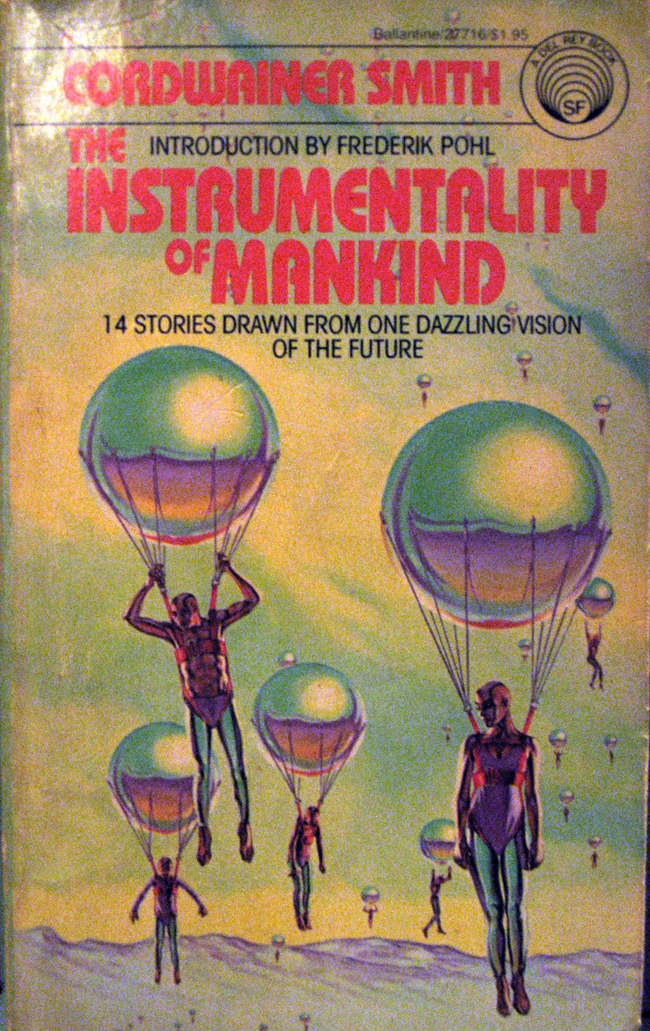
Anna Grace Carpenter: The first I remember trying to imitate was Cordwainer Smith. He had a flair for not letting story get in the way of the occasional stylistic flourish and I loved it. Later Tad Williams and Raymond E. Feist made an impact on how I used characters to best tell the "exciting" parts in ways that actually had an emotional impact, plus a particular style of world-building that has stuck with me. (I would be hard-pressed to explain this, but I know that it's there because of reading their work.)

Things started to be less copycat once I really started writing a lot. The more I was using words in storytelling regularly, the more my own style began to emerge from the way I pictured certain scenes and the dialog I heard from my characters. At which point those authors moved from a category of imitation to one of influence.

HC Playa: So there are 4 authors that spurred me into writing: Sherrilyn McQueen, J.R. Ward, Karen Marie Moning, and Patricia Potter.

All four build intricate worlds, whether it's dropping you into the romantic lives of people in 1100 AD Scotland, a hidden Vampire society, a murder investigation turned apocalyptic collision of Fae realms and human, or weaving mythology into romance and adventure.

I didn't copy any of them directly, but they all made characters breathe on the page. They weren't afraid to weave love into blood and gore and battles. One of my favorite things that I did copy was the reoccurring cast that doesn't necessarily feature the same POV from book to book.

Ernest Russell: My earliest influences were Poe, Verne, Wells, and an anthology called Tales of Time and Space. Later Lovecraft and the circle of writers from Weird Tales.

Of these early influences, there is one that influences every story. That is Jules Verne. One of the things I LOVE about Verne's stories is he did research and did his best to not only incorporate the science and technology of the story's time period but to project it forward into what might become. As such I try, even in my fantasy writing to research what I am writing and make it plausible within both the world rules for the story and what I find historically or current science and technology and translate it into the story.

Frank Fradella: F. Scott Fitzgerald, Robert B. Parker, and Chris Claremont. Remove any one of them and I'm not sure I'd be a writer at all. My college professor in English told me to look at Parker for dialogue, and he was right. Fitzgerald showed me how to make prose feel like poetry, but it was Claremont who taught me how to tell a story. I had been reading comics books off the spinner rack for years, but the first comic book I *remember* is Uncanny X-Men #131.

Tom Powers: A weird mix of Walter Gibson, Paul Ernst, and H.P. Lovecraft. Still echoes of them all, plus a bit of Norvell Page. Much of what I write is in the traditions of those writers' genres.

Pj Lozito: I wanted to write like Lester Dent, Edgar Rice Burroughs, Raymond Chandler and Sax Rohmer.

Teel James Glenn: Robert E Howard, Lester Dent, Peter O'Donnell, Dash Hammett.

Krystal Rollins: My inspiration: Mary Higgins Clark from my past, and my present is you,, Sean. Her work continues to inspire me in how I create my characters. Her words are printed in black ink and white paper but in my mind, it's blooming with color. I keep writing Sean because of you. (Editor's Note: Awww... Shucks. Thanks, Krystal.)

Charles Gramlich: Ray Bradbury for one

Murky Master: So Dragonlance and the anime Escaflowne, above all else, got me into writing seriously when I was about 13 years old. It took another ten years before I returned to that old dream, but I wrote part of a fantasy novel in those days that I am still surprised at its quality compared to what I wrote today.

John Morgan Neal: Stan Lee, John Broome, Gardner Fox, Bill Finger, Bob Haney, Denny O'Neil, Archie Goodwin, Len Wein, Steve Englehart, Jim Starlin, Roy Thomas, Doug Moench, Michael Michael A. Baron, John Ostrander, Mike Barr, William Messner-Loebs, Bill Mantlo, Marv Wolfman, and last but opposite of least, Chuck Dixon.

Michael Dean Jackson: When I started writing (as Jack Mackenzie) I was inspired by a lot of military science fiction; Heinlein, Jack Campbell, David Weber, Lois McMaster Bujold, etc. It was with those inspirations that I wrote THE PARADIGM TRAP and THE MASK OF ETERNITY.

Do those elements of your inspirations still show up in your current work? Howso? Are they things you do consciously or have they just been internalized by the years of doing them?

Frank Fradella: Completely internalized. I took Parker's style for a spin on its own, and it felt like wearing one of those 1970 Halloween costumes that comes with the hard plastic Batman mask attached by a string. It was a conscious choice to find me in that amalgam, and that's the writer I became.

Anna Grace Carpenter: I do still love a stylish bit of storytelling. Voice, unexpected use of language and grammar (or lack thereof) to catch the reader's attention at a critical moment are some of my favorite things. And that all grew from early attempts to mimic Cordwainer Smith. And the storytelling inspiration I got from Feist and Williams is still there too. Using all the characters to tell the story whether we see their PoV or not. Allowing heroes to not always be heroic and villains to not always be villainous without diving into a grimdark grey. And allowing tragedy to occur, sometimes in very small ways that adds a bittersweetness to big triumphs.

I don't think it's deliberate, it's just how those inspirations encouraged my own voice and writing the kind of stories I like to read. Because that was what first made me want to imitate them - they wrote stories I loved. And now I write stories I love so the influence is still there, but organically after years of practicing my own storytelling.

HC Playa: At some point, I found my own writing voice, but for all my novels, these elements remain, including having two central protagonists (usually a male-female romantic pairing, but like JR Ward, I branched out the more I wrote).

Depending on the story it can almost seem like a hero and side-kick type of casting, especially as I pit them against larger-than-life dangers. (As I type this I suddenly see why my publisher says my writing is pulp 😂.) I don't lean into the romance aspect as much as those authors tended to. More like Moning's Fae Fever series, the romantic aspects take a back seat to the apocalyptic events and characters dealing with their issues.

I have read plenty of classics of multiple genres, but it would be disingenuous to say I am influenced in style by those stories.

I don't aim to write the next classic that future college students dissect to figure out what I meant when I said the sofa was an ugly flea market reject.

I write to entertain. I use elements from the stories I love reading. I love weaving in magic and the amazing, because life always needs magic.

John Morgan Neal: Yes. I'm a big ol' ape in more ways than one. But never outright. The stuff I love is in my DNA. So it has to shine through.

John L. Taylor: Many facets of my inspirations are like a reflex now. A subconscious thread. I still lean on Lovecraftian themes and first-person narrations in horror but avoid the adjective salad pulp writers often used when stories paid by the word (Lovecraft was great at taking a whole paragraph of them to say "it was an amalgam of parts that defied description, an offense to biology itself.") I guess that's the real difference between me and my inspirations: I prize concise writing. I suppose that's the last vestige of Updike left in me. But it's a great influence to retain/

Rob Cerio: I still feel like I use Cussler's "opening Gambit" formula and basic formatting of action scenes. Azimov's use of "working-class schlubs" is something that still crops up all the time in my work.

TammyJo Eckhart: I can't answer question one so question two also doesn't apply. While there are authors that I loved and still love, the idea of copying them in any way never entered my mind. I was writing stories from kindergarten onward.

Murky Master: Things I took from Dragonlance were:

  • mixing cultures is both hugely interesting and creates lots of conflict, from Tanis Halfelven's internal identity drama. I'm biracial myself so it was interesting seeing someone "like me"
  • Bad guys are F-ing Awesome. Raistlin made a permanent mark on my picture of wizards and magic and the lure of power magic brings. You need no further proof than to behold my profile pic, after all. Nothing makes me hahaha quite as much as my hourglass-eyed boi. Lord Soth was pure mother finding METAL as well and remains my fave Ravenloft Darklord.
  • Escaflowne was a romance and an epic fantasy all at once. Later on, I would actually sit down and read a romance novel and find it totally awesome, and I like to have strong, real relationships in my books because of that anime.
  • also, the anime was grand in scope, full of pathos and beautiful at times, unspeakably cruel at others (looking at you Dilandau). It helped me understand PTSD and the weight of honor as well as the power of dreams to destroy and create. Dilandau also made me like insane villains.
  • the Adventures of Batman and Robin cartoon with Bruce Tim as the art director also made me love art deco and Pulp sentiments. The episode featuring "The Grey Ghost" and Brendan Frasers The Mummy sealed my fate. Now I can't help but have all cap titled like DESTROYERS FROM WALMARTS BEYOND and COURT OF THE GLISTENING LUNCH LADIES and such.

Chuck Dixon: I read so much before I started writing for a living that I have no idea who's work I've intuited over the years.

Michael Dean Jackson: However, around the time I was writing my books I discovered the television series SHARPE on the History Channel. I loved every episode and I loved Sean Bean as Richard Sharpe. So I figured I would try the novels by Bernard Cornwell and I loved them even more. The books were, I found, immensely better than the show.

And it was those novels and the character of Sharpe who fired up my imagination and helped me come up with my own, military SF version, a character called Jefferson Odett.

I have only written two Jefferson Odett books, DEBT'S PLEDGE and DEBT'S STAND, but I do have a third one that I may eventually get to. Nevertheless, Jefferson Odett is more than a little inspired by Richard Sharpe, in the same way that Horatio Hornblower, C.S. Forrester's seafaring adventure hero, inspired Bernard Cornwell's character.

I am under no illusion that my novels have anywhere near the quality of Cornwell's or Forrester's, but the inspiration is there.

Tuesday, October 12, 2021

Is Your Setting Just a Place or a Character?


As writers, we all have our favorite setting in which to tell stories, and we also have our favorite passages that establish those setting. As a reader I've seen the masters at work, from the arid tone and sparseness of Capote's In Cold Blood...

"The village of Holcomb stands on the high wheat plains of western Kansas, a lonesome area that other Kansans call 'out there.'"

...to the rambling, darkly poetic tour of Manderly in DuMarrier's Rebecca...

"Last night I dreamt I went to Manderley again. It seemed to me I stood by the iron gate to the drive, and for a while I could not enter, for the way was barred to me. There was a padlock and a chain upon the gate."

But let's make it personal. How do YOU establish setting in your fiction?

On a range of "the setting is another character" to "a few words about the weather and the name of the town is more than enough," how important is setting to your stories?

Gordon Dymowski: For me, the setting is one of the key elements of making a story work. Even if I'm just writing a modern-day tale, providing an appropriate atmosphere is critical. I'm strictly in the "setting-as-character" camp since it provides a backdrop for the flesh-and-blood characters. Providing that atmosphere enhances both my writing and the reader's experience.

Elizabeth Donald: When I first began writing fiction, my stories were like the Star Trek original series episode “The Empath.” You’ll remember that one - they ran out of money for sets and the whole thing takes place on an empty sound stage with a square block for the characters to occasionally sit. It’s actually a pretty good episode, but I was always struck by how it seemed to be taking place in nowhere.

That’s what my writing was like. People did things, said things, died horribly, but it might as well have been in that nowhere space for all the description I put into place and setting. As I grew and developed my craft, I realized that setting can absolutely be a character, and knowing a place can really inform your story. I’ve infested Memphis with vampires and rusalka and a number of other critters, because I lived there for several years and I know the city will. I’ve often used settings like Illinois river towns, because it is territory I know, having lived and reported in Illinois river towns for more than 25 years. 

In the micro sense, where you place a story can greatly influence the reader’s opinion. For example, a recent story I submitted to my MFA workshop was set in a cheap, kind of slimy motel. My colleagues said that having this moment take place in that kind of setting led them to expect it would be a tawdry moment, something illicit - cheating, drug-fueled, perhaps people on the edge of homelessness - none of which I intended form the story. Setting matters to the characters, influences the readers, and thus it needs to matter to the writer.

Vonnie Winslow Crist: For me, setting is almost another character. I choose a setting for my fiction that has an impact on the story. Sensory language is the most important tool in my toolbox for creating a strong sense of location. That said, the sensory details need to carefully selected for maximum impact. No one wants to read pages of sensory observations. Sometimes, one well-chosen detail can define the location, set the mood, and start the action in motion.

Anna Grace Carpenter: I am very fond of setting as character, but fluctuate as setting as a reflection of the central characters, and setting as a contrast to my central characters. (For example, The Gear'd Heart is all rainy and dark and cold as the characters fight otherworldly, serial killers. But the current work-in-progress is a desert setting but with characters who are desperate to live.

Selah Janel: It depends on the story, but setting matters in a lot of my work. I gravitate towards forests and small towns, and both can be portrayed to convey tone and characters. In one form, they can be romantic and comforting, in another they can be suffocating and foreboding. For me, setting can be an extension of my characters or a character in itself, yet another antagonist working against the characters like in Candles or Mooner, or something that’s more supportive like a quiet best friend in a story like Holly or Ivy. Even in my short stories, I use setting to echo the tone and feel quite a bit.

HC Playa: Setting sets tone. It is both little more than background and yet absolutely integral to the story. In genre fiction it can outline the realities and rules of the world, whether there's magic or aliens or we are reading by candlelight.

I sketch it out through my character's eyes and senses, dropping things in as they go. IF I am using a real place I may put in less description, but still want to paint an image in the reader's mind because not everyone has been to the same places.

Herika Raymer: As setting is when and where the story takes place, I agree with HC that it sets tone. Usually setting through a character's eyes helps, but there is the added measure of setting through a character who had not been in your setting before. That way, not only the character but also the reader are exploring a new area. It allows the reader to (hopefully) connect with characters as well as get the background and events of the Setting to help understand what is happening.

Bill Craig: In my Marlow books, Key West is every bit a character as well as setting.

Bobby Nash: The vast majority of the time, setting is very important to me and my work, especially in a series where the setting is visited and revisited often. Sommersville is a fictional city and county I created that has become an important location in multiple books fronted by different characters. I think it’s a very important character in the stories. I want the reader to have a feel for the settings.

Murky Master: So it depends. In the last two short stories I wrote, they were short so going verbose on the setting wasn't an option. In my novel, it's set in San Antonio and I didn't really think much about establishing setting in that one. But, when I write my fantasy stories, I like to think of it this way.

Ian Totten: Setting is extremely important to me. When I write I see everything in my mind and try to convey that to the readers. Generally speaking, my settings either serve to create a sense of dread (such as the place where a killer is going to strike), a false sense of safety, or an actual area where the characters don’t need to have their guards up.

What is your most effective tool in your writer's toolbox for creating a strong sense of setting in your work?

Bobby Nash: The setting you create has to feel real, not just to the reader, but to me as the writer. I need to be able to imagine walking down the streets of that location, recognize the smells, the colors, the things that make that place unique. If I believe it’s real, that translates into the story.

Herika Raymer: Using the senses, but trying not to be too descriptive. I do not want to be a writer who uses two pages to explain what one thing looks like or tastes like. However, a reader experiencing their surroundings through the senses of the character can definitely be instrumental to setting the scene.

John L. Taylor: Depending on the story. If the setting is fairly fantastic, I'll go more detailed and emphasize the contrast between it and the known. If more down-to-earth, I'll write it as a metaphor for the POV character's mood/personality. 

Selah Janel: I really like to lean into details, and if I don’t have the space for that, I try to use setting just enough to induce a mood in the characters, and by extension my readers. Little things matter, though, and knowing a place or type of place well can give you so much to work with in terms of story.

Bill Craig: The places where I set a lot of the action are real places where I have been. I try to make descriptions of places as vivid as I can in order to make readers feel as if they are visiting the island. For Key West, the sights and sounds are well known by many people, so it is easy to incorporate them, from wild chickens running all over town to iguanas coming out of the trees to swim in hotel swimming pools. Island music is everywhere as there is some sort of musician playing nearly 24 hours a day, giving a flavor from salsa to calypso, to Jimmy Buffet. 

Gordon Dymowski: Details, details, details. It's amazing how some writers will point to obvious landmarks (like the Empire State Building) as if to say "We're in New York". Writing places that are out-of-the-way or suggesting a deeper history can do a lot for setting place, tone, and mood.

For example, when I write about Chicago, most of my action tends to take place on the city's south side. Part of it is that there's a historic tension between the North Side and South Side (due to both class and racial factors that are too lengthy to go into here), but part of it is...I know Sears Tower exists (and nobody calls it Willis Tower, just like nobody calls where the White Sox play Guaranteed Rate Park -- it's Sox Park or, if you're older, Comiskey Park). Anything that suggests that the setting has a history improves your ability to tell a story.

Elizabeth Donald: Live your life. I know that’s not the craft response, and certainly addressing metaphor and descriptive passages and details are all very important, but the reader can tell if you’re making up a setting from what you’ve seen in a movie or TV show rather than real-life experience. I learned to shoot guns because I was writing a lot of shoot-em-ups and it was blindingly apparent I’d never shot a gun in my life. I wrote an early novel in New York City that was fairly terrible, as I had never been to New York and I didn’t realize a lot of aspects you only realize once you’ve walked around on its streets. 

If you want to create a place, first visit it or something similar. Pay attention. Take notes. Engage all five senses and experience a place if you want to recreate it in fiction. And then send in the zombies. It livens everything up. 

Davide Mana: I started writing my "Buscafusco" stories, about an unlicensed PI working in the wine hills of southern Piedmont where I live, as a collaboration with the local Chamber of Commerce and Tourism. The idea was to use my stories to promote tourism in the area. The place had therefore to be really another character in the stories, and I used a mix of historical details and contemporary color to give the readers as strong an impression as possible. I had to be as close as possible to the authentic places I described and tried to use as much true detail as possible in setting up action scenes and plot elements. I used real people whenever possible.

The result was highly satisfying for me as a writer and (based on feedback) for the readers and paid back the extra research and effort needed.

Ef Deal: I like to focus on texture and sensory details like scent and taste. I also will describe a general layout as it affects the plot or action. For example, an opening of a second chapter describes the history of the chateau only to highlight the engineering genius of my heroine in bringing it up to date (1843), since those changes will play a part in the action later in the book.

Anna Grace Carpenter: I focus on those visceral details. The chill and misery of a rainy setting, the exhaustion and thirst of a desert setting. If the characters have injuries I focus on how the environment affects those wounds.

HC Playa: Invoking the senses. I do admit that this is something I feel is a work-in-progress skill. I joke that a reader might accurately guess without knowing me that my sense of smell is not very good. My characters tend not to smell much unless it's really strong and generally ick 😂. Yay allergies.

How important are sensory details when establishing setting? Internal monologue to establish "connection"? Omniscient telling for all the facts?

Robert Waters: Internal dialogue is important to me. But it's something you have to balance and not have it dominate the story. I've seen stories with whole paragraphs of internal dialogue, to the point of annoyance. IMO, not a good way to go. What I often do is have the character thinking / brooding / contemplating over something as part of the main narrative, and then, he/she will say a few words to him or herself to cap off the thought. That to me is a better way to handle internal dialogue. 

Selah Janel: It depends on word count and what’s going on in the story. I love sensory details, because they help build a world and immerse readers, as well as giving characters so much to work with externally and internally. Sometimes, though, showing their own thoughts about a place is enough with less emphasis on external description. It really depends on what the goal is for the scene.

Bobby Nash: It all goes to set the stage. I like to have the narrator let us know not only details about the place but how they connect to the POV character in that chapter. I can drop details about Sommersville, and they work, but when I tie those details to Tom Myers’ life, they take on greater meaning.

Bill Craig: Sensory details are hooks to put the reader into the story and setting. 

Anna Grace Carpenter: I only write 1st or close 3rd person. So the voice is always immediate and tied to the centralized character. (Even in third, everything is very close to the character who is the focus of the chapter. So those details are personal.)

Elizabeth Donald: I struggle with interiority in my writing, and it’s something I’ve been focusing on in my craft. Internal monologue comes more from character than setting, in my humble opinion, but both of these help develop a rich narrative that draws your reader into that total immersion for which we strive when we’re writing. Those sensory details go much further in terms of setting, as far as I’m concerned: when you’re standing in an open-air market in San Antonio, hearing mariachi music, smelling the street corn and tamales, watching the brightly-colored flags flutter against the blue sky, feeling an overly-warm breeze on your face… that puts you in a place, at a time, and you have established a place. 

HC Playa: I avoid omniscient telling in my writing. As a reader, nothing makes me skip ahead quicker than a setting info dump from an invisible omniscient narrator. If I skip it and don't enjoy it, I don't write it. While I do occasionally use internal dialogue, I rely mostly on the character's POV to relate setting. It gives the reader a more immersive experience.

Gordon Dymowski: Sometimes the way to "dot the I" when crafting a setting is ensuring that every sense is involved. For example, my high school years were spent commuting through Chicago's Maxell Street market. I could discuss how I took the Number 8 Halsted bus, but the reader would be more intrigued by describing the storefronts along the street (with metal covers for the windows), the vendors hawking wares on the sidewalk (including hubcaps), and the strong odor of grilled onions and Polish sausage wafting through the air.

I've just painted a picture for you of that experience. The Market has since moved (and the street is now covered by amenities for college students), but that sense memory still lingers.

As far as internal monologue/omniscient narrator, it depends on the type of story. Leaving out details can be critical in setting the scene (just read Poe's short stories), and having the "innocent bystander" narrate can drive insight into actions and behaviors (paging Dr. Watson). All of these are tools that any writer can and should use.

Vonnie Winslow Crist: Used judicially, internal monologue can let the reader see into a character and their motivations, goals, etc. Again, a little goes a long way. Too much internal monologue slows the pace of the story. I'm not a fan of omniscient telling -- it usually feels like "telling" and not like a story unfolding. The setting doesn't work in my fiction when I "force" a story to be set in a place. When I allow the narrative to settle comfortably in a location rather than force it to fit into an environment, it's easier to write and the resulting tale works better for readers (and editors). 

I'm a fan of George Martin's term "gardener" for a writer. One organically selects details, adjusts the narrative, and makes decisions about location, internal monologues, pov, etc. much like one gardens -- well, much like I garden. For me, it's less about straight rows and perfect flowers, and more about the beauty that comes from discovery and adapting to the unexpected.

Herika Raymer: Sensory details are important because we all (unless otherwise incapacitated) experience our reality through our senses, makes sense we would want a bit of sensory in the stories we real.

Internal monologue can help establish "connection" with a character because it helps the reader either comprehend, understand, or even approve/disapprove of a character's motives and actions.

Omniscient telling for all the facts can be fun, but it depends on the presentation. For instance, I am watching an anime right now based of a manga series. Though a different presentation, the author's way of presenting omniscient facts is to have a narrator make hilarious remarks on what is happening. It adds spice to an otherwise pretty cut and paste story. This may not be feasible in a traditional written format, but I have read some authors who have ways to bring in omniscience without it being too much of a data dump and thus taking away from the lure of the written word.

What have you read or written that absolutely didn't work in regard to making the setting feel real or important to the work? Why didn't it work?

Bill Craig: Longmire did a great job in character and setting. The only book I have read that failed in this respect is a book about a pulp character by a "Name" mystery writer. Sadly, it was so poorly written that I could not finish it and returned it. It ignored the history of the character and turned him into a secondary character rather than being the titular hero.

Elizabeth Donald: I will be generous and pick on TV, because they make a lot of money and won’t care. I always had myself a huge giggle at Smallville, as the teens of Smallville High would go swimming in the lovely alpine lakes shrouded with evergreens in… Kansas. Seriously, folks, at least try to hide that you’re shooting in Vancouver. Shows like Supernatural were equally ridiculous about this - claiming to be in St. Louis and an establishing shot of the Arch really doesn’t qualify as establishing a setting. At least when Doctor Who lands on Earth, he’s honest enough to admit he mostly toodles around London because budget. 

How can we apply this to the written word? Know the territory. If you can’t physically visit a place, use your Google-fu and explore. Try to find someone who lives there or has visited there and interview them. I did this when I set a Blackfire adventure in the Philippines, and before I even ventured close to that one, I interviewed a friend of a friend who grew up there. I see it as no different than interviewing experts in advance of writing something technically different, like asking an arson investigator how you can most efficiently kill someone with fire and get away with it. (Just be sure they know you’re a writer; it’s far less likely to result in a search warrant for your apartment.)

Murky Master: Setting is only the combined sensory input going into a character's mind. The details that are important to the character are important to the story, so they will rise to the top.

A missionary about to face Elder gods in the Vietnamese jungle would see the following

"The dark of the night gave every biting insect an echo. The vines strangled like tentacles, their origins in the pitch black of the tree forks, like they were dropping out of the unknowable night..."

But, an adventuring doctor rushing to get medicine through that same jungle would see this

"Every branch, every vine clawed and tugged at Dr. Nguyen, grasped and clawed at his sweat-soaked pant legs. Even the air dragged on him as he swam through the humidity, every leaping stride through wet, leaves feeling like a backhand. Like the one that mother would deal him if that girl drowned in her own pneumatic lungs).

Bobby Nash: Sure. Probably. I can’t think of an example off the top of my head and wouldn’t want to throw another writer under the bus. As a writer, if the author isn’t giving me those details, my brain fills them in, which could hurt the scene the author is trying to convey. If I don’t connect to the location, it becomes a generic location in my imagination.

Anna Grace Carpenter: I can't say I have written anything that was disconnected from setting. I write a lot of suspension of disbelief stuff, but setting is rarely a part of that. But, I did stop reading "The Lies of Locke Lamora" after a particular scene that was particularly brutal but also ignored some general physics.

Herika Raymer: The most glaring example that comes to mind was reading a sample chapter in Amazon from a highly recommended book (though not so much later on once more facts were discovered about the author). Her description of the scene was fair, setting the tone of tension and the fear of being chased. However, when it came time for the main character to act -- that is when it did not work. She had her character running on a broken ankle. Yes, broken. Readers can suspend belief for some things, but unless the author establishes right away that the main character is in some way supernatural, I have yet to meet someone who could run on a broken ankle with no problem. It was not the only problem with the story, but it was the first of many.

HC Playa: I can't think of any specific examples off the top of my head, but plenty of romance-type stories and contemporary fiction really have no connection to the setting. You could pick up the entire story, plop it in another city and it wouldn't matter.

Davide Mana: There is a notorious thriller novel, published a few years back by an Italian writer, and set in London. It was so successful Amazon did an English translation - that was pretty popular with the American public and got the British readers rabid (we talk a few dozens one-star reviews).

The author did not do any research, and what she produced was a story in which the London police carried guns, in which Scotland Yard is closed for business on weekends (!!), and the big set piece is a car chase and shootout on the streets of London (but the geography is all wrong). The plot was OK, but all the setting details that should have propped it up were wrong, and a lot of people noticed. It was an absolute failure on the worldbuilding side, caused by an obvious lack of research.

So, the bottom line: using actual places as setting can be a disaster if you don't do the minimum of research needed to establish an authentic sense of place. Sometimes Google Maps is enough.

Also, sometimes researching the worldbuilding changes the direction of your story: while writing my first novel (historical adventure), I spent a weekend working with my brother (who studied Chinese), browsing Chinese-language websites in search of the actual location of the Italian consulate in Shanghai in 1936. I could have played it fast and loose, but the time spent on research revealed the consulate was across the street from the British police barracks - which changed the whole dynamic of the action in the first third of my story. I had to do a lot of rewrite, but it was well worth the effort.

Gordon Dymowski: As part of my review duties for I Hear of Sherlock, I read one pastiche which read more like a cliche screenplay than an actual Holmes work. (I'm not going to name it here). By the end, it was more concerned with being clever than setting a great mood or driving strong characters. Let's end on a positive note: some great examples of authors who use setting well are Robert B. Parker's early Spenser novels, Sara Paretsky's VI Warshawski novels, and Jim Thompson's novels (which, yes, are unsettling but that's half the reason why I enjoy them).

John L. Taylor: Best example, again from an in-progress book of mine is introducing main characters who can travel in dreams by cornering their target in a dream of an abandoned decaying mansion meeting them at a chessboard with a game in progress. Both characters are damaged people, past their prime, but still intelligent and elegant in their ways, and ruthless hunters of their quarry. The visuals are symbolic of that.

Thursday, May 31, 2018

Questions from a Brave and Stupid Man to a Panel of Women Writers #2: Pseudonyms

Being a white man, I willingly acknowledge I have blind spots, things that while they don't register to me like they perhaps should are things well worth my time and thought and important for me to know and understand in order to a member of a community of diverse writers.

That said, I've assembled an all-female panel of writers to be my teachers.

In the previous discussion someone brought up the issue of using a pen name. I figured we could go deeper into that issue this time.

This is #2 in a series of articles. The first can be found here, and the third here

So, today's discussion is this:


Do you find using a pseudonym helpful or a waste of time? Does it matter if you choose one that can be vague as to the gender or can a male one still open doors better than a female name? Or is it a genre specific issue?

Nikki Nelson-Hicks: I wrote it. I want my name on it. But that's my decision. I know people who use a pen name because they don't want their families to know about their work or they have a professional reputation to safeguard. I'm lucky that I don't have anything like that to hide from. I wrote it. That's my name. Deal with it.

Alexandra Christian: I started using a pen name because I was writing steamy romance while teaching 2nd grade. Apparently women are still supposed to be sexless schoolmarms. I write across a few genres, but I haven’t felt the need to come up with new pen names just yet. Or maybe all my writing is inherently sexual.

Ellie Raine: I've heard a lot of women use male pen names to get more sales in certain genres (and men using female pen names for romance) and it sucks that it continually gets them results. I choose to use my female name despite the genre I write because I would rather help break society's expectations of which genders "writer better (you name it) books". I don't know if anything will change from it, but I'd rather not feed the poison and keep the cycle of these assumptions going. The only way minds will be changed is if they consistently SEE that any gender can write any genre well.

Alexandra Christian: I’ve never gotten an agent, but I queried one book a lot and was pretty much told that my book was too sexy for sci-fi and too sci-fi for romance. I often wonder if I’d queried as a nonspecific pen name if I’d have had more success.

Ellie Raine: I had one agent tell me mine was too paranormal and not epic fantasy enough, and another tell me it was too epic fantasy and not paranormal enough. Funny how no one can seem to place these things... I never considered it may be because of the female/male dynamic, but it would be interesting to know if that was a factor.

Lucy Blue: My first publication was a collaboration with another writer, so we came up with a pen name together -- Anne Hathaway-Nayne. (And yes, it was a joke, sort of - we were writing a tie-in for Forever Knight, and Shakespeare was a character.) Then for my first solo publication with Pocket Books, I used a version of my real name, Jayel Wylie (my actual birth name is Jessica Leslie Wylie, which got shortened to JL, which my mother spelled out as Jayel), and I did three book with them under that name. Then my editor asked me to go in a slightly steamier and more fang-y direction with my next book and told me going in I was looking at one of those oh-so-popular torso covers. Because I wanted to write that book but I didn't necessarily want to always write that kind of book forever, I started using Lucy Blue. And that has since become a brand for me as a romance writer. But I'm still not sure if I'll use Lucy Blue or my real name if I do a non-romance book - it's an issue that I'm hoping is going to come up sometime in the next year, and I'll be open to input from my publisher about it then. And yeah, the idea has crossed my mind of being "J.L. Glanville" instead of "Jessica Glanville" because it's gender-neutral. But my writing, romantic or not, is so very woman-centric, I don't think I'd be fooling anybody.

Stephanie Osborn: I wrote one pure romance novel under a pen name, years ago. It didn't sell to a traditional publisher (mostly because said publisher lost it), so I threw it up indie, and occasionally it sells a copy or two.

For my SF, mystery, and popular science, I use my own name. Sometimes I kinda wish I'd used initials or something, 'cause then the SF might sell better, I sometimes think. But hey, it is what it is. I might try initials one of these days with a new series or something, just to see what happens.

Anna Grace Carpenter: I originally started using my initials because folks in real life seemed to have so much trouble remembering my given name and I was genuinely worried that folks would not be able to find my books on the shelf because they would be looking for Mary Grace or Sarah Jane instead of Anna Grace. (Of course, a couple years after I'd started selling short stories, I asked someone to look at a story that kept getting to the final round on the editors desks and then rejected. I sent him the submission formatted copy which had my real name and contact info on the first page. In his return comments the first thing he said was "I think you shouldn't use your real name because it's really too sweet for someone writing zombie stories." So the bias is definitely real.) I do introduce myself by my actual name and not my author name because my intention is not to hide anything, but I'm not rebranding my work at this point unless it's in a drastically different genre.

Nancy Hansen: I've always written under my own name because I'm proud of what I do, and so is my very supportive family. I figure an entire legion of women labored in obscurity before me, having to hide their identity to get recognized for their outstanding work in speculative and genre fiction, and I owe it to them to celebrate the freedom to be myself.

Herika Raymer: To be truthful, I am most likely still considered new to the field. Mostly because, as yet, I have not encountered any preconceptions about my name -- possibly because of how it is spelled. No one wants to 'offend' me (LOL).But I have to agree, if I wrote it I would prefer my name on it. Then again, there are times when I have considered a pen name simply because of my mundane life. Sometimes what you write should not cross over with your mundane identity. (wink wink)

Elizabeth Donald: People were always surprised that I wrote fiction under my own name, which is the same name I use for my 21 years of journalism. They acted like it would negatively impact my reputation as a journalist, but I didn't write anything I would be ashamed of, and quite frankly, most of my day-job colleagues and sources were supportive or amused. I got a little light teasing for writing romance, but nothing like the negative reactions I saw in the horror/SF world for writing romance and ebooks.

Yes, ebooks. I'm old, so my first couple of books came out in the infancy of ebooks, even pre-Kindle. People said, "I'll wait for the real book," and I couldn't use the ebooks as credits. One con even rewrote my submitted bio to call me an aspiring author. And I've spoken before about the negative reaction to paranormal romance encroaching in horror and SF, being dismissed as "vamporn," difficulty getting on horror panels and being stuck on the midnight sex panel - and the eternal, "So why are vampires so sexy?" panel. (I've started requesting NOT to be on those panels, because it was so tedious to say the same things at the same panels every single time.)

Eventually I vowed that if I would ever write more romance, it would be under a pen name and it would not be open. I found it sadly ironic that while the expectation was "romance will hurt your journalism career," it was really "writing romance means no one will take you seriously as a horror writer." It was not what I expected. Cynical colleagues said it was purely a gender thing: romance is a "woman's genre," and thus it was acceptable as long as I didn't venture into the boys' club - that the negative response of horror/SF to romance was really a negative response to women authors. I like to think that they're wrong, but I haven't found solid evidence yet.

I liked writing romance. It made me a better writer in ways that I could detail if I wasn't already far afield of Sean's question. I didn't like some of the genre's "rules," and I didn't fit in very well to readers' expectations. But in the end, I needed to jettison it from my own name in order to rebuild my brand - and to this day, 11 years after writing my last romance under my name, people who are even good friends and longtime readers will introduce me as, "This is Elizabeth Donald, she writes vampire smut." Sigh...

Amanda Niehaus-Hard: I wrote under diferent names for accounting purposes and to separate out some sections of my life from others. When I started out, I was told that sometimes a romance or women's fic publishing house will want to keep your romance "name" separate from other fiction you might write, but I'm not sure that's accurate these days. Someone recently pointed out to me that tenure-track teaching positions usually require some kind of regular publishing credentials and using a different name might complicate things. Again, no idea if that's true but I'm rolling out all new work under one of two iterations of my legal name, which is associated with my university and hopefully any future teaching I might do.

Thursday, May 17, 2018

Questions from a Brave and Stupid Man to a Panel of Women Writers #1: Because Asking Honest Questions Is the Best Starting Point, I Was Told

Being a white man, I willingly acknowledge I have blind spots, things that while they don't register to me like they perhaps should are things well worth my time and thought and important for me to know and understand in order to a member of a community of diverse writers.

That said, I've assembled an all-female panel of writers to be my teachers.

This is #1 in a series of articles. The second can be found here, and the third here

Today's discussion is this: 


Are there issues in the writing and publishing community common to women that aren't typically experienced by men? What are they, and are they merely irksome or downright systemic?

Alexandra Christian
Alexandra Christian: I think all us chick genre writers have experienced the “girls can’t write horror/sci-fi/fantasy/pulp.” Or “girl’s put too much kissy stuff” are “too emotional.”

Lisa Matthews Collins: I could go on ad nauseam about that topic. :/

Alexandra Christian: And I like kissy stuff (obviously) but good stories don’t have to be devoid of relationships (kissy stuff).

Elizabeth Donald: Oh my god yes this. Nowhere was it more obvious than when I switched from writing vampire thrillers - which were dismissed condescendingly as "vamporn" - to writing zombie action-horror. "That's kind of a guy thing," I was told, and while they were half-kidding, in almost every case I was the sole woman on the zombie panel if I could get on the panel at all. The stereotypes of What Women Write and What Men Write persist.

Lucy Blue: I will never understand why a dude, reader or writer, who is perfectly enthusiastic about a detailed description of the bare-handed evisceration of a toddler by a monster, alien, or zombie gets entirely skeeved out by an even remotely realistic love scene. I can see it now, a new trend in splatterpunk - 'this one is REALLY scary - they talk about their FEELINGS!!' ;)

Elizabeth Donald: I've been to cons. I know sffh fans like sex. :) And yet when I did my first Dragoncon, I was with my then-publisher Ellora's Cave handing out cover cards at my booth for my first novel, an erotic vampire thriller about a serial killer tearing out throats near a vampire-run sex club. A man looked at the description on the back of the cover card, looked at me and said, "The only difference between this stuff and Penthouse Forum is the words, 'I never thought this would happen to me.'" Then he walked about five feet away and threw my cover card on the ground, in my full view. I wanted to yell after him, "That shit cost me money, asshole." Or possibly do something antisocial to him. I did neither, because I was mellower then. :)

Stephanie Osborn: I've had that happen a few times. My response is generally, "I try to write realistic characters with realistic relationships. Are you in a long-term relationship?"

(if yes) "Then you get what I mean."
(if no) "Do you WANT to be in one? Then you get what I mean."

Lisa Matthews Collins
Lisa Matthews Collins: I have had this experience twice...told that I needed to go write another genre because as a girl I didn't know enough science and math to write hard science fiction. Both times by 50+ year-old white men.


Elizabeth Donald: Sara Harvey can talk about being on a panel with a male author who opined that women can't write science fiction. He said it outright; I've been on panels where they obfuscated it behind vocabulary: "The language of science fiction is different than the language of romance, they don't blend well."

Stephanie Osborn: I do occasionally encounter people who don't know my background who try to explain the science to me. Until they find out what I used to do. [Editor's note: Stephanie is actually a rocket scientist.] Then they tend to disappear pretty soon quick.

Anna Grace Carpenter: Male characters are seen as the default, so men writing male characters is part of the norm, but when women focus on female characters (or things perceived to be female "interests") it's shunted into niche categories. (I had a dude at a convention back in January try to convince me that I could not possibly have written my books for him because the narrator was a woman, therefore it must be a book for women, not men.) Because men are the default, when a male author writes "outside his lane" so to speak, whether it's writing female characters or in a "woman's genre" it's usually regarded and brave and insightful, while women writing in genres perceived as "men's genres" are chasing trends or playing the gender card or whatever the current phrase is to indicate that women don't really belong in that space. Also, men can write characters that are either completely perfect or so very ordinary they shouldn't succeed in saving the world, and they won't be labeled as "wish-fullfilment" or "self-insertion" but women writing characters that are competent and skilled are frequently damned by accusations of "Mary Sue" characters.

While it would be nice to think these things are really just annoyances, they directly impact access to reviewers (or rather, how many female authors are reviewed each year), general exposure for their work, and ultimately sales numbers. (Let's not forget that a survey of top-market book reviews a couple of years ago revealed that dead male authors still received more critical attention than living female authors.)

Elizabeth Donald
Elizabeth Donald: There's another aspect of that "male character is the default" that I think is going to take at least another generation to work out. The initial experience of the reader is one of identification, of compassion in the original sense, the ability to identify with the main character and empathize with his or her plight. For the vast majority of English-language literature, male characters were the default, as written by male writers. Women grew up reading those stories, and learned to identify with male protagonists and their sideline girlfriends as well. We learned how to relate to a character different from us, because we didn't have much of a choice. I didn't grow up with Buffy or Katniss; I had Nancy Drew, who kept needing to be saved.

Men didn't have the same identification experience, because most of what they read had Someone Like Them at the center of the story. They didn't have to stretch to identify with a female protagonist written by a woman, because that didn't exist all that much. Without that practice as a young person, without learning that empathy and identification with someone Other, their experiences in fiction were different than ours - and I leave it to others to say how much that affected them in real life as well.

Sadly, we're continuing this today. We still have children's movies aimed at girls or boys, separate toy sections where girls are expected to buy girl dolls and boys "action figures." We see children's entertainment retitled because we think boys won't see a movie with a girl as the main character, defying the entire history of Disney. :) There are parents beginning to read stories about girls to their boy children (vice versa has never been a problem), and I think that will make a big difference going forward.

Anna Grace Carpenter: I cried the first time I read "Dealing with Dragons" by Patricia Wrede because it was the first time I'd found a book that really seemed to feature a character I understood at a gut level. (And there are a lot of other "YA" books from my childhood that I love, but there was something deep in finding a character who reacted like I did, who had similar goals. Something I think a lot of men never have to contend with because so much of fiction is about male experiences.)

Lucy Blue
Lucy Blue: If you're a woman, the assumption is ALWAYS that you write "women's fiction," and "women's fiction" is always assumed to either be romance, True-Story/Lifetime-style trauma fiction (usually with a romantic element), or menopausal tales of triumph (usually with an erotic element). But you know who leaps to that conclusion fastest and makes the biggest stink-face about it? Other women writers in horror, science fiction, fantasy, and pulp--not all, of course, but some. I don't know whether they're so bruised and battered from running that gauntlet themselves that it's made them brutal or they feel like they had to go through it so damn it every other woman should have to go through it, too, or that they want to make sure that the other boys in their genre know they ain't no stupid girly-girl--I suspect it's a little bit of all of these, depending on the woman writer in question. And just like with writers of color, female writers are continually being asked by male writers in traditionally dude-centric genres how to write women better. Sometimes it's a genuinely respectful and heartfelt question posed so that the male writer in question can make the female characters in the stories he already writes better--this panel being a shining example. But sometimes it's a dude writer wanting to cash in on what he thinks is that sweet, sweet romance-infused market of chick readers by writing one more urban fantasy novel with a female heroine with her big boobs barely contained in her dirty tank top on the cover. He wants to be able to say when some other woman accuses him of writing a male fantasy of female empowerment, "that's not possible! I asked three different women what women are like!"

Elizabeth Donald: I have no studies to back it up, but when I began, nearly all my acceptances were from female editors and rejections from male editors. This began to change, however, when I got out ini the con circuit and made contacts among male editors and publishers. They got to know me, and my work, and then they came to me with opportunities or were open to my pitches. It's worth noting that "exposure" at cons is often at the whim of con organizers, so if a con is not particularly 'woke,' you'll find all women on the midnight sex panel and "why are vampires so hot?" and all men on "how to kill a zombie: gun or sword?" I know which panel I'd rather be on, but it's taken some doing.

For the record, those male editors have been almost all delights to work with, and I'd consider them all fairly open-minded, cosmopolitan folk. So I don't know how much of it is simply "we publish the people we know" (which is its own problem), and how much is, "A woman wrote zombies? Is it a romance?"

Ellie Raine: There have been a LOT of times when I tell someone I've written a book, they automatically assume it's romance. Even if I say it's fantasy, they think "fantasy romance". I've gotten into an argument with one man who insisted that women writers always use too much "emotions" compared to male writers, even though William Shakespeare, Edgar Allen Poe, Nikolas Sparks, Brandon Sanderson, James Patterson, George RR Martin, Neal Gaiman, and just about EVERY popular/GOOD author focuses on the character's emotions (which is pretty damn crucial to good story telling) and includes either a romance line or (in Martin's case) more sex scenes than 50 shades of Grey.

Stephanie Osborn
Regarding more industry culture, I've stopped going to formal writing conferences as much because I was tired of showing up for workshops just to have random guys initiate conversations to give me unsolicited advice about how to finish my first novel (even though I had three finished, but they didn't bother asking me first), how to get a publisher to notice you (which I'd already done, but they didn't bother asking), and how to find a man who would stay with me for a long time and eventually marry (even though I was already married and was wearing a wedding ring) and--the kicker--how to navigate high school (even though I was well into my twenties, but they didn't bother asking). It was weird how MANY men(usually into their 40s and up, and--for some reason--all wrote Literary and kept telling you how much better It was compared to fantasy and that I should switch to that if I REALLY wanted to improve my writing) gave the exact same theme of advice, and all of them assumed they knew my age, my relationship status, and my writing level without asking a damn thing. Fan Conventions are WAY better than conferences with this, no one has ever assumed they knew anything about me there and even the people who wrote literary there are chill and engaging. Basically, my experience with formal conference culture is that a LOT of people are there to make themselves feel better about how they've been going to these things for decades yet still haven't gotten a book deal with a publisher (all the men in question informed me they weren't published yet or even self published when I asked them). I don't know, I expect people to have actually gone through the publishing experience either trad or self before they feel free to offer advice on it without anyone asking them in the first place.

Lisa Matthews Collins: I was told I needed to go back to writing female lead POVs in my stories because who would want to read a male protagonist written by a girl?!

Elizabeth Donald: Oh lord... my husband writes horror romance, I write action SF and dark horror. Everyone assumes it's the other way around. He writes romantic happy endings; my books end in funerals.

Lisa Matthews Collins: This is an old thing that is still an issue... being judged by your name...not on any merit of storytelling expertise. I took a gamble on writing science fiction and pulp under my name Lisa M. Collins and not going with the safer route of L.M. Collins. Sadly, it took me awhile to make the decision to go with my name because Lisa is a girl's name.

Lucy Blue: And it's a double-edged sword. If you use your real, apparently feminine name, you get pre-judged. If you use your initials or a more apparently gender-neutral pseudonym, then when people find out you're a woman, you cheated.

Nikki Nelson-Hicks: It's the presumption that, because I have a vagina, I must write "girly horror." That I can't get deep and dirty with it. Once, at a writers' critique group, I submitted a piece and this guy kept saying, "You wrote this? YOU did. YOU?" Yeah, fucker. Me. I really never understand this idea that women can't GET horror. Sweetie, our lives are a horror show. We are a walking chemistry experiment that can explode at any moment. Body horror was MADE for us.

Anna Grace Carpenter
Anna Grace Carpenter: I had an editor tell me I really knew how to write action sequences to the point that he was "recommending them to folks I meet". (And, sure, he meant it as a compliment. But it's not the first time I've heard similar and there is *always* an undertone of "You do this really well for a girl.")

Elizabeth Donald:  I got that one once from an editor. "You write action a lot better than I expected." Thanks? 

I got a lot of criticism for my first zombie book, in which my protagonist is a former Marine paramilitary zombie fighter heading a group of ne'er-do-wells fighting paranormal threats. The criticism? "She swears too much." She's a goddamn fucking Marine zombie fighter, is she supposed to say "oh phooey, they're chewing his face off"? And each time I heard it - every single one from a man - I had to breathe deep and NOT say, "If she was played by Jason Statham and directed by Quentin Tarantino, you wouldn't blink at her use of the word 'fuck.'"

Lucy Blue: Oh yeah, I've heard the "she's not ladylike enough!" comment from everybody from my mom to editors to reviewers on Amazon.

Amanda Niehaus-Hard: My experience is different, but I write under different names, in different genres and categories, and for different age-range audiences, so I've seen prejudice of all sorts, but haven't specifically been a target.

I found it interesting to read Ellie's comments, because my personal experience has been pretty much 180 degrees the other way from hers, as I mostly go to book festivals and writers conferences now (as opposed to conventions) and I've felt MORE accepted at those festivals -- but that's of course only my own experience. I really want to respond to some of what she posted because I think there's a LOT of problems in the conference (and convention) culture that is part of why I think they’re failing financially.

Ellie wrote: “Basically, my experience with formal conference culture is that a LOT of people are there to make themselves feel better about how they've been going to these things for decades yet still haven't gotten a book deal with a publisher.”

Ellie Raine
I don’t get into discussions with people like that any more, but I’ve seen them, and I notice the same ones show up for the same conferences every year, and when they workshop, they workshop the SAME DAMN STORY they’ve been workshopping for a decade! This is an issue that conference organizers need to be aware of and need to do something about. The way workshops usually go is first to pay, first on the list, and they REALLY need to be juried or something, if only to keep the approximate “skill level” the same, so all participants are at the same level and are getting (and expect) the same level of critical attention. If you’re a multiple award-winning novelist, you shouldn’t be in a workshop group with short story writers who are just breaking into the paying quarterlies. If you just started writing last week, you shouldn’t be in a workshop with people who are already selling work and looking at crafting a story collection.

Most general conferences, with the exception of the popular fiction conferences like those done by Writers Digest, are focused around literary fiction, so that whole “literary is superior” canard is ever-present. I honestly think SOME of that bias is starting to fade, as so-called literary authors are experimenting with non-realistic fiction, or fantasy/SF situations. The bigger writing programs are turning out more authors who experiment with non-traditional situations, so when the Iowa grads from 2010 to now start getting the high profile university jobs, I suspect we’ll see a shift away from dismissing genre (or they’ll just claim they do it better.) But either way, I see the snark becoming more about the work itself and less about the shelf category.

Nikki Nelson-Hicks
Ellie wrote: “I don't know, I expect people to have actually gone through the publishing experience either traditional or self before they feel free to offer advice on it without anyone asking them in the first place.”

This is essentially why I stopped going to fan conventions except for a select few that I just attend for fun. I’ve been going to conventions since the mid 1980s, when the scene was COMPLETELY different, and cons were both fun AND a way to get into the business of publishing. The panels were either professionally oriented (how to get an agent with people who had actual agents, or science topics with actual scientists) or they were fan-run and fun, discussing stuff like the sociology of Star Trek.

What I’ve seen of conventions lately is a lot of non-experts talking over actual experts (as in people who actually work as scientists for NASA) or people with no experience in “traditional” publishing sitting on panels about agent queries just so they can advertise their books. (I'm certainly not against self-publishing, as I've self-pubbed some educational materials, but that doesn't make me an expert on the industry.)

It’s only in the self-publishing and micro-press arena that I’ve EVER taken any slack over being female and writing horror, SF, thrillers, romance, YA, lit fic, whatever. My experience with so-called “traditional” publishers (and writers who are published that way) has been nothing but stellar and professional. (Again this is just my experience, and I’m sure it doesn’t echo everyone’s experience.) I could have just gotten lucky and surrounded myself with amazing people, but I can say I’ve never been harassed, dismissed, not taken seriously, or had any real negative experience with anybody in the professional horror community, the SF community, the thriller writers, and the pulp writers community. Pulp writers have embraced me and supported me, and people like Phil Athans and Sean and Tommy and the gang over at Pro Se have been incredibly supportive and encouraging. I have no idea what’s said behind my back, but to my face everyone has been professional and respectful.

The small-press horror community is two-sided. One the one side I’ve had wonderful experiences with people and presses whose work I read and enjoy. I have been treated like gold by my small press publishers and those who publish my friends and whose work I read regularly. On the other side are, frankly, people who can’t write well, and throw together anthologies just to publish their own work. Some of those people have been dismissive of me, but I don’t read their work and I dismiss them as well, so it’s even. The only group I’ve seen overt hostility from is a Bizarro press that I will NEVER buy from again and won’t recommend or review any of their work, let alone submit to them.

Amanda Niehaus-Hard
I haven’t had the same issues as other women in genre – probably because I’ve listened to a lot of their stories and avoided the people and groups they’ve warned others about. Cons nowadays take harassment seriously, because women in genre have demanded they do, so I’ve benefited from that and haven’t experienced harassment as a guest or an attendee. I appreciate that it’s people like you, Sean, who have helped create a more supportive and inclusive environment for women in genre fiction and in fandom, by keeping the conversation going.

Ellie Raine: I'm 100 percent behind the jurying idea for workshops. We don't have freshman undergrads mixed in the same advanced classes as grad students (unless certain exceptions apply), so this solution makes way more sense.

==============================

Editor's Note: The panel includes women of various races/sexuality. The authors above were the ones able to respond by the deadline for this discussion.