Showing posts with label Edgar Rice Burroughs. Show all posts

Friday, August 8, 2025

AIRSHIP 27 PRODUCTION PRESENTS BEYOND THIRTY

Airship 27 Production is thrilled to present to today’s pulp readers a long-forgotten tale by the Master of Adventure. In 1915, Edgard Rice Burroughs, the master of adventure fiction, wrote “Beyond 30,” a prophetic vision about our world locked onto a course certain to lead us to a horrendous World War. That global nightmare became a reality in ways the brilliant Burroughs couldn’t imagine and so he never returned to the apocalyptic setting he’d created. This was a rarity for a writer who loved to pen series, ala Tarzan, Barsoom, Pellucidar and many, many others. 

“Given the opportunity to publish a book by Edgar Rice Burroughs was a once in a lifetime event,” declares Ron Fortier, Airship 27 Managing Editor. “There was no way were not going to do this beautiful book. Now Pulp Factory Award Winner and Art Director Rob Davis has embellished this wonderful novella in a brand new, beautifully illustrated edition setting the stage for the proposed sequel coming soon from Airship 27 Production.

AIRSHIP 27 PRODUCTION – PULP FICTION FOR A NEW GENERATION!

Available now in paperback and soon on Kindle.

Sunday, December 28, 2014

[Link] Pulp Fiction: What’s It All About?

by Paul Bishop

I WAS ASKED the other day to explain what makes pulp storytelling different from other types of fiction. My kneejerk reaction was to claim, it’s hard to define, but I know it when I read it – which does little to answer the question. I’ve since thought a lot about what constitutes the pulp style of storytelling, which engenders both excoriating scorn from critics and fanatical devotion from acolytes.

By now, most readers know the term pulp was coined in reference to the thousands of inexpensive fiction magazines whose heyday spanned the 1920s through the 1950s. Printed on cheap wood pulp paper, the pulps were typically 7 inches by 10 inches in size, 128 pages long, and sported eye grabbing, luridly colored covers, and ragged, untrimmed edges. Today, the original pulps are more often collected for their gaudy covers than for the fluctuating quality of the words in between.

At the height of their popularity there were hundreds of pulp magazine titles gracing the newsstands each week. The demand for stories was as voracious as the pay per word was cheap. To make a living, a writer selling stories to the pulps had to be a word machine, churning out prose for a quarter to a half cent per word. The result of this constant demand was a straightforward, often formulatic, style of writing designed to entertain a vast audience of everyday, hardworking, folks looking for vicarious thrills and chills to escape the humdrum of their daily lives.

The pulps were also a refiner’s fire for many writers who are household names today – Raymond Chandler, Dashiell Hammett, Louis L’Amour, John D. MacDonald, and others. To these men belonged the battered typewriters and hard drinking tropes, which themselves have become a cliché within the public conscious.

There were also giants of the pulp writing field whose names are not as familiar, but whose characters have gone on to become iconic examples of pop culture – Robert E. Howard’s Conan The Barbarian, Edgar Rice Burroughs’ Tarzan, Walter B. Gibson’s The Shadow, Lester Dent’s Doc Savage, to name just a few, all started in the pulps. We all know their famous creations, but most would look blank if asked who the creators were.

The downside of the insatiable demand for stories to fill the pages of pulp magazines was it also guaranteed much of what was published was slapdash gruel of little to no lasting impact. It is this explosion of dross that gives pulp dismissing critics a place to hang their clichéd hats. However, the beating heart of the true pulps – the best of the stories and characters born within their pages – has shined for almost a century of popular culture.

Read the full article: http://venturegalleries.com/blog/pulp-fiction-whats/

Tuesday, February 21, 2012

ERB Inc. Sues Dynamite Entertainment Over John Carter and Tarzan

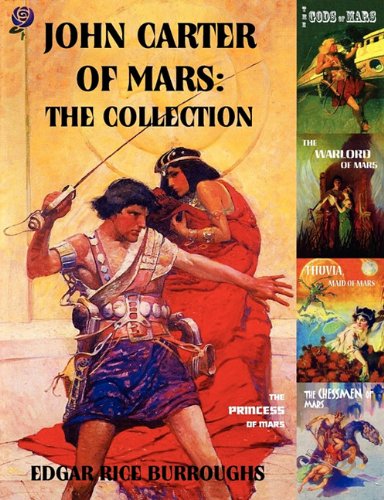
The family-owned company that holds the existing rights to the works of Edgar Rice Burroughs has sued Dynamite Entertainment and Dynamic Forces, accusing the publisher and collectibles producer of trademark infringement and unfair competition with the release of "Lord of the Jungle" and "Warlord of Mars" comics.

In the lawsuit, filed Thursday in federal court in New York City and first reported by The Wall Street Journal, Edgar Rice Burroughs Inc. claims the comics were published without authorization after Dynamite Entertainment President Nick Barrucci was told that Dark Horse held the licenses for the "Tarzan" and "John Carter of Mars" novels. The complaint insists the comics "Lord of the Jungle," "Warlord of Mars," "Warlord of Mars: Dejah Thoris" and "Warlord of Mars: Fall of Barsoom" are likely to "deceive, mislead and confuse the public" about the source or sponsorship of the content, causing "irreparable injury" to ERB Inc.

Established in 1923 by Burroughs and now primarily owned by his grandchildren and great-grandchildren, ERB Inc. owns the trademarks to "Tarzan" and "John Carter of Mars," as well as the common law rights in the "Tarzan Lord of the Jungle," "Dejah Thoris" and "Barsoom" marks. Although Burroughs' earlier works, like "Tarzan of the Apes, "The Return of Tarzan," "A Princess of Mars" and "The Warlord of Mars," have lapsed into the public domain in the United States, the complaint notes that they remain under copyright protection in the United Kingdom.

Presumably to bolster its claim of "irreparable injury," ERB Inc. takes specific issue with some of the covers and interior art for "Warlord of Mars: Dejah Thoris," insisting they "border on (and in some cases are) pornographic": "On some covers -- covers which defendants refer to as "Risque Nude" exclusive covers -- Dejah Thoris appears topless."

The lawsuit doesn't specify damages, but seeks the recall of the comics distributed in the United Kingdom, and the surrender of profits from the infringing works.

(Originally posted on Comic Book Resources)