

Showing posts with label Kurt Vonnegut. Show all posts
Showing posts with label Kurt Vonnegut. Show all posts
Monday, June 3, 2024

Thursday, May 4, 2023
Wrote Rage
"Every writer I know
Hates other writers. Not all others, but most.
The ones who are better or different he has to hate
because they are better or different. And those who are worse
he despises because that is his earned right."
--Virgil, "Ecoglues: Palaemon"
Warning. This is not an inspirational quote. Most writer quotes are. They are here to make you think pretty thoughts and keep your exhausted butt glued to your chair and writing your masterpiece.

If anything, maybe this is a lying liar telling blatant lies. If not, then maybe it's a sad little representative of writers living in a hurtful, petty world.
Or, bear with me here, perhaps it's a brilliant little writer from antiquity summing up a lot of the feelings that exist in the world of publishing and using satire with a sharp bite and finely tuned edge to make his point and show us writers the motes in our own eyes.
I prefer to think it's the latter. (I'm a nice guy like that, I guess.)
Let's analyze his words, shall we...
"Not All Others, But Most"
It's way too common in the world of publishing -- though maybe not in the small indie pools in which I swim -- for writers to see each other as the competition. If you are pinning your hopes and dreams on a dwindling number of major contracts with the "Big Boys" or "Big 5" or "Big Whatever the Hell You Want To Call Them," then it's almost inevitable to think of other writers as the person liable to get in there first and take the contract that fate has ordained for you.
If your goal as a writer is to be on the payroll of an A-list big pubber with money to throw into advertising and New York Times reviewers lining up to get a review copy of your latest chart-topper, then sure, everybody who gets a bigger ad, a more nationally widespread campaign, a better review, and bigger sales is taking away press, attention, or, god forbid, money from you. They are your competition, and therefore even if you don't outright hate them, you still feel hurt by them at best, jealous toward them typically, or downright angry at their success at worst.
When I first got the gig writing Dominatrix for Gene Simmons (Look, Bobby, I name-dropped again!), I thought the sky was the limit. Then I noticed that didn't transition into new and bigger gigs for dream assignments with DC and Marvel. But it seemed the road to writer heaven opened up for my good friends Erik and Tom, and as much as I was thrilled for them, I was jealous as hell. After a while, I too started to feel a bit of resentment at their success. I even "got mad and took my toys back home" so to speak and pretty much stopped pursuing comics for a few years to just focus on short stories because I figured I could "outperform" them in that arena (and thus recover my lost pride).
The ironic part is that while I was getting grumpy and jealous, there were many others who are jealous of me and my success.
But for those lower-tier writers who aren't in any position to become your competition, you can afford to avoid wasting strong emotion on them, at least as long as they don't achieve what you have.
"Those Who Are Better"
Here's the rub. The one thing we know better than anything else is our limitations as writers. We like to think we know what we're good at, but with those often our humility (or depression and anxiety) can tell me that maybe we're wrong about that. But the thing we know that we know that we know, like, for all the reals, is what we suck at.

So we maybe not hate them, but boy do we resent them.
There's a scene in the BBC television comedy Coupling that illustrates this idea beautifully. Several women (all attractive and desirable on their own) see a woman across the bar they feel more perfectly embodies the very idea of being gorgeous than they do. They list a litany of her attributes before declaring, "I hate her." And then, when she reveals that the price tag is still on the bottom of her shoe, they are suddenly elated at how she is brought low by such a faux pas.
We do the same thing.
We resent Stephen King because he somehow writes stories that tap into the human experience in a way that compels readers to buy his books, and then feel so much better when we can bag on him for his rushed endings. (Yes, I'm the chief of sinners in this.)
We resent Sue Grafton because she can write book after book that tears up the best-seller list, and then feel perhaps more than a little vindicated when a reviewer calls her books "light beach reading" since that can't remotely compare to our loftier goals of literary perfection.
And so it goes. (Thank you, Mr. Vonnegut.)
"Or Different"
As much as we love these folks, we equally are upset by them. Just how do they get the freedom to break the rules? Why are they allowed to be weird and offbeat and zany and out of the mainstream while we -- poor little rule followers we are since we have to play by them to even get our stuff looked at -- can't have the freedom to get a little weird too?

- Neil Gaiman and his success despite not writing series or true sequels and jumping genres like children jump puddles on their bikes.
- Raymond Carver and his ignoring quotation marks for dialog.
- William Faulkner and his free pass on ignoring damn near everything that gets covered in a creative writing class 101.
- Kurt Vonnegut Jr. and his intentional misuse of tense and structure and authorial intrusion and using doodles as part of his stories (who also never wrote an epic or a sequel).
- The list goes on.
The follow-up argument goes like this -- Damn them for setting the standard for their rule-breaking because now even if we did that creative thing we once thought about we'd only be viewed by those who matter as being derivative. Even though we thought of it first. Or at least simultaneously.
Damned it we do and damned if we don't as the cliche goes.
The follow-up to the follow-up is when we hit pure fantasy. It is this: They stole my idea.
Don't go there. That way lies madness. There, there be dragons.
"Those Who Are Worse... His Earned Right"
Ah, but thankfully, we have these folks to help balance out all that resentment and jealousy and pettiness and grumpiness --
-- These poor slobs who still struggle to understand how to use an em dash.
-- These lost lambs who can't format an ellipse to save their lives.
-- These freshman newbs who haven't yet learned not to run the faucet on that massive info dump in chapter 1 (or worse, a prologue!)

"It may not be Doubleday," we say with unbelieving pride, "but at least I'm published." Or "It may not be six figures, but at least I got upfront money when so many don't get an advance in this career." (Yes, we use the word career as if we don't still work as a teacher or caregiver or construction worker or server or stock clerk to actually pay the bills. ) "I may have been paid in contributor copies," we intone with huffy breaths, "but I at least I would never pay to have my fiction read by editors." Or, "I may only be published locally, but at least I know the difference between that and which."
As long as there is someone lower, we can subsist in our place.
"Every Writer I Know"
Of course, I jest -- in part.
But let's be honest, even the nicest writers among us can fall prey to pettiness where our writing reputations are at stake. Even the most welcoming authors can split hairs over what makes one person a professional and another person an amateur in the war of words. Even the humblest scribe (so humble as to never apply such a word as "scribe" to oneself) can get his, her, or their tail feathers ruffled at the intimation one is somehow a "less than" when compared to another -- even when the intimation was never intended.
It's a defense mechanism. It's natural. (Call it original sin if you want to get religious about it.)
I choose to believe Virgil knew all this as well. After all, we human beings (and in particular we writer human beings) haven't actually changed much in the past few thousand years. We may do spelling and grammar differently now, but we don't really think or create that differently. The imaginative muscles still flex the same way.
So, I choose to believe our friend Virge stuffed his ancient tongue firmly in his ancient cheek and took his quill or chalk or whatever he wrote with (probably an IBM Selectric, I'd guess -- after all, those are pretty old) when he penned these words.
I choose to believe he put them down as a mirror we could and should use to check ourselves in as members of the writing community lest we succumb to these characteristics.
Or, maybe Virgil was just a dick who didn't have any writer friends. Your choice.
Monday, September 27, 2021

Tuesday, June 5, 2018
Not Fitting in at the Bookstore -- And What It Taught Me About Who I Am as a Writer
 I love used bookstores. Most of my ever-growing library comes either from online discounters or used bookstores. Even so, with all that love (I can spend hours wandering in a single, skinny store in a low-rent shopping center), I still always have the hardest time at used bookstores. The stuff I'm looking for to fill in gaps in my collections... Well, I never know where to look for it.
Is Vonnegut going to be with the sci-fi books or with classics? Sure, I can find Heinlein with sci-fi, but not so much Bradbury. He might be in with literary collections or classics, but seldom sci-fi, even though that was his bread and butter.
And let's talk about more contemporary writers like Gaiman. The man writes the heck out of fantasy, but good luck finding his books anywhere other than general fiction or literary.
And when I'm trying to fill in Hammett and Chandler, do I look under mysteries with Sue Grafton, et al, or do I hope for the best in classics, or just go straight to the desk and ask for the rare book room even though I'm not looking for the pricey versions, just beat-up paperback reprints?
Does anybody else have this problem?
I posted these words the other day on my social media feeds mainly just venting after going to visit a new used bookstore (Did I mention how much I love used bookstores yet? Because I really do. I can spend hours there in spite of my issue mentioned above.)
Only the idea wormed its way into my brain and grabbed hold of my thoughts and wouldn't let go. And it got me thinking about how that same issue related to who I am as a writer. Sure, I write genres, from action and adventure to sci-fi and horror (but no epic fantasy, sorry, not my bag), but I've never felt defined by those genres any more than I have by my content. And trust me, my content has varied from super heroes to monsters to hard-boiled gumshoes to planetary adventurers.
What Publishers Want
 Publishers and readers look for categories, and not just any categories, but easy to define divisions. Those are easy to sell. A reader wants a mystery for the beach this summer, and bang, a clerk can walk said reader to the mystery section where he or she can be inundated by racks and racks of books by pretty much the same 100 authors. A reader wants a new urban fantasy, and poof, there’s a section for that, not to be confused with either sci-fi or mystery, or even epic fantasy. It’s quick, it’s easy, and it’s basic marketing.
 It gets even quicker, easier, and more marketable with series. Publishers love series. Readers love series. Both love them because it means they don’t have to think about what to read next. They don’t have to experiment with authors outside their “I know and love him or her” list unless it’s a strong recommendation by a friend. Series make money for that very reason. Series make careers for that very reason. And smart writers (unlike me) know how to take advantage of that market for series books.
You see, I have learned that the publishing world is a lot like that used bookstore I love to visit. It continues to work because it is built on categories that make people’s choices for them. If you like ___________ then you’ll also like ___________. Don’t feel bad if there’s not a new book by ___________ yet, just read this similar book by ___________ and you’ll be fine.
The Spanner in the Works
I can’t write like that. Hell, I can’t even read like that. I love the authors I love because their works are so vastly different from each another. There are worlds between Bradbury's Dandelion Wine and R is for Rocket. Vonnegut only wrote one Player Piano, only one Sirens of Titan, and both of those are on the other side of Crazytown from God Bless You, Mr. Rosewater and Slaughterhouse Five. Even Heinlein, while staying firmly inside the structure and settings of sci-fi, ranged from one end to the other with his diverse styles than covered the gamut from Starship Troopers to Job to For Us the Living to Stranger in a Stange Land and I Will Fear No Evil. I’ll have to acquiesce to the standard with Hammett and Chandler, but even those two diverged from their “series” from time to time.
 I grew up on this kind of writing. Of the novels I’ve read, very few are parts of series. And even fewer fit easily into one genre. Most overlap between genres like the choreography of a Three Musketeers sword fight overlaps settings. One foot here in the foyer, then here in the dining room, then a hop to the stairwell and a step into the ballroom for another strike.
 The stuff I’ve always enjoyed most doesn’t fit into easy categories or series. At best, Kilgore Trout shows up in a few of Vonnegut’s novels, but not as the main character except in one. Even The Martian Chronicles isn’t a complete novel, but a series of related short stories with differing protagonists. Gaiman’s Sandman comics are the only true series work he’s done. The rest interrelate only in the trappings and table dressings, much like those of Stephen King’s fictional city of Derry.
Nor do I want to write like that. I want to paint with all the colors of the wind (thank you, Pocahontas!). I want to master all of the Lantern rings, from green to black. I want to write like the writers who influenced me, not because I want to be a clone of them, but because they created the same kinds of stories I want to be able to tell... a little bit of whatever the hell they wanted to tell at the time. They didn't get locked into markets, and even if that's the way the industry works today, I won't do it. I can't do it. It'd be like putting a part of me in a box and shoving it under the bed or in the top of the closet to ignore.
Maybe the business doesn't work the same way it did for them anymore, but it doesn't change who I am, who they helped make me as a creator of stories.
Outside the Genre Lines
I pity the reader looking for my stuff in a bookstore setup. It’s not as easy as going to the fantasy section and seeing a huge row of similar works all by George R.R. Martin (and not just because I’m not that popular). Nor can you waltz to the sci-fi section and find all my books together like Heinlein’s or Frank Herbert’s.
No. You have to go to the action section, the horror section, and sci-fi section, etc. and find maybe one each in these genre classifications. Because I love to write everything. I cherish that freedom. I think if I had to get stuck in a single genre because I was writing a successful series and having to revisit all the same characters over and over again, I’d be miserable as a writer. Sure, I might be a lot more successful and maybe even have more money if I pulled a Sue Grafton or a Craig Johnson. But, at best, I might be able to do a Walter Mosley and have to finish a series to start another when I felt it had run its course (I miss you, Easy.) But most likely, even that is beyond me, and I’ll continue to jump around in obscurity from monsters to private dicks with all the wild abandon of a child coloring outside the lines in his first “I Went to the Zoo” coloring book.
If I had to single it out, I think the one thing that defines me as a writer would be voice. It’s the “who I am” as a writer that links my books and stories together. There’s a way I tell stories that comes across (at least I hope) to let you know you’re reading works by the same author.
A caveat: At no point to I intend to slight the work of series or genre-specific writers as a lesser quality or more low-brow kind of writing. If anything, it’s a lot smarter than what I’m doing. It’s just not what I’m created to write. I’ve got a wandering spirit that resists today’s “rules” of marketing. There’s still enough Hemingway and Carver and Fitzgerald in me to screw up the “what I’m supposed to do” of genre writing and convince me that I can do it all.
 “Two roads diverged in a wood, and I—I took the one less traveled by, and that has made all the difference,” wrote Robert Frost, and I think I finally understand how his way-over-quoted poem relates to my writing life. It means that when faced with the options of doing things the easier, more profitable, more marketable, industry-standard way, I dug in my heels, became obstinate, stuck to my guns, and walked clearly and steadfastly in the other direction.
 And I’m cool with that.
Well, I never said I was smart.
Tuesday, April 17, 2018
Reading Short Stories for Beginners -- A Primer and List of Required Collections

So, you're not really a short story reader. You've been reading your Summer novels for a while now, and you'd like to see why I'm so gung ho about short stories. That's cool. It's okay. I can help you with that.
Well, if you're a regular reader here on the blog, you'll know that I'm a huge fan of short stories and that they are, in fact, my favorite medium for writing and reading prose. I simply love the art required for short fiction.
How to read a short story collection
Step one -- open to the table of contents.
Step two -- read the list of titles.
Step three -- pick one that sounds interesting.
That's right. Totally ignore those 1s, 2s, and 3s in the "chapter" numbers. They don't matter anymore, not one bit.
That feeling you're getting giddy and euphoric on... that's called freedom. You're no longer bound to follow the order the sections appear between the covers. Read the end first. Read the beginning last. Read from the middle out. Jump around from story to story. Pop around like popcorn (the old Jiffy Pop stuff, not microwave). Read all the short ones first. Read all the long ones first. You do you. There are no rules.
Step four -- if you're not enjoying the stories you've read, close the book and pick up a different collection.
Whoa, now... Don't get crazy. Once you start reading you have to finish all the pages, right? Nope. That's the beauty of short stories.
Also, if you don't have time to read a novel per week or month or whatever timeframe you assign yourself, then just jump around with several collections of stories. You feel like you're cheating on your "main read" because there is no main read. Not this time.
See? That's true freedom, baby. Drink it deep. Breathe in it. Roll around and get it all over your jeans. It's okay.
Okay, so where do you start?
Well, here's my list of single-author short story collections to get you started. I mean, if you want to read, then you want to read the best. Right?


Your Turn
That's it for me. What are your favorite short story collections?
Thursday, January 11, 2018
Can Non-Series Fiction Compete with Series Fiction? (A Reader and Writer Roundtable)
 Is it possible to build a strong reader base without writing a series? The logic today for selling books and building readership seems to be a series of series, where one book leads into the next, then into the next, etc. Is the time of the stand-alone adventure novel is legitimately over (except in the case of big-name writers)? What are your thoughts, oh readers and writers and publishers? (Oh my!)
Tally Johnson: Things seem to be main-character driven. Like the Jack Reacher books for example. The sequential series do well but an overarching lead seems to be the key.
James Palmer: Generally speaking, series are easier to build audience interest. I'm trying to go with trilogies that end after three books, then starting a new unrelated trilogy. We'll see if it works.
Simon McCoy: Stephen King developed a fan base even though most of the time his characters appeared only in a book or two, but he was writing horror for the most part rather than adventure or pulp. I think it's more common for a reader to fall in love with character(s) or setting more so than the style the books are being written.
Evan Peterson: King really has a lot of cross-pollination of characters between his novels, regardless of whether they are stand-alone books or parts of a series.
 That said, King came up in a time before everything was a series like it is now. Were he to just get started today, I wonder if he'd have the same success with the same books. The successful stand-alone novel is a rarity now, and even rarer is a second successful stand-alone novel from the same author
Richard Laswell: As a reader, I prefer stand-alone books, no matter the length. I often feel that a sequential series is more of a marketing ploy by the publisher in a bid to milk more money from a storyline.
As an example, had Stephen King not had control of The Stand, I could easily see a publisher chopping it into two or three separate novels.
That said, there is something which appeals to the human mind in the idea of linear narrative. To be able to experience a character grow into their full potential is very rewarding.
Robert Freese: I'm not much into series. I read Joe Lansdale's Hap and Leonard series but that's it. I've never had any interest in writing a series, but I am currently writing a sequel to one of my earlier books. But that will end the story. No interest in writing about these characters over and over again.
Selah Janel: I mean, comics not included, most of Gaiman's work is stand-alone, but he tends to tap into archetypes and pantheons that people are at least aware of or has really strong protagonists in his YA stuff. Andrew Davidson's Gargoyle blew things up when it came out and I don't know if he's done anything else since then. I think if anything, series get promoted more constantly because the character names etc are constantly in the public eye vs a single title which has a marketing shelf life to an extent. I think it really depends on genre, audience, and a good story as much as anything else.
Amanda Niehaus-Hard: I’ll read a good series, but I don’t mess with serial novels at all since I have never read one that was well done (apart from The Green Mile and Dickens).
 They need to be stand-alones to get me interested or marketed as a long series, like Game of Thrones or Wheel of Time.
John Hartness: The horror genre is mostly standalone, as is literary fiction and several other genres. Fantasy and science fiction are largely driven by series, but then you have runaway successes like The Martian. So traditional publishing can still make best-selling stand-alones when they throw their weight behind it. But most successful indies in sci-fi and fantasy are working in series. Today. But wait six months, the industry will reinvent itself again.
Neen Edwards: I think that's why I like The Dresden Files. Each story is different and can stand alone, but I love the main character enough to read his different adventures. However, I'm not big on series in general that go on and on about the same plot. It gets boring after a while.
JH Glaze: I say screw conventional series!
Rob Cerio: The big exception to this in recent years was Ready Player One, but that book hit the nostalgia drum so hard...
David James: I think Dan Brown seems to be doing okay with his Langdon novels and he's still a relatively new author being popular only after The DaVinci Code took off a little over a decade ago. I suppose it's all a matter of the readers and the type of book. I had read Brown before he became popular, so I was already satisfied and wasn't "jumping on the bandwagon" at that point.
Series that have built over time isn't fully a recent trend, although it's more prevalent now. Think the Dune novels by Frank Herbert (especially before his son Brian and Kevin J. Anderson finished the story after his death, although you can consider those too), the Foundation novels by Asimov, even Robert Jordan began his series (which I think is really what began this current trend) in the early 90's.
 Yet, Clive Cussler, Tom Clancy, Dean Koontz, and others, all had series of novels with the same characters, and even if they could be individual adventures, each one tended to flow into the next. I just love the adventures of Dirk Pitt, Jack Ryan, and Odd Thomas.
Kevin J. Anderson is an established author, and he still works hard to get out as many different novels as possible. I would recommend his Dan Shamble novels to you as a good example of something he attempted recently -- kind of along the lines of what you're suggesting - which has gained a following.
There are a lot of examples out there and others might be able to name some. I guess it depends on just how big of a following you desire.
John Gerdes: What about somebody like Kurt Vonnegut who did not ever write a series but had a lot of recurring characters?
Pj Lozito: We were all stunned at Pocket when Walter Mosley deviated from Easy Rawlins. He wanted to publish new characters, a literary novel, a science fiction novel, non-fiction, a play, YA. It didn't hurt his career in the least.
Thursday, May 4, 2017

Saturday, September 20, 2014
Great Writers on Great Writing

F. Scott Fitzgerald on the Secret of Great Writing
http://www.brainpickings.org/2013/01/08/f-scott-fitzgerld-on-writing/
Kurt Vonnegut’s 8 Tips on How to Write a Great Story
http://www.brainpickings.org/index.php/2012/04/03/kurt-vonnegut-on-writing-stories/
Henry Miller’s 11 Commandments of Writing and Daily Creative Routine
http://www.brainpickings.org/index.php/2012/02/22/henry-miller-on-writing/
Jack Kerouac’s List of 30 Beliefs and Techniques for Prose and Life
http://www.brainpickings.org/index.php/2012/03/22/jack-kerouac-belief-and-technique-for-modern-prose/
Neil Gaiman’s 8 Rules of Writing
http://www.brainpickings.org/index.php/2012/09/28/neil-gaiman-8-rules-of-writing/
Elmore Leonard’s 10 Rules of Writing
http://www.brainpickings.org/index.php/2013/08/21/elmore-leonard-10-rules-of-writing/
Wednesday, March 19, 2014
Rejected? Join the crowd.

For more inspiring rejection letters, visit http://distractify.com/people/famous-people-rejection-letters/
Tuesday, October 9, 2012
The Writer Will Take Your Questions Now (#240) -- Writers Read Writers
Which writers would you most recommend for
other writers to read to strengthen their own writing?
Every writer I know will have different responses for this, but the writers who most inspire and teach me the craft are:

1. Ernest Hemingway

2. Ed McBain

3. Kurt Vonnegut Jr.

4. Gabriel Garcia Marquez

5. Annie Dillard

6. Ray Bradbury

7. Christa Faust

8, Langston Hughes

9. Flannery O'Connor

10. Richard Hugo
Monday, May 21, 2012
The Writer Will Take Your Questions Now (#172) -- Hard of Soft Sci-Fi?
Do you prefer hard sci-fi (science-based) or soft sci-fi (space fantasy)?
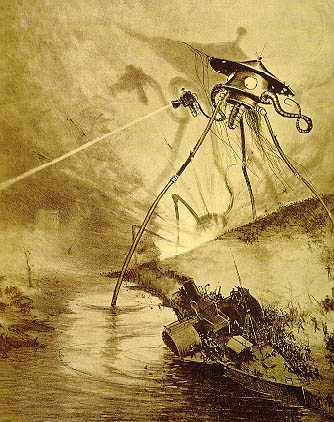 |
| War of the Worlds is more than just a rollicking good romp. It says something about us. |
I thinks that's why I like Ray Bradbury's work so much. He didn't get bogged down in the science of how a time machine worked. Instead he used the "fact" of the time machine in the story to present a tale about human greed and how it has a farther reaching impact than merely the person who is being greedy.
It's why I enjoy the work of Asimov when he address religious blindness that seeks to serve itself and it's traditions rather than the people it passes over everyday.
It's why I love the work of Gary Kilworth, who shows via the same kind of time-travel trappings how we need look any further than ourselves to see whose sin is screwing up the world.
It's why I love the science fiction of Kurt Vonnegut Jr. when he satirized the culture of automation and how it destroys little by little the value of the human individual like a certain self-playing musical instrument.
It's why I love the involvement of Le Guin's researchers who try to learn about other cultures without impacting them negatively or becoming too ingrained in their politics. (Kudos and a free copy of my SHOW ME A HERO e-book to anyone who can name the first four works referenced and any of the Le Guin novels contained in that reference.)
I'm not a huge fan of fantasy stories in a space setting, such as the Pern series or the like. Other than the original Star Wars (A New Hope), that kind of story usually leaves me flat. But neither am I a fan of stories that are merely scientific extrapolations with a sugar-coated dressing of fictionalized story. I want sci-fi that speculates not just technology, but what it means to (and for) and says about the humans who use that technology. That's what get my sci-fi geek going.
Friday, March 16, 2012
The Writer Will Take Your Questions Now (#111) -- Literary Genre Writing
A few days ago, you posted about applying literary
technique to genre fiction. What did you mean by that?
Why?
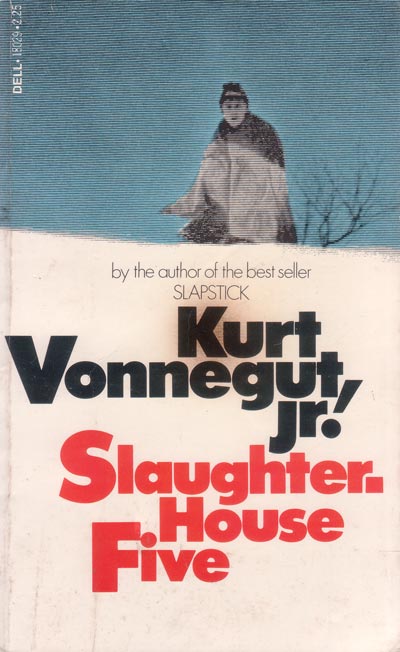
Because the story had substance beyond the mere plot. The characters resonated with readers because of WHO they were, not WHAT they were. The themes spoke to fears and ambitions common to most of the readers. The stories made statements, but not at the expense of a great yarn.
 In short, they did the same thing Hemingway and Faulkner and O'Hara were doing, but they did it in a "lesser" genre known as science fiction. They didn't get caught up in the genre vs. literary hang up publishers and writers have today. They borrowed and mish-mashed stuff together right and left and made both the worlds of both genre and literary writing better because of it.
 I want to do the same with whatever genre or format or setting in which I write, from comics (a format, not a genre) to pulp and horror (genres) or super heroes and steampunk (settings). I just want to continue to tell good stories that hopefully have meaning beyond just the surface action.
Subscribe to:
Posts (Atom)