"This is also why the new novels die so quickly, and why the old fairy tales
endure forever. The old fairy tale makes the hero a normal human boy; it is
his adventures that are startling; they startle him because he is normal.
But in the modern psychological novel the hero is abnormal; the centre is
not central. ... You can make a story out of a hero among dragons;
but not out of a dragon among dragons."
-- G.K. Chesterton, Orthodoxy
There are several great questions from literature and writing. Among them, why is a raven like a writing desk? To that, add this one:
Q: When is a hero not a hero?
A: When he or she or they are too heroic and extraordinary.
Maybe this is the reason Hollywood chooses to rewrite Superman so often. As a purveyor of stories, the movie machine gets that no matter how much Supes is the perfect specimen of purity and goodness and power, that makes his stories far less interesting. Yes, I know lots and lots of people who would argue with me about that and say that "feet of clay" is the last thing Superman needs to make a story compelling, but I disagree. I really think Chesterton is one to something here.
In this case, Superman is neither a hero among dragons nor even a dragon among dragons -- he's a dragon among normies.
I think it's also the reason Pulp fans haven't seen a Doc Savage movie. He's just too... much... for modern audiences or even older audiences. We know we need those larger-than-life, good guys in the white hats, the strongest and the purest hero types to hold as ideals, but we also know that telling stories about them never really facing any real challenges gets old after a while.
A Hero We Can Be
One of the first rules we learn for a classic adventure story is that of identification. In other words, give your readers a hero they can identify with and see themselves in. Give you readers they could strive to become.
Now, I hear you rebutting. I do. Any writer worth his, her, or their salt in the craft can make any hero identifiable and someone readers can empathize with. And you're correct. The hero who may be all-powerful but doesn't know how to "people" effectively can be as ordinary as any of us who feel that same weakness. A hero who may be almost all-powerful, but can't do anything in a single situation can be as useless as any of us can feel in certain moments.
The trouble comes when writers choose to refuse to give their heroes any kind of weakness. She's a dragon, damn it, and she's going to be a dragon all the way. I don't want readers to identify with her. She is supposed to be above us all.
One of my early stories for Cyber Age Adventures struggled with this line. The character (Starlight) was no longer human and was virtually indestructible. But she was a mom. So, as a writer, that's where I could hurt her and make her normal and ordinary. That's where I could take a bit of the dragon out of her to make her relatable. So I gave her a kid with leukemia, a disease that even with all her powers she couldn't cure or do anything to extend his life. She grieved. And that's something we all do. Bam. Instant identification. So much so that it's the story I still (20+ years later) have people talk about with me online and at conventions and shows.
If your hero (not necessarily in the capes and tights sense, but think Indiana Jones, Jay Gatsby, Janie Crawford, Hazel Motes, or yes, even Superman and Scarlet Witch) is "too much," then you run the risk of losing the empathy and interest of your reader.
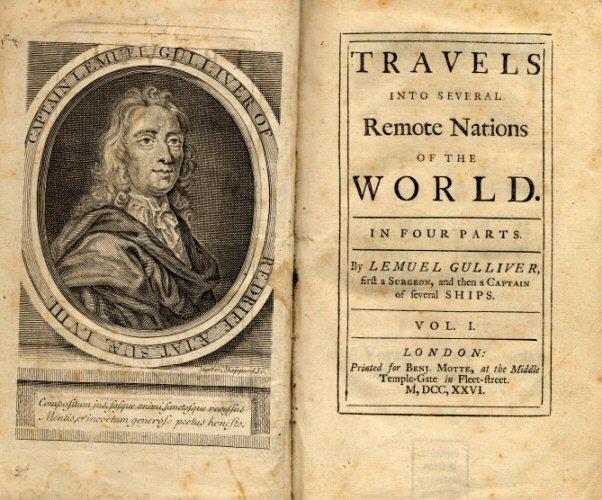
Even the gargantuan Lemuel Gulliver who couldn't be defeated in battle by the Lilliputians could fail at being able to stop a war if he couldn't get them to meet and come to terms. Sure, he could drag the boats from the sea, but he couldn't change hearts and minds. That potential inability knocked the proverbial wind out of his giant, nigh-indestructible sails.
Can it be done? Yes, there are exceptions to every rule. That's the way rules work. But typically, it's important to remember that according to the law of averages, you're not that exception. Not only that. It's best to learn how to play within the rules in order to see how best and when best to break them.
A Hero Who Isn't Yet a Hero
This is probably the most often used workaround for a hero who is way too powerful or unrelatable. It's also called "The Chosen One," "The Prophesied One," or "The One Who Was Called." It's when young Harry Potter or inexperienced Luke Skywalker (who are destined to be the unattainable best) are called by Fate (with a capital F) or some other oogy-boogey mystical reason to go from zero to hero within a story arc of how-ever-many (usually an epic series) books.
This works because until the hero loses his, her, or their zero-ness, they are instantly identifiable. Not only are they weak or even totally helpless, they also typically begin at the lowest point of life they could be experienced.
For example:
- Orphaned or might as well be (Cinderella, Harry Potter, Luke Skywalker)
- Living in poverty (King Arthur, Rey)
- Sickly (Thomas Covenant)
- No family name to speak of (In the Hall of the Dragon King)
- Loss of title, money, or security (Robin Hood)
- And the list goes on
These have become so overdone they have all become cliches. Of course, the reason any cliche attains such a "revered honor" is that it works.
The reader in this case plays along and goes on the journey with Harry, to the ball with Cinderella, into alternate lands with Thomas Covenant, or against the powers that be with Robin Hood. We root for them to achieve their eventual ultimate badassdom that will in turn separate them as "the" hero from the very ordinary us.
A Dragon Among Dragons
This is the one place I disagree with Chesterton's quote. A dragon among dragons is just another normie, especially if there's a bigger, more badass, more powerful dragon he must face and overcome. Then we're back to our ideal story of a normie among dragons.
For example, to return to our Superman analogy, there are several fantastic stories in which the Kryptonian becomes more or less human and loses his powers -- either by visiting the bottled city of Kandor or via some shade of Kryptonite. In these stories, Kal-El, who isn't much of a fighter without depending on his strength -- I.E., when you can punch a hole in a building, what's the point of learning technique? -- goes from being a greater-than to a less-than. Now, he's at the mercy of regular Joes and Jor-Els who know some skills and have bigger muscles or are smarter than him.
Humanize the dragon and you create a much more identifiable hero. Because we don't relate because of wings and fangs and claws, nor do they get in the way. We relate because of emotional and psychological characteristics that create human-feeling characters, not human-looking characters.
I do however understand what Chesterton is saying.
Let's say all those dragons are indestructible and all equally powerful and equally smart and emotionally well-balanced, blah, blah, blah. Suddenly our story takes a sudden nosedive. Who cares? ("Not I," said the Little Red Hen.)
Heroes need maybe not impossible tasks but at least one that's well beyond their ability to achieve without real effort and possible loss. The point of being a hero is to fight for something, whether to win Daisy from Tom and rewrite the past, to escape the war with the one you love, to battle all your ex's old boyfriends/girlfriends and win the heart of the girl/guy, or to literally fight off an ancient mummy to undo a curse you accidentally activated through plundering.
The point is that there is something at stake, something the hero is capable of losing. Period. And when all things are equal, those stakes tend to disappear.
A Normie Among Dragons
Here's where, in my admittedly less than humble opinion, the best stories live. A weakling among the giants. David among the Goliaths. The trick is to avoid the cliche of David and Goliath, and that's no small feat.
This hero is truly the every-person. There's no destiny to become a savior, a chosen one, a prophesied king, nothing of the sort. This is just a person vs. the whatever (the classic conflicts being vs. person, vs. self, vs. nature/fate, and vs. society) with no option for godhood or boss-level boost for winning.
In the dragon example, life and limb are on the line. But in a lot of fiction, that may not be the case. In most genre fiction, however, it may be. The normie may have to suddenly face the mob, Nazis, green-lipped aliens from planet Groomba, or even the sexy two-headed Amazon of the Himalayas.
Most fictional dragons aren't going to actually be dragons, mind you. The before-mentioned Hazel Motes' dragons were his own faith he needed to overcome and recreate. Laura Ingell's dragon was the very land her family tried to eke out survival on. The family in As I Lay Dying must face not giant lizards but each other and rivers and other obstacles to bury their kin. Hemingway's fisherman just wants to bring his fish in.
Just a personal aside, I think when a writer can combine an actual physical enemy like a villain or a dragon with a more psychological or emotional or spiritual enemy like personal faith or lack of confidence, well, then they're really off to the proverbial races with a truly formidable, multi-faceted antagonist.
This brings us to the single most crucial element of the conflict. For a hero to be a hero, he, she, or they must have the very real possibility of failing. It must be an earned possibility, not some random bullet from an off-camera (or off-page) sniper we weren't previously told was there. This must be rooted in who the hero is and what the hero does or doesn't do.
Without the possibility of failure, there are no stakes, no reason for readers to care. And that failure can't come via a trick from the writer. It must come from the character of the hero. I will repeat that. The possibility of failure can't be a gimmick from the author, but it must instead be part of the very nature of the character facing the challenge.
The more a hero has to overcome, the greater the suspense for the reader. The greater the obstacles a hero has to survive, the more invested readers will be in the story and the more like they will tag along for the journey.
The Adventures Are Startling
Let's revisit to the question we started with, but with a twist.
Q: When is a hero most like a hero?
A: When he, she, or they are at their least powerful, their least idealistic, maybe even their least heroic.
And sometimes as writers that's a tough little idea for us to deal with.