Showing posts with label tutorial. Show all posts

Thursday, January 15, 2026

Creating Religion in Your Stories


Let's talk about religion. No, not let's argue about religion or discuss the viability of religious though and action and defense. Let's talk about religion as it relates to your fiction. 

Religion can be a powerful way to say something about your characters and about the world they inhabit. It can be a vital part of your setting culturally. Or it can even be a foil against which your protagonist rebels. 

Ignore It at Your Peril, Writer (Oh Life Is Bigger)


Let's be honest. Religious affections or reactions to religious dogma are a part of life. They are part of what shapes much of the world. They are the very reason for so many of our holidays, for example and any story that revolves around a holiday should have at least a cursory understanding of it. Sadly, so little of that makes its way into a lot of fiction. Granted, this is looked at more in literary fiction than Summer beach reading, but every empty spot is a missed opportunity. 

To be fair, we're not talking about using fiction to evangelize one religion over another (unless that's your character's, well, character -- after all, it worked for Hazel Motes in Wise Blood even if it didn't make him a nice person). 

Nor are we only talking about Western or Christian religious viewpoints. The world is much, much bigger than American and European history, and we should as writers be open to exploring as much of it as we can. 

Additionally, when we talk about religious viewpoints here, let's be sure to include the viewpoint of disbelief. Although atheism or agnosticism would never be considered a religion, they are religious points of view that choose not to believe rather than believe. 

What we're really talking about here is religion as part of a character's background, what goes into the development of that protagonist, antagonist, or bit character as a person (albeit it a fictional person). Religion can be as effective as race, location, education, hobbies and interests, and goals when it comes to creating a three-dimensional character.

Also, we're going to address religion as it relates to world-building. So much of Ursula LeGuin's work couldn't exist at the same level or excellence if she had ignored the religious inclinations of the worlds her researchers visited. The same goes for Dune, and for a lot of the writing of Asimov and Bradbury and Shūsaku Endō and Margaret Atwood and Toni Morrison and Zora Neale Hurston.

But, as said earlier, so many contemporary writers avoid any mention of religion, most likely (just my opinion here) due to the bad taste the merger between religion and politics has left in the mouths of so many folks nowadays and the fear of being labeled a "religious writer" instead of a writer using religion to build characters from words. 

There are several ways to go about this, and we're going to look at each of them. 

  • Religions based on real-world faiths
  • Dogmatic/theological religions
  • Mythological religions
  • Human as God religions
 

Building My Religion (I Thought That I Heard You Laughing)


It's far more common for writers of fantasy and sci-fi to create elaborate religions than it is for writers of mystery and romance. Now, that primarily happens because of the differences between a real-world and a not-tied-to-the-real-world (except maybe only tangentally) setting. Fantasy and sci-fi writers have the freedom to explore really out-there ideas or lock their created religions into more established norms. Writers who work in something based on the real world have less freedom (at least without becoming urban fantasy or romantasy). For them, the thousands of faiths across the globe are their base for research. 

Tuesday, January 13, 2026

My Backstory Story


I was once asked by a fellow writer: How much of your character's back story do you know before the story begins? Do you know everything or just the basics? 

I love the question. 

There are two opposing ways of thinking about this, as opposite as democrats and republicans are politically -- at least in my experience of meeting and talking with writers. The members of one group tend to make it all up as they go along, reinventing their characters almost willy-nilly with every twist and turn or plot and nuance of the story. On the other hand, the members of the other group keep their folders of notes and printouts and family tree diagrams handy near their computer desk or (for the tech-obsessed authors) in a spreadsheet on the cloud so they can't lose the information at home and can have it readily available even when they're not at home.

Many, however -- and I'm certainly one of them -- fall somewhere in the middle. I like to know the basic personality and major life experiences for my core characters, but I tend to fill in the details for other things (like what college he attended, who was her first boyfriend, is he allergic to gluten, where did her tattoo come from, for example) as I'm writing and as the story dictates. It's funny, though, how often some of those minutiae of details can become key plot points in a story or triggers for a new story for a future volume featuring the character in some cases.

A real-life example: When I came up with the Victorian detective for my story "Death with a Glint of Bronze" in Dreams of Steam II: Brass and Bolts (story now available in this collection -- direct or Amazon). I knew that within the scope of my 20 or so pages, I wouldn't need to dig so far into McKendrick's past to know about the facts and dates of his previous marriage or how long his time as a soldier in India was exactly. But I did need to know all the details of the accident that took one hand, and the childhood malady that left his other hand palsied. Those were the important back story details. Those were the ones on which the story hinged and swung.

I used to do questionnaires about my characters, and I think those kinds of details are good to know, and I still recommend them as character exercises for beginning writers. However, after writing for nearly 35 years now, the questions that lead to those kinds of details have become internalized, and I no longer have to make a conscious effort to fill out questionnaires or apply for jobs as my character. As the characters become real in my head, those specifics become automatic, and sometimes even just held in my subconscious until such a time as they are needed for the story. 

A caveat -- the longer the work, the more information I've learned that I need to know upfront about the back story. Why? Because I've found that those are the kind of details that help carry a story beyond the simple plot point A leads to plot point B leads to plot point C, etc., kind of story. Those are the things that take a story (at least for me, your mileage may vary) from a mere skeleton to a flesh and blood living being.

Thursday, January 8, 2026

Tighten the Tension


You know that feeling when your gut constricts and your brain starts thrumming. Your heart might even pound a little. When it happens in life, it can be terrifying. When it happens in a story, it means the author did something right. The author affected you in a real, emotional, visceral way. The author made you react.

That reaction is called tension. 

And if you can do it consistently as a writer, you’ll never fail to sell your work. 

What It Isn’t

If you research this stuff on the ‘Net, you’ll often hear this topic discussed closely with the idea of suspense. Some folks might even try to tell you that tension and suspense are the same thing. 

Don’t listen to them. They’re not. 

Tension vs. Suspense

Tension is an immediate feeling of discomfort or stress. Tension is the knot that suspense can create inside you. Tension is the uncomfortable feeling you get because a situation isn’t optimal, or even something you can cope with. Tension is the tiger roaring on the plains near your camp. 

Suspense is the feeling of anxiously awaiting a future event. Suspense is the buildup or increasing tension over time. Suspense is taking those uncomfortable feelings and combining them with anticipation. Suspense is the tiger’s roar getting louder every few minutes, making you look around for when its head eventually appears at the edge of camp. 

Tension vs. Conflict

If you have an absence of conflict, you will never have tension. However, just as tension and suspense are related but not equal, the same applies to conflict. Without conflict, there may be no tension, but tension isn’t conflict. 

It grows out of conflict. 

Which conflicts? Well, all of them. You can have great tension with a person vs. nature story (2012, 28 Days Later, The Poseidon Adventure). You can create tight tension ina person vs. society story (A Clockwork Orange, The Awakening, The Crucible, Their Eyes Were Watching God). The same holds true for a person vs. person plot (The Bourne Identity, any Bond novel, Kramer vs. Kramer). Even a solid person vs. self story can keep a reader all wrenched up inside (Hamlet, Fahrenheit 451, The Old Man and the Sea). 

A well-established conflict for your characters, particularly your protagonist and antagonist, builds a solid floor from which to create tension. 

Thursday, November 6, 2025

Check Your Fiction for the Following

A Checklist for Prejudices in Your Work

Want to be more inclusive and diverse in your fiction? Here are a few points to consider. If you find examples of these “-isms” in your author’s voice, then you might want to take a look inside and try a re-write (and a re-think about where they might be coming from).

A caveat—These can be great shorthand for villains and bad antagonists but constantly using them that way can start to take away some of the power in your characters, especially when they are used as hammers. More subtle uses can create more real characters that are more human than “Bond villains.”

[  ]  Racial prejudices: Negative feelings, stereotypes, attitudes, or beliefs towards a people due to their ethnic or racial makeup.

[  ]  Gender Prejudice or Sexism: Stereotypes or attitudes held based on someone’s gender or perceived gender.

[  ]  Religious Prejudice: Holding negative views or attitudes towards an individual due to their religion or lack thereof.

[  ]  Ageism: Prejudice against an individual due to their age, spanning from believing people are “too old” for some situations or “too young” for others.

[  ]  Classism: Holding prejudicial views or attitudes towards individuals from a lower socioeconomic status. These views can easily manifest into discrimination, impacting access to essential social services, like education, employment, and healthcare.

[  ] Homophobia and Transphobia: Prejudiced views against members of the LGBTQ+ community based on their sexuality and gender identity.

[  ]  Xenophobia: Prejudice held against foreigners, in particular refugees or immigrants from low-income countries. Xenophobia and racism may have similarities; however, xenophobia focuses more on nationality, culture, and origin, though race does contribute.

Source: https://www.cultureally.com/blog/racism-vs-prejudice

Thursday, August 28, 2025

The Editing Onion

Editing isn't a one-stop shop.

Editing. It's the dirty word of writing. For most, it's the part where the fun and creativity goes to sleep or drives off into the sunset, leaving you with a boring, tedious, time-consuming, and oh-so-not-at-all-fun WORK of finding out just had poorly you can spell and how much you use weak verbs and too many adverbs and why you should just chuck your Creative Writing MFA and go sell... Sorry. Got a little lost in the weeds there. 

But it doesn't have to be. 

Maybe it will never be fun exactly, but it doesn't have to totally suck either. 

And the best thing is that the more you learn to do it effectively, the better you tend to be at it. 

But, at its heart, what is it exactly?

Not That Kind of Onion

No need to cry about it, editing has layers, just like an onion. (I never said my puns were actually funny. Sorry.) Still, just like our sweet Vidalia metaphor, editing gets more specific and more useful the deeper you dig into it. 

When lots of folks think about editing, they are thinking of just one thing. That one thing might be proofreading. It might be copyediting. It might even be concept editing. Some folks might mentally jump straight to story editing. But each one of these isn't just a 'one thing.' They're all just a part of something bigger--the process of editing.

For me, rather than breaking it into categories like those, I prefer to think about the pieces of the story we're editing, hence my onion metaphor. 

Layer 1: Words

The atom of your story (yes, it's a new metaphor, just stay with me) is the individual word. It's the basic building block of your sentences, your paragraphs, your chapters, and your stories. It's the tree that makes the forest possible. And unlike that cliche, sometimes we writers can't see the trees for the forest. We're so busy noticing the sprawling majesty of the story that we can't or don't notice the individual words that created it. 

Saturday, April 26, 2025

[Link] Everything You Need to Know About Developing (and Writing) Characters

by Ali Luke

I’ve covered a lot about developing characters and writing about them, here on Aliventures. I wanted to collect those posts together in one place so you can find them easily.

Whether you’re just figuring out who your characters are for your story, you’re in the messy middle of your draft, or you’re trying to nail your characterisation as you rewrite, hopefully there’s a post here that covers just what you need!

Read the full article: https://www.aliventures.com/writing-developing-characters/

Tuesday, March 18, 2025

Writing for Comics -- A Basic Primer for Newbs


Over the weekend I was able to teach a class on basic comic book writing. I always love these classes, but I realized while I was speaking that I'd never turned this talk into an essay for the blog, so I'm remedying that now. 

As the cheerleaders say, "Ready? Oooo-Kay!"

The Pre-Writing

Rule number one. Read comic books. Whether you want to call them graphic novels, sequential storytelling, floppies, or the classic term comic books, you must read them. 

If you want to know how this particular medium works you must be well versed in it. Just like a screenplay or a stage play has its own set of rules, comic book writing has its own set of rules as well.

Whether you write full script or Marvel style (more on that further in) you still have to know the language of comic books. This is no different than knowing the language of fiction writing with its grammar, beats, dialog, characterization, setting, plot, theme, etc. In fact, all those things apply to writing comics too, but writing for comics comes with even more tools you need to learn. Panels, word balloons, thought balloons, narrative captions, internal monolog captions, page turns, etc. These are new and important concepts to learn to be able to effectively and efficiently write a script for sequential pictures. 

Rule number two. Think big. Your special effects budget is only limited by your artist's ability and your combined imagination. That interstellar battle you could never get a budget for in an indie movie or for a stage play, go ahead and write it. That hospital being attacked by giant cockroach creatures from a mythology you made up, no problem (I, in fact, did write this scene in Fishnet Angel: Jane Doe). Just do it, as Nike said. The sky is the limit. Your SFX bottom line is infinity. Period. (Unless your artist's hand cramps up.)

Remember your basics. You still need a story. You still need a story triangle with rising action, falling action, etc. You still need a beginning, middle, and end (even if you are writing a multi-issue with cliffhanger endings). You still need well developed characters. You still need a reason for the story and it needs to have something to say. Comics are no different than classic literature or Summer bestsellers that way. 

One last thing... and this part is going to sound like I'm arguing with myself. These two things sound like they're the opposite of each other. But don't be fooled. They're important. 

Here it is: Tighten your story. Now, once it's tight, let it breathe. 

Saturday, February 8, 2025

[Link] How to Portray Time and Memory in Stories

by Anita Felicelli

Time is a tremendously elastic concept, but if you think about it, almost all stories implicitly deal with time: They relate a temporal sequence of moments or events, rather than describing a single moment. But the relationship between time and stories is even more profound than that, I think. 

The author Joy Williams has observed, “What a story is, is devious. It pretends transparency, forthrightness. It engages with ordinary people, ordinary matters, recognizable stuff. But this is all a masquerade. What good stories deal with is the horror and incomprehensibility of time….”

The origins of my short story collection How We Know Our Time Travelers, which is about the oceanic “horror and incomprehensibility of time,” was my sense, after becoming a parent and learning to accept suffering serious illnesses, that time would not work the way I expected it would when I was younger, and instead would remain terrifyingly mysterious and slippery throughout the rest of my life. I could not quite grasp time when I thought about the concept too hard, and yet it was, perhaps, the hugest motivating force in my life. 

There was no linear progression, as many traditional children’s novels had taught—rather, there were layers of time, and within my single body were selves I was barely acquainted with any longer, and yet, given the right circumstances, I’d feel myself returned along the tides of memory to these points of time in which I’d existed as another self: The young storyteller who wrote about girls who couldn’t find their way home; the teenager who painted weird, surreal images on wood and casually gave them away to friends; a young college student drunk on newfound freedom and power; the baby lawyer who acted like a compassionate sixty year old while withering away; the newlywed who finally embraced the unpredictability of a life in books after years of trying on suits and predicting legal outcomes; the excited new mother, and, then, the older mother with illnesses coming to terms with decisions already made, moments that couldn’t be retrieved—and the heartache that followed.

Strangely, I became aware, in the course of thinking about my own ending, that my body also contained within in a range of futures—different places where the train might jump the track, distinct last stations. The body as a vehicle for past and future time travel. As I came to conceive of it in my book, time travel was an ordinary phenomenon that happened daily in the mind, even when least expected, triggered by sense memory and uncanny resemblances. While working on How We Know Our Time Travelers, I drew on the intuition that time allows every moment to coexist with other moments.

In the title story, for instance, a middle-aged artist holds an open studio at which she meets a young man who deeply, overwhelmingly reminds her of her now jaded and cynical gallerist husband, and who she comes to believe is her husband journeying forward in time to meet her. The story moves from her uncertainty about the empirical reality of who she’s seeing—to an alarming but slightly erotic certainty about the young man, whoever he is. With subtle shifts in sentence construction and word choice, I tried to frame the emotional reality of the story to create the feeling she has traveled back, or he has traveled into her present. But there is also the interpretation that she is insane. 

Read the full article: https://www.writersdigest.com/write-better-fiction/how-to-portray-time-and-memory-in-stories

Saturday, January 11, 2025

[Link] How to Avoid Author Intrusion in First Person

by Becca Publisi

Author intrusion happens when the author butts into the story to address the audience directly, interrupting the character who’s supposed to be narrating. Sometimes this can be used deliberately to create a certain effect. CS Lewis, Jane Austen, Lemony Snicket…it works for them because it’s purposeful. Deliberate.

As with so many writing problems, intrusion becomes an issue when it’s accidental—when we, the author, meander outside of our character’s viewpoint and start sharing things the character wouldn’t share. For instance…

I tucked my curly black hair into its cap.

This description won’t quite ring true because every narrator is intimately acquainted with the color and texture of their own hair. When they’re talking or thinking, they’re not going to reference the particulars. If I inject those details into the story in this way, the character is no longer narrating. It’s me, the author, interrupting the true storyteller to get information across to readers. 

Read the full article: https://writershelpingwriters.net/2024/11/how-to-avoid-author-intrusion-in-first-person/

Tuesday, November 26, 2024

Visceral Writing + Nostalgia = Effective Writing Every Time


Pow! Right in the kisser! 

A knife in the gut! 

Intestines spilling out of an open wound! 

Bloody bullet holes!

Those are the kinds of things that often come to mind when we think or talk about visceral writing. Gross stuff. Stuff that is painful to feel. Feelings that make a reader feel bad. 

We like to think, I believe, that visceral writing is a perfect tool for crime fiction and horror stories, but maybe not so much for regular fiction that doesn't include fistfights, stab wounds, gunshots, or the rambling undead. But is that really true?

According to Vocabulary.com:

"When something's visceral, you feel it in your guts. A visceral feeling is intuitive — there might not be a rational explanation, but you feel that you know what's best, like your visceral reaction against egg salad." Visceral comes from the word viscera, or the gut, the organs. Visceral writing is that which produces a sensation physically in a reader's body, not just in a reader's mind.

But let's be honest. Are bad feelings the only kinds of feelings we experience in our gut, in our body, in our viscera? Not for me. And I certainly hope not for you either. What a horrible way to live. 

Always Look on the Bright Side of Life
(Do, do, do, do, do, do, do, do, do)

Remember the hysterical closing scene in Monty Python's Life of Brian? Who my age doesn't? Brian hasn't had the kind of life he expected and as he is being crucified, he and the others hanging there in the hot sun still find a way to look on the positive side of their situation. 

We can do the same even though we write viscerally. We can use the same tools, flex those same muscles to create gut feelings and physical sensations that stir up good feelings and not feelings of nausea or unease.

Don't believe me? 

Try these on for size. Picture these things, but not with your eyes. 

  • Grandma's fried chicken sizzling in an iron skillet and how that made you salivate, almost tasting it through your nose
  • The kitten-fur softness of the flannel blanket you had as a kid and carried around so much that mom and dad had to wash it every few days
  • Not only the sweet taste but the crystalline texture of the rock candy you could trace with your tongue that you only bought once a year on the way to your usual family vacation spot

Can you see them? Good, but not good enough. Can you hear them? Can you feel them? Can you taste them? Can you smell them? Now here's the real kicker... can you experience them?

Let's look at each example and see what senses they activate. 

Grandma's fried chicken sizzling in an iron skillet and how that made you salivate, almost tasting it through your nose

Sight? Sure. Sound? Yep, nothing like the sizzling of anything being fried. The more grease the better. Feel? Yep. I remember getting too close and the leaping pings of grease finding the sensitive skin on my arm. Smell? Oh yeah, and if your Grandma was like mine, her special seasoning belonged only to her brain and the smell of the chicken cooking was different from any of your friends' families cooking fried chicken. Taste? Not the chicken. Not yet, but the taste of Crisco in the air, the thick greasy flavor that said "There's no way I can hold on until dinner." (Writing this is making me hungry.)

That's visceral right there. And there's not a zombie, a serial killer, or a crime scene anywhere in view. 

Moving on...

The kitten-fur softness of the flannel blanket you had as a kid and carried around so much that mom and dad had to wash it every few days

Sight? Again, sure, but that's the easy one, the low-hanging fruit. Sound? Not as much, but I can hear the blanket sliding on the linoleum floor or the hallway. Feel? This one is all about the feels. The gentle, soft way that blanket felt wrapped on my bare shoulders, even as a teenager. The warmth I felt quickly simply by virtue of being covered thanks to the way it trapped heat. Taste? Of course. (Like you never stuck your blanket in your mouth. Don't lie to me.) Smell? It ended up smelling like my skin where I held it, like whatever had been spilled in the floor where I dragged it, and like whatever Mom was cooking that lingered in the air. That's why it had to be washed so much. 

Next.

Not only the sweet taste but the crystalline texture of the rock candy you could trace with your tongue that you only bought once a year on the way to your usual family vacation spot

If you missed this special treat on the trips to the beach each Summer with your family, then you really missed out. There were dozens of hole-in-the-wall stores along the roads where you could get not only rock candy, but pecan brittle, divinity, pecan logs, invisble ink activity books, and plastic alligators to play with in the car. 

But enough about my childhood. We're supposed to be talking about visceral, senses-led writing. 

So... 

Sight? Yep. Red, green, blue, white, pink. Sharp and shiny. Hear? That crunch that sounds like not just the candy is breaking but your teeth also. Taste? Pure sugar, baby. Smell? It invades my sinuses with every bite. And the big one -- feel? If you can't feel the sharp points that you traced with your tongue, exploring each crevice and plain and peak before chomping down on a bite, then you're not trying hard enough. 

Have we unlearned all that we once thought about visceral writing yet? Have we tossed out the idea that it's only good for dangerous, violent, abhorrent feelings in our gut? Have we begun to see that the same tool we can use to destroy a reader's pscyhe (in the best way possible) can also be used to take them on a trip to good feelings and happy memories too? 

Wait?! Memories? What do they have to do with all this?

I'm glad you asked. 

Yesterday Once More
(Shooby doo, lang, lang)


Nostalgia. 

Merriam-Webster defines it as a noun, a feeling of longing, a "wistful or excessively sentimental yearning for return to or of some past period or irrecoverable condition." Simply put, nostalgia is memory, albeit a positive one we enjoy reliving. But at its heart, memory is what makes all visceral writing work.

Yes, even the negative usages. 

Why does that crude, iron-blood drawing on the crime scene floor turn our stomachs? Because we've smelled it before, tasted it in the air even if it was only from an injury on the ball field or falling out of a tree or getting smacked in the face by a careless sibling in a hurry. Why does that steel bar crashing into our main character's stomach hurt us too when we feel the bruises start to form with words alone? Because most of us have either felt it or watched someone else feel it and the words trigger the "ouchness" of the memory. 

Let's just call that the "bad nostalgia," the feeling of "wanting to avoid some past and completely recoverable condition."

Just like our "bad nostalgia," our classic nostalgia, or wistful yearning works together with our sensory details when we tell stories to create the ultimate form of positive visceral writing. When we reinforce our readers' nostalgia with the right details that trigger sights, sounds, smells, touch feelings, and tastes they long to experience again, we can shortcut (in effect) the rational brain and go straight for the memory centers that make them feel and experience our stories. 

It's kind of like learning sight words in school. When you recognize a word immediately, you don't have to use any brain power to apply to spelling, meaning, or context. It just is. 

In the same way, the right details partner with nostalgia. The right smell, taste, or feel word can skip the rational brain and find immediate comfort in a sensory memory that makes it identify with the scene being described. 

Now, this doesn't always have to be used in a straightforward way. Sometimes the best writers will use positive sensory details to create conflict in the gut of a reader. Let's say, for example, that the smell of the pie cooking reminds our spy of home, but she's not supposed to let anything distract her from her mission. And in spite of the pain in her ribs from the beating she took before convincing the bad guys she was on their side, the scent of the pie relaxes her. The entire experience is supposed to be something negative she won't mind putting behind her, but that damn pie and it's nostalgia gut feeling is getting in the way. Let the reader feel the emotional, gut conflict right along with the character. 

When you reinforce physical sensations with emotional sensations, that's always effective wordsmithing. And, after all, isn't that the goal?

Thursday, October 24, 2024

Best Practices: Write Something Scary!


Hey, writers! Give me your one best piece of advice to help someone learn to write something actually scary for a reader. And... GO!


Jessica Nettles: Mine the things that scare you the most, especially childhood fears. Then crank them to 11 (that is a different level for different people). I never fail to hit my mark when I go there.

John L. Taylor: Make the reader care about the character who will have the worst fate. Horror fails if you're rooting for the protagonists to die. Get them emotionally invested in someone who really doesn't deserve their fate and slowly pick them apart like a daisy. They will know fear from that.

John Pence:
It's got to scare the author. It's got to be something the author had to be brave and confront.

That's not true for all horror, and can be applied outside of that genre.

Scariest damn thing I ever read was Poe's first-person narrator popping his cat's eye with a pocket knife in "The Black Cat." I read that when I was like 9 or 10, and I still feel it.

Michael Dean Jackson: Get your reader emotionally invested in a character and then scare the hell out of that character. Maybe it's not something that would scare you or the reader, but if it scares the main character, then the reader will feel vicariously frightened along with them.

Lainey Kennedy: Less is more. Leave room for the readers imagination to fill in the gaps. What our own mind comes up with is often scarier than any written words.

Sean Harby: Write something that frightens you. Make sure you include all your senses and express the nature of your own fear. It will translate.

John Morgan Neal: Use your imagination to think of something you were horrified by or you think would be horrified by. Then present it in a way that gets across why it's horrifying. But leave enough room where the readers imagination fills in the blanks. Making it personal to them.

Bobby Nash: I always start with character. Make it scary for the character and the reader will feel it.

Krystal Rollins: Haunted old house in a small town, picture books left inside of the family, only stories are told for the new people in town, until, one gets into the house.

Danielle Procter Piper: Many people go for the gross-out factor, I go for psychological stuff.

Laura Rucker: Describe a physical reaction to the horrifying thing, or a physical description of the horrifying aspects. A. Piece. At. A. Time.

Mike Schneider: You have to establish normal. Scary is a juxtaposition. So many creators want all thriller/ no filler but the reality is those stories aren't scary, no matter how gruesome they get. In fact, show too much of the killer/ monster and we start rooting for them instead.

If you want any part of your story to be scary you need to put more time into establishing things are light and joyful. You need to get us invested in that story to a point where we forget we're reading something scary. Then WHAM.

Barry Reese: If it doesn’t scare YOU as the writer, it probably won’t scare them as a reader, either.

PJ Lozito: End the paragraph or chapter before the thing actually happens...

Jim Beard: Scare yourself. Everything else will follow.

Paul Beale: What scares you? It will likely scare the rest of us too..

Brian K Morris: Study Alfred Hitchcock's films as a blueprint for pacing and escalating the terror.

Sheela Chattopadhyay: This is a great question! While some may say to "write what scares you," I tend to find that the scary part is more in the suspense, pace, and overall environmental feel. Those aspects are what drew me to Poe and Agatha Christie as a child. From learning experiences and currently working on a suspense that's scary short story, the pacing and stakes help build the suspense.

Sean Taylor: The key to writing horror, as least as I see it (and you’ll find as many different takes on this as you can find authors, I’m sure), is to camp out in the concepts of discomfort and dread. You’re not going to surprise scare a reader. You’re going to slowly overwhelm them with several smaller “uneases” that become a full-blown “creepy” and finally if you’ve done your job right, all-out dread.

Dread is that feeling that keeps a reader’s stomach unsettled, that scene that makes them feel phantom pains in the same limb or joint the killer keeps sticking a pin into, the sum of all the chills up a spine and “what if” scenarios of the mind a reader keeps accumulating during the time it takes to read your tale.

Anna Grace Carpenter: Don't self-censor. (Especially on the first draft.) It's a lot easier to take things back off the page later if they seem too much than it is to add things back in when it's not enough.

Gordon Dymowski: Horror and comedy share one aspect in common: timing. The only difference is that comedy results in laughter, horror results in fear

Danielle Procter Piper: Less is more. Let their imagination fill in as much as possible.

Editor's Note: All images are free use from Unsplash.com.

Saturday, October 12, 2024

Advice for younger writers -- How To Make Your Writing Suspenseful

by Victoria Smith

What makes a good horror story? Sure you could throw in some hideous monsters, fountains of blood, and things jumping out from every corner, but as classic horror author H.P. Lovecraft wrote, “The oldest and strongest kind of fear is fear of the unknown.”

And writers harness that fear not by revealing horrors, but by leaving the audience hanging in anticipation of them. That is, in a state of suspense.

The most familiar examples of suspense come from horror films and mystery novels. What’s inside the haunted mansion? Which of the dinner guests is the murderer? But suspense exists beyond these genres.

Will the hero save the day? Will the couple get together in the end? And what is the dark secret that causes the main character so much pain?

The key to suspense is that it sets up a question, or several, that the audience hopes to get an answer to and delays that answer while maintaining their interest and keeping them guessing.

So what are some techniques you can use to achieve this in your own writing?

Read the full article (and do the lesson) here: https://www.commonlit.org/en/texts/how-to-make-your-writing-suspenseful

Tuesday, April 30, 2024

Help! I'm Stumped and I Don't Know What To Write!


We've all been there. You sit down to write, and your poor little brain shuts down. I'm not talking about writer's block. I'm talking about feeling like writing and wanting to write, but not having a single idea of the story you want to tell. 

You've worked your way through your backlog or story ideas and nothing is needed for a publisher. Nor are you happy with any of the previous ideas in one of your little notebooks with story nuggets that may or may not still make any sense to you. 

What do you do?

Hi. I'm Sean, and I'm glad you asked. Because, well, I have answers. 

Writing Prompts

What you need is a prompt. You're not facing writer's block (because that doesn't actually exist -- it's always something else, but that's an article for another day). You're just needing that one idea that gets your brain excited. 

A prompt is exactly what it sounds like. It's something that PROMPTS you to write. You can find lists of these things all over the Internet, and every writer has a few that he/she/they use as their go-tos and stand-bys to break through the silence and start making story noise again. 

These are just a few of the ideas I use to remind my brain that I have stories to tell. Maybe they'll work for you too. 

My Quatrain of Cheat Codes

Here's my #1 brain trick. Ready? It starts like this:

What if...

I've written an entire tutorial on using "what if" questions to launch stories so I won't go too far into it here. But it's where most of my best ideas have come from. 

  • What if... the mirror in Alice in Wonderland was the same mirror as the one in Snow White? (that one became the story "The Fairest of Them All" from Required Reading Remixed (originally released in one volume as Classics Mutilated)
  • What if... a woman had an accident that made her a superhero but it also made her so dangerous that she left her family behind? (that one became the multiple stories of Starlight from Show Me a Hero)
  • What if... the KKK killed a black jazz musician in the 1930s, only it wasn't really the Klan and actually solving the crime could potentially destroy a white detective's relationship with his black lover? (that one became the cover story for The Ruby Files Vol. 2, "A Tree Falls in a Forest")

Here's another I particularly love. It's great for when I need a less traditional, more right-brained, out-of-the-box approach to coming up with story ideas. 

Pick three things

It's that simple. Just pick (or have someone pick for you) three unrelated things. This works great if you are in a conventional panel or at your table and ask people for random lists of three things to save for later. Perhaps my best story to come from this method is one called "Lake Jennifer Blair" from Show Me a Hero. I was in a story funk, and I randomly jotted down three items: a Coke can with ants crawling all over it, a duck with a blue goatee, and a cell phone. That it. Then I figured out a story that put all those elements together. Even though they had nothing to do with the plot, just figuring out why they were there and why they would have been there to begin with gave me the rest of the tale before I could finish the first paragraph. 

This little trick comes from the legend about Checkov in which he boasted he could write a story about anything. The story goes:

“. . . when asked how he wrote his stories, Chekhov laughed, snatched up the nearest object—an ashtray—and said that if Korolenko wanted a story called "The Ashtray," he could have it the next morning.” [And he did.]

So what if I stole the idea and added two more objects? It works for me. 

What's this character doing now?

Since I end up writing a lot of the same characters over and over again (it comes with the territory when you write superheroes and pulp characters), I have to always have the next story in my head ready at the helm. A lot of times I create these while I'm writing the previous story simply by throwing in some detail that most likely seems extraneous, but it becomes a kernel, a nugget to prompt that C-plot the won't be revealed until the next story sees print. The danger of this is to be careful not to add stuff that is just fluff. It still has to make sense in the context of the story it appears in, whether it initially feels "extra" or not. 

Often though, when I'm asked to revisit a character hadn't planned to write again, I just reread the stories I have written and look for some small thing to jump out at me. 

When that doesn't help, I just ask the question directly, "What's this character doing now?" That's where my Rick Ruby and The Fool stories came from (The Ruby Files and Show Me a Hero, respectively). I sit down with my brain and say, "Hey, brain, how are Rick and Evelyn doing right at this moment? Are they happy? Why or why not?" Or maybe, "Hey brain, is The Fool getting any better at being a costumed vigilante yet? What's holding her back?"

Reframe a classic

I love this one. It's a trick that many folks don't realize is common in the big world of publishing and movies. It goes like this: Think of a classic. Let's go with Alice in Wonderland. Now put it in a different setting. Okay, how 'bout an urban landscape? Okay, now tell me the story from a different character's POV? 

Whoa?! What?!

That one I just described is the wonderfully decadent film Malice in Wonderland. Some aren't so obvious though. 

Did you know that Star Wars is basically a re-skin of Kurosawa's Hidden Fortress? Or that Jane Smiley's neo-classic novel 1000 Acres in just Shakespeare's King Lear set on farmland and told from the POV of one of the "bad" sisters?

You don't even have to re-skin completely to trigger some ideas. You can simply re-theme the tale. Angela Carter's "The Company of Wolves" from her collection The Bloody Chamber asked what if the story of Little Red Riding Hood was really about one girl's sexual awakening, and bam, the story took form. 

It also doesn't have to be a classic story. Reframe a song if you like. I've done that several times. Prince's "The Beautiful Ones" became a story idea about four aliens living as women in the big city. Bon Jovi's "Living on a Prayer" became a Poverty Row thriller story idea about a trumpeter whose horn is in hock at the pawn shop to pay off a gambling debt while his new wife waits tables at a diner frequented by the gangsters he owes. 

This is also a fun, creative exercise just to loosen up your brain even if you don't use the ideas that are dreamed up. 

More Prompts

As I mentioned above, the Internet is filled with pages upon pages of writing prompts, some from individual writers, others gleaned from publishing houses and magazines about writing. Here are just a few you might want to take a look at:

Well, if that's enough to help you break the silence and get writing, I don't what will do it for you. And as always with the best writing tools and tips, steal freely and make them your own. 

Tuesday, April 23, 2024

15 Action/Adventure Tropes That Need To Die a Painful Death


Tropes. Ya gotta luv 'em. Without them, we'd have no shorthand to convey information with pages of unnecessary narration that disrupts the flow of our stories. Based on stereotypes and cliches, they can help and they can hurt. When they help, it only bolsters the "contract" between writer and reader. When they hurt, they can say things about both the writer and the work you may not like. The trouble is, usually, that they weren't intentional. It's just that the trope popped into your head without really thinking about it and you followed it to develop your story. 

The following list is 15 such tropes that I believe need to die a painful death, and none too soon. 

In addition to my list below, are there any that really grate you like sand at the beach? Let me know in the comments below. 

Sexist Tropes


1. Women are only good story fodder for being loved and being saved. 


Thankfully, I see lots of evidence of this one changing, at least in commercial fiction from the big publishing houses. That's because they follow marketing trends and realize the world isn't the same place it was in the 1930s or 1950s (even much of the 1970s). However, I still see a lot of this used in independent and small-to-midsize houses that are trying to recapture the glory days of men's fiction. Guys, you can still be heroes without every woman in sight becoming the damsel in distress or love interest. 

Ways to play off this trope to fix it: Twist it a little. Have the guy who sees every woman as a potential date get labeled a misogynist or creeper. Have the dude who assumes the woman is in trouble get his ass handed to him and have to be saved by her occasionally. Share the time as the hostage between the sexes to keep it balanced. Write heroic women instead of heroic men as your next protagonist. 

2. Men who punch and shoot their way out of problems are the only real men. 
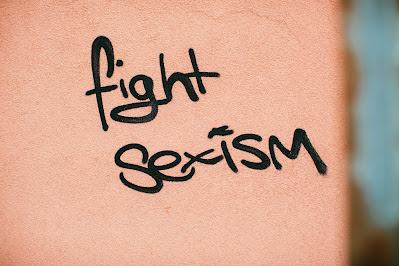

This one is also a throwback to earlier adventure fiction, but it hasn't begun to show signs of fading. Today's TV and movies (not just books) are filled with the macho types who (while they might also have a brain) primarily use their fists and firearms to solve problems. Again, the world has changed and no matter what morons on Twitter (I'm still not calling it X) say, this outdated idea of the alpha male is no longer the prevailing goal for men. Men can be smart and caring too, and can even refuse to throw a punch. It won't make them less heroic. 

Ways to play off this trope to fix it: Have the male hero use strategy and deduction rather than threats and fights to get what he's searching for. Watch a procedural thriller rather than a Jason Statham shoot-em-up next time you feel like taking in a movie. Have the smart guy in your story get the win and the glory. Embrace the regular guy as a hero. 

3. The ability to kick, punch, or shoot are the only skills that make one an adventure hero. 


This one is hot on the heels of the previous one, but it applies not only to males but to females as well. As the action/adventure genre started to change, they only updated the window dressing. Instead of kick-ass men beating the shit out of villains, writers created kick-ass women beating the shit out of villains. A side problem this has created is the "ball-buster" heroine who exists only to make men feel emasculated. Now, don't get me wrong, way too many incels feel that just about any powerful female character who doesn't need a man is a ball-buster, AND THEY'RE WRONG. Anyway, back to the point... there are far more heroic qualities than physical strength and military prowess. 

Ways to play off this trope to fix it: It's similar to the ways mentioned above. Avoid writing women as men inside. Try to avoid writing men as cavemen inside. Embrace the other attributes of heroism such as honesty, loyalty, strategy, bravery, etc. 

Homophobic Tropes


4. The gay best friend.

This one was a necessary stop-gap that initially helped writers and publishers embrace diversity and include gay and lesbian characters in their work. But it became more of a stop-period instead of a stop-gap. Writers and filmmakers became satisfied with gay side characters, in much the same way black characters started off relegated to servant or sidekick roles in books and movies. I'm convinced this trope remains primarily because it can be a safety net to keep writers from embracing the LGBTQIA+ character as the hero instead of a sideline character while still ticking a diversity box.

Ways to play off this trope to fix it: Go whole hog. Let the LGBTQIA+ character take the spotlight and be the protagonist. But do your homework. Don't write a stereotype. (Of course, this applies not to just protagonists but side characters as well. Don't be satisfied writing stereotypes. Talk to people. Get to know them.) Or write characters (main or otherwise) who are allies to the community or in their baby steps of learning to change if you don't feel you can do justice to writing a member of the community directly in an honest way. 

5. All LGBTQIA+ characters must have at least one stereotypical trait so "norms" can tell they're not hetero.

This one was a shorthand that helped the writers who took advantage of the "gay best friend" tope. Remember that bit about getting to know people and doing your homework as a writer? Well, they didn't. Singling out certain so-called "flaming" traits allowed some writers to include gay caricatures without actually including gay characters. It was the equivalent of writing black men known only by their basketball prowess or lengthy endowments. It was, in a word, total bullshit. A high-pitched voice, coifed hair, or a bit of a swagger when you walk does not a gay character make. We need to do better.

Ways to play off this trope to fix it: This one is so easy. Step out of your comfort zone if needed. Get to know people. Learn that people are just people. Then write them that way. After all, there's no way all straight characters would want to be identified by bad hair or constantly lusting for each member of the opposite sex they encounter.

Racist Tropes


6. Skin tone or nationality has any bearing on the quality of one's character. 

You would think this one would have died a long time ago, but sadly, traces of it remain. It's particularly easy to vilify someone of a nation your country sees as an enemy. In the '40s Nazis were an easy way to create a villain without having to give them any other traits than just being a Nazi. Some of that kind of thing is considered okay, but when just being German or just having a different pigmentation is your marker for being either a villain or even being a sort of saintly hero (simply by virtue of birth), that was what my kids like to call a "no bueno." It's more often applied to characters of Middle Eastern descent (the Muslim terrorist) today, particularly in thrillers. Or even the "Mexican Cartel" stereotype. The "noble savage" is a particularly overzealous usage of this trope, as if the addition of the word "noble" makes it any less offensive. On the other hand, assuming a lower character or intelligence for a dark-skinned or Asian character is more straightforwardly vile. 

Ways to play off this trope to fix it: Stop. Just stop. Period. Stop it. Don't be an asshole. If you remotely think that this is a justifiable way to portray someone's internal character, go take some classes in being a good human being. A caveat -- if you are writing asshole characters, it's okay to let them think this way, but don't make it an admirable trait. 

7. The white savior. 

This one is an old one, but it still sticks around. We can trace it back to early adventure stories like She and Tarzan all the way to newer stories like Dances with Wolves, Avatar, and The Last Samurai. It started as a way for European writers to tell exciting stories about exotic locales while not having to learn much about the populations in those locales. It became terribly prominent in the world of comic books as well, with everyone from Sheena to Iron Fist embracing this trope. It actually has roots in the missionary zeal of early Protestantism, where "selfless" white men risked life and limb to go take the gospel to native peoples, all the while seeing them as a sort of lesser being in need of white culture and white religion to reach a higher, more civilized peak. 

Ways to play off this trope to fix it: Flip it over on its ear. Have the so-called "exotic" be the savior to a group of white people. Have a member of the indigenous group rise up as the hero instead of having to bring in an outsider at all. Have the white guy in a strange land be the learner only and not the savior. Or have the self-proclaimed savior be a fake (The Man Who Would Be King) or just so inadequate to the task that he/she/they do more harm than good. 

8. Indigenous locals are exotic and trigger some kind of "otherworld" intrigue. 

If there's an indigenous group, they are special to the story in some kind of magical, supernatural, or extraordinary manner. Even the fantastic Indiana Jones flicks embrace this overdone and racist trope. There are two ways of approaching this trope, both of which need to end. The first is to add an indigenous group to your story when you need a "lost civilization" to trigger your hero's story beyond the gates of, well, maybe not Hell, but Normal. The second is to hide the weirdness and have a big reveal later that just proves the hero should have been on high alert around such a "not-normal" group he/she/they encountered. Fantasy can get away with this trope more often than other adventure stories because fantasy writers aren't limited by human races and skin colors and cultures and can custom create worlds and peoples. Phantastes and Alice in Wonderland are fantastic examples of this, one using fairy beings and the other using a whimsical world of animals and other strange beings such as playing cards.

Ways to play off this trope to fix it: Take the exotic out of indigenous. In order words, let them be your portal, but don't make them so other as to be weird. Let them be a normal small town with local businesses, not a voodoo village with people secreting the back alleys at night. Have the weird happen at home instead of "in a land far away." A lot of modern urban fantasy uses this fix effectively, such as Neverwhere.

Other Prejudiced Tropes


9. Priests/Clergy are always the villains.
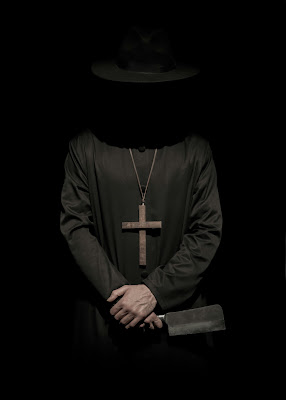
As the world changes and becomes less religious (or at least less Christian) than it used to be, writers, who are particularly known for their more progressive ideas in many cases, started to turn the clergy into villains. We can see this in classics like The Hunchback of Notre Dame and in modern works like, well, the various evil nuns in horror films. Of course, there was noting wrong with the freedom to assign even the clergy the status of the bad guys. We see this in The Crucible and in the hundreds of witch-burning characters throughout the '60s Hammer explosion. The trouble comes with the trope's overuse. Nowadays, it's an automatic assumption that if there is a religious character (a priest, a preacher, a neighbor), he/she/they will be either the villain or at least a jerk. 

Ways to play off this trope to fix it: It's okay to write anyone -- anyone! -- as the hero or villain. But don't stick to one type as your go-to for either. Keep readers guessing. Play against the trope. Is the aloof, quiet priest genuine or is he hiding something sinister? Is the religious woman next door really as bad as she lets on or does she have a trauma that is causing her to act that way? Just like when it comes to race or gender, people are people. Don't let a prejudice against religion cause you to fall into writing stereotypes whenever people of faith show up in your work. 

10. The moral high ground is the most satisfying. 

This one is the opposite of the previous trope. This is the one where writers make the assumption (without realizing it, most often) that the character with the moral high ground (often religiously motivated regardless of faith) is the happiest and most satisfied one. It can also be that this character becomes the most altruistic one. The idea comes from the notion that a person of some belief is a better, or at least happier person. There are years of European history behind this thought so it's not going away anytime soon. Not only that, but it is also typically applied to Buddhism and other Asian religions. That's a potentially dangerous pairing of this trope and that of "the exotic indigenous people" trope. But they're both hogwash. Statistics tell us that religious people have similar percentages of depression and divorce. And often the person who takes the so-called moral high ground invites only more stress and self-doubt into his/her/their life. Often, this trope plays out with the "sage" character in non-fantasy stories, as a character presented as the morally upright one is able to help and guide the protagonist to the best choice in the journey. 

Ways to play off this trope to fix it: Let your moral folks be wrong, even when they believe they are right. This doesn't mean necessarily making them villains, just letting them fail to be the sage. Make them have to learn a lesson along the way too, even if they're just side characters. Allow them not to have answers or to confess doubts. Allow them to hurt. Allow them to hurt so much that they end up hurting others. Let them be human. 

11. Heroes never make immoral choices. Villains never make moral ones.

This one I learned to avoid earlier as a writer. I had a writing mentor at the time share this helpful tidbit with me: Always give your hero at least one negative trait and always give your villain at least one positive trait. The same thing holds true for the choices your heroes and villains make.  I know it was en vogue in the days of yore for villains to be all bad with no redeeming qualities and heroes to be all good (with white hats and all), but when you do that, your story suffers. This is one of the things I so loved about Haggard's She. Ayesha is a tyrant, yes, but she loves deeply, and even that positive love is her downfall as it leads to intense jealousy. 

Ways to play off this trope to fix it: As my former mentor said, always give your hero at least one negative trait and always give your villain at least one positive trait. Let the hero choose selfishness, not always saintliness or even goodness. Let the villain choose benevolence, not always malevolence. Nobody is one thing and one thing only, no matter how easy that makes your plot. Think more deeply. Build more complex characters. 

Overdone Tropes


12. The chosen one. Period.

This is probably my most hated trope. I am so sick of the chosen one. Don't tell me Buffy the Vampire Slayer got it right. It was overdone long before that even (as good as that show was, it would have been just as good without the "In every generation..." speech in the intro). It's even worse when it's an almost messianic character. Spielberg, for example, will go out of his way and risk a good movie just so he can put a "Christ-figure" in it (look no further than ET the Extraterrestrial and AI: Artificial Intelligence). There's nothing intrinsically wrong with it. But it has become the go-to story for fantasy and even some sci-fi nowadays. Need a plot for your epic novel series? Oh, you need a chosen one. IT'S JUST SO FREAKIN' OVERDONE. Can we please let Harry Potter and Wheel of Time be the nails in the coffin of this one and move on? Think of something new. Okay. Rant over. 

Ways to play off this trope to fix it: If you actually want to use this trope, please, for god's sake, flip it somehow and make it your bitch. Let the chosen one get the calling wrong as in Life of Brian or Wholly Moses. But I still feel it's best to skip the chosen one completely and have the "well, you were available and willing" one rise to the occasion instead. 

13. The unwilling hero who changes his/her/their mind to save the world.

Cozying up beside the chosen one is this way overcooked trope. It's not enough that he/she/they is chosen by prophecy or fate or God or the giant spaghetti monster from space, no, they also have to play out the same damn story in every novel, movie, and television series. It goes like this: 

What do you mean, I'm chosen?
I don't want to be chosen.
I'm going to run away and not be chosen.
Then I have a lightbulb moment and I change my mind.
Okay, I'm ready to be the chosen one now. 

OMG, there are other plots, you know. 

Ways to play off this trope to fix it: Burn it. Okay, I'm kidding. If you insist on walking this old road, do the unthinkable and have the chosen one accept the calling and fail... badly. Maybe the hero has to be saved by a sideline character. Maybe the chosen one is a dupe who is being public to protect the real chosen one. Let a non-chosen one be the protagonist and keep the chosen one off to the side as a peripheral character. 

14. Gunmen have an endless supply of bullets.

This one may be less of a trope and more of a cliche. But while everyone plays semantics, let's just say that Colonel Shoots-A-Lot should have run out of bullets, shells, cartridges, etc. by this point. That rifle doesn't hold that many bullets. That shotgun only shoots one or two shells at a time. And that automatic rifle runs out when the clip is empty. Besides, as a writer friend of mine pointed out recently, sometimes a reload scene can be cool too. 

Ways to play off this trope to fix it: This one has an easy fix. Make sure your hero has extra ammo. Then give him/her/them a place to hide to reload. If anything, this downbeat will build more of a wave of pacing into your action scene. A wave needs peaks and valleys, after all, and slowing down your prose for a reload could be the magic your story needed. 

15. Clever banter for the sake of being clever.

As much as I love the dialog of Buffy the Vampire Slayer and Tarantino films, it didn't take long for the talking everything about nothing to get old really fast. Dialog must serve your story. It must move the plot, show characterization, establish backstory or exposition, something!. If it can be easily cut from your story without affecting anything at all, well, if wasn't necessary. No matter how cutesy or witty it was. Now, that's not to say that characters can't talk around things that are important to them. Unlike in his poor imitations, that's what makes Tarantino's dialog work -- just like that of Ernest Hemingway and Raymond Carver. They understood that human beings will do almost anything to avoid talking about what's really on their minds. 

Ways to play off this trope to fix it: You only have two options to fix this one that I can see. (1) Cut it. Just deal with the pain and snip the hell out of it and toss it in the trash or save it for a story where it might actually matter. Or, (2) rework it to make it both witty AND needed. Let it be the thing your characters use to avoid the thing they really need to discuss to save their marriage or to deal with one betraying the other and defecting to the enemy, that kind of thing.