Showing posts with label genres. Show all posts

Tuesday, October 10, 2023

Great Fiction: Inspired By or Reaction To (Or Both)?


There's no denying it. A lot of (I'd go so far as to say most) great fiction is either: 

[a] inspired by the idea of renewing or continuing something (like Gaiman does with his sort of fairy tale grown-up fantasies that read like children's fantasies or the pulp revivals)

[b] a reaction against something (like the Harlem Rennaissance and feminist literature of the sixties or the Beat Poets)

[c] a little of both (the remix notion of taking something old and making it new to the point the old fans most likely won't like it)

It's a bit heavier of a topic for one of our roundtables, but I'm curious where your body of work falls. 

Aside from esoteric ideas and nature, etc. what are the genres that appeal to you that you want to pick up on their tropes and see them continue through your own work? Which of those tropes and trappings mean the most to you and show up most often in your work?

Kay Iscah: The Seventh Night world is very much about folklore and fairytale tropes. I genre-hop a lot, so won't go into all my books and stories. And it would be another book of literary analysis to answer all these questions. So sticking with Seventh Night and one short story I've written called "The Magically Thinning Mirror" and hitting some main points.

Sean Taylor: Hands down, I love the tropes of sci-fi, horror, and superhero stories most of all. I love the way they so effortlessly settle into a sort of magical realism as people accept all the oddness that goes on around them and just move on with their lives. A guy shoots lightning from his eyes to fix a falling bridge? No problem. It's a Tuesday. A girl who holds her head at her side and talks with you about family secrets? Who cares? She seems nice enough. A friend who can slide between dimensions by tugging the strings of String Theory? Been there, done that. 

HC Playa: Sticking with what I both like and write, that would be fantasy with romance. Now, I have it on good authority that I do not, in fact, write romance (per multiple romance publishers). I write fantasy/adventures that just so happen to have some kissy-face stuff in them 😂. I like the world-building of fantasy, being transported to an entirely different world, be it high fantasy or urban. I also enjoy the human aspect of romance paired with the guarantee of a happy ending. Now, there's a place in fiction for sad and tragic endings. I, personally do not wish to write that most of the time. The world is harsh enough. I prefer to offer an escape. So I like going with larger-than-life protagonists, super capable, highly intelligent heroes. After all, Sherlock Holmes, Superman, and Bilbo Baggins are memorable BECAUSE they are extraordinary. I like the white knight or occasionally they are the tarnished knight...but ultimately good and love always wins.

Looking at those genres you love, what are the things about them that you try to push aside or ignore as a way to bring your own mark on them, or to make them important or apropos for modern audiences?

HC Playa: My heroes might think they are rolling in to save the heroine, but buckle up buckaroos, in my worlds, it's usually the heroines that do the real saving. There are no helpless, hapless damsels. Again, there's a place for that. Plenty of women love the damsel in distress being saved by a savvy, hot hero. One of the reasons I don't fit the romance genre is b/c my plots don't center on the absurd miscommunications and dating games that are central to a romance. If my heroine wants to know if the hero is interested she just asks...maybe it takes working up the nerve, or clever events that drop her hints (or him), but no silly games....after all, they are usually trying to save the world.

A lot of classic fantasy is from a male POV. A lot of romance features overbearing males who just need the right female to "tame" them. I got very tired of both of those things. It shouldn't be THAT groundbreaking for both the male and female protagonists to be badass in their own way and realize they make a great team when they communicate.

Now in newer works, I am expanding to queer relationships. That's a whole other box to unpack.

Kay Iscah: Despite the settings or fantastic magical elements people are people. So if their responses to the unreal feel realistic or natural the character tends to resonate with someone, if not everyone. Cultures and technologies change, but we still tell many of the same fairytales because they resonate with us on very fundamental levels. Escaping abuse, enduring hardships, traveling (or at least leaving home), finding or losing love, pursuing our passions, and longing for wealth (or at least financial stability) are all pretty universal.

Sean Taylor: What I hope most to move beyond in my preferred genres is the (what I call) sort of shallow storytelling that was painted in broad strokes and stereotypes, whether character or plot. I want to create worlds that smack of realism -- at least until the baby elephant grows wings and sings 12-bar blues standards. I want my stories to more accurately reflect the types of people I see on a daily basis. You can call that woke if you want to, but I call it reflecting the real. 

If I'm writing in a specific time period, like my 30s private eye, Rick Ruby, then I want to go deeper than the surface mysteries and tell the kind of stories that couldn't be told back then, whether because of race, gender, or sexual orientation of the characters or the kinds of goings-on in the plots. I want to take the tease of burlesque and racial tensions that made the back cover of the book to sell it but never really showed up inside and put it inside the stories where it belongs. 

What tropes or trappings does your work most try to change? Are there social issues you want to write about (without, you know, blatantly writing about) or stereotypes you intentionally set out to destroy (or for a lesser loaded word) dismantle in your work?


Sean Taylor:
I kind of answered this one above, but I really want to write the kind of stories that people I know in my life now didn't have a chance to be written into back in the day. I want to see the pages fill up with non-white, non-straight people, not because I have a political agenda but because they didn't get the opportunity then, and if I can do something about that now... well, it may be too little, too late... but it's something I can do. So I plan to do it. Period.

HC Playa:
By having my heroine do the saving, I turn that expectation on its head. I try to make my male characters in touch with their feelings...now occasionally they require a clue-by-four, which often comes by way of a helpful friend/relative/etc. pointing out their idiocy, but I try not to fall into toxic masculinity tropes. Even as a woman, it can be easy to paint what we are used to seeing and not realize we are perpetuating negative stereotypes. With regards to non-heteronormative characters, I (1) don't kill them off, try to show an array of diversity across my worlds, and show love as love.

How have you combined these ideas in single pieces of work before so that you are building and unbuilding at the same time in the same story?


Kay Iscah:
"The Magically Thinning Mirror" is a short story written like a fairytale, but it's also a pretty blunt metaphor for anorexia, about a woman who wishes herself thinner until she vanishes altogether. However part of the point of fairytales and folklore is to deliver an idea or lesson without a lecture. You keep the story simple, leaving space for the reader to process their own thoughts on the topic. And by simplifying the story it can have secondary lessons like taking a good thing too far to the point it becomes bad, or not being satisfied with what you achieved.

Seventh Night comes from a bit more of a fractured fairytale tradition. It was inspired by the tone of The Princess Bride, which places fictional medieval-ish settings alongside more modern attitudes, but with heavier fantasy, particularly fairytale, elements. The main book is broken into three "Acts", which is intended to emphasize that the characters are all playing parts that don't necessarily fit who they are. The main book is about taking the characters through the tropes.

But I'm currently working on a set called "Before the Fairytale" which are prequel coming-of-age stories for the main characters in Seventh Night, more parallel stories than a series, so the style of writing shifts a bit in each story. "The Girl With No Name" follows the sorceress. She is a shapeshifter so there are a lot of themes of finding and building identity, but as her story is drenched in magic, the telling is in the style of an extended Grimm's fairytale. There's a gradual shift from less to more detail as the book goes on and she forms a stronger sense of self. But whereas Seventh Night tends built on a stack of tropes, "The Girl With No Name" sets them up and then sidesteps them.

"Horse Feathers" in contrast follows the stableboy whose life is mostly devoid of magic, so the writing style in his story is centered more on realism and descriptions of being stuck in the life of a medieval peasant when you are a nerd at heart. There are unicorns and pegasus (a word that is treated both as singular and plural like sheep), but in the world of Seventh Night, these are not considered magical creatures. "Horse Feathers" has a lot of focus on world-building, but it's the part of the fairytale that tends to get fast-forwarded like "He worked for the lord for seven years." There's a lot of groundwork for how Phillip gets to be the somewhat jaded dreamer or callous callow youth he is in Seventh Night. He actually has a fair bit of adventure, but being a dreamer, he doesn't recognize it as an adventure because it doesn't fit his more romantic notions.

The third book in the set which is written and edited but has had publishing delays is called "The Hidden Prince". While the setting is still a medieval-ish fairytale world, it incorporates a lot of elements of gothic literature including a bit of a murder mystery at the end. Again, this reflects a character who sees himself as a bit of a tragic hero.

The last one in the set will focus on the princess. It's called "Seven and 13", and it's about half-written. The format is a bit more of a series of vignettes, which are not my favorite thing to read but work for this character. I think of it a bit like writing in the style of a stained glass window, so it's about setting visually striking scenes but not much action. In a way, this one's a bit more personal, because it's a young girl navigating the world as a prosocial psychopath, though that terminology is never used, and I doubt many readers would make that connection. But being a thinker more than a feeler and the detachment that comes with that, or simply feeling perpetually out of place in your own life but not having other options.

HC Playa: I have and continue to play in different ways to explore the human experience of love whilst adventuring in pretend worlds.

Sean Taylor: The writers I love to read did this all the time and because of that I tend to do it too. Vonnegut wrote literary sci-fi. Bradbury blended sci-fi, fantasy, and horror almost into a new genre of his own. Gaiman uses the trappings of adult and children's fantasy to tell urban stories about people and their isolation from and longing for each other. 

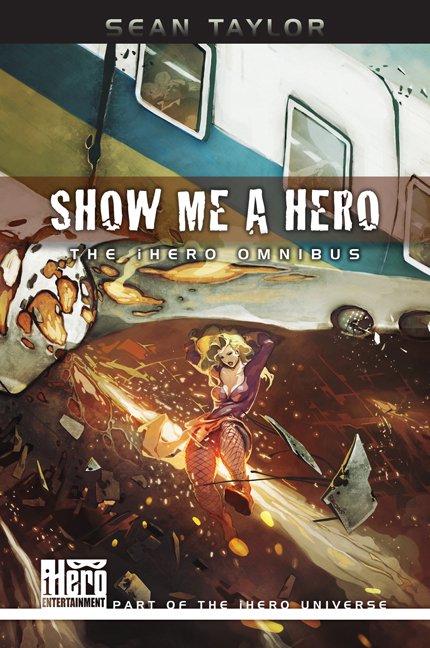
So, yeah, I do that too. For example in my short story collection Show Me A Hero, which is filled with superhero stories, I have horror stories, adventure stories, romance stories, family drama stories, fantasy stories, and police procedurals. It comes with treating your genre as a setting with rules and bits and bobs, and then realizing you can tell all kinds of stories within that setting. I try not to think of genres as genres at all, but turn them into settings. That is why I can write a romance fantasy set in space during an invasion. That is why I can write a coming-of-age literary tale with a monster stalking the woods. That is why I can write a detective pulp tale that is a literary story with jazz as a metaphor for sexual preference. Writing's just more fun that way. 

Tuesday, June 5, 2018

Not Fitting in at the Bookstore -- And What It Taught Me About Who I Am as a Writer

I love used bookstores. Most of my ever-growing library comes either from online discounters or used bookstores. Even so, with all that love (I can spend hours wandering in a single, skinny store in a low-rent shopping center), I still always have the hardest time at used bookstores. The stuff I'm looking for to fill in gaps in my collections... Well, I never know where to look for it.

Is Vonnegut going to be with the sci-fi books or with classics? Sure, I can find Heinlein with sci-fi, but not so much Bradbury. He might be in with literary collections or classics, but seldom sci-fi, even though that was his bread and butter.

And let's talk about more contemporary writers like Gaiman. The man writes the heck out of fantasy, but good luck finding his books anywhere other than general fiction or literary.

And when I'm trying to fill in Hammett and Chandler, do I look under mysteries with Sue Grafton, et al, or do I hope for the best in classics, or just go straight to the desk and ask for the rare book room even though I'm not looking for the pricey versions, just beat-up paperback reprints?

Does anybody else have this problem?

I posted these words the other day on my social media feeds mainly just venting after going to visit a new used bookstore (Did I mention how much I love used bookstores yet? Because I really do. I can spend hours there in spite of my issue mentioned above.)

Only the idea wormed its way into my brain and grabbed hold of my thoughts and wouldn't let go. And it got me thinking about how that same issue related to who I am as a writer. Sure, I write genres, from action and adventure to sci-fi and horror (but no epic fantasy, sorry, not my bag), but I've never felt defined by those genres any more than I have by my content. And trust me, my content has varied from super heroes to monsters to hard-boiled gumshoes to planetary adventurers.

What Publishers Want

Publishers and readers look for categories, and not just any categories, but easy to define divisions. Those are easy to sell. A reader wants a mystery for the beach this summer, and bang, a clerk can walk said reader to the mystery section where he or she can be inundated by racks and racks of books by pretty much the same 100 authors. A reader wants a new urban fantasy, and poof, there’s a section for that, not to be confused with either sci-fi or mystery, or even epic fantasy. It’s quick, it’s easy, and it’s basic marketing.

It gets even quicker, easier, and more marketable with series. Publishers love series. Readers love series. Both love them because it means they don’t have to think about what to read next. They don’t have to experiment with authors outside their “I know and love him or her” list unless it’s a strong recommendation by a friend. Series make money for that very reason. Series make careers for that very reason. And smart writers (unlike me) know how to take advantage of that market for series books.

You see, I have learned that the publishing world is a lot like that used bookstore I love to visit. It continues to work because it is built on categories that make people’s choices for them. If you like ___________ then you’ll also like ___________. Don’t feel bad if there’s not a new book by ___________ yet, just read this similar book by ___________ and you’ll be fine.

The Spanner in the Works

I can’t write like that. Hell, I can’t even read like that. I love the authors I love because their works are so vastly different from each another. There are worlds between Bradbury's Dandelion Wine and R is for Rocket. Vonnegut only wrote one Player Piano, only one Sirens of Titan, and both of those are on the other side of Crazytown from God Bless You, Mr. Rosewater and Slaughterhouse Five. Even Heinlein, while staying firmly inside the structure and settings of sci-fi, ranged from one end to the other with his diverse styles than covered the gamut from Starship Troopers to Job to For Us the Living to Stranger in a Stange Land and I Will Fear No Evil. I’ll have to acquiesce to the standard with Hammett and Chandler, but even those two diverged from their “series” from time to time.

I grew up on this kind of writing. Of the novels I’ve read, very few are parts of series. And even fewer fit easily into one genre. Most overlap between genres like the choreography of a Three Musketeers sword fight overlaps settings. One foot here in the foyer, then here in the dining room, then a hop to the stairwell and a step into the ballroom for another strike. 

The stuff I’ve always enjoyed most doesn’t fit into easy categories or series. At best, Kilgore Trout shows up in a few of Vonnegut’s novels, but not as the main character except in one. Even The Martian Chronicles isn’t a complete novel, but a series of related short stories with differing protagonists. Gaiman’s Sandman comics are the only true series work he’s done. The rest interrelate only in the trappings and table dressings, much like those of Stephen King’s fictional city of Derry.

Nor do I want to write like that. I want to paint with all the colors of the wind (thank you, Pocahontas!). I want to master all of the Lantern rings, from green to black. I want to write like the writers who influenced me, not because I want to be a clone of them, but because they created the same kinds of stories I want to be able to tell... a little bit of whatever the hell they wanted to tell at the time. They didn't get locked into markets, and even if that's the way the industry works today, I won't do it. I can't do it. It'd be like putting a part of me in a box and shoving it under the bed or in the top of the closet to ignore.

Maybe the business doesn't work the same way it did for them anymore, but it doesn't change who I am, who they helped make me as a creator of stories.

Outside the Genre Lines

I pity the reader looking for my stuff in a bookstore setup. It’s not as easy as going to the fantasy section and seeing a huge row of similar works all by George R.R. Martin (and not just because I’m not that popular). Nor can you waltz to the sci-fi section and find all my books together like Heinlein’s or Frank Herbert’s.

No. You have to go to the action section, the horror section, and sci-fi section, etc. and find maybe one each in these genre classifications. Because I love to write everything. I cherish that freedom. I think if I had to get stuck in a single genre because I was writing a successful series and having to revisit all the same characters over and over again, I’d be miserable as a writer. Sure, I might be a lot more successful and maybe even have more money if I pulled a Sue Grafton or a Craig Johnson. But, at best, I might be able to do a Walter Mosley and have to finish a series to start another when I felt it had run its course (I miss you, Easy.) But most likely, even that is beyond me, and I’ll continue to jump around in obscurity from monsters to private dicks with all the wild abandon of a child coloring outside the lines in his first “I Went to the Zoo” coloring book.

If I had to single it out, I think the one thing that defines me as a writer would be voice. It’s the “who I am” as a writer that links my books and stories together. There’s a way I tell stories that comes across (at least I hope) to let you know you’re reading works by the same author.

A caveat: At no point to I intend to slight the work of series or genre-specific writers as a lesser quality or more low-brow kind of writing. If anything, it’s a lot smarter than what I’m doing. It’s just not what I’m created to write. I’ve got a wandering spirit that resists today’s “rules” of marketing. There’s still enough Hemingway and Carver and Fitzgerald in me to screw up the “what I’m supposed to do” of genre writing and convince me that I can do it all.

“Two roads diverged in a wood, and I—I took the one less traveled by, and that has made all the difference,” wrote Robert Frost, and I think I finally understand how his way-over-quoted poem relates to my writing life. It means that when faced with the options of doing things the easier, more profitable, more marketable, industry-standard way, I dug in my heels, became obstinate, stuck to my guns, and walked clearly and steadfastly in the other direction.

And I’m cool with that.

Well, I never said I was smart.

Wednesday, April 4, 2018

Nugget #127 -- Whatever Court You Play On


The skills you learn in writing visceral descriptions 
only make you better at your writing game -- 
whatever court you choose to play on.

Tuesday, April 3, 2018

[Link] Why Select Stories Succeed Best as Literary Fiction

by William H. Coles
Illustration by David Riley


Great literary fiction storytelling as an art form is not for all readers, and its success is not measured solely on volume of commercial book sales but rather the number of readers moved or enlightened by characters and story, usually about what it means to be human. Many of the literary stories that have lasted into new generations of readers have important, common characteristics; here are the principles.

1. Characterization.
 
The fictional humans that populate successful literary fiction seem real to the reader, either in the context of the reader’s world, or the story world created by the author. It is the creation of these “real “characters to be moved by as well as to move story events that assembles character-based story and plot in most successful literary fiction. As Virginia Woolf wrote, “. . . they [characters] live and are complex by means of their effect upon many different people who serve to mirror them in the round. . .” When considering “. . . the permanent quality of literature . . . think away the surface animation, the likeness to life, and there remains . . . a deeper pleasure, an exquisite discrimination of human values.

Read the full article: https://www.facebook.com/storyinliteraryfiction/photos/a.325262877571111.72265.319065158190883/1576847462412640/?type=3

Thursday, March 15, 2018

Literary Pulp—Why It Makes Sense and How To Write It


by Sean Taylor, with a little help from my friends

Classic pulp is as much known for its black and white, all or nothing characterizations and crammed-to-the-top-with-action plotlines as it is for the cheap paper from which it gets its name—maybe even more so nowadays. So, with that in mind, how does someone like me, who got his start in literary fiction and the three most important words in fiction writing (character, character, and character, of course), grow into the kind of writer who embraces the pulp style of storytelling?

That’s a good question.

But, perhaps the better question is how can someone else do the same?

Because, trust me, there’s a lot of gold to be mined in the odd, little marriage between literary fiction and pulp fiction.

Author Derrick Ferguson sums up the discussion between art and non-art quite well.

“Before I step up on my soapbox and start the pontificating, let me start of by saying that I don’t consider ‘throwaway writing’ to be a bad thing. Robert Heinlein is famous for saying that 90 percent of everything is crap. I think that 90 percent of entertainment is throwaway and disposable. Most people are really just looking for something to entertain and/or distract them from whatever is giving them the grumbles in their life. Of course, the creators of that entertainment hope and pray that it will live on after them. But I find it difficult to believe that the creators of Gomer Pyle, USMC expected or hoped that people would still be watching the show 50 years later.

“And the ability to entertain is not to be taken lightly. I don’t get emails of thanks often, but every so often I will get one from somebody who will thank me because they read something I wrote that transported them away from their problems for a couple of hours, and for me, that’s one of the highest compliments that I can be given.”

Barry Reece
Let’s Get Two Things Straight First

Before we go any further, we should probably lay down the two ground rules that govern this whole shebang in my understanding of it.

#1—Literature doesn’t trump genre.

There are those out there in the market who think that literary means better written and that genre means written for the average idiot. As far as I’m concerned, neither of those thoughts hold any validity. Rather, I believe that the two are simply two different ways of approaching writing that both can learn from each other and help each other out from time to time.

“Great literature isn't great because of its genre or its pace," says author Percival Constantine. "Shakespeare wrote plays for mass consumption, for crying out loud. I defy you to read anything by Vonnegut and call it slow or meandering. There is nothing in any definition of pulp I've ever seen that says the characters must be flat, the prose must be clunky, and the plots must be simple.”

#2—There’s no such reader as the average dum-dum.

Are there smart readers? Yes. Dumb readers? Of course. Average readers? Absolutely.

However, the straw man that some critics and reviewers have created to build a chasm of difference between a Joe Everybody reader and an Artiste McHighbrow reader is pure garbage. I come from a background in Literature, and I’ve been all over the United States as a writer hitting various conventions, and let me tell you what I’ve learned: Readers are readers. They don’t divide themselves into camps based on a perceived difference in brainpower. A lot of the same folks who read Oprah’s Book Club recommendations also read both James Patterson and Zora Neale Hurston. Many of the same folks who read Mickey Spillane on their Kindles also read Ambrose Bierce and Flannery O’Connor on them as well.

They Go Together Better Than Macs and PCs
(or even Marvels and DCs)

If you’re my age, you remember those commercials where one guy was a Mac and another was a PC and they argued about who was better (which were later parodied for Marvel and DC). Well, I’ve had that same experience, but with pulp and literature. Literally. I’ve had some editors and writers tell me there’s no room for literary techniques in pulp, that pulp should merely be fast and free of any style or technique.

I daresay, those folks seem to have forgotten H.P. Lovecraft, Raymond Chandler, and Ray Bradbury. They crossed and re-crossed the great literary divide, and their stories live on not in spite of their craft and technique but because of them.

“I think you have to look at other genres that have often been seen as the opposite of art—science fiction, fantasy, superheroes, etc. All of these at one time or another have been considered trash fiction. But then you've had people who have elevated those genres to new heights—people like Ursula K. LeGuin, Kurt Vonnegut, Philip K. Dick, Isaac Asimov, J.R.R. Tolkien, Frank Herbert, Grant Morrison, Warren Ellis, etc.” says Constantine.

The "New Pulp" Openness

In the interest of keeping us all on the same page (as the saying goes), let’s first clarify what New Pulp is. According to Pro Se Press, one of the leading publishers of the genre (or style, depending on who you ask), new pulp is “fiction written with the same sensibilities, beats of storytelling, patterns of conflict, and creative use of words and phrases of original pulp, but crafted by modern writers, artists, and publishers. New stories with either completely original characters or new tales of established characters from Pulp past. It’s really that simple. New pulp is pulp written today.”

There are several schools of thought within the New Pulp movement. One looks to do little more than telling new stories of classic characters. Another looks to create new characters that are primarily reminders or pastiches of those classic characters. Still others seek to take the tropes and style of classic pulp and bring those types of stories kicking and screaming into contemporary fiction (regardless of the time period and settings of the tales themselves). I’m not going to say any of those is better than the others, but I will admit to being firmly entrenched in that third group.

Where do we stand now? Percival Constantine again hits the nail on its proverbial head. “I'm not going to stand here and say that all pulp is filled with complex characters, intricate plots, and well-crafted prose because that would be a lie. In fact, probably a majority of the classic pulps are pretty bad. The plots are simplistic, and the characters are flat or stereotypical (especially where women and minorities are concerned). But you know what?” he continues. “That's true of pretty much any genre. Have a look at the literary fiction section the next time you're on Amazon or in a bookstore and flip through some of the books. There's a lot of stuff that tries to use pretension to cover up for ham-fisted dialog, extremely purple prose, and a lot of navel-gazing.”

Within that new generation of pulp writers there are numerous characters and settings being created that may or may not stand the test of time like Phillip Marlowe or The Shadow, but folks like Derrick Ferguson, Barry Reese, and Percival Constantine are still doing their damndest to make that happen and fill the world of pulp fiction with something different—but not too different, unless, of course, you're talking about the caliber of writing.

So, I asked them a bit about how they create New Pulp held to a higher standard. Here’s what I was able to glean from them.

The Facts, Ma’am, Just the Facts

No more ideological stuff. You want the how-to. Well, thanks to some of the modern masters… here it is.

1. Don’t try so hard.

“The best advice I can give for looking to create some kind of lasting art?” says Ferguson. “Don’t even try.”

Barry Reese echoes the sentiment: “I don’t really spend a lot of time thinking about such things. I write what I want to read, and a lot of times, that’s escapist entertainment.”

True art hides itself. That’s what I’ve been taught my whole life as a storyteller. You may have heard that same idea translated this way: The author should seek to hide himself or herself so he or she doesn’t distract the reader. In the best art, that intentional invisibility will refuse to be hidden. One needs no more than to look at Monet’s paintings or Michelangelo's David to see that. Or perhaps to read The Great Gatsby or the poetry of Langston Hughes. The difference is that the art comes after, not before. The work comes first.

But be careful, cautions Ferguson. “That doesn’t mean I’m saying don’t try to produce the best art that you are capable of producing. You should always strive to tell the best story you can in the best way you can. What I am saying is that there’s madness in sitting down at your keyboard and pronouncing to the world ‘I am going to create art!’”

2. Be true to your characters. 

Derrick Ferguson
One of the tenets of both literature and genre fiction that adherents can agree on over the chasm is this: Character is king. Without the consistent personalities behind them, protagonists like The Spider and Doc Savage wouldn’t have become so important to so many fans in the same way that without a well developed personality, Hemmingway’s existentialist heroes wouldn’t have influenced decades of readers, writers, and filmmakers.

The difference comes in how literature and genre decide illustrate and create characterizations.

Constantine says, “Pulp is, in its simplest distillation, fast-paced, action-oriented fiction. That doesn't mean you can't have characterization in there as well.”

Characterization comes from what your characters do and say in pulp fiction, not in what they think and pontificate about, according to Ferguson: “As so often happens in fiction and especially pulp, you gotta figure out what works for you and how you can best convey characterization while your heroes are running around trying to stop the big bad from blowing up the world.”

3. Say something about the world around you.

Here’s something folks don’t always think about in their writing. It gets down to that amorphous notion called “theme.” Like in the first point (Don’t try so hard.), theme is one of those things that most often is distilled through the writer’s views and ideals without really thinking about it. That said, however, it never hurts to look at (or back at) your work to see what you are saying beyond just Character A punched Character B.

In my own work, it is not just important to me, but vital to the understanding of Rick Ruby that the multi-colored, but still race-embroiled, world in The Ruby Files be communicated in the stories. I’m not using a Phillip Marlow pastiche to try to make a point about racism, but I’m determined to show the world as it was and let readers figure things out for themselves.

Likewise, Ferguson’s Dillon can at first be seen as a black version of Doc Savage, but the comparison stops at the surface. What the author says through the adventures of Dillon is what’s important, and goes far beyond the idea of “Wouldn’t it be cool to have a black Doc Savage?”

“Great literature not only features developed characters and skillful prose but is also a commentary on the society it was written in,” says Constantine. “That doesn't mean you hammer readers over the head with it, but you have to look at the world in which you're living, think about what you want to say in regards to it, and find a subtle way to relay that message through your fiction.”

He cites the recent Black Panther movie, with its “really serious and complex themes about colonialism and globalism” as an example.

4. But don’t be so obvious about it.

Remember that bit about art hiding itself? It’s worth repeating, particularly in pulp fiction. Find ways to write complex characters and themes in simple, subtle ways.

Ferguson has a method that works for him—using the movement between settings to get to know anything about his characters the action might not show.

“Plenty of time characterization is done as my heroes are traveling in vehicles from Point A to Point B,” he says. “Let me provide you with an example from a popular movie: there’s a scene in the movie Silver Streak where Gene Wilder and Richard Pryor are in a stolen fire-engine red Jaguar racing to save Jill Clayburgh from Patrick McGoohan, and they’re exchanging what is some pretty meaningful dialog about their relationship, the situation they’re in and how they’re going to save Jill Clayburgh. It’s a nice scene with characterization but it’s done in a moving car that is taking them from one action scene to the next. The movie slows down to provide us with characterization but the actual plot doesn’t slow down and carries the promise that we’re going to see more action once to get to where we’re going.”

5. Keep it moving while you do all that.

Hot on the heels of the previous point, it’s important to keep pulp fiction movie moving along at a good pace and speed. There’s little room (none, some might say) to admire the mountains between Hobbiton and Mordor in pulp fiction. Nor is there time to lie down in the grass and dreamily point out cloud animals. Something needs to be happening. (Notice the tense of that sentence. I didn’t say “Something needs to happen.” I said: “Something needs to be happening.” Ongoing. It doesn’t really stop.)

Reese says it’s all based in the definition of pulp, as he sees it. “Pulp, to me, is about fast-paced adventure. I can deliver that while also giving you three-dimensional characters. Indiana Jones is a good example of what can be done with new pulp. He’s nuanced, but his adventures are thrilling to watch (and read—some of the licensed novels are excellent).”

Ferguson agrees:

“Writers of pulp knew the secret of having genuine characterization in their work long ago. You can do characterization and have sparkling, meaningful dialog and solid supporting casts and all those things that literary fiction prides itself on in the most action-packed of stories. Here’s the catch: Don’t stop the action to do all that stuff. 
“Let me clarify. Action doesn’t mean that you have to have constant fist-fights, explosions, cliffhangers, the heroes continually escaping fates worse than death or chases and captures. Although if you are writing pulp, I would certainly hope that you do have all that stuff in there. After all, what’s the point of writing pulp if you don’t? It’s like making a ham sandwich without the ham. But in pulp, the plot always has to be going forward. You simply cannot stop the thrust of the plot to indulge in a three page introspective passage when your heroine is supposed to be saving the world.”

To put it in terms those who have attended one too many writer’s conventions can appreciate, don’t let the writer chew the scenery.

6. Realize that not all “art” is as good as some writers and critics think it is.

Percival Constantine
This one gets back to the heart of our two things to get straight. (You haven’t forgotten them already, have you?)

#1—Literature doesn’t trump genre.
#2—There’s no such reader as the average dum-dum.

Just because a section in the bookstore is called literary fiction doesn’t mean the books there are better than everything (or even anything) else in the rest of the store. Nor does it mean it’s intrinsically good at all. Literary fiction is based on a set of rules for storytelling just like genre fiction is based on a set of rules for storytelling just like comic book writing is based on a set of rules for storytelling just like… Well, you get the point.

“The problem with the ‘literary debate’ is that you're not actually having the right conversation,” says Constantine. “Not all great literature is literary fiction. And I come at this from both sides, because not only am I a pulp writer, but I also teach literature.”

“One thing I’ve noticed with most writers whose work has stood the test of time and transcended whatever genre it was created for,” Ferguson adds, “is that most of them did not set out to create art. They simply wanted to tell a good story, maybe make a couple of bucks on the side and entertain themselves. A good deal can be said for writers simply relaxing and having some fun with writing. And it can be a whole lot of fun if you let it be.”

As the vernacular goes these days, “You do you.”

7. Literary techniques and genre techniques are the same techniques.

Never thought you’d hear that, huh? When it comes to writer’s toolboxes, there isn’t a fancy mauve one for literary writers and a beat-up, tried and true rust bucket for genre writers. (Unless you paint your own, of course. In which case you can mauve your heart out.) And if you open either toolbox, you’ll find the same tools in each. You’re no doubt familiar with them already:

  • Dialog
  • Pacing
  • Characterization
  • Point of View
  • Grammar
  • Breaking Grammar
  • Research
  • Setting
  • Word sounds
  • World building
  • Connotation and Denotation
  • Figures of speech
  • Spelling
  • Intentional Misspelling
  • And so on…

When it comes to pounding in a nail, a hammer is a hammer is a hammer. Whether you’re building a shed or a mansion, the tool remains the same.

Conclusion—It Either Works for You or It Doesn’t

So, where does this leave us? Are you ready to take your action stories into the world of literary approaches? Or do you prefer to just sit in your office and make Character A punch Character B in the face? Then do it.

Are you tired of critics or other writers trying to tell you your genre writing is something less than their highbrow art? Ignore them.

Are you tired of reading poorer quality stories in your chosen genres? Move past them and write something better.

The genre doesn’t matter. It just “comes down to writers willing to go that extra mile to elevate the genre,” says Constantine.

=================================

For more information about Barry Reese, Derrick Ferguson, and Percival Constantine, please visit their websites.  

If you want more about Literary Pulp, go read the companion piece to this article. 

Monday, June 15, 2015

The Writer Will Take Your Questions Now #327 -- Magicaliteragenre-ism

What are your favorite genres to blend when you write?

Would "all of them" be an acceptable answer?

I didn't think so either, but it was worth a try.

Probably most of all, I like to combine magical realism and literary with genre adventure. Some of you are perhaps scratching you heads at that response. Don't feel bad. I totally get why that might be. For starters, magical realism is something best left to the Latin American writers, the literati would have us believe. Not only that, but mixing hi-falutin' literary fiction with low-brow genre (and dare I say it, pulp) adventure is tantamount to heresy, like pouring a 400 dollar a glass w(h)ine into a can of Pabst Blue Ribbon.

But I stand by my statement.

I love to take the ideas of magical realism, with the miraculous woven into the day to day happenstance of regular life without having to give it a second thought. My Show Me a Hero super hero story collection is full of this very conceit.

Mingling the "high ideals" of literary fiction, with its focus on characterization, meaningful symbolism, and grand themes, and putting those ideals into the "common writing" of adventure fiction, likewise, really gets me motivated. There's nothing in the rule book that says a genre writer should write poorly or ignore the history of classic fiction. Most of my favorite stories have already paved the way for this mixture, from Dracula to The Heart of Darkness to The Odyssey.

Most of my pulp writing falls right in line here. In fact I'm sometimes at odds with my pulp-writing buddies when I argue that typically one-dimensional characters can still be just as interesting when they are more fully developed beyond a mere good guy or mere force of nature. Rick Ruby is perhaps the most literary of my pulp characters and I probably enjoy writing him more than any other. He's a mixed bag of darkness and light, hope and hopelessness, love and anger, and he has no qualms about using the women in his life to try to compartmentalize those divergent parts of himself.

So, hand me that half-empty can of cheap American beer and watch me pour your fancy-pants, hoity-toity wine right inside it.

Thursday, June 11, 2015

Have It Your Way -- Genre-Blending in Contemporary Fiction

This week's roundtable deals with genres and how they never seem to remain a "pure" work of a single genre. Just like we like to have our burgers "our way" and mix up our favorite latte with our choice of flavors, as writers we tend to like to mix up our genres to a desired preference.

What are your favorite genres to blend when you write?


Selah Janel: It really depends on the story. I think aiming something at a genre is exactly the wrong way to go about stuff. If you're looking for a gimmick, absolutely try to cram things together, but otherwise start with the story and see where it goes. Often times, the question of merging genres will solve itself. That being said, a lot of what I prefer to write is fantasy, urban fantasy, or horror, so I often blend those together quite a bit. I also take a lot of inspiration from the literary fiction I've read, as well as historical accounts and all sorts of other things. If there's an element or theme or genre device that I think will work, I'll use it. Often times that approach brings me to using elements from genres that I'm not comfortable writing wholesale, so that's always fun, too.

Lance Stahlberg: Urban Fantasy, as in fantasy with a modern day setting. I wrote one fantasy blended with a heist/crime story with a superhero story. And one fantasy with a Western. I have another urban fantasy idea I want to run at some point, a fantasy-mystery I suppose.

Lisa M. Collins: I love to write action/adventure and blend in elements of fantasy or science fiction.

Allan Gilbreath: Suspense and sensual-ism blended into everything else.

Mark Bousquet: My favorite genre blend was horror and journal writing, in which I wrote a first person story of a woman working in a haunted estate. I really liked how that daily desire to keep a journal mixed with the descent into horror because it added another layer to the tension - there was the terror and horror of the individual acts, but there was also the step back from it, since one largely writes a journal in quiet times while reflecting back on unquiet times.

What are the advantages of blending multiple genres in a single story?

Selah Janel: It gives you more tools in the belt, more paint colors in the palette. It can also technically appeal to more readers, bringing in those who prefer certain genres together. What I love about it, though, is it helps me to expand a story and take it away from the formulaic and into a unique direction. Kingdom City would be nothing without my love of HP Lovecraft or my adoration of regular people historical literature. Granted, all of that is put through a fantasy/fairy tale filter, but that's the real thing - you have to blend the genres until they become their own thing and not jam them together. I love the comic series East of West because it just excels at this. That title is it's own unique world. It has western elements and sci-fi elements, but it has a ton of other little things in it that give it its own unique look and feel. It's incredible. Stories like that are so good they're their own thing - they make me /not/ want to define it by genre, because that takes away from the brilliance that is that particular story.

Lance Stahlberg: Today's savvy readers need more variety to keep their interest. Traditional storytelling runs the risk of falling into predictable patterns and overusing the same tropes that everyone recognizes by now. Something like urban fantasy is easy in that it's whatever genre you want your story to be, but with magic and dragons thrown in.

Lisa M. Collins: My genre is speculative fiction, and I mostly write science fiction or paranormal. Dictionary.com defines speculative fiction as: A broad literary genre encompassing any fiction with supernatural, fantastical, or futuristic elements. In this genre I can throw out all the rules. I can have a unicorn walk down main street, a plumber who flushes herself to other dimensions, or psychologist who lives on a distant world.

Allan Gilbreath: Gives the reader a deeper experience bringing in all the senses

What are the disadvantages of blending genres?

Selah Janel:  If done poorly, it can be confusing or obvious. I think a lot of people have started looking at it as a humor device or a marketing gimmick. That's fair, and it works to some extent, but it really takes away from the artistry of what makes good genre fiction. To me, stuff like that takes away from all the hard work I'm putting into my own stories and subverts authors who are doing it really well. I don't have fantasy creatures in Kingdom City using modern tech because it's funny (though it is, by default). I did it because that's the world that their progressive viewpoints would fit in, and it would be an interesting way to explore traditional fairy tale views versus more progressive world views, and what kind of characters would be caught in between.  It would be really easy for me to write funny stories about trolls using laptops, making the obvious jokes, but that sort of thing is so one-note to me. It's always going to be about what's best for the story, and the genres or tools you use should work for you, not get in the way of the world and tale you're creating. 

Lance Stahlberg: Only from a marketing perspective maybe. Wondering where to file your book on the shelf might be a confusing question. But not really.

Lisa M. Collins: When I blend speculative elements into a story I need my reader to suspend their real world limitations. The paranormal/fantastical/futuristic has to be believable. A unicorn walking down main street might be a hard sale, unless you had already read about our heroine having dreams of the event since childhood.

Allan Gilbreath: Getting lost in the details and not moving the story along.

Is blending genres something you do intentionally, or does it seem to just happen as your write? Why do you think that is?

Selah Janel:  A little of both. I don't tend to think in distinct genre lines. I like seeing how different things make sense - like how a lot of old fairy tale quirks like talking animals and trees, different elements of magic, etc could also read like Lovecraftian horror. I never intentionally went at it from that viewpoint, but it occurred to me one day that things lined up, and there was a lot I could do with it. It solved a lot of problems in my manuscript at the time. I don't throw vampires into tales about lumberjacks just to do it -- there happened to be a term for a forest creature that meshed up with vampire mythos and typical lumberjack life. I definitely don't shy away from blending genres, though. To me it can bring up interesting twists and things the reader may not expect, as well as provide some really nice metaphors, as well. If it doesn't read well, or seems to forced, I absolutely won't do it, but if it gives the characters more room to play, if it enriches the world, if it expands the story, I'm game for anything.

Lance Stahlberg: I never think about it consciously. There is so much cross-pollination of genres today that genre rules are almost meaningless. At least with the kind of audience I want to capture.

Lisa M. Collins: While writing my mind bubbles with ideas. I’ll be typing along and the next thing you know a mecha suited girl strolls through a barnyard with a cow tucked under her arm. LOL, something like that happens every time. :)

When I was kid I was interested in movies and books full of fantasy and science fiction. I can’t imagine not looking in to the future and wondering what might happen or who we will become.

Allan Gilbreath: I hope it happens naturally. At least I hope so. I think and see a story in more than just sight, thus I try to write it that way.

Monday, March 16, 2015

The Writer Will Take Your Questions Now #317 -- Readin' & Writin' (But No 'Rithematic)

Time for me to drink my own Kool-Aid and respond to the same question I asked my "roundtablers."

What is your favorite genre to read? To write? If they're not the same, why is that?

My favorite genre to read changes each year. In my twenties, I loved to read the classics, probably because I was getting my B.A. degree then in English. I haven't lost my love for the classic American literature, but in my thirties I started to seek out all the stuff I felt I had missed during my religious seclusion years of my youth. That's when I went back and read the Thomas Covenant books and quite a bit of sci-fi and fantasy "classics" like Dune, etc. In my forties, though, I've been on a kick of reading all the stuff I missed by being born to late to really value it in my childhood -- the books that have influenced most of the writers who influence me. I'm talking about stuff like A Princess of Mars, She, The Maltese Falcon, and The Lensmen series. Or a fun sci-fi satire like Heinlein or Vonnegut.

When I write, I prefer to write pulp-influenced, action stories with a sort of literary leaning when it comes to characters and their interactions. I'm a sucker for a story nugget that triggers a good noir or pulp mystery, and a rollicking planetary romance, or a creepy horror story that plays with tone and atmosphere more so than "scares" or gore. That's just what I'm drawn to, I guess. Even when I write something outside the adventure mold, I still tend to focus on keeping the story moving, and I have a lot of character-driven dialog because that's what I like to read. I love to get to know my characters whether I'm writing them or just reading them.

Friday, November 7, 2014

[Link] Transrealism: the first major literary movement of the 21st century?

by Damien Walter

It’s not science fiction, it’s not realism, but hovers in the unsettling zone in between. From Philip K Dick to Stephen King, Damien Walter takes a tour through transrealism, the emerging genre aiming to kill off ‘consensus reality’

A Scanner Darkly is one of Philip K Dick’s most famous but also most divisive novels. Written in 1973 but not published until 1977, it marks the boundary between PKD’s mid-career novels that were clearly works of science fiction, including The Man in the High Castle and Do Androids Dream of Electric Sheep?, and his late-career work that had arguably left that genre behind. Like VALIS and The Divine Invasion that followed it, A Scanner Darkly was two stories collided into one – a roughly science-fictional premise built around a mind-destroying drug, and a grittily realistic autobiographical depiction of PKD’s time living among drug addicts.

It is also, in the thinking of writer, critic and mathematician Rudy Rucker, the first work of a literary movement he would name “transrealism” in his 1983 essay "A Transrealist Manifesto." Three decades later, Rucker’s essay has as much relevance to contemporary literature as ever. But while Rucker was writing at a time when science fiction and mainstream literature appeared starkly divided, today the two are increasingly hard to separate. It seems that here in the early 21st century, the literary movement Rucker called for is finally reaching its fruition.

Transrealism argues for an approach to writing novels routed first and foremost in reality. It rejects artificial constructs like plot and archetypal characters, in favour of real events and people, drawn directly from the author’s experience. But through this realist tapestry, the author threads a singular, impossibly fantastic idea, often one drawn from the playbook of science fiction, fantasy and horror. So the transrealist author who creates a detailed and realistic depiction of American high-school life will then shatter it open with the discovery of an alien flying saucer that confers super-powers on an otherwise ordinary young man.

Read the full article: http://www.theguardian.com/books/booksblog/2014/oct/24/transrealism-first-major-literary-movement-21st-century