Showing posts with label James Tuck. Show all posts

Thursday, May 8, 2025

Ratcheting the Tension


Let's talk tension. No, not the way your back and shoulders feel after watching the news, but the dramatic tension in your stories. 

We're all taught that the best (or at least easiest) way to build tension in your stories is with a ticking time bomb. Have you found this to be effective for you? Examples from your work?

Peter G: I avoid the ticking clock as much as possible. Or, at least, limit its presence. My Hannah Singer books, for example -- there is a sort of ticking clock when Hannah is arguing in court. Once a petitioner's fate is decided, there's no do-overs, so she only has one chance to get it right. But, to ratchet up the tension, that's where the trial arguments come in. I intentionally make the stories where she gets the toughest cases, so the tension comes from seeing if Hannah can figure out what is going on AND can circumvent it. Telling the stories in first person and walking the readers through her mental processes helps. As a result, the tension shifts from getting something done in a certain amount of time and over to how smart she is.

Bobby Nash: I have used figurative and literal ticking bombs in stories. Putting a clock on solving a problem is a great way to ratchet up tension for the characters and readers. Knowing something bad is coming and they are no closer to solving it can make characters snap, lash out, or go introspective. Those things radiate out to the reader.

In Snow Hunt, Snow and his former C.O., a bomb disposal expert, are trying to catch a bomber who has been hired to assassinate someone of importance. They know the general where, the how, and the who. The tension comes in finding the bomb, which could be hidden almost anywhere in the conference center. Then, there’s tension when it’s found. Can we diffuse it in time? Then, there’s tension in trying to catch the bad guy before he gets away. There are several opportunities for tension in those scenes.

Sean Taylor: For me, it has always been the simple question of "will they" or "won't they." That's my ticking clock, and I have till the end of the story to resolve it. This can be a life-or-death situation, such as will they catch the killer or will they escape the death trap, as in my pulp stories. It can also be a more subdued, normal situation, such as will they fall in love or will they be able to reconcile. But regardless of the question, if it has the power to drive the narrative, it will have the power to build tension regarding its answer. 

Tuesday, May 16, 2023

The Green-Eyed Monster: A Writer Roundtable


We've all seen the meme. It's the standard visual for jealousy now, it seems. A man and a woman are walking and the guy looks back at another woman, an action that causes the woman he's with to cast them both a sidelong glance (or glare). But what about jealousy in regard to our writing careers. Or maybe it's just plain envy. I wanted to know, so I asked a few folks who have been in that life of words for a while what they thought. 

Do you get jealous of the success of other writers you know? How do you deal with that? How do you avoid the comparison trap? 

Elizabeth Donald: Another writer’s success does not diminish my success, my accomplishments, or my potential for either. There isn’t a finite quantity of success to go around; it’s not pie. When my writer friends have a great new contract, a stellar review, major sales, etc. I am happy for them. I know they have worked very hard to get where they are, as I do, and I have faith that one day my hard work will be rewarded as theirs was. I find it distasteful when I see a writer complaining about someone else’s success, or that they don’t understand why it hasn’t happened for them yet. Is it so hard to simply be happy for someone else’s good fortune?

I remember something Frank Fradella said once when we were holding a Literary Underworld panel: that when many authors support each other and provide an artistic community for each other, the work is inevitably better. I am mangling what he said, but he brought up the Lost Generation of writers like Hemingway and Fitzgerald bashing around Paris together in the 1920s. And he wasn’t arguing that we were all incipient Hemingways and Fitzgeralds, but more that their natural talent was enhanced by being in community with others. (Not that Hemingway is a great example of lack of competitiveness, be that as it may.) It’s one of the reasons the Literary Underworld exists; to help authors support each other and help each other succeed. Jealousy, competitiveness, resentfulness… None of these things make any sense to me. They’re counterproductive to the goals of art, and they eat away at the soul.

Ef Deal: Another writer's success means people are still reading and books are still important. I feel confident there will be readers for what I write, and I say huzzah to all.

Just one thing more: I set a modest goal for myself when I was very young (9) that I would publish in Fantasy & Science Fiction and I would publish a novel. I've done both, and I'm still writing and publishing short stories and I have at least a few more novels to put out there, so I don't feel any reason to be jealous of someone else. Would I like to be #1 on some list? Sure. Would I like to win some obscure or famous award? Absolutely. Will it change anything about my writing? Not likely.

Susan H. Roddey: For me, it's not "jealousy" so much as a feeling of inadequacy. It's Imposter Syndrome, and thanks to being a card-carrying member of the Gifted Kid Burnout clique, I'm exceedingly hard on myself for reasons that have nothing at all to do with other people. Even when I do experience success, I'm always looking for the storm cloud to block the silver lining. Success for others, though... I'm 100 percent here for it and will be the biggest cheerleader anyone has seen. I WANT my friends and colleagues to do well.

Relevant aside: This weekend Misty Massey won an award that we were both nominated for, and I am so ridiculously happy for her that I could burst. Am I disappointed that I didn't win? Eh, kinda. Or I was for a whole quarter of a second. I know she absolutely deserved to win though, and we still have cause to celebrate.

Bobby Nash: Another writer's success doesn't make me jealous. I'm thrilled to see others succeed.

HC Playa: Generally I am inspired by other's success....even when that success doesn't particularly seem warranted. Say a work isn't really that good. We can all point to well known titles that hit it big and got movies, etc, but they are at best mediocre, sometimes downright trash. It can be easy to play the 'why not me' game, but rather than fall into that trap, it's better to say "Well, if they found success, so can I. I simply have to keep writing."

For the vast majority of writers, it's a long game; intermittent success amid many rejections. I focus not on comparing myself to other writers, because that too is an easy trap to fall into and self-sabotage, but on the fact that the feedback I have gotten from my stories is overwhelmingly positive. People enjoy the stories. No, I haven't hit it big, but I am doing my job well--I am writing stories that others enjoy. All the rest is luck.

Alan J. Porter: Jealousy doesn’t really enter the equation. I’m always happy to see others succeed - especially if it’s someone I know. And seeing other writers succeed is always an inspiration to keep pushing on. 

An editor told me early on not to make comparisons as no one else can write the books/stories I write the way I write them. - One of the best pieces of advice I’ve had.

H. David Blalock: As print books become scarcer, magazines go online, and AIs become authors, it's hard to be jealous of anything coming out today. I'm just grateful there are a few human beings left actually writing and not depending on AI or ghostwriters to flesh out their ideas. Kudos to the actual creators. More power to them.

John Linwood Grant: I go down into the cellar again, and trawl through my collection of other writers' hair, toenail clippings, and general bodily detritus - until I find the right bits for my next set of clever little clay dollies. 🙂

Sean Taylor: For me, it gets down to what I see as the difference between envy and jealousy. Jealousy for me is when I want someone else's stuff and I don't want them to have it. Envy is when I want to achieve the same kind of things. For example, when I was writing for Gene Simmons for IDW, I tried and tried to parlay that into a new gig for when that one was over. But it didn't happen. I got a few invites to pitch for everything from Jem and the Holograms to Transformers, but either the line was going to an author that fit the demographic better and was more well known, or the whole license was moving to another publisher. So, when I failed, and then I saw folks I had worked with before move into major gigs like TMNT, Ghostbusters, Godzilla, and New Warriors, I got frustrated. Sure, I was envious and I wanted to understand why and how they could translate one gig into something bigger and I hadn't been able to. But in the end, it pushed me to keep trying, sometimes failing, sometimes succeeding. And yes, I was incredibly happy for those friends to succeed at bigger gigs, but I could be happy for them and a little envious too, couldn't I?

Krystal Rollins: I'm not jealous of others' success. I applaud them. Just makes me work harder.

Josh Nealis: I always say there's good jealousy and bad jealousy. Bad jealousy is obviously being mad that somebody else is succeeding where you have not. Good jealousy is the same thing except for you understand that it's likely they deserve what they've received, and you be happy for them, but you turn that jealousy into motivation and push yourself harder.

Brian K Morris: It's been a long time since I compared my skills or success (or lack thereof) to any other writer's. It's just not a productive use of my time or energy.

When my friends succeed, I find it a cause to celebrate. Their accomplishments make me work harder so when they move up, I still can justify my presence at the table with them.

James Tuck: I love seeing writers I know succeed at this weird wonky gig we all chose. I hope every one of them kicks ass!

Wednesday, March 28, 2018

Nugget #126 -- Flush 'Em


Don't get me wrong. I still live by the axiom
I learned from my friend James R. Tuck:
"Life's too short to read shitty books." 

And I still draw a hard line in the proverbial
sand after a few paragraphs. I haven't learned
to have more patience with bad stories, just
that like a tasty bite of apple could be the
sole good spot on a bruised piece of fruit,
sometimes I need more than a mere sentence
to get the true feel of a story and its writer. 

Thursday, April 10, 2014

Violence and Gore -- Write Less or Write More?

For our newest writers roundtable, we're going to look at writing scenes of violence and gore. Getting a violent and/or gory scene right isn't easy, and to find out how to do it, we're going to have some of the best writers of violent action I know teach us how to do it. 


Yep. This roundtable has all of it.
Well, except drugs. Don't do drugs, kids.
Drugs are bad. And stay in school. 
When and why is violence necessary in a good piece of fiction?

L. Andrew Cooper: I am not shy about saying that much (but not all) of my fiction both is about and is violence, so you might as well ask, is the kind of fiction I write necessary? I think so--violent fiction, and violence in fiction, not only safely allows readers to experience, or approach experiencing, one of the greatest (and most unpleasant) extremes of living and dying but also to reflect on how such experiences profoundly shape both individuals (our characters) and history (reflected in our stories). So violence is necessary in a good piece of fiction when violence appears in ways that make people scared of it, laugh at it, criticize it, or otherwise engage.

James Tuck: Violence is often necessary as a way to literally drive your character or plot forward. Characters react to stimulus and violence is a stimulus that makes them have no choice but to change.

Lance Stahlberg: I can't speak to “any” good piece of fiction. But people who pick up an action adventure or crime novel are looking to be immersed in a gritty world where the only way that the hero is only likely to overcome their obstacles is with their fists or a gun. Violence is an inescapable element of the genre.

I.A. Watson: Narrative fiction almost always requires a climax. Climax is almost always as a result of a problem or conflict. Problems and conflicts are often resolved via action, and one for of action is violence. Violence can be catharsis, and including it in a story sometimes has that effect too. It can be shocking, and that's another effect writers may want to have. So many climaxes are violent.

Violence can also establish threat, set a tone, elicit reader emotional reaction, and grab reader attention at any time in a story. Like all the other narrative choices available, it should be used at the right time in the right way for best effect.

J.H.. Glaze: Violence is a necessary plot device in genre based material to drive the plot and introduce conflict that can later be resolved,. Often the resolution to the conflict involves some type of violence.

Bill Craig: Violent action in the opening of a book can set the pace and quickly draw the reader in, and lead to more exciting action sequences.

Lee Houston Jr.: I personally feel, as both a reader and a writer, that violence should only be representative of just how evil the villain(s) of the story are. Without violence and the villains who create it, the heroes of our tales would have less to do each adventure. Yet we must remember that some people read for the escapism fiction gives them from the troubles and stress of the real world, and respond accordingly.

Name your weapon of choice. We'll write them all. 

How do you convey violence in your writing in a way that makes it resonate with readers and truly affect them?

Lance Stahlberg: Too much violence, just for the sake of violence, loses its effectiveness. Like any element of the story, it has to have a purpose. Maybe that point is just to illustrate that the situation is dangerous or the enemy is brutal. Or maybe it gives some insight into the character by how they react to it. I think it's important not to ignore the effect that that violence has an on the characters involved, beyond the obvious. The person who dished out a beating, or killed someone, is just as permanently effected as the victim. So are any witnesses. I think that fantasy novels miss that especially.

Acts of violence should not be casual if the character is supposed to be a normal, healthy, tax paying citizen. Nor should they necessarily be angsty hand-wringing events if your character is a hardened thug. Either scenario should present something interesting for the reader.

J.H.. Glaze: I try to convey the violence in one of two ways, a simmering, brooding violence that is built up over a period of time in the story. This would usually be used in a crime of passion. Or a random act of violence often perpetrated by a creature of some kind and is spontaneous and comes out of nowhere. It is the evil jumping out of the shadows and adds a shock value.

Bill Craig: When I write a violent action sequence, I try to make the reader feel the impact as much as possible. Here's an example from my new spy series Caribe:

"Nick stood, smiling like they were old friends. As soon as they were close enough, he snatched his beer bottle from the table and broke it across the nearest man’s face. As he cried out in both pain and surprise, Nick launched a kick to the second man’s groin that lifted him into the air. As he dropped to the marble floor, Nick snapped a punch into the first man’s broken nose that dropped him to the floor.
"Nick hurried across the courtyard and out the door. Once on the street, Storm pulled a white baseball cap out of his back pocket and pulled it onto his head. The sunglasses came off and went into his shirt pocket. His appearance was changed enough to throw off and description that the two men or Melendez could give of him."

I.A. Watson: I like the reader to have a dog in the fight, by which I mean there has to be a reason for the reader to care about what's happening. So I like to establish the reason for the violence so they know who to root for or against. If the baddie or monster's going to win this violent encounter I want the readers to care that he won, so that they;re rooting against him and taking him seriously next fight along.

Good fights have to be storyboarded like mini-stories in their own right. Violence has to be described as coherently and literately as anything else in the tale. It requires at least as much skill and technique as love scenes or back story exposition.

Violence doesn't have to mean fighting, either. A villain beating up a helpless old man tied to his chair can be pretty violent - and you bet the readers will care about our hero catching up with the bad guy after. Nor does it have to be physical. The bad guy slowly pulling the arms and legs off a captive child's beloved doll in front of her then popping the toy's eyes and stamping on them out can be just as horrifying because it's emotionally violent.

Violence can have various tones. It can be intense and brutal, it can be freewheeling and swashbuckling, it can even be humorous sometimes. It works best when it's pitched to serve the story.

L. Andrew Cooper: As for how I convey violence, I have to ask, what kind? Psychological? Physical? Social? Systemic? Psychological violence tends to appear best in dialogue or descriptions of reactions that tell readers more about characters than characters have figured out about themselves (or vice versa --interactions that begin to hint at larger psychological twists yet to be mapped). Physical violence can appear in all shapes and sizes. More on that in a moment. Social violence manipulates scenarios to play on larger social fears rooted in demographic/political concerns, which can range from standard scenarios involving victimizing people who are already at a disadvantage (Leatherface cuts through the guy in a wheelchair) to more specific, quasi-allegorical violence, like the violence that begins the TV reboot of Battlestar Galactica. As for systemic violence, that tends to involve concerns about large systems designed to destroy us... we're in conspiracy territory... to unfold such violence, you tend to need massive narrative, such as, say, the Cthulhu Mythos or what I'm doing in my own rather conspiratorial novels.

James Tuck: Violence is necessary for its careful use of sensory and physical cues that jar the impact into the reader's mind. It's one thing to have someone get punched. It's another for them to be punched so hard it made their spleen flop against their pancreas.

Lee Houston Jr.: I always go more for portraying the emotional impact of a violent situation than dwelling on the physical damage that might occur.

So does this interview.
Now for the obvious question... To gore or not to gore when writing violent scenes? How much is too much? How much is needed? Or is it just a cop-out used by lazy writers?

James Tuck: Gore is fine as long as it's applied in a logical (for the rules of the story) way... people don't have buckets of blood inside them.. shotguns don't rip people in half... etc. But used artfully, gore can really drive home the actual ramifications of violence being used or received.

Lee Houston Jr.: Unfortunately, there are times when it is painfully obvious that we live within a violent world. The nightly news proves that. However, I never dwell upon the specific details of a violent act, for I do not need to gross out neither the readers or myself. You acknowledge the violent act(s), set the hero(es) upon the villain(s) trail, and go on with the story.

I.A. Watson: Gore is another tool in the kit. It's a specialized tool, like graphic sex and obscene language, but like those things it can have a big impact when its used right. The problem comes when it gets dropped into the middle of an otherwise less explicit story. Nobody expects a full-on three way sex scene in Harry Potter (except on certain very specialized websites) because it would be inappropriate to the tone and effect of the story. On the other hand, James Bond can get genital electrode torture without his readership offering more than a reflex wince of sympathy. So it's about horses for courses.

I tend to reserve graphic descriptions for very special occasions, when I want the reader to be horrified by what has happened. Even then I think less is more. Prose can't compete with movies for splatter effects. It can outdo the best 3D VFX in the world when it gets inside a reader's head and turns their own imagination to supplying the detail. With every respect to H.P. Lovecraft, M.R. James is scarier.

Bill Craig: You want to use enough to paint the proper picture but no go overboard. Say you are writing a story dealing with a serial killer, then yeah more gore may be needed than say in a western, unless your character is being tortured by Apaches or Comanches. But in say your average mystery, usually a body laying in a pool of blood is graphic enough.

L. Andrew Cooper: Gore. Lots of lazy writers use it. A few great writers use it. Then again, we only get a few truly great writers per region per generation. I get tired of people who think we're reaching "all-time-lows" or whatever of gore and sexualized violence. I want to tell such people to go read the complete works of the Marquis de Sade, look at the dates when they were first published, look at the dates on their smarmy phones, and then, brutalized as they are by having read thousands of pages of intentionally unreadable prose that I could never get through, they can realize that nothing has changed in hundreds of years and they can go, well, politely walk to the end of a pier and decide for themselves.

Seriously, though, gore is and long has been a serious art. You can use it it to brutalize audiences into forms of thought they could not achieve otherwise. You can use it to create forms of the sublime and forms of the beautiful only available by tapping into all the cultural weight we attach to images of the human insides, the blood, the guts, the things we're never supposed to see. Our job as artists is not only to show what people are not supposed to see, but show it in ways that challenge the way they were looking in the first place.

Lance Stahlberg: There are scads of movies and comics out there that I just call “violence porn”. Again, it's violence just for the sake of violence. If the scene is just an excuse to describe gore, why do I care? Unless you are specifically writing a horror or something aimed at fans who are really into gruesome or macabre subject matter, then well, yeah. Have at it.

In the action adventure world, gore can be effective, so long as it's not thrown around so much that it loses any shock value it's meant to have. Perhaps you need to establish just how brutal a character can be, or you need to drive home the very real threat a character is facing. I have a scene in a novella that's about to be released where we see a sharp contrast between how our hero was introduced, and what she's truly capable of.

J.H.. Glaze: I like gore, but since most of today's readers are women, I try to only use a lot of it when it is needed, and when I think the reader can accept it. A 'nice' person in the story who dies may get eaten by a creature, but at the point of attack, I turn the story camera away and focus on other action. Whereas a BAD person may get the top of their head bitten off and I will describe the curvature of the eyeballs poking above the jagged edge of their separated skull. If I set the character up just right, people will cheer at the gore in that scene. As far as it being a cop out, it depends on the story surrounding it, and really, I believe heavy gore has a very limited audience in the reading community so there is no real reason to be off the charts. Sometimes the best bits are the ones you can hear and not see.

Oh no! It can't be almost over!
What are some tips and tools to help new writers master the art of writing violence in their work?

L. Andrew Cooper: Remember that "violence" is an extremely broad range of experiences and emotions, not all of them necessarily bad. I've read hundreds of descriptions of intestines dangling in various ways. Don't overestimate the power of shock or the ability of violence to galvanize your writing by itself. Violence is the collision of characters, events, descriptions--if you're into that sort of thing (I am), you earn the luscious descriptions of the taboo by embedding them in contexts that actually MAKE them taboo.

Lance Stahlberg: Same advice applies to any tool. In all things, moderation. Don't overdo it. When writing a scene, ask yourself how realistic it is. There can be a fine line between brutal and parody. If the level of violence gets so absurd it feels like a Troma movie, might want to scale back.
Also keep pacing in mind. If you spend too much page space describing the violence, there might not be enough room for the action to move forward. The story always comes first.

Lee Houston Jr.:  First and foremost (in my mind), the hero(es) should NEVER stoop to the villains' level! Otherwise, why are they the hero(es) of your story? Otherwise, how I handle violent situations in my creative works is reflected in my answers to your first three questions, and any other writer is welcome to do with my advice as they see fit.

J.H.. Glaze: A tip for new writers - build a scene that will contain violence, slowly. Take the story in a direction where violence is inevitable, but the character tries to avoid it at all costs. That results in a climax to the scene that can be referred to as pulse pounding and edge of seat. Make sure you have developed the readers relationship with the character so they give a shit before they get killed or injured, I like the thrill of making my reader like a character at first, but by the time they get taken out, the reader is actually cheering for them to die.

James Tuck: Don't flinch. If you are going to write it then sit your ass down and fucking write it. No off page coward moves. Don't be a punk.

I.A. Watson: Set the scene well. If the hero's going to grab up a chair and smash the bad guy with it, establish the chair is in the room before the fight starts, or at least that it;s the kind of room that has chairs in it. If there's a cliff edge let's hear about it beforehand.

Establish the reason for the fight. Give the readers something to care about.

Consider multiple perils. A punch-up's great. A punch-up in a burning barn is better. A punch-up in a burning barn with the baby screaming in his pram near the smoldering haystack is better yet.

Use shorter sentences than normal. It has more punch. Then vary with a lengthier, more descriptive sentence. Then toss in a line of dialogue. Then a "wide-shot" description of some associated event - people racing away from the gunfire say. Then back to short, sharp descriptions.

Avoid cliche. There are a lot of violence cliches. Try not to rely on jackhammer fists, lightning-fast punches, or reeling heads. Find new descriptions. Keep it fresh.

Pitch your level of graphic-ness to the kind of fight scene you want. No point doing Indiana Jones-style fight descriptions if you're going to interrupt the derring-do with detailed information about the splattered vitreous humor from the pencil jabbed in the cop's eye. Likewise, body horror stories can be let down by common cliche like "spurting fountains."

The fight needs to have events in it, with twists and turns just like a full story. You can even get plot revelations and character development moments in there! It's a mini-three act drama in its own right, with set-up, follow-on, and pay-off.

Bill Craig: Watch a lot of movies, see how they handle the gore. Slasher movies go over the top, but study the way the cinema stages the gore, you can learn a lot and can incorporate it into your writing.


Saturday, August 4, 2012

Seventh Star Press Announces New Anthology Project With James R. Tuck

Seventh Star Press proudly announces a new anthology project with James R. Tuck, author of the highly acclaimed Deacon Chalk stories released by Kensington Publishing.  An open call for submissions has been issued regarding the new anthology, Thunder on the Battlefield, which will take the reader on many adventures within the realms of Sword and Sorcery.

Writers are encouraged by James to explore the possibilities of the genre.   The time of the story could be placed in an ancient world, or even perhaps a futuristic one where a cataclysm has set a modernistic society back into a barbaric age.  The setting could be the heart of Africa, the steppes of Russia, the snowbound wastes of Iceland, or  the hills of China.  Warriors were found throughout the ages, the Celts, the Vikings, the Samurai, the Israelites, the Zulu, the Romans, and many more.  The challenge to the writer is to bring their best and make it heroic.

James brought the project to Seventh Star Press for a number of reasons. “I have been extremely impressed with the professionalism I have seen from Seventh Star Press. Their books are quality, they always make a big presentation at conventions, and their authors are happy. Happy authors mean a LOT in this business. Plus, with the stable of incredibly talented authors working with Seventh Star I knew that this anthology would be taken seriously and done right.”

James, whose latest Deacon Chalk adventure, Blood and Silver, is to be released in mass market paperback by Kensington on August 7th, is a former bouncer and a professional tattoo artist who lives in the Atlanta area with his wife, two children, and four dogs.  His first Deacon Chalk novel, Blood and Bullets, was released in February of 2012 and received high praise in urban fantasy circles.

What inspired James to do a project like Thunder on the Battlefield?  As James explains in his own words:

“Because sword and sorcery rocks my face off!

“On a serious note, I was a young kid when I discovered sword and sorcery for the first time. I have always been an artist, drawing when I should have been studying, and I found this artist, you may have heard of him, named Frank Frazetta. His artwork blew my preteen mind, just took the top of my skull right off and spilled in all this masculine power and feminine beauty and horrible monstrosity right inside my brainpan. I studied that book I had found, furrowed away in the back corner of my junior high library. Reading, I discovered these were the covers to books.

“I loved to read. The next trip to the used bookstore I found a book with a Frazetta cover, it was Robert E.Howard’s Conan The Adventurer. Those words, those damn near poetic, dark, strings of prose ate into my brain like acid. I was hooked from the first paragraph. I became voracious in finding more, more Robert E. Howard, more Conan, more sword and sorcery. I ran through Michael Moorcock, Fritz Leiber, Karl Wagner, and Edgar Rice Burroughs.

“All those stories imprinted on my DNA and helped form the kind of stories I write today. I wanted to bring more of them to the forefront and put together a collection of today’s heirs to Robert E. Howard and his colleagues. To put new faces in the hands of the fans of the genre.” 

Thunder on the Battlefield is slated for release in the 2nd quarter of 2013 in both print and eBook editions.

The guidelines include a 10,000 word maximum, 2,000 word minimum.  The full call for submissions is now posted at the Seventh Star Press site at:

The deadline for submissions is January 31, 2013.

Seventh Star Press is a small press publisher of speculative fiction located in Lexington Kentucky

Contact: C.C. James
Public Relations, Seventh Star Press
ccjames@seventhstarpress.com

Thursday, May 3, 2012

The Story Behind Urban Fantasy

Urban Fantasy is one of the "new" genres that seems to mean different things to different people, both writers and readers. So, who better to ask than some of the best writers in the field today?

What does "urban fantasy" mean to you?

Georgia Jones: I have had many people ask me about my novel, Legends of Darkness, because it is labeled as an Urban Fantasy.  In my opinion an urban fantasy is anything that is based around mythological creatures, (the fantasy part), and centered in a modern setting, (the urban part).  I recently had a chance to have a conversation with some colleagues about zombies running loose.  As they were discussing difference scenarios, I was actually thinking about the story and how it would be labeled.  I came to the conclusion while they were chatting away that it would still be an Urban Fantasy.  It doesn't matter to me if a zombie is stammering through rural America starving to death or if he is in a big city feasting regularly, if he has ever owned a cell phone, he is in an Urban Fantasy.  Now, in that scenario if you were to throw in some fairies, demons, vampires, werewolves, a dragon or two, and maybe a dash of magic, you would have a much better Urban Fantasy, as long as it is set in a modern world. 

John Hartness: Urban Fantasy to me means magical or fantastical elements dropped into a real-world setting. It’s a blend of horror and fantasy elements, allowing us to play in the magical sandbox without having to completely create a new world. It also lets us juxtapose fun things like wizards and the internet, and elves with cars.

R.J. Sullivan: Urban Fantasy is any fantasy story in a modern setting, be it demons, superheroes, modern witches and warlocks, etc. So a modern ghost story can have elements of both but I think if it involves ghosts "paranormal" is the trump word. To use an obvious movie example, Highlander is urban fantasy but is not at all paranormal.

James R. Tuck: Urban fantasy to me means guns and monsters. Actually, Urban Fantasy occurs when anything supernatural invades what would be a modern world. It's very close to horror, which is technically the same definition. The difference is that with horror the monsters show up and systematically slaughter everybody and that is the point.

In Urban Fantasy the monster shows up, begins to systematically slaughter everybody and one person, one special person steps up and says: "Not this time pal." and proceeds to kick some monster ass. And that is the point.

Selah Janel: For me, urban fantasy means possibility. While I love reading high fantasy and things set in far-off worlds, I'm personally more attracted to the possibility of what would happen if magic and mayhem were to bleed over into the normal life we all cling to. Urban fantasy may feature magic and creatures that aren't native to our world or universe, but it's definitely grounded in day-to-day life. It's that bleeding over that makes it fun. It could be standard supernatural creatures or fairy courts or time travel or whatever, but at the end of the day urban fantasy is just as much about how those elements effect the regular, day-to-day world as it is about the fantastic elements.

Lance Stahlberg: The term Urban Fantasy covers a pretty broad field in my mind. It usually means elements of classic fantasy adventure injected into the modern day. Though technically it should be called “Modern Fantasy” IMHO, because it doesn't have to be in a big city to appeal to the same kinds of readers (case in point: Mercy Thompson, Sookie Stackhouse). It's usually set in a city just for sharper contrast.

The key to me is that those fantastical elements are not shoe horned into the setting. They are a natural part of it. These are stories where magic and creatures of folklore and mythology are real. Whether living behind a mystical veil that separates worlds, or hiding in the darker corners of society, or even living openly among us, at least one character in the story has no problem accepting that they exist in the same reality as the one we know, the one supposedly based on hard science.

What is it about urban fantasy that appeals to you?

Georgia Jones: I must admit that I love anything that is in the fantasy genre.  For me the appeal is the escape.  I enjoy gracing the imagination of others and reading any kind of fiction is really doing just that. Urban Fantasy is particularly interesting for me because it is so fantastic and magical.  How nice is it to visit a place where there is hero or heroine that give us hope against a treacherous evil?

John Hartness:
I like to play in the world I’m familiar with, and I’m pretty lazy, so urban fantasy lets me get away with not creating the entire universe. Plus there’s some intrinsic humor value when you drop magical creatures into our world. I cite as an example of this my Bubba the Monster Hunter story "Ballet of Blood," where the entire touring company of Nutcracker is made up of vampires. So you get things I love, like vampires and theatre, and things I’ve always wanted to do, like go on a killing spree in the middle of the most godforsaken ballet in the history of the world, and nobody gets pissed about it. It’s awesome!

James R. Tuck: I love it. I am a fan of the genre as a reader and have been ever since I discovered it. It holds almost everything I love in my entertainment. Monsters, guns, violence, scares, exploration of nobility and courage... It kicks ass.

Selah Janel: The thought of everything we know being turned on its head and regular people being affected or left to deal with it is awesome - a real continuation of the hero-type journeys a lot of people grew up with. I think at the end of the day a lot of people wish they could interact with vampires or fairies or be able to tap into magic and this is the closest we can come to getting to that reality. Everyone knows that deep down they're capable of more than what the mundane routine offers them, and urban fantasy lets their imaginations tap into that. It gives us an excuse to delve into all those places we're supposed to grow up and grow away from. Plus, the thought that these otherworldly creatures and situations could happen in our own world is both attractive and frightening, depending on the situations and characters. The mesh-up of strange and normal can produce some great metaphors.

Lance Stahlberg: Growing up, comic books were about the only place I could find the middle ground between reality and the kind of high adventure you could only find in classical tales. In novels, the idea of creatures born of another dimension coexisting with humans seemed to be exclusive to a Tolkien-esque medieval setting. I could only keep my imagination in those time periods so long before I had to come back to a good pulp or spy thriller.

I gravitate toward urban fantasy because it's grounded in reality, but expands on reality in fun and creative ways. Thanks to an amazing generation of writers, we're now in an era of fiction where ogres and demons are as acceptable a bad guy to grown up readers as mercenaries and mob bosses. Magic is as believable an arsenal to bring to a fight as a battle van full of guns.

What limitations to you feel as a writer that are fixed on you by readers of urban fantasy who want a "pure" genre?

Georgia Jones: I do not set restrictions on my writing.  I start writing until a story is told then I stop and begin on the next story.  In my opinion, concepts have so many gray areas that it is difficult to write something based on a readers expectations of a specific genre, simply because most readers have a different idea of exactly what it would entail.  A good example of this is my novel Legends of Darkness, which is classified as an "Urban Fantasy". However, I have had many women readers refer to it as a "paranormal romance", while a lot of men have told me they thought is was action/adventure.   On the other hand, when I wrote it I considered it more to be of a plus 16 years content, but I have had parents of 13 plus children read it and pass it onto them because they thought it would cross-over into that YA group.

I think it comes down to individual perception of a specific genre. 

Of course if all else fails, throw in a dragon whose heart beats for a vampire-like warrior and have them save the world as we know it.  (Oh wait, I already did that.)

John Hartness: I don’t give a flying shit what limitations people want to put on the genre. I write fun books with magical critters in the modern world. Nobody’s forced to buy them. They’re usually good for a laugh.

James R. Tuck: My problem is that I write my urban fantasy with a singular agenda. If this stuff was real, if monsters did exist, my book is how things would really be. It's harsh, violent, dark, scary, bloody, and thrilling.

I find that fans of urban fantasy who prefer paranormal romance judge me for not having a huge romantic element in my books. It's too dark, too violent, too scary and not lovey-dovey enough.

Selah Janel: I feel like sometimes people want their urban fantasy to stick to the patterns that they know, which lately seems to be a lot of good vs. bad and fighting against an outside threat with some romance or attraction thrown in. While it's a great standard set of plot points, I get more interested in things that are muddier and end up breaking the mold and do their own thing. While titles like Neverwhere or  American Gods may use some of those tropes, it's a distinctly different book than a series like the Dresden Files (and many others like it) that has similar situations and structure throughout. At the end of the day I'll listen to people and it does get frustrating if that sort of structure is the only thing people are looking for, but I love the possibilities offered in the genre and I'm stubborn. With urban fantasy more than anything else I'm more inclined to do what I want and see who I can get to be interested and see what I'm up to.

Lance Stahlberg: Well urban fantasy is hardly “pure”. It is genre twisting by definition, which is the main reason why I glommed onto it. But I suppose there are certain “rules” in the minds of fanatics.

Most vampire fiction, for example, probably doesn't fit the category, any more than it fits the horror label. But then I mentioned True Blood as a good example earlier. Because when you throw in spell casting rituals, faeries, and the rest of the supernatural gamut into the same setting, now you've crossed into fantasy territory. Vampire fans may not want all that junk getting in the way of their angst ridden psychodramas.

Likewise, fans of purely grounded in reality detective novels aren't going to see Harry Dresden or Rachel Morgan the way you and I do either.

So I'd be worried more about fans of other "pure" genres mistaking your urban fantasy for something that it is not. Not other way around. The kind of reader who seeks out anything that puts the words "urban" and "fantasy" in the same sentence is open to a lot more.

=================================================================

For more info: Georgia Jones, Selah Janel, James Tuck, John Hartness, R.J. Sullivan, Lance Stahlberg

Monday, April 16, 2012

James R. Tuck -- The Man Behind the Deacon

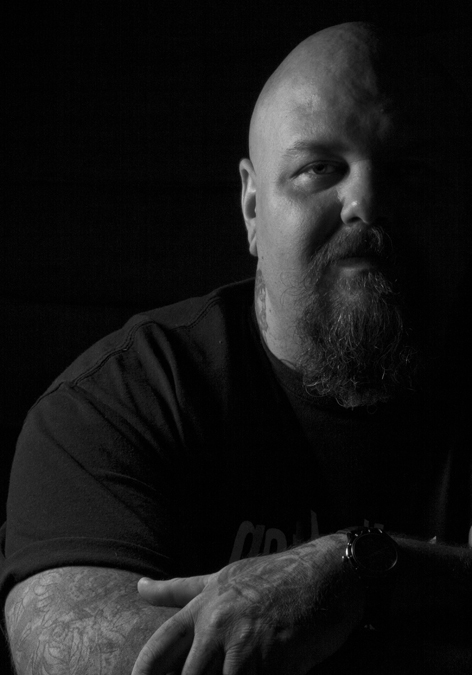
You don't want to meet James Tuck in a dark alley. Sure, he may be mostly harmless (to quote Douglas Adams), but he looks like he'd mug you and then write you into his latest novel as a soon-to-be corpse.

Okay, maybe that second part is correct. But what a way to go.

I met James this year at Connooga and was impressed by not only his work and work ethic, but the way he approached his stories and I just had to get some time with him to pick his brain a bit.

Tell us a bit about your latest work.

It's about an Occult Bounty Hunter named Deacon Chalk. Five years ago, Deacon hunted down the thing that killed his family.  All he wants in the world is to go and be with his family. The only problem is that he is Catholic. If he kills himself it's a mortal sin, do not pass go, do not collect $200. So now he hunts down monsters, throwing himself at them, hoping and praying that one day one of them will be monster enough to take him out and send him on his way.

The first book BLOOD AND BULLETS is the night that a vampire sets him up to be killed using a wannabe vampire hunter as bait. It's a violent, bloody night as Deacon has to find out who set him up and stop whatever plans they have. The book is full of vampires, undead strippers, cursed immortals, Were-spiders, and a ton of ass-kicking.


What are the themes and subjects you tend to revisit in your work?

Loss of family is huge. What it takes to drive a man into doing something completely insane like hunting monsters. Plus missing eyes. Lots of folks lose eyes in my work. It's a weird thing that I haven't figured out why I keep going to it.

Oh and priests. Priests keep showing up. And if it's not a priest then it's a backwoods preacher who deals guns or something like that.

What would be your dream project?

I want to write comic books. Specifically DC Comics. Specifically a Batman family title. Give me the Huntress and let me make her what she is supposed to be. Especially if you let me take the Huntress into the Vertigo line... hells yeah. I would also like to do a 70's throwback Power Man and Iron Fist. Back in the "Sweet Christmas!" days. Other than that I have my dream project. The Deacon Chalk books are exactly what I want to write. They are the unvarnished example of what I love in Urban Fantasy.

If you have any former project to do over to make it better, which one would it be, and what would you do?

I am really happy with my work. It's all been pretty magical so far. You always grow, always moving forward so you look back and wish you had written this sentence different or used that word instead of the one you used, but overall, I am good to go.

What inspires you to write?

Deadlines. LOL. I am under a heavy deadline for book 3 and novella 3 in the Deaconverse so I am furiously writing everyday to make it. Hell, I don't really have time to do this interview.

What writers have influenced your style and technique?

I am a huge Robert E. Howard fan. I don't think I anywhere near the poetic writer he was, but as for the violence it is right up there. My books have a pretty high bodycount.

Where would you rank writing on the "Is it an art or it is a science continuum?" Why?

It's a mixture of both. It's like cooking. Anyone can read a recipe, follow it, and make a serviceable meal, but give that recipe to a chef, let him add the style he has to it and you will have a gourmet meal on your hands.....well, not on your hands. You should use a fork. Didn't your momma teach you any manners?

Any other upcoming projects you would like to plug?

Book two of the Deacon Chalk series hits August 7th. It's called BLOOD AND SILVER and it'll be available everywhere. There will also be another e-novella release called SPIDER'S LULLABY that will be available from all fine e-tailers June 26th.

Other than those, just keep watch on my website www.jamesrtuck.com ; and my social media for updates.

Thursday, March 1, 2012

Straight Talk About Origin Stories

The question from last week got me thinking about origin stories, and whether they still need a drawn-out telling. Batman had two pages in the old days and then it was off to the races. Most of the books from new pulp publishers that I've read tend to jump right in with little more than a brief set-up to establish character, and then they're off to the skies or into the jungles. Or in some cases, an origin requires a long comic book arc or is the purpose of the first novel in a series.

So, let's talk origin stories, folks.

Is the origin story still a necessity for today's pulp, comics, and action/adventure tales? Why or why not?

Nancy Hansen: It really depends on the story, and where you're going with it. A simple character or easily understandable world setting probably needs no more than a page of setup so that you know who this is, and where we are. Length of the story has a lot to do with it too, as well as whether this is going to be a standalone tale or something serialized. In something short or a standalone novel, you really don't want to waste too much time in that kind of setup, so the faster you can get any necessary info across, the better. And in anything like pulp, which thrives on fast action, you don't want to bog things down in details. If you're going to do an origin story, it better be exciting and full of thrills.

In fantasy and sci-fi there is often a lot of world building to do. In the mainstream writing, where readers tend to thrive on that sort of detailed thing, you have a lot more wiggle room for going off on long winded narratives. Not so in pulp where two pages or paragraphs into that, you lost your reader's attention. You have to do it in short spurts in between more active things going on. You'd be surprised how much detail you can get across even in the midst of a big action scene.

Roger Stegman: A lot of whether an origin story is necessary depends on the character, situation, and the audience. If the situation is really strange,  you had better explain it. If the situation could be misinterpreted,  you had better explain it. If the situation is obvious at the moment, you might go without an origin explanation until a bit later.

One must remember that readers today are much different than readers back in the 50s or earlier. I remember reading one of the Doc Savage books and the first 60 pages was introducing the characters before the story  began. I remember hearing about authors of the late 1800s explaining the history of the country for a hundred pages before the story even started.

Today's readers expect to be captured at the first word and dragged along. Description, back story, details fitted into the action. Modern readers have less patience with their books.

Ed Erdelac: I think absolutely it is. If you've got a great, well-thought out character, a character that resonates with readers, he's got to have a great origin. The Lone Ranger, Batman, The Shadow, Superman, Spider-Man, they've all got great origin stories.

Lance Stahlberg: It depends on how important the origin itself is to the rest of the story that you really want to tell. In pulps especially, err on the side of "not very".

For most crime fighters,those stories are typically more about the crime and the criminals than they are about the hero. In most cases, what motivated them makes for better filler material than it does an introduction.

In adventure tales, its even less needed. Heroes like Indiana Jones are pretty self explanatory. You don't need to do more than establish who and what they are in one paragraph or two panels. In fact, I may not need or even want to know too much about a character's background. I just want to see what he's gonna do next.

Lee Houston Jr.: Maybe not immediately, but definitely over time, yes. Your hero/heroine's actions and reactions during their debut adventure will do more to cement any relationship the character might develop with the readers. While there is no one correct way to present it, you do want to reveal the character's origin eventually so that the reader understands not only how, but more importantly why, the hero/heroine does what they do. The two schools of thought on this are "as it happens" and "the big reveal", which your other questions cover in more detail.

James R. Tuck: I believe origin stories can be complete in and of themselves. You can tell the full, detailed story of how your character came to be who they are. It is a classic move. Star Wars is basically the origin story of Luke Skywalker. It works because it is a complete arc.

Bill Craig: I think origin stories are necessary because readers want to know where a character comes from, what has turned them into the person they are.  As I was recently going over the manuscript for one of my Jack Riley adventures, Pirates' Blood to reformat it since the rights reverted to me, I noticed that during the course of the story, that I was telling through flashbacks some specifics of Riley's time spent working for the CIA, something not normally talked about in the books which focus on his time as a Chicago Police Detective.  It both gave him extra dimension and also made him more human as it revealed exactly why he left the CIA to become a cop, something that had been hinted at in the past but never been fully revealed.

How you can make an origin story more than just a recap of the back story a reader needs?

Nancy Hansen: Depends on how detailed you need to make it. If you have to get in over a couple pages worth of info, you need that origin story first. I'm not fond of long flashbacks, they get confusing and kill story continuity. If it won't fly in a paragraph or three, you need to rethink this tale. If you can find a way to get that info across without slowing the action and bogging down the story, go for it.

Just don't do the, "As you know Captain...," routine that Spock always did on classic Star Trek (which I loved BTW).

"Why yes... I do know that Spock..., so why... are you telling me... again?"

"Well Captain, our viewers do not know this, so it is is just my awkward Vulcan way of telling them."

I've got a trilogy going right now that started with FORTUNE'S PAWN and is designed to introduce an ongoing character that isn't even born yet. I started trying to write the character as is, but the background tale was just too good to gloss over. The trick has been to make that seminal story just as fascinating as the future ones will be, so that my readers are already steeped in that world and know what to expect. Yet at the same time, you have make sure each story or book can stand on its own, so that if readers pick up Book 3 or the magazine running the 5th installment of a series, they aren't going to be totally lost. So with something ongoing like that, there is going to be some repetitive description. Over time you learn how to fold that into what is going on now, not stop the story to write a character dossier or re-explain the setting. Recaps can be done by several means. I tend to favor heated war room discussions, nightmares, quick screen shots of the surroundings, and ugly reminders in the here and now of what happened in the past.

Lance Stahlberg: Just tacking on a recap of a character's origin like it's a footnote is usually boring and tends to come across disjointed, at least to modern audiences. Even background exposition should still flow with the rest of the story.

Sometimes the origin itself is kind of integral to the plot. John Carter, Buck Rogers, Flash Gordon. Okay those need a little more setup up front. Trying to start a tale in an alien environment and revealing how a modern day Earth man fits into that through flashbacks would end up being pretty convoluted to follow.

If the origin story needs to be told in full for the reader to understand what's happening, you ideally still want to get it out of the way quickly so you can dive into the fun stuff. The more you spend on background, the less you are moving the action forward.

Ed Erdelac: It's not easy. I'm dealing with that very issue in something I'm writing right now. Marvel Comics always had those nifty little recap paragraphs Stan Lee (I presume) wrote before the splash page (i.e. - Peter Parker was just a nebbish youth until... etc). Not great for prose books I guess. I would say past the origin issue/story, it only needs to come up as it suits the plot. Does a character know the hero from his past, maybe before his 'origin?' That would necessitate the hero rehashing his roots, but I think again, to avoid it being a simple rehash, it should move the plot along somehow. Think about The Shadow or Itto Ogami - they're origins aren't revealed till further along in their respective stories - but the characters are intriguing enough for the reader to want to follow along.

Roger Stegman: I will have to surmise here a little, but like any flashback in most stories. What was remembered in the flashback effects what the person does in the now. Remember that it was criminals who killed a number students in elementary school, the hero then makes these criminals pay. Remember that the mistakes during training resulted in teachers delivering pain, the hero ignores a serious bruise on t he chest. Remember the first time one cracked concrete blocks in a wall, The hero smashes a fist through the body armor of a thug. Make the memories of the origin effect how the hero reacts in the now, even if it is to decide to put another hour on patrol rather than heading home.

Scott Rogers: I always believed if you could tell the origin in two comic book pages you were doing it right. Grant Morrison made me a believer in the one-page, eight-word origin story in All-Star Superman.

Lee Houston Jr.: By telling it as it happens instead of just revealing the details as a flashback. That way the reader is literally with the character from "day one" instead of learning everything after the fact. The reader can share the trials and errors of the hero/heroine discovering their powers, how to use them properly, along with everything surrounding the first adventure and whatever reason(s) the character decides to continue on afterwards. While "the big reveal" (telling the origin story after the fact) was the traditional method of telling origin stories until sometime in the 1980s regardless of the medium, the "as it happens" method has gained serious popularity over the last couple of decades. My forthcoming superhero novel Alpha takes this approach.

James Tuck: In a lot of modern genre, I think it works a lot better to begin after the origin. That is what I chose to do. The Deacon Chalk series begins five years after Deacon's origin as a monster hunter. Why did I wait five years? I mean he did have some adventure in there, he killed a shitload of monsters in those five years. I chose to wait because the beginning of book one, BLOOD AND BULLETS, is where Deacon is first able to begin to change as a character.

Bill Craig: If done correctly, giving little details hinting of the past life before the reader knew the character, it enhances the story and makes the character more human and more easily identifiable with for the reader.  They begin to care and that makes them want to pick up earlier books and go "Ah ha, now I understand why that pissed off so and so. Kinda  like in Die Hard 2: Die Harder when John McClain is crawling through the ventilation system at the airport going again?  Seriously?  Why Me?  Anybody who did not see the first one is going to go rent or buy the first movie just to see what he was talking about.

What dangers do you face if you choose to ignore an origin story and jump in in medias res, with a character already operating with a status quo? What are the advantages of choosing that method? Well of course it's a gamble. What if the character doesn't catch on with the reader?

Lance Stahlberg: Well if the events by which your hero got their motivation and abilities is complicated, you risk confusing the reader and detaching them from your character. Without any explanation at all, then they are just a cardboard cutout going through events that ultimately mean nothing to them.

Ideally, I like stories that launch en medias res and feed needed details through flashbacks or revelations, if for no other reason than pacing. Hit the ground running and let the reader get to know what makes your hero tick over the course of the story.

The formula of LOST was fantastic in that regard. Every flashback related to events in the story's "present" in a way that made an insanely intricate plot chock full of origin stories mesh and kept the audience engaged.

Nancy Hansen: Whether you chose to write it or not, I think a complex character or world setup demands that you know in your head at least what has happened, and why, as well as how that lead up to the present situation. A really skillful writer can handle a character with a mysterious past—whether that is simply a well-kept secret or for some reason it has been forgotten—and then reveal little bits of it throughout the ongoing tales. The biggest danger in that is forgetting what you wrote previously and suddenly having a character do or say something that makes no sense at all. And there's the dreaded misremembered info that makes it past all the editing stages. It's tough enough to keep it all straight in your head with one series, I have something like eight of them going right now, and the simplest stuff tends to get away from me. You'd be surprised how fast someone is going to point out that Gwen's eyes are blue and not green, or that Gwydion's mother died in story #2 so she can't be calling him from the hometown in #8. I have to do a lot of back checking to make sure I've been consistent throughout. Over time I try and make a cheat sheet for that stuff, so that I can look back quickly and see what happened when and what so-in-so looks like, or where I introduced some character or idea.

Ed Erdelac: Ideally, as I mentioned, the character should be able to hold the reader's attention from the get-go. If you've crafted the character well, then the advantage of jumping right into the story is obvious; lack of info-dump. Raiders of The Lost Ark is a good example of this. But Indiana Jones is an iconic character. By his very mode of dress, by the first thing we see him do, we already know who this guy is and what he's about. His origin is just icing on the cake. Conversely, from the first time we see The Shadow talking Harry Vincent out of jumping off a bridge, we want to know what this guy is about. It drives us to read more about him.

Robby Hilliard: Today, so much is acceptable in urban fantasy that it seems to be nothing for Jane to walk into a bar and chat it up with her friendly neighborhood vampire while her favorite demon bartender serves up drinks and all Jane has to add to it is that her spells seem to be a bit weak lately. No real build up, it's all just there.

That said, I think that if you can pull off starting in media res and still communicate the origin story, go for it. At the same time, fans of pulp and comics may be more tolerant or perhaps even want the origin story to be played out! But if you do, I think it needs to be creative to really capture the reader's interest. Otherwise they're really just anxious to get past the origin part.

Roger Stegman: The advantage is that the reader is in the action immediately, they are going for the ride with the first words.

The problem is that the reader may have no clue as to what is going on or why. Why is this strange person is beating up a whole bunch of people and laying waste to a neighborhood? Where's the police? Without a back story, it might simply be senseless violence. But if they can quickly learn that the super hero has been hunting down these criminals since he was a child, then it becomes a bit more understandable. With any writing, it is a balance. fit in enough detail to help make sense of the action.

John Morgan Neal: My Aym Geronimo is the queen of in media res. And she has never had an 'origin story. Though bits of her history and how she came to be who she is have been sprinkled in.

Lee Houston Jr.: While (as I said in question 1) a character's actions and reactions will do more to establish any potential relationship with the readers, an origin story should be told within a set amount of time of a character's debut, especially if you are making the mystery surrounding that character part of the origin tale. The best example of this I can think of is The Shadow. With his start as a spooky voiced announcer for Street and Smith's Detective Story Hour BEFORE moving on to the pulps, readers already knew who he was to a point, but not his background.

Walter B. Gibson, aka Maxwell Grant, took advantage of this unique situation and built the character's background over the course of several stories to reveal the details every fan knows today.

James Tuck: Often times a hero is created and then they have a long period where they are adjusting to their new life. This can create great storytelling, a la Batman: Year One, or it can be kind of boring. I mean, can you imagine Elongated Man: Year One?

I choose to do the origin story as brief flashbacks as they inform the character in the present day. I keep it short and sweet (and truthfully, looking back I didn't keep it as brief as I could have. It was my first book, sue me.) and it serves as a hook into the character. The hope is that by the time I am ready to go and write the full, detailed origin story the readers will be champing at the bit for it.

Bill Craig: Jumping into the character and ignoring where they came from is just a bad idea.  It can leave a reader feeling cheated because here comes Superagent Bob Badass jumping in to save the day, killing all the bad guys and saving the world which is all well and good, but what do we really know about him?  It creates a mystery around him which demands some sort of origin story about how he was a former Navy SEAL recruited into the clandestine services and where he got the skills he used to wipe out the bad guys and figure out how to disarm the bomb that was going to destroy all the leaders of the free world beneath the United Nations building on a day when the president that he didn't even vote for is scheduled to give a speech.  Like in Lethal Weapon 2 we find out that the accident that killed Martin Riggs' wife was actually an attempt on Riggs' life by a drug running gang.  That rounds out his character much more than the first movie did because it gives us a glimpse into his past.  It also fuels his rage when he goes after the drug runners to avenge his wife and that of the new woman in his life that they also murdered.  You just cannot get around giving some sort of origin story, even if it is dribbled out a little at a time.

=======================================================================

To follow the works of these fine creators who took part in this roundtable, simply look for their links on the list of Heavy Hitters on the right side of this page. 

Tuesday, February 28, 2012

[Link] PUTTING THE OOH IN THE OOH-LA-LA

by James Tuck

I know this isn't a writing blog, it's a blog by writers and I think more than a few of y'all are writers yourselves.

So while this may be a bit short it will be an actual writing technique post.

Writing sex scenes.

Now, I'm not going to go into the specific tips and tricks such as pay attention to all the senses in the act of instead of focusing on just the sights and the sounds. Or using clever fresh words to describe things. (Slick being one of my faves) Or how using a lot of soft sounding words such as slick will make the scene flow. S sounds, C sounds, Z sounds roll off the tongue like....well, that's about enough of that. lol

I'm not even going to talk to you about varying the tempo of your sentence structure so that longer sentences build the tension, making it climb, building pressure as the sensations are spilled out onto the page for the eye to watch until you switch. Using shorter and shorter sentences. Quickening the pace. Moving faster. Doing. The. Deed.

Nope. Today I am going to speak, really quickly, on making the sex scene matter.

Continue reading: http://word-whores.blogspot.com/2012/02/putting-ooh-in-ooh-la-la.html