==========================================================
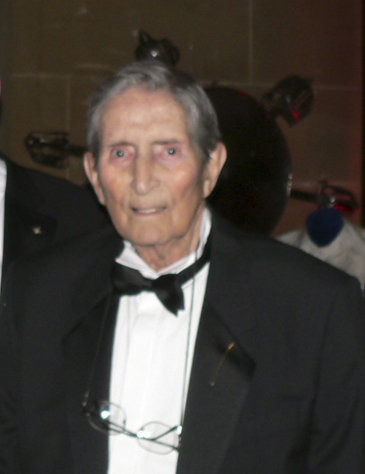
The New Pulp community lost a hero on
April 4, 2021. The New Pulp movement lost its soul on April 4, 2020.
The independent genre writers world lost its heart on April 4, 2021.
 I know it's all en vogue to all but
raise writers to sainthood upon their death and rattle off accolades
as if they were the second coming of Ray Bradbury incarnate. But
trust me, all those are fair statements in regard to Derrick
Ferguson.
I know it's all en vogue to all but
raise writers to sainthood upon their death and rattle off accolades
as if they were the second coming of Ray Bradbury incarnate. But
trust me, all those are fair statements in regard to Derrick
Ferguson.
I've long argued that (bear with me
here for a moment) Isaac Asimov was the brains of sci-fi but that Ray
Bradbury was its heart. In the same way, Derrick was the heart of the
community of independent genre writers, and particularly that of New
Pulp. But it wasn't just his writing that put him there and defined
it. It was his sort of ambassadorship for the movement, bringing the
unrelatable term to the masses with comparisons to movies and other
forms or entertainment, his “get started” lists of 100 New Pulp books you need to read, and his action-adventure mindset in regard to
everything from his movie reviews to his posts in the Usimi Dero group he ran on Facebook that brought so many like-minded fans
together.
How do I know he was the heart? Because
unlike other fan groups, Usimi Dero was always a place of positive
interaction among so many divergent fans of comics, books, movies,
games, etc.
Derrick was also a friend even though
we really only every spoke via podcasts or email. We did so many
interviews together, and we connected on a level of writer
similarities that I often referred to him as my New Pulp brother. We
saw New Pulp the same way, along with several other folks. It was a
way to rescue action and adventure stories from the traps of the
past—whether they were systemic racism in the portrayals, sloppy
writing in the structure and plots, or cliched stereotyped that
didn't go anywhere in the characterizations in the stories.
I loved that about him. I identified
with him because of that. Whenever I had an editor or a publisher
basically inform me to simplify it or just “let the hero be the
hero,” I could always lean toward Derrick's shared vision for what
New Pulp could become beyond the limitations of Classic Pulp.
But lest I wax poetic, I want to let
Derrick speak for himself posthumously.
You see, Derrick was very active (in
addition to his own prolific writing bench) in my Bad Girls, Good
Guys, and Two-Fisted Action writing blog. So, the best way I could
think to honor this patron saint of New Pulp and action-adventure
storytelling is simply to go back through many of his comments he
made as part of his own interviews or in roundtable interviews.
So, this is Derrick defining himself,
his work, and his writing legacy.
May we all be so talented and respected
and remembered.
On Becoming a Professional Writer
"I considered myself to be a real
professional when I had people seeking me out and offering me money
to write for them. I felt like I had turned a corner and had reached
a level where people knew my name, had read my work and trusted me
enough that they were willing to say; 'Hey, here's a chunk of
change... come write something for me.'"
On Blogging
“I only post stuff on my blogs when I
have something to say. I really don't see the reason to post stuff
just to be posting stuff or to constantly promise readers that
"There's some really BIG STUFF in the works!" I know that
for me, as a reader, the fourth or fifth time you tell me that
there's BIG STUFF in the works I yawn and go away. Wait until you can
tell me what the BIG STUFF is and then post it. Most writers I know
how a set day that they post every week but I'm just not that
organized. Maybe if I were I'd have more books written.”
On New Pulp and Classic Pulp
“As New Pulp writers we're trying to
emulate the fantastic fun and rip-roaring action of Classic Pulp. But
without the mistakes of Classic Pulp. Those stories that we love so
much were written for another time, one that we like to think was
less enlightened (although I look around at the United States today
and I ain't all that sure of that) less tolerant and less
understanding.”

“My perception and experience is that
fans of Classic Pulp have no use or need for New Pulp in any way,
shape or form. But that's okay. New Pulp deserves and needs new
readers that are eager for new heroes that represent them no matter
what their race, age or gender may be told in a breathless prose that
doesn't give them a chance to catch their breath. And those readers
are out there. I hear from them (occasionally) on Facebook, Twitter
and by email. I myself think that New Pulp has produced characters
that can stand beside Classic Pulp heroes with no shame at all. And
readers who don't know anything about Classic Pulp characters have
embraced the idea/concept of these multicultural protagonists if the
popularity of "Black Pulp" and "Asian Pulp" is an
accurate measure of their enjoyment.”
“First of all, tell good stories with
good characters. That’s the foundation of pulp fiction right there.
People will want to read stories about heroic characters fighting
impossible odds to do the right thing and protect the innocent no
matter what their ethnic background is. Give people quality every
time and everything else will follow. There are some people who are
not going to read New Pulp no matter what and having heroes of color
is not going to change their opinion or reading habits. And that’s
okay. There’s a whole lot of other readers out there who will pick
up a New Pulp book with interracial characters. And let me just say
that New Pulp isn’t looking to replace or be superior to Classic
Pulp. It’s an extension and an amplification of Classic Pulp. It’s
no more and no less that the tropes of a genre updated for the
consumption and entertainment of a modern day audience.”

“I would be blatantly lying if I
didn't come right out of the gate and admit that with the creation of
both Dillon and Fortune McCall I was actively looking to break new
ground in new pulp and show why New Pulp was going to be different
from Classic Pulp.”
On Genres and Low-Brow Entertainment
“Whenever I hear/read somebody
complain about how they don't like labels and they don’t see why
anything has to be labeled…tell you what we’re gonna do. We’re
going to take all the labels off the canned foods in your local
supermarket and let you guess what’s inside those cans the next
time you go shopping.”
“Before I step up on my soapbox and
start the pontificating, let me start of by saying that I don’t
consider ‘throwaway writing’ to be a bad thing. Robert Heinlein
is famous for saying that 90 percent of everything is crap. I think
that 90 percent of entertainment is throwaway and disposable. Most
people are really just looking for something to entertain and/or
distract them from whatever is giving them the grumbles in their
life. Of course, the creators of that entertainment hope and pray
that it will live on after them. But I find it difficult to believe
that the creators of Gomer Pyle, USMC expected or hoped that people
would still be watching the show 50 years later.

“I don’t think writers have much of
a problem coming up with original and creative protagonists for
period piece detective fiction. At least not the ones I’ve read. I
think it’s the readers of that particular genre (or any other for
that matter) who don’t want the original and creative protagonists.
I think the readers are expecting the Sam Spade/Philip Marlowe
knock-off because that’s what they know and it’s as comfortable
to slip into as those ten-year old jeans they won’t let their
spouses throw out, no matter how ragged and holey they get.”
So what should writers avoid when
crafting their protagonists? How about getting rid of the alcoholic
ex-cop turned private dick still grieving over his marriage and
ex-wife? This is one that infects not only period piece detective
fiction but modern day detective fiction as well. How about a
detective who is actually successful and makes money at his job? One
of my favorite things about the “Chinatown” sequel “The Two
Jakes” was seeing that Jake Gittes has prospered.
On First Drafts
“I don't a give a poobah's pizzle
about any rule of editing or grammar when I'm writing that first
draft. I'm telling the story to myself and just letting everything
gush out in a white-hot blaze of pure storytelling. I never fix any
errors right away. That's what the second and third drafts are for.”
On Creating Art
"You should always strive to tell
the best story you can in the best way you can. What I am saying is
that there’s madness in sitting down at your keyboard and
pronouncing to the world ‘I am going to create art!’”
On Characterization
“Plenty of time characterization is
done as my heroes are traveling in vehicles from Point A to Point B,”
he says. “Let me provide you with an example from a popular movie:
there’s a scene in the movie Silver Streak where Gene Wilder and
Richard Pryor are in a stolen fire-engine red Jaguar racing to save
Jill Clayburgh from Patrick McGoohan, and they’re exchanging what
is some pretty meaningful dialog about their relationship, the
situation they’re in and how they’re going to save Jill
Clayburgh. It’s a nice scene with characterization but it’s done
in a moving car that is taking them from one action scene to the
next. The movie slows down to provide us with characterization but
the actual plot doesn’t slow down and carries the promise that
we’re going to see more action once to get to where we’re going.”
“Writers of pulp knew the secret of
having genuine characterization in their work long ago. You can do
characterization and have sparkling, meaningful dialog and solid
supporting casts and all those things that literary fiction prides
itself on in the most action-packed of stories. Here’s the catch:
Don’t stop the action to do all that stuff. Let me clarify. Action
doesn’t mean that you have to have constant fist-fights,
explosions, cliffhangers, the heroes continually escaping fates worse
than death or chases and captures. Although if you are writing pulp,
I would certainly hope that you do have all that stuff in there.
After all, what’s the point of writing pulp if you don’t? It’s
like making a ham sandwich without the ham. But in pulp, the plot
always has to be going forward. You simply cannot stop the thrust of
the plot to indulge in a three page introspective passage when your
heroine is supposed to be saving the world.”

“For me, a story begins and ends with
character. If the characters aren't interesting and if what they're
doing doesn't interest me I don't care how mind-blowing the ideas
behind the story is. There are writers who can pull off an idea
driven story and I've read many of those over the years but as a
rule, those types of stories don't put the sugar in my coffee. I'm
more drawn to character driven stories.”
“And the characters don't have to be
likable In fact, I'm more intrigued when a writer can present me
with an unlikable character and during the course of the story I grow
to sympathize with him or her. My DIAMONDBACK novel; “It Seemed
Like A Good Idea At The Time” was partially an exercise to see if I
could write a novel length story where 99% percent of the characters
were backstabbing, unrepentant cold-blooded bastards (especially the
lead character) and still make them compelling characters you wanted
to know more about and find out what happens to them.”
“That's why most of the time when you
start to read a story of mine, I'll open with the character doing
whatever it is he does best.”
On Sex In Writing
“Like so much else in my writing, I
just tend to go with my gut when it comes to writing about sex. I'm
not as good at describing sex as I am describing action so when I do
have sex scenes I tend to keep them brief and to the point. In my
Dillon stories and novels, I give the reader just enough to know that
my boy is ready to get it on and then I cut away to the billowing
curtains and the fireplace. In my "Madness of Frankenstein"
novel and my current "Diamondback" serial running on my
Patreon page, the sex scenes are a bit more graphic, nasty and
brutal. But that's because I'm writing about nasty, brutal people and
the nasty, brutal sex just seemed to fit.”
On Westerns
“See, here’s where I scratch my
head when it comes to clichés. Say you write a western. Okay, you’ve
got horses and six guns and Indian attacks and schoolmarms. Now is it
fair when somebody reads your western and accuses your work of being
cliché ridden? When you read in a certain genre, shouldn’t you
expect certain tropes of that genre to make an appearance?”
“My love and appreciation of the
Western came from my parents, especially my father. He would watch
any and all Westerns that came on TV no matter who was in. And back
then we only had one TV so if I didn't watch what my parents did, I
just didn't watch TV. He didn't have a favorite Western star. He just
loved all Westerns. He and I would watch Have Gun Will Travel, The
Wild Wild West and Wanted: Dead Or Alive together and my very first
grown up movie was The Wild Bunch, which I saw at the tender age of
10 and changed the course of my life forever.”
“What draws me to the Western as a
creative person? My gut says it's because you can make a Western as
simple or as complicated as you want and nobody will give you any
shit about it. The Western is American mythology which is why it'll
never go away. Myths just don't go away. They get changed, sure. In
the 60's/70's/80's many of the tropes of the Western were adopted by
police/crime thrillers and science fiction movies. But we always come
back to the Western because there's a purity there, a stripping away
of the bullshit that infects our society today and brings us back to
basic, core beliefs, traditions and codes of behavior that we've lost
but still long for.”
On Strong Villains in Fiction
“I always keep in mind that as far as
the villain is concerned, HE'S the hero of his own story. To him he's
got a perfect good and sound motivation for doing what he's doing.
Even if he knows it's wrong, he thinks his reasons for doing it is
right. Two of my favorite villains of all time are Fu Manchu and
Doctor Doom. Both are men capable of hideous evil. But they also
are men of honor and great benevolence toward their people. They are
villains whose complexity springs from the core of their belief that
the world would be much better off if they were ruling it. When I
write my villains I try to remember that villains are people too.
Well, some of 'em, anyway. I think a memorable villain should be as
formidable and as resourceful as the hero if not even moreso. Nobody
would have remembered St. George if he had slain a waterbug. No, he
went out and slew a dragon. That's why James Bond villains such as
Dr. No, Goldfinger and Ernst Stavro Blofeld were so memorable. They
were all smarter than Bond, had way more money and resources and just
by looking at the tale of the tape, Bond should have never stood a
chance against them. But he took 'em all down. I think sometimes
writers are afraid of making their villains too powerful, too
charismatic or too intelligent for fear that they will take over the
story or overshadow their hero. I say go for it! Maybe your hero
will surprise you yourself at how he rises to the challenge!”

“I think at some point it has to be
made clear to the reader exactly WHY the villain wants to take over
the world or find the Ark of The Covenant or rob Fort Knox.
Motivation is the key to any good villain...hell, any good character,
period. Even the secondary characters have to have SOME motivation
for why they're doing what they're doing. If the writer knows his
characters well, their motivation can't help but come out in the
story at some point because the character him or herself will
literally demand that they be heard.”
On Diversity in Pulp and Comics
“I think it’s downright ignorant to
deny that there is plenty of blatant racism and sexism in Classic
Pulp and I’d never suggest that anyone who is coming to Classic
Pulp for the first time shouldn’t be mindful of that. But I also
think that one has to take into account that these stories were
written in a less enlightened time and if you’re going to read
Classic Pulp then that has to be taken into account.”
“Now some people say they can’t get
past that and that’s cool. Some people honestly can’t separate
like that. But I do have a problem when people suggest that Classic
Pulp should not be read at all because of the racism and sexism.
Classic Pulp isn’t just escapist literature. It’s also a
historical record of the popular entertainment medium of that time
period. You can’t ignore an entire genre or try to pretend it
doesn’t exist because some of the depictions of race makes you
uncomfortable or upset.”
“We can’t ignore the racism of the
past but neither should we shoulder the burden of it. Those writers
did their thing back then and writers of New Pulp are doing their
thing today. The only thing we owe the culture at large today is to
tell the most entertaining stories we possibly can and provide
quality reading that won’t waste a reader’s time or money. That’s
got to be first before any other consideration. Everything after that
is gravy. That’s not to say if a writer intentionally wants to be
more racially diverse in his work he can’t be. I mean, my character
Dillon I created because the more I read Classic Pulp the more I felt
that a black pulp hero was needed as there simply wasn’t one that I
could find. And I tried. Couldn’t find one with a search warrant.
But at the end of the day I should hope that people who discover
Dillon and read his adventures do so first of all because he’s an
interesting character who is living an extraordinary life. His being
black adds an extra layer to his character, yes. But he’s got a
whole lot of interesting layers as well that have nothing to do with
his being black.”

“Comics are surviving now by being a
sideshow act. It's not enough to just tell good stories with good art
(I'm talking about Marvel and DC here). There's a respectable number
of independent comic creators who are producing excellent comic books
with multicultural heroes and heroines. It's only Marvel and DC who
still treat it as if they're breaking the Internet when they announce
they've got a new black hero, a new Latina heroine, a new gay and/or
lesbian hero. When I created Dillon and Fortune McCall and Sebastian
Red I knew full well it was going to take years for them to catch on.
And Dillon's been around for 15 years now and I'll still get emails
from new readers who inform me that they never bothered with the
character before because they thought; 'it was some blaxploitation
thing.' And I think that's the mindset of writers: we're marathoners
who realize that we have to put in the time and work to get readers
to turn their heads in our direction. And I think that after a
floundering around period we're finally starting to learn how to make
The Internet work for us. There's a whole lot of other writers who
have mastered that and did it years ago. Especially the Romance and
Street Lit writers.”
“Race-based entertainment is nothing
new and shouldn’t be treated as such. It grinds my grits to no end
when race based entertainment is challenged. You have those who will
make the argument that race based entertainment is in itself racist.
Which is flat out bullshit. It’s not racist to want to see heroes
and heroines of your own ethnic background in your entertainment
whether it be books, movies, comics or television. Black cinema has
been with us since the 1920’s. Movies made for black movie goers
who went to black movie theaters to see them as they couldn’t go to
white theaters. Same thing with Asian cinema. And I don’t see a
thing wrong with New Pulp marketing to a specific ethnic group. Every
other form of entertainment does it so why shouldn’t we? Especially
modern day audiences that welcome and look for ethnic diversity in
their entertainment.”
On Cynicism Toward Heroes
“What's holding them back is that we
have a generation, possibly two that has grown up with the
manufactured angst and drama that infests most comic books today.
Like another genre, the daytime soap opera (which comic books
actually have the most in common with) comic books are no longer a
vehicle for telling interesting stories about interesting characters.
Now they are simply vehicles for writers to demonstrate how much they
hate superheroes.”
“What's the constant thing you see
whenever a pulp hero is revived by DC or Marvel? It's that hated word
that will appear in the first paragraph: "relatable." It's
always stressed that the pulp hero is being made "human" so
that readers will "relate" to him. We're talking about
readers who have been raised on Spider-Man who lost more often than
he won and spent just as much time agonizing over how he was going to
pay the rent as he did worrying about how to beat The Green Goblin.
And that's why Spider-Man has his fans because they relate to that.
And that's okay. Me, I'd rather relate to Tony Stark who is the
smartest guy in the world with his own warehouse of high-tech armor,
buys a dozen Ferraris when he's in the mood and babes lined up
outside his door since the week before. Or Thor or Superman. That
probably says more about my ego than anything else but I digress.”

“My point is that comic book fans are
conditioned to reading about characters who don't win no matter what
they do. Spider-Man makes a deal with The Devil and his marriage is
wiped from existence and those mothercussin' X-Men are still BMW-ing
[editor's note: bitch, moan, and whine - it took me a minute too]
about how humanity hates them and why can't we all get along and
Wonder Woman is still figuring out who she is and what she's supposed
to be doing. Because comic book readers think this constantly
recycled soap opera crap is drama. But the classic pulp heroes
weren't built along those lines and don't subscribe to a whiny "woe
is me" philosophy.”
“So now, we give them Doc Savage. The
most perfect example of humanity: the smartest and strongest guy on
the planet who travels all over the world fighting the forces of evil
with his five best pals. Should be simple to do that comic each and
every month, right?”
“Nope. Because the comic book fans of
today and even worse, the writers throw up that word; "relatable"
They insist that a Doc Savage who is written as he's supposed to be
written is no good to today's world because he's not "relatable"
and he has no flaws and because the writers aren't good enough to
work their skills to write Doc the way he's supposed to be written,
they tear away everything that makes Doc and his world interesting
and then they wonder why nobody wants to read the book.”
“The Shadow doesn't have that problem
because he never gets watered down like Doc and The Avenger. After
all, The Punisher and characters of his ilk are similar and The
Shadow was there before all of them, performing .45 caliber
lobotomies before they were born.”
“Me, I'm like Benjy Stone in My
Favorite Year when he yells at Alan Swann that he can't use
him life-sized; he doesn't need him life-sized. I'm that way with
most of my heroes; I don't need them to be 'relatable.' I can't use a
Doc Savage who worries about paying the rent or where his next meal
is coming from. That's not what I read him for. Like Benjy, I need my
heroes as big as I can get them. But not comic book fans. They're
used to reading about heroes crushed by life and losing all the time.
That why most pulp heroes don't work for them because that's not real
to them.
On His Own Legacy
“I don’t know any other way to
write a story other than to write it the way that I want to write it
and then present it to the Readers At Large and let them make up
their mind about what I wrote. I’ll be the first to admit that I’m
not a very original or innovative writer. I also admit that I don’t
spend a lot of time burning up my brain cells trying to figure out
ways to be original or innovative. I’ve got friends who desperately
want to write. Have wanted to write for years. But they haven’t
because they refuse to write anything that’s isn’t “totally and
completely original.”
 “So let’s be honest here: unless
you’re a literary genius (And hey, you may be. What do I know?) The
chances of you telling a completely original and unique story are
very slim. But by no means should that stop you from doing so. But
what I am saying is don’t let that stand in your way of having fun
telling the most entertaining stories that you can tell until that
Thunderbolt of Zeus crashes into your brain and that literary
masterpiece comes flowing out of you to amaze the world. You keep on
writing. It’ll happen.”
“So let’s be honest here: unless
you’re a literary genius (And hey, you may be. What do I know?) The
chances of you telling a completely original and unique story are
very slim. But by no means should that stop you from doing so. But
what I am saying is don’t let that stand in your way of having fun
telling the most entertaining stories that you can tell until that
Thunderbolt of Zeus crashes into your brain and that literary
masterpiece comes flowing out of you to amaze the world. You keep on
writing. It’ll happen.”
“And the ability to entertain is not
to be taken lightly. I don’t get emails of thanks often, but every
so often I will get one from somebody who will thank me because they
read something I wrote that transported them away from their problems
for a couple of hours, and for me, that’s one of the highest
compliments that I can be given.”


.png)