Showing posts with label Heroines. Show all posts

Monday, June 3, 2013

The Watson Report: Behind Every Good Man -- Thoughts on Pulp Heroines

by I.A. Watson

There's a lot still to be written about that class of feisty pulp heroine who devotes her life to an impossible obsessed hero. Her loyalty and involvement lead to danger, kidnap, torture, and constant threat of death. She has to cope with a lover whose brooding character and endless mission preclude her ever being foremost in his concerns. Sometimes she even has to briefly assume his mystery-man mantle or adopt a complimentary masked persona to save him from destruction. There's just a wealth of character stuff to delve into there.


Nita van Sloan, Margo Lane, Carol Baldwin, Benita Juarez and the rest occupy a strange position in modern fiction. Feminists might criticise them for subordinating their outstanding talents to the needs of a dominant male. On the other hand, each of these women has aspects of competence, confidence, assertiveness and sexuality that are far ahead of the perceived norm for the eras in which they were first written. Yes, sometimes they are the helpless hostages; but other times they are dazzling partners in the war against crime. Often they are the only cast member capable of questioning the hero and making him reconsider his actions.

Birthed in a time when "Behind every good man is a good woman" and "Only the brave deserve the fair", these characters still have a story to be told about them; and bringing their relevance to a modern audience is surely one of the neglected duties of the new pulp era.

Even in these supposedly-liberated days there's a different vibe to writing principal female characters than male ones.
 

Perhaps its because the tough kick-ass female is still "against type".

The starting premise of Buffy the Vampire Slayer was that a blonde cheerleading valley girl was not usually the sort of beat up predatory undead. I can't imagine how that show could have been even a little bit like it turned out with a male lead.

As for girlfriend-heroines (the Lois Lane archetype) there's a long tradition of them being as extraordinary in their way as the hero with whom they associate. There's an old maxim that "A hero is only as good as his rogues gallery". I think a codicil might be "A hero is only as good as his heroine". Tarzan without independent inspiring Jane Porter would be a diminished character. Likewise Flash Gordon without Dale Arden, Robin Hood without Maid Marion etc.


There are distinct sub-classes of Pulp Heroine companions. A few of the most prevalent are:

  1. The Rescued Damsel -- a great many old-school pulp romance interests start out as the victim, often in the hero's origin story. Thrown together with the hero under extraordinary circumstances that show her to be a remarkable women, this female alone has the insight into what makes the hero tick. Thereafter she helps keep his secret, assists with his mission, and probably joins his gang.
  2. The Commissioner's Daughter -- often pulp heroines have some status conferred by their father. He's not always a police commissioner. He might be a millionaire philanthropist, a brilliant scientist, a general, an eccentric explorer, even the monarch of another planet. In any case, the daughter is significant in plot terms because either (a) her father is an ongoing influence on the series - ally, adversary, nemesis, technical support, the hero's boss, or (b) murdered, providing the hero, the heroine, or both with a motivation for their subsequent exploits.
  3. The Tamed Bad Girl -- dangerous and deadly in her own right, probably a criminal, this subclass of heroine either turns from crime because of her relationship with the hero or else teams up with him against nastier enemies because of her affection. She may try to seduce the hero to join her on the dark side. She may try to destroy him only to relent at the last moment. She may turn her back on her villainous allies, even her arch-criminal father (see sublass #2) to save her man. She might end up vying with the virtuous Rescued Damsel described above, leaving the hero to make a choice - or avoid a choice - between naughty and nice.
  4. The Girl With the Cause -- this heroine has an agenda. She may be trying to save rare animals, or complete her father's archeological research, or run her free legal centre despite gangland threats. In any case, her passion for her mission will inevitably lead her into danger. requiring the hero's assistance. It might also end up as a source of conflict between the lovers. Spunky girl reporters, dedicated medics, charity workers, and even revolutionary princesses all fit in this class.
  5. The Thrill Seeker -- an adrenaline junkie hooked on action, she's with the hero because it's dangerous and so is he. She might not be the healthiest of personalities but she's dynamite on two long legs. She's often more trouble than all but the baddest Bad Girl because she actually enjoys taking the risks. Probably the most kidnap-able class of heroine except possibly for the Commissioner's Daughter. Also the class most likely to get spanked by the hero in stories written before 1955.
  6. The Angel -- she's the perfect Good Girl, more ideal than woman, and she's the hero's inspiration and motivation. The knight quests for her. The down-at-heel detective pounds the mean streets knowing he'll never be fit to touch her with his blood-stained hands. She might be supernatural - a literal angel, ghost, alien, or computer intelligence. She's less likely to go in with .38s blazing and more likely to cradle the hero's head as he lies in an alley bleeding to death. Sometimes she dies tragically to provoke the final showdown.

Perhaps the main diffference between the pre-WW2 pulps and today's world is the idea that women who were capable of matching or exceeding men were the exception rather than commonplace. Just as not every man in a 30s pulp novella was capable of beating up half a dozen longshoremen thugs - only our two-fisted hero, so not every woman had the moxie to hold a gun on the villainous ganglord and demand her man's release from his ropes. However, here in 2013 I think we've mostly got the idea that both men and women can equally excel - or be equally pathetic! 

A few odd cultural differences remain as well, of course. James Bond strapped naked to a table while the villain torments his genitals with electrodes is gritty drama. If the naked tortured captive is Natasha Romanoff it's heading towards porn. A male hero graphically beaten to a pulp and spitting teeth is hard-boiled. A female hero similarly beaten up is... uncomfortable reading. At least to my mind.

I'm happy that we're getting more female leads to our pulp stories these days. I still think we need to make sure that when we're polishing the older legends, the characters of yesteryear, that we make sure the excellent female cast members there get opportunities to shine.

Thursday, April 19, 2012

The Writer Will Take Your Questions Now (#145) -- Believable Villains

Do you find writing believable villains more simple or 
more difficult than writing believable heroes? Why?

Neither actually.

I find writing any character hard... at least until I "get" him or her. After that, it's pretty smooth sailing.

As far as making them believable, as long as they have drives and foibles and issues and quirks, people are people, villain or hero.

Saturday, February 25, 2012

The Watson Report: On Heroines

by I.A Watson

Pulp is a very traditional storytelling form. It has deep roots, right back to the “penny dreadful” broadsheets, the popular middle ages ballads, and the bardic tales. It paints with broad strokes, intending to make the reader feel as well as think about its stories. Pulp can be a style, a genre, or a theme; but it’s always an experience.

There are some experiences which go deep to our human cores. Death, violence, and sex are about as fundamental as it gets in human experience, so naturally those things are prevalent in much fiction and almost always in pulp fiction. These are the things that get our hearts thumping – and keep readers turning the pages!

It’s been argued that there are really only three stories, and that they sum up every plot for every piece of fiction: A Man Goes on a Journey; A Man Learns a Lesson (or fails to); and Boy Meets Girl (or loses girl etc.). Fiction certainly devotes a substantial amount of time to telling stories of men and women relating romantically, not least because that’s something that attracts an audience and makes the reader care about and pull for the protagonists.

So many pulp stories include a female character who is a potential romance or sex interest. She might be a virginal good girl menaced by her wicked uncle, or a sinful bad girl seeking to manipulate our hero for her own devious ends, but she’s prevalent in all kinds of variations; not just a female character, a female character with a relationship or potential relationship with the protagonist.

That’s the sense in which I’m using the term heroine in this article. Sometimes heroine can simply mean the proper feminine of hero, the protagonist to whom the story happens; here I’m using the other definition, that of the female story lead with whom the hero must associate and who is often part of the hero’s heroic mission.

Prior to our modern liberated era there was a general assumption that most female characters would be less capable of dealing with threat than male characters. If there’s a plucky heroine, that’s considered remarkable. She’s exceptional, not the norm.

Reflecting societal attitudes, and perhaps a practical acknowledgement that when violence is involved women are at a physical disadvantage, the assumption has been that the female lead has eventually required some kind of help from the male lead. Let’s not shy away from the truth that many pulp stories, especially older ones, hold this to be true.

Pulp can be a very honest storytelling style though, because that hero-saves-heroine trope goes way back in our society. It’s probably engraved in our DNA. There is a very primal instinct in males to protect females from other males. It’s probably about ensuring that our seed fertilises the woman rather than any other, but it’s a very old urge. Protect the women and the children.

We’ve been telling stories about heroes who turn up to save the girl, often from death or a fate worse than death (impregnation by anyone other than the hero), for a very long time. How many fairy-tale princess and forest maidens are saved in the end by a handsome prince or burly woodsman or likely lad? How many of our ancient myths include a damsel in distress being rescued (hi, Andromeda, Deineira, Sita)? From the Princess of Sana’a (Arabian Nights) to Canace (Chaucer’s “A Knight’s Tale”), from St George and the Dragon to Van Helsing’s vampire hunters, the damsel in distress is hammered into our worldview as soon as we open a book.

Another very old assumption goes with that. When the hero rescues the heroine, she will fall in love with him. They’ll marry and live happily ever after; or at least they’ll have sex. Many older sources don’t even question that her hero is entitled to the virginity he’s just saved. To the hero the spoils. Only the brave deserve the fair.

We know, in our post-modern cynical diagnostic world, that the ability to kill ogres with a sword doesn’t necessarily make one a perfect boyfriend – although a very useful one for an ogre-prone princess, I suppose. We know that men, however heroic and blood-stained, do not automatically qualify for a thank-you bedroom session. But when we allow ourselves to be drawn into the realm of fiction our expectations subtly change; our perceptions and values are dragged again into a world where the hero and heroine do find themselves compatible and attracted, and where a happy ending or a tragic loss are the two most likely outcomes.

That’s not to say that there aren’t plenty of stories that subvert these expectations. The most common is the one where the heroine turns out to be the villain after all. But these subversions only work because the expectation of how things should go is so ingrained into our reading experience.

Given that most pulp fiction was originally published to earn a living, its not surprising that it caters to the things that will most part a reader from his purchase money. Look at the covers of many old pulp magazines. A good percentage of them feature scantily-clad or naked women; that always sells. Of these, about half also feature the woman in bondage or immediate peril, requiring rescue or facing imminent destruction or ravishment. In about half of these the hero is also present, striving to save her.

Now go to the artistic depiction of heroines throughout history, back through the portraits of the Renaissance, the woodcuts of the Middle Ages, to the friezes and pottery of the Hellenistic period. See if the percentage of nudity, bondage, imminent peril and heroic rescuers is much different.

So what does this tell us? And what does it mean for modern writers and modern readers of pulp fiction?

Well, first off, it tells us that fundamental differences between men and women sometimes leak past our modern conceptions of equality meaning uniformity. Fortunately I think society is past the days when gender equality meant that women should be just like men, so its not too hard for us to recognise that the sexes are physically different and that they have historically played different social roles. But when we settle into the world of fiction and fantasy, the masks come off and we allow ourselves a more guilt-free experience of the contrasts.

Second, it means that we have to buy in to the romanticised, sexualised way that men and women relate in fiction. In the same way as we allow that a protagonist may be more heroic, a better fighter, a smarter thinker as part of our suspension of disbelief, we have to allow his heroine to be more beautiful, more charming, and more available than we would give credence in “real life.” That we consistently do make these allowances suggests how much we enjoy visiting worlds where heroes get the girl.

But because modern audiences tend to be more sophisticated and come to their reading with modern understandings of gender and morality, contemporary pulp writers have to be cleverer and subtler in how they apply the ancient tropes. Readers are still interested in boy-meets-girl, but they want another reason for why our protagonists hop into bed together at the end than “Oh thank you for saving me, my big strong hero!”

There are certain older assumptions and attitudes which writers can no longer get away with – thankfully. Depicting a member of a minority race as naturally less intelligent or moral than another might have been acceptable in 1920; now even stories set in that time that accurately depict discrimination of that era had better not try and suggest the view was justified. Likewise, the era when a hero could push a girl down on the bed, tear her clothes off, and ravish her until her protests end and she becomes an acquiescent passionate lover are past; now we call that rape.

But just because there are pitfalls, that’s no reason for pulp writers or readers to shy away from one of the fundamental pillars of the genre. Boys still meet girls every day. People who are in trouble should be helped. Adversity forms strong bonds of fellowship, and sometimes of romance. All of these make for potent, visceral stories.

Heroes, of whatever gender, have to be heroic. Heroes rescue people. Heroines (also of whatever gender) tend to get into trouble; the best of them get into trouble because they’re doing the right thing (c.f. snoopy reporter, princess defending her people, whore with a heart of gold). If the heroine has our sympathy, respect, or admiration then we’re even more engaged rooting for our hero to get to her.

Pulp has traditions. Heroines are part of it. Go save one today.


=======================================================================

I.A Watson’s homepage.


Rescue Me” a short piece of humorous fiction by I.A. Watson on this topic.

Friday, December 16, 2011

The Writer Will Take Your Questions Now (#20) -- Female Heroes

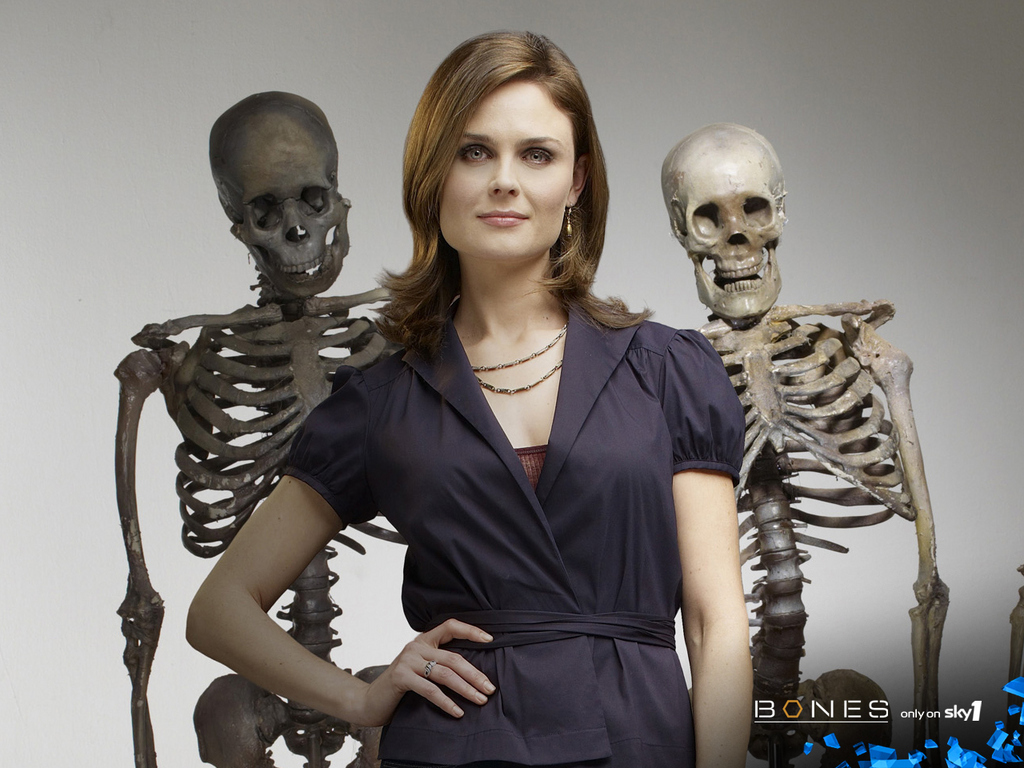
Looking at today’s television programming, the women are often the heroes (CASTLE’s Beckett, BODY OF PROOF’s Dr. Hunt, BONES’ Dr. Brennen) - is this female hero a new icon that deserves its own identifier instead of femme fatale? -- Elizabeth Amber

I think so. I think the female hero is actually a modern outgrowth of the doors opened by the femme fatales of the past. If it hadn’t been for tough dames who could hold their own against the men, often as equals, and sometimes as betters, who chose death or loss rather than being a traditional arm decoration, then the modern female hero wouldn’t have had such a strong foundation on which to stand today. But I also really don’t see these modern female heroes as femme fatales at all. In some cases, they may share traits with them, but they’re an entirely different animal. 

When I got the gig writing Gene Simmons' Dominatrix, I wanted to blend the classic idea of the femme fatale with the modern female hero. Dominique is clearly not a proverbial "good girl" -- no matter how she's drawn. Instead her root elements are gathered from the stock of the bad girls, the temptresses, i.e., the femme fatale. But she's the star of the show, and she plays second fiddle to no one, man or woman.  That alone disqualifies her from being a classic femme fatale. So what is she? Hopefully, if I wrote her like I intended, she's something different, something colored from both the fatale palette and the heroine palette, something that can step in both worlds, and confuse every opponent and "partner" she encounters.