Showing posts with label Comic Books. Show all posts

Tuesday, March 18, 2025

Writing for Comics -- A Basic Primer for Newbs


Over the weekend I was able to teach a class on basic comic book writing. I always love these classes, but I realized while I was speaking that I'd never turned this talk into an essay for the blog, so I'm remedying that now. 

As the cheerleaders say, "Ready? Oooo-Kay!"

The Pre-Writing

Rule number one. Read comic books. Whether you want to call them graphic novels, sequential storytelling, floppies, or the classic term comic books, you must read them. 

If you want to know how this particular medium works you must be well versed in it. Just like a screenplay or a stage play has its own set of rules, comic book writing has its own set of rules as well.

Whether you write full script or Marvel style (more on that further in) you still have to know the language of comic books. This is no different than knowing the language of fiction writing with its grammar, beats, dialog, characterization, setting, plot, theme, etc. In fact, all those things apply to writing comics too, but writing for comics comes with even more tools you need to learn. Panels, word balloons, thought balloons, narrative captions, internal monolog captions, page turns, etc. These are new and important concepts to learn to be able to effectively and efficiently write a script for sequential pictures. 

Rule number two. Think big. Your special effects budget is only limited by your artist's ability and your combined imagination. That interstellar battle you could never get a budget for in an indie movie or for a stage play, go ahead and write it. That hospital being attacked by giant cockroach creatures from a mythology you made up, no problem (I, in fact, did write this scene in Fishnet Angel: Jane Doe). Just do it, as Nike said. The sky is the limit. Your SFX bottom line is infinity. Period. (Unless your artist's hand cramps up.)

Remember your basics. You still need a story. You still need a story triangle with rising action, falling action, etc. You still need a beginning, middle, and end (even if you are writing a multi-issue with cliffhanger endings). You still need well developed characters. You still need a reason for the story and it needs to have something to say. Comics are no different than classic literature or Summer bestsellers that way. 

One last thing... and this part is going to sound like I'm arguing with myself. These two things sound like they're the opposite of each other. But don't be fooled. They're important. 

Here it is: Tighten your story. Now, once it's tight, let it breathe. 

Friday, September 27, 2024

After 15 years, Sean Taylor's script book, WARTS AND ALL, is finally back in print!

FOR IMMEDIATE RELEASE

​Atlanta, GA--After 15 years of being out of print, Sean Taylor's script book, WARTS AND ALL, is finally back in print!

The book collects all of Taylor's comic book scripts from The Shooting Star Comics Anthology, Gene Simmons' House of Horrors, All-Star Pulp Comics, and more. WARTS AND ALL also includes never-before-published comic book scripts. 


​"If I had a dollar for every time someone at my convention table asked me how to write a comic book script," Taylor writes in the foreword, "let’s just say I’d make a lot more money that way than I ever made getting paid to write." 

It's in that spirit he offers these scripts again after creating a DIY version he copied on a photocopier years ago and sold out of promptly. Partnering with Kindle Direct, this new edition will be available for the long run both in print and eBook. He will have them for sale on his convention tables and also via Amazon. 

Available in paperback and eBook

Sean Taylor writes short stories, novellas, novels, graphic novels, and comic books (yes, Virginia, there is a difference between comic books and graphic novels, just like there's a difference between a short story and a novel). In his writing life, he has directed the “lives” of zombies, superheroes, goddesses, dominatrices, Bad Girls, pulp heroes, and yes, even frogs, for such diverse bosses as IDW Publishing, Gene Simmons, and The Oxygen Network. Visit him online at www.thetaylorverse.com and www.badgirlsgoodguys.com.

​# # #

Friday, May 3, 2024

Jim Beard Read Every Issue of The Brave and the Bold… So You Don’t Have To!

Breaking Bold and Brave: A Fan's Journey Through One of Comics' Greatest Titles 

For immediate release

From 1956 to 1983 The Brave and the Bold stood as one of DC Comics’ core titles, a series that spanned multiple eras and popularized the very concept of the “team-up,” the joining of forces of superheroes, monsters, and more! It also introduced such superstars as the Silver Age Hawkman, Metamorpho, and the Justice League of America! It was a magazine like no other!

Now, writer-editor Jim Beard offers up observations and opinions on the book fans fondly call “B&B” as he journeys through every story, character, and creator of its legendary 200-issue run! Be prepared for fun, facts, and whatever strikes his fancy on a very personal and personable comic book odyssey!

Breaking Bold and Brave includes dossiers on all 200 issues of The Brave and the Bold plus Super DC Giant #S-16 and DC Special Series #8, as well as essays on many aspects of the book’s history, such as eras, editors, try-out team-ups, and, of course, Batman and Bob Haney! It also features a Foreword by comics legend and B&B scribe Paul Kupperberg and a Q&A with B&B writer Alan Brennert! B&B SEEING YOU!

Cover by Sean E. Ali

Interior Formatting and Design by Maggie Ryel

Now Live on Amazon

Saturday, March 16, 2024

Submissions now open for 9th Annual Dwayne McDuffie Award for Diversity in Comics

Deadline is May 25th, 2024 for comics published during the 2023 calendar year.


by Beat Staff

The 9th Annual Dwayne McDuffie Award for Diversity in Comics is now officially accepting submissions. As in previous years, the event will name one winner from five honored finalists, whose work resembles a commitment to excellence and inclusion on and off the page, much like the late Mr. McDuffie’s own efforts to produce entertainment that was representative of and created by a wide scope of human experience.

Read the official PR below for details:

The 9th annual “Dwayne McDuffie Award for Diversity in Comics” is now accepting submissions at dwaynemcduffie.com. The deadline is May 25th, 2024 for comics published during the 2023 calendar year.

With a selection committee of notable comic book professionals led by industry legend Marv Wolfman, this prestigious prize has grown exponentially in esteem since it was established in 2014 in honor of Dwayne McDuffie (1962-2011), the legendary African-American comic book writer/editor and writer/producer of the animated Static Shock, Justice League, and Ben 10: Alien Force/Ultimate Alien, who famously co-founded Milestone Media, the most successful minority-owned comic book company in the history of the industry.

Dwayne McDuffie: In His Own Words

https://www.gofundme.com/f/uc5ed-the-dwayne-mcduffie-fund

The slogan for the Dwayne McDuffie Award for Diversity in Comics is Mr. McDuffie’s own profound saying:

“From invisible to inevitable.”

Fan-favorite actor, Phil LaMarr, who worked extensively with Mr. McDuffie both in the title role of the animated Static Shock as well as the voice of John Stewart/Green Lantern on the animated Justice League, had this to say about his perennial involvement with the DMADs:

“I am part of the DMADs because of gratitude. I am thankful that Dwayne McDuffie’s amazing skills made me enjoy being a comic book nerd and also gave me the opportunity to be a comic book hero! But even more importantly, Dwayne showed us that diversity is about equity and also about excellence. When you widen the available perspectives of characters, stories and creators in an industry, you make it better! That is why we are committed to honoring this genius and keeping his legacy going.”

Continuing as Director of the Dwayne McDuffie Award for Diversity in Comics is Will J. Watkins, who emphasized the importance of the DMADs to emerging talent:

“In a time of such cultural division, political extremism and unapologetic intolerance, I’m elated that comic book creators can once again submit to this award that represents what Dwayne stood for: inclusion, compassion, and the highest quality of storytelling.”

Mr. McDuffie’s widow, Charlotte (Fullerton) McDuffie, reminded us of the significance of representation in all its forms, embodied by this award:

“The DMADs shine a spotlight on creators who represent diversity on the page and/or behind the scenes, who might not otherwise garner industry attention. As Dwayne stated often, diversity means ‘all kinds of people’—men, women, non-binary, big, Little, disabled, every different race and creed, and any combinations of the above, plus more! If you’re a human being, you are eligible and welcome to submit your inclusive work.

We look forward to seeing it all!”

PAST WINNERS

2022 – Ripple Effects
Written by Jordan Hart
Illustrated by Bruno Chiroleu

2021 – Adora and the Distance
Written by Marc Bernadin
Illustrated by Ariela Kristantina

2020 – They Called Us Enemy
Written by George Takei, Justin Eisinger & Steven Scott
Illustrated by Harmony Becker

2019 – Archival Quality
Written by Ivy Noelle Weir
Illustrated by Christina Stewart

2018 – Leon: Protector of the Playground
Written & Illustrated by Jamal Nicholas

2017 – Upgrade Soul
Written & Illustrated by Ezra Clayton Daniels

2016 – Ms. Marvel
By G. Willow Wilson and Adrian Alphona

2015 – M.F.K.
By Nilah Magruder

2024 SELECTION COMMITTEE

Colleen Doran is a cartoonist, writer/artist whose works include the multi-award winning adaptation of Neil Gaiman’s Snow, Glass, Apples, as well as Gaiman’s Chivalry, Norse Mythology, and American Gods, and art for The Sandman, The Vampire Diaries, multiple Wonder Woman titles, and hundreds of other comics. She also illustrated Stan Lee’s New York Times best-selling autobiography autobiography Amazing, Fantastic, Incredible Stan Lee. She writes and draws the space opera series A Distant Soil. Among her numerous awards and nominations are Eisner awards, the Harvey Award, The International Horror Guild Award, the Ringo and the Bram Stoker Award.

Heidi MacDonald is the editor-in-chief of Comicsbeat.com and has edited comics for Disney, DC Comics, Vertigo, HarperCollins and Z2. She can be heard on Publishers Weekly’s weekly podcast More To Come and found regularly on the Beat’s YouTube channel.

Jamal Igle is the writer/artist/creator of Molly Danger for Action Lab Entertainment, the co-creator/artist of The Wrong Earth for Ahoy Comics, co-creator of Dudley Datson and the Forever Machine for Comixology, and the penciller of the critically acclaimed series, BLACK from Black Mask Studios, as well as many titles for DC, Marvel and Dark Horse. He’s been a storyboard artist for Sony Animation and is also a popular guest lecturer on the subjects of comics and animation.

Kevin Rubio is a writer/producer who has contributed to Justice League Action, Avengers Assemble, Thunderbirds Are Go!, Green Lantern: The Animated Series and My Little Pony: Friendship Is Magic. He is also the creator and writer of the Star Wars graphic novel, Tag & Bink Were Here, and Red 5 Publication’s Abyss Vol. I & II. He is an inaugural recipient of the George Lucas Film Award for his Star Wars short film, TROOPS, is a Promax Award winner, and is an Emmy nominee.

Geoffrey Thorne is the writer/creator of Mosaic for Marvel Comics and the writer behind the transformation of DC Comics’ John Stewart from Green Lantern to the Emerald Knight. He was also the head writer and showrunner of Marvel’s Avengers: Black Panther’s Quest as well as a writer, producer and co-executive producer on such hit series as Leverage, Law & Order: Criminal Intent, and Power: Book II: Ghost. He is the executive producer of the hit sci-fi/fantasy audio drama series Dreamnasium and of Redjack: the Animated Shorts on YouTube.

Eric Wallace is a Saturn Award-winning writer/producer/director responsible for projects in almost every media imaginable, including the animated series Ben 10: Omniverse and Duel Masters; helping to revive the gothic soap opera Dark Shadows on audiobooks with the original cast; contributing to the Scribblenauts videogame franchise; and writing for DC Comics on multiple titles, including the award-winning Mr. Terrific. His live-action credits include the Syfy Channel’s Eureka, followed by Z Nation, Teen Wolf—which featured his directorial debut—and most recently as Showrunner and EP of CW’s The Flash.

Matt Wayne has written for many highly-regarded animation projects, including Samurai Rabbit: The Usagi Chronicles, Cannon Busters, Niko and the Sword of Light, the Emmy-nominated Hellboy Animated: Sword of Storms, Hello Kitty: Supercute Adventures and most recently, Iyanu: Child of Wonder.  His comics work includes Batman: Legends of the Dark Knight, Static/Black Lightning, and writing and editing for the original Milestone Media comics line.

Will J. Watkins (Director of the Dwayne McDuffie Award for Diversity in Comics) is a freelance TV, film and animation writer who is also comic book story/world-building consultant on The Protectors graphic novel published by Athlita Comics. He had a stint as an assistant editor at DC Comics and, before moving to LA, he co-owned Chicago’s first African-American-owned comic book shop. He was a writer on Freeform’s Motherland: Fort Salem and most recently worked on a TV show adapted from a BOOM! Studios comic book.

Marv Wolfman is the multi-award-winning writer who created Blade for Marvel Comics, The New Teen Titans for DC Comics, and legions of other iconic characters and stories. In addition to comic books, he’s written for animation, videogames, novels and more. It’s been said that he’s created more characters who’ve made the jump to movies, TV shows, toys, games and animation than any other writer save Stan Lee.

See original post: https://www.comicsbeat.com/submissions-now-open-for-9th-annual-dwayne-mcduffie-award-for-diversity-in-comics/

Thursday, January 11, 2024

For What It's Worth: Random Thoughts on Comics

Saw a sarcastic post this morning (not calling anyone out by name though, so don't ask) saying that since a major pop culture staple was on the way out (Funko Pops, though I don't agree, still see them all over the place), maybe the next comic book store trend to save the LCS should be... comic books. 


It's a great thought, but let's be honest. Comic books, particularly monthlies, will never save the LCS until there's a major overhaul in several things:

  1. Distribution 
  2. Cultural perception (IP mines, either for kids or for "mature" as in dirty, not as in regular adult-focused literature)
  3. Format to make them more evergreen (which manga and big primarily non-comic YA and tween pubs are doing well)
  4. Getting over the reliance on the serial model of monthlies
  5. Cost-to-value ratio (see comment about evergreen above)
  6. Getting over the "sell for a college education one day" collectible mentality
Appreciating and building devices for digital comics as an equally valid way of enjoying the books.

Now, I know a lot of folks who still see comics the same way they did in the Silver Age and early Modern Age will disagree, but sorry, the world has changed. The landline is dead, replaced by pocket communication computers. Let the old way of doing comics die and be reborn as something better too. Don't let nostalgia get in the way of the medium being able to grow from Homo Sapien to Homo Superior (to borrow the X-Men metaphor).

Tuesday, July 12, 2022

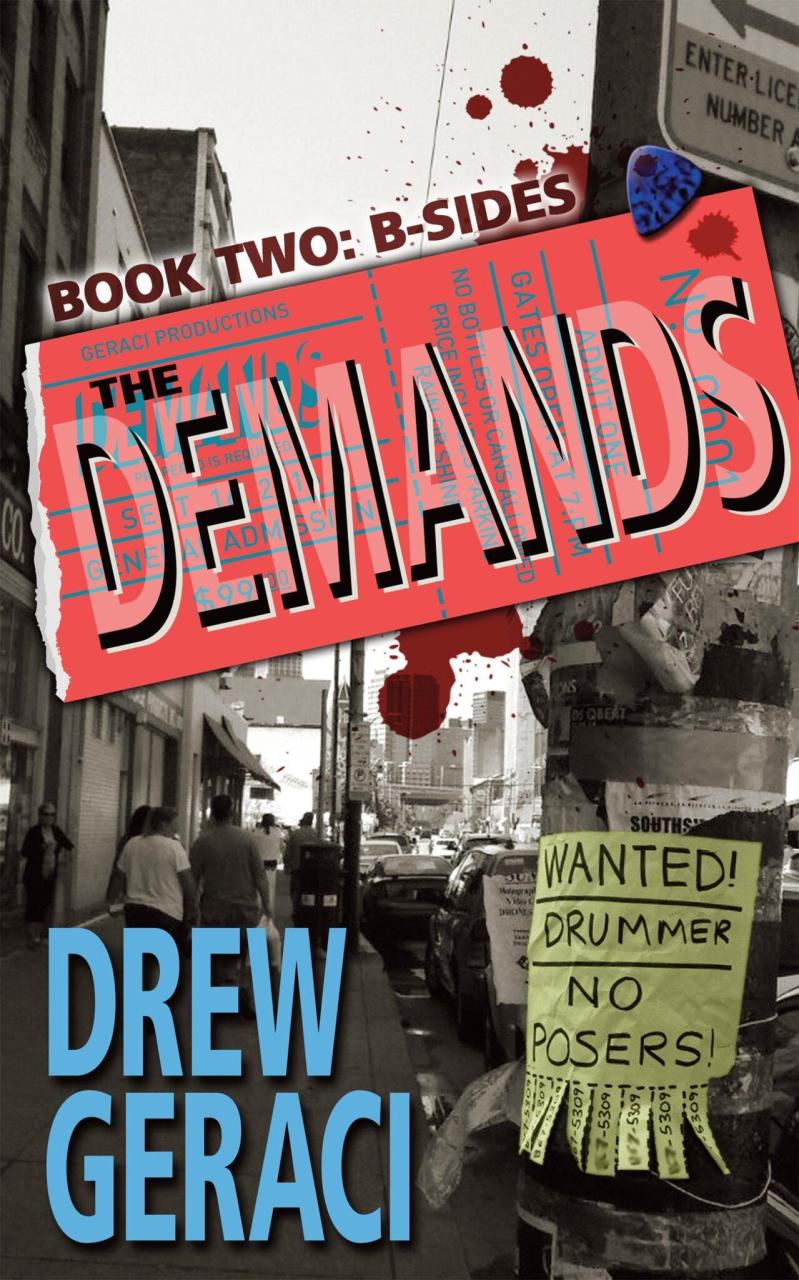
Drew Geraci Is In Demand(s)

For the past two decades, Drew Geraci has been an inker/artist for nearly every notable comic book publisher in the market. I met him in Chicago at the Wizard World Convention there years ago, and we've kept in touch a bit over the years. So when he became a novelist as well, I figured it was time to showcase him here on the blog. 

Welcome, inkslinger cum wordsmith Drew Geraci!

Tell us a bit about your latest work.

I just finished my third novel in my prose series The Demands. It’s titled The Demands Book Three: Stagedive

What happened in your life that prompted you to become a writer?

Initially, comic books, which I discovered age 7. I was so hooked, when I’d run out of comics to read, I began writing and drawing my own. Granted, they were crude, but trying to reverse-engineer storytelling in comics lit a fire in me to create my own stories. Then came prose novels of Marvel characters in the late ‘70s. It was a gateway for me to read non-comics-related novels. One Flew over the Cuckoo’s Nest, Earth Abides, even some of my Grandma’s Agatha Christie novels.

In my teens, I lacked confidence that I would break into comics. Years later, during the comic book speculator era of the early 90s, the bar had been lowered significantly. Comic companies flooded the market so you’d see painfully amateurish work written and drawn by anyone with a pulse. Good comics were greatly outnumbered by very poor knockoffs. Breaking into the industry actually became real to me. I became an inker (ink media artist) at DC Comics. Over time, I applied my discipline to writing. Now that I’m older, I like to think I have a better understanding of how human nature works and try to be more observant.

What inspires you to write?

Fun, with a healthy dose of hunger and fear. A lot of it is therapeutic, an outlet to express all flavors of moods. I’ll come up with a crazy or heartfelt situation and let the characters take it from there.

What are the themes and subjects you tend to revisit in your work?

Ambition that flies in the face of common sense. My main protagonist, Laney Kilburn, has the conceit of youth, with energy and smarts to spare, to become an international rock star in the age of beautiful pop stars singing committee-made, homogenized guaranteed hits.

Similarly, there are other characters fueled by ambition, including mobsters who want to climb the ladder to be Top Dog. It would involve a lot of deceit, intimidation, and murder to take out the competition.

What would be your dream project?

It used to be writing comics, particularly the older characters from the 60s. Now, I would want to see The Demands as an ongoing series on HBO or one of the many streaming services.

What writers have influenced your style and technique?

Definitely Mike Baron. Growing up reading both Nexus and Badger comics, I found them fresh and exciting, a welcome departure from the usual comic writing. His characters don’t overreact with melodrama. He has a flair for the absurd that doesn’t take you out of the story. He keeps it straight, not winking to the readers with a ton of footnotes added. It was a total trip to discover this brand new style of comics writing.

Ray Davies of The Kinks is another major influence. He’s one of those songwriters who can write Power Pop with acerbic wit, social commentary and/or humor. He can write sentimental ditties. Also, songs like "Celluloid Heroes" can make you cry. Maybe the most rounded pop music writer ever, even more than John and Paul, who I love of course.

If you have any former project to do over to make it better, which one would it be, and what would you do?

Talk about timing! I’ve taken a step back to revise my second novel, Book Two: B-Sides. I’m making it far less clunky so it flows better. The story won’t be altered but it desperately needs cleaning up. The first two books make me cringe because I hadn’t learned the #1 rule of writing prose is “Show, don’t tell.” I’ll be reworking/improving Book One as well. Then I’ll take a nap.

Where would you rank writing on the "Is it an art or it is a science continuum?" Why?

Skill vs. Talent? I think any form of art, especially commercial art, you can’t be taught unless you have the skill to build upon. The common phrase I hear when someone finds out I’m an artist: “I love your work, I can’t draw a straight line” is a sincere statement. I graduated from the Art Institute of Pittsburgh and I observed who was in it to win it and who was just treated it as a hobby.

What is the most difficult part of your artistic process?

It can get very lonely because I have to have silence to write. I can’t even play instrumental music because it’s distracting. Also, I occasionally paint myself into a corner and it takes several rewrites of a chapter to make it right. If not, I simply delete the entire chapter forever and write a better one.

How do your writer friends help you become a better writer? Or do they not?

This sounds snobby but I almost exclusively take input from established pros. Pros with a history of selling books. When you hang with just your friends, you get encouragement but that’s about it because none of them have succeeded in that trade yet. I’m fortunate to have made friends with Chuck Dixon, Mike Baron, Bobby Nash, and John Morgan Neal. You don’t have to have pro-writer friends. Writers are always generous about sharing. Learn from the best or you’re just spinning your wheels.

What does literary success look like to you?

Frankly, sales. I want more people reading my books because I write them to entertain others, not just me because otherwise, it’s simply self-indulgence. I feel that I have a strong hook for my novels. It’s easy to self-publish via Amazon but it’s a double-edged sword because I have to somehow find a wider audience in a sea of new authors.

Any other upcoming projects you would like to plug?

I’m still doing private comic book art commissions.

For more information, visit: drewgeraci.com

I’m also on Facebook and Instagram. My site for The Demands includes teaser chapters and more (at drewgeraciauthor.com).

Tuesday, April 19, 2022

Top Ten Vertigo Series Most Ripe for TV or Movie Treatment

I know superhero comic book movies are all the rage now, but with so many streaming services looking to develop original material, I figure there's no time like the present to mine the glory of Vertigo's primo series that defy the superhero tropes and gimmicks. So, here is my list of the top ten Vertigo series that should become TV series or movies.  

Transmetropolitan


This mind-warping series from Warren Ellis broke brains all over the reading public with its prophetic look at the role renegade journalism needs to play in standing up to the powers that be. Information as currency. Narratives as truth. Facts as malleable. It's scary how prescient Ellis was with this one. 

Punk Rock Jesus

What if scientists cloned Jesus Christ and created a reality show around the idea? What if the new Jesus wanted to be more than a patsy or symbol for his corporate owners? What if he really identified with the punk aesthetic?

The Invisibles

Everything is a conspiracy. Grant Morrison perfectly captured the post-postmodern zeitgeist in this one. 

American Virgin

A beautifully irreverent story of how belief can be a problem, a solution, and something that changes as humans grow into better people. 

Coffin Hill

Cops and horror. A classic combination. Throw in some Gothic family secrets and this one could be the next season of Hill House or Bly Manor... easily. 

The Crusades

This one totally deconstructs the idea of a costumed antihero by putting an actual armored knight in the urban blight and having him dish out Batman and Punisher style justice. But is he crazy?

Death: The High Cost of Living

There's really nothing more that can be said about this one. Death takes the day off to appreciate the joys of life. Neil Gaiman's magnum opus, this one. 

House of Secrets

Perhaps my favorite work by Steve Seagle. I love how this series updated the old horror anthology book by exploring the idea of secrets and how they affect the intrinsic sense of justice and our own ideas about justice. And can even the ultimate judges be biased? Plus it has one of the coolest art styles I've ever seen. 

Angeltown

Black detective drama (both racially and tonally) that pretends to be hard-boiled but comes off far more noir than at first glance. Some of Gary Phillips finest work. 

Effigy

A former child star is disgraced over a sex tape. She becomes a cop, but her past won't stop following her. Then people start to die and it looks like it ties into the series she starred in all those years ago. 

Saturday, March 26, 2022

[Link] Gold Key, the Original Star Trek Comic Book Publisher, Revived Under New Ownership

by Brandon Schreur

Gold Key, the first company to publish Star Trek and Twilight Zone comic books, is under new ownership and is now poised to make a major comeback.

The Spec Tales podcast interviewed Lance Linderman, a comic book enthusiast who purchased Gold Key -- now operating under the license Gold Key Entertainment LLC -- alongside Adam Brooks, Mike Dynes and Arnold Guerrero in late 2021. "The more I thought about it, I was like, you know what, if I could acquire Gold Key, that gives me a front of the door entrance to whatever meeting I want -- maybe not whatever meeting I want, but it gives me a really good step into the industry to have conversations with people like you guys and other people in the industry," Linderman said of the purchase. According to Linderman, the final acquisition for the company included not only cash but also a comic book -- Teenage Mutant Ninja Turtles #1.

Since the purchase, Linderman said Gold Key is mainly focusing its attention on two different areas. The first involves finding working and talented creators within the comic book industry. "We have a writer and we have some artists we're talking to," Linderman said. "I can't say the names of those people, yet, but some of the names [are people] you guys are definitely aware of... As much as we recognize the value of getting a big name, we're really more interested in pulling a bit of a passion play. We're kind of going after the names of people we collectively really love and respect, also. There are still some big names in that pool, but it's not like I'm going after just the biggest guy right now -- although, they're all really talented. We're kind of sitting and [looking at] who we've read, looked at and think could illustrate stories in a way that's really thoughtful and angular."

Read the full article: https://www.cbr.com/gold-key-comics-new-ownership/

Wednesday, March 16, 2022

Movie Reviews for Writers: She Makes Comics


Some movies tell stories. Some movies teach. Some movies inspire. Some movies really (we're here to) pump you up. And some fortunate flicks manage to do all of that. 

While being a straight-up documentary, She Makes Comics is also the biographic story of the changing role of women in an industry that is largely considered THE home of the adolescent male fantasy trope.

I'll admit I haven't reviewed a lot of documentaries for this series of movies about authors, but so many of them suffer from being so scholarly that they don't really hit the proper cylinders for the mass market viewer. Well, this one overcomes that potential pitfall admirably. In fact, the director, Marisa Stotter, actually addresses than in an online interview with Bleeding Cool: 

"The trouble with a documentary that tries to span a long period of time is avoiding the 'classroom movie syndrome,' where you're throwing a lot of facts at the viewer and little of it has any emotional resonance. So we tried to find the middle ground between demonstrating the breadth of women's involvement in comics and highlighting particular women's stories that we felt were representative of the major milestones of comics history."

The real beauty of this documentary is not that it just has something to say not just about (and for) writers but about (and for) readers as well. In fact, historically, prior to the comics code pretty much reducing comics to a single market -- super heroes -- the readership was about 55 percent female. Quite an accomplishment. Now, that's a time when comics might be anything from westerns to sci-fi to horror to crime to romance to, yes, even superheroes, and women enjoyed them as much as men. The advent of the comics code pretty much wiped out a lot of the non-costumed hero books (either for being unsavory with all that kissing or all those creepy ghoulies and those violent goons with guns), and with them went that high percentage of female readers. 

Of course, that started to change again when a certain young editor, Karen Berger, climbed the ladder at DC and was allowed to start her own imprint, Vertigo Comics, for the company, an imprint renowned for opening its doors for more diverse topics and creators. 

And since then, the market and comics publishing world has continued to change and be a lot more welcoming to female artists and writers and editors. 

All the greats you'd expect are here: Louise Simonson, Trina Robbins, Kelly Sue DeConnick, Gail Simone, Marjorie Liu, Karen Berger, Jenette Jahn, Colleen Doran, Amy Chu, Jill Thompson, Wendy Pin, Nancy Collins, Ramona Fradon, G. Willow Wilson, Ann Nocenti, Felicia Henderson, and more. Their stories are tales of struggle, tales of endurance, and most important, tales of triumph. 

If there's a writer's theme to this film, it's this -- persevere. Stick it out. Chase the dream. Even when -- no, especially when -- the whole world stands against you and tells you it's pointless. 

Without women who chose to live that theme, well, this documentary wouldn't exist, and neither would so, so, so many of the industries favorite titles and characters. 

It works for comic books. And it works for major publishing houses. And it works for mid-size and indie houses too. 

It works for women. But it also works for all disenfranchised writers. Even you guys who can't get a leg up. It's not a gender thing. It's a keep at it thing. Write. Write some more, and then when you feel it's not getting you anywhere, keep at it and write even more. 

She writes comics. But you write what you write. And it'll take perseverance from you too, my friends.

Saturday, March 5, 2022

[Link] AMC Networks Publishing launches with graphic novels, Stephen King, Kirk Hammett and more

by Heidi MacDonald

As long as I’ve been writing the Beat, I’ve heard rumors of TV networks starting their own comics lines to cheaply (sorry) generate IP in-house.  (Remember when Netflix was going to start a comics line because they signed up Millarworld?) It’s never quite happened that way yet, but AMC Networks Publishing might just be the closest thing yet – a publishing spin-off of the network that will put out fan-friendly, genre-forward specialty books, comics, original graphic novels and more.

The line is headed up by publishing veteran and Head of AMC Networks Publishing Mike Zagari, who worked at Marvel, DC, Disney and Aftershock before moving over to AMC, so he certainly knows the territory.

Upcoming projects include several comics, a graphic novel and a coffee table book, in partnership with talents like Kirk Hammett, Brendan Fletcher, Greg Nicotero, Stephen King and many more.

The first AMC publishing venture was a coffee table book, The Art of AMC’s The Walking Dead Universe, published in partnership with Image Comics and Skybound. The new AMC Publishing output will have various print partners, including Titan Books and Every Cloud.

“We’re excited to launch this new initiative with talented creators, writers, artists and storytellers to further engage our passionate fanbases with the stories and characters they love, as well as open the doors to discover new and compelling worlds,” said Zagari in a statement. “From deeper dives on AMC’s The Walking Dead Universe, Shudder’s Creepshow and Acorn TV’s Miss Fisher, to a brand-new collection of fantasy and comic-based tales from Kirk Hammett, Marcel Feldmar, Brenden Fletcher and more, we can’t wait to entertain and thrill our audience and fans in new and innovative ways.”

The line-up...

Read the full article: https://www.comicsbeat.com/amc-networks-publishing-launches-with-graphic-novels-stephen-king-kirk-hammett-and-more/

Thursday, February 10, 2022

Boring -- The Unforgivable Sin

by Gail Simone

I have some pretty stern ideas about what makes a good superhero comic, but the one felony, the one unforgivable sin, regardless of style or talent level,  is being boring.

If you can make two superheroes getting coffee fascinating swell, go do that. But a lot fewer people can do that than the number who THINK they can. 

However, the same thing applies to your giant fight scene. It’s not automatically fascinating just because two dudes with laser punches or atomic jockstraps are smacking each other around. The onus is still on the creative team to put some jam in that sandwich. And again, thinking and doing are different matters entirely.

The greats out there, the lasting pros that I admire most, they make it look easy, so we extrapolate that it IS easy, and then we realize that X-Factor, that thing they bring, is not exactly automatic.

Shoot for the three point, shoot from mid-court. You may not swish it, but it’s a hell of a lot more fun to watch. 

That’s my advice as a writer, but even more importantly, it’s what I want as a READER.

If you’re writing comics, bring some hot sauce, for Pete’s sake. No one ever looked back on their superhero comics and said, “I wish I’d made them more boring.”

Used by permission of the author. 

Tuesday, September 21, 2021

Geek Culture: Leading the Way AND Pulling Us Back?!


Sadly, I think geek culture may be the last hold out for the old "we want our women to look nice in this office" and "he's one of the good ones" and "get back in the closet" white boys' club, since we've had it that way so long in our comics. 

Ironically, geek culture is also helping to lead the way out of that boys' club with its current forward momentum on inclusion and showcasing heroes across racial lines and gender spectrums.

Of course, with every step we take forward there's somebody with a sign saying to stop putting our agenda in their comics. First, getting better as people isn't an agenda, it's a society's goal, last time I checked. Second, those are their comics; they belong to all of us who read and watch the things they inspire, and they've been in the hands of those who would resist growth for far too long.

The latest social media hoohaw about the costume change for Faye Valentine really just drove it all home for me. All the creators of the live-action show did was slightly alter her costume to make it work for a real-live woman who is supposed to be a true ass-kicker. But then some of the anime fans lost their shit because either (a) the costume wasn't just like the animated version (I can see your point, but c'mon, don't these costumes need to work in real life if you do a real-life show with real-life actors?) or (b) the costume didn't portray Faye as the dream fantasy wank material that whiny, horny, entitled fans wanted her to remain (to which I say, please grow up and understand that women, even drawn and animated women, were not put her solely for your eye candy). Though, to be fair, even in the new costume for the live-action show, Daniella Pineda is super sexy.  

Anyone remember the uproar when Wonder Woman got pants and "fans" went nuts because they believed it was their God-given right to see Wonder Woman's butt in bathing suit armor because the world owed it to them... or some equally asinine reason?

How 'bout when the gawky version of the new Wonder Girl created by John Byrne suddenly became "hot" and blossomed into a model -- because, as we all know, superheroines can't be flat-chested. It's a fantasy! They're supposed to be built like fit porn stars. (Right? And so are the men by the same fantasy argument, but ironically, not for the female readers. Instead, because that's how every American, red-blooded male is trained to see himself since birth, well, all the normal ones anyway.) 

I can almost hear -- We are the white, straight men, and we are tired of all you, well, other people who are not white, straight men telling us there are problems with the way we ran the world (and by extension, the entertainment industry). Stop insinuating we were ever doing something wrong. Stop changing things. We want our women to look sexy and appreciate our leering or at least realize that when we stare at their ass or their boobs or their legs, it's really a compliment and they should be thankful we think they are attractive (like they're supposed to be). We want our heroes to be white and musclebound and to have women flock to them in appreciation for being saved. (It matters not that we have now or ever looked like those strapping young shark killers or Nazi smashers on the covers of Men's Adventure magazines.) 

We see ourselves as King Conan with the women who adore us at the feet of our throne. Funny how Conan looks so much like our goal rather than a dark-skinned man. I mean, sure, give him a tan from all that walking from ancient land to ancient land, but not too much. He's not Middle-Eastern or African or from the indigenous peoples of South America. We created an ancient land of whiteness just for him. And if we ever need a person from one of those lands, we'll just "Iron Fist" it or "White Goddess" it and put a Caucasian who was orphaned there and grew to become the tribal hero or village leader or chosen one. 

We are Luke Skywalker atop the triangle with Leia gripping our leg for safety. Can't we have our one last bastion of male power fantasy where white guys still run the world and women love us, and we can be benevolent leaders to our sidekicks and B-players (where all the "good" multicultural characters are supposed to be?

It's like I'm hearing the same message through all the bumper stickers, op-eds, whiny complaints, conversations on social media, or griping over the comic book store counter. 

That message?

"Why are all the major heroes now black or Latinx or gay or women and not being relegated to the sidelines as sidekicks and B-listers like they used to be? Where are all my white guys going? We resent all our white guys suddenly having to take the sideline roles to make way for other folks. And why do the females character have to hate 'real men' so much?"

I haven't done the research on this other than by simply watching TV and movies and reading comics, but I'm pretty sure the truth still is that if you counted heads, the comics and entertainment industry remains predominantly represented by white straight guys in main roles.

In spite of the complaints about women finally getting to lead films without having to be romantic partners, in spite of black actors finally getting to play parts that haven't been traditionally black or characters who "aren't black in the source material," in spite of LGBTQIA+ roles no longer having to be the token gay for comedic distraction or over-the-top flameliness, in spite of all that, the bulk of the entertainment world hasn't really changed. Count the characters and do the math. 

But it's Captain American! But it's Superman! But it's... !

They're not supposed to be at the top of the triangle. 

There's the rub. Don't take our icons. Our white straight icons. Go create your own. These are my toys. 

No, they're not your toys. They never have been. And so what if we finally have a black Superman or a trans Flash or a black Captain America or a female Captain Marvel or a Muslim Ms. Marvel or a bisexual Robin. Do the math. The straight, white guys are still way ahead and still by and large write all the checks. 

But that never stops folks from arguing that they're having an agenda "shoved down" their throats. But to be fair, that sounds like a story I've heard before... 

Back in the days of emancipation, white landowners didn't want the anti-slavery agenda shoved down their throats. 

Back in the days of Irish immigration, citizens didn't want the "Irish are citizens too" agenda shoved down their throats (and they were white too!) 

Back in the days of suffrage, men didn't want the women's voting agenda shoved down their throats. 

Back in the days of desegregation, whites didn't want the black agenda shoved down their throats. 

Back in the days of equal rights for women, men didn't want the feminist agenda shoved down their throats. 

And now, folks are quick to jump on the train that they are having the LGBTQIA+ agenda shoved down their throats. 

They were wrong then, and they are wrong now. 

And they never stop to think about the years of having white, straight, patriarchal culture shoved down the throats of others. As if one is "normal" and the other is "other than normal" and needn't be presented as such. But there's another word for that -- default. For far too many, the default culture is the one of the white straight patriarchy and it's perfectly fine to have your little "representation" as long as it doesn't intrude on the "normal" or the default culture. 

You see, the thing is that by "agenda being shoved down our throats," what they mean is "we don't want to have to acknowledge your right to representation" and "we don't want to see you showing up on our shows and in our comics" and "we don't want to actually have to see you as people IF it forces us to confront nasty realities we'd rather avoid."

But here's the real, five-dollar deal for you. 

If you have a virtual highlighter you might just want to put this in yellow. 

Ready? 

Just having greater representation in the publishing and entertainment world isn't trying to shove an agenda. It isn't. It's trying to make us a better people, better citizens, more welcoming and loving individuals. It's trying to make our published entertainment look more like the world outside our doors and give all people someone with whom they can identify in the entertainment they see. It's trying to help all people of any race, nationality, gender, spectrum, feel like they belong in America (and by extension, existence). It's trying to help all people feel they matter and are important. 

And if you still want to call that an agenda rather than progress up the scale of what it means to be a better human, then I really feel sorry for you. 

Sunday, May 30, 2021

[Link] SIMPLY COMPLICATED, OR WHY COMICS AREN’T ALWAYS WHAT THEY SEEM

by Eileen Gonzalez

“Sometimes, it’s nice to watch something simplistic,” a relative of mine remarked after we had rewatched The Harvey Girls, a 1946 movie musical starring Judy Garland. This comment caught me by surprise, because I didn’t view The Harvey Girls as simplistic at all. Its emphasis on marriage as a (good) woman’s ultimate goal, its villainous depiction of women who are not as devout and virginal as the Harvey Girls, and its reverse Grease ending all promote a particular kind of message that was sanitized and approved by a particular kind of person for a particular kind of audience.

I could go on about the social messages in classic Hollywood musicals, but since this is Book Riot and not Movie Riot (for the record, I would totally write for Movie Riot, too), let’s shift the conversation to another medium that people often think of as “simplistic.”

In some ways, comic books have gotten progressively more complex since they first assumed modern form in the late 1930s. They learned to tackle more serious subject matter and built up an ever larger, ever more convoluted continuity. In the ’60s, if I said I read X-Men comics, you’d know immediately which book I meant: X-Men. Now, I could mean X-Men, X-Factor, X-Force, X-Men Gold, X-Men Blue, New Mutants, and probably some other teams I’m forgetting. Meanwhile, if I try to find a particular Hawkeye comic, I am confronted with Hawkeye, All-New Hawkeye, the other All-New Hawkeye, the other Hawkeye…you get the picture.

So, yes, the comic book industry was more straightforward back then. So were the comics. But they are simplistic in the same way The Harvey Girls is: lots of bright colors and fluff to make the social norms go down.

Whenever a hero meets an alien race, that race is generally either monstrous or white people. The Skrulls and the Kree, Marvel’s best-known alien rivalry, exemplify this. The Skrulls are lizard-like creatures with pointed ears and green skin; the Kree look like suburban dads in Star Trek cosplay. Earth’s future was depicted in the same way: when Superboy travels to the far future with the Legion of Super-Heroes for the first time, they meet nothing but white people and generally act like this is an episode of Leave It to Beaver. They even take him to an easily recognizable ice cream parlor, for crying out loud.

Read the full article: https://bookriot.com/simplistic-comics/

Thursday, May 20, 2021

Justin Gray: Wider Nets, Mixed Bags, and Creative Freedom

I've known Justin Gray for a long time. Like, I'm old and stuff, but I've known this guy since way back in my Cyber Age Adventures Days. Like I said, a long time. He had the goods then, and history has proven that he still has them now. Whether you know Justin from his prose or comics work, I figured it was long past time he sat in the hot seat here at the blog. 

Tell us a bit about your latest work. 

I am currently working on multiple creator-owned and self-publishing ventures including Spicy Pulp Comics, an adult-themed sci-fi fantasy anthology, Standstill a survival horror comic that takes place after a global pandemic paralyzes most of humanity, and a five-issue miniseries called Billy the Kit about a tornado god killing rabbit in the old west. 

What happened in your life that prompted you to become a writer? 

I think I’m kind of a cliché in many ways, shy kid, broken home, rich fantasy life, the same ingredients that make serial killers only I wanted to tell stories. Some of it might be in reaction to feeling helpless as a kid, wanting to have control of the world around you when you’re young is an interesting struggle. I wanted to escape reality quite a bit and first found that escape in comics. Unfortunately, I am not a good enough artist to illustrate what I see in my head. As a result, I turned to writing. 

What inspires you to write? 

Almost everything can impact me that way, but inspiration is fleeting and fickle and unpredictable, so what I do is set aside the same time every day to write. This lets my brain know it is time to shift into a specific mindset. Not every day is productive, but I know if I sit down and make a habit of it then I am more likely over time to be productive. Real life is always a great source of inspiration, but I also draw it from books, music, and films. 

What are the themes and subjects you tend to revisit in your work? 

I am fascinated by many things and tackle many genres. One thing that stands out is what happens when the structure of society is stripped away, and people are free to make moral choices without social watchdogs. I like confronting horror in human behavior, with a book like Standstill where there are only the rules, we place upon ourselves and what we can live within our choices be they good or bad. I also like escapist fantasy where the only point is to go somewhere impossible and do impossible things. 

What would be your dream project? 

Fortunately, in the last few years of doing my own work has been the dream. At this point it is less about writing what interests me which I’m so lucky I can do because of Kickstarter, but I would like to reach a wider audience and at a level where I can focus exclusively on being creative. 

What writers have influenced your style and technique? 

The answer to this is an ever-evolving list involving literary greats, songwriters, and contemporary writers in and out of comics. I’m always very excited to see someone innovative doing things within any given medium. A lot of non-superhero comics over the last couple of decades have been enamored with TV and film as an endgame. I get it, I’ve been there, honestly, there a lot more money outside of comics, but there is something to be said about maintaining the integrity of comics as what they are. I try to approach each book differently and apply a different tone and voice to them. It doesn’t always work that way, but I try, nonetheless. 

If you have any former project to do over to make it better, which one would it be, and what would you do? 

Looking back is very difficult for me. I tend to want to keep moving forward rather than revisiting material from the past. I can certainly reexamine past work and be honest in my assessment that it wasn’t as good as I wanted it to be or that it could be greatly improved. For example, Random Acts of Violence was adapted as a film, but it was also 10 years after it had been written and there are several things I would have changed and done differently. If the film didn’t exist it is unlikely, I would have reread the comic. When I did I saw plenty of opportunities to take it in a more compelling direction and some of that is a result of what Jay Baruchel did in the film. 

Where would you rank writing on the "Is it an art or it is a science continuum?" Why? 

That is an interesting question. I think of writing as a craft something you build with very specific tools. You are an architect of the imagination building worlds that can be viewed through many sets of eyes and many different personalities. It is my hope to get into people’s heads and take them somewhere that causes an emotional reaction of some kind. I guess you could say there is a science to it and an art to it. Science to me is more formulaic and art is more subjective. Somewhere in there, I look for the most organic way to reach the reader. 

What is the most difficult part of your artistic process? 

It varies. There are days where I have this uncontrollable dread, a panic that whatever I am doing is both terrible and a complete waste of my life. This is a thing that is so unsettling I immediately must shut it down or it will grow out of control. The creative process itself is enjoyable because if I hit a wall or feel empty on one project, I am almost always working on something else that is completely different in one and style. This gives one project room to breathe. The most difficult is 75% of what I do is not creative it is building graphics, packaging, and shipping products, wrangling projects, artists, colorists, making sure I’m in contact with the people that read and support my work. I might sit down and write every day during the creative process, but when that is done, I know I have at least 3 months of production ahead of me before that writing is realized in its final form. 

How do your writer friends help you become a better writer? Or do they not? 

I spent several years collaborating with Jimmy Palmiotti and that was a great experience where I learned a lot about making comics. We had a very symbiotic relationship. Darwyn Cooke and Garth Ennis gave me a lot of insight into the creative process from a perspective of just being friends which is different from being collaborators. Although I did obviously collaborate with Darwyn on a few projects. Deconstructing other people’s work is invaluable regardless of if they’re friends or not. For me though, I don’t maintain a lot of industry friendships, most of my circle is outside of any kind of entertainment so I see the consumer side more often than the creative side. 

What does literary success look like to you? 

I have been incredibly lucky and have tried to capitalize on opportunities that came my way. Being able to do what I want successfully both in a creative and a financial sense is the dream. There was a time when I wanted to cast a wider net, but experiences with Hollywood and larger entertainment corporations have been a mixed bag. I would have answered this question differently 10 years ago and now having creative freedom is one of the major requirements. 

Any other upcoming projects you would like to plug? 

In June I hope to launch a Kickstarter for issues 5 and 6 of Standstill, a book that I’m very passionate about, one where I collaborate with artist Branko Jovanovic to make this a unique reading experience. I like that it is just the two of us working together it makes for a very tight and symbiotic experience. I am also working toward the sixth issue of Spicy Pulp and will be launching a new book called Bloody Pulp, which is a horror and supernatural comic for adults. At some point this fall Blue Juice Comics will be publishing the Billy the Kit miniseries across 5 months leading to a trade paperback in 2022. 

For more information, visit: 

http://www.jvgray.com

https://www.kickstarter.com/profile/jvgray

Saturday, May 1, 2021

[Link] Streaming TV, Films Drive Surge in Graphic Novel Sales

by Heidi MacDonald

As the number and popularity of such streaming services as Netflix, and Disney+ continue to grow, many of these services have turned to adapting comics and graphic novels which have gone on to become some of their biggest hit shows.

Comics properties that have been adapted range from eccentric indie comics titles–for example, Charles Forsman’s The End of the F****** World on Netflix–to highly promoted superhero franchise series, among them WandaVision on Disney+ and The Boys on Amazon Prime. All of these shows have led to increased graphic novel sales, but along the way publishers have had to adapt and find new strategies to capitalize on their popularity on streaming media.

Among the challenges publishers face is the effort to link book releases to streaming TV shows: these services often don’t publicize broadcast dates until only a few months out. This means that publishers have to guess what the print demand will be, leaving them a narrow window to prepare. This can mean that books will be out of print for months just as demand spikes, unless publishers turn to more costly printers located in North America that can print and ship books to bookstores and comic shops more quickly.

One of the earliest (and most surprising) streaming successes based on a graphic novel was Forsman’s TEOTFW (as it’s called by many publications), the story of a teenage sociopath and a bratty thrill-seeker on a roadtrip, which was initially published as a series of mini-comics before being collected into a book by Fantagraphics. TEOTFW was published just as the streaming wars began heating up in 2017.

Read the full article: https://www.publishersweekly.com/pw/by-topic/industry-news/comics/article/86120-streaming-tv-films-drive-surge-in-graphic-novel-sales.html

Saturday, April 10, 2021

[Link] Penguin Random House Will Distribute Marvel Comics to Comics Stores

by John Maher

In a move that will likely transform the distribution of comics periodicals in North America, Penguin Random House Publisher Services has reached an agreement with Marvel to distribute its periodical comics and graphic novels to the comics shop market, also known as the direct market.

The two companies have signed an exclusive, worldwide multi-year sales and distribution agreement for Marvel’s comics—including individual issues, trade collections, and graphic novels both newly published and backlist—to the direct market. PRHPS officially begins its distribution to direct market retailers for Marvel titles on October 1. The move marks a major change in the U.S. comics distribution market, which Diamond Comic Distributors has long dominated.

PRHPS will offer Marvel comics to retailers on nonreturnable wholesale terms. The comics shop market is a network of about 2,000 independent retailers around the country that traditionally bought their inventory from Diamond Comics Distributors, the largest distributor of periodical comics in North America. Direct market retailers generally buy most of their stock nonreturnable at wholesale prices. Comics shops sell a mix of periodical comics, graphic novels, prose books and pop culture merchandise.

Marvel’s new agreement with PRHPS follows the unexpected departure of DC from Diamond in 2020. The new distribution agreement means that the Big Two of American superhero comics—Marvel and DC—which are also Diamond’s two biggest accounts as well as pillars of the direct market, have left Diamond Comics Distributors. It is unclear how this will impact Diamond and the comics shop market going  forward but it does mark the end of Diamond's dominance of periodical comics distribution.

Read the full article: https://www.publishersweekly.com/pw/by-topic/industry-news/comics/article/85890-prhps-will-distribute-marvel-comics-to-comics-stores.html

Sunday, July 5, 2020

[Link] A Timeline of Recent Allegations in the Comic Book Industry

Editor's Note: This is too important not to repost.

Believe.


=============================================

By Christopher Chiu-Tabet

Since June 15, 2020, when artist/writer Cameron Stewart was widely accused of abusing his clout to prey on aspiring teenage comic book creators, the industry has continued to be rocked by allegations of other prominent figures sexually harassing, assaulting, or coercing their colleagues. Other creators have also begun to speak out about general sexism in the industry.

This list of recent allegations will continue to be updated.

– June 16, 2020: multiple women accuse writer Warren Ellis of similarly preying on them like Stewart, alleging he used his influence to make them feel they owed him sexual relationships. Ellis responded with a statement on June 18, acknowledging he had made “mistakes,” and announced the end of his newsletter. DC subsequently replaced a story he wrote for “Dark Nights: Death Metal – Legends of the Dark Knights” with one by writer Marguerite Bennett and artist Jamal Igle.

Artist Patrick Zircher defended Stewart and Ellis, prompting criticism from other creators like Christopher Sebela as well as fans and critics. Zircher subsequently made his Twitter account private, but Nick Hanover explained Zircher often made “weird ‘look at this couple from classic Hollywood who had an age gap relationship’ tweets.”

– June 19, 2020: former Dark Horse editor Brendan Wright was accused by freelance editor Bekah Caden of stalking and harassing her “for over a year.” Starburns Industries Press, where Wright worked as VP and Executive Editor, cut ties with him, as did other publishers and projects he was involved with.

Read the full article.

Friday, July 20, 2018

2018 Ringo Awards Final Ballot Nominees Announced


BALTIMORE, MARYLAND - June 25, 2018 - The 2018 Mike Wieringo Comic Book Industry Awards Nominees have been announced with the release of the final ballot. The awards are to be presented at the Ringo Awards Banquet and Ceremony in conjunction with the 2018 Baltimore Comic-Con on the evening of Saturday, September 29, 2018.

Voting on the 2018 Ringo Awards Final Ballot is now open, and is restricted to the comic book industry creative community -- anyone involved in and credited with creating comics professionally. Thank you to all pros who have already participated in our nomination process. Final ballots can be submitted directly or via our website, and voting will close on August 31, 2018. We now present the inaugural Mike Wieringo Comic Book Industry Awards Final Ballot.

Fan and Pro Nomination Categories

Best Cartoonist (Writer/Artist)

  • Guy Delisle
  • Emil Ferris
  • Monica Gallagher
  • Joelle Jones
  • Quimchee
  • Jillian Tamaki

Best Writer

  • Jason Aaron
  • Neil Gaiman
  • Matt Kindt
  • Tom King
  • Jeff Lemire
  • Aline Brosh McKenna
  • David Pepose

Best Artist or Penciller

  • Gary Frank
  • Mitch Gerards
  • Chris Samnee
  • Stjepan Sejic
  • Lee Weeks

Best Inker

  • Jonathan Glapion
  • Mark McKenna
  • Danny Miki
  • Mark Morales
  • Scott Williams

Best Letterer

  • Colin Bell
  • Justin Birch
  • Todd Klein
  • David Rubin
  • John Workman

Best Colorist

  • Dijjo Lima
  • Laura Martin
  • Dave McCaig
  • Jasen Smith
  • Dave Stewart

Best Cover Artist

  • Michael Cho
  • Fay Dalton
  • Simon Fraser
  • Joelle Jones
  • David Mack
  • Jorge Santiago Jr.

Best Series

  • Batman, DC Comics
  • Lady Killer, Dark Horse Comics
  • Mister Miracle, DC Comics
  • Spencer & Locke, Action Lab Entertainment
  • Sunstone, Image Comics

Best Single Issue or Story

  • Batman Annual #2, DC Comics
  • Batman/Elmer Fudd Special, DC Comics
  • Doomsday Clock #1, DC Comics
  • I Am Groot, Marvel Comics
  • Mister Miracle #5, DC Comics

Best Original Graphic Novel

  1. The Aggregate, Split Decision Comics
  2. The Best We Could Do, Abrams ComicArts
  3. Hostage, Drawn & Quarterly
  4. My Favorite Thing is Monsters, Fantagraphics
  5. Spinning, First Second

Best Anthology

  • Magic Bullet, D.C. Conspiracy
  • Mine! A Celebration of Liberty and Freedom for All Benefiting Planned Parenthood, ComicMix
  • Mirror, Mirror II, 2dcloud
  • Overwatch: Anthology Volume 1, Dark Horse Comics
  • SpongeBob Comics: Treasure Chest, Harry N. Abrams

Best Humor Comic


Best Comic Strip or Panel

  • Bloom County, Berkeley Breathed, Andrews McMeel Universal
  • Mutts, Patrick McDonnell, King Features Syndicate
  • Peanizles, http://www.peanizles.com/
  • Pearls Before Swine, Stephan Pastis, Andrews McMeel Universal
  • Sarah's Scribbles, Andrews McMeel Universal

Best Webcomic


Best Non-fiction Comic Work

  • The Best We Could Do, Abrams ComicArts
  • Everything is Flammable, Uncivilized Books
  • Going into Town: A Love Letter to New York, Bloomsbury Publishing
  • My Favorite Thing is Monsters, Fantagraphics
  • Poppies of Iraq, Drawn & Quarterly
  • ReDistricted, redistrictedcomics.com
  • Spinning, First Second

Best Kids Comic or Graphic Novel

  • Bolivar, Archaia/BOOM! Studios
  • Cyko KO: A Comic Book Adventure You Can Color, Alterna Comics
  • DC SuperHero Girls, DC Comics
  • Dog Man: A Tale of Two Kitties, Graphix
  • Home Time (Book One), Top Shelf Productions
  • If Found...Please Return To Elise Gravel, Drawn & Quarterly
  • Jem and the Holograms, IDW Publishing
  • Pizza Tree, Arcana Comics
  • Red's Planet: Friends and Foes, Harry N. Abrams

Best Presentation in Design

  • Jane, BOOM! Studios
  • Monograph by Chris Ware, Rizzoli
  • Monsters Vol. 1: The Marvel Monsterbus, Valiant Entertainment
  • My Favorite Thing is Monsters, Fantagraphics
  • Saga, Image Comics
  • Skybourne, BOOM! Studios
  • X-Men: Grand Design Marvel Comics

The final ballot represents an aggregate of jury and fan top nominations. Congratulations to all of the nominees. Comic pros can click the button below to submit their votes.

Tuesday, May 8, 2018

Comics Don't Suck. We Suck.


I saw a post the other day in a group and wanted to comment on it.

(I'm entitled! I'm entitled! Teehee.)

Someone lamented that we should keep comics out of manga and manga out of comics. Other than "manga" meaning "comics" in Japan, even if you divide them into two separate things, I still have to disagree.

It's just the old fanboy sense of entitlement that "nothing should ever change" repackaged in an anti-east sentiment.

It's the sense of entitlement that comics were made for me and me only and if other new readers want to enjoy them, they can enjoy my favorite style of art or my favorite versions of the characters.

It's the sense of entitlement that all comics should still look as if they were drawn by Ditko and Kirby, or at least by those who draw just like them.

It's that sense of entitlement that modern comics suck and old  (defined by whether you are a Silver Ager" or a "Bronze Ager" typically) comics are masterpieces. It's gotten to the point that far too many blogs and articles online use headlines like "Ten Comics that Don't Suck" or "Looking for Comic Books that Don't Suck?" simply because of the old-timer zeitgeist around this sentiment.

I ran into this mindset all the time when I worked at the comic book store. Older, long-term fans very vocally resented the changes made to their favorite book's character or art style, no matter how many new readers it may be pulling in to keep said character or title selling and alive in the market. Almost as if we'd rather see a book fail than change (as long as it stayed the way we liked it).

And let's be honest, the fail-scale for comics is a different world now than in the "good ol' days" because there's so much more immediate competition for the newer generation's time. But that's an argument for another time.

The trouble with our cast in iron disapproval of the new is that it doesn't take into account the constantly changing nature of art. Art, by its very nature, is re-interpreted by each successive generation, and it's our job as old-timers to adjust, not to make sure new readers succumb to our interpretations.

By art, I mean both visual and the story itself. Things change.

For example, viewers (to use a movie example) need more from a sci-fi flick now than Rocket X-M. They demand a more character-driven story, more research, etc. It doesn't mean we can't still enjoy Rocketship X-M, but the industry were to make something similar today, it would have to adapt to modern film and story standards.

It's the same reason that a lot of the story types we enjoyed in the '60s and '70s just don't hold up for a modern audience. (Cue the "Oh, no! Lois is about fight Lana about marrying Superman again, and this time she's got ___________!" headline for the cover.)

Besides without changing styles, we wouldn't have many of my favorite artists from comics, such as: Mike Apparo, Cliff Chiang, Mike Allred, Dave Gibbons, Jeffrey Moy, John Paul Leon, Tony Shasteen, Denys Cowan, or Dave McKean.

Besides, you probably didn't complain when you were a kid that Silver Age comics had a different style than Golden age comics, I'm willing to bet. Why not? Because you were the target audience. They changed comics -- gasp! -- for YOU! (So why shouldn't they do it again?)

Does that mean all comic book art should look like it's inspired by manga? I'd prefer not, no more than I think all comic book art should be inspired by Kirby or Eisner (as monumental to the medium as they were and are).

But, guess what? It's not my world anymore. It belongs to the new generations, and the work of my generation is still out there for me to enjoy WHILE I also dip my toe into the new stuff and find what I still like and perhaps don't like.

I think it gets down to the Boomers. That's the first generation to be in a real position of power to keep the world the way they liked it and not allow the next generation to really affect much change. Sadly, I think a lot of that mindset transferred over into the arts. But I could be wrong. I'm not a cultural anthropologist after all.


So, to summarize, let's all stop our bellyaching about if our favorite person behind the costume is still the same because, we all know that thanks to the established licenses, those will always revert, and let's just try to be a little more open to the way comics are changing.

Because I'll tell you this straight-up -- Comics don't suck now any more than they sucked then, which is to say, some suck and some don't. Comics today are as good and in some cases far better than the stuff we oldsters remember through the hazy gaze of nostalgia. Some of the best stuff ever published in the medium has been published in the past five years -- yes, even better than that favorite LSH or F4 story we remember so fondly.

Party on, dudes, and be excellent to each other.