Showing posts with label short story. Show all posts

Wednesday, December 31, 2025

Just Another New Year's Eve: A Free New Year's Eve Short-Short


The jets and drones exploded over the Mississippi River as they had for the past four nights, during each of the raids on the Mothership. Supposed to be our protectors, our rebellion, they had become little more than fireworks bursting over the water, reflecting failure against the rolling surface of the river. 

"Are you going to make a resolution?"  Markie asked me. 

"Why?" I responded. "What's the point? We're all going to be killed when the military stops giving them targets to distract them from the rest of us."

"Tradition?" she asked. 

I smirked. She still could make me laugh. 

Chemicals clouded into fog banks in the distance, and the screams of those trapped inside sounded small and so, so far away. As if they didn't matter. As if they wouldn't be us in the coming days. 

"Okay, for tradition," I said as I pulled her to me. "I'll finally give up drinking. How 'bout that?"

She laughed. "And now that it's free for the taking with all the stores busted up and ready for looting." She paused. "Any idea what time it is?"

I made a pantomime of examining my watch, which had stopped at 4:45 PM three days ago after the EMP took out the town's power.  "It's gotta be midnight somewhere," I said. 

We kissed and watched the fireworks. 

-- Sean Taylor

Tuesday, October 31, 2023

Free Halloween Story -- And So She Asked Again,


This story first appeared in Reel Dark by Blackwyrm Publishing. 

“For whom do you wait?” he said, and I answered, “When she comes I shall know her.” 
—Robert W. Chambers, “The Studio,” The King in Yellow 

And so she asked again, “Are you still waiting for that woman?” 

Reed looked up from his tablet, stopped typing on his wireless keyboard, and grinned at the girl across the counter. “Yeah, I guess so.” 

“You do know she’s dead, right?” the girl tossed her hair back, flicking a solid streak of purple amid the unnaturally dark black. “Besides that, she wasn’t real. She’s a movie character.” 

“What do you know about String Theory, Gert?” 

“God, I hate that I got stuck with that name. Why couldn’t my mom have been a hippy instead and named me something less stupid, like Sunshine or Rainbow?” 

Reed ignored her, and traced the Hello My Name Is Gert on her cockeyed name tag with his eyes, then let them dart over to her breast for the merest of moments. “Or even better, M-Theory.” 

“Gertrude. What a name to stick on a kid. I mean really. Gertrude. It sounds like throw up in my mouth. Try it,” she rambled at him. “Geeeeeert. Ruuuuude. Ugh. Sounds like vomit, right?” 

“I’m not a physicist, obviously. I’m just a writer.” 

“You’re just a guy collecting unemployment, technically.” 

He glanced at her above the top of his glasses, irritated, but her smile and the dazzling white of her teeth convinced him to relax. She didn’t mean anything by it. “Anyway,” he started again. 

But she interrupted. “Anyway, you’re not listening to me.” She wrinkled up her otherwise pleasant, roundish face and shook her head. 

“Gertrude. It’s awful, and you don’t even care. I thought you writers were supposed to be gentleman and sweep us ladies off our feet with your spectacular wit.” 

“Then I’ve got a biography of Hemingway you need to read. Besides, I’ve never heard you go by Gertrude a day in your life, and I’ve been coming to this diner for seven years if I’ve missed a day. Your name is Gert, as in pert, and it suits you. You’re perky and friendly and if you don’t mind me saying, talk a little too much when I’m supposed to be working. And to use your own logic against you, she can’t be dead and be just a movie character at the same time.” 

Gert propped her arms on her sides and sighed. “The actress is dead, you dope. You know what I meant. And I’m a woman, in case you haven’t noticed—” 

“I’ve noticed. I’m not blind.” 

“I was wondering. But as I was saying, I’m a woman, so don’t use logic against me. Don’t you read Cosmo? We women are feeling creatures, driven by our emotions, not by the coldness of logic.” 

“I’m pretty sure you’ve never read a single issue of Cosmo, Gert.” 

“Okay, you got me. And thank you.” 

“Thank you? For what?” 

“I’m sure I heard a compliment somewhere in all that cold logic.” 

“Whatever you choose to believe.” 

He laughed and shook his head at the girl with the purple streak in her hair, the girl mom would never have approved of, the girl who obviously wasn’t from the right kind of family, and the girl who probably actually used her breaks to smoke cigarettes and not just get away from the stress of waiting tables in a small-town diner. 

She returned the laugh. 

“So how’s the movie coming?” 

“Screenplay.” 

“Sorry. Screenplay. How’s the screenplay coming along?” 

“Reworking the intro. Something at the beginning of act three threw the rest of it off and now it doesn’t work.” 

“It’s her, isn’t it?” 

“What do you mean?” 

“The heroine. You’re basing her on that girl, the one you keep dreaming about.” 

“Barbara Steele?” 

“I guess that’s her name. All I know is she’s the girl with the long, black hair and the eyes like frozen metal.” 

He nodded. “That’s actually not a bad description.” 

She smiled. It seemed forced to him, but it wasn’t his business. He tapped his mug. “Can I get a refill?” 

“Regular still or are you ready to switch to decaf so you can sleep later?” 

“I’m a writer. I don’t know what sleep is.” 

“So, regular it is then.” She turned from the counter and took two steps to the coffee pot against the back wall. The banging of metal clanked through the thin wall, and Reed knew that was just Walt cooking to 1980s metal bands and playing the drums along with it on the pots and pans that hung from the ceiling. Gert grabbed the coffee pot with the orange rim and turned back to refill Reed’s mug, but he cupped his hand over the top. She grinned at him. “It’s cool, cowboy. It’s regular. We treat the orange around here like yellows on the traffic lights. Nothing but suggestions, and we ignore them more than half the time.” She leaned in and he moved his hand away. “The truth is,” she whispered, “I’m just too damn lazy today to wash out one of the other carafes.” 

Once the mug was full again, she put the pot back and surveyed the diner to see if the other customers needed anything. Of course, at two in the afternoon, there were no other customers in a blue-collar town like Hattsville. Lunch was firmly between 11:30 and 1:00 and then it was back to the grind, like so many gears in so many old-fashioned watches. 

“That’s your problem,” she said after the long silence. 

“What problem?” 

“The problem with the movie.” 

“Screenplay.” 

“Whatever. You’ve idolized this woman for so long that you just can’t get the distance you need to see the truth about her. Hell, they’re may not even be any truth about her anymore.” 

“So, when did you add writing coach to your list of skills along with waitressing and counseling?” 

“And don’t forget karate. I’m still taking that down at the Y.” 

“Noted. But back to the point, I don’t have a problem.” 

“Did or did you not just tell me you have to rework the beginning because the ending screwed it all up?” 

“Yep, but that’s normal.” 

“Sure, a normal problem for writers, I’m guessing. But in this case, it has less to do—and this is just my opinion, mind you—with your skills as a writer than it does with your infatuation with a woman who doesn’t exist.” 

Reed started to respond when his cell phone rang on his hip. He jerked it from the belt clip, stared at the name displayed there, then apologized to Gert with his eyes and took the call. 

“Yeah. I’ll be there. I’m just leaving now.” 

After a few seconds of saying goodbye, Reed hung up and pushed the full mug away from the tablet. He smiled, folded the tablet inside its leather case and rolled up the keyboard. 

“My aunt,” he said. 

“She’s a sweet old lady,” Gert said, wiping away the sweat from where the leather case had been. “And you’re a good nephew.” 

“She’s a witch,” he said. “If only you knew.”

And so she asked again, “Are you still waiting for that woman? I mean, waiting for her to fix the ending of your movie—sorry, screenplay.” 

“We never did finish our discussion about M-Theory,” Reed said. 

“No, we didn’t. How’s your Aunt?” 

“In this universe she’s the same, but in another—” 

“What are you talking about?” 

“M-Theory. It used to be the kind of nuthouse talk that could get a physicist kicked out and laughed out of a university as reader of too many comic books, but now even respected quantum physicists acknowledge the possibility, no, the probability or multiple universes strung together by strings or flat up against one another like the layers of an onion.” 

“Wow, do all writers have days like this or did you just take a crazy pill this morning with your usual vitamins?” 

Reed slammed his hand on the counter, and Gert jumped back with a start. “You’re not listening. I knew you wouldn’t. She told me you wouldn’t.” 

Gert bit her quivering lip, but fought through the fear and leaned in close to Reed’s face in spite of herself. “Reed, are you okay? I’m concerned about you.” 

“Damn your concern. Now listen. If universes are really onions and they can touch the layers of the two adjacent to us, then surely there’s room for bleedover from one to the next. It’s not just a theory.” 

“Listen, Reed. Do you want me to call a doctor? Or maybe your Aunt?” 

He did not resort to violence, but his eyes flashed red and told Gert he would if she pushed him further. “No. Not her. She’s the blasted cause of all this.” 

“Reed?” 

He grabbed his tablet and keyboard and glared at her, then turned around and stomped to the exit. Only he stopped before opening the door to leave. 

“I’ve seen it,” he said. “I’ve seen her.” 

Then he pushed open the door with his boot and left, leaving the little bell above tinkling in odd, dull clanks. 

“Are you—” Gert asked weakly into the phone after her shift ended. 

“No,” Reed answered, his voice calm and rational. “I’m not waiting for anyone anymore.” 

“I was going to ask if you were okay, but that’s good to know too.” She paused and listened to his breathing over the line. Loud enough to hear but not so loud that she feared for his health. “Because I have to be honest here. You kinda scared the hell out of me earlier today.” 

He said nothing. 

She waited. 

“Well, I’ll let you go. I just wanted to know that you were—” 

“Listen. Gert?” 

“Yeah?” “I just want to apologize about today. I wasn’t myself. I could tell you about the stress that dealing with my aunt has put on me and the pressure I’m putting on myself with this screenplay, but those are just excuses, and you deserve more than that.” 

“Um... Okay.” 

“I know you’ve been a good friend to me for all these years I’ve been writing at the diner for lunch, and well...” 

“Uh-huh?” 

“Well, I wanted you to know that I’m taking a night off from writing and a night off from taking care of my aunt. I’ve hired a nurse for the evening and he’s going to watch her for me.” 

“That’s good. I’m sure you need a night off.” 

“Not just that. I wondered...” 

“Yes?” she responded, failing to keep the lilt out of her voice. 

“Well, if you’d like to go with me on a late-night picnic or something? I could bring the DVD player and we could watch a movie just the two of us, overlooking the town at the Pointe.” 

She wanted to yell out yes, but something stopped her. “I don’t know, Reed. If you had asked me anytime before today, I would have practically wet myself saying yes. But after today, I just don’t know.” 

“I said I didn’t want to make excuses, but I guess I am going to have to make one. Remember how I told you my aunt is a witch? Well, she gave me something this morning that she only told me after the fact. She said it was supposed to release me from the world and let me channel ideas from one world to the next. She said a lot of things, but I think all it did was make me really angry and a little out of control.” 

“A little?” 

“Okay, a lot. But the point is. I’m pretty sure that’s all out of my system now, and I’d really like to apologize to you by taking you out to the Pointe for a picnic. You’ve fed me for years, and it’s about time I returned the favor.” 

She stared at the phone before answering. “I do like picnics after dark. Will there be champagne?” 

“The cheapest money can buy,” he said. 

“And no crazy.” 

“No crazy. I promise.” 

“Okay then.” 

“Okay what?” 

“Okay yes, silly. I’ll go on a date with you tonight.” 

It was Reed’s turn to pause. 

“Reed?” 

“Sorry. Was listening to the nurse about something. Good. I’ll pick you up at eight at your place?” 

“Sounds good.” 

They said their goodbyes and hung up. Gert grabbed her hoodie from the countertop and was putting it on when the phone rang again. 

“Hello. Walt’s Place.” 

“It’s me,” said Reed. 

“Hey.” 

“I forgot to ask where you lived.” He laughed. “Unless you just want me to pick you up at the diner, that is.” 

She returned the laugh. 

“You don’t, do you?” he asked. “I mean, after today, I wouldn’t blame you not wanting me to know where you live.” 

She laughed again. 

“My address is in the phone book, silly. Not to mention all over the freakin’ Internet.” She gave him the street number. “Eight o’clock then?” 

“Eight o’clock. And thanks again, Gert. You’ll never know what this means to me.” 

“Me too,” she said and hung up. “Me too,” she repeated to the emptiness of the diner. 

And so she asked, “So you’ve finally given up waiting for the impossible-to-find woman?” Gert asked as she took a sip of champagne. 

“I’m tired of impossible things,” Reed said, then took a bite of salad and crunched it more loudly than he would have preferred on a first date. “I need real things. Things I can touch and feel.” 

“Well, let’s not be in too big a hurry.” They laughed together, then she added, “I’ll never be her. You do know that, right?” 

“I don’t want her.” 

“But you want me now? Gert like in pert, all perky and purple?” 

“Didn’t say that either. I don’t know what or who I want now. I figured why not try and find that with somebody who already proved she wanted to be around me in spite of myself.” 

“So, listen...” 

“Yeah?” 

“If I ask you about your aunt, will you go crazy again?” 

He shook his head and loosened the paisley tie around his neck. “I feel overdressed,” he said. 

“Don’t.” She reached out and helped him with the tie. The back of his hands burned warm against her palms. “Hot-blooded, huh? I’m freezing.” 

He unbuttoned his cardigan and wrapped it around her shoulders, then leaned back and gave her plenty of room. “She’s fine,” he said. 

“What?” 

“You were asking about my aunt. She’s fine now.” 

“Now? Was she feeling ill?” 

“Not so much feeling it but she was very sick.” 

“So she’s...” 

“Sleeping. She’s trying a new sedative, and it seems to be helping where the others didn’t.” 

She downed the last of her champagne and poured another. “This is pretty good for the cheap stuff.” 

He smiled. 

“I’m glad she’s better.” 

He shook his head again. “I doubt very much that she’ll ever get better, but at least she’s resting and not in pain. I suppose that’s something.” 

She sipped from the champagne and nibbled on a turkey and Swiss sandwich while she watched him chow down like a man who hadn’t eaten in days. “Thish ish goo,” he mumbled, still chewing. 

“I guess it is.” 

“She made it for me.” He suddenly stopped chewing. 

“Who? Your aunt? I thought she was sleeping.” 

His expression dropped and took on dark tones. “Damn.” 

She backed away a half scoot, trying to pass it off with a grin and a weak laugh. “And you told me you wouldn’t go crazy.” 

He didn’t return the laugh. “I’m not crazy. I’m saner than I’ve ever been.” 

“Okay, Reed, you’re starting to freak me out again.” 

“I’m sorry. That’s not my intention. I only brought you here to introduce you to someone very special.” 

She stood up quickly and smoothed down her skirt over her black tights. “Okay...” 

“It’s me. I’m Reed Brannerd.” 

“Yeah, I know. We’ve known each other for years.” 

“No.” 

“No?” 

“No. I only just met you this week. You see, I’m not the Reed Brannerd you know. That’s why I kept asking you about M-Theory. I’m a very different Reed Brannerd indeed.” 

“Reed, I think you’re sick. I think all the dreaming and writing has affected you somehow. Let me take you to the doctor. Okay?” 

“I assure you I’m not sick, but the other Reed Brannerd was. He was very, very sick. Palsied of the spirit. I did him a favor by taking his place. You see, when the membranes touch, we can get through, but not every part of us. What you call the spirit, the essence of a creature, the soul if you must be religious about it, can cross over with ease, but it needs a host body if it is to stay. And I decided to stay.” 

“Stay?” 

“Yes, to stay. To take the sickly creature’s place in his own body. Sure, even in his weakened state, he fought me, but I finally got the upper hand last night. He’s gone for good now.” Reed tapped the top of his head twice, softly. “Knock, knock. Who’s there? Not Reed. Not anymore. Goodbye and good riddance.” 

“You’re not making any sense, Reed.” Gert glanced around for something she might use as a weapon, but aside from a small twig or two on the ground, nothing revealed itself. 

“I’m making perfect sense,” he said, stepping toward her. “It’s just that you aren’t ready yet to comprehend what I’m telling you. Sharing Reed’s body—your Reed, I mean—this week has yielded me so many new dreams and sensations. So, unlike your sick-spirited friend, I acted upon them. I searched my world and found her, the woman he so longed to be with.” 

“You’re talking crazy! Take me home now! This date is over.” 

He shook his head violently. “This date is only beginning, my dear. You’re not listening to me again. 

“I needed a body. She needs one too. And sure, my aunt was ready and willing to use her paltry spells to open a connection, did that old bat really think I wanted to let a jewel as precious as my love be housed in such a decrepit estate?” 

Gert ran past him to the car, hoping to find the keys inside. Instead, in her haste to search beside the seat, her sleeve got caught on the trunk release, and it popped open. A faint, putrid odor slithered into the night air. 

In spite of her fear, she ripped her sleeve loose, tearing a long gash in the thin fabric, and stumbled to the back of the car. Inside the trunk lay the body of an old lady. There were no wounds and no sign of struggle. But she wasn’t breathing, and judging by the stiffness of her limbs, hadn’t been for quite a few hours. 

“You said she was resting! But you killed her, you bastard! You fucking killed her! 

“Semantics,” he said. “That’s a word we writers use, Gert who’s pert. You would also probably want to know that your Reed did have feelings for you, but was—” 

“Yeah, sick. I get it.” She slammed down the trunk, but it didn’t catch and snapped back up a few inches. “But you’re sicker. You’re crazy sick. And I can prove it. If we’re on one onion and we’re touching another onion, when why are you the only person who can see the ghosts from that other membrane?” 

He stopped approaching and grinned wide. “I’m not. You just weren’t ready to see yet.” 

A branch snapped behind her and Gert jerked around. Staring into her face, mere inches away, were two blazing cold eyes of steel. 

Something hard cracked against the top of her skull, and she fell into the soft, damp grass. 

And so she asked again, “Are you still waiting for that woman?” She tossed her head and let her hair dance around her round, freshly painted face. “Or should I let my hair grow out? I do think I’ll keep the purple streak though. I quite like it.”

“No,” he said. “Like I told her, I’m tired of impossible things. I want someone I can touch and feel.” 

She pressed against him, the heat of his chest warming hers. She brushed the purple away from her eyes. “Then touch me,” she said, her cold eyes shining almost as black as the light fading from the room.


Wednesday, July 25, 2018

Nugget #142 -- How to Read a Short Story Collection

Step one -- open to the table of contents.
Step two -- read the list of titles.
Step three -- pick one that sounds interesting.
Step four -- if you're not enjoying the stories you've read, 
close the book and pick up a different collection.

By Atomicdragon136 - Own work, CC BY 3.0,
https://commons.wikimedia.org/w/index.php?curid=67470250
 

Tuesday, June 27, 2017

Not Your Stepping Stone -- Short Stories Are a Destination, Not a Starting Block

(5 Reasons Treating Short Stories Like 
Mini-Novels Will Hurt You As a Writer)

By Sean Taylor


I’m predominantly a writer of short stories. Sure, I am working on a novel and I’ve written more than a few comic books, but if I’m honest, short stories are the first love I will always go back to.

I love the craft it takes to “work small” and tell a fulfilling tale within those word count constraints. I relish in the time and work required to target each word and phrase rather than allow for meandering and possible filler.

That said, I also understand that short stories and novels are two separate entities. And good short stories, just as good novels, requires a writer working diligently with all cylinders firing in pristine shape.

Understanding that, perhaps that’s why when I received this link from author Jerry Jenkins in my email a few days ago, it really, REALLY irked me.

Go ahead and click on it and give it a read-through before coming back here. I”ll wait.

Welcome back.

Now, I have to admit that I agree with his tips for writing short stories, and if that’s what the article focused on, it’d be a fine how-to. But I take umbrage at his intimation that short stories are the literary equivalent of “baby steps” for novelists.

Particularly, I found this part really got my dander up.

“A novel is not where you start—it’s where you arrive. 
“Next, when you try your hand at writing, don’t start with a 300-400-page manuscript. Learn the basics first: things like dialogue, point of view, characterization, description, tension, conflict, setups and payoffs, submitting your story, working with an editor.

“Start with short stuff: short stories or even flash fiction. ...

“Most writers need to get a quarter million clichés out of their systems before they hope to sell something.”

Let me just get this part out of the way first, if you want to write a novel, start by writing a novel. Hell, write two or three of 'em, then when you get that strong, ready-to-show novel, shop it around. But don’t write a short story if you really want to write a novel.

It will mess you up. Not help you. 

Why?

Here are 5 reasons.

1. Short stories aren’t novels. Novels aren’t short stories. What Jenkins is espousing is basically the literary equivalent of me telling an aspiring vintner to try his hand at beer first, because beer is more common and less fancy than wine. Beer isn’t wine. And you can’t make it so.

Will writing short stories help you learn to write? Yes.

Will it help you learn to write novels? Not really.

2. The two formats have different approaches in terms of scope. Novels have a grand scope. Novels have room for three acts and multiple character arcs. Short stories have a limited scope. Short stories require you to hone in on one section and one character arc. (A caveat here: Some novelettes, i.e., long short stories, CAN allow for a more novel-based approach, but even then, you can’t write it like a full novel. You must think small from the beginning, not just plan big and then trim it down.)

3. A novel gives the writer time to chase rabbits and meander. It shouldn’t but I’ve yet to find one that doesn’t waste time somewhere along the way, either with wasted time on a character who is superfluous to the main plot and theme or with plot points added to further complicate the plot (at best) or lengthen the book (at worst). (Wait. I take that back. Chandler didn’t meander at all, but his novels were also a great deal shorter than the epic doorstops that readers blindly follow nowadays.)

4. A novel is a wall. A short story is a target. Have you ever heard the saying, “throw shit at a wall and see what sticks”? You can do that with a novel and find forgiveness to some degree from your readers. Try that with a short story, and your readers will be long gone.  Or, as author Sherrie Flick describes it:

“I write very-short short stories—2,000 words or less. In these stories I try to condense a vivid sense of the world into a small space. I compare the process to shoving an angry black bear into a lunch bag, without ripping the bag.

“My goal is to write a short story (often less than a page) that seems full to readers long after they walk away from it. I want them to think back on the story years later and add their own sub-plots, characters, and details. Ideally, the story expands beyond the page, and the reader is active in that expansion.

“Writing a novel is a much different process. Instead of holding back—working with a fragile amount of space and condensing language to make effective and subtle suggestions—I open up the word spigot and, in doing so, the fictional world of the story. My sentence structure lengthens in the novel manuscript, and I enter into the challenge of evoking complex atmosphere with a bigger, more expansive sense of character on the page. It’s like pulling the (still angry) bear back out of the bag without getting mauled.
As for my take on it, working on my novel is like dumping buckets of words onto the page each day and guiding them all into the right funnel, whereas working on a short story is more like targeting each word and concept as a single arrow with a single circle to hit.

5. Novels and short stories begin and end at different points. Novels have a clear beginning and a clear climax and (more often than not, it seems to me) a denouement. This means that they begin getting the hero or protagonist into the position that will then snowball the action toward some new direction and end with a very strong period and often a second period just for good measure. The bad guy is foiled. The dad reconnects with his daughter. The tower falls into a blazing heap just as the hero and her followers escape. Then we often learn what they’re all doing two weeks later and who ended up with whom.

Short stories don’t always have a clear beginning or end. Just as the best short stories begin after the beginning, they also end before the expected ending. Best example? “The Lady or the Tiger.” Another great one is Stephen Donaldson’s “The Conquerer Worm.” There’s rarely a pretty bow on short stories. Try that with novels, and your readers will tend to call foul on you -- or assault you with words at your convention tables.

Why are these problems? Why will they mess you up?

Let’s take them in order.

1. Learning to write short stories will prepare you to write better short stories, but you’ll still need to approach your novel as a beginning novelist because that’ll be what you are. The skill sets you’ll need to plot, organize, and craft a novel will not be the same ones you learned writing short stories because contrary to what several folks may tell you, short stories are NOT INFANTS THAT GROW UP TO BECOME NOVELS. Short stories are full-grown adults in their own right.

2. This one can really hurt both ways. Short stories don’t work in grand scope, nor do novels work in a limited scope (with a few notable exceptions that would probably never get published today, such as Kafka’s Metamorphosis.) The novelist who sets out to write a short story by plotting a short novel is doomed to failure. Likewise, the short story writer who begins a novel by trying to stretch out a short story is going to be disillusioned quickly and sacrifice content for filler.

From their very DNA, you have to approach each in a different manner.

Your story triangle for a novel will have several smaller triangles within each segment, and within those several plot points, action sequences, and possibly even settings. For a short story, your triangle is more psychological, more emotive, dealing with character change (or failure to change) and you don’t have room for those multiple settings and plots within plots.

As for characters, a short story tends to focus on one character. Unless it’s a novelette or novella, you don’t usually see multiple POV heads operating in the same narrative. Your novel, however, can be as wide open as a movie, jumping around from character to character as quickly as Michael Bay can change camera angles during an explosion.

3. If you’re the kind of writer who likes to set out on the journey without a roadmap or an outline, be warned. The structure of a novel will allow you to make a false start and then get your feet, figure out what you’re actually writing about, then go back and revise you opening chapters to fit the later stuff you like. Not such much in the short story. If you need a few pages to get your footing, chances are your story is halfway over (or more) by the time you figure it out. And that means a total rewrite, not a revised intro.

4. If you need a subplot to keep your characters busy as they search for the killer, a novel is just the place for it, but if you start to add subplots your short stories, you’re going to find that you are just muddying the waters of your plot and you risk leaving dangling holes in your story. And those holes are annoying enough in novels (Such as:  Where did that family who was so important in chapter 7 disappear to, and why are they not showing up again?) but in the space of 20 or so pages, it’s a downright disaster. That’s the opposite of tight writing. It's sloppy, plain and simple.

5. This is sort of a continuation of #2, but it is important enough to be a roadblock all its own. There are a time and a place for sweet, little short stories that wrap up in a pretty bow, and that place was Good Housekeeping magazine back in the 1940s and 1950s (and others of that type). Those writers are mostly forgotten or ignored by publishing history.

The literati might say that a novel is to entertain you and a short story is to get into your head and cause you to think. And to a degree that’s true, but not completely. Both should make you think. But where a novel is a long-time, small dose of medicine that builds up in your system, a short story is a super-concentrated, crazy big dose that shocks the system and makes you confront the rainbow elephant in the room face-to-tusk.

As such, the ending to a novel serves a certain purpose -- it brings you back down from the build-up and lets you off roughly where you came in. The “ending” to a short story tends to drop you off in another city or plane of existence and tells you to find your own way back home. Get those two mixed up, and trust me, your readers will let you know they're not happy.

How about a few examples?

Sure. I’ll even keep the same numbering for reference.

1. Short stories aren’t novels.

When I started to plot my first novel idea (long since abandoned) I was building from several years of writing short stories. Because of that, that novel died on the vine because it didn’t have the “beefiness” to sustain a long-form story.

Conversely, the first short story I wrote came after years of reading novels, so I tried to cram way too many characters and themes and settings into one sci-fi story about a dying girl who teaches her court-appointed death-chronicler what living really is. When I finished it and sent it off to magazine after magazine, it came back rejected. Thankfully, Analog was nice enough to tell me that while my voice was the kind of thing they liked, the story was way overblown and entirely too much for a small story.

2. The two formats have different approaches in terms of scope.

In my story “And So She Asked Again,” from the horror collection The Bacchanal, is focused the characters down to a fine spotlight, just the conversations between the two characters. Everything else happens off-screen and is either referenced or left to assumption. Nothing matters except what they say to each other and the way they act as they say it. That’s where the horror comes from.

3. A novel gives the writer time to chase rabbits and meander.

My pulp novelettes are the exception for this one. Because of the nature of a pulp novelette, they tend to be created as if they were tiny novels.

But not so for your average short story.

For that, you need to know where you’re going and what you're doing on the journey. If three friends are on a trip to visit Jim Morrison’s grave but get lost, you need to know when, where, and why -- and what the fallout between them is because of it. It doesn’t have to be a firm outline -- the best writing always leaves room for tweaking and redirection -- but it does need to have a direction and a goal. (That’s an unpublished… as of now… story; by the way. I’ll keep you posted.)

4. A novel is a wall. A short story is a target.

Take my story “Farm Fresh” from Zombies vs. Robots: This Means War, as an example. The point of that story is that two former friends fell apart over a woman, and now they have to work together to save each other. I had no time nor reason to write about what was happening in town with other people or to sidetrack into the approaching throngs of zombies. If I needed to reference those events, a radio in the background served that purpose well. If it didn’t concern the two former friends, it didn’t matter.

One plot. One direction. One set of characters. One target.

5. Novels and short stories begin and end at different points.

This is my favorite.

If a novel begins with the handsome victim getting out of the car, walking up the driveway, ringing the doorbell, and opening the door, the short story begins with the door already wide open and the killer brandishing the knife and swinging for the victim’s chest.

Or, to use an example from my own work…

In “Die Like a Man” from Lance Star: Sky Ranger Vol. 4, I didn’t have time to have Lance kiss the girl goodbye, then send him up in the experimental plane, just to have him shot down. I only needed him captured so I could write about his escape. So, I skipped it and dumped his heroic aviator backside right into the ocean at the end of a noose. Bam. Now that’s a beginning.

As for the end of that one, the story really had nothing to do with him getting back to the base and talking to the authorities. Nope. It ended with the crew leaving the island and looking back on the destruction. Fin. Close curtain. Go home.

When the action is over, you type ‘The End.”

Okay, but why are you so upset?

I’ll admit it. It sounds a lot (and I do mean A LOT) like I’ve got a bee in my shorts about this, and perhaps I am a little obsessive in arguing the merits of short stories over novels. (But c'mon, you always defend and argue for your children, right?)

Besides, short stories have gotten the proverbial short end of the stick lately. The publishing world revolves around marketable epics now. There's little room for short novels, much less short stories (except in that new "promised land" of e-books, it seems). And while in the past writers could earn a decent living wage off short stories in the pages of magazines, that market has dried up as a profitable venture with the absence of prints mags that provide outlets for them.

But, to be honest, even that’s not quite it.

In a world where the novel is king, I’m tired of short stories being treated as baby steps or the shallow end of the writing pool. There's a certain kind of writer (and more than you think) who lessen and diminish the short story in favor of the "true art" of the novel. Or perhaps the "true marketability" of the novel. One is the lesser and one is the greater, simply become it is believed that one is the short version of the other. But they're not even the same kind of story, so that kind of comparison doesn't hold true.

The truth is more like this:

ONE IS A PAINTING,
AND ONE IS A MOTION PICTURE.

There's an art to writing small and there's an art to writing big. It's not an either/or. So where does the idea that short stories are "practice" for novels come from? I'm not entirely sure where it began, but that doesn't mean any of us have to accept it as fact.

So yes, SOME of the techniques and skills you learn writing short stories can travel back and forth between stories and novels.

But not ALL of them. Outside of grammar and sentence construction and choosing details to establish character and learning to use strong verbs instead of weak modifiers, I'd venture to say few of them.

And learning the difference between those can mean the difference between making quality art and making crappy art.

Thursday, November 29, 2012

The Writer Will Take Your Questions Now (#264) -- Reading Short Stories

Which do you prefer to read, novels or short stories?

Short stories.

I've been a fan of short stories since I was in high school. I think they're an amazing art form that forces writers to condense all the fat that can fill up a novel. Granted, when I'm reading for elaborate plots and such, a novel is really the best way to go (although, the pulps managed to do that in novellas and novelettes too). But when I want to really get to know the characters I'm reading, and experience the full spectrum of what words can do in fiction, I go to short stories.

I only wish they weren't such a dying market. 

“Short fiction seems more targeted - hand grenades of ideas, if you will. When they work, they hit, they explode, and you never forget them. Long fiction feels more like atmosphere: it's a lot smokier and less defined.” ― Paolo Bacigalupi

“A short story is a love affair, a novel is a marriage.” ― Lorrie Moore

“A short story must have a single mood and every sentence must build towards it.” -― Edgar Allan Poe

“A short story is a different thing all together - a short story is like a kiss in the dark from a stranger.” ― Stephen King

Thursday, November 8, 2012

The Writer Will Take Your Questions Now (#261) -- Reading Short Stories

Which do you prefer to read, novels or short stories?

Short stories.

I've been a fan of short stories since I was in high school. I think they're an amazing art form that forces writers to condense all the fat that can fill up a novel. Granted, when I'm reading for elaborate plots and such, a novel is really the best way to go (although, the pulps managed to do that in novellas and novelettes too). But when I want to really get to know the characters I'm reading, and experience the full spectrum of what words can do in fiction, I go to short stories.

I only wish they weren't such a dying market. 

“Short fiction seems more targeted - hand grenades of ideas, if you will. When they work, they hit, they explode, and you never forget them. Long fiction feels more like atmosphere: it's a lot smokier and less defined.” ― Paolo Bacigalupi

“A short story is a love affair, a novel is a marriage.” ― Lorrie Moore

“A short story must have a single mood and every sentence must build towards it.” -― Edgar Allan Poe

“A short story is a different thing all together - a short story is like a kiss in the dark from a stranger.” ― Stephen King

Tuesday, July 3, 2012

The Writer Will Take Your Questions Now (#185) -- Story Openings

This one's from one of the panel attendees during FandomFest at Louisville, Kentucky, this past weekend.

What advice do you have for story openings?

That's not a knife. It's a machete, but you get the point.
1. Start in the middle of the highpoint of physical or emotional intensity. Don't walk up to the door, open it, and notice the mirror in the foyer and the reflection of your date's fancy dress. Instead, start with the man with the knife poking at your prom date's neck.

2. Use strong verbs and nouns. "Was" and other weak verbs are common for story openings but are typically so much weaker than more powerful words. (This doesn't mean "fancy" words, just "powerful" words -- there is a difference.)

3. Use (as much as is possible) simple subject-verb construction. "The knife stabbed Bill's knee and sliced clean through the bone where his old football injury still hurt" is a lot more effective that "Where the knife had stabbed Bill's old wound became a new area of pain for the former all-star quarterback." Someone (or something) does something. Not an abstract concept that then linking verbs to some adjective- and adverb-laden concept. (Unless you're Henry James or James Joyce, of course.)

4. Listen to the sounds in your sentence. Hard sounds stop readers like a punch. Soft sounds flow like a dance. Choose which you need based on the action of your opening.

Friday, April 27, 2012

The Writer Will Take Your Questions Now (#153) -- Name Your Poison

As a writer, what's your poison? Novels, collections of your own shorts, or shared anthologies? What are your preferences, and why? (Thanks to Jim Beard for the question.)

You have bought my short
story collection, right?
I got my start on short stories, and I'll always be partial to them, I think. I still like the definition I learned in my writing classes in college (learning under the tutelage of a working writer, not just a "those who can't, teach" type) that writing a novel is like throwing paint at a wall and seeing what sticks, but that in a short story, with space at a premium, it must be carefully crafted by precise strokes of paint.

I have recently gotten into writing longer stories of 15,000 words, and I plan to tackle a novel or three over the next year or so, but my first love will always be short stories. I just love the immediacy of them, the way characters and style must hit hard and fast to win over the reader without having the luxury of "it really picks up after chapter three" that I often hear when people describe some of their favorite novels to me.

I also love (as my second favorite) writing comic book scripts. It's such a different way of telling a story to an audience of one (the artist) in hopes that what you describe, what you see in your head, and what the artist interprets all match up for the finished product. It's a beautiful, messy, terrifying sequence of possibilities that can drive you crazy as a writer, but in a good way.

Sunday, April 22, 2012

Free Short Story -- The Other, as Just as Fair

The Other, as Just as Fair
By Sean Taylor


“And sorry I could not travel both…”
-- Robert Frost, “The Road Not Taken”


Twelve miles to go. Eight to the city limits then another four to Alan’s apartment.

Allison Reisner pulled her rented Maxima onto the shoulder of Highway 76 and stopped the car. Without turning off the ignition, she drummed the fingers of the right hand on the steering wheel, then ran them through her hair, tugging softly on a handful of thick, short, sandy blonde tangles, and letting out a loud sigh.

“Damn,” she said to the deejay droning on about the Colorado dryness. “Damn, damn, damn,” she said again and pushed the button to change the station to the blandest, most forgettable smooth jazz she could find. “What am I doing here?”

She knew she could take Jared and Joshua back by force. She had the power. Nature or God or Fate or Whatever had seen to that. Whatever force had or power or person had given her super powers has dropped into her lap all she needed to rip the ambient moisture from her Alan’s body and render him unconscious, then take her children back into her arms, load them into the car and just keep driving out of her ex-husband’s reach for as long as her money held out.

There was nothing he could do to stop her.

Except remind her that she was a hero. That she had made “that choice” almost a year ago. That her own chosen code of right and wrong, of self-limiting, was the very thing that would ensure his continued, legal theft of her children that he had never carried inside him, for whom he had done little more to sustain than spare a few minutes before bed, roll over to her side of the mattress, and donate the raw materials needed to aid in their creation.

“Trust me. We’ll win this eventually,” her attorney, Donald Winder, had told her repeatedly. “Even with the loss in a state court, we can appeal. Just don’t do anything stupid. Please, just wait.” Then he’d grab her hands and make her look him in the eyes and add. “For the kids’ sake, okay.”

He’d definitely call this stupid, she knew, crossing the state to see Alan and the boys in spite of the no contact clause. And maybe it was. But Donald wasn’t a mother. He couldn’t feel the raw instinct that compelled her to fight for her young. If it was stupid, it wasn’t her fault she was acting the fool. It was a natural, instinctual stupidity that drove her.

She checked her watch, staring for nearly a minute as the dolphin hands click-clicked around the ocean-painted face. Four fifty-seven a.m. Yellow wrapping paper with Mother Goose on it. And a powder-blue bow. Jared had even helped her unwrap the Mother’s Day gift three years ago to reveal the cheap, tourist-shop watch he and Joshua had picked out with Alan’s money.

“It won’t do any good, you stupid idiot,” she said, listening as the jazz underscored her voice. “If you’re not going to take them, you’re just wasting your time and money driving out here.”

She reached for the duffel bag in the passenger seat and thought of putting on the costume hidden inside it. Another night as Ambient Sky to impress the local law enforcement and drum up sympathy for her plight. But she decided against it, shoving the bag into the passenger side floor. No. She had come to see the boys, not to play the hero.

After testing the shift to make sure the car was in park, she pushed open the door and stepped out into the arid morning. No hint of the coming day lurked beyond the horizon. Only the Denver lights from the incandescent heap of 24-hour convenience stores and lit-up high-rise office buildings cut a slice out of the darkness.

She leaned against the car, the door open and intruding into the empty interstate, and grabbed a cigarette from the pack of Slims in her pocket, and ignited it with the cheap lighter she’d picked up an hour or so back at the Quik-Stop Shop. What would Alan think of that, she wondered, and the thought brought a smile. He’d think she was losing it. That’s what he’d think. Eleven years without a cigarette, all without the help of a patch or medication -- just pure human determination to quit and not endanger her children they were trying to conceive -- and then after just four months without the boys she was back up to a half a pack a day.

“I can’t do this!” she shouted, tossing the cigarette onto the ground. She looked into the sky and glared. “I’m doing the right thing here. I am. I know I am.”

Stars blinked overhead, but said nothing. Allison squatted to retrieve the cigarette then brushed it off. “Fine. Be that way then.” Jerking the lighter from her jeans pocket, she quickly re-ignited the undamaged smoke stick, as Alan had called them. As she returned the lighter to her pocket, her watch beeped twice, signaling the changing hour. She took two long drags of smoke and closed her eyes.

“I guess it’s now or never, hero.”

She grabbed the cell phone from her waist, flipped it open, and said, “The jerk’s house.” The phone beeped its obedience and dialed the ten numbers to reach Alan.

“Hello,” he mumbled after a few rings.

She didn’t respond. She could hang up and let him think it was a prank or a wrong number. Just get back in the care, turn around, and take Donald’s advise.

“Hello?”

One last puff. She spit the cigarette onto the highway.

“Anybody there?”

“Alan?”

He didn’t respond.

“Alan?”

She heard him sigh loudly enough to come through the line.

“You’re not supposed to call here,” he said.

“I need to talk with you.”

“I don’t think that’s a good idea.”

“But I really --”

“You’re not supposed to call here, Allison.” She made out a long, deep breath. “You’re already violating the ruling as it is.”

“They’re my kids, Alan.”

He paused.

“Alan, please.”

“Then do what’s best for them.”

“Please. I’m here. Just outside of Denver. I need to see you.”

“You’re here?”

“Yes. I’m pulled off of 76 here.”

“I’m not going to let you see them. Not now. I can’t.”

“Alan…”

“No.”

“God, Alan. I’m smoking again.”

“What?”

“Yeah. Smoking.”

“Why?”

“You have to ask?”

Another pause. And another sigh. “I’m sorry. I know this isn’t easy for you. But…” He let the words trail off, unsaid.

“They’re my boys, Alan.”

“No.”

“At least you come see me then, face to face.”

“Now?”

“Yes, now.” Allison wiped her face. It had grown thick with beaded sweat. But not from the summer morning, she knew. “Please, before I do something stupid.”

“Allison?”

“Nothing like that, but it’s killing me to be so close and know I can’t see them.”

“Hang on.”

She heard Jared’s voice faintly ask who was on the phone. “Nobody,” Alan said. “Just a friend of daddy’s, okay.”

“Jared?”

“Hang on.”

“Jared?”

There was a clunk, like the phone being dropped against the nightstand, then hushed voices as Alan ushered Jared from the room. Almost two minutes later, Alan returned.

“What was that crap?”

“I just --”

“I know what you were trying to do, Allison. Do you realize how much trouble you’d be in simply for talking to them?”

“You don’t have to tell.”

“I requested the ‘no contact’ clause, honey. I’m the last person who’d keep that a secret.”

“Are you going to meet me?”

“I can’t.”

“You have to.”

“I shouldn’t.”

“You called me ‘honey’ again. I know it was a slip. But you did say it.”

She waited for him to speak. In the silence, she grabbed another cigarette and hung it limply from her lips, not lighting it, just enjoying the feel of it dangling and bouncing as each breath moved her lips slightly.

A light approached from up the highway, the hum of a car growing louder as it drew closer. It sped by without a second look from the driver and disappeared in a fading red glow toward Denver.

“There’s a place, a breakfast cafe on 14th and Rosewood, called Bernson’s. I’ll meet you there at six. I’ll give you twenty minutes, but after that, you turn around and go back home, okay?”

“Bernson’s. Six o’clock. Got it.”

“Right home. Okay?”

“Thank you, Alan.”

* * *

She arrived at 5:30 and took a booth in the corner, facing the door, but as far away as possible. She just needed time to read his face as he approached.

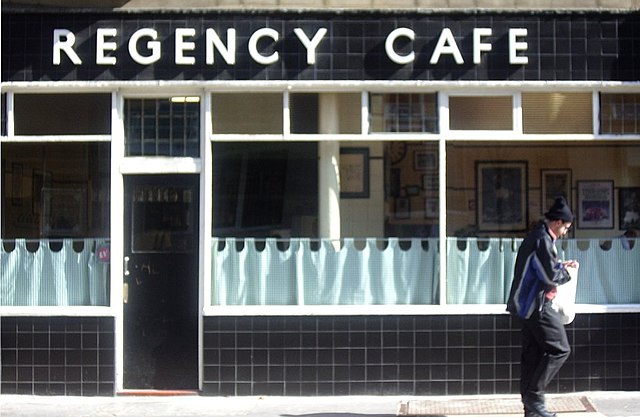
The Regency surprised her with its faux-café trimming, Continental-style breakfast buffet, and daunting list of coffee choices. Not at all the kind of place her Alan would have chosen. Busy, but not full, it catered mostly to business types who didn’t wear coats and ties, though they and the staff seemed friendly enough for that time of morning. She laughed. So, the high-strung lawyer was reinventing himself in his new city. It wasn’t just her after all.

After the long drive, she really wanted a scattered sampling from the buffet, but she hadn’t driven all night simply to eat out. And she couldn’t be distracted, so instead she ordered a black decaf and a bagel with butter while she watched the door and waited for Alan to arrive.

She checked her watch when she saw him pass in the window. Five forty-eight. As punctual as usual. On time meant ten minutes early for him. Anytime within fifteen minutes after starting time had always been okay for her. But even that had caused only infrequent arguments Not the bills, not sex, not in-laws. Only her eventual admission that she had super powers and had kept them hidden since they dated in high school, followed by her proposal that she take the time to finally see if she could put her gift to good use now that the boys were older. Only that had succeeded in driving them apart when no other marital pitfall had stood fast.

He smiled and sighed when he saw her. She returned the smile and waved him over, then shoved the duffel bag beside her against the wall and dropped her purse on top of it.

“You’ve cut your hair,” he said as he joined her at the booth, sliding onto the plastic seat. “Nice.”

She nodded. “It kept getting in the way. Once I figured out the bad guys were always going for it to jerk my head around, I decided it was safer without it.”

He grinned. “But you always hated short hair.”

“Still do. But some sacrifices are worth it, I guess.”

The waitress came over to refill her coffee and take Alan’s order. She winked at Allison as if to give the universal sign for “hold on to this one, honey, he’s cute” and then scribbled his order for the buffet and a caramel latte on her notepad and left for the kitchen.

“How ’bout you?” Allison asked. “I notice you’re getting some gray on the sides there.”

“Yeah. Rough year. You?”

She ran her fingers through her cropped hair. “Only my hairdresser knows for sure. Can’t let down my peers by showing the gray in public, not a woman anyway.”

Alan grabbed the salt shaker and passed it from hand to hand absently. “I suppose.”

She let the lull hang and took a long draw of the fresh coffee.

“Listen, Allison,” he said, setting down the salt shaker between them.

“Uh-huh?” she asked, warming her hands around the cup.

“When are you going to stop this playing around with the costumes? The boys still need a mother.”

She put down the cup. “I’m not playing around, Alan. I am a superhero. And thanks to you and the case, I’m even outed as one.” She took a deep breath before continuing. “Two nights ago, I kept a woman from getting mugged. And last week, I saved a van of retirees from a carjacker.” Her breaths quickened, her excitement rising with each memory. “And on the way here, I stopped another superpowered villain, some guy who could paralyze people with a touch. Stiller or Sleeper or something like that.”

“And that’s more important than being a mother?”

“God, Alan, you make it sound like I have to reject my kids in order to even think about being anything other than just a mom. Lots of women work outside the home, you know.”

“It’s not like you took a job heading up a marketing department or running an office somewhere, Allison. This isn’t about you working, and you know it. It’s about what you chose to do.”

“And what if I had decided to become a cop instead?”

“Police officers can clock out, honey. They don’t usually have costumed grudge matches chasing down the people they love.”

“Neither do all --” she started but stopped when the waitress returned with Alan’s latte.

“Anything else I can get for you two now?” she asked.

Alan asked for a check. The waitress looked at him, then Allison, then at the table and frowned. “Aren’t you going to eat?” she asked.

“No. I’ve got somewhere I need to be. Just the check, please.”

The woman sighed. “Sure, both on one, or separate?”

“Separate,” he said.

The woman, whom Allison now took the time to notice was a dark-haired lady, slightly overweight and in her mid-forties at least, shook her head slightly toward her. I know, Allison thought. Tell me about it.

“This was a really bad idea. I should have known better.”

“Alan…”

“No. I should realize that neither one of us is going to change our minds. It’s better if you learn to move on.”

The waitress, whose nameplate read “Margo,” tore two slips of paper from her pad and put one in front of Alan and the other in the center of the table beside the salt shaker. Allison took hers and flipped it over.

“I can’t move on. They’re my kids, damn it.”

“I know. But they’re my kids too. And I’m going to do whatever I have to do to keep them safe.”

“Pay whenever your ready,” Margo said, and walked away.

Allison dug through her purse for her wallet, then pulled it out and grabbed a ten dollar bill and laid it on top of the bill. “And you think I won’t?”

“I think you’re not.”

“That’s not fair.”

“I think you’re too caught up in reliving some glory days you wished you’d have tried when we were younger. That’s what I think. I think you are so wrapped up in your costume these days that you can’t honestly know what’s best for Joshua and Jared.”

She laughed and reached into the bag at her side and pulled out the carefully folded costume and put it on the table between them, knocking over the salt. “So this is my red convertible and cheap, twenty-year-old blonde?” She laughed again. “Sometimes you are so stupid.”

Alan stood up. “You brought it with you?” He fished in his wallet for some bills and put a few on the table. “And I’m the one who’s stupid?”

“I could just take them, you know,” she said, beginning to cry.

“I know.”

“I could.”

“But you won’t.”

“God, I want to,” she said, using the cuff of her costume to wipe the tears away.

“I’m not an ogre, Allison. I’m just a dad. I only want my boys to be safe. Go home.”

She put down the costume. “I can’t. I’m a mom. My home is to be where Jared and Joshua are. And you’ve taken that away from me.”

Alan shook his head. “It’s too late anyway. Now that the word is out about you in the papers, we couldn’t start over even if we both wanted to. There’d always be some costume wanting to prove something.”

“Not…” she started, but let the words fade. There was nothing more to say anyway.

He sighed. “Go home, Allison. Go be a hero. Go do whatever you want to. No one’s stopping you. Go save the freaking planet if you get the chance. Just leave our boys out of it.”

Without another word, Alan turned to headed for the exit. Allison watched, wanting to jerk the moisture from his body, to pull it away slowly, first making him fall, then watching, standing over him as his skin grew dry and began to peel, then gloat as his soul left his dusty body to crumble.

“The body is mostly water,” she shouted.

He stopped. Turned. Glared. Then softened, and she saw something worse than his anger or hatred. His pity.

“Goodbye, Allison. I’ll tell the boys you said hello.”

And he left.

She sat still, no tears left, holding the costume for a few minutes as Alan passed by the window -- taking special effort, it appeared, not to look inside at her -- and walked from her line of sight and out of her life. Forever, if he had his way.

She knew Bernson’s was quiet. She knew it had grown quiet because of her and Alan. And she knew that everyone inside had to know by now what had just happened, who she was, and the choice she had made. But she didn’t care.

Margo returned and told her to keep her money, that she’d pick this one up, that “us moms have to stick together” and then patted her on the shoulders and asked if she was going to be all right. She only grunted an answer, not sure herself if it was yes or no, but it satisfied Margo, who shoved the check back in her apron and cleared the dishes away with a wider smile than before.

As Margo walked away with the dirty dishes, Allison crammed the costume back into the bag, zipped it shut, and grabbed the bag and her purse. She passed Margo on the way to the door, who asked again, “You sure you’re gonna be okay?”

“Why can’t we ever have both?” she mumbled, stopping to look down at Margo’s face and eyes.

“We only have so much love to give.”

Allison forced a smile. “But I do --”

Margo nodded. “I know. I know.”

The tiny bell hanging from the handle sang as she opened the glass double doors to go outside, but she never heard them.

© 2002 Sean Taylor

=================================================================

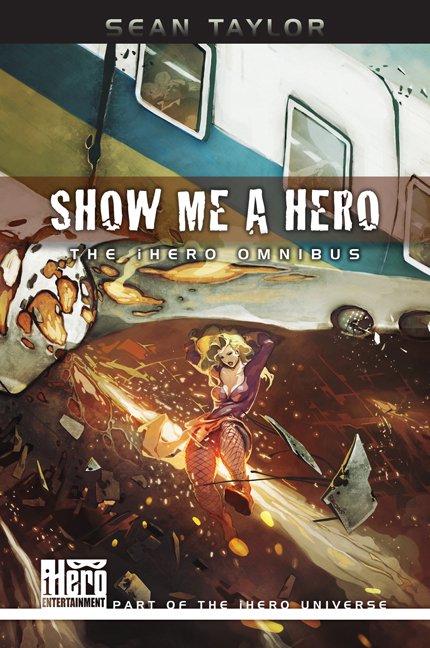
This story is taken from the collection Show Me a Hero, publishing by New Babel Books.

Thursday, February 16, 2012

Comics to Prose: From Four Colors to Black Text

Last week we picked the brains of comic and pulp writers about when pulp heroes try to cross over into the four-color world of comic books. So, to be fair, these week we are looking at the opposite, when comic book heroes enter the prose world of short stories and novels.

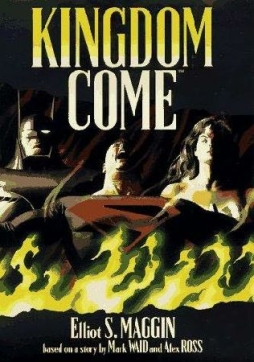
How successful do you feel mainstream super heroes have been entering the world of prose? Do they only succeed when they have a major storyline tie-in such as Kingdom Come or Identity Crisis?

Lee Houston Jr.: The results are mixed. You certainly have a bigger potential audience tying into a movie, but some folks tend to skip the book to avoid spoiling the movie, or don't bother with the book afterwards because they've seen the movie.

Prose books by a "name" author usually sell, yet sometimes there are other forces at work one cannot count on ahead of time. Because of all the media attention over the event, Roger Stern's novelization to The Death of Superman did well.

Yet in the end, it's more a question of how good the story is. Elliot S! Maggin wrote two Superman novels back the late 1970s. The first tying into the original movie with Christopher Reeve, and a second. Miracle Monday stood well on its own.

Ed Erelac: I will admit that personally, I've never read the prose adventures of a character who originated in comics. The literary exploits of Superman or Spider-Man or something don't really appeal to me. So personally speaking, it doesn't seem like a great idea. I have no idea if this is a successful genre.

Bobby Nash: I think they have been more successful in recent years as we’ve seen an increase in prose novels and anthologies coming from comic book publishers as well as prose featuring comic book characters. Adapting a successful storyline does seem to be a big hit when taking comics to prose as multiple publishers have done this. I believe the movie tie-ins also help.

Van Allen Plexico: I want -- nay, need -- for the sub-genre to take off. Has it? Not yet, not really. Can it? Will it? I have to believe it will.  

The bulk of super hero prose tales seem to coming be from independent publishers. Is this a way getting around the "can't afford an artist" hurdle that keeps many out of indie published comics, or is there more to it than that?

Lee Houston Jr.: I can't speak for anyone on the business end of things regarding the art aspect, but the independents are willing to take more chances with different formats trying to get their characters and stories out there. The Big Two (DC and Marvel) tend to stay with the "sure" thing publishing novelizations of movies and major comic book events.

Bobby Nash: It is possible that this is the case, but comic books and prose are too very different animals in terms of how you approach them creatively. Plus, they target different audiences. There are readers out there who read comic books and prose, but I have met many comic book fans that will not, let me repeat that, will not read a prose book because it, and I quote, "doesn’t have pictures" and readers of prose that won’t read comic books.

Ed Erelac: I think partly it is, sure. Especially with costumed superheroic characters. In my experience, comics are the arena of the artist and the writer takes a back seat if he doesn't ride in the trunk. Even unknown artists may demand exorbitant fees for their work while writers just starting out often can't expect to make a penny. I've never found a talented artist, even one just starting out, who is willing to collaborate on something with nothing up front, even when the writer is willing to do the same. That's comics, I guess. It's primarily a visual medium. You can't have a good comic without both a good writer and artist, but until the industry shifts and the two positions equalize, things will likely stay as they are. Without an artist, nobody cares how great your writing or your concept is, and many writers have to resort to converting it to prose fiction. I think that's why there's been such a relative increase in superhero fiction in the indie publishing world. Lots of brok e writers (I won't say cheap because I don't believe it's that). Does this mean these books aren't worth checking out? Although I answered in the negative to the first question, I don't think the same holds true for a character that begins in prose. No, I'm not really interested in reading Batman fiction, but I've read superpowered and non-superpowered fiction that I'd like to see adapted as a comic.

Van Allen Plexico: I am a novelist at heart, not a comic book writer. Writing super heroes works more naturally for me in prose than in comics form. Stories simply take far too long to tell in comics form. Imagine how many issues of a comic it would have required to get my storyline to where it is now, six-plus volumes in. Probably hundreds, over many years.

What advantages and disadvantages does writing and reading super heroes in prose have compared to writing and reading them comic books?

Bobby Nash: Comics are a visual medium. Art is a big and important aspect of the medium. Yes, you have to have a good story too, but the art is usually what sells comic books so you write to accommodate and accentuate the art. With prose, it’s all words so the writer has to paint the environment with words. As a writer, I approach writing comic books and writing prose very differently.

Lee Houston Jr.: Foremost is the obvious. You do not have the visuals to accompany a story.
While comic books are a creative team effort, everything falls to the writer in prose; who has to describe everything from moods to costumes to spaceships, etc.

But a good writer can overcome those obstacles and still tell a dynamic story, regardless of the genre.N
Yet the book reading audience is far different than the comic book audience, so there are still a lot of preconceived notions that must be overcome, especially that archaic notion that comic books and their characters are "just for kids."

Ed Erelac: Answering the latter part first and being totally honest, I think my disinterest in reading the prose adventures of an established costumed comics character may sound hypocritical too, but my thinking is 'Why would I read about Captain America when I can just pick up the comic?' I am no better than the 'average' comic book reader in this regard. The visual appeal of those characters is a big part of their overall attraction, and is well cemented in my mind. They only exist in sequential layout in my imagination, maybe in the movie adaptations if they're done well. There's also the general stigma of the comic book character. As a comic book reader, the concept of Captain Marvel is brilliant. But would he work as a literary character? I don't know -- and I can see how a lot of non-comics readers (even those who read fantasy and sci-fi) would not be inclined to accept a kid who can turn into a superhero. This a four color character trying to exist in the black and white of print. I'm dubious.

On the other hand (and this is gonna sound even MORE hipocritical I guess), I have written superhero fiction featuring an original character, for Damnation Books' upcoming Corrupts Absolutely? anthology. But although a superpowered individual, the character I chose to write about is very much grounded in reality. He's not a four color hero, he's an inner city black kid with a learning disorder in the projects of Cabrini Green in Chicago. Nobody's ever told him he was worth anything and he's existed in a perpetual state of helplessness his whole life, until this social worker comes along and teaches him some rudimentary lessons about self worth and visualizing what he wants to achieve and then doing it. This unlocks, in this literal minded kid, a deadly mental power which he proceeds to use to scour his oppressive neighborhood. I'm not sure a character like this (as its written, in vernacular) would work in the comic book medium. I think it would, but how many collaborators wo uld be willing to tackle it? The inspiration comes from a comic though. Katsuhiro Otomo's Domu.

The advantage of writing a superhero character in prose is that you are not bound by the limits of the comic book medium. A writer who is not also an artist is limited by the vision of his collaborator. A good writer can make his concept come through, but there is always the buffer of translation. Two people can't possibly share every aspect of the same vision. A great team can overcome this and even make something better than either could alone, but if you're a control freak of a writer, or have a very specific concept, of course writing in prose has no equivalent. You can go wherever your mind takes you with the story, and hopefully take the reader along with you.

Van Allen Plexico: I'm trying to tell a vast saga peopled by dozens of characters, covering the same amount of ground as, say, Claremont on X-Men. I've done a tremendous amount of that story already, in only six years. I couldn't have realistically accomplished that in the comics medium. Not to mention the opportunities to have the characters more thoroughly develop themselves through introspection--something much more difficult and distracting in comics form.

Monday, January 30, 2012

The Writer Will Take Your Questions Now (#65) -- Working Up to Longer Word Counts

How does someone get into writing short stories and work his or her way up to novel-length books?

That's a very good question, and it also is a very revealing one. For starters, you don't have to work your way up from short pieces to long, particularly because they're really different kinds of animals, so to speak. Think of a short story as a small painting, as opposed to painting a house, i.e. a novel. That's not to say one is more or less artful than the other, just that one is a single image to be viewed in a sitting and meaning gleaned from it right then and there, and the other is something to be taken in total, as one part adds to the cumulative effect of a world that is indeed "lived in."

All that fancy, schmancy talk is just to say that they're different. It's not as though a novel is a grown-up short story, like a man is a grown-up boy. It's more like a man and a watermelon, or some other unrelated thing.

But, to specifically address the question, you can most definitely try your hand at shorter works first to exercise your writing muscles and find a sense of completion for a project. That sense of completion certainly can help a beginning writer build the confidence that "Yes, I can do this!"

Another option is to see your novel as a series of short tales, and take them one at a time.

Of course, if your goal is to build your confidence, nothing beats having a short story or two published in an anthology or magazine. That, more than just about anything else, will instill in you the confidence to keep going and have the guts to tackle a longer work.

Good luck and happy writing!

Saturday, January 28, 2012

The Writer Will Take Your Questions Now (#63) -- Reading Horror

Which horror books are your favorites?

The Tell-Tale Heart (1912) by
Martin van Maële,
engraved by Eugène Dété.
All of my favorite horror stories are the ones I read in my teenage years, much like most of my favorite music is what I loved growing up as a teen. Maybe that makes me different, or maybe we all tend to run back in nostalgia to re-embrace the stuff that helped to form our loves.

Regardless, my favorite short horror remains that of Poe. He just still creeps me out. Something about the way his writing style comes across like a drug-induced trip (or so I'm guessing, mom). In more recent years, I (finally) discovered Lovecraft, but his stuff doesn't scare me as much as it makes me ponder. And Algernon Blackwood is quickly rising up the ranks as well.

For contemporary authors, nobody gives me the heebie-jeebies like Robert Freese. His  images aren't gory as much as they are disturbing. There have been several times I've had to put his book down and rattle the images from my fevered brain lest I ponder the unthinkable. And that's (in my mind anyway) the mark of a gifted horror writer.

Can I eat your
little boy, ma'am?
For novels, it's still a tie between King's Christine, Cujo, and Pet Semetary. Of his works, those are the ones that really make me check under the bed, or around the corner, or take a second look inside the car beside me at the traffic light. It probably didn't help that I read Cujo a few years after my younger brother got a permanent scar from a dog bite on his upper lip. Go figure.

I have also rediscovered King's short fiction through my son, Jack, who is greedily devouring every King book he can get his hands on. The story "N," in particular, gave ADD-OCD me no end of freaky dreams and read like a trip inside my brain. No lie. The idea of good numbers and bad number. I SO GET THAT. Just ask me to tell you about it some time when we meet at a convention. Then have a seat. It could take a while.

Tuesday, January 24, 2012

The Writer Will Take Your Questions Now (#59) -- Writing Short Stories

Which do you prefer to write, novels or short stories?

Well, based on yesterday, you now know that I prefer to read short stories. But what about writing?

Surprise, it's short stories again. (Or maybe not surprise.)

Why? Several reasons.

1. Novels take a long time, and I'm lazy.
2. Short stories to me are more of an art form, and require more focus from me as a writer.
3. I believe what a writing professor told me once: Writing a novel is like throwing words at a wall and seeing what sticks. Writing a short story requires words placed with precision and intention.
4. I just like short stories better. A quick bit into a character's life and then out again to meet someone new.


That said, once I tackle a few novels, my viewpoint may change. That certainly has happened with my novellas and novelettes. And the more I write those, the longer my short stories continue to become.

Monday, January 23, 2012

The Writer Will Take Your Questions Now (#58) -- Reading Short Stories

Which do you prefer to read, novels or short stories?

Short stories.

I've been a fan of short stories since I was in high school. I think they're an amazing art form that forces writers to condense all the fat that can fill up a novel. Granted, when I'm reading for elaborate plots and such, a novel is really the best way to go (although, the pulps managed to do that in novellas and novelettes too). But when I want to really get to know the characters I'm reading, and experience the full spectrum of what words can do in fiction, I go to short stories.

I only wish they weren't such a dying market. 

“Short fiction seems more targeted - hand grenades of ideas, if you will. When they work, they hit, they explode, and you never forget them. Long fiction feels more like atmosphere: it's a lot smokier and less defined.” ― Paolo Bacigalupi

“A short story is a love affair, a novel is a marriage.” ― Lorrie Moore

“A short story must have a single mood and every sentence must build towards it.” -― Edgar Allan Poe

“A short story is a different thing all together - a short story is like a kiss in the dark from a stranger.” ― Stephen King