Showing posts with label Legal issues. Show all posts

Thursday, September 11, 2025

[Link] What Authors Need to Know About the $1.5 Billion Anthropic Settlement


Today, Anthropic agreed to pay $1.5 billion to settle claims that it downloaded pirated books to train its AI systems—the largest U.S. copyright settlement in history. The parties in Bartz v Anthropic, one of the major copyright lawsuits brought by authors against an AI company for using pirated books to train its large language models, filed a proposed settlement agreement with the court that would settle the claims regarding the company’s mass piracy in downloading millions of books from notorious pirate sources Library Genesis (LibGen) and PiLiMi and then retaining them in a central library.

The settlement provides that Anthropic will pay $1.5 billion plus interest in cash into a settlement fund, representing the largest U.S. copyright infringement settlement ever and greater than any copyright damages award ever secured. The amount of the award sends a signal to all AI companies that downloading illegal copies of books to train AI comes with a heavy cost and, we expect, will foster further licensing, given the potential enormous liability AI companies risk when they help themselves to books for free from illegal channels. 

“This historic settlement is a vital step in acknowledging that AI companies cannot simply steal authors’ creative work to build their AI just because they need books to develop quality LLMs,” said Authors Guild CEO Mary Rasenberger. “It is truly shocking that Anthropic and the other major LLM owners engaged in criminal-level piracy schemes to torrent millions of books knowingly from infamous foreign ebook piracy sites that the publishing industry has actively been trying to take down for years. Imagine the outrage if Anthropic and others had illegally siphoned off electricity to build their AI, claiming it was too expensive to pay for it? These vastly rich companies, worth billions, stole from those earning a median income of barely $20,000 a year. This settlement sends a clear message that AI companies must pay for the books they use just as they pay for the other essential components of their LLMs.   This settlement lays down an anchor that it is not okay. We expect that the settlement will lead to more licensing that gives author both compensation and control over the use of their work by AI companies, as should be the case in a functioning free market society.”

Read the full article: https://authorsguild.org/news/what-authors-need-to-know-about-the-anthropic-settlement/

Saturday, July 6, 2024

[Link] Neil Gaiman accused of sexual assault

by Rachel Johnson, Katie Gunning, and Paul Caruana Galizia

Neil Gaiman has been accused of sexual assault by two women with whom he was in consensual relationships and is the subject of a police complaint in New Zealand. 

Gaiman’s position is that he strongly denies any allegations of non-consensual sex with the women and adds New Zealand police did not take up his offer of assistance over one woman’s complaint in 2022, which, he says, reflects its lack of substance.

However, New Zealand police said it made a “number of attempts to speak to key people as part of this investigation and those efforts remain ongoing”, adding that there are “a number of factors to take into consideration with this case, including locations of all parties”. 

The allegations span two decades and concern young women who came into contact with Gaiman – the 63-year-old bestselling author of The Sandman, Good Omens, and American Gods – as a nanny to his child and as a fan of his writing.

Read the full article: https://www.tortoisemedia.com/2024/07/03/exclusive-neil-gaiman-accused-of-sexual-assault/

Saturday, June 10, 2017

[Link] The “Superhero” Trademark: how the name of a genre came to be owned by DC and Marvel, and how they enforce it

by DG Stewart


Our publication has a category devoted to “superheroes”. It is a genre to which we have paid disproportionate attention, primarily because it is in English (the language of most of our contributors) and because of the sheer volume of superhero-genre material generated primarily by American publishers.

But what does the word “superhero” actually denote? The words “super hero” was first used in 1917, when it was used to describe a “public figure of great accomplishments”

In so far as use of the word “superhero” in the course of commerce is concerned, however, there is a severe limitation. The word “superhero” is jointly owned in many parts of the world by two US publishers, DC Comics and Marvel Characters Inc, an affiliate of Marvel Comics. The road to joint ownership of the word “SUPERHERO” in the United States is well-explained in this link.

But perhaps a more concise explanation comes from both DC Comics and Marvel themselves. The following paragraphs come from a United States trade mark notice of opposition filed by DC Comics and Marvel in May 2015:


Read the full article: http://www.worldcomicbookreview.com/index.php/2017/06/01/superhero-trademark-name-genre-came-owned-dc-marvel-enforce/

Friday, March 22, 2013

[Link] Do Amazon and Createspace rip off Indie publishers with failure to correctly report sales?

by John. R. Clark, Managing Editor at AgeView Press

When AgeView Press Indie pubbed the book FLYING SOLO in May of 2012, the author, Jeanette Vaughan immediately began tracking sales. She heard from excited friends and family who immediately emailed when ordering their copies. The first sales were off of Createspace’s e-store with the title ID number given to the author. Then, through Amazon, a week later, when the book went live on the site. Finally on Kindle, when the ebook format was completed.

Initially, things appeared kosher. People exclaiming that they had ordered the book, were showing up within a day or two on the electronic royalty reports with a reasaonable accuracy. But by June and July, sales descrepencies were noted by the author from customers claiming that they had purchased the book directly through Amazon, not an Amazon affiliate. Many of these sales were simply not listed.The author contacted Createspace customer support, who gave assurance that all sales were being accurately reported. FLYING SOLO was now also on Kindle Direct Publishing (KDP) Select as well as expanded distribution channels, which included Amazon affiliates in the UK, France, Germany, Italy, and Spain. Sales were being reported to the author from readers and bookclubs in Canada, Australia, and New Zealand.

The first note of apparent discrepancy came when a dear friend of the author ordered three copies of the book from Amazon in June. These books were ordered all at the same time, from Amazon.com direct. Yet, that cluster of three sales was never posted as such.  Another instance in early July involved the same issue. Again, a customer ordered three copies, yet no sales were trackable through Amazons channels for three sale purchased on the same day.

Meantime, the author was making public appearnances, being featured on blogs and radio, and rounding with booksignings. During the months of June and July, no expanded distribution channel sales were posted on the royalty report, yet customers were emailing the author letting her know how much the book was being enjoyed overseas. More than 15 five star reviews for the novel were posted on Amazon.

What should have shown as a surge of sales, as the book peaked, never appeared on the royalty reports. The author was suspect. She contacted Ingram directly, only to be informed that they were not supposed to reveal information to an author directly. So, the Indie publisher, AgeView Press made the call. Ingram showed 16 copies of the book ordered through their system total since May. Those sales never showed on the June or July royalty report. The author filed formal complaints with Createspace customer service, but received only canned letters in response explaining that indeed there was an issue with reports in Expanded Distribution and it was being investigated. Advice to author? Please be patient.

By August, it was clear there were gross in accuracies. The 30 copies ordered from Barnes and Noble never showed up. Few if any sales were listed for August. Yet the author had confirmation of over 4,000 copies in distribution worldwide. The crowning blow came in September. A plan was devised. A friend, agreed to help with the investigation. She ordered a copy of FLYING SOLO on September 7th, taking screen shots of her order and confirmation of payment directly from Amazon. She printed out here receipt showing date and time of purchase. The book arrived on September 13, to San Jose, California. Photos were taken. The sale was complete. Copies of all screenshots and receipts were scanned and sent to the author. By September 20th, no sales were shown at all on Createspaces report. Phoning Createspace, the author was informed that no sales were showing for Amazon for the month for that title. It was time for outrage!  What had been suspected, had now been proven. Not once, but twice!

Continue reading: http://jeanettevaughan.wordpress.com/2012/09/28/do-amazon-and-createspace-rip-off-indie-publishers-with-failure-to-correctly-report-sales/

Wednesday, February 20, 2013

[Link] Arthur Conan Doyle Estate Now Being Sued to Settle Whether Sherlock Holmes is in the Public Domain

by Nate Hoffelder

I have long argued that copyright law has grown far out of proportion and no longer serves the needs of the creators, so I was pleased to read this week about a recently filed lawsuit that could prune back some of the overgrowth.

The noted Sherlockian scholar, Baker Street Irregular and prominent attorney Leslie Klinger, editor of The New Annotated Sherlock Holmes, The Sherlock Holmes Reference Library and The Grand Game: A Celebration of Sherlockian Scholarship, to name a few, has filed a civil lawsuit against the Conan Doyle Estate to determine that the characters of Sherlock Holmes and Dr. Watson are in fact in the public domain.

Mr Klinger is suing (according to the press release) because of the pressure that the Conan Doyle estate applied against Mr Klinger’s latest anthology of Sherlock Holmes inspired stories.

In the Company of Sherlock Holmes was supposed to be published by Pegasus Books and included Holmes stories by numerous well-known mystery/sci-fi/fantasy authors.  The anthology is on hold because the Conan Doyle estate contacted the publisher, asked for a fee, and threatened to block distribution of the anthology if the fee was not paid.

The Conan Dolye’s justification for their legal shakedown is at best questionable and is based on a not-entirely settled point of copyright law. Allow me to explain.

As you probably know, the vast majority of the Holmes stories are old enough that they are no longer in copyright in the US. (The author died in 1930, so his entire body work is public domain everywhere but the US.) In the US you can legally download nearly any of the Holmes stories from sites like Project Gutenberg. If you wanted to, you could then format the stories as ebooks or bind them into a paper book and sell the stories. This is completely legal.

Continue reading: http://www.the-digital-reader.com/2013/02/16/arthur-conan-doyle-estate-now-being-sued-to-settle-whether-sherlock-holmes-is-in-the-public-domain#.USGCvPKjKt1

Thursday, October 18, 2012

[Link] DC Comics Keeps The Rights To Superman

Yes, this image of Superman is in the public
domain. From http://commons.wikimedia.org/
DC Comics will retain its rights to Superman after a judge ruled Wednesday that the heirs of one of the superhero’s co-creators signed away their ability to reclaim copyrights to the Man of Steel roughly 20 years ago.

The ruling means that DC Comics and its owner Warner Bros. will retain all rights to continue using the character in books, films, television and other mediums, including a the film reboot planned for next year.

DC Comics sued the heirs of artist Joe Shuster in 2010, seeking a ruling that they lost their ability to try to reclaim the superhero’s copyrights in 1992. U.S. District Court Judge Otis Wright II agreed, stating that Shuster’s sister and brother relinquished any chance to reclaim Superman copyrights in exchange for annual pension payments from DC Comics.

Continue reading: http://comics-x-aminer.com/2012/10/18/dc-comics-keeps-the-rights-to-superman/

Yes, this image of Superman is in the public
domain. From http://commons.wikimedia.org/

Wednesday, February 22, 2012

[Link] Are cartoonists doomed to die poor and homeless while pirates dance on their graves?

By The Beat

Even as the economy shows fitful signs of flickering back to life, the comics economy, which was “too small to fail” to really take much of a hit during the Great Recession, is still puddling along, under-capitalized, under-recognized, and with even the greatest cartoonists prone to spells of belt tightening. Comics have been traditionally immune to the effects of a recession—”cheap entertainment does well in bad times!” we’ve heard time and again—but the corollary is also true: Economic boom times rarely touch comics.

During the late ’90s and the first dot.com boom, one of the greatest eras of general prosperity in American history, comics were going through their WORST slump since the end of newsstand distribution, with sales numbers so low executives were crying over them. And then, paradoxically, comics began to do better even during the mini-recession following 9/11 and the end of the dot.com bubble.

During the recent real estate bubble/stock market boom, quite a few cartoonists bought homes that would never have been available before—and some have lost them, sadly—but most comickers we know were sticking with comics instead of going into hedge funds and condo flipping. A lot of money flooded into comics in the end of the last boom, but the tide has been slowly going out.

But now it’s gone out. And people are wondering when it will come in again.

Continue reading: http://www.comicsbeat.com/2012/01/25/are-cartoonists-doomed-to-die-poor-and-homeless-while-pirates-dance-on-their-graves/

Tuesday, February 21, 2012

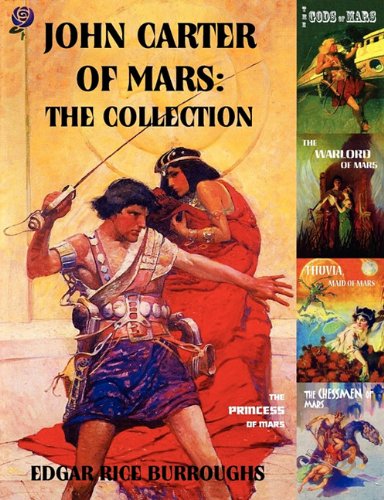
ERB Inc. Sues Dynamite Entertainment Over John Carter and Tarzan

The family-owned company that holds the existing rights to the works of Edgar Rice Burroughs has sued Dynamite Entertainment and Dynamic Forces, accusing the publisher and collectibles producer of trademark infringement and unfair competition with the release of "Lord of the Jungle" and "Warlord of Mars" comics.

In the lawsuit, filed Thursday in federal court in New York City and first reported by The Wall Street Journal, Edgar Rice Burroughs Inc. claims the comics were published without authorization after Dynamite Entertainment President Nick Barrucci was told that Dark Horse held the licenses for the "Tarzan" and "John Carter of Mars" novels. The complaint insists the comics "Lord of the Jungle," "Warlord of Mars," "Warlord of Mars: Dejah Thoris" and "Warlord of Mars: Fall of Barsoom" are likely to "deceive, mislead and confuse the public" about the source or sponsorship of the content, causing "irreparable injury" to ERB Inc.

Established in 1923 by Burroughs and now primarily owned by his grandchildren and great-grandchildren, ERB Inc. owns the trademarks to "Tarzan" and "John Carter of Mars," as well as the common law rights in the "Tarzan Lord of the Jungle," "Dejah Thoris" and "Barsoom" marks. Although Burroughs' earlier works, like "Tarzan of the Apes, "The Return of Tarzan," "A Princess of Mars" and "The Warlord of Mars," have lapsed into the public domain in the United States, the complaint notes that they remain under copyright protection in the United Kingdom.

Presumably to bolster its claim of "irreparable injury," ERB Inc. takes specific issue with some of the covers and interior art for "Warlord of Mars: Dejah Thoris," insisting they "border on (and in some cases are) pornographic": "On some covers -- covers which defendants refer to as "Risque Nude" exclusive covers -- Dejah Thoris appears topless."

The lawsuit doesn't specify damages, but seeks the recall of the comics distributed in the United Kingdom, and the surrender of profits from the infringing works.

(Originally posted on Comic Book Resources)

Saturday, February 11, 2012

Can you spare $1 to help Gary Friedrich?

No doubt you're aware of the court case between Gary Friedrich (one of the creators of Ghost Rider) and Marvel Comics -- unless you live under a rock, as the saying goes. If you want more information on that case, you can find that info here.

This post is not to get into the legality or even morality of that decision, or to choose sides. It is simply this, to say we have a moral obligation to help a "friend" in need. (And if you're ever enjoyed a Ghost Rider story Gary wrote, then you know he's a friend, right?)

I know Gary, having met him several times at cons and talked with him on the phone back when I was Managing Editor of Campfire Graphic Novels (then Elfin) as I was trying to get him to do our Frankenstein book for us. All that to say, regardless of the legal issues, the man needs our help and I'm proud to do at least a little something to keep the ball rolling.

We can viral this thing to get 17,000 people to each donate a dollar, can't we? I've donated mine. Will you be next? (And regardless of where you stand on the legal issues on this case, the simply fact is, Gary Friedrich, a creator who worked with a team to give us a character we love, is in dire financial straights and we have a moral obligation to help.)

Check out my Facebook page for a special offer. Donate $1 or more to Gary through Steve Niles paypal charity, and I'll send you a free PDF story from SHOW ME A HERO, my short story collection from New Babel Books. To claim your story, simply leave your email address on the FB page or email me directly at staylor104@aol.com. Please be honest. I'm trusting your integrity in this matter.

To donate, click here: http://www.steveniles.com/gary.html

Tuesday, February 7, 2012

[Link] Amazon's Plagiarism Problem / The Kindle Swindle

Amazon's Plagiarism Problem
by Adam Penenberg

Amazon's erotica section isn't just rife with tales of lust, incest, violence, and straight-up kink. It's also a hotbed of masked merchants profiting from copyright infringement. And even with anti-piracy legislation looming, Amazon doesn't appear too eager to stop the forbidden author-on-author action.

Continue reading: http://www.fastcompany.com/1807211/amazons-plagiarism-problem

=====================================================

The Kindle Swindle
by Laura Hazard Owen
March 2011 (but still applicable concerning this topic)

Mike Essex, a Search Specialist at UK digital marketing agency Koozai, believes that ebooks are the next frontier for content farmers and is already noticing an increasing number of spam e-books hitting ebookstores like the Kindle Store. He originally wrote about his discovery on the Koozai blog.

In his blog post, Essex pointed out that readers won’t necessarily recognize whether content has been plagiarized. And if an e-book is exposed as plagiarized, the author can simply take it down and resubmit it under a new name. A bad review on one site won’t keep people from buying the same ebook on another site. And these titles are priced so low that unhappy buyers may not bother complain.

Essex carried out an experiment for PT: “I took the lyrics to the song ‘This is the song that never ends’ and repeated them over 700-plus pages. No formatting, just one continuous block of duplicate text. Within 24 hours, it was live on the Amazon Kindle Store and I haven’t received a single message from Amazon about it. Surely an automated process would be able to easily tell I had repeated myself over and over, but this wasn’t flagged up.

Continue reading: http://www.publishingtrends.com/2011/03/the-kindle-swindle/

Sunday, January 22, 2012

[Link] SOPA, PIPA postponed: Nice work, everyone

By Zack Whittaker

Summary: Both SOPA and PIPA have been shelved, and “no further action” will be taken until a general consensus has been made, and compromises sought.

The Stop Online Piracy Act (SOPA), and the PROTECT-IP Act, known as PIPA, have both been postponed from being voted on in the House and Senate respectively.

Rep. Lamar Smith (R-TX), the author of SOPA, said today that he will postpone any further action on the bill until compromises were reached.

Meanwhile, Senate Majority Leader Harry Reid (D-NV) said in a tweet that “in light of recent events”, he has, “decided to postpone Tuesday’s vote” on the PIPA bill.

An impending vote on SOPA triggered widespread protests leaving hundreds of millions of Web users without access to their favourite sites.

Continue the full article: http://www.zdnet.com/blog/btl/sopa-pipa-postponed-nice-work-everyone/67622

Wednesday, January 18, 2012

[Link] Supreme Court Says Congress May Re-Copyright Public Domain Works

Congress may take books, musical compositions and other works out of the public domain, where they can be freely used and adapted, and grant them copyright status again, the Supreme Court ruled Wednesday.

In a 6-2 ruling, the court said that, just because material enters the public domain, it is not “territory that works may never exit.” (.pdf)

The top court was ruling on a petition by a group of orchestra conductors, educators, performers, publishers and film archivists who urged the justices to reverse an appellate court that ruled against the group, which has relied on artistic works in the public domain for their livelihoods.

They claimed that re-copyrighting public works would breach the speech rights of those who are now using those works without needing a license. There are millions of decades-old works at issue. Some of the well-known ones include H.G. Wells’ Things to Come; Fritz Lang’s Metropolis and the musical compositions of Igor Fyodorovich Stravinsky.

Continue reading at: http://m.wired.com/threatlevel/2012/01/scotus-re-copyright-decision/