Showing posts with label Paul Landri. Show all posts

Thursday, September 18, 2025

The Name Game: How Do You Name Your Characters?


Let's talk about naming your characters for the new Roundtable.

What resources do you consider the most valuable when coming up with character names?

Samantha Dunaway Bryant: When I’m working in a contemporary, close to real-world setting, I look at details like where my character is from, what year they were born, who their parents were, and use that to help me select a likely name.

Census records and baby name books are useful for this.

Cindy Bergquist: Some come to me. Some I reference my favorite character naming book, The Character Naming Sourcebook

Lisa Haman: For me it depends on the story I'm writing. For The Insignificant Amy Dodd, I tried to think of a name that sounded like someone who is invisible. For Philippa Marlowmellow, since it was a parody of the noir detective stories I tried to make the name sound like an old detective series.

Van Allen Plexico: Writing ALPHA/OMEGA from 2005-2024, I needed a LOT of Russian names. Like 35 distinct Russian characters. I used every source I could find for first and last names, from websites to baby name books.

And I still wasn't completely happy with the range of Russian names!

Bree Jackson: If I’m going for symbolic, I take attributes of the character (ie: strength, beauty, resilience,etc…) and translate those words into different languages. Then I derive a name from the word that works best. In other instances, I’ll ask my beta reader group silly questions like “I need a name that isn’t Chad to describe a gym bro guy who looks like he lives off of wheatgrass and unseasoned chicken.” The results are entertaining and useful.

Chris Pocase: There were two methods I used to use when coming up with character names. The first one was to take two Latin words and sort of splice them together to make a name. But I plan to rename those characters since the combinations can be fun to come up with but difficult to pronounce.

The other method…use Google Maps and pick a random place in the USA, and look at street names. There are some really interesting ones especially in rural areas

Kay Lee: Sounds weird but I feel like my characters name themselves lol. Based on the personality of that character names that seem like a fit just kind of come into mind and make sense.

Thursday, April 3, 2025

Titles and Stories (We Got Together, Like...)


This week, let's talk about stories and titles and how they go together (or don't -- I wan't presume your process!). 

What comes first for you, the story or the title? How does one drive the other through the process?

Sara Freites Scott: The title comes first but may change after I write the story! (Which actually happened with my first book.)

Bobby Nash: It could happen either way. Most of the time, it’s the story. That said, doing series work, like Snow or Tom Myers, I like to have a page at the end that states, “Tom Myers will return in…” and so I try to have at least a loose idea and a title for the next book ready to go. I have had instances where the title changed in the process.

Sean Taylor: I find it very difficult to write without a title. I'll jot down story notes and hold off actually writing the narrative until the right title falls into place. Yes, I know that (among other things) makes me an odd duck. 

Chris Riker: First - the moment. That one heart-wrenching scene. It contains the seeds of the story. It lives at the heart of the theme. Where do they come from? I live in a stressful world. Perhaps you've heard of it. Earth? Second - a few characters. Names. Quirks. Third - The ending. Not the plot; that's different. I need to know where my characters need to get to emotionally. Lastly: WRITE!

Jerry Motyka: Yes. Sometimes I get inspiration from a title, other times I get inspiration for the story and the title comes last.

Brian K Morris: Most of the time, it's the story, especially when I'm working with someone else's characters. Then again, I've come up with a title that practically writes the story for me. Also, I have to really put on my thinking cap to come up with a halfway pleasing (to me, at least) title.

Aaron Rosenberg: Oh, story 99 percent of the time, definitely. A lot of the time I'm scrambling for a halfway decent title -- I just use a placeholder to start, and hope something better comes to mind as I get into the book properly.

Gordon Dymowski: For me, the story almost always comes first. It's easier for me to come up with a killer title for a well thought-out story than it is a story for a killer title. I have several works in progress which I have named "Untitlted [INSERT GENRE OR CHARACTER" here to make them easier to track.

George Tackes: Always the story. Something in the story inspires the title. I couldn’t imagine having the title dictate the story. Because sometimes a story can go in an entirely different direction.

Iscah: Usually the story comes first, but it depends. Originally Seventh Night was called The Magician's Apprentice, and the story more heavily focused on Phillip. Then I saw a book with the same title at the store and decided I needed a new name. As the best fairytales are named after the princess, I went with *Seventh Night*, but this meant my title character was unconscious for two-thirds of the book. So, I reworked the middle to give her more to do and a bit more of a growth arch. I do think the story works a bit better that way.

When I say the story comes first, I tend to mean the general story. I usually have an idea for the title before I have finished writing. In some cases, it's a working title. I had a story called The Littlest Vampire, which is another title that I discovered was taken. That one has been sitting on my hard drive long that I may have to retitle it again if it ever comes out.

Some titles emerge while the story is still forming. I can be glacially slow from the spark of an idea and finding time to write it. So I have several backburner novels which are partially formed and still in the notes stage. Most of those have working titles.

Thursday, February 6, 2025

Slicing the Pie: Art. Craft. Technique. Style.


Hey, writer types! For the next (next-next, actually) roundtable, let's talk about art, craft, technique, and style. For some these four words may be synonyms. For others, they may be different ways of slicing the same pie. For still others, they may have start differences between them. If you're familiar with my basic interview questions, you'll remember this one: "Where would you rank writing on the "Is it an art or it is a science continuum?" Let's all discuss that together, shall we?

What does art, craft, technique, and style mean to you? 

Paul Landri: Writing is absolutely an art. However much like cooking, if you don't have a technique for the dish, you'll find people spitting out your food into their napkins or feeding it to the dog.

I don't think I have a particular style, but if you read my work you'll see the influence of the old Del Rey Star Wars Novels are pervasive throughout my books. I cut my teeth on those books when I was in the 7th grade and that style of writing comes out a lot even after all these years and countless other novels I've read that have influenced my writing.

I'm very conversational in tone, as I am sure you can read here. I find it allows the reader ease of access. I feel like you can be verbose but only as long as your still engaging the reader and drawing them in.

Sheela Chattopadhyay: I would rank writing as both an art and a science, rather than keeping the continuum as a straight line. It's more of a circle with each moment of writing blending both art and science together in different proportions as needed. This is from my experience in other types of writing and communications over the years in different disciplines.

Bobby Nash: Art is the part that comes out of me naturally, I think. It’s the raw, creative part. Craft is the work. I work on getting better at my craft. Technique is how I handle the craft. These are the tricks and learned odds 'n ends. Style is how I merge art, craft, and technique.

Or I could be completely wrong. This is honestly the most thought I’ve put into these definitions ever.

Ef Deal: Dead honest here: I don't really know how to address the question so far as distinctions. I will say that craft deals with structure. Art deals with the methods you use to evoke a mood: the use of language and poetic devices, for example. Style has a lot to do with your own voice as you select your words. I have no idea how to define technique in this sense. Does it mean one's approach to crafting a story? Plotter or Pantser? No clue.

Thursday, January 30, 2025

The Writer As Eternal Student


For the next roundtable let's talk about how writers are eternal students (though usually on self-study courses). 

The first side of that coin is that we can only write what we know. How has that been evident in your work? Are there topics/interests/specifics that you find your work covering over and over again?

Bobby Nash: I always take the “write what you know” advice to be the beginning of the journey. I didn’t know much about FBI agents or serial killers when I wrote Evil Ways, but I knew about the relationship between two brothers so that’s the foundation for the story. If the relationship between them is solid, the rest I can build on from there. I’ve had demeaning day jobs. I can use that as a basis for a story or character, even if it's not the same job, I can extrapolate from real life to make the story feel real. If I took “write what you know” literally, my stories would be very boring.

Ef Deal: I write steampunk, which has the advantage of being set in history. There's a lot to know about history, and the information is readily available. My plots involve an element of social conflict, an historical setting including historical figures and events, scientific dvelopments of the time period (1840s), and paranormal features as they were understood at the time. Research is essential to nail down all of those elements in such a way as to find a nexus where they present a plausible plot for me to pursue. I like to get down to the personal level, so I often read journals of the time, memoirs of the historical figures, newspaper articles. These often give me significant lines of description or dialogue. When I saw Eugene Delacroix's comment about the Paris-Orleans railway being "a blessing to my rheumatic bones," for example, I knew that line had to be in the book and that the story would begin there. In researching conditions for child laborers in the coal industry, I learned of the disaster that drowned 30-some kids, and I learned their names so at least one would be immortalized.

Paul Landri: Buckle up because this is a long one! 

One of the best compliments I’ve gotten so far for the first book in the Crimson Howl series came from an up-and-coming comic book writer friend of mine named Patrick Reilly (he’s got an anthology series coming out later this year everyone should check out,) who told me that I write “white rage” very well. Now, I don’t normally talk politics but art has been and always will be political by its very nature.

I am not an angry white man in the sense that I feel my privilege is being eroded by outside influences. I am angry at the injustice I see all around me perpetuated by thoughtless and ignorant men who feel like the march of progress is somehow an affront to their identities. In Howl book 1 I wanted to channel that feeling because I grew up around this type of thinking. The Jersey Shore where I lived, Atlantic Highlands, is a pretty blue-collar area despite its status as a tourist town. Lots of fishermen and old salts who’d spend their late afternoons and evenings at the local watering hole lamenting about how the good days were behind them. These were people from an older, less tolerant generation who had no filter and didn’t care, after a few Miller Lites, who knew their opinions. Of course, this was constantly brushed off because they were “from another generation” (as if that was any excuse!) So when I came up with the character of Arnold Grant, the titular character of the Crimson Howl series, I wanted to see how a character with superpowers from a “different” generation would exist in the modern era. I came up with the idea of the Crimson Howl as a character in 2014. Two years before the MAGA movement usurped the Republican party and transformed it into something unrecognizable. I like to joke (although it’s becoming much less funny as time goes on,) that the Crimson Howl was MAGA before MAGA was MAGA.

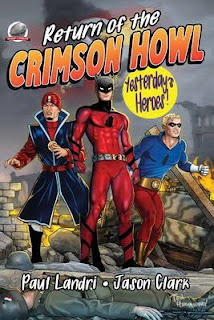
I have a degree in history from Monmouth University. My senior thesis was on propaganda during World War 2 in America. You can read it at the Guggenheim Library in West Long Branch if you’d like. I found the subject fascinating (and got an A on it, to boot!) and wanted to incorporate as much of my WW2 knowledge and nostalgia into the book as possible. When creating the world for Return of the Crimson Howl I had to marry my love of Golden Age comic books with my fascination with World War 2. How to do that, though? Well, the answer is simple: make superheroing a part of the New Deal. I don’t seem to recall if this had been done before, but it definitely worked in my narrative. I currently work with the estate of Joe Simon, who along with Jack Kirby created Captain America. My work has a heavily anti-fascist bend that I’m very proud of.

Despite also being very anti-mafia in real life, I find mafia stories fascinating because it’s a shared part of my Italian-American heritage for better or worse. I’m a big fan of Mario Puzo and wanted to honor his style when I wrote the origin chapter of Rudyard Sinclair, our magical/mystical character named The Swami (He’s on the front cover of Return of the Crimson Howl, done up in full color by Terrific Ted Hammond). In that chapter I got to bring the knowledge of the mob I learned while living out in Nevada and bring it into the story in a fun way. It’s always great to name-drop Kefauver and the hearings that helped destroy the prestige of the Italian mafia.

Lance Stahlberg: If I only wrote what I knew, my books would be pretty boring. I do not live an exciting life. I go out of my way to make sure that not every character has all of my interests and such. Though of course there are elements of me in each of them. I know Chicago, but I've only set one of my books there.

Thursday, January 23, 2025

Scars and All


(Even the Imperfections Are Part of Beautiful You)


Hey, writerly types! I just finished reading the Yours Cruelly, Elvira book by Cassandra Peterson, and she closed the book with this little tidbit that really made me think: "We all have our scars. Let them be a blessing and not a curse."

That got me thinking about the "scars" that make us who we are and how that works into our writing. 

Are you the kind of writer who has a "writer self" separate from your "normal self" -- i.e. is the writer a persona you put on, or do you use the whole of who you are both while writing and in person (at cons, signings, etc.)? Why do you think that is?

Mari Hersh-Tudor: Of necessity, I view the world through a number of different lenses. My work persona is wholly separate from the rest of my identity, which contains, but is not limited to: Writer Gremlin, Cosplay Demon, Fiber Artist and 2-D Artist who live together, Mom/Grandma, Occasional Musical Genius, Cat Whisperer, Really Good Cook, and Oh Look Squirrel.

Honestly my head is pretty crowded and there’s a lot of scampering back and forth in there.

As for Why, I was raised in a very restrictive environment where I had to excise the unacceptable parts of me for public presentation. I kept them and they grew into New Me selves that I kept in my head.

Bobby Nash: I’m pretty much me. What you see if what you get. Don’t get me wrong, when I’m working as Author Bobby, I put my best foot forward and act in a professional manner. What I don’t do is pretend to be something I’m not. I have enough trouble keeping up with who I am. Trying to keep up with a false identity as well seems like a lot of work. The last thing I want to do is give myself more work. I never really put a lot of debate into it. I’m just me. This is who I am.How have both the good and bad events in your life influenced your work? Are there hardships or traumas (that you are okay to discuss in this interview) that you've found made you a better writer? What about good times or happy events that have made you a better writer?

Paul Landri: I don't see myself so much as a "writer." More like a guy who writes if that makes sense.

I don't have a persona any more than I do when I'm voice Acting or doing my day job. When I market my work I tend to take the Stan Lee approach and be a stout cheerleader for my projects to the point of annoyance. Everything is the biggest, the best, the most thrilling thing you've ever read and if you don't read it the whole world will explode! 

Lisa Barker: I'm guessing that I am the same person/persona when writing, doing writing related things, and when not. However, I do take on my characters when I am writing and they are distinct and for the most part strictly tapped into and expressed when and in writing, though I took on mannerisms of my main character from Inheritance that I noticed in real life. Why to all of that? I'm an authentic person so I am the same me that writes as the me you would meet on the street. As for the mannerisms . . . I get really involved in my work, lol.

Sam Kelley: No. My writer self and “normal” self (whatever that means ahaha) are the same person. I grew up writing. My older characters are part of me. We grew up together. I know some of them better than I know myself. There has never been a time that I was active on social media that I wasn’t talking about OCs (the same exactly ones I talk about online now, for the most part lol).

Sean Taylor: I hope I don't. I really try to be as opening "me" in my work as I am in my day-to-day life. Most people who know me for even a few minutes, I like to think. Sure, they may think there is more to me than they can learn in a few minutes of our meeting, but all the real, true, deep stuff is there. The rest is just details. I try to write like that too, dumping my beliefs and heart and deep thinking into my work, even when if that work is mainly surface-level action or adventure stories. 

How have both the good and bad events in your life influenced your work? Are there hardships or traumas (that you are okay to discuss in this interview) that you've found made you a better writer? What about good times or happy events that have made you a better writer?

Sam Kelley: My characters go through a lot. When I first started writing, I was only 11. When I started writing what later became my debut series, I was 13. I hadn’t gone through much trauma or hardship (besides growing up poor) at that point. But, as I got older, my situation changed, and some things that happened to me were eerily similar to things my characters went through. It sucks, but it definitely helped me to be a better writer (in the sense that the characters & their reactions to situations feel a lot more grounded and realistic than they were originally). Good times have influenced my writing too, but in smaller moments, so it seems less noticeable to me.

Lisa Barker: Growing up with an alcoholic mother who thought she was psychic and wanted to train me as well as control me, set me up perfectly to write my debut novel. I wrote about an adult child of alcoholics without realizing I was one or that my character was one until the editing process was complete. My relationship with my mother also made me keenly observant and I think that makes me a good writer. Bipolar disorder made me a mood writer. Before I was medicated or stable, I could write from depression or melancholy; mania drove me to write around the clock, sometimes not sleeping for days. Now, after over a decade of stability, life is good, but writing has eluded me. I don't have a well spring of the abyss to draw upon, so I have to write in the immediacy of being hurt emotionally, and that is not a likely occurrence. Writing has become more cerebral than intuitive (and that makes producing work excruciating). Unless I can find a way to connect emotionally with my characters, which is how I live and breathe as a writer, I am impotent so I am still figuring it out and journaling seems to be helping with that as well as reading other people's books. To get to the point, positive events and a general sense of positivity and well-being have been great for my life, but has had a negative impact on my writing and I am figuring it out.

Paul Landri: I lost my dad when I was 25 years old. Bad age to lose a parent when you're still trying to figure things out. He does suddenly and it was a shock. Because of this I tend to like to give my characters happy endings. It doesn't happen all the time because real life is messy but if I can pit my characters through hell, the least they can get is a little peace. 

Bobby Nash: There are real-life instances that influence my work. Absolutely. It can be little things like experiences at work, on a date, at a con, or getting a speeding ticket. All of those can translate into character moments. Real people and their attitudes, both good and bad, can be a starting point for building a character or situation. Trauma works. Lost a loved one? That gives you a point of reference for writing a character that’s lost a loved one, for example. Use those things, if you’re comfortable doing so. Sometimes, writing them down can be therapeutic. A nice bonus.

Sean Taylor: I sometimes face situation depression (as opposed to clinical), and there are still wounds that sting from time to time, such as when I was let go from the religious organization I used to work for that really defined my identity for a lot of years and left me struggling to figure out who I was afterward. However, struggling through that post-religious work "me" was something that my writing was able to help me work through -- and sharp readers will notice that in my work: questioning, doubts, identity issues, that sort of thing. 

Mari Hersh-Tudor: Everything is fair game. Everything. Even if I’m only observing it happen to someone else, it’s Story Fodder. This online discussion is fair game.

Have you ever thought to "hide" a part of who you are when you write? Maybe an upbringing that doesn't mesh with your current beliefs or a trauma that you'd prefer not to reveal (even subtly through your work) to readers?

Sean Taylor: Of course I do. There are still deeper parts of me that I don't reveal blatantly -- think that wouldn't go over well with my MeMe and Mom, where they still alive, and that's a part of my faith upbringing I still struggle with most likely. It's there in the work, but it's deep and incredibly subtle. However, the more of an ally to the marginalized I seek to become, even some of that is beginning to bubble to the surface. What kind of things? Well, that's for you to find in my work. 

Bobby Nash: Not really. I mean, I do write things that I never personally encountered also. I use what’s best for the story. The only way the audience knows if it’s truly a personal belief or trauma is if I tell them in interviews or in the book. I will also add that I’ve added things to stories that were very personal, but no one knows it because I have never said it aloud. We don’t have to share everything.

Ef Deal: I am so caught up with health issues right now, I can't even begin to answer except with this one example: beginning at age 15, I began to be molested by a man well respected in the community, even honored as a legend, which I supposed in many ways he was. When I told my priest, he said it was God's will and to bear the trial. When I suggested it (a friend of mine) to my mom, she said the girl probably deserved it, but men were like that. I kept my mouth shut until I was 18 and went to college to discover that no, it was not normal. Then I discovered I was not the only girl in my situation with this man, but the other girls just shrugged and said, "Forget it. It happened. He's dead now. It won't change anything. But it changed ME. Last year I was invited by Speculation Publications to contribute to their Grimm Retold anthology, and I found my perfect catharsis in reinventing Fitcher's Birds into "Fitcher's Chick." It is raw, it may be triggering for some women, but it is in essence true in every sense of the word. And I feel GREAT and grateful that I could finally breathe.

Sam Kelley: Not really, no. I have no problem exploring rather intense subjects in my work. Writing my characters navigating situations that are similar or comparable (albeit often worse) to things I’ve experienced has helped me process negative emotions. I am a bit more pragmatic or pessimistic than the stories I tend to write (as I like to give my characters a generally happy end after all of the horrors they experience).

Paul Landri: I don't hide anything in my writing because what's the fun in that? If Stephen King has the courage to write about even a fraction of the stuff he does (under the influence or sober) then why should I or anyone else hide anything they want to put out there if it means a good story? 

Mari Hersh-Tudor: I’m not consciously writing myself into my work so I never considered it before, but now that you mention it, the idea is a good story prompt.

Lisa Barker: The only thing I have noted that I'd hide and not incorporate into my writing are the "current events" of my life which are the present fears and events of my life. The problem I am having when I try to write these days is that I'm not drawing from a murky pool of melancholy, writing about things I won't understand until I've done some developmental editing on myself (therapy, self-education); instead I am conscious of what these things are about and where they come from and precisely what that means. Thinking about that now, this could be really good for me as a writer, but it's as if the old way of writing was like creating my own static electricity and that was a great magic show, but now I have lightening bolts at my disposal that I can fire at will with deadly precision. What the hell do I do now?! Phenomenal Cosmic Power . . . itty bitty living space.

How much do your (use your own definitions for these words) positive and negative traits and interests influence who you are as a writer and the stories you create?

Mari Hersh-Tudor: Writing is excellent catharsis. If your subconscious won’t let go of something, it’s telling you that you have things to work out, and the keyboard is a good place to start.

Lisa Barker: Now that is what I am going to find out after this year of reading and journaling. I feel like what I have to write is a "tell all". Maybe journal writing will suffice. Maybe I'll write a memoir. I'd like to believe that I can still write fiction and now have the maturity to handle that act. It will be really cool finding out.

On the positive side, a lively imagination can take you down rabbit holes no matter what you’re doing. So what if they don’t pan out? A healthy “cut file” can still spark ideas when you need them.

Bobby Nash: I try to imbue characters with the traits that help define them. No one is 100% good or bad, positive or negative. Even Doctor Doom loves his mother. As writers, we dig deep into our own emotions and experiences, but we’re also natural people watchers. I learn a lot from watching other people and finding traits that work for characters that aren’t like me. Again, both positive and negative.

Sam Kelley: The characters in my debut series all contain elements of me (my traits and thought patterns) in them. Many of those traits are dramatized or exaggerated, often pushed to extremes, and many of my characters have mental illnesses or conditions either I have or someone close to me has (anxiety, ADHD, BPD, etc). I’m careful to keep the characters grounded and complex (developing them for 15 years helps with creating a rounded character lol), but it’s an interesting way to explore both the positive and negative of the human experience and how relationships form and play out between characters with certain traits. Psychology fascinates me, which might be why I like writing stories focused on the characters themselves (rather than plot-driven by external forces).

Paul Landri: I'm a lazy bones when it comes to writing. It seems like a chore up until I sit down and get going, then I can't stop myself. I lay the foundation of the story and my coauthor fleshes out the rest. It's a good system because I do the broad strokes and he adds the finishing touches.

I love dialogue and I love dramatic narratives. When I can marry the two it really is a match made in heaven.

Sean Taylor: I work them all in, but some are more blatant than others. I often attribute my negative characteristics (or characteristics I'm trying to overcome or have overcome) to my characters who are either "villains" or "trying to be better people." I see my good qualities in a more idealized way, and try not to use those too liberally because writing them that way can make my "heroes" seem like they don't have feet of clay, and I don't believe that at all.

Thursday, January 9, 2025

Series Work and Genre Hopping


Knowing so many writers the way I do (both in person and through your work), I know that some favor series work and like to go back and revisit the same character(s) over and over again or the same genre repeatedly. Others tend to leap all over the place, from one new character/world to another and bouncing between genres with the kind of abandon that can risk whiplash. Let's talk about that, shall we?

Do you have a preference between writing a series or writing unconnected stories, particularly those involving different genres? Which genres have you told stories within?

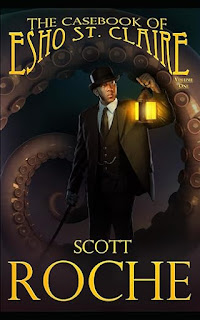
Scott Roche: I write in multiple genres. I've written sci-fi, lit fiction, horror, fantasy, urban fantasy, gaslamp fantasy, superhero stories, romance.

Lucy Blue: I really hope that the stranglehold of the series is finally coming to an end. 'Cause I hate them. As a writer and as a reader. But publishers, be they mainstream or indie or the algorithm of the 'Zon, just adore them for all the same reasons Hollywood does--once you've sold that can of beans, you know how to sell that can of beans, even if the cook changes the recipe a bit with every shipment. 

Amelia Sides: I prefer writing stand-alones in a similar world or a series of characters then series, but series seem to be what publishers want.

Paul Landri: Everything I've done so far has been a series. Crimson Howl is superhero pulp fiction and lends itself well to the serial format. My Simon and Kirby project is, of course, a serial since it's based on their comic books. I tend to stay with one particular genre until it's finished until I move on to my next project which will likely be horror with a historical bent (Al Capone vs. vampires? Samurai vs. zombies? Oh hell yeah!)

Matthew Barron: I tend to get bored doing things that are too similar, so I might revisit characters and worlds but I like to explore other things in between. I've written urban fantasy, horror, high fantasy, science fiction, short stories, plays, books, and graphic novels.

Sean Taylor: I much prefer to write non-series work, especially series work in the "epic" category. I have less vile for a recurring character in a series, a la James Bond or Ms. Fisher in standalone stories than I do for a multi-part series that needs several volumes to tell its tale. Not everything has to be the freakin' Lord of the Rings, even in fantasy. I do however like to go back and revisit certain characters, but only when I have a new story to tell for them, such as with Rick Ruby or with some of my superhero folks from the iHero/Cyber Age Adventures days. 

Rachel Burda Taylor: I like series, but I go back and forth between a series that follows a single character/couple and a series based in the same world and loosely following a world-problem but with a different Protag/LI and stand-alone plot for each book.

Aaron Rosenberg: I do bounce between genres, but I also write both standalone novels (and short stories) and series. There are times when, even if I love a character, I know their story is done—DuckBob is one of those, I revisit him in short stories occasionally but the novel arc was four books and finished. Other characters and their stories are a one-and-done, not because I don’t like them as much but because the story is told and it’s time to move on. I couldn’t write just one character, series, or even genre ad infinitum but there are plenty of characters and stories that I feel warrant more than one book, and I do revisit my favorite genres a lot.

As far as the genres themselves, I’ve written: urban fantasy, epic fantasy, dark fantasy, near SF, far-flung SF, space opera, superheroes, action-adventure, spy thriller, mystery, Western, romance, cozy, humor, and probably a few I’m forgetting. 

Ef Deal: When I create a cosmos, the characters lead full lives, so once one conflict is resolved, there’s no reason to assume there won’t be another one. When I wrote my first novel, it ended by setting up both political and ecclesiastical conflicts that my MC didn’t think would involve her, but I realized would absolutely have to involve her, so I began writing more stories. They are all standalone, but they are also sequential. I have planned nine novels in that series so far.

My current work is a steampunk series and again it evolved into a series because the characters were all involved with external affairs that created more conflicts. They have histories and futures. I have to tell their stories.

Brian K Morris: As a reader, I've loved series books (Doc Savage, The Shadow, Mack Bolan, Remo Williams, Captain Hawklin, Abraham Snow, Code Name Intrepid, etc.). As a writer, however, I've only recently begun work on a series, simply because certain mechanics of recurring characters (exposition-wise, mostly) intimidated me until recently.

Ron Thomas: Series for novels. One offs (that might be revisited) for short stories. Genres: action/adventure, sword & sorcery, science fiction.

Julie Cochrane: I like series fiction. It's what I like to read and what I like to write.

That said, some jumping around is, for me, necessary because at some point I can't continue to write a series while trying to sell the first book in it. There's just too much risk for me. So that has me, now, reaching out to do something different so I can keep writing while querying agents.

Also, there is the realistic possibility that trad publishing may look at my current work and say, "Meh."

I need a plan B, and that turns out to be something very different.

I've written military SF of the cloak and dagger variety and now I'm really feeling it for urban fantasy.

John French: Over the many years I have been writing I have created several series characters, many if whom have found their way into their own collections, which is another advantage. When I'm behind a vendor's table, I find that people like to buy books about the same character, and if I have more than one book about that character, they sometimes buy more than one or buy another when they come back. 

Bobby Nash: I do both. Series are fun because you get to revisit the characters again and again. Readers also enjoy series so they can keep up with characters they love (or hate). There is something fun about a stand-alone though. Even my series book wrap up the main plot in each book. I play in most genres. It’s fun.

Susan H. Roddey: I love the idea of a series, but it never seems to work out well for me in execution. I tend to get bored a little too easily. Most everything I write starts out standalone, but eventually evolves into something that could have additional books. The problem is, it puts too much stress on my ADHD squirrel brain and I end up falling off with everything. 

Tamara Lowery: I personally prefer writing a series. I love spending prolonged time with characters I've created, getting to know them and making their lives difficult. Of course, I've had immense fun writing the few short stories I have. I do have a couple of stand-alone longer works I wish I had time to get to. There's just not enough time to dedicate to everything.

The two series I do have published and in process are both action/adventure, but one is semi-historical dark fantasy that I intend to take more towards grimdark as it progresses. The other is steampunk episodic fiction. I have an epic fantasy stand-alone awaiting my attention as well as a dystopian slightly political stand-alone in the wings.

What are the advantages (both marketing and as a writer) of doing a series?

Lucy Blue: Every book I've ever published with a NYC press has been part of a trilogy, and most of the indie ones I have, too, but not because I wanted to. Right now I have an ongoing cozy romantic historical mystery series, The Stella Hart Mysteries, and the first book in a new medieval romantasy series, The Dragon's Wife, is coming out on January 15. And I love all of those books and loved the experience of writing all of those books. And the Stella books have been some of my most successful. But my southern gothic horror book, The Devil Makes Three (which has also done pretty well) is very much a standalone, and I loved writing it that way.

Tamara Lowery: The advantages of series from both marketing and as a writer is a chance to more fully develop characters, events, and settings. From a marketing standpoint, it lets readers know that there will be more story, a chance at prolonging their escape to another world.

Ron Thomas: I hope that book 1 makes book 2 more sale-able and so on. (I have a nine-book deal, so I need to keep growing readership.)

Susan H. Roddey: In this market, a series is definitely advantageous if you get it in front of the right audience. Read-through seems to be the biggest draw, especially with Booktok being as insanely useful as it is. The primary DISADVANTAGE of a series is that there are a lot of readers who won't even start it until it's completed, which messes with sales algorithms and frustrates writers. It's part of why I prefer standalones -- both as a reader and a writer.
Rachel Burda Taylor: Advantages of series are that they are easy to get reader follow through from one book to the next, since the readers get hooked. As a writer, I really enjoy exploring my worlds (even the contemporary ones) and it's impossible to thoroughly do that in one book. I also like the feel of a bigger plot that moves from one book to another. World-building, if complex, is also just really time-consuming so a series cuts that down.

John French: I prefer writing about series characters, even when writing short stories. It saves my from having to create new characters and settings, which is one of the advantages of having series characters. 

Matthew Barron: Readers who like a series tend to come back for each new installment, so it might be easier to grow an audience that way.

Bobby Nash: Readers love following series, especially if they love the characters. When asking someone about their favorite series (book, comic, TV, or movie), it’s rarely the plot they talk about, but the characters. “I love the Bosch books” for example. Marketing a series can cover multiple books at once.

Brian K Morris: Marketing a series seems to be easier because it's mostly preaching to the choir. You would have a built-in base of readers and from there, you can attempt to grow it. As a writer, I find I don't have to pack EVERYTHING I want to say with a character because there will be other opportunities to make those points down the road.

Aaron Rosenberg: It’s a LOT easier to build a brand if you’re writing in a single genre, and even easier if you’re writing a single series. That way, anyone who finds and likes your work knows exactly what they’re getting when they pick up the next book.

Sean Taylor: The biggest advantage I can see is the marketability. Fans want to follow the next book, because fans really dig series. And as long as fans drive sales, publishers will dig series too. To me, though the whole enterprise leads to weakened storytelling brought on by the increased need to keep going. It's like when you get a surplus or supply issue of a comic book that just isn't as good simply because a new story had to come out because the calendar date changed. 

Paul Landri: I don't have a very big following yet but I know people are looking forward to Crimson Howl 2 and 3 so I guess my particular audience likes serial-type stories. It's definitely easier to market because it's pre-established and known (even in a limited capacity)

Scott Roche: Your fans know what to expect. It's easier to market. People love series.

What are the advantages of hopping from one new, unrelated work/genre to another?

Rachel Burda Taylor: There is something fun about learning something entirely new, especially in terms of genre/world. Creatively, it gets my brain going.

Susan H. Roddey: I'm happy with a one-and-done story. I also despise a cliffhanger, which is how so many contemporary series force read-through.

Ron Thomas: Doing something in between is a mental palate cleanser. I am working on a military aviation short story between action novels. Lets me come back fresher.

Tamara Lowery: The advantage of hopping from one unrelated project to the next is the chance to reach a wider audience and to keep from getting in a writing rut or just getting lazy.
Aaron Rosenberg: For me, it’s the chance to write something different than what I’ve just finished, and also to explore something completely new. I’ve done darker (for me) books and though they were fun, I wouldn’t want to always write dark. But I feel the same way about over-the-top comedy—the DuckBob books were a blast to do, and I do like to do the occasional short story in that idiom, but I couldn’t do that kind of wackiness all the time. Switching things up lets me experiment, which I feel helps me grow as a writer. And sure, people who like my SF comedies might not care for my dark occult thrillers. On the other hand, someone might try a genre that’s new to them because they liked my work in a more familiar genre, and that’s just awesome.

Brian K Morris: For me, genre-hopping helps keep me fresh. I don't enjoy reading two similar books in a row unless it's research. But that's a me issue.

Paul Landri: It allows a break from the genre you are working in. Horror will be refreshing to me since I've been consumed with superheroes.

Bobby Nash: It keeps me from getting bored. As a reader, I read multiple genres because I like multiple genres. As a writer, I write multiple genres because I like multiple genres.

Scott Roche: I'll let you know when I find out. But seriously, for me the benefit is purely personal. I enjoy writing in different genres and I have series in different genres.

Sean Taylor: For me, it's the joy of creating what I want to create. On top of that, I get to pretend I'm a classic writer like Wells, Bradbury, or Vonnegut, who rarely even revisited characters, much less wrote a series. 

Matthew Barron: The pros are that it keeps me interested, and if a reader comes to my table there is a lot of variety. The con is a big one though. Branding and marketing are harder, and a reader who likes one of my books might come back to my table or website and not find anything similar.

For new authors, do you recommend one over the other? Why?

Lucy Blue: As for new authors, my advice on this is the same as my advice on everything else--nobody knows what's going to work in the marketplace ten minutes from now, much less two years from now or longer when you finish your book and get it published. Write the best book you can write right here and now, the one that makes your soul sing, and if it features a character or a setting or a trope that will bear repeating in a series later, awesome, but if it doesn't, that's fine, too. Wait until you have a bestseller and a publisher clamoring for a sequel to worry about it. Writing to the market has never been a good idea for novelists, but right now, it's a TERRIBLE idea.

John French: To the new authors, I would recommend creating characters you can use more than once and, as a genre hopper myself, don't limit yourself to only one genre.

Bobby Nash: Do what works best for you.

Scott Roche: No. You need to write what you enjoy. You do you.

Rachel Burda Taylor: For new authors, I'd recommend writing a stand-alone and making sure they enjoy the process and actually finish the book before worrying about more. They can always turn a stand-alone into a series. When I see new writers talking about their 12-book series, I always wince a bit. Overcommitting is a great way to really sink yourself (for me anyway.)

Susan H. Roddey: As for a recommendation on what to write -- whatever you think you have the stamina to finish. Don't be an ambitious knucklehead like me and fizzle out mid-series, because that never seems to end well.

Sean Taylor: Write what you love. If you love a character and want to tell an epic story, do it. Just know it's not for me. If you want to hop around to different MCs and different genres like a pinball, go for it. I'll probably dig at least half of it. But the important this is to write what you want to write and create the kind of stories you'd like to see more of in the world. 

Ef Deal: As for new writers, I think having a series can be an advantage to be able to offer a future to publishers.
Ron Thomas: When I was new, I wrote whatever I could for whoever would take it (academic, trade journals, non-fiction magazines, pro wrestling mags … which are “creative non-fiction” on pulp paper). However, the book series was always in planning and “under construction” in the background. I felt I needed plenty of clips to be taken seriously to pitch something book-length and beyond.

Paul Landri: I don't recommend any author doing something they don't like or won't enjoy. Writing is done for yourself first an the audience second so wrote how you want and let the chips fall where they may.

Brian K Morris: I have no preference. Write what you want to read, pure and simple. Write to chase a trend and you'll find the trend changed by the time you publish. Write your best book for you, then market to find like-minded readers.

Aaron Rosenberg: I think it really depends upon the author. If you feel in your heart and soul that you are an epic fantasy writer, focus on that to start. You can experiment and try a hard SF short story once you’re established, but first make your bones on the area you already know you love. On the other hand, if you’re not sure which genre appeals to you the most, or you have several you love, then absolutely try them all. Flexibility can be a gift—some of my work has come about when someone asked me to write something and I said, “You know, I’ve never done one of those before. Sure, let’s give it a go.”

Tamara Lowery: I recommend new writers tackle whatever they feel most comfortable with, regardless if it is a series or various stand-alones. I also think they should experiment with both long form and short form. These are very different styles requiring different skill sets. Both can help make for better writing with practice.

Tuesday, May 21, 2024

Paul Landri: The Darker Side of Nostalgia

Paul Landri is a writer, voice actor, and chihuahua enthusiast. He's also somebody you should meet. So, because I love you so much, here he is.

Tell us a bit about your latest work.

Back in October of 2023, my Cowriter Jason Clark and I announced the publication of our debut novel, Return of the Crimson Howl. A cross-country murder mystery featuring original golden age superheroes. When the grandfather of the golden age of superheroes, Parker McCoy, is brutally murdered, it is up to two federal agents of a slowly becoming defunct Federal agency known as the Golden Age Task Force to find McCoy’s top three heroes, the Crimson Howl, The Automatic Man, and the Swami to figure out who killed him and why. It is a thrilling cross-country adventure that explores the backstories of these amazing heroes…but things aren’t always what they seem.

What are the themes and subjects you tend to revisit in your work?

I suppose the themes we are working with now are the darker sides of nostalgia. Return of the Crimson Howl is a real “never meet your heroes” type of book. The storytelling lays bear the attitudes and mores of the folks who grew up in that era where certain beliefs are commonplace and tend to leak out in even in the face of polite society. We asked ourselves, “What would a superhero be like in real life, if he lived long enough to see the present day? How would their cultural biases and upbringing affect how they see the modern world.” That isn’t to say every person who grew up in that era (in this case the Golden Age of comic books, 1930’s-1950’s) was extremely prejudicial, but these characters definitely are in their own way and we wanted to explore that.

I have a degree in history. I studied propaganda during World War 2. My thesis was based around this and how powerful propaganda can influence people. Aside from engaging in some historical realism which helps to ground the book in reality, I make mention how Superheroes themselves are great for propaganda purposes.

What happened in your life that prompted you to become a writer?

I’ve always had an inclination to write. I think because it came so easily to me. My father (rest in peace) read to me as a child and it helped establish, first, my love of reading. Stephen King said if you want to write, you must also read, and I was a pretty voracious reader from the get-go. My father was also a big reader so seeing him reading definitely influenced my love of books, horror books in particular because they both terrified and fascinated me.

What inspires you to write?

I usually have a story or two rattling around my head. It starts as a bit of dialogue and goes from there. Dialogue is my favorite thing to write because I’m also a voice actor so making conversations sound authentic is important to me. I feel like I can tell stories from the very depths of my being (as pretentious as that sounds) because writing allows you to become less inhibited. There’s nothing stopping you from writing that gory scene or that sex scene if it contributes something important to the story itself.

What would be your dream project?

So, I’m a 90’s kid. I grew up with the X-Men cartoon which got me into comic books, which also influenced my writing quite a bit. One of my favorite group of character are the youngsters of Generation X. I remember when the pilot for the live action TV show came out on Fox. I stood up late to watch it and was so excited afterward I barely slept. This cemented my love of those characters. I would love to write a mini-series for television around those characters but with a slight twist. I’m a huge punk and ska fan and the premise would be Jubilee (who aside from being a mall-rat, would also be heavily into the punk and ska scene, which was pretty huge in the 90s thanks to the Warped Tour and Skate and Surf Festival on the Jersey Shore, which is where I grew up,) being sort of “demoted” from the mansion in Westchester by Charles so she could focus on her schooling, to the satellite school on the Jersey Shore (I always pictured Wilson Hall at Monmouth University, my Alma Mater and the setting for the movie version of Annie, for this) which is run by Banshee and Emma Frost. She reluctantly goes and meets the Generation X crew -- Mondo, Skin, Husk -- all those merry marching mutants- and gets them to steal a car so they can go to the Warped Tour in Philadelphia. On the way, they learn more about themselves, their powers, and how to deal with prejudice from a world that hates and fears them. No villains, just Banshee and White Queen trying to find them and bring them home. It would end, of course, with them making it to the concert.

This would be my swan song to the 90’s with the punk rock and ska I grew up with supplying the soundtrack. Think Bad Religion, Rancid, Operation Ivy, Less than Jake, and Reel Big Fish and NoFX.

If you have any former project to do over to make it better, which one would it be, and what would you do?

Actually the Crimson Howl books are a hard reboot of characters based on a project I did in college that, in retrospect, was complete trash. It’s amazing what time, maturity, constant reading, and collaboration with a writer who is on the same wavelength as you, can do to a story.

What writers have influenced your style and technique?

Stephen King is my favorite author and I believe his writing style has influenced mine the most. I read mostly his books because one, they scare the crap out of me in the best way, and two, you can’t beat King when it comes to characterization. I am constantly trying to make my characters as real as possible. Do I fall short? Sometimes, but I keep chasing that dragon and probably will until I can’t type anymore. Neil Gaiman and Simon R. Green definitely have an influences in helping with world-building, especially Green.

As I said earlier, dialogue is my favorite thing to write and I don’t think I could have written what I did without acknowledging Quentin Tarantino as an influence, at least when it comes to smart, convincing dialogue.

Where would you rank writing on the "Is it an art or it is a science continuum?" Why?

Writing is an art when you are in the process. It is a science when you are finished and making it commercially viable.

What is the most difficult part of your artistic process?

I would say keeping continuity is the most difficult part. The Crimson Howl series is three books (so far) with Books 2 and 3 coming out hopefully soon. I was constantly going back to Book 1 to make sure I wasn’t breaking continuity or doing something that violated the laws of the universe Jason and I created. It was a hard go writing Book 2, but I think I did ok with it.

Sometimes, the hardest part is starting. I dreaded starting Book 2 until I actually bit the bullet and started it. After that it was like an avalanche and I had the first draft done in a few weeks. Jason is editing it. We work well like that. I take the story and, like Hawkeye Pierce, put it together in a rudimentary way and send it over to Jason, who, like Major Winchester, puts the fine touches and polishes it up into something extraordinary.

How do your writer friends help you become a better writer? Or do they not?

I don’t talk a lot about the process with my other writer friends but we do encourage each other and celebrate our successes big and small. I feel like we are all working toward different goals and have different stories to tell. Writing tends to not be one size fits all so what works for my fantasy writer friends and their network might not work for me, but we are definitely celebrating when they break a sales record and vice versa.

What does literary success look like to you?

I just had my first book signing on May 4th at a local comic book shop. Convincing total strangers that this book was worth buying and collecting their cash was a huge thrill because I managed to sell them on the idea of the book and they believed in that idea strongly enough to give it a chance. My hope is to one day see these characters come to life on the big or small screen.

Our first quarterly sales actually broke all of our publisher’s records and that was just due to me constantly promoting the book on Facebook. I think, once we venture out onto other social media platforms and do other signings at conventions, people will take notice and maybe that big dream of mine will come true one day.

Any other upcoming projects you would like to plug? 

I have the absolute honor of working with the Estate of Captain America co-creator, Joe Simon. Jason and I have been turning a few of his and Jack Kirby’s lesser known superheroes, The Vagabond Prince, The Black Owl, and Blue Bolt, into radio plays for The Atlanta Radio Theater Company. We’ve done this for three years now and will (hopefully) be back at Dragon*Con 2024 with another thrilling episode of The Golden Age Action hour.

I am also doing a production at the Academy Theater in Hapeville with ARTC on May 26th where I will be playing a mischievous little goblin in a fantastic play called Pilgrim Souls which was written by my dear friend and musical collaborator on the Simon and Kirby Scripts, Ellie Cook.

Lastly, Reign of the Crimson Howl is being edited by Jason as well and I am starting the third book in the series, Ruin of the Crimson Howl, a little later this month.

For more information:

Facebook

Amazon

Friday, November 3, 2023

AIRSHIP 27 PRODUCTION PRESENTS RETURN OF THE CRIMSON HOWL

During the 1940s the super-powered Crimson Howl, Human Bullet, and the Swami were known as The Exceptionals. America's first-ever enhanced heroes battling crime across the land. In World Warr II they joined the Allied Forces and helped defeat the Nazis only to come home and be perceived as a threat by their own government. In the end, they were ordered to cease their activities or face imprisonment. In complying, they disappeared from the public eye.

Now, years later, their mentor, science genius Dr. McCoy is found brutally murdered with a message in blood left scrawled across his office wall. FIND THE HOWL. Task Force Agents Ben Mulcahey and Harken Rourke are assigned the case which will entail locating those old super beings and uncovering secrets long hidden in the past. Secrets someone considers worth killing for.

First-time novelists Paul Landri and Jason Clark offer up a grim, realistic look at the world of super-beings and the hidden layer of darkness that lies beneath the surface of absolute power. “This is an adult, gritty tale,” reports Airship 27 Production Managing Editor Ron Fortier.” Landri and Clarke don’t hold back any punches in detailing what’s really behind the masks of our heroes.”

Artist Sam Salas provides the black and white interior illustrations with Ted Hammond delivering a beautiful color cover. Award-winning Art Director Rob Davis designs the finished package on another Airship 27 pulp thriller.

AIRSHIP 27 PRODUCTION – PULP FICTION FOR A NEW GENERATION!

Available now in paperback from Amazon and soon on Kindle.