Showing posts with label Tarzan. Show all posts

Tuesday, April 20, 2021

PUBLIC DOMAIN CHARACTERS: A USER'S GUIDE -- IF YOU LIKE...

by Frank Schildiner 

One of the issues that writers face is an inability to fulfill the lifelong desire of writing a character they love. Take me, for example; I am one of the last major fans of the occult work of Dennis Wheatley. My chances of writing his seminal hero, the elderly soldier/magus the Duke de Richleau are, as some of my Southern friends like to say, “slim to none and slim already left town”. Sad fact, but absolutely true. I have also reconciled to the fact that I will also never have the luck of writing the Shadow, John Thunstone, Shang Chi, Daredevil, or Kull the Conqueror.

 However, when examining the world of public domain heroes, you can enjoy a piece of your dream by grabbing some of the pastiche and homage characters that appeared over the years. Here are a few you may wish to consider.

If you like…

1. Doc Savage – One of the most imitated heroes in fiction, Doc Savage has influenced comics, films, and many other areas of media. However, he is basically untouchable and shall remain so for the next few lifetimes. Here are three characters, however, written in the pulp period based on the great adventurer that are available to writers:

a. Jim Anthony – half-Native American, half Irish, manly, strong, brilliant, and wealthy. Jim Anthony is a version of Doc that fought evil world-shaking foes (for his first 10 tales) and enjoyed the company of beautiful women. An excellent alternative. 

b. Thunder Jim Wade – Created by horror writing legend Henry Kuttner, Thunder Jim Wade grew up in an advanced civilization in Africa and even owns his own island. His favorite device is the Thunderbug, a combination plane/tank/sub and he battles evil-doers around the world. Also, he owns his own secret island as a base.

c. Captain Hazzard – Blinded as a child in an explosion, Hazzard developed a form of ESP before surgery restored his eyesight. A genius adventurer with a team of aides, Captain Hazzard only appeared one time in pulps and has received a few revivals since that single appearance. A great deal can be done if you read the first rather poorly written novel and take this Doc Savage pastiche your own direction.

2. The Shadow – The Shadow’s influence upon fictional heroes is probably the only one equal or greater to Doc Savage. Even legendary pulp hero Richard Wentworth, the Spider, emerged from this character’s influence. He did spawn several effective pastiches over the years, though most remain under the control of individuals or companies. Therefore, I will simply give you one that should fulfill your dreams:

a. The Black Bat – Tony Quinn, a crusading District Attorney, has acid thrown in his eyes by a gangster. Blinded, he secretly receives sight again from an experimental procedure that also grants him perfect night vision. Pretending his blindness continued, he dresses in a black costume and battles crime as the Black Bat. This one practically writes itself; the only thing lacking are interesting villains. The Black Bat’s enemies were dull and forgettable, which probably hurt sales. Always remember, his DC comics counterpart’s villains are known throughout the world by non-comic fans. If you create some fantastic enemies, the Black Bat may grant you your dreams of the Shadow.

3. Tarzan – Hero of pulp, films, radio, television and more, Tarzan is probably one of the top five best known fictional heroes in history. Whether people know him from the classic Edgar Rice Burroughs novels, the many films using him in various capacities, or the television series that emerged, people know this archetype. Obviously, Tarzan is as untouchable as the above heroes (and do not listen to those who believe otherwise unless you plan on enriching lawyers), but he has many public domain peers. Here are a few:

a. Polaris of the Snows – Written in 1915 by Charles B. Stilson, Polaris was raised by his father in Antarctica and grew up a giant, blond Tarzan type. After his father passes away, he decides he will find civilization and discover his identity. Of course, he rescues a beautiful woman along the way and discovers a lost civilization in the process. Polaris is a basically forgotten character who has a slightly different direction for his origin.

b. Ki-Gor – Subject of over fifty novels, Ki-Gor is a blond jungle lord who had most of the ideas Burroughs brought in his tales. He possesses a beautiful wife, native friends who he trusts and  who provide good tales (under the better writers), and an Africa replete with lost civilizations, evil adventurers, and weird creatures. You really cannot go wrong with writing Ki-Gor if your dream is to write Tarzan tales.

c. Mowgli – Created by the legendary Rudyard Kipling, Mowgli and his Jungle Book stories are about as much fun as you can have reading fiction. Most know the characters from the Disney animated film (which I happen to adore), but there is so much greater depth to that world than any film can impart. Mowgli, Shere Khan the lame tiger, Bagheera the black panther, Baloo the sloth bear, Kaa the giant python, Mother and Father Wolf…I could go on for days of the rich world Kipling created. Mowgli and his tales are the stuff of dreams and a great choice for any prospective writer. One final note—the character of King Louis is NOT from Kipling. That is a Disney creation (played by musical great Louis Prima), so do not use him in your stories.

This is just a start, but the best plan is to usually start at the top of any list, so Pulp heroes you can write to get the feel of writing the untouchable should be no different.

===========================

Frank Schildiner is a martial arts instructor at Amorosi’s Mixed Martial Arts in New Jersey. He is the writer of the novels, THE QUEST OF FRANKENSTEIN, THE TRIUMPH OF FRANKENSTEIN, NAPOLEON’S VAMPIRE HUNTERS, THE DEVIL PLAGUE OF NAPLES, THE KLAUS PROTOCOL, and IRMA VEP AND THE GREAT BRAIN OF MARS.  Frank is a regular contributor to the fictional series TALES OF THE SHADOWMEN and has been published in FROM BAYOU TO ABYSS: EXAMINING JOHN CONSTANTINE, HELLBLAZER, THE JOY OF JOE, THE NEW ADVENTURES OF THUNDER JIM WADE, SECRET AGENT X Volumes 3, 4, 5, 6, THE LONE RANGER AND TONTO: FRONTIER JUSTICE, and THE AVENGER: THE JUSTICE FILES. He resides in New Jersey with his wife Gail who is his top supporter and two cats who are indifferent on the subject.

NOTE: This article was originally posted at Bibliorati. It is reprinted here by permission. 

Monday, December 8, 2014

The Writer Will Take Your Questions Now #306 -- Why Massive Multi-Volume Epics Fail Readers and Writers

Why do you feel so strongly against multi-volume epic series?


In order to be fair, let me explain first the difference I see between a mere series and an epic series. It'll be semantics to some, but to me, it's an important distinction.

A mere series simply follows a character or world such as Edgar Rice Burroughs' Tarzan books or the Conan stories of Robert E. Howard, or the Mack Bolan series. Each story tends to be a stand-alone volume but can also do the long-term reader the service of advancing the key leads' characterizations, but each book clearly begins, travels through the middle, and then ends within a single volume.

An epic series seemingly has no end in sight, even when it teases that it does. Each book seems to be designed for the purpose (at least to publisher's marketing department) of selling the books that came before and the ones that will come after (and there will be more to come after). The enjoyment that can be gained from any single volume is overshadowed by the "need" to own or read every book in the series in order to be a true fan (so to speak). Series like The Wheel of Time and Game of Thrones and Highlander fall in to this group for me.

Clear on the definitions? Okay, let's begin.

First, I love series. I love to follow a character I've grown attached to. But I also love a story to have a clear beginning, middle, and ending across a finite time line. As such, a series such as Ian Fleming's James Bond, Kim Harrison's The Hollows, or Mike Hammer's Mickey Spillane books work for me.  

Second, because I want some sense of closure when a novel is over, I think the works that pull a Empire Strikes Back "ending" fail. Sure, they are fantastic if you're writing a cliff-hanger serial from the movies. (But, even those tended to end the current story before hitting you with a cliff-hanger teaser for the next adventure.) I'm thinking of series that get into series beyond 5 or 6 books at this point, and some of them that don't go farther than that. If you expect me to invest the time to read between 300 and 1,000 pages, then give me a satisfying ending, not a rambling "to be continued."

Third, I don't like them because of the disservice they do to series writers. A writer gets pigeonholed into writing a single storyline or group of characters because "that's what sells" -- and an epic series is most always an easy sell. It doesn't matter if that writer wants to take a break and try his or her hand at some urban horror or romantic drama. Nope. The contract calls for more epic monarchist fantasy and, by God, that's what he or she must do. Sure, a multi-million selling series writer can get a break by throwing his or her financial weight around, but not so the mid-listers who don't get an opportunity to let the other voices in their heads out to play for a while too.

Fourth, they also do a disservice to other writers. For every new volume in an epic series, that much less shelf space is available for writers willing to take risks, to try new things, to create new characters, etc. The full body of work that will never see the light of day is affected and hampered. Readers who are looking for something new won't find it. The grand total of stories available to be discovered is lessened because of that one guy who sets up a tent on the beach rather than a towel.

Thursday, February 21, 2013

Going Public About the Public Domain

All right, writer types... in light of the public domain case against the Arthur Conan Doyle estate, this week's roundtable for writers is about just that -- public domain law. We sought out a few of our favorite new pulp writers to get their thoughts on the matter.

What is public domain law getting right?

Percival Constantine: Keeping these properties viable for future generations. There are lots of great characters that, if not for the public domain, might just be left to wither and die. And there are many great stories we may not have gotten. One example that immediately comes to mind is the League of Extraordinary Gentlemen. If not for the public domain, these characters might be owned by competing corporations, which would have made one of the greatest graphic novels completely impossible to create without paying hefty licensing fees.

Lee Houston Jr.: Not being a lawyer, as far as I know, it's protecting the integrity of the original material and keeping anyone else from claiming the classics are actually their own work. The rules here in America concerning public domain media properties state that you must include the original credits in your presentation, which is why you still see those within the cheap DVDs of today. When Ted Turner was on a color the black and white films kick for a while, he could call the colorized version "his" while the original was still public domain.

What are the problems that public domain law is creating?

Percival Constantine: The real problem is a lack of consistency across the world. Characters that are public domain in one country aren't in another, which restricts distribution in those countries and, in my opinion, creates an environment in which piracy can thrive.

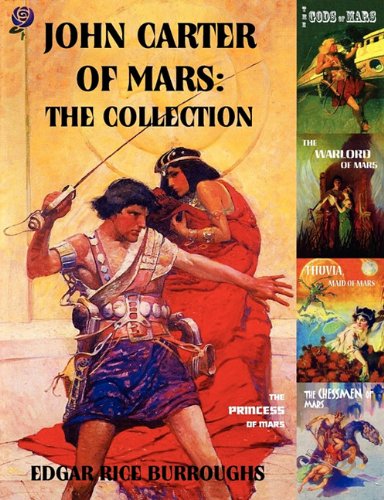
It's also not always clear what is and isn't public domain. For example, many of Edgar Rice Burroughs' Barsoom and Tarzan books are public domain and can be downloaded freely from Project Gutenberg or other sources. But John Carter and Tarzan themselves are not public domain. These situations can create a lot of confusion and lead to incidents in which someone can end up being sued for a story they published without really knowing they were breaking the law.

Lee Houston Jr.: In light of the Doyle estate lawsuit, obviously who can use what when, and how should it be used "properly". The rules are different in England, so the BBC got the Doyle estate's permission to do the modern "Sherlock". Yet CBS, after being turned down by the BBC for an American license to the property, realized Holmes was public domain, and is now doing their own version of a current detective with "Elementary". There are too many unauthorized uses of classic characters as it is, which dilutes the genre pool for the "official" works continuing the legends. The new comic book adventures of The Shadow are authorized, but I'm totally surprised that Dynamite Comics hasn't entered the discussion yet concerning their work with the Edgar Rice Burroughs properties.

Warner Brothers and Disney cannot help the fact that the earliest appearances of their characters have fallen into public domain, yet between continually lobbying lawmakers for changing the existing copyright laws and producing new material, they maintain overall ownership of Bugs Bunny, Mickey Mouse, etc. Can the same be said of the Burroughs and Doyle estates in regards to their properties? Should they have the same rights as the studios or not? After all, Disney certainly put their moniker all over their animated Tarzan efforts, the attempted Broadway adaptation of same, and the recent John Carter movie.

Whom do you think public domain laws should protect, and how far into a creator's family lineage should that protection continue?

Percival Constantine: Public domain laws should protect the work and the public. As for how far into a creator's lineage should the protection continue, that's a difficult question to answer. I really don't see any problem with the old definition of the author's life plus fifty years. With advances in medicine, that's long enough to possibly extend to the creator's grandchildren.

For the most part, though, the current extensions in copyrights aren't to the benefit of the creators—they're to the benefit of the corporations that have bought these characters from the creators.

If say, Superman were to fall into the public domain, there would be nothing stopping Warner Bros. or DC Comics from still making movies, TV shows, and comic books about the Man of Steel. And with their financial strength, they could market their versions far more fiercely than competing ones.  If Siegel and Shuster's heirs wanted to make more money off their ancestors' creation, then they could also produce new stories as well (and I see nothing wrong with them having to actually put in some work to earn that Superman money, instead of just being lucky enough to be related to the creators). But it also means that we could get some interesting and original takes on Superman from other creators.

Lee Houston Jr.: Very good question, considering that some day all of us current writers' estates will hopefully be facing similar dilemmas. Immediate family for sure. It might be stretching things a bit too far extending it to grandchildren and beyond, but that is for others to decide.

How can public domain law be fixed to best protect creators AND ensure the perpetuity of timeless creations for new generations?

Percival Constantine: That's another tough one. I'm not a lawyer, but I think there should be international standards and clear cut definitions of what constitutes public domain and what doesn't. This is part of a larger problem involving copyright law as a whole. Right now, the laws are skewed in the favor of corporations, not in favor of the creator. The upcoming Wolverine movie will no doubt make a whole lot of money. How much of that money goes to Len Wein and John Romita, who created the character? How much of it goes to Chris Claremont and John Byrne, who spent a lot of work developing some of the most recognizable aspects of the character?

Corporations already have an unfair advantage over the average creator. They don't need help from the government in terms of copyright extensions that serve no benefit to the creator and only exist to enable the corporation to continue to milk a creation decades after the creator's death.

Lee Houston Jr.: Above all else, the laws should continue to protect the integrity of the original works. I cannot picture any version of Sherlock Holmes wearing Bermuda shorts and riding a skateboard while chewing bubblegum and jamming to his iPod. Yet the current BBC version does prove that some properties, if handled properly, can work as well in a more modern setting besides their original time periods. One thing a lot of people keep forgetting is that a lot of the material we consider period pieces today were actually originally written as contemporary (for their times) tales.

Overall, this is an issue that we'll just have to wait and see how it plays out in the courts, especially considering that the copyright laws are somewhat different overseas than they are here in the United States.

==============================================================

All illustrations used in this article are from the public domain, in case you're curious.

Tuesday, February 21, 2012

ERB Inc. Sues Dynamite Entertainment Over John Carter and Tarzan

The family-owned company that holds the existing rights to the works of Edgar Rice Burroughs has sued Dynamite Entertainment and Dynamic Forces, accusing the publisher and collectibles producer of trademark infringement and unfair competition with the release of "Lord of the Jungle" and "Warlord of Mars" comics.

In the lawsuit, filed Thursday in federal court in New York City and first reported by The Wall Street Journal, Edgar Rice Burroughs Inc. claims the comics were published without authorization after Dynamite Entertainment President Nick Barrucci was told that Dark Horse held the licenses for the "Tarzan" and "John Carter of Mars" novels. The complaint insists the comics "Lord of the Jungle," "Warlord of Mars," "Warlord of Mars: Dejah Thoris" and "Warlord of Mars: Fall of Barsoom" are likely to "deceive, mislead and confuse the public" about the source or sponsorship of the content, causing "irreparable injury" to ERB Inc.

Established in 1923 by Burroughs and now primarily owned by his grandchildren and great-grandchildren, ERB Inc. owns the trademarks to "Tarzan" and "John Carter of Mars," as well as the common law rights in the "Tarzan Lord of the Jungle," "Dejah Thoris" and "Barsoom" marks. Although Burroughs' earlier works, like "Tarzan of the Apes, "The Return of Tarzan," "A Princess of Mars" and "The Warlord of Mars," have lapsed into the public domain in the United States, the complaint notes that they remain under copyright protection in the United Kingdom.

Presumably to bolster its claim of "irreparable injury," ERB Inc. takes specific issue with some of the covers and interior art for "Warlord of Mars: Dejah Thoris," insisting they "border on (and in some cases are) pornographic": "On some covers -- covers which defendants refer to as "Risque Nude" exclusive covers -- Dejah Thoris appears topless."

The lawsuit doesn't specify damages, but seeks the recall of the comics distributed in the United Kingdom, and the surrender of profits from the infringing works.

(Originally posted on Comic Book Resources)