Showing posts with label story endings. Show all posts

Monday, June 23, 2014

The Writer Will Take Your Questions Now #291 -- Famous Last Words (Personalized)

What are you favorite closing lines and endings from you're own work?

"She scrolled down and began to compare the two."
-- "Posthumous," Zombiesque

"Rick let go of the crutch and fell back onto her bed.
"'Oh boy. I should've tried harder to get killed.'
"'Like I'd let you get off that easy.'"
-- "Die Giftig Lilie," The Ruby Files Volume 1

"He locked his eyes on the doorway and walked toward it, then through it, then disappeared into the Ethiopian dust."
-- "There's Always a Woman Involved," Blood-Price of the Missionary's Gold, The New Adventures of Armless O'Neil

"The air above her rippled and spoke in the hateful voice of her half-sister, 'Mirror, mirror on the wall...'"
-- "The Fairest of Them All: A Symphony of Revenge," Classics Mutilated

"As she closed her eyes, the room faded to a blur, and within moments her world consisted of the sweat-soaked, dirty cotton of Kayla's dress, then even that faded away and there was nothing but the sound of Kayla's labored breathing, then moments later, even that disappeared."
-- "Come and Get Your Love," Tales of the Rook Volume Two

"Maybe this was his last foolish joke.
"My husband was a fool. And God help me, now I am."
-- "Foolish Notions," Show Me a Hero

"There wasn't a single damn dove around for miles."
-- "Farewell," Show Me a Hero

"'He wasn't fast enough,' I repeated. Then I let myself fall asleep."
-- "Limits," Show Me a Hero

"And he could make the fire dance."
-- "Angels of Our Better Nature," Show Me a Hero

Monday, June 16, 2014

The Writer Will Take Your Questions Now #290 -- Famous Last Words (Short Stories)

What are you favorite closing lines and endings from short stories?

“Shut up, Bobby Lee,” The Misfit said. “It’s no real pleasure in life.”
-- Flannery O'Connor, "A Good Man Is Hard To Find"

“It isn’t fair, it isn’t right,” Mrs. Hutchinson screamed, and then they were upon her.
-- Shirley Jackson, "The Lottery"

"I could hear the human noise we sat there making, not one of us moving, not even when the room went dark."
--Ramond Carver, "What We Talk About When We Talk About Love"

"Beyond this was only darkness... unknowing and unknown."
-- Ryunosuke Akutagawa, "Rashomon

"There was a sound of thunder."
-- Ray Bradbury, "A Sound of Thunder"

"He was sobbing violently now. 'We've crucified the Son of God, and we're going to do it next tour, and the next and the next...'
"'For ever and ever, time without end, amen,' finished Harry, humbly."
-- Gary Killworth, 'Let's Go to Golgotha"

Then suddenly I comprehended, and sprang through the hall-way to the marble-room. The doors flew open, the sunlight streamed into my face, and through it, in a heavenly glory, the " Madonna " smiled, as Genevifeve lifted her flushed face from her marble couch and opened her sleepy eyes.
-- Robert Chambers, "The Mask"

"Outside the tent the hyena made the same strange noise that had awakened her. But she did not hear him for the beating of her heart."
-- Ernest Hemingway, "The Snows of Kilimanjero"

"The end is near. I hear a noise at the door, as of some immense slippery body lumbering against it. It shall not find me. God, that hand! The window! The window!"
-- H.P. Lovecraft, "Dagon"

"You needn’t ask how Wilbur called it out of the air. He didn’t call it out. It was his twin brother, but it looked more like the father than he did.”
-- H.P. Lovecraft, "The Dunwich Horror

"Only then did she understand that three thousand years had passed since the day she had had a desire to eat the first orange."
-- Gabriel Garcia Marquez, "Eva Is Inside Her Cat"

"She kept watching him even when she was through cutting the onions and she kept on watching until it was no longer possible for her to see him, because then he was no longer an annoyance in her life but an imaginary dot on the horizon of the sea."
-- Gabriel Garcia Marquez, "A Very Old Man with Enormous Wings"

"I was glad when she left-even though she didn't bother to tell me goodbye."
-- Raymond Chandler, "Trouble Is My Business

Thursday, June 12, 2014

The Butt End of the Book -- Ending a Story

Everybody always talks about story openings, but what about the opposite end of the work -- what about story endings? What makes those work? Let's talk about it.

Let's start with an easy one. Tell me your favorite story ending and why it works for you, why you find it memorable.

H. David Blalock: My favorite story ending? I don't think I have a single favorite. Endings do several things for a story. Tell a moral, provoke an emotion, teach a lesson, pull things together in the way most satisfying to the writer but not necessarily for the reader.

Herika Raymer: Choosing a favorite story ending is difficult. Though the one that came to mind when I read this was the ending of Travellor In Black by John Brunner. I always enjoy it when there is an unexpected twist. Not one out of the blue, but one suspected but cannot be proven/disproven until the end. There have been a lot of predictable endings, and those are naturally appropriate but sometimes a little "where did that come from" or "I knew it!" is refreshing.

James Layne: In "Once Upon A Time" tales the guy gets the girl and slays the dragon. In action stories the hero lives to fight another day, I assume bodice rippers end with something climactic, but the endings that I like best are those that either leave you wanting  for more, or when you read the last line and realize that the entire 268 previous pages were nothing but setup for a marvelous one liner such as in Zalazney's A Night In the Lonesome October - Jack and Jill ran down the hill  and Grey and I came after...

Ray Dean: How about I go opposite... the WORST ending ever... Stephen R Donaldson's Mirror of Her Dreams. 654 pages to find out that ... continued in part 2. Over a year and a half later when the second part came out I had to reread part 1 to get up to speed... it just wasn't the same. Where I had been on the edge of my seat to find out what's next... I was now... sigh.

Jason Henderson: When I thought about this question, several answers came to mind but a favorite would be the end of To Kill a Mockingbird. After all the excitement we get a short chapter that shows a gentle scene of the family - Jem, Scout and Atticus, as Atticus reads them a story and puts the children to bed. We get a lot right at the end -- a story-within-a-story with a moral that echoes the story of the whole novel, a gentle moment, and for the reader, a return to the world of our own - the characters literally go to sleep. I'm left entranced and feeling privileged to have spent time with the characters.

Lee Houston Jr.: My favorite story ending (to date) unfortunately has yet to be released, so I'm not sure I can talk about it in great detail right now. I will say that the short story is scheduled to be published by Airship 27, and that the twist ending has a very big surprise for even the most casual pulp (or movie) fan.

Cam Crowder: It's kind of a tossup to be honest. But, if I had to pick, I think I'd go with Caliban's Hour by Tad Williams. It was the first time as a kid that I read a book that left me actively guessing after the book was closed.

The whole premise of the book was Caliban finding the woman who betrayed him years prior and making her pay. But, after he tells her his story, the woman's daughter storms in and offers to leave with Caliban in order to spare her mother. Caliban says that he'll take care of the girl, but also openly says that he could be lying if he's truly the monster he's been called all these years. The most fascinating part about the ending was the way he leaves everything in the hands of the woman he'd been intending to kill for the whole book, telling her that, if she believes him, she'll wait until the candle in the room goes out before calling the guards.

It's an ending that still gives me chills to this day when I read the book.

I.A. Watson: There are three kinds of endings I find effective. The first is the "they all return home changed" end. Think of the last couple of chapters of Lord of the Rings, where four kick-ass Hobbits get back to the Shire, Frodo stomps Saruman, and we see how the adventure is going to shape everyone's lives thereafter.

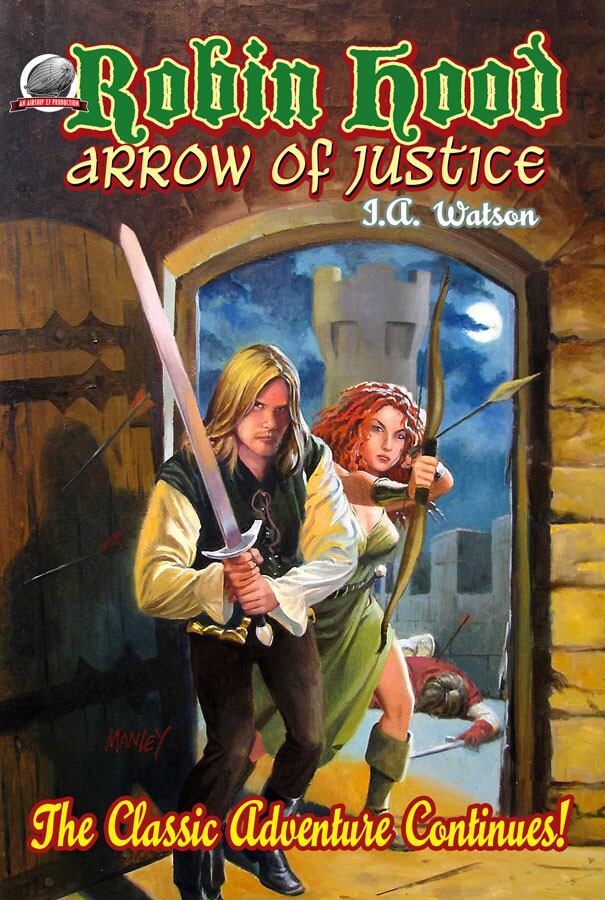
Then there's the big-last-clash type of ending, which ties together everything that's come before. There are revelations, betrayals, major moral choices, possibly a countdown, probably things exploding. I try for these in my pulp fiction writing, especially at the close of my Robin Hood trilogy and in Blackthorn: Dynasty of Mars.

Lastly there's the sense-of-destiny ending. King Arthur takes his place at the Round Table - or heads away in a boat for Avalon, to await the day of his return. It's the moment when the protagonist we've watched struggle for 500 pages comes into his own. This ending sometimes but not always involves a romance, and sometimes but not always sets up a sequel.

What is the purpose of a good and effective story ending? How does that purpose differ from the opening of a story? Which, if either, if more important to the work?

H. David Blalock: A good ending should at least finish the story in a way that lets the reader see there is nothing left to tell. Unless you have the prestige of a Hitchcock or a very forgiving readership, all plotlines should be resolved. All questions should be answered. All conflicts should be resolved. One way or the other.

Herika Raymer: An effective story ending resolves all threads laid out in the story. Even if the thread is not tied up the way the reader would prefer, at least it is addressed. To me that is an effective ending - what threads were put out there and how can they be resolved?

James Layne: An over simplified answer would be that one is just as important as the other for the same reason, gaining enough of the reader's trust to get them to buy the next book... But from a story telling standpoint to me at least, the beginning is about kicking the door in and exposing what is on the other side. Endings, well not every story has a happy ending and life even in fiction isn't always neat and tidy. For me the ending is resolution of a problem and not about packaging it neatly for the evening news. I seem to do better with the endings to novels than with my short stories. I have trouble because endings require setup and sometimes its a challenge for me in shorter word counts... Boiled down, "The beginning sells this book, the ending sells the next one."

Ray Dean: An opening is supposed to set you down in the middle of the action, sweep you up in the story. The ending should be satisfying. Something that makes you feel the journey was worth it. And hopefully, it also instills excitement in you for the world you've just explored. Hope that you'll have other adventures in the same universe. Both are important... bookends.


Lee Houston Jr.: The opening should draw the reader into your tale and make them want to find out what happens next. The ending should at least have the reader satisfied, if not excited, that they did spend the time to read your story. Both are equally vital to the overall work.

Cam Crowder: The opening is more important for drawing the reader in, but the ending is what they're going to remember.

That said, I've seen a million-and-three different types of endings in my lifetime, and only a few of them stood out as wrong. I know people sometimes hate it when a book's last chapters move at light speed and the story ends leaving them with more questions than they had when they started. Personally, I like that, but it's not for everyone.

I also think that a good opening is more universal than a good ending. Most people like for their books to open with a hook to draw them in, whereas endings are very diverse, depending on the audience you're trying to reach.

Jason Henderson: The opening of a story performs the critical function of getting you, the reader, to read the whole first page and then turn that page. The rest is optional. The closing of a story performs the critical function of making you glad you read all the way to the end - a tougher job and one that books often fail. To me the opening is important for a very narrow purpose: getting you to decide in a split second whether to keep reading. (That's why I try to begin my adventure novels in media res, with the main character, say, falling out of an airplane. But even if you don't start with action, even if it's a dialogue scene in someone's drawing room, the opening has one job: keep you from putting the book back down.

An ending, on the other hand, has to make you feel like you were not wrong to keep reading -- to satisfy you and with any luck leave you with a visceral thrill, hairs standing on your arms. The opening can be a carnival barker and promise anything at all; the closing must sell you on the value of what you've read, and be right about it.

Shane Moore: I prefer the emotional ending to the big reveal. I want the reader moved insomuch they have a real emotional reaction. In order to achieve this, it forces me to write and develop a story the reader is fully invested in.

I.A. Watson: A good opening lays out the themes for the book, piques reader interest, sucks readers in. it;s most basic job is to get someone to turn to page 2, but it can and should do a lot more than that. A good ending affirms the whole experience, making the reader glad he or she purchased the work. The opening might determine whether the book gets read; the ending determines whether it gets read again, and loaned out, and recommended to friends, and given five-star reviews.

An ending needs to tie up plots, themes, personal character arcs, and any outstanding business. There's a slightly different answer for endings on ongoing series, which may carry over some elements, but in both cases there had to be a sense of closure. Think how many fan-favourite TV series have dropped from grace through poor endings (hello, Lost, Twin Peaks, even How I Met Your Mother). Books, which are usually longer-term commitments to experience and require a deeper cognitive function, demand even more rigorous levels of sense-of-completion.

Endings are more important in terms of literary quality. A book's reputation might survive a bad start. It won't survive a bad end.

What are the key elements of an effective ending paragraph or line? What makes them effective?

H. David Blalock: The ending is the most important part of the story, as just about any writer can tell you. It's easy to create conflict, to build characters, to populate plots. It's only the best writers who can bring everything together, meld it into a unified whole, and present it in an entertaining and acceptable way when the final paragraph passes under the reader's eye. Editors look at the opening to see if they should further consider a work for publication, but even if you pass the first hurdle, if you can't write an ending that tells the editor you know not only how to tell a story, but how to satisfy the reader.

Herika Raymer: Depending on how the paragraph or line is being used, how it is phrased. If you are using it to lead into the next sentence or chapter, be sure it leaves a sense of what is to come. If it is meant as a closure, have a feeling of finality to it.

James Layne: Resolution of a problem. Recovery of the McGuffin. Rescue of the damsel in distress. These are the purposes of the ending. If there is not an adequate and justified reason for the release of dramatic tension then give me something I can sink my teeth into. IF you can't do that then you better hit me with one heckuva good joke. The ending is the money shot, it is where your reader feels the value proposition... The most effective endings give you resolution, but  they also tease you with things that happen just outside the field of vision or earshot. Your reader has lived and died with your characters, they require justice for those with whom they've bled and cried. A happy ending is nice in the given circumstance, but the right ending is everything.

Ray Dean: Hmm.. perhaps an ending should be like a sleeve - (keep in mind I sew) - where a sleeve should end with an appropriate edge, line, or decoration. Something that complements the sleeve that led up to it. Some sleeves have a frilly edge, or a clean line of pin-tucks with a decorative button, or a light and airy froth. but if it contradicts the rest of the sleeve or the garment that it is worth with, it ruins the whole thing. Yeah, that may not work in everyone's mind, but that's how it is in mine.


Lee Houston Jr.: Somehow, those last words should summarize and impart the overall essence of the story, at least from the point of view of whoever says them, without revealing the outcome of the tale in case a copy should be looked over by the browser who glances at the last page of the print copy first.

Cam Crowder: For me personally, I like for the last line to keep me asking questions. I want to continue living in that world long after the last page is turned. Any book that can give me that, I consider effective.

But, again, the effectiveness of any ending line depends on the reader entirely. Some people don't care what it is as long as they get closure, others (like me) want some more things to think about.

And it's important to remember that your ending, whatever it might be, will define the story you're trying to tell. So it's best to make sure it's a definition you can live with. You want it to be as memorable as possible.

Jason Henderson: The ending paragraph or line doesn't have to be a clever line or joke; doesn't have to be the best line in the book. It just has to make you satisfied that you read it. So some final lines are not memorable per se - To Kill a Mockingbird's is: "He would be there all night, and he would be there when Jem waked up in the morning."

And you can't match the angry cool at the end of Casino Royale: "Yes, dammit, I said 'was.' The bitch is dead now."

Nor the chillingly taciturn final line from 1984: "I love Big Brother."

The final line of Frankenstein is: "He was soon borne away by the waves and lost in darkness and distance." I like that one; it's another pure close, the monster drifting "into the distance, like someone waving from the back of a train. Plus it's alliterative. Well done, Mary.

And the final line of Wuthering Heights is so good that it makes me cry even years after I remember the scene that ends it very well at all: "I lingered round them, under that benign sky: watched the moths fluttering among the heath and harebells, listened to the soft wind breathing through the grass, and wondered how any one could ever imagine unquiet slumbers for the sleepers in that quiet earth."

So there it is: openings have to drag you in. The ending has to send you away feeling you were right to be dragged.

I.A. Watson: I've written a whole chapter on this for my forthcoming essay book Where Stories Dwell so I won't spoil that here - it's the last chapter in there, naturally. I'll briefly comment on some of my favourite tricks for closing lines:
1.    Final paragraph revelation: Rosebud was his sled!
2.    Underlining a theme or moral: "Next time, kids, maybe don't hold your frat party in the abandoned asylum, huh?"
3.    The hero gets his reward. "Sure, you're very clever. Now shut up about the case, get over here, and kiss me." "A point well made."
4.    Hook right back to the opening lines and offer some circularity or progression.

Monday, June 9, 2014

The Writer Will Take Your Questions Now #289 -- Favorite Last Words (Novels)

What are you favorite closing lines and endings from novel?

"So we beat on, boats against the current, borne back ceaselessly into the past."
-- F. Scott Fitzgerald, The Great Gatsby

"“Oh, Jake,” Brett said, “we could have had such a damned good time together.” Ahead was a mounted policeman in khaki directing traffic. He raised his baton. The car slowed suddenly pressing Brett against me. “Yes,” I said. “Isn’t it pretty to think so?”
-- Ernest Hemingway, The Sun Also Rises

"He was soon borne away by the waves, and lost in darkness and distance."
 -- Mary Shelley, Frankenstein; or, The Modern Prometheus

"She sat staring with her eyes shut, into his eyes, and felt as if she had finally got to the beginning of something she couldn't begin, and she saw him moving farther and farther away, farther and farther into the darkness until he was the pin point of light."
-- Flannery O’Connor, Wise Blood

So much of life in its meshes! She called in her soul to come and see.
-- Zora Neale Hurston, Their Eyes Were Watching God

"If I were a younger man, I would write a history of human stupidity; and I would climb to the top of Mount McCabe and lie down on my back with my history for a pillow; and I would take from the ground some of the blue-white poison that makes statues of men; and I would make a statue of myself, lying on my back, grinning horribly, and thumbing my nose at You Know Who."
-- Kurt Vonngut, Cat's Cradle

"A baby cried, a world began.
"Heart action dropping!"
(Jake? Eunice?) (Here, Boss! Grab on! There! We've got you.) (Is it a boy or a girl?) (Who cares, Johann-it's a baby! 'One for all and all for one!')
An old world vanished and then there was none."
-- Robert Heinlein, I Will Fear No Evil

"On the way downtown I stopped at a bar and had a couple of double Scotches. They didn't do me any good. All they did was make me think of Silver-Wig, and I never saw her again."
-- Raymond Chandler, The Big Sleep

"She pulled a gun out of her bag when he was taking her in, and shot him three times. Then she used her last two bullets on herself. Velma was tired of running away."
-- Raymond Chandler, Farewell My Lovely

Thursday, July 5, 2012

Getting the First and Last Word -- Story Openings and Endings

Whether you're a genre writer or a literary writer or some kind of hybrid (with excellent gas mileage), it difficult to deny that you have to grab a reader's attention right from the get-go. Not only are you in competition with other books, but also with video games, movies, and whatever else can capture your readers' attention. So we turned to a collection of attention-grabbing authors and picked their brains on the subject of story openings and story endings.

How important to you are your openings and endings for your stories?

Lee Houston Junior: VERY. Potential readers don't have time to scan through a whole book, so those moments are essential to grab their attention.

Ron Fortier: Ever since I can remember, it seems most genre writers, particularly those in mystery and sci-fi swear by the so called "narrative hook."  An opening line that is suppose to figuratively "hook" the reader immediately.

And although I can understand the merits of such an opening, its never been my personal approach to writing.  To me all aspects of any story are vital and I rarely assign any added importance to either a beginning or ending.  Each has to work as a part of the whole, thus when writing, I simply sit down and start at the beginning, as my muse has imagined it in my mind.

Of course most stories will have some kind of drama, but again, I just want to tell a good story, involve my reader... and move on.

It shouldn't ever be formulaic, but organic.

H. David Blalock: The opening and the ending should reflect a real logical progression. In other words, if you start out in Podunk, Arkansas you should end up in a likely place, not the 4th Dynasty of Egypt (unless the rest of your story points at it). Readers usually like a short story to deal with one concept at a time. Save the subplots and story arcs for novels and serials.

Van Allen Plexico: I firmly believe in trying to grab the reader by getting things going urgently and immediately, with a quick and powerful sentence or two that is evocative and colorful.  Here are some examples of my openings:

Hawk awoke naked and screaming in the heart of a shattered galaxy.
(HAWK.  Trying to be vivid and evocative.)

Down rained the night, cloaked all in fire and brimstone.
(LUCIAN.  My attempt to be sort of lyrical and also hint that this guy is more devilish than angelic!)

A wormhole is a hell of a place to die.
(ALPHA/OMEGA.  In italics, from the protagonist's POV. Tough and terse and military-SF-ish.) (Incomplete novel.)

The fact that I typed each of these from memory proves that, at least for me, they definitely were "grabbing" and memorable!  :-)

R.J. Sullivan: An opening should be powerful, a hook to make the reader want to read more. One rule of thumb I have heard is "no backstory exposition for the first three chapters." (I broke that in Haunting Blue, oh well). It should establish your POV character or at least the conflict that will affect the POV character. If you think in cinematic terms, think of Star Wars--the opening drew you directly into the story and the conflict. Even though we don't meet Luke for another 20 minutes we know exactly what's at stake, who the players are, and we've seen the destriuction the villains are capable of in a very dramatic way. The opening is vital to get right, because if you blow that, the reader won't continue.

Marian Allen: Openings and endings are very important to me. The opening is where the story swallows the reader, and the ending .... Wait a minute. I start again. The opening hooks and pulls the readers into the story and the ending moves the readers on with a sense of closure, but with that hook still in, so they remember the story and want more.

What makes an effective opening? What is its purpose?

Lee Houston Junior: I have heard all kinds of theories and "rules" on this subject. But I definitely want everyone to feel that my story is worth reading. I want even the casual book browser searching Amazon or wherever to yearn to find out how the story progresses from what little they view.

H. David Blalock: The opening for a short story is critical. The brevity of the piece already restricts your ability to properly tell the story, but there is so much competition for the story versus other stories, novels, TV, etc. that if you can't catch the reader's attention immediately, you are very likely to lose them before the third paragraph.

Marian Allen: An effective opening gives readers the flavor of the piece and the sound of the narrative voice. It's like speed-dating for stories. The purpose is to establish a sense of "who" the story is.

M.D. Jackson: Hit the ground running and don't stop.

What makes an effective ending? What is it's purpose?

Lee Houston Junior: For me, the story has to reach a satisfying climax that "wows" the readers, especially if they didn't foresee the ending I wrote happening. I have heard plenty of positive comments from friends that PROJECT ALPHA did not end the way they expected it to. If you are not only happy that you read my book, but are surprised at how it turned out, then I did my job as a writer.

H. David Blalock: The ending needs to leave the reader satisfied that the story made sense from beginning to end, because if they don't, they won't be reading too much of your work in future. If you plan on ending your story with a bit of a twist, remember to set it up in the body of the work somehow. The twist can be unexpected, but it still needs to make sense in the context of the rest of the work. Of course, you should NEVER end a story with the narrator suddenly waking up. "It was all just a dream" is a really bad way to end any story. The reader will undoubtedly feel cheated and annoyed = one lost reader.

Marian Allen: An effective ending, IMO, is a payoff. Best last line ever: "A boy loves his dog." -- Harlan Ellison, "A Boy And His Dog"

I like endings that circle around or echo something in the opening. I like endings that resonate with the rest of the story.

R.J. Sullivan: Endings are a different beast. Generally, if you "have" the reader and they get to your ending, if the voyage has been worth it, a reader will forgive a weak ending and may still read your next book (Stehen King's endings tend to disappoint -- there, I said it). I feel, even in a series, that each part of a book should have it's own distinct climax and ending, concluding SOMETHING even in a long-running series. That's just my preference as a reader.

What are some of the cliches that writers should avoid or that you have struggled with in creating powerful and effective openings and endings?

Marian Allen: There are no cliches a good writer should avoid. Everything has been done before, but a good writer can take even the most overdone bit and make it fresh and powerful. And anything, no matter how original, can be dull in the hands of a lazy writer.

Lee Houston Junior: "It was a dark and stormy night." ;-) Seriously, finding the right words to set the mood or resolve the story, let alone tell the tale to begin with, is not always easy. There have been times when I have written and rewritten passages because they sounded similar to something else or just weren't good enough. But finding the right words, not only for the opening and closing, but for everything inbetween is what makes the story come alive. But while each subsequent book in my series (Alpha and Hugh Monn, Private Detective) will build upon the past volumes, no book I write will ever end with those three dreaded words "To Be Continued."

H. David Blalock: 
There are some cliches you can use that can be forgiven. Opening with action, no matter how familiar, will usually work. Starting out with "They call me mad, but I swear it's true" or like words is a dead giveaway the writer needs to develop his or her style.

Wednesday, July 4, 2012

The Watson Report: Starting a Story

To my way of thinking, story openings have to do three things in the first few paragraphs.

1. They have to give readers a sense of the kind of story they're reading: mood, narrative style, setting etc. Never start a book "It was a dark and stormy night" but that at least paints the required picture; you are in a dark and turbulent place or a horror satire.

2. They have to "catch" the reader to carry on past the first lines and apply the habit of reading to this work. The first sentence is best when it's a grabber.  Special credit goes to Ian Banks' The Crow Road for "It was the day my grand-mother exploded."

3. They have to be both familiar and unique, so the reader can latch on to things even before the author had had a chance for the first exposition paragraphs while avoiding having the reader instantly pigeonholing the tale. "Oh, the girl's dating a sensitive vampire. Where's my shotgun?" is probably a bad reader reaction. "Oh, this is a bit like a Sherlock Holmes Victorian mystery - except the investigator is a monkey!" is probably okay.

So the best openings are stylish, enthralling, and they set how the reader initially engages with the book. Some of the tricks are:

James Earl Jones-style authorative narrative voice: "It was the best of times. It was the worst of times." That one's been used, though.

In media res dialogue: "They're breaking through! The damn mutos are already loose downstairs!" Tells you all you need to know about why the next paragraph describes our hero hefting a flame-thrower.

Paint a word picture of something's appearance or history: "Detective Brown's battered Colt '45 had a notch in the grip for every capo of the Werner gang it had ended."

Plunge in with something visceral that we're culturally conditioned not to ignore: a fight or sex are the classics, but having someone sitting there with a razorblade to the wrist, or having a woman in labour, or the flames creeping towards the baby will get the job done too. Few people aren't going to read on at least a few paragraphs to check what happens. "Lindsay Chase switched on the waste disposal grinder and slowly fed her finger between its whirling blades."

Summarize the main theme of the book, what you're about to spend a whole story addressing: "The shabby kitchen wall at 115 Leinster St hadn't been disturbed since 1933. That didn't stop the workmen from discovering the two-day-old corpse of schoolgirl Alison Drew behind the old lath-and-plaster."

Start with a first person storyteller's plea to the reader: "Read this! You don't know what it is that lurks behind your bedroom mirror. You don't know why your reflection sneers at you when you turn away. You have to listen to me, to hear what I've seen, before the night falls and they take me - then come for you!"

Start with a word of advice. "Never trust a man selling a tonic with a hand-stencilled label." This one has a far less cerebral, far more folksy personal contact with the reader than most modern styles, but it can work if you want to set a certain tone.

Set up a paragraph that will pay off in the very last paragraph of your book to give it closure. Start with "Nobody cared that thirty people died in the 210th street tenement fire." and end with "Nobody cared that thirty people died in the 210th street tenement fire - except Rock Joe Johnson. That was why Eileen married him."

I think there's probably an art to the paragraphs right after the opening ones too, the ones that have to start serving up character and information without dumping great chunks of backstory on the poor reader; but that's probably another question. 

==================================================

I.A. Watson is an adventure, fantasy, and SF author from Yorkshire, England. For more information visit him online: http://www.chillwater.org.uk/writing/iawatsonhome.htm