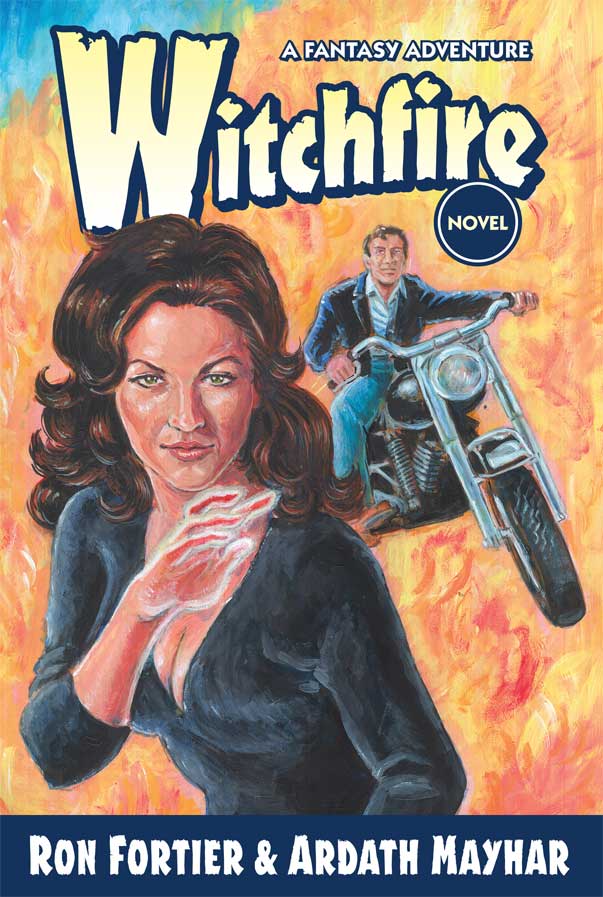
Folks, this is my favorite seasonal tale, and I'm happy to share it with you here.

Folks, this is my favorite seasonal tale, and I'm happy to share it with you here.
Folks, this is my favorite seasonal tale, and I'm happy to share it with you here.
For the first time since its initial release in 2011, Show Me A Hero, my magnum opus of superhero stories is finally available as an audiobook!
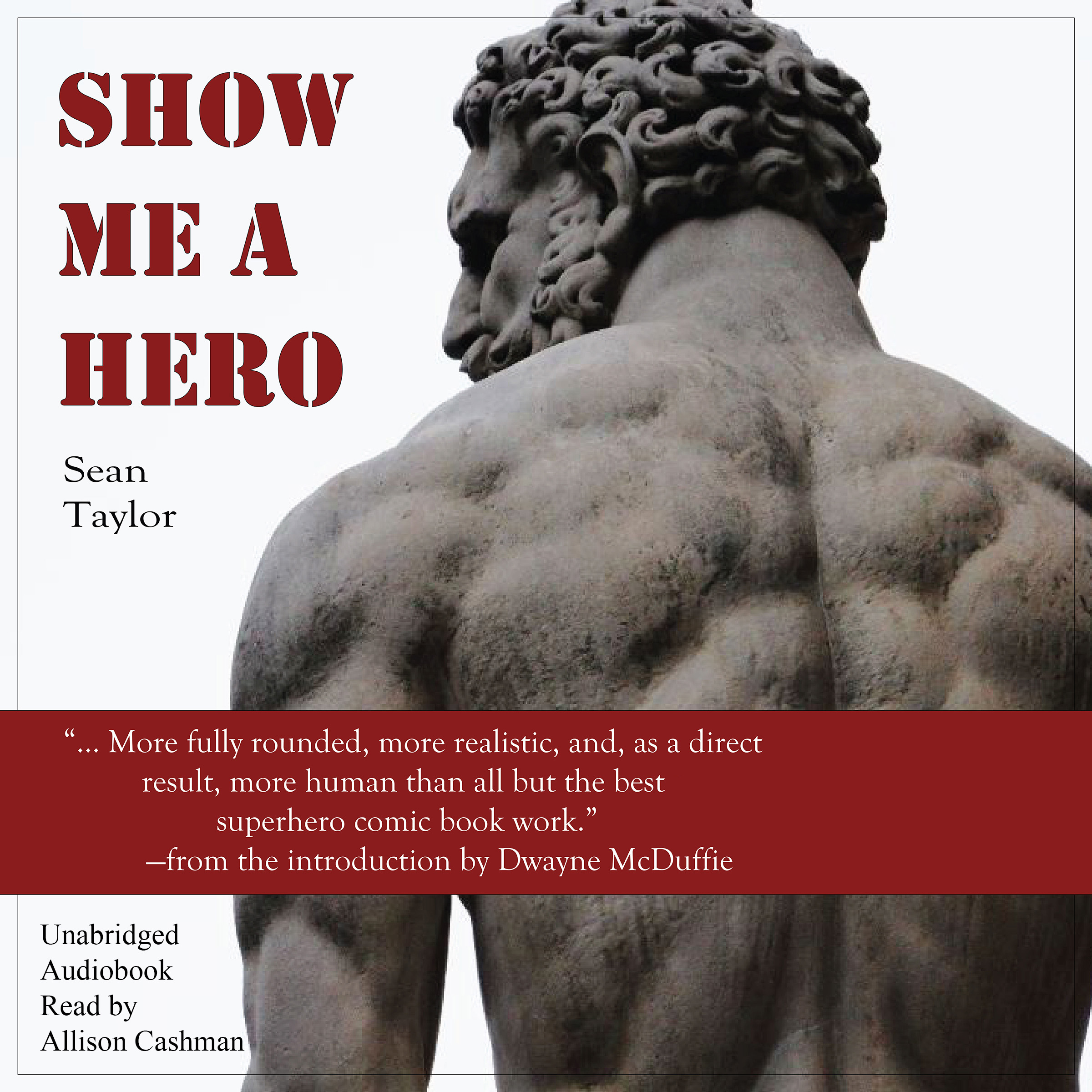
Read by Allison Cashman, the new audiobook release is unabridged and clocks in at a whopping 13 hours (plus 8 minutes) of spoken story. Cashman has a BA in Theatre Performance and a Certificate in Voice Acting from Wichita State University. She performed as a Grade School E-learning voice actor for MagiCore Learning for 2+ years and was a character voice actor in The Horologist's Legacy videogame.

Show Me A Hero is available via Amazon and Audible.
Amazon: https://www.amazon.com/Audible-Show-Me-a-Hero/dp/B0D2LSJHC2/
by Caroline O'Donoghue
 |
| Illustration: Kate Hazell |
Books, for some reason, have survived this unremitting cull. Books are the clue, the key, the Rosetta Stone for finding out who someone is. As a result, books have become more of a lightning rod for conversations around snobbery than ever. Every day there’s another riot on social media about people who aren’t reading “properly” (see a recent panic about people who chop big books up into chunks as they read them, to lighten their weight); there are fights about book awards and who has been snubbed by them; fights about book awards mattering at all. And, despite the fact that we are living in the era of podcasting, there is still snobbery around audiobooks.
“Well you didn’t really read it then, did you?” has become the common response to conversations around audiobooks, which have been growing steadily more popular over the last few years. And as with many items in rising demand, audiobooks become more scorned the more popular they get. “Nobody sits on a couch to listen to one. Nobody rewinds to linger on a particularly beautiful passage; nobody dog-ears a book on tape,” claimed an essay in Wired published in 2018. “It’s hard not to feel like something is lost in this transition.” Yes indeed, here is “reading” you can—very practically—do at the same time as driving, dusting or anything else. Which is exactly why audiobook snobbery has come to symbolise something big, deep and strange in our collective unconscious.
We are no longer using things to demonstrate status. We are using time. In 1899, Thorstein Veblen brought us the image of the silver spoon. It is “no more serviceable than a machine-made spoon,” he wrote, but exists to showcase our taste, our refinement, our ability to make elegance of our own daily lives. In the 20th century, we were driven by having beautiful things—now we focus on beautiful time. Time is the only resource that we cannot buy more of—and it’s the one that is often most scarce.
Read the full article: https://www.prospectmagazine.co.uk/magazine/the-rise-of-audiobook-snobbery-and-what-its-really-about

The series is set in an alternate universe Victorian England where magic use was championed by the late Prince Albert, and mage coal revolutionized the technology of the time. This, unfortunately, also consolidated mage power in the hands of the upper classes, especially noble families.

The books are available widely, including at Amazon (https://amzn.to/2Wt3Mci). The audio versions are exclusive to Scribd (https://www.scribd.com/), a subscription service with over a million paying subscribers. There is a free 30-day trial available for new customers.

Harold Bloom, the literary critic, once expressed doubt about the audiobook. “Deep reading really demands the inner ear as well as the outer ear,” he told the Times. “You need the whole cognitive process, that part of you which is open to wisdom. You need the text in front of you.” While this is perhaps true for serious literary criticism, it’s manifestly not true when it comes to experiencing a book purely for the pleasure of its characters, setting, dialogue, drama, and the Scheherazadean impulse to know what happens next—which, all apologies to Bloom, is why most people pick up a book in the first place. Homer, after all, was an oral storyteller, as were all “literary artists” who came before him, back to when storytelling, around the primal campfire, would have been invented—grounds for the argument that our brains were first (and thus best?) adapted to absorb long, complex fictions by ear, rather than by eye.
That’s an idea I ran past the neuroscientist V. S. Ramachandran (whom I profiled in 2009). Rama answered via e-mail, saying: “Language comprehension and production evolved in connection with HEARING probably 150,000 yrs ago and to some extent is ‘hard wired’; whereas writing is 5000 to 7000 years old—partially going piggyback on the same circuits, but partially involving new brain structures like the left angular gyrus (damage to which disrupts reading writing and arithmetic). So it’s possible LISTENING to speech (including such things as cadence, rhythm and intonation) is more spontaneously comprehensible and linked to emotional brain centers —hence more evocative and natural.” He did add a caveat: “On the other hand reading allows you to pause and reflect and go back to do a second take.” (Though I’d argue that that’s what the rewind button is for.)
I listened to my first audiobook three years ago, when I had to master an interview subject’s massive literary œuvre in a very short time and realized that, to do it, I would have to use every available moment of the day—including those when traditional reading was impossible: walking home after dropping my son at school; jogging; grocery shopping; doing dishes. Since then, I’ve become a habitué of the audiobook section of my local library, renting and illegally ripping “books” to my iPod. I’ve discovered that audiobooks are (among other things) an ideal way to get to know a work that you can’t, for whatever occult reason, bring yourself to read in book form. I’d taken several runs at two late Updike novels, “Seek my Face” and “Terrorist,” and gotten bogged down in both. I have now listened to them as audiobooks and can report that they contain much of Updike’s typical brilliance that I would have missed had I stuck to Bloom’s method of mastering a book.
Read the full article: https://www.newyorker.com/books/page-turner/the-pleasures-of-being-read-to?