Showing posts with label scary stories. Show all posts

Saturday, November 1, 2025

[Link] 40 SCARIEST BOOKS OF THE LAST 200 YEARS


by Sarah Mangiola

Creepy stories are as old as mankind, and the really good ones will continue to frighten generations to come.

We’re looking back through the scariest books of the past two centuries – from chilling gothic classics to post-apocalyptic tales of caution. These terrifying tales leave readers restless, never quite sure where fiction ends and reality begins.

Page through our master list below, and you’re guaranteed to stumble across a new nightmare in no time at all.

Read the full article: http://www.the-line-up.com/40-scariest-books-of-the-last-200-years/

Thursday, October 24, 2024

Best Practices: Write Something Scary!


Hey, writers! Give me your one best piece of advice to help someone learn to write something actually scary for a reader. And... GO!


Jessica Nettles: Mine the things that scare you the most, especially childhood fears. Then crank them to 11 (that is a different level for different people). I never fail to hit my mark when I go there.

John L. Taylor: Make the reader care about the character who will have the worst fate. Horror fails if you're rooting for the protagonists to die. Get them emotionally invested in someone who really doesn't deserve their fate and slowly pick them apart like a daisy. They will know fear from that.

John Pence:
It's got to scare the author. It's got to be something the author had to be brave and confront.

That's not true for all horror, and can be applied outside of that genre.

Scariest damn thing I ever read was Poe's first-person narrator popping his cat's eye with a pocket knife in "The Black Cat." I read that when I was like 9 or 10, and I still feel it.

Michael Dean Jackson: Get your reader emotionally invested in a character and then scare the hell out of that character. Maybe it's not something that would scare you or the reader, but if it scares the main character, then the reader will feel vicariously frightened along with them.

Lainey Kennedy: Less is more. Leave room for the readers imagination to fill in the gaps. What our own mind comes up with is often scarier than any written words.

Sean Harby: Write something that frightens you. Make sure you include all your senses and express the nature of your own fear. It will translate.

John Morgan Neal: Use your imagination to think of something you were horrified by or you think would be horrified by. Then present it in a way that gets across why it's horrifying. But leave enough room where the readers imagination fills in the blanks. Making it personal to them.

Bobby Nash: I always start with character. Make it scary for the character and the reader will feel it.

Krystal Rollins: Haunted old house in a small town, picture books left inside of the family, only stories are told for the new people in town, until, one gets into the house.

Danielle Procter Piper: Many people go for the gross-out factor, I go for psychological stuff.

Laura Rucker: Describe a physical reaction to the horrifying thing, or a physical description of the horrifying aspects. A. Piece. At. A. Time.

Mike Schneider: You have to establish normal. Scary is a juxtaposition. So many creators want all thriller/ no filler but the reality is those stories aren't scary, no matter how gruesome they get. In fact, show too much of the killer/ monster and we start rooting for them instead.

If you want any part of your story to be scary you need to put more time into establishing things are light and joyful. You need to get us invested in that story to a point where we forget we're reading something scary. Then WHAM.

Barry Reese: If it doesn’t scare YOU as the writer, it probably won’t scare them as a reader, either.

PJ Lozito: End the paragraph or chapter before the thing actually happens...

Jim Beard: Scare yourself. Everything else will follow.

Paul Beale: What scares you? It will likely scare the rest of us too..

Brian K Morris: Study Alfred Hitchcock's films as a blueprint for pacing and escalating the terror.

Sheela Chattopadhyay: This is a great question! While some may say to "write what scares you," I tend to find that the scary part is more in the suspense, pace, and overall environmental feel. Those aspects are what drew me to Poe and Agatha Christie as a child. From learning experiences and currently working on a suspense that's scary short story, the pacing and stakes help build the suspense.

Sean Taylor: The key to writing horror, as least as I see it (and you’ll find as many different takes on this as you can find authors, I’m sure), is to camp out in the concepts of discomfort and dread. You’re not going to surprise scare a reader. You’re going to slowly overwhelm them with several smaller “uneases” that become a full-blown “creepy” and finally if you’ve done your job right, all-out dread.

Dread is that feeling that keeps a reader’s stomach unsettled, that scene that makes them feel phantom pains in the same limb or joint the killer keeps sticking a pin into, the sum of all the chills up a spine and “what if” scenarios of the mind a reader keeps accumulating during the time it takes to read your tale.

Anna Grace Carpenter: Don't self-censor. (Especially on the first draft.) It's a lot easier to take things back off the page later if they seem too much than it is to add things back in when it's not enough.

Gordon Dymowski: Horror and comedy share one aspect in common: timing. The only difference is that comedy results in laughter, horror results in fear

Danielle Procter Piper: Less is more. Let their imagination fill in as much as possible.

Editor's Note: All images are free use from Unsplash.com.

Thursday, October 19, 2023

Halloween Re-Runs: Outgrow Horror Movies? Never.

Why do you like horror films so much?

To answer that, I'll have to adapt the question into two new questions (because I'm a writer, and I need the space for words).

Why did I like them as a kid?

Because I could stay up late and watch something "forbidden," of course. That was the start of it. But from there I stuck around because of the scary moments (the adrenaline rush), the cute scream queens, and the monsters themselves. It was only later that I discovered the more gory and "sexy" horror films of the Eurotrash market and the Italian "sleaze" (many or which are quite tame by today's standards) flicks.

Why do I still love them as an adult? 

Or to put it a way that perhaps some of you are thinking... Why haven't I outgrown them?

Because the writer and the adult and the literature major in me has found in good horror flicks all the stuff that made me fall in love with stories in the first place. Good vs. Evil, the existential search for meaning beyond mere survival, redemption for initially selfish characters, reaping what you sow, the sins of the fathers visited upon the sons -- it's all there. No, not in every film, and particularly not in the films that cater to the lowest common denominator (but you'll find that in ALL genres, not just horror). Because of the immediacy of the possibility of death, characters in horror films must face the kinds of questions the rest of us prefer to push to the back burner. However, with Jason chasing through the woods with a machete, you don't have that luxury. You find out quickly whether you want to really live or not, whether you regret your choices, and whether you choose to fight for the safety of others or turn tail and run away to save your own skin above all others.

Good horror films go where other movies often don't dare. Bad horror films do too, just not as well.

And they still can sometimes scare the bejesus out of the 8-year-old kid who still lives inside me.

Thursday, October 12, 2023

Halloween Re-Runs: Scare Me!

It's Halloween month, so what books and/or stories do you recommend to scare me and get me in the mood for being afraid or creeped out?

Oooh. There are so many good ones that I like to go back to from time to time. Let's see...

Books:

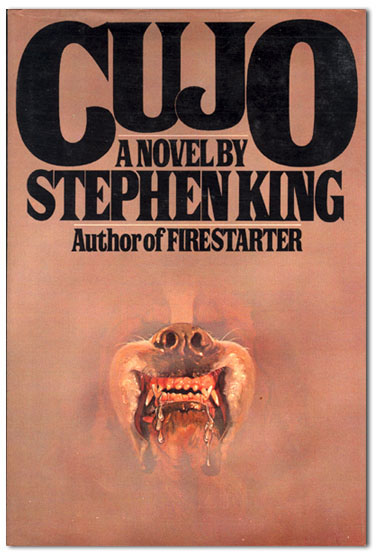
  • Cujo (Stephen King)
  • Pet Semetary (Stephen King)
  • The Shining (Stephen King)
  • Zombiesque (various, featuring my own tale "Posthumous")
  • The Haunting of Hill House (Shirley Jackson)
  • I Am Legend (Richard Matheson)
  • Rosemary's Baby (Ira Levin)
  • The Turn of the Screw (Henry James)

Stories

  • "The Empty House" (Algernon Blackwood)
  • "N." (Stephen King)
  • "The Lottery" (Shirley Jackson)
  • "Herbert West -- Reanimator" (H.P. Lovecraft)
  • "A Shadow Over Innsmouth" (H.P. Lovecraft)
  • "The Veldt" (Ray Bradbury)
  • "The Man Who Loved Flowers" (Stephen King)
  • "20th Century Ghost" (Joe Hill)
  • "Young Goodman Brown" (Nathaniel Hawthorne)
  • "Rappucini's Daughter" (Nathaniel Hawthorne)
  • "Ligeia" (Edgar Allan Poe)
  • "Berenice" (Edgar Allan Poe)
  • "The Mask" (Robert W. Chambers)
  • "The Upper Berth" (F. Marion Crawford)
  • "Man-Size in Marble" (Edith Nesbit)
  • "Silk" (Kimberly Richardson)
  • "Pickfords Well" (Robert Freese)
  • "A Warning to the Curious" (M.R. James)
  • "Present at a Hanging" (Ambrose Bierce)

Wednesday, April 25, 2018

Nugget #130 -- Scary Get's Philosophical


Writing scary is hard. It's really hard because 
it takes an understanding of the human mind, 
memories, senses, and universal generalities 
about the human condition.

Wednesday, April 18, 2018

Nugget #129 -- Scary Gets Stuck

Writing scary is hard. Books are stuck in one place, but the 
reader isn’t. Skip ahead a few pages and the suspense can 
be ruined. Put the book down, and the tension is released.

Wednesday, February 21, 2018

Nugget #122 -- A Little Bit of Scary

A little bit of scary can often improve even the best
love story, or perhaps a dramatic literary book.

Sunday, October 23, 2016

[Link] 40 SCARIEST BOOKS OF THE LAST 200 YEARS

by Sarah Mangiola

Creepy stories are as old as mankind, and the really good ones will continue to frighten generations to come.

We’re looking back through the scariest books of the past two centuries – from chilling gothic classics to post-apocalyptic tales of caution. These terrifying tales leave readers restless, never quite sure where fiction ends and reality begins.

Page through our master list below, and you’re guaranteed to stumble across a new nightmare in no time at all.

Read the full article: http://www.the-line-up.com/40-scariest-books-of-the-last-200-years/

Wednesday, February 13, 2013

[Link] Women in Horror: Crazy Chicks

by Selah Janel

To keep with the theme of the month, I’d like to take a look at some of the different types of female characters found in horror fiction and film. Now unlike many of the lists I’ve come across, I’m not focusing on who’s hot or scream queens or what have you…I want to take a look at the actual characters and what they contribute to the genre. It’s so easy to have ladies in dark fantasy and horror categorized (usually by who lives and who gets killed off), but I’m hoping to do things a little differently.

Today’s post is about all those female characters who, for some reason or another, aren’t quite all there. Whether something drives them to it or they’re like that to begin with doesn’t matter. Likewise, the type of crazy can differ (ie. is someone pushed into acting out or simply a conniving, deranged killer). Some of these I’m more familiar with than others, but I wanted a good, diverse list (plus, this definitely gives me some things to put on my list and expand my own horror knowledge). So here is the list of some of my favorites...

Continue reading: http://selahjanel.wordpress.com/2013/02/09/women-in-horror-crazy-chicks/

Friday, October 12, 2012

What makes a horror book scary?

This week's roundtable is for READERS. (Or writers who double as readers in their spare time. What do mean, what's that?) As we move deeper into October and are rounding second base toward Halloween, let's talk scary.

What makes a book scary or creepy to you?

Blake Wilkie: It's all in the pacing and imagery in the descriptions. Like when a vampire bites someone. To say they just sink the fangs in doesn't work. Be descriptive. It it a slow indulging bite savoring the moment or a feral attack out of fierce hunger? Why is it one or the other? How does the bite feel to both involved, etc?

Danielle Piper: The scariest stories I've ever read were the ones that involved situations that could actually happen. I've seen far too much fantasy to be scared by it anymore. I despise authors who rehash something cool they saw in a movie or on TV, trying to steal a cool element they hope you're not familiar with already.

Janet Walden-West: As far as scary -- COULD it happen? Having been in close proximity to the Body Farm, zombies are the scariest thing ever.

Jim Comer: Dread. George Martin's Sandkings.

William D. Prystauk: I have never read a creepy or scary book. Yes, I've read horror, but it never resonates like a movie. Craven, King, Rice, and Nevill, have always fallen short.

Selah Janel: I like books that make me worry about whether the plot could happen to me or not. Even if it's outrageous, I want to suspend my belief long enough to be scared out of my mind by the possibilities. Ray Bradbury's story 'The Next in Line' is terrifying because it deals with the very real fears of death, claustrophobia, not being able to get out of a situation, plus the added element of a callous spouse. I cannot read this story without shuddering and seeing myself suffering from that sort of desperation and loneliness.

With stories that have elements of something supernatural or "other," I want to believe that there may be the faintest possibility that it could happen. It's why movies and books about possession are so terrifying - it's a concept that's so rooted in people's beliefs and faiths and deals with our most primal fears... plus, no matter how logical you try to be... what if it's real? What if it could happen to you and there's nothing you could do to stop it?

Herika Raymer: When a book explores things that could happen, that is what scares me. I prefer psychological thrillers, where the antagonist or monster is not completely shown, but there are plenty of stories where the monster is in plain sight that are just as chilling. I read alot of True Crime stories because of that, Ann Rule / Patricia Springer / Steve Jackson. Stories about pandemics that wipe out whole populations, as presented by Dean Koonz and Stephen King and a few others, those are creepy as well.

James Ritchey III: Scaryness. OH! And Creepyness. But seriously? By exploring stuff we're all creeped out by, and being smart about it. Psychological horror is ten times more effective than bending to genre stereotypes. Feral children and the amputation of hands freak me out, for instance. Three words for ya... Suspense, Suspense, Suspense -- THEN you rip the hapless victim's lungs out.

Joe Bonadonna: When it's in the realm of possibility.

What do writers try to do to make a book scary or creepy, but it just doesn't work for you?

William D. Prystauk: Atmosphere is what they seem to create most as well as characters you want to root for. However, I never feel a jolt. It's clear I need some compelling audio/video to move me along.

Jim Comer: Stephen King lost it somewhere.

Selah Janel: I think sometimes writers try to get a little too clever. It's a fine line -- I like detail, but if too many elements are thrown in together, sometimes it becomes a jumble or downright cartoonish. For example, I love a lot of Stephen King's titles. He's insanely good at what he does, a master. Misery is freaky because it's so possible, plus there's the isolation factor, and his short story N is one of the most terrifying things I've read in my life. However, they both share the fact that they're fairly linear stories that deal with one main problem or element. Annie Wilkes is the opposing force in Misery, and although N takes a little while to develop, there's no denying the tension as minds begin to unravel as the thing in the field is discovered.

Because those are so laser-focus and take their time, I tend to get frustrated with titles like IT and Rose Red. With IT, isn't it enough to have a killer clown? There is so much detail heaped in, that I can't even comprehend everything that's going on, and by the time IT's true nature is revealed I just...I don't know. It's not as scary to me as if it were just a weird clown chasing kids around trying to get them.  With Rose Red, there was so much buildup, so much amazing back story, that the ending almost fizzled. Parts of it gave me nightmares, but the ending pretty much ruined it for me because it was fairly tame in comparison. He's not the only one that's guilty of this -- a lot of horror writers try to cram in a lot, and then their endings have no hope of living up to expectations. Horror is walking a fine line as it is -- if you make things too over the top it can inadvertently trigger a humorous response, so writers have to be careful as to what their intentions with a story really are.

Herika Raymer: Splattergore. I do realize that making a story gory and visceral sells, but to me it is just gross. I have to have a story, not just blood and guts. In some cases, I prefer a story over blood and guts.

James Ritchey III: When they try to make it scary and creepy, but make it nonscary and noncreepy, instead -- by SUCKING as a writer -- by not thinking about what they're putting on the page.

Joe Bonadonna: Go for the jugular. When they want to be cerebral and miss hitting the emotions.

How much gore is too much, and does gore help you feel creeped out during a scary book?

Janet Walden-West: No such thing as too much as long as it moves the story.

William D. Prystauk: If gore is necessary to the story, so be it. However, gore itself does not lead to scary. However, if we love or hate the character, then the element of gore may take on a whole new meaning.

Jim Comer: No. Clive Barker.

Selah Janel: It depends. I generally am not a huge fan of gore, however, in some cases it's a necessity or definitely lends itself to a scene. Tom Hollands vampire transformation scenes in Lord of the Dead are grisly masterpieces that gave me a visceral reaction -- but he also took his time and built up to them so they conveyed a very real sense of danger.

The Sonja Blue series is a great example of how to do splatterpunk right. Nancy A. Collins immediately plunges the reader into a graphic nightmare and keeps them there, but is able to create empathetic characters to balance it out. Plus, her characters and world have reasons for being violent and graphic - Sonja isn't just part vampire or a slayer; she's ruled by the voices in her head and is obsessed with getting revenge on her accidental sire. These creatures play for keeps, so it makes sense to show every little detail.

I'm a huge fan of Clive Barker, because his gore works with his stories - but he also knows when to pull back. Stories like Rawhead Rex and The Midnight Meat Train do have their gross points, not gonna lie. But, those elements don't rule the whole story, so when you stumble upon them you almost have to re-read them to make sure you got that detail right. It's a punch in the stomach, a knock in the teeth. You realize "Oh my God, THAT'S what could happen!?" He plays those scenes absolutely right, otherwise the premises in each story could be too over-the-top or borderline cartoonish. He makes sure to play on people's visceral emotions and not just write another monster story.

Not every horror story needs gore, because not everything that scares us is about shedding blood. The Haunting of Hill House is a great example of subtle horror with a big pay-off. The first time I read this, I was totally confused as to whether the hauntings are real or in Eleanor's head... and either way, the thought of each is freaky as hell because of the way things are portrayed.

Herika Raymer: I guess it depends. On the one hand I read where Hannibal was eating his hunter's brains while the man was still alive and it creeped me out, usually I would just say 'ew' and move on. However, there was no explicit statement of blood and gore everywhere - I guess was got me was that it was clean. On the other hand I have read stories where a room decorated in splatter did creep me out, but those were mostly crime driven stories where the scenes were few and far between. I guess when gore is essentially on every other page, then I get desensitized to it. I do not want to 'be used to the gore', I want it to creep me out.

James Ritchey III: Between 15 and 25 percent gore are my only acceptable parameters--and that includes maiming, body horror and blood. Or more. I dunno--gore doesn't scare me. Read Vampire Junction for how to do it right.

Joe Bonadonna: Gore doesn't bother me, but it can get boring. Don't really need to know every little detail. Leave something to our imaginations.

Thursday, October 11, 2012

The Writer Will Take Your Questions Now (#242) -- Show Me the Scary

What makes a horror novel or story "scary" for you?

Writing scary is hard. It's really hard, because it takes understanding of the human mind, memories, senses, and universal generalities about the human condition. In a story, you don't have the luxury of visual shorthand to creep readers out like directors do in a scary movie.

Jump scares? Nope. Sorry. The reader controls the pacing. And he or she can skip ahead or backward at will. That clutching crone hand can go backward and forward and be skipped altogether based on the reader's whims.

Graphic visual scares (or gore)? Sorry again. Unless you're most visceral writer ever, written gore falls short.

So, as a writer you're stuck with having to be a psychological and writing genius. But how? While I'm far from an expert on horror, I have written several tales in the genre, and I've learned a few things with each successful telling.

1. Be visceral. But don't mistake visceral for gross. For example, while a limb being removed and force fed to a tied up victim is certainly a compelling image in a story, it may not be as effective as something as simple as a sewing needle being wedged into the soft skin beneath a dry fingernail.

2. Tap into the universal fears. For example, when I wrote "Nymph" for the Gene Simmons House of Horror graphic novel collection (yes, I know that it's not pure prose, but bear with me), I wanted to recreate the sense of being lost in the woods, in a place where you're at the mercy of the natural world. When I was a kid the woods were creepy sometimes, and I had lost that feeling after moving to Atlanta and growing up.

3. Discover the specific, individual fears that make a person tick. For example, in my zombie tale "Posthumous" (from Zombiesque by Daw/Penquin Books), it's not the decaying body of the zombie that makes her creepy. It's her determination to save her marriage, her blind, unwavering determination to do so regardless of the consequences to anyone else.

4. Unleash your horrors on ALL the senses. Don't let just sounds and sights convey your protagonist's woes and horror. Go deeper. Is that smell like the burn ward at a hospital? Does the touch of the killer leave grease and sweat on a victim's neck? Does the hooker's kiss taste like she's been eating rotting meat? Engage all the senses that can convey fear and discomfort.

5. Use sounds that bother the reader, not just the characters. You can make up words that sound like stuff. The official literary term for this is onomatopoeia, and it works because it plays games with the reader's ear, whether they hear the sounds spoken aloud or not. For example, in my steampunk horror tale "Death with a Glint of Bronze" for Dreams of Steam II: Brass and Bolts, I hit the reader right of the bat with the "crick-cracking of the neck bone where it attaches to the top of the spine." But the following sentence continues the idea, simply by using sounds that create a stop and reflow, like restricted breathing might sound: "Then there is the delicious constriction as the breath slowly ceases its movement through the windpipe."

6. Don't try to be "horror movie" scary. Aim for "imagination" scary. Go for the stuff that no movie could ever film, you know, the kind of sick, warped, crazy stuff that could only take shape in someone's imagination as they read. For example, does anyone really know by reading Lovecraft's stories what an elder god truly looks like? We have ideas, but that's all. We have the accepted image that has become synonymous with the tales, but be honest -- does that fully match the horror you imagined in your psyche when you first read the words of HPL's description? On a similar note, isn't your personal nightmare of Lewis Carrol's Jabberwocky far creepier than any of the drawings you've seen of it?

That's all I've got to give you, but if you can even those six things well, you'll never hurt for a job writing truly frightening horror tales.

Wednesday, October 10, 2012

The Writer Will Take Your Questions Now (#241) -- Scare Me

It's Halloween month, so what books and/or stories to you recommend 
to scare me and get me in the mood for being afraid or creeped out?

Oooh. There are so many good ones that I like to go back to from time to time. Let's see...

Cujo (Stephen King)
"N." (Stephen King)
Pet Semetary (Stephen King)
The Shining (Stephen King)
Zombiesque (various, featuring my own tale "Posthumous")
"The Empty House" (Algernon Blackwood)
"The Lottery" (Shirley Jackson)
The Haunting of Hill House (Shirley Jackson)
"Herbert West -- Reanimator" (H.P. Lovecraft)
"A Shadow Over Innsmouth" (H.P. Lovecraft)
I Am Legend (Richard Matheson)
Rosemary's Baby (Ira Levin)
The Amityville Horror (Jay Anson)
The Exorcist (William Peter Blatty)
The Turn of the Screw (Henry James)