Showing posts with label Ernest Russell. Show all posts

Thursday, July 28, 2022

Show, Don't Tell -- Sure. But How? A Description Writing Roundtable


For our next writers' roundtable, we're continuing this week's theme and talking about writing description. 

How much description do you tend to put into your work? When is (for you) it not enough? When is it (for you) too much?

Marian Allen: All detail should be "telling" detail -- that is, it should contribute to the scene or to the story as a whole. It's definitely too much if I'm reading it out loud and get bored. 

Brian K. Lowe: I try to put in enough description to paint the necessary picture, but leave the rest to the reader's imagination. No matter how you describe a character, everyone will see that character differently (like when you fantasy-cast your favorite book as a movie). 

Herika Raymer: I try to follow the adage of 'show don't tell,' but I also try not to pull a Thomas Covenant, where it takes two pages to finish one description. It's a tricky balance, but I do try to be concise while being descriptive. Can be difficult when writing, because sometimes the words used are not 'common'. I have to be sure that whatever words I use are relatively well known.

Bobby Nash: I know it sounds like a cop-out answer, but it depends. I like to make sure I’ve set the scene, let the reader know what they need to know. Conversely, there are things I leave less fleshed out so the reader can fill in the blanks. A murder scene, for example, I don’t go into every detail of the body’s condition, the blood, etc. The reader’s own imagination will do the work for me and make the scene even more graphic than anything I could write.

I play it by ear so too much or not enough is based on a gut feeling, I suppose. I want to make sure my readers have the information they need. In a mystery, especially, I want the clues to be in the story for the reader to find. That is important and I make sure it’s there.

Jessica Nettles: I work hard to describe scenes in a way that gives readers a sense of place. At the same time, I’m a lot like Bobby in that it depends on what’s going on or what’s needed. I have had to learn to balance what to describe and what not to describe. I wrote scripts for a while, and had to relearn how to weave in good description when I returned to prose writing.

Ef Deal: When I depict a setting, I try to capture more than the visual accuracy of the scene. I use colors, scents, light and shadow, and furnishings to convey or evoke as much of the emotional freight as I can. 

Ernest Russell: I like to write enough description so the reader has something for their imagination to work on, they'll fill in blank far better if I did it right. If particular details are needed, I'll be certain they are in the description.

Let's slice that question a different way. Do you picture the scene in your head as you write it, and if so, how do you figure out which details 100 percent have to be there for the reader to also picture, and which ones are open to the reader's interpretation?

Herika Raymer: Since I usually write with scenes in my head, I can safely say that is exactly what I try to transcribe. To be sure the details are sufficient, I try to read the passage aloud. Either to a test audience or to myself to see if I can recreate the image. Often though, much of it has to be left to interpretation.

Ernest Russell: Sometimes, I fall into this amazing place where I am merely writing down what I see and hear. It is the most euphoric feeling. My partner/Editor says that can really tell when it happens as they are editing. Most of the time I am struggling to describe the events and trying to figure out the details.

Bobby Nash: I see locations in my head and I describe them as necessary. There are some places where it’s less important to give every detail. If I say, for instance, that Bobby and Sean walk into Bobby’s office, I don’t have to say that there is a desk, two chairs, one bookshelf, overflowing with books and papers, two large area rugs, a mini fridge, a filing cabinet, and a potted plant that hadn’t been water since Bush was in office. Instead, I would mention an office, most readers know what an office looks like and assume certain things are there like a desk and chairs and focus on the important details. In the case above, the overflowing bookshelf and dead plant tell you a lot about Bobby. I can work in the two chairs part when Bobby offers Sean a seat or the mini fridge if he offers his guest a drink. I don’t need to info dump it all at once.

Krystal Rollins: As my husband once said, when he sees me writing, my facial expressions change, as if I'm not there anymore, like an out-of-body expression. I put myself in the scene, like outside looking in. I try to write in the sentence what I see, smell, and feel. 

Ef Deal: There's a huge difference between "It was sunset" and "The last of the sun sliced blood-red across the horizon beneath a sky the color of battered flesh" or "A bright red ribbon marked the end of the summer day, and the dark of night settled softly over them along with the heady perfume of the surrounding lindens."

At the same time, I don't want the forward motion or pace to suffer from overwriting, so sometimes I have to wait until a scene is finished to find out what is necessary and useful.

Jessica Nettles: I do see most scenes in my mind. The way I avoid over-describing is by considering what the central character in the scene sees and is experiencing in that moment. So if my character is at an airport waiting for her plane to be refueled, she’s going to probably see the workers taking care of her plane and the hangar area where she parked her plane. She may also notice that guy in the gray suit who is out of place and pointing a pistol at her. She won’t notice the other planes or the coffee pot inside the hangar.

How do you determine the type of description needed for a scene (visceral, setting details, physical characteristic details, internal details)?

Brian K. Lowe: Different scenes demand different levels of description, depending on the scene; an action scene depends more on its rhythms than description, for example.

Jessica Nettles: I determine what sort of description by focusing on what I need for a scene. So do I need to amp the tension? Is the plant life part of what will happen in the scene? Is a character frying green tomatoes? All of those things make a difference as to how I will use description.

Ernest Russell: The genre, type, mood of the story determine what kind of details. Action stories for me, usually have shorter, tighter descriptions. Horror will be more visceral, more metaphors as examples.

Ef Deal: In a first draft, I usually just push through the scene doing the blocking and dialogue, and I come back to flesh out the textures.

Herika Raymer: Details to be described depending on the effect I am looking for. If it is atmosphere, focus more on the surrounding. If it is how a character is viewed or how their actions are perceived, then focus on the character, how they look, and what reactions are around them. The description essentially puts something in the spotlight, and the author decides what is in the spotlight. What becomes tricky is when something may be going on in the background that is pertinent but the author does not want the hint to give away anything major.

Bobby Nash: Part of that depends on the POV the story is being told from. In the scene I mentioned in the last question, if Bobby’s POV, there’s less about the office’s layout since he knows it well, but I might have him upset that the fridge wasn’t stocked or have him mention how hard it is to find his keys in all this clutter. If from Sean’s POV, he would note that Bobby is a slob, might comment on the stacks of papers everywhere or the dead plant. The type and amount of description changes depending on who’s describing it.

What tools (if any) do you use to help you create description for your work?

Bobby Nash: Picturing the room helps. If it’s a place I will revisit again and again, maybe diagraming it or using photo reference to build the set in my head, so I am consistent in my descriptions. On Sean’s second visit to Bobby’s office, he might comment that the dead plant is missing and has been replaced with a fish tank and now Sean is worried if the fish will have better odds than the plant.

Marian Allen: Sometimes I draw a floor plan or landscape plan of the place I'm thinking of and let that dictate business/thought, as in, "She went up the stairs one at a time. She could do two at a time, or even three -- she was sure she could do three! -- but she was too much of a lady." Whatever. Weirdly, although I VERY seldom do detailed descriptions, I've had more than one person describe, in detail, the setting after they'd read a scene.

Ernest Russell: If I'm getting stuck, I'll go look it up. If it is a halfback I'll pull the manual. An aircraft? Video of it in flight. A Viking settlement? Archeology texts.

Sometimes writing prompts or sites that offer descriptive prompts. Reading, since the more you read of types of genre, fiction and nonfiction, adds to the breadth of turns of phrase.

Carry a notebook and jot cool things you hear down.

Above all, language is fun; mix it up and enjoy.

Jessica Nettles: I use photos (especially for historical places and clothing), personal experience, and maps (real maps and also maps of the scene). I also use art and even music.

Herika Raymer: Since I am a visual person, I usually try visual aids like pictures and videos. If I think other senses should be used, like sound or taste or smell, I try to find descriptions similar to what I am looking for to help me transcribe what my mental image depicts.

Krystal Rollins: My concern us too much or a run-on sentence. Not enough information would make the reader bored. Too much or too little? Add in what my character is thinking.

Monday, June 20, 2022

Getting Cozy


Let's talk about cozy mysteries for the next writer roundtable. This time I'm looking for you mystery writers, particularly writers of cozy mysteries.

What sets a mystery apart (in your mind) as a cozy?

Marian Allen: A cozy has the murder take place off-stage. The sleuth is an amateur detective or, at a stretch, a private eye. Cozies are lighter than not, and the danger shouldn't be TOO acute, or at least not treated as acute. You should always know the sleuth is going to get out of any danger. An animal involved and NOT KILLED is a plus. 

Lucy Blue: I can't think of a better definition than Marian Allen's. All I would add is that usually the murder victim pretty much deserved what they got -- very rarely do good-hearted people get murdered in a cozy. 

Ernest Russell: So far, I have tried my hand at one murder mystery. It is a locked-room mystery. The detective never leaves their home. All information about the case is brought to the detective.

The mystery has some marks as a cozy, but it isn't. The detective is sociopathic because of PTSD brought on by one of the other characters. And he is employed by NYPD.

If this were truly a cozy, my detective would be brought to the case in some different ways.

A consultant of a police department, a mutual friend of the victim, or my erstwhile amateur detective is a friend/boyfriend-girlfriend/business partner or perhaps a business relationship. Maybe a case of a letter delivered to the wrong address. I've had lots of ideas on how to get my sleuth involved. The thing is there is usually a light-hearted element in a cozy, maybe humorous, maybe not, but light. A librarian who reads the police report and relates the crime to details of different books perhaps, thus solving the mystery by realizing the various plot points lead to one perpetrator. The main thing is to light-hearted and fun.

What's the most fun part about writing cozy mysteries for you?

Marian Allen: The most fun part of writing a cozy for me is the security of knowing good will triumph and my sleuth will survive. Also: Cozies are allowed to be a bit unrealistic. 

Danielle Palli: For me, it’s discovering more about my characters as I go along (and they always manage to surprise me!). If I Didn’t Care is my first cozy mystery, and I wanted to give throwbacks to old-time movies and detective stories (a la the Thin Man and Columbo). So I purposefully added the witty, fast-talking banter between the characters and enjoyed making many of them larger than life, putting them in situations that would never fly in real life. This hopefully provided a fun escape for the reader willing to suspend their beliefs with me for a few hours. The book takes place in 1997 during the tech boom in Manhattan, so for me, it was a stroll down memory lane. Come to think of it, I don’t know that there was any part of it that wasn’t fun!

Ernest Russell: I had a hard time with writing the one mystery. Not eager to try again soon. I worked the story backward. from the victim to the murder method to who had the motive etc. It was one of the hardest things I've written. I need to read a lot more cozy mysteries and get a better feel for the genre and how the clues are sprinkled through the story before I try again. I am far more comfortable with a Race Williams-style story than a cozy.

I was too ambitious and made the one mystery more difficult to write by including an embezzler, who could have been the murderer as one red herring, a second red herring, and then the murderer. Both criminals are caught.

Lucy Blue: I set up a framework of clues to solution before I start writing (working backward from whodunnit and why), but the most fun part is when I discover new clues or better ways to reveal clues as I'm writing, watching the story blossom outward from that framework as it grows. 

How much do the cozy mysteries you write have to pass the "Encyclopedia Brown Test" (all the clues are there and the reader can solve it along with the detective) or pass muster for their adherence to investigative procedure (like a police procedural by Ed McBain, for instance)?

Marian Allen: All the clues must be available to the reader, period, paragraph. 

Lucy Blue: You definitely have to play fair with the reader--no convenient characters we haven't seen before dropping out of the ceiling in the last scene to be the killer. You can have red herrings; you NEED red herrings; the puzzle has to be challenging. But all the pieces need to be there. But as far as "adherence to investigative procedure"? Um, my "detective" is a 21-year-old silent movie actress who dropped out of college her freshman year and whose primary preoccupation other than her work and her fiance is the Charleston. She just happens to be extremely observant with a deep empathy for other people--the same qualities that make her a great actress make her a great detective. And that's one of the things that's great about cozies; you don't have to depend on "realistic" investigative procedure. Unless your detective is in fact a professional detective or law enforcement professional, in which case, yeah, you gotta get it right. 

Danielle Palli: 100/75. I will always play fair by providing the appropriate clues, but I can’t promise I won’t throw in a few red herrings along the way. I want readers to get excited about solving the crime, but the satisfaction comes from having to work at it a little. As far as how honest it needs to be with regards to investigative procedure? For me, it has to be authentic enough not to raise a lot of red flags, with enough wiggle room to be able to put characters into otherwise impossible situations.  

Ernest Russell: "Encyclopedia Brown Solves Them All" is where I learned to love mysteries. It was a gift sent to me by my father, who I never met, and I devoured it over and over. If I am reading a cozy this is the style I prefer to read. I am simply confident at this time of my ability to write a good mystery, much less one in that vein.

Other than Agatha Christie, who are the "starter pack" writers for readers wanting to dive into cozy mysteries? Who are the best contemporary cozy writers?

HC Playa: I recently started reading a series called Love, Lies and Hocus Pocus. It feels like a cozy mystery mashed with urban fantasy. She's just a librarian wizard who prefers her books and her tea and her cat's company and her miscreant witch friend just insists on dragging her into his antics and then things get weird and she simply must figure out who/what the threat is... then it's all about how to stop them (which is where you leave the cozy mystery part).

I would not have thought that mashup would work, but so far it has.

The main character is female, has no intentions or desire to be a sleuth, but regularly finds herself in situations where she must investigate or research things. Cozy mystery, yes?

Ernest Russell: A current writer I do like is Victoria Thompson and her Gaslight Mystery series. They have a historical setting. 19th Century New York and they are a darker kind of cozy. She doesn't whitewash the period and while her sleuths are 'good' people. they are products of the time. So much for light cozies. LOL!!

The titles in Rex Stout's Nero Wolfe series are good, classic cozies. The descriptions of the meals add a little of that lightness and will make your mouth water too. My partner and I both enjoy them greatly.

Marian Allen: Michael Z. Lewin's mysteries are more cozy than otherwise. One series features a missing persons detective, one features a private eye (not terribly good), and one features a family of detectives in England. One stand-alone is about a homeless man looking for his missing lady friend. Another is about a man who isn't the sharpest crayon in the box trying to figure out what the heck happened and why he's in trouble. Lewin is a brilliant writer!

Lucy Blue: One book I would highly recommend to anybody studying the form is Mark Haddon's The Curious Incident of the Dog in the Nighttime. It uses all the key ingredients of a deductive-reasoning detective plot to tell a much more layered story. The hero detective is an autistic teenager who sets out to find out who murdered his neighbor's dog (yes, it does break that rule, but it does happen off stage before the action of the book starts). And he follows all the same rules as Miss Marple or Sherlock Holmes. Plus it's just a really great novel.

Tuesday, June 14, 2022

Balancing Backlog: When the Well Overflows


Let's talk about balancing ideas and projects. I can't think of a single writer I know who doesn't have ideas that float around in their head to wake them up or keep them up at night -- and typically ideas not related to the current WIP. Oh, what's a poor writer to do?

Are you the type of writer who has a massive backlog of ideas to explore in your stories or the type who deals with one idea at a time and then turns on the idea machine afterward? How do store that backlog, whether digital or on paper?

Marian Allen: I have so many projects already in the pipeline, I don't have the brain capacity to do anything with new ones. EXCEPT! I do Story A Day May every year, and those flashes of ideas are great to prompt daily stories. I also have a big folder with story ideas in it, and, in the rare times when I need something to write, I dig into that. I've used it for many stories.

Jay Requard: Massive backlog. It is currently all in notebooks but I'm transcribing one part to digital after the baby got a hold of it.

Elizabeth Donald: Ideas are fleeting little butterflies that need to be captured in jars before they get away. I keep a folder on my computer titled “Marinade” where I put the stray ideas. They have to sit there and think about what they’ve done, and when I need help I go for a walk through the folder. My first novel is in there, in all its drafts going back to the utterly dreadful high school novella, and there are reasons why it’s never seen the light of day. The next oldest file in there is from 2002 and may not actually be translatable now, but why would I let it get away? If I’m not near my computer when an idea strikes, I will use voice-to-text to stick it in my phone until I can translate it to my Marinade file. If I tried to keep it on paper, I would inevitably lose it, and there goes my Pulitzer.

Bobby Nash: Depends on your idea of massive. There are many ideas tucked away for future use. Some I will never get to, I suspect as new ideas keep working their way into my brain. One of the best things about having these ideas sitting in writer limbo is that sometimes, I realize that two of them are part of the same story and blend them together.

Nikki Nelson-Hicks: I have a backlog of ideas. All of them swarming around in my brain. I keep them in journals or post-it notes that I have stuck all around my desk top. What percentage actually gets done? I don't know, man. if I start keeping score, I'll just get constipated and never do another damn thing. I just keep trucking. If the idea is good enough, it'll last until it's time to get inked.

B. Clay Moore: I have a huge backlog of ideas, and now and then one pops back into my head to either inform a new idea or as the impetus to rework it in a new direction.

John French: I have a legal pad on my desk, with separate pages for each "project". On these pages, I write notes, story and character ideas, etc. Right now I'm about 10-15K away from finishing one with five more warming up in the bullpen waiting to get the call.

Good ol' fashioned notepad.
Ef Deal: When I started writing, I had a character arc that consumed me, and I'm not through with her yet after 35 years. In those pre-computer days, I filled blank books and spiral notebooks and steno pads. I just kept writing. I couldn't stop. She's a rich mine of stories. I've written a lot of flash pieces and other short stories in the meantime, but I keep coming back to her and that universe. I really hope she sees print one day because she's a fantastic badass. When I started this new series The Twins of Bellesfées, I found myself picturing the twins in so many steampunk / paranormal crossover situations I couldn't stop writing. The more I researched the more ideas for novels I got. 

Michael Dean Jackson: Oh, hells, yeah! I have a Word document listing a dream schedule of almost 20 projects, only half a dozen of which have been completed. I have worked on a few of them off and on, I have sketched thumbnails of potential book covers. They're all there in my mind floating around. Every once in a while I grab one and wrestle it to completion (but not as often as I'd like! The Dream Schedule is seeming more and more like a dream the longer it takes to actually get them to completion.)

My unwritten ideas sometimes seem more attractive than the one I'm working on, but they usually behave.

HC Playa: I feel like maybe I'm weird 😂. I hyperfocus on a WIP...maybe. I literally avoid going into that musing headspace of new ideas until I have a rough draft down for whatever I am working on. I don't mind at all doing edits on one while creating another.

Ernest Russell: In my story ideas folder there are 35-40 ideas, from a couple of sentences to a pitch to an outline because I really want to recall where I was going with it. The journal I carry with me has story ideas, notes on current projects, notes from panels and lectures, turn of phrase I heard/saw that I liked. No sketches though, my stick people look sick and trees look more like cotton swabs.

Jonathan Sweet: Definitely a massive backlog. I've done a better job lately of storing them -- I keep a running file on my phone so I can get them down when I think of them. (I tend to find they come up when I'm off doing something else, so my previous goal of "I'll remember them when I get back to my desk" never seemed to work.)

How big a distraction do your unwritten ideas become when you are on another project? How do you balance their demands with those of the primary stories?

Teel James Glenn: I'm pretty good at controlling the 'I've gotta do this' with "I owe this to a publisher'-- the hardest is that I need to have short story 'space' between novels' so they can circulate while the months of working on the next novel...

Ernest Russell: Jot it down. If I can't seem to let go, I'll write a synopsis or an outline to revisit. Then back into the current projects. When I finish a project, if there is nothing pressing, I'll look through the ideas and dust one off.

Starting to get out of hand, huh?
Spencer Moore: I have no “process.” But I have like, a zillion different narrative bits that I’m always fooling with in my head, like an 800-pound Rubic's Cube with about a million different sides… Seriously, I’m locked and loaded for whenever the money guys come a’knockin’.

B. Clay Moore: My last Aftershock book, Miles To Go, combined two different ideas I'd had around forever, and *also* included a scene I'd written 15 years ago for a graphic novel I never finished, based on a real experience.

Jay Requard: I outline my ideas if they have any real pull with me, so once that outline is filed away I go about what I'm working on which is usually 1-2 manuscripts and an editorial project but I'm actually reading again for. Part of the hard answer to your question that might rankle people is psychological: why would an idea bother me when it's the next thing I can do? If you have this idea in your head that there is no real rest in this *life* as an author, then you finish one project and immediately go on to the next. Having that backlog keeps the work going and the chance of making it continue.

Timothy Joe Kirk: Middling, sometimes I've got to make a note right now but can write it and go back.

Jonathan Sweet: They can be a distraction when the writing isn’t going well on my current project. They’re that bright shiny object over there … I try to balance the demands by jotting down notes as those story points come to me and then jumping back over to the current project

Bobby Nash: When something new hits, I jot down some notes to return to later. If it's an idea related to one of the projects in some form of production, I go ahead and start writing it down. Yesterday, oddly enough, I wrote a chapter for the 3rd Sheriff Myers book, which I technically haven't started writing yet. The chapter was so vivid in my mind I went ahead and wrote it. Unusual for me as I don't generally write my first draft out of order, but I knew if I didn't, I would forget it. Or, at least part of it.

Elizabeth Donald: My ideas are never a distraction. Unfortunately, sometimes they grow into fully-fledged stories with plots and twists and characters and all those lovely nuances just waiting for me to hamhandedly put them on the screen. When they reach maturity but I don’t have time to write them, it gets annoying. I was just telling a colleague last week that I have Novel A at the nine-tenths mark with a publisher waiting, Novel B plotted but not written, Collection A half-written and Collection B at the one-quarter mark, and all of these are potentially paying projects, plus a burgeoning master’s thesis. So what’s occupying my mind when I’m two minutes from falling sleep? Novel C, which no one wants and isn’t on anyone’s schedule. Stop it, Novel C! Wait your turn!

Let's be honest, what percentage of your ideas, at least those interesting enough to record for "one day," ever really make it to the forefront of your brain and get worked on as potential stories? How do you prioritize what becomes a valid new project versus what must remain in the "not yet" pile in your inventory of ideas?

Michael Dean Jackson: Honestly, I don't know how many of the dream projects will ever see the light of day. On a good day, I'd say maybe half, but realistically I'd have to say four...maybe five... and only because I have actually taken a stab at writing those

Ef Deal: My head is full of stories all the time, but they don't interfere with my writing. If I get stuck on a piece, I turn to another idea for a bit. Then I see an anthology opening, and five new ideas pop into my head, and I write them.

What do I work on next?
Roger Stegman: From 1997 to 2006, I had more ideas than I could write, so I posted them on bulletin boards. I posted at least an idea a day, and most years I posted from 50 to 400 extra ideas a year. Going through some at one time or another, one or two a month were really good. Most were drivel, but I never knew that until long after it was posted.

Jonathan Sweet: A pretty small percentage. The ideas keep coming because that’s the easy part for me. The unused story idea is the wonderful, perfect, unspoiled nugget. Sitting down and cranking out the stories are always more of a challenge. I’ve accepted that a lot of these ideas will never make it to full story form.

HC Playa: I don't really have extensive notes. I might scribble an outline, some brainstorming plot, and conflict ideas, but I tend to keep it all in my head until I build a world that is too complex. Sometimes I'll get a story started, run into a plot issue and set it aside, but that's the extent of my "idea" log.

Ernest Russell: To date, I've had three accepted and are awaiting publishing. There are perhaps half a dozen with progress made on them. Currently, I have nothing on a deadline. I've been working in collaboration on a novel, I have a sequel to a novella started, and an ongoing story a friend and I share just for the fun of it. Once the first draft of the novel is completed I have a collection I've worked on here and there, I want to concentrate on it. It's the furthest along of my different WIPs. It has the benefit that I already know there is interest in it. Beyond that, Whichever one strikes my interest. When it does, magic happens. Sometimes, nothing happens.

Bobby Nash: I don't know numbers, but there are germs of ideas that will probably never go beyond that unless another idea comes along that adds to that idea. Ideas are always flying at me, but there's more to a good story than just an idea. Sometimes, you have to wait for the right idea and character to meet.

Elizabeth Donald: I’d say maybe 30 percent of my ideas eventually come to fruition, but they may linger in the Marinade file for years. One concept went through five iterations before it morphed into the project that I sold. And really, that last part is what’s key to which ideas become a valid new project and which ideas go to the back of the line. Harlan Ellison once asked me how many stories I had sold, and I flubbed the question because Harlan made me nervous. But it occurred to me later that he didn’t ask how many ideas I’d had, or even how many stories I’d finished to my satisfaction. He asked me how many I had sold. Because when you do this for a living, that’s how you pay the rent. I’ve been told that perhaps I focus too much on the salability of a project, perhaps to the detriment of the art. That’s possibly true, but there’s also a lot of privilege to the idea that we should do art first and market second. When you have the rent paid by other means, maybe you can do art first. But when you feed your family by the written word, you need to prioritize what you can sell and keep your work out where the eyeballs can find it. So call me a craven commercialist, but buy enough of my books so I can go write Novel C, would you? That book won’t shut up.

B. Clay Moore: Just had a new book approved with a publisher, and should be outlining it while waiting on the contract, but another old idea that I'd partially developed with an artist a decade ago jumped up and bit me, and I'm now polishing that to pitch. 

If an idea is good but doesn't fly, I always keep it in the back of my busy brain.

My organization is more like "dis-"

Jay Requard: I would refer to the answer in my second question, but basically if it sticks with me for a bit I finally get to writing it down in an outline. I do have outlines I will never touch in that notebook, but I also sold three stories last year from something I wrote two years ago in it. I'm also proud to say I've completed a number of them as well.

Timothy Joe Kirk: Quite a few, sometimes I find a better way to approach the idea later.

Matt Hiebert: Three novel-length ideas in the background. If I start something I have to finish… at least a first draft. I plan to finish at least two of the novels.

Thursday, April 14, 2022

Not So Famous Last (and First) Words


All writers tend to have their favorite opening sentences (or paragraphs) and closing lines from stories they've read. They tend to be so well know they end up on mugs and shirts and all kinds of what-nots and doodads. 

You probably know the lines so well, I won't even have to list the sources. Go ahead. Try it.

  • It was the best of times, it was the worst of times, it was the age of wisdom, it was the age of foolishness, it was the epoch of belief, it was the epoch of incredulity, it was the season of light, it was the season of darkness, it was the spring of hope, it was the winter of despair.
  • So we beat on, boats against the current, borne back ceaselessly into the past.
  • It would be pretty to think so. 
  • Call me Ishmael.
  • It is not often that someone comes along who is a true friend and a good writer. Charlotte was both.
  • As Gregor Samsa awoke one morning from uneasy dreams he found himself transformed in his bed into a gigantic insect.
  • The story so far: in the beginning, the universe was created. This has made a lot of people very angry and been widely regarded as a bad move.
  • After all, tomorrow is another day.
  • Ships at a distance have every man’s wish on board.
  • But I don't think us feel old at all. And us so happy. Matter of fact, I think this the youngest us ever felt.
  • It was a bright cold day in April, and the clocks were striking thirteen.
  • He turned out the light and went into Jem's room. He would be there all night, and he would be there when Jem waked up in the morning.
  • The creatures outside looked from pig to man, and from man to pig, and from pig to man again; but already it was impossible to say which was which.
  • I am haunted by humans.
  • There was the hum of bees, and the musky odor of pinks filled the air.

But what about your favorite opening and closing lines from your work? Lay 'em on us. We want to know. 

Elizabeth Donald: ​

Sara Harvey thought she was doing pretty well until the corpse started in with the puns. -- Blackfire

It really was a dark and stormy night. -- A More Perfect Union

Ernest Russell: 

1st line; Orland squinted as he tilted the bottle.-- From an unpublished short story

Last line; As he hit the river, his hand closed on liquid nothing. -- From an unpublished short story

Larry Young:

 It's been so long I forgot how much I hate sportin' the aluminum underwear. -- One Shot, One Beer

Anna Grace Carpenter: 

Opening -- On a hot July day Mama went cracked, locked my sisters and me in the tool shed, and lit us up like a Christmas tree. - Of Lips and Tongue

Opening -- Opening: During my last days on Malachee, I told Diamondback Jack it didn't matter how many souls I sent to an early grave, I could only die once for my sins. -- A Fistful of Dust

Van Allen Plexico: 

Down rained the night, cloaked all in fire and brimstone. -- First line of Lucian

Hawk awoke naked and screaming in the heart of a shattered galaxy. -- First line of Hawk

My father burned. -- First line of Barnak

The ghost of a god stood on a dead world and screamed his frustration at the shattered stars. First line of Kings of Oblivion

John Linwood Grant: 

Private Carter failed to die tonight. -- opening line of Songs of the Burning Men

David Wright: 

Everything you know about Genghis Khan is wrong. -- unreferenced

Allan Kemp: 

Nell cradled the semi-automatic assault rifle like a baby, keeping it close to her body and giving it plenty of support with both arms. -- unreferenced

Lucy Blue: 

To make the black cat bone, you have to boil the cat alive. -- The opening line from a horror/romance story in Eat the Peach, "Black Cat Bone"

Guess what, he told her, whispering in his mind, knowing she would hear him. I can do magic, too. -- My favorite closing, from The Devil Makes Three

Marian Allen: 

My wife and Lonnie's wife leant against the back door with their arms crossed over their chests and that blank look they always get when they're trying to decide whether to laugh or rip us new ones. --First line of "Lonnie, Me, and the Hound of Hell"

“You make me sick,” said Tartarus. -- Last line of Silver and Iron

Bobby Nash: 

Abraham Snow knew he was about to die -- and the thought of it pissed him off to no end. -- Snow Falls

Ef Deal: 

When a guy like Czesko says he wants to get baptized, you know it's gonna be weird night. --  "Czesko," F&SF March 2006

Mari Hersh-Tudor: 

She was alien, and she was going to die before he could find out where she came from. -- The War Dogs

The backflow regulator exploded in a shower of hot metal and sparks and this time it definitely, absolutely, was not Arin Riobi’s fault. Starfly lurched and threw Arin across the cramped compartment as it dropped out of hyperspace. Unintentionally. -- How Not To Hire A Mechanic

Danielle Palli:

So you see, my darling. You're not the only one with secrets. -- Between the Layers, Book #3 in The Data Collectors trilogy 

Sean Taylor:  

The woman across the table from me wasn’t really a woman at all. -- -- From "It's Christmas, Baby, Please Come Home," Show Me A Hero

The man who killed me wore a tattoo of Santa Claus across his chest. -- From "Sin and Error Pining," Show Me A Hero

The woman’s accent was just German enough to get his attention, all dripping with sexy gutturals and thick vowels, just exotic enough to trick a man’s ears into thinking he was having a drink with Marlene Dietrich instead of some two-bit nightclub singer in a no-account New York dive like Belle’s, but the comparison stopped cold at the woman’s voice. -- Opening from "Die Giftige Lilie,” The Ruby Files Volume 1

 “Oh boy. I should’ve tried harder to get killed.” “Like I’d let you get off that easy.” -- Closing from "Die Giftige Lilie,” The Ruby Files Volume 1

Tuesday, March 29, 2022

Oh, Oh, Oh, It's Magic! Building Magic Systems in Fiction.


It's a staple in the worlds of fantasy fiction. Not just that, but you also encounter it in some sci-fi tales and quite a few of the various "-punks" that scatter the literary landscape. But outside of just copying the classics, how do writers actually put together a system of magic that makes sense in their settings?

How much thought do you put into your magic systems in fantasy (or even sci-fi in some situations)? Is it similar to the world building or even like another character or setting in its own right?

HC Playa: How deeply I delve into the system rather depends on the story. Generally there are some things that I have to consider:

  1. Does everyone use magic?
  2. Is it attached to divinity/religion?
  3. Is it innate or conferred through special objects or rituals?
  4. Do all beings in the world use or view the magic similarly?

Ernest Russell: Great Topic! I have found codifying the basics is important. I liken it to Asimov's laws of robotics.. here are the guidelines now, normally more than three, then ask can this work according to these guides in attempt not to break the system. Of course, someone often ends up breaking or trying to break the system. Intentional- they're usually a villain. Unintentional - often the McGuffin for the story.

Marian Allen: In my fantasy trilogy, Sage, the "magic" and "religion" are pretty much the same thing. I did quite a bit of research and thinking and note-taking to separate this into two different attitudes/approaches, one of harmony and one of domination. I wouldn't say the two are characters, but they certainly reflect and define the "good guys" and the "bad guys."

Frank Fradella: When I write in a magical setting, it's important for me that magic is vital to the story. If I can take magic out of the story and still tell the story, then I'm doing it wrong. For me, it can't be something you tack on for flavor. Magic IS the setting.

Tamara Lowery: My magic system is pretty soft, and I tend to make things up as I go. I have been pleasantly surprised when my subconscious applied known science on some aspects. For instance, I have gold coated vines which are carnivorous. Most real carnivorous plants develop in environments which don't afford much sunlight for photosynthesis. I didn't do that on purpose, but it works.

Sean Taylor: For me, magic is not a typical part of my fiction, but in the case when it is important, I like to take the time to figure out why and how it works. I like to get beyond the sort of "djinn" approach, where anything goes. I like the idea of tying magic to things like the five senses, the four humors, or the base elements, that sort of thing. 

What are your rules/guidelines for designing a magic system in your novels and stories?

Marian Allen: The rules/guidelines are the same as anything else: a magic/religious system has to have its own internal logic and has to have a solid reason for being part of the story or novel, not just be window dressing.

Frank Fradella: I try to think of magic as "science we don't yet understand." I don't bend science to fit my stories, and I give magic the same respect. I have clearly defined rules for how magic works, what it can do, and what it can't do. I work within the broad limits of those rules.

Mari Hersh-Tudor: I have two magic systems in my fantasy world: one for humans and one for nonhumans. Humans require study and spells and accoutrements. Nonhumans have an innate ability and require only discipline and willpower.

Kaleb Kramer: I tend to do a lot of thought, and no real rules, because it is very different for each project, and so much of the thematic and symbolic elements are tied into magic, that addressing magic is, for me, fundamentally addressing the theme, tone, and feel of the entire project

Sean Taylor: The best idea for magic I ever heard, and the one rule I've stuck to throughout my career came from you, Frank. It's this: If magic is energy, then it must follow the laws of energy. If something happens, an equal and opposite happens elsewhere. Nothing new can be created without pulling from something else. The law of energy conservation must be maintains. We even wrote a pair of stories that did this for a holiday themed posting on iHero. So much fun. And such a good rule for energy-based magic. 

Ef Deal: I put a lot of thought into it. Recently I researched both zombies and vampires before literature or film defined them. Once I realized the variety of types in myth and legend, I had to establish my own world’s version of these, and my workshop members who were not genre readers insisted it was a huge mess of disinformation. EVERYONE knows vampires sparkle and burst into flames in sunlight. EVERYONE knows zombies are the result of science gone awry—radiation or patient zero. But I spent hours and hours of research that didn’t involve watching movies. I had to take info time refuting the misapprehensions. In the end, I had my MC mock the sources of those tropes.

Ernest Russell: Another aspect to figure out what type of magic and is there more than one type? Will it be physical magic? Energy based? Spirit based? Is the mana high, low, none.

I have a series of short stories all set in a low mana version of our world. The magic is based on will and is channeled through the pineal gland. A few people can use a focus to do magic. Others have to make intense preparation, have large number of people, ritual and so to create magic. And the vast majority don't have a clue. The currently published is in All That Weird Jazz. Another, following different character will arrive in a Gothic horror anthology.

HC Playa: Much like with my plots, in my early writing magic tended to be as I go, making up the rules as I went. The more I have written, especially after taking a world building workshop, I tend to treat it as part of the world building and decide the things listed above before diving into the story. One of my most common choices is to apply different "rules" OR different views of it to different groups, which automatically builds conflict into the system and plot.

Thursday, March 24, 2022

Copycat, Copycat: Writers on Copying Our Inspirations


It's a common story. Writers get into writing because they're inspired by certain authors who have influenced them. And, almost always, at first they emulate them in at least style, if not substance and theme.

But let's move it from the general to specific and talk about YOU, writer.

Which author or authors were your beginning models to copy when you started? When did that copying start to shift into something that would grow into your own voice and style?

Ef Deal: My earliest influences were Bradbury and the Alfred Hitchcock anthologies. Then Tolkien. The handwavium aspect of Bradbury is the basis of all steampunk, if you think about it, so yes that fantastic element is still in my works. But mostly I was influenced by my studies in French literature, where words were chosen for their greatest effect. Poe said all elements of a story should work together to create a unified effect, and that has been my guiding mantra.

Rob Cerio: Douglas Adams, Issac Azimov, and Clive Cussler. I think my style grew into its own after I stopped worrying about making jokes that sounded like "Bad Douglas Adams" Jokes, and just let them be funny on their own.

John L. Taylor: At the beginning, I was an imitator of Ray Bradbury and John Updike to a vast extent. All my work from that period was soundly rejected as it was a pale imitation of a superior author. I had tried to write a novel manuscript, but the early draft was a meandering pile of exposition. Note I hadn't tried writing horror or New Pulp yet despite being a major fan of the genres. I began developing a voice of my own, oddly, while writing erotica under a pen name for a now defunct website (Ironically, those unpaid stories are still my most widely read at 6k or more reads). I somehow connected with an audience by writing the type of story I wanted to read. My voice in writing finally emerged while writing The Rocket Molly Syndicate for the Dieselpunk E-Pulp Showcase Vol.2 in 2013-14. My Mom was fighting ovarian cancer as I was working on it, half was written in hospital waiting rooms. I needed a release and wrote pure escapist fiction. It connected, and the anthology it appeared in moved about 775 copies across all platforms and was adapted as an audio drama for the Coffee Contrails Podcast, adding another 200 or so downloads. It is still my most successful work to date. I dug further into New Pulp, but with a strong influence from Lovecraft and Robert E. Howard. My next works were The Legend of the Wild Man, a 100 line narrative poem that ran in the Mythic Circle, and The Thing in the Wexler House, an audio narration that Otis Jiry performed for me on his YouTube channel. Both got solid receptions. As I branched into poetry, more growth happened, and My current style was cemented. Eerie, dreamlike narratives with a pulp twist. Also, writing online narrations helped a lot, as I was introduced to horror voices different from what I'd read before. Variety helps a lot.

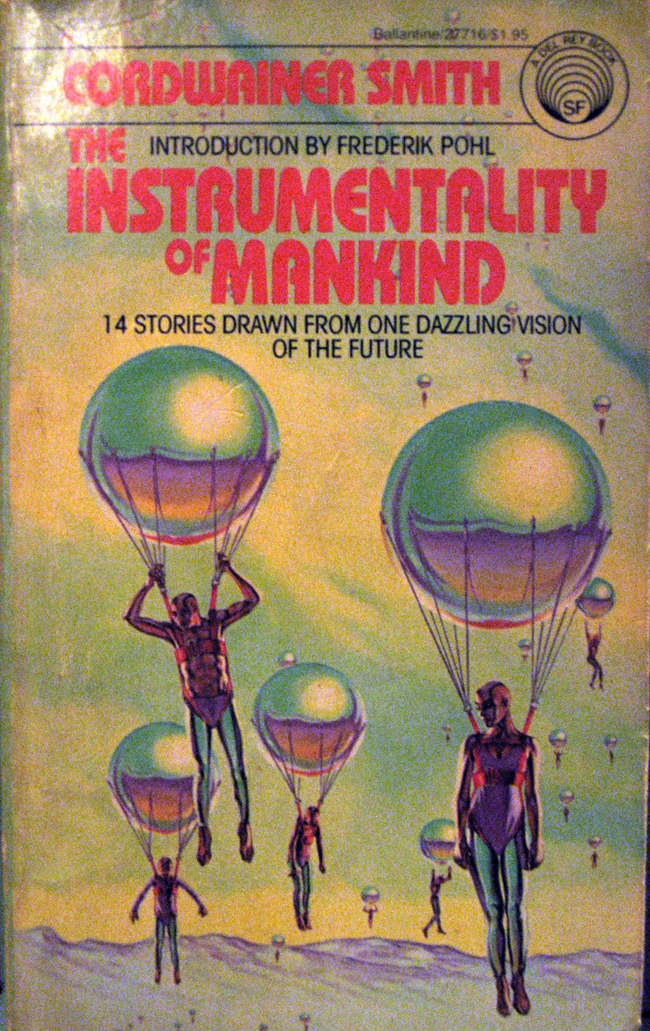
Anna Grace Carpenter: The first I remember trying to imitate was Cordwainer Smith. He had a flair for not letting story get in the way of the occasional stylistic flourish and I loved it. Later Tad Williams and Raymond E. Feist made an impact on how I used characters to best tell the "exciting" parts in ways that actually had an emotional impact, plus a particular style of world-building that has stuck with me. (I would be hard-pressed to explain this, but I know that it's there because of reading their work.)

Things started to be less copycat once I really started writing a lot. The more I was using words in storytelling regularly, the more my own style began to emerge from the way I pictured certain scenes and the dialog I heard from my characters. At which point those authors moved from a category of imitation to one of influence.

HC Playa: So there are 4 authors that spurred me into writing: Sherrilyn McQueen, J.R. Ward, Karen Marie Moning, and Patricia Potter.

All four build intricate worlds, whether it's dropping you into the romantic lives of people in 1100 AD Scotland, a hidden Vampire society, a murder investigation turned apocalyptic collision of Fae realms and human, or weaving mythology into romance and adventure.

I didn't copy any of them directly, but they all made characters breathe on the page. They weren't afraid to weave love into blood and gore and battles. One of my favorite things that I did copy was the reoccurring cast that doesn't necessarily feature the same POV from book to book.

Ernest Russell: My earliest influences were Poe, Verne, Wells, and an anthology called Tales of Time and Space. Later Lovecraft and the circle of writers from Weird Tales.

Of these early influences, there is one that influences every story. That is Jules Verne. One of the things I LOVE about Verne's stories is he did research and did his best to not only incorporate the science and technology of the story's time period but to project it forward into what might become. As such I try, even in my fantasy writing to research what I am writing and make it plausible within both the world rules for the story and what I find historically or current science and technology and translate it into the story.

Frank Fradella: F. Scott Fitzgerald, Robert B. Parker, and Chris Claremont. Remove any one of them and I'm not sure I'd be a writer at all. My college professor in English told me to look at Parker for dialogue, and he was right. Fitzgerald showed me how to make prose feel like poetry, but it was Claremont who taught me how to tell a story. I had been reading comics books off the spinner rack for years, but the first comic book I *remember* is Uncanny X-Men #131.

Tom Powers: A weird mix of Walter Gibson, Paul Ernst, and H.P. Lovecraft. Still echoes of them all, plus a bit of Norvell Page. Much of what I write is in the traditions of those writers' genres.

Pj Lozito: I wanted to write like Lester Dent, Edgar Rice Burroughs, Raymond Chandler and Sax Rohmer.

Teel James Glenn: Robert E Howard, Lester Dent, Peter O'Donnell, Dash Hammett.

Krystal Rollins: My inspiration: Mary Higgins Clark from my past, and my present is you,, Sean. Her work continues to inspire me in how I create my characters. Her words are printed in black ink and white paper but in my mind, it's blooming with color. I keep writing Sean because of you. (Editor's Note: Awww... Shucks. Thanks, Krystal.)

Charles Gramlich: Ray Bradbury for one

Murky Master: So Dragonlance and the anime Escaflowne, above all else, got me into writing seriously when I was about 13 years old. It took another ten years before I returned to that old dream, but I wrote part of a fantasy novel in those days that I am still surprised at its quality compared to what I wrote today.

John Morgan Neal: Stan Lee, John Broome, Gardner Fox, Bill Finger, Bob Haney, Denny O'Neil, Archie Goodwin, Len Wein, Steve Englehart, Jim Starlin, Roy Thomas, Doug Moench, Michael Michael A. Baron, John Ostrander, Mike Barr, William Messner-Loebs, Bill Mantlo, Marv Wolfman, and last but opposite of least, Chuck Dixon.

Michael Dean Jackson: When I started writing (as Jack Mackenzie) I was inspired by a lot of military science fiction; Heinlein, Jack Campbell, David Weber, Lois McMaster Bujold, etc. It was with those inspirations that I wrote THE PARADIGM TRAP and THE MASK OF ETERNITY.

Do those elements of your inspirations still show up in your current work? Howso? Are they things you do consciously or have they just been internalized by the years of doing them?

Frank Fradella: Completely internalized. I took Parker's style for a spin on its own, and it felt like wearing one of those 1970 Halloween costumes that comes with the hard plastic Batman mask attached by a string. It was a conscious choice to find me in that amalgam, and that's the writer I became.

Anna Grace Carpenter: I do still love a stylish bit of storytelling. Voice, unexpected use of language and grammar (or lack thereof) to catch the reader's attention at a critical moment are some of my favorite things. And that all grew from early attempts to mimic Cordwainer Smith. And the storytelling inspiration I got from Feist and Williams is still there too. Using all the characters to tell the story whether we see their PoV or not. Allowing heroes to not always be heroic and villains to not always be villainous without diving into a grimdark grey. And allowing tragedy to occur, sometimes in very small ways that adds a bittersweetness to big triumphs.

I don't think it's deliberate, it's just how those inspirations encouraged my own voice and writing the kind of stories I like to read. Because that was what first made me want to imitate them - they wrote stories I loved. And now I write stories I love so the influence is still there, but organically after years of practicing my own storytelling.

HC Playa: At some point, I found my own writing voice, but for all my novels, these elements remain, including having two central protagonists (usually a male-female romantic pairing, but like JR Ward, I branched out the more I wrote).

Depending on the story it can almost seem like a hero and side-kick type of casting, especially as I pit them against larger-than-life dangers. (As I type this I suddenly see why my publisher says my writing is pulp 😂.) I don't lean into the romance aspect as much as those authors tended to. More like Moning's Fae Fever series, the romantic aspects take a back seat to the apocalyptic events and characters dealing with their issues.

I have read plenty of classics of multiple genres, but it would be disingenuous to say I am influenced in style by those stories.

I don't aim to write the next classic that future college students dissect to figure out what I meant when I said the sofa was an ugly flea market reject.

I write to entertain. I use elements from the stories I love reading. I love weaving in magic and the amazing, because life always needs magic.

John Morgan Neal: Yes. I'm a big ol' ape in more ways than one. But never outright. The stuff I love is in my DNA. So it has to shine through.

John L. Taylor: Many facets of my inspirations are like a reflex now. A subconscious thread. I still lean on Lovecraftian themes and first-person narrations in horror but avoid the adjective salad pulp writers often used when stories paid by the word (Lovecraft was great at taking a whole paragraph of them to say "it was an amalgam of parts that defied description, an offense to biology itself.") I guess that's the real difference between me and my inspirations: I prize concise writing. I suppose that's the last vestige of Updike left in me. But it's a great influence to retain/

Rob Cerio: I still feel like I use Cussler's "opening Gambit" formula and basic formatting of action scenes. Azimov's use of "working-class schlubs" is something that still crops up all the time in my work.

TammyJo Eckhart: I can't answer question one so question two also doesn't apply. While there are authors that I loved and still love, the idea of copying them in any way never entered my mind. I was writing stories from kindergarten onward.

Murky Master: Things I took from Dragonlance were:

  • mixing cultures is both hugely interesting and creates lots of conflict, from Tanis Halfelven's internal identity drama. I'm biracial myself so it was interesting seeing someone "like me"
  • Bad guys are F-ing Awesome. Raistlin made a permanent mark on my picture of wizards and magic and the lure of power magic brings. You need no further proof than to behold my profile pic, after all. Nothing makes me hahaha quite as much as my hourglass-eyed boi. Lord Soth was pure mother finding METAL as well and remains my fave Ravenloft Darklord.
  • Escaflowne was a romance and an epic fantasy all at once. Later on, I would actually sit down and read a romance novel and find it totally awesome, and I like to have strong, real relationships in my books because of that anime.
  • also, the anime was grand in scope, full of pathos and beautiful at times, unspeakably cruel at others (looking at you Dilandau). It helped me understand PTSD and the weight of honor as well as the power of dreams to destroy and create. Dilandau also made me like insane villains.
  • the Adventures of Batman and Robin cartoon with Bruce Tim as the art director also made me love art deco and Pulp sentiments. The episode featuring "The Grey Ghost" and Brendan Frasers The Mummy sealed my fate. Now I can't help but have all cap titled like DESTROYERS FROM WALMARTS BEYOND and COURT OF THE GLISTENING LUNCH LADIES and such.

Chuck Dixon: I read so much before I started writing for a living that I have no idea who's work I've intuited over the years.

Michael Dean Jackson: However, around the time I was writing my books I discovered the television series SHARPE on the History Channel. I loved every episode and I loved Sean Bean as Richard Sharpe. So I figured I would try the novels by Bernard Cornwell and I loved them even more. The books were, I found, immensely better than the show.

And it was those novels and the character of Sharpe who fired up my imagination and helped me come up with my own, military SF version, a character called Jefferson Odett.

I have only written two Jefferson Odett books, DEBT'S PLEDGE and DEBT'S STAND, but I do have a third one that I may eventually get to. Nevertheless, Jefferson Odett is more than a little inspired by Richard Sharpe, in the same way that Horatio Hornblower, C.S. Forrester's seafaring adventure hero, inspired Bernard Cornwell's character.

I am under no illusion that my novels have anywhere near the quality of Cornwell's or Forrester's, but the inspiration is there.

Friday, February 18, 2022

AN UNSUNG HERO FROM A LITERARY CLASSIC GOES PULP! ‘THE FURTHER ADVENTURES OF NED LAND’ NOW AVAILABLE!

FOR IMMEDIATE RELEASE

In Jules Verne’s classic ‘20,000 Leagues Under the Sea’, a character debuted that brimmed with life and vitality and deserved more stories be told about him.  Pro Se Productions has proudly taken up the challenge with its latest anthology collection. THE FURTHER ADVENTURES OF NED LAND is now available in print and digital formats.

Ned Land was a man of strength, both physically and emotionally. He was not educated, but he was intelligent in ways necessary for a man of the world. He was skilled in the ways of a sailor and known as ‘The Prince of Harpooners’. While Captain Nemo continued on into other stories, however, this singular man of the sea, Nemo’s opposite in so many ways, did not.

Until now.  

THE FURTHER ADVENTURES OF NED LAND sets sail with five new stories featuring Verne’s forgotten hero.  Never venturing far from the water, Ned reaches for the stars in five exciting and thrilling tales.  Sail along with the storytelling sailor into the action tales only a hero such as he deserves!

THE FURTHER ADVENTURES OF NED LAND features a stunning cover by Antonino lo Iacono and print formatting by lo Iacono and Marzia Marina. It is available in print for $9/99 via Amazon

This innovative anthology is also available on Kindle formatted by lo Iacono and Marzia for $0.99 for a limited time. Kindle Unlimited Members can read this thrilling adventure for free!

For more information on this title, interviews with the author, or digital copies for review, email editorinchief@prose-press.com.

To learn more about Pro Se Productions, go to www.prose-press.com. Like Pro Se on Facebook at www.facebook.com/ProSeProductions.


Tuesday, May 4, 2021

Fashion Sense (Writers on character clothing and fashion)


For this week's roundtable, let's talk fashion. No, not your own, but that of your characters.

How much do you use your narrative to draw attention to your characters' clothing choices?

Tom Hutchison: In comics, design is a huge key. In novels far less so. So it depends on what you’re talking about. Design for my comics is super important and we dwell on details and reasons for things to be part of the clothing/equipment/scene etc. there are reasons for everything and it comes through on the page and through the storytelling.

John L. Taylor: I write Dieselpunk fiction and horror in retro settings. Describing the clothing right does a lot when I don't have illustrations to convey a character. In the Dieselpunk example, My protagonist was a working-class hero, a pilot who did mercenary work to care for her orphaned siblings. Things like oil stains, torn patches, and worn flight caps help sell the idea of a hard-fighting rogue with money problems. Conversely, in horror, a character's clothing can both generate a sympathetic mental image or drop subtle hints about motivations. My personal favorite work of my own is a story called "What gasoline won't burn." It's a story set in 1950 in rural Missouri and narrated by a very naïve 8-year-old girl. I described her as looking like something off of a Little Debbie's or raisin box. I had to both sell the reader on the era it was set it (put this way, the plot wouldn't work in a world with cell phones), and the almost cartoonish innocence of the Narrator. People criticized me some over how naïve she was, but that was the source of the horror: her being too sheltered to see what was coming until was too late for her grandparents, while the reader has to follow in dreaded anticipation of the world going to hell around such a poor, sweet, undeserving soul. The other characters' clothing has subtle tells of what role they will play, but the whole effect had to create a sense of looming dread of the inevitable. Without these descriptions, this wouldn't be so effective.

Ernest Russell: Generally, I do this as needed as part of an overall description. If there is need for .ore detail, or it is intrinsic to the character, I add more detail.

Bobby Nash: I make sure the audience knows what the characters are wearing, even if just in generalities ala jeans and a t-shirt or they’re wearing a gray suit. Some characters get more, depending on who they are and if it fits their character’s needs.

John Linwood Grant: What people do with their clothes is sometimes more interesting than the exact nature of the garment/accessory, e.g. someone who goes to great lengths not to spoil their get-up, someone who plays with gloves or a hat as a sign of emotion, or wears clothes that their peers would not have expected.

Hilaire C Smith: I don't like to beat them over the head with a page of detailed description, mind, but clothes are very often a reflection of us as people OR the image we want to project to others. So, I used that with my characters. Sometimes I take that first impression and slowly mold it into something different and sometimes it is exactly who the character is.

Two male characters in my series: (1) long hair, a bit scruffy, but appropriately shaved and buzz cut when reporting for duty.... utilitarian clothes, often dark in color and often carrying weapons.

(2) Pretty male, clean-shaven, hair past shoulders, but immaculate...like GQ model, complete with silk shirts and soft leather pants.

These are very, very different styles, which is also reflected in their temperaments, their choices, etc.

Dale Glaser: For anything set in the vaguely-now, I only use clothing descriptions to reveal character, e.g. a grown man wearing a t-shirt with a cartoon character on it is my show-don't-tell version of getting across he is unserious and immature. 

Bill Craig: In my south Florida mysteries, Guayabera shirts and cargo pants or shorts are standard dress, because you see a lot of them down there. I've recently introduced Rick Marlow's cousin Greg who takes up the title mantle after Rick is nearly killed in an assassination attempt. His style is a bit different due to his background in Special forces and Covert ops in the military, but he also understands the need to blend in with his surroundings. Hardluck Hannigan however wears a bomber jacket, work pants and boots and cotton shirts.

Sean Taylor: It really varies from story to story, but in any case, I do like to at least establish a cursory look at what my characters are wearing. It can say a lot about their character in a sort of shorthand that cuts through so much of the telling that gets in the way of the story. 

Marian Allen: If a character's clothing choices make a difference to the story (one scene casual, one scene formal), I'll put that in. If a character wears a t-shirt, sometimes I'll say what's on it to add to the character. I gave a moderately detailed description of one character's outfit in a mystery because everything hinged on someone who didn't know her well being fooled when she changed outfits with somebody else.

How important are those details for you in establishing character for them?

Dale Glaser: I do lean into it more with stuff set in the recent past, again aiming for show-don't-tell, describing parachute pants and Le Tigre shirts rather than saying "One day in April 1987..." because I lived through it and that's fun for me.  

Bobby Nash: Having written a story or twenty set in the 1920s and up, I try to make sure I have some inkling of the fashion and style of the era when I write. 

Hilaire C Smith: It's a useful tool to paint a picture for the reader. Certain styles can evoke mental images and impressions/assumptions that we want the reader to make, true or not 😏. It's an excellent way to show and not tell.

Ernest Russell: It depends on the story and the characters. I have one who, as part of his persona, wears loud colorful clothing. Descriptions of his suits happen at least once a chapter. Another character, a whaler, you never really see any clothing change.

Sean Taylor: Again, it varies. My sort of "everyperson" stories don't require a lot other than to establish a sense of "muggleness" (khakis, jeans, t-shirt, polo, etc.) But for oddballs and for stories set in a certain period, I usually go into much more detail because the further you are from the current mainstream (at least to me) the more a characters fashion choices help define them. For example a grown man in a Hong Kong Phooey t-shirt gives off a different character vibe than a man the same age in a pair or cargo shorts and bowling shirt. 

John Linwood Grant: I'm a serious minimalist. I might only mention a single aspect of a character’s clothing if any at all. An incongruous jacket, a specific type of hat or boots when relevant. As little as possible. I’m generally put off by character descriptions that read like a shopping and fabrics catalog, or a list of brand names. Mr. Edwin Dry has a bowler hat, and a starched collar; Mamma Lucy has a faded print dress. Captain Redvers Blake is either in uniform, or he isn’t. Usually, that’s it. I once said that my character Justin Margrave was wearing a red silk shirt and a cravat, which was pretty wild for me, and even that was relevant to a viewpoint.

How important is it for you particularly if you're working in period costume (whether 30s gumshoes or Elizabethan vampires)?

Hilaire C Smith: Period stories rely on a cleverly set stage designed to immerse a reader in a different time. Costume is part of that. Now, most readers won't be able to nit-pick small details, but if your 1930's private eye is wearing a t-shirt and jeans, unless he's out doing physical labor or something, it isn't going to feel right. It tosses the reader out of the story. An Elizabethan vampire isn't going to be wearing Vans...unless the story is modern and he's a complete mess of style choices...which would also tell the reader a lot about the character compared to a vampire that has seamlessly blended or another that continues to wear fashions decades or centuries out of date.

I never do lengthy descriptions of clothing, but I often include a description, especially as one character (or the reader) meets another character for the first time.

Marian Allen: Now, when I wrote a Georgian short story, I nearly pulled my hair out learning what different items were called and what one would wear for receiving guests and what for traveling. As with most writing questions, the short answer is: It depends.

John Linwood Grant: People in period costume in their period don't think they're in period costume. 😉 So I try to avoid some of that excess description which only springs from the writer/reader NOT being in the period. 

Dale Glaser: Oddly if it goes much further back I'll use other cultural signifiers like dialogue or people's jobs or whatnot to get across the idea that it's 1921 or 1849, and I'm fine with people assuming they know how people dressed back then and moving on.

Sean Taylor: For me, it's muy importante. I put hours of research on the magic Google device looking up fashions for the time period I'm writing. I want to know it all. What kind of watches did folks where? Were hats preferred or not? That sort of thing. I want to make sure I write the period as authentically as possible. 

Emily Leverett: Oh fashion is SO important in my Eisteddfod Chronicles. Clothes are definitely political and make very specific statements, so the protagonist is careful about how she dresses and chooses attire (like a spiky tiara with a political history) to make a point. After she takes 10 lashes and doesn't get the best medical treatment, she wears a backless dress at a political event to show that she isn't ashamed of what happened. My editor actually commented once that he hadn't thought about fashion being that big of a thing. But clothing and badges are super important to court life.

Bobby Nash: It’s important for some characters. If fashion is important to the character, then that helps establish the character. If not, then it gets mentioned less. The other side of that is having a character that is not fashion-conscious, but then you do a scene where they are in a suit and tie. The other characters are going to remark on it ala “he cleans up nice” or “Damn! You’re wearing a suit!” That’s the sort of thing I hear when I show up wearing nice clothes.

Ernest Russell: Very important. I want my stories to be plausible. How did children dress in the late 19th century? Small details can add an element of reality. Not going to get in the weeds describing the weave and weft of the cloth, but knowing a 1940s French dairy farmer commonly wore a corded vest and pants is a small detail that adds just the right touch of authenticity.