Showing posts with label genre writing. Show all posts

Wednesday, April 4, 2018

Nugget #127 -- Whatever Court You Play On


The skills you learn in writing visceral descriptions 
only make you better at your writing game -- 
whatever court you choose to play on.

Thursday, March 15, 2018

Literary Pulp—Why It Makes Sense and How To Write It


by Sean Taylor, with a little help from my friends

Classic pulp is as much known for its black and white, all or nothing characterizations and crammed-to-the-top-with-action plotlines as it is for the cheap paper from which it gets its name—maybe even more so nowadays. So, with that in mind, how does someone like me, who got his start in literary fiction and the three most important words in fiction writing (character, character, and character, of course), grow into the kind of writer who embraces the pulp style of storytelling?

That’s a good question.

But, perhaps the better question is how can someone else do the same?

Because, trust me, there’s a lot of gold to be mined in the odd, little marriage between literary fiction and pulp fiction.

Author Derrick Ferguson sums up the discussion between art and non-art quite well.

“Before I step up on my soapbox and start the pontificating, let me start of by saying that I don’t consider ‘throwaway writing’ to be a bad thing. Robert Heinlein is famous for saying that 90 percent of everything is crap. I think that 90 percent of entertainment is throwaway and disposable. Most people are really just looking for something to entertain and/or distract them from whatever is giving them the grumbles in their life. Of course, the creators of that entertainment hope and pray that it will live on after them. But I find it difficult to believe that the creators of Gomer Pyle, USMC expected or hoped that people would still be watching the show 50 years later.

“And the ability to entertain is not to be taken lightly. I don’t get emails of thanks often, but every so often I will get one from somebody who will thank me because they read something I wrote that transported them away from their problems for a couple of hours, and for me, that’s one of the highest compliments that I can be given.”

Barry Reece
Let’s Get Two Things Straight First

Before we go any further, we should probably lay down the two ground rules that govern this whole shebang in my understanding of it.

#1—Literature doesn’t trump genre.

There are those out there in the market who think that literary means better written and that genre means written for the average idiot. As far as I’m concerned, neither of those thoughts hold any validity. Rather, I believe that the two are simply two different ways of approaching writing that both can learn from each other and help each other out from time to time.

“Great literature isn't great because of its genre or its pace," says author Percival Constantine. "Shakespeare wrote plays for mass consumption, for crying out loud. I defy you to read anything by Vonnegut and call it slow or meandering. There is nothing in any definition of pulp I've ever seen that says the characters must be flat, the prose must be clunky, and the plots must be simple.”

#2—There’s no such reader as the average dum-dum.

Are there smart readers? Yes. Dumb readers? Of course. Average readers? Absolutely.

However, the straw man that some critics and reviewers have created to build a chasm of difference between a Joe Everybody reader and an Artiste McHighbrow reader is pure garbage. I come from a background in Literature, and I’ve been all over the United States as a writer hitting various conventions, and let me tell you what I’ve learned: Readers are readers. They don’t divide themselves into camps based on a perceived difference in brainpower. A lot of the same folks who read Oprah’s Book Club recommendations also read both James Patterson and Zora Neale Hurston. Many of the same folks who read Mickey Spillane on their Kindles also read Ambrose Bierce and Flannery O’Connor on them as well.

They Go Together Better Than Macs and PCs
(or even Marvels and DCs)

If you’re my age, you remember those commercials where one guy was a Mac and another was a PC and they argued about who was better (which were later parodied for Marvel and DC). Well, I’ve had that same experience, but with pulp and literature. Literally. I’ve had some editors and writers tell me there’s no room for literary techniques in pulp, that pulp should merely be fast and free of any style or technique.

I daresay, those folks seem to have forgotten H.P. Lovecraft, Raymond Chandler, and Ray Bradbury. They crossed and re-crossed the great literary divide, and their stories live on not in spite of their craft and technique but because of them.

“I think you have to look at other genres that have often been seen as the opposite of art—science fiction, fantasy, superheroes, etc. All of these at one time or another have been considered trash fiction. But then you've had people who have elevated those genres to new heights—people like Ursula K. LeGuin, Kurt Vonnegut, Philip K. Dick, Isaac Asimov, J.R.R. Tolkien, Frank Herbert, Grant Morrison, Warren Ellis, etc.” says Constantine.

The "New Pulp" Openness

In the interest of keeping us all on the same page (as the saying goes), let’s first clarify what New Pulp is. According to Pro Se Press, one of the leading publishers of the genre (or style, depending on who you ask), new pulp is “fiction written with the same sensibilities, beats of storytelling, patterns of conflict, and creative use of words and phrases of original pulp, but crafted by modern writers, artists, and publishers. New stories with either completely original characters or new tales of established characters from Pulp past. It’s really that simple. New pulp is pulp written today.”

There are several schools of thought within the New Pulp movement. One looks to do little more than telling new stories of classic characters. Another looks to create new characters that are primarily reminders or pastiches of those classic characters. Still others seek to take the tropes and style of classic pulp and bring those types of stories kicking and screaming into contemporary fiction (regardless of the time period and settings of the tales themselves). I’m not going to say any of those is better than the others, but I will admit to being firmly entrenched in that third group.

Where do we stand now? Percival Constantine again hits the nail on its proverbial head. “I'm not going to stand here and say that all pulp is filled with complex characters, intricate plots, and well-crafted prose because that would be a lie. In fact, probably a majority of the classic pulps are pretty bad. The plots are simplistic, and the characters are flat or stereotypical (especially where women and minorities are concerned). But you know what?” he continues. “That's true of pretty much any genre. Have a look at the literary fiction section the next time you're on Amazon or in a bookstore and flip through some of the books. There's a lot of stuff that tries to use pretension to cover up for ham-fisted dialog, extremely purple prose, and a lot of navel-gazing.”

Within that new generation of pulp writers there are numerous characters and settings being created that may or may not stand the test of time like Phillip Marlowe or The Shadow, but folks like Derrick Ferguson, Barry Reese, and Percival Constantine are still doing their damndest to make that happen and fill the world of pulp fiction with something different—but not too different, unless, of course, you're talking about the caliber of writing.

So, I asked them a bit about how they create New Pulp held to a higher standard. Here’s what I was able to glean from them.

The Facts, Ma’am, Just the Facts

No more ideological stuff. You want the how-to. Well, thanks to some of the modern masters… here it is.

1. Don’t try so hard.

“The best advice I can give for looking to create some kind of lasting art?” says Ferguson. “Don’t even try.”

Barry Reese echoes the sentiment: “I don’t really spend a lot of time thinking about such things. I write what I want to read, and a lot of times, that’s escapist entertainment.”

True art hides itself. That’s what I’ve been taught my whole life as a storyteller. You may have heard that same idea translated this way: The author should seek to hide himself or herself so he or she doesn’t distract the reader. In the best art, that intentional invisibility will refuse to be hidden. One needs no more than to look at Monet’s paintings or Michelangelo's David to see that. Or perhaps to read The Great Gatsby or the poetry of Langston Hughes. The difference is that the art comes after, not before. The work comes first.

But be careful, cautions Ferguson. “That doesn’t mean I’m saying don’t try to produce the best art that you are capable of producing. You should always strive to tell the best story you can in the best way you can. What I am saying is that there’s madness in sitting down at your keyboard and pronouncing to the world ‘I am going to create art!’”

2. Be true to your characters. 

Derrick Ferguson
One of the tenets of both literature and genre fiction that adherents can agree on over the chasm is this: Character is king. Without the consistent personalities behind them, protagonists like The Spider and Doc Savage wouldn’t have become so important to so many fans in the same way that without a well developed personality, Hemmingway’s existentialist heroes wouldn’t have influenced decades of readers, writers, and filmmakers.

The difference comes in how literature and genre decide illustrate and create characterizations.

Constantine says, “Pulp is, in its simplest distillation, fast-paced, action-oriented fiction. That doesn't mean you can't have characterization in there as well.”

Characterization comes from what your characters do and say in pulp fiction, not in what they think and pontificate about, according to Ferguson: “As so often happens in fiction and especially pulp, you gotta figure out what works for you and how you can best convey characterization while your heroes are running around trying to stop the big bad from blowing up the world.”

3. Say something about the world around you.

Here’s something folks don’t always think about in their writing. It gets down to that amorphous notion called “theme.” Like in the first point (Don’t try so hard.), theme is one of those things that most often is distilled through the writer’s views and ideals without really thinking about it. That said, however, it never hurts to look at (or back at) your work to see what you are saying beyond just Character A punched Character B.

In my own work, it is not just important to me, but vital to the understanding of Rick Ruby that the multi-colored, but still race-embroiled, world in The Ruby Files be communicated in the stories. I’m not using a Phillip Marlow pastiche to try to make a point about racism, but I’m determined to show the world as it was and let readers figure things out for themselves.

Likewise, Ferguson’s Dillon can at first be seen as a black version of Doc Savage, but the comparison stops at the surface. What the author says through the adventures of Dillon is what’s important, and goes far beyond the idea of “Wouldn’t it be cool to have a black Doc Savage?”

“Great literature not only features developed characters and skillful prose but is also a commentary on the society it was written in,” says Constantine. “That doesn't mean you hammer readers over the head with it, but you have to look at the world in which you're living, think about what you want to say in regards to it, and find a subtle way to relay that message through your fiction.”

He cites the recent Black Panther movie, with its “really serious and complex themes about colonialism and globalism” as an example.

4. But don’t be so obvious about it.

Remember that bit about art hiding itself? It’s worth repeating, particularly in pulp fiction. Find ways to write complex characters and themes in simple, subtle ways.

Ferguson has a method that works for him—using the movement between settings to get to know anything about his characters the action might not show.

“Plenty of time characterization is done as my heroes are traveling in vehicles from Point A to Point B,” he says. “Let me provide you with an example from a popular movie: there’s a scene in the movie Silver Streak where Gene Wilder and Richard Pryor are in a stolen fire-engine red Jaguar racing to save Jill Clayburgh from Patrick McGoohan, and they’re exchanging what is some pretty meaningful dialog about their relationship, the situation they’re in and how they’re going to save Jill Clayburgh. It’s a nice scene with characterization but it’s done in a moving car that is taking them from one action scene to the next. The movie slows down to provide us with characterization but the actual plot doesn’t slow down and carries the promise that we’re going to see more action once to get to where we’re going.”

5. Keep it moving while you do all that.

Hot on the heels of the previous point, it’s important to keep pulp fiction movie moving along at a good pace and speed. There’s little room (none, some might say) to admire the mountains between Hobbiton and Mordor in pulp fiction. Nor is there time to lie down in the grass and dreamily point out cloud animals. Something needs to be happening. (Notice the tense of that sentence. I didn’t say “Something needs to happen.” I said: “Something needs to be happening.” Ongoing. It doesn’t really stop.)

Reese says it’s all based in the definition of pulp, as he sees it. “Pulp, to me, is about fast-paced adventure. I can deliver that while also giving you three-dimensional characters. Indiana Jones is a good example of what can be done with new pulp. He’s nuanced, but his adventures are thrilling to watch (and read—some of the licensed novels are excellent).”

Ferguson agrees:

“Writers of pulp knew the secret of having genuine characterization in their work long ago. You can do characterization and have sparkling, meaningful dialog and solid supporting casts and all those things that literary fiction prides itself on in the most action-packed of stories. Here’s the catch: Don’t stop the action to do all that stuff. 
“Let me clarify. Action doesn’t mean that you have to have constant fist-fights, explosions, cliffhangers, the heroes continually escaping fates worse than death or chases and captures. Although if you are writing pulp, I would certainly hope that you do have all that stuff in there. After all, what’s the point of writing pulp if you don’t? It’s like making a ham sandwich without the ham. But in pulp, the plot always has to be going forward. You simply cannot stop the thrust of the plot to indulge in a three page introspective passage when your heroine is supposed to be saving the world.”

To put it in terms those who have attended one too many writer’s conventions can appreciate, don’t let the writer chew the scenery.

6. Realize that not all “art” is as good as some writers and critics think it is.

Percival Constantine
This one gets back to the heart of our two things to get straight. (You haven’t forgotten them already, have you?)

#1—Literature doesn’t trump genre.
#2—There’s no such reader as the average dum-dum.

Just because a section in the bookstore is called literary fiction doesn’t mean the books there are better than everything (or even anything) else in the rest of the store. Nor does it mean it’s intrinsically good at all. Literary fiction is based on a set of rules for storytelling just like genre fiction is based on a set of rules for storytelling just like comic book writing is based on a set of rules for storytelling just like… Well, you get the point.

“The problem with the ‘literary debate’ is that you're not actually having the right conversation,” says Constantine. “Not all great literature is literary fiction. And I come at this from both sides, because not only am I a pulp writer, but I also teach literature.”

“One thing I’ve noticed with most writers whose work has stood the test of time and transcended whatever genre it was created for,” Ferguson adds, “is that most of them did not set out to create art. They simply wanted to tell a good story, maybe make a couple of bucks on the side and entertain themselves. A good deal can be said for writers simply relaxing and having some fun with writing. And it can be a whole lot of fun if you let it be.”

As the vernacular goes these days, “You do you.”

7. Literary techniques and genre techniques are the same techniques.

Never thought you’d hear that, huh? When it comes to writer’s toolboxes, there isn’t a fancy mauve one for literary writers and a beat-up, tried and true rust bucket for genre writers. (Unless you paint your own, of course. In which case you can mauve your heart out.) And if you open either toolbox, you’ll find the same tools in each. You’re no doubt familiar with them already:

  • Dialog
  • Pacing
  • Characterization
  • Point of View
  • Grammar
  • Breaking Grammar
  • Research
  • Setting
  • Word sounds
  • World building
  • Connotation and Denotation
  • Figures of speech
  • Spelling
  • Intentional Misspelling
  • And so on…

When it comes to pounding in a nail, a hammer is a hammer is a hammer. Whether you’re building a shed or a mansion, the tool remains the same.

Conclusion—It Either Works for You or It Doesn’t

So, where does this leave us? Are you ready to take your action stories into the world of literary approaches? Or do you prefer to just sit in your office and make Character A punch Character B in the face? Then do it.

Are you tired of critics or other writers trying to tell you your genre writing is something less than their highbrow art? Ignore them.

Are you tired of reading poorer quality stories in your chosen genres? Move past them and write something better.

The genre doesn’t matter. It just “comes down to writers willing to go that extra mile to elevate the genre,” says Constantine.

=================================

For more information about Barry Reese, Derrick Ferguson, and Percival Constantine, please visit their websites.  

If you want more about Literary Pulp, go read the companion piece to this article. 

Friday, January 5, 2018

Preach it, Rev. Green! (aka, It Ain't Easy)

Note: A little something I felt the need to remind myself.

I started writing with a more lit focus, but with a love for genre fiction, and my earlier writing reflects that struggle between lit and genre in a way that made me, well, me... I want to embrace all kinds of work and style and create something new in pulps, horror, fantasy, sci-fi, superheroes, whatever.

As Kermit sang:

When green is all there is to be
It could make you wonder why
But why wonder why wonder
I am green, and it'll do fine
It's beautiful, and I think it's what I want to be 

So, I'm gonna be green because, well that's what I am.

Sunday, August 27, 2017

[Link] 7 Tips to Writing Horror

by Dimir

Horror is the one of the toughest genres to write. That is why so many horror writers today have resorted to gritty violence and gore. writing horror is to write about something most people would like not to think about. True horror takes something of a personal touch, in that it has to crawl into the audience while staying separate. I can’t tell you how to write the perfect horror story, but I can give you some tips to enhance the level of horror of any story you write.

Write Horror for the Senses

Darkness is scary. Tons of horror writing takes place in the blackness of shadows, and it is not wrong to rely on darkness for horror when you write. Though, people forget there is sound, smell, hearing, and touch just waiting to sneak it's way into your horror writing. Don’t start to write about the dark house alone, but write in some new horror sensory latches as well.

Write away the character's sight. Write the character in darkness with just the sound of tapping on metal. Writing horror is about making the character, and reader feel vulnerable.

“Clink, clink, clink. A loud crash. She looks, but sees nothing. The clicking is coming from everywhere and nowhere. It is all around. The smell of wet cement sticks in her nose. She can feel something cold, but what? Concrete or sandpaper beneath her? Clink, clink, clink. The sound rattles closer: chains shaking? Could it be him?”

You can write you horror as “she saw a ghost in chains, the same ghost that had left her in the darkness of the warehouse.” You can write a large horror description about how "the black smoke poured from beneath his cape and sheets," but senses as a whole are more powerful than just sight when you write horror.

Read the full article: https://hubpages.com/literature/7-Tips-on-Writing-Horror

Sunday, March 27, 2016

An Opportunity for New Pulp Writers


From Tommy Hancock:

I am extremely proud to announce that the well read and popular Venture Galleries website has asked me to do a column each week in addition to my reviews that will focus on authors writing pulp fiction today, what many call New Pulp. This new column, part commentary/part interview, will debut on Monday, April 4th at www.venturegalleries.com.

Any authors who write pulp fiction, referred to by some as genre fiction, that would like to be a part of this column, email me at braedenalex@centurytel.net. I will be reviewing each author who contacts me to make sure they fit the profile we're looking for and then will schedule writers in the order emails are received. A part of this will be my comments/thoughts on each author's works and/or style of writing, so providing me with a copy (digital or print) of at least one of your works would be suggested, especially if I'm not familiar with your writing.

Friday, November 6, 2015

Ideas Like Bullets -- I Oughta Be Committed

One of the things that comes with being a writer, well, to be honest, being a creative in any sense of the word, is the concept of assumption.  A sibling to that is of course expectation.  Now, I am not speaking of assumptions and expectations a writer may have, that’s a whole other column, but I am referring to assumptions made by and expectations of people who aren’t authors.  You know them, almost everyone else in the world, how it feels anyway, who are sort of on the outside of what we do looking in.  Those people who, when they learn what you do, have a range of physical reactions, anything from eyes widening like saucers as they ask, “Do you know Stephen King?” to the furrowed brow and disgruntled frown as they ask, “So, you live in your mother’s basement, then?”

Of course, we as writers react to these in different ways and that’s all right. We should, as we are all individuals.  It makes sense that people who aren’t authors have a preconceived notion.  Again, that’s a human thing, we do that with any career, any religion, anybody that is slightly ‘something else’, we ask questions or react to them based on the ‘stereotype’ fixed in our brains, usually.  And after the initial reaction usually comes questions.  Not just silly ones like “So You’re rich, right?”, but questions about how we write, what it takes to be a writer, those sorts of things. 

That is where I will venture today. 

I’ve got a lot of thoughts on many things.  Now, the fact that I am a writer and a publisher and somebody who does Genre Fiction and New Pulp adds no extra weight really to my opinions or advice, so I won’t take offense if you don’t print off this blog post and carry it close to your heart to treasure it always.  And my missives where writing are concerned are most definitely my own personal deductions on the craft and my views on the mechanics of how things work, all points you are perfectly allowed to ignore or even actively disagree with. 

Some of what follows will be the aforementioned advice.  Some will be simply answers to questions often asked.  Much of it will be my take on certain conventions, some of those aforementioned assumptions and expectations, and even things writer believe and feel.  All in all, just my musings, so be forewarned and take them for what you feel they’re worth.

One of the most common questions asked by anyone who has even an inkling of real curiosity about what authors do is, “Well, how do You become a writer?”  Another version of this one is “What do you to be a writer?”  And as silly as these questions may sound when you read them aloud, they’re not bad starting points.  The answer I give is actually rather simple and one that many, many of the writers I know and a lot I don’t know use as well.

Writers write.

That’s it, short and simple. Now, if you want my shade and coloring of that answer, writers write every day.  And by that I mean, someone interested in being an author, be it fiction or nonfiction, writing newspaper articles about Sunday brunches or earth shattering exposes on red dye food coloring and its effect on the sparrow population, must commit their craft consistently. 

Now, notice that last sentence.  Normally when someone says the above, the word they will use is ‘practice’… ‘must practice their craft consistently.’  Obviously, I am teetering on the edge of semantics, but that’s okay.  I simply don’t believe that ‘practice’ is the best word.  Although it can be defined as the doing of one’s occupation or the applying of one’s skill, I don’t like the fact that it sounds like a writer is still in the infancy of what they’re doing.  Moreso, I don’t believe that it’s a strong enough word.  That’s why I don’t practice writing. I commit writing, every single day.  I make it happen, I follow through, I get it done. Even if it is a single sentence furthering a project or maybe even a few lines putting a new idea on paper, I do it every day to some degree.  Sometimes it’s clean and precise and sometimes it’s messy and all over the place, but I do it on a daily basis.  Commit may seem too strong a word, and has connotations that some may not like, making writing sound like a crime, but what I do as an author, while not criminal (at least in my opinion, I probably have some readers who would disagree), is something I take very seriously and do with the greatest of intent. So, yes, writers should commit writing every single day.

The follow up question to the above that usually comes from those who are considering actually trying to write involves exactly what to write.  Again, my thoughts on this share similarities with the ideas of others, but that’s okay. It’s nice to know that not all my opinions are on the outer edges of conventional thinking.
There’s an age old adage that writers should write what they know.  Although a logical argument can be made for this, let me present just one of many examples right out of the gate that will blow this concept away. 

There was a man in the 1930s who had a job.  His job was working as an executive working for an oil company. He did what ever oil company executives do, I suppose, until something happened that cost him his job. This same something cost many people their jobs, their homes, their livelihoods and, even in some instances, their lives.  That would be the Great Depression.

When this particular man lost his job, he of course began looking for other ways to make the scratch necessary to live.  So, he turned to writing. Not just any writing, but writing for the Pulps. Writing mysteries. And not just any mysteries, but tales featuring Private Investigators, and other such types. And not just any Private Eye either. This man, this former oil executive whose job had been doing oil executive things, created Phillip Marlowe, one of the most recognized characters in fiction today.  Raymond Chandler was this man and he didn’t write what he knew.  He wrote what he wanted to.
Now, it can be argued that Chandler wrote what would sell, and that’s a true statement.   But I’ll hold that he wanted to write what would sell, so he wrote what he wanted to.  In today’s market, there are opportunities to write just about anything.  If you want to be a professional writer and that be all you do full time, there are ways to make that happen.  I know people who do it and don’t mind it, some who absolutely love it.  But many of them do it by not necessarily writing things they enjoy, but instead by authoring technical manuals or writing ad copy for websites.  Yes, it’s writing, and yes, they want to write it because they want to get paid for it.  But I have to take it a step further to offer advice. 

Write…what you like. 

If you like space opera, write space opera.  That means doing as much research as you need to to write intelligently about it, but do that and then WRITE it.  If Westerns are your thing, then dust off your hat and saddle up and WRITE a Western.  Write what you like and find a market for it, if authoring is something you want to turn into a career.  Or, if that’s the case, look at what people are paying for writers to write and find something in that You like and WRITE it.  In one sense, writing is like any other job.  It takes far too much time and work and commitment to be a writer for you to spend hours and days and years writing things you would never read, putting down words you can’t stand.  So…write what you like.

Life’s too short not to.

Wednesday, July 1, 2015

Nugget #57 -- Mixing Fiction

Mixing the "high ideals" of literary fiction, with 
its focus on characterization, meaningful symbolism, 
and grand themes, and putting those ideals into the 
"common writing" of adventure fiction, likewise, really 
gets me motivated. There's nothing in the rule book 
that says a genre writer should write poorly 
or ignore the history of classic fiction.

Monday, June 15, 2015

The Writer Will Take Your Questions Now #327 -- Magicaliteragenre-ism

What are your favorite genres to blend when you write?

Would "all of them" be an acceptable answer?

I didn't think so either, but it was worth a try.

Probably most of all, I like to combine magical realism and literary with genre adventure. Some of you are perhaps scratching you heads at that response. Don't feel bad. I totally get why that might be. For starters, magical realism is something best left to the Latin American writers, the literati would have us believe. Not only that, but mixing hi-falutin' literary fiction with low-brow genre (and dare I say it, pulp) adventure is tantamount to heresy, like pouring a 400 dollar a glass w(h)ine into a can of Pabst Blue Ribbon.

But I stand by my statement.

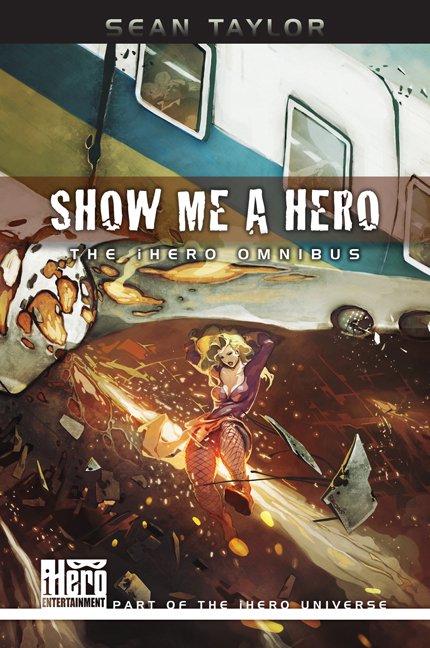
I love to take the ideas of magical realism, with the miraculous woven into the day to day happenstance of regular life without having to give it a second thought. My Show Me a Hero super hero story collection is full of this very conceit.

Mingling the "high ideals" of literary fiction, with its focus on characterization, meaningful symbolism, and grand themes, and putting those ideals into the "common writing" of adventure fiction, likewise, really gets me motivated. There's nothing in the rule book that says a genre writer should write poorly or ignore the history of classic fiction. Most of my favorite stories have already paved the way for this mixture, from Dracula to The Heart of Darkness to The Odyssey.

Most of my pulp writing falls right in line here. In fact I'm sometimes at odds with my pulp-writing buddies when I argue that typically one-dimensional characters can still be just as interesting when they are more fully developed beyond a mere good guy or mere force of nature. Rick Ruby is perhaps the most literary of my pulp characters and I probably enjoy writing him more than any other. He's a mixed bag of darkness and light, hope and hopelessness, love and anger, and he has no qualms about using the women in his life to try to compartmentalize those divergent parts of himself.

So, hand me that half-empty can of cheap American beer and watch me pour your fancy-pants, hoity-toity wine right inside it.

Tuesday, April 8, 2014

L. Andrew Cooper: The Extreme Side of Horror

Most writers I know I get to know as people first and as writers second. What I mean by that is I meet them personally before I've ever heard them talk about the craft or read their work. Not so with Andrew Cooper. At the most recent Connooga, I sat in on a panel on world building, and as I listened to his responses to the questions from the moderator, I knew he was a writer who "got it." You know, "it" -- that secret, hidden, mysterious thing that only some writers can use to see and hear the world and then convey those things in words. 

You really need to get to know him and read his work. Trust me. Read this interview, then read his stuff. You owe it to yourself.

Tell us a bit about your latest work. 

My most recent novel, Descending Lines, is on the extreme side of horror. It begins with what seems like a concept-driven burn: Megan and Carter Anderson’s 6-year-old daughter is dying of cancer, and they know a supernatural ritual to cure her. They have to conceive, bear, and sacrifice a second child. Their relationship and everything around them falls apart during the pregnancy, which readers expect to be the whole novel… but I answer the question of whether Megan and Carter go through with the sacrifice halfway through. Then I shift from escalating thriller to full-throttle horror-action. After the birth, anyone who happens to be in the wrong place… well, I’ve told readers that I’m not sure how many deaths I describe in the second half. Sooner or later, someone will count the bodies for me.

What are the themes and subjects you tend to revisit in your work? 

I try to keep my professor hat hidden when I’m wearing my creative writer hat, but of course my non-fiction books—Gothic Realities and Dario Argento as well as my co-edited textbook Monsters, not to mention various articles I’ve published on movies like Cabin in the Woods—share some of the obsessions in my fiction. Behind both of my published novels, Burning the Middle Ground and Descending Lines, lies the work of Dr. Allen V. Fincher’s The Alchemy of Will, a comparative study of world religions, published circa 1900, that describes how the universal key to the miraculous or the magical is the human will, unleashed and directed through rituals Fincher condenses and specifies. So more or less I’ve got a book-driven mythos that invites comparison to H.P. Lovecraft and the Necronomicon or Book of Eibon (cf my for love the Lovecraftian in Joss Whedon’s work), but with Dr. Fincher, I’m more interested in the modern than the ancient. What Megan and Carter do with Dr. Fincher’s work in Descending Lines is very different from what Michael Cox and Jake Warren do with it in Burning the Middle Ground (you don’t have to read either to understand the other), but in both novels, having Dr. Fincher in the background allows me to keep some of my obsessions with philosophy, morality, and religion going as well as an obsession—the subject of my very first book, Gothic Realities—with how books and other texts might affect the “real” world. Oh, and Dr. Fincher’s rituals are, of course, invariably nasty, if not in their ingredients then in their outcomes; my obsession with extreme aesthetics plays out in Dario Argento as well.

What would be your dream project? 

I’ve got to admit that I like everything I’m working on right now—an essay about A Serbian Film, a non-fiction book about movie remakes (definitely looking at permutations of The Thing as well as Halloween and Friday the 13th), and the next novel in the series The Last World War, begun by Burning the Middle Ground. If I get to go dreamy, though, I guess I’d say that somehow I’d like the time to keep teaching (I love teaching) and write the rest of The Last World War without worrying about market realities with respect to length (Stephen King gets away with a lot) or cultural sensitivities, all the while knowing I will get top-tier, A-list publicity and a multi-movie deal over which I will have some sort of creative control (the fantasy then extends to assembling a dream team of director, cinematographer, editor, musicians, and actors and maybe a screenplay co-author and then working on the films).

If you have any former project to do over to make it better, which one would it be, and what would you do? 

There are several easy answers to this question, but since at HorrorHound a couple of weekends ago I found myself mentioning it to people I’d just met, I suppose I’m ready to go on record about the existence of my first horror novel, Curiosity. Nowadays I feel like I have to emphasize that when I wrote it, “torture porn” hadn’t entered the vocabulary, but although operating on a different emotional register, Poppy Z. Brite and Bret Easton Ellis had been to the sorts of places I go in that novel. It wasn’t until I got a rejection from… I forget which major publisher… I had an agent at the time… which compared the book to Jack Ketchum’s The Girl Next Door that I learned about Ketchum, whom I now adore and yes, absolutely, the comparison is apt. Except the rejection was right about another thing, too: Ketchum provides psychological motivation, or at least a sense of relief for readers, by providing a grown-up on whom to shift blame. Curiosity is Lord of the Flies in the suburbs during a bad acid trip with way too many sharp weapons. A friend of mine read it and said I’d murdered my childhood. I’m honestly scared of going back to that book. But if I ever have a readership that wants it, I will revisit the manuscript’s 500+ pages of hell to make it more accessible.

What inspires you to write?

Breathing? I barely remember a time before writing. I remember first trying a novel in the second grade. I didn’t finish one until I was 18. Don’t ask. It’s unreadable.

Maybe a better answer: confusion. I start spinning out fictional scenarios when my analytical brain gets caught up on a difficulty or apparent insolubility. The problem fails to yield to reason, so I turn to horror, the result of reason’s evacuation…

What writers have influenced your style and technique? 

Stephen King was my intro to grown-up fiction; he got me reading. Ketchum somehow psychically. The 18th-century triumvirate: Ann Radcliffe, Matthew Lewis, William Godwin. The 19th-century: James Hogg, J.S. Le Fanu, Charles Dickens (late), Henry James (late). More 20th-century: Algernon Blackwood, H.P. Lovecraft, Shirley Jackson, etc. 

Where would you rank writing on the "Is it an art or it is a science continuum?" Why? 

Art involves crafting: knowing how to shape the medium in certain ways to elicit certain responses from the spectator, and increasing correspondence between the shaping and the desirability of the elicited response (i.e., I want to scare the crap out of you, I know tried-and-true methods, I use one, I scare you, I win) is a kind of science. However, what I craft where, and how I choose to craft it, the overall experience I create for you as a reader: that is an art. Someone can be a successful scientist without being a successful artist and vice versa, or someone can be great or crappy at both.

Any other upcoming projects you would like to plug?

At the upcoming ConGlomeration convention, April 11 – 13 (http://www.conglomeration.info/) I’ll be helping to launch Imagination Reimagined: Not Your Children’s Fairy Tales, a collection of short stories I co-edited with Georgia L. Jones and Christopher Kokoski. It includes my short “Kindertotenlieder,” a riff on the pied piper, very gruesome. 

Find Him Online :
http://landrewcooper.com
https://www.facebook.com/LAndrewCooper

DESCENDING LINES e-book: http://www.amazon.com/Descending-Lines-L-Andrew-Cooper-ebook/dp/B00HUC6XWA/ref=sr_1_1?ie=UTF8&qid=1396287057&sr=8-1&keywords=descending+lines 

BURNING THE MIDDLE GROUND e-book: http://www.amazon.com/Burning-Middle-Ground-Andrew-Cooper-ebook/dp/B00AFHHT7K/ref=pd_sim_kstore_1?ie=UTF8&refRID=1RG6C13EDY4758T8YZHF 

DARIO ARGENTO e-book: http://www.amazon.com/Dario-Argento-Contemporary-Film-Directors-ebook/dp/B00AG82XAQ/ref=sr_1_1?s=digital-text&ie=UTF8&qid=1396287204&sr=1-1&keywords=dario+argento 

GOTHIC REALITIES: http://www.amazon.com/Gothic-Realities-Impact-Fiction-Culture/dp/0786448350/ref=sr_1_1?s=books&ie=UTF8&qid=1396287255&sr=1-1&keywords=gothic+realities

MONSTERS: http://www.amazon.com/Monsters-L-Andrew-Cooper/dp/159871483X/ref=sr_1_2?s=books&ie=UTF8&qid=1396287296&sr=1-2&keywords=monsters 

Thursday, June 20, 2013

[Link] Independent Authors and Genre Fiction Are Changing the Publishing World


by Percival Constantine

Lantern-jawed heroes. Megalomaniac villains. Hard-boiled crime. Spicy romance tales. Settings that stretched from an ancient, barbaric past into far-off worlds in the distant future. Even if your only knowledge of the term “pulp fiction” comes from the 1994 Quentin Tarantino film, you know something about pulp. Tarzan, Doc Savage, The Shadow, John Carter, Conan — all these and more were creations of pulp fiction. And thanks to advancements in technology and the rise of the digital market, pulp fiction is back in a big way.

Today, a new renaissance of pulp is occurring, thanks in large part to the rise of print on demand, technology, and ebooks. No longer limited to traditional publishing houses, many new and even established authors are instead choosing to go through these routes, made possible through services like Amazon’s Kindle Direct Publishing and CreateSpace printing, or Ingram’s Lightning Source. These authors are bypassing the traditional gatekeepers and blazing paths for the kind of stories that traditional publishers may find too risky in today’s market.

Continue reading: http://www.policymic.com/articles/47417/independent-authors-and-genre-fiction-are-changing-the-publishing-world

Sunday, February 24, 2013

[Link] How to Write a Book in Three Days: Lessons from Michael Moorcock

by Eric Rosenfield

This article is the first part of a series about one of my favorite writers, Michael Moorcock, which will culminate in an interview with the man himself.

In the early days of Michael Moorcock's 50-plus-years career, when he was living paycheck-to-paycheck, he wrote a whole slew of action-adventure sword-and-sorcery novels very, very quickly, including his most famous books about the tortured anti-hero Elric. In 1992, he published a collection of interviews conducted by Colin Greenland called Michael Moorcock: Death is No Obstacle, in which he discusses his writing method. In the first chapter, "Six Days to Save the World", he says those early novels were written in about "three to ten days" each, and outlines exactly how one accomplishes such fast writing.

This is not the best way to write every novel, or even most novels. Moorcock used it specifically to write sword-and-sorcery action-adventure, but I think it could be applied more-or-less to any kind of potboiler. Once Moorcock himself had perfected this method, he became bored with it and moved on, restlessly playing with one genre and style after another, and turning in some of his best work, including the literary fiction Mother London (shortlisted for the Whitbread Prize) and the quasi-historical romance Gloriana. (Which took him six whole weeks to write!) The rest of Death is No Obstacle is about writing in these other forms.

So all of the quotes below are from just the first chapter of the book. I cannot recommend enough for fiction writers to hunt themselves down a copy (it's sadly out of print) and studying it, especially if you want to understand the purpose of form and structure in fiction. If you want to think of this post as a naked advertisement for this brilliant book, I'm okay with that.

To be clear: This is not my advice. This is Michael Moorcock's advice. I have never written a book in three days. I am planning on making the attempt, however, on the weekend of September 18th, which is Jewish New Years (Rosh Hashanah), and the next time in my calendar when I'll have three days straight with nothing else to do. Digesting this material is part of my preparation.

How to Write a Book in Three Days...

Continue reading: http://www.wetasphalt.com/?q=content%2Fhow-write-book-three-days-lessons-michael-moorcock

Thursday, October 25, 2012

Tales to Keep You In... Suspense!

We're back with authors Bill Craig and Lee Houston Jr. this week to talk about writing.This week in keeping with the creepy mood of October and Halloween, we're going to be looking at writing suspense.

What's makes a story suspenseful to you?

Bill Craig: That's easy there has to be an impending sense of danger to the characters as they race through the story towards its conclusion.

Lee Houston Jr.: Suspense is important to every story. Regardless of genre.
In romance: will they or won't they?
In mystery: who did it?
In action/adventure tales: how does the hero get out of this dilemma?

It is just a question of how this story element is applied, let alone if it's applied properly. You don't want to reveal too much too soon.

What's your main "silver bullet" for writing suspenseful fiction?

Bill Craig: There is no real silver bullet, you just have to keep up the sense of impending danger to make it work. An example:

Her brown face looked almost gray in the low light, the only sound the ever-present beep of the devices monitoring her heart beat and respiration.  Bandages covered parts of her face and her arms looked like thin sticks.  “Dat you Sam Decker,” a wavering voice issues from lips that barely seemed to move, causing Decker to jump because they were so unexpected.

Decker moved over to the bed where he hoped she could see him better.  “It’s me, Mama Celeste,” Decker replied.

“You bes’ find dat little girl quick.  Very bad man has her, gonna do terrible t’ings to her ‘lessen you stop him.  He has an army gonna come after you Sam.  After you and Rafe.  Dey gonna be hard to stop.  He caught me by surprise Sam, but now, de loa knows and dey come to protect me whiles I heal.  Look for the White Orchid Man, Sam.  He be de one dat has her.  Just like he did before,” Mama Celeste closed her eyes and began to snore softly, leaving Sam Decker with a lot to think about!

Something that Mama Celeste said stuck in his mind.  She said that the White Orchid Man had her, just like he had before.  Had the White Orchid man been the one that had kidnapped her as a child?  Sam took a sip of his coffee and pulled out his cell phone and called Rafael…


How much does foreshadowing and veiled symbolism play into your foreboding when you are trying to build suspense in a story?

Bill Craig:  It is usually not something I consciously think about but sometimes it happens.

Give us an example from you work, please.

Bill Craig: Here is an example from my upcoming Decker P.I. title Running the Voodoo Down:

The day had been a long one with autographs and CD signings at a local record store before coming in to do a two set show at the club.  Carly leaned back in her chair, finally getting to relax as she took a second gulp of her drink.  Then she saw it and her glass froze halfway to her lips.  Her heart began to beat faster, her chest felt suddenly tight as she looked at it.

She hadn’t noticed it when she first came in.  But she saw it now with crystal clarity.

A single white orchid on her dressing table.  Not the first one either.  This one made a dozen since she had performed in New Orleans.  Each of them appearing in her dressing room after a show.  Dressing rooms that were supposed to be locked and secured.  “No,” Carly gasped loudly, sucking in a long, loud breath and then letting it out slowly.  She concentrated on her breathing, forcing it back to normal.  She gulped her drink and sat the glass down as she stood up.


Lee Houston, Jr.: An example, from the forthcoming "Catch A Rising Star" (aka HUGH MONN, PRIVATE DETECTIVE: BOOK 2)

I was just at the office door, unlocking it from the inside for the day, when these two goons pushed their way in and grabbed me. Each took an arm and pinned it behind my back, preventing me from taking any immediate action.

I wasn't sure if either man was armed, but as I contemplated my next move, a third one walked in. He took one look at his partners, who both nodded in unison, and then proceeded to frisk me.
As you can see, the suspense in this case is:
*Who are these characters?
*What do they want with Hugh?
*And of course, what happens next?

Thursday, September 13, 2012

The Writer Will Take Your Questions Now (#223) -- Technical Proficiency in Genre Writing

As a genre (particularly pulp) writer, how important do you feel strong technical and grammatical skills are to your writing? Do you feel there is or should be a different minimum standard for pulp writers, compared to other forms of writing and literature? 

Regardless of the genre in which I write, I believe that strong technical and grammatical skills are not just important but essential to my writing. My grammar and storytelling skills are things that define me and my work to readers, both new and former, so I want to use excellence as the defining characteristic.

However, as in any writing venture or genre, the ability to tell a compelling story with strong characters is always more important than mere technical proficiency. But, for you lazy writers out there, that fact doesn't excuse you from the hard work of becoming more technically proficient at grammar and structure and storytelling.

In the old days, pulp was coming hard and fast, and because of that, some lesser quality was to be expected, but even then low quality storytelling was never the goal -- it was just a byproduct of the publishing schedule and cheap pay. Today, however, we don't have that kind of excuse. With the prices charged for both indie and best-seller trade paperbacks and ebooks, readers expect a quality product from indies to rival the best-sellers. Maybe they're spoiled, but it's okay. They demand more of us as writers, and we should live up to those demands.

Saturday, May 12, 2012

The Writer Will Take Your Questions Now (#163) -- Feet of Clay

How important is it that your hero have "feet of clay"? 


For me it's not just important, it's crucial if I want my heroes to be believable. Some of the best advice I ever got about writing comes from Chuck Dixon, and it has served me well throughout my career: Give your villain a likeable trait, and give your hero a dislikeable trait. Those aren't his exact words, but that's the gist of it.

Give your hero feet of clay. Make them struggle with something, and for my money, why not a moral issue?

Case in point, Rick Ruby from THE RUBY FILES is a womanizer and a bit of a drunk, but he gets the job done and has a moral code that defines his world. Armless O'Neil (from my upcoming book from Pulp Obscura) is a cynical and jaded bastard who tries to overcome his lack of faith in people to ultimately do the right thing. And in my SHOW ME A HERO collection, the Grandstander is a flamboyant and arrogant jackass who's only super power is that he knows the exact moment of his death and has a sort of carte blanche with his actions until that day happens, and he abuses his "power" to impress people. But not without ultimately doing the right thing.

Traditional pulp, I'll admit, is probably one of the most difficult genres for me to write, simply because it's well-known for its clear cut delineations of good guys and bad guys, whereas I prefer to write my characters along a continuum rather than a clear line in the sand. My bad guys can be a little good, and my good guys have to be a little bad, or they're just not that interesting to me as a reader or as a writer.

Friday, May 4, 2012

The Writer Will Take Your Questions Now (#160) -- Least Written Genre

What literary genre is your least favorite to write?

Nope. don't expect to
see this one on my
shelf any time soon.

Wow. That's a question that goes straight for the jugular (or perhaps more effectively, the carotid), huh? But I'll answer it honestly.

Fantasy. Beyond A Wrinkle in Time, The Lord of the Rings, the Narnia books, and The Chronicles of Thomas Covenant the Unbeliever, I've not read much fantasy at all. I don't mind mixing elements of fantasy in other works (such as in my story for Blackthorn: Thunder on Mars), but writing a straight-up fantasy story just isn't in me as a writer, I don't think. Especially not one with orcs and dwarves and elves and such.

Besides, there are already lots of fantastic fantasy writers out there, so I won't missed in that genre.

Tuesday, April 17, 2012

James M. Cain -- "Narratively, I do not exist..."

"The only way I can keep on the track at all is to pretend to be somebody else – to put it in dialect and thus get it told. If I try to do it in my own language I find that I have none. A style that seems to be personal enough for ordinary gassing refuses to get going for an imaginary narrative. So long as I merely report what people might have said under certain circumstances, I am all right; but the moment I have to step in myself, and try to create the impression that what happened to those people really matters, then I am sunk. I flounder about, not knowing whether I should skip to the scene at the church or pile in a little more of the talk at the post office. The reason is... I don't care what happened. It doesn't matter to me. Narratively, I do not exist, I have no impulse to hold an audience."

--James M. Cain, quoted in The Baby In the Icebox and Other Short Fiction, ed. Roy Hoopes.

Friday, April 13, 2012

The Writer Will Take Your Questions Now (#139) - Blending Genres in Pulp

Do you prefer to keep a genre pure when you write? What about blending genres in pulp stories? 

Oh no. I like to put all my genres and ideas in a story blender and hit the pulp button.


Romantic awakenings of snake women on Mars? Did that in Blackthorn: Thunder on Mars.

Zombie horror stories that examine the marriage commitment? Did that twice already, once in Zombiesque and once in Pro Se Presents #1.

Fairy tales with inter-dimensional war and demons from the vast beyond? Check. Already done that too, in the pages of Classics Mutilated.

Super hero adventures mixed with fable and mythology? Not a problem. Check out Fishnet Angel in Show Me a Hero.

About the only time I stay pure is when I'm writing a straight up hard-boiled detective story.

Friday, March 16, 2012

The Writer Will Take Your Questions Now (#111) -- Literary Genre Writing

A few days ago, you posted about applying literary 
technique to genre fiction. What did you mean by that?

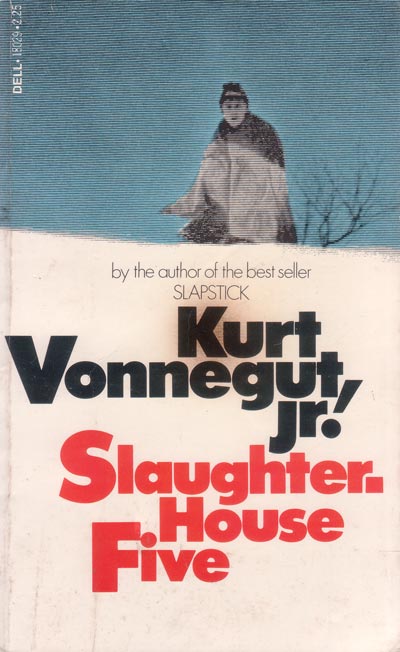
I think Ray Bradbury and Kurt Vonnegut are excellent examples of writers who elevated the genre in which they wrote. Fahrenheit 451 is a great action story, but it's deeper than that. Slaughterhouse Five is an amazing time travel story, but so much more than that.

Why?

Because the story had substance beyond the mere plot. The characters resonated with readers because of WHO they were, not WHAT they were. The themes spoke to fears and ambitions common to most of the readers. The stories made statements, but not at the expense of a great yarn.

In short, they did the same thing Hemingway and Faulkner and O'Hara were doing, but they did it in a "lesser" genre known as science fiction. They didn't get caught up in the genre vs. literary hang up publishers and writers have today. They borrowed and mish-mashed stuff together right and left and made both the worlds of both genre and literary writing better because of it. 
I want to do the same with whatever genre or format or setting in which I write, from comics (a format, not a genre) to pulp and horror (genres) or super heroes and steampunk (settings). I just want to continue to tell good stories that hopefully have meaning beyond just the surface action.

Monday, February 27, 2012

The Writer Will Take Your Questions Now (#93) -- Different Strokes

What are some of the specific differences you mean when you say that you
write differently for pulp and action stories than for literary fiction?

Now that I'm primarily writing more action-focused fiction, I've noticed that I have to be more creative with the ways I establish character. Long internal  monologs are no longer something I have access to in my toolkit for the most part.

Neither are the multitudes of subtle symbols sprinkled through the prose. In contemporary action stories, all those things typically need to be brought to the surface more literally. Sure, I can still exercise my literary subtlety from time to time, but never at the expense of comprehension. As much as I'd love to have classrooms digging for those symbols and character bits, that's not likely for the pulp field, sad to say.

Another big difference is the conflicts the protagonists face. In my early literary work, the conflicts tended to be more emotional than physical, with personal growth or failure at stake rather than the life and death of the sidekick or love interest.

There are obviously more, but these are the ones that come to mind at the moment.

Sunday, February 26, 2012

The truth about pulp writers...


Yeah, I know. It's a Facebook meme, but it was apropos, so I'm posting it here because I thought all you super-swell regular readers would get a kick out of it. (Created by Van Allen Plexico.)