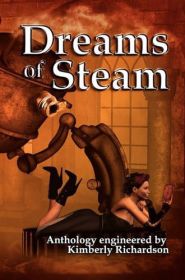
Showing posts with label Dreams of Steam. Show all posts

Tuesday, January 13, 2026

My Backstory Story


I was once asked by a fellow writer: How much of your character's back story do you know before the story begins? Do you know everything or just the basics? 

I love the question. 

There are two opposing ways of thinking about this, as opposite as democrats and republicans are politically -- at least in my experience of meeting and talking with writers. The members of one group tend to make it all up as they go along, reinventing their characters almost willy-nilly with every twist and turn or plot and nuance of the story. On the other hand, the members of the other group keep their folders of notes and printouts and family tree diagrams handy near their computer desk or (for the tech-obsessed authors) in a spreadsheet on the cloud so they can't lose the information at home and can have it readily available even when they're not at home.

Many, however -- and I'm certainly one of them -- fall somewhere in the middle. I like to know the basic personality and major life experiences for my core characters, but I tend to fill in the details for other things (like what college he attended, who was her first boyfriend, is he allergic to gluten, where did her tattoo come from, for example) as I'm writing and as the story dictates. It's funny, though, how often some of those minutiae of details can become key plot points in a story or triggers for a new story for a future volume featuring the character in some cases.

A real-life example: When I came up with the Victorian detective for my story "Death with a Glint of Bronze" in Dreams of Steam II: Brass and Bolts (story now available in this collection -- direct or Amazon). I knew that within the scope of my 20 or so pages, I wouldn't need to dig so far into McKendrick's past to know about the facts and dates of his previous marriage or how long his time as a soldier in India was exactly. But I did need to know all the details of the accident that took one hand, and the childhood malady that left his other hand palsied. Those were the important back story details. Those were the ones on which the story hinged and swung.

I used to do questionnaires about my characters, and I think those kinds of details are good to know, and I still recommend them as character exercises for beginning writers. However, after writing for nearly 35 years now, the questions that lead to those kinds of details have become internalized, and I no longer have to make a conscious effort to fill out questionnaires or apply for jobs as my character. As the characters become real in my head, those specifics become automatic, and sometimes even just held in my subconscious until such a time as they are needed for the story. 

A caveat -- the longer the work, the more information I've learned that I need to know upfront about the back story. Why? Because I've found that those are the kind of details that help carry a story beyond the simple plot point A leads to plot point B leads to plot point C, etc., kind of story. Those are the things that take a story (at least for me, your mileage may vary) from a mere skeleton to a flesh and blood living being.

Wednesday, March 20, 2013

Look what's new! Dreams of Steam III -- Gadgets!

Steampunk teases your imagination with the fantastic and makes dreams a reality. Bizarre characters abound in a world driven by gadgets. Steam power combines with clockwork cleverness to take the history we think we know so well and add a huge twist of what if. These 15 incredible stories will take you back in time to where style, crazy inventions, and scandal ruled the headlines.

Featuring:
Gift of Light by Stephen Zimmer
Steampunk Alchemy by Jodi Adamson
The Survivor by M. B. Weston
Heart of Steel by Len Berry
A Steam Bunny Adventure by Sean Taylor
Time and the Wrinkled Prostitute by Brandon Black
The Brass Peregrine by David R. Tabb
The Last Frontier by H. David Blalock
The Constance of Memory by Stacy Tabb
When Edgar Speaks by Alexander S. Brown
The Tower by Laura H. Smith
Steaming Cherry by Tyree Campbell
The Clockwork Gin by Eden Royce
The Great Steamship Race by Rob Cerio
The Soul of the Sky Queen by Patricia M. Rose

Hard Cover
6 x 9
298 pages
ISBN 13:
978-1-937035-27-3
$29.95
 
Trade Paperback
6 x 9
298 pages
ISBN 13:
978-1-937035-26-6
$14.95

eBook
eISBN:
978-1-937035-28-05
$2.99

Buy online now at:
Amazon.com
Kindle
B&N.com

Monday, August 20, 2012

The Writer Will Take Your Questions Now (#211) -- Person to Person

Is it harder to write a novel in 1st person as your narrator must now see all the action?
I ask because I recently read where the writer'cheated' by randomly switching to a 3rd person POV.
(Thanks to Drew Harris for today's question)

I wouldn't necessarily call that cheating, because I've seen it done effectively before, but that's always in the eye of the beholder.

But to address the question in particular, that is the drawback to writing in the first person. I work with  publishers actually who request (insist) that their writers only write in third person because when you begin in the first person, you've already destroyed the suspense of whether or not the key character will survive.

I don't necessarily agree with that -- The Lovely Bones being one wonderful example. But I will abide by the publisher's preference (as any working freelance should).

That said, I've written stories that include both first person and third person accounts that switch back and forth. Check out my story "Death With a Glint of Bronze" in Dreams of Steam II from Kerlak Publishing for one such example. The trick/art/skill/name your poison is to understand why you're doing it.

If you're only doing it to get yourself out of a corner you didn't plan for, then you deserve a smack on the hand with a ruler from your third-grade spelling teacher. If you're doing it as part of a conscience choice for the reader's benefit and to enhance the telling of the story, then go for it.

A caveat though... This kind of POV jumping doesn't always sit well with readers (can come off a little to avant garde) or publishers, so be sure what you're doing works out with your publisher's goals. If you don't have a publisher already lined up, then go for it and knock it out of the park. A well told tale that breaks the "rules" will still beat out a poorly told tale that follows them.

Wednesday, May 23, 2012

The Writer Will Take Your Questions Now (#174) -- Writing Scary

Any tips for making a horror story actually scary?

Not really.

No. I take that back.

It all depends on what you mean by "scary."

Writing scary is hard. It's really hard, because it takes understanding of the human mind, memories, senses, and universal generalities about the human condition. In a story, you don't have the luxury of visual shorthand to creep readers out like directors do in a scary movie.

Jump scares? Nope. Sorry. The reader controls the pacing. And he or she can skip ahead or backward at will. That clutching crone hand can go backward and forward and be skipped altogether based on the reader's whims.

Graphic visual scares (or gore)? Sorry again. Unless you're most visceral writer ever, written gore falls short.

So, as a writer you're stuck with having to be a psychological and writing genius. But how? While I'm far from an expert on horror, I have written several tales in the genre, and I've learned a few things with each successful telling.

1. Be visceral. But don't mistake visceral for gross. For example, while a limb being removed and force fed to a tied up victim is certainly a compelling image in a story, it may not be as effective as something as simple as a sewing needle being wedged into the soft skin beneath a dry fingernail.

2. Tap into the universal fears. For example, when I wrote "Nymph" for the Gene Simmons House of Horror graphic novel collection (yes, I know that it's not pure prose, but bear with me), I wanted to recreate the sense of being lost in the woods, in a place where you're at the mercy of the natural world. When I was a kid the woods were creepy sometimes, and I had lost that feeling after moving to Atlanta and growing up.

3. Discover the specific, individual fears that make a person tick. For example, in my zombie tale "Posthumous" (from Zombiesque by Daw/Penquin Books), it's not the decaying body of the zombie that makes her creepy. It's her determination to save her marriage, her blind, unwavering determination to do so regardless of the consequences to anyone else.

4. Unleash your horrors on ALL the senses. Don't let just sounds and sights convey your protagonist's woes and horror. Go deeper. Is that smell like the burn ward at a hospital? Does the touch of the killer leave grease and sweat on a victim's neck? Does the hooker's kiss taste like she's been eating rotting meat? Engage all the senses that can convey fear and discomfort.

5. Use sounds that bother the reader, not just the characters. You can make up words that sound like stuff. The official literary term for this is onomatopoeia, and it works because it plays games with the reader's ear, whether they hear the sounds spoken aloud or not. For example, in my steampunk horror tale "Death with a Glint of Bronze" for Dreams of Steam II: Brass and Bolts, I hit the reader right of the bat with the "crick-cracking of the neck bone where it attaches to the top of the spine." But the following sentence continues the idea, simply by using sounds that create a stop and reflow, like restricted breathing might sound: "Then there is the delicious constriction as the breath slowly ceases its movement through the windpipe."

6. Don't try to be "horror movie" scary. Aim for "imagination" scary. Go for the stuff that no movie could ever film, you know, the kind of sick, warped, crazy stuff that could only take shape in someone's imagination as they read. For example, does anyone really know by reading Lovecraft's stories what an elder god truly looks like? We have ideas, but that's all. We have the accepted image that has become synonymous with the tales, but be honest -- does that fully match the horror you imagined in your psyche when you first read the words of HPL's description? On a similar note, isn't your personal nightmare of Lewis Carrol's Jabberwocky far creepier than any of the drawings you've seen of it?

That's all I've got to give you, but if you can even those six things well, you'll never hurt for a job writing truly frightening horror tales.

Thursday, March 1, 2012

The Writer Will Take Your Questions Now (#96) -- Favorite Story

What is your favorite story you're written? 

You might as well ask me, "Which is you favorite child, your daughter or one of your sons?"

I can't pick a single favorite, but I can mention a few.

1. Sin and Error Pining, SHOW ME A HERO.
2. The Other, As Just As Fair, SHOW ME A HERO
3. Death with a Glint of Bronze, DREAMS OF STEAM II: BRASS AND BOLTS
4. Posthumous, ZOMBIESQUE
5. Art Imitates Death, PRO SE PRESENTS #1
6. Once Upon a Time, SHOW ME A HERO
7. Die Giftig Lilie, THE RUBY FILES (coming out this month!)
8. City of Relics, BLACKTHORN: THUNDER ON MARS
9. Dance with the Devil, LANCE STAR SKY RANGER VOL. II
10. Cherry Hill, GOMER AND OTHER EARLY WORKS

To purchase any of the books listed, just go to the bookstore

Friday, January 20, 2012

KERLAK PUBLISHING PUTS OUT STORY CALL FOR THIRD VOLUME OF SUCCESSFUL STEAMPUNK ANTHOLOGY!

Dreams of Steam III

Oil up the keys on that old typewriter and give us your best! Following the success of our Steampunk anthologies, "Dreams of Steam" and "Dreams of Steam II," we are back for more!

If you are not familiar with the Steampunk genre, please take a look at the stories in either anthology to get an idea as to what we are looking for. Think of days past when steam powered machinery was the height of modern technology and when men and women dressed in their Victorian-esque finest. Give us your best and most unique stories within this genre. Please do not make references to or use copywritten characters from other known sources. We will only accept unpublished, original works, characters, and story lines.

Due to the massive number of submissions, please pay very close attention to all the submission guidelines. Any submission with excessive formatting, spelling, or editing issues will be immediately disqualified.

Good luck and may the Power of Steam be with you!

Please include on the front page of your manuscript:
•Name (and pen name, if you desire)
• Address
•Phone Number
•E-mail Address
•Number of words (limit 9,000)
•Short bio of 350 words or less.

Submissions should be made in standard double-spaced manuscript format using only one font (preferably Times New Roman 12pt). Stories can be e-mailed to request@kerlakpublishing.com as a MS Word .doc or .rtf (Rich Text Format) attachment.

Deadline for submissions is 5/31/2012. If your story is selected, you will be contacted by 7/30/2012. Paper submissions will not be returned.

If your story is selected for publication, payment will be $20.00 U.S. upon release of the book. This is a royalty release. Royalty rate to be set after the finalists have been selected.

Hard-copy manuscripts should be accompanied by a digital copy in .doc or .rtf format sent on a CD or other modern digital storage format. Stories should be sent to:

Steampunk Submissions
Kimberly Richardson, Editor
c/o Kerlak Publishing
1779 Kirby Parkway, #1-373
Memphis, TN 38138

For any additional questions, please contact Kimberly Richardson at request@kerlakpublishing.com

Tuesday, December 13, 2011

The Writer Will Take Your Questions Now (#17) -- Opposing POVs

How do you feel about using two opposing points of view in one story? -- Anonymous 

Short answer: It can be done, but it's tricky to get right, and really easy to screw up. 

Full answer: I wouldn't recommend it for short fiction for two key reasons. 

1. It can be seen as a "stunt" and can turn off publishers. 

2. Unless you are a master of giving your characters distinct but natural voices, you run the risk of confusing your readers. 

If you're still determined to use it (and I'm guilty of using it myself), I'd recommend using the 3rd person limited POV for it and not two opposing 1st person accounts (I've done this before, but only for a story that is more "literary" than genre, and even then, it was a difficult thing to capture the right feel).

Nowadays, using various 3rd person limited narrators is actually pretty common in novels and novellas, particularly in popular fiction, where scene jumps are as common as they are in blockbuster films. What I don't recommend (although, once again, I'm guilty of this, but learn from my pain) is to combine a 3rd person limited narrative with a 1st person narrative for any story -- long or short -- unless you welcome having to defend your choices and have the backbone to face the criticism about it (and the writing chops to make such a nearly impossible to write pairing work).

In my story "Death with a Glint of Bronze" in Dreams of Steam II: Brass and Bolts, I did just that, using the 1st person sections to convey an almost Poe-esque insane sense of reason from the killer's perspective, then shifted to a tradition 3rd person limited for the actually mystery investigation narratives. Did it work? I hope so. Was is a bit of a "stunt" to show off my cleverness for the camera with a wink and a nod, so to speak? Yes, I freely admit it, but it could very easily have come back to hit me in the face (or bite me in on the quite opposite end), as the saying goes.

One caution though... be sure you choose the best characters whose POVs will play off each other well. Don't just choose any character because he or she happens to be in a scene.


Sunday, December 11, 2011

The Writer Will Take Your Questions Now (#15) -- Back Story

How much of your character's back story do you know before the story begins? 
Do you know everything or just the basics? -- Bobby Nash

There are two opposing ways of thinking about this, as opposite as democrats and republicans are politically -- at least in my experience of meeting and talking with writers. The members of one group tend to make it all up they they go along, reinventing their characters almost willy-nilly with every twist and turn or plot and nuance of story. On the other hand, the members of the other group keep their folders of notes and printouts and family tree diagrams handy near their computer desk or (for the tech-obsessed authors) in a spreadsheet on the cloud so they can't lose the information at home and can have it readily available even when they're not at home.

Many, however -- and I'm certainly one of them -- fall somewhere in the middle. I like to know the basic personality and major life experiences for my core characters, but I tend to fill in the details for other things (like what college he attended, who was her first boyfriend, is he allergic to gluten, where did her tattoo come from, for example) as I'm writing and as the story dictates. It's funny though how often some of those minutia of details can become key plot points in a story or triggers for a new story for a future volume featuring the character in some cases.

A real-life example: When I came up with the Victorian detective for my story "Death with a Glint of Bronze" in Dreams of Steam II: Brass and Bolts (Amazon, B&N). I knew that within the scope of my 20 or so pages, I wouldn't need to dig so far into McKendrick's past to know about the facts and dates of his previous marriage or how long his time as a soldier in India was exactly. But I did need to know all the details of the accident that took one hand, and the childhood malady that left his other hand palsied. Those were the important back story details. Those were the ones on which the story hinged and swung.

I used to do questionnaires about my characters, and I think those kind of details are good to know, and I still recommend them as character exercises for beginning writers. (I have an online tutorial about character development at http://taylorverse.com/tutorial6.html that goes into detail on those kind of exercises.) However, after writing for a nearly 20 years now, the questions that lead to those kind of details have become internalized, and I no longer have to make a conscious effort to fill out questionnaires or apply for jobs as my character. As the characters become real in my head, those specifics become automatic, and sometimes even just held in my subconscious until such a time as they are needed for the story. 

A caveat -- the longer the work, the more information I've learned that I need to know upfront about the back story. Why? Because I've found that those are the kind of details that help carry a story beyond the simple plot point A leads to plot point B leads to plot point C, etc. kind of story. Those are the things that take a story (at least for me, you're mileage may vary) from a mere skeleton to a flesh and blood living being.