

Friday, February 6, 2026
AIRSHIP 27 PRODUCTION PROUDLY PRESENTS JEZEBEL JOHNSTON VOL. 10—NO QUARTER

Thursday, October 23, 2025
Discovering Yourself In and Through Your Writing

Just one question for this next writer roundtable. Flannery O'Connor wrote, “I write to discover what I know" and “I write because I don’t know what I think until I read what I say.”
How has being a writer and telling stories helped you discover who you are and what you know?

Thursday, September 18, 2025
The Name Game: How Do You Name Your Characters?
.png)
Let's talk about naming your characters for the new Roundtable.
What resources do you consider the most valuable when coming up with character names?
Samantha Dunaway Bryant: When I’m working in a contemporary, close to real-world setting, I look at details like where my character is from, what year they were born, who their parents were, and use that to help me select a likely name.
Census records and baby name books are useful for this.
Cindy Bergquist: Some come to me. Some I reference my favorite character naming book, The Character Naming Sourcebook.
.webp)
Van Allen Plexico: Writing ALPHA/OMEGA from 2005-2024, I needed a LOT of Russian names. Like 35 distinct Russian characters. I used every source I could find for first and last names, from websites to baby name books.
And I still wasn't completely happy with the range of Russian names!
Bree Jackson: If I’m going for symbolic, I take attributes of the character (ie: strength, beauty, resilience,etc…) and translate those words into different languages. Then I derive a name from the word that works best. In other instances, I’ll ask my beta reader group silly questions like “I need a name that isn’t Chad to describe a gym bro guy who looks like he lives off of wheatgrass and unseasoned chicken.” The results are entertaining and useful.
Chris Pocase: There were two methods I used to use when coming up with character names. The first one was to take two Latin words and sort of splice them together to make a name. But I plan to rename those characters since the combinations can be fun to come up with but difficult to pronounce.
The other method…use Google Maps and pick a random place in the USA, and look at street names. There are some really interesting ones especially in rural areas
Kay Lee: Sounds weird but I feel like my characters name themselves lol. Based on the personality of that character names that seem like a fit just kind of come into mind and make sense.
Thursday, September 4, 2025
Beyond Plotting and Pantsing -- Creating and Maintaining Your Story Structure

Okay, writerly types, it's time for another Writer Roundtable here on the blog. For this one, let's talk about story structure and how you build your stories.
How do you store ideas that you want to work into your stories? How much detail goes into plot "nuggets" when you store them?
 Sheela Chattopadhyay: I either write ideas down in a small nugget/trivia like form or I record a voice note for later on to add into my writing notes for later. The detail level varies by the idea's depth at that moment in time.
Duane Laflin: I simply have a file on my computer labeled "Book ideas." When I see something that might work in a future story, I put it in the file.
Nancy Hansen: I don't outline, but I generally start something with a vague concept of what might happen. Now and then I will get a good idea that I can't work on now, so I'll shove it in a file for that particular story, which are all in virtual file folders on my PC, and backed up elsewhere on thumb drives or a portable hard drive. With AI out there, I'm not into cloud backups. I just get enough of the general notion laid out in a few sentences so that when I pull it up again, I have something to go with. Sometimes it's just a picture I saved that sparked an idea. That goes in the file too.
Klara Schmitt: While formatting goes out the window, I do try to be pretty detailed in my idea chunks. I do not bother trying to account for redundancy (e.g., when one idea undoes another), though. I'll sort that out later.
Friday, January 12, 2024
Airship 27 Presents Jezebel Johnston - Captain Johnston

Jezebel Johnston returns to the island of Tortuga where she was born and raised. Now a pirate captain of her own ship, Revelation, she has an audacious plan to help her mother Monifa, a bordello madam, and the Lady Antonia Alvarez, the widow of a well respected businessman. Jezebel hopes to form an alliance between the two women and thereby create a shop where she unloads whatever booty her pirating than can win for her and her crew. That stolen booty to be sold to rich plantation owners.
The plan seems sound enough until she learns to make it a reality she will have to join forces with her former mentor and lover, Walter Armitage, captain of the sloop Sea Witch. She must bury old feelings of both love and anger if they are to become an effective pirating unit on the high seas.
Once again writer Nancy Hansen sets sails with a cast of colorful, exciting characters in one of the most applauded New Pulp series on the market today. Ted Hammond provides the colorful cover and Award-Winning Art Director the interior illustrations and book design. In the end, there is one else like Captain Jezebel Johnston.
AIRSHIP 27 PRODUCTION – PULP FICTION FOR A NEW GENERATION!
Available now at Amazon.
Friday, June 2, 2023
AIRSHIP 27 PRODUCTION PRESENTS THE SILVER PENTACLE Vol 2

Then in "Silken Death," our crew comes across an abandoned residential community infested with giant spiders that must be eradicated completely. Once again Hansen weaves her magic spell in a world totally unique but filled with the same universal struggles of good vs evil in the most amazing ways.
Artist Guy Davis provides the beautiful cover and accompanying nine black and white interior illustrations.
AIRSHIP 27 PRODUCTION – PULP FICTION FOR A NEW GENERATION.
Available from Amazon in paperback and soon on Kindle.
Tuesday, May 30, 2023
The Gray Valley -- Good Villains and Bad Heroes (A Roundtable)

We all know that for the most part, our characters are supposed to be fully fleshed out and multidimensional. That means we need heroes with things we don't like and villains with traits we actually admire. But how do you do that?
What's the danger of a hero who is solely heroic or a villain who is purely villainous?
Ef Deal: I would hope that writers take the time to study human nature enough to know that -- outside of comic books and Marvel Universe -- people are people. Once they become characters in a story, they require agency as well as fully formed humanity, with aspirations, plans, goals, and foibles. Doesn't matter if they're the pro or anti, hero or villain (I dislike those terms), they've got to be people first.
John L. Taylor: The danger of a purely "Lawful Good" hero is that it doesn't leave room for internal conflict that leads to character development. It's part of why Batman seems more relatable than Superman. Also, when the character is that rigidly good, they take on an authoritarian air that doesn't sit well with the modern reader. As for the purely villainous "Chaotic Evil": compare Thanos (the MCU version) to Jason from Friday the 13th. Both exist as avatars of death in their respective stories, but Thanos is also more relatable as he has some degree of moral ambiguity in his intentions. Heath Ledger's Joker was another prime example of this. Vile intentions wrapped in a layer of social criticism and acute awareness of the corruption of those who believe they are the "good guys." That's solid story material there.
Bobby Nash: Perfect characters are just that. Perfect. There’s a place for those types of characters, but you go in knowing exactly what you’re going to get. There are no moral gray areas so few surprises based on character. That said, having a heroic character do the occasional morally questionable act adds a new dimension to them. It doesn’t always mean the character will go that route, but we know there’s a line for them. Here are two examples from TV that stick with me:In the Magnum, P.I. (OG version) episode, Have You Seen The Sunrise?, Magnum and friends are targeted by an old enemy from their time in Vietnam, a cold-as-ice killer named Ivan. The episode sees one of Magnum’s friends killed, another injured, another programmed to become a killer, and even Magnum gets shot and blown up along with his car. Ivan is a bad guy who does bad things, but he has diplomatic immunity so the two-part episode ends with him being asked to leave the United States and to never return. This does not sit well with Magnum or Rick so they divert the car and Magnum confronts Ivan. Ivan tortured all of them years ago as POWs and he tells Magnum that, despite all he’s done, he knows that Magnum is a good, honorable man who would never commit cold, calculated murder. Magnum shocks him, and the audience, when the episode ends with him pulling the trigger. Does this make him a murderer? Yes. He murdered the guy. Does it make him a bad guy going forward? No. Isolated incident, but one that added a new layer to the character.

Of course, in both these instances, the characters were soldiers and had been trained to compartmentalize and do whatever needed to be done. I think those are great story examples of facing those shades of gray.
Lucy Blue: I write very character-driven fiction, regardless of the genre I'm working in, and I never stop to think if someone is a villain or a hero. I'm all about motivations. I start with a protagonist, someone whose personality or goals or situation particularly interests me, and I immediately dive into their motivations. What does this character want? Why do they want it? What would have to happen for them to have it? How are they going to make those things happen? What are they willing to do to make those things happen--and what are they not willing to do? What roadblocks am I going to create and drop in front of them, and how are they going to pivot to get around them? Coming up with the answers to these questions for my protagonist inevitably creates the other characters, some of whom will help them, some of whom will seek to stop or harm them, and I ask the exact same questions about those characters, too. (Incidentally, that's one strategy for avoiding racial and gender stereotypes in your characterization--focus on the individual characters' own motivations rather than what they're doing for or against your protagonist.
John Morgan Neal: I don't see why we can't have both. It seems there is too much either or in our culture sometimes nowadays. Old grumps not liking the new-fangled stuff and kids dismissing all the old stuff as has been. My mantra has always been 'variety is the spice of life' If everything is the same, that can get very dull very fast.
Richard Knaak: In my Rogues Gallery, the hero is missing, so the villains are falling all over each other. Not great for 1930 Chicago -- well, an alternate one -- but not every villain has the same motivation. Some just want to steal nice things, for instance, not try to take over. It's the backgrounds of the various villains and the choices that they make based on both that background and their overall desires, that brings them into conflict with one another... and makes some even a bit heroic. I think that rounds them out better overall.
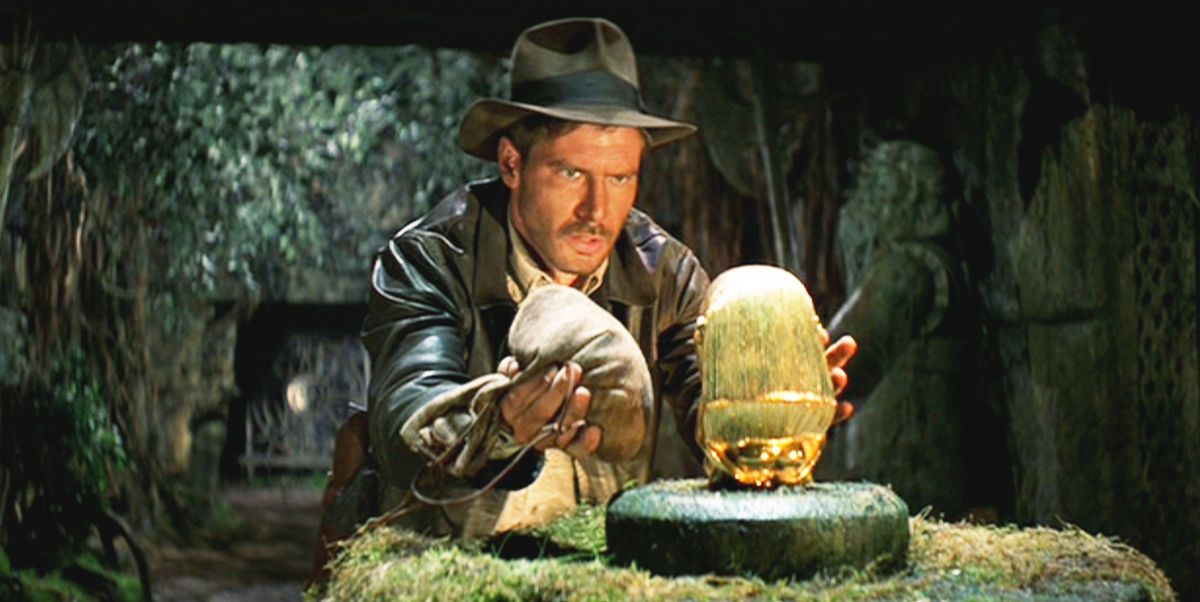
Brian K Morris: The problem with a solely heroic hero is the problem usually given to characters like Superman and most comic book protagonists, that they're "Boy Scouts" and thus, "dull." Heroes need a quirk to help make them interesting (Batman hates guns, Doc Savage is emotionally reserved, Frank Castle and Mack Bolan are motivated by revenge, Indiana Jones hates snakes, etc.). They can be interesting for a while but mostly become tedious after a time because there's nothing to get to like the character on a personal basis.
The same with villains, except you don't have to empathize with them as you would a protagonist. But you should understand why they do what they do, simply beyond the mere accumulation of power/wealth/influence.
Nancy Hansen: I prefer reading stories that have complex characters, no matter whether we're supposed to root for them as they bumble, blunder, and batter their way through the situation or wish someone would flatten their faces with a sledgehammer because they are so incredibly detestable.
Emily LaFlame Jahnke: Funny you mention that because I’m working on a character who did horrible things but is on a journey of redemption.
There are really good examples of good heroes and bad villains, (i.e. Doc Savage, Superman, the Joker, Lex Luthor, etc) but really good writers focus on what makes them heroes or villains.
Pól Rua: For mine, one of the dangers of an 'infallible' hero is absolute conviction. And what's worse than that is when that absolute conviction always pays off.
A character who is 'solely heroic' is not a problem. That characters like Superman, James T. Kirk, and Doc Savage, for instance, act in a way that is 'always good' is entirely plausible. Where it becomes problematic in terms of storytelling is when those characters act in a way that suggests they are supernaturally aware of the best course of action.
In a standard narrative involving this sort of character, the crucial dilemma for the hero should be discerning what that course of action IS.
In the case of James T. Kirk, he is often placed in a situation where he is not in possession of all the facts. Because he is confident in himself and in his trusted allies, he will quickly act based on what information he has, knowing that inaction could lead to disaster. This confidence also means that, in a case where his initial response was incorrect, he and his allies can gain new information and perspective and change their strategies accordingly. His greatest virtue is self-confidence.
Superman, on the other hand, is often forced into dilemmas based on the scale of the situation he is forced into. Despite his abilities, Superman doesn't consider himself better or more important than others. He sees a capacity for heroism and goodness in everyone, and while he appreciates that his powers give him the ability to act on a larger scale, he rejects the idea that his actions are more virtuous or important than that of any person who chooses to help someone out in a time of need or who puts another's wellbeing ahead of their own. His greatest virtue is humility.
But if you have a character who ALWAYS seems to always make the correct decision, even when not in full possession of all the information necessary, then it begins to feel less like competence and more like author fiat. At that point, you're not playing fair by your audience, and consciously or not, audiences can sense that.
What tips do you have for creating heroes and villains who defy simple one-note portrayals and are able to appeal to readers as much than just flat, cardboard cut-out caricatures?
Bobby Nash: For me, it always starts with character. I work hard to make my characters as three-dimensional as possible, as fully formed as possible. That means the good and bad. As the writer, I know those things, even if we don’t always show it. All characters have bad days. How do they handle it? Does the character shrug off problems or do they piss them off and spoil the rest of their day? Those are important character-defining traits I like to know upfront, but I’m also open to learning new traits and tidbits about my characters as we move through the story we’re telling. Once I get to know the characters, they will tell me what they’ll do and how they’ll react.
Emily LaFlame Jahnke: My biggest tip for creating good villains or bad heroes is to show their heroic sides and to make them compelling. Scarlet O’Hara for example is no Angel. But she’s still compelling and interesting.
Brian K Morris: Give them a non-standard quirk, both heroes and villains, that make them a little more interesting and might even be an impediment to accomplishing their goals every now and then. Or give them an almost redeeming quality, such as when Dr. Doom killed his flunky for attempting to destroy the Fantastic Four but risking Doom's stolen art treasures in the process.
Alycia Lynn Davidson: Make them human, even if they aren't. Even the most heinous of individuals will have wants, needs, desires, and goals, and the most pure of heroes (the interesting ones, anyway) will have flaws, quirks, moments of doubt and growth. They all have relationships and routines, things in their childhood/creation that shaped them. I take those small things and use them to ground my characters to reality. My favorite character in each project shares my birthday. One of my novella characters is a type 1 diabetic, like myself. The big bad of my space opera gets his own prequel novel to help flesh out his powerful, decades-long arc. Find the small traits that add depth and weave them throughout the narrative in the way they speak, act, and think.
John L. Taylor: A tip I have in creating rounded heroes and villains is this: give them both a conscience, but a tendency to self-interest. Each should believe they're working for the good of someone, but their motives for that don't have to be altruistic. Put heroes in situations where they have to cross the line they swore they never would to get the job done. Give the villain someone they truly care about (Not Joker and Harley Quinn style, really cares about selflessly). I can tie this off my picks for best-written heroes and villains. Best Hero: Indiana Jones. Morally ambiguous but would never side with the true evil of his time. A self-interested adventurer who's worldly wise but never lost the sense of wonder and leaves a trail of broken hearts in his path. The best villain will be controversial: Jenny from Forrest Gump. Though the story has a very patriarchial moral, Jenny is the villain of the piece. Everything she does has contempt for Forrest, and even in the end, he doesn't "get the girl" as Jenny only marries him when she knows she's dying and won't have to live with him for long. Yet anyone in the audience would probably have done everything Jenny did if put in the same situation. The Hero and Villain have intimately connected sources of conflict in each other's lives in Forrest Gump. to the point you don't even realize that's what their relationship is. That. in my opinion is the highest level of writing such characters.

However, in the Westerns there is a bit more nuance as I write Spaghetti Westerns and mean 70s paperback-style Westerns. There isn't always a lot of room between good, bad, or ugly as my favorite western I just paraphrased demonstrated.
Lucy Blue: Remember that nobody is an NPC in their own story, and every character has their own story. What makes them a background character isn't that they exist to serve the protagonist but that our story isn't focused on their journey--they're incident, not throughline.) I usually write in limited POV third person, meaning I follow my protagonist from inside their head. That usually results in the protagonist and those who help them coming across as heroic within the context of the story and those who hinder them coming across as villainous. But because even the villains have their own goals and reasoning and even the heroes are serving their own needs and desires (which may or may not serve a greater good), nobody is purely a hero or a villain.
Nancy Hansen: Because of that personal preference, I try and write them that way as well. One-dimensional heroes or villains tend to bore me. I want to know not just what they're doing, but why they're doing it, because that adds a layer of reality to a story that pulls you in. It doesn't have to take up a lot of room, I try to drop in just enough insight here and there to get a peek at those clay feet or the traumatic motivations that made them who and what they are today.
Tuesday, February 8, 2022
When is a dove not a dove? Symbolism in fiction.
We've heard it all before.
"It's never just rain. It's baptism."
"Sometimes rain is just rain."
"Two brothers fighting is always a reference to Cain and Abel."
"No. They just happen to be on opposite sides of a civil war."
Symbolism. It colors so much of our writing. And yet we are so divided by it. Some embrace it. Some claim it ruined reading for them. Some say it's everywhere. Some say most of it is hogwash.
This week we're looking at how we writers balance our straightforward plot writing with our metaphorical and symbolic writing -- if at all.
 Where would you rate your work on a scale from "the plot IS the story" to "the true meaning is hidden in the symbolism"? Why?
Maya Preisler: I’m very close to the end of the spectrum where the true meaning of my writing is hidden in the symbolism because that’s how my brain functions. I analyze and over analyze the world around me so my writing does the same in reverse. I want to invite my readers on a journey that can go as deep as they are comfortable taking it. I like the idea of rewarding the very clever ones with extra information other people never figured out, like the ultimate Easter egg.
Bobby Nash: I sometimes pepper my stories with symbolism, but for the most part, the story is the story. My stories tend to be more character focused/driven. Sadly, I’m not that deep.
Ef Deal: The plot is the story, yes, but the plot is played out by characters whose motivations touch a deeper level. Book 1, for example, has the vicious Count Draganov, who has no compunction about stealing the souls of the dead, just as his son had no compunction about raping my MC and leaving her for dead. Book 2 has a vampire pursuing my MC, and the MC has to reckon with her position as someone who is vulnerable. And so forth... I think a novel should operate on three levels: action, character, and audience. Symbolism helps connect to the audience.
Nancy Hansen: I'm on the lower end of the scale as a writer because I really don't make much effort to consciously work symbolism into my writing. If it appears it's simply part of the characterization or the plot. I'm not a big planner when it comes to writing, most of my stuff just evolves from some seminal idea as I bang on the keyboard.
Elizabeth Donald: Before approaching my MFA program and exploring literary fiction, I'd definitely put myself higher on plot than symbolism. To a certain extent, I hold the same beliefs now: I feel that if you're trying for symbolism, if you have to force the True Meaning of This Story, you're probably writing a boring story.
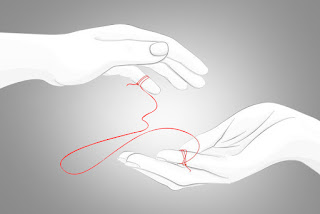
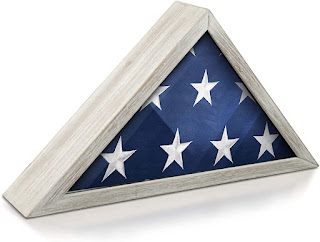
Do you typically use symbols to highlight the themes and tones of your work? What are the common ones (flags for dead military family members, boxed away wedding band for divorced/dear spouses, etc.) you find yourself using?
Gary Phillips: These are some deep questions to ponder. But definitely used some symbism in the new novel coming out. Set in '63, a Korean war vet turned crime photographer inherits a Speed Graphic in the war after the correspondent profiling his squad is killed in combat.
Ef Deal: Yes, I use the description of the settings to serve as symbols; the decaying elephant in the Place de la Bastille, the weather-tattered crepe-paper, the colors of the sky at dawn or dusk. I have a character my MC doesn't trust, and his eyes "gleamed in the gaslights of the Rue St. Jacques." The choice of words in a description conveys the entire tone of a scene: Is the sunrise golden or a glaring yellow? Is the sunset a gentle lilac or the lurid purple of a bruise? Do the masts of the moored ships reach into the sky, or do they claw the sky? Do they resemble a long-dead forest? There's so much that can be conveyed in these kinds of
Elizabeth Donald: Sometimes the curtains are blue because that's what the writer saw when they looked out the window, and not because they were attempting some kind of existential philosophy about depression or deep water or bluebells which really mean Texas... That said, the best fiction is the fiction that makes you think and feel, and even changes your mind. You can't read a novel by Toni Morrison without considering what she is really saying about racism and classism in America, and exploring the meaning behind "blue eyes" in THE BLUEST EYE is a necessary part of understanding the novel.
Nancy Hansen: Now and then I will give a character a name that in whatever language it's from means something representing the character's attitude or looks. Especially if the character is based on someone I don't like in real life. <EVIL GRIN> Most of the time, that's more for my sake than the readers. If they get it—great! Whatever goes into a story I write is there to add to the flavor and move the plot forward, so I'm not giving it a ton of thought.
Bobby Nash: I focus on things that are important to the characters so it’s different for each, but I do use common themes and tones per character.
If you tend to avoid symbolism in your work, why do you prefer not to use it?
Elizabeth Donald: I still don't actively try for symbolism, to use an image or object to stand in for something else... but if I'm doing my job, if I'm using the language well and drawing on the reader's intelligence as well as emotion, then the symbolism will organically appear in the prose.
John French: Back in high school literature class, we had a long discussion about whether the writers and poets we were reading actually meant what we were reading into them. It ended with the teacher saying something like "We'll probably never know but, for the test, if I say it's bird imagery then it's bird imagery."
Bobby Nash: I’m more of a straightforward kind of storyteller so I don’t spend a lot of time thinking about symbolism. It’s just not something I think about.
Maya Preisler: Doesn’t apply to me, but to answer your question in reverse, I prefer to use symbolism because that’s how my English teachers taught me to dissect the classics so it makes sense to build my written worlds with those same blocks.
Do you have other writers you consider the great masters of symbolic writing or tight plot-based writing? What makes their work so fantastic?
Nancy Hansen: This is tough for me because I am such an eclectic reader and so I delve into a variety of books and stories. I read for enjoyment and don't care too much to overanalyze what I'm reading. One of the things that ruined upper grade English classes for me was having to dissect books and look for deeper meanings. Sometimes a story is just supposed to be entertaining and maybe somewhat enlightening. I'm good with that.
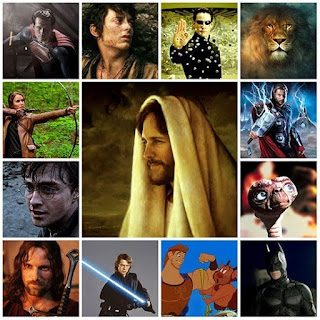
Ef Deal: Early French novels through the 20th century at least are all about the symbols, and I majored in French so I am spoiled by them. Gregory Frost and A.C. Wise use powerful similes and metaphors to enrich their works. Gregory Maguire, at his best, does the same, but I find his work hit-or-miss. Jane Yolen and CJ Cherryh weave symbols so eloquently into their plots, I come away breathless sometimes.
Sunday, November 14, 2021
AIRSHIP 27 PRODUCTION PRESENTS JEZEBEL JOHNSTON VOL. 8—REVELATION

Using her learned manipulative skills, she quickly gains the trust of the sailors representing mixed nationality and soon is sailing westward back to the Caribbean and her home in Tortuga. Little does she realize what she will find there and the challenges it pose to her new career as a Pirate Captain. Once again writer Nancy Hansen delivers a taut wonderfully realized story of high adventure with a cast of truly remarkable characters you won’t soon forget.
Award winning Airship 27 Production Art Director Rob Davis provides both the interior illustrations and the dazzling cover of Jezebel in action.
AIRSHIP 27 PRODUCTIONS – PULP FICTION FOR A NEW GENERATION!
Available from Amazon,
Friday, May 21, 2021
AIRSHIP 27 PRODUCTION PRESENTS THE SILVER PENTACLE

In the far distant future the Earth has long been abandoned with the majority of mankind traveling to the stars to discover new worlds. Whereas old hatreds continue to fester among those who remain until a global nuclear war lays waste to everything. Hundreds of years later a demigod named Jordyn Orian descends on what remains to discover new human enclaves have sprung up among which are men and women possessing strange, supernatural abilities.
One of these is the young fire-starter Alita Kalama and together they battle the Angel of Death in the ruins of a once great Metropolis. Later they join forces with a lovely Wind Shaper to take on a merciless sea pirate known as Crazy Katy.
“The old phrase about throwing everything into the mix including the kitchen sink was the reaction I had when reading this book,” reports Airship 27’s Managing Editor Ron Fortier. “Nancy Hansen is a treasure to the New Pulp community and her work is always fresh, exciting and above all else original. ‘Silver Pentacle’ is nothing like her previous works and we are very excited to be bringing it to her legions of readers.”
Master Storyteller Nancy Hansen launches her most imaginative series yet in “The Silver Pentacle.” These are fantastic tales from a time and place lost to the future.
Colorado-based artist Guy Davis provides both the interior illustrations and the painted cover, while book design was handled by Art Director Rob Davis.
AIRSHIP 27 PRODUCTIONS – PULP FICTION FOR A NEW GENERATION!
Available now from Amazon in paperback and soon on Kindle.
Friday, April 30, 2021
YOUNGPULP! RETURNS ON SCALED WINGS! NANCY A. HANSEN’S ‘COMPANION DRAGONS TALES VOLUME FOUR: LAZLO AT HOME’ NOW AVAILABLE!

From the skilled hand and wonderfully imaginative mind of author Nancy A. Hansen comes a quartet of adventures featuring one of several creatures from the world of Companion Dragons! A flagship title of Pro Se Productions’ YOUNGPULP! Imprint returns in print and digital format with COMPANION DRAGONS TALES VOLUER FOUR: LAZLO AT HOME!
Lazlo Dragon has begun to settle in as the familiar companion of witch and author Nancy Bittergreen. Along the way, though, there has been a lot to learn about all his new responsibilities, and he sometimes feels overwhelmed. His understanding of the duties he must fulfill don't always quite agree with what he's been told, but Lazlo manages to muddle through somehow. Even when his dragon instincts and youthful inexperience get in the way of doing what he knows is right, his plucky persistence along with his honesty and integrity often win him helpful new friends. Being increasingly trusted on his own, he is learning the hard way that making the right decision is often difficult but ultimately far more rewarding than just doing whatever pleases him the most.
The fourth volume of COMPANION DRAGONS TALES features four brand new tales of Lazlo's adventures in his magical homeplace. He has some challenging situations to face, and rather difficult neighbors to deal with. Yet steadfast Lazlo always works hard to figure things out, even when he'd much rather be off somewhere else having fun. In the long run he proves himself to be both wise and trustworthy, though his judgment is sometimes a bit faulty and that tends to involve him into all sorts of tricky situations.
Return once again to the magical world of The Companion Dragons as Nancy A. Hansen weaves four tales of adventure and madcap merriment with LAZLO AT HOME. From YoungPulp! And Pro Se Productions.
Featuring a fantastic cover from Larry Nadolsky and cover design and print formatting by Antonino lo Iacono and Marzia Marina, COMPANION DRAGONS TALES VOLUME FOUR: LAZLO AT HOME is available in print at https://tinyurl.com/2tvvdd49 for $9.00.
The fourth book of these terrific fantasy adventures is also available on Kindle formatted by Iacono and Marina for $2.99 at https://tinyurl.com/4eutsmu3.
For more information on this title, interviews with the author, or digital copies for review, email editorinchief@prose-press.com.
To learn more about Pro Se Productions, go to www.prose-press.com.
Like Pro Se on Facebook at www.facebook.com/ProSeProductions.
Tuesday, March 23, 2021
New and Classic: The Pulp Conundrum

New Pulp is a term accepted/embraced by lots of writers today, from Chuck Wendig to Adam Christopher, and among the new publishers that identify with that marketing/genre terminology. But what does it mean? This week on the blog, we go straight to the sources to find out how the classic and the new compare.
Other than the one being old and the other being new (in terms of the historical timeline), what are the chief differences between classic pulp and New Pulp?

Gary Phillips: To be brief, New Pulp certainly has switched up the POV. People of Color in the background are now in the foreground. Too, more women are in the Pat Savage mold. Also more inclusive of actual events from then.
Ron Fortier: The truth of the matter is 90 percent of Old Pulp was badly written. Not that we still don't love it, but the fact remains the majority of people before the 1040s only had a grade school education at best. Their knowledge of literature and grammar was limited and when pulps first burst onto the scene by the mid-20s, the editor's primary job was to fill pages and to that end they accepted whatever was sent to them. Period. Thus the dreg and why a pencil salesman named Edgar Rice Burroughs could read an issue of "Argosy" and say it was junk and "I can write better than this." Today we live an overly educated society, whether that is a good or bad thing is not for me to say. But what I do realize is that writing today, across the board is a hell of a lot better and even the weakest amateur at it can outshine what was done in the past. So New Pulp is elevated prose by all standards and it shows in the remarkable talents who write it today.
 Nancy Hansen: To me what New Pulp means is stories told in the fast paced and adventuresome manner as the classic era pulps, but with an eye toward the current reading market's larger diversity and some sensitivity toward being more inclusive.
Sean Taylor: The coolest part of New Pulp for me is that I can have the freedom to be a little more "literary" than the original pulp writers had license to be. I get to actually use the full writers toolbox with real characterization and more than the two-dimensional good guys in white hats (or black fedoras) that were so popular at the time. Also, I can flex my symbolism muscles a little from time to time and play around with things like POV. I don't think that's a limitation of those earlier writers' abilities for the most part (though maybe for a rare few just like for a few New Pulpers too -- that's just the nature of the beast) but instead I think it's a facet of the changing audience for pulp action stories. Readers are used to and expect a deeper story than "Black Bat shoots gang leader." Again, not that those stories aren't fun -- they just aren't what most modern readers are looking for anymore.
Not only that, but as Gary and Gordon mentioned, New Pulp isn't trapped by the same cultural mores and values, and that means New Pulp stories can look into the darker shadows of pulp storytelling and previously ignored cultures within pulp pages to say something a little deeper and a lot more enlightened.
What are the commonalities between them?
 Gary Phillips: I'd venture the commonality is still derring-do and larger than life characters.
Nancy Hansen: The big commonalities are in the pacing of the stories with the emphasis on action/adventure and the genres that make that work. The major difference besides the more inclusive atmosphere of characters from diverse backgrounds are that the characters are often more fleshed out. At least that's my take on it.
Ron Fortier: Those are the set pieces required in any story to be called pulp and that means tons of action/adventure, colorful heroes, dastardly villains, exotic locales. That is evidence in the fact that pulp writers like Max Allan Collins, Stephen King and the late Clive Cussler can make the NYT bestseller lists time after time. Why, because today New Pulp is great story telling and finally accepted by the literary community, not only the masses back in the day.

Gordon Dymowski: Both have a strong sense of narrative drive with short, punchy sentences. They also share an emotional immediacy and *drive* (it's hard *not* to get caught up in a story) with vivid characters and higher stakes. Although both types of Pulp can sometimes strive towards more literary efforts, both use down-to-earth language to tell their stories.
Tuesday, February 23, 2021
Writing Period Culture -- What's Your Style?

Yes, I sat down with my wife and binged Bridgerton. Yes, me, who is the most anti-Austen viewer and reader you could ever meet. But couldn't tear my eyes away from it. Why? Because all I could think about was how different it's approach to period culture was to my approach in The Ruby Files.
So, let's talk about that for our new roundtable.

Let's get your thoughts on what I'm calling the "Bridgerton model" or "alternate past model" of period culture -- the idea of ignoring historical racial and/or societal truths (though not necessarily altogether) to create an integrated world period. (This is not to say it's a bad thing, just a way of approaching fiction.) Is it effective? Does it have its drawbacks?
Bobby Nash: History is history, both good and bad. When I write a period piece, I sometimes play with those societal truths. When Domino Lady meets The Woman in Red, for example, I make it a point to showcase the obvious “boys club” mentality of the police officers Peggy Allen works with and how they view her as less of a cop than they are, even though she’s a better detective than anyone around her. When she teams up with a detective who recognizes her analytical mind, he is quick to partner up with her and solve murders. He takes the ribbing from “the guys” for it, but to him, it’s worth it to close cases and get justice for the villains. As for Peggy, she knows that her male partner will get all of the credit, all of the promotions, and all of the attaboys, but she accepts it because it allows her to do the job she wants to do. She’ll change their minds about her, hopefully, with each case they solve. In that case, the societal norms of that time period play into it. With Lance Star, it is not as prevalent because we’re focused on the weird and wacky action going on around them and less at the real world of that era. I say, do whatever works for the story you want to tell.
Nancy Hansen: I don't mind watching or reading something that sort of transcends actual historical fact as long as it's done well and believably, because I consider it a altiverse version.
Bill Craig: As a writer who has been complemented for using an authentic voice for a rough period in the 1960's and the early days of civil rights. I used old terms that are highly offensive today, but were period-accurate for the time. Ignoring history does nothing to improve the story.
Sean Taylor: I can certainly see the appeal of that, particularly in something that's clearly a fantasy (like Carnival Row, for example), but for something that the historical setting is vital to the plot and story, I prefer to start with the history and work from there. The biggest drawbacks I can see are when a creator is trying to create a historically accurate work and then muddles up the cultures because of a need to be diverse and gets called out by astute readers or critics. But, it still doesn't make it wrong, but it does create a sort of fantasy world or an alternate history in my eyes.

Let's look at the other side, the "true to history model" -- the idea of using the racial, social, etc. truths to create the plots and subplots based on actual history. For arguments sake, we'll even loop time travel stories in with this, such as Antebellum. Is it effective? Does it have its drawbacks.
Nancy Hansen: When I write something that has a historical backdrop, I want it to reflect the times it was set in. So I will work in the prejudices and the disparaging language and attitudes of the era. That doesn't mean that a character of what would be considered an underclass can't succeed in a starring role, it just makes it more of a challenge and shapes that individual's life. I don't shy away from the social/racial/sexual slurs either. These are terrible things to have to live with and to me it adds another depth of reality to the story. I'm not preachy, nor am I apologetic. I'm just writing what I have found in my research and hoping it's striking enough to move the reader to rooting for the characters they actually like.
Bill Craig: No matter how you handle it, some folks just are not going to be happy. IMHO you have to let the story speak for itself.
Sean Taylor: This is definitely my preferred method. I'll use the Rick Ruby stories as an example. I was so tired of writing "white guy" stories in my 30s pulp stuff, and when Bobby Nash and I created The Ruby Files books, I saw that as a wonderful opportunity to really touch on the racial issues of the 1930s. Even the story bible calls out the fact that Rick is a white man living in a black man's world, but he has the freedom because of his skin to interact in the white world as he wishes. All of my stories have come out of that tension between Rick's two worlds and his love for Evelyn, his lover that they both know can never really have each other in that "to have and to hold" way.
The drawbacks of this approach is that it can limit your story. If you want to tell a story that would be better served in a more progressive era, then your plots and characters from a time period may not be the way to proceed with that particular story.
Kay Iscah: I think there's a lot of history we could unwhite wash, and would almost rather see that than ignoring the historical demographics completely. I would love to see some efforts at historical dramas from different cultures. No reason you couldn't set a court drama in an African castle (yes they had/have castles). Cleopatra was ethnically Greek, but we have plenty of Egyptian history to pull from. Aztecs weren't great neighbors, but they had great cities, which could make for interesting backdrops, etc.
There are/were black cowboys and other heroic characters.
Bobby Nash: If that works for your story, do it. If it doesn’t, that’s okay too. As the writer, I get to decide what kind of story I want to tell. Is it effective? That, I leave up to the readers to decide.

Which method is your preferred way of approaching period culture when writing? Or is it something that changes based on the theme and tone of your story?
Bobby Nash: It all depends on the story I’m writing, the plot, the characters, and sometimes even the publisher. You have to take all of these things into account. Maybe your publisher isn’t interested in getting away from the action for social commentary. Maybe they want the social commentary. It also depends on me as the writer. What kind of story do I want to write? Once I answer that question, then I decide how to proceed.
Sean Taylor: I tend to look into the actual history to find compelling tales that highlight gender or race issues. But I like to begin from history first and not just paint a different time period with our modern ideals. Of course, if I'm writing a future sci-fi, or even a fantasy, then the sky is the limit in terms of cultural diversity. I get to be god (small g) for that particular universe.
Bill Craig: I do my best to try and accurately portray the time period in an accurate fashion because my job as a writer is not to gloss over the bad, but to tell the story in a fashion that is as historically accurate as possible.
Tuesday, February 9, 2021
Writing in the Time of Covid (Not to Be Confused with Love in the Time of Cholera)

Living with Covid-19 has changed a lot of things. We can just file that statement under "Things Captain Obvious would say." For writers, it has changed the way we interact with fans, publishers, and other writers.
How have the changes that Covid brought to gathering and going places changed your writing routine (if at all)?
Nancy Hansen: Honestly, it really didn't change much for me. I write at home at least 5 days a week as it is anyway. Sometimes more. When I couldn't see the extended family, we kept in touch via cell phone and the camera on my tablet, and I used whatever extra time I had to get in more writing. Since I'm now somewhat disabled, I'm used to being home most of the time, so that doesn't faze me. I blogged a little more consistently. Overall; life went on.
Bill Craig: I jumped to a totally new genre for what will be my first book of 2021. Ravens Hollow is a horror novel set in a pre-covid world.
Jenny Reed: My spouse now works from home, which affects my routine in this fashion:
 I USED to have a whole swath of day spouse-free, and while I might get interrupted by dogs, trolls, phone calls, or facebook PMs, these were almost always non-urgent optional things which I could quickly answer and get rid of or even outright ignore if they were inconvenient. (Calls from mom at the most inconvenient times excluded, of course. You cannot ignore your mother, not if you like surviving, anyway.)
NOW, if my spouse wants to take a break, then I must take a break. If my spouse is in the mood for a snack, then I must be. And I better not be in the mood for a snack when my spouse isn't, unless I wish to send a secret signal that it is snack time to my spouse. There is no warning time when my spouse is done working for the day (used to be called the commute, and I'd get a facebook message giving me a countdown... no longer).
On the other hand, there used to be the occasional dog issue that I had to drop everything and deal with right now. This is no longer my problem; my spouse will go deal with it and I can sit tight and ignore it. Unless my spouse is on a conference call, of course... then, it's my problem, but now I have to figure that out first.
Are you seeing or hearing changes from your fan base in terms of buying books or just wanting to communicate more with you after being housebound for weeks or months at a time?
Bill Craig: My routine has not really changed. I still work from 9pm to 11pm. I missed 1 day of writing due to being sick with covid. Being a functional hermit kept me from getting a more severe case.
Jenny Reed: No.
Nancy Hansen: I have heard from a few people, mostly wondering about how to get certain books of mine and when new ones in certain popular series would be out in print. Since what I write is great escapist fiction, I can understand the additional interest, but I had to explain that once I turn them over to a publisher, the books are on their timetable and not mine. Still I thanked everyone for their interest, and yes, it did pick up quite a bit as the year went on. There wasn't much new on the Tube, and surfing the social sites was getting depressing. The news certainly was no comfort most days! I don't mind chatting with folks when I have the time. In fact, I belong to a small writer's group where we read to each other virtually once a week, and that gave us all an outlet to be with our 'tribe'. Pretty much business as usual on this end for the most part though.
Monday, February 1, 2021
Motivational Monday -- How do you remain motivated to write when things aren't going well? [Link]
by Nancy Hansen
There's a reason for today's post, besides the fact that I hear that question pretty often. The answer is both simple and complex.

This is on top of my usual issues with mobility due to advanced arthritis that have left me hobbling with a cane for the last several years. The pain and stiffness of that in the affected areas is a constant issue that I deal with daily also. I have medication for it, but it only knocks it down to a level I can live with. It's widespread for me, all the major and many smaller joints as well as my entire spine. I do whatever I have to in order to control it. Add on the other more current issue and that's a recipe for curling up in bed and feeling sorry for myself. Can you blame me?
Well, I can't afford to do that. First of all, I do have family who want to see me, and while I may not always be great company, I do my best to remain part of their lives. And I am a writer, I have books and other projects I'm working on, and want to make headway in. It's not just my commitment to publishers and fans speaking here, though that is important to me. I need this writing time to take the focus off what's going haywire in my life and the world around us so that I don't dwell too heavily on all that. That's a slippery slope that leads to depression and while I have my moments, I've learned to combat it with doing something positive and creative—like writing. Plus, in order to remain relevant in my career niche and grow my fan base, I need to put material out regularly. To do that you have to actually write and not just think about it.
Read the full article: https://nancyahansen.blogspot.com/2021/01/how-do-you-remain-motivated-to-write.html
Thursday, January 21, 2021
AIRSHIP 27 PRODUCTIONS PRESENTS JEZEBEL JOHNSTON VOL. 7 -- MASTIFF
Airship 27 is thrilled to announce there release of volume 7 in its best-selling pirate queen saga, Jezebel Johnston by Nancy Hansen, “Mastiff.”
 Stranded far from her Caribbean homeland, pirate Jezebel Johnston struggles to survive over the alien waters of the Barbary Coast. Through a strange twist of fate, she, and two other freed slaves, Zuri and Amaka, come under the protection of the famous Maratha Indian Warlord Shivaji Bhonsle. The soon to be Maharajah has a strong disdain for foreign interference in his country along with a unique respect for the faith of others and the intelligence of women.
Thus Jezebel and her sisters, feel a strong obligation to aid the famous war by volunteering to participate on one of his seagoing raids against the Mughal overlords. To do so, they will have to become spies, gather information on which ships are carrying what cargo and how best to take them.
It is a dangerous game, one Jezebel and her companions are aptly qualified for, their bravery mingled with their natural charms set into motion a daring seagoing assault that will have serious repercussions throughout the Indian world.
“I’ve pretty much run out of words to describe how amazing this series is,” says Airship 27 Production Managing Editor Ron Fortier. “Nancy's saga is a sweeping, historically accurate adventure saga sure to entertain any lover of pirate lore. The action never stops and her characters are truly colorful rogues battling their ways across the seven seas.”
Pulp Factory Award Winning artist Rob Davis provides the 9 black and white interior illustrations and the amazing Adam Shaw the beautifully painted cover.
AIRSHIP 27 PRODUCTIONS – PULP FICTION FOR A NEW GENERATION
Available now at Amazon in paperback and soon on Kindle.
Tuesday, November 13, 2018
AIRSHIP 27 PRODUCTIONS COLLECTS JEZEBEL JOHNSTON SERIES IN BIRTH OF A BUCCANEER

Thursday, May 31, 2018
Questions from a Brave and Stupid Man to a Panel of Women Writers #2: Pseudonyms
That said, I've assembled an all-female panel of writers to be my teachers.
In the previous discussion someone brought up the issue of using a pen name. I figured we could go deeper into that issue this time.
So, today's discussion is this:
 Nikki Nelson-Hicks: I wrote it. I want my name on it. But that's my decision. I know people who use a pen name because they don't want their families to know about their work or they have a professional reputation to safeguard. I'm lucky that I don't have anything like that to hide from. I wrote it. That's my name. Deal with it.
Alexandra Christian: I started using a pen name because I was writing steamy romance while teaching 2nd grade. Apparently women are still supposed to be sexless schoolmarms. I write across a few genres, but I haven’t felt the need to come up with new pen names just yet. Or maybe all my writing is inherently sexual.
Ellie Raine: I've heard a lot of women use male pen names to get more sales in certain genres (and men using female pen names for romance) and it sucks that it continually gets them results. I choose to use my female name despite the genre I write because I would rather help break society's expectations of which genders "writer better (you name it) books". I don't know if anything will change from it, but I'd rather not feed the poison and keep the cycle of these assumptions going. The only way minds will be changed is if they consistently SEE that any gender can write any genre well.
Alexandra Christian: I’ve never gotten an agent, but I queried one book a lot and was pretty much told that my book was too sexy for sci-fi and too sci-fi for romance. I often wonder if I’d queried as a nonspecific pen name if I’d have had more success.
Ellie Raine: I had one agent tell me mine was too paranormal and not epic fantasy enough, and another tell me it was too epic fantasy and not paranormal enough. Funny how no one can seem to place these things... I never considered it may be because of the female/male dynamic, but it would be interesting to know if that was a factor.
Lucy Blue: My first publication was a collaboration with another writer, so we came up with a pen name together -- Anne Hathaway-Nayne. (And yes, it was a joke, sort of - we were writing a tie-in for Forever Knight, and Shakespeare was a character.) Then for my first solo publication with Pocket Books, I used a version of my real name, Jayel Wylie (my actual birth name is Jessica Leslie Wylie, which got shortened to JL, which my mother spelled out as Jayel), and I did three book with them under that name. Then my editor asked me to go in a slightly steamier and more fang-y direction with my next book and told me going in I was looking at one of those oh-so-popular torso covers. Because I wanted to write that book but I didn't necessarily want to always write that kind of book forever, I started using Lucy Blue. And that has since become a brand for me as a romance writer. But I'm still not sure if I'll use Lucy Blue or my real name if I do a non-romance book - it's an issue that I'm hoping is going to come up sometime in the next year, and I'll be open to input from my publisher about it then. And yeah, the idea has crossed my mind of being "J.L. Glanville" instead of "Jessica Glanville" because it's gender-neutral. But my writing, romantic or not, is so very woman-centric, I don't think I'd be fooling anybody.
 Stephanie Osborn: I wrote one pure romance novel under a pen name, years ago. It didn't sell to a traditional publisher (mostly because said publisher lost it), so I threw it up indie, and occasionally it sells a copy or two.
For my SF, mystery, and popular science, I use my own name. Sometimes I kinda wish I'd used initials or something, 'cause then the SF might sell better, I sometimes think. But hey, it is what it is. I might try initials one of these days with a new series or something, just to see what happens.
Anna Grace Carpenter: I originally started using my initials because folks in real life seemed to have so much trouble remembering my given name and I was genuinely worried that folks would not be able to find my books on the shelf because they would be looking for Mary Grace or Sarah Jane instead of Anna Grace. (Of course, a couple years after I'd started selling short stories, I asked someone to look at a story that kept getting to the final round on the editors desks and then rejected. I sent him the submission formatted copy which had my real name and contact info on the first page. In his return comments the first thing he said was "I think you shouldn't use your real name because it's really too sweet for someone writing zombie stories." So the bias is definitely real.) I do introduce myself by my actual name and not my author name because my intention is not to hide anything, but I'm not rebranding my work at this point unless it's in a drastically different genre.
Nancy Hansen: I've always written under my own name because I'm proud of what I do, and so is my very supportive family. I figure an entire legion of women labored in obscurity before me, having to hide their identity to get recognized for their outstanding work in speculative and genre fiction, and I owe it to them to celebrate the freedom to be myself.
Herika Raymer: To be truthful, I am most likely still considered new to the field. Mostly because, as yet, I have not encountered any preconceptions about my name -- possibly because of how it is spelled. No one wants to 'offend' me (LOL).But I have to agree, if I wrote it I would prefer my name on it. Then again, there are times when I have considered a pen name simply because of my mundane life. Sometimes what you write should not cross over with your mundane identity. (wink wink)
Elizabeth Donald: People were always surprised that I wrote fiction under my own name, which is the same name I use for my 21 years of journalism. They acted like it would negatively impact my reputation as a journalist, but I didn't write anything I would be ashamed of, and quite frankly, most of my day-job colleagues and sources were supportive or amused. I got a little light teasing for writing romance, but nothing like the negative reactions I saw in the horror/SF world for writing romance and ebooks.
Yes, ebooks. I'm old, so my first couple of books came out in the infancy of ebooks, even pre-Kindle. People said, "I'll wait for the real book," and I couldn't use the ebooks as credits. One con even rewrote my submitted bio to call me an aspiring author. And I've spoken before about the negative reaction to paranormal romance encroaching in horror and SF, being dismissed as "vamporn," difficulty getting on horror panels and being stuck on the midnight sex panel - and the eternal, "So why are vampires so sexy?" panel. (I've started requesting NOT to be on those panels, because it was so tedious to say the same things at the same panels every single time.)
 Eventually I vowed that if I would ever write more romance, it would be under a pen name and it would not be open. I found it sadly ironic that while the expectation was "romance will hurt your journalism career," it was really "writing romance means no one will take you seriously as a horror writer." It was not what I expected. Cynical colleagues said it was purely a gender thing: romance is a "woman's genre," and thus it was acceptable as long as I didn't venture into the boys' club - that the negative response of horror/SF to romance was really a negative response to women authors. I like to think that they're wrong, but I haven't found solid evidence yet.
I liked writing romance. It made me a better writer in ways that I could detail if I wasn't already far afield of Sean's question. I didn't like some of the genre's "rules," and I didn't fit in very well to readers' expectations. But in the end, I needed to jettison it from my own name in order to rebuild my brand - and to this day, 11 years after writing my last romance under my name, people who are even good friends and longtime readers will introduce me as, "This is Elizabeth Donald, she writes vampire smut." Sigh...
Amanda Niehaus-Hard: I wrote under diferent names for accounting purposes and to separate out some sections of my life from others. When I started out, I was told that sometimes a romance or women's fic publishing house will want to keep your romance "name" separate from other fiction you might write, but I'm not sure that's accurate these days. Someone recently pointed out to me that tenure-track teaching positions usually require some kind of regular publishing credentials and using a different name might complicate things. Again, no idea if that's true but I'm rolling out all new work under one of two iterations of my legal name, which is associated with my university and hopefully any future teaching I might do.