Showing posts with label genre labeling. Show all posts

Tuesday, June 7, 2022

Hard to Market, But It's Okay


Been in a bookstore lately? They seem to thrive more on marketing books than on books themselves. Outside a few small used bookstores, gone are the days of just grabbing a book a sitting and reading to get to know it, to try out something that grabbed you by either its synopsis or its cover (sometimes you can judge them by those) before you commit to buying it. They've even removed the chairs from most major chains that used to opt for a more library look and feel to appeal to bibliophiles. 

I get. I really do. They have to stay in business in a changing economy. And they have to do that without increasing the costs to maintain a "This isn't a library" standard or using a 1:1 ratio between staff and customers for the best recommendations to lead to sales. So they need shortcuts like "If you liked this author, try this author" or "More books like The Hunger Games" or (my least favorite) "Here are new books by the same old million-selling authors you would look for deep in the store anyway." 

Me, defined by graphic
But it's okay. 

I'm not bitter. (I'm really not.)

In a previous essay, I wrote this, and I still stand behind it:

Publishers and readers look for categories, and not just any categories, but easy to define divisions. Those are easy to sell. A reader wants a mystery for the beach this summer, and bang, a clerk can walk said reader to the mystery section where he or she can be inundated by racks and racks of books by pretty much the same 100 authors. A reader wants a new urban fantasy, and poof, there’s a section for that, not to be confused with either sci-fi or mystery, or even epic fantasy. It’s quickt:.), it’s easy, and it’s basic marketing.

It gets even quicker, easier, and more marketable with series. Publishers love series. Readers love series. Both love them because it means they don’t have to think about what to read next. They don’t have to experiment with authors outside their “I know and love him or her” list unless it’s a strong recommendation by a friend. Series make money for that very reason. Series make careers for that very reason. And smart writers (unlike me) know how to take advantage of that market for series books.

You see, I have learned that the publishing world is a lot like that used bookstore I love to visit. It continues to work because it is built on categories that make people’s choices for them. If you like ___________ then you’ll also like ___________. Don’t feel bad if there’s not a new book by ___________ yet, just read this similar book by ___________ and you’ll be fine.

No risk. No muss. No fuss. 

But also no wonder. No discovery. No adventurous expansion of your reading world. 

Wisdom from a Friend

Recently I had a good friend (one of my best actually) stay with my wife and me for a few weeks while he awaited his move-in date for a new apartment. It was great. We talked about TV and movies and books and writing (when I wasn't sleeping off the end of the school year, that is). One topic that came up a few times in our conversations was a group he was in on social media about how to develop a backlog of books that would sell. 

The end result of those conversations was me usually pushing back against trends and best-seller, copycat, popular fiction (yes, I'm a literary snob, but don't act like you didn't know that already). But it did reinforce for me the kind of writer I am. 

Genres are best served broken.

I'm the kind who is difficult to market in the existing publishing world. This is because of several reasons, all of which make me who I am as a creator. 

First, I can't stand to be restrained to a genre. Just look back at my publishing history, and you'll see super-hero stories, pulp action heroes, hard-boiled detective fiction, literary shorts, zombies and ghoulies and ghosties... you name it. I like to write and read the same way I like my music playlist -- as varied as possible. Just like I love my music jumping from Vivaldi to AC/DC to the Archies, I like my fiction to jump from horror to mystery to pulp. 

Second, I can't stand to copy trends. I was taught once that by the time you spot a trend, it's too late. The world has moved on and is looking for the next one. I was dumb enough to believe that and I still do. 

Third, my stories begin with questions that intrigue me. Not marketing questions, such as "What is selling well now?" or "What are publishers looking for?" Instead, I begin with questions like, "What if rain turned into a human being and developed amnesia?" or "What if a young rocker still reeling from his father's abuse found a way to turn that anger into raw power?" or even "What if Josie and the Pussycats had been a lot darker -- a lot darker?" Then, from these kinds of questions, stories develop and bubble into soup inside my brain, never once thinking about the genre or category ramifications. 

Yeah, I know, totally backward to the way publishing works from the other side of the big desk. 

Things I Value in Fiction

So, yeah. I'm hard to market, and I know it. But I don't just know it. I also welcome it. I love it even. Because it's who I am. 

In spite of that, there are certain things that always manage to wriggle their way into my work like a spider laying eggs in an urban legend's canal.

1. No single genre focus. I mentioned my fascination with multiple genres earlier and a little bit of each of them goes into all of my work. For example, I often get "lessons" from publishers because I tend to be too literary in my pulp stories. Or I tend to be too action-focused in my detective stories. Or when I try to take my super-hero fiction into the dark corners of the human psyche instead of focusing on the good-guy-bad-guy, white-hat-black-hat dichotomy. No matter what genre I am writing at any point, there is always a blender churning beneath the surface mixing and blending the genres and their rules. 

2. No happy endings. Yeah, this is the big one. This is the one that will continue to keep me out of the bestseller list throughout my life. People often remark about the irony of me being an optimist who doesn't believe in happy endings. Well, I'm a firm believer that happiness is what you make it in whatever circumstances you find yourself in. (Now, that doesn't mean that you should strive to get yourself in a better situation, just that your happiness doesn't depend on it.) I also believe that as human beings, we never truly learn from getting what we wanted. That only reinforces our existing desires and beliefs. It's only when we face loss that we listen to the world around us and open up to learn anything new. That's why I'm a huge proponent of the bittersweet ending. The heroine loses her love, only to find she really is strong enough without it. The hero fails but realizes that puts him in a place of even greater opportunity. In Hallmark terms, the city girl finds that the country boy isn't right for he after all, but can return to the city with the lesson learned and move on. That kind of thing. 

Paint with all the colors of the... steps.
3. No series. I'll admit it. I just don't like series books much. I get that they make for easy, continued sales, but I just can't stomach them. The closest I get to a series is a group of stand-alone novels featuring the same character but tied together only very, very, very loosely. You know what I'm talking 'bout -- Easy Rawlins, the 87th Precinct, that sort of thing. You can read 'em in any order and skip as many as you look. They just don't tell one single A-->B-->C story. I love memorable characters though, my work is hopefully filled with those. I don't even mind returning to them to write subsequent adventures. Just look no further than Rick Ruby (The Ruby Files) of the Golden Amazon or my iHero superhero stories for proof of that. But you're not going to mind me writing a series that tells a single epic story. It's just not who I am. 

4. No epic stories. People love epics. But most of the ones I read, I just cant wait to finish and get back to something much smaller in scope. Sure, I enjoyed Lord or the Rings as a kid, but once I read that, why bother with Game of Thrones or Wheel of Time. (It's a generalization, I know, and some people love those characters, but not me, and most epics tend to suffer from the same old problems I hate to read, such as excessive world-building, long passages of description, characters who fall out of the narrative because they were written into book one and then forgotten about, force-fitting plot elements to make things happen because the author demands it, etc.) I much prefer the smaller, human stories. The detective whose case causes him to learn he'll never be able to have the woman he truly loves. The superhero in training who learns that no matter how powerful she becomes, she will still never get out of her sister's shadow. The husband who buys the perfect house only to realize that perfection just might cause is marriage to fall apart. I don't need to change the world in my stories. I just want to see the change in my characters. 

5. There's no such thing as too much symbolism. I love using all the tools in my writer's toolbox, especially symbolism. I prefer it to be subtle, not overt. I'm a huge fan of the colors in Prospero's halls, the green light at the end of Tom and Daisy's deck, the sword salute at the end of The Sun Also Rises. I think these things only improve fiction and only hurt stories when used by people who dont' understand their use. I like fold flags that represent lost loves or partners. I like stacks of books that shed light on the story I'm telling just by virtue of their own plots and characters (recycling symbols, as it were). I like names that have meanings that give my characters more than just something to embroider on their bowling shirt. 

6. No market chasing or trend-chasing. I mentioned this earlier, but I want to reiterate it here and slice it just a little different way. Each of my stories comes to me as a new tale, not something that consciously fits in a box. If it ends up fitting in a box, mostly like by the time I'm done with it, it has so many pointed jags and weird-shaped edges that it no longer fits. When I create a story, I write the story as it unveils in my head, not as it reacts to the goings-on in the world outside my head. This means even if I starting thinking about a teenage wizard when Harry Potter came out, trying to emulate the established "rules" of that series are the last thing on my mind. My teenage wizard will probably end up in Detroit working as an assistant to her private detective aunt who was a former burlesque dancer in her youth. 

The Bottom Line

I guess, for me, it all boils down to this: When I was a young writer (both in age and in the craft) someone I respected told me to write what I wanted to read. Well, that really resonated with me. 

A little of my library
I realized that the writers whose works I genuinely loved to read wrote varied works. You just about can't put any single work by Ray Bradbury beside any other and compare them without getting into themes and symbols, but not plots or stories. Kurt Vonnegut is the same way. So are the works of Flannery O'Connor -- just try to compare Wise Blood and "Everything That Rises Must Converge." Hemingway told war stories, hunting stories, love stories, falling out of love stories, coming of age stories, you name it. Even the single genre works of folks like Ed McBain differ vastly between his 87th Precinct stories and his Matthew Hope tales. C.S. Lewis wrote theology, adult fantasy (Till We Have Faces remains one of my fave fantasy novels), science fiction, and children's fantasies. Even Eudora Welty wrote of both the urban and the rural with equal power and varied technique. 

Something happened along the way in publishing to shift from varied to same, and while many modern writers are okay with that, I guess I just am not. 

But like I said. It's okay. 

I'm not bitter about it. (Honestly, I'm not. Why are you looking at me like that?)

Tuesday, April 3, 2018

[Link] Why Select Stories Succeed Best as Literary Fiction

by William H. Coles
Illustration by David Riley


Great literary fiction storytelling as an art form is not for all readers, and its success is not measured solely on volume of commercial book sales but rather the number of readers moved or enlightened by characters and story, usually about what it means to be human. Many of the literary stories that have lasted into new generations of readers have important, common characteristics; here are the principles.

1. Characterization.
 
The fictional humans that populate successful literary fiction seem real to the reader, either in the context of the reader’s world, or the story world created by the author. It is the creation of these “real “characters to be moved by as well as to move story events that assembles character-based story and plot in most successful literary fiction. As Virginia Woolf wrote, “. . . they [characters] live and are complex by means of their effect upon many different people who serve to mirror them in the round. . .” When considering “. . . the permanent quality of literature . . . think away the surface animation, the likeness to life, and there remains . . . a deeper pleasure, an exquisite discrimination of human values.

Read the full article: https://www.facebook.com/storyinliteraryfiction/photos/a.325262877571111.72265.319065158190883/1576847462412640/?type=3

Friday, January 5, 2018

Preach it, Rev. Green! (aka, It Ain't Easy)

Note: A little something I felt the need to remind myself.

I started writing with a more lit focus, but with a love for genre fiction, and my earlier writing reflects that struggle between lit and genre in a way that made me, well, me... I want to embrace all kinds of work and style and create something new in pulps, horror, fantasy, sci-fi, superheroes, whatever.

As Kermit sang:

When green is all there is to be
It could make you wonder why
But why wonder why wonder
I am green, and it'll do fine
It's beautiful, and I think it's what I want to be 

So, I'm gonna be green because, well that's what I am.

Monday, June 15, 2015

The Writer Will Take Your Questions Now #327 -- Magicaliteragenre-ism

What are your favorite genres to blend when you write?

Would "all of them" be an acceptable answer?

I didn't think so either, but it was worth a try.

Probably most of all, I like to combine magical realism and literary with genre adventure. Some of you are perhaps scratching you heads at that response. Don't feel bad. I totally get why that might be. For starters, magical realism is something best left to the Latin American writers, the literati would have us believe. Not only that, but mixing hi-falutin' literary fiction with low-brow genre (and dare I say it, pulp) adventure is tantamount to heresy, like pouring a 400 dollar a glass w(h)ine into a can of Pabst Blue Ribbon.

But I stand by my statement.

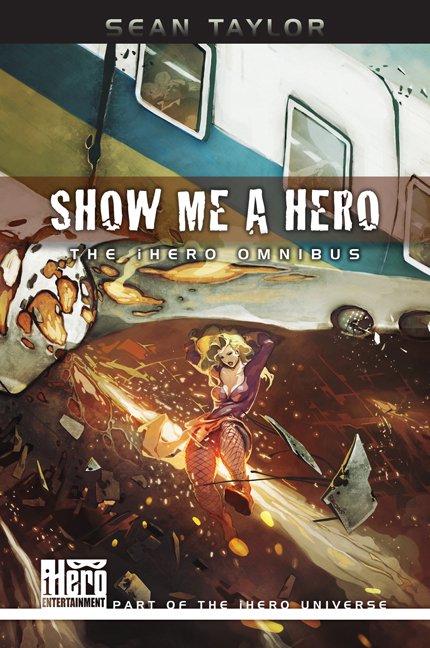
I love to take the ideas of magical realism, with the miraculous woven into the day to day happenstance of regular life without having to give it a second thought. My Show Me a Hero super hero story collection is full of this very conceit.

Mingling the "high ideals" of literary fiction, with its focus on characterization, meaningful symbolism, and grand themes, and putting those ideals into the "common writing" of adventure fiction, likewise, really gets me motivated. There's nothing in the rule book that says a genre writer should write poorly or ignore the history of classic fiction. Most of my favorite stories have already paved the way for this mixture, from Dracula to The Heart of Darkness to The Odyssey.

Most of my pulp writing falls right in line here. In fact I'm sometimes at odds with my pulp-writing buddies when I argue that typically one-dimensional characters can still be just as interesting when they are more fully developed beyond a mere good guy or mere force of nature. Rick Ruby is perhaps the most literary of my pulp characters and I probably enjoy writing him more than any other. He's a mixed bag of darkness and light, hope and hopelessness, love and anger, and he has no qualms about using the women in his life to try to compartmentalize those divergent parts of himself.

So, hand me that half-empty can of cheap American beer and watch me pour your fancy-pants, hoity-toity wine right inside it.

Thursday, June 11, 2015

Have It Your Way -- Genre-Blending in Contemporary Fiction

This week's roundtable deals with genres and how they never seem to remain a "pure" work of a single genre. Just like we like to have our burgers "our way" and mix up our favorite latte with our choice of flavors, as writers we tend to like to mix up our genres to a desired preference.

What are your favorite genres to blend when you write?


Selah Janel: It really depends on the story. I think aiming something at a genre is exactly the wrong way to go about stuff. If you're looking for a gimmick, absolutely try to cram things together, but otherwise start with the story and see where it goes. Often times, the question of merging genres will solve itself. That being said, a lot of what I prefer to write is fantasy, urban fantasy, or horror, so I often blend those together quite a bit. I also take a lot of inspiration from the literary fiction I've read, as well as historical accounts and all sorts of other things. If there's an element or theme or genre device that I think will work, I'll use it. Often times that approach brings me to using elements from genres that I'm not comfortable writing wholesale, so that's always fun, too.

Lance Stahlberg: Urban Fantasy, as in fantasy with a modern day setting. I wrote one fantasy blended with a heist/crime story with a superhero story. And one fantasy with a Western. I have another urban fantasy idea I want to run at some point, a fantasy-mystery I suppose.

Lisa M. Collins: I love to write action/adventure and blend in elements of fantasy or science fiction.

Allan Gilbreath: Suspense and sensual-ism blended into everything else.

Mark Bousquet: My favorite genre blend was horror and journal writing, in which I wrote a first person story of a woman working in a haunted estate. I really liked how that daily desire to keep a journal mixed with the descent into horror because it added another layer to the tension - there was the terror and horror of the individual acts, but there was also the step back from it, since one largely writes a journal in quiet times while reflecting back on unquiet times.

What are the advantages of blending multiple genres in a single story?

Selah Janel: It gives you more tools in the belt, more paint colors in the palette. It can also technically appeal to more readers, bringing in those who prefer certain genres together. What I love about it, though, is it helps me to expand a story and take it away from the formulaic and into a unique direction. Kingdom City would be nothing without my love of HP Lovecraft or my adoration of regular people historical literature. Granted, all of that is put through a fantasy/fairy tale filter, but that's the real thing - you have to blend the genres until they become their own thing and not jam them together. I love the comic series East of West because it just excels at this. That title is it's own unique world. It has western elements and sci-fi elements, but it has a ton of other little things in it that give it its own unique look and feel. It's incredible. Stories like that are so good they're their own thing - they make me /not/ want to define it by genre, because that takes away from the brilliance that is that particular story.

Lance Stahlberg: Today's savvy readers need more variety to keep their interest. Traditional storytelling runs the risk of falling into predictable patterns and overusing the same tropes that everyone recognizes by now. Something like urban fantasy is easy in that it's whatever genre you want your story to be, but with magic and dragons thrown in.

Lisa M. Collins: My genre is speculative fiction, and I mostly write science fiction or paranormal. Dictionary.com defines speculative fiction as: A broad literary genre encompassing any fiction with supernatural, fantastical, or futuristic elements. In this genre I can throw out all the rules. I can have a unicorn walk down main street, a plumber who flushes herself to other dimensions, or psychologist who lives on a distant world.

Allan Gilbreath: Gives the reader a deeper experience bringing in all the senses

What are the disadvantages of blending genres?

Selah Janel:  If done poorly, it can be confusing or obvious. I think a lot of people have started looking at it as a humor device or a marketing gimmick. That's fair, and it works to some extent, but it really takes away from the artistry of what makes good genre fiction. To me, stuff like that takes away from all the hard work I'm putting into my own stories and subverts authors who are doing it really well. I don't have fantasy creatures in Kingdom City using modern tech because it's funny (though it is, by default). I did it because that's the world that their progressive viewpoints would fit in, and it would be an interesting way to explore traditional fairy tale views versus more progressive world views, and what kind of characters would be caught in between.  It would be really easy for me to write funny stories about trolls using laptops, making the obvious jokes, but that sort of thing is so one-note to me. It's always going to be about what's best for the story, and the genres or tools you use should work for you, not get in the way of the world and tale you're creating. 

Lance Stahlberg: Only from a marketing perspective maybe. Wondering where to file your book on the shelf might be a confusing question. But not really.

Lisa M. Collins: When I blend speculative elements into a story I need my reader to suspend their real world limitations. The paranormal/fantastical/futuristic has to be believable. A unicorn walking down main street might be a hard sale, unless you had already read about our heroine having dreams of the event since childhood.

Allan Gilbreath: Getting lost in the details and not moving the story along.

Is blending genres something you do intentionally, or does it seem to just happen as your write? Why do you think that is?

Selah Janel:  A little of both. I don't tend to think in distinct genre lines. I like seeing how different things make sense - like how a lot of old fairy tale quirks like talking animals and trees, different elements of magic, etc could also read like Lovecraftian horror. I never intentionally went at it from that viewpoint, but it occurred to me one day that things lined up, and there was a lot I could do with it. It solved a lot of problems in my manuscript at the time. I don't throw vampires into tales about lumberjacks just to do it -- there happened to be a term for a forest creature that meshed up with vampire mythos and typical lumberjack life. I definitely don't shy away from blending genres, though. To me it can bring up interesting twists and things the reader may not expect, as well as provide some really nice metaphors, as well. If it doesn't read well, or seems to forced, I absolutely won't do it, but if it gives the characters more room to play, if it enriches the world, if it expands the story, I'm game for anything.

Lance Stahlberg: I never think about it consciously. There is so much cross-pollination of genres today that genre rules are almost meaningless. At least with the kind of audience I want to capture.

Lisa M. Collins: While writing my mind bubbles with ideas. I’ll be typing along and the next thing you know a mecha suited girl strolls through a barnyard with a cow tucked under her arm. LOL, something like that happens every time. :)

When I was kid I was interested in movies and books full of fantasy and science fiction. I can’t imagine not looking in to the future and wondering what might happen or who we will become.

Allan Gilbreath: I hope it happens naturally. At least I hope so. I think and see a story in more than just sight, thus I try to write it that way.

Friday, April 25, 2014

[Link] Why I hate the term "Genre Fiction"

by K.S. Daniels

People in the literary scene like to throw around the phrase "Genre Fiction". When they do this, its usually in the context of "Oh, but that's genre fiction" (you'll have to imagine the condescending tone for yourself). You see, the term is an insult. Any novel that isn't, according to some literary or academic snob, high-art (definition in a bit) is garbage or smut. Its genre fiction.

Read the rest: http://ksdaniels.blogspot.com/2013/01/why-i-hate-term-genre-fiction.html

Sunday, September 30, 2012

[Link] Don’t Put My Book in the African American Section

by N.K. Jemison 

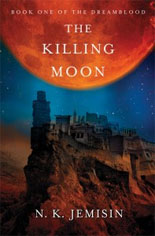
Any bookstore or library which shelves my stuff in AAF has assumed that my work is automatically of interest to black readers — and only black readers — because I’m black. It further assumes that black readers don’t care about the book’s actual content; they’ll just read anything by a black author. Yet further this practice assumes that white readers are too xenophobic to consider reading a book written by someone of another race, so such books shouldn’t even be allowed into their sight.

That’s an insult to my ability and the abilities of writers of color in general, and an insult to readers of every race.

Worse, any bookstore or library that does this is, IMO, perpetuating the same racist assumptions that caused this problem in the first place. It all comes down to the idea of universality — which mostly just means “the ability to write something that appeals to white readers”, in my experience. Before the AAF boom, black readers were assumed to have no interest in books meant to appeal to white readers; hence the assumption that we “didn’t exist”. When our existence was confirmed, black readers were then assumed to be strange ducks, Not Like The Rest Of Us in taste or discernment, fundamentally alien — or Other — in our intelligence and thought processes. And black writers — despite having written mainstream books for generations — were assumed to be incapable of writing for anything other than this strange, alien audience. If “universality” = “whiteness”, well, of course we couldn’t possibly have it. Even if we did. That little racism logic fail issue I mentioned, again.

Sadly, I suspect that whoever stuck my book in that library’s AAF section meant well. Thing is, intentions don’t really matter. The worst racism is perpetuated not through intent, but through thoughtless, unquestioning adherence to old, bad habits. We always need to ask ourselves where those habits come from, and whether it’s a good idea to keep perpetuating them. We need to ask whether they hurt more than they help.

So back to my point. Booksellers and librarians: please don’t put anything I write in the AAF section. Not unless you want to hurt my career. And not unless you want to make it harder, not easier, for black readers to find good, diverse, inclusive stuff in the long run, because you’re hurting the careers of many black writers who could help make that happen. And not unless you think that nothing written by a black person should ever be read by anyone non-black.

If the “Fantasy” notation on the spine doesn’t convince you not to shelve me there… if the fact that I got published by the SFF imprint (Orbit) of a mainstream publisher (Hachette) doesn’t convince you… if the content doesn’t convince you… if this whole long rant has fallen on deaf ears… then please listen at least to this: I don’t want it there.

Continue reading: http://nkjemisin.com/2010/05/dont-put-my-book-in-the-african-american-section/