Showing posts with label Rick Ruby. Show all posts

Saturday, December 9, 2023

Give the gift of, well, me this year!

Here are a few favorites from among my books for you to include in your gift-giving this year. 

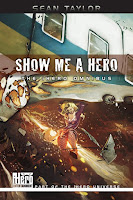
Show Me a Hero

This is the collection that started it all. The super-hero collection Dwayne McDuffie called, "...More fully-rounded, more realistic and, as a direct result, more human than all but the best superhero comic book work" (from the introduction). 

Buy now!


==============================

Giddy and Euphoric: Essays on Writing and Reading (And Ray Bradbury)

My collection of non-fiction essays about writing and reading and why crap is king when it comes to market. (And, as promised, several about Ray Bradbury too, such as why I want to be a time machine.)

Buy now!

==============================

The Golden Amazon

Before he died, Howard Hopkins wrote several Golden Amazon comic scripts. I was asked to turn those into short stories for this collection. 

Buy now!


==============================

The Ruby Files Vol. 1

My favorite gumshoe. Okay, sure, Bobby Nash and I created him and his cast, but I can't help it. I love Rick, and Evelyn, and Broomstick, and the gang. This is the first anthology of 4 Rick Ruby stories. Featuring my stories, "Die Giftig Lilie."

Buy now!

==============================

The Ruby Files Vol. 2

This one is my favorite of the Rick Ruby books. Four more wonderful, hard-boiled tales of the unassuming private dick. Featuring my story, "A Tree Falls in a Forest."

Buy now!


==============================

The New Deal: Masks and Mutations

What if super-powers started to manifest during the Great Depression and the public needed a group to blame and hate? Features my stories "Gatsby" and "Angel in Blue." 

Buy now!


==============================

For more books, visit my bookstore!

Thursday, March 18, 2021

The ABC (Plots) of Ongoing Storytelling

Writing an ongoing story is a different animal than writing a stand-alone novel or short story. And it's not as simple as "What's the next big story?" How do you keep your whole cast of characters involved, including supporting cast? How do you build up to new stories without just pulling them out of the air? And how do you keep readers wanting to stick with every new story, whether novel in a series, comic book issue, or sequence of short stories? 

Well, it's as difficult at ABC. 

Wait, don't I mean as easy as ABC? Oh, I wish I did. 

This is one of the toughest lessons any writer can devote himself, herself, or themself to. This is the kind of narrative goodness that keeps a series from being one stand-alone after the other that allows readers to skip out on a few steps (losing you cash from book and comic sales). This is the art part that makes readers have to stick around for the long haul. 

The best ongoing narratives have done this well for years without every showing off the mechanics off it. (Perhaps that's why so many folks are unaware of this type of storytelling, because it was so invisible to the reader/viewer.)

Soap operas. 

Yes, those soap operas. 

But we'll get in to that shortly. Let's get to a few definitions for now:

A Plot -- your main narrative story for the current book or issue or episode

B Plot -- the secondary, just below the surface plot that can and should complicate the A Plot (and in some cases become the new A Plot for the next book or issue or episode)

C Plot -- the more subtle, often reserved for the support cast story that can keep your minor characters busy will still having some bearing on future A Plots or even interactions with the current A Plot. 

Got those definitions? Good. Let's get down to brass tacks. 

Do I really need B and C Plots?

The simple answer is no, you don't. James Bond has gone on for years without B and C Plots that unify the series. So have pulp heroes like Doc Savage and The Shadow. 

But, more and more, contemporary series are looking to unify their novels with multi-layered plots that form the glue between books. (Look no further than the ongoing romance between Hermione and Ron in Harry Potter or the build up to the season finale in shows like Wayward Pines and In the Dark. And if you're looking to write an ongoing comic, then it's a skill you'll definitely need to master. (Peter David's legendary run on Hulk and Aquaman are prime examples of this kind of storytelling done super-effectively.)

A typical example from the past has been to let the B plot graduate to the next A plot when that one resolves (for example, at the end of the novel or comic book issue or arc). Then the C plot graduates to a new B plot. And finally a new C plot is introduced. 

For example, P.I. Samantha finds the killer (A plot), but her new lover (B plot) is found beside a dead body, and she must determine and prove her innocence. Meanwhile, that pesky noise she heard on her phone line (C plot) does indeed turn out to be a wire tap that she must look into while trying to save her lover. And so on and so forth. 

But, as I said, that's just the typical pattern of the past. Many modern writers are switching up this paint by numbers formula by doing all kinds of cool change-ups. 

  • Letting the C plot skip the B plot and letting the B plot simmer for another issue, arc, or novel.
  • Having the C plot resolve along with the A plot and introducing a new one for the next story. 
  • Bumping the B down to a C to create a sort of "plot red herring." 

However, a failure to be consciously aware of and intentionally working your varying plot levels can and will cause your stories to seem disjointed, linked only by a consistency of character, but not story. That doesn't mean your books won't sell -- look no further than 007 or thousands of pages of pulp stories. 

But, if you want to give your readers a special reason to keep reading, it's perhaps best not to expect to come fresh each time. A caveat, just like with classic comic writing, you'll need to be able recap in a subtle way to bring new readers up to date, but if you can do that while giving your ongoing readers an enhanced story experience, then that's a win-win for both you and the regular reader. 

A strong example of this is Kim Harrison's The Hollows series. The romantic subplots weave from novel to novel, and characters who were allies can become enemies and back again. Any reader can begin with any novel, but the reader who began at the first will have a deeper immersive experience into the lives of the character her, she, or they have come to know (and maybe even love).

What if I'm not the only writer on a series?

Well, I'm glad you asked. That's when a strong story bible comes into play. My best stories written for others have been those properties that provided a detailed story bible for me to build from. 

A detailed story bible includes (at the very least):

  • the biographical history and likes dislikes of the main character
  • the biographical history and likes/dislikes of the key secondary characters
  • a cursory look at the history of the tertiary characters as it pertains to the main character (and possible key secondary characters)
  • key regular locations and how they relate to the key characters
  • any ongoing relationship entanglements, romantic or platonic
  • any ongoing traumas or issues in the lives of the main and key secondary characters for contributing writers to build from

Now, that's just a start. And to be fair, I've received story bibles with all this and much more than I would ever need, but I've also received story bibles with hardly anything I really needed other than a description of the character and choice or weapons. 

But, hopefully, can see how a detailed story bible can help keep all contributing writers working together to tell the same ongoing story instead of separate, unrelated "Elsewords" tales. 

So, don't be afraid to ask for a story bible. And be a bit leary of anyone who doesn't have one handy (unless there is already a strong body of work to show off this info). 

Examples from my work 

Rather than just talking out of my... um, hat, I'll provide few examples from my own stories. 

When I wrote for Lance Star Sky Ranger 4, it was a character I didn't not know or own, so I grew dependent on the info I could get from Bobby Nash, who owned the character. Thankfully, Bobby provided lots of detailed story info, and was open to me bringing in new elements into the work. He allowed me to introduce a femme fatale into Lance's narrative, and each story I've written with Lance, I've included her because they have an ongoing story together the other writers can also reference. Each story builds on the subplot introduced in the first story where I make it clear that she has her eyes set on Lance. Eventually, Monique San Diablo's grandchild will feature in some of the new contemporary based stories I'm working on. 

Rick Ruby of The Ruby Files has one of the most detailed story bibles I've ever put together, because Rick's world is so "nexus-y." He is the intersecting point of so many worlds that it required more detail to keep it straight. In that story bible, Bobby Nash (Rick's co-creator) and I outlined his relationships with the four women in his life (an informant, a society girl trying to get him to settle down, his secretary, and his true love than can never be thanks to race relations in the 1930s), and his past with the police and those on the other side of the law. That way, each writer who has fully read the story bible can come in anywhere and build on those stories. On way Bobby and I keep those stories fluid but locked is by (1) only allowing the two of us to make major changes and (2) keeping the story bible updated as significant changes occur.

Fishnet Angel is the closest prose example to ongoing comic book scripting I have (other than my actual comic book scripting of course). In her first story, I introduce Andi (FA's girlfriend). When Mark has to become Fishnet Angel in order to save her, the real story begins. In the second Fishnet Angel tale, Mark (now Marcia) and Andi are having some issues, and he's tired of being treated like the super heroine he now is. Letting that build from an C-plot to and B-plot occurs in the third story, where Fishnet Angel is captured by a villain and must determine how to save Andi again in spite of their clearly crumbling relationship. To fulfill a prophecy, the hero discovers that she is pregnant by a fellow deity from the time she was kidnapped. The next story jumps to the future where FA is visiting a former friend turned priest to get some kind of closure and determine who he/she is now after all this. The next story jumps to the future, after she has given her child to Andi and her new husband to raise as their own in order to prevent the prophecy from coming true. Rife and B and C plots, I tell you. 

Putting it all together

Let's put all this into practice in a real world example. We'll make a quick, little "Mad Libs" here to help us:

Book One

Genre: Cozy Mystery

Main Character: Jeannie Davenport, a retired investigative journalist

Regular Cast: Doug Davenport, her ex-husband; Granger Hoffner, her "assistant" helping her re-organize all the mess left over after the divorce; Sophia Albright, her grand-daughter who is pursuing her own career in journalism

A-Plot: Granger finds the dead body of his landlord in his apartment and needs Jeannie's help to prove his innocence. 

B-Plot: Doug is ramping up a new lawsuit to get more money since she was always the primary breadwinner in their family. 

C-Plot: Sophia thinks there's something creepy at her college with the trustees in charge of scholarship funding. 

Obviously the bulk of the plot and the action will be centered around Jeannie looking for clues and trying to prove Granger's innocence and find the real killer. In the middle of all that, once the killer finds out she's onto him/her/they, he/she/they begin to target Jeannie and those near her. 

While all this is going on, Jeannie gets called into her attorney's office to learn that Doug is opening a suit to get more money from her. He's not happy with the settlement as is. This further complicates her life and add even more stress to her as a target. 

Meanwhile, just every now and then, we see small conversations between Sophia and and Jeannie where Sophia is asking for advice about how to proceed to look into improprieties regarding scholarship mismanagement. 

In the end, Jeannie solves the mystery. The true killer is revealed, and everyone is safe. But, it looks like Doug's case is stronger than Jeannie could have guessed, and she could be looking at a large loss. 

Book Two

Regular Cast: Introducing Brad Trent, Sophia's new boyfriend from college

A-Plot: While at court for a pre-hearing on the suit, Jeannie runs into a friend who is working for the opposing attorney. Two days later, the friend is found dead. Her lover wants to get Jeannie to look into the murder because she thinks someone at the law firm did it. But she must remain secretive or it could affect her defense if it is learned she's investigating the opposing firm for murder.

B-Plot: Sophia enlists the aid of her new boyfriend, Brad, who is at college on a basketball scholarship. Brad agrees to help her. 

C-Plot: Doug learns he has cancer and must soon enter chemo. 

Obviously the bulk of the plot will be Jeannie, Granger, and Sophia sneaking around to look for clues and keep anyone from finding out. But the more Sophia and Brad look into the scholarship mishandling, the more it looks like someone is using the funds to launder money. Meanwhile, Doug's sickness is causing him to reconsider his anger toward Jeannie because he will need her since she's still the closest "family" he has. 

Jeannie solves the crime. The court case about the divorce is pushed until after Doug's chemo. But Brad and Sophia have started to receive threats. Doug has his first chemo with Jeannie (she's a saint, I tell you) by his side. 

Book Three

The former C-Plot from Book 1 finally graduates. Brad is run off the road and lies in a coma. Jeannie, Sophia, and Granger believe it was attempted murder and investigate. Doug's chemo makes him rely on Jeannie even more, and the two feel they are becoming close again (though she fears it's just his weakness and need for her). 

And so on, and so forth. But you get the point. 

Got it?

There you have it, but as I said at the beginning, it's not easy -- it's difficult. It's difficult because these aren't just plug and play subplots. Your readers will see anything that doesn't feel important quicker than you can write it, and they'll wonder why you're ignoring the real story of your novel, comic, or series of novellas. And you'll also have to make it feel natural in the scope of the main story. It's a great way to give your minor cast members something crucial to do before the B or C plots actually find your main character(s). 

I've long said that writing and storytelling is more art than science, and it's just these kind of skills that have convinced me of that. But never fear. With practice and with reading authors who manage their subplots well, keep at it and you'll be a master of that art before you know it. 

Friday, June 22, 2018

The Ruby Files is one of 60 New Pulp Books to Get Your Started!

Derrick Ferguson, himself no stranger to appearing on lists such as this, has updated his list of 25 New Pulp Books To Get You Started for 2018 and it has now grown to a whopping 60 New Pulp Books To Get You Started. You can read it here: https://fergusonink.com/60-new-pulp-books-to-get-you-started/


There are a lot of great reads on here. If you're looking for a pulpy good read, this list is a good place to start.

I'm honored to have The Ruby Files appear on the list (co-created with Bobby Nash). Thanks, Derrick.

Speaking of, here are some links:

The Ruby Files Vol. 1

The Ruby Files Vol. 2

Saturday, April 7, 2018

Rick Ruby Rocks the Pulp Factory Awards -- Takes home THREE Awards!


Did I not tell everyone when The Ruby Files Vol. 2 was released that it was going to be the anthology of the year at the Pulp Factory Awards? Well, I was right. (nyah, nyah, nyah, nyah, nyah).

Seriously, though Team Ruby took home not just the Best Anthology award but also Best Short Story (Bobby Nash, "Takedown") and Best Interior Art (Nik Poliwko).

Go, Team Ruby!
 

If you haven't already read this award-winning volume of PI tales from modern masters of the New Pulp movement, now's your chance!

Amazon

B&N

Airship 27 Hangar

Audible

Friday, March 16, 2018

Thank you so much!

A big thank you to everyone who took time to vote in the Pulp Factory Awards. And especially to those who voted for me or The Ruby Files. Very appreciated. As soon as I find out the winners, win or lose, I'll post them here to congratulate the winners and nominees because there are no losers on that ballot.

Thursday, March 15, 2018

Literary Pulp—Why It Makes Sense and How To Write It


by Sean Taylor, with a little help from my friends

Classic pulp is as much known for its black and white, all or nothing characterizations and crammed-to-the-top-with-action plotlines as it is for the cheap paper from which it gets its name—maybe even more so nowadays. So, with that in mind, how does someone like me, who got his start in literary fiction and the three most important words in fiction writing (character, character, and character, of course), grow into the kind of writer who embraces the pulp style of storytelling?

That’s a good question.

But, perhaps the better question is how can someone else do the same?

Because, trust me, there’s a lot of gold to be mined in the odd, little marriage between literary fiction and pulp fiction.

Author Derrick Ferguson sums up the discussion between art and non-art quite well.

“Before I step up on my soapbox and start the pontificating, let me start of by saying that I don’t consider ‘throwaway writing’ to be a bad thing. Robert Heinlein is famous for saying that 90 percent of everything is crap. I think that 90 percent of entertainment is throwaway and disposable. Most people are really just looking for something to entertain and/or distract them from whatever is giving them the grumbles in their life. Of course, the creators of that entertainment hope and pray that it will live on after them. But I find it difficult to believe that the creators of Gomer Pyle, USMC expected or hoped that people would still be watching the show 50 years later.

“And the ability to entertain is not to be taken lightly. I don’t get emails of thanks often, but every so often I will get one from somebody who will thank me because they read something I wrote that transported them away from their problems for a couple of hours, and for me, that’s one of the highest compliments that I can be given.”

Barry Reece
Let’s Get Two Things Straight First

Before we go any further, we should probably lay down the two ground rules that govern this whole shebang in my understanding of it.

#1—Literature doesn’t trump genre.

There are those out there in the market who think that literary means better written and that genre means written for the average idiot. As far as I’m concerned, neither of those thoughts hold any validity. Rather, I believe that the two are simply two different ways of approaching writing that both can learn from each other and help each other out from time to time.

“Great literature isn't great because of its genre or its pace," says author Percival Constantine. "Shakespeare wrote plays for mass consumption, for crying out loud. I defy you to read anything by Vonnegut and call it slow or meandering. There is nothing in any definition of pulp I've ever seen that says the characters must be flat, the prose must be clunky, and the plots must be simple.”

#2—There’s no such reader as the average dum-dum.

Are there smart readers? Yes. Dumb readers? Of course. Average readers? Absolutely.

However, the straw man that some critics and reviewers have created to build a chasm of difference between a Joe Everybody reader and an Artiste McHighbrow reader is pure garbage. I come from a background in Literature, and I’ve been all over the United States as a writer hitting various conventions, and let me tell you what I’ve learned: Readers are readers. They don’t divide themselves into camps based on a perceived difference in brainpower. A lot of the same folks who read Oprah’s Book Club recommendations also read both James Patterson and Zora Neale Hurston. Many of the same folks who read Mickey Spillane on their Kindles also read Ambrose Bierce and Flannery O’Connor on them as well.

They Go Together Better Than Macs and PCs
(or even Marvels and DCs)

If you’re my age, you remember those commercials where one guy was a Mac and another was a PC and they argued about who was better (which were later parodied for Marvel and DC). Well, I’ve had that same experience, but with pulp and literature. Literally. I’ve had some editors and writers tell me there’s no room for literary techniques in pulp, that pulp should merely be fast and free of any style or technique.

I daresay, those folks seem to have forgotten H.P. Lovecraft, Raymond Chandler, and Ray Bradbury. They crossed and re-crossed the great literary divide, and their stories live on not in spite of their craft and technique but because of them.

“I think you have to look at other genres that have often been seen as the opposite of art—science fiction, fantasy, superheroes, etc. All of these at one time or another have been considered trash fiction. But then you've had people who have elevated those genres to new heights—people like Ursula K. LeGuin, Kurt Vonnegut, Philip K. Dick, Isaac Asimov, J.R.R. Tolkien, Frank Herbert, Grant Morrison, Warren Ellis, etc.” says Constantine.

The "New Pulp" Openness

In the interest of keeping us all on the same page (as the saying goes), let’s first clarify what New Pulp is. According to Pro Se Press, one of the leading publishers of the genre (or style, depending on who you ask), new pulp is “fiction written with the same sensibilities, beats of storytelling, patterns of conflict, and creative use of words and phrases of original pulp, but crafted by modern writers, artists, and publishers. New stories with either completely original characters or new tales of established characters from Pulp past. It’s really that simple. New pulp is pulp written today.”

There are several schools of thought within the New Pulp movement. One looks to do little more than telling new stories of classic characters. Another looks to create new characters that are primarily reminders or pastiches of those classic characters. Still others seek to take the tropes and style of classic pulp and bring those types of stories kicking and screaming into contemporary fiction (regardless of the time period and settings of the tales themselves). I’m not going to say any of those is better than the others, but I will admit to being firmly entrenched in that third group.

Where do we stand now? Percival Constantine again hits the nail on its proverbial head. “I'm not going to stand here and say that all pulp is filled with complex characters, intricate plots, and well-crafted prose because that would be a lie. In fact, probably a majority of the classic pulps are pretty bad. The plots are simplistic, and the characters are flat or stereotypical (especially where women and minorities are concerned). But you know what?” he continues. “That's true of pretty much any genre. Have a look at the literary fiction section the next time you're on Amazon or in a bookstore and flip through some of the books. There's a lot of stuff that tries to use pretension to cover up for ham-fisted dialog, extremely purple prose, and a lot of navel-gazing.”

Within that new generation of pulp writers there are numerous characters and settings being created that may or may not stand the test of time like Phillip Marlowe or The Shadow, but folks like Derrick Ferguson, Barry Reese, and Percival Constantine are still doing their damndest to make that happen and fill the world of pulp fiction with something different—but not too different, unless, of course, you're talking about the caliber of writing.

So, I asked them a bit about how they create New Pulp held to a higher standard. Here’s what I was able to glean from them.

The Facts, Ma’am, Just the Facts

No more ideological stuff. You want the how-to. Well, thanks to some of the modern masters… here it is.

1. Don’t try so hard.

“The best advice I can give for looking to create some kind of lasting art?” says Ferguson. “Don’t even try.”

Barry Reese echoes the sentiment: “I don’t really spend a lot of time thinking about such things. I write what I want to read, and a lot of times, that’s escapist entertainment.”

True art hides itself. That’s what I’ve been taught my whole life as a storyteller. You may have heard that same idea translated this way: The author should seek to hide himself or herself so he or she doesn’t distract the reader. In the best art, that intentional invisibility will refuse to be hidden. One needs no more than to look at Monet’s paintings or Michelangelo's David to see that. Or perhaps to read The Great Gatsby or the poetry of Langston Hughes. The difference is that the art comes after, not before. The work comes first.

But be careful, cautions Ferguson. “That doesn’t mean I’m saying don’t try to produce the best art that you are capable of producing. You should always strive to tell the best story you can in the best way you can. What I am saying is that there’s madness in sitting down at your keyboard and pronouncing to the world ‘I am going to create art!’”

2. Be true to your characters. 

Derrick Ferguson
One of the tenets of both literature and genre fiction that adherents can agree on over the chasm is this: Character is king. Without the consistent personalities behind them, protagonists like The Spider and Doc Savage wouldn’t have become so important to so many fans in the same way that without a well developed personality, Hemmingway’s existentialist heroes wouldn’t have influenced decades of readers, writers, and filmmakers.

The difference comes in how literature and genre decide illustrate and create characterizations.

Constantine says, “Pulp is, in its simplest distillation, fast-paced, action-oriented fiction. That doesn't mean you can't have characterization in there as well.”

Characterization comes from what your characters do and say in pulp fiction, not in what they think and pontificate about, according to Ferguson: “As so often happens in fiction and especially pulp, you gotta figure out what works for you and how you can best convey characterization while your heroes are running around trying to stop the big bad from blowing up the world.”

3. Say something about the world around you.

Here’s something folks don’t always think about in their writing. It gets down to that amorphous notion called “theme.” Like in the first point (Don’t try so hard.), theme is one of those things that most often is distilled through the writer’s views and ideals without really thinking about it. That said, however, it never hurts to look at (or back at) your work to see what you are saying beyond just Character A punched Character B.

In my own work, it is not just important to me, but vital to the understanding of Rick Ruby that the multi-colored, but still race-embroiled, world in The Ruby Files be communicated in the stories. I’m not using a Phillip Marlow pastiche to try to make a point about racism, but I’m determined to show the world as it was and let readers figure things out for themselves.

Likewise, Ferguson’s Dillon can at first be seen as a black version of Doc Savage, but the comparison stops at the surface. What the author says through the adventures of Dillon is what’s important, and goes far beyond the idea of “Wouldn’t it be cool to have a black Doc Savage?”

“Great literature not only features developed characters and skillful prose but is also a commentary on the society it was written in,” says Constantine. “That doesn't mean you hammer readers over the head with it, but you have to look at the world in which you're living, think about what you want to say in regards to it, and find a subtle way to relay that message through your fiction.”

He cites the recent Black Panther movie, with its “really serious and complex themes about colonialism and globalism” as an example.

4. But don’t be so obvious about it.

Remember that bit about art hiding itself? It’s worth repeating, particularly in pulp fiction. Find ways to write complex characters and themes in simple, subtle ways.

Ferguson has a method that works for him—using the movement between settings to get to know anything about his characters the action might not show.

“Plenty of time characterization is done as my heroes are traveling in vehicles from Point A to Point B,” he says. “Let me provide you with an example from a popular movie: there’s a scene in the movie Silver Streak where Gene Wilder and Richard Pryor are in a stolen fire-engine red Jaguar racing to save Jill Clayburgh from Patrick McGoohan, and they’re exchanging what is some pretty meaningful dialog about their relationship, the situation they’re in and how they’re going to save Jill Clayburgh. It’s a nice scene with characterization but it’s done in a moving car that is taking them from one action scene to the next. The movie slows down to provide us with characterization but the actual plot doesn’t slow down and carries the promise that we’re going to see more action once to get to where we’re going.”

5. Keep it moving while you do all that.

Hot on the heels of the previous point, it’s important to keep pulp fiction movie moving along at a good pace and speed. There’s little room (none, some might say) to admire the mountains between Hobbiton and Mordor in pulp fiction. Nor is there time to lie down in the grass and dreamily point out cloud animals. Something needs to be happening. (Notice the tense of that sentence. I didn’t say “Something needs to happen.” I said: “Something needs to be happening.” Ongoing. It doesn’t really stop.)

Reese says it’s all based in the definition of pulp, as he sees it. “Pulp, to me, is about fast-paced adventure. I can deliver that while also giving you three-dimensional characters. Indiana Jones is a good example of what can be done with new pulp. He’s nuanced, but his adventures are thrilling to watch (and read—some of the licensed novels are excellent).”

Ferguson agrees:

“Writers of pulp knew the secret of having genuine characterization in their work long ago. You can do characterization and have sparkling, meaningful dialog and solid supporting casts and all those things that literary fiction prides itself on in the most action-packed of stories. Here’s the catch: Don’t stop the action to do all that stuff. 
“Let me clarify. Action doesn’t mean that you have to have constant fist-fights, explosions, cliffhangers, the heroes continually escaping fates worse than death or chases and captures. Although if you are writing pulp, I would certainly hope that you do have all that stuff in there. After all, what’s the point of writing pulp if you don’t? It’s like making a ham sandwich without the ham. But in pulp, the plot always has to be going forward. You simply cannot stop the thrust of the plot to indulge in a three page introspective passage when your heroine is supposed to be saving the world.”

To put it in terms those who have attended one too many writer’s conventions can appreciate, don’t let the writer chew the scenery.

6. Realize that not all “art” is as good as some writers and critics think it is.

Percival Constantine
This one gets back to the heart of our two things to get straight. (You haven’t forgotten them already, have you?)

#1—Literature doesn’t trump genre.
#2—There’s no such reader as the average dum-dum.

Just because a section in the bookstore is called literary fiction doesn’t mean the books there are better than everything (or even anything) else in the rest of the store. Nor does it mean it’s intrinsically good at all. Literary fiction is based on a set of rules for storytelling just like genre fiction is based on a set of rules for storytelling just like comic book writing is based on a set of rules for storytelling just like… Well, you get the point.

“The problem with the ‘literary debate’ is that you're not actually having the right conversation,” says Constantine. “Not all great literature is literary fiction. And I come at this from both sides, because not only am I a pulp writer, but I also teach literature.”

“One thing I’ve noticed with most writers whose work has stood the test of time and transcended whatever genre it was created for,” Ferguson adds, “is that most of them did not set out to create art. They simply wanted to tell a good story, maybe make a couple of bucks on the side and entertain themselves. A good deal can be said for writers simply relaxing and having some fun with writing. And it can be a whole lot of fun if you let it be.”

As the vernacular goes these days, “You do you.”

7. Literary techniques and genre techniques are the same techniques.

Never thought you’d hear that, huh? When it comes to writer’s toolboxes, there isn’t a fancy mauve one for literary writers and a beat-up, tried and true rust bucket for genre writers. (Unless you paint your own, of course. In which case you can mauve your heart out.) And if you open either toolbox, you’ll find the same tools in each. You’re no doubt familiar with them already:

  • Dialog
  • Pacing
  • Characterization
  • Point of View
  • Grammar
  • Breaking Grammar
  • Research
  • Setting
  • Word sounds
  • World building
  • Connotation and Denotation
  • Figures of speech
  • Spelling
  • Intentional Misspelling
  • And so on…

When it comes to pounding in a nail, a hammer is a hammer is a hammer. Whether you’re building a shed or a mansion, the tool remains the same.

Conclusion—It Either Works for You or It Doesn’t

So, where does this leave us? Are you ready to take your action stories into the world of literary approaches? Or do you prefer to just sit in your office and make Character A punch Character B in the face? Then do it.

Are you tired of critics or other writers trying to tell you your genre writing is something less than their highbrow art? Ignore them.

Are you tired of reading poorer quality stories in your chosen genres? Move past them and write something better.

The genre doesn’t matter. It just “comes down to writers willing to go that extra mile to elevate the genre,” says Constantine.

=================================

For more information about Barry Reese, Derrick Ferguson, and Percival Constantine, please visit their websites.  

If you want more about Literary Pulp, go read the companion piece to this article. 

Saturday, March 10, 2018

Casting Rick Ruby 2018! (Sean plays director)

In honor of Rick Ruby being nominated for the Pulp Ark Awards, let's have some fun and cast the Rick Ruby movie. (and if you haven't voted yet, here's the link: https://tinyurl.com/ybxlyey7)

My choices using contemporary actors:


Rick Ruby
Damien Lewis


Evelyn Johnson
Gugu Mbatha-Raw


May Belle Williams
Christine Adams


"Broom Stick" Strickland
Clarke Peters 


"Mac" McGinnis
Bruce Greenwood


Donna Dixon
Anna Lynne McCord


Edie Rose Adams
Typhaine Daviot


Carla St. Clair
Elizabeth Henstridge


Robert Perry
David Boreanez

Making this a movie in the 50s, 60, or even 70s would have been a lot easier to pick actors for me, but using contemporary actors was a lot harder. I tend to follow the older ones or still think of the 30-something ones as "Disney kids." *grins*

Thursday, March 8, 2018

The Ruby Files Vol. 2 Sweeps the Nominations forThe Pulp Ark Awards 2018!


The Pulp Factory Award nominations were announced on March 2, 2018 and the The Ruby Files Team is honored to announce that The Ruby Files Vol. 2 has racked up multiple nominations, including:

Best Pulp Short Story: "Takedown" by Bobby Nash
Best Pulp Short Story: "A Tree Falls in the Forest" by Sean Taylor
Best Pulp Cover: Mark Wheatley
Best Pulp Interior Illustrations: Nik Poliwko
Best Pulp Anthology: The Ruby Files Vol. 2, Ron Fortier (editor, Airship 27 Productions)


Here is the press release and official ballot. Voting is open to the public. Voting ends March 12, 2018. Winners will be announced at the Windy City Pulp and Paper Con held April 6-8 in Lombard, IL.

Congratulations to all of the nominees from the eight different publishers in the running. Also, a big thank you to those who nominated The Ruby Files vol. 2 and to those who will hopefully vote for it. Ha! Ha!

Now get out there and vote for your favorites!


FOR IMMEDIATE RELEASE
BALLOT FOR TENTH ANNUAL PULP FACTORY AWARDS OFFICIALLY RELEASED
VOTING NOW OPEN UNTIL 3/12
AWARDS TO BE GIVEN OUT AT WINDY CITY PULP and PAPER CON
Lombard, Illinois – March 2, 2018

With April’s Windy City Pulp and Paper approaching fast, the ballot for the Tenth Annual Pulp Factory Awards – to be handed out at the conference – has just opened up for voting by the reading public.

The ballot can be found online at https://tinyurl.com/ybxlyey7

Voters have until midnight on Monday, March 12 to select one nominee in several categories. All votes must be received via the electronic ballot via Google forms.

Note the deadline is earlier than usual due to Windy City Pulp Con beginning on April 6.
Shortlisted nominees in each category are as follows:


BEST PULP NOVEL
Blackthorn: Spires of Mars - I A Watson  (White Rocket Books)
Captain Action: Cry of the Jungle Lord - Jim Beard & Barry Reese (Airship 27)
The Eye of Quang Chi - Fred Adams, Jr.  (Airship 27)
Holmes and Houdini - I A Watson  (Airship 27)
Pulp Heroes: Sanctuary Falls - Wayne Reinagel  (Knightraven Studios)
Sentinels vol 9: Vendetta - Van Allen Plexico  (White Rocket Books)
Snow Drive - Bobby Nash  (BEN Books)
Tales of the Golden Dragon - Barbara Doran (Airship 27)

BEST PULP COVER
Bass Reeves: Frontier Marshal vol 2 - Marco Turini (Airship 27)
Holmes & Houdini - Chad Hardin (Airship 27)
Jezebel Johnson: Queen of Anarchy - Rob Davis (Airship 27)
Jezebel Johnson: Sea Witch - Laura Givens (Airship 27)
Queensberry Justice: The Fight Card Sherlock Holmes Omnibus - Mike Fyles (Fight Card)
The Ruby Files vol 2 - Mark Wheatley (Airship 27)
Sentinels vol 9: Vendetta - Chris Kohler (White Rocket Books)
Six Gun Terrors vol 3: The Slithering Terror - Ted Hammond (Airship 27)

BEST PULP SHORT STORY
"The Adventure of the Failing Light" - I A Watson - Sherlock Holmes Consulting Detective v 9 (Airship 27)
"Takedown" - Bobby Nash - The Ruby Files vol 2 (Airship 27)
"A Tree Falls in the Forest" - Sean Taylor - The Ruby Files vol 2 (Airship 27)


BEST PULP INTERIOR ILLUSTRATIONS
Rob Davis - Sherlock Holmes: Consulting Detective vol 9  (Airship 27)
Rob Davis - Sherlock Holmes: Consulting Detective vol 10  (Airship 27)
Rob Davis - Holmes and Houdini  (Airship 27)
Morgan Fitzsimmons - The Eye of Quang Chi  (Airship 27)
Gary Kato - Tales of the Golden Dragon  (Airship 27)
Javier Lugo - C.O. Jones vol 2: Skinners  (Airship 27)
Nik Poliwko - The Ruby Files, vol 2  (Airship 27)

BEST PULP ANTHOLOGY
Haunted Blades: Tales of the Black Musketeers - Connor MacDonald & Amanda Berthault, Eds (Pro Se)
Queensberry Justice: The Fight Card Sherlock Holmes Omnibus - Paul Bishop, Ed (Fight Card)
The Ruby Files, vol 2 - Ron Fortier, Ed (Airship 27)
Restless: An Anthology of Mummy Horror - Jim Beard & John Bruening, Eds (Flinch)
Sherlock Holmes: Consulting Detective, vol 9 - Ron Fortier, Ed (Airship 27)
Sherlock Holmes: Consulting Detective, vol 10 - Ron Fortier, Ed (Airship 27)
The Song of Heroes - Nancy Hansen, Ed (Pro Se)


After March 12, the committee will tally all of the electronic votes and the winners will be announced at the Windy City Pulp and Paper Convention on Friday, April 6, 2018.

Questions and concerns should be directed to PulpAwards@gmail.com. This will insure a more prompt response than reaching out to individual committee members.

Thank you for your interest, and looking forward to your votes!

Vote online at: https://tinyurl.com/ybxlyey7

Please spread the word.

Wednesday, July 19, 2017

Art's Reviews Opens The Ruby Files Vol. 2


The Ruby Files Vol. 2 authors Ron Fortier, Alan J. Porter, Bobby Nash, and Sean Taylor on the latest episode of Art Sippo's Art's Reviews podcast for an in-depth look at the newly released The Ruby Files Vol. 2 from Airship 27 Productions. We also take a look back at the award-winning The Ruby Files Vol. 1. You can hear the episode at http://artsreviews.libsyn.com/at-long-last-the-ruby-files-volume-2-is-here.

NOTE: There were some technical issues with the recording near the end. Just wanted to warn ya. 

One of the most popular New Pulp characters is back!  Rick Ruby, noir PI extraordinaire, returns in a  second volume of stories from some of the best authors in New Pulp.  The first volume was one of the most popular and critically recognized books in 2012 and has remained a perennial favorite.  Now Rick is back and the stories are better than ever.In this show I interview Ron Fortier, Bobby Nash, Sean Taylor, and Alan Porter about their contributions to this new volume.   We delve into the origins of the character and the inspiration that each of the authors had for their stories.

UNFORTUNATELY, a thunderstorm landed on us towards the end of the program and the last 10 minutes of the interview was lost.  But there is so much good stuff here (including a few tangents) that I don't think the fans will mind. There are also lotsa great xtras and links that feature the work of these fine authors so check 'em out.

Visit the Rick Ruby website: http://rickruby.blogspot.com

The Ruby Files, Volume 2 is available at Amazon (paperback and Kindle), Barnes and Noble (Paperback) and as always over at the Airship 27 Hangar (paperback, and PDF, see below).

The Ruby Files, Volume 2 at Airship 27 Website: http://robmdavis.com/Airship27Hangar/index.airshipHangar.html#ruby2

Sunday, June 25, 2017

RICK RUBY RETURNS IN THE RUBY FILES VOL. TWO! NOW ON SALE!

RUBY IS BACK!

Cover Art: Mark Wheatley

Art: Nik Poliwko
Airship 27 Productions is thrilled to present the second Rick Ruby anthology as created by writers Bobby Nash and Sean Taylor. New York City is private eye’s Rick Ruby beat and beautiful women his weakness. All Ruby ever wants to do is earn enough to get by and stay out of trouble.  But no matter how hard he tries to keep his nose clean, trouble has a way of finding him.

From spies, to gang wars, hangings and cold blooded murder, writers Alan J. Porter, Ron Fortier, Bobby Nash and Sean Taylor put Ruby through his paces. But in the end, the smart mouth shamus knows, to survive, he’s going to need a little help from his friends.

Art: Nik Poliwko
“Ruby is a classic private eye of the old school,” says Airship 27 Productions’ Managing Editor Ron Fortier. “I’ve always loved these characters from Sam Spade to Philip Marlowe. So when Bobby and Sean proposed this series to us, I was on board immediately. Volume one was lots of fun and our mystery fans wanted more.  We were only too happy to provide them with this second volume. I even joined in the fun contributing my own Rick Ruby story.”

Well known popular artist Mark Wheatley returns for a second, stunning cover while Nik Poliwko turned in the nine beautiful interior illustrations. A super package then assembled by Airship 27 Productions’ Art Director, Rob Davis, for as yet another great quartet of P.I. adventures.

Mystery lovers will rejoice when they crack open The Ruby Files, Volume Two.

AIRSHIP 27 PRODUCTIONS – PULP FICTION FOR A NEW GENERATION!

Available now in paperback from AmazonCreatespace, and soon on Kindle.

Amazon (paperback)
Createspace (paperback)

See below for more information on The Ruby Files Vol. 1, still available.

THE RUBY FILES VOL. 1 - STILL ON SALE!

THE RUBY FILES VOL. 1
A pulp/noir anthology

2013 PULP ARK WINNER- BEST NEW CHARACTER

2013 PULP FACTORY AWARD WINNER- BEST PULP INTERIOR ILLUSTRATIONS BY ROB MORAN.

2013 PULP ARK NOMINEE - BEST COLLECTION/ANTHOLOGY

2013 PULP ARK NOMINEE - BEST SHORT STORY - Die Giftig Lillie, Sean Taylor from The Ruby Files, Airship 27 Productions

2013 PULP ARK NOMINEE - BEST SHORT STORY - Tulsa Blackie’s Last Dive by William Patrick Maynard from The Ruby Files, Airship 27 Productions

2013 PULP ARK NOMINEE - BEST COVER ART

2013 PULP ARK NOMINEE - BEST INTERIOR ART

2013 PULP FACTORY AWARD NOMINEE FOR BEST PULP SHORT STORY,
“CASE OF THE WAYWARD BROTHER” BY BOBBY NASH.

2013 PULP FACTORY AWARD NOMINEE FOR BEST PULP SHORT STORY, “DIE GIFTIG LILIE” BY SEAN TAYLOR.

2013 PULP FACTORY AWARD NOMINEE FOR BEST PULP SHORT STORY, “WOUNDS” BY ANDREW SALMON.

2013 PULP FACTORY AWARD NOMINEE FOR BEST PULP COVER BY MARK WHEATLEY.

2013 PULP FACTORY AWARD NOMINEE FOR BEST PULP INTERIOR ILLUSTRATIONS BY ROB MORAN.

Airship 27 Productions dons its tough-guy mantle, as it premieres its newest pulp star in THE RUBY FILES.

It was the 1930s and America was locked in the grip of the Great Depression. Gangsters controlled the major cities while outlaws roamed the rural back country. It was a time of Speak Easy gin-joints, Tommy-guns, fast cars and even faster dames. This is the world of New York-based Private Investigator Rick Ruby, a world he is all too familiar with. From the back alleys of Gotham to the gold-laden boulevards of Hollywood, Ruby is the shamus with a nose for trouble and an insatiable appetite for justice. So if you’ve got a taste for hot lead and knuckle sandwiches, tug your cuffs, adjust your fedora and light up a Lucky, a brand new pulp detective is coming your way.

Created by pulp masters, Bobby Nash & Sean Taylor, Rick Ruby echoes the tales of Sam Spade and Philip Marlowe while offering up his own brand of two-fisted action. Joined by fellow pulp smiths Andrew Salmon & William Patrick Maynard, these modern scribes of purple prose present a quartet of tales to delight any true lover of private eye fiction. This instant classic features a gorgeous Mark Wheatley cover and eight evocative black and white illustrations by Rob Moran.

This is a book that harkens back to the classic black and white Warner Brothers gangster movies that featured James Cagney, Humphrey Bogart and Edward G. Robinson to name a few. The atmosphere is gritty with a no-nonsense hero pulp fans are going to applaud from the first story to the last. And when that last tale comes to a close, you can bet we haven’t seen the last of Rick Ruby, Private Eye.

Bobby’s story is called “The Case of the Wayward Brother”

On the surface, the case seemed simple enough. All Rick Ruby had to do was track down the runaway brother of the sexy socialite from California then collect his fee. Of course, in Rick Ruby’s world, even the simplest case is never that simple.

Sean's story is called "Die Giftig Lilie"

A German scientist wants to defect, but when politics turn to murder, could it all be a ruse?

Thursday, February 23, 2017

I get SMACKED by Bibliorati!


by Tommy Hancock

Before we walk into the interrogation room that is The Smack, single light bulb hanging from the ceiling swinging back and forth and all, an administrative note.  These interviews will alternate at times in style.  Some will be, as was the debut last week, done in a more newspaper story, article style.  Others, just because of the spirit of the question and the one providing the answers, simply demand to be presented in their raw interrogation like form.  The style for every interview is chosen on what will serve the information and the interviewee best.  With that in mind, step inside the dungy green/gray room with this week’s suspect and enjoy as writer Sean Taylor Gets SMACKED!

First, tell readers about yourself personally.

I’m a father of three awesome kids ranging from 18-21, one girl and two boys, Charis, Evan, and Jack. Charis is the first to follow in my footsteps as a writer, with both a comic book story and a pulp short story to her credit as of now. My wife, Lisa, is a beautiful and multilingual woman who teaches both Spanish and French for one of the local high schools. I grew up reading illustrated classics (the abridged kind with a drawing on every other page) before reading the originals, and also gorging myself on comics ranging from Legion of Super Heroes to Ghosts and The House of Mystery. I hate long walks on the beach, but I love playing my guitar around a bonfire. I’ve also been in bands for years and even played onstage once with Kansas’ Kerry Livgren and several times with the Newsboys. My most embarrassing memory is of having to cancel a date because I fell down an elevator shaft while in college. And no, the girl didn’t believe me until I showed her my swollen leg and ankle a day or two later.

Read the full interview: http://www.bibliorati.com/single-post/2017/02/20/The-Smack-Sean-Taylor

Sunday, October 2, 2016

What do The Watchmen and Rick Ruby have in common?


Watchmen fans, check out Rich Handley's new WATCHING TIME book, which looks at the links between Watchmen and gumshoe Rick Ruby (created by Bobby Nash and myself), a detective familiar to pulp fans from our book THE RUBY FILES, illustrated by the amazing Rob Moran.

https://www.amazon.com/dp/0692781919

Wednesday, November 11, 2015

Nugget #65 -- The Coast of Florida


In reality, private detectives seldom got the girl, more often than not got 
stuck photographing cheating lovers, and rarely got to beat the cops 
out of any famous murder cases. And they never, ever, ever had leggy 
dames with curves like the coast of Florida lining up outside their offices 
for double entendres, sultry seductions and hard-boiled adventures.  
But honestly, none of that matters when I start to read or write.