Showing posts with label Dan Jolley. Show all posts

Friday, August 29, 2025

Jukebox Thrillers! Look for my newest story, "Sugar Walls"!


Coming soon from New Legend! Jukebox Thrillers: Solid Hits of the 80's is a totally awesome anthology of short stories by top talents inspired by top tunes from the 1980's. You may be familiar with the songs and even the videos, but you've never seen them like this! Check out this wickedly epic playlist: 

Jim Beard “One Thing Leads to Another”
Jayme Lynn Blaschke “The Old Man Down the Road"
Sara T. Bond "Don't You (Forget About Me)"
John C. Bruening "Only the Lonely"
Darin M. Bush "Cult of Personality"
Ryan Cadaver & Nicole Ghouled Cadaver "No Easy Way Out"
Christopher Collins "Electric Avenue"
A.R. Cook "Danger Zone"
Joe Crowe "Walk Like an Egyptian"
Keith R.A. DeCandido "Road to Nowhere"
Kevin Eldridge "Ride Like the Wind"
Michael Falkner "Stand"
Kelley M. Frank "Automatic"
Nicole Givens Kurtz "Wrapped Around Your Finger"
Michael A. Gordon “Centerfold”
Justin Gray “Valley Girl”
Darrell Z. Grizzle “Time After Time”
Joe Heath “Ghost Town”
Robert Jeffrey II "If This World Were Mine"
Bernadette Johnson “Every Breath You Take”
Dan Jolley “Somebody’s Watching Me”
Darin Kennedy “Only Time Will Tell”
Mike Lyons “Money for Nothing”
Violette L. Meier “Nasty Girl”
Adam Messer “Hungry Like the Wolf”
J.R. Mounts “Round and Round”
Bobby Nash “Running Down a Dream”
Jessica Nettles “Major Tom (Coming Home)”
Kelly Oechslin “Jessie’s Girl”
Mary Ogle “I Ran (So Far Away)”
James Palmer “99 Red Balloons”
Ashley Marie Pauls “Holding Out for a Hero”
Alan J. Porter “Two Tribes”
Sarah J. Sover “Careless Whisper”
Sean Taylor “Sugar Walls”
Vincent EM Thorn “The Number of the Beast”
Kelly Young-Silverman “In the Air Tonight”
Ricky Zero “Where the Streets Have No Name”
and more!!!

Jukebox Thrillers is scheduled to be released in November 2025. More details coming soon!

In the meantime, enjoy this music video playlist.

Tuesday, February 6, 2024

Dan Jolley: From Unknown to Obscure!

Dan Jolley grew up in a rural Southern town as a huge fan of all things science-fiction and fantasy, and now considers himself lucky enough (and stubborn enough) to make a living writing novels, video games, comic books, and children's books.

Tell us a bit about your latest work.

I’m right in the middle of my first-ever fantasy series, The Demon-Sleuth Scrolls. It’s actually a genre mashup of high fantasy and mystery – it takes place in an original setting, where an all-human empire has been using rune-based magic to solve crimes for the last three hundred years. When something begins to break that magic down, it falls to the first-ever non-human member of the Imperial Criminal Investigation Ministry to begin introducing actual detective procedures for the first time in twelve generations, as they try to figure out what’s going on and maybe keep the empire from crumbling. I’ve had a lot of fun building a brand-new world, as well as a brand-new species – the protagonist, Nysska Stonegate, is a sethyd; they all have deep violet skin, yellow or orange eyes, and horns. Male and female sethyds alike are uniformly tall, graceful, gorgeous, they’re faster and stronger than humans, the entire species is pansexual, and the humans hate their guts. So Nysska has no choice but to become a reluctant ambassador for her people and an even more reluctant detective.

What are the themes and subjects you tend to revisit in your work?

I’ve found that I like to write from the perspective of the outsider. I’ve felt like an outsider most of my life – pretty much no matter what situation I’ve ever found myself in – so I guess it comes pretty naturally. I’ve just never felt any real connection to “mainstream” characters in any kind of media. I’d rather read about some obscure superhero like the Creeper than Superman; I’d rather play (and I know this is going to date me horribly) some oddball like Blanka or Dhalsim than Ken or Ryu. The only “standard” character I think I’ve ever created was Travis Clevenger in my creator-owned comic book series Bloodhound, in that he was a blond-haired, blue-eyed white guy, but even that was because my then-wife wanted me to model him after the professional wrestler Triple H.

Also, no matter how I try to get away from it, I always seem to include either lightning or bears. Or both. I just really like lightning and bears, apparently.

What happened in your life that prompted you to become a writer?

I have two older siblings, a brother and a sister, but they’re a lot older – eleven and nine years, respectively. Thanks to that, by the time I was in third grade, they were both out of the house and gone, so I was basically what a sociologist would call an only child. We were juuuust above the poverty line, so we never went anywhere and I didn’t have any fancy toys. I also didn’t have any neighborhood friends to hang out with, and we didn’t get cable TV till I was seventeen, so I spent a ton of time in my most formative years alone. That’s where the overactive imagination that every writer has comes in. To entertain myself I just started making stuff up. I was writing short stories at six, and I wrote my first novel at thirteen. (It was about as horrible as you’d expect.) As soon as I realized it was possible to earn a living by making stuff up and selling it, that became my career path, and I’ve never really wavered from it.

What inspires you to write?

Inspiration comes in all shapes and sizes. Every now and then – not as often as I’d like, for sure – an idea will just appear in my head, fully formed, out of nowhere. That happened once when I was mowing the lawn. Other times I’ll see a sign on a business, or notice some detail out in public somewhere, that’ll give me the germ of an idea that I’ve got to think about for a while and nurture before it grows into something worth writing down. For example, I got an idea for an entire series of novels (that I haven’t started on yet) when I saw the chicken wire in a window in a restaurant in the Atlanta airport.

Realistically, the other kind of inspiration you get when you’re a working professional writer is the knowledge that if you don’t come up with something good and get it turned in by the deadline, you won’t be able to buy groceries or pay the mortgage. I’ve been doing what I dreamed of as a kid – earning a living by making stuff up and selling it – for better than twenty years now, and let me tell you, nothing gets me in the right creative space faster than knowing my financial security rests on finishing a comics script/book manuscript/video game scenario in a certain time frame.

What would be your dream project?

Hmmmm…I don’t know. I mean, another key aspect of doing this job, for me anyway, is being able to fall completely in love with whatever project you’re working on at the time. Kind of like my favorite cat is whichever one is in my lap at the moment. And, y’know, in theory, you’re supposed to get better at stuff the more you do it, so whatever my latest project is should be the best thing I’ve ever written.

That being said, if I could ever figure out how to get Travis Clevenger from Bloodhound, Janey Sinclair from The Gray Widow Trilogy, and Nysska Stonegate from The Demon-Sleuth Scrolls all in one project together – and have it actually make sense – that might be Peak Dan Jolley. 

If you have any former project to do over to make it better, which one would it be, and what would you do?

I’d make some different choices about how I handled the DC Comics series Firestorm. I rebooted the character, making the change from the Ronnie Raymond incarnation to the Jason Rusch version, and I’m proud of the work I did on it, but the behind-the-scenes was really messy. Basically I had one editor who wanted me to do one thing, but then his boss wanted me to do something completely different, and I got stuck in the middle. And I didn’t have the experience or the confidence to stand up for myself and get the situation straightened out. Plus I would have pushed back on utterly useless nonsense notes, such as, “I don’t feel like you’re bringing your A game, Dan.” That was the entire feedback I got on one script. What can you do with that? Nothing. But instead of saying, “Sorry, you’re going to have to be more specific about what you want to see,” I just wrote draft after draft after draft until by chance I produced what the editor was looking for. What a waste of everyone’s time that was.

What writers have influenced your style and technique?

The shortlist is Robert E. Howard, Larry Niven, Dean Koontz, Louis L’Amour, John Sandford, and James O’Barr. Those were the ones I read growing up and into college. I think I read every Western L’Amour ever wrote, with particular love for his Sackett Family series. Then, getting into film and TV influences, two huge ones were The X-Files and The Silence of the Lambs, followed closely by Pulp Fiction. Pulp Fiction was a huge turning point for me in the way I approach dialogue. Quentin Tarantino made me realize that when you’ve got characters who know what they’re doing when they’re in the process of doing it they don’t talk about it.

In fact, Tarantino was the reason I wrote my first real book. I had decided to do a screenplay, and I got a book that had his scripts for Reservoir Dogs and True Romance so I could study them. Well, in the introduction, Tarantino basically said, “Screenplays get changed. Film is a collaborative medium, and what you write will get changed. If you want to keep control of your words, write a novel.” So I took that to heart and wrote a novel. 

Where would you rank writing on the "Is it an art or it is a science continuum?" Why?

I’d say it’s probably 65 or 70% art and 35 or 30% science. The science part, for me at least, comes in in the form of story structure, which I learned thanks to the late Scott Ciencin recommending The Writer’s Journey by Christopher Vogler. That book takes Joseph Campbell’s work on “the hero’s journey” and applies it specifically to writing. I cannon laud it highly enough. That, along with Invisible Ink and The Golden Theme by Brian McDonald, are the keys to the kingdom. My productivity skyrocketed after I absorbed what they had to say.

That’s about plot. Plot is necessary, and not to be neglected, but I have also learned that it is by far not the most important part of writing. The most important element in your writing is your characters, and that’s where the art comes in. Especially in any kind of serialized format, the reason people come back to anything is the characters. You have to make your characters memorable, vivid, evocative – alive. Sympathetic and heroic, hateful and despicable, whatever, your characters need to occupy space in your readers’ minds and stay there. Move in. Sign a long-term lease. Audiences will come back to, for example, a TV show where the plots are absolute gibbering madness if they love the characters. Creating living, breathing, resonating people who live in readers’ heads is one of the greatest forms of art I can imagine.

What is the most difficult part of your artistic process?

Probably when I need to learn to write in some new format. That usually involves scouring the web for examples of existing works, so I can understand the nuts and bolts of what’s needed. Like, just recently I had the opportunity to write a short audio drama script. I had never written an audio drama before, and, y’know, bang, I’m back to amateur status. All the decades of experience I’ve had doing comic books and video games and novels doesn’t go out the window, exactly, but I am kind of busted back down to “figuring out how to do this” stage. It’s humbling, and sometimes frustrating, but I don’t shy away from opportunities like that, either, because taking in new information – learning new skills, figuring out new processes – is kind of crucial. Not just to being a writer, but to being a human.

How do your writer friends help you become a better writer? Or do they not?

I’ve never been a part of a writers’ group, but I have enlisted a few writer friends as beta readers, which has been super-valuable. Most of the time, though, I see people I know doing amazing things, getting new jobs, publishing astonishing new works of fiction, and it just inspires me to work that much harder. There is no resting on one’s laurels. 

What does literary success look like to you?

Well, on one hand, I kind of feel as though I’ve already achieved it. I mean, I’m making a living by writing, which is something not a lot of people can say. Am I a household name? Hardly! I often joke that my career has finally moved all the way up from “unknown” to “obscure.” But I get to sit around and think up stories and characters and get paid for it, and that’s kind of amazing. I’m grateful for my career.

On the other hand, I see book series getting adapted into film and TV…I see these six- and seven-figure deals announced for an author’s latest novel…I see end-cap displays in bookstores and novels on the shelves in airports. It’s easy to look at that kind of rarefied success and feel bitter or discouraged, or beat yourself up for not having achieved it. And, y’know, would I take my own Netflix adaptation, or an advance big enough to buy a beach house in Malibu? Well, yeah. Of course.

But I’m about to have my eighteenth original novel published. And I added to the official canon of DC Comics. And I got to sit in a recording studio where Peter Cullen, as Optimus Prime, read lines that I had written. So, yeah – I’m in a pretty good spot.

Any other upcoming projects you would like to plug?

The first two books in The Demon-Sleuth ScrollsThe Runemaster Homicide and The Black-Horned Grave – are already available, and Falstaff Books has plans to debut the third book, entitled The Runebearer Curse, this year at DragonCon. If you like high fantasy, or police procedurals, or badass sword-wielding female protagonists, or sentient animals – or all of the above – then these are the books for you. (Not if you’re a little kid, though. They’re super-R-rated. I don’t want any parents coming for me with torches and pitchforks.)

For more information, visit: 

www.danjolley.com

If you sign up for my newsletter, you get a free novella called The Last of the Electric Knights. It’s a story about a silver-alloy robot built by Nikola Tesla to fight werewolves. Y’know – family fare. Plus the newsletter itself is a photo-comic-strip where you get to see me arguing with my cats. It’s really a win-win situation.

Thursday, July 11, 2013

Mine or Yours: The Comic Book Edition

Well, we did this last week with prose writers, so this week let's run the same roundtable -- but instead from the comic book side of the fence.

I chose these writers specifically because not only do they have the goods of writing corporately owned characters (Erik Burnham on TMNT, Ghostbusters, and now Scarlet Spider, Chuck Dixon on Robin, G.I. Joe, Punisher, and nearly everything under the sun, Dan Jolley on Voltron, Vampirella, Angel, and more, and John Jackson Miller of Star Wars and Iron Man) but they also seem to have a lot of fun playing off each other during interviews. You'll see what I mean. Just keep reading.

Do you prefer to write new adventures of existing characters, or would you prefer to create new characters outright?

Chuck Dixon: Both are cool. But that depends on the existing character. I rather take a job at Arby's than write an issue of Firestorm.

Erik Burnham: Shucks, Chuck said exactly what I would. Except having seen my local Arby's, I'd probably opt to write Firestorm.

Chuck Dixon: But with Firestorm there's no free fixin's!

Dan Jolley: Given my love of jamocha shakes, and having spent a year writing Firestorm, yeah, I think I'd work at Arby's.

Erik Burnham: Seriously, I agree with Chuck on this. I really have no preference for one over the other. That sounds like a weak answer, I know, but I'll find a joke for whatever set of circumstances the character I'm writing has to face.

John Jackson Miller: Yeah, they're just different kinds of jobs. In one case, you're free to figure everything out and there's work involved with that; in the other, there's a little research involved. (Which doesn't mean you can't make changes to a character or his or her characterization, but it helps to know what the audience expected before you start moving things around.)

What are the advantages and disadvantages of each that you've found?

John Jackson Miller: I agree that doing your own thing has its benefits -- but also, doing someone else's character can be fun if there's a good relationship with the editor and/or licensor and there's something in the character and world that appeals to you.

Chuck Dixon: Again, depends on the character. But most times you can fall back on their history. Plus, being established, they already have an audience prepared to be entertained.

But creating your own characters and universe is like free falling.

Erik Burnham: I suppose the advantages comes down to time. Less people to say yea or nay to any given idea. That can be a big advantage, however.

Dan Jolley: Writing original characters is a much greater risk, definitely, but you get to make up your own rules and you don't have to worry about accidentally duplicating or contradicting a storyline from the 70's. Original characters take it for me by a wide margin.

Thursday, October 4, 2012

Words and Art: Finding the Right Blend in Comic Book Scriptwriting

Okay. This week's roundtable is specifically about comic book scriptwriting. These are questions I hear often at conventions or via email from folks wanting to start writing comics or looking to turn an indie movie or small press novel into a graphic novel. I know my answers, but I thought it would be a lot of fun to find out what other comic book writers had to say.

How do you determine when a panel has too many words of dialog or captions?

Dan Jurgens: When it goes beyond two lines of type on my screen. Seriously, it may sound silly, but there's great validity to it. The other is to read it aloud and realize the page doesn't have the right sense of rhythm because it takes so long to read one panel.

Jim Beard: I'm verbose like nobody's business, so since I've become a writer I now espouse brevity :) I hope to NEVER get to the point that I'm choking a panel. Better to choke a dead horse.

Jenny Reed: When the editor says so :)

Bobby Nash: It’s generally a gut feeling, but based on experience. Although, no matter how many or how few words of dialogue I write per panel I expect the artist(s) to tell me there’s too much. I hear that way too often, even though my scripts contain hardly any dialogue compared to most mainstream comics published today. Go figure.

Ron Fortier: Comics are GRAPHICS, its about the art. So, it's too many words when they hide the art. A major boo-boo.

John Jackson Miller: My general rule, adopted from Dark Horse, is 45 words max. No more than two speakers, no more than three balloons. This varies with panel size. A splash page is likely to have four captions and 60-70 words.

Michael Avon Oeming: If you have to ask yourself that question when you are writing, you probably have already.


Dan Jolley: Reading an overly wordy comic book is just not all that much fun. Huge walls of text surrounded by boxes or word balloons are clunky and look out of place. A super-verbose comic book detracts from both the words and the art.

First off, unless they are very very short, I limit the combined number of captions and word balloons in a panel to four. Four is the maximum, and that's only if I have a page with four or fewer panels on it.

If the page has five panels on it (unless one is much larger than the rest of them), the maximum combined count of word balloons and captions per panel drops to three.

If the page has six or more panels, it drops to two.

And as far as the word count in each caption or word balloon, I've developed a rule of thumb that's served me well (and never caused an editor to complain). I write my scripts in 11-point Times New Roman, and I set up a custom indent so that all of the captions and dialogue bits start at the 2 inch mark. Then I never let them run longer than two lines. (For a more in-depth study of Dan's approach, visit his blog at http://danjolley.blogspot.com/2012/06/how-to-write-way-i-write-part-5.html)

Roland Mann: I don't usually count words, but I think 3 balloons with a couple of sentences each (or less) is about right. More than that and you clutter up the panel -- and ART -- with too much noise. One speaker shouldn't have more than 2 balloons. In the same regard, I'm not a fan of page after page of no text to READ. I think comics are a blended art form and the READER needs stuff to read, too. Use silent panels for effect.

Mike Bullock: That's determined by what's in the panel, art-wise to a great extent, but Roland's reply is a good rule of thumb.

Janet Stone Wade: When you can't make out what's going on in the panel because all the word bubbles are covering it up. I'm actually a fan of the pic doing the talking, like action scenes and expressive faces.

Erik Burnham: When it covers up too much of the art.

Percival Constantine: I'm a letterer as well, and that's really given me a feel for how many words can fit in a given panel. One thing I'd recommend every comic writer (or aspiring writer) do is learn a bit about the lettering process and, if you have the software, practice it for yourself. I think it'll give you a much better idea of how many words you can fit and where they should go.

If possible, I'll also check the dialogue again after the artwork has been completed, to make sure that it can still fit in. To date, I've lettered all the stories I've written myself so I've been able to make these changes without holding up the letterer.
 
What's a good rule of thumb to use when determining the number of panels for a page? Do you "go with your gut" or have a method that helps you?

Dan Jurgens: It's by feel. Do I want a big explosive panel? Were the previous pages leading up to something dramatic? Or do I want to slow time down with a lot of small panels, highlighting isolated action? Depends on the demands of the story and scene.

Jim Beard: The page should have exactly what it needs in terms of panels. I try to never go more than eight or nine, and try to keep it at a comfortable four or so.

Jenny Reed: And on a more serious note, the only rule I use is "try not to use the same number of panels that I used on the previous page" --- Other than that, well, I figure out what I want this page to say, and then figure out how many panels it will take to say it.

Bobby Nash: It’s a pacing issue. I know what needs to happen on the page and where the page has to end for either a scene change or a page turn reveal. When I have the opportunity to know the artist before scripting, I ask if he or she what their preference is for number of panels. I can’t promise that I’ll make every page 4 panels, which is usually the answer I receive, but on average, I write anywhere from 4 to 6 panels per page. Rarely do I write more, but sometimes less.

Ron Fortier: Five to six tops. Again, its about the art. 

John Jackson Miller: Fewer panels is always better, though you must stick to the rule of one action depicted per panel. My average has been creeping down over the years. My goal is three cinematic page-width panels per page, but my average is closer to five, which seems to work as it allows for one cinematic panel and then two-on-two. If you're above six, you're giving the artist a postage stamp.

Michael Avon Oeming: It all depends on pacing. Pace your story or your story will pace you by forcing you into a writing corner.

Dan Jolley: A lot of it depends on the artist. Some artists I've worked with got their noses out of joint, so to speak, if I wrote more than four panels. Others don't think it's even worth it to draw the page unless you have five or more panels. That's why I've always tried to talk to the artist first, if I could, before I wrote the script.

Roland Mann: A five-panel page is a good base from which to start, I think (once upon a time, industry standard was six). From there, it depends on what you're trying to do story-wise (story is king, always!)...if you want it to move faster, then lots of smaller panels, less dialogue.

Mike Bullock: Depends on what's going on in the scene(s) that the panels encompass. If it's talking heads or something like that, you can do more, if it's big action then you want less. It's also dictated to some extent by the artist. Some artists want a lot of panels, some only like a few.

Erik Burnham: Some artists can make a ridiculous amount of panels work just fine (see David Aja on Hawkeye #2.) Usually, I make it no more than five panels as a rule of thumb. I'd love to see a 6 or 9 panel grid (and I certainly don't hesitate to do more panels when I'm drawing the story myself) but the vast majority of artists seem to like five and under panels per page best, so that's become my go-to number.

Percival Constantine:  As a general rule of thumb, I average about 4-5 panels per page, but I'll add or subtract depending on the scene. If it's something with a lot of close-ups, I can manage a few more, or if there is a lot that needs to be shown in big splashes, I'll scale down the number of panels.

How do you determine when to throw the rules out the window and do something that might be "nonstandard" for the average comic book?

Dan Jurgens: One should discard the rules only after he masters them first. Which rarely happens.

Jim Beard: Again, when the situation demands it -- but if you have something "game-changing" in the middle of an otherwise standard overall layout, you run the risk of it not only looking weird, but also pretentious.

Bobby Nash: There are rules? [laughs] I employ whatever method or layout works best for the project at hand.

Ron Fortier: Break the mold and get verbose... that's called prose writing. It's not a comic. Nuff said.

John Jackson Miller: Throwing the rules out is permissible but there needs to be a very good reason for doing it, and you need good communication with your artist. Explain it wrong, and you've got a jumble.
  
Michael Avon Oeming: Once you have mastered the rules and feel like they have become old territory, like you are making choices simply on those rules- then shake it up. And always, always keep on producing. Writing, drawing, plotting, sketching, doodling, brainstorming something creative every day!

Roland Mann: That's a gut/instinct thing, I think. But you've got to know and understand the rules and know why you're breaking them in order to do it effectively.

Mike Bullock: When that's what the story calls for. Listen to the muse...

Erik Burnham: Knowing the artist I'm working with and what they're capable of helps. Otherwise I go with my gut and ask for things when the story calls for them.

Percival Constantine:  That's an interesting question. I guess it depends on the story I'm writing. To date, I haven't been in a situation where I've felt something like this was warranted, so I'm not sure if I'm very equipped to answer it. If it would benefit the story to do something non-standard, then by all means go ahead and do it. Knowing the rules is important, but one of main reasons for understanding the rules is so you're better equipped to break them.

========================================================

Who's Who:
Jim Beard (Ghostbusters Con-Volution, Star Wars Tales, Hawkman Secret Files)
Mike Bullock (Lions, Tigers, and Bears, The Phantom)
Erik Burnham (Ghostbusters, TMNT Splinter, A-Team)

Percival Constantine (Femforce, Kagemono, All-Star Pulp Comics)
Ron Fortier (The Green Hornet, Popeye, Street Fighter)
Dan Jurgens (Superman, Booster Gold, Teen Titans, Captain America)
Roland Mann (Cat and Mouse, Ex-Mutants, Switchblade)
John Jackson Miller (Star Wars Knight Errant, Iron Man, Mass Effect)
Bobby Nash (I Am Googal, Fuzzy Bunnies from Hell, Domino Lady vs. The Mummy)

Michael Avon Oeming (The Victories, Powers, Thor, Red Sonja)
Jenny Reed (Around the World in 80 Days, Charles Darwin)
Janet Stone Wade (Jetta: Tales of the Toshigawa)

Wednesday, June 13, 2012

[Link] HOW TO WRITE THE WAY I WRITE, Part 3: Mythic Structure and Me! ...I mean, and You!

by Dan Jolley

I had been getting paid to write for seven or eight years before I was introduced to the book you see up there: The Writer's Journey by Christopher Vogler. It changed - profoundly changed - how I did my job. I wish I had found out about it much earlier. Like, when I was about six.

I was at a con (either Dragon*Con in Atlanta or MegaCon in Tampa, I don't remember which) when I met Scott Ciencin, another freelance writer. Whereas I had been concentrating on comic books, Scott had made a name for himself as a novelist, working primarily in licensed-property novels. Scott had read a couple of my comics and enjoyed them, and he and I started talking on the phone pretty regularly. During one of those conversations he asked me if I had read The Writer's Journey.

"Nope," I responded. "What's that?"

Very seriously and, as I soon came to discover, completely accurately, Scott said, "It's the keys to the kingdom."

I didn't know a single thing at the time about Joseph Campbell, or the work he had done combing through an entire civilization's worth of culture to produce The Hero With a Thousand Faces. I didn't know anything at all about how Christopher Vogler distilled Campbell's work and turned it into, essentially, a how-to guide for storytellers. But I would soon learn. And because of that, my productivity was about to skyrocket.

Let me see if I can break it down quickly here...

Continue reading: http://danjolley.blogspot.com/2012/06/how-to-write-way-i-write-part-3-mythic.html

 Editor's Note: If you're not following Dan's new blog, you're really missing out. Dan's not only a fantastic writer, but also a great guy to get to know. And a mega-boss at networking.

Thursday, March 15, 2012

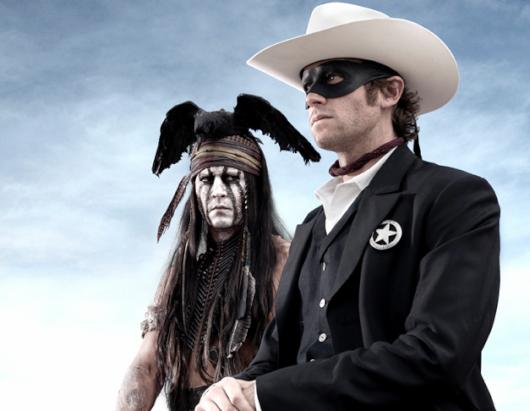
Everything Old is New Again... Too New

It's a common start to a flame war online. Someone's favorite character, usually from an older work, is getting a new lease on life for modern readers. Great! Right? Only, it turns out not so great. Someone's favorite character isn't quite the same anymore.

He may have a new female sidekick. His ethic about killing may have changed. He began during Kuwait instead of WWII. Or the costume doesn't have the underwear on the outside anymore.

Whatever the reason, the old fans aren't happy.

But the studio/publisher doesn't seem to care. They have to, after all, "re-imagine" the character for today's audience of readers/movie-goers.

So this week, we're going to look at that process with the help of several writers who regularly have to make those choices as they bring commonly known characters to life in their tales of action and adventure.

Let's start off positive. When is tinkering with a character for the benefit of reaching a new audience a good thing?

Ron Fortier: When the character has been all but forgotten by everybody, including the old fans.  Then it's time to try some re-imagining.  But as long as there remains a viable, dedicated and loyal following of the character, one should take their feeling into consideration and then tone down any revisions.

Dan Jolley: I ran into this when I was working on the comic book re-launch of Voltron for Devil's Due Productions. I watched Voltron nigh-religiously as a kid and loved everything about it, but when it came time to do the comic book series, DDP sent me all of the old Voltron episodes, and I quickly discovered that they, to put it kindly, didn't quite hold up. Part of it was that I was watching them with the sensibilities of an adult, but perhaps a bigger part was that my memories of the show candy-coated it and glossed over its many, many, many flaws. I knew that if the comic was going to work, I'd have to make some changes to the property, some merely cosmetic, some right down to the premise. Because if I had simply translated the existing show to comic format, whether adapting the original stories or setting new stories in the same framework, the critical and commercial reception would have ranged from simply "negative" to "brutal." (The tutu-clad dancing mice in particular had to go.)

Ed Erdelac: When the character has fallen into obscurity to the degree that they're adventures are no longer available or are out of print. I can't count the number of times I've been delighted to hear of even the lamest of remakes because I know some profit-minded suit is gonna re-release the orignal material to try and cash in. I'm mercenary in that regard, but somebody will always do it. It's embarrassing to admit, but when Robert Blake went on trial I was ecstatic to pick up the first season of Baretta on DVD.

Bill Cunningham: I think one only needs to look at the recent X-Men: First Class and The Dark Knight movies to see how reinvention can invigorate a character or series. In both instances the writers took a look at what worked before, what works for today's audiences and found a way to make it work. Specifically, in X-Men the writers took the latter day Magneto/Xavier relationship and posited it from the start, creating a deeper emotional resonance to the onscreen action. In addition, they took the premise of the first X-Men comic (Magneto steals missiles from the army base) and re-imagined it in light of both history (the Cuban Missile Crisis) and visual impact (Magneto is fired upon from multiple warships and must stop the missiles mid-air).


Selah Janel: When it’s done out of respect and love it’s fine. Batman The Animated Series kept a lot of the themes that people loved about Batman and adapted them to work for an after-school audience. It gave Gotham a fantastic new look and turned many of the once-comedic villains into sympathetic and frightening characters. Plus for a cartoon it balanced out Bruce’s pain and burden very well. It worked because everyone working on it obviously cared about the details and the story.


Lee Houston Jr.: One thing you have to remember is that the need for revising, even just to stay "contemporary," is because most publishers never foresaw the markets lasting as long as they have, especially within the comic book industry. They originally thought there would be a change over every 10-15 years as one generation of audience was replaced by another. But the fans did remember and care. More important, they were also keeping an eye upon continuity, something the publishers and creators weren't because of the generation changeover theory.

Another thing that does not help is the passage of time. A lot of the adventures written in the past were contemporary when originally created, but are considered period pieces today.

When does it cross a line and become something, in a fan's eyes, worthy of derision?

Ron Fortier: Easy. When you stop respecting the core essence of the character.  The Green Hornet and Lone Ranger as original envisioned were serious heroes with a specific moral code.  No matter how you shape their adventures to suit new audiences, the core essence can never change.  Doing that basically changes the character to an entirely different character.  That being the case, why not invent your own?

Dan Jolley: I would say it crosses the line when the re-launch shows no respect for the original property. There are right ways and wrong ways to re-launch something, and I got caught up in the wrong way when DC asked me to write the new Firestorm book back in 2004 or so. After seeing the massive fan backlash regarding Green Lantern, I first wrote a pitch that treated the original Firestorm, Ronnie Raymond, with a great amount of respect and basically gave him a hero's send-off as the title transitioned to its new protagonist, Jason Rusch. That pitch was summarily rejected by DC brass. Part of it was that DC felt they had done everything they could possibly do with Ronnie Raymond at the time; in their eyes, he was a bankrupt character, and they just wanted to cut ties with him as fast as possible and move on. Another part of it was that DC decided Ronnie Raymond didn't have enough of a fan base to maintain the necessary amount of sales on a book, so he wasn't a viable option for the lead role no matter what we did with him. At the time, I was just thrilled to get a monthly book, and though I voiced my concerns, when they were flatly overruled I basically decided to get with the program and do what DC wanted me to do. I don't think my run on the book did the title any favors, honestly.

Ed Erdelac: When some integral component to the character's original appeal is compromised or abandoned entirely. Imagine Batman as an overweight woman with a machinegun or something (because hey, it'll reach a wider range of demographics!).

Bill Cunningham: When the new story or reimagined character doesn't make me care, doesn't involve me in the story, and simply spoonfeeds me spectacle over substance.

Selah Janel: What ticks me off is when reboots are obviously done for money. I mean I grew up in the eighties where everything was marketing – do people think we’re not going to figure it out? I’m tired of seeing everything that was special to me as a kid turned into a marketing machine that has no effort behind it. Those movies take the lowest common denominator from the source material and turn it into something that’s almost unrecognizable. It’s just arrogant. Lost Boys: The Tribe forced onto fans what it thought they should want. The director didn’t even like the original movie! No effort was made to try to make a real sequel – most of the jokes and conflicts were recycled wholesale but sexed up and modernized with the assumption that no one could tell the difference. And we could all tell. Overall it’s a title that for the most part isn’t worth mentioning.

Lee Houston Jr.: Sure, you might need to start a series over from the origin point to explain who the hero is and why they do the things they do. For example, the original might have been a World War 2 veteran and the modern version might now have seen action in the Middle East. No problem there. But if the character was a decorated soldier in the past and is a buffoon lucky enough not to shoot his own foot today...

Why is it such a big deal? Shouldn't fans be happy simply that their favorites are being published again or are being brought to TV or to the big screens?


Ron Fortier: We all grow up with fictional heroes of one type or another, which do shape our lives and our world views. They do teach us about moral, doing the right things, being honorable, fair etc.etc.  Heroes show us the right path to follow.  When insensitive producers come along eager to make a fast buck by sensationalizing our heroes and altering them purposely for those gains, its pretty much attacking everything we grew up believing in.  Cynical, Hollywood types have no moral compass as to how to be a hero.  Their concern is only box office take and ratings and if the world is a darker, less decent place when they've torn down our heroes, they don't care.  As Luke Skywalker said rather simply, "I care."

Dan Jolley: The inherent difficulty here -- some might say inherent impossibility -- is that fans THINK they want the same things they got when they were younger. As I mentioned before, most of the time our memories gloss over the faults of properties we loved. That's just a thing human brains do. It's very, very rare that something we loved as children, for instance, is as good as we remember; in fact, a work of fiction, no matter what medium, has to be basically perfect in order to give you the same experience both the first time you're exposed to it and then when you see it again 20 or 30 years later. (Casablanca comes to mind as an exception to the rule. That movie is damn near flawless.) So, essentially, somebody who used to think Knight Rider was the greatest show on television stands a good chance of being impossible to satisfy with a new version, because the Knight Rider in his head is this idealized, fault-free version of the show that never actually existed. Maybe you can do a re-launch that captures the spirit of the original and is really spectacularly good and makes some people happy, but no matter how good your effort, there will be a group of fans out there who think what you're doing is shit compared with the original.

Ed Erdelac: I'm gonna use an example here that I know a lot of people are not gonna agree with. I hate the Lord of The Rings movies. Loathe them. But I've always been enamored with the books. The feel of them, the whimsicality, the depth of the world and the emotional scope of the adventure are inimitable.

To me, the movies are like reading Cliff Notes. They're too fast, too loud, and packed with insipid dwarf jokes that take you right out of the world (Okay, not entirely like Cliff Notes).

I was as excited about The Lord of The Rings movies as anybody. To me, they were going to be the new Star Wars. They had a director I respected (at the time), an amazing cast, and from the sneak peek photos, a great sense of the visual appeal of that world. The Fellowship Of The Ring was the most disappointing experience I've ever had at a movie theater, bar none. I went away cussing. I hated it. I never even bothered with the second one (I recently tried to give it another shot, tuned in on TV in time to see Legolas surfing down a staircase on a shield shooting arrows and promptly turned it off), and I got dragged to the third one (which mellowed my dislike somewhat, but still had a lot of plain stupidity in it).

Now, the greatest crime to me wasn't that I'd wasted the price of the ticket, but that for all millions of kids who had never read Tolkien, the film series would be their first experience with it. It would lead them to the books, which was a good thing, yes, but the movies do not accurately convey the books. The pacing is all wrong. LOTR the movies are a nachos and cheese popcorn fueled D&D session full of Jon Woo style battles, wisecracking, kick-ass women and sweeping crane shots. LOTR the books are an epic, serious meditation on the change of war punctuated by moments of whimsy and slow heartbreak.

Now back when I said all this originally, I was written off as a purist who wanted to see Tom Bombadil and the barrow wights. It wasn't that. It was the books, man! I personally witnessed people who never attempted to read anything the sheer scope of LOTR in their lives pick up Fellowship Of The Ring and put it down after only a few chapters, because for them, it was a bait and switch. The movies were not indicative of the writing or the characters or the world. No frat boy hobbits, no blubbering oafish dwarves, no black riders catching torches in their teeth. For them, it was a misrepresentation.

And that's the danger of 'reimagining' -- you misrepresent the original property and a lot of people who seek it out based on the new product are dissatisfied, and the rekindling flares out. Now I know this didn't happen with Lord Of The Rings, that I'm in the minority. I accept that. But what about The Green Hornet, or a limitless number of other characters who were not translated faithfully?

Bill Cunningham: It's a big deal because fans are voting with their money. They want to see you fulfill the promise that you are going to tell them a great story, and lead them to a place in their imagination that's worthwhile.

Selah Janel: It matters because usually it’s something that a fan/consumer associates with a part of their life that meant a great deal to them. Fandoms aren’t just things people like – usually there’s some sort of personal connection and meaning. And it’s just really arrogant to assume that you know better than other people or can “fix” a universe or something. Again – this usually comes from things being done for money and focusing on the lowest common denominator. When it’s done well it’s not usually much of an issue.

Lee Houston Jr.: Readers and viewers not only want to see their favorites continue, but want them to continue the way they remember, for that not only keeps the character "fresh", but vicariously helps the audience hold on to a piece of their youth too.

What role does the writer have in trying to find balance for both new and old audiences?

Ron Fortier: The writer has the important task of writing something that is true to the characters' essence, respects the old fan base and at the same time put a fresh spin that does contradict those elements and attracts a new audience of fans.  It is no easy job, but again, dealing with respect and love for these classic characters is pretty much trying to be that hero yourself.  Difficult, but when done right, so richly rewarding.

Dan Jolley: The most important part of the process for the writer, I would have to say, would be to identify the true spirit of the show, or the books, or the comics that you're re-launching. If you can pinpoint what the original work was really about, and then reproduce that in a new/modified/tweaked/overhauled format, that's probably your best chance of pleasing some of the original fanbase and finding success with new viewers/readers. I'd say J.J. Abrams is pretty good at that, since a lot of people liked his new Star Trek movie, which comes equipped with one of the planet's most dedicated fanbases. That being said, and at the risk of dating this article, I will guaran-freaking-tee you that when Tim Burton's new version of Dark Shadows comes out, there will be a group of die-hard original series fans out there who think it's utter garbage.

Ed Erdelac: The writer is the interpreter, trying to broker peace between two warring factions. He's the guy that offers the compromise that will either spare the land (the character) or destroy it. He has to reward the loyalty of the lifetime fans (because if he doesn't, he risks their ire, which could result in extremely negative word of mouth) and yet try to provide enough crossover appeal to bring in new consumers for the suits. It's a delicate balance and it doesn't often work.

Bill Cunningham: The writer must first understand that he has a responsibility to understand the core concept of the character he is seeking to update. By misunderstanding or neglecting the core concept, the character will not make sense, period. The writer must seek to care about his characters and make them whole people who have a valid reason (within the context of the story) for doing what they do. That is the engine that drives their character to do the things they do.

The writer must also understand context. How does a character from the 1930's work for today's audience without sacrificing the engine that makes the character unique and whole. For example, the recent Green Hornet movie neglected the entire engine of the character in service to the jokes.

Selah Janel: The writer has a huge job trying to bridge the gap between old and new. They have to give an audience some aspect of a series or character they haven’t seen but keep enough of what’s loved of the original in or else the story/universe becomes something else. I could see where that would mean keeping in stuff they may not care for personally if it’s in the best interest of the universe/series. In a sense you’re trying to remodel someone’s home. You’re in a place you didn’t build and you want to make it work better or give it an updated/sleeker look – but you can’t totally start from scratch because it’s not your house. You aren’t the one that ultimately is going to be living there.

Lee Houston Jr.: The most important thing when writing or revising an established character is to remember what made that character special and unique to begin with, and not treat the property as either a potential cash cow or fodder for a comedic romp.

=======================================================================

To follow the works of these fine creators who took part in this roundtable, simply look for their links on the list of Heavy Hitters on the right side of this page.