(In which the blogger/writer/webmaster/exhausted one takes some time off from actual writing to chat with Ian Watson about his work, particularly his newest Robin Hood volume.)
Tell us a little about yourself and where readers can find out more about you and your work?
The three strangest things I’ve done this week are try to buy a college, conduct an archaeological survey on a 1790s Methodist chapel, and do an interview for an online pulp site.

The college bit comes from my day job, wherein I’m a freelance consultant project developer. I’m acquiring a great old estate for a client who wants to set up a multimedia centre of excellence and make movies! The site survey was with my daughter, who’s studying archaeology and classics; I was required to hold the other end of the ranging rods. My son stayed well clear. And the interview… well, here we are.
When I was nine I read my first issue of The Avengers comic, #4, “The Coming of Captain America”. It blew my mind, got me into comic collecting, and eventually led to my regular participation in an online Avengers message board. Some lengthy essays there got me invited onto a private Avengers mailing list. When a bunch of these “Jarvis-Heads” decided to publish a book of articles on the Avengers I contributed quite a bit to it. Assembled!, and its sequel Assembled 2!, and its eventual other sequel called… well guess, have raised quite a bit of money for charity and got me into print.
About that time I was at a garden party, talking about some material I was researching for an article on King Arthur. As the conversation progressed it became clear that what I really wanted wasn’t to do a thesis but to tell stories. The person I was talking to pointed it out quite strongly. So I came home and started writing fiction, and I’m still writing. This isn’t a very interesting answer - except the helpful garden party was at Buckingham Palace.

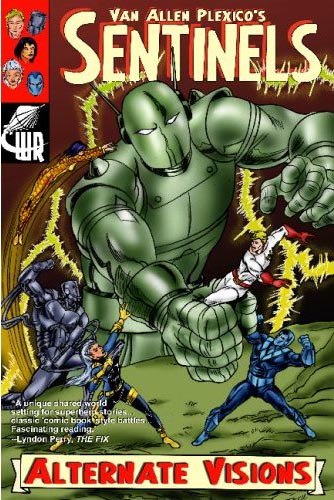
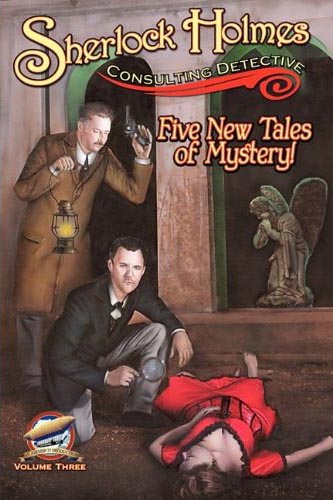
When Van Plexico of White Rocket Books decided to do a “guest writer” volume of his successful Sentinels superhero series I was invited to contribute a short story to Alternate Visions; so I did. That got me recommended to Ron Fortier of Airship 27 as an author for Cornerstone’s Sherlock Holmes: Consulting Detective series, primarily because I could write fast for an approaching print deadline I suspect. That series proved pretty popular, spawning two more volumes so far and a fourth next year. One of my stories in volume 2 got nominated for the Pulp Ark “Best Short Story 2010” award and actually won the Pulp Factory “Best Short Story” award.
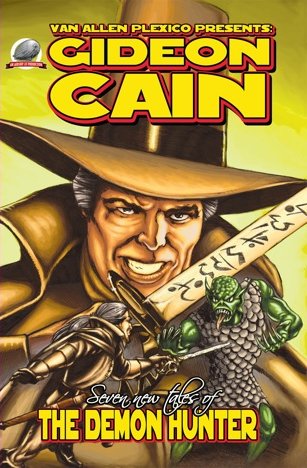
That Avengers mailing list I mentioned also spawned an idea for a Solomon Cain-type story. It got kibitzed with some pretty high-powered creative types to make it into something original with its own voice – that’s why Kurt Busiek wrote the introduction to the book we eventually produced, Gideon Cain: Demon Hunter. My story in that got nominated for a couple of awards too.

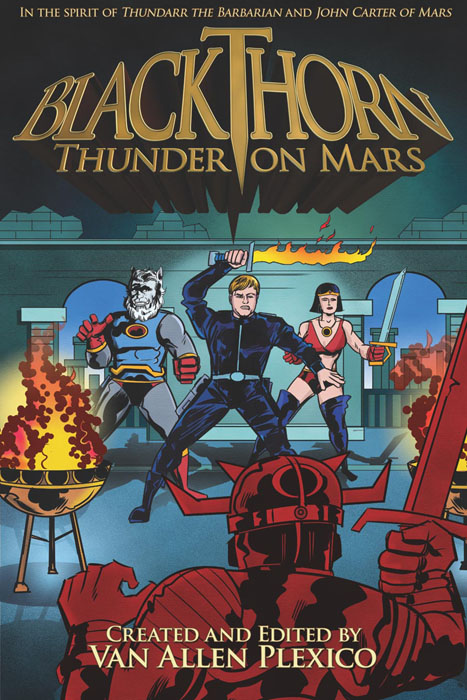
Most recently I’ve also been a part of the Blackthorn: Thunder on Mars SF anthology, having fun with the idea of a 21st century soldier who wakes up on far-future Mars and leads the resistance to the tyrants who control it. The book’s style was pitched as Edgar Rice Burroughs meets Jack Kirby. Who could resist that?
So if it wasn’t for the Avengers I wouldn’t be here answering these questions. If it wasn’t for a personage eating cucumber sandwiches I wouldn’t be writing stories for publication. If Van Plexico, Ron Fortier, and a bunch of other people who are far too creative for their own good weren’t so damned persuasive I’d have a little free time.
How did you become involved with the Robin Hood, Arrow of Justice book?
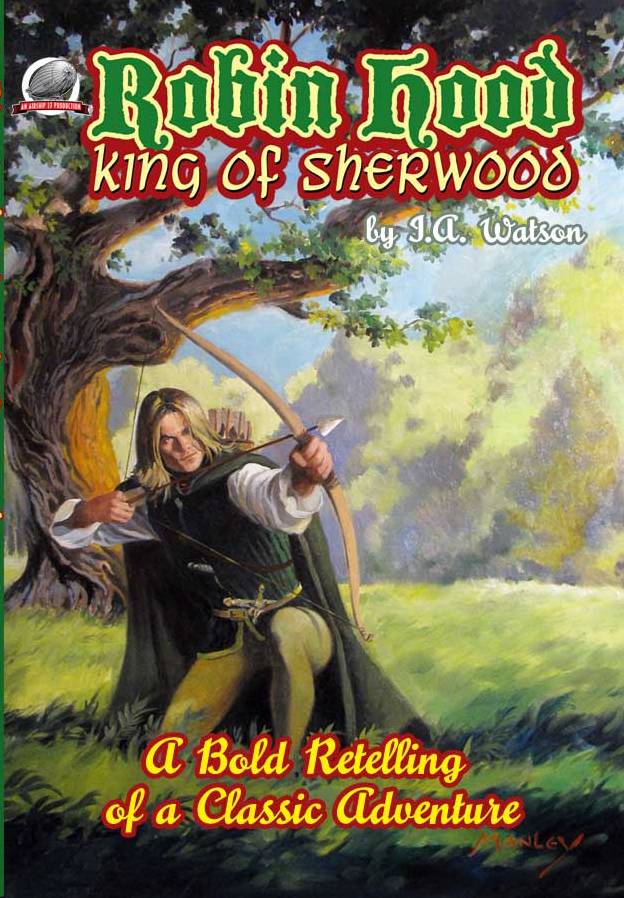
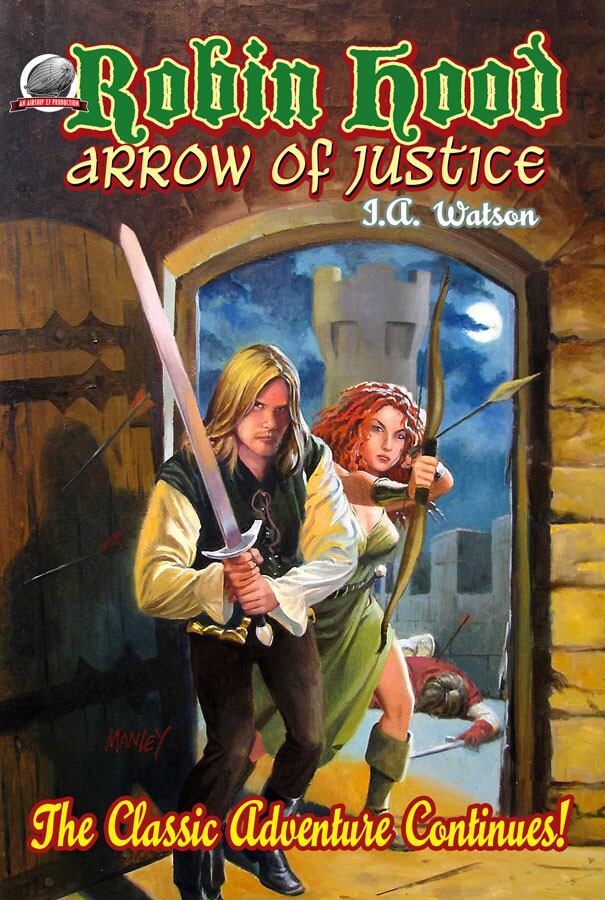
Along the way I was encouraged to produce a novel. Airship 27 kindly provided me with a list of properties they’d be happy to publish books about. King Arthur was actually on it, and I’d got plenty of Arthurian material by then, but I decided it would be better to write something specially designed for the page-count and marketplace. And right there under Arthur Pendragon’s name on that list was Robin Hood. So Robin Hood: King of Sherwood picked up two Best Novel nominations in 2010. The second volume in the trilogy, Robin Hood: Arrow of Justice has just hit the shops this month. The third volume, Robin Hood: Freedom’s Champion, is already “in the can” due for next year’s publication schedule.
Robin Hood has had many widely varied characterizations in novels, comics, and films. How do you see him? Who is the real Robin Hood to you?

He’s the archetypal good-guy outlaw. When the law no longer serves justice, justice must come from an outside the law. Everybody from Zorro and the Saint to Knight Rider and the A-Team owe him a debt of thanks.
What’s more, Robin Hood’s so pervasive in our Western culture, especially British and American culture, that people already “know” what he’s really about. The marketers would say he’s got brand recognition. He’s a laughing swashbuckler, the people’s champion, the sneaky trickster, the defiant rebel, the forest legend. He’s Errol Flynn and Natty Bumpo and Bugs Bunny and Che Guevara and Robin Goodfellow all wrapped up in Lincoln green and leading a fellowship of like-minded felons.
What helps is that people have been telling Robin Hood stories for a very long time. He gets a mention in Piers Plowman, the very first written fiction in the English language. There’s a wealth of old ballads and folk tales that give us all the elements of who he is and of what his cast are like. Pretty much all the things everyone knows about Robin, including his enmity with the Sheriff of Nottingham, his friendship with Little John, his romance with Marion, his most audacious stunts, all come from those centuries-old sources.
I wanted to ground Robin in the world as it was around 1191, the time King Richard the Lionheart went on his crusade and left a divided, bankrupt England to the schemings of his brother John. It was a grim time, only 125 years since the forcible conquest of England by the Normans. Serfs were little more than slaves. The church was powerful but not always charitable. The barons squabbled and did what they liked.
So Robin had to be the antidote to that. He had to be fun! The worst thing you can do to a tyrant is make people laugh at him, so I wanted Robin to be audacious and daring versus the Sheriff’s meticulous scheming. He had to be the shining fizzing sparkling wise-cracking big-headed big-hearted full-on adventure hero who gave those starving peasants hope – and something to chuckle about when he put one over on the Sheriff again. After all, the very first thing we know about Robin’s followers is that they were Merry Men.
Robin Hood’s story is very much about “us versus them who keep us down” and the ordinary fellow putting one over on the rich and the powerful. It speaks as much to us today in a world of powerful corporations, corrupt bankers, slick politicians and economic downturns as it did to those common folk centuries ago gathering after dark to grumble about the bosses. Robin Hood’s a blue-collar hero.
What do you think makes Robin Hood a pulp character?
Well, he’s an action hero. His stories and ballads were circulated in mass-produced cheap-print editions for the common masses. His tales are generally fast-paced, adventure-oriented, with strong goodies and baddies to cheer and boo. Robin’s not just a hero; he’s got at least a claim to being the first pulp hero!
And if he doesn’t get the ward, he’ll probably steal it anyway.
Of course there are other ways to write him too. He’s been the subject of plays by Shakespeare’s contemporaries (the Bard mentions him too), of a poem by Keats and a stage production by Tennyson. He appears in Sir Walter Scott’s Ivanhoe and T.H. White’s The Once and Future King. He gets around and there are plenty of ways to write him. I deliberately set out to tell a Robin Hood story as it might have appeared in the Strand Magazine or Weird Tales. The techniques, characters, and situations blended remarkably easily with pulp styles.
With that in mind I tried to do the story in episodes. There are chapters that might each appear weekly in some periodical. Each book tells a complete narrative – readers could pick up the new Arrow of Justice without needing to invest in King of Sherwood first and they’ll still get a “proper” story – that is intended to keep the pages turning, keep the emotions coming, keep the audience pulling for the underdog. The intention was that by the time we get to the climax we’re more interested in seeing Robin and Marion win than we are in walking the dog, in getting supper for the kids, in going to bed in time to get up tomorrow. That’s what good pulp fiction’s supposed to do to you.
Why does Robin Hood appeal to you as a writer and a reader?
I wasn’t really that interested in Robin Hood until I had to work out how to tell a story about him. It was when I spent some time reading the original source material to get a feel for what he was about that I realised he was a very contemporary character. Which of us hasn’t wanted to rebel against stifling corrupt authority and change the world? Who doesn’t wish that something could be done for the powerless victims of oppressors who own the system? Robin was loved because he was a wish-fulfilment hero who fought the law when the law was wrong - and won.
I wanted to do something that brought the sensibilities and worldview of that original material to a modern audience using modern techniques, and I had to work out how to do that without plagiarising or copying other modern versions.
It occurred to me that most contemporary iterations of Robin Hood tend to skirt over his origins. We might get a returns-from-crusades-and-is-shocked-by-injustice scene, or a revenge drama because the Sheriff had dispossessed him or something, but mostly as soon as Robin spots injustice he leaps into a tree in Sherwood Forest and starts robbing the rich to give to the poor. But why would he be like that? What would motivate a woodland bandit to become a champion of freedom?
I decided that my Robin was going to be a young rogue and we’d see him “become” the Hood of legend bit by bit. Robin Hood would be a work-in-progress. So I needed a catalyst, and really there’s one catalyst that works better on young rogues than any other, then and now: Robin meets a girl.
I needed Maid Marion to be a very strong character. She has to be Robin’s match, the only one who can keep up with him, the only one who can sometimes surprise the trickster. Outlaw Robin meets noble Marion and they each shake the other’s worlds and both force their opposite to re-examine their convictions and their lives.
I enjoyed typing the Robin and Marion scenes. Those were the bits where the characters really wrote themselves.
Adventure heroes need competent villains. I wanted a range of different kinds of threats for Robin to face from adversaries that each behaved differently and used different kinds of villainy. In the stories I wrote, the Sheriff of Nottingham is the cold calculating games-player, the absolute opposite of intuitive tricky Robin. Sir Guy of Gisbourne, Prince John’s envoy, is a sadistic berserker, cruel for cruelty’s sake, delighting in his power over the helpless, willing to commit any atrocity to bring Robin down. Prince John himself is late to appear in the series, but he’s a vindictive political opportunist who’ll do anything for advancement and who never forgets a sleight. Each of these and the various other adversaries Robin must survive is designed to challenge him in different ways and require different responses from the outlaw.
That kept writing the tale interesting. Hopefully that will come across in reading it too.
Tell us a little bit about your work in the Arrow of Justice book. What kind of dangers will Robin face?
The first book covered the first frantic week where Robin and Marion meet and their legend begins. By the end of that volume pretty much everything people “know” about Robin’s set-up is in place. Robin has joined up with Little John, Friar Tuck, Will Scarlet and the rest. He and his band are in Sherwood redistributing taxes without the Sheriff’s consent. Prince John is lusting after Maid Marion and plotting her father’s downfall. People are starting to hear about the outlaw “king of the forest”.
Arrow of Justice covers the three months that come next. The Sheriff of Nottingham lays his plans – for Marion’s family’s downfall, for his own wedding to a rich and unwilling young heiress, for the capture and destruction of Robin Hood. The good guys have made their move. Now the bad guys get to respond in the way that all totalitarian states do to civil unrest. Meanwhile, Marion tried to return to the old life she had before meeting the merry men and finds it doesn’t really fit her any more – the outlaw inside her keeps bubbling to the surface.
Book one was about Robin and Marion coming together, changing each other, then changing the world. Book two deliberately keeps them apart until near the end, but those changes they’ve wrought in each other still run true. But there’s still plenty for the romantics as well as the adventure-seekers. This is the volume that covers a couple of Robin’s most famous capers including the Sheriff’s archery contest where a disguised Robin seeks a golden arrow and the hand of the Lady Marion.
If folks would like a preview they’re welcome to take a look at
http://www.chillwater.org.uk/writing/robinhome.htm. As well as sample chapters from both Robin Hood books there are links to purchase print or e-book editions, some additional material including maps and character profiles, and some information about the other publications I mentioned back at question 1.
Any other upcoming projects you would like to plug?
In the next few months there’ll be some more anthologies with my work in them:

The New Adventures of Richard Knight volume 1 includes “The Hostage Academy,, wherein the aviator detective uncovers a devious plot to control the decision-makers of America through their kidnapped loved ones. There will be details at
www.prosepulp.com shortly but nothing yet.
Sherlock Holmes: Consulting Detective volume 4 will feature “The Case of the Clockwork Courtesan”, wherein a life-sized mechanical doll may have committed a murder.
Price of the Missionary’s Gold – the New Adventures of Armless O’Neil includes the title story wherein a missing boatload of bullion lost during civil war in the Congo prompts a ruthless band of mercenaries to attempt mass murder unless the one-handed adventurer can stop them.
There’ll be a new Robin Hood short story, “The Slavers of Whitby” in the online magazine Pulp Spirit #14, available free from 1st February 2012 at
http://www.planetarystories.com/
And there’ll also be a Robin Hood comic story, “Lionheart’s Gold” in All Star Pulp Comics #2 from Airship 27.
Beyond that I’ve turned in work for two other anthologies that’s its too early to talk about and I’m committed to write for three more. Then Robin Hood: Freedom’s Champion will finish the Robin Hood trilogy.
The Sherlock Holmes volumes are available from
http://www.gopulp.info/.
Gideon Cain, Blackthorn, Alternate Visions and the Assembled! volumes are available from White Rocket Books at
Whiterocketbooks.com.
And of course these things are available from the usual retailers.
Anyhow, enough plugs. Everybody should go and fight injustice now.
Thanks for your time, Ian!