Showing posts with label Novels. Show all posts

Saturday, December 28, 2024

[Link] 5 Plot Hacks That Just Might Save Your Novel

by Susan DeFreitas

Plot issues are the number one reason people come to me—and people like me—for help with their creative work.

And I’ve shared that, most of the time, these issues really aren’t problems with plot at all. They’re problems with character arc.

That said, sometimes the problem really is the plot. Which is to say, sometimes the problem with a novel really is what happens in the story, the order in which it happens, and the way that it happens.

And for real problems of this nature, there are real solutions. Solutions that I have seen writers apply in revision that produce changes that feel nothing short of magical.

Struggling with the plot of your current work-in-progress? Maybe one of these tried-and-true solutions will do the trick for you.

1. Shorten the time frame

Some novels really just have to be big, sprawling epics that take place over a long period of time—perhaps even over generations. But most stories? Don’t.

If you have a novel that feels slow in places, a novel that chronicles a long period of time in the protagonist’s life, or a novel that chronicles a whole historical period, my best advice to you would be: See if there’s a way you can tighten the time frame overall.

Because when you tighten up the time frame, oftentimes those slow sections just somehow magically disappear. When events occur close together in time, you get a stronger sense of cause and effect even if one event isn’t leading directly to the next. For instance, maybe your protagonist is still angry from her conversation with the antagonist the day before when he talks to his love interest later that day. If a week passed between these interactions, it wouldn’t feel like there was any connection between them.

But when you tighten up the time frame, that second interaction might feel like it’s invested with a whole lot more tension, because of the residual emotional effects of the first one.

For a novel that chronicles a long period of time in the protagonist’s life, you’re almost guaranteed to strengthen the sense of storytelling if you focus in on a shorter time frame—say, a turning point time in the protagonist’s life, which will still allow us to imaginatively fill in what happens in that longer span of time without having to plow through hundreds of pages of it.

Read the full article: https://janefriedman.com/5-plot-hacks-that-just-might-save-your-novel/

Saturday, October 28, 2023

[Link] How Writing a Short Story Can Improve a Novel-in-Progress

by Cindy Fazzi 

Writing short stories can help establish your credentials as a fiction writer. It will give you much-needed exposure to editors, literary agents, and readers. Some publications will even pay you for it. You know what else a short story can do for you? It can serve as a vehicle for experimentation when you’re writing a novel.

Multo, my first attempt at fiction and third published novel, is the product of such an experimentation. Multo (meaning ghost in Tagalog) follows a Filipino-American bounty hunter named Domingo as he looks for the only quarry that has ever eluded him, a biracial Filipina who can disappear like a ghost.

I initially wrote the story from the point of view of Monica, the Filipina who overstays in the U.S. in pursuit of her American Dream—her American father who doesn’t know she exists.

The father happens to be an Air Force general bent on avoiding a political scandal. He hires Domingo to nab Monica and take her to immigration authorities for deportation. It’s the ultimate rejection for Monica.

The literary agents who read my manuscript deemed it “uncommercial.” They all said literary fiction was a tough sell, plus my book’s immigration theme and Filipino protagonist made it completely unsellable.

A Short Story Saves the Day

In the face of such failure, I moved on. I wrote four other novels, two of which were traditionally published without the benefit of literary representation. And yet I kept returning to my first manuscript. You see, I wrote it when I was a green-card holder awaiting U.S. citizenship. The subject of immigration is close to my heart. It’s also a political issue that never goes away as immigration reform continues to elude Congress.

Read the full article: https://www.writersdigest.com/write-better-fiction/how-writing-a-short-story-can-improve-a-novel-in-progress

Wednesday, May 23, 2018

Nugget #133 -- The Mad Skillz of Full-Grown Adults


The skill sets you’ll need to plot, organize, and craft 
a novel will not be the same ones you learned writing 
short stories because contrary to what several folks 
may tell you, short stories are NOT INFANTS THAT 
GROW UP TO BECOME NOVELS. Short stories 
are full-grown adults in their own right.

Wednesday, May 16, 2018

Nugget #132 -- The Long and Short of Writing a Novel

 If you want to write a novel, start by writing
a novel. Hell, write two or three of 'em, then
when you get that strong, ready-to-show novel,
shop it around. But don’t write a short story 
for practice if you really want to write a novel.

Wednesday, March 21, 2018

Nugget #125 -- Biggy Smalls

By CharlesAPhillips63 - Own work, CC BY-SA 4.0,
https://commons.wikimedia.org/w/index.php?curid=36109241

There's an art to writing small and there's 
an art to writing big. It's not an either/or. 

Wednesday, December 13, 2017

Nugget #114 -- The Reason

Get serious about making your openings strong. It's important.
It's the reason you get to be the first or last story in an anthology
rather than crammed in the middle somewhere. It's the reason
your novel demands to be taken to the register and then home
rather than returned to the shelf. 


Tuesday, June 27, 2017

Not Your Stepping Stone -- Short Stories Are a Destination, Not a Starting Block

(5 Reasons Treating Short Stories Like 
Mini-Novels Will Hurt You As a Writer)

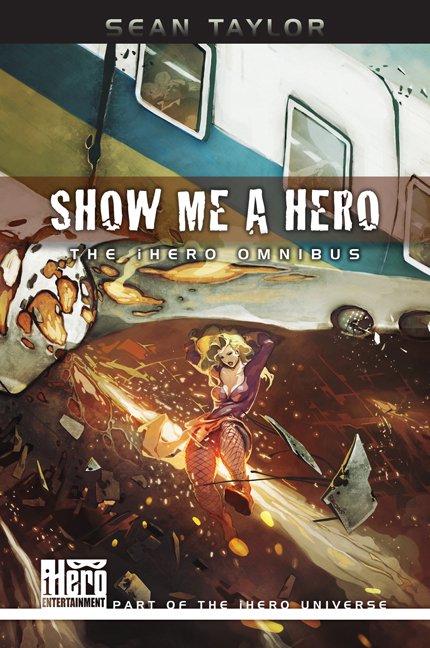
By Sean Taylor


I’m predominantly a writer of short stories. Sure, I am working on a novel and I’ve written more than a few comic books, but if I’m honest, short stories are the first love I will always go back to.

I love the craft it takes to “work small” and tell a fulfilling tale within those word count constraints. I relish in the time and work required to target each word and phrase rather than allow for meandering and possible filler.

That said, I also understand that short stories and novels are two separate entities. And good short stories, just as good novels, requires a writer working diligently with all cylinders firing in pristine shape.

Understanding that, perhaps that’s why when I received this link from author Jerry Jenkins in my email a few days ago, it really, REALLY irked me.

Go ahead and click on it and give it a read-through before coming back here. I”ll wait.

Welcome back.

Now, I have to admit that I agree with his tips for writing short stories, and if that’s what the article focused on, it’d be a fine how-to. But I take umbrage at his intimation that short stories are the literary equivalent of “baby steps” for novelists.

Particularly, I found this part really got my dander up.

“A novel is not where you start—it’s where you arrive. 
“Next, when you try your hand at writing, don’t start with a 300-400-page manuscript. Learn the basics first: things like dialogue, point of view, characterization, description, tension, conflict, setups and payoffs, submitting your story, working with an editor.

“Start with short stuff: short stories or even flash fiction. ...

“Most writers need to get a quarter million clichés out of their systems before they hope to sell something.”

Let me just get this part out of the way first, if you want to write a novel, start by writing a novel. Hell, write two or three of 'em, then when you get that strong, ready-to-show novel, shop it around. But don’t write a short story if you really want to write a novel.

It will mess you up. Not help you. 

Why?

Here are 5 reasons.

1. Short stories aren’t novels. Novels aren’t short stories. What Jenkins is espousing is basically the literary equivalent of me telling an aspiring vintner to try his hand at beer first, because beer is more common and less fancy than wine. Beer isn’t wine. And you can’t make it so.

Will writing short stories help you learn to write? Yes.

Will it help you learn to write novels? Not really.

2. The two formats have different approaches in terms of scope. Novels have a grand scope. Novels have room for three acts and multiple character arcs. Short stories have a limited scope. Short stories require you to hone in on one section and one character arc. (A caveat here: Some novelettes, i.e., long short stories, CAN allow for a more novel-based approach, but even then, you can’t write it like a full novel. You must think small from the beginning, not just plan big and then trim it down.)

3. A novel gives the writer time to chase rabbits and meander. It shouldn’t but I’ve yet to find one that doesn’t waste time somewhere along the way, either with wasted time on a character who is superfluous to the main plot and theme or with plot points added to further complicate the plot (at best) or lengthen the book (at worst). (Wait. I take that back. Chandler didn’t meander at all, but his novels were also a great deal shorter than the epic doorstops that readers blindly follow nowadays.)

4. A novel is a wall. A short story is a target. Have you ever heard the saying, “throw shit at a wall and see what sticks”? You can do that with a novel and find forgiveness to some degree from your readers. Try that with a short story, and your readers will be long gone.  Or, as author Sherrie Flick describes it:

“I write very-short short stories—2,000 words or less. In these stories I try to condense a vivid sense of the world into a small space. I compare the process to shoving an angry black bear into a lunch bag, without ripping the bag.

“My goal is to write a short story (often less than a page) that seems full to readers long after they walk away from it. I want them to think back on the story years later and add their own sub-plots, characters, and details. Ideally, the story expands beyond the page, and the reader is active in that expansion.

“Writing a novel is a much different process. Instead of holding back—working with a fragile amount of space and condensing language to make effective and subtle suggestions—I open up the word spigot and, in doing so, the fictional world of the story. My sentence structure lengthens in the novel manuscript, and I enter into the challenge of evoking complex atmosphere with a bigger, more expansive sense of character on the page. It’s like pulling the (still angry) bear back out of the bag without getting mauled.
As for my take on it, working on my novel is like dumping buckets of words onto the page each day and guiding them all into the right funnel, whereas working on a short story is more like targeting each word and concept as a single arrow with a single circle to hit.

5. Novels and short stories begin and end at different points. Novels have a clear beginning and a clear climax and (more often than not, it seems to me) a denouement. This means that they begin getting the hero or protagonist into the position that will then snowball the action toward some new direction and end with a very strong period and often a second period just for good measure. The bad guy is foiled. The dad reconnects with his daughter. The tower falls into a blazing heap just as the hero and her followers escape. Then we often learn what they’re all doing two weeks later and who ended up with whom.

Short stories don’t always have a clear beginning or end. Just as the best short stories begin after the beginning, they also end before the expected ending. Best example? “The Lady or the Tiger.” Another great one is Stephen Donaldson’s “The Conquerer Worm.” There’s rarely a pretty bow on short stories. Try that with novels, and your readers will tend to call foul on you -- or assault you with words at your convention tables.

Why are these problems? Why will they mess you up?

Let’s take them in order.

1. Learning to write short stories will prepare you to write better short stories, but you’ll still need to approach your novel as a beginning novelist because that’ll be what you are. The skill sets you’ll need to plot, organize, and craft a novel will not be the same ones you learned writing short stories because contrary to what several folks may tell you, short stories are NOT INFANTS THAT GROW UP TO BECOME NOVELS. Short stories are full-grown adults in their own right.

2. This one can really hurt both ways. Short stories don’t work in grand scope, nor do novels work in a limited scope (with a few notable exceptions that would probably never get published today, such as Kafka’s Metamorphosis.) The novelist who sets out to write a short story by plotting a short novel is doomed to failure. Likewise, the short story writer who begins a novel by trying to stretch out a short story is going to be disillusioned quickly and sacrifice content for filler.

From their very DNA, you have to approach each in a different manner.

Your story triangle for a novel will have several smaller triangles within each segment, and within those several plot points, action sequences, and possibly even settings. For a short story, your triangle is more psychological, more emotive, dealing with character change (or failure to change) and you don’t have room for those multiple settings and plots within plots.

As for characters, a short story tends to focus on one character. Unless it’s a novelette or novella, you don’t usually see multiple POV heads operating in the same narrative. Your novel, however, can be as wide open as a movie, jumping around from character to character as quickly as Michael Bay can change camera angles during an explosion.

3. If you’re the kind of writer who likes to set out on the journey without a roadmap or an outline, be warned. The structure of a novel will allow you to make a false start and then get your feet, figure out what you’re actually writing about, then go back and revise you opening chapters to fit the later stuff you like. Not such much in the short story. If you need a few pages to get your footing, chances are your story is halfway over (or more) by the time you figure it out. And that means a total rewrite, not a revised intro.

4. If you need a subplot to keep your characters busy as they search for the killer, a novel is just the place for it, but if you start to add subplots your short stories, you’re going to find that you are just muddying the waters of your plot and you risk leaving dangling holes in your story. And those holes are annoying enough in novels (Such as:  Where did that family who was so important in chapter 7 disappear to, and why are they not showing up again?) but in the space of 20 or so pages, it’s a downright disaster. That’s the opposite of tight writing. It's sloppy, plain and simple.

5. This is sort of a continuation of #2, but it is important enough to be a roadblock all its own. There are a time and a place for sweet, little short stories that wrap up in a pretty bow, and that place was Good Housekeeping magazine back in the 1940s and 1950s (and others of that type). Those writers are mostly forgotten or ignored by publishing history.

The literati might say that a novel is to entertain you and a short story is to get into your head and cause you to think. And to a degree that’s true, but not completely. Both should make you think. But where a novel is a long-time, small dose of medicine that builds up in your system, a short story is a super-concentrated, crazy big dose that shocks the system and makes you confront the rainbow elephant in the room face-to-tusk.

As such, the ending to a novel serves a certain purpose -- it brings you back down from the build-up and lets you off roughly where you came in. The “ending” to a short story tends to drop you off in another city or plane of existence and tells you to find your own way back home. Get those two mixed up, and trust me, your readers will let you know they're not happy.

How about a few examples?

Sure. I’ll even keep the same numbering for reference.

1. Short stories aren’t novels.

When I started to plot my first novel idea (long since abandoned) I was building from several years of writing short stories. Because of that, that novel died on the vine because it didn’t have the “beefiness” to sustain a long-form story.

Conversely, the first short story I wrote came after years of reading novels, so I tried to cram way too many characters and themes and settings into one sci-fi story about a dying girl who teaches her court-appointed death-chronicler what living really is. When I finished it and sent it off to magazine after magazine, it came back rejected. Thankfully, Analog was nice enough to tell me that while my voice was the kind of thing they liked, the story was way overblown and entirely too much for a small story.

2. The two formats have different approaches in terms of scope.

In my story “And So She Asked Again,” from the horror collection The Bacchanal, is focused the characters down to a fine spotlight, just the conversations between the two characters. Everything else happens off-screen and is either referenced or left to assumption. Nothing matters except what they say to each other and the way they act as they say it. That’s where the horror comes from.

3. A novel gives the writer time to chase rabbits and meander.

My pulp novelettes are the exception for this one. Because of the nature of a pulp novelette, they tend to be created as if they were tiny novels.

But not so for your average short story.

For that, you need to know where you’re going and what you're doing on the journey. If three friends are on a trip to visit Jim Morrison’s grave but get lost, you need to know when, where, and why -- and what the fallout between them is because of it. It doesn’t have to be a firm outline -- the best writing always leaves room for tweaking and redirection -- but it does need to have a direction and a goal. (That’s an unpublished… as of now… story; by the way. I’ll keep you posted.)

4. A novel is a wall. A short story is a target.

Take my story “Farm Fresh” from Zombies vs. Robots: This Means War, as an example. The point of that story is that two former friends fell apart over a woman, and now they have to work together to save each other. I had no time nor reason to write about what was happening in town with other people or to sidetrack into the approaching throngs of zombies. If I needed to reference those events, a radio in the background served that purpose well. If it didn’t concern the two former friends, it didn’t matter.

One plot. One direction. One set of characters. One target.

5. Novels and short stories begin and end at different points.

This is my favorite.

If a novel begins with the handsome victim getting out of the car, walking up the driveway, ringing the doorbell, and opening the door, the short story begins with the door already wide open and the killer brandishing the knife and swinging for the victim’s chest.

Or, to use an example from my own work…

In “Die Like a Man” from Lance Star: Sky Ranger Vol. 4, I didn’t have time to have Lance kiss the girl goodbye, then send him up in the experimental plane, just to have him shot down. I only needed him captured so I could write about his escape. So, I skipped it and dumped his heroic aviator backside right into the ocean at the end of a noose. Bam. Now that’s a beginning.

As for the end of that one, the story really had nothing to do with him getting back to the base and talking to the authorities. Nope. It ended with the crew leaving the island and looking back on the destruction. Fin. Close curtain. Go home.

When the action is over, you type ‘The End.”

Okay, but why are you so upset?

I’ll admit it. It sounds a lot (and I do mean A LOT) like I’ve got a bee in my shorts about this, and perhaps I am a little obsessive in arguing the merits of short stories over novels. (But c'mon, you always defend and argue for your children, right?)

Besides, short stories have gotten the proverbial short end of the stick lately. The publishing world revolves around marketable epics now. There's little room for short novels, much less short stories (except in that new "promised land" of e-books, it seems). And while in the past writers could earn a decent living wage off short stories in the pages of magazines, that market has dried up as a profitable venture with the absence of prints mags that provide outlets for them.

But, to be honest, even that’s not quite it.

In a world where the novel is king, I’m tired of short stories being treated as baby steps or the shallow end of the writing pool. There's a certain kind of writer (and more than you think) who lessen and diminish the short story in favor of the "true art" of the novel. Or perhaps the "true marketability" of the novel. One is the lesser and one is the greater, simply become it is believed that one is the short version of the other. But they're not even the same kind of story, so that kind of comparison doesn't hold true.

The truth is more like this:

ONE IS A PAINTING,
AND ONE IS A MOTION PICTURE.

There's an art to writing small and there's an art to writing big. It's not an either/or. So where does the idea that short stories are "practice" for novels come from? I'm not entirely sure where it began, but that doesn't mean any of us have to accept it as fact.

So yes, SOME of the techniques and skills you learn writing short stories can travel back and forth between stories and novels.

But not ALL of them. Outside of grammar and sentence construction and choosing details to establish character and learning to use strong verbs instead of weak modifiers, I'd venture to say few of them.

And learning the difference between those can mean the difference between making quality art and making crappy art.

Wednesday, December 3, 2014

Nugget #29 -- Strike One


The art and craft of writing a short story differs radically from 
that of writing a novel. Perhaps it's a bit unfair to the novelist
 to put this way -- but I believe it's apt and accurate -- in a 
novel or longer piece you have more room to lose your 
focus a little, and the reader may be willing to forgive 
you, but in a short piece, it's one strike and you're out.

Monday, October 13, 2014

The Writer Will Take Your Questions Now #299 -- My Writing Goals (Or introducing Sean 2.0)

 What are you goals as a writer?

My writing goal for this year is to finish up all my short story and novella commitments and then next year not to write any short stories at all -- just to focus on novels and a few digest novels.

Why? Two reasons, mainly.

The first is that I have so much to offer on my table when I go to a convention that I'm crossing over into other writers' tables too. When five of us offer the same books, how is one to make any money to justify the trip to one's family? I plan to eliminate all the multi-table stuff from my convention table and then focus solely on work that is completely my own period. I'll still stock my short story collection, novels, and digest novels, but not the books in which I'm one of a group of writers. 

The second thing this frees me up to do is to work on crime/mystery novels for my own imprint with a mid-publisher and three mainsteam novels that I hope will be more marketable to the publishing business at large. (Or paying short story gigs. I'll always have a place in my schedule for a job that's pays upfront or even upon release -- just not so much space for back-end jobs anymore.) I enjoy writing for small and medium presses. I really do. And I will continue to do so as my time permits, but it's time for me to get serious about my career as an author. 

I have a vast network of connections and if I had the work ethic up to this point that I should have had as a writer, I should be a heck of a lot further along than I am now. In addition to the small and medium press work, I should have at least three books that I'm shopping around to mainstream publishers who can perhaps make my "brand" more profitable. 

A buddy of mine (thanks for the kick in the butt, Frank) posted something online the other day about how we get what we have worked for and that all the inspirational quotes in the world won't change that.
So this is it. This is me taking that advice to heart and making a change in my writing career. 

If I owe you a story, you'll have it before the end of the year, and many of you prior to that based on deadlines. But once that's done, I most likely won't be joining any anthologies for a while, except for a project that just really resonates (or characters that I own or co-own -- you know who you are, Rick Ruby and Spy Candy) and that I can work in to my paid and novel writing schedule. Of course, for those characters I'll most likely be working on novels or digest novels already, so that might be a moot point in all actuality.

Get ready for Sean 2.0 (or 4.0 or whatever we're up to now). He can't wait to be unboxed and let loose on the world.

Monday, April 21, 2014

The Writer Will Take Your Questions Now #285 -- Cliffhanger Novels


What are your thoughts about leaving a novel with a cliff hanger ending? (Thanks to Ralph Angelo for today's question.)

 As a reader it really ticks me off.

But then again, I also don't buy long fantasy or sci-fi series that can't tell a single story in a single book. And for the record, I still get irritated by Empire Strikes Back for the same reason, so it's completely possible I'm not your target audience.

I do however love book series that are based on a character and each book is a stand-alone or builds on elements from the previous books, but a series that has to split a single story over multiple books... No thank you very much.

I have a pretty strong opinion on this, obviously.

Sunday, February 24, 2013

[Link] How to Write a Book in Three Days: Lessons from Michael Moorcock

by Eric Rosenfield

This article is the first part of a series about one of my favorite writers, Michael Moorcock, which will culminate in an interview with the man himself.

In the early days of Michael Moorcock's 50-plus-years career, when he was living paycheck-to-paycheck, he wrote a whole slew of action-adventure sword-and-sorcery novels very, very quickly, including his most famous books about the tortured anti-hero Elric. In 1992, he published a collection of interviews conducted by Colin Greenland called Michael Moorcock: Death is No Obstacle, in which he discusses his writing method. In the first chapter, "Six Days to Save the World", he says those early novels were written in about "three to ten days" each, and outlines exactly how one accomplishes such fast writing.

This is not the best way to write every novel, or even most novels. Moorcock used it specifically to write sword-and-sorcery action-adventure, but I think it could be applied more-or-less to any kind of potboiler. Once Moorcock himself had perfected this method, he became bored with it and moved on, restlessly playing with one genre and style after another, and turning in some of his best work, including the literary fiction Mother London (shortlisted for the Whitbread Prize) and the quasi-historical romance Gloriana. (Which took him six whole weeks to write!) The rest of Death is No Obstacle is about writing in these other forms.

So all of the quotes below are from just the first chapter of the book. I cannot recommend enough for fiction writers to hunt themselves down a copy (it's sadly out of print) and studying it, especially if you want to understand the purpose of form and structure in fiction. If you want to think of this post as a naked advertisement for this brilliant book, I'm okay with that.

To be clear: This is not my advice. This is Michael Moorcock's advice. I have never written a book in three days. I am planning on making the attempt, however, on the weekend of September 18th, which is Jewish New Years (Rosh Hashanah), and the next time in my calendar when I'll have three days straight with nothing else to do. Digesting this material is part of my preparation.

How to Write a Book in Three Days...

Continue reading: http://www.wetasphalt.com/?q=content%2Fhow-write-book-three-days-lessons-michael-moorcock

Friday, April 27, 2012

The Writer Will Take Your Questions Now (#153) -- Name Your Poison

As a writer, what's your poison? Novels, collections of your own shorts, or shared anthologies? What are your preferences, and why? (Thanks to Jim Beard for the question.)

You have bought my short
story collection, right?
I got my start on short stories, and I'll always be partial to them, I think. I still like the definition I learned in my writing classes in college (learning under the tutelage of a working writer, not just a "those who can't, teach" type) that writing a novel is like throwing paint at a wall and seeing what sticks, but that in a short story, with space at a premium, it must be carefully crafted by precise strokes of paint.

I have recently gotten into writing longer stories of 15,000 words, and I plan to tackle a novel or three over the next year or so, but my first love will always be short stories. I just love the immediacy of them, the way characters and style must hit hard and fast to win over the reader without having the luxury of "it really picks up after chapter three" that I often hear when people describe some of their favorite novels to me.

I also love (as my second favorite) writing comic book scripts. It's such a different way of telling a story to an audience of one (the artist) in hopes that what you describe, what you see in your head, and what the artist interprets all match up for the finished product. It's a beautiful, messy, terrifying sequence of possibilities that can drive you crazy as a writer, but in a good way.

Thursday, February 16, 2012

Comics to Prose: From Four Colors to Black Text

Last week we picked the brains of comic and pulp writers about when pulp heroes try to cross over into the four-color world of comic books. So, to be fair, these week we are looking at the opposite, when comic book heroes enter the prose world of short stories and novels.

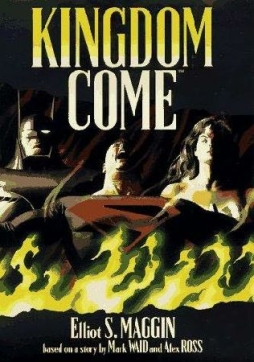
How successful do you feel mainstream super heroes have been entering the world of prose? Do they only succeed when they have a major storyline tie-in such as Kingdom Come or Identity Crisis?

Lee Houston Jr.: The results are mixed. You certainly have a bigger potential audience tying into a movie, but some folks tend to skip the book to avoid spoiling the movie, or don't bother with the book afterwards because they've seen the movie.

Prose books by a "name" author usually sell, yet sometimes there are other forces at work one cannot count on ahead of time. Because of all the media attention over the event, Roger Stern's novelization to The Death of Superman did well.

Yet in the end, it's more a question of how good the story is. Elliot S! Maggin wrote two Superman novels back the late 1970s. The first tying into the original movie with Christopher Reeve, and a second. Miracle Monday stood well on its own.

Ed Erelac: I will admit that personally, I've never read the prose adventures of a character who originated in comics. The literary exploits of Superman or Spider-Man or something don't really appeal to me. So personally speaking, it doesn't seem like a great idea. I have no idea if this is a successful genre.

Bobby Nash: I think they have been more successful in recent years as we’ve seen an increase in prose novels and anthologies coming from comic book publishers as well as prose featuring comic book characters. Adapting a successful storyline does seem to be a big hit when taking comics to prose as multiple publishers have done this. I believe the movie tie-ins also help.

Van Allen Plexico: I want -- nay, need -- for the sub-genre to take off. Has it? Not yet, not really. Can it? Will it? I have to believe it will.  

The bulk of super hero prose tales seem to coming be from independent publishers. Is this a way getting around the "can't afford an artist" hurdle that keeps many out of indie published comics, or is there more to it than that?

Lee Houston Jr.: I can't speak for anyone on the business end of things regarding the art aspect, but the independents are willing to take more chances with different formats trying to get their characters and stories out there. The Big Two (DC and Marvel) tend to stay with the "sure" thing publishing novelizations of movies and major comic book events.

Bobby Nash: It is possible that this is the case, but comic books and prose are too very different animals in terms of how you approach them creatively. Plus, they target different audiences. There are readers out there who read comic books and prose, but I have met many comic book fans that will not, let me repeat that, will not read a prose book because it, and I quote, "doesn’t have pictures" and readers of prose that won’t read comic books.

Ed Erelac: I think partly it is, sure. Especially with costumed superheroic characters. In my experience, comics are the arena of the artist and the writer takes a back seat if he doesn't ride in the trunk. Even unknown artists may demand exorbitant fees for their work while writers just starting out often can't expect to make a penny. I've never found a talented artist, even one just starting out, who is willing to collaborate on something with nothing up front, even when the writer is willing to do the same. That's comics, I guess. It's primarily a visual medium. You can't have a good comic without both a good writer and artist, but until the industry shifts and the two positions equalize, things will likely stay as they are. Without an artist, nobody cares how great your writing or your concept is, and many writers have to resort to converting it to prose fiction. I think that's why there's been such a relative increase in superhero fiction in the indie publishing world. Lots of brok e writers (I won't say cheap because I don't believe it's that). Does this mean these books aren't worth checking out? Although I answered in the negative to the first question, I don't think the same holds true for a character that begins in prose. No, I'm not really interested in reading Batman fiction, but I've read superpowered and non-superpowered fiction that I'd like to see adapted as a comic.

Van Allen Plexico: I am a novelist at heart, not a comic book writer. Writing super heroes works more naturally for me in prose than in comics form. Stories simply take far too long to tell in comics form. Imagine how many issues of a comic it would have required to get my storyline to where it is now, six-plus volumes in. Probably hundreds, over many years.

What advantages and disadvantages does writing and reading super heroes in prose have compared to writing and reading them comic books?

Bobby Nash: Comics are a visual medium. Art is a big and important aspect of the medium. Yes, you have to have a good story too, but the art is usually what sells comic books so you write to accommodate and accentuate the art. With prose, it’s all words so the writer has to paint the environment with words. As a writer, I approach writing comic books and writing prose very differently.

Lee Houston Jr.: Foremost is the obvious. You do not have the visuals to accompany a story.
While comic books are a creative team effort, everything falls to the writer in prose; who has to describe everything from moods to costumes to spaceships, etc.

But a good writer can overcome those obstacles and still tell a dynamic story, regardless of the genre.N
Yet the book reading audience is far different than the comic book audience, so there are still a lot of preconceived notions that must be overcome, especially that archaic notion that comic books and their characters are "just for kids."

Ed Erelac: Answering the latter part first and being totally honest, I think my disinterest in reading the prose adventures of an established costumed comics character may sound hypocritical too, but my thinking is 'Why would I read about Captain America when I can just pick up the comic?' I am no better than the 'average' comic book reader in this regard. The visual appeal of those characters is a big part of their overall attraction, and is well cemented in my mind. They only exist in sequential layout in my imagination, maybe in the movie adaptations if they're done well. There's also the general stigma of the comic book character. As a comic book reader, the concept of Captain Marvel is brilliant. But would he work as a literary character? I don't know -- and I can see how a lot of non-comics readers (even those who read fantasy and sci-fi) would not be inclined to accept a kid who can turn into a superhero. This a four color character trying to exist in the black and white of print. I'm dubious.

On the other hand (and this is gonna sound even MORE hipocritical I guess), I have written superhero fiction featuring an original character, for Damnation Books' upcoming Corrupts Absolutely? anthology. But although a superpowered individual, the character I chose to write about is very much grounded in reality. He's not a four color hero, he's an inner city black kid with a learning disorder in the projects of Cabrini Green in Chicago. Nobody's ever told him he was worth anything and he's existed in a perpetual state of helplessness his whole life, until this social worker comes along and teaches him some rudimentary lessons about self worth and visualizing what he wants to achieve and then doing it. This unlocks, in this literal minded kid, a deadly mental power which he proceeds to use to scour his oppressive neighborhood. I'm not sure a character like this (as its written, in vernacular) would work in the comic book medium. I think it would, but how many collaborators wo uld be willing to tackle it? The inspiration comes from a comic though. Katsuhiro Otomo's Domu.

The advantage of writing a superhero character in prose is that you are not bound by the limits of the comic book medium. A writer who is not also an artist is limited by the vision of his collaborator. A good writer can make his concept come through, but there is always the buffer of translation. Two people can't possibly share every aspect of the same vision. A great team can overcome this and even make something better than either could alone, but if you're a control freak of a writer, or have a very specific concept, of course writing in prose has no equivalent. You can go wherever your mind takes you with the story, and hopefully take the reader along with you.

Van Allen Plexico: I'm trying to tell a vast saga peopled by dozens of characters, covering the same amount of ground as, say, Claremont on X-Men. I've done a tremendous amount of that story already, in only six years. I couldn't have realistically accomplished that in the comics medium. Not to mention the opportunities to have the characters more thoroughly develop themselves through introspection--something much more difficult and distracting in comics form.

Monday, January 30, 2012

The Writer Will Take Your Questions Now (#65) -- Working Up to Longer Word Counts

How does someone get into writing short stories and work his or her way up to novel-length books?

That's a very good question, and it also is a very revealing one. For starters, you don't have to work your way up from short pieces to long, particularly because they're really different kinds of animals, so to speak. Think of a short story as a small painting, as opposed to painting a house, i.e. a novel. That's not to say one is more or less artful than the other, just that one is a single image to be viewed in a sitting and meaning gleaned from it right then and there, and the other is something to be taken in total, as one part adds to the cumulative effect of a world that is indeed "lived in."

All that fancy, schmancy talk is just to say that they're different. It's not as though a novel is a grown-up short story, like a man is a grown-up boy. It's more like a man and a watermelon, or some other unrelated thing.

But, to specifically address the question, you can most definitely try your hand at shorter works first to exercise your writing muscles and find a sense of completion for a project. That sense of completion certainly can help a beginning writer build the confidence that "Yes, I can do this!"

Another option is to see your novel as a series of short tales, and take them one at a time.

Of course, if your goal is to build your confidence, nothing beats having a short story or two published in an anthology or magazine. That, more than just about anything else, will instill in you the confidence to keep going and have the guts to tackle a longer work.

Good luck and happy writing!

Saturday, January 28, 2012

The Writer Will Take Your Questions Now (#63) -- Reading Horror

Which horror books are your favorites?

The Tell-Tale Heart (1912) by
Martin van Maële,
engraved by Eugène Dété.
All of my favorite horror stories are the ones I read in my teenage years, much like most of my favorite music is what I loved growing up as a teen. Maybe that makes me different, or maybe we all tend to run back in nostalgia to re-embrace the stuff that helped to form our loves.

Regardless, my favorite short horror remains that of Poe. He just still creeps me out. Something about the way his writing style comes across like a drug-induced trip (or so I'm guessing, mom). In more recent years, I (finally) discovered Lovecraft, but his stuff doesn't scare me as much as it makes me ponder. And Algernon Blackwood is quickly rising up the ranks as well.

For contemporary authors, nobody gives me the heebie-jeebies like Robert Freese. His  images aren't gory as much as they are disturbing. There have been several times I've had to put his book down and rattle the images from my fevered brain lest I ponder the unthinkable. And that's (in my mind anyway) the mark of a gifted horror writer.

Can I eat your
little boy, ma'am?
For novels, it's still a tie between King's Christine, Cujo, and Pet Semetary. Of his works, those are the ones that really make me check under the bed, or around the corner, or take a second look inside the car beside me at the traffic light. It probably didn't help that I read Cujo a few years after my younger brother got a permanent scar from a dog bite on his upper lip. Go figure.

I have also rediscovered King's short fiction through my son, Jack, who is greedily devouring every King book he can get his hands on. The story "N," in particular, gave ADD-OCD me no end of freaky dreams and read like a trip inside my brain. No lie. The idea of good numbers and bad number. I SO GET THAT. Just ask me to tell you about it some time when we meet at a convention. Then have a seat. It could take a while.