Showing posts with label Derrick Ferguson. Show all posts

Saturday, July 15, 2023

PRO SE LICENSES CREATIONS OF AWARD WINNING AUTHOR DERRICK FERGUSON FOR NEW STORIES AND UNPUBLISHED WORKS!

FOR IMMEDIATE RELEASE

On April 4, 2021, Genre Fiction in general and the New Pulp Movement specifically lost one of its most creative and beloved voices. On that date, Derrick Ferguson, the creator of Dillon and other fantastic characters, passed away. Pro Se Productions, the publisher of Derrick’s Dillon at the time of his passing, had in the months prior given Derrick his own author imprint-DERRICK FERGUSON’S POWER PLAY.  Pro Se Productions is now honored and privileged to announce that not only will the imprint continue, but new stories, digest novels, anthologies, and novels based on Derrick’s works as well unpublished works by Derrick will be produced, thanks to a licensing agreement between Pro Se and Derrick Ferguson’s estate, as represented by his wife Patricia.

“I literally owe my writing and publishing career to Derrick Ferguson,” says Tommy Hancock, Partner in and Editor in Chief of Pro Se Productions. “Meeting through fan fiction, Derrick showed an appreciation for the way I wrote and when he saw an opportunity for me to propose something to an anthology that he felt would be perfect for me, he not only suggested, but he in his way also demanded that I submit something. I did that, got accepted and published and now I have the unquestionable honor of being allowed to do something that, while bittersweet, is precious to me. Pro Se will continue to publish not only Derrick’s remaining unpublished stories, but we will also be making calls for anthologies, short stories, and novels featuring Derrick’s prolific cast of characters. From Mongrel to Diamondback to Sebastian Red to so many others, writers touched by Derrick’s kindness through the years as well as his presence as an author will now have the chance to add their voices to the worlds Derrick created. And yes, this also most assuredly includes Dillon.”

For many readers and authors in the New Pulp Movement, Dillon is the penultimate New Pulp creation, due in large part to the various influences wrapped up in the character as well as Derrick’s passionate, out-of-the-box storytelling.  

Thanks to this licensing arrangement, two works under the POWER PLAY imprint will be out before the end of the year for certain-DERRICK FERGUSON’S DILLON: THE ODD JOBS VOLUME TWO featuring short stories focused on Dillon’s supporting cast written by other authors and WE ALL RISE, an anthology tribute to Derrick’s impact on multiple New Pulp creators. Other works are also in the queue, including a series written by Derrick Ferguson and author Joel Jenkins that will be published by Pro Se as a single collection.

DERRICK FERGUSON’S POWER PLAY logo And OLD SCHOOL NEW PULP phrase created by Sean E. Ali.

For more information on this imprint, interviews with the author, or more, email Tommy Hancock at editorinchief@prose-press.com.

To learn more about Pro Se Productions, go to www.prose-press.com and like Pro Se on Facebook at www.facebook.com/ProSeProductions.


Wednesday, April 14, 2021

Movie Reviews for Writers -- Hammett (Guest Review by Derrick Ferguson)

NOTE: I had been emailing with Derrick a little before his death about having him contribute some reviews for the Movie Reviews for Writers section of this blog, and sadly, those reviews will now never happen. I was able however to dig through his Ferguson Theater blog and find this gem to share with you. I have to tell you though, that opening line brought all the tears back. 

============================

I want you guys to do me a favor, okay? If sometime in the future, after I’m dead and gone and somebody, for whatever obscure reason wants to make a fictionalized movie about me and my adventures, make sure they watch HAMMETT first, okay? Because that’s exactly what I would want a fictionalized movie about me to be like.

HAMMETT tells you right from the start that it’s a fictionalized story about Dashiell Hammett, the writer who totally redefined the hard-boiled detective novel in America. He created Sam Spade, The Continental Op and Nick and Nora Charles. His Continental Op novel “Red Harvest” has been cited as the inspiration for movies such as “The Glass Key” “Yojimbo” “A Fistful of Dollars” and “Last Man Standing” as well as my own “It Seemed Like A Good Idea At The Time.” Dashiell Hammett had the benefit of authenticity in his work, having actually worked for The Pinkerton National Detective Agency for about eight years. He claimed that the characters in his stories were all people he actually knew or encountered in his work as a detective. And during the course of the events of this movies we see where he got the inspiration for certain characters in his stories. We also get a damn good mystery yarn to boot.

But when we see Samuel Dashiell Hammett (Frederic Forrest) in this movie, he’s put his Pinkerton days behind him. Suffering from tuberculosis and alcoholism he’s living in San Francisco and has made a reputation for himself as a pulp writer of detective/thriller stories. One night after finishing a story he’s visited by his old Pinkerton partner James Francis Xavier Ryan (Peter Boyle) the guy who taught him everything he knew. Sam’s out of the game but Jimmy calls in an old marker and soon Sam Hammett finds himself helping Jimmy look for a Chinatown whore named Crystal Ling (Lydia Lei.) Jimmy made this out to be a simple missing person case but it’s far from that. Crystal Ling is also being hunted for by pornographic photographer Gary Salt (Jack Nance) and Chinatown ganglord Fong Wei Tau (Michael Tau.) And if that wasn’t enough Police Detective Lt. O’Mara (R.G. Armstrong) strongly suggests that Hammett forgets he ever heard the name Crystal Ling.

Sam would love to leave this whole dirty business alone but Jimmy has gone missing, along with the manuscript of his latest story. Assisted by librarian/sometimes girlfriend, the wonderfully named Kit Conger (Marilu Henner) and the cab driver Eli (Elisha Cook, Jr.) Hammett navigates the convoluted hidden government of San Francisco, run by The Cops, The Crooks and The Big Rich to find out what happened to Jimmy Ryan and the secret of Crystal Ling.

I cannot say enough about how much I love HAMMETT which to me successfully invokes the spirit of classic film noir from the 30’s and 40’s despite being a color movie. And most of it is due to to the outstanding performance of Frederic Forrest who should have won an Academy Award for Best Actor for this movie that year. There are so many touches of Humphrey Bogart in his performance…too many to name but if you watch the movie, you’ll see what I mean. It’s not an imitation, far from it. But you’ll have to see the movie to understand what I mean.

And it’s a writer’s movie in that we see how how in putting together this mystery, Hammett incorporates it into his fiction. We see surrealistic scenes where Hammett’s reality blends with his imagination that I could really identify with because it’s happened to me.

The supporting cast is outstanding with the exception of Marilu Henner who I put in the same class with Robin Givens. They’re actresses who everybody tells me are supposed to be sexy but to me work too hard at being sexy instead of just being sexy. Know what I mean? Lydia Lei is terrific as Crystal Ling and she has a scene with Frederic Forrest that ends up with her saying: “I did such wicked things” and you totally believe his response. David Patrick Kelly as a gunsel is reminiscent of the same character played by Elisha Cook Jr. in “The Maltese Falcon”

In fact, all of the characters in HAMMETT have echoes to characters we’ve seen in other movies based on this great writer’s works and in a way, that’s a large part of the enjoyment of HAMMETT. It’s one of my favorite movies and I’m betting that after you see it that it will be one of yours as well. Enjoy with my heartiest blessings.

Read the original post: https://derricklferguson.com/2012/12/06/hammett/

Tuesday, April 13, 2021

Remembering Derrick Ferguson (In His Own Words)


==========================================================

The New Pulp community lost a hero on April 4, 2021. The New Pulp movement lost its soul on April 4, 2020. The independent genre writers world lost its heart on April 4, 2021.

I know it's all en vogue to all but raise writers to sainthood upon their death and rattle off accolades as if they were the second coming of Ray Bradbury incarnate. But trust me, all those are fair statements in regard to Derrick Ferguson.

I've long argued that (bear with me here for a moment) Isaac Asimov was the brains of sci-fi but that Ray Bradbury was its heart. In the same way, Derrick was the heart of the community of independent genre writers, and particularly that of New Pulp. But it wasn't just his writing that put him there and defined it. It was his sort of ambassadorship for the movement, bringing the unrelatable term to the masses with comparisons to movies and other forms or entertainment, his “get started” lists of 100 New Pulp books you need to read, and his action-adventure mindset in regard to everything from his movie reviews to his posts in the Usimi Dero group he ran on Facebook that brought so many like-minded fans together.

How do I know he was the heart? Because unlike other fan groups, Usimi Dero was always a place of positive interaction among so many divergent fans of comics, books, movies, games, etc.

Derrick was also a friend even though we really only every spoke via podcasts or email. We did so many interviews together, and we connected on a level of writer similarities that I often referred to him as my New Pulp brother. We saw New Pulp the same way, along with several other folks. It was a way to rescue action and adventure stories from the traps of the past—whether they were systemic racism in the portrayals, sloppy writing in the structure and plots, or cliched stereotyped that didn't go anywhere in the characterizations in the stories.

I loved that about him. I identified with him because of that. Whenever I had an editor or a publisher basically inform me to simplify it or just “let the hero be the hero,” I could always lean toward Derrick's shared vision for what New Pulp could become beyond the limitations of Classic Pulp.

But lest I wax poetic, I want to let Derrick speak for himself posthumously.

You see, Derrick was very active (in addition to his own prolific writing bench) in my Bad Girls, Good Guys, and Two-Fisted Action writing blog. So, the best way I could think to honor this patron saint of New Pulp and action-adventure storytelling is simply to go back through many of his comments he made as part of his own interviews or in roundtable interviews.

So, this is Derrick defining himself, his work, and his writing legacy.

May we all be so talented and respected and remembered.


On Becoming a Professional Writer

"I considered myself to be a real professional when I had people seeking me out and offering me money to write for them. I felt like I had turned a corner and had reached a level where people knew my name, had read my work and trusted me enough that they were willing to say; 'Hey, here's a chunk of change... come write something for me.'"


On Blogging

“I only post stuff on my blogs when I have something to say. I really don't see the reason to post stuff just to be posting stuff or to constantly promise readers that "There's some really BIG STUFF in the works!" I know that for me, as a reader, the fourth or fifth time you tell me that there's BIG STUFF in the works I yawn and go away. Wait until you can tell me what the BIG STUFF is and then post it. Most writers I know how a set day that they post every week but I'm just not that organized. Maybe if I were I'd have more books written.”


On New Pulp and Classic Pulp

“As New Pulp writers we're trying to emulate the fantastic fun and rip-roaring action of Classic Pulp. But without the mistakes of Classic Pulp. Those stories that we love so much were written for another time, one that we like to think was less enlightened (although I look around at the United States today and I ain't all that sure of that) less tolerant and less understanding.”

“My perception and experience is that fans of Classic Pulp have no use or need for New Pulp in any way, shape or form. But that's okay. New Pulp deserves and needs new readers that are eager for new heroes that represent them no matter what their race, age or gender may be told in a breathless prose that doesn't give them a chance to catch their breath. And those readers are out there. I hear from them (occasionally) on Facebook, Twitter and by email. I myself think that New Pulp has produced characters that can stand beside Classic Pulp heroes with no shame at all. And readers who don't know anything about Classic Pulp characters have embraced the idea/concept of these multicultural protagonists if the popularity of "Black Pulp" and "Asian Pulp" is an accurate measure of their enjoyment.”

“First of all, tell good stories with good characters. That’s the foundation of pulp fiction right there. People will want to read stories about heroic characters fighting impossible odds to do the right thing and protect the innocent no matter what their ethnic background is. Give people quality every time and everything else will follow. There are some people who are not going to read New Pulp no matter what and having heroes of color is not going to change their opinion or reading habits. And that’s okay. There’s a whole lot of other readers out there who will pick up a New Pulp book with interracial characters. And let me just say that New Pulp isn’t looking to replace or be superior to Classic Pulp. It’s an extension and an amplification of Classic Pulp. It’s no more and no less that the tropes of a genre updated for the consumption and entertainment of a modern day audience.”

“I would be blatantly lying if I didn't come right out of the gate and admit that with the creation of both Dillon and Fortune McCall I was actively looking to break new ground in new pulp and show why New Pulp was going to be different from Classic Pulp.”

On Genres and Low-Brow Entertainment

“Whenever I hear/read somebody complain about how they don't like labels and they don’t see why anything has to be labeled…tell you what we’re gonna do. We’re going to take all the labels off the canned foods in your local supermarket and let you guess what’s inside those cans the next time you go shopping.”

“Before I step up on my soapbox and start the pontificating, let me start of by saying that I don’t consider ‘throwaway writing’ to be a bad thing. Robert Heinlein is famous for saying that 90 percent of everything is crap. I think that 90 percent of entertainment is throwaway and disposable. Most people are really just looking for something to entertain and/or distract them from whatever is giving them the grumbles in their life. Of course, the creators of that entertainment hope and pray that it will live on after them. But I find it difficult to believe that the creators of Gomer Pyle, USMC expected or hoped that people would still be watching the show 50 years later.

“I don’t think writers have much of a problem coming up with original and creative protagonists for period piece detective fiction. At least not the ones I’ve read. I think it’s the readers of that particular genre (or any other for that matter) who don’t want the original and creative protagonists. I think the readers are expecting the Sam Spade/Philip Marlowe knock-off because that’s what they know and it’s as comfortable to slip into as those ten-year old jeans they won’t let their spouses throw out, no matter how ragged and holey they get.”

So what should writers avoid when crafting their protagonists? How about getting rid of the alcoholic ex-cop turned private dick still grieving over his marriage and ex-wife? This is one that infects not only period piece detective fiction but modern day detective fiction as well. How about a detective who is actually successful and makes money at his job? One of my favorite things about the “Chinatown” sequel “The Two Jakes” was seeing that Jake Gittes has prospered.


On First Drafts

“I don't a give a poobah's pizzle about any rule of editing or grammar when I'm writing that first draft. I'm telling the story to myself and just letting everything gush out in a white-hot blaze of pure storytelling. I never fix any errors right away. That's what the second and third drafts are for.”


On Creating Art

"You should always strive to tell the best story you can in the best way you can. What I am saying is that there’s madness in sitting down at your keyboard and pronouncing to the world ‘I am going to create art!’”


On Characterization

“Plenty of time characterization is done as my heroes are traveling in vehicles from Point A to Point B,” he says. “Let me provide you with an example from a popular movie: there’s a scene in the movie Silver Streak where Gene Wilder and Richard Pryor are in a stolen fire-engine red Jaguar racing to save Jill Clayburgh from Patrick McGoohan, and they’re exchanging what is some pretty meaningful dialog about their relationship, the situation they’re in and how they’re going to save Jill Clayburgh. It’s a nice scene with characterization but it’s done in a moving car that is taking them from one action scene to the next. The movie slows down to provide us with characterization but the actual plot doesn’t slow down and carries the promise that we’re going to see more action once to get to where we’re going.”

“Writers of pulp knew the secret of having genuine characterization in their work long ago. You can do characterization and have sparkling, meaningful dialog and solid supporting casts and all those things that literary fiction prides itself on in the most action-packed of stories. Here’s the catch: Don’t stop the action to do all that stuff. Let me clarify. Action doesn’t mean that you have to have constant fist-fights, explosions, cliffhangers, the heroes continually escaping fates worse than death or chases and captures. Although if you are writing pulp, I would certainly hope that you do have all that stuff in there. After all, what’s the point of writing pulp if you don’t? It’s like making a ham sandwich without the ham. But in pulp, the plot always has to be going forward. You simply cannot stop the thrust of the plot to indulge in a three page introspective passage when your heroine is supposed to be saving the world.”

“For me, a story begins and ends with character. If the characters aren't interesting and if what they're doing doesn't interest me I don't care how mind-blowing the ideas behind the story is. There are writers who can pull off an idea driven story and I've read many of those over the years but as a rule, those types of stories don't put the sugar in my coffee. I'm more drawn to character driven stories.”

“And the characters don't have to be likable In fact, I'm more intrigued when a writer can present me with an unlikable character and during the course of the story I grow to sympathize with him or her. My DIAMONDBACK novel; “It Seemed Like A Good Idea At The Time” was partially an exercise to see if I could write a novel length story where 99% percent of the characters were backstabbing, unrepentant cold-blooded bastards (especially the lead character) and still make them compelling characters you wanted to know more about and find out what happens to them.”

“That's why most of the time when you start to read a story of mine, I'll open with the character doing whatever it is he does best.”


On Sex In Writing

“Like so much else in my writing, I just tend to go with my gut when it comes to writing about sex. I'm not as good at describing sex as I am describing action so when I do have sex scenes I tend to keep them brief and to the point. In my Dillon stories and novels, I give the reader just enough to know that my boy is ready to get it on and then I cut away to the billowing curtains and the fireplace. In my "Madness of Frankenstein" novel and my current "Diamondback" serial running on my Patreon page, the sex scenes are a bit more graphic, nasty and brutal. But that's because I'm writing about nasty, brutal people and the nasty, brutal sex just seemed to fit.”


On Westerns

“See, here’s where I scratch my head when it comes to clichés. Say you write a western. Okay, you’ve got horses and six guns and Indian attacks and schoolmarms. Now is it fair when somebody reads your western and accuses your work of being cliché ridden? When you read in a certain genre, shouldn’t you expect certain tropes of that genre to make an appearance?”

“My love and appreciation of the Western came from my parents, especially my father. He would watch any and all Westerns that came on TV no matter who was in. And back then we only had one TV so if I didn't watch what my parents did, I just didn't watch TV. He didn't have a favorite Western star. He just loved all Westerns. He and I would watch Have Gun Will Travel, The Wild Wild West and Wanted: Dead Or Alive together and my very first grown up movie was The Wild Bunch, which I saw at the tender age of 10 and changed the course of my life forever.”

“What draws me to the Western as a creative person? My gut says it's because you can make a Western as simple or as complicated as you want and nobody will give you any shit about it. The Western is American mythology which is why it'll never go away. Myths just don't go away. They get changed, sure. In the 60's/70's/80's many of the tropes of the Western were adopted by police/crime thrillers and science fiction movies. But we always come back to the Western because there's a purity there, a stripping away of the bullshit that infects our society today and brings us back to basic, core beliefs, traditions and codes of behavior that we've lost but still long for.”


On Strong Villains in Fiction

“I always keep in mind that as far as the villain is concerned, HE'S the hero of his own story. To him he's got a perfect good and sound motivation for doing what he's doing. Even if he knows it's wrong, he thinks his reasons for doing it is right. Two of my favorite villains of all time are Fu Manchu and Doctor Doom. Both are men capable of hideous evil. But they also are men of honor and great benevolence toward their people. They are villains whose complexity springs from the core of their belief that the world would be much better off if they were ruling it. When I write my villains I try to remember that villains are people too. Well, some of 'em, anyway. I think a memorable villain should be as formidable and as resourceful as the hero if not even moreso. Nobody would have remembered St. George if he had slain a waterbug. No, he went out and slew a dragon. That's why James Bond villains such as Dr. No, Goldfinger and Ernst Stavro Blofeld were so memorable. They were all smarter than Bond, had way more money and resources and just by looking at the tale of the tape, Bond should have never stood a chance against them. But he took 'em all down. I think sometimes writers are afraid of making their villains too powerful, too charismatic or too intelligent for fear that they will take over the story or overshadow their hero. I say go for it! Maybe your hero will surprise you yourself at how he rises to the challenge!”

“I think at some point it has to be made clear to the reader exactly WHY the villain wants to take over the world or find the Ark of The Covenant or rob Fort Knox. Motivation is the key to any good villain...hell, any good character, period. Even the secondary characters have to have SOME motivation for why they're doing what they're doing. If the writer knows his characters well, their motivation can't help but come out in the story at some point because the character him or herself will literally demand that they be heard.”

On Diversity in Pulp and Comics

“I think it’s downright ignorant to deny that there is plenty of blatant racism and sexism in Classic Pulp and I’d never suggest that anyone who is coming to Classic Pulp for the first time shouldn’t be mindful of that. But I also think that one has to take into account that these stories were written in a less enlightened time and if you’re going to read Classic Pulp then that has to be taken into account.”

“Now some people say they can’t get past that and that’s cool. Some people honestly can’t separate like that. But I do have a problem when people suggest that Classic Pulp should not be read at all because of the racism and sexism. Classic Pulp isn’t just escapist literature. It’s also a historical record of the popular entertainment medium of that time period. You can’t ignore an entire genre or try to pretend it doesn’t exist because some of the depictions of race makes you uncomfortable or upset.”

“We can’t ignore the racism of the past but neither should we shoulder the burden of it. Those writers did their thing back then and writers of New Pulp are doing their thing today. The only thing we owe the culture at large today is to tell the most entertaining stories we possibly can and provide quality reading that won’t waste a reader’s time or money. That’s got to be first before any other consideration. Everything after that is gravy. That’s not to say if a writer intentionally wants to be more racially diverse in his work he can’t be. I mean, my character Dillon I created because the more I read Classic Pulp the more I felt that a black pulp hero was needed as there simply wasn’t one that I could find. And I tried. Couldn’t find one with a search warrant. But at the end of the day I should hope that people who discover Dillon and read his adventures do so first of all because he’s an interesting character who is living an extraordinary life. His being black adds an extra layer to his character, yes. But he’s got a whole lot of interesting layers as well that have nothing to do with his being black.”

“Comics are surviving now by being a sideshow act. It's not enough to just tell good stories with good art (I'm talking about Marvel and DC here). There's a respectable number of independent comic creators who are producing excellent comic books with multicultural heroes and heroines. It's only Marvel and DC who still treat it as if they're breaking the Internet when they announce they've got a new black hero, a new Latina heroine, a new gay and/or lesbian hero. When I created Dillon and Fortune McCall and Sebastian Red I knew full well it was going to take years for them to catch on. And Dillon's been around for 15 years now and I'll still get emails from new readers who inform me that they never bothered with the character before because they thought; 'it was some blaxploitation thing.' And I think that's the mindset of writers: we're marathoners who realize that we have to put in the time and work to get readers to turn their heads in our direction. And I think that after a floundering around period we're finally starting to learn how to make The Internet work for us. There's a whole lot of other writers who have mastered that and did it years ago. Especially the Romance and Street Lit writers.”

“Race-based entertainment is nothing new and shouldn’t be treated as such. It grinds my grits to no end when race based entertainment is challenged. You have those who will make the argument that race based entertainment is in itself racist. Which is flat out bullshit. It’s not racist to want to see heroes and heroines of your own ethnic background in your entertainment whether it be books, movies, comics or television. Black cinema has been with us since the 1920’s. Movies made for black movie goers who went to black movie theaters to see them as they couldn’t go to white theaters. Same thing with Asian cinema. And I don’t see a thing wrong with New Pulp marketing to a specific ethnic group. Every other form of entertainment does it so why shouldn’t we? Especially modern day audiences that welcome and look for ethnic diversity in their entertainment.”


On Cynicism Toward Heroes

“What's holding them back is that we have a generation, possibly two that has grown up with the manufactured angst and drama that infests most comic books today. Like another genre, the daytime soap opera (which comic books actually have the most in common with) comic books are no longer a vehicle for telling interesting stories about interesting characters. Now they are simply vehicles for writers to demonstrate how much they hate superheroes.”

“What's the constant thing you see whenever a pulp hero is revived by DC or Marvel? It's that hated word that will appear in the first paragraph: "relatable." It's always stressed that the pulp hero is being made "human" so that readers will "relate" to him. We're talking about readers who have been raised on Spider-Man who lost more often than he won and spent just as much time agonizing over how he was going to pay the rent as he did worrying about how to beat The Green Goblin. And that's why Spider-Man has his fans because they relate to that. And that's okay. Me, I'd rather relate to Tony Stark who is the smartest guy in the world with his own warehouse of high-tech armor, buys a dozen Ferraris when he's in the mood and babes lined up outside his door since the week before. Or Thor or Superman. That probably says more about my ego than anything else but I digress.”

“My point is that comic book fans are conditioned to reading about characters who don't win no matter what they do. Spider-Man makes a deal with The Devil and his marriage is wiped from existence and those mothercussin' X-Men are still BMW-ing [editor's note: bitch, moan, and whine - it took me a minute too] about how humanity hates them and why can't we all get along and Wonder Woman is still figuring out who she is and what she's supposed to be doing. Because comic book readers think this constantly recycled soap opera crap is drama. But the classic pulp heroes weren't built along those lines and don't subscribe to a whiny "woe is me" philosophy.”

“So now, we give them Doc Savage. The most perfect example of humanity: the smartest and strongest guy on the planet who travels all over the world fighting the forces of evil with his five best pals. Should be simple to do that comic each and every month, right?”

“Nope. Because the comic book fans of today and even worse, the writers throw up that word; "relatable" They insist that a Doc Savage who is written as he's supposed to be written is no good to today's world because he's not "relatable" and he has no flaws and because the writers aren't good enough to work their skills to write Doc the way he's supposed to be written, they tear away everything that makes Doc and his world interesting and then they wonder why nobody wants to read the book.”

“The Shadow doesn't have that problem because he never gets watered down like Doc and The Avenger. After all, The Punisher and characters of his ilk are similar and The Shadow was there before all of them, performing .45 caliber lobotomies before they were born.”

“Me, I'm like Benjy Stone in My Favorite Year when he yells at Alan Swann that he can't use him life-sized; he doesn't need him life-sized. I'm that way with most of my heroes; I don't need them to be 'relatable.' I can't use a Doc Savage who worries about paying the rent or where his next meal is coming from. That's not what I read him for. Like Benjy, I need my heroes as big as I can get them. But not comic book fans. They're used to reading about heroes crushed by life and losing all the time. That why most pulp heroes don't work for them because that's not real to them.


On His Own Legacy

“I don’t know any other way to write a story other than to write it the way that I want to write it and then present it to the Readers At Large and let them make up their mind about what I wrote. I’ll be the first to admit that I’m not a very original or innovative writer. I also admit that I don’t spend a lot of time burning up my brain cells trying to figure out ways to be original or innovative. I’ve got friends who desperately want to write. Have wanted to write for years. But they haven’t because they refuse to write anything that’s isn’t “totally and completely original.”

“So let’s be honest here: unless you’re a literary genius (And hey, you may be. What do I know?) The chances of you telling a completely original and unique story are very slim. But by no means should that stop you from doing so. But what I am saying is don’t let that stand in your way of having fun telling the most entertaining stories that you can tell until that Thunderbolt of Zeus crashes into your brain and that literary masterpiece comes flowing out of you to amaze the world. You keep on writing. It’ll happen.”

“And the ability to entertain is not to be taken lightly. I don’t get emails of thanks often, but every so often I will get one from somebody who will thank me because they read something I wrote that transported them away from their problems for a couple of hours, and for me, that’s one of the highest compliments that I can be given.”

Saturday, February 27, 2021

[Link] 100 New Pulp Books To Get You Started

I get asked a lot of questions due to my affiliation with New Pulp and I’d have to say that the #2 question I get asked about it is: “Where do I get started? What should I read first just to see what it’s all about? What writers should I be reading?”

I can understand the confusion. More than you know. There is a whole lot of New Pulp out there. Some of it is excellent. Some of it is downright astonishing. Some of it is good, some of it okay and a seriously depressing amount of it just plain flat out awful. And those of us who write/read and/or review New Pulp feel the crush of recommending books and writers to those of you unfamiliar with the genre but are desperately eager to know more.

That’s why back in June of 2014 I put together a list of “25 New Pulp Books To Get You Started.” The purpose and intention of the list was simply to give New Pulp virgins a place to start getting their brains wet and see if they liked these waters.

Since then, more New Pulp books have been written (a lot more!) and I saw the need to add more books to the list and so I did, continuing to add to the list each succeeding year. My goal was to keep adding to the list until I get up to 100 and then call it quits. And as of this year, that goal has been reached. The way I see it, if you can’t find something you like in a group of 100 books then there’s a good chance that genre isn’t for you.

Read the full article: https://fergusonink.com/100-new-pulp-books-to-get-you-started/

Sunday, February 7, 2021

AIRSHIP 27 PRODUCTIONS PRESENTS ALL AMERICAN SPORTS STORIES VOL. 2

Airship 27 is excited to present three new pulp tales that shine a light on American sports.

Each displays the inherent drama and personal sacrifices required when any man or woman pits their strength of will to accomplish their goals.

“Next to religion, nothing contributes more to the American way of life than sport.” 

 Jock McKenzie, award winning New Hampshire sports reporter and radio personality. 1925-2013

BROOKLYN BEATDOWN – Derrick Ferguson – Levi “Dancer” Kimbro faces his greatest challenge in the ring vs the savage Deathblow Ballantine. This time it’s personal.

BASEBALL IN DECEMBER – Dexter Fabi – A young rookie player is mentored by an old pro and together they experiences the longest record season in the game’s history.

THE KICKER – Ron Fortier – Returning Vietnam veteran Lucas Brown must over come a tragic disability to recapture his dreams of gridiron glory.

Here are three dramatic stories detailing the excitement, thrills, beauty and drama that is American Sports as told by today’s New Pulp scribes. Artist Adam Shaw provides the powerful cover and Art Director Rob Davis the twelve interior illustrations. The clock is ticking, the game is on the line and only the best will triumph.

AIRSHIP 27 PRODUCTIONS – PULP FICTION FOR A NEW GENERATION!

Available now from Amazon in paperback and on Kindle.

Sunday, January 24, 2021

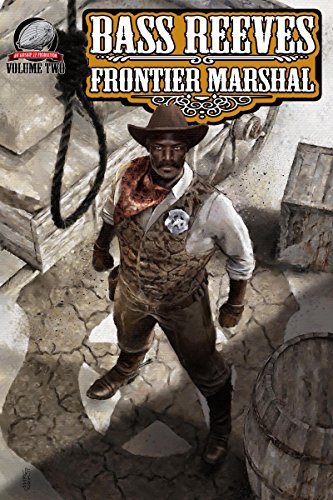
AIRSHIP 27 PRODUCTIONS PRESENTS BASS REEVES FRONTIER MARSHAL VOL. 4

Airship 27 Productions is excited to announce the release of “Bass Reeves – Frontier Lawman Vol. 4”

There was no greater lawman in the Old West than Unites States Deputy Marshal Bass Reeves. For thirty years, Reeves rode throughout the untamed Territories under the famous Hanging Judge Isaac Parker out of Fort Smith. In that time he captured well over three thousand outlaws and survived several deadly gun battles.


Writers Ron Fortier, Derrick Ferguson, Terry Alexander and Mel Odom offer up four brand new, action packed adventures of the legendary Bass Reeves. In these stories the Marshal will employ all his wilderness skills to deal with some of the most brutal, cold blooded killers on the frontier. While at the same time protecting the innocent whom he has sworn to serve.

“In this volume, we really put Bass Reeves through some challenging times,” confesses Ron Fortier, Airship 27 Managing Editor and one of the volume’s contributors. “From dealing with renegade outlaws, to vengeful Indians, Marshall Reeves has his handful both staying alive and bringing the bad guys & gals to justice. This is the Wild West where death can come from anywhere at any time.”

In all the annals of American history there was never a finer lawman than Bass Reeves, Frontier Marshal. So saddle up pilgrims and get ready for some rip-roaring action.

AIRSHIP 27 PRODUCTIONS – PULP FICTION FOR A NEW GENERATION!

Available now from Amazon in paperbackand on Kindle.

Friday, July 27, 2018

New Releases from Pro Se!

NEW PULP’S MOST EXCITING HERO FINDS A NEW HOME -- DERRICK FERGUSON’S ‘DILLON’ MAKES PRO SE DEBUT WITH 2018 ANNUAL!

When fans of modern Pulp Fiction discuss characters that have made their mark, Derrick Ferguson’s Dillon tops the list. While hitting all the expectations a hero should, Dillon also stands out as a unique character, thanks largely to Ferguson’s skill as a writer. And now, in a showcase of great stories, Pro Se marks Dillon’s first appearance under its banner with DILLON ANNUAL COLLECTION 2018, now available in trade paperback, hardcover, and digital formats.

A soldier of fortune gifted with an astonishing range of remarkable talents and skills that make him respected and feared in the secret world of mercenaries, spies and adventurers. A world inhabited by amazing men and women of fabulous abilities that most of us are unaware even exists. Fueled by a taste for excitement, driven by an overpowering desire to protect the innocent, see that wrongs are righted and assisted by a worldwide network of extraordinary men and women, all experts in their fields, DILLON spans the globe in a never-ending quest for the wildest and most breathtaking adventures of all.

In this oversized omnibus of past adventures, Dillon faces new enemies, battles a phantom buccaneer on the shores of Xonira, runs a deadly jungle race against a criminal overlord, battles dangerous agents on a speeding train in an attempt to prevent a kidnapping and spends an unexpected wild night out with celebrity rocker SLY GANTLET, whose life offstage holds some surprising secrets. Pro Se proudly presents its debut of Derrick Ferguson's International Instigator in some of his wildest adventures in the first ever DILLON ANNUAL COLLECTION!

With an exciting cover, logo design, and print formatting by Sean Ali, DILLON ANNUAL COLLECTION 2018 is available now at Amazon for 18.00.

This book is also available for $35.99 in hardcover.

Dillon’s Pro Se debut is also available as an Ebook, designed and formatted by Antonino Lo Iacono and Marzia Marina for only $3.99 for the Kindle. Kindle Unlimited Members can read for free.

===========================

I. A. WATSON’S ‘BYZANTIUM’ SINGLE SHOT SIGNATURE SERIES CONCLUDES WITH ‘SHATTERED BONDS’ -- ONLY 99 CENTS!

Award Winning Author I. A. Watson, one of the most prolific voices in New Pulp, takes readers one final time to a world of history of fantasy, one marred with magic, monsters, and mystery in the fifth and final chapter his exclusive original Pro Se Single Shot Signatures Series BYZANTIUM.

In a world where Christianity never arose to sweep away the old magics, where sorcerer-guilds and necromancer-kings rule amidst the Roman ruins, Kirkgrim the Wanderer joins a caravan train across war-torn wasteland to the world's most corrupt city. The reluctant hero finds himself trapped with travelers, refugee orphans, deserter soldiers, a beautiful hunted sorceress, and one mad Viking, amidst civil war, religious zealots, brutal reavers, and a growing zombie army -- guarding a secret that could bring the last vestiges of civilization crashing down in flames.

In Byzantium Book Five: SHATTERED BONDS, we learn the fates of the travelers beset by civil war, undead hordes, mage mysteries, treasure-driven treacheries and violent siege, and review the exploits of Kirkgrim the Wanderer, Lady Mirabelle de Castile, Sigroth Sigrothson, Fitz the Guide, and Fred the fighting truffle-pig, those who survived... and those who did not.

BYZANTIUM by I. A. Watson. From Pro Se Productions

With a haunting cover and logo design by Jeffrey Hayes and logo design and digital formatting by Antonino lo Iacono and Marzia Marina, BYZANTIUM BOOK FIVE: SHATTERED BONDS is available now at Amazon for only 99 cents. Kindle Unlimited Members can read for free.

For more information on this title, interviews with the author, or digital copies to review this book, contact Pro Se Productions’ Director of Corporate Operations, Kristi King-Morgan at directorofcorporateoperations@prose-press.com.

To learn more about Pro Se Productions, go to www.prose-press.com. Like Pro Se on Facebook at www.facebook.com/ProSeProductions.

Friday, June 22, 2018

The Ruby Files is one of 60 New Pulp Books to Get Your Started!

Derrick Ferguson, himself no stranger to appearing on lists such as this, has updated his list of 25 New Pulp Books To Get You Started for 2018 and it has now grown to a whopping 60 New Pulp Books To Get You Started. You can read it here: https://fergusonink.com/60-new-pulp-books-to-get-you-started/


There are a lot of great reads on here. If you're looking for a pulpy good read, this list is a good place to start.

I'm honored to have The Ruby Files appear on the list (co-created with Bobby Nash). Thanks, Derrick.

Speaking of, here are some links:

The Ruby Files Vol. 1

The Ruby Files Vol. 2

Thursday, June 14, 2018

Urban, High, Low, or Something Else? Writers on Fantasy...

For our newest writer's roundtable, let's look at the fantastic.

Although the genres are blending and the publishing categories seem to shift, what are the key differences between general fantasy, high fantasy, urban fantasy, and magical realism?

John Linwood Grant: Magical realism I'd probably set aside, as more akin to various 'liminal' and 'weird fiction' labels. It's an area where stories can be most strange, but would not be immediately recognizable to many who would describe themselves as 'fantasy fans' Sadly for this question, that's my main area a lot of the time. I might distinguish between secondary world fantasy and historical fantasy - the former not relying directly on certain aspects of human history, biology or geography; the latter being closely linked to re-imaginings of various cultures and societies of the past. With magic. Or dragons. Etc. There's also mock-secondary world fantasy, which relies on stuff we know but pretends to be different and just sticks extra moons in the sky. Urban fantasy is a thing of many faces, from teens with magic fingers to slavering werewolves in Chicago. Hugely variable.

Ian Totten: I suppose it depends on what you're going for when it comes to genre specific fantasy. I always thought of high fantasy as being in the vein of LOTR or The Sword of Truth series. My own series is labeled dark fantasy, but I recently had a reader tell me they thought of it as high fantasy so I guess it's subjective to the individual. As for the other sub-genres, I admit to knowing little about them.

Hilaire Barch: I think the others covered the definition, but I'd like to add that each one has a certain feel to it. The pacing of the story and the rhythm of the prose differs among those. You can blend and mix, etc which changes things, but if it carries the label certain expectations are attached.

High fantasy need not have elves and orcs (think Jacqueline Carey's Kushiel series, or the King Arthur stories), but there's often epic games of power, highly descriptive prose, and often much history or lore given to the reader.

Urban fantasy carries a grit to it, with faster-paced action and lore or history thrown in on a need-to-know basis, and as mentioned has a lot of variance.

Magic realism can blend with the others or be it's own thing.

The genre cubby hole matters for marketing. Once upon a time I simply wrote the story. I don't write to the market, but I did become cognizant of that feel/pacing I mentioned. If I want my story to be a high fantasy, even if blended, it needs to feel and read as one.

Do these differences even matter anymore? Why or why not?

John Linwood Grant: Do the labels matter? Yes, for publishers and authors wanting to tap into existing markets. Large chunks of the reading public are conservative in their buying, selecting genres and sub-genres where they anticipate a well-matched return for their bucks, either as comfort reads or as sharing elements with other books in the area which they like. And many of those chunks are loyal to a concept of 'fantasy' or crime' or 'western' - whatever. If they want wild magickal adventures and stirring battles, they don't necessarily want to read about an oppressed kid in Lagos who discovers he can feel the spirits of the trees as he confronts his abusive family. Thought they probably should, for the experience. ;)

Ian Totten: When writing though I tend to enjoy whatever the genre for the story is and will blend them at will. An example would be mixing magic into a real world story. Not enough to make it hokey, but enough to invoke a sense of curiosity and wonder.

Derrick Ferguson: Whenever I hear/read somebody complain about how they don't like labels and they don’t see why anything has to be labeled…tell you what we’re gonna do. We’re going to take all the labels off the canned foods in your local supermarket and let you guess what’s inside those cans the next time you go shopping.

Danielle Procter Piper: Pretty sure the only people really concerned about pigeonholing books into genres are publishers, marketers, and booksellers who seem unable to figure out how to tell people about them otherwise. I don't write for market. I write the stuff I'd like to read. Life isn't a genre, so I'm not going to tweak my stories to fit someone else's idea of what the lives of my characters should be called. It's not my fault if someone who stands to make money off what I do and probably never read any of it can't decide what color carrot to wave before the noses of his or her target audience... if they can even figure out who that target audience is. Many of the greatest things in life defy labels. We see the greatness, the genius, and wonder of things better when they're new, original, fresh, and unexpected. Some desk jockey in marketing can't figure out how to sell that... might explain why he lacks the imagination to be a writer.

John Linwood Grant: I do predict that people will announce high fantasy is dead, that grimdark has had its day, that urban fantasy is written-out and much more. And mainstream authors will write fantasy but insist that it's magical realism or liminal literature. After those shocking revelations, people will go on writing and reading whatever appeals to them.

Tuesday, May 22, 2018

Derrick Ferguson Kicked the Willy Bobo With Me...

Here's another off the bucket list. I kicked Derrick Ferguson right in the Bobo. Wait... That didn't come out right...

Derrick Ferguson: Who is Sean Taylor?

Sean Taylor: He’s just a man whose circumstances got beyond his control, beyond his control. I’m Kilroy. Okay, maybe not. ...

DF: What do you do to keep the creditors away?

ST: I’ve been everything from a corporate media strategist to a local newspaper editor, and I’ve written comics and short stories and even a novel thus far, but for the day job at the moment, I edit for several places as a freelancers/contractor to keep the bills paid. It’s a dirty job, as they say, but someone’s got to love it.

DF: How long have you been writing and what have you learned about yourself through your writing?

ST: My first magazine article was in 1991, a marketing article about doing a summer reading display for a bookstores to highlight summer book sales. It was a hit, and I kept doing it. My first short story was publishing in 1995 in O’ Georgia: A Collection of Georgia’s Newest and Most Promising Writers, and I caught the bug and haven’t stopped yet.

What have I learned? Well, I’ve learned how to survive close to the poverty line, that’s for sure. Writing and editing is one of those comes and goes industries, and in an economy as volatile as the U.S. one has been during the years I’ve been a writer and editor, it’s bounced up and down several time. But what I learned from all that is that writing is something I make time to do whether or not it’s paying the bills. It’s more a calling than a career choice.

Read the full interview: https://fergusonink.com/2018/05/08/kickin-the-willy-bobo-with-sean-taylor/

Thursday, March 15, 2018

Literary Pulp—Why It Makes Sense and How To Write It


by Sean Taylor, with a little help from my friends

Classic pulp is as much known for its black and white, all or nothing characterizations and crammed-to-the-top-with-action plotlines as it is for the cheap paper from which it gets its name—maybe even more so nowadays. So, with that in mind, how does someone like me, who got his start in literary fiction and the three most important words in fiction writing (character, character, and character, of course), grow into the kind of writer who embraces the pulp style of storytelling?

That’s a good question.

But, perhaps the better question is how can someone else do the same?

Because, trust me, there’s a lot of gold to be mined in the odd, little marriage between literary fiction and pulp fiction.

Author Derrick Ferguson sums up the discussion between art and non-art quite well.

“Before I step up on my soapbox and start the pontificating, let me start of by saying that I don’t consider ‘throwaway writing’ to be a bad thing. Robert Heinlein is famous for saying that 90 percent of everything is crap. I think that 90 percent of entertainment is throwaway and disposable. Most people are really just looking for something to entertain and/or distract them from whatever is giving them the grumbles in their life. Of course, the creators of that entertainment hope and pray that it will live on after them. But I find it difficult to believe that the creators of Gomer Pyle, USMC expected or hoped that people would still be watching the show 50 years later.

“And the ability to entertain is not to be taken lightly. I don’t get emails of thanks often, but every so often I will get one from somebody who will thank me because they read something I wrote that transported them away from their problems for a couple of hours, and for me, that’s one of the highest compliments that I can be given.”

Barry Reece
Let’s Get Two Things Straight First

Before we go any further, we should probably lay down the two ground rules that govern this whole shebang in my understanding of it.

#1—Literature doesn’t trump genre.

There are those out there in the market who think that literary means better written and that genre means written for the average idiot. As far as I’m concerned, neither of those thoughts hold any validity. Rather, I believe that the two are simply two different ways of approaching writing that both can learn from each other and help each other out from time to time.

“Great literature isn't great because of its genre or its pace," says author Percival Constantine. "Shakespeare wrote plays for mass consumption, for crying out loud. I defy you to read anything by Vonnegut and call it slow or meandering. There is nothing in any definition of pulp I've ever seen that says the characters must be flat, the prose must be clunky, and the plots must be simple.”

#2—There’s no such reader as the average dum-dum.

Are there smart readers? Yes. Dumb readers? Of course. Average readers? Absolutely.

However, the straw man that some critics and reviewers have created to build a chasm of difference between a Joe Everybody reader and an Artiste McHighbrow reader is pure garbage. I come from a background in Literature, and I’ve been all over the United States as a writer hitting various conventions, and let me tell you what I’ve learned: Readers are readers. They don’t divide themselves into camps based on a perceived difference in brainpower. A lot of the same folks who read Oprah’s Book Club recommendations also read both James Patterson and Zora Neale Hurston. Many of the same folks who read Mickey Spillane on their Kindles also read Ambrose Bierce and Flannery O’Connor on them as well.

They Go Together Better Than Macs and PCs
(or even Marvels and DCs)

If you’re my age, you remember those commercials where one guy was a Mac and another was a PC and they argued about who was better (which were later parodied for Marvel and DC). Well, I’ve had that same experience, but with pulp and literature. Literally. I’ve had some editors and writers tell me there’s no room for literary techniques in pulp, that pulp should merely be fast and free of any style or technique.

I daresay, those folks seem to have forgotten H.P. Lovecraft, Raymond Chandler, and Ray Bradbury. They crossed and re-crossed the great literary divide, and their stories live on not in spite of their craft and technique but because of them.

“I think you have to look at other genres that have often been seen as the opposite of art—science fiction, fantasy, superheroes, etc. All of these at one time or another have been considered trash fiction. But then you've had people who have elevated those genres to new heights—people like Ursula K. LeGuin, Kurt Vonnegut, Philip K. Dick, Isaac Asimov, J.R.R. Tolkien, Frank Herbert, Grant Morrison, Warren Ellis, etc.” says Constantine.

The "New Pulp" Openness

In the interest of keeping us all on the same page (as the saying goes), let’s first clarify what New Pulp is. According to Pro Se Press, one of the leading publishers of the genre (or style, depending on who you ask), new pulp is “fiction written with the same sensibilities, beats of storytelling, patterns of conflict, and creative use of words and phrases of original pulp, but crafted by modern writers, artists, and publishers. New stories with either completely original characters or new tales of established characters from Pulp past. It’s really that simple. New pulp is pulp written today.”

There are several schools of thought within the New Pulp movement. One looks to do little more than telling new stories of classic characters. Another looks to create new characters that are primarily reminders or pastiches of those classic characters. Still others seek to take the tropes and style of classic pulp and bring those types of stories kicking and screaming into contemporary fiction (regardless of the time period and settings of the tales themselves). I’m not going to say any of those is better than the others, but I will admit to being firmly entrenched in that third group.

Where do we stand now? Percival Constantine again hits the nail on its proverbial head. “I'm not going to stand here and say that all pulp is filled with complex characters, intricate plots, and well-crafted prose because that would be a lie. In fact, probably a majority of the classic pulps are pretty bad. The plots are simplistic, and the characters are flat or stereotypical (especially where women and minorities are concerned). But you know what?” he continues. “That's true of pretty much any genre. Have a look at the literary fiction section the next time you're on Amazon or in a bookstore and flip through some of the books. There's a lot of stuff that tries to use pretension to cover up for ham-fisted dialog, extremely purple prose, and a lot of navel-gazing.”

Within that new generation of pulp writers there are numerous characters and settings being created that may or may not stand the test of time like Phillip Marlowe or The Shadow, but folks like Derrick Ferguson, Barry Reese, and Percival Constantine are still doing their damndest to make that happen and fill the world of pulp fiction with something different—but not too different, unless, of course, you're talking about the caliber of writing.

So, I asked them a bit about how they create New Pulp held to a higher standard. Here’s what I was able to glean from them.

The Facts, Ma’am, Just the Facts

No more ideological stuff. You want the how-to. Well, thanks to some of the modern masters… here it is.

1. Don’t try so hard.

“The best advice I can give for looking to create some kind of lasting art?” says Ferguson. “Don’t even try.”

Barry Reese echoes the sentiment: “I don’t really spend a lot of time thinking about such things. I write what I want to read, and a lot of times, that’s escapist entertainment.”

True art hides itself. That’s what I’ve been taught my whole life as a storyteller. You may have heard that same idea translated this way: The author should seek to hide himself or herself so he or she doesn’t distract the reader. In the best art, that intentional invisibility will refuse to be hidden. One needs no more than to look at Monet’s paintings or Michelangelo's David to see that. Or perhaps to read The Great Gatsby or the poetry of Langston Hughes. The difference is that the art comes after, not before. The work comes first.

But be careful, cautions Ferguson. “That doesn’t mean I’m saying don’t try to produce the best art that you are capable of producing. You should always strive to tell the best story you can in the best way you can. What I am saying is that there’s madness in sitting down at your keyboard and pronouncing to the world ‘I am going to create art!’”

2. Be true to your characters. 

Derrick Ferguson
One of the tenets of both literature and genre fiction that adherents can agree on over the chasm is this: Character is king. Without the consistent personalities behind them, protagonists like The Spider and Doc Savage wouldn’t have become so important to so many fans in the same way that without a well developed personality, Hemmingway’s existentialist heroes wouldn’t have influenced decades of readers, writers, and filmmakers.

The difference comes in how literature and genre decide illustrate and create characterizations.

Constantine says, “Pulp is, in its simplest distillation, fast-paced, action-oriented fiction. That doesn't mean you can't have characterization in there as well.”

Characterization comes from what your characters do and say in pulp fiction, not in what they think and pontificate about, according to Ferguson: “As so often happens in fiction and especially pulp, you gotta figure out what works for you and how you can best convey characterization while your heroes are running around trying to stop the big bad from blowing up the world.”

3. Say something about the world around you.

Here’s something folks don’t always think about in their writing. It gets down to that amorphous notion called “theme.” Like in the first point (Don’t try so hard.), theme is one of those things that most often is distilled through the writer’s views and ideals without really thinking about it. That said, however, it never hurts to look at (or back at) your work to see what you are saying beyond just Character A punched Character B.

In my own work, it is not just important to me, but vital to the understanding of Rick Ruby that the multi-colored, but still race-embroiled, world in The Ruby Files be communicated in the stories. I’m not using a Phillip Marlow pastiche to try to make a point about racism, but I’m determined to show the world as it was and let readers figure things out for themselves.

Likewise, Ferguson’s Dillon can at first be seen as a black version of Doc Savage, but the comparison stops at the surface. What the author says through the adventures of Dillon is what’s important, and goes far beyond the idea of “Wouldn’t it be cool to have a black Doc Savage?”

“Great literature not only features developed characters and skillful prose but is also a commentary on the society it was written in,” says Constantine. “That doesn't mean you hammer readers over the head with it, but you have to look at the world in which you're living, think about what you want to say in regards to it, and find a subtle way to relay that message through your fiction.”

He cites the recent Black Panther movie, with its “really serious and complex themes about colonialism and globalism” as an example.

4. But don’t be so obvious about it.

Remember that bit about art hiding itself? It’s worth repeating, particularly in pulp fiction. Find ways to write complex characters and themes in simple, subtle ways.

Ferguson has a method that works for him—using the movement between settings to get to know anything about his characters the action might not show.

“Plenty of time characterization is done as my heroes are traveling in vehicles from Point A to Point B,” he says. “Let me provide you with an example from a popular movie: there’s a scene in the movie Silver Streak where Gene Wilder and Richard Pryor are in a stolen fire-engine red Jaguar racing to save Jill Clayburgh from Patrick McGoohan, and they’re exchanging what is some pretty meaningful dialog about their relationship, the situation they’re in and how they’re going to save Jill Clayburgh. It’s a nice scene with characterization but it’s done in a moving car that is taking them from one action scene to the next. The movie slows down to provide us with characterization but the actual plot doesn’t slow down and carries the promise that we’re going to see more action once to get to where we’re going.”

5. Keep it moving while you do all that.

Hot on the heels of the previous point, it’s important to keep pulp fiction movie moving along at a good pace and speed. There’s little room (none, some might say) to admire the mountains between Hobbiton and Mordor in pulp fiction. Nor is there time to lie down in the grass and dreamily point out cloud animals. Something needs to be happening. (Notice the tense of that sentence. I didn’t say “Something needs to happen.” I said: “Something needs to be happening.” Ongoing. It doesn’t really stop.)

Reese says it’s all based in the definition of pulp, as he sees it. “Pulp, to me, is about fast-paced adventure. I can deliver that while also giving you three-dimensional characters. Indiana Jones is a good example of what can be done with new pulp. He’s nuanced, but his adventures are thrilling to watch (and read—some of the licensed novels are excellent).”

Ferguson agrees:

“Writers of pulp knew the secret of having genuine characterization in their work long ago. You can do characterization and have sparkling, meaningful dialog and solid supporting casts and all those things that literary fiction prides itself on in the most action-packed of stories. Here’s the catch: Don’t stop the action to do all that stuff. 
“Let me clarify. Action doesn’t mean that you have to have constant fist-fights, explosions, cliffhangers, the heroes continually escaping fates worse than death or chases and captures. Although if you are writing pulp, I would certainly hope that you do have all that stuff in there. After all, what’s the point of writing pulp if you don’t? It’s like making a ham sandwich without the ham. But in pulp, the plot always has to be going forward. You simply cannot stop the thrust of the plot to indulge in a three page introspective passage when your heroine is supposed to be saving the world.”

To put it in terms those who have attended one too many writer’s conventions can appreciate, don’t let the writer chew the scenery.

6. Realize that not all “art” is as good as some writers and critics think it is.

Percival Constantine
This one gets back to the heart of our two things to get straight. (You haven’t forgotten them already, have you?)

#1—Literature doesn’t trump genre.
#2—There’s no such reader as the average dum-dum.

Just because a section in the bookstore is called literary fiction doesn’t mean the books there are better than everything (or even anything) else in the rest of the store. Nor does it mean it’s intrinsically good at all. Literary fiction is based on a set of rules for storytelling just like genre fiction is based on a set of rules for storytelling just like comic book writing is based on a set of rules for storytelling just like… Well, you get the point.

“The problem with the ‘literary debate’ is that you're not actually having the right conversation,” says Constantine. “Not all great literature is literary fiction. And I come at this from both sides, because not only am I a pulp writer, but I also teach literature.”

“One thing I’ve noticed with most writers whose work has stood the test of time and transcended whatever genre it was created for,” Ferguson adds, “is that most of them did not set out to create art. They simply wanted to tell a good story, maybe make a couple of bucks on the side and entertain themselves. A good deal can be said for writers simply relaxing and having some fun with writing. And it can be a whole lot of fun if you let it be.”

As the vernacular goes these days, “You do you.”

7. Literary techniques and genre techniques are the same techniques.

Never thought you’d hear that, huh? When it comes to writer’s toolboxes, there isn’t a fancy mauve one for literary writers and a beat-up, tried and true rust bucket for genre writers. (Unless you paint your own, of course. In which case you can mauve your heart out.) And if you open either toolbox, you’ll find the same tools in each. You’re no doubt familiar with them already:

  • Dialog
  • Pacing
  • Characterization
  • Point of View
  • Grammar
  • Breaking Grammar
  • Research
  • Setting
  • Word sounds
  • World building
  • Connotation and Denotation
  • Figures of speech
  • Spelling
  • Intentional Misspelling
  • And so on…

When it comes to pounding in a nail, a hammer is a hammer is a hammer. Whether you’re building a shed or a mansion, the tool remains the same.

Conclusion—It Either Works for You or It Doesn’t

So, where does this leave us? Are you ready to take your action stories into the world of literary approaches? Or do you prefer to just sit in your office and make Character A punch Character B in the face? Then do it.

Are you tired of critics or other writers trying to tell you your genre writing is something less than their highbrow art? Ignore them.

Are you tired of reading poorer quality stories in your chosen genres? Move past them and write something better.

The genre doesn’t matter. It just “comes down to writers willing to go that extra mile to elevate the genre,” says Constantine.

=================================

For more information about Barry Reese, Derrick Ferguson, and Percival Constantine, please visit their websites.  

If you want more about Literary Pulp, go read the companion piece to this article.