by Frank SchildinerOne of the best Western films ever was “The Good, the Bad, and the Ugly”, a true classic in every sense of the word. It also exists as a wonderful metaphor in many areas. Today we will take that concept into the world of public domain characters, specifically starting with some fantastic characters who are ripe for continued tales.
“The Good…”
Many of these characters have received stories in recent years, but that should not hold anyone back. Every writer adds their own view to a concept.
1. Sherlock Holmes – Holmes has been and probably always will be the World’s Greatest Detective. In recent years we’ve seen him elderly (the film Mr. Holmes), modern and sociopathic (Benedict Cumberbatch), scruffy and strange (Robert Downey Jr.), but always a genius with a cast of characters over a century old. We’ve even read him as the villain in a Lovecraftian world where the rulers of the world are Elder Gods and Professor Moriarty is a protagonist (Neil Gaiman’s A Study in Emerald). If you keep to the basic formula, you can add your own spin to this legendary figure in literature.
 2. The Black Bat – Created virtually at the same time as his far more famous counterpart, DC’s Batman, the Black Bat is a concept ripe for a writer seeking an action-adventure hero. Blinded by a gangster who threw acid in his eyes, District Attorney Tony Quinn received a secret operation that restored his eyesight and made him capable of seeing in the dark. Disguising himself in black, he became the Black Bat, a hero secretly who fought evil while feigning blindness publicly. Sadly, the original writers of this great concept never gave the Bat a worthwhile menace. Instead he fought ordinary gangsters while Batman’s rogue’s gallery enticed readers of all ages. Giving the Black Bat some worthwhile foes would certainly enhance his standing and could lead to some fun adventures.
3. The Black Terror – Defunct comic company Nedor Comics had only a few concepts worth reading. By far the best, at least in my opinion, was the Black Terror aka Bob Benton. Dressed in a black costume with the skull and crossbones on his chest, the Black Terror has appeared in stories written by comic legend Alan Moore! There’s plenty of room for great tales using this hero in his original setting or even modern day.
4. Doctor Omega – Created in 1906 by French writer Arnould Galopin, Dr. Omega is an elderly, tough, brilliant, irascible genius who builds a spaceship that takes him, his neighbor, and his assistant Fred, to Mars. Resembling the First Doctor from the Doctor Who television series (William Hartnell for those of you whose knowledge of Who begins in recent days), Omega could grant a writer their best chance of creating a universe traveling sci-fi hero. Obviously, you should avoid using Daleks, Weeping Angels, and Cybermen, but this is a great chance to indulge yourself with few restrictions. Reprints of the originals are available on Kindle and Nook, so research should be easy enough.
 5. Frank Reade Jr. – Steampunk enthralls many readers these days and there’s even a huge fashion movement with this as its basis. Frank Reade and later his son Frank Reade Junior were the embodiment of this concept long before it was a style. Written between 1892-1893, Frank Reade Jr. lives in a world of steam powered robots, airships, and early submersibles written in the United States in the Victorian era. If you dream of writing a steampunk adventure, Frank Reade or Frank Reade Jr. are a good starting point for any writer.
6. Jim Anthony – The massive success of Doc Savage inspired many imitators in that period, one of the best being Jim Anthony, Super Detective. Half Native American and half Irish, Anthony was a doctor, expert in dozens of areas of science, and a multimillionaire who devoted himself to tracking down criminals. Unlike Doc Savage, he liked the ladies and his stories were known as “spicy”; meaning a greater degree of sex and violence occurred in the pages. You definitely can’t go wrong with a hero who has the mind of Steven Hawking and the physique of Steve Reeves.
7. Fantômas – Want to write the bad guy in the main role in your story? Look no further than this character, the first true supervillain. Originally written between 1915-1963, Fantômas is a fiendish master of disguise with a love for sadistic methods of murder. Victims of this infamous super criminal died due to rooms that fill with sand, plague infested rats, and other evil plots. Chased by Inspector Juve, this character is the subject of films, plays, comics, and over forty novels.
8. Carnacki, the Ghost-Finder – Interested in an occult hero? Want to indulge your need for fighting the supernatural? Then you should read up on Carnacki the Ghost-Finder by legendary weird fiction master William Hope Hodgson. Carnacki is a London based detective whose work often results in a paranormal cause for the crime or problem at hand. Utilizing scientific methods as well as old folklore-based wisdom in his cases, the tales vary from real occult danger to human fakery. The original stories are still a genuine delight and several writers have written new cases for this mostly forgotten hero.
As always, beware that you do not utilize new elements added by modern writers; their material is legally protected. Taking such concepts and ideas from current authors could result in legal issues best avoided at all cost.
Despite that warning, there are many great characters beyond those I listed above. Take the time and look around. Just make sure they’re in the public domain first!
“The Bad…”
Do remember that these are my opinion only. If your viewpoint is different, that is fine. I will state my reason for each and leave you to each of your own opinions. If you prove me wrong, I will be the first to hail you as doing so; though I would be very surprised too. I have experimented with more than one of these concepts and learned a great deal.
1. The Phantom Detective – The third longest running pulp hero character, the Phantom Detective was always a pretty poor attempt at a hero at best. He embodies the clichés of the period and was wildly uneven. Even his name is a misnomer; while the series is called “The Phantom Detective”, he is only called “The Phantom” in his series. The character is a rich guy who, after World War One, decides he will use his skills at fighting crime. He becomes an expert in disguise (as one does), as well as a criminologist and becomes accepted by law enforcement agencies worldwide. Oh, the police summon him through a red beacon at the top of a roof when they need his aid. If that sounds like Batman’s Bat Signal, you have now learned the inspiration. Otherwise, the Phantom Detective was simply a blah, boring, fairly routine series with rare moments of middle grade writing. The concept of a rich guy who solves crime is, by this point and time, a complete cliché to readers. Having read a bunch of Phantom Detective novels, I can assure you they were dreary. This one is best left to history.

Oh boy, this one is a truly painful concept. Created by the repulsive Nazi sympathizer Hanns Heinz Ewers, the concept is one that demonstrate true misogyny. Professor Ten Bricken artificially inseminates a woman with Mandrake root which apparently emerges when a hanged man ejaculates as he dies. The result was Alarune, a woman who lacks a soul, is sexually voracious, and indulges in perverse affairs throughout her life. Made into seven movies, the character is truly repugnant. I tried using Ten Bricken and Alarune once in a story and I basically stripped the characters down to name only. This was the only way I could use him as a mad biologist helping the main villain. Had I used the true version of Alarune, I doubt any publisher would employ me again. Let this one die, folks. We are better than the mad concepts of a Nazi writer who tried mitigating their racial theories by considering himself still a decent human being. Alarune comes off as backward and horrific in modern days.
3. Crimson Mask/Purple Scar – I include two as one because they are copies of better concepts without the skill or interesting writing. Also, they are so interchangeable, they almost bore me considering them as concepts. The Crimson Mask is a pharmacist whose police officer dad died at the hands of criminals. The Purple Scar is a man whose police officer brother died at the hands of criminals. Each took on masks based on the dead faces of their killed family member and became experts in fighting, criminology, and so on and on. These characters were bad imitations of the Shadow and Spider with villains so remarkably colorless I doubt even their writers remembered their names. If a writer decides they must recreate a famous concept, that’s fine. However, they should endeavor to do so with some finesse and cleverness. The Crimson Mask and the Purple Scar are such clear examples of bland writing that some consider the true representation of pulp. Maybe someone can add some flair to the pair, but I find the duo painful.

Jungle hero pulp was a common concept because Tarzan was a legend that crossed well beyond his literary roots. Many popped up over the years, but Kwa was one of the silliest and least enjoyable. An orphan surviving a plane crash, young Nathaniel Rahan is adopted and raised in the jungle by a hidden race of chimpanzees. Yes, talking chimps. They name him, “Kwa the Golden One” and he protects the jungles from spider men and other odd creatures. The character was a poor rewrite of Tarzan, Mowgli, and even the less skilled Ki-Gor pulps. Don’t get me wrong, I love jungle/Wildman pulps, but Kwa was just a pale concept that did not even deserve his six stories. For those wanting to write a wild man hero, consider Polaris of the Snows or Ki-Gor. Kwa is best left in the dustbin of history.
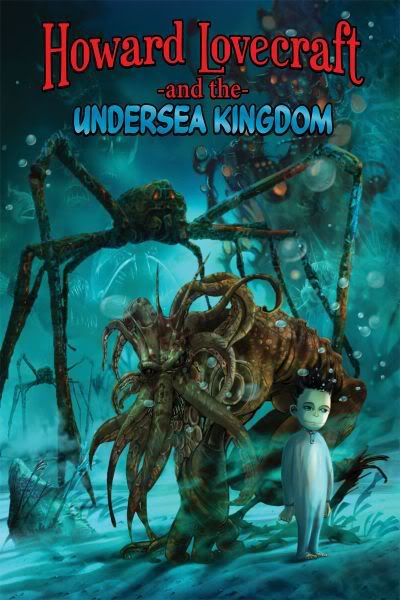
5. Lovecraftian rewrites – I happen to adore cosmic horror and there are many writers, such as Peter Rawlik and Robert M. Price, whose work are genuine pleasures. What I am referring to is the habit some writers have of attempting a recreation of the style of H.P. Lovecraft. The result is often turgid, painful, purple prose that is in no way readable. Writers who must write in Lovecraft’s universe, do so with joy, but in a style and voice that is theirs, not an imitation of the concept’s creator. There was only one H.P. Lovecraft and the universe will not accept a second. Become the first “you” and take his concepts your own direction.
“And the Ugly…”
Do remember that this is my opinion only. If your viewpoint is different, that is fine. I will state my reason for each and leave it up to each reader in formulating their own opinions. However, the “Ugly” is a more conceptual basis, a piece of advice for writers regarding some of the areas of pulps and comics best left buried in the past.
1. Bulldog Drummond aka the Reformed Racist - H. C. McNeile under the penname “Sapper” created a square-jawed tough hero who fought for all that was good and strong in the minds of the British. He was also virulently racist, an anti-Semite, anti-anyone non-English, and so conservative his values were probably formed by William the Conqueror. The main character in numerous books, films, radio shows, and even plays over the years, Bulldog’s disgusting tendencies toward repulsive behavior received cleansing from many writers. To some readers, Bulldog Drummond is a typical strong hero…until you read his original stories. There you find a hideous approximation of a heroic figure by someone who looked down on most of the world. I give major credit to Alan Moore and Kim Newman, two magnificent writers who used this character and did not wash away the truth in their pages. Readers let this guy, and any other similar race-baiting protagonists, be otherwise forgotten. These values were wrong then and worse now.
2. Wu Fang/Yellow Peril villains – Want to feel really uncomfortable? Try reading some of the Yellow Peril pulps like The Mysterious Wu Fang or Dr. Yen Sin. Yellow peril pulps are a product of pure xenophobia and are completely horrific attacks on a race of people. These tales usually involve an evil mandarin who plans on destroying white people using evil assassins with mysterious poison darts, creepy insects, and advanced scientific devices that could make them trillionaires should they create a company marketing them worldwide. Often a woman is in peril and has her clothing torn off so that “barbaric” “alien” men can gaze upon the perfect flesh…ugh, just writing that crud makes me feel the need for a shower. These stories are purely grotesque and are best left as history. Now, I am not saying Asian people cannot be villains. Madame Atomos, a villainess from French pulps, was a great series and made for exciting tales. However, that one is a rarity and there are very few others worthy of such respect.

– There are few areas of literature that so disgust me as this trope, one that was overused massively by many writers in the 1960s through the early 1990s. This character is often a cynical Army officer who received wounds in the war and despises the SS and Gestapo. He is often a soldier and German first and never really a Nazi. I could go on at length, but you get the point. This concept is utter trash and an insult to the millions of men, women, and children who died at the hands of the Third Reich. By continuing the cliché, you are ignoring the death camps, bombings of cities and literally thousands of horrors of the Nazi regime. Please, please, please, stop it. Nazis are useful as villains but stop normalizing them in fiction. Millions died in World War Two and that must never be forgotten.
4. The Savior – In the worlds of fantasy and science fiction, this idea appeared quite often in the past. A hero or heroine is born with a birthmark, on a specific day, cursed by an evil witch…or one of hundreds of variations in this setup. The protagonist is reputed as the only person capable of defeating the evil and bringing happiness and light back into the world…sorry, threw up in my mouth a little. When you write this as the basis of your story, you are effectively pre-plotting the ending. It is rare, such as in the case of Harry Potter, that differences emerge, and an effective tale emerges. Often, this is lazy writing and your hero/heroine is now basically unkillable. Also, why is this the only answer in solving the many problems of your world? In our world there are billions of people. Are you really telling me a second person with your comet shaped birthmark or whatever never appeared? It just doesn’t fly anymore, and the readers deserve better.
5. Poor pastiches – I get it, you are dying for a chance to write Doc Savage, the Shadow, Batman, Millie the Model, or whoever, but you cannot afford the licensing fees. Therefore, you create your own and call her Mollie the Model and her sidekick Doc Ravage…are you beginning to see my point? Pastiches can be a true joy for the reader, a unique direction for a character. I have written a Doc Savage version, a pulp hero called Thunder Jim Wade, for example. The trick is in creating something different. If I want Doc Savage, I will pick up a Lester Dent or Will Murray novel from my collection. I don’t need a near clone called “Doc Metal, the Man of Gold” or whatever. Give the reader something different and unique. Use your imagination and expand the concept to something enjoyable we have not seen a thousand times in the past. The reader will appreciate your efforts and you will get a sense of accomplishment that a “Molly the Model” cannot grant you in this life.

And that, gentle readers, is ‘The Ugly’…
=====================
Frank Schildiner is a martial arts instructor at Amorosi’s Mixed Martial Arts in New Jersey. He is the writer of the novels, THE QUEST OF FRANKENSTEIN, THE TRIUMPH OF FRANKENSTEIN, NAPOLEON’S VAMPIRE HUNTERS, THE DEVIL PLAGUE OF NAPLES, THE KLAUS PROTOCOL, and IRMA VEP AND THE GREAT BRAIN OF MARS. Frank is a regular contributor to the fictional series TALES OF THE SHADOWMEN and has been published in FROM BAYOU TO ABYSS: EXAMINING JOHN CONSTANTINE, HELLBLAZER, THE JOY OF JOE, THE NEW ADVENTURES OF THUNDER JIM WADE, SECRET AGENT X Volumes 3, 4, 5, 6, THE LONE RANGER AND TONTO: FRONTIER JUSTICE, and THE AVENGER: THE JUSTICE FILES. He resides in New Jersey with his wife Gail who is his top supporter and two cats who are indifferent on the subject.
NOTE: This article was originally posted at Bibliorati. It is reprinted here by permission.