Showing posts with label Erik Burnham. Show all posts

Friday, September 30, 2016

Remembering Shooting Star Comics: Gone But Not Forgotten

Note: As we approach the 15th anniversary of Shooting Star Comics, the indie comics publisher I served as EIC back in the beginning of this century, we've relaunched a website to help archive info and announce new outlets from former SSC members. The following is from that website. Join the Facebook group and share your own memories at https://www.facebook.com/shootingstarcomics

In December 2001, a group of online friends, all aspiring comic book writers, came together to produce a showcase for their talents. As readers who love the medium of comic books, they also had a desire to see their scripts given visual form. Since they were serious about their ambitions in this particular field, they decided to pool their resources, find artists (or in some cases, do the art themselves), and publish their short stories (all of it creator owned, original material) together in one book – and then to send that book out into the world, into the hands of the comic book reading public during the summer of 2002.

These friends are also not the least bit reluctant to acknowledge some of the main influences on their own progress in the medium. As a consequence, they decided to ask a couple of those influences to contribute to the endeavor. Chuck Dixon, whose articles on writing for comic books are almost as good as a writing course, was invited to contribute a Western story. And another of those influences, the legendary Denny O’Neil, was asked to write a foreword for the book. He very graciously agreed. The first issue of SHOOTING STAR COMICS ANTHOLOGY was the result of those efforts.

From 2002 to 2006, Shooting Star Comics expanded and became an independent publisher committed to releasing a wide variety of genres and styles in our books. Including both new talent and longtime legends in the industry, Shooting Star Comics produced a high-quality anthology series for six issues and a variety of one-shots and mini-series.

As the 15th Anniversary approaches, this website will expand in the days to come to document the history of our small independent publishing house and serve as an archive that recognizes the body of work produced. This site will also serve as a present day guide pointing to where you can work of the original creators now.

Thursday, July 11, 2013

Mine or Yours: The Comic Book Edition

Well, we did this last week with prose writers, so this week let's run the same roundtable -- but instead from the comic book side of the fence.

I chose these writers specifically because not only do they have the goods of writing corporately owned characters (Erik Burnham on TMNT, Ghostbusters, and now Scarlet Spider, Chuck Dixon on Robin, G.I. Joe, Punisher, and nearly everything under the sun, Dan Jolley on Voltron, Vampirella, Angel, and more, and John Jackson Miller of Star Wars and Iron Man) but they also seem to have a lot of fun playing off each other during interviews. You'll see what I mean. Just keep reading.

Do you prefer to write new adventures of existing characters, or would you prefer to create new characters outright?

Chuck Dixon: Both are cool. But that depends on the existing character. I rather take a job at Arby's than write an issue of Firestorm.

Erik Burnham: Shucks, Chuck said exactly what I would. Except having seen my local Arby's, I'd probably opt to write Firestorm.

Chuck Dixon: But with Firestorm there's no free fixin's!

Dan Jolley: Given my love of jamocha shakes, and having spent a year writing Firestorm, yeah, I think I'd work at Arby's.

Erik Burnham: Seriously, I agree with Chuck on this. I really have no preference for one over the other. That sounds like a weak answer, I know, but I'll find a joke for whatever set of circumstances the character I'm writing has to face.

John Jackson Miller: Yeah, they're just different kinds of jobs. In one case, you're free to figure everything out and there's work involved with that; in the other, there's a little research involved. (Which doesn't mean you can't make changes to a character or his or her characterization, but it helps to know what the audience expected before you start moving things around.)

What are the advantages and disadvantages of each that you've found?

John Jackson Miller: I agree that doing your own thing has its benefits -- but also, doing someone else's character can be fun if there's a good relationship with the editor and/or licensor and there's something in the character and world that appeals to you.

Chuck Dixon: Again, depends on the character. But most times you can fall back on their history. Plus, being established, they already have an audience prepared to be entertained.

But creating your own characters and universe is like free falling.

Erik Burnham: I suppose the advantages comes down to time. Less people to say yea or nay to any given idea. That can be a big advantage, however.

Dan Jolley: Writing original characters is a much greater risk, definitely, but you get to make up your own rules and you don't have to worry about accidentally duplicating or contradicting a storyline from the 70's. Original characters take it for me by a wide margin.

Thursday, April 25, 2013

Galactic Quest Welcomes CREATORS behind Iron man 3 & TMNT ON FREE COMIC BOOK DAY!

FOR IMMEDIATE RELEASE

Buford & Lawrenceville, GA—It’s no secret that the comic book heroes are back in a big way. Iron Man and the Teenage Mutant Ninja Turtles are on the screen and in comics, and for this year’s Free Comic Book Day event, Galactic Quest is proud to the welcome the writers and artists who are busy creating their adventures.

“We’re pulling out all the stops this year,” said store owner, Kyle Puttkammer. “We’re thrilled to have creators Drew Geraci and Erik Burnham from two of the hottest properties in comics and we’re planning for our biggest Free Comic Book Day ever.”

Drew Geraci is one of the artists currently working on the Iron Man 3 prequel comic and has also worked for DC Comics on such famous characters as Batman, Superman, and Wonder Woman and for Dark Horse Comics on comics from Buffy the Vampire Slayer to Star Wars.

Erik Burnham currently writes the hit series The New Ghostbusters and Teenage Mutant Ninja Turtles: The Secret History of the Foot Clan. Burnham is also writing the Free Comic Book Day issue of Teenage Mutant Ninja Turtles the Animated Series, which he will be signing during the day.

“But that’s not all,” said Sean Taylor, manager of the Buford location. “We’ll also have other comic book creators on hand for the fun too, including Wilfredo Torres from The Shadow Year One and lots of local small press folks you should really get to know.”

Taylor and Puttkammer, in addition to running the store, also are creators in their own right. Puttkammer is the main voice behind the Galaxy Man book and the forthcoming Hero Cats comic, both designed for all ages. Taylor has worked with Gene Simmons of KISS fame to write for the Simmons Comics Group in cooperation with IDW Publishing.

4.6 MILLION FREE COMICS TO BE GIVEn AWAY ON FCBD!

Free Comic Book Day is a single day—the first Saturday in May each year—when participating comic book shops across North America and around the world give away comic books absolutely FREE to anyone who comes into their stores. One of the goals of Free Comic Book Day is to reach out to those individuals unfamiliar with the comic book specialty market, not to mention a comic book shop. So, every year those behind Free Comic Book Day launch a massive promotional campaign that heralds the event and spreads the good word of comics to potential readers everywhere.
 

In addition to the aforementioned comic book celebrities, both the Buford and Lawrenceville locations of Galactic Quest will feature costumed heroes and live music throughout the day.

In Buford, bands will include:

2pm—Southeast Ukers
3pm—The Wonder-Nerds

The music line-up in Lawrence includes:

9am—Brook Shepard
3pm—Bad Bad Lola
4pm—Southeast Ukers
5pm—Ricky & Bambi
7pm—Wonder-Nerds
8pm—Hott With Harry Leggs

For more information about the event, contact Galactic Quest online at www.galacticquest.com or call the Buford store at 770-614-4804 or the Lawrenceville store at 770-339-3001.
Kyle Puttkammer
kyle@galacticquest.com
(678) 707-1290

Sean Taylor
Staylor104@aol.com
(770) 614-4804

Thursday, November 29, 2012

The Illusion of Change -- The Comics and Pulp Conundrun

In comics and pulp stories, the marketability tends to be in the characters remaining the same, i.e. Batman is Bruce Wayne, The Phantom doesn't lose an arm, Spider-Man remains hapless and downtrodden, Doc Savage doesn't die and pass the name onto an adopted circus acrobat, etc. So, in light of that, we sought out some of the top comics and pulp writers to find out what they had to say about that very thing.

How do you keep characters interesting when you can't provide significant growth and change to let them adapt and mature?

Joe Gentile: I am of the school that likes to keep most of the character intact. We like these characters for a reason, so we see no real need for an overhaul. We want old and new readers of course. What we try to do sometimes is add some "bits' the characters when appropriate. We want to try to make the characters more 3D by personality. And sometimes, we will tweak an ability or skill to help the character stand out more from the pack. Plus, for good measure, we will give some dimension to the supporting cast as well. So, we like to add more than subtrac t... as long as it keeps the integrity of the character.

Erik Burnham: Show them something they haven't seen before and reveal their reactions. ...Or kill them. Hey, they could get better.

Mike Baron: In the case of the Badger, we're rebooting the whole thing.  Since many Badger stories deal in magical realism, this isn't a problem.  Badger readers have learned to expect the unexpected--guest appearances by Elvis, Charles Mingus, Warren Oates and W.C. Fields are common.  Ham is a powerful wizard and brings magic into play.  Since we are debuting Badger to an entirely new generation of readers, Badger is now an Afghani war veteran.  The classic elements remain: his brutal treatment at the hands of his step-father Larry, and all the old characters will reappear but in surprising new roles.

In the case of Nexus, we are merely sticking to the time line.  All readers need to know is that he is a cosmic executioner driven by his dreams to find and destroy mass murderers.  But now he is married and has a son.  It helps that the entire Nexus canon is available from Dark Horse in a series of hardbound volumes and now in a new cheaper omnibus format.

In the case of Batman, there have been so many stories, so many different takes--let's face it.  People who insist on seeing Batman as a real person and embrace his entire history have to realize he would have to be about a hundred Batmans to get them all in.  Comic books are escapism.  The best fiction is escapism.  But in order for us to fully enter into the escape we must believe it's real.  So a story's premise must fit comfortably within the character's personality.  Or within the personality's character.  People will not accept Batman as a callous killer.

I.A. Watson: This depends on the initial character concept. If it's a Harry Potter-type neophyte growing up then it's very hard. There are only so many life lessons to learn. But suppose the character is already fully formed, like Sherlock Holmes; then the fun comes from putting them into new situations and seeing how people react to them. We don;t need Sherlock to discover compassion or tact. We just want to see what happens when he encounters the French ambassador or the self-proclaimed king of thieves.

Lee Houston, Jr.: By developing interesting characters to begin with. After all, just what is it that keeps readers coming back to The Shadow, Spider-man, etc; and not one of the endless zillions of clonish knockoffs?

Jourel Freeman: This exact same question is one that haunts me daily. I feel that to establish a character heavily within a story, readers prefer to have that deep-seeded relationship with serial characters, and so it's best to keep characters consistent for a while. This way, so much can be absorbed before any major chance can be made.

Greg Glick: You put them in interesting plots or locales (James Bond is always a womanizer, it's where he is and who he's up against this time and how he's gonna defeat him that makes it interesting.  And who he's gonna bang this time, without the gun. ;)    In characters meant to adventure forever, you intertwine plot and character.

There's also the fact that, for the most part, many heroes are ALREADY presented as the peak of moral and ethical perfection in their little worlds (such as Superman and Doc Savage) when the adventures BEGIN.  There's no ROOM to grow.  How does a god grow into  a better god?  The Spider may be crazy in our world, but in his he's clearly presented as the most clear-thinking character around:  only HE can take care of the problem, and he knows it.

Marvin Cheveallier: I create a new challenge that will either require another way to take care of the situation outside of what the reader is use to. Sometimes making it hard enough that the character may need a little help to overcome. That way it gives me a chance to put supporting character in the spotlight for a short time. After all, I don't want said character to be the only one with fans.

Why is it important that characters remain the same? Is it for new readers, old readers, or more maintaining the marketability of the property?

Mike Baron: As far as I'm concerned, the First Rule is to entertain,  I would never change the basic nature of my characters because they are what they are and I like them that way.  It's their concepts that intrigue people as well as the writing.  Back to Badger.  We have been going round and round on how to reboot the series and I have written story after story that would have fit seamlessly into the old continuity but did nothing to bring readers up to speed on who Badger is.  Therefore we decided to reboot the whole thing in such a way as to please original fans and excite new ones.  He's still a multiple personality.  I know that the shrinks decided that MPD doesn't exist but they will probably change their minds next week.  And again the week after that.  The workings of the human mind are always fascinating, and the Badger is about psychology as much as anything.  It is also about kung fu and unexpected humor.

Much of the appeal of classic characters is like slipping into a warm bath of anticipation.  We know the characters and it is their character, as well as the narrative voice that draws the reader through the story.  That's why we gobble up series books like Robert Crais' Elvis Cole stories.  We know and like Elvis and he always has exciting adventures.  We want to slip into that frame of heightened expectation.

Erik Burnham: Familiarity SELLS. That's why you'll see "From the Guy Who Did The Special Effects On Jurassic Park" on a movie as a selling point. A lot of people saw Jurassic Park, it had special effects, so... bam. A connection is made, and the movie is no longer 100% unfamiliar. Same with comic characters -- familiarity sells.

Yes, the argument can be made for change (to appease old readers -- like Spider-Man getting married as the audience ages, to name one gripe folks who didn't like that plot point made... or new readers -- see Kyle Rayner... or maintaining the marketability... bringing Tony Stark back from an a teenager to an adult.)

I dunno. I just like writing fun stories.

I.A. Watson: In some cases the situation is the appeal. Secret identity characters are fun because no-one knows that Don Diego del Vega is secretly a masked hero. We share the joke with him. Remember when Superman stories ended with him winking to the reader as Lois was baffled again? In other stories the presenting problem defines the series. If the rebels defeat the terrible dictator then the driver of that series is over. If our hero ever truly avengers the murder of his fiancee and finds true love again then the drama is done.

Of course, in many cases its because fans of older stories who now have turns as creators themselves want to write the character as they first fell in love with him, in the situation they best enjoyed his tales. Since many "accretions" to stories move characters away from the concept that first made them popular writers often feel justified in contriving a return to original circumstances or a reasonable facimile thereof.

Publishers get to cash in two ways. "Everything changes" sells. "Back to basics" sells later. Then everything can change again.

Greg Glick: Frankly, I'd say marketability.   For example, there was an episode of Star Trek: Next Generation in which a parallel universe was created where the Federation was at war with the Klingons.  Someone pointed out, in a real war, characters like Riker would be given their own commands and starships, and wouldn't be serving on the Enterprise.  But fans want to keep seeing their heroes even if it doesn't make sense.  If a favorite character vanishes, the ratings go down.  Same with presenting character "relationships."  As long as Ross and Rachel are dancing around each other sexually, the ratings hold and profits continue.  The moment they "get together" or permanently don't, the reason for their existence is done--and so is their marketability.

Marvin Cheveallier: Most readers don't like major change to the story they already love. I think some writers fear that they may chase off some readers as well because the character went an unexpected direction for them. Other fans my see it as an improvement so it is a gamble for the writer. I don't fear such a change as it is my story and I enjoy the drama. Readers will just have to expect that of me, however there are still some character that I just love the part they play and wouldn't want to change them for any reason as they offer me too many doors in the story that I could open.

Lee Houston, Jr.: Basically, all of the above. Old readers get used to the writer(s) maintaining somewhat of a status quo, which gets new readers curious as to what is going on, and gives the marketeers selling points they can rely on from one new release to the next.

Si Mon: To see how marketability can be sustained while constantly developing characters, we only need to look at some of the comics from Japan, such as Dragonball, One Piece and Naruto. All of these have seen their protagonists grow from childhood into adulthood, their characters, relationships and abilities constantly evolving. All of them have also been phenomenally successful. The inability of Marvel and DC to move away from maintaining the status quo and allow their characters to change just shows what tired old dinosaurs these companies are. Interestingly, having said that, both Marvel and DC have enjoyed a massive amount of revenue from films such as the Batman and Spiderman series, which have been immense levy successful. one of the coon characteristics of these films is that their stories have been built around the development and growth of the central characters. Not one of them has left their protagonist as we found them.

Jourel Freeman: I look at how Avengers characters are seemingly ageless while we've seen the X-Men grow up from teens to militants and so on. This shows both how much it matters and how much it doesn't. It even shows both trends can co-exist in one continuous world. I guess the art lies in when and where to contort the time to where the story flows at a pace that keeps old and new readers going, while introducing new elements into the mix so that change can be mad more dynamically.

How do you know you've gone to far when writing a character that shouldn't change significantly? When do you go beyond what Stan Lee called the "illusion of change"?

Mike Baron: I trust my ear to tell me.  I read and re-read what I've written.  I ask myself, if I were telling this story to someone in a bar, would they follow me?  That's why it's important not to jump the shark.

Erik Burnham: If someone has to do a lot of work to either ignore or rewrite what I've done, I may have gone too far. Arguably.

Greg Glick: At the core of each character is a certain "soul", if you will, that cannot be bent.  Sometimes it is hard to define, but it is there.  And when it is broken, you know.  Usually by having a character do something you as reader know instinctively he would never do.  SPider Man selling his marriage to a demon is an example.  The Elongated Man losing his wife in an attempt to "darken" the character is another.  EM is, and has always been, light-hearted in nature, and to try and blacken him up violates him.

Marvin Cheveallier: When I get a lot of hate mail.

Lee Houston, Jr.: The obvious points would be by killing or altering the character in some drastic way, like giving him/her a new costume or sidekick.The illusion of change would be things like a temporary depowering or growing a mustache, or changing hair color if they had to go somewhere in disguise.

Jourel Freeman: The challenge for me would be HOW the continuity will work in the beginning, i.e., if in the beginning I want to create a world where superheroes have been around for, say, 25 years, and now you have to create the FEEL of an established world, and start from there.

I.A. Watson: Some situations break the paradigm. Once Peter Parker is happy, rich, married, his secret known and he publicly feted for his heroism, the distinctive things that made the Spider-Man series what is was are gone.

I'd like to give a special mention to those character-destroying storylines that pollute a hero forever after, requiring more radical rebooting than is usually credible. Green Lantern committing genocide, Iron Man's actions during Marvel's Civil War, any character that turns to murder, torture, or rape, become more or less lost causes unless its proven that it wasn't really them.

Kurt Busiek reflected once that writers should only make permanent changes if what they put in place is at least as robust as what they destroy. Do you agree? How can you know you're doing it right?

Erik Burnham: I do agree. And I figure I'm doing it right if there's no lightning from the heavens striking me down.

Mike Baron: Kurt is right.  Every writer must write to please himself first and foremost.  If I don't entertain myself I will not entertain others.

Greg Glick: Agreed -- but darned if I know how I would know I was doing it right!  The fans would have to tell me!

Lee Houston, Jr.: I totally agree with Kurt Busiek, although it should be the readers who ultimately decide if the changes are correct and not some editorial or boardroom committee.

With all that said, characters need to grow and expand as much as they can within their adventures, for their readers are certainly not exactly the same from one day to the next. Being an avid reader for decades now, I could definitely talk about this subject for more than just a few quick answers to this roundtable, but we would need the proper forum than just a brief Q&A to cover this adequately.

Jourel Freeman: I agree that a major change should be the catylyst to more change. Not in the way Marvel has been doing it for the past 10 years (Civil War, Secret Invasion, Messiah Complex, etc.), but in terms that show growth in both the story and the involving characters. Showing how major elements effect a story/character(s) is always a good way to go in my book (no pun intended) . The way you see if it is right for you is "Listen to the character." The readers may hate the direction you're taking a character, but one never knows how far you can turn a character inside-out and make a whole new direction out of pushing the limits.

Marvin Cheveallier: I fully agree. I really don't think one knows if they are doing it right until they get feedback. I think one way of knowing you have it right it is you have plans of reverting that character or presenting the change as an imposter or some kind of mental problem (or possessed) that gets resolved later. Now if that character is only getting stronger that is another story. However as a writer I think one has to be careful of not making characters too strong as it makes writing harder in the future. It is hard to create drama and clashing if a character can destroy anything with a snap of his fingers. You then take away your links to making it interesting.

I.A. Watson: It's a long time ago now, but I recall Busiek illustrating this by describing his proposal for a new Spider-Man series after the Ben Riley Spider-Clone debacle. It wasn't picked up. John Byrne was hired to do a run instead, starting with a modified Year One origin series that explained why Norman Osborn and Flint Marko had the same hairstyle.

I apologise if I'm grossly caricaturing Busiek's actual pitch; I'm reportng this from long memory. At that time, (as best I recall) Aunt May was dead, MJ had divorced Peter after he'd hit her (or was thought dead, I forget which), and Parker had been missing for some time. Busiek's plotline had JJJ discovering a badly-beaten Peter in circumstances that had Jonah decide to take care of the boy, perhaps even adopting him. JJJ effectively took over the Aunt May role, becoming as attached to Peter as he hated Spidey. Peter got a new flat, though he had some trouble with his landlord and occasional friend Flash Thompson. I think there was a Stacy cousin in there too to add some romantic tension. Effectively, Busiek found new relationship links to replace many that had been burned away by some poor storytelling choices beforehand. That seems to me to be a fair representation of moving things on while respecing the fundamental concepts of the series.

An actual example of such a change "done right" might be Justice League headquarters. After Mount Justice came the JLA satellite, then the embassy phase, and then the Watchtower. Let's try and forget Detroit. Each base fed a different kind of story for a different kind of team, but each felt right for its era. Another substitution that worked back in the Michelnie-era Iron Man period was the replacement of the relatively one-dimensional Happy Hogan and Pepper Potts with James Rhodes and Bethany McCabe (and the wonderfully fierce PA Mrs Arbogast). Rhodey and Beth brought rather more to the party than their predecessors and were key parts of that excellent run.

Thursday, October 4, 2012

Words and Art: Finding the Right Blend in Comic Book Scriptwriting

Okay. This week's roundtable is specifically about comic book scriptwriting. These are questions I hear often at conventions or via email from folks wanting to start writing comics or looking to turn an indie movie or small press novel into a graphic novel. I know my answers, but I thought it would be a lot of fun to find out what other comic book writers had to say.

How do you determine when a panel has too many words of dialog or captions?

Dan Jurgens: When it goes beyond two lines of type on my screen. Seriously, it may sound silly, but there's great validity to it. The other is to read it aloud and realize the page doesn't have the right sense of rhythm because it takes so long to read one panel.

Jim Beard: I'm verbose like nobody's business, so since I've become a writer I now espouse brevity :) I hope to NEVER get to the point that I'm choking a panel. Better to choke a dead horse.

Jenny Reed: When the editor says so :)

Bobby Nash: It’s generally a gut feeling, but based on experience. Although, no matter how many or how few words of dialogue I write per panel I expect the artist(s) to tell me there’s too much. I hear that way too often, even though my scripts contain hardly any dialogue compared to most mainstream comics published today. Go figure.

Ron Fortier: Comics are GRAPHICS, its about the art. So, it's too many words when they hide the art. A major boo-boo.

John Jackson Miller: My general rule, adopted from Dark Horse, is 45 words max. No more than two speakers, no more than three balloons. This varies with panel size. A splash page is likely to have four captions and 60-70 words.

Michael Avon Oeming: If you have to ask yourself that question when you are writing, you probably have already.


Dan Jolley: Reading an overly wordy comic book is just not all that much fun. Huge walls of text surrounded by boxes or word balloons are clunky and look out of place. A super-verbose comic book detracts from both the words and the art.

First off, unless they are very very short, I limit the combined number of captions and word balloons in a panel to four. Four is the maximum, and that's only if I have a page with four or fewer panels on it.

If the page has five panels on it (unless one is much larger than the rest of them), the maximum combined count of word balloons and captions per panel drops to three.

If the page has six or more panels, it drops to two.

And as far as the word count in each caption or word balloon, I've developed a rule of thumb that's served me well (and never caused an editor to complain). I write my scripts in 11-point Times New Roman, and I set up a custom indent so that all of the captions and dialogue bits start at the 2 inch mark. Then I never let them run longer than two lines. (For a more in-depth study of Dan's approach, visit his blog at http://danjolley.blogspot.com/2012/06/how-to-write-way-i-write-part-5.html)

Roland Mann: I don't usually count words, but I think 3 balloons with a couple of sentences each (or less) is about right. More than that and you clutter up the panel -- and ART -- with too much noise. One speaker shouldn't have more than 2 balloons. In the same regard, I'm not a fan of page after page of no text to READ. I think comics are a blended art form and the READER needs stuff to read, too. Use silent panels for effect.

Mike Bullock: That's determined by what's in the panel, art-wise to a great extent, but Roland's reply is a good rule of thumb.

Janet Stone Wade: When you can't make out what's going on in the panel because all the word bubbles are covering it up. I'm actually a fan of the pic doing the talking, like action scenes and expressive faces.

Erik Burnham: When it covers up too much of the art.

Percival Constantine: I'm a letterer as well, and that's really given me a feel for how many words can fit in a given panel. One thing I'd recommend every comic writer (or aspiring writer) do is learn a bit about the lettering process and, if you have the software, practice it for yourself. I think it'll give you a much better idea of how many words you can fit and where they should go.

If possible, I'll also check the dialogue again after the artwork has been completed, to make sure that it can still fit in. To date, I've lettered all the stories I've written myself so I've been able to make these changes without holding up the letterer.
 
What's a good rule of thumb to use when determining the number of panels for a page? Do you "go with your gut" or have a method that helps you?

Dan Jurgens: It's by feel. Do I want a big explosive panel? Were the previous pages leading up to something dramatic? Or do I want to slow time down with a lot of small panels, highlighting isolated action? Depends on the demands of the story and scene.

Jim Beard: The page should have exactly what it needs in terms of panels. I try to never go more than eight or nine, and try to keep it at a comfortable four or so.

Jenny Reed: And on a more serious note, the only rule I use is "try not to use the same number of panels that I used on the previous page" --- Other than that, well, I figure out what I want this page to say, and then figure out how many panels it will take to say it.

Bobby Nash: It’s a pacing issue. I know what needs to happen on the page and where the page has to end for either a scene change or a page turn reveal. When I have the opportunity to know the artist before scripting, I ask if he or she what their preference is for number of panels. I can’t promise that I’ll make every page 4 panels, which is usually the answer I receive, but on average, I write anywhere from 4 to 6 panels per page. Rarely do I write more, but sometimes less.

Ron Fortier: Five to six tops. Again, its about the art. 

John Jackson Miller: Fewer panels is always better, though you must stick to the rule of one action depicted per panel. My average has been creeping down over the years. My goal is three cinematic page-width panels per page, but my average is closer to five, which seems to work as it allows for one cinematic panel and then two-on-two. If you're above six, you're giving the artist a postage stamp.

Michael Avon Oeming: It all depends on pacing. Pace your story or your story will pace you by forcing you into a writing corner.

Dan Jolley: A lot of it depends on the artist. Some artists I've worked with got their noses out of joint, so to speak, if I wrote more than four panels. Others don't think it's even worth it to draw the page unless you have five or more panels. That's why I've always tried to talk to the artist first, if I could, before I wrote the script.

Roland Mann: A five-panel page is a good base from which to start, I think (once upon a time, industry standard was six). From there, it depends on what you're trying to do story-wise (story is king, always!)...if you want it to move faster, then lots of smaller panels, less dialogue.

Mike Bullock: Depends on what's going on in the scene(s) that the panels encompass. If it's talking heads or something like that, you can do more, if it's big action then you want less. It's also dictated to some extent by the artist. Some artists want a lot of panels, some only like a few.

Erik Burnham: Some artists can make a ridiculous amount of panels work just fine (see David Aja on Hawkeye #2.) Usually, I make it no more than five panels as a rule of thumb. I'd love to see a 6 or 9 panel grid (and I certainly don't hesitate to do more panels when I'm drawing the story myself) but the vast majority of artists seem to like five and under panels per page best, so that's become my go-to number.

Percival Constantine:  As a general rule of thumb, I average about 4-5 panels per page, but I'll add or subtract depending on the scene. If it's something with a lot of close-ups, I can manage a few more, or if there is a lot that needs to be shown in big splashes, I'll scale down the number of panels.

How do you determine when to throw the rules out the window and do something that might be "nonstandard" for the average comic book?

Dan Jurgens: One should discard the rules only after he masters them first. Which rarely happens.

Jim Beard: Again, when the situation demands it -- but if you have something "game-changing" in the middle of an otherwise standard overall layout, you run the risk of it not only looking weird, but also pretentious.

Bobby Nash: There are rules? [laughs] I employ whatever method or layout works best for the project at hand.

Ron Fortier: Break the mold and get verbose... that's called prose writing. It's not a comic. Nuff said.

John Jackson Miller: Throwing the rules out is permissible but there needs to be a very good reason for doing it, and you need good communication with your artist. Explain it wrong, and you've got a jumble.
  
Michael Avon Oeming: Once you have mastered the rules and feel like they have become old territory, like you are making choices simply on those rules- then shake it up. And always, always keep on producing. Writing, drawing, plotting, sketching, doodling, brainstorming something creative every day!

Roland Mann: That's a gut/instinct thing, I think. But you've got to know and understand the rules and know why you're breaking them in order to do it effectively.

Mike Bullock: When that's what the story calls for. Listen to the muse...

Erik Burnham: Knowing the artist I'm working with and what they're capable of helps. Otherwise I go with my gut and ask for things when the story calls for them.

Percival Constantine:  That's an interesting question. I guess it depends on the story I'm writing. To date, I haven't been in a situation where I've felt something like this was warranted, so I'm not sure if I'm very equipped to answer it. If it would benefit the story to do something non-standard, then by all means go ahead and do it. Knowing the rules is important, but one of main reasons for understanding the rules is so you're better equipped to break them.

========================================================

Who's Who:
Jim Beard (Ghostbusters Con-Volution, Star Wars Tales, Hawkman Secret Files)
Mike Bullock (Lions, Tigers, and Bears, The Phantom)
Erik Burnham (Ghostbusters, TMNT Splinter, A-Team)

Percival Constantine (Femforce, Kagemono, All-Star Pulp Comics)
Ron Fortier (The Green Hornet, Popeye, Street Fighter)
Dan Jurgens (Superman, Booster Gold, Teen Titans, Captain America)
Roland Mann (Cat and Mouse, Ex-Mutants, Switchblade)
John Jackson Miller (Star Wars Knight Errant, Iron Man, Mass Effect)
Bobby Nash (I Am Googal, Fuzzy Bunnies from Hell, Domino Lady vs. The Mummy)

Michael Avon Oeming (The Victories, Powers, Thor, Red Sonja)
Jenny Reed (Around the World in 80 Days, Charles Darwin)
Janet Stone Wade (Jetta: Tales of the Toshigawa)

Thursday, June 28, 2012

Writing Humor -- Chuck Dixon and Erik Burnham Sound Off

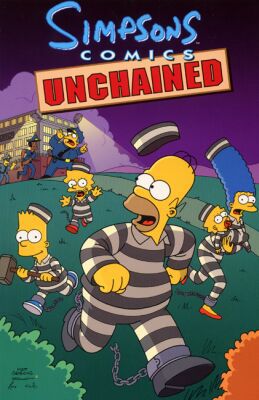
Writing humor.  Personally, I don't get it. I can't do it. But, as the writers behind comic books like The Simpsons and Ghostbusters, Chuck Dixon and Erik Burnham (respectively) have penned some of the funniest comics around. So when I wanted to learn more about writing humor, they were the first people I thought to ask.

What is the "silver bullet" that helps you be funny when you write?

CD: Rewriting.

EB: I don’t have one. I just sit down and write what occurs to me.

This will be the most boring Q&A ever unless I start lying. I recommend getting a prescription for something crazy. Then load up and trying to write some profound. I can’t say this is how Mark Twain did it, but I bet that’s how Dostoyevsky rolled. You should see the original draft of the Brothers Karamazov. It could’ve been the basis for the American Pie films if he hadn’t sobered up and revised.

Like I said, whatever occurs to me. And yes, sometimes rewriting, which can bring you perspective and more funny bits, but it can also make you second-guess yourself and weaken the joke. (I shoulda gone with Chekhov!)

What's the most important element for writing humor into your work? Timing? Relevence? Jokes? What?

CD: If it makes me laugh. I'm not much for The Rules Of Comedy. That's the road to the kind of "insert joke here" kind of humor on display in bad sit-coms and Dreamworks movies.

EB: Timing is everything . Getting it right can make an okay joke better, getting it wrong can deflate a sure thing.

I've heard that when a writer "tries" to be funny, he is on a quick trip to failure. Can you try, or does it have to be something that "just comes naturally"?

CD: I think that's when an ACTOR tries to be funny. If you're writing comedy you better damned sure TRY HARD to be funny.

EB: Like Chuck said, when you’re writing it, you’re trying, but not overplaying is helpful in making humor work. LOOK AT ME BE FUNNY NOW can blow up in your face.

Like the Karamazov thing.

What advice would you give the writer who is wanting to inject more humor into her work?

CD: Think of those "we'll laugh about this later" moments in their own lives. Remember that comedy is other people's pain. But we should never see them bleed.

EB: Just write what you think is funny. The jokes will go over some folks’ heads. Some will find it the exact opposite of funny. Some will get it and chuckle. And then, there’s that magical fourth group who won’t get it right away, but it will dawn on them at some later point, at which time you’ll seem like a genius.

For more info about these two talented creators, visit them online at www.dixonverse.net and www.burnhamania.com.

Thursday, February 23, 2012

An Issue Too Long? How Long Should a "Typical" Comic Book Arc Be?

This week's roundtable discussion comes from a reader who wrote in with the following:

If I can suggest a question for your question of the day -- How long should a 'typical' comic book story arc be? I ask for various reasons but the main one is that it used to take an issue or two to tell an origin story and I've read several new titles that are on issue 6 and not sure if they've finished any origin story arcs yet.

I loved the question and thought it would be a great one, particularly for those of us who have experience in comic book writing. However, acknowledging the variation of questions included in that one, I broke it down into its pieces.

What determines the completeness of a comic book story arc of any length?

Erik Burnham: A "typical" arc, I think, should run anywhere between 60-120 pages. So long as someone doesn't try to make a 60 page story into a 120 page story, I think we're golden. But 6 issues/120 pp is the outside of where I'd like to see for a typical arc. Longer stories can be done, but then those would be atypical.

Chuck Dixon: The easy, and obvious, answer is a story with a beginning, middle and end. And the end must come to a satisfactory conclusion either through a change in status quo, an emotional catharsis, a resolved conflict or a major reveal. In the best case scenario an arc should either create a new character or show a character growing or changing in some way. In comics, it’s okay to leave a few dangling plot threads to be picked up in the next arc. But NEVER leave the reader feeling as if the purpose of the arc was only to build to the next one. It’s okay to leave the reader wanting more but wrong to leave them feeling as though you gave them less than they expected.

Bobby Nash: Usually, it's the editor or publisher who sets the length. When creating my own stories I generally try to stick close to industry norms. Graphic novels can be 40, 66, 80, or 100 pages depending ont he needs of the story. Standard comic stories tend to be 22 or 28 pages.

Lee Houston Jr.: For a story to be complete, it must have a beginning, a middle, and an end. Granted, not all of a series ongoing subplots have to be addressed in any one specific arc, for many serve as springboards for future stories. But at the very least, the ones pertaining to the specific story in progress must be addressed and resolved, even if they result in new subplots for future arcs themselves. 

How do you work in the beginning, middle and end of individual issues against that of the central story's begging, middle and end?

Martheus Wade: I'm not average in this as I don't write issues. Writing trades allow me to block my stores according to story beats inside of a 70-80 page story. I started by knowing my ending of the story and work backward.

Chuck Dixon: Action. The simplest thing is to provide a solid action set piece in each part of your story. A reveal about a character or situation is also a good tentpole for an individual issue. “My girlfriend is from the Moon!” kind of reveal. But each issue should have something that makes it stand out as a unique reading experience. As, Andy Schmidt, my former GI Joe editor put it, each issue should have a “oh, that’s the one where Captain Skidmark found out his parents are dead” element to it. Or, I’m parphrasing him, anyway. Captain Skidmark is all mine, baby!

Lee Houston Jr.: But although I've heard the "writing to the trades" claim, the creative teams on any comic book should remember to treat each issue as just one chapter of an ongoing saga. "The never ending battle," etc. Sure, some of those chapters later get collected into a trade paperback or a hardcover, depending upon the popularity of the title and/or the creative team involved. Yet those on the other side of the page producing the comic books have to remember that a lot of people (like me) still acquire their issues monthly, especially now with the big push to promote comics in the digital realm.

Bobby Nash: I plan for that in the plot. If I'm writing a story that I know will cover multiple issues then I try to end each issue on a cliffhanger. I like cliffhangers. I wish we had more of them in comics these days. I work in the beginning, middle and end of individual issues the same way I do the overall story. I plan out my plot.

How is plotting different when you're already given a length for an arc and you must either (a) fill it or (b) cut to fit it?

Chuck Dixon: Plotting should be organic. In comics you have to think visual action first. Always trim your plot before you cut action. If you don’t have room for the action in your assigned arc then you have too much plot. Simplify your through-story and make your characters motivations more pure. None of this computer program format or Joseph Campell structure crap.

Bobby Nash: When you know you have a set number of pages to fill then you plot accordingly. Sometimes that means cuts have to be made or additional material has to be added. The later is easier, of course. It's part of the job. You just dive in and do what needs to be done to meet your publisher's expectations by your deadline.

John Morgan Neal: There's nothing worst than a story that is drug out to fill time or space.

Ken Janssens: It always depends if you are working for someone else or yourself. If you are working for yourself, you let the story itself determine how long it should be. If you are working for someone else (as a fill-in arc and not your own book), then they will likely give you an issue count for the arc. Sometimes your idea comes out of that constraint. If you already had your story in mind, then you will have to either lengthen or shorten your story. The best way to do that (I've found) is to figure the main points and themes then space them throughout the numbers of issues for which you have to write. Then you take the secondary plot points and scenes, placing them in between the main ones.  For the individual issues of arcs, they should all have beginning, middle, and ends, but since it won't be for the whole plot, those should be of theme, character, character path, or end just with sheer cliffhangers.

=======================================================================

To follow the works of these fine creators who took part in this roundtable, simply look at the list of Heavy Hitters links on the right side of this page.