Showing posts with label Lance Star. Show all posts

Friday, December 13, 2024

AIRSHIP 27 PRODUCTIONS PRESENT LANCE STAR—COLD SNAP!

Airship 27 is proud to present the first ever novel-length Lance Star adventure by award-winning New Pulp writer Bobby Nash.

As World War II rages across the globe, the Nazis have built a secret fortress beneath the frozen wasteland of the Arctic Circle. Here they filed test a secret weapon that could turn the tide of the war in Hitler’s favor. When U.S. Military Intelligence learns of the hidden facility, Army General Pettigrew turns to Lance Star and the Sky Rangers. If anyone can uncover what is buried at the top of the world, it is these dedicated airmen.

For Lance it seems just another death-defying mission until it is revealed that his arch nemesis, Austrian aviation ace Baron Von Blood may be a part of this Nazis operation. For five years Lance has sought out the man who killed his young friend, Skip Terrel. Now that hunt may be coming to an end in a fiery Arctic duel.

Artist Clayton Murwin does the interior illustrations and Rob Davis provides the Cover. This is high-flying adventure from a true, American Patriot.

AIRSHIP 27 PRODUCTION – PULP FICTION FOR A NEW GENERATION!

Available now from Amazon in paperback and on Kindle.

Thursday, March 18, 2021

The ABC (Plots) of Ongoing Storytelling

Writing an ongoing story is a different animal than writing a stand-alone novel or short story. And it's not as simple as "What's the next big story?" How do you keep your whole cast of characters involved, including supporting cast? How do you build up to new stories without just pulling them out of the air? And how do you keep readers wanting to stick with every new story, whether novel in a series, comic book issue, or sequence of short stories? 

Well, it's as difficult at ABC. 

Wait, don't I mean as easy as ABC? Oh, I wish I did. 

This is one of the toughest lessons any writer can devote himself, herself, or themself to. This is the kind of narrative goodness that keeps a series from being one stand-alone after the other that allows readers to skip out on a few steps (losing you cash from book and comic sales). This is the art part that makes readers have to stick around for the long haul. 

The best ongoing narratives have done this well for years without every showing off the mechanics off it. (Perhaps that's why so many folks are unaware of this type of storytelling, because it was so invisible to the reader/viewer.)

Soap operas. 

Yes, those soap operas. 

But we'll get in to that shortly. Let's get to a few definitions for now:

A Plot -- your main narrative story for the current book or issue or episode

B Plot -- the secondary, just below the surface plot that can and should complicate the A Plot (and in some cases become the new A Plot for the next book or issue or episode)

C Plot -- the more subtle, often reserved for the support cast story that can keep your minor characters busy will still having some bearing on future A Plots or even interactions with the current A Plot. 

Got those definitions? Good. Let's get down to brass tacks. 

Do I really need B and C Plots?

The simple answer is no, you don't. James Bond has gone on for years without B and C Plots that unify the series. So have pulp heroes like Doc Savage and The Shadow. 

But, more and more, contemporary series are looking to unify their novels with multi-layered plots that form the glue between books. (Look no further than the ongoing romance between Hermione and Ron in Harry Potter or the build up to the season finale in shows like Wayward Pines and In the Dark. And if you're looking to write an ongoing comic, then it's a skill you'll definitely need to master. (Peter David's legendary run on Hulk and Aquaman are prime examples of this kind of storytelling done super-effectively.)

A typical example from the past has been to let the B plot graduate to the next A plot when that one resolves (for example, at the end of the novel or comic book issue or arc). Then the C plot graduates to a new B plot. And finally a new C plot is introduced. 

For example, P.I. Samantha finds the killer (A plot), but her new lover (B plot) is found beside a dead body, and she must determine and prove her innocence. Meanwhile, that pesky noise she heard on her phone line (C plot) does indeed turn out to be a wire tap that she must look into while trying to save her lover. And so on and so forth. 

But, as I said, that's just the typical pattern of the past. Many modern writers are switching up this paint by numbers formula by doing all kinds of cool change-ups. 

  • Letting the C plot skip the B plot and letting the B plot simmer for another issue, arc, or novel.
  • Having the C plot resolve along with the A plot and introducing a new one for the next story. 
  • Bumping the B down to a C to create a sort of "plot red herring." 

However, a failure to be consciously aware of and intentionally working your varying plot levels can and will cause your stories to seem disjointed, linked only by a consistency of character, but not story. That doesn't mean your books won't sell -- look no further than 007 or thousands of pages of pulp stories. 

But, if you want to give your readers a special reason to keep reading, it's perhaps best not to expect to come fresh each time. A caveat, just like with classic comic writing, you'll need to be able recap in a subtle way to bring new readers up to date, but if you can do that while giving your ongoing readers an enhanced story experience, then that's a win-win for both you and the regular reader. 

A strong example of this is Kim Harrison's The Hollows series. The romantic subplots weave from novel to novel, and characters who were allies can become enemies and back again. Any reader can begin with any novel, but the reader who began at the first will have a deeper immersive experience into the lives of the character her, she, or they have come to know (and maybe even love).

What if I'm not the only writer on a series?

Well, I'm glad you asked. That's when a strong story bible comes into play. My best stories written for others have been those properties that provided a detailed story bible for me to build from. 

A detailed story bible includes (at the very least):

  • the biographical history and likes dislikes of the main character
  • the biographical history and likes/dislikes of the key secondary characters
  • a cursory look at the history of the tertiary characters as it pertains to the main character (and possible key secondary characters)
  • key regular locations and how they relate to the key characters
  • any ongoing relationship entanglements, romantic or platonic
  • any ongoing traumas or issues in the lives of the main and key secondary characters for contributing writers to build from

Now, that's just a start. And to be fair, I've received story bibles with all this and much more than I would ever need, but I've also received story bibles with hardly anything I really needed other than a description of the character and choice or weapons. 

But, hopefully, can see how a detailed story bible can help keep all contributing writers working together to tell the same ongoing story instead of separate, unrelated "Elsewords" tales. 

So, don't be afraid to ask for a story bible. And be a bit leary of anyone who doesn't have one handy (unless there is already a strong body of work to show off this info). 

Examples from my work 

Rather than just talking out of my... um, hat, I'll provide few examples from my own stories. 

When I wrote for Lance Star Sky Ranger 4, it was a character I didn't not know or own, so I grew dependent on the info I could get from Bobby Nash, who owned the character. Thankfully, Bobby provided lots of detailed story info, and was open to me bringing in new elements into the work. He allowed me to introduce a femme fatale into Lance's narrative, and each story I've written with Lance, I've included her because they have an ongoing story together the other writers can also reference. Each story builds on the subplot introduced in the first story where I make it clear that she has her eyes set on Lance. Eventually, Monique San Diablo's grandchild will feature in some of the new contemporary based stories I'm working on. 

Rick Ruby of The Ruby Files has one of the most detailed story bibles I've ever put together, because Rick's world is so "nexus-y." He is the intersecting point of so many worlds that it required more detail to keep it straight. In that story bible, Bobby Nash (Rick's co-creator) and I outlined his relationships with the four women in his life (an informant, a society girl trying to get him to settle down, his secretary, and his true love than can never be thanks to race relations in the 1930s), and his past with the police and those on the other side of the law. That way, each writer who has fully read the story bible can come in anywhere and build on those stories. On way Bobby and I keep those stories fluid but locked is by (1) only allowing the two of us to make major changes and (2) keeping the story bible updated as significant changes occur.

Fishnet Angel is the closest prose example to ongoing comic book scripting I have (other than my actual comic book scripting of course). In her first story, I introduce Andi (FA's girlfriend). When Mark has to become Fishnet Angel in order to save her, the real story begins. In the second Fishnet Angel tale, Mark (now Marcia) and Andi are having some issues, and he's tired of being treated like the super heroine he now is. Letting that build from an C-plot to and B-plot occurs in the third story, where Fishnet Angel is captured by a villain and must determine how to save Andi again in spite of their clearly crumbling relationship. To fulfill a prophecy, the hero discovers that she is pregnant by a fellow deity from the time she was kidnapped. The next story jumps to the future where FA is visiting a former friend turned priest to get some kind of closure and determine who he/she is now after all this. The next story jumps to the future, after she has given her child to Andi and her new husband to raise as their own in order to prevent the prophecy from coming true. Rife and B and C plots, I tell you. 

Putting it all together

Let's put all this into practice in a real world example. We'll make a quick, little "Mad Libs" here to help us:

Book One

Genre: Cozy Mystery

Main Character: Jeannie Davenport, a retired investigative journalist

Regular Cast: Doug Davenport, her ex-husband; Granger Hoffner, her "assistant" helping her re-organize all the mess left over after the divorce; Sophia Albright, her grand-daughter who is pursuing her own career in journalism

A-Plot: Granger finds the dead body of his landlord in his apartment and needs Jeannie's help to prove his innocence. 

B-Plot: Doug is ramping up a new lawsuit to get more money since she was always the primary breadwinner in their family. 

C-Plot: Sophia thinks there's something creepy at her college with the trustees in charge of scholarship funding. 

Obviously the bulk of the plot and the action will be centered around Jeannie looking for clues and trying to prove Granger's innocence and find the real killer. In the middle of all that, once the killer finds out she's onto him/her/they, he/she/they begin to target Jeannie and those near her. 

While all this is going on, Jeannie gets called into her attorney's office to learn that Doug is opening a suit to get more money from her. He's not happy with the settlement as is. This further complicates her life and add even more stress to her as a target. 

Meanwhile, just every now and then, we see small conversations between Sophia and and Jeannie where Sophia is asking for advice about how to proceed to look into improprieties regarding scholarship mismanagement. 

In the end, Jeannie solves the mystery. The true killer is revealed, and everyone is safe. But, it looks like Doug's case is stronger than Jeannie could have guessed, and she could be looking at a large loss. 

Book Two

Regular Cast: Introducing Brad Trent, Sophia's new boyfriend from college

A-Plot: While at court for a pre-hearing on the suit, Jeannie runs into a friend who is working for the opposing attorney. Two days later, the friend is found dead. Her lover wants to get Jeannie to look into the murder because she thinks someone at the law firm did it. But she must remain secretive or it could affect her defense if it is learned she's investigating the opposing firm for murder.

B-Plot: Sophia enlists the aid of her new boyfriend, Brad, who is at college on a basketball scholarship. Brad agrees to help her. 

C-Plot: Doug learns he has cancer and must soon enter chemo. 

Obviously the bulk of the plot will be Jeannie, Granger, and Sophia sneaking around to look for clues and keep anyone from finding out. But the more Sophia and Brad look into the scholarship mishandling, the more it looks like someone is using the funds to launder money. Meanwhile, Doug's sickness is causing him to reconsider his anger toward Jeannie because he will need her since she's still the closest "family" he has. 

Jeannie solves the crime. The court case about the divorce is pushed until after Doug's chemo. But Brad and Sophia have started to receive threats. Doug has his first chemo with Jeannie (she's a saint, I tell you) by his side. 

Book Three

The former C-Plot from Book 1 finally graduates. Brad is run off the road and lies in a coma. Jeannie, Sophia, and Granger believe it was attempted murder and investigate. Doug's chemo makes him rely on Jeannie even more, and the two feel they are becoming close again (though she fears it's just his weakness and need for her). 

And so on, and so forth. But you get the point. 

Got it?

There you have it, but as I said at the beginning, it's not easy -- it's difficult. It's difficult because these aren't just plug and play subplots. Your readers will see anything that doesn't feel important quicker than you can write it, and they'll wonder why you're ignoring the real story of your novel, comic, or series of novellas. And you'll also have to make it feel natural in the scope of the main story. It's a great way to give your minor cast members something crucial to do before the B or C plots actually find your main character(s). 

I've long said that writing and storytelling is more art than science, and it's just these kind of skills that have convinced me of that. But never fear. With practice and with reading authors who manage their subplots well, keep at it and you'll be a master of that art before you know it. 

Tuesday, June 27, 2017

Not Your Stepping Stone -- Short Stories Are a Destination, Not a Starting Block

(5 Reasons Treating Short Stories Like 
Mini-Novels Will Hurt You As a Writer)

By Sean Taylor


I’m predominantly a writer of short stories. Sure, I am working on a novel and I’ve written more than a few comic books, but if I’m honest, short stories are the first love I will always go back to.

I love the craft it takes to “work small” and tell a fulfilling tale within those word count constraints. I relish in the time and work required to target each word and phrase rather than allow for meandering and possible filler.

That said, I also understand that short stories and novels are two separate entities. And good short stories, just as good novels, requires a writer working diligently with all cylinders firing in pristine shape.

Understanding that, perhaps that’s why when I received this link from author Jerry Jenkins in my email a few days ago, it really, REALLY irked me.

Go ahead and click on it and give it a read-through before coming back here. I”ll wait.

Welcome back.

Now, I have to admit that I agree with his tips for writing short stories, and if that’s what the article focused on, it’d be a fine how-to. But I take umbrage at his intimation that short stories are the literary equivalent of “baby steps” for novelists.

Particularly, I found this part really got my dander up.

“A novel is not where you start—it’s where you arrive. 
“Next, when you try your hand at writing, don’t start with a 300-400-page manuscript. Learn the basics first: things like dialogue, point of view, characterization, description, tension, conflict, setups and payoffs, submitting your story, working with an editor.

“Start with short stuff: short stories or even flash fiction. ...

“Most writers need to get a quarter million clichés out of their systems before they hope to sell something.”

Let me just get this part out of the way first, if you want to write a novel, start by writing a novel. Hell, write two or three of 'em, then when you get that strong, ready-to-show novel, shop it around. But don’t write a short story if you really want to write a novel.

It will mess you up. Not help you. 

Why?

Here are 5 reasons.

1. Short stories aren’t novels. Novels aren’t short stories. What Jenkins is espousing is basically the literary equivalent of me telling an aspiring vintner to try his hand at beer first, because beer is more common and less fancy than wine. Beer isn’t wine. And you can’t make it so.

Will writing short stories help you learn to write? Yes.

Will it help you learn to write novels? Not really.

2. The two formats have different approaches in terms of scope. Novels have a grand scope. Novels have room for three acts and multiple character arcs. Short stories have a limited scope. Short stories require you to hone in on one section and one character arc. (A caveat here: Some novelettes, i.e., long short stories, CAN allow for a more novel-based approach, but even then, you can’t write it like a full novel. You must think small from the beginning, not just plan big and then trim it down.)

3. A novel gives the writer time to chase rabbits and meander. It shouldn’t but I’ve yet to find one that doesn’t waste time somewhere along the way, either with wasted time on a character who is superfluous to the main plot and theme or with plot points added to further complicate the plot (at best) or lengthen the book (at worst). (Wait. I take that back. Chandler didn’t meander at all, but his novels were also a great deal shorter than the epic doorstops that readers blindly follow nowadays.)

4. A novel is a wall. A short story is a target. Have you ever heard the saying, “throw shit at a wall and see what sticks”? You can do that with a novel and find forgiveness to some degree from your readers. Try that with a short story, and your readers will be long gone.  Or, as author Sherrie Flick describes it:

“I write very-short short stories—2,000 words or less. In these stories I try to condense a vivid sense of the world into a small space. I compare the process to shoving an angry black bear into a lunch bag, without ripping the bag.

“My goal is to write a short story (often less than a page) that seems full to readers long after they walk away from it. I want them to think back on the story years later and add their own sub-plots, characters, and details. Ideally, the story expands beyond the page, and the reader is active in that expansion.

“Writing a novel is a much different process. Instead of holding back—working with a fragile amount of space and condensing language to make effective and subtle suggestions—I open up the word spigot and, in doing so, the fictional world of the story. My sentence structure lengthens in the novel manuscript, and I enter into the challenge of evoking complex atmosphere with a bigger, more expansive sense of character on the page. It’s like pulling the (still angry) bear back out of the bag without getting mauled.
As for my take on it, working on my novel is like dumping buckets of words onto the page each day and guiding them all into the right funnel, whereas working on a short story is more like targeting each word and concept as a single arrow with a single circle to hit.

5. Novels and short stories begin and end at different points. Novels have a clear beginning and a clear climax and (more often than not, it seems to me) a denouement. This means that they begin getting the hero or protagonist into the position that will then snowball the action toward some new direction and end with a very strong period and often a second period just for good measure. The bad guy is foiled. The dad reconnects with his daughter. The tower falls into a blazing heap just as the hero and her followers escape. Then we often learn what they’re all doing two weeks later and who ended up with whom.

Short stories don’t always have a clear beginning or end. Just as the best short stories begin after the beginning, they also end before the expected ending. Best example? “The Lady or the Tiger.” Another great one is Stephen Donaldson’s “The Conquerer Worm.” There’s rarely a pretty bow on short stories. Try that with novels, and your readers will tend to call foul on you -- or assault you with words at your convention tables.

Why are these problems? Why will they mess you up?

Let’s take them in order.

1. Learning to write short stories will prepare you to write better short stories, but you’ll still need to approach your novel as a beginning novelist because that’ll be what you are. The skill sets you’ll need to plot, organize, and craft a novel will not be the same ones you learned writing short stories because contrary to what several folks may tell you, short stories are NOT INFANTS THAT GROW UP TO BECOME NOVELS. Short stories are full-grown adults in their own right.

2. This one can really hurt both ways. Short stories don’t work in grand scope, nor do novels work in a limited scope (with a few notable exceptions that would probably never get published today, such as Kafka’s Metamorphosis.) The novelist who sets out to write a short story by plotting a short novel is doomed to failure. Likewise, the short story writer who begins a novel by trying to stretch out a short story is going to be disillusioned quickly and sacrifice content for filler.

From their very DNA, you have to approach each in a different manner.

Your story triangle for a novel will have several smaller triangles within each segment, and within those several plot points, action sequences, and possibly even settings. For a short story, your triangle is more psychological, more emotive, dealing with character change (or failure to change) and you don’t have room for those multiple settings and plots within plots.

As for characters, a short story tends to focus on one character. Unless it’s a novelette or novella, you don’t usually see multiple POV heads operating in the same narrative. Your novel, however, can be as wide open as a movie, jumping around from character to character as quickly as Michael Bay can change camera angles during an explosion.

3. If you’re the kind of writer who likes to set out on the journey without a roadmap or an outline, be warned. The structure of a novel will allow you to make a false start and then get your feet, figure out what you’re actually writing about, then go back and revise you opening chapters to fit the later stuff you like. Not such much in the short story. If you need a few pages to get your footing, chances are your story is halfway over (or more) by the time you figure it out. And that means a total rewrite, not a revised intro.

4. If you need a subplot to keep your characters busy as they search for the killer, a novel is just the place for it, but if you start to add subplots your short stories, you’re going to find that you are just muddying the waters of your plot and you risk leaving dangling holes in your story. And those holes are annoying enough in novels (Such as:  Where did that family who was so important in chapter 7 disappear to, and why are they not showing up again?) but in the space of 20 or so pages, it’s a downright disaster. That’s the opposite of tight writing. It's sloppy, plain and simple.

5. This is sort of a continuation of #2, but it is important enough to be a roadblock all its own. There are a time and a place for sweet, little short stories that wrap up in a pretty bow, and that place was Good Housekeeping magazine back in the 1940s and 1950s (and others of that type). Those writers are mostly forgotten or ignored by publishing history.

The literati might say that a novel is to entertain you and a short story is to get into your head and cause you to think. And to a degree that’s true, but not completely. Both should make you think. But where a novel is a long-time, small dose of medicine that builds up in your system, a short story is a super-concentrated, crazy big dose that shocks the system and makes you confront the rainbow elephant in the room face-to-tusk.

As such, the ending to a novel serves a certain purpose -- it brings you back down from the build-up and lets you off roughly where you came in. The “ending” to a short story tends to drop you off in another city or plane of existence and tells you to find your own way back home. Get those two mixed up, and trust me, your readers will let you know they're not happy.

How about a few examples?

Sure. I’ll even keep the same numbering for reference.

1. Short stories aren’t novels.

When I started to plot my first novel idea (long since abandoned) I was building from several years of writing short stories. Because of that, that novel died on the vine because it didn’t have the “beefiness” to sustain a long-form story.

Conversely, the first short story I wrote came after years of reading novels, so I tried to cram way too many characters and themes and settings into one sci-fi story about a dying girl who teaches her court-appointed death-chronicler what living really is. When I finished it and sent it off to magazine after magazine, it came back rejected. Thankfully, Analog was nice enough to tell me that while my voice was the kind of thing they liked, the story was way overblown and entirely too much for a small story.

2. The two formats have different approaches in terms of scope.

In my story “And So She Asked Again,” from the horror collection The Bacchanal, is focused the characters down to a fine spotlight, just the conversations between the two characters. Everything else happens off-screen and is either referenced or left to assumption. Nothing matters except what they say to each other and the way they act as they say it. That’s where the horror comes from.

3. A novel gives the writer time to chase rabbits and meander.

My pulp novelettes are the exception for this one. Because of the nature of a pulp novelette, they tend to be created as if they were tiny novels.

But not so for your average short story.

For that, you need to know where you’re going and what you're doing on the journey. If three friends are on a trip to visit Jim Morrison’s grave but get lost, you need to know when, where, and why -- and what the fallout between them is because of it. It doesn’t have to be a firm outline -- the best writing always leaves room for tweaking and redirection -- but it does need to have a direction and a goal. (That’s an unpublished… as of now… story; by the way. I’ll keep you posted.)

4. A novel is a wall. A short story is a target.

Take my story “Farm Fresh” from Zombies vs. Robots: This Means War, as an example. The point of that story is that two former friends fell apart over a woman, and now they have to work together to save each other. I had no time nor reason to write about what was happening in town with other people or to sidetrack into the approaching throngs of zombies. If I needed to reference those events, a radio in the background served that purpose well. If it didn’t concern the two former friends, it didn’t matter.

One plot. One direction. One set of characters. One target.

5. Novels and short stories begin and end at different points.

This is my favorite.

If a novel begins with the handsome victim getting out of the car, walking up the driveway, ringing the doorbell, and opening the door, the short story begins with the door already wide open and the killer brandishing the knife and swinging for the victim’s chest.

Or, to use an example from my own work…

In “Die Like a Man” from Lance Star: Sky Ranger Vol. 4, I didn’t have time to have Lance kiss the girl goodbye, then send him up in the experimental plane, just to have him shot down. I only needed him captured so I could write about his escape. So, I skipped it and dumped his heroic aviator backside right into the ocean at the end of a noose. Bam. Now that’s a beginning.

As for the end of that one, the story really had nothing to do with him getting back to the base and talking to the authorities. Nope. It ended with the crew leaving the island and looking back on the destruction. Fin. Close curtain. Go home.

When the action is over, you type ‘The End.”

Okay, but why are you so upset?

I’ll admit it. It sounds a lot (and I do mean A LOT) like I’ve got a bee in my shorts about this, and perhaps I am a little obsessive in arguing the merits of short stories over novels. (But c'mon, you always defend and argue for your children, right?)

Besides, short stories have gotten the proverbial short end of the stick lately. The publishing world revolves around marketable epics now. There's little room for short novels, much less short stories (except in that new "promised land" of e-books, it seems). And while in the past writers could earn a decent living wage off short stories in the pages of magazines, that market has dried up as a profitable venture with the absence of prints mags that provide outlets for them.

But, to be honest, even that’s not quite it.

In a world where the novel is king, I’m tired of short stories being treated as baby steps or the shallow end of the writing pool. There's a certain kind of writer (and more than you think) who lessen and diminish the short story in favor of the "true art" of the novel. Or perhaps the "true marketability" of the novel. One is the lesser and one is the greater, simply become it is believed that one is the short version of the other. But they're not even the same kind of story, so that kind of comparison doesn't hold true.

The truth is more like this:

ONE IS A PAINTING,
AND ONE IS A MOTION PICTURE.

There's an art to writing small and there's an art to writing big. It's not an either/or. So where does the idea that short stories are "practice" for novels come from? I'm not entirely sure where it began, but that doesn't mean any of us have to accept it as fact.

So yes, SOME of the techniques and skills you learn writing short stories can travel back and forth between stories and novels.

But not ALL of them. Outside of grammar and sentence construction and choosing details to establish character and learning to use strong verbs instead of weak modifiers, I'd venture to say few of them.

And learning the difference between those can mean the difference between making quality art and making crappy art.

Monday, November 21, 2016

Airship 27 and Bobby Nash take to the skies with Lance Star Sky Ranger

THE ADVENTURES OF LANCE STAR - SKY RANGER

Great news! Airship 27 Productions has collected my four Lance Star: Sky Ranger stories into one Kindle ebook volume called The Adventures of Lance Star - Sky Ranger on Amazon. In addition to collecting the stories, also look for a sneak peek at the Lance Star: Sky Ranger novel, "Cold Snap" coming in 2017.

You can find The Adventures of Lance Star - Sky Ranger here - https://www.amazon.com/dp/B01N8VOANK.

OFFICIAL PRESS RELEASE:
THE ADVENTURES OF LANCE STAR – SKY RANGER By Bobby Nash

Way back in 2005, Airship 27 Productions launched a new series of pulp adventures featuring aviation hero, Lance Star.  One of the four writers recruited for that first volume was Bobby Nash, who quickly found himself completely enamored with the gutsy World War I veteran flyer.  Enough so that in the subsequent three volumes that would follow, Bobby made sure to provide a new story for each.

“It was clear to us,” admits Airship 27 Productions Managing Editor Ron Fortier, “that Bobby had a special love for this character.  Enough so that we transferred the copyrights to him.  Soon thereafter Bobby wrote and had published the first ever Lance Star comic book.”

When Nash approached Fortier a few years ago about publishing the first ever full length Lance Star novel, both parties were immediately on board with the idea.  That novel, tentatively titled – COLD SNAP, should be out sometime in 2017.  To promote its arrival, Airship 27 Productions has collected all four of Bobby Nash’s previously published Lance Star tales in this Kindle Only Edition.  Besides collecting those great pulp stories, this digital collection also includes the first chapter of Nash’s novel as a special bonus feature.

“We’re excited about Bobby’s plans for Lance Star,” concludes Fortier.  “We hope this collection will spur renewed interest in this great high flying hero.  Believe me, with a rising talent like Bobby Nash, the best is always yet to come.”

AIRSHIP 27 PRODUCTIONS – PULP FICTION FOR A NEW GENERATION!

Available only on Kindle.

You can find The Adventures of Lance Star - Sky Ranger here - https://www.amazon.com/dp/B01N8VOANK

LANCE STAR GETS NEW ADDRESS.
Just a reminder that www.lance-star.com is no longer a viable address (thanks again, Google Apps). You can find Lance Star: Sky Ranger news at http://lancestar.blogspot.com. I will probably migrate this site into www.bobbynash.com for convenience.

Wednesday, November 18, 2015

Nugget #66 -- One Hero Inspires Another

And that’s the story that I had to tell, how one hero could inspire others to be heroic. How one unselfish man could make a very selfish person do something dangerous in order to save someone else. How one other rather non-adventurous person could become an action hero to try to save the man she loved. And how at the center of all that was the one man who could help foster something amazing in each of them. 

Saturday, April 19, 2014

My new interview for Lance Star's "Die Like a Man"!

Bobby Nash, the mastermind behind the Lance Star series of action novellas, was kind enough to interview me about my story "Die Like a Man" from the newest volume of tales. So, if you'd be so kind as to drop by and check it out, I'm sure we'd all appreciate it. Thanks.

http://www.lance-star.com/2014/04/lance-star-vol-4-q-sean-taylor.html

Saturday, April 12, 2014

Lance Star Takes to the Skies Again in an Exciting New Volume of Stories!


Airship 27 Productions announces the release of its newest pulp anthology.  Rev up those Pratt-Whitney engines, pull back on the stick and prepare for take-off, as LANCE STAR – SKY RANGER gets ready to soar into the clouds in this, his fourth volume of high flying adventures.

Once again its time to join America’s aviation ace, Lance Star and his faithful team; Buck Tellonger, Cy Hawkins, Jim Nolan and Red Davis as they fly into four brand new hair-raising tales.  From discovering a hidden Nazis base on lost South Seas Island inhabited by prehistoric monsters to foiling an assassination attempt on President Roosevelt, the Sky Rangers travel globe tackling danger wherever they go.

The Lance Star – Sky Ranger series follows in the grand tradition of popular pulp favorites and Dusty Ayers, Bill Barnes, G-8 & His Flying Aces and dozens of other winged warriors of the clouds.

“When you’re company name is Airship 27 Productions,” says Managing Editor Ron Fortier, “you’d better believe we have a real love of flying heroes and Lance Star-Sky Ranger is at the top of that list.”

So goose your fuel lines, spin the props of your Skybolts and Skeeter and prepare yourself for classic pulp action.  Writers Bobby Nash, Sean Taylor, Andrew Salmon and Jim Beard have delivered a quartet of fast paced, high soaring stories to keep you buckled up tight.

This volume features a cover by popular graphic artist, Felipe Echavarria with interior illustrations by Warbirds of Mars’ own Scott “Doc” Vaughn.

AIRSHIP 27 PRODUCTIONS – PULP FICTION FOR A NEW GENERATION!


Friday, May 17, 2013

AIRSHIP 27 presensts ALL STAR PULP COMICS # 2


OFFICIAL PRESS RELEASE

AIRSHIP 27 presensts ALL STAR PULP COMICS # 2
(Portion of Profits Goes to Boston Red Cross)

Airship 27 Productions has once again teamed with Redbud Studio comics to release the second in their on-going pulp comics anthology. The first giant issue in this series won the coveted Pulp Ark Award for Best Pulp Comic of 2010.

Volume two of the series, co-edited by creators Ron Fortier and Rob Davis, is even bigger than that stellar premier issue. Contained here are eight stories featuring both modern and classic pulp heroes; Ki-Gor the Jungle Lord, the Black Bat, Cain, Robin Hood, Lance Star, Brothers Bones, Dillon and Domino Lady.

The cover is by Will Meugniot and features Ki-Gor's lovely mate, Helene, battling back to back with Derrick Ferguson's modern day adventurer, Dillon. Other creators represented are Russ Anderson, Fortier, Davis, Ian Watson, Thomas Deja, Michelle Sciuto, Sean Taylor, Aaron Meade, Todd Jones, Lee Oaks, James Gaubatz, Van Plexico, Andrew Salmon and Kelly Everaert.

The book is available from Indy Planet.com and part of the proceeds are being donated to the Boston Red Cross. "We were the last stages of assembling the book," explains Editor Foriter, "when the Patriots' Day bombings occurred in Boston. All of us, like the rest of the country, were in shock and felt helpless to do anything." It was writer Van Plexico who contacted Fortier about possibly offering some of the sales proceeds to help those injured in the terror attack. "The second Van brought up, I knew it was something we had to do," Fortier continues. He contacted Davis and all the creators and the decision was made to take all the profits earned by the book during its first six months in print and donate them to the Boston Red Cross.

"We truly hope our fans, when they learn of this idea, will want to rally around a truly good cause and help us put sales over the top," adds co-editor Rob Davis. "We really want this to be the best selling title Redbud Studio has ever produced."

The issue is now on sale at –http://www.indyplanet.com/store/product_info.php?products_id=8450

Wednesday, December 5, 2012

ALL-STAR PULP COMICS 2# PREVIEW

All-Star Pulp Comics #2 Cover Art in Process by Will Meugniot

Sean Taylor/Aaron Meade
Airship 27 Productions and Redbud Studio’s All-Star Pulp Comics #2 is in production and will feature comic tales of some of pulp’s favorite characters by some of New Pulp‘s best. Cover artist Will Meugniot shared his behind-the-scenes process for designing the cover on his Facebook page.

All-Star Pulp Comics #2 features a Lance Star: Sky Ranger story by Sean Taylor and Aaron Meade called “Wing Tips and Neck Ties.”


From Will Meugniot:

Here's a preview of the new cover I just completed for Airship 27's ALL-STAR PULP COMICS #2 out early next year. That complicated man with the Tommy gun is Derrick Ferguson's exciting new pulp era adventure hero, Dillon, battling unknown evils alongside classic hero Ki-gor's lovely mate, the crimson tressed Helene. On the left is the comp, at center is the inks and to the right, the finish. Hope you all will pick up a copy!

Cover Art: Jeff Butler
All-Star Pulp Comics #1 is still available.
You can find it here.

Keep watching this page for more details on All-Star Pulp Comics #2 when they become available.

 
From: ALL-STAR PULP COMICS 2 COVER PREVIEW

Monday, April 16, 2012

The Writer Will Take Your Questions Now (#142) -- Pulp Heroes

Where did your interest (as a reader) in the heroes of pulp originate?

To answer that, I really have to answer two questions because I liked pulp and pulp styled tales long before I knew what pulp actually was.

To answer the first, my interest in the pulp archetypes and pulp style began in my love for comics. Sure, I read mainstream superhero books like Legion of Super-Heroes and Avengers, but I also fell in love with the horror and sci-fi anthologies that tried to make readers think they were more lurid than they actually were. And these tales were really throwbacks to an earlier era, quick-hit, down and dirty stories of demons, murderers, creatures emerging from paintings to kill unsuspecting art lovers, and even battles against the unlucky number 13. Not only that, but even the mainstream books I read at the time had that old sci-fi edge of pulp tales -- in particular, the Legion of Super-Heroes and the Metal Men.

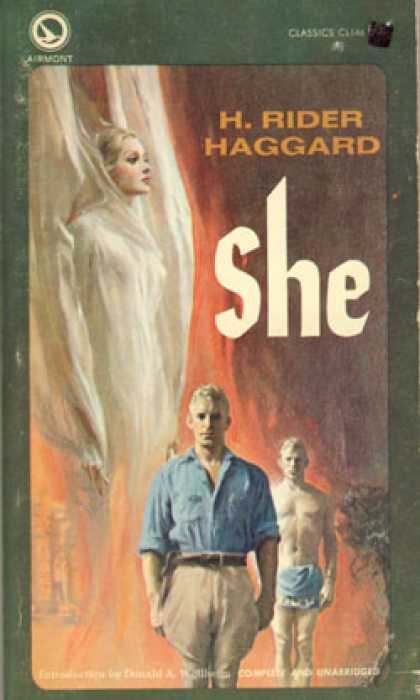
Now, as for my interest in the real, honest-to-God pulps, that came after (yes, after) I had to write my first official new pulp story -- which was "Dance with the Devil" for Lance Star: Sky Ranger Vol. 2. You see, I'm a sucker for research, so to honestly write a pulp voice, I downloaded more than a hundred public domain pulp tales from manybooks.net (a treasure trove, if ever I've found one) to get it right. Only, I discovered that this was the kind of stuff I'd been enjoying already, both in comic book action and in prose -- only I hadn't realized the pulp style had been so far-reaching. Two in particular, Edgar Rice Burroughs' A Princess of Mars and H. Rider Haggard's She, were my connecting points between prose and pulp action.

From there, the ball kept rolling downhill, picking up momentum and more mass, introducing me to more new pulp writing and reading opportunities.

Thursday, February 23, 2012

The Writer Will Take Your Questions Now (#89) -- Most Interesting Research

What's the most interesting thing you've learned recently while researching for a story?

Every time I research for a story I tend to learn something interesting, but the most fascinating tidbit I've picked up recently is from researching pre-WWII planes for my Lance Star comic book story for All-Star Pulp Comics #2 to be published by Redbud Studios and Airship 27 Productions.

You see, back when I was a preteen, I had a stepfather for a few years who was a pilot, and during that time, I had a strong fascination with airplanes. Well, when I started researching war planes and stunt planes from the 1930s, all that youthful fascination came rushing back to me.

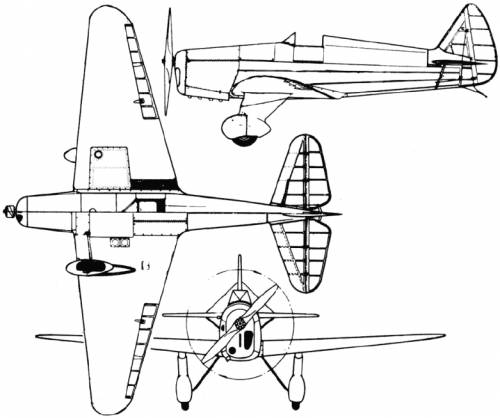
And I also learned about the Russian Yakovlev UT-1, a very, very cool airplane of the time period. 

I always love the research phase of my writing, in part because I'm a history minor and a history nut, and my research is typically far more intriguing than my actually history classes (weapons, planes, poisons, and serial killers just sadly weren't in our curriculum as KSU). I always find some tidbit that makes me almost squeal with childish delight at some new knowledge learned. Like in kid in a candy store, I tell ya.

Friday, February 3, 2012

Bobby Nash Presents Lance Star in “Wing Tips and Neck Ties”

For Immediate Release

Bobby Nash Presents Lance Star in “Wing Tips and Neck Ties” – a new comic book short!

Atlanta, GA – Fans of Lance Star’s recent comic book story “One-Shot” who have been anticipating a new sequential adventure with the high-flying pulp hero can rest easy now. Bobby Nash presents a new story by writer Sean Taylor (Gene Simmons Dominatrix, Classics Mutilated, Robots vs. Zombies: This Means War!) and artist Aaron Meade (Pandemonium: Evil Incarnate).

The tale, entitled “Wing Tips and Neck Ties,” brings Lance back into action with the mysterious Monique San Diablo, the Saint Devil, who appeared recently in the Lance Star: Sky Ranger Volume 3 prose anthology from Airship 27 and Cornerstone Books. In this new adventure, Lance and Monique hit the skies to capture a serial killer with a unique murder weapon – his airplane!

“I’m thrilled that Bobby trust us to take Lance back into the skies in this illustrated tale. It’s got all the fun stuff I enjoy reading and writing and looking at – high flying stunts, a beautiful woman, and even a dead guy swinging from a plane thrown in for good measure. What’s not to love?” says Taylor. “And I’m thrilled to see Aaron’s take on Lance and Monique. He definitely has a Silver-Age way of thinking that’s evident in his art, and it’s a perfect fit for a good-ol’-fashioned man of action like Lance Star.”

“One of the joys of the Lance Star: Sky Ranger series of comic books and prose anthologies is seeing how different writers handle the characters. When Sean told me his idea for this story I was excited to see it,” says Bobby Nash. “And now that I’ve seen the first page of art I’m even more excited.”

For more information about Bobby Nash and Lance Star, visit www.bobbynash.com and www.lance-star.com.

For more information about Sean Taylor, visit www.taylorverse.com or his writing blog at seanhtaylor.blogspot.com.

For more information and artwork from Aaron Meade, visit myspace.com/aaronmeade.

Wednesday, February 1, 2012

The Writer Will Take Your Questions Now (#67) -- Playing in Sandboxes

What is more fun and rewarding for you, writing your own characters
or writing characters you've been given from someone else?

Ooh. That's a great question. Actually it's two great questions -- "Fun?" and "Rewarding?" (since they might not be the same thing) -- but luckily in this case, the answers are the same for each of them.

In my circle of writing friends, accomplices, and employers, I've learned to call writing characters that belong to someone else "playing in someone else's sandbox."

Let's look at both...

Writing my own characters is always fun because all the ideas are mine to waste, use, destroy, or run with. There's a freedom in that playing in my own sandbox gives me that playing outside it just doesn't or can't. I imagine me writing Dominatrix for Gene Simmons (and IDW, of course) must be a lot like Gail Simone or Palmiotti and Gray writing for DC's Batgirl or Jonah Hex respectively. There are limits to what you can do with the characters, and Mom and Dad have to approve it, whereas me writing Fishnet Angel gave me limitless stories to explore. She was completely at my mercy and didn't have a copyright holder to protect her from my machinations.

My own characters are also rewarding to write because I get to see people react to new characters and stories they've never heard of and never seen. And I get to explore themes and ideas that are often personal to me through them.

However, I also have fun playing in someone else's sandbox because I often am allowed to bring a slightly different viewpoint into play that allows even the person or company who owns the character to see him or her in a new way. This can be especially fun when it walks that trickly line between staying the same and showing too much new too fast. It's an art, not science, that is very rewarding when you get it right, and can suck eggs when it overstep your bounds. A case in point, Martheus Wade is giving me a pretty fair bit of latitude to write his character Turra: Gun Angel. He has had to rein me back in a few times, though, and learning how to work within the reins is all part of the give and take that comes with playing in a sandbox not my own.

What can be most rewarding about writing others' characters though is this -- there's no feeling quite like knowing you're being trusted with someone else's property, to change it, grow it, and leave your own mark on it. Whether it's Marvel trusting Brubaker to control the fate of Captain America for a while or Pulp Obscura trusting me to tale brand new tales of Armless O'Neil (coming soon!), it's immensely gratifying to have that trust from from a publisher and sometimes from a friend.

But, to answer the question completely, I have to say that the most fun and rewarding is when I am being trusted enough with someone else's toys to bring a new toy of my own creation into the mix and have it become part of that sandbox. Case in point, when I created the Saint-Devil, Monique San Diablo for my novella in Lance Star: Sky Ranger Volume 3, I asked Bobby Nash, who owns Lance as a character about my new femme fatale for Lance, and when he read the story, he liked her enough to allow her to become part and parcel of Lance's mythos, to the point that in my new story for Volume 4, she's back, and will also have another adventure with Lance in a comic book short in the upcoming second issue of All-Star Pulp Comics!

And even better, reader response has been exciting.

So, for me, the most fun and rewarding option is to combine the two. (Come on. You knew it wouldn't be a simple one or the other kind of answer for me. Right?)

Saturday, January 21, 2012

LANCE STAR FLIES INTO 2012!

Here's a list of upcoming projects featuring Lance Star and the Sky Rangers on the flight line for 2012:

LANCE STAR: SKY RANGER VOL. 4 (Airship 27)
Featuring high-flying pulp stories by Sean Taylor, Tom Novak, Andrew Salmon, and Bobby Nash

LANCE STAR: SKY RANGER COMICS #2 (BEN Books)
A stand-alone issue features Lance Star's Strange Tales by Bobby Nash, Jeff Austin, and Rock Baker

LANCE STAR: SKY RANGER "COLD SNAP!" (Airship 27)
A full-length novel by Bobby Nash currently in production

AIRSHIP 27 PRESENTS ALL-STAR PULP COMICS #2 (Red Bud Studios)
Featuring a Lance Star: Sky Ranger tale written by Sean Taylor. Artist to be announced soon.

As always, stay tuned to http://www.lance-star.com/ for more news as it becomes available.

(Click here for the original link.)

Friday, December 2, 2011

The Writer Will Take Your Questions Now (#6) -- Lance Star

Your Lance Star: Sky Ranger story in Volume 3 is called “Dance With The 
Devil.” What can you tell us about this story? -- Lance-Star.com


It’s the first appearance in Lance’s world of a true femme fatale, Monique San Diablo, who could be a spy, a thief, a double agent, a potential lover, a confidante or any number of things. I think Lance needed a character who could challenge his notions of good and evil and who could blur the lines in between them and get his motor running in a way that actually makes him consider—even for a mere moment—cheating on Betty. We all know he’s too virtuous to actually do it (Or is he?) but every hero needs that person who tempts him to walk at least a little on the wild side. From there the story gets dangerous fast, with Nazis, stolen paintings from the Louvre, the French police, and even a chase through the catacombs beneath Paris. Beyond that, well, that would spoil the fun of reading it for yourself.

Monday, November 28, 2011

The Writer Will Take Your Questions Now (#1) -- Collaboration

Have you enjoyed collaborating on projects in the past with other writers and how
did you approach writing other characters than your own? -- John Morgan Neal

 I thoroughly enjoy collaborating with other writers. In fact, it seems that I get more work based on characters who aren't my own than I do for characters I've created. Even with that said, though, in most cases, I'm not "officially" working with another writer, just being paid to create a story for the character(s) in question. 

Case in point, when I was writing Gene Simmons Dominatrix for IDW, I was the sole writer on the book, but obviously Gene had to approve the plots and final versions (along with my editors). The same goes for the work I did on The Bad Girls Club. Although I was the only credited writer on the book, at times it felt as if the book were being written by committee, which is normal for a TV-tie in, because there are advertisers, cast members, etc. to be taken into account.  


Most of the fiction I've written works the same way, with characters such as Lance Star: Sky Ranger (owned by Bobby Nash), Blackthorn (owned by Van Allen Plexico), Zombies vs. Robots (owned by Chris Ryall) and others, but in those cases, I have carte blanche pretty much as soon as the creator of the character signs off on my plots.


As for the work I've done in a more collaborative way, I think some of the most fun I've had the crossover comic book story I did with John Morgan Neal that featured his Aym Geronimo and my own Fishnet Angel in the pages of The Shooting Star Comics Anthology #4. It was an odd pairing, no doubt, because Aym's world is one of science and FA's is one of magical goddesses. The twain don't usually meet, so we had to work together to come up with a plausible way to mesh those worlds together that remained true to the nature of both characters. 


And I'm currently collaborating on a few other projects as well -- Turra: Gun Angel with Martheus Wade and an as of yet officially unannounced manga project with Kittyhawk, the creator of Sparkling Generation Valkyrie Yuuki. With each of those, the collaborating begins at the plots and character level, long before we ever start writing the first word of the script. 

And not to forget, Bobby Nash and I collaborated two create the 1930's gumshoe Rick Ruby for Airship 27 Productions' new book The Ruby Files, which is coming out early in 2012. We actually sat down over dinner and hashed out the beginning of the story bible for that one then finished it up via email.