Showing posts with label George Orwell. Show all posts

Tuesday, April 25, 2023

[Link] 45 Writers' "Rules for Writing"


by Emily Harstone

Most writers have their own special “rules for writing,” even if they don’t talk about them. I find other writers’ rules fascinating, even when I don’t agree with them. A lot can be learned by reading about other authors’ approaches to writing. The New York Times and The Guardian have published famous authors’ answers to this question on a number of occasions. The Guardian has a very long, disorganized article that collects many of the rules, which you can read here. The Marginalian has a collection of advice from writers, that is more in-depth and less focused on “rules”, that you can read here.

This article is an attempt to organize that collection and to link to other authors’ rules as well, including more recently published authors’ rules on writing.

Below are links to different writers’ rules on writing. The authors are in no particular order.

1. Elmore Leonard’s 10 Rules

His most famous piece of advice? “If it sounds like writing, I rewrite it”.

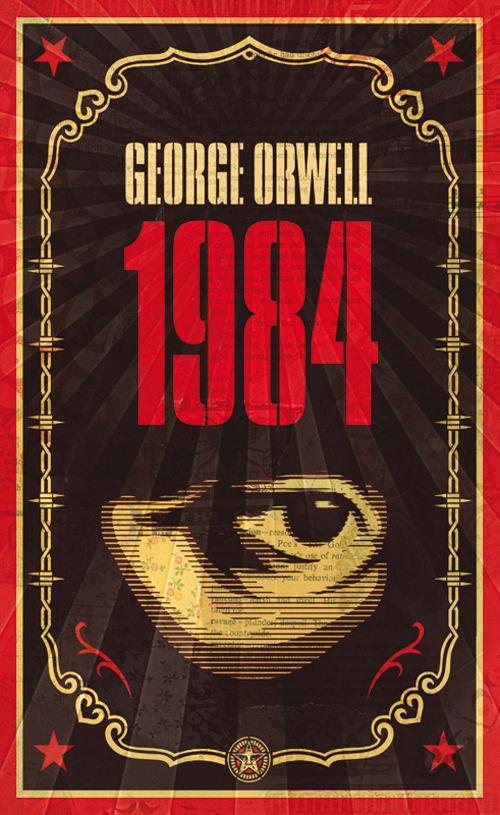
2. George Orwell’s 6 Tips for Effective Writing

Orwell gives readers full permission to ignore his rules.

3. Nietzche’s 10 Rules for Writing

His rules were originally written down in a series of letters to a female psychoanalyst.

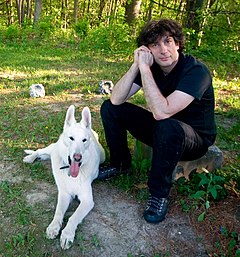
4. Neil Gaiman’s 8 Rules for Writing

It would be hard to dispute his first rule.

Read the full article for active links and the rest of the story: https://authorspublish.com/45-writers-rules-for-writing/

Saturday, December 31, 2011

[Link] George Orwell: Why I Write

From a very early age, perhaps the age of five or six, I knew that when I grew up I should be a writer. Between the ages of about seventeen and twenty-four I tried to abandon this idea, but I did so with the consciousness that I was outraging my true nature and that sooner or later I should have to settle down and write books.

I was the middle child of three, but there was a gap of five years on either side, and I barely saw my father before I was eight. For this and other reasons I was somewhat lonely, and I soon developed disagreeable mannerisms which made me unpopular throughout my schooldays. I had the lonely child's habit of making up stories and holding conversations with imaginary persons, and I think from the very start my literary ambitions were mixed up with the feeling of being isolated and undervalued. I knew that I had a facility with words and a power of facing unpleasant facts, and I felt that this created a sort of private world in which I could get my own back for my failure in everyday life. Nevertheless the volume of serious — i.e. seriously intended — writing which I produced all through my childhood and boyhood would not amount to half a dozen pages. I wrote my first poem at the age of four or five, my mother taking it down to dictation. I cannot remember anything about it except that it was about a tiger and the tiger had ‘chair-like teeth’ — a good enough phrase, but I fancy the poem was a plagiarism of Blake's ‘Tiger, Tiger’. At eleven, when the war or 1914-18 broke out, I wrote a patriotic poem which was printed in the local newspaper, as was another, two years later, on the death of Kitchener. From time to time, when I was a bit older, I wrote bad and usually unfinished ‘nature poems’ in the Georgian style. I also attempted a short story which was a ghastly failure. That was the total of the would-be serious work that I actually set down on paper during all those years.

For the full essay: http://orwell.ru/library/essays/wiw/english/e_wiw

Friday, December 30, 2011

[Link] Writers Wednesday: Famous Authors On Why They Write

All writers hit a slump sometimes. Life distracts. Momentum peters out. It happens.

Here’s what fuels the fire for these successful writers. Which of these “why I write” manifestos sounds most like you?


JOAN DIDION: I write entirely to find out what I’m thinking, what I’m looking at, what I see and what it means. What I want and what I fear. Why did the oil refineries around Carquinez Straits seem sinister to me in the summer of 1956? Why have the night lights in the bevatron burned in my mind for twenty years? What is going on in these pictures in my mind?

NEIL GAIMAN: The best thing about writing fiction is that moment where the story catches fire and comes to life on the page, and suddenly it all makes sense and you know what it's about and why you're doing it and what these people are saying and doing, and you get to feel like both the creator and the audience. Everything is suddenly both obvious and surprising…and it's magic and wonderful and strange.

STEPHEN KING: You can approach the act of writing with nervousness, excitement, hopefulness, or even despair, the sense that you can never completely put on the page what’s in your mind and heart. You can come to the act with your fists clenched and your eyes narrowed, ready to kick ass and take down names. You can come to it because you want a girl to marry you or because you want to change the world. Come to it any way but lightly. Let me say it again: you must not come lightly to the blank page.

GEORGE ORWELL, in his essay “Why I Write,” offers four specific motives for writing. We’ve abridged them a bit here:

(i) Sheer egoism. Desire to seem clever, to be talked about, to be remembered after death, to get your own back on the grown-ups who snubbed you in childhood, etc., etc.

(ii) Aesthetic enthusiasm. Perception of beauty in the external world, or, on the other hand, in words and their right arrangement.

(iii) Historical impulse. Desire to see things as they are, to find out true facts and store them up for the use of posterity.

(iv) Political purpose. Using the word ‘political’ in the widest possible sense. Desire to push the world in a certain direction, to alter other peoples’ idea of the kind of society that they should strive after.
-
Orwell’s theory on what drives writers is a bit dry. And, actually, we think there may be some things missing from it (we’ll leave it to you to decide). Nevertheless, when we read this, it forced us to take a hard, merciless look at our own motivations; in other words, it forced us to be a bit more objective rather than emotional. And that’s a good thing.

For full article: http://www.huffingtonpost.com/2011/12/28/famous-authors_n_1165816.html?ref=tw