

It's a common story. Writers get into writing because they're inspired by certain authors who have influenced them. And, almost always, at first they emulate them in at least style, if not substance and theme.
But let's move it from the general to specific and talk about YOU, writer.
Which author or authors were your beginning models to copy when you started? When did that copying start to shift into something that would grow into your own voice and style?
Ef Deal: My earliest influences were Bradbury and the Alfred Hitchcock anthologies. Then Tolkien. The handwavium aspect of Bradbury is the basis of all steampunk, if you think about it, so yes that fantastic element is still in my works. But mostly I was influenced by my studies in French literature, where words were chosen for their greatest effect. Poe said all elements of a story should work together to create a unified effect, and that has been my guiding mantra.
Rob Cerio: Douglas Adams, Issac Azimov, and Clive Cussler. I think my style grew into its own after I stopped worrying about making jokes that sounded like "Bad Douglas Adams" Jokes, and just let them be funny on their own.
John L. Taylor: At the beginning, I was an imitator of Ray Bradbury and John Updike to a vast extent. All my work from that period was soundly rejected as it was a pale imitation of a superior author. I had tried to write a novel manuscript, but the early draft was a meandering pile of exposition. Note I hadn't tried writing horror or New Pulp yet despite being a major fan of the genres. I began developing a voice of my own, oddly, while writing erotica under a pen name for a now defunct website (Ironically, those unpaid stories are still my most widely read at 6k or more reads). I somehow connected with an audience by writing the type of story I wanted to read. My voice in writing finally emerged while writing The Rocket Molly Syndicate for the Dieselpunk E-Pulp Showcase Vol.2 in 2013-14. My Mom was fighting ovarian cancer as I was working on it, half was written in hospital waiting rooms. I needed a release and wrote pure escapist fiction. It connected, and the anthology it appeared in moved about 775 copies across all platforms and was adapted as an audio drama for the Coffee Contrails Podcast, adding another 200 or so downloads. It is still my most successful work to date. I dug further into New Pulp, but with a strong influence from Lovecraft and Robert E. Howard. My next works were The Legend of the Wild Man, a 100 line narrative poem that ran in the Mythic Circle, and The Thing in the Wexler House, an audio narration that Otis Jiry performed for me on his YouTube channel. Both got solid receptions. As I branched into poetry, more growth happened, and My current style was cemented. Eerie, dreamlike narratives with a pulp twist. Also, writing online narrations helped a lot, as I was introduced to horror voices different from what I'd read before. Variety helps a lot.
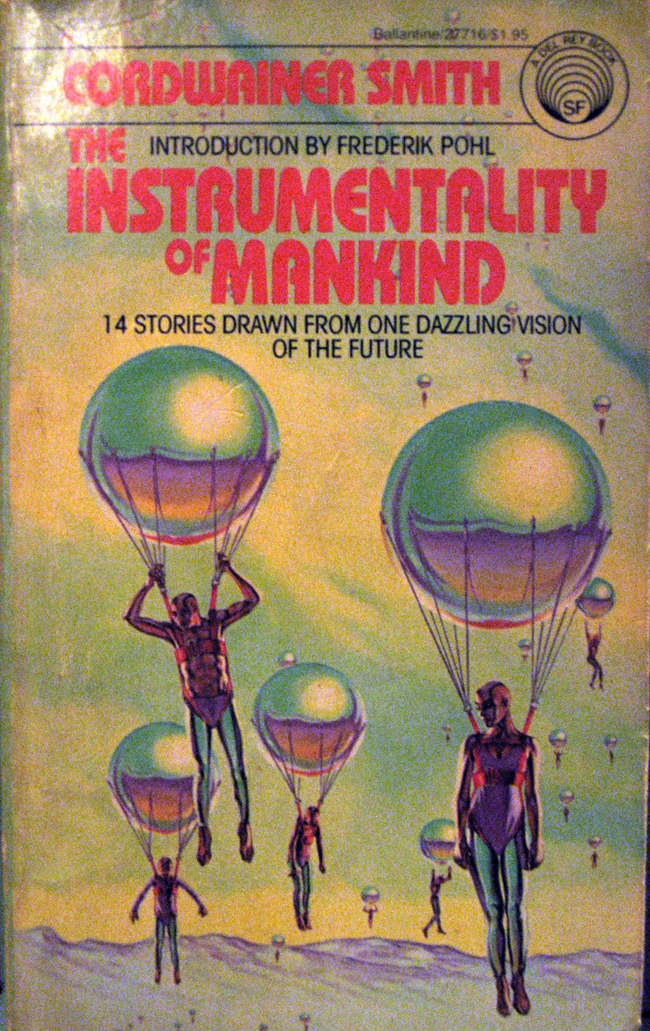 Anna Grace Carpenter: The first I remember trying to imitate was Cordwainer Smith. He had a flair for not letting story get in the way of the occasional stylistic flourish and I loved it. Later Tad Williams and Raymond E. Feist made an impact on how I used characters to best tell the "exciting" parts in ways that actually had an emotional impact, plus a particular style of world-building that has stuck with me. (I would be hard-pressed to explain this, but I know that it's there because of reading their work.)
Things started to be less copycat once I really started writing a lot. The more I was using words in storytelling regularly, the more my own style began to emerge from the way I pictured certain scenes and the dialog I heard from my characters. At which point those authors moved from a category of imitation to one of influence.
HC Playa: So there are 4 authors that spurred me into writing: Sherrilyn McQueen, J.R. Ward, Karen Marie Moning, and Patricia Potter.
All four build intricate worlds, whether it's dropping you into the romantic lives of people in 1100 AD Scotland, a hidden Vampire society, a murder investigation turned apocalyptic collision of Fae realms and human, or weaving mythology into romance and adventure.
I didn't copy any of them directly, but they all made characters breathe on the page. They weren't afraid to weave love into blood and gore and battles. One of my favorite things that I did copy was the reoccurring cast that doesn't necessarily feature the same POV from book to book.
Ernest Russell: My earliest influences were Poe, Verne, Wells, and an anthology called Tales of Time and Space. Later Lovecraft and the circle of writers from Weird Tales.
Of these early influences, there is one that influences every story. That is Jules Verne. One of the things I LOVE about Verne's stories is he did research and did his best to not only incorporate the science and technology of the story's time period but to project it forward into what might become. As such I try, even in my fantasy writing to research what I am writing and make it plausible within both the world rules for the story and what I find historically or current science and technology and translate it into the story.
Frank Fradella: F. Scott Fitzgerald, Robert B. Parker, and Chris Claremont. Remove any one of them and I'm not sure I'd be a writer at all. My college professor in English told me to look at Parker for dialogue, and he was right. Fitzgerald showed me how to make prose feel like poetry, but it was Claremont who taught me how to tell a story. I had been reading comics books off the spinner rack for years, but the first comic book I *remember* is Uncanny X-Men #131.
Tom Powers: A weird mix of Walter Gibson, Paul Ernst, and H.P. Lovecraft. Still echoes of them all, plus a bit of Norvell Page. Much of what I write is in the traditions of those writers' genres.
Pj Lozito: I wanted to write like Lester Dent, Edgar Rice Burroughs, Raymond Chandler and Sax Rohmer.
Teel James Glenn: Robert E Howard, Lester Dent, Peter O'Donnell, Dash Hammett.
.jpg)
Charles Gramlich: Ray Bradbury for one
Murky Master: So Dragonlance and the anime Escaflowne, above all else, got me into writing seriously when I was about 13 years old. It took another ten years before I returned to that old dream, but I wrote part of a fantasy novel in those days that I am still surprised at its quality compared to what I wrote today.
John Morgan Neal: Stan Lee, John Broome, Gardner Fox, Bill Finger, Bob Haney, Denny O'Neil, Archie Goodwin, Len Wein, Steve Englehart, Jim Starlin, Roy Thomas, Doug Moench, Michael Michael A. Baron, John Ostrander, Mike Barr, William Messner-Loebs, Bill Mantlo, Marv Wolfman, and last but opposite of least, Chuck Dixon.
Michael Dean Jackson: When I started writing (as Jack Mackenzie) I was inspired by a lot of military science fiction; Heinlein, Jack Campbell, David Weber, Lois McMaster Bujold, etc. It was with those inspirations that I wrote THE PARADIGM TRAP and THE MASK OF ETERNITY.
Do those elements of your inspirations still show up in your current work? Howso? Are they things you do consciously or have they just been internalized by the years of doing them?
Frank Fradella: Completely internalized. I took Parker's style for a spin on its own, and it felt like wearing one of those 1970 Halloween costumes that comes with the hard plastic Batman mask attached by a string. It was a conscious choice to find me in that amalgam, and that's the writer I became.
Anna Grace Carpenter: I do still love a stylish bit of storytelling. Voice, unexpected use of language and grammar (or lack thereof) to catch the reader's attention at a critical moment are some of my favorite things. And that all grew from early attempts to mimic Cordwainer Smith. And the storytelling inspiration I got from Feist and Williams is still there too. Using all the characters to tell the story whether we see their PoV or not. Allowing heroes to not always be heroic and villains to not always be villainous without diving into a grimdark grey. And allowing tragedy to occur, sometimes in very small ways that adds a bittersweetness to big triumphs.
I don't think it's deliberate, it's just how those inspirations encouraged my own voice and writing the kind of stories I like to read. Because that was what first made me want to imitate them - they wrote stories I loved. And now I write stories I love so the influence is still there, but organically after years of practicing my own storytelling.
.jpg)
Depending on the story it can almost seem like a hero and side-kick type of casting, especially as I pit them against larger-than-life dangers. (As I type this I suddenly see why my publisher says my writing is pulp 😂.) I don't lean into the romance aspect as much as those authors tended to. More like Moning's Fae Fever series, the romantic aspects take a back seat to the apocalyptic events and characters dealing with their issues.
I have read plenty of classics of multiple genres, but it would be disingenuous to say I am influenced in style by those stories.
I don't aim to write the next classic that future college students dissect to figure out what I meant when I said the sofa was an ugly flea market reject.
I write to entertain. I use elements from the stories I love reading. I love weaving in magic and the amazing, because life always needs magic.
John Morgan Neal: Yes. I'm a big ol' ape in more ways than one. But never outright. The stuff I love is in my DNA. So it has to shine through.
John L. Taylor: Many facets of my inspirations are like a reflex now. A subconscious thread. I still lean on Lovecraftian themes and first-person narrations in horror but avoid the adjective salad pulp writers often used when stories paid by the word (Lovecraft was great at taking a whole paragraph of them to say "it was an amalgam of parts that defied description, an offense to biology itself.") I guess that's the real difference between me and my inspirations: I prize concise writing. I suppose that's the last vestige of Updike left in me. But it's a great influence to retain/
Rob Cerio: I still feel like I use Cussler's "opening Gambit" formula and basic formatting of action scenes. Azimov's use of "working-class schlubs" is something that still crops up all the time in my work.
TammyJo Eckhart: I can't answer question one so question two also doesn't apply. While there are authors that I loved and still love, the idea of copying them in any way never entered my mind. I was writing stories from kindergarten onward.
Murky Master: Things I took from Dragonlance were:
- mixing cultures is both hugely interesting and creates lots of conflict, from Tanis Halfelven's internal identity drama. I'm biracial myself so it was interesting seeing someone "like me"
- Bad guys are F-ing Awesome. Raistlin made a permanent mark on my picture of wizards and magic and the lure of power magic brings. You need no further proof than to behold my profile pic, after all. Nothing makes me hahaha quite as much as my hourglass-eyed boi. Lord Soth was pure mother finding METAL as well and remains my fave Ravenloft Darklord.
- Escaflowne was a romance and an epic fantasy all at once. Later on, I would actually sit down and read a romance novel and find it totally awesome, and I like to have strong, real relationships in my books because of that anime.
- also, the anime was grand in scope, full of pathos and beautiful at times, unspeakably cruel at others (looking at you Dilandau). It helped me understand PTSD and the weight of honor as well as the power of dreams to destroy and create. Dilandau also made me like insane villains.
- the Adventures of Batman and Robin cartoon with Bruce Tim as the art director also made me love art deco and Pulp sentiments. The episode featuring "The Grey Ghost" and Brendan Frasers The Mummy sealed my fate. Now I can't help but have all cap titled like DESTROYERS FROM WALMARTS BEYOND and COURT OF THE GLISTENING LUNCH LADIES and such.

Michael Dean Jackson: However, around the time I was writing my books I discovered the television series SHARPE on the History Channel. I loved every episode and I loved Sean Bean as Richard Sharpe. So I figured I would try the novels by Bernard Cornwell and I loved them even more. The books were, I found, immensely better than the show.
And it was those novels and the character of Sharpe who fired up my imagination and helped me come up with my own, military SF version, a character called Jefferson Odett.
I have only written two Jefferson Odett books, DEBT'S PLEDGE and DEBT'S STAND, but I do have a third one that I may eventually get to. Nevertheless, Jefferson Odett is more than a little inspired by Richard Sharpe, in the same way that Horatio Hornblower, C.S. Forrester's seafaring adventure hero, inspired Bernard Cornwell's character.
I am under no illusion that my novels have anywhere near the quality of Cornwell's or Forrester's, but the inspiration is there.


